Archive for the ‘sacred spaces’ Category
writing a novel – another look at old churches
As I write my novel, I am amazed at how many instances of abandoned churches I have encountered in my life. I have come to think that I live at a time that will be remembered for a great turnover in our churches. With the need for energy efficiency and financial stability, congregations are actively seeking the ideal ‘place’.
I understand why this should be so. But I still love the idealized rural church of the nineteenth and twentieth centuries.
Earlier this month, we took a drive to Saint Martins. Near Garnett Settlement, we saw yet another re-purposed church.
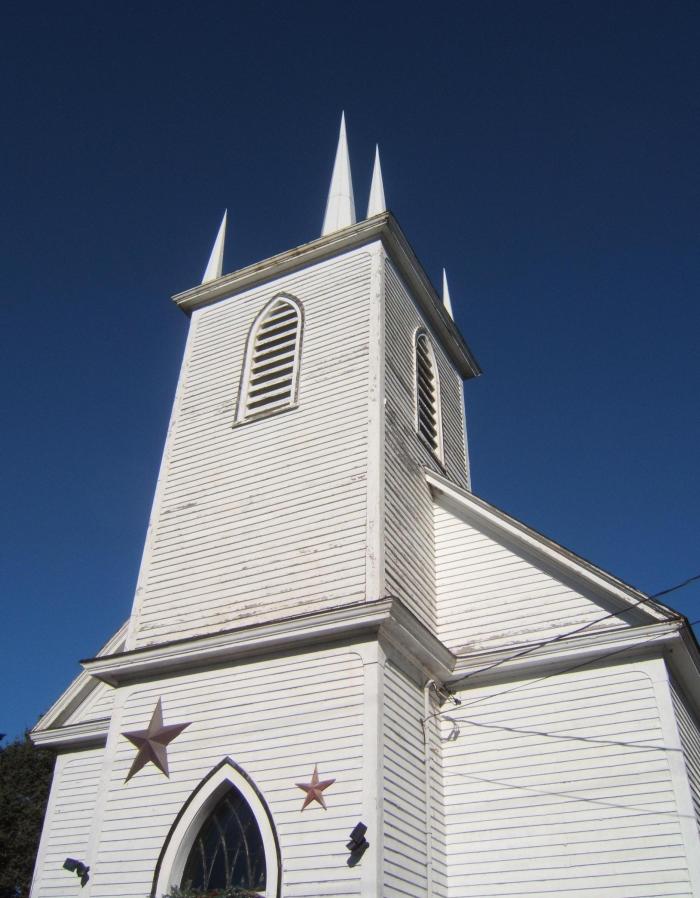
This one was abandoned a few years ago, after there were only four parishioners to keep it going. It was sold and has been turned into a country treasures gift store called the ‘Old Fangled Steeple’.
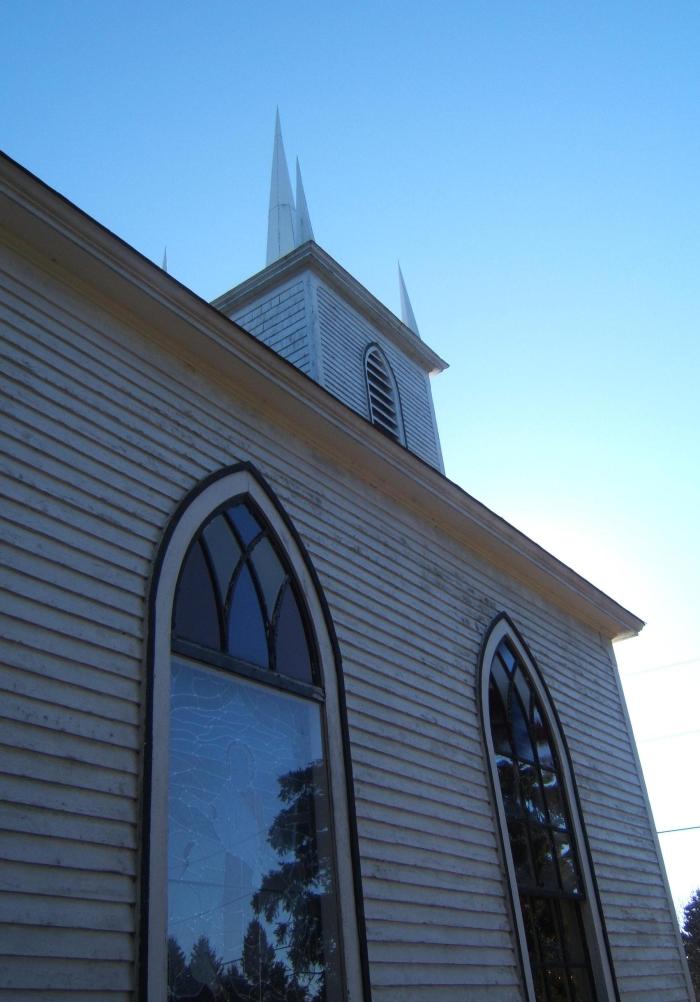
The church still has almost all of its stained glass windows intact.

~

~
For some beautiful images of abandoned churches, have a look at:
http://pinterest.com/patiluhayes/old-churches/
For a rather sad tour of the inside of some abandoned churches, see:
http://www.environmentalgraffiti.com/news-abandoned-churches?image=23
~
Copyright Jane Tims 2012

writing a novel – stories about abandoned churches
My husband and I were married in an older local church. I remember its lovely flower garden, the church bell, the woodwork, the organ, and the beautiful stained glass windows. Our wedding day began an extremely successful marriage… so far we have been married almost 33 years!
The church was deconsecrated in 1995 and torn down. The congregation moved to a new church not far away. The new church incorporated the furniture, hanging lights and stained glass windows from the old church.
Even today, almost twenty years after the demolition, I drive past the empty space and I always feel badly. Sometimes there is a car parked on the very spot where we said our vows.

Once I took my son to the now-empty site of the old church and showed him where it once stood. He asked, as a joke, ‘Does that mean you and Dad aren’t married any more?’
His question seemed funny at the time, but now I think about how closely our lives are linked with the spaces where we celebrate. If a space disappears or changes, it may seem profoundly sad. But it doesn’t negate the actions taken there. The best things in our lives supersede the physicality of their associations.
~
Copyright Jane Tims 2012
in the circle of the evergreen wreath
Every year, during Advent, I either purchase or make a wreath of evergreens to celebrate the coming of Christmas. Last year, making the wreath, I had a little help. Zoë decided the perfect place to perch herself was within the circle of the wreath.
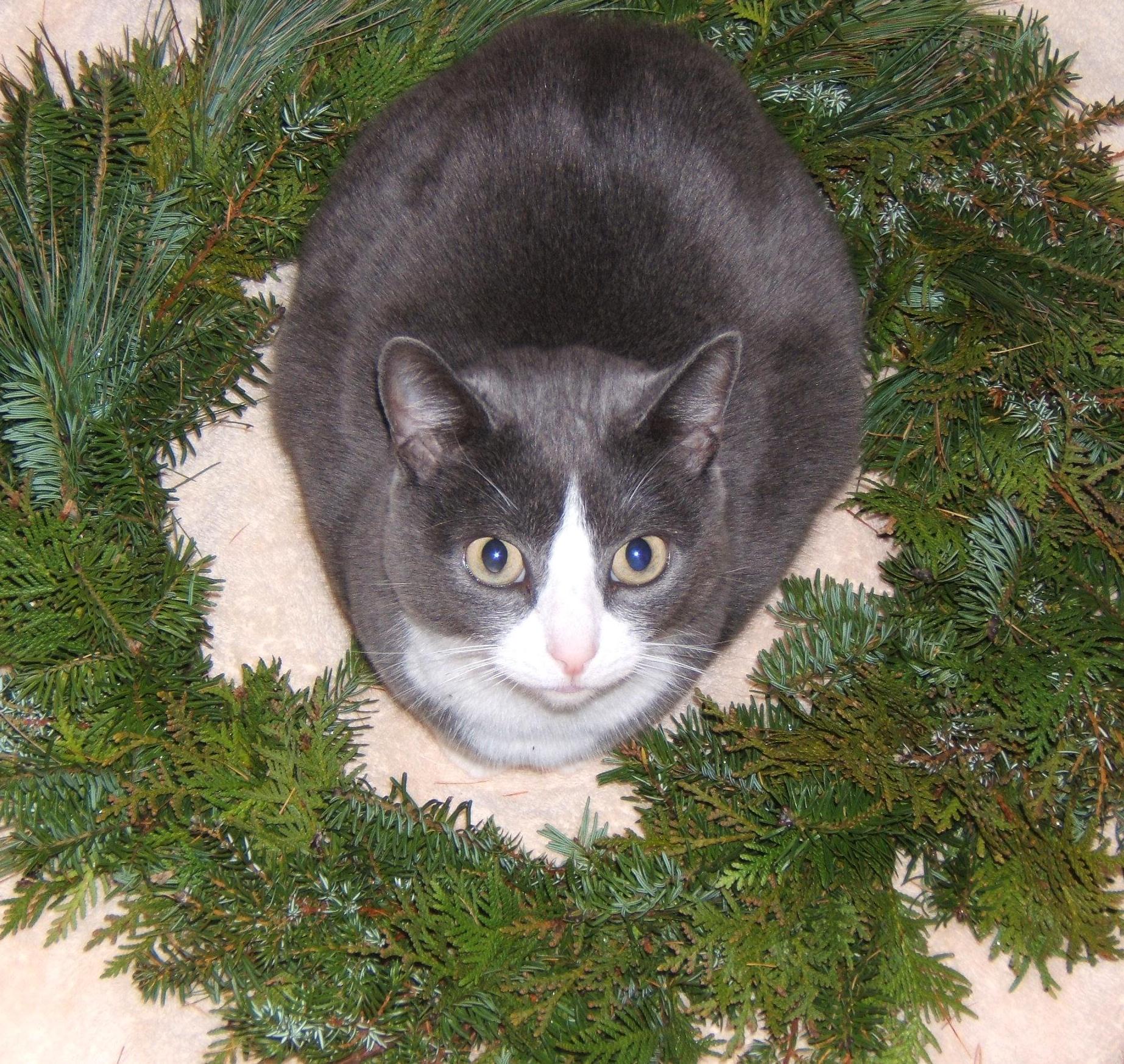
Our wreath materials were all obtained on our lake property. The species we used for our wreath were:
- White Pine (Pinus Strobus L.)
- White Cedar (Thuja occidentalis L.) also known as Arbor Vitae
- Balsam Fir (Abies balsamea (L.) Mill.)
- Common Juniper (Juniperus communis L.) -the variety we used was too prickly and I won’t use it again.
~
At this time of Advent, we wait in the darkest days of the year for Christmas. The wreath is one of the most endearing symbols of this wait. Made of evergreens, it speaks to the concept of everlasting love. To count down the Sundays before Christmas, we light purple and pink candles to symbolize ideas of Hope, Peace, Joy and Love. The lighted candles also represent bringing light into the world.
The wreath is another of those symbols borrowed from pagan times, when the circle represented the ever-changing seasons and the circle of life. The evergreen stood for the part of life that survives the winter season and candles symbolized light shining through darkness.
~
~
gathering green
~
in the space between solstice
and the whisper of stars
in a herded sky
daylight shrinks, always one hour
short of rested
~
in the thicket we gather
armloads, garlands of green
fragrances of cedar and pine
red dogwood twigs
stems of red berry, alder cones
curved boughs of fir
~
flexible as mattress coils, piled on ground
to rest, await brief
overlap, longest night
and feathering of angel down
~
watch, through the trees
the struggle
planet light
and pagan fire
~
~
© Jane Tims 2012
writing a novel – re-purposing a church
~
So the poet has decided to write a novel…
~
Title: unknown
Working Title: Saving the Landing Church
Setting: a writers’ retreat and an abandoned church
Characters: main character – a writer who operates a writers’ retreat
Plot: moving a church? (in part)
~
Since the main character in my novel is a writer, it makes some sense that she would like to earn her living as a writer. However, she has not yet published her first book, so there are no book deals or royalty cheques. She turns to an occupation pursued by many talented writers, the education of other writers.
In my book, I want to establish a situation that could eventually lead to other books. So, I have given my protagonist the dream of establishing a writer’s retreat. Her idea is to hold writing workshops at this retreat, perhaps every weekend once she establishes herself. She will be able to teach writing techniques at the retreat, or hire other writers to carry out workshops. She wants to sponsor reading events for the community, to encourage interest in local writers. Now, all she needs is a place to carry out her plan. She does a little research, selects a community where the artistic sentiment has established itself, and purchases a piece of land nearby.
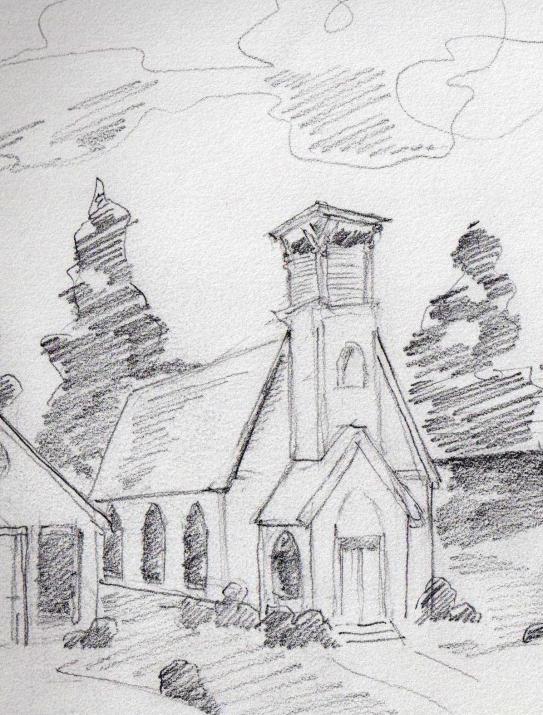
detail of a larger drawing Jane Tims November 29, 2012
And then she sees the Landing Church, about to be abandoned by its congregation. She falls in love with the church. She re-imagines it as a perfect place to hold her writing retreat. A serene, tranquil place for writers to think and write. A place with good acoustics for readings. A place 10 kilometers away.
Now, how is she going to get that lovely little church to her own property???
~
Copyright Jane Tims 2012
villages and vignettes
I love to view bits of the world in miniature. Especially at Christmas, small replicas of human space make me feel comfortable. Perhaps seeing a world fit neatly into a small space is a version of the safety and calm an animal feels in its den. Perhaps looking over a diorama gives me powerful feelings of omniscience and omnipresence. Perhaps I like the impression of a story being told, from beginning to end, confined in space and time.
Our Christmas decorations are predominantly miniaturized vignettes:
our nativity scene, complete with a stable and its donkey, and a star-spangled hillside of angels and sheep…

my collection of Buyers Choice skaters, including a fellow roasting a marshmallow at a fire beside the frozen pond…

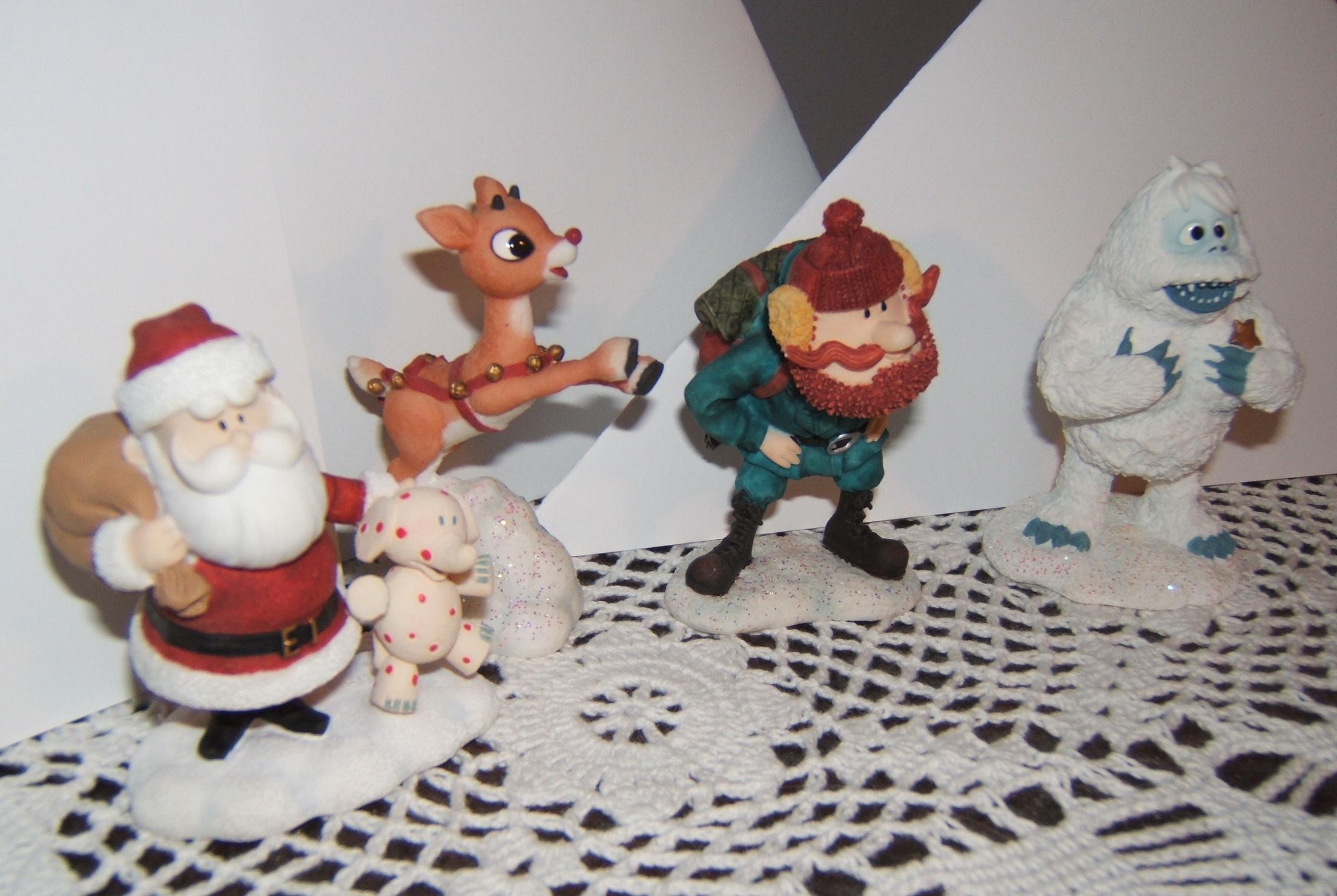
Rudolf and Bumbles from the Island of Misfit Toys…
children gathering around a pitiful Charlie Brown Christmas tree…

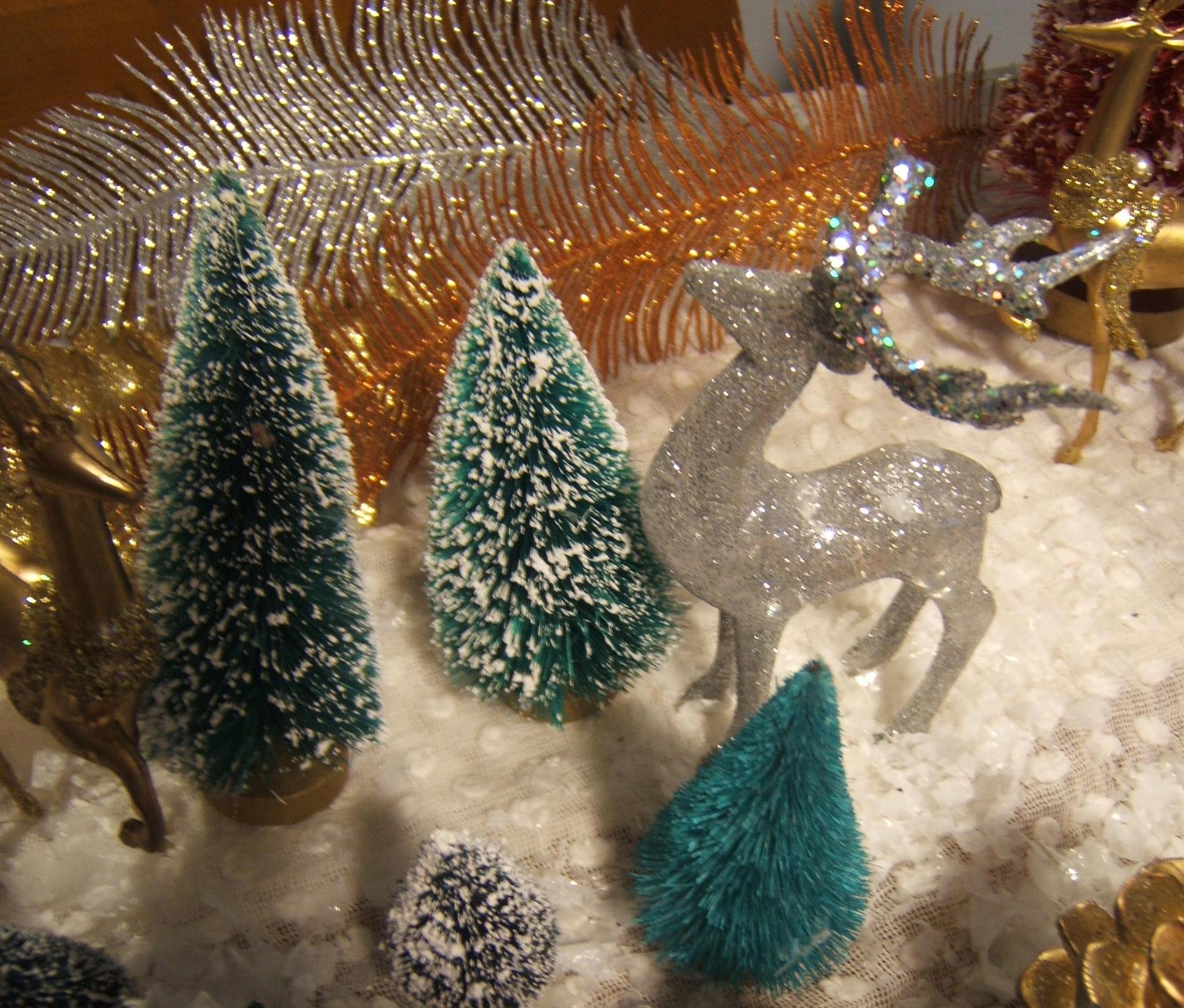
a frosty forest of bottle-brush trees and silver reindeer …
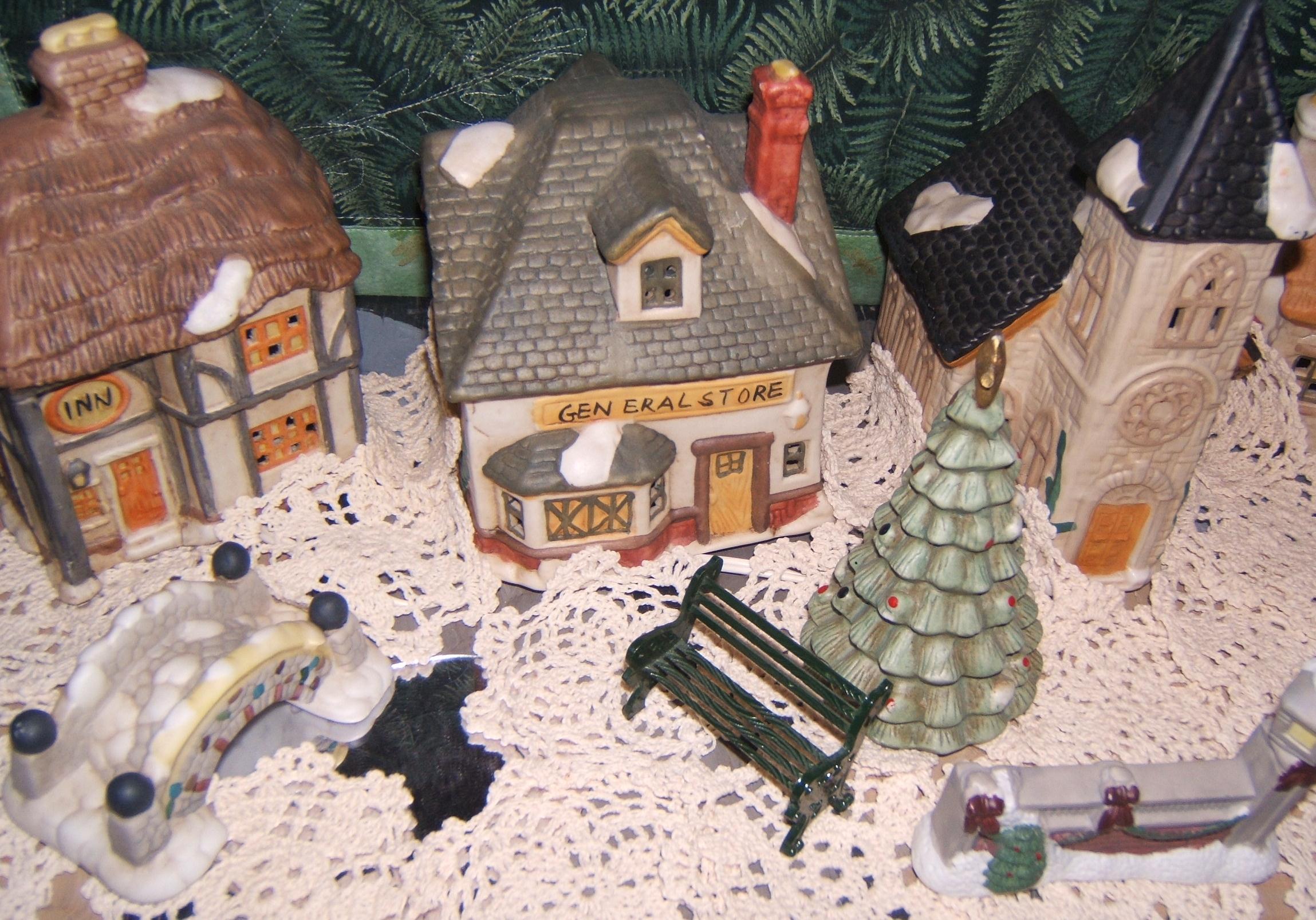
and a village with an inn, a church, and a park with a pond, a stone bridge and a park bench…
All very cute, but there is something missing.
The best scenes are those with real people. A scene of us sitting by our Christmas tree, talking and laughing. A scene of people in the bookstore, looking for a special book to give someone they love. The scene of a colleague at work, leaving a Christmas card on each desk. A scene of friends walking along a downtown street while the snow falls and the church bells mark the hour.
Merry Christmas everyone!
~
~
still street
~
the stillness of this street
its gentle curve
the steady glow of lamps
lighted windows, sturdy gates
a frozen pond, stone bridge reflected
soft snow, unmarked
and a park bench
where no one ever sits
~
~
© Jane Tims 2011

a bridge for the soul
In eleventh century Sweden, rune stones were often raised by landowners as a memorial of their accomplishments.
Jarlebanke was a landowner and a local magnate who lived in Uppland, Sweden during the second half of the eleventh century. He took pains to ensure he would be remembered, and six stones survive of the many he ordered to be carved.
Four of the surviving stones stand at the ends of the Täby bru. The Täby bru is a ‘bridge’ or causeway marked with two rune stones at each end.
One of these stones (U127) was used in the 17th century as the threshold of the church in Täby; it now stands to the side of the church door. The inscription (in runes) says: Iarlabanki let ræisa stæina Þessa at sik kvikvan, ok bro Þessa gærđi fyr and sina ok æinn atti Tæby allan. This has been translated as: “Jarlebanke let raise these stones after himself, while he was living, and he made this bridge for his soul, and he himself owned the whole Täby.”
The stone depicts two serpent creatures enclosing a Latin cross. Symbols of the old religion and Christianity are often found together on rune stones, evidence of transition in belief systems. Jarlebanke was not taking any chances when he recognized both religions on his rune stones. The facimile (below) of the runes on the stone is from:
http://www.ludd.luth.se/~frazze/history/mirror/viking_age/runes/nytt/images/u127.gif

facimile of carvings on rune stone U127
a bridge for the soul
Danderyds church, Täby, Uppland
~
ok bro Þessa gærđi fyr and sina…
and he made this bridge for his soul…
– inscription on a Täby bridge runestone
~
Jarlabanke made this bridge
for his soul
a causeway crossing marshy ground
~
uncertain
for though he owned all Täby
he was afraid
~
he raised these four while living
a rare deed
the stones, of course, never care
~
first at the ends of the Täby bru
then at the threshold
of the south church door
~
the Cross tethered to old faith
dragon-kind
best wager for passage into heaven
~
© Jane Tims 2003

keeping watch
Some eleventh and twelfth century Scandanavian rune stones were established as memorials to family members.
The Bro rune stone in Uppland, Sweden, was raised by a wife, Ginnlög, in honor of her dead husband, Assur. It also commemorates the building of a bridge (a causeway across marshy ground) in memory of Assur.
The stone is carved with two serpent bands, around an ornamental cross. It says that Assur kept watch with a comrade Gæitir, as part of the Víkinga vorđr, a local defense force against Viking raiders. The photo below is taken from:
http://www.arild-hauge.com/sweden.htm

Beginning in the 8th century, Viking raids were carried out regularly in England and Ireland. Two well-known raids were on the monasteries at Lindesfarne in England (793 AD) and Glendalough in Ireland (834 AD).
In the first stanza of the poem below is a poetic form called a ‘kenning’. The ‘kenning’ is a figure of speech using two or more words to convey an idea or image. It is usually associated with Norse and Anglo-Saxon poetry. For example, ‘silver sun’ is a kenning for ‘moon’, and ‘summer smoke’ is a kenning for the windborne seeds of milkweed.

'summer smoke' of Rough Hawkweed (Hieracium scabrum Michx.)
keeping watch
the Bro Stone, Uppland
~
bitter is the wind this night
which tosses up the ocean’s hair so white
merciless men I need not fear
who cross from Lothland on an ocean clear
– Irish monk, 8th century
~
1.
on a calm night
under the shine of the silver sun
the shadow-self of dragon
square sail, glint of gold
swords polished and drawn
~
2.
these are signs:
blue sky
the white belly of a gull
lifted on the thickness of air
stalks of milkweed bent
their summer smoke pushed inland
~
3.
no fear tonight
the wind bitter
the ocean tossed
Gætir, new leader of the watch
may sleep
I warm my hands
in Assur’s cloak, now mine
today I raised a bridge
and this sad stone
to my husband
my Víkinga vörđr
my protector from the raid
~
4.
bitter this night
but safe
no dragon-kind
from the Danish shore
yet will I watch
listen to the whisper of milkweed stems
rumors of Lindesfarne
and Glendalough
where the coil of a serpent
may strangle a simple cross
~
© Jane Tims 2004

messages in stone
In my studies in history, no topic has engaged me like the use of stone to record our human endeavors. I have made a small study of the rune stones of Scandinavia, the stelae of Mesoamerica, and the petroglyphs of North America.
The majority of Scandinavian rune stones are found in Sweden (2,900 in Sweden, compared with 300 in Denmark, 50 in Norway and 33 on the Isle of Man).
These stones are upright or horizontal, frequently taller than two meters and marked by rune carvers with runes and various images. Rune stones are found scattered across the countryside and are mostly memorials, providing records of family relationships and history, community happenings and property ownership.
The majority of rune stones were made in the eleventh century, coinciding with the gradual conversion of the people of Scandinavia from pagan beliefs to Christianity. The transition took years, a merging of doctrine and practice from the two religions. The majority of rune stones show some religious symbolism, usually a blending of pagan and Christian ideas.
In the yard of an old church at Sigtuna, Uppland, is a rune stone once part of the Dominican cloister foundation.

rune stone U379 at Sigtuna churchyard (Source: Ojan, 2009, Wikimedia Commons)
The stone was raised by a guild of merchants to honor one of their members. The rune stone is carved with a ribbon of runes enclosing a simple pattée cross. The facimile (below) of the carvings on the rune stone is taken from:
http://www.ludd.luth.se/~frazze/history/mirror/viking_age/runes/nytt/rune_stone_index.shtml
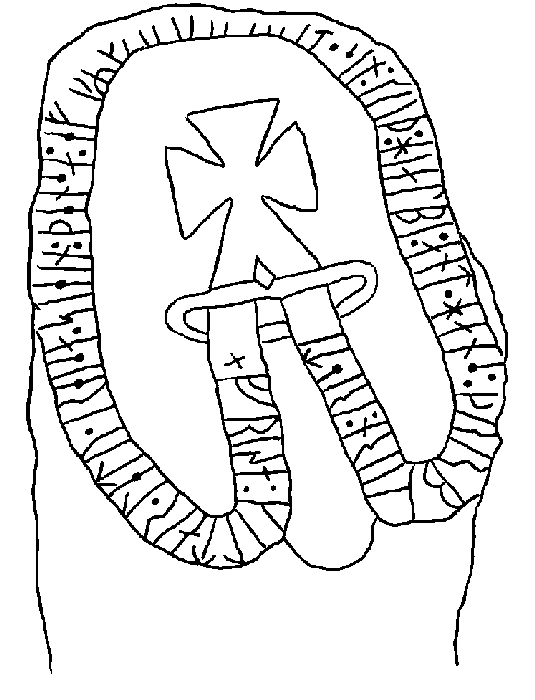
facimile of carvings on rune stone U379
The Dominicans are a Christian Order of mendicant monks founded in the early thirteenth century. The monks are also called “black friars” because of their black cloaks.
The chant in the poem below is based on the Order for Compline in the Anglican Book of Common Prayer.
they too were brothers
(rune stone at the Dominican cloister, Sigtuna)
~
Frisa gildaR letu ræisa stæin Þennsa æftiR Þor [kil, gild] a sinn.
The Frisian guild brothers let raise this stone after Torkel, their guild brother.
– inscription on the rune stone at the cloister
~
~
solemn
we, black friars, stride
stone to stone
the measured step
of Compline
~
lighten our darkness
protect us
from perils of night
~
beside the singular stone
our voices waver
pause on the syllable
explore the octave
and the chant moves on
~
relief of a quiet night
perfect end to imperfect day
fearless expectation
of the grave
~
they too were brothers
to him, Torkel
we, Frisa, raise
this stone
ribbon of runes
cut by Torbjörn
the cross by his blade
~
brighten our darkness
hide us beneath
the shadow of thy wings
~
God bless him and keep him
Guđ hialpi and hans
~
© Jane Tims 2005

not a rune stone, of course, but a grave marker in a New Brunswick cemetery
sacred spaces #2
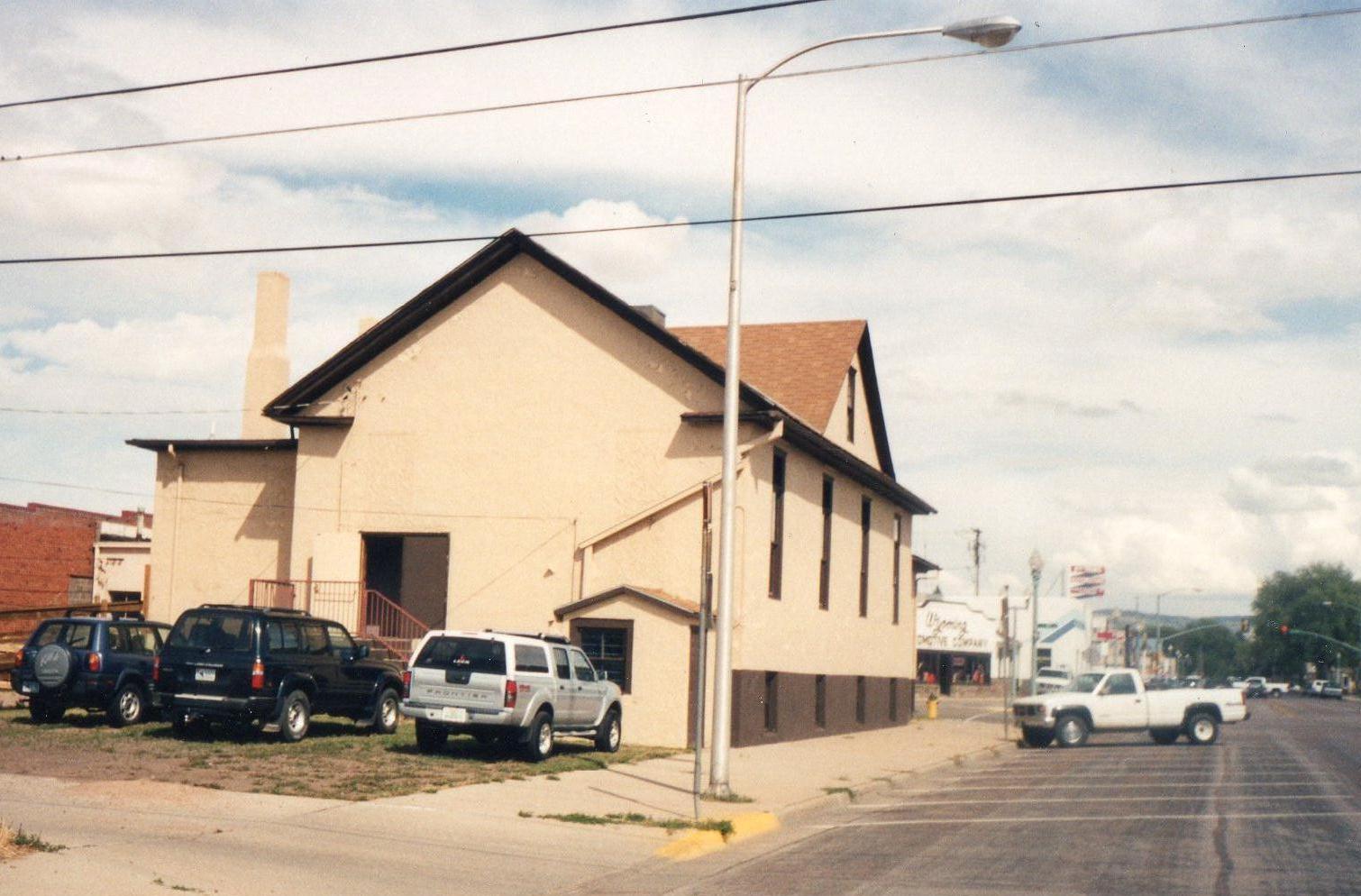
One of the repurposed churches I have encountered is the church where my great-grandmother and great-grandfather were married on July 24 in 1886 in Laramie, Wyoming. The church was the First Methodist Episcopal Church on Second Street in Laramie.
The church building, constructed in 1860, still stands at 152 North Second Street, but when my great-grandparents were married there, it stood at a location across the street from its present location. When it was abandoned as a church, it was rolled across the street on logs, where today it is the oldest church building in Laramie.
When we visited Laramie in 2002, we did not find the church immediately because it did not look like a church. When it was rolled across the street, the back of the church faced the street…

A look at the rear of the building shows what the face of the church would have looked like in its previous location…
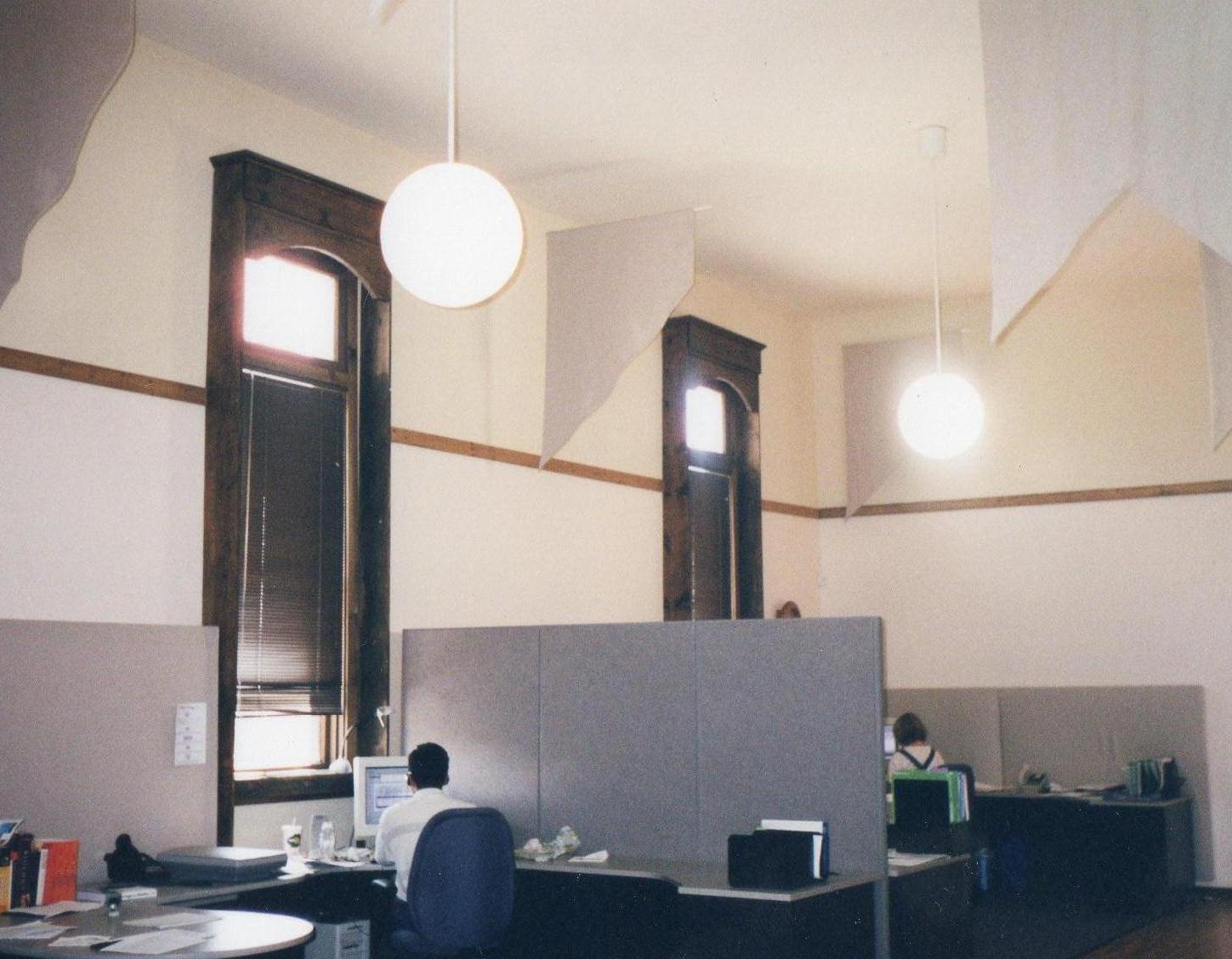
The church has been repurposed and today is used by a distance-training business. Inside the church, I could see the windows overlooking the spot where once my great-grandparents stood to say their vows…
Have you gone on a journey to discover the people in your family history? Have you stood where their feet once stood?
sacred spaces
Abandoned churches are a particularly poignant reminder of how ephemeral our human spaces can be. In most cases, churches are abandoned for reasons of practicality – the maintenance costs are too high and refurbishing costs exceed starting over.
I think about the people who originally planned and built the church. They needed a place to meet and worship. They probably had a hard time pulling together the resources. There would have been a first Sunday service in the new church, perhaps a celebration afterwards with a meal and speeches.
It was probably a heart-wrenching decision to abandon the church. So many baptisms, weddings and funerals. So many personal experiences of being near to God. So many forgotten moments of amusing bored children, nodding-off during sermons, singing off-key, and greeting friends and neighbours.
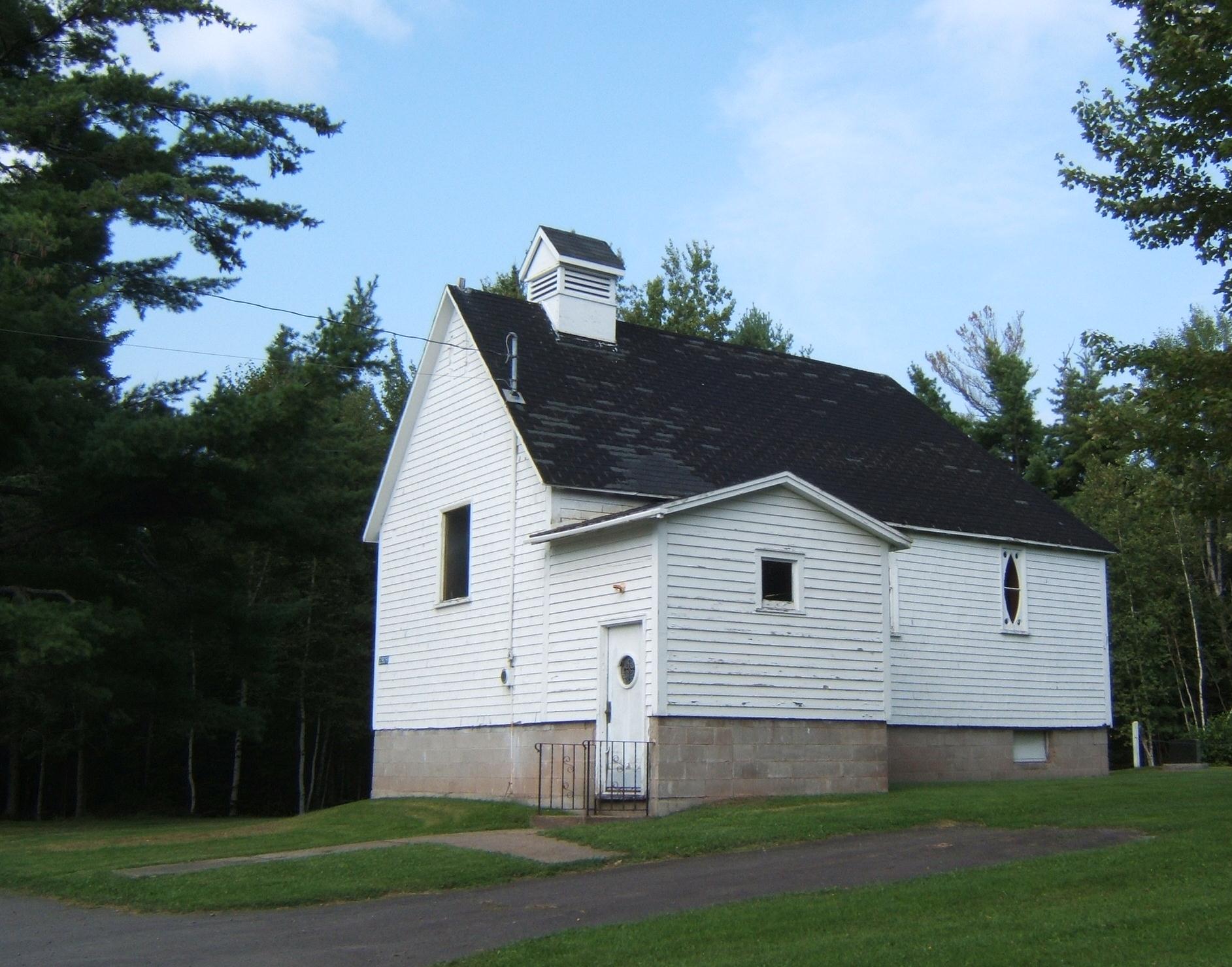
Some older churches are maintained because of their heritage value, and used occasionally for special services…
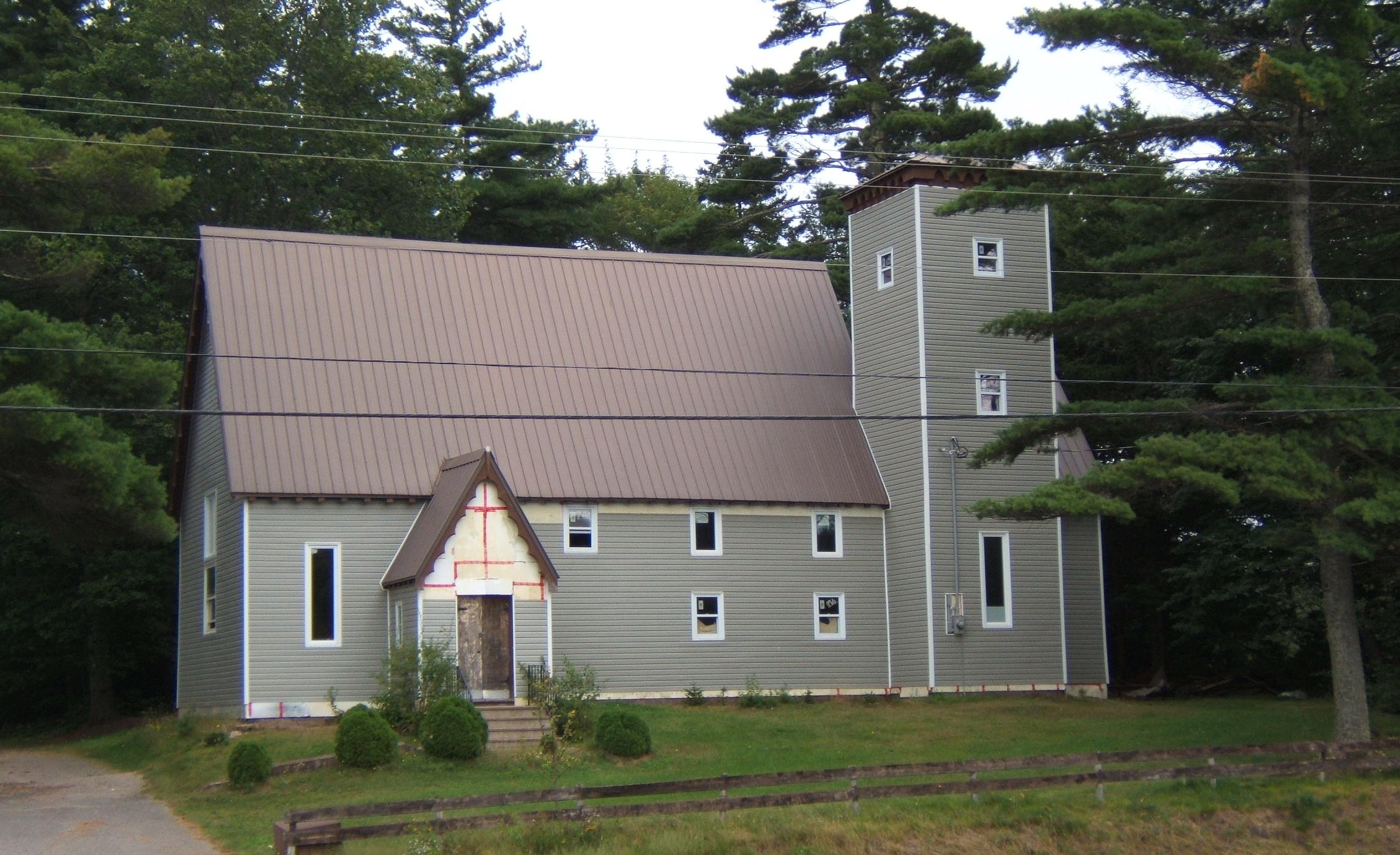
Some churches are sold and repurposed, into office space, or even homes…
Some churches are abandoned entirely, left as reminders of the landscape of the past…

Although it is vacant, this old church has someone to care for it, evidenced by the mowed lawn.

Crataegus
~
between ruby glass
and hard wood floor
a slide of light and three
~
extinguished candles
smoke lifts from smoulder
each mote a particle
~
of spectral light, mosaic
shard, image
reassembled in three
~
dimensions
shepherd, hawthorn
lamb
~
© Jane Tims 2011




 nichepoetryandprose
