Archive for the ‘sacred spaces’ Category
goodbye to the snow

~
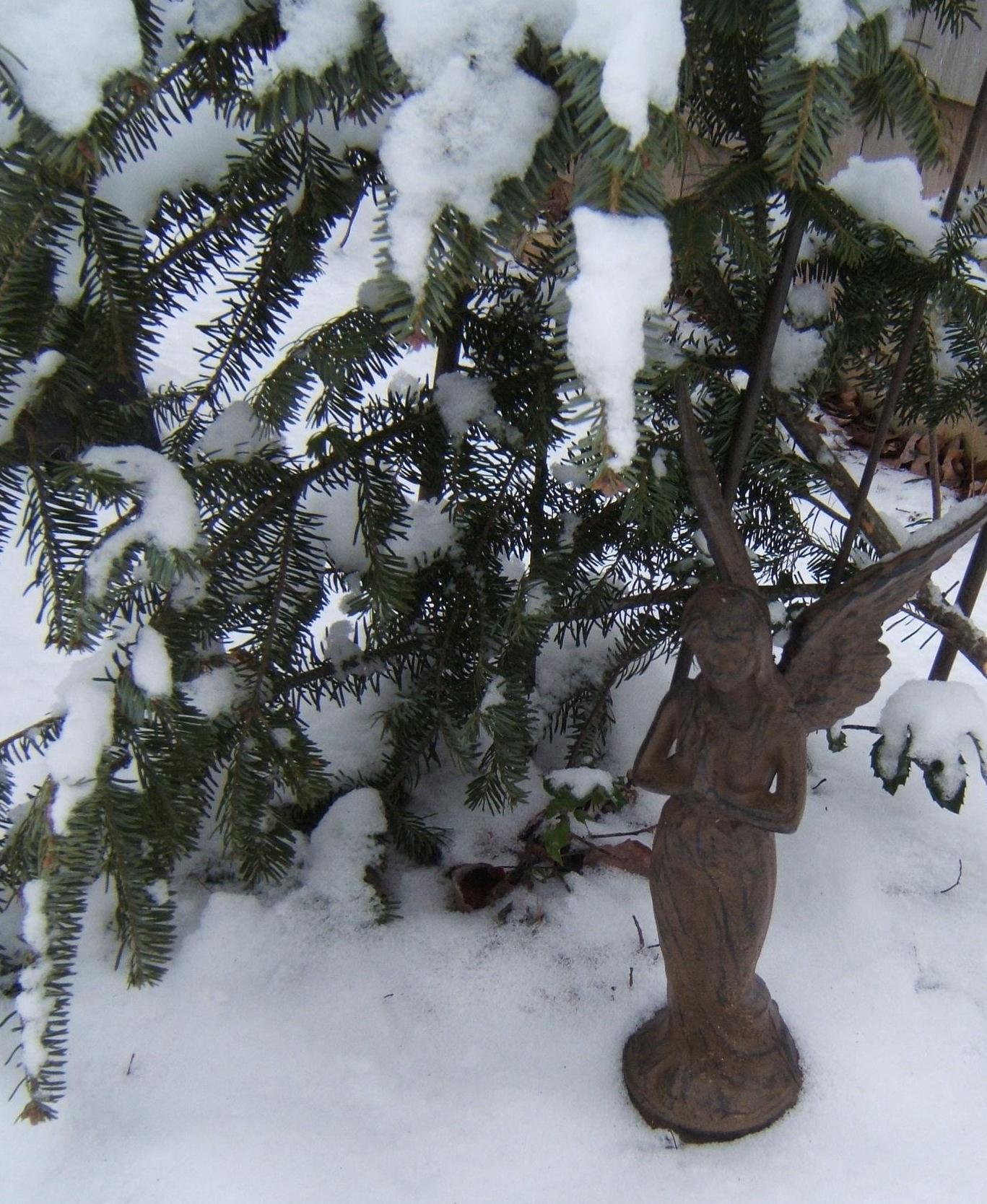
We have had a thick layer of snow for the last few days. But today, Christmas Eve, the rain is coming. The snow will disappear.
~
No matter. Green or white, Christmas is Christmas. I can hardly wait.
~
Merry Christmas, Happy Holidays.
~
~
Copyright 2014 Jane Tims

aromatic spring
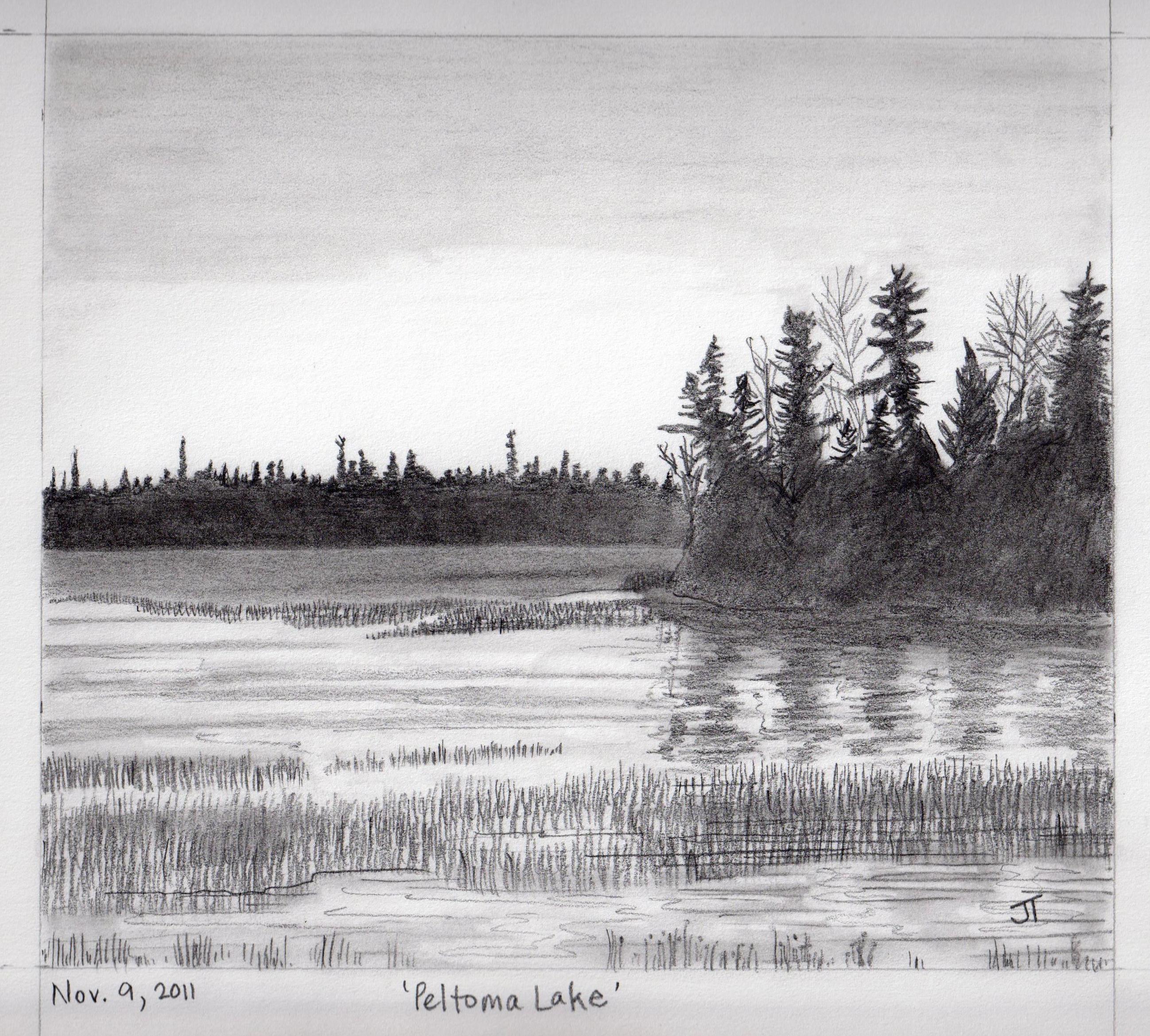
November 9, 2011 ‘Peltoma Lake’ Jane Tims
~
meadow aromatic
~
ozone lightning, late
waters cede, shoots
of cattail merge
end of day, end of June
fireflies, mosquito nights
~
lake-land meadow seeps
wetland meets nostril
marsh musk percolates
half sour, half sweet
methane ooze, decay
~
damp fiddleheads unfurl
bird beaks simmer
in duckweed soup
skin of salamander, frog
steeplebush, meadowsweet
~
angels crave human years, allow
their pores release, scent imitates
reek of sweat, of work
tears mingle with perfume
aftershave and powder
~
~
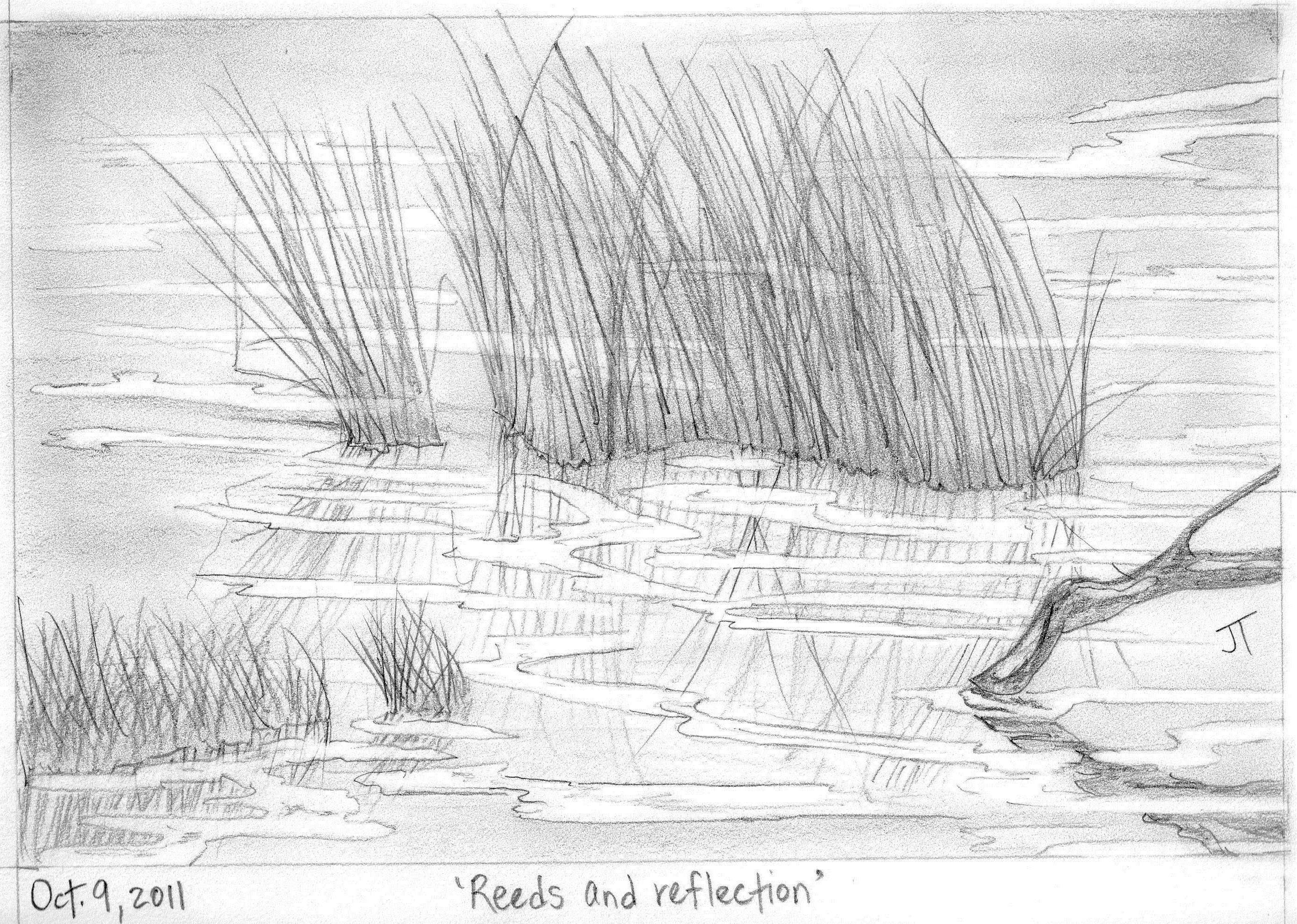
Oct. 9, 2011 ‘Reeds and reflection’ Jane Tims
~
Copyright 2014 Jane Tims
ghost girl
In Fredericton, there is a relatively famous road, called Waterloo Row. It is famous for its beautiful old homes and is featured in the Canadian version of the game Monopoly. For me, the road represents a favorite part of my former morning commute.
~
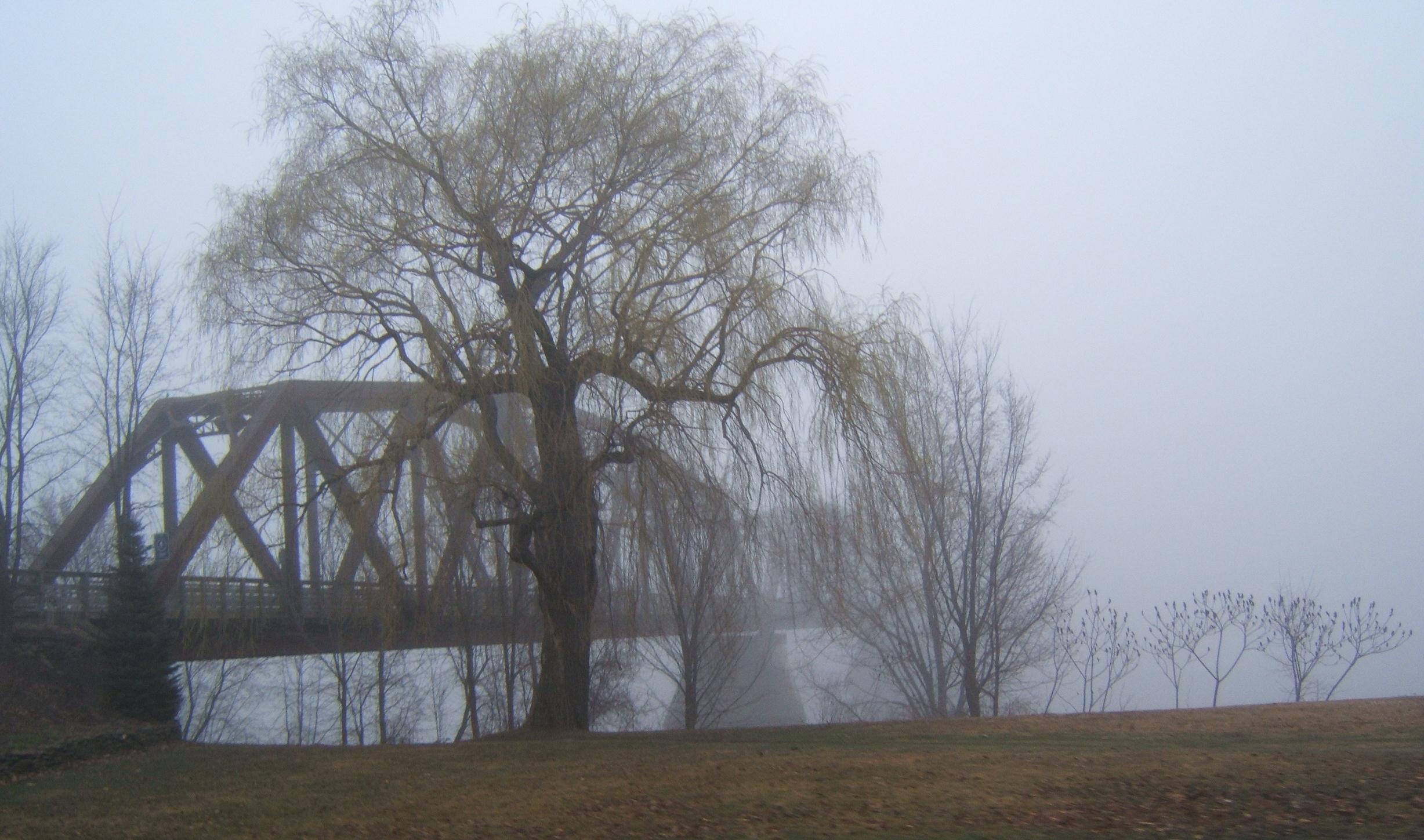
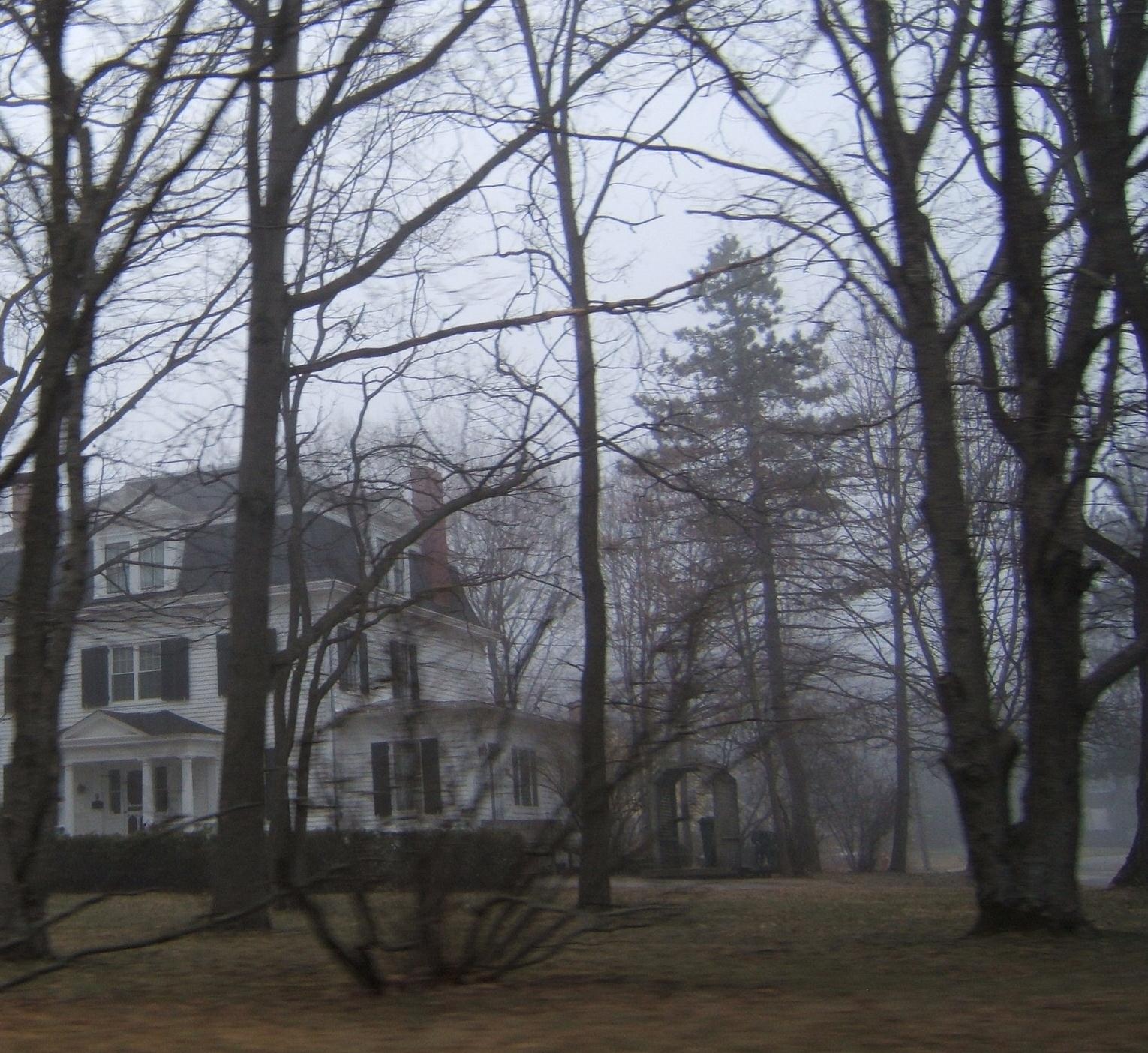
Especially in fog, Waterloo Row presents some lovely vignettes, including ghostly images of the St. John River, with the old bridge, now a footbridge, vanishing into the mist…
~
~
older homes, some of whom are reputed to be haunted…
~
~
and a bench along the river footpath, haunted by a young girl who sat there almost 34 years ago, considering her future…
~

~
I see her sitting there whenever I drive by. On a cool evening in May of 1980, she drove there on her bicycle and watched the river for an hour, thinking about what her life would be. In two months, she would marry, and her life would change in many ways. She thought about this and wondered.
~
If I could talk to her, I could answer almost all her questions. I could tell her about her marriage of (so far) 33 wonderful years. I could tell her all about her future husband and amazing son. I could tell her how relaxing it will be to be at home full-time after three decades of work. And I could tell her – the river could never be as beautiful as the sight of our small pond with its stone bench and violet-studded lawn on this day at the end of May, 34 years later.
~
Copyright 2013 Jane Tims
the tale of a marriage certificate
Of my eight great-grandparents, I have found myself most drawn to the story of Ella Hawk and Frank Norman. Before I became interested in them, my aunt did a considerable amount of work, so I have only had to fill in small gaps of information. If you follow my Blog, you will know I have looked diligently for information on their lives before 1886 when they married in Laramie, Wyoming (for a poem about Ella’s early life, see https://nichepoetryandprose.wordpress.com/2012/10/17/occupation-shoemaker/
~
I know several bits of information about the day Ella and Frank married – July 24, 1886. For one thing, I have stood in the Methodist Episcopal Church where they were married (see https://nichepoetryandprose.wordpress.com/2011/09/15/sacred-spaces-2/ ). Also, the newspapers for July 1886 are a great source of information on Laramie and the people living there at the time.
~
I also have copies of Ella and Frank’s Application for a Marriage Licence and their Certificate of Marriage. On the documents, Ella identified herself as Mary Ellen Rhoderick since she was previously married.
~

Marriage Licence Application for Frank Norman and Ella Hawk (Mary E. Rhoderick)
~

Certificate of Marriage for Frank Norman and Mary E. Rhoderick
~
Who were the people who signed my great-grandparents’ marriage documents?
~
George W. Fox, with the very elegant signature, was the County Clerk in Laramie from 1885 to 1888. An 1875 history of Laramie describes him as a ‘city alderman’, who, in 1866 crossed the Plains with an ox train, by way of Fort Laramie and the Big Horn’ to eventually work in the Laramie meat and vegetable market, and in the sales of dry goods. The history says: ‘by fair and honorable dealing has very much endeared himself to our citizens. In fact as a benevolent, high minded, business gentleman Mr. Fox has no superior’ (History and Directory of Laramie City, Triggs, 1875). George W. Fox is also known for his diary, kept in 1866 as he crossed the Plains (Annals of Wyoming 8 (3):580-601; https://archive.org/details/annalsofwyom8141932wyom ). His stories of encounters with stampeding cattle and rattlesnakes vividly portray the wild west.
~
S.H. Huber was the Minister of the Methodist Episcopal Church. According to the July 10, 1886 Daily Boomerang newspaper, Pastor Huber had been in Laramie for two years. He was in poor health and would stop preaching and leave for Illinois within the month. Another article says he performed the Sherriff’s marriage the week before Ella and Frank’s marriage. The First Methodist Episcopal Church, which still stands at 150N Second Street, was constructed in 1860 and was eventually moved across the street where today it is the oldest church building in Laramie.
~
Although there are other possibilities, it is likely that Lizzie Langhoff was a friend or acquaintance of Ella. Among three Langhoff families in the Laramie area in the 1880s are Charles and Almena Langhoff with their children Lizzie, Emma, Anna, Louis and Minnie. By 1884, this family had come from Plattsmouth, Nebraska (1880 US Census) to live in Laramie. Lizzie, Louis and Anna appear in the Roll of Honor for schools in the Laramie area several times from 1884 to 1886 (Daily Boomerang). Lizzie was born January 6, 1871, so she would have been 15 years old in July of 1886, perhaps old enough to witness a wedding. Lizzie Langhoff died in Laramie on April 25, 1892 (Wyoming: Find a Grave Index 1850-2012) at the age of 21.
~

Methodist Episcopal Church in Laramie in 2002 – this is the back and side of the original church which was rolled across the street to its present position
~
Ella and Frank did not stay in Laramie for long. In the 1890s they lived in Denver Colorado where my grandfather Leo was born in 1890.
~
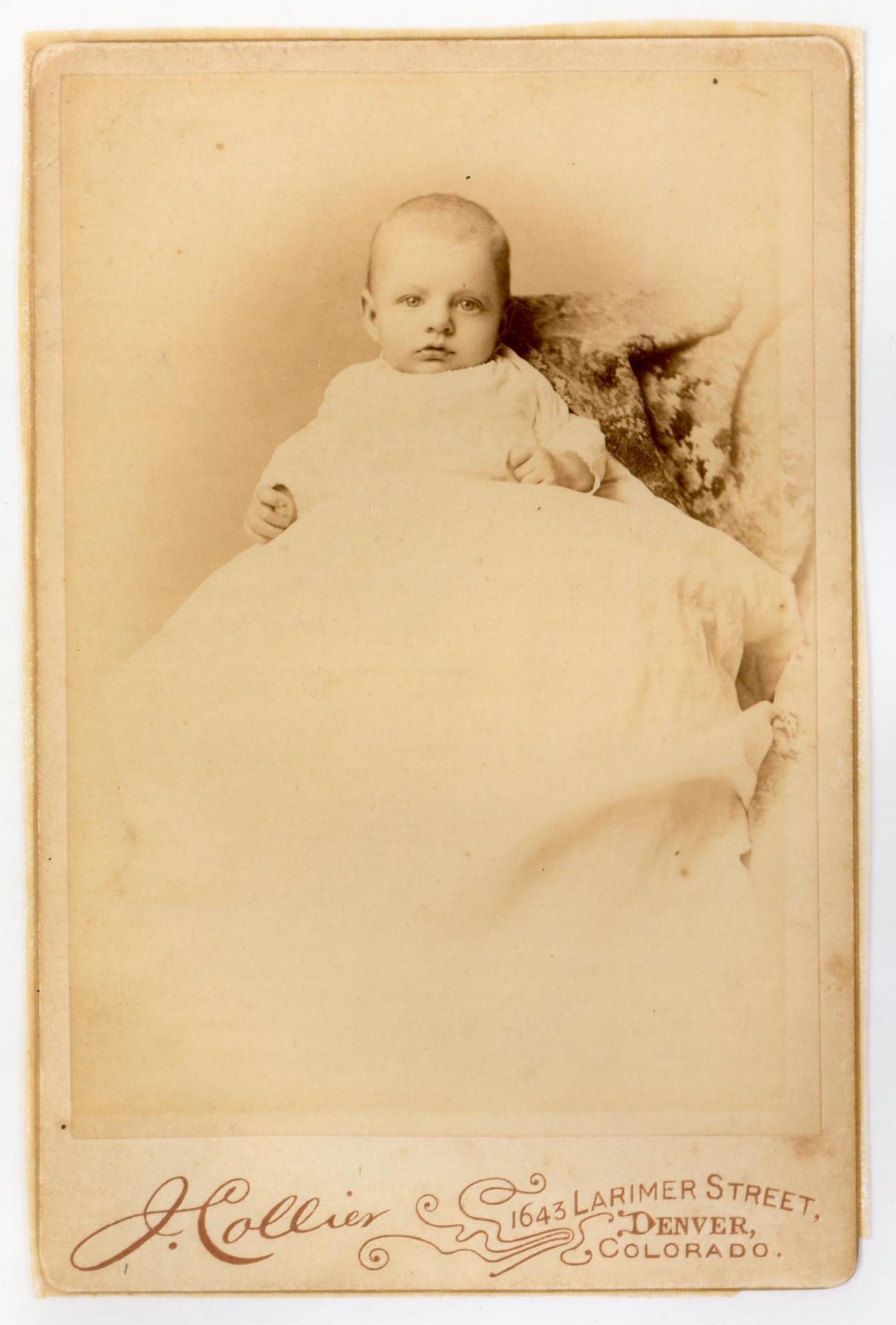
Leo Norman, born 1890
~
Unfortunately, Ella and Frank’s marriage did not last. I have the paperwork for their Divorce Decree in 1896. Nevertheless, I owe my existence to their decade-long marriage and the sense of adventure their short time in Laramie has brought to my own life.
~
Copyright 2014 Jane Tims
getting ready for Christmas #3 – a countdown to Christmas
In our house, we usually do a countdown to Christmas. Ours is a countdown through Advent, beginning on the first Sunday in Advent and marking off the days, one at a time.
Most years, I have a Jesse tree, a tradition in some Christian homes. This celebrates the long genealogy of Jesus who was of the house of Jesse, the father of David. When my son was little, we had bread-dough ornaments each illustrating Biblical events. When he grew older, and as the ornaments started to show their age, I put red and green ribbons on our Jesse tree. The Jesse tree itself is a two to three foot tall branch from a birch tree. A memory I have through the years is of ironing those ribbons to remove the wrinkles of the year gone by.
~
We also have a fabric Advent calendar with pockets for small treats. Most years we put mint sticks in each pocket. This year we couldn’t find our usual mint sticks, so we wrapped sticks of chocolate, one for each day in the calendar.

~
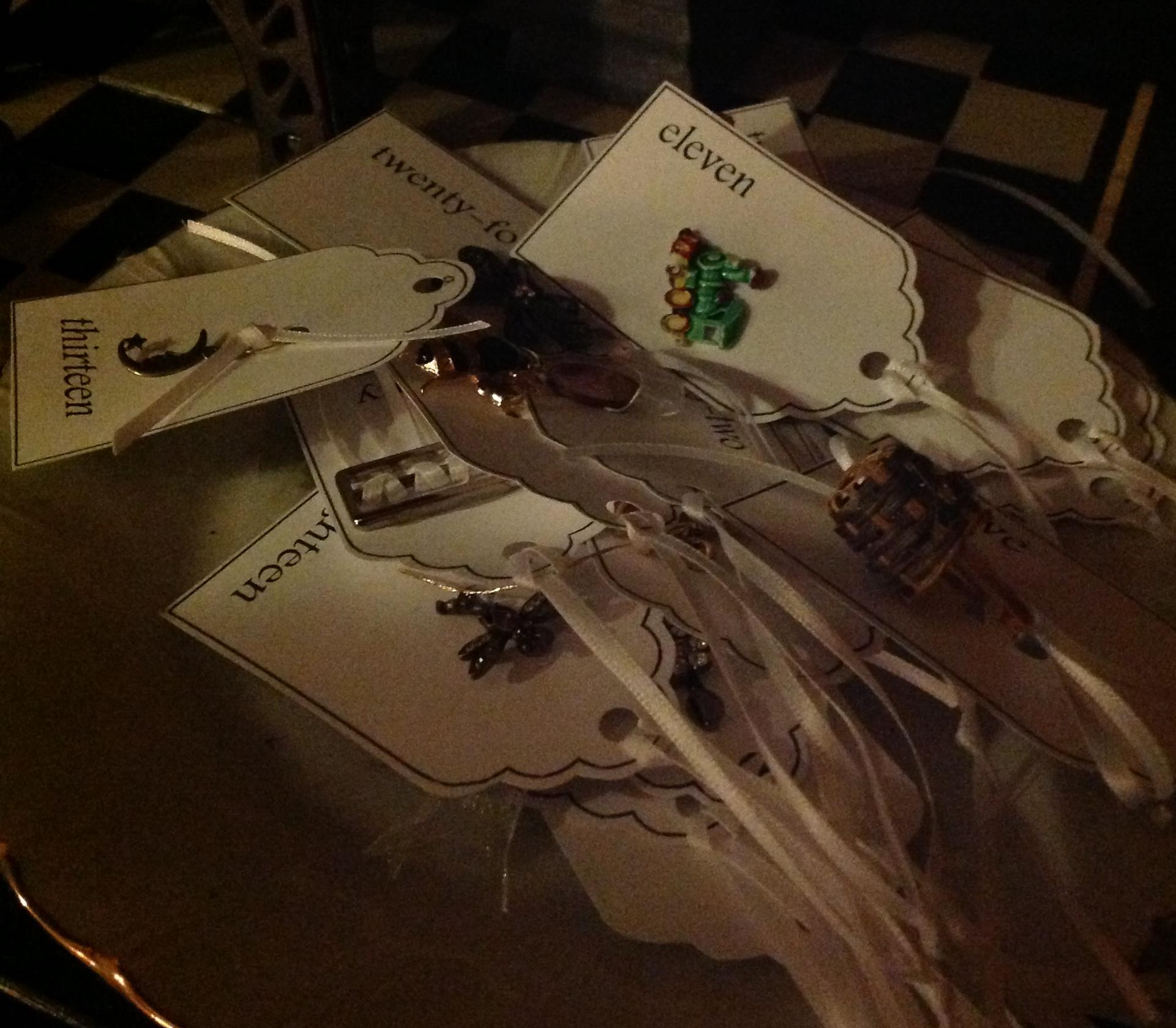
This year, I decided to create something new to use for our countdown. On Pinterest, I have seen several examples of countdown ornaments created from tags embellished with various trinkets. So I made twenty-five of these, since this year Advent and December both began on December 1st.
~

~
I printed tags with the numbers spelled out and fixed a small memento to each one. Most of these are trinkets I have kept in odd drawers over the years – mismatched earrings, buttons, acorns, feathers, shells, Christmas pins and so on. I threaded a ribbon through a hole punched in the tag. Each day since December 1, I have hung a new ornament, tying them to the bar of a drying rack we have in the living room.
~

~
The ornaments are pretty and remind me of the days ahead and the days that have come and gone.
~
~
Do you count down the days until Christmas????
~
Copyright 2013 Jane Tims
restoring an old church 5-9
~
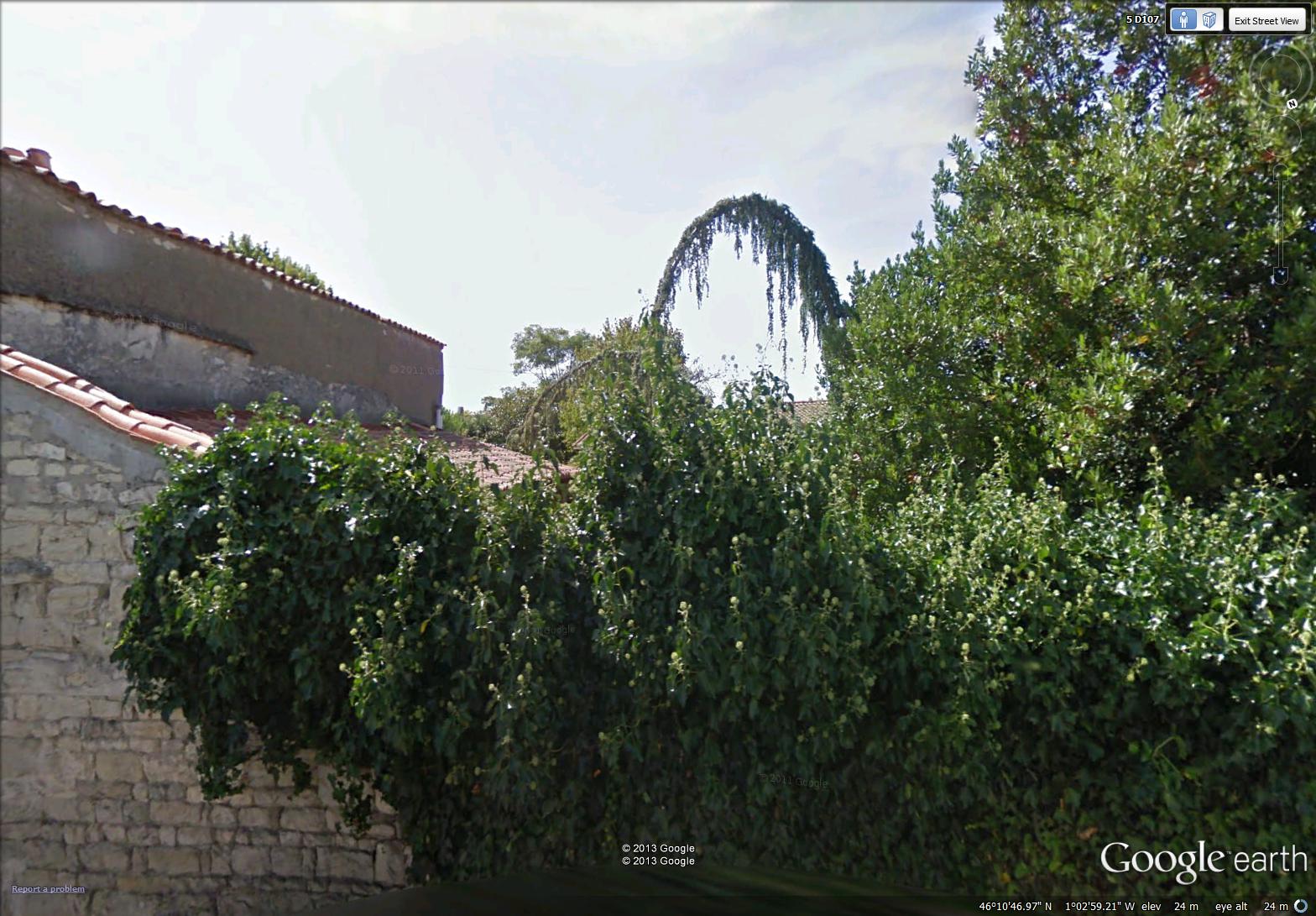
vine-covered arch in enclosed garden in Belle Croix (image from Street View)
~
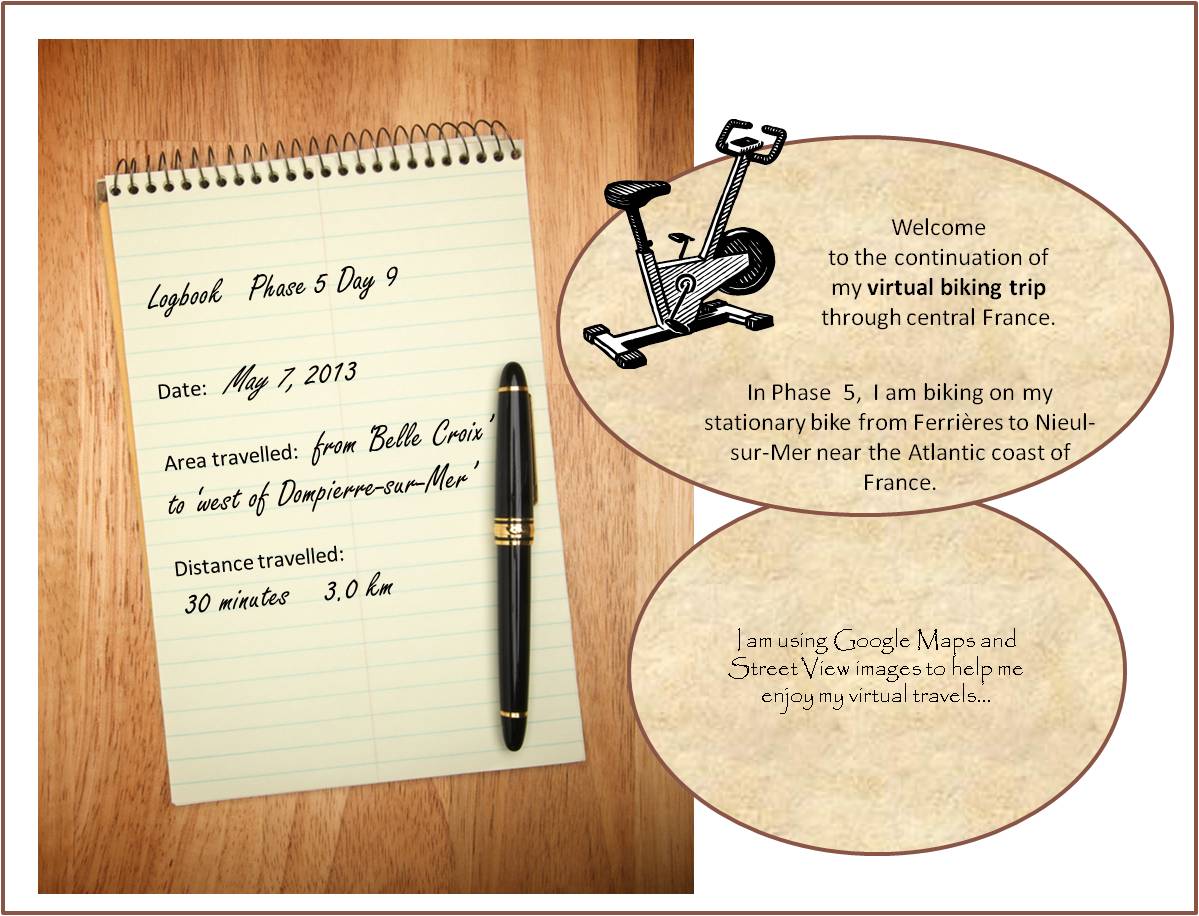
~

map showing distance travelled (map from Google Maps)
~
On May 7, I took my virtual bike through the area of Dompierre-sur-Mer and saw so many interesting sights. The gardens were lush and green. Even the traffic circles were small oases of interesting plants …
~
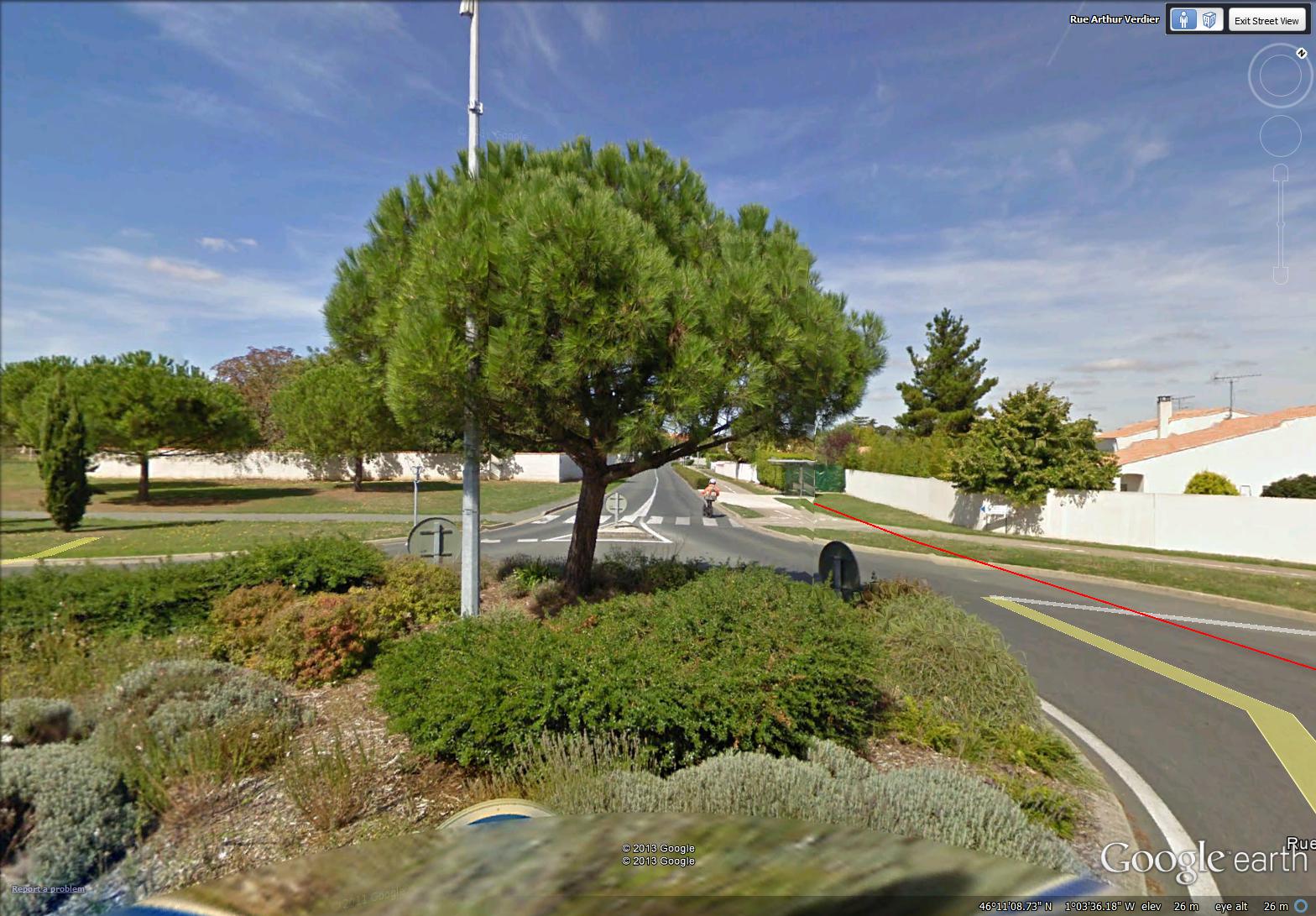
planted traffic circle in Dompierre-sur-Mer (image from Street View)
~
In the town, I was very interested to see an old church, the Prieuré Saint-Pierre, in the process of restoration. Thanks to the magic of Street View, I could see a photo of ‘before’ …
~
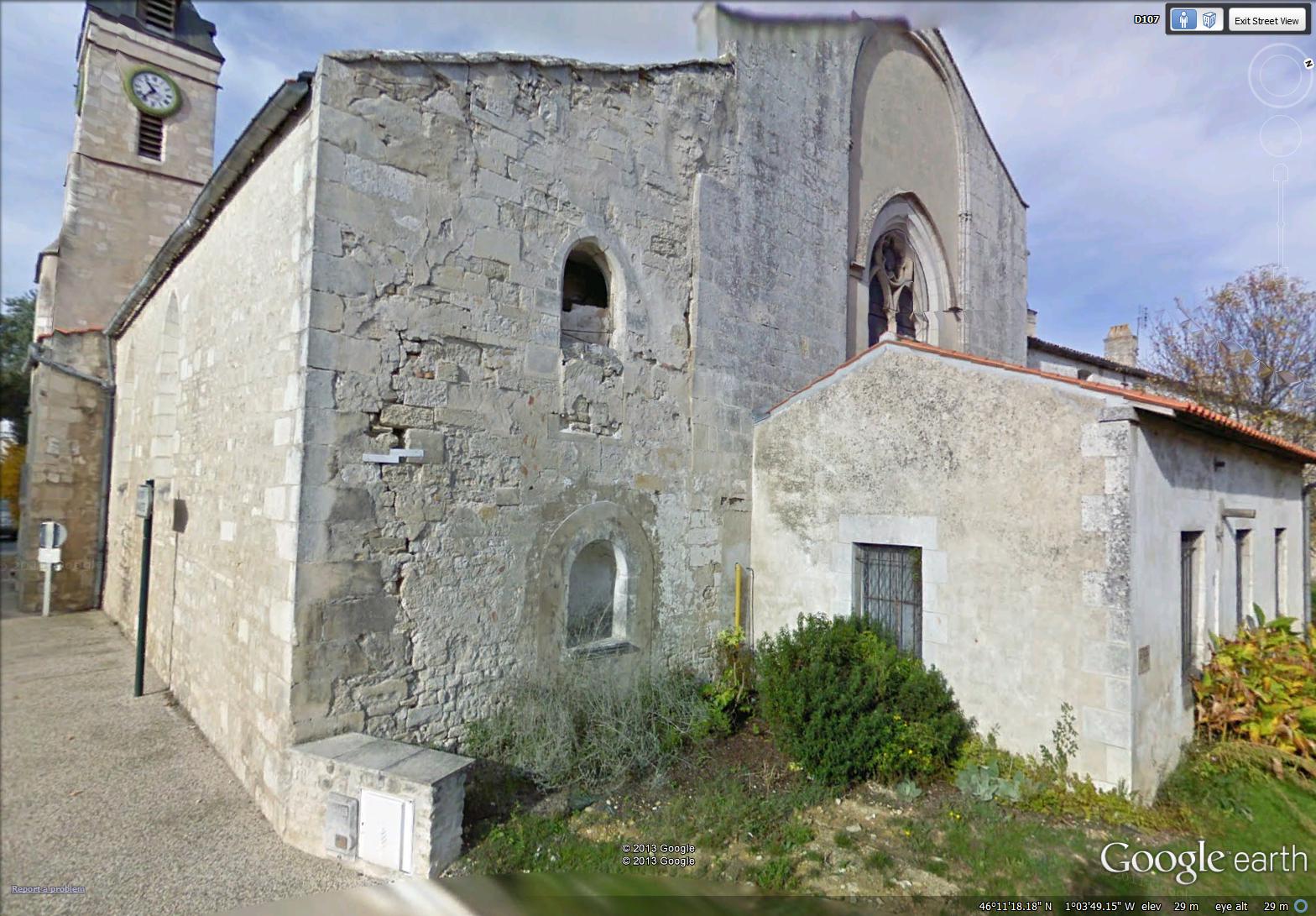
Prieuré Saint-Pierre before restoration in October of 2009 (image from Street View)
~
and ‘during’ …
~

Prieuré Saint-Pierre during restoration in September 2010 – the small building at the rear of the church has been demolished and the restoration of the back wall is underway (image from Street View)
~
The Prieuré Saint-Pierre in Dompierre-sur-Mer was founded in the 11th century by the monks of the Abbey of Maillezais. I ‘visited’ this abbey in the post for April 24, https://nichepoetryandprose.wordpress.com/2013/04/24/a-side-trip-to-an-old-abbey/ .
~
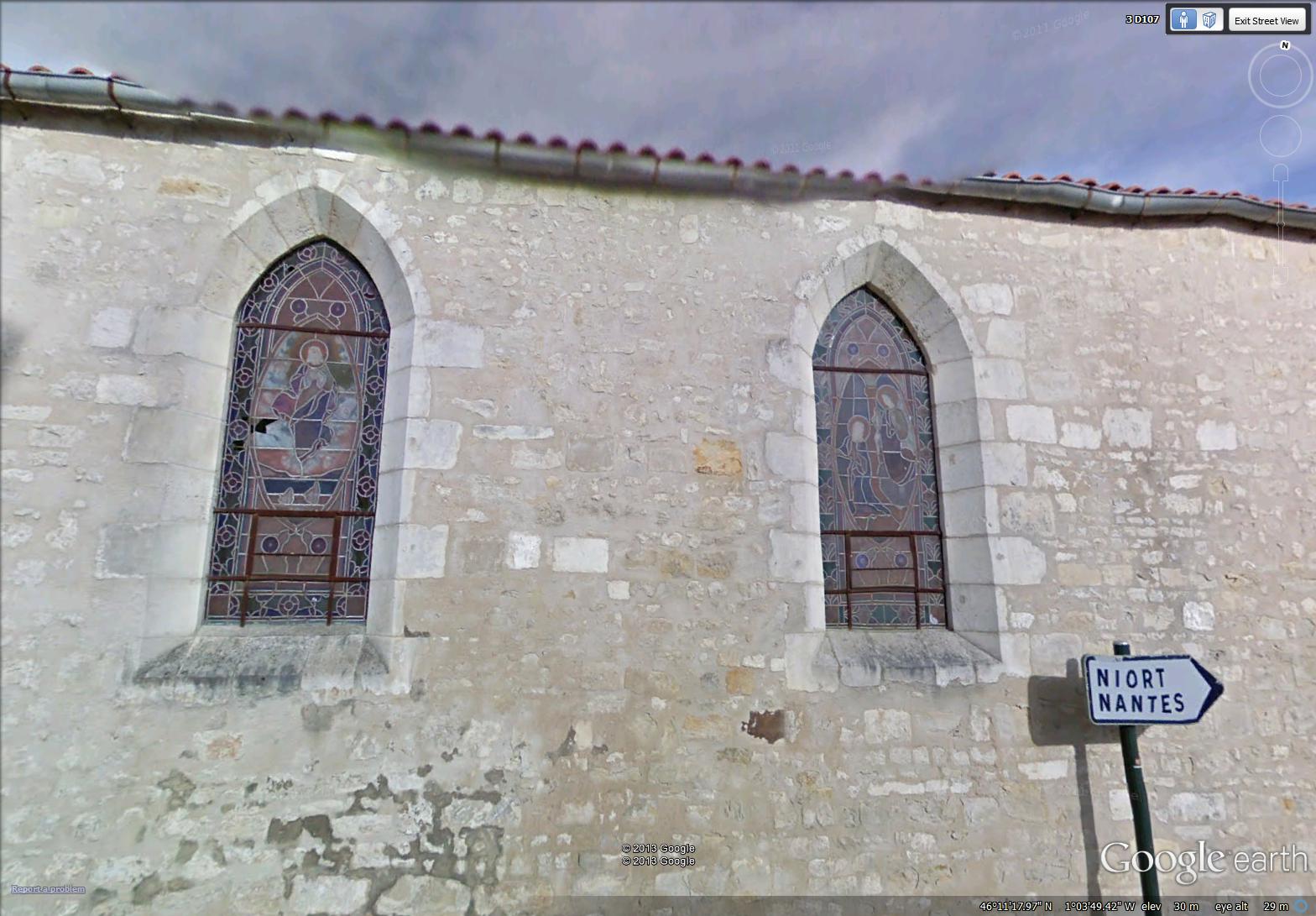
I could see the outside of some of the stained glass windows …
~
~
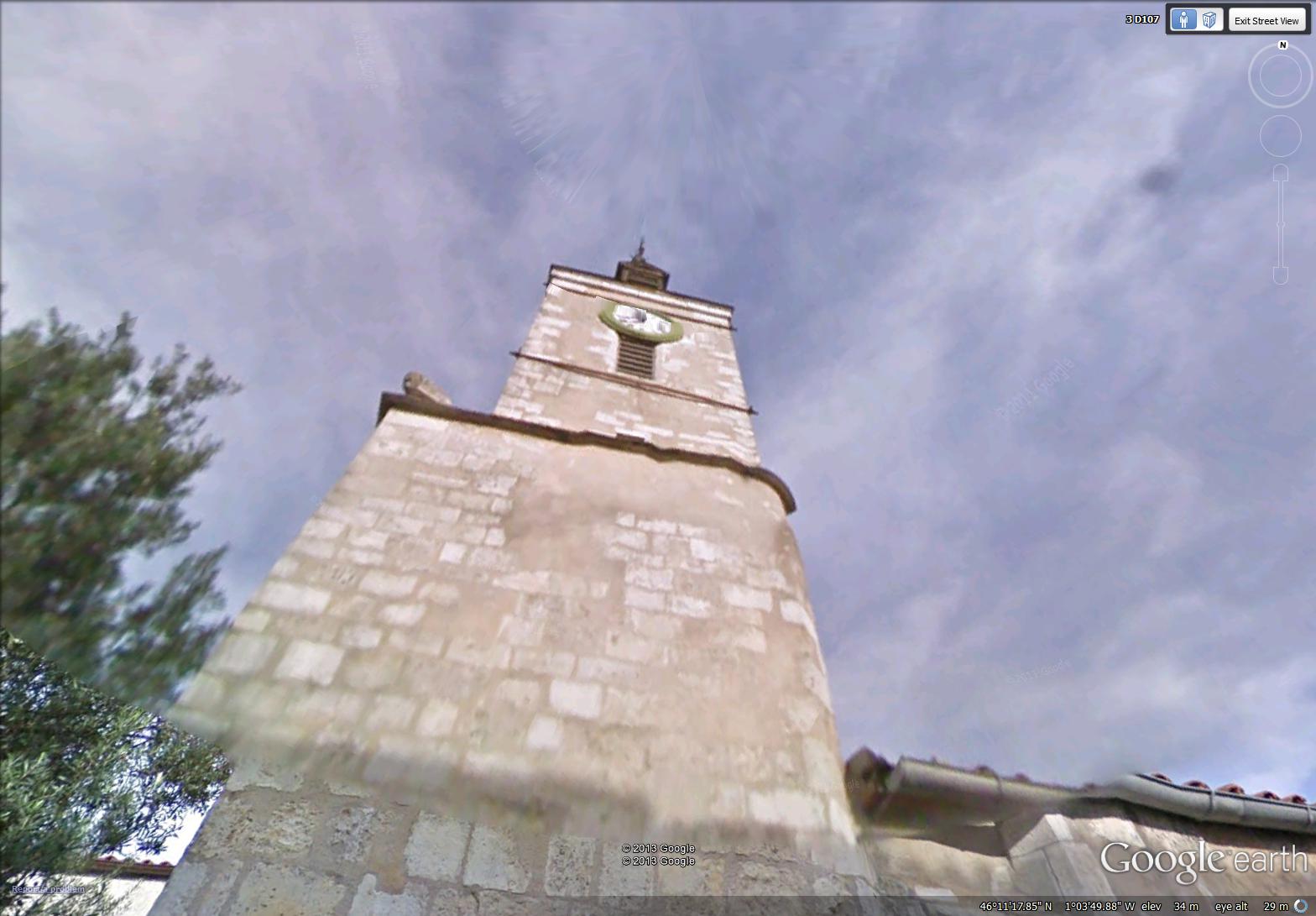
and the Bell Tower. From my reading, I learned a spiral staircase provides access to this tower …
~
~
As I passed the church, I looked back to see a worker restoring the entryway of the church …
~

~
A description of this entry is found in a short account of the church’s architecture and its long history of collapse and restoration at http://en.patrimoine-de-france.com/charente-maritime/dompierre-sur-mer/prieure-saint-pierre-2.php
~
The account reads, in part: ‘The western façade has a triangular pediment surmounted by a Latin cross. The entrance gate is a double leaf door surmounted by a tympanum in carpentry, highlighted by an arcade basket. A molded headband short above the door. Above is drilled an oculus …’
~
You can see each of these features in the image above. A ‘pediment’ is an element of classical architecture, a triangular gable. A ‘tympanum’ is the decorated element over a door, above the lintel. An ‘oculus’ is a central opening in a wall, allowing light to enter the building.
~
Best View: the outside of a stained glass window in the Prieuré Saint-Pierre. The scene in the window depicts the Ascension of Jesus …
~

~
Copyright Jane Tims 20131
fields of green and marble statues

fields of green on the road to Saint-Hilaire-la-Palud (image from Street View)
~

~
~
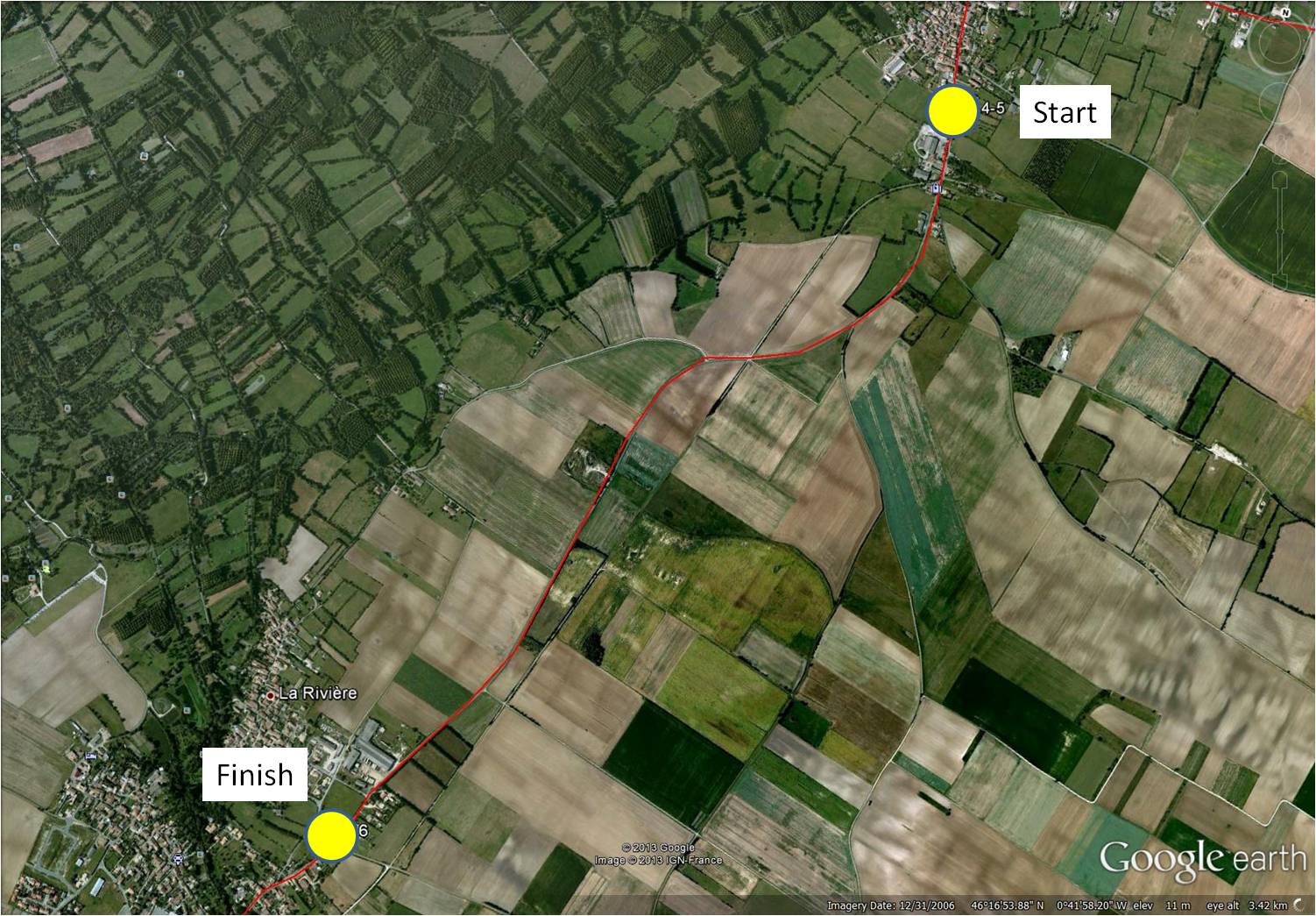
On April 1, I biked along the road to La Rivière and Saint-Hilaire-la-Palud. Lots of green fields and flat land …
~

~
At an intersection, I saw a shrine, indicating the strong Catholic roots of the area. I have seen these shrines at several locations in central France on my virtual travels. Sometimes the shrine is a crucifix …
~

shrine on road to Saint-Hilaire-la-Palud (image from Street View)
~
sometimes a statue of Christ …
~

a statue of Christ at corner near La Roche (image from Street View)
~
Sometimes the shrine shows a Saint. In Maillezais is a statue of Mary holding the body of her son Jesus in her lap, after the Crucifixion. It is similar to the famous 15th century statue of the Pietà by Michelangelo…
~

statue in Maillezais of Mary holding Jesus in her lap – the image is not easy to see, but Google ‘Pieta’ to see the beautiful statue by Michelangelo (image from Street View)
~
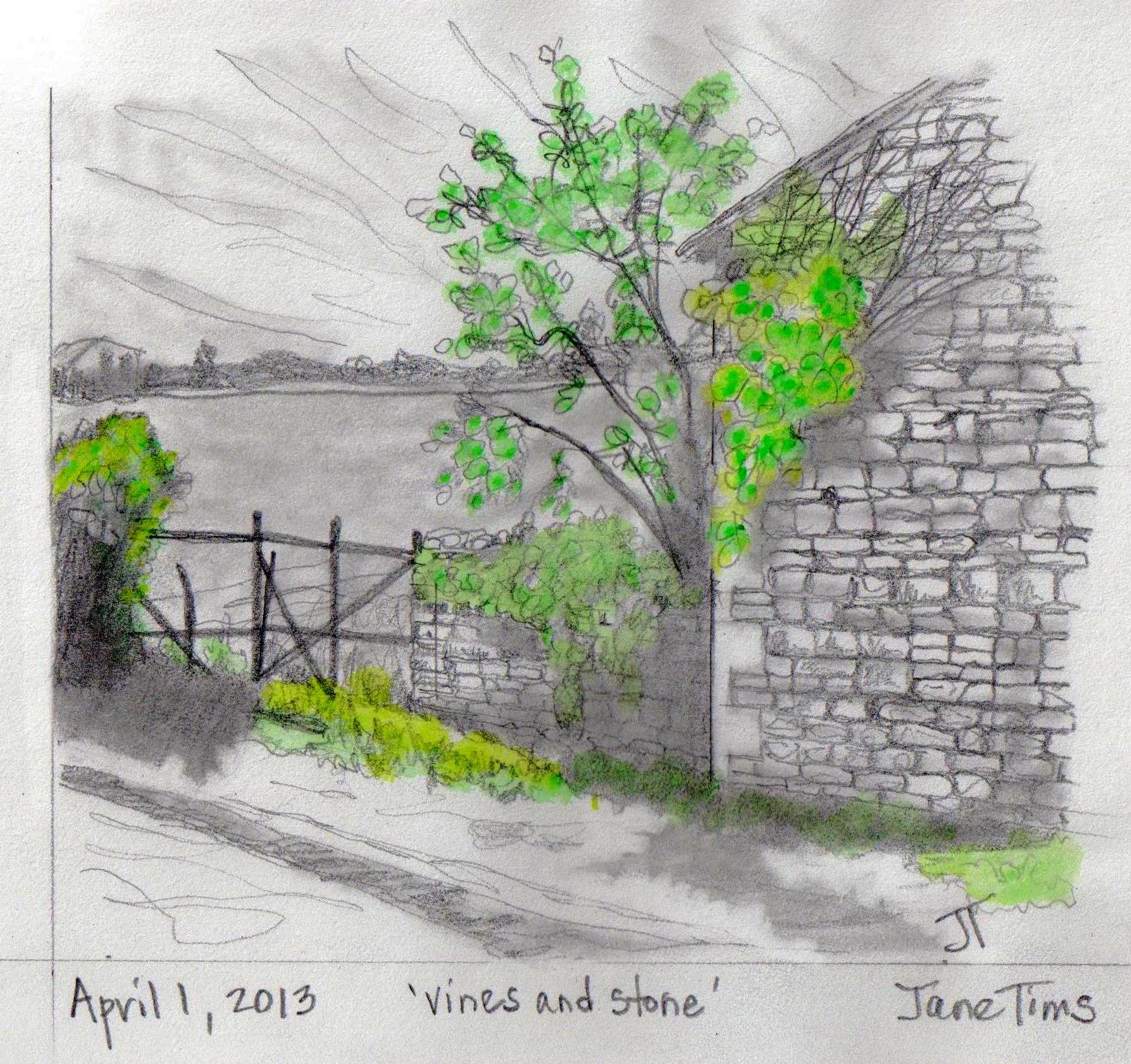
Best View: entry to a field by a vine-covered building…
~
~
Copyright Jane Tims 2013
a side trip to an old abbey
~
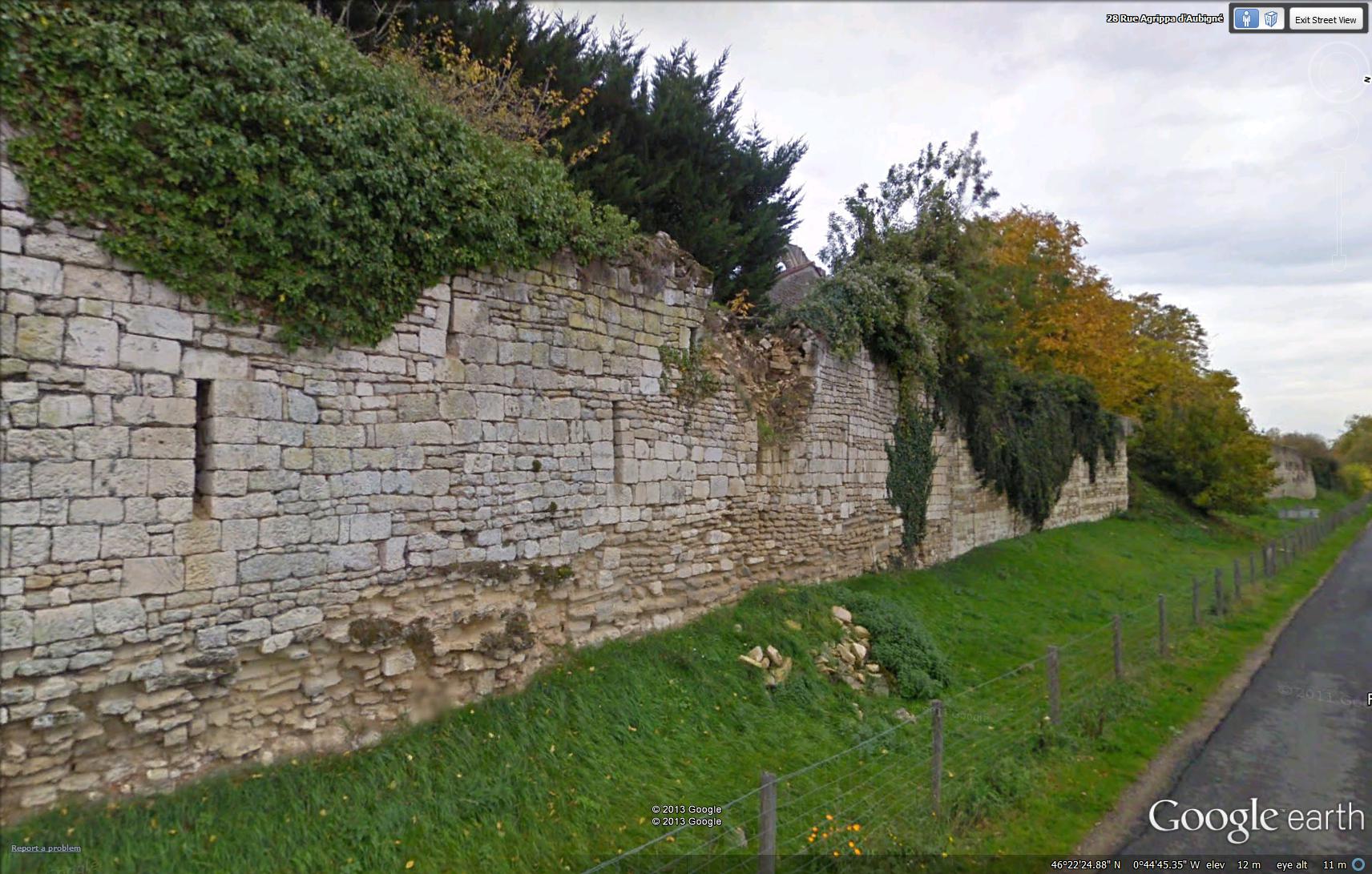
wall around abbey in Maillezais (image from Street View)
~

~

map showing distance travelled (map from Google Maps)
~
On March 29, I completed my side trip to see the Abbaye St Pierre in Maillezais. Maillezais is a charming town with the narrow streets I am growing used to…
~
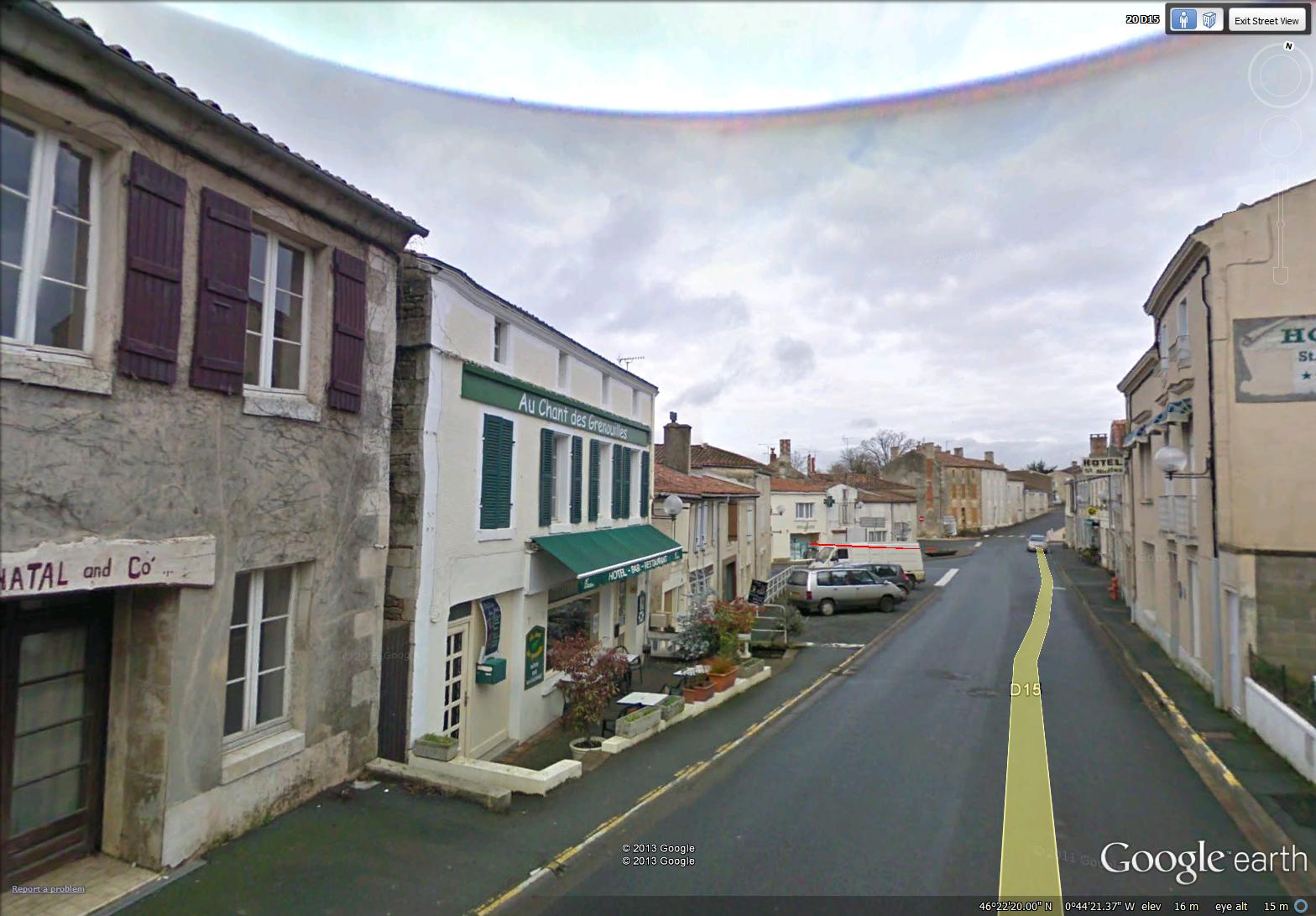
street in Grande Bernegoue (image from Street View)
~
Not much greenery in this town – this vine looks like it is hanging on by a thread…
~
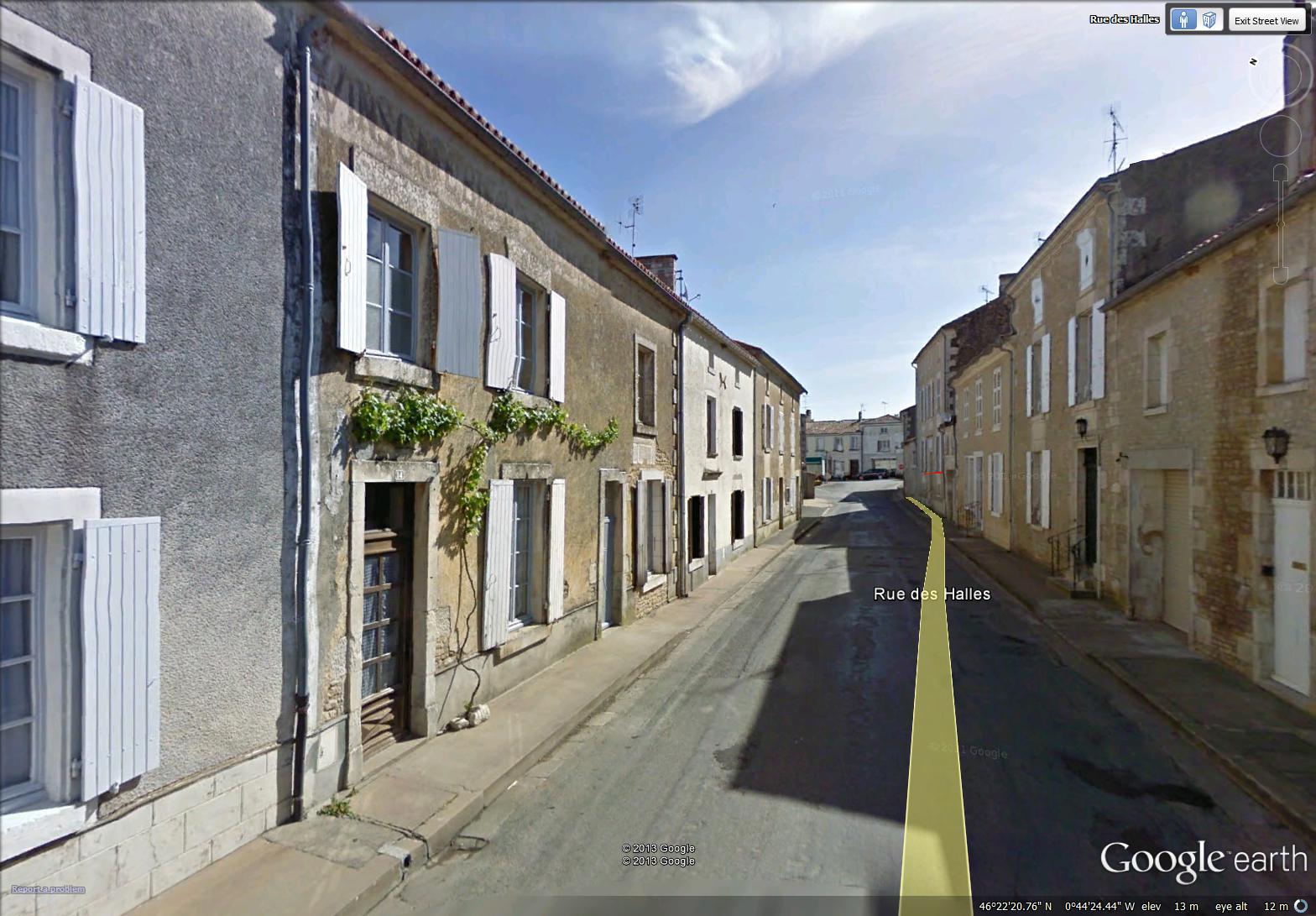
vine struggling to survive (image from Street View)
~
The Abbey St Pierre was certainly worth the virtual side trip. It was built in 989 AD on an island, a rocky outcrop, in the Marais Poitevin (the Poitevin Marsh). The Benedictine Abbey and Cathedral were destroyed in 1562 during fighting between French Catholics and Protestants.
~
At the entryway to the Abbey grounds is an old building, one of a few still standing on the site…
~
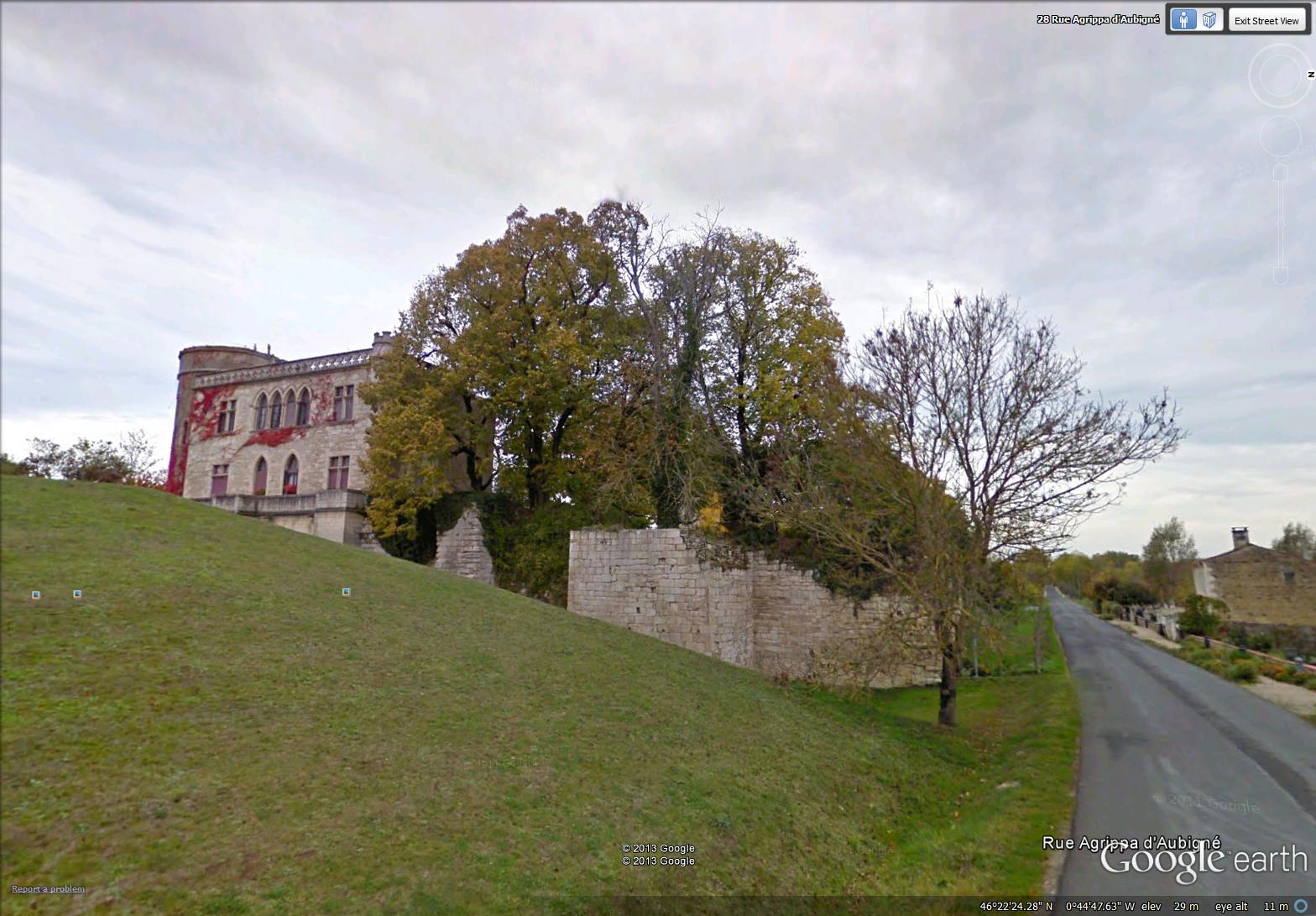
view of entryway to Abbey (image from Street View)
~
The aerial view of the grounds shows the extent of the Abbey …
~
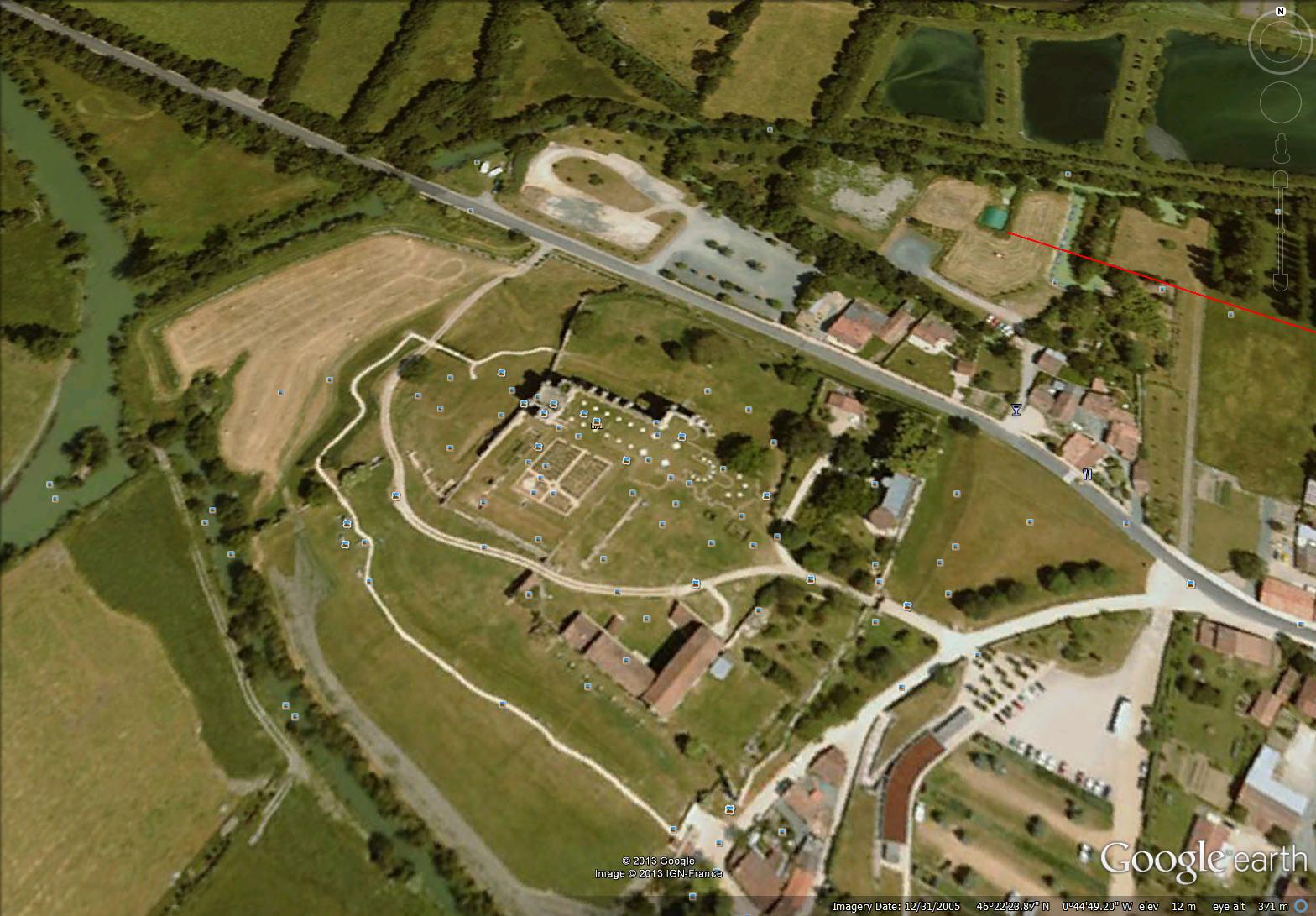
map of abbey – the standing cathedral ruins are the dotted area and the grey wall to the upper edge of the ‘dots’ (former cathedral pillars) (map from Google Maps)
~
The ruins of the abbey form a majestic silhouette above the walls surrounding the site…
~

ruins of cathedral (image from Street View)
~
Best View: the silhouette of the Abbey
~

~
Copyright Jane Tims 2013
a stone church
~
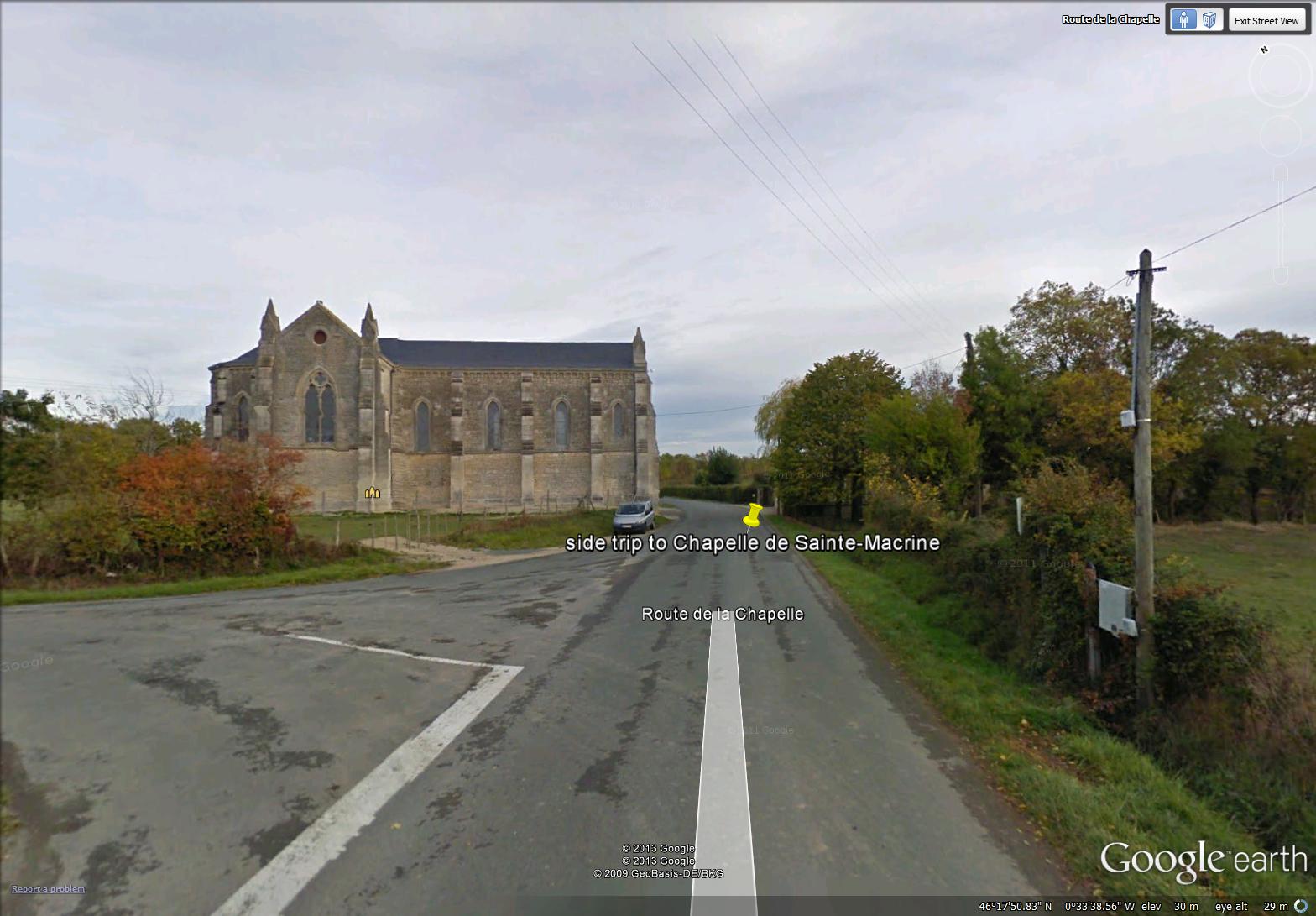
Chapelle de Sainte-Macrine (image from Street View)
~
~
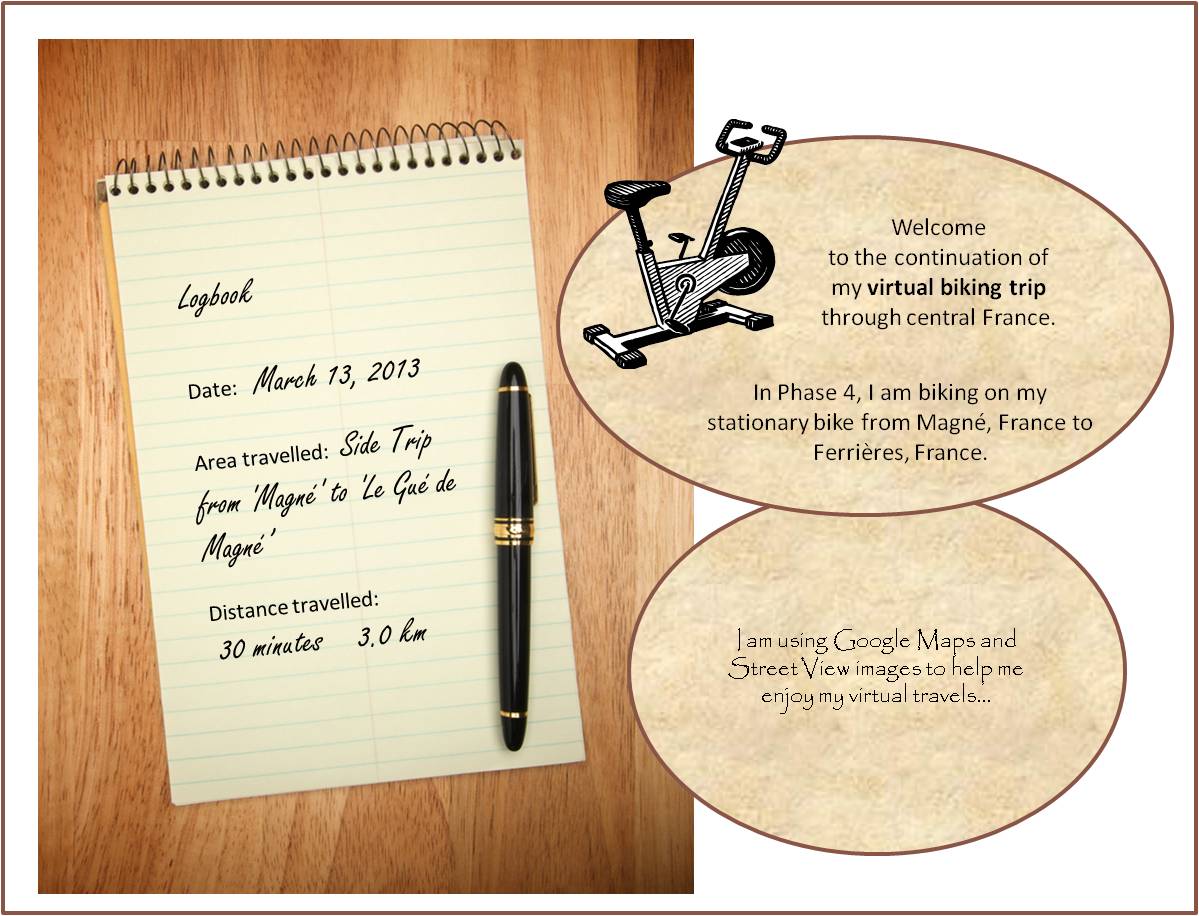
On March 13, I strayed from my planned path to take a 3 km side trip to see the Chapelle de Sainte-Macrine. I have seen very few churches on my virtual bike trip, since Street View follows only the main roads – churches tend to be on side streets.
~

map showing distance travelled (map from Google Maps)
~
The first part of my trip was along the Rue des Ouches (meaning garden or orchard). True to the name, many of the properties had neat gardens…
~

one of the gardens along Rue des Ouches (image from Street View)
~
The church was of stone, cross-shaped, with buttresses and a large rose window. The buttresses project from the sides of the church and serve to reinforce its walls. Saint Macrine was a fourth century Saint who lived in the woods near Niort, France for seven years to escape persecution…
~
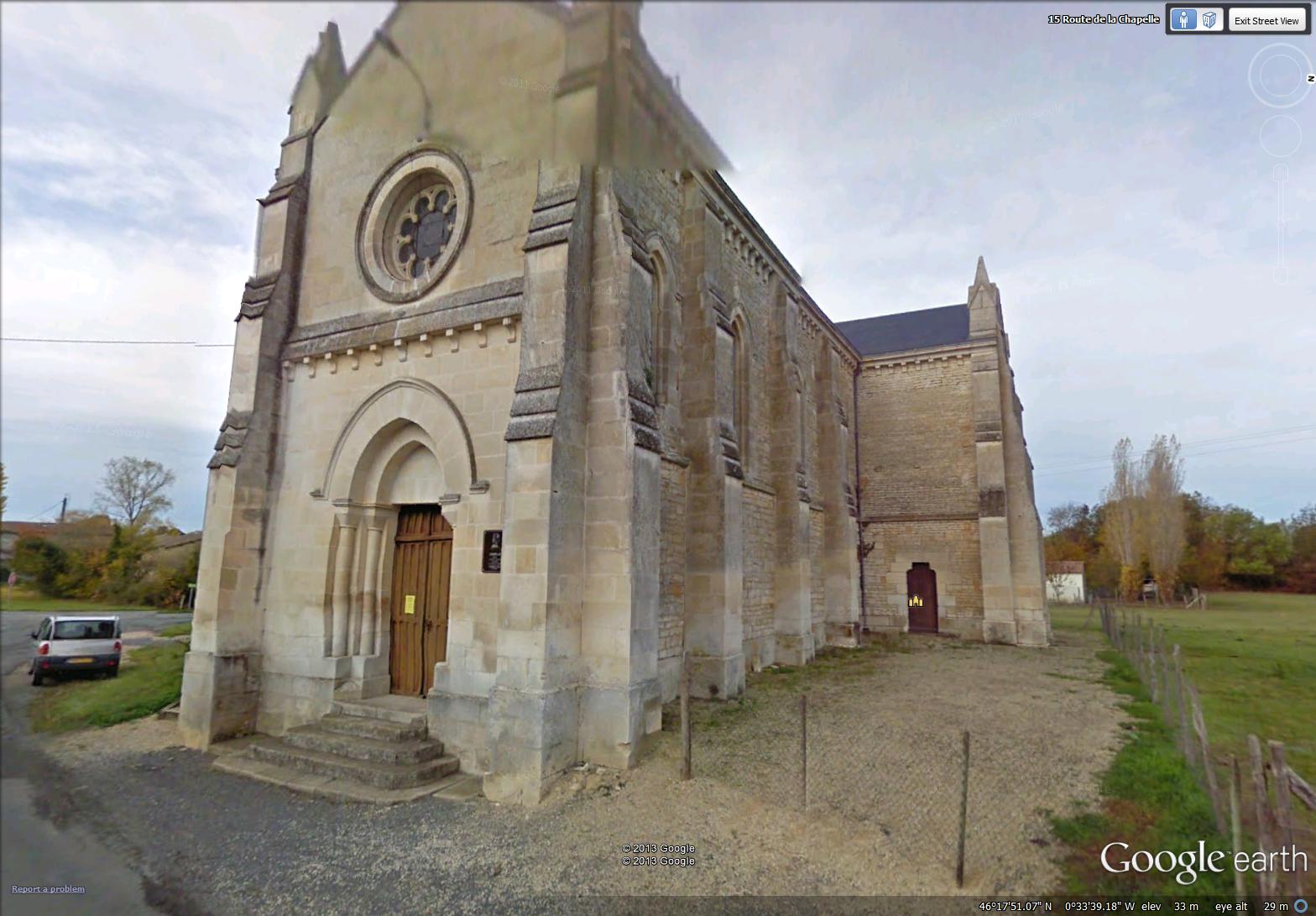
Chapelle de Saint-Macrine (image from Street View)
~
Best View: the rose window in the church…
~

~
I have realised that by following a single route, I have missed many features of the countryside. In Phase 4 of my virtual bike trip, I am going to plan some side trips to see some interesting features of the French countryside.
~
Don’t you think that side trips can be the best part of a journey?
~
Copyright Jane Tims 2013





 nichepoetryandprose