Archive for the ‘natural history’ Category
colour: solemn, sombre
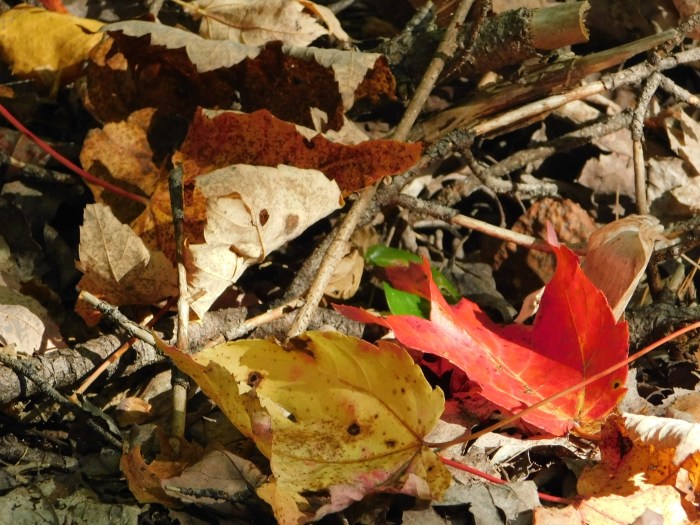
October in New Brunswick is an explosion of colour. However, as the red and orange leaves fall, browns and yellows begin to dominate the landscape.
~

View of Nerepis marsh looking south. The ferry is crossing the river, barely visible in the mist.
~

Colour variety in the marsh grasses.
~

Hay-scented fern adds yellows and browns to the ditches.
~
solemn, sombre
~
walked out to see you
once again as you
lay dying, somber
the soft light, marsh grass
leaning in the rain
autumn colour fades
tones solemn, ochre
of poplar and birch,
straw-pale, hay-scented
fern, Solidago
and tansy, shadows
in the ditch, the heads
of Typha
burst to seed
~
~
Copyright Jane Tims 2019
~
Best wishes everyone!
Jane
wild turkeys in New Brunswick
As we came back from our drive in Charlotte County last weekend, we were on the lookout for wild life. And we were not disappointed.
~
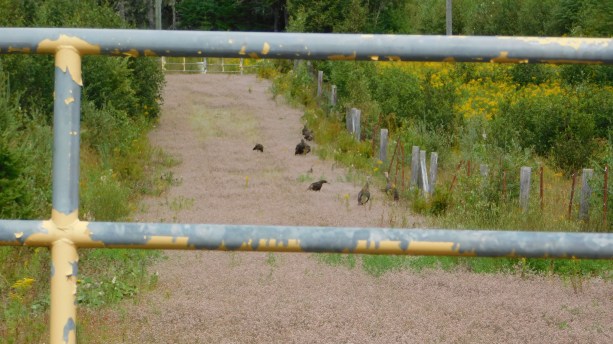
Down an unused road we saw twelve wild turkeys. Most, perhaps all, were females. In recent years we have seen wild turkeys more often on our various drives.
~
They are fun to watch. They are quite social. Some were foraging, probably eating seeds, berries or insects; others were resting among the pink rabbit-foot clover.
~
~

~
The University of New Brunswick is asking people to report the wild turkeys they see. The study will help determine the status of populations in New Brunswick. Report sightings to the Facebook Page NB Wild Turkey Research
~
All my best,
Jane
dandelion fluff
~
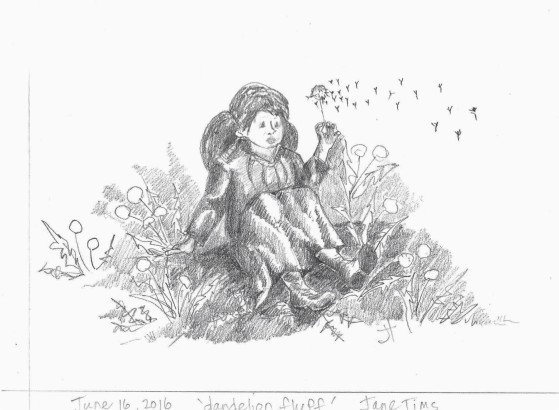
dandelion fluff
~
purse lips
and puff
make a wish
scatter seeds
to wind
and follow
into sun
~
~
Copyright Jane Tims 2019
~
All my best,
Jane
Pearly everlasting

~
Pearly Everlasting
Anaphalis margaritacea L.
~
Pearly Everlasting
sign of summer’s passing
yet – immortelle
picked by the road
by the armload
hung from rafters
children’s laughter
runs beneath
~
downy leaf, woolly stem
white diadem
perfectly matched flowers
thatched in gold
dry and old
~
Linnaeus named
for Marguarite
memory sweet
paper petals keep
pale perfume
summer grace
in a winter room
~
~
Published as: ‘Pearly Everlasting’, The Antingonish Review 92, 1993 and at niche poetry and prose, August 20, 2012 here
Copyright Jane Tims 2012
~
~
All my best,
Jane
spring chorus – snipe
For the last two mornings, about 9:00, about one and a half hours after sunrise, I hear a song that is not a song. A winnowing ‘hoo, hoo, hoo, hoo, hoo, hoo,’ like a repeated, trailing set of high pitched notes, echoes in the grey woods. This is the mating display and call of a snipe. The amazing thing is, the call is not coming from the snipe’s throat, but from its feathers. As it flies, the air moving through the tail feathers makes the ‘call.’ To hear this sound, visit here.
The snipe is a bird of wetlands and marshes. It has a long bill and black, white and brown feathers. There is still lots of snow on the ground but this bird seems anxious to get on with the season.
The only other birds singing this morning were the crows and our neighbour’s rooster!
~

Partridge and Grouse – which are you???
In New Brunswick, we have three birds which I confuse and name ‘Partridge‘. Remember I am a botanist and come by my bird knowledge through secondary sources.
~

a ruffed grouse or a grey partridge? the first clue is habitat (the mainly hardwood woodlands)
~
The Ruffed Grouse (Bonasa umbellus) is a bird of the woodlands (mostly hardwood) and is the bird heard ‘drumming’ in our woods in spring. Its plumage varies from pale brown to bright mahogany. It has a fanning tail and head feathers which stand up like a crown. The feathers around the neck ruff up too. Since these birds are locally referred to as ‘partridge’, there can be confusion between the Ruffed Grouse, the Spruce Grouse and the Grey Partridge.
~
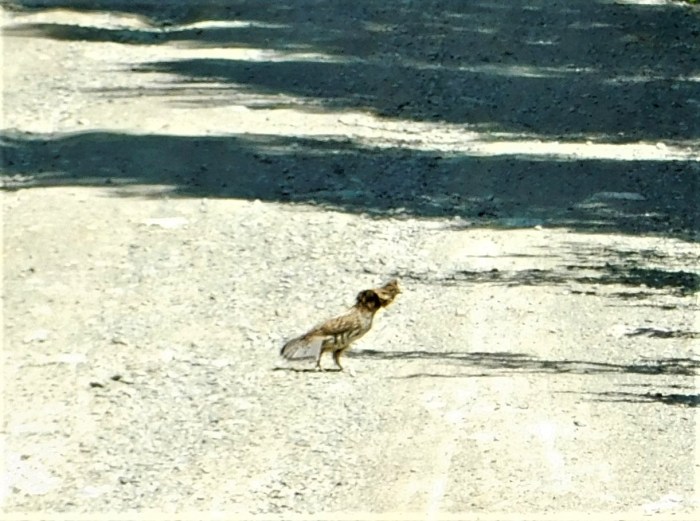
Ruffed Grouse crossing the Old Shepody Road in eastern New Brunswick
~

Ruffed Grouse in our grey woods
~
The Spruce Grouse (Falcipennis canadensis) is a bird of mainly coniferous woodlands. It eats spruce and pine needles. It is a chicken-like bird with variable plumage, mostly grey and black in the male and grey-brown in the female. The bird has a fanning tail, but does not raise its head feathers the way the Ruffed Grouse does. For a good photo of the Spruce Grouse see https://www.allaboutbirds.org/guide/Spruce_Grouse/id
The Grey Partridge (Perdix perdix) is a bird of open areas and grass lands. It is a roundish bird with a brown back and grey sides and neck. The chest-area has a darker brown mark. When startled, the bird flies upwards on rounded wings. For a good photo of a Grey Partridge see https://www.allaboutbirds.org/guide/Gray_Partridge/id
~
All my best,
Jane
bracket fungi
On a drive last weekend, we saw this great example of bracket fungi growing on an old maple.
~

~
Bracket fungi belong to a group of fungi called polypores. These produce the characteristic spore-producing bodies called conks. The shelf-shaped or bracket-shaped conks are a reproductive outgrowth of the main fungal body called the mycelium. As with all fungi, the mycelium is mostly unseen since it resides in wood or soil.
~
Polypores are a significant part of the forest ecosystem because they are agents of wood decay. These fungi are efficient decomposers of lignin and cellulose.
~

~
On a more fanciful note, the brackets of these fungi always remind me of ‘faerie stairs’, a way to ascend an ancient tree.
~
bracket fungi
~
in this forest
(staid
practical
grey)
could any form
construe to magic?
~
fairy rings
moths in spectral flight
spider webs, witches brooms
burrows and subterranean
rooms, hollows in wizened
logs, red toadstools
white-spotted, mottled
frogs
~
bracket fungi
steps ascending
a branchless tree
~
(Previously published October 28, 2011 http://www.nichepoetryandprose.wordpress.com )
~

~
All my best,
Jane
saving the bees
A while ago a friend of mine gave me an interesting ‘save the bees’ planting card. The white bee-shaped card is embedded with seeds. These seeds, if planted, will grow into wildflower species the bees like.
~

~
As you may know, bee populations are struggling. Since bees pollinate plants, they are responsible for the continued success of all the plant species we rely on. The ecosystem is like a tangle of connected threads and the loss of any one connection is a loss to the system.
~
Yesterday I planted my seed card in my deck box. I will let you know what grows!!! I am also a believer in leaving wild flowers to flourish on my property. I only mow once a year, I never use pesticides and dandelions are my friends.
~
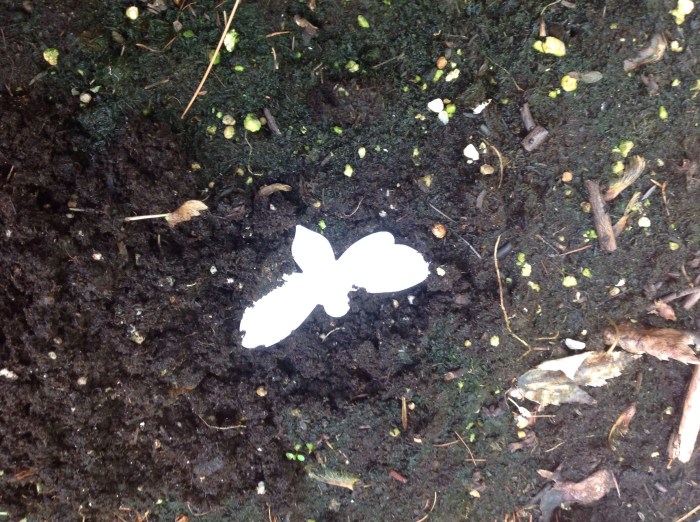
~
The Save the Bees card is from www.beebythesea.com a source of natural products . For more information about helping the bees, see Buzz About Bees at
https://www.buzzaboutbees.net/save-the-bees.html
~
All my best!
Jane
a feast of wild strawberries
This week at our cabin the wild strawberries are hanging from their stems. When I see them I think of the sweet wild strawberry jam my mom used to make. And, after this weekend, I will think of cedar waxwings.
~
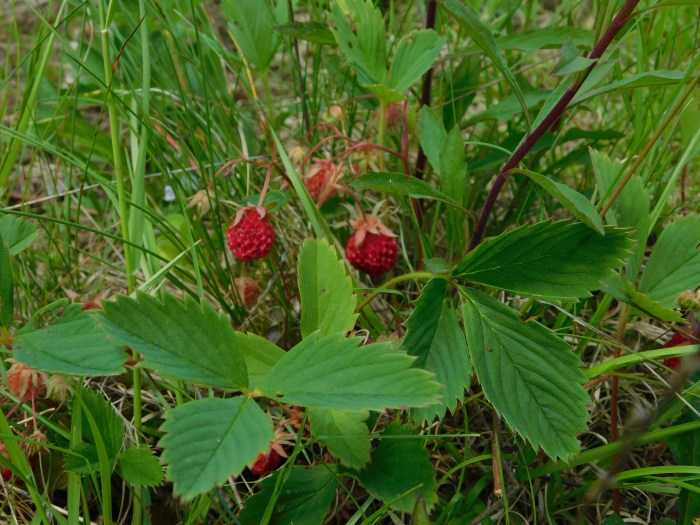
~
As we sat in the cabin, eating our dinner, we saw a bird making trips between the birch tree in front of the cabin and the grassy field to the side, where the wild strawberries grow.
~

~
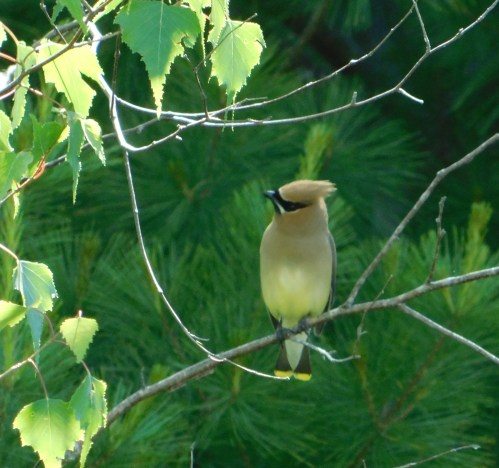
My husband identified the bird and spotted where it perched in the tree. The cedar waxwing is one of the common birds at the cabin. They love to eat fruit and we have wild strawberries, raspberries, blackberries, and blueberries on the property.
~
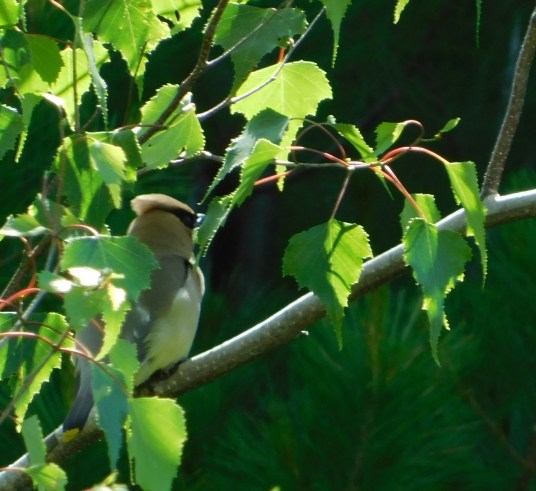
There were two cedar waxwings on the branch, sharing a meal of wild strawberries. Sharing fruit is a ritual behavior between male and female cedar waxwings.
~

~
~
The cedar waxwings nest in our big white pines and sing in the top branches of other nearby trees. I will never see them without thinking of their little feast of berries.
~
All my best,
Jane
~
swallowtails and Alexanders
Last week we did the first of our forays to get material for a new set of poems I am working on. Our drive took us to the area north of Stanley, and some two-track roads where settlements and home-sites have been abandoned.
~

the road to Mavis Mills, an abandoned community
~
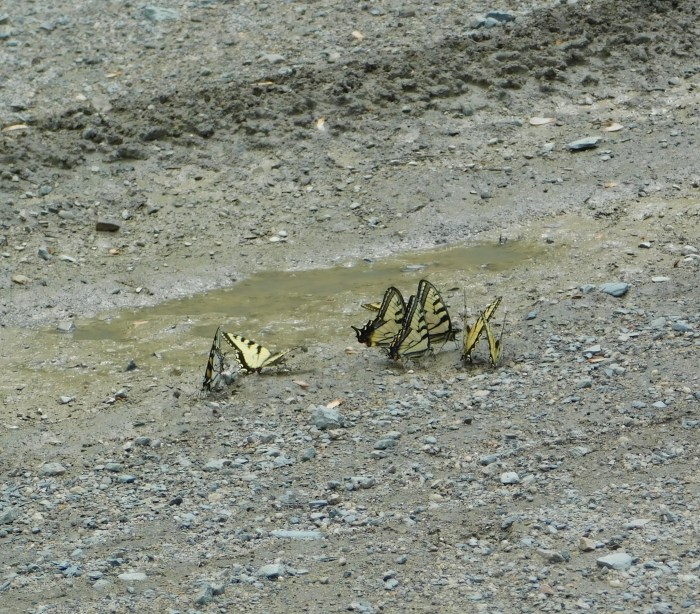
The main road was busy with butterflies: Papilio canadensis, Canadian tiger swallowtail. These are familiar butterflies, very similar to the eastern swallowtail, and once considered the same species. The males are yellow with black-rimmed wings (with a dotted yellow stripe in the margin) and four black tiger-stripes on the upper part of each fore-wing.
~
~
The butterflies were congregating on the road near water puddles. They were interested in the muddy areas rather than the water. This behavior is called “puddling” and is a way for the butterfly to get sodium ions and amino acids.
~

~
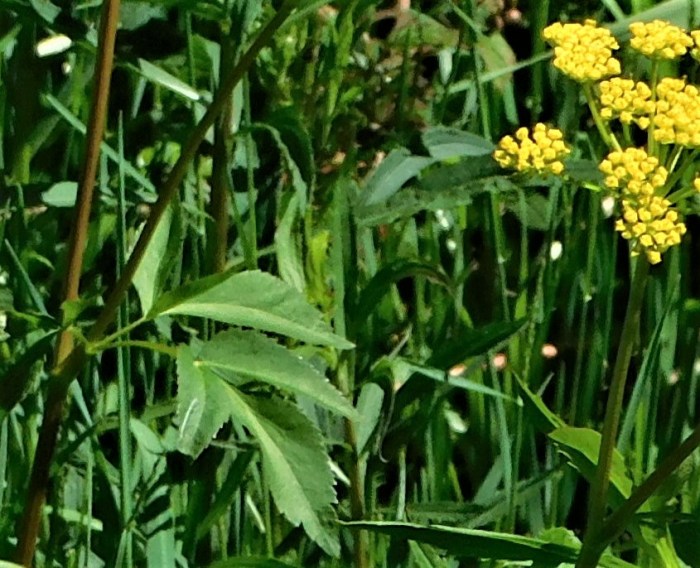
We took an old, two-track road to the abandoned hamlet of Mavis Mills and found the old settlement house sites. The once-cleared areas were populated by a pretty yellow composite flower, a member of the parsley family: Zizia aurea, golden Alexanders. These plants are usually under 30 inches high, with three serrated leaves (or three leaflets divided further into three’s) and a flat umbel of yellow flowers. The stems are red and the whole plant appears red in the fall. It is a host plant for the caterpillars of species of swallowtail butterflies. The plants grow in wet meadows and abandoned fields.
~

field of golden Alexanders in an abandoned settlement
~

~
~
We had an enjoyable drive, looking at abandoned homesteads and settlements. Since I am a botanist, I am interested in what has happened to the plants that once grew in the gardens of these homes. Some of the plants have vanished, but a few persist at the home-site and a few escape to cover ditches and countryside in bloom.
~

an old lilac bush continuing to thrive near an abandoned house
~
All my best!
Jane