Archive for the ‘edible wild’ Category
Trailing Arbutus (Epigaea repens L. var glabrifolia)
One of the common flowers of early spring is the Mayflower (Epigaea repens L. var. glabrifolia), or Trailing Arbutus, also called Epigee rampante in French. It belongs to the heath or heather family (Ericaceae). It grows in open woods, or pastures, and along hillsides, in acidic soil.

Mayflower in bloom, photo taken in 1978 in Nova Scotia
The Mayflower is part of what Roland and Smith (The Flora of Nova Scotia, The Nova Scotia Museum, 1969) called the ‘Canadian Element’, woodland plants native to Northeastern North America and including common plants of the coniferous woods: Maianthemum canadense Desf. (Wild Lily-of-the- Valley), Mitchella repens L. (Partridge-berry), Gaultheria procumbens L. (Wintergreen) and Trientalis borealis Raf. (Star-flower), among others. When I worked on my M. Sc. thesis project, years ago, these were in the community of plants I encountered in the woods I was studying, and they are still my favorite plants.

two members of the ‘Canadian Element’ community – leaves of Wild Lily-of-the-Valley (left) and Wintergreen (right)
The name epigaea means ‘on the earth’, and perfectly describes the way the Mayflower grows. The specific name is from the Latin repens meaning ‘creeping’. The plant spreads across the ground, its oval, leathery leaves lying flat and overlapping. The leaves persist all winter and sometimes look a little weather-worn. The variety we have is glabrous on the lower leaf surface, meaning without hairs. The leaves grow on hairy, woody twigs.

leaves of Mayflower in the Grey Woods, April 2012
The flowers grow in clusters tucked beneath the leaves. They are creamy white, and are in the form of a short tube ending in five flaring lobes. They bloom mid-April to mid-May. The flowers along our woods have just completed their blooming. For a nostalgic look at the tradition of picking Mayflowers in spring, have a look at http://ahundredyearsago.com/2012/04/28/gathering-arbutus/
A delight of spring is to manoeuvre close to the ground so you can smell the Epigaea flowers. The perfume is very sweet, gently stirring. The only edible part of the plant is the flower and it tastes as sweet and fragrant as it smells. It is a shame to eat such a delicate creature as a Mayflower, but once a year I allow myself the privilege, just one tiny bloom (always be absolutely certain of the identification before you eat any plant in the wild). The plant is protected in some areas since it rarely sets seed and is almost impossible to transplant.
The Mayflower is the floral emblem of Nova Scotia and Massachusetts.
~
~
Trailing Arbutus
(Epigaea repens L.)
~
on the slope, new leaves
Trientalis, Gaultheria
Star-flower, Wintergreen,
vines of Partridge-berry creep,
Maianthemum unfurls
~
beneath the din, a melody
weeps Epigaea, evergreen
pressed to the hillside
leather armour, thickened leaves
weather-beaten, worn
~
waxy bloom resists
subtle shadow
predator
unrelenting rain
~
~

Warning: 1. never eat any plant if you are not absolutely certain of the identification; 2. never eat any plant if you have personal sensitivities, including allergies, to certain plants or their derivatives; 3. never eat any plant unless you have checked several sources to verify the edibility of the plant.
© Jane Tims 2012
Sweet-fern (Comptonia peregrina (L.) Coult.)
Last weekend, we went on a short hike to the lake to collect some dried Sweet-fern, with the goal of making Sweet-fern sun tea. To make the tea, fresh or dry leaves of Sweet-fern are steeped in a jar in the sun for three hours.
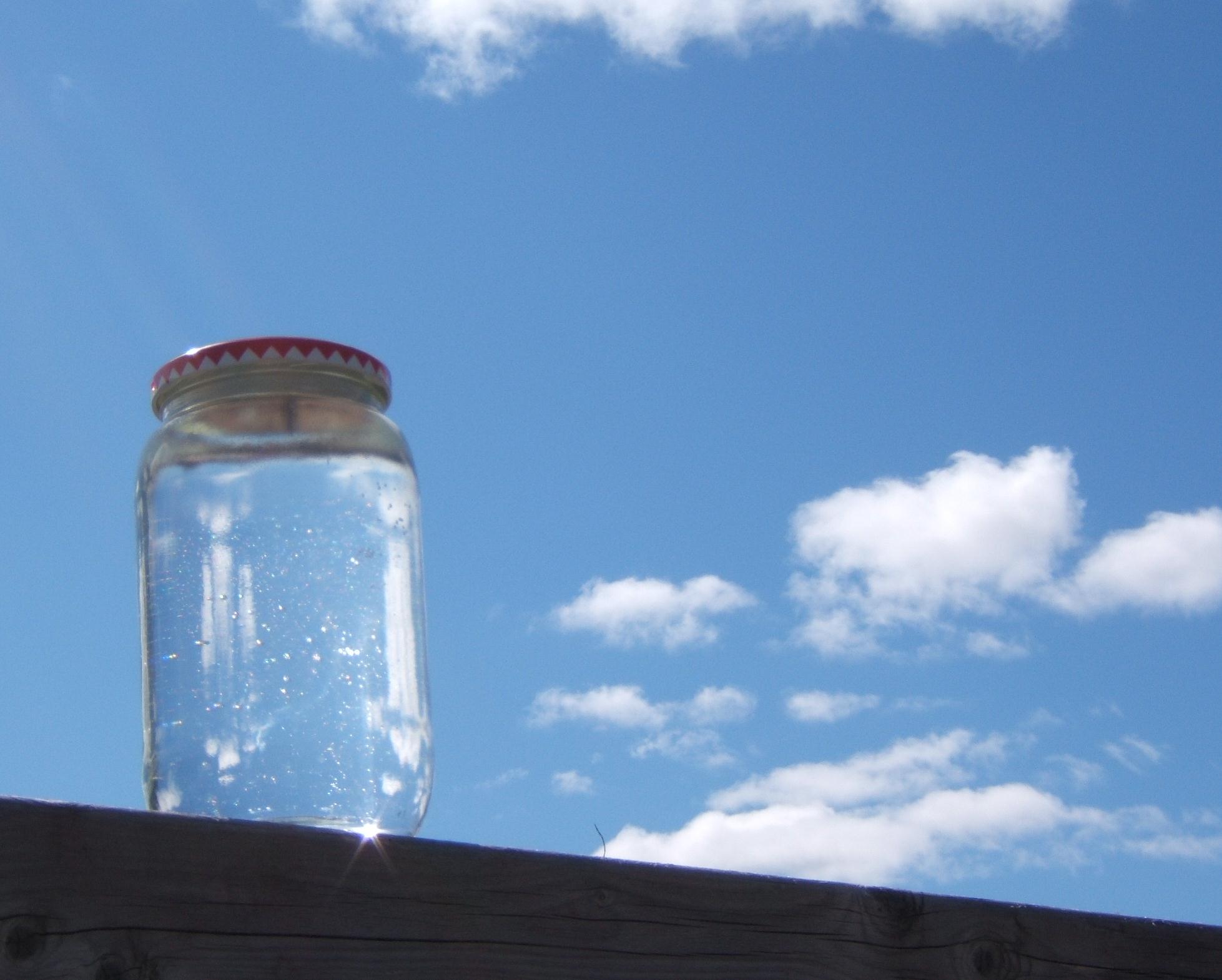
Unfortunately, the wind was too cold to allow the spring sun to warm the jar. So I collected the dry leaves and, on Sunday afternoon, I enjoyed a cup of fragrant Sweet-fern tea, made the usual way, steeped in boiling water.

Later in the spring or summer, I’ll be trying the sun tea method again.
Sweet-fern(Comptonia peregrina (L.) Coult.) is a small rounded shrub with fernlike green leaves found in dry rocky waste areas, clearings or pastures. The leaves are simple and alternate, long, narrow and deeply lobed. The shrub sometimes grows as a weed in blueberry fields.
Sweet-fern is called Comptonie voyageus in French, since peregrina means traveller. The generic name is after Henry Compton, a 17th century Bishop of London who was a patron of botany.
The fruit is a green burr enclosing 1-4 nutlets. These can be harvested in June or July while still tender.
Sweet-fern is a member of the Sweet Gale family. The plant is very fragrant, particularly when crushed, due to glands on the leaves and twigs. The tea made from the leaves is also fragrant. To make the tea, use 1 tsp dried or 2 tsp fresh leaves per cup of water. Remember, to always be absolutely certain of the identification before you try eating or drinking anything in the wild.
~
Directions for Sweet-fern sun tea
8 tsp of fresh chopped leaves
1 quart of clean fresh cold water in a jar
cap and place in sun three hours until water is dark
strain and serve
~
~
Sweet-fern sun tea
Comptonia peregrina (L.) Coult.
~
to quench the thirst of a traveller
and reward a hike too far
~
steep sweet-fern
in the solar flare
~
gives up fragrance to air
and to water in a sun-drenched jar
~
~
Warning: 1. never eat any plant if you are not absolutely certain of the identification; 2. never eat any plant if you have personal sensitivities, including allergies, to certain plants or their derivatives; 3. never eat any plant unless you have checked several sources to verify the edibility of the plant. © Jane Tims 2012from the pages of an old diary – blueberries and other local foods
My new writing project, ‘growing and gathering’, focuses on local foods and finding food close to home.
A source of information and inspiration for me is the set of my great-aunt’s diaries, written from 1943 to 1972. From her diaries, I have a very good idea of how they obtained their food, and how they used local foods to supplement their needs.
Most of their food was obtained from the grocery store – in 1957, there was at least one grocery store in the community, and by 1967, they had an IGA. There is no doubt some goods came from ‘away’. For example, my great-aunt wrote about making coconut and pineapple squares for a Women’s Missionary Society meeting (Sept. 30, 1957).
Local goods, however. were used whenever possible. For example, my great-aunt bought eggs from her sister, and chickens from her brother. She also obtained vegetables and raspberries from her brother’s farm, apples from friends and relatives, deer meat from friends and relatives, and lobsters from Wallace, a near-by community. By 1967, my great-aunt and great-uncle also kept a garden at her brother’s farm, a few miles away.
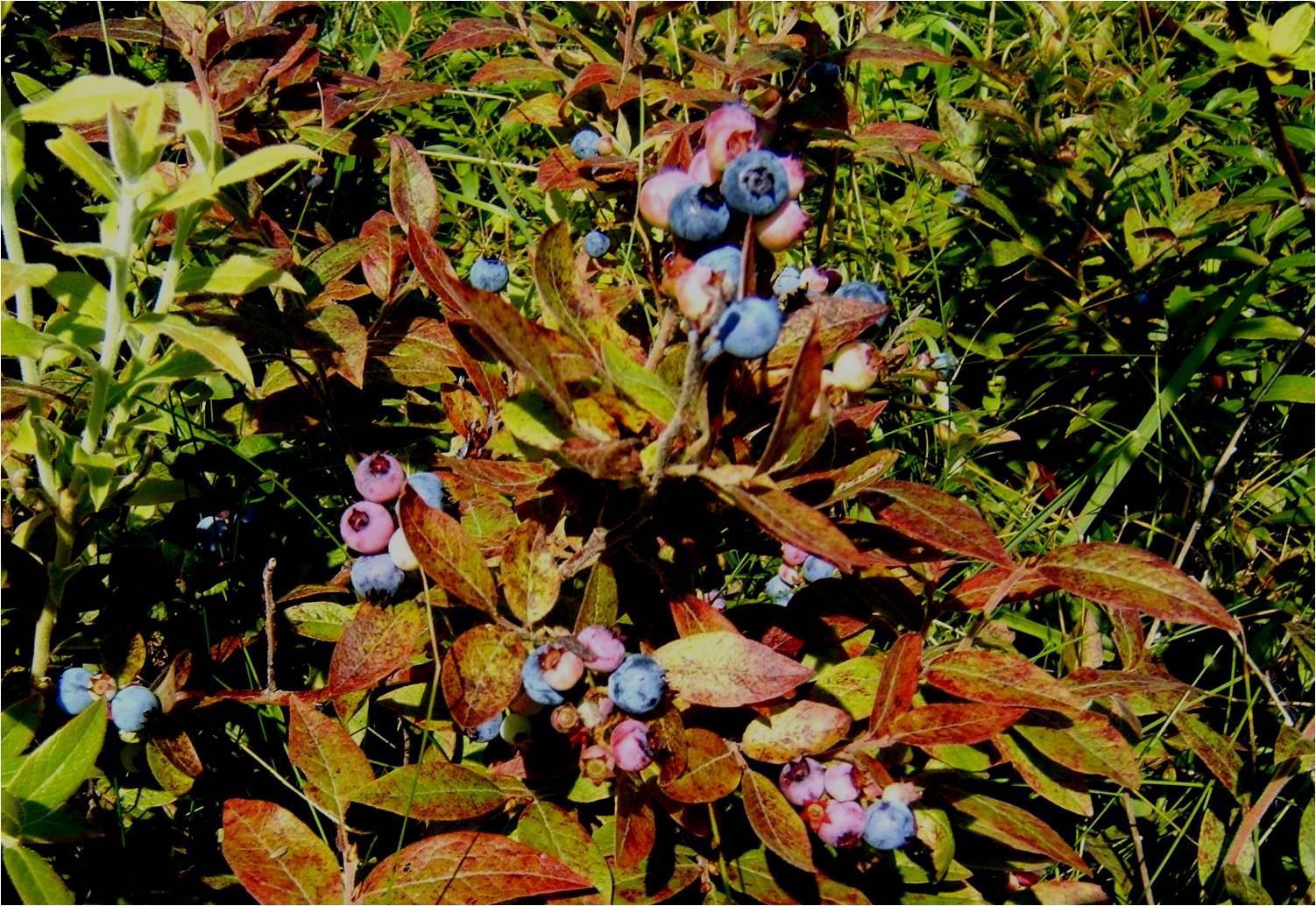
Obtaining local foods included picking local berries. In July and August of 1957, my great-aunt went four times for wild blueberries. Her gratitude and pleasure at getting these berries comes through in her words: ‘ got quite a few’ (July 31, 1957) and ‘got a nice lot.’ (Aug. 21, 1957). She also wrote about picking grapes and currants.

Some of the berries were eaten right away – for example, my great-aunt made a blueberry pie on August 1, 1957. The rest was preserved for the winter. On August 16, 1957 my great-aunt put up 5 quarts of blueberries, to supplement the applesauce, pears, peaches, sweet cucumber pickles, and tomato chow she mentions preparing on other days. Others in the family also made preserves and shared them with her – in 1967, her nephew (my uncle) brought her three bottles of peach, apple and choke cherry jelly he had made.
~
~
an offering of berries
~
she stands on the stoop
offers a box
a brimming pint
of berries
~
I take her hand, we ripple
through the pasture, strew
blue ribbons over bushes, stir
a blueberry jelly sky, dance
with dragonflies
~
she waits on the stoop
her brow a riddle, please
take this gift, blueberries
in a simple
wooden
basket
~
~
Warning: 1. never eat any plant if you are not absolutely certain of the identification; 2. never eat any plant if you have personal sensitivities, including allergies, to certain plants or their derivatives; 3. never eat any plant unless you have checked several sources to verify the edibility of the plant.
© Jane Tims 2012

end of the maple syrup season
On Monday, we finished our last lot of maple syrup for the season. The whole house was filled with the sweet smell of syrup at boil. I finish the syrup on our electric kitchen stove, in a pan made particularly for the purpose. Made of aluminum, it has a narrow base and a flared top. I thought it was a terrible extravagance at $268, but it really has improved both the boiling time and the process, and it will last for many years.
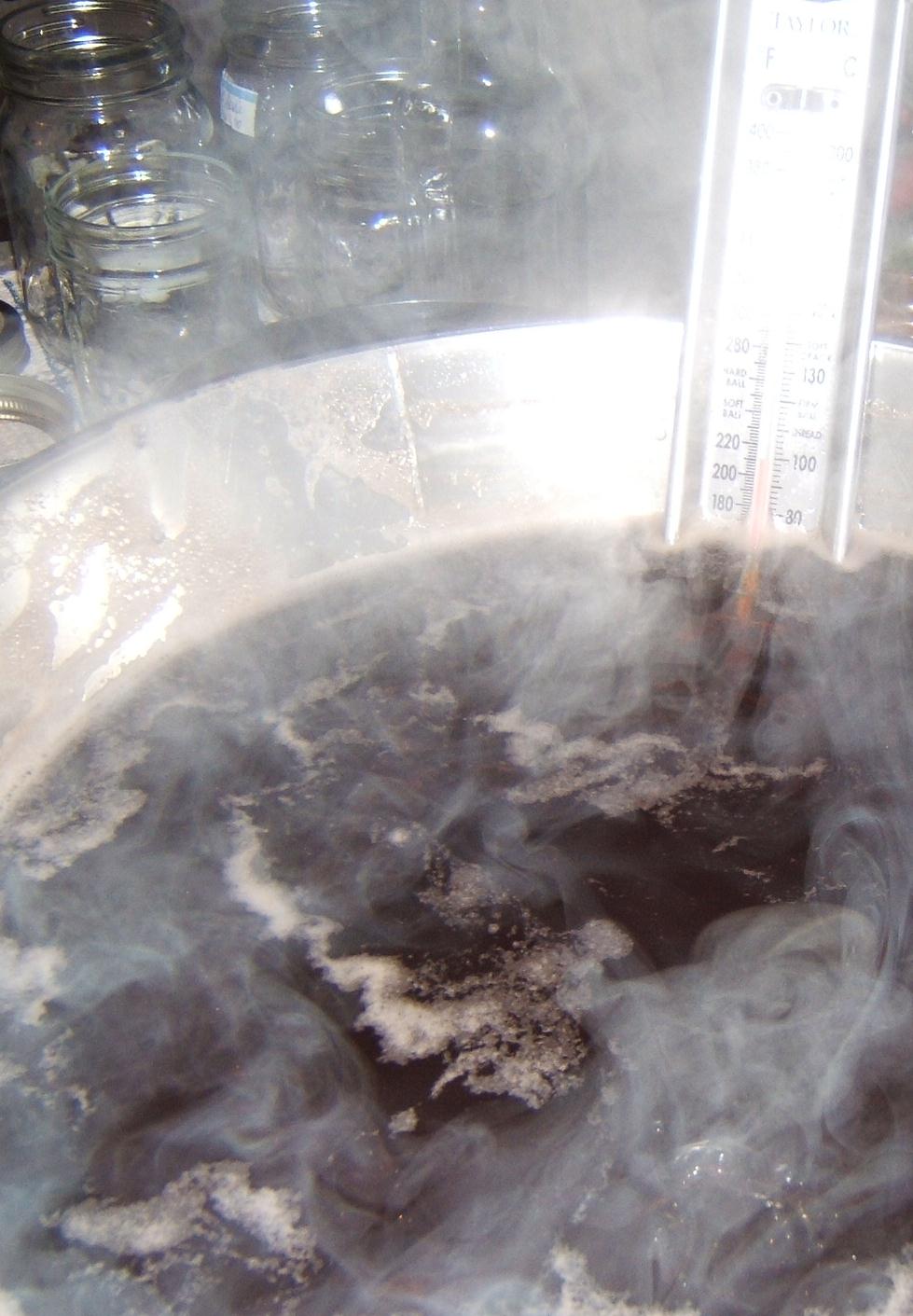
I love the final boiling. The smell of the steam is amazing and the boil of the syrup is fascinating to watch. While the sap is boiling, I skim the foam with a slotted spoon, a very soothing activity. Then, the temperature rises suddenly on the candy thermometer, and those huge candy bubbles start to form. The part I like best is hearing the seal ‘pop’ on the Mason jars and knowing we have produced enough syrup for our pancakes and muffins and a few gifts for family and friends, enough for the whole year.
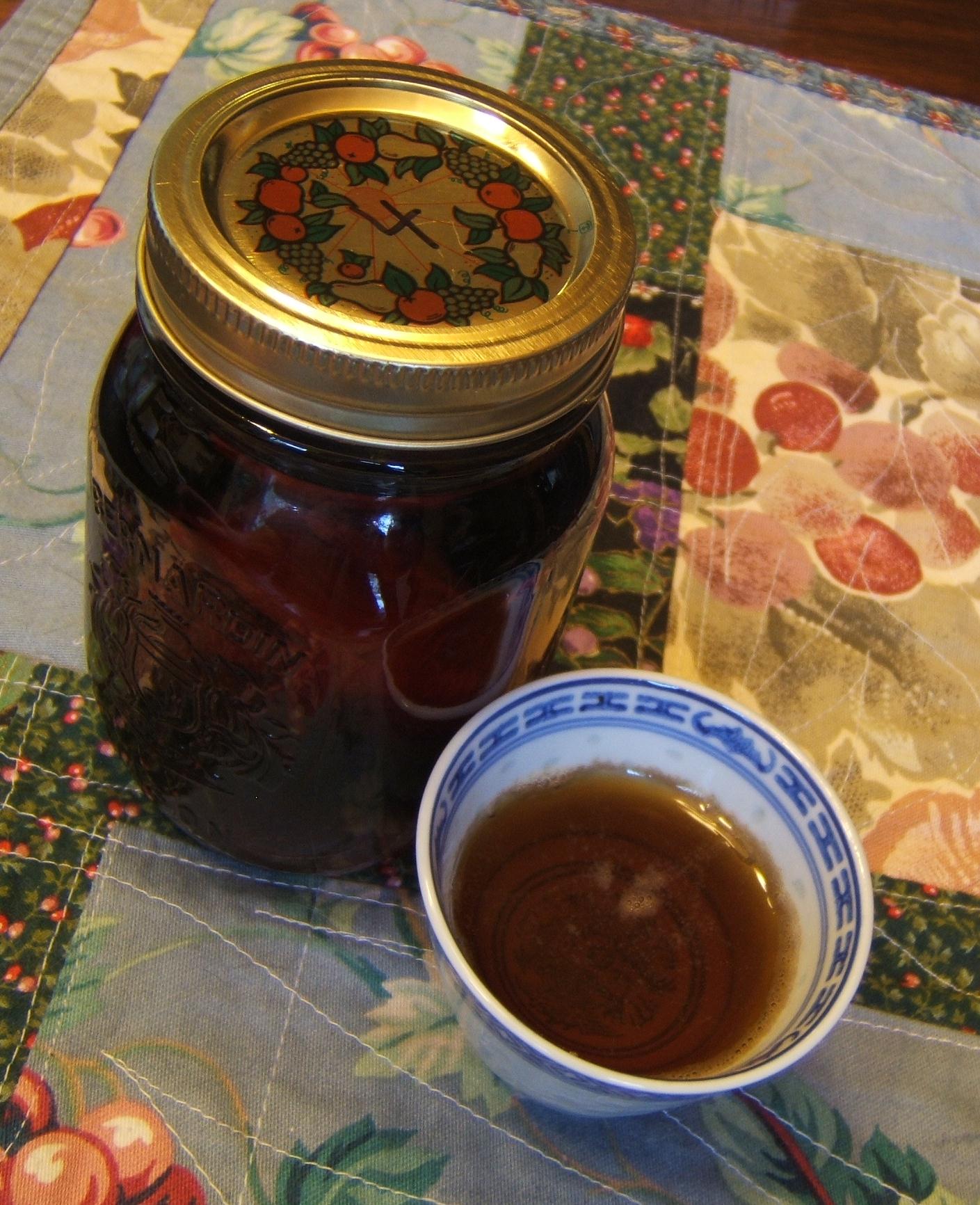
This was not our best year but we are so used to the routine, it seemed painless. We tapped 10 Red Maple trees, collected 167 liters of sap (compared to 329 liters last year) from March 12 to April 6, and prepared 14 pints of syrup. The syrup was dark this year but very sweet and flavorful.
~
~
sugartime slow
~
in the rain
maples bloom
small red fireworks
slate sky
~
drip slow
time slow
sap runs bitter
hardly worth the boil
~
~
© Jane Tims 2012
maple sap soda fountain
For the last two days, the maple sap has been running again. The nights have been below freezing and the days are sunny and warm. Yesterday, we had 12 liters of sap from our 10 trees. The day before, we collected about 5 liters.
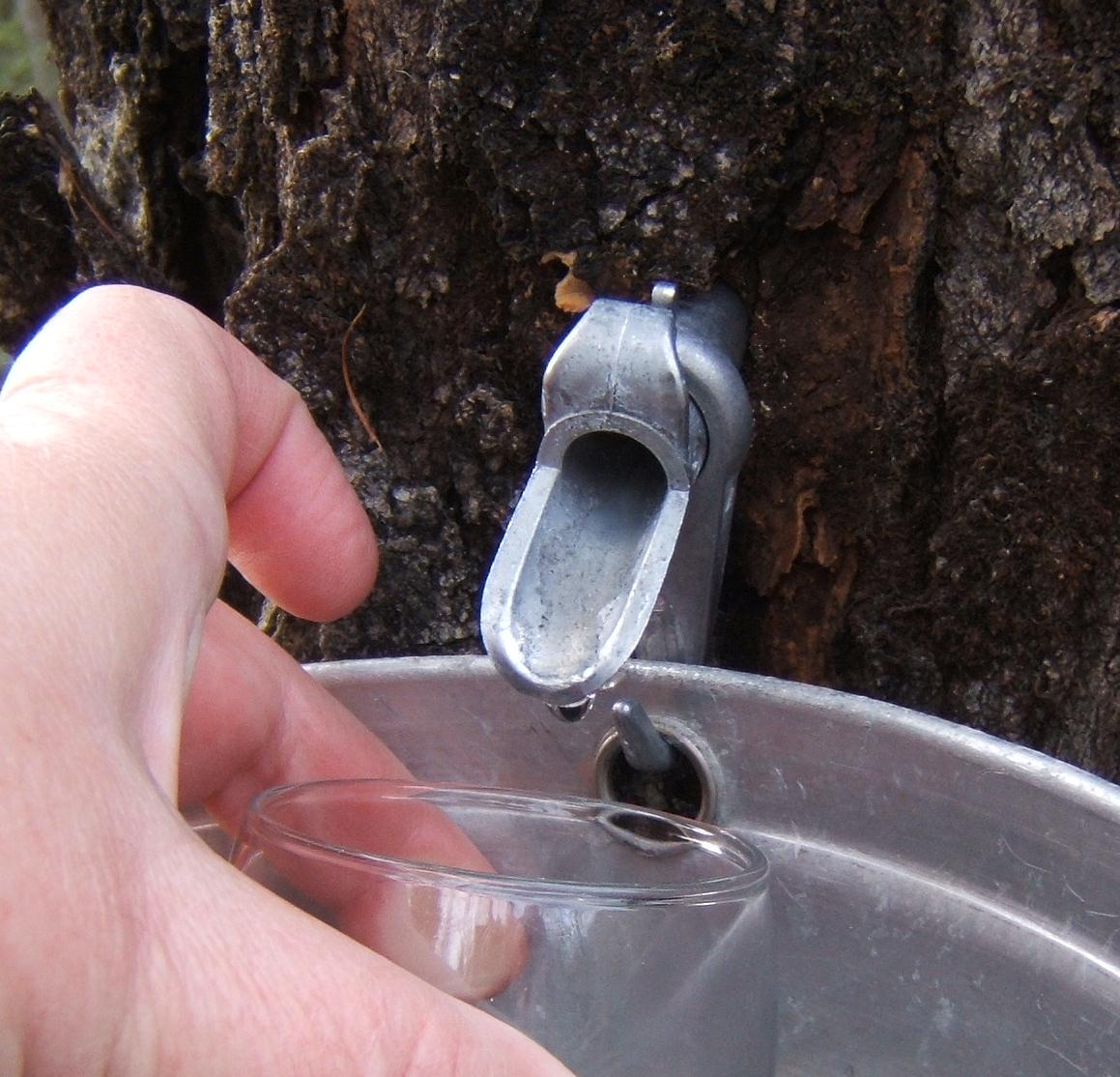
Each tree has its own rhythm of drips. Our best producer today drips at a rate of about 9 drops every 5 seconds, or 108 drops per minute.
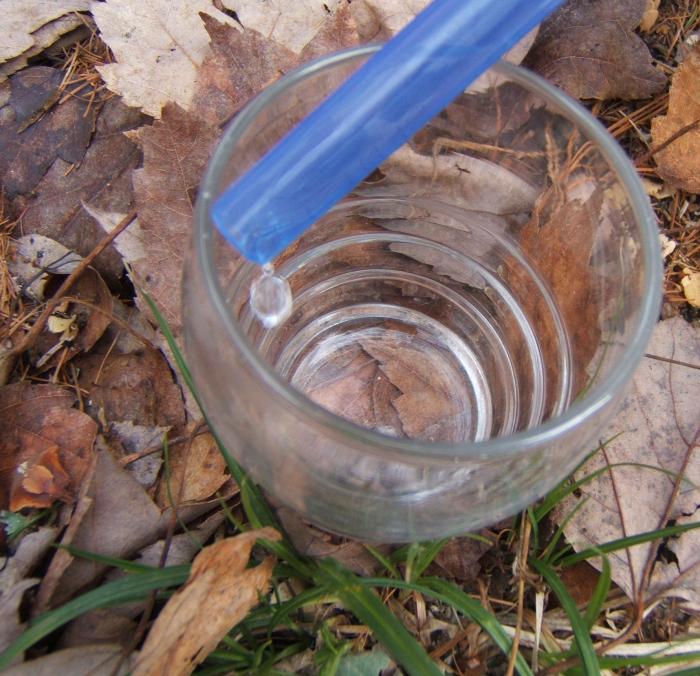
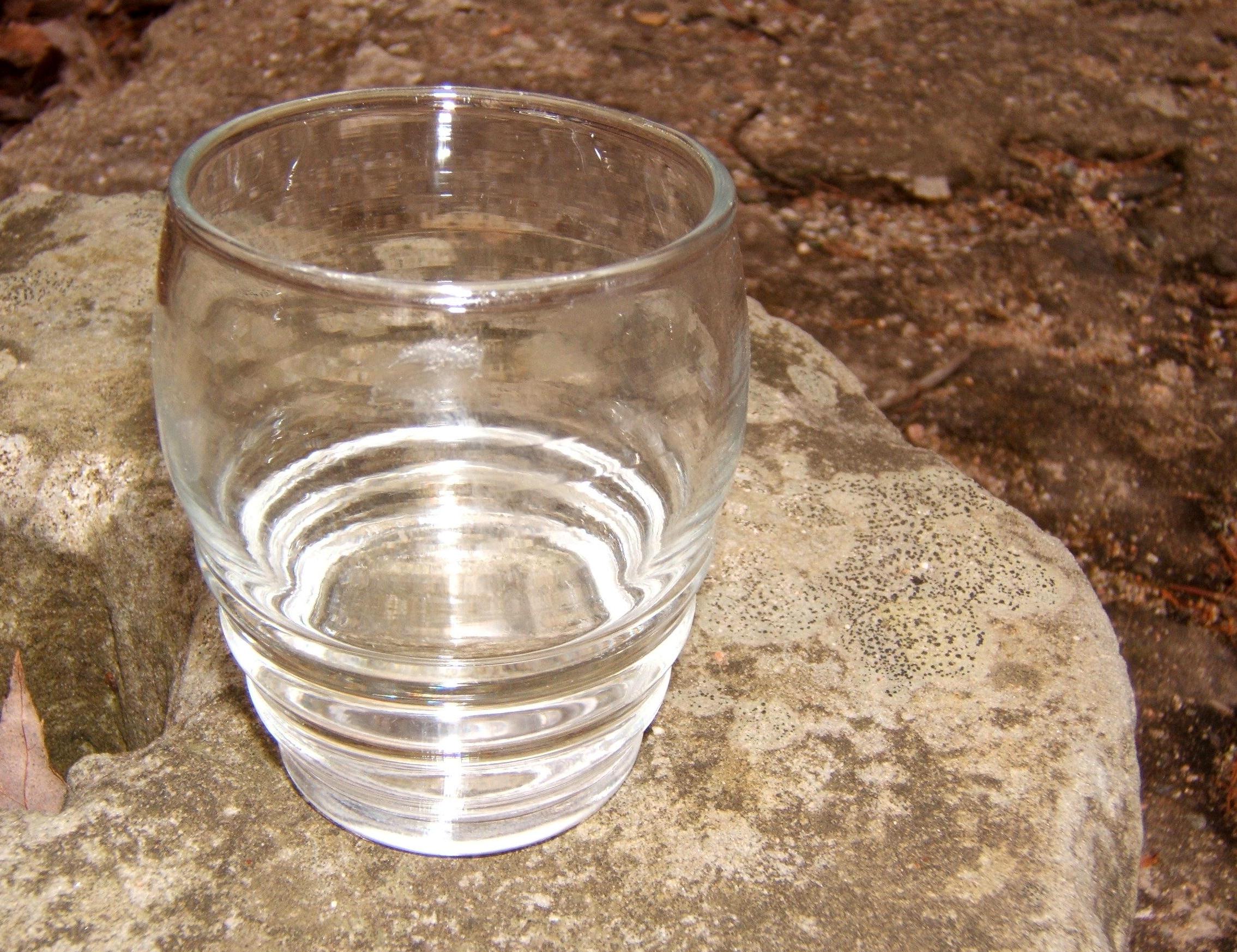
This evening, I had my ‘drink the sap from the tree’ experience. I took a small glass and caught the drips for a couple of ounces of the sweetest water ever. To me, the sap of each tree has its own taste. The sap from the big maple tree by our front door tastes a lot like cream soda without the fizz!
The maple sap is crystal clear, although it will turn dark amber (No. 2 Amber, according to our grading in Canada) once we boil it down to syrup.
~
~
droplet
~
one drop of maple sap
from the spile
~
a seep from slate
at the waterfall edge
~
in rain, a tear
from the margin of a leaf
~
a pause in the envelope
between rough bark and aluminum
~
~
© Jane Tims 2012
maple syrup ups and downs
It may be a short maple syrup season this year. The weather has not been cooperative. In order for the sap to run, warm days are great, but the nights need to be cold. When the temperatures fall below zero, the sap in the tree runs from the crown to the roots. When the day is warm and sunny, the sap runs back up to the canopy. If there is no cold night, no sap.
So far we have collected about 40 liters of sap from our 10 trees and I have 3 bottles (each 500 ml or two cups) of lovely dark syrup! This compares to 136 liters of sap last year on the same date, from 12 trees.
~
~
Cold night, warm day
~
Icicles build
from the spile
sweet sickles of sap
~
~
© Jane Tims 2012

maple syrup time
Well, the time has finally arrived. The nights are cold and the days this week are predicted to be sunny and warm. In our house the combination of cold days and warm nights means the sap is moving in our maple trees.
We tap Red Maple (Acer rubrum L.), although Sugar-maple (Acer saccharum Marsh) is preferred by commercial syrup producers. Last year we tapped 12 trees, about at the edge of our low-tech capability. This year we are tapping 10 trees.
We usually use the ‘old-fashioned’ spile and aluminum bucket method. This year, for the first time, my husband is trying a plastic spile and pipe system for 5 of our taps. It seems a little easier since the sap drips directly into a plastic reservoir and this eliminates one step in the endless pouring process.
For those of you unfamiliar with tapping trees for sap, the basic idea is to collect the sap and boil it down to make maple syrup. We select a tree, bore a hole, insert a spile and hang a bucket on the spile hook. The spile is a cleverly designed spigot which channels the sap from inside the tree into the bucket. The bucket is fitted with a cover to keep out rainwater or snow and reduce insect access.

So far this year, we have collected 25 liters of sap. This will boil down at about 40 to 1 to make a little more than 500 ml of syrup (about 2 cups). Last year, from a season total of 329 liters of sap, we made about 40 pint jars of syrup. If you try to calculate that at 40 to 1, it will never come out correctly since we don’t boil all of the sap to the same concentration and we drink some of the sap as a sweet drink.
Collecting maple sap is so much fun. It is good exercise and a great way to get your dose of warm spring sunshine. And, we have enough maple syrup to last for the year.
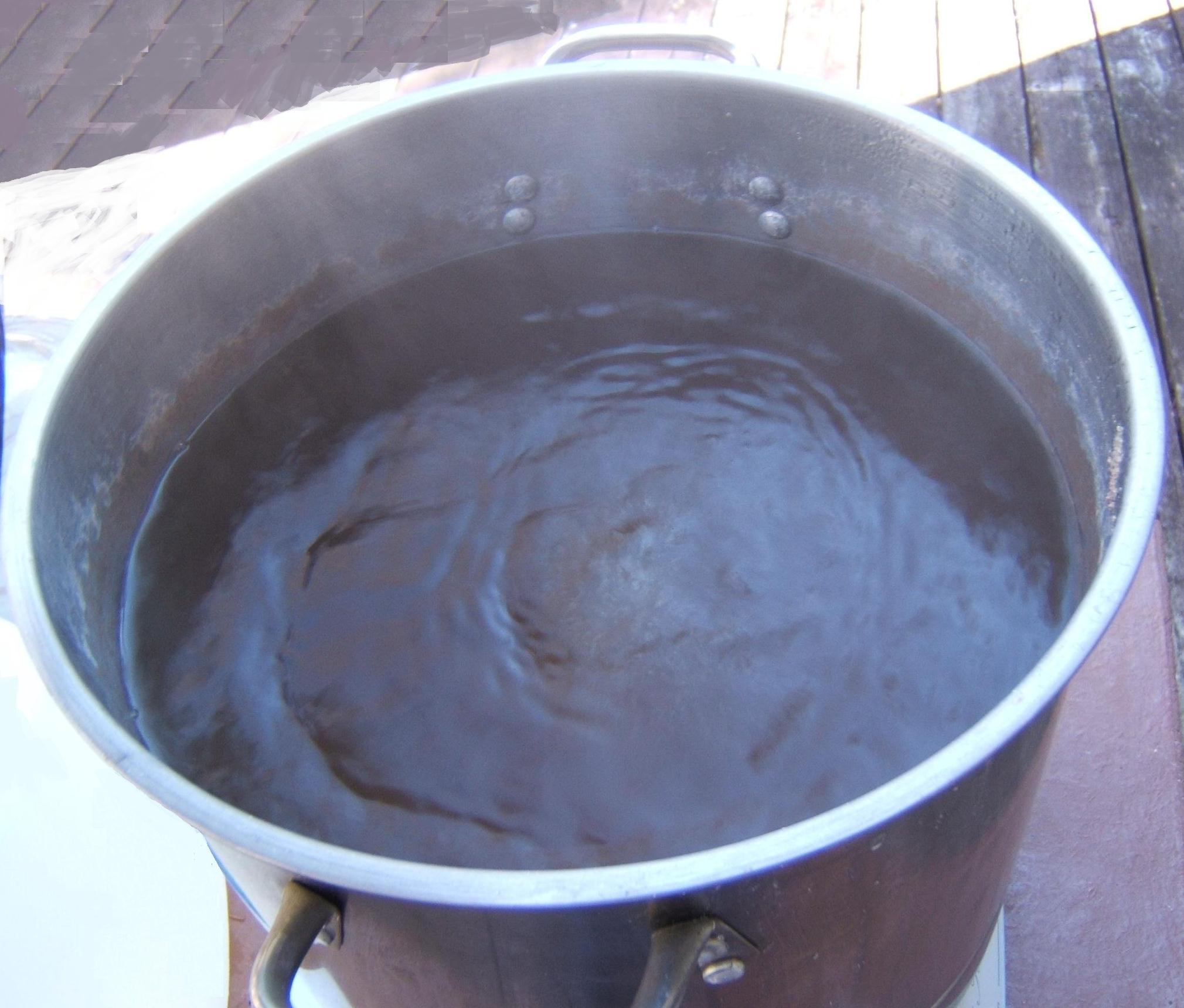
I’ll be keeping you up to date on our maple syrup adventures this year. Right now, the pot full of sap is boiling on the deck.
~
~
sugar song
~
cold nights
warm days
cold nights
~
sap plucks stainless steel
different rhythm, every tap
quick and dead slow
in sync
with the downy woodpecker
or the bird with the round warble in its throat
~
~
© Jane Tims 2012

Eastern Teaberry (Gautheria procumbens L.)
When the wind is chill and fingers are cold, what better remedy exists than a cup of tea? After years of attending meetings where there is a box of fancy teas to choose from, I now have my own wooden ‘tea box’. I replenish it from time to time with a new blend, but I find the old standbys are my favourites: Red Rose, Earl Grey, and Chamomile.
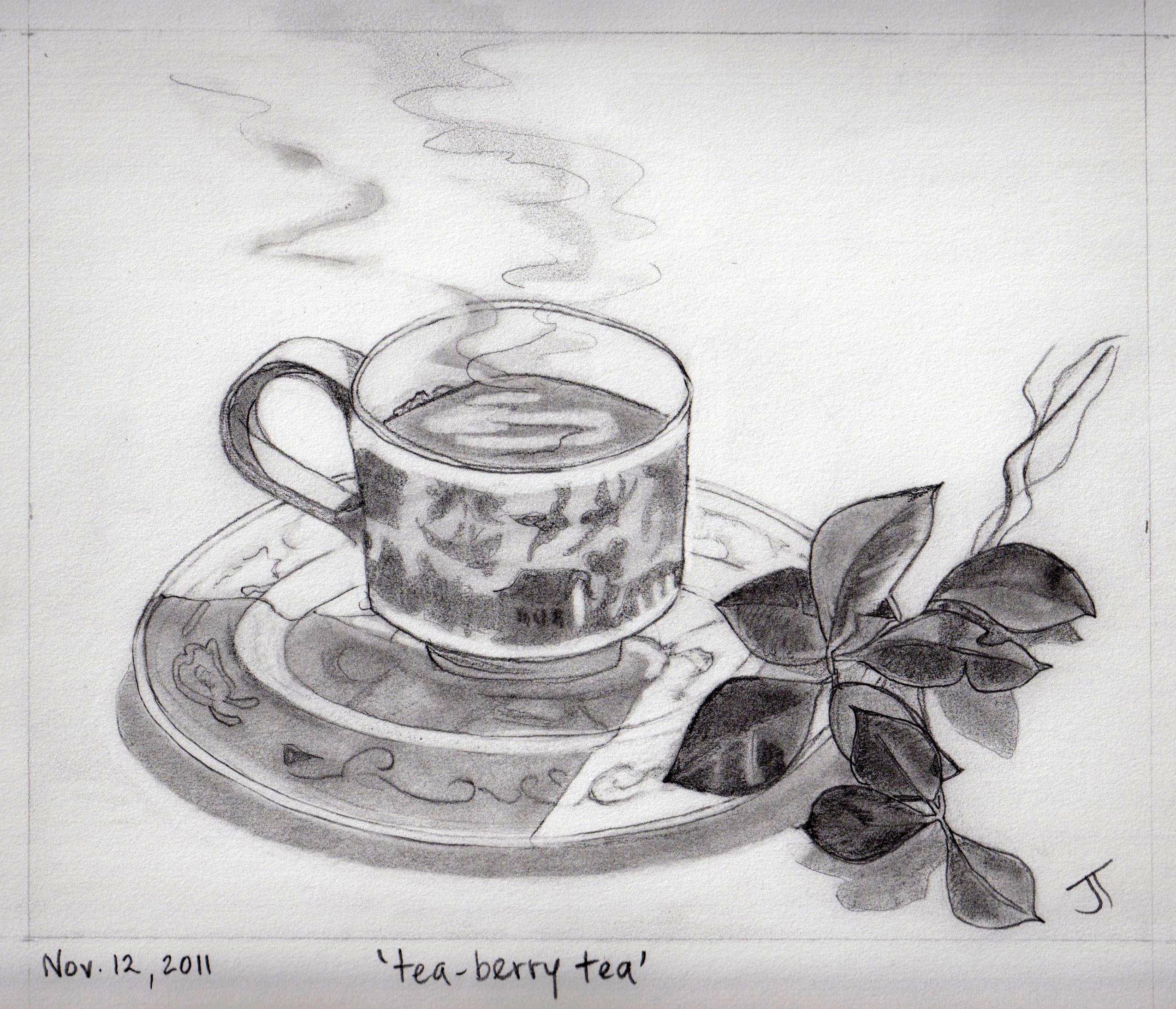
When my son was little, we used to have fun making ‘tea-berry tea’. I still go out occasionally to my patch of Gaultheria procumbens, also known as Eastern Teaberry or American Wintergreen. A few leaves, crushed and steeped in boiling water, make a lovely, fragrant tea with a delicate green color. In French, Eastern teaberry is le petit thé du bois (the little tea of the woods).
The leaves contain oil of wintergreen; the chemical in this oil is methyl salicylate, known for its anti-inflammatory properties and closely related to aspirin. For this reason, use caution and only drink ‘tea-berry tea’ occasionally and if you are not sensitive to aspirin. Methyl salicylate is also found in twigs of yellow birch and it also makes a fragrant tea. Methyl salicylate will build up an electrical charge when dried with sugar and rubbed… you can try this yourself with wintergreen-flavoured hard candies.
Warning: 1. never eat any plant if you are not absolutely certain of the identification; 2. never eat any plant if you have personal sensitivities, including allergies, to certain plants or their derivatives; 3. never eat any plant unless you have checked several sources to verify the edibility of the plant.The leaves of Eastern teaberry are thick and evergreen, so they can be found this time of year. The flowers are white, waxy, nodding, and bell-shaped. The bright red berries are also waxy and sometimes still found in November.
~
Wintergreen
Gaultheria procumbens L.
~
small leaves gathered, crushed
oils weep into water, pale
green tea, pink aroma
sugar and midnight sparks
sweet steam and aspirin make
undelicate my heart
~
~
Warning: 1. never eat any plant if you are not absolutely certain of the identification; 2. never eat any plant if you have personal sensitivities, including allergies, to certain plants or their derivatives; 3. never eat any plant unless you have checked several sources to verify the edibility of the plant.© Jane Tims 2012
© Jane Tims 2011
the ideal property
A few years ago, my younger brother lived in New Brunswick for a while and we were able to see him and my sister-in-law quite often. We had some great times, camping one weekend on Grand Manan, watching Survivor together, seeing their terrific Christmas decorations, and just visiting.
One of the weekends I remember well was our drive to see their new property along the St. John River. Although they eventually sold the property, it remains one of the best plots of land I have ever seen. My poem will tell you why!
~
~
Land For Sale
~
waterfront
two acres
one of cleared field
one of woods
silver maple, curly fern, rocky shore
transparent water and wobbling waves
an island over there
(conservation land)
(no buildings to intercept
the view)
~
plans manifest
the house here
the driveway a garden a gate
a path through the maples
to the shore and a dock
two good-natured chairs
turned toward one another
skating in January bonfires in July
promising neighbours
reasonable price
~
and the clincher?
the deal maker?
the heart breaker?
a crooked bush
with five fat blueberries
ready to pick
~
Warning: 1. never eat any plant if you are not absolutely certain of the identification; 2. never eat any plant if you have personal sensitivities, including allergies, to certain plants or their derivatives; 3. never eat any plant unless you have checked several sources to verify the edibility of the plant.
© Jane Tims 2011
along the country road #6
How are the giant statue of a Canada goose at WAWA, Ontario, and the roadside plant White Clover associated? Read on…

the giant statue of a Canada goose at Wawa, Ontario
White Clover is a common perennial herb of fields, lawns and roadsides. The plant is also called White Clover or, in French, trèfle blanc. Flowers are borne in globular heads, pure white or tinged with pink. The name Trifolium is from tres meaning three and folium meaning leaf. Repens means creeping, a reference to the long, prostrate stems.
The leaves of clover are in threes, palmately compound, and are occasionally found in fours. According to superstition, finding a four-leaved clover gives good luck to the finder. In the 1960’s, my Dad found a five-leaved clover in the grassy field in front of the giant statue of the Canada goose at WAWA, Ontario.
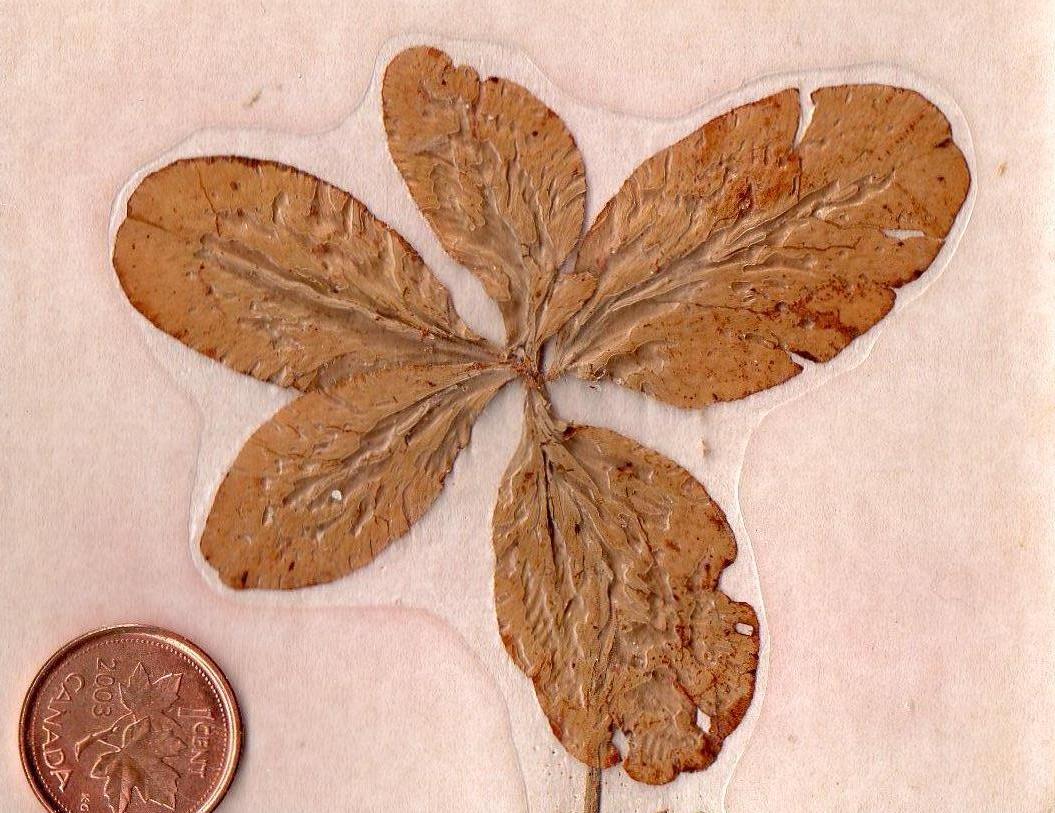
the five-leaved clover my Dad found on the lawn in front of the Canada goose at Wawa almost 45 years ago
Dad pressed the leaves and covered them in a laminating film. The pressed plant is still among my treasures.
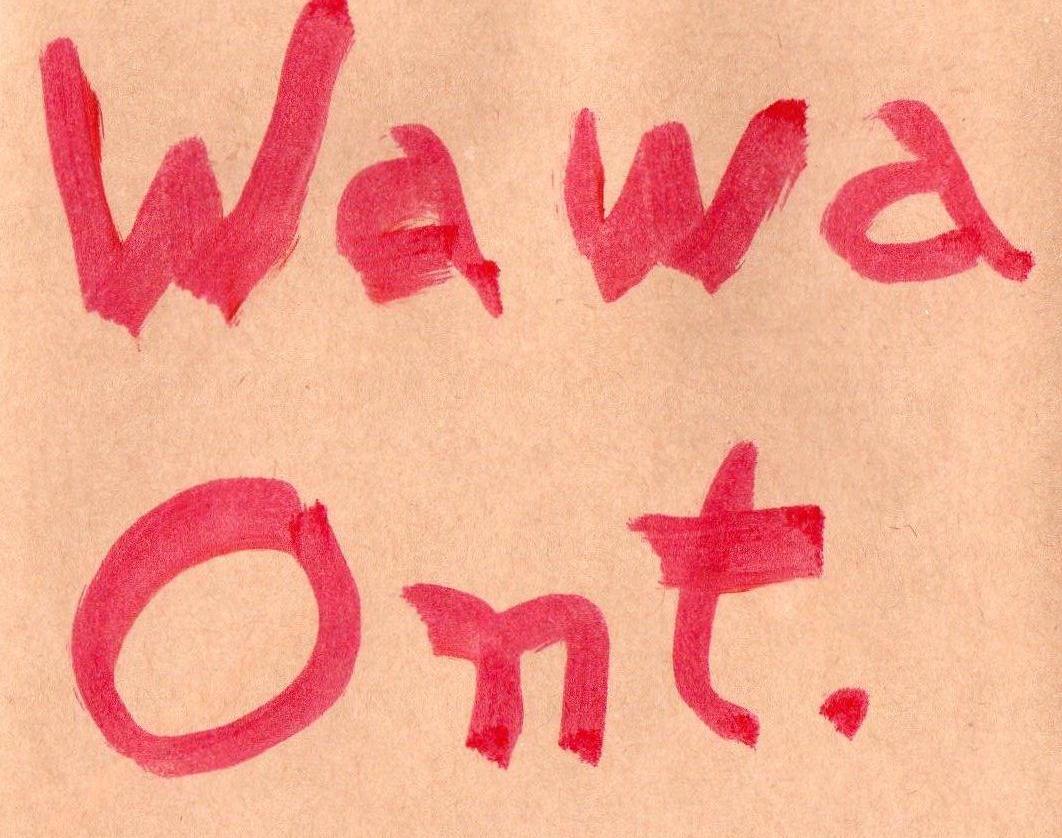
the reverse side of the specimen of five-leaved clover, with my Dad’s printing
We returned in 2002 and searched, but the three-leaved variety was all we found.
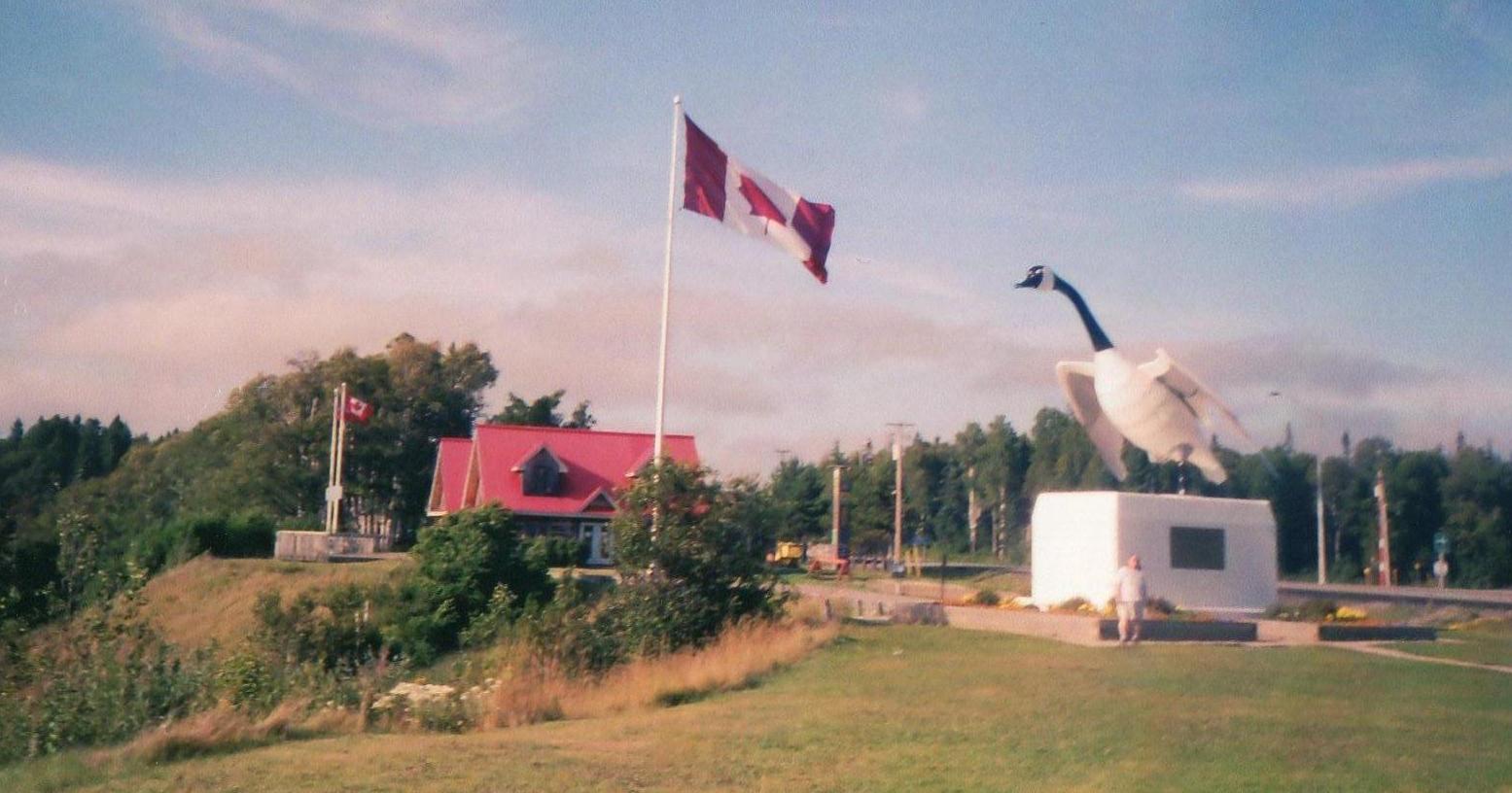
we searched in 2002, but I think the lawn had been replaced
Clover is a useful plant. It ‘fixes nitrogen’, meaning it takes nitrogen from the atmosphere and introduces it into the soil as it grows. The flowers are a source of honey for bees, and I’ve tasted honey made from an infusion of clover flowers. Dried leaves can be used for making tea.
Have you ever found a clover leaf with more than three leaflets? Did it bring you luck?
White Clover
Trifolium repens L.
(Three Leaves and Wishes)
~
only to lie
sweet dreaming in the clover
to pull blossoms
from long stems
toss soft snowballs
at blue-bottle flies
~
bees to visit me
florets for nectar
hair splashed on the clover
scented sweet honey
~
to search three leaves for four
creeping across the lawn
to the roadside
to roll in the fields
of white clover
trèfle blanc
blushing
~
Warning: 1. never eat any plant if you are not absolutely certain of the identification; 2. never eat any plant if you have personal sensitivities, including allergies, to certain plants or their derivatives; 3. never eat any plant unless you have checked several sources to verify the edibility of the plant.
© Jane Tims 2005





 nichepoetryandprose