Archive for the ‘abandoned spaces’ Category
tweeting about writing
Every day, I write. Today I worked on the story for Book Six in the Meniscus Series — Meniscus:Encounter with the Emenpod. I also did some editing of an upcoming mystery novel I refer to as HHGG. Tomorrow I will be writing poetry for a series about abandoned communities and what happens to plants in abandoned gardens.
~

~
Working back and forth like this between projects at various stages of completion is a great strategy for me. I never get bored, I never get writers’ block and I think shifting projects keeps my writing brain refreshed.
~

~
Besides blogging, I participate in Twitter, sending a tweet almost every day to #amwriting … if you’d like to find out what my writing life is like, follow me at @TimsJane … I report on what I am doing and share a bit of writing wisdom. I’d love it if you would follow along!
~
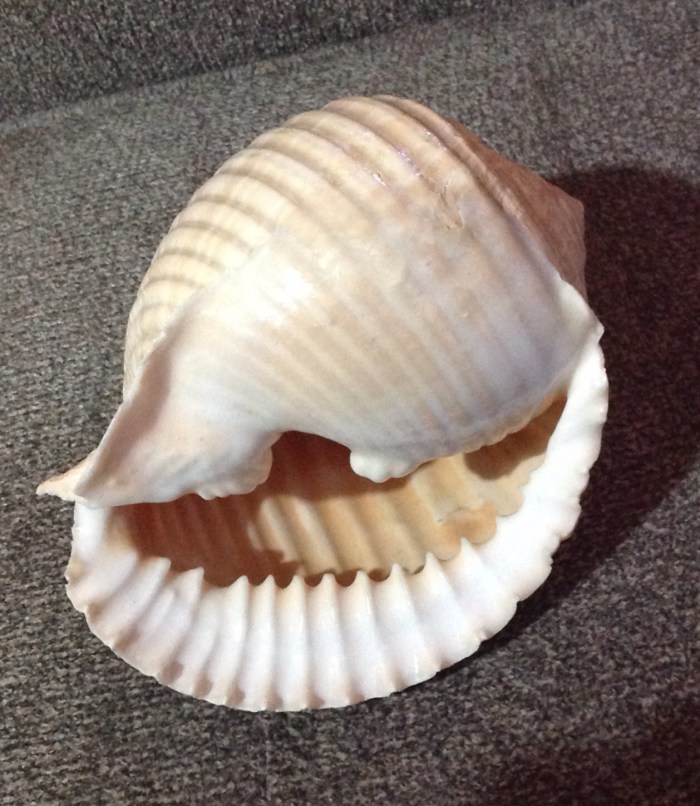
A little about the mystery novel since I tweet most often about it. HHGG is one I wrote in 1997. I have learned a lot since then, so editing makes me laugh. HHGG is about a woman and her two kids who seek summer solace at her old family home. She never dreams she is walking into a village rife with mysteries, some of them stretching back more than a century. I have a few human antagonists, but one who is anything but human!
~

~
Hope you are enjoying your summer and your own writing life!
~
All the best,
Jane.
abandoned buildings
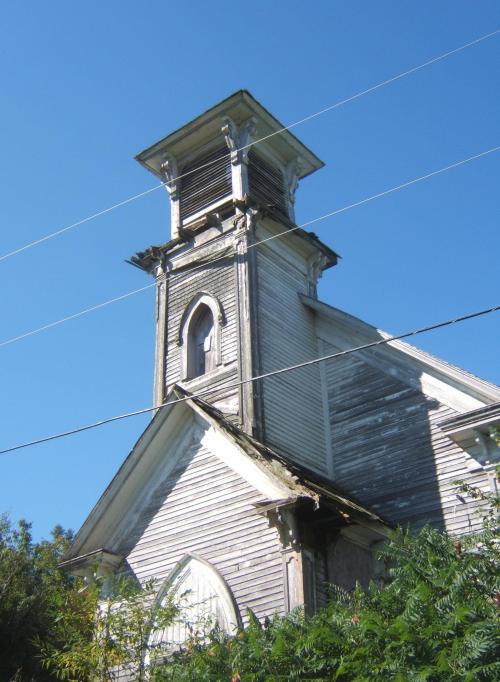
We are living in a time when many of our older buildings are reaching the end of their useful lives. Old churches, old covered bridges, old schools and old houses are everywhere, facing the indignity of old age. So many succumb, end up in landfills or as rotting derelicts. Yet these are buildings where history whispers. Buildings with stories to tell, our stories.
~
~
abandoned church
~
highbush cranberry
first, fruit hard and green
then, red, ready for wine
then shriveled raisins
hang on a leafless vine
~
the wick of a candle stub
competes with cobwebs
for thickness, thin sunlight
oozes, amber glass, a saber
along the empty aisle
threatens motes
in stale air undisturbed
where stray wind never
finds its way
~
deconsecrated and so
not desecrated when mice
squeeze under the threshold
gnaw at the pulpit, or when
vines whisper
vague obscenities
at the lintel, tap on glass
~
stripped of cross and steeple
people, prayers
stained glass and benches
removed and sold at auction
mice pause at their industry
to assess ambiguous whispers
~
the young girl who sat on the stair
sang a song to her mother
the warden who argued to fix
the seep in the roof
the Minister
who stuttered
~

~
~
Copyright Jane Tims 2018
changing communities
Last week we went for a drive to the Cornhill Nursery in Kings County to buy a new cherry tree for our yard. Afterwards we took a drive to visit some of the old communities in the area. One of these communities, Whites Mountain, was a rural farming community with 17 families in 1866 (New Brunswick Provincial Archives). By 1898 the community had one post office, one church and 100 people. Today the community consists of a few farms and residences, perched on a steep hillside overlooking the hilly landscape of northern Kings County.
~
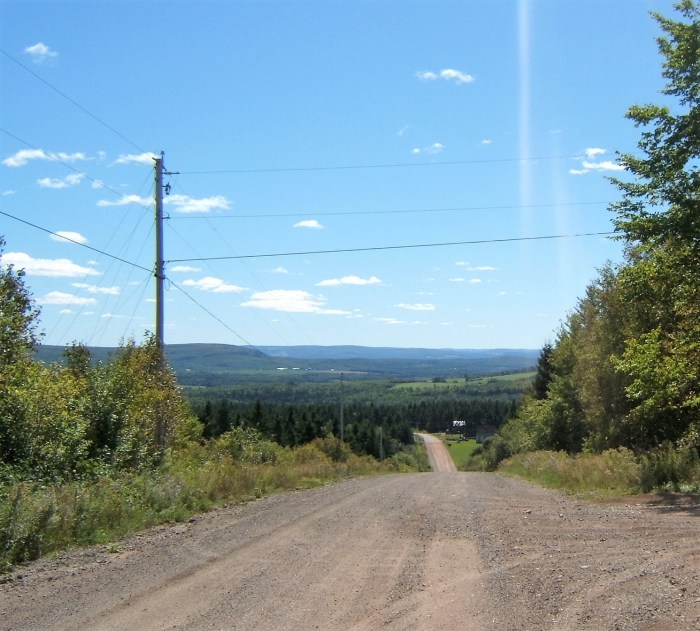
On the road descending Whites Mountain, Kings County, overlooking the broad Kennebecasis Valley (September 2016)
~
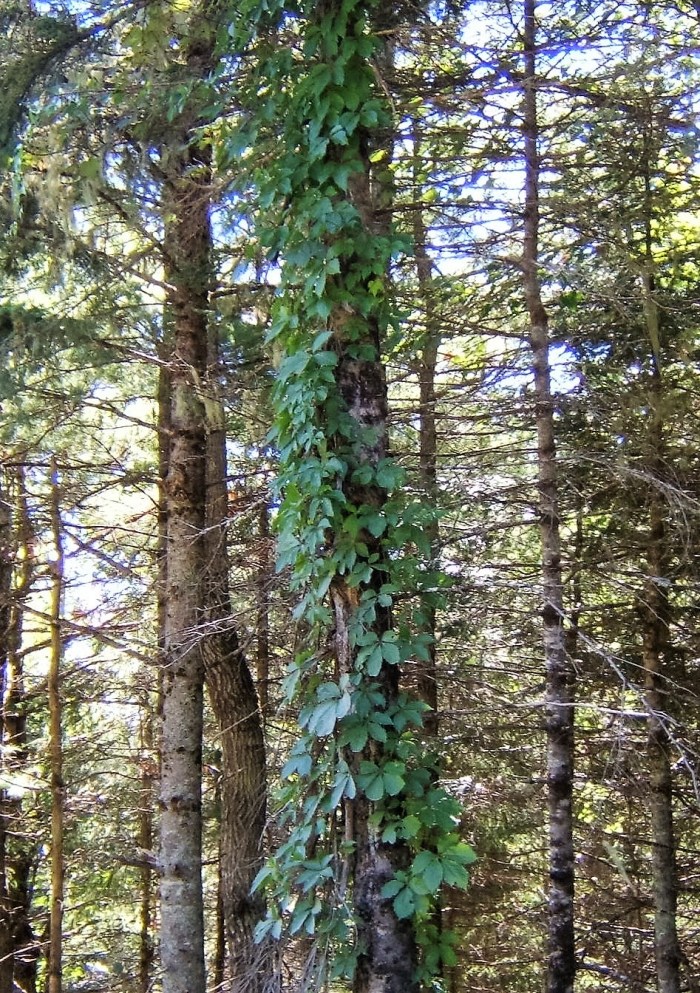
One of the most interesting sights on our drive may also be evidence of the farmsteads formerly in the area. Although Virginia creeper (Parthenocissus quinquefolia (L.) Planch.) is native to North America, in this area it is usually associated with human habitation. In the thick woods north of the community, we found Virginia Creeper in profusion, covering the surface of the trees.
~

~
~
Although there is only forest here now, perhaps the ancestors of these vines covered barns and other buildings in the area.
~
Copyright 2016 Jane Tims
first and last and in between

~
This past Saturday, I worked to create a manuscript of some poems I have written on the theme of discarded and abandoned elements of life and landscape.
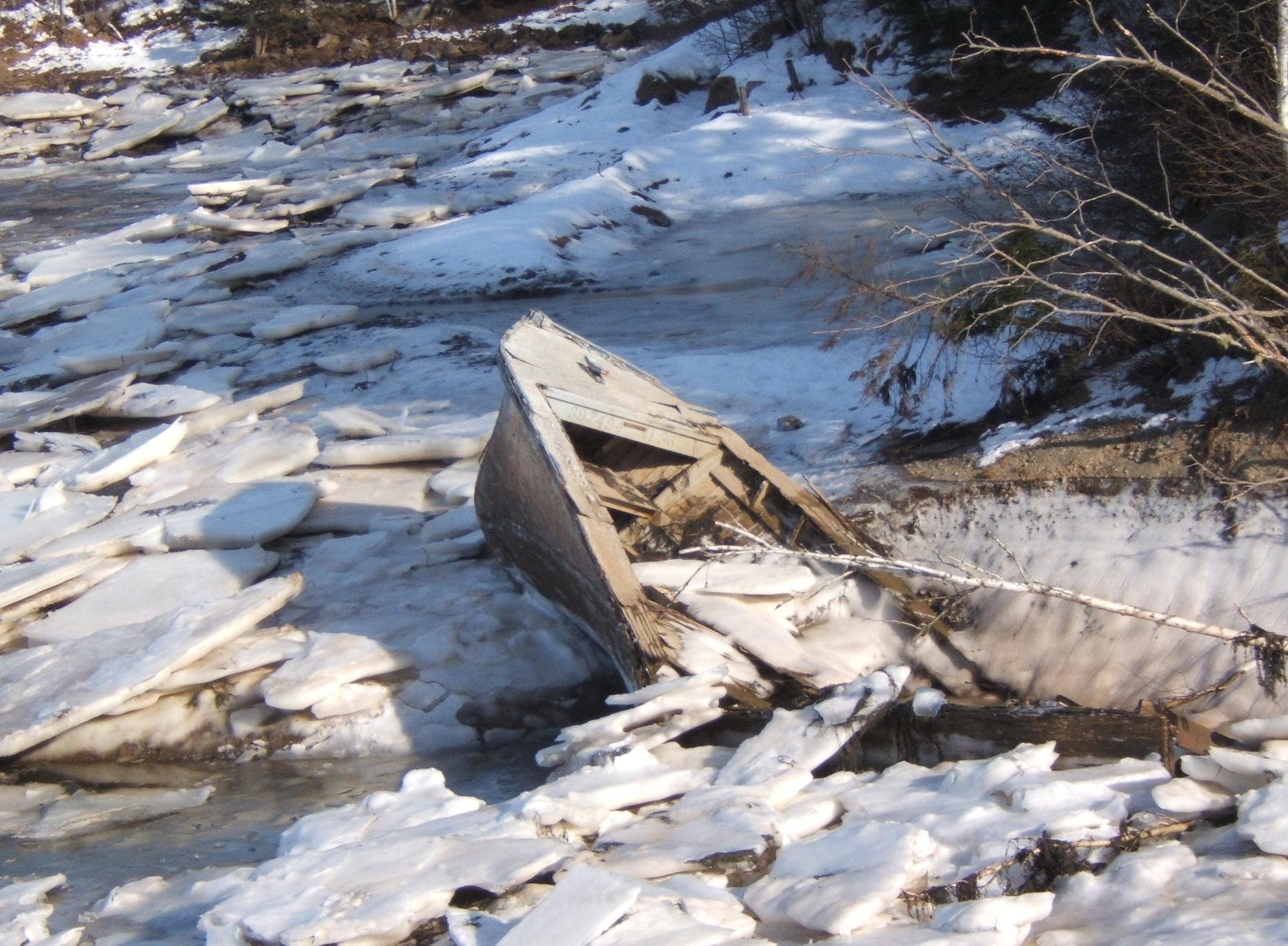
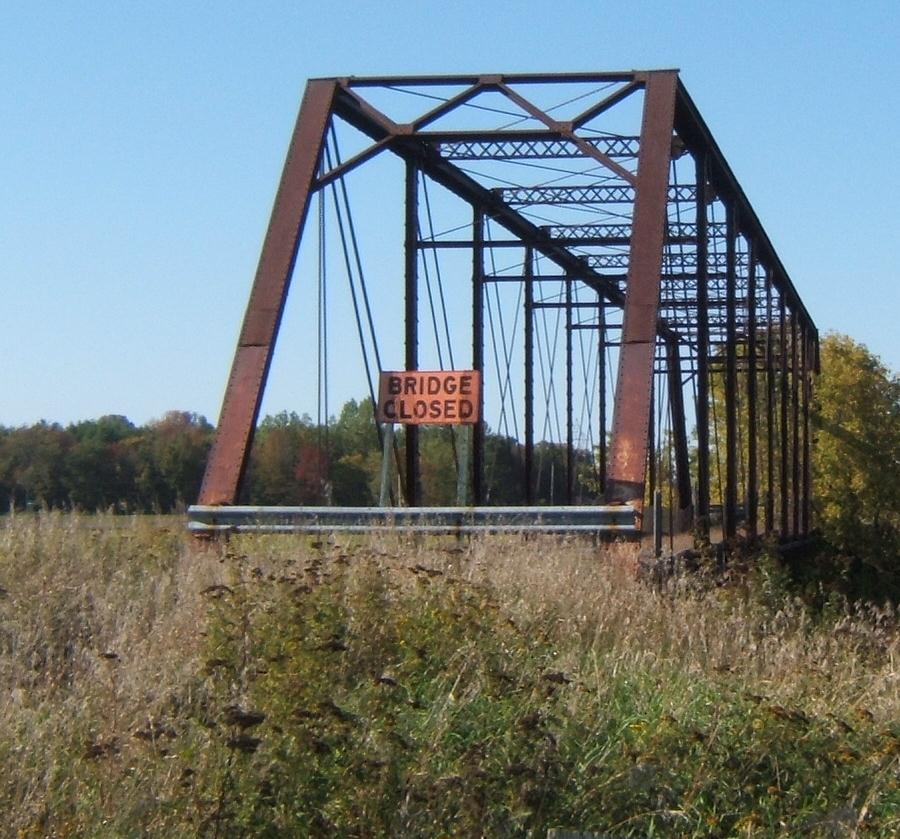
There are 38 poems in the rough manuscript, making up about 50 pages. The poems are a study of change. They include poems about abandoned boats, roads, churches, toolboxes, sheds, trucks, bridges and so on.
I have published a few of these on this blog … for an example, see ‘Foggy Molly’, a poem about an abandoned boat (https://nichepoetryandprose.wordpress.com/2013/01/30/abandoned-boat/ ).
~
~
Part of creating this manuscript is to put the poems in order. I find it hard to decide how to arrange 38 poems so they flow, one into the other, and so they tell a story.
~

~
1. My first step is to print a table of contents of the rough manuscript. I read each poem through and assign a couple of key words to describe it, jotting these into the table of contents. For my 38 poems on abandonment, I obtained 27 key words. Many of these are shared by various poems, but a few are unique to one or two poems. My key words are, in no particular order:
lost ways, regret, grown over, barriers, evidence, sadness, history, haunted, adaptation, voice, intention, anger, change, memory, denial, improvement, new life, lost function, buildings, items, understanding, cruel, resistance, life/death, shock, keeping past, lost/misplaced, broken
~
~
2. Next, I put everything into a table, with Xs to show which key words fit each poem. This does not take too long to do and helps me consider the meaning of each poem. Below is just a small section of my table:
| Poem Title | lost ways | regret | grown over | barriers | evidence | sadness | history | haunted | adaptation |
| Recovery | X | X | X | X | |||||
| Reason for Leaving | X | X | X | X | X | ||||
| South Nation Bridge | X | X | X | ||||||
| Outfield | X | X | |||||||
| Diverted road | X | X | |||||||
| Invitation to tea | X | X | X | X | X | ||||
| Lane | X | X | |||||||
| Abandoned church | X | X |
~
3. Once I have the table created, I tally the Xs in the columns and decide which key words are most common. Key words occurring in more than 10 poems are shown in bold:
lost ways, regret, Grown over, barriers, evidence, sadness, history, haunted, adaptation, decay, intention, anger, change, memory, denial, improvement, new life, lost function, buildings, items, understanding, cruel, resistance, life/death, shock, keeping past, lost/misplaced, broken
The words that apply to almost every poem usually speak to the theme of the poetry collection: in this case, the words ‘change’, ‘memory’ and ‘lost function’ were very common, no surprise in a collection about things abandoned. Other key words, common to a few poems, suggest possible themes for the sub-sections.
~

~
4. My next step is to look at the key words and see what themes ‘speak’ to me. I also want to have a progression of ideas through the manuscript. In this case, some of the poems are sad and rather hopeless, while some show how abandonment leads to understanding, and, in some cases, to new purpose and new life. From the key words, I selected six sub-sections: ‘lost ways’, ‘decay’, ‘haunted’, ‘broken’, ‘understanding’ and ‘new life’.
~
5. Now comes the long work of re-ordering the manuscript. I create a new document and, one at a time, transfer the poems into their new sections.
~
6. I like to name each section, taking the name from a line in one of the poems in the section. These may change later, but for now, they give me a reference within each group of poems:
lost ways – ‘overgrown …’
decay – ‘left to rust …’
haunted – ‘ghosts are lonely here …’
broken – ‘dry putty, broken glass …’
understanding – ‘the rock to stand on …’
new life – ‘a turn towards horizon …’
~

February 11. 2014 ‘old shed near Charlo’ Jane Tims
~
Today, I will begin a read of the manuscript to see how the poems flow within their sections. Many revisions are ahead, but this is my favorite part of the work!
~
Have you ever gathered poems into a manuscript and did you use any particular method to decide the order of the poems?
~
Copyright 2015 Jane Tims
abandoned meeting house
~
~
the meeting house
~
~
crooked clapboards
doors nailed shut
remember
~
they argued
into the supper hour
words threaded, knotted
~
violent voices
eyes wool, ears cotton, lips
flax flayed to linen
~
over wages paid
to the man who splits
the wood, stokes the fire
~
at home, needles
slid, silent, through layers
of quilting
~
women forgot their thimbles
pricked thumbs
left blood on fabric
~
~
Copyright 2014 Jane Tims
star gazing comfort
Usually in mid-August, we go out for an evening or two to get a glimpse of the Perseid meteor shower. This annual meteor shower is the result of the Earth’s passage through the Perseid cloud, debris of the comet Swift-Tuttle. This year I sat at the end of our driveway on the evening predicted to be the peak of the shower and saw one bright and very sparkly meteor streaking from overhead toward the south-east.
~
I have waited a while to do this post because I wanted to take a particular photo. Last week, I finally saw the item I wanted, an old couch put out on the lawn. I wrote the poem below in mid-August several years ago, after I saw a group of students sitting on just such a couch, presumably waiting to see the meteor shower.
~
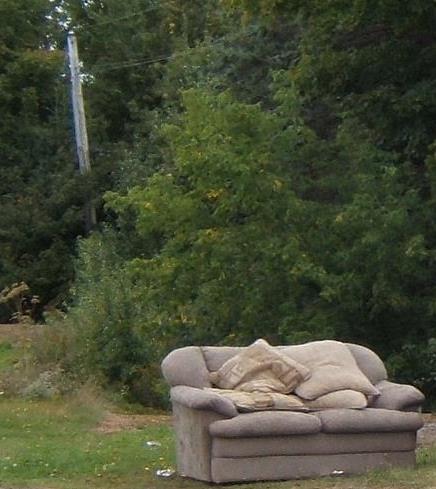
abandoned sofa on a lawn
~
~
sofa on the lawn
~
seemed a fine idea
comfy spot to watch
the Perseids do
their August light show
but
clouded over
we ran indoors
~
the sofa became
a sponge to sop the rain
a field mouse free-for-all
dog-eared page
from a promising read
worse smell than fleece soaked
in skunky ale
~
epic fail
~
~
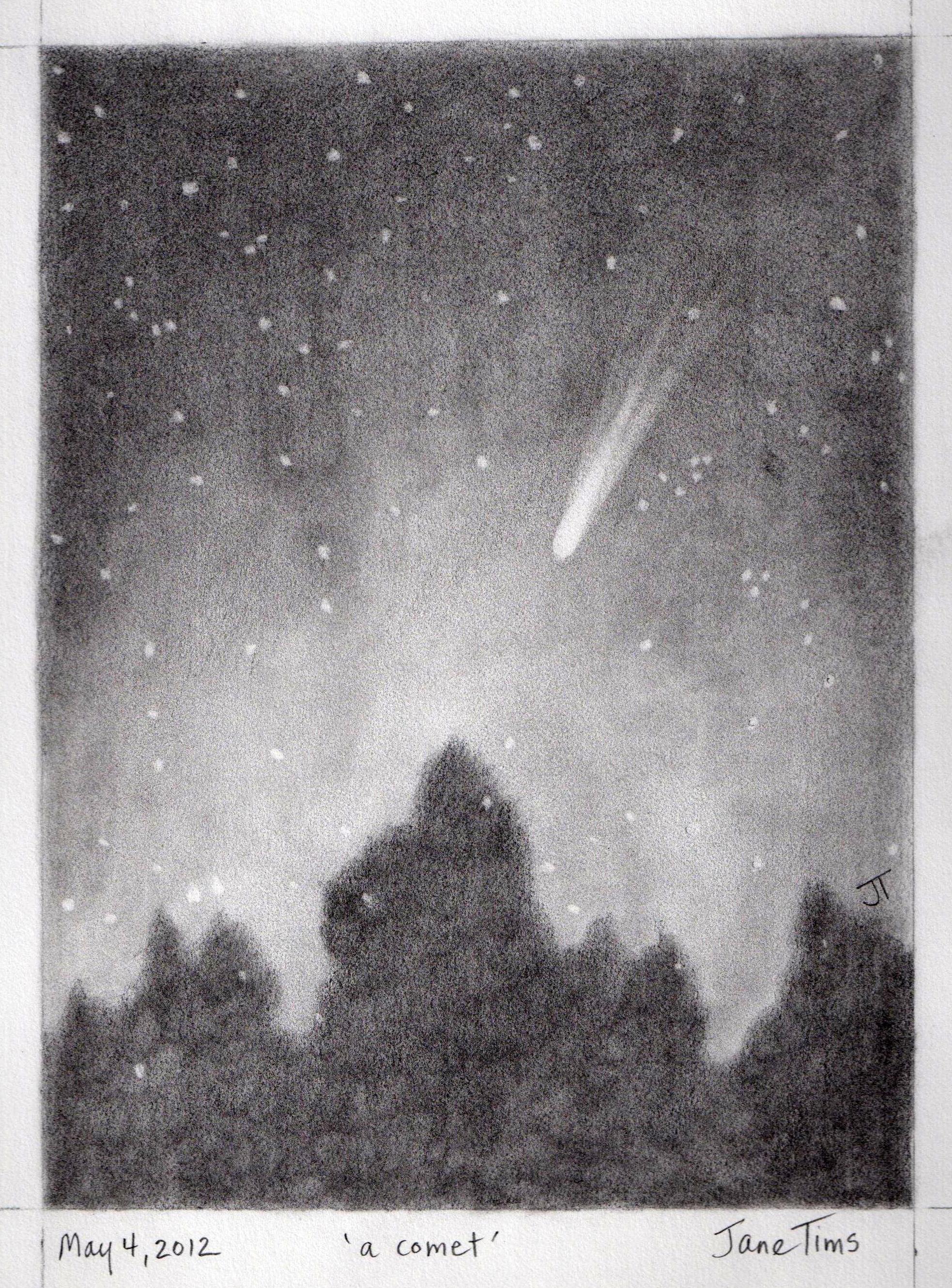
May 4, 2012 ‘a comet’ Jane Tims
~
Copyright 2014 Jane Tims
abandoned railroad siding
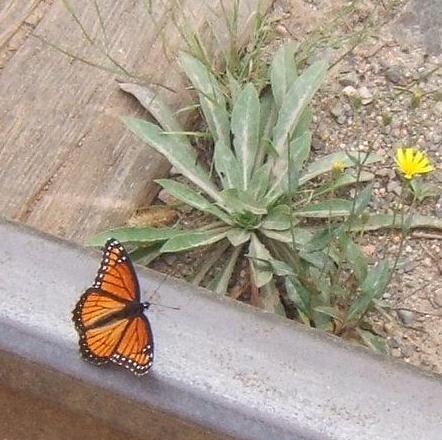
Viceroy on rail
~
abandoned railroad siding
~
a viceroy butterfly, orange
leaded glass
and rows of wary eyes
naturally suspicious
settles on the slate-grey rail
flexes its wings, nonchalant
~
as the black bear who
ambled the track
left a dump
of blackberry seed
undigested pulp
or the enthusiastic jumble of clovers
blooming between the ties
~
rails are held between the trill
of insect and the quaver
of goldenrod, caught in the crossfire of sun
light focused through
signal lenses
and glass insulators
on unstrung
telephone poles
~
turn toward horizon
rails merge and vanish
altered stride of railroad
walking made confident
by the absence of train
~
~
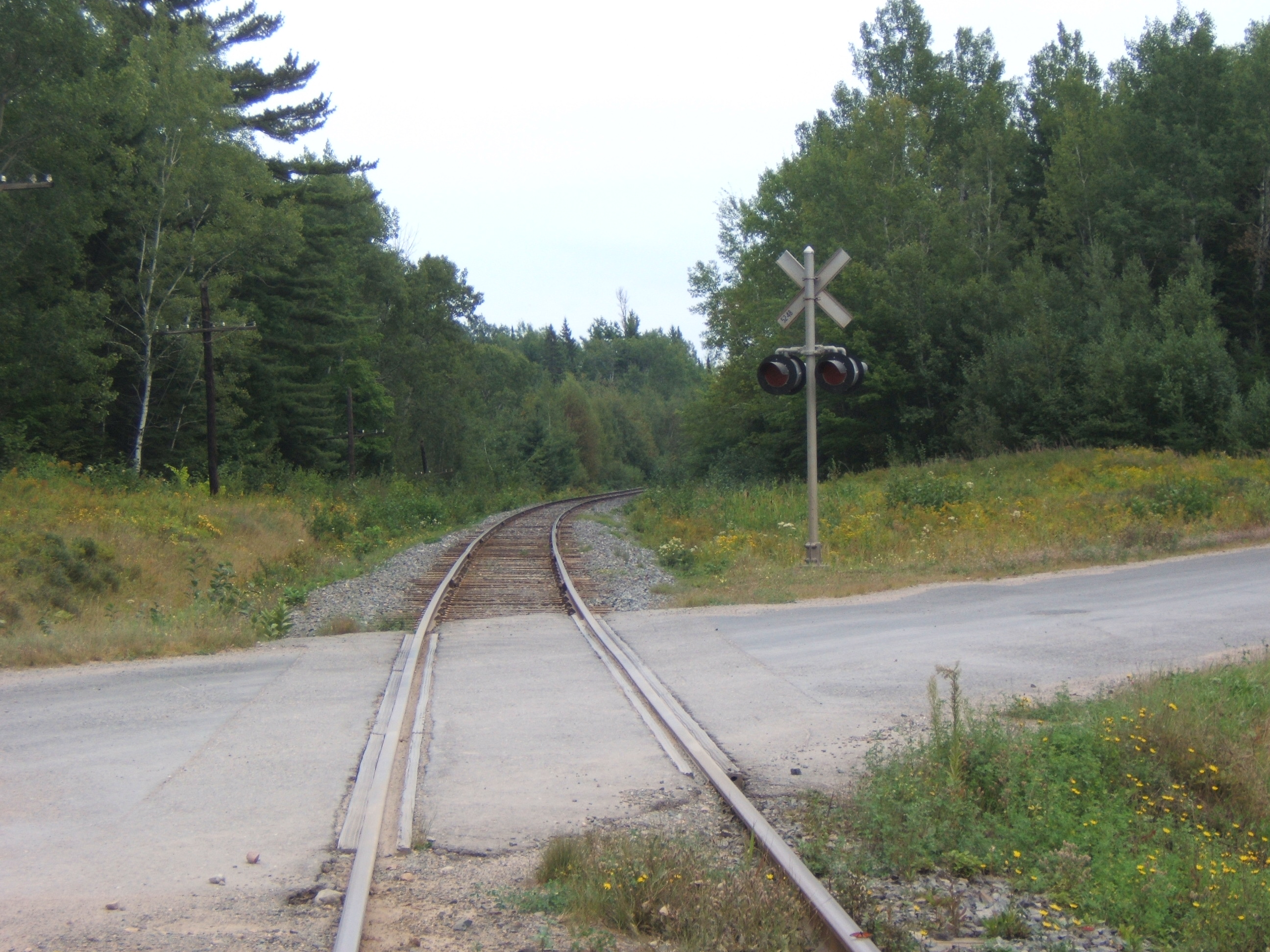
railway crossing
~
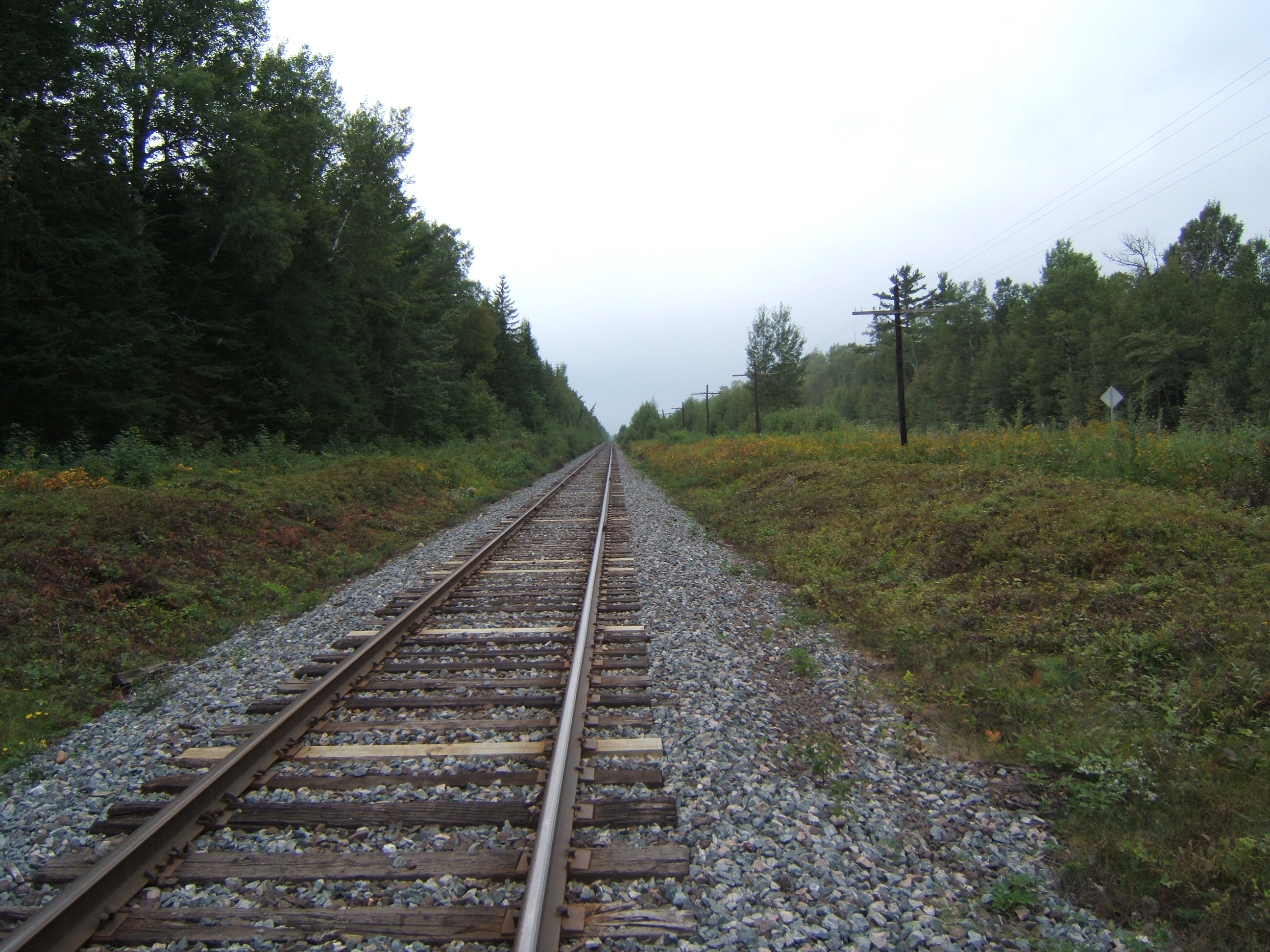
railway near Rooth, New Brunswick
~
Copyright 2014 Jane Tims
rural relics (day 10 to 12)
On my virtual bike trip along the north coast of New Brunswick, I am seeing many aspects of rural New Brunswick that are almost relics in our modern world.
~

distance travelled (map from Google Earth)
~
8-11 January 31, 2014 45 minutes 3.0 km (Eel River Bar to Charlo)
8-12 January 28, 2014 30 minutes 7.0 km (Charlo to Blackland)
~
relic:
- object that is interesting because of its age or association
- surviving custom, belief or object from a past age
(Oxford dictionary)
~
One of these relics is the rural mailbox. Amid controversy, the single mailbox at the end of a driveway is gradually being replaced, so there are very few end-of-drive mailboxes along the route I am travelling.
~
We had a mailbox for many years and it was always fun going to the end of the drive to get our mail. Once when I was at my grandfather’s farm for a vacation, my Aunt Anna sent me a parcel so I would have the fun of getting a box in the mail. I remember well reaching up to get the parcel and I remember what was inside – a snow globe!

getting a parcel at my grandfather’s mailbox
~
About ten years ago, we were shifted to a community mail box. We have a key and an assigned box. It is still fun to get the mail, but less convenient …
~
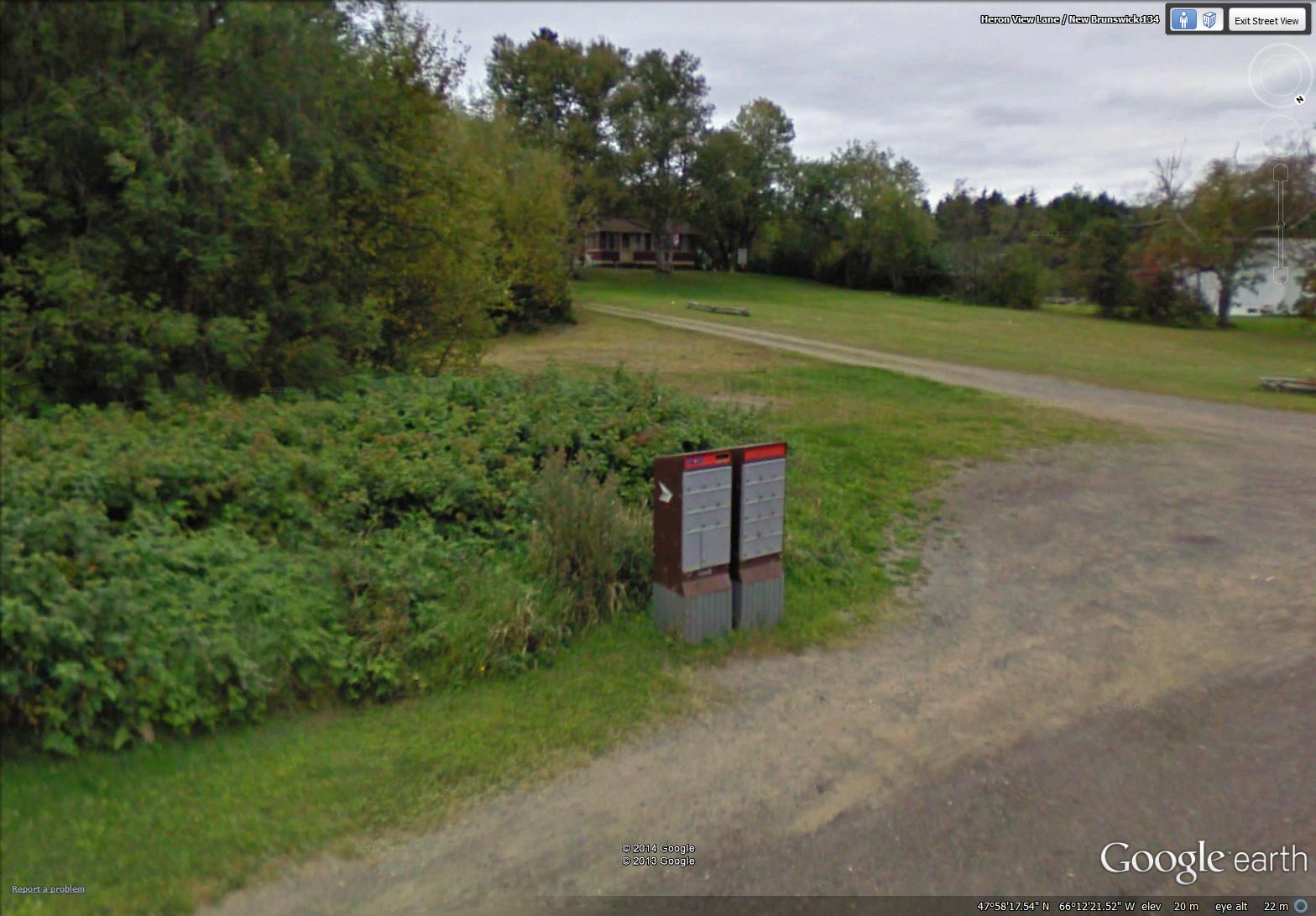
mailboxes near New Mills (image from Street View)
~
Another relic of a more self-sufficient way of life is the remnant apple orchard. In some cases, the apples are still used by thrifty families, but often the fallen fruit is left for the deer …
~

orchard near Blackland (image from Street View)
~
I also see derelict barns and sheds along the road, abandoned as people give up farming and a more rural way of life …
~
February 11. 2014 ‘old shed near Charlo’ Jane Tims
~
Do you encounter remnant bits of our past in your travels? Do they bring back memories?
~
Copyright 2014 Jane Tims
an abandoned house
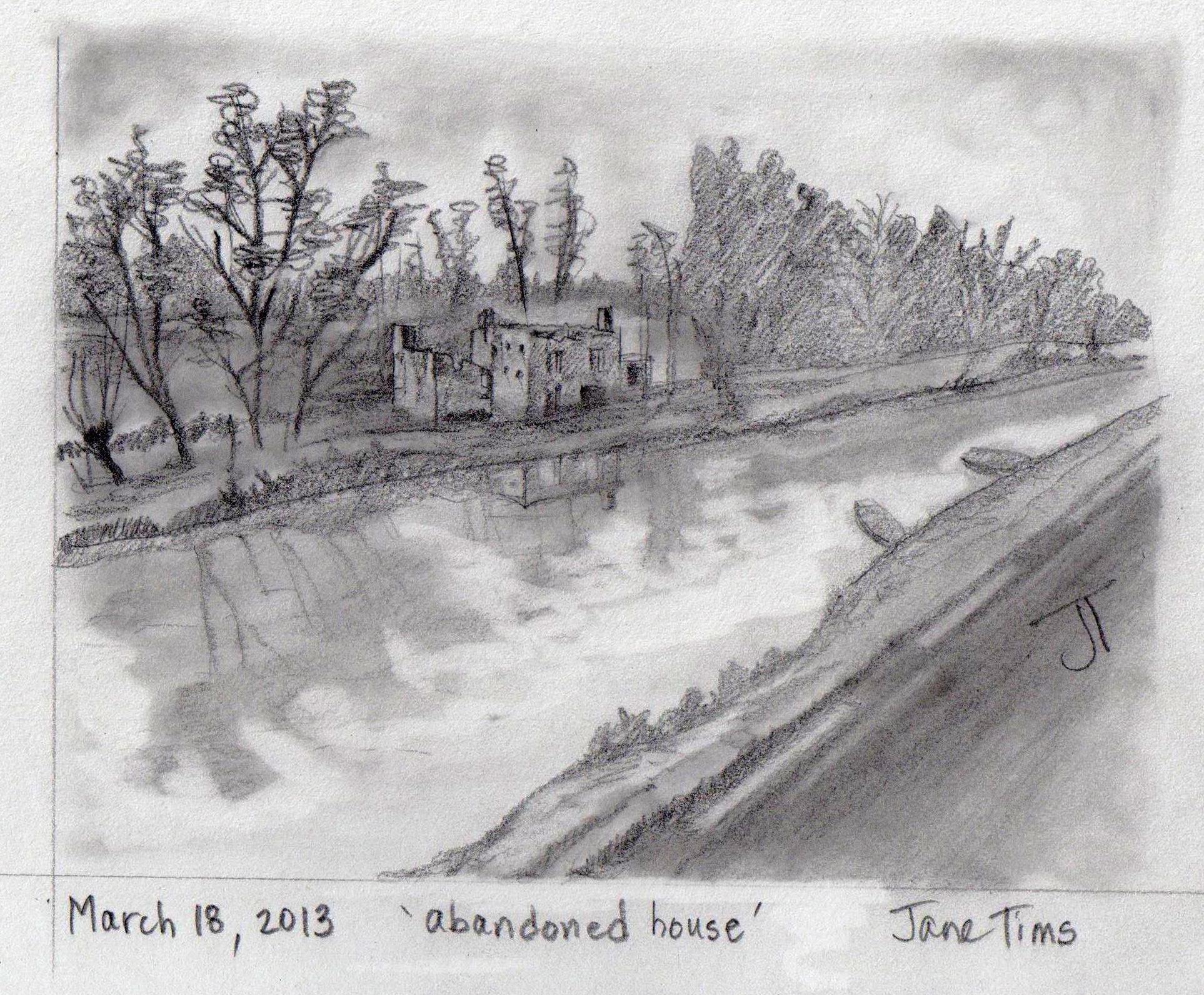
On my virtual biking trip along the Sèvre Niortaise in central France, I saw an abandoned house. Its roof had collapsed, its side buildings were reduced to ruined stone walls and its windows and doors were empty eyes …
~
~
It reminded me of a painting of an abandoned house by Liam Rainsford (published as ‘Abandoned’ on his Blog on April 15, 2012). You can see his painting at http://liamrainsford.com/2012/04/14/abandoned-oil-painting/
~
I have been writing a series of poems on the theme of abandonment and Liam’s haunting painting inspired this poem:
~
~
abandoned house
– response to the painting ‘Abandoned’ by Liam Rainsford (April 15, 2012)
~
stone ruin,
vacant, a shell
disinterested (since they went away)
in the state of the road
or comings and goings
~
only the fence posts have opinions
one, a stoic, is the neighbor’s boy,
waits by the gate
one post swoons in disbelief –
roof fallen in, garden weedy,
fields overgrown
what’s a good fence for, but to keep hunger away?
keep people in?
fence wires lead off, toward the east
~
walk through the front door, into open air
views unobstructed
tree tops, remote hills, expanses of sky
~
ghosts are lonely here,
peering into windows, entering
the lean-to door
with a basket of eggs,
over and over
~
~
Copyright Jane Tims 2013
a sudden change of seasons
~

a pleasant bike trip along the river (image by Street View)
~

~
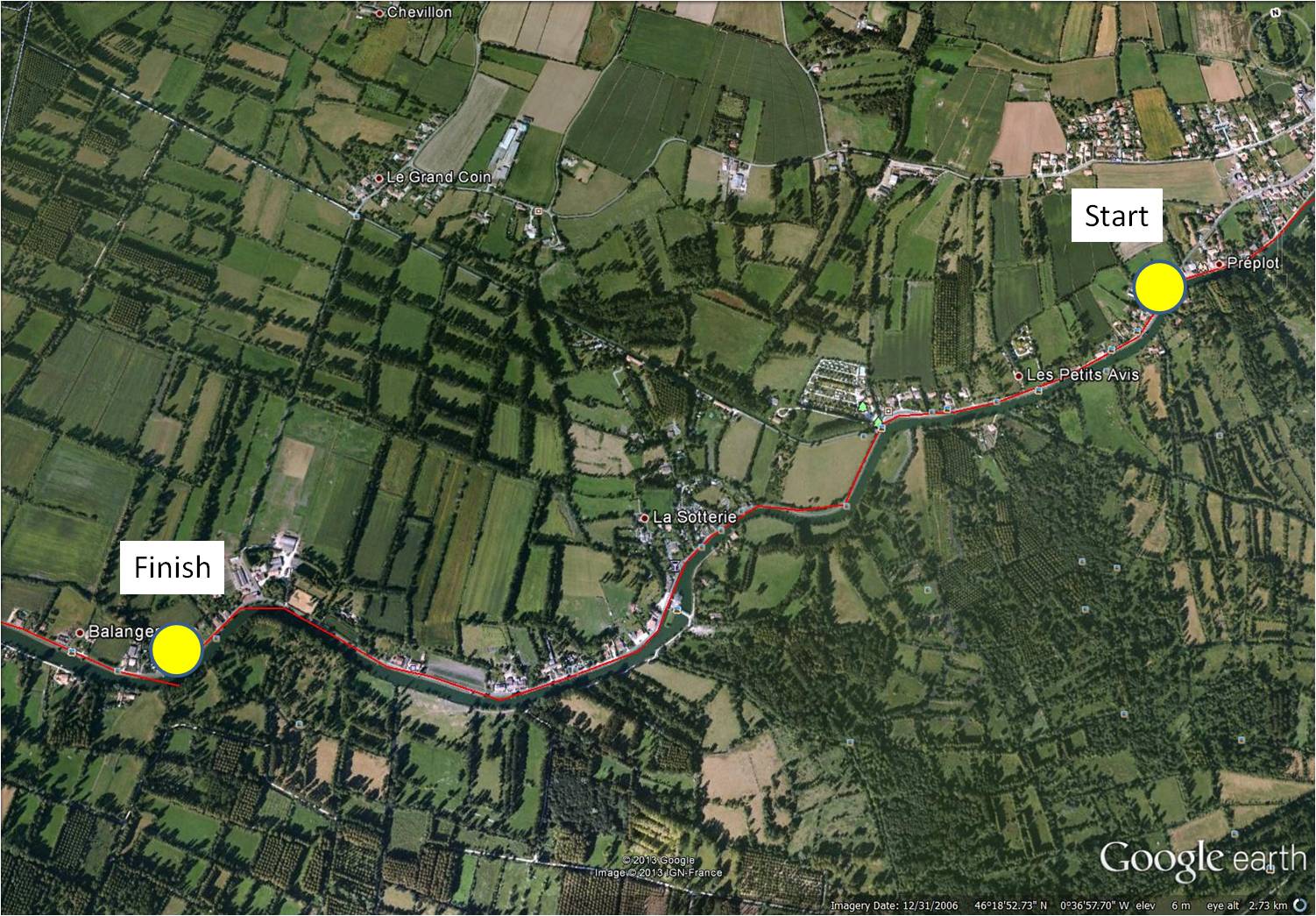
map showing distance travelled (map by Google Earth)
~
On March 18, I spent my time biking along the river (the Sèvre Niortaise). I loved the reflections on the water and the boats docked along the shore …
~
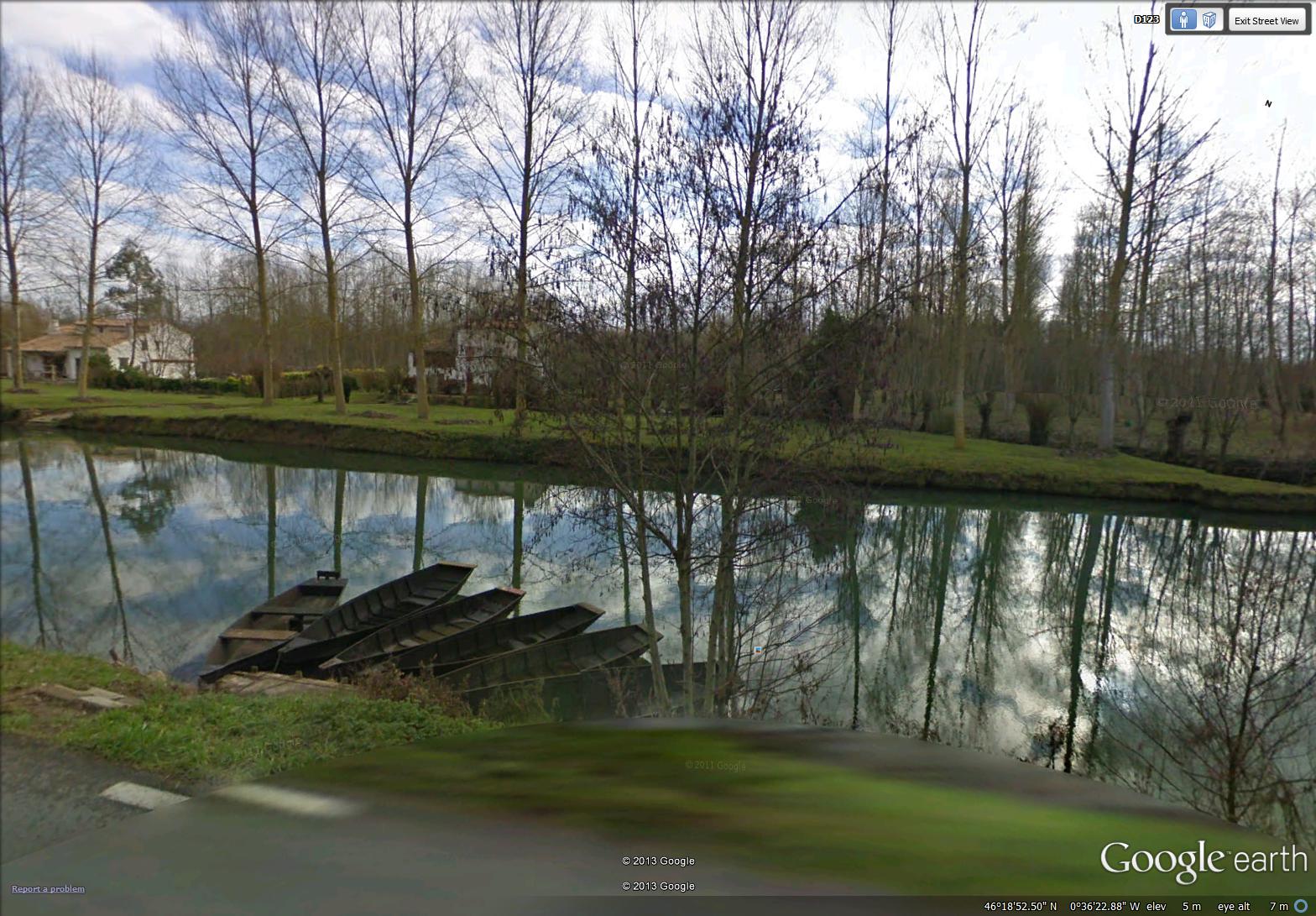
boats along the river (image by Street View)
~
Along the road, I was delighted to see a house draped in blooming Wisteria…
~
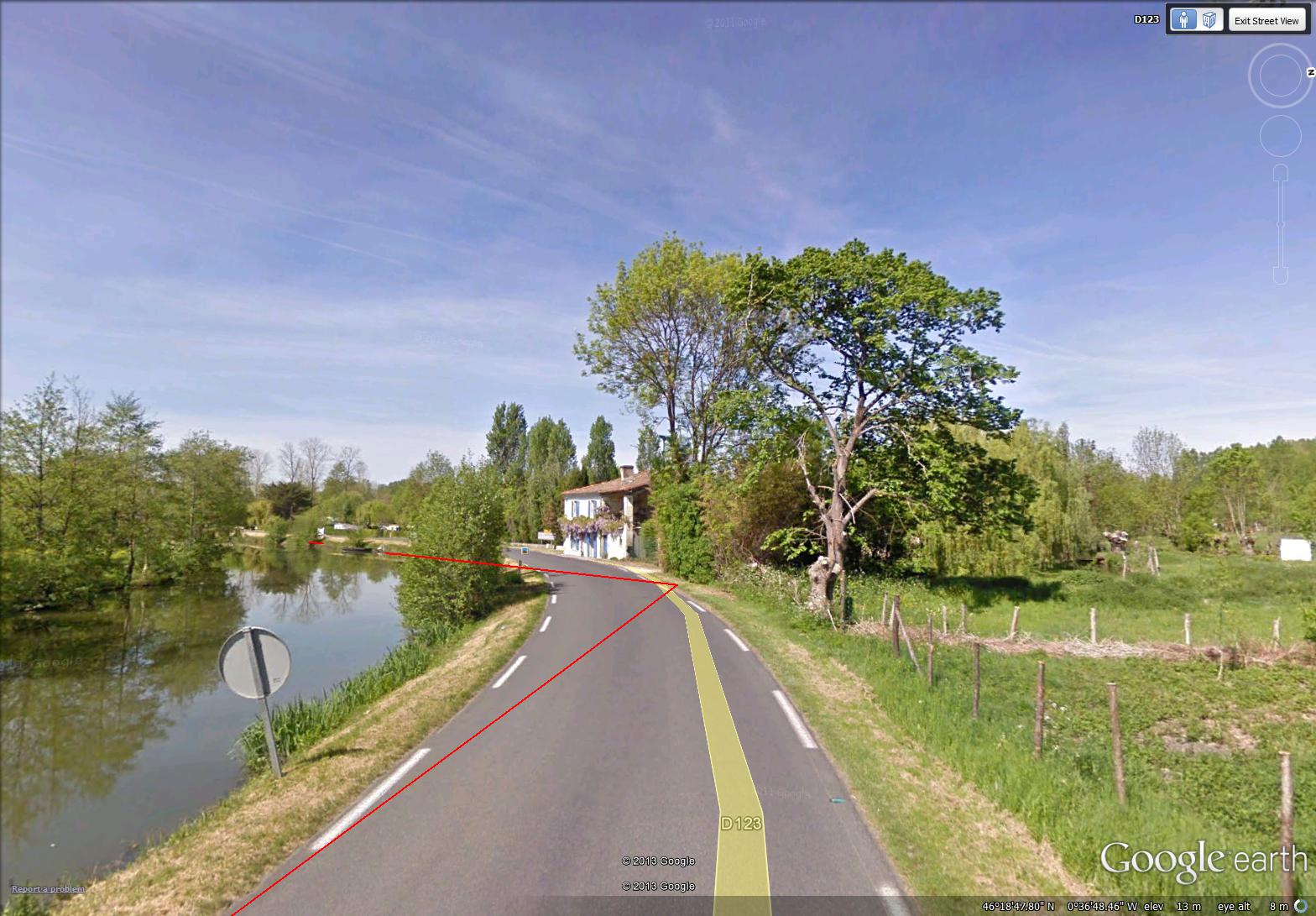
in the distance, a house with blooming Wisteria (image by Street View)
~
But by the time I got there, the seasons had changed, the blooms were gone and I was so disappointed not to see the flowers. I should have peddled faster!!! (Street View had photographed the blooming in April, 2010 and then recommenced in winter, January 2011) …
~

Wisteria, no longer in bloom (image by Street View)
~

winter vines (image by Street View)
~
I also saw a fisherman along the river. He was fishing in January!
~
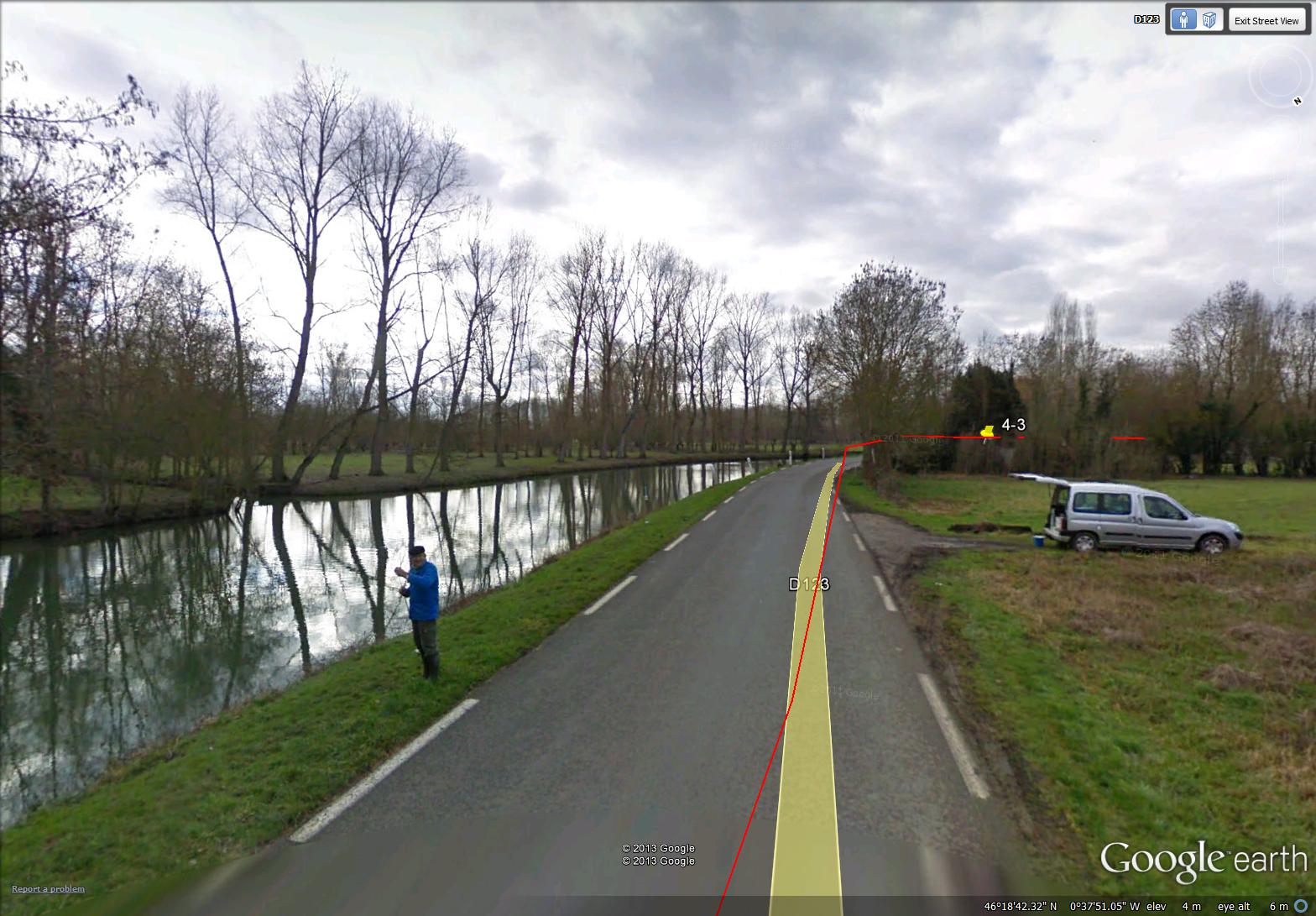
fisherman and his truck (image by Street View)
We had a short conversation:
Fisherman: Bonjour Madame! (Hello madame!)
Jane: Bonjour. Est-ce que vous avez attraper des poissons? (Hi. Have you caught any fish?)
Fisherman: Bien sûr! Il y a un grand poisson dans mon camion … voyez-vous que les ressorts à boudin de mon camion sont en bas? (Of course! There’s a huge fish in my truck. Can’t you see how low the truck springs are?!)
~
Best View: an abandoned house along the river…
~
~
Copyright Jane Tims 2013




 nichepoetryandprose