Posts Tagged ‘pencil drawing’
black and amber signs
When people and animals try to occupy the same space, sometimes misfortune or even tragedy occurs. In New Brunswick, drivers constantly scan for deer and friends include a warning to ‘watch for moose’ in their goodbyes.
The tragedy works both ways. A moose is a big animal – a collision will mangle a car and destroy a young life in an instant. At the same time, a turtle killed on the highway is a loss for our ecology and our biodiversity.
The first step in preventing tragic encounters of vehicles with deer and moose and other wild life is the black and amber sign. It warns us when we travel through the spaces animals consider home.

In New Brunswick the fatalities involving moose have been so high, the Department of Transportation works constantly on a program of fencing and tunnels to keep cars and people separate and to provide safe passage for animals.
Often in our travels, my husband and I stop to rescue turtles from becoming road kill, carefully moving them off the road in the direction of their destination. In Ontario, we were delighted to encounter Turtle Crossing signs. These signs serve to warn and also to make people aware that the wetlands are home to many species.
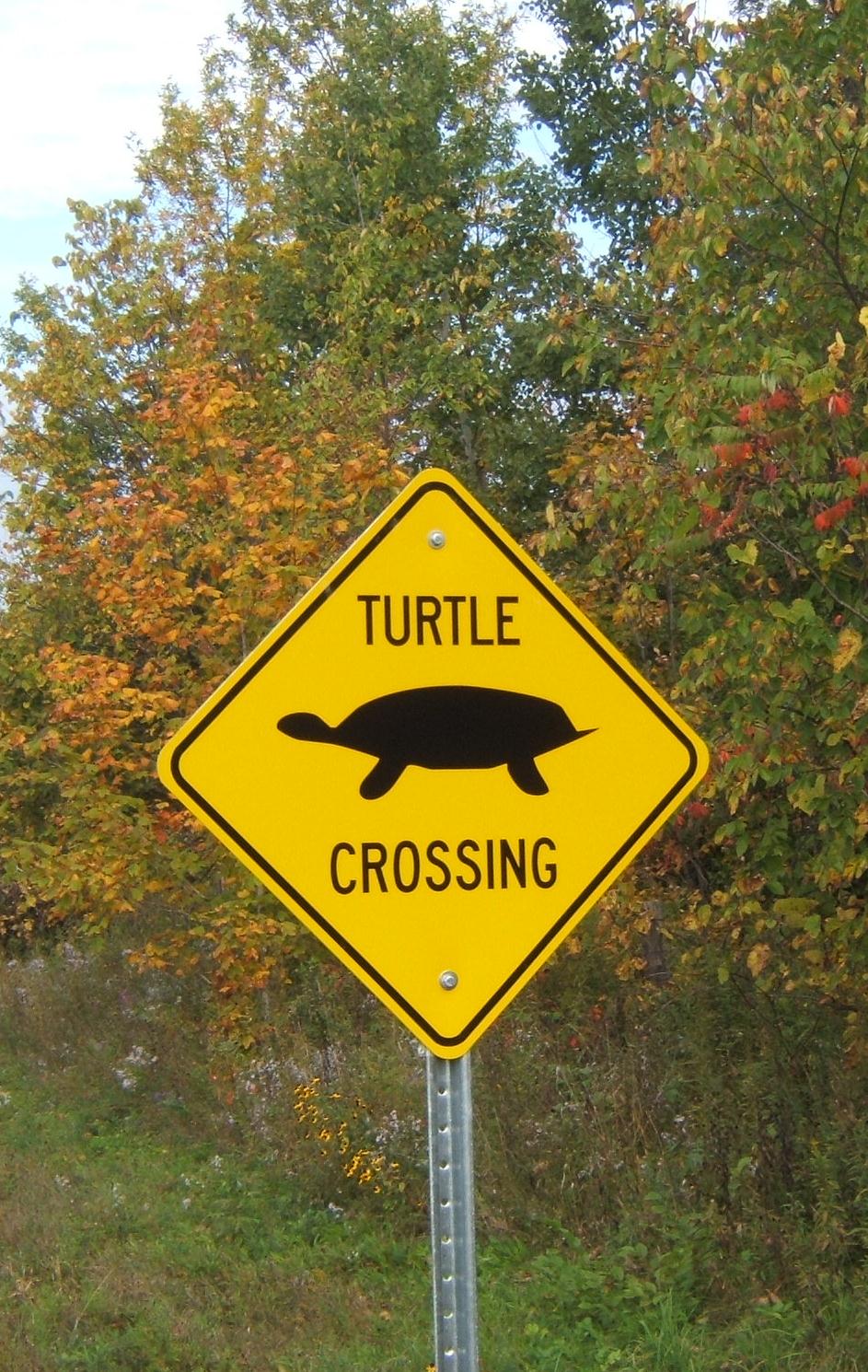
black and amber
~
take these as warning
black on amber
time presses forward
no back-spin in the gyre
lost is lost
bubbles make no progress
against the river’s flow
~
five things to do
before evening
the least of these
to notice the shadow
climbs the wall
her hair tangles
on the pillow as she sleeps
immobile
~
remember the deer
how it fits itself to the hollow
of the hood of the car
and the moose matches pace
with the bike
prolonging collision
~
remember how the turtle withdraws its feet
refuses to move
just another
stone on the highway
~
© Jane Tims 2011
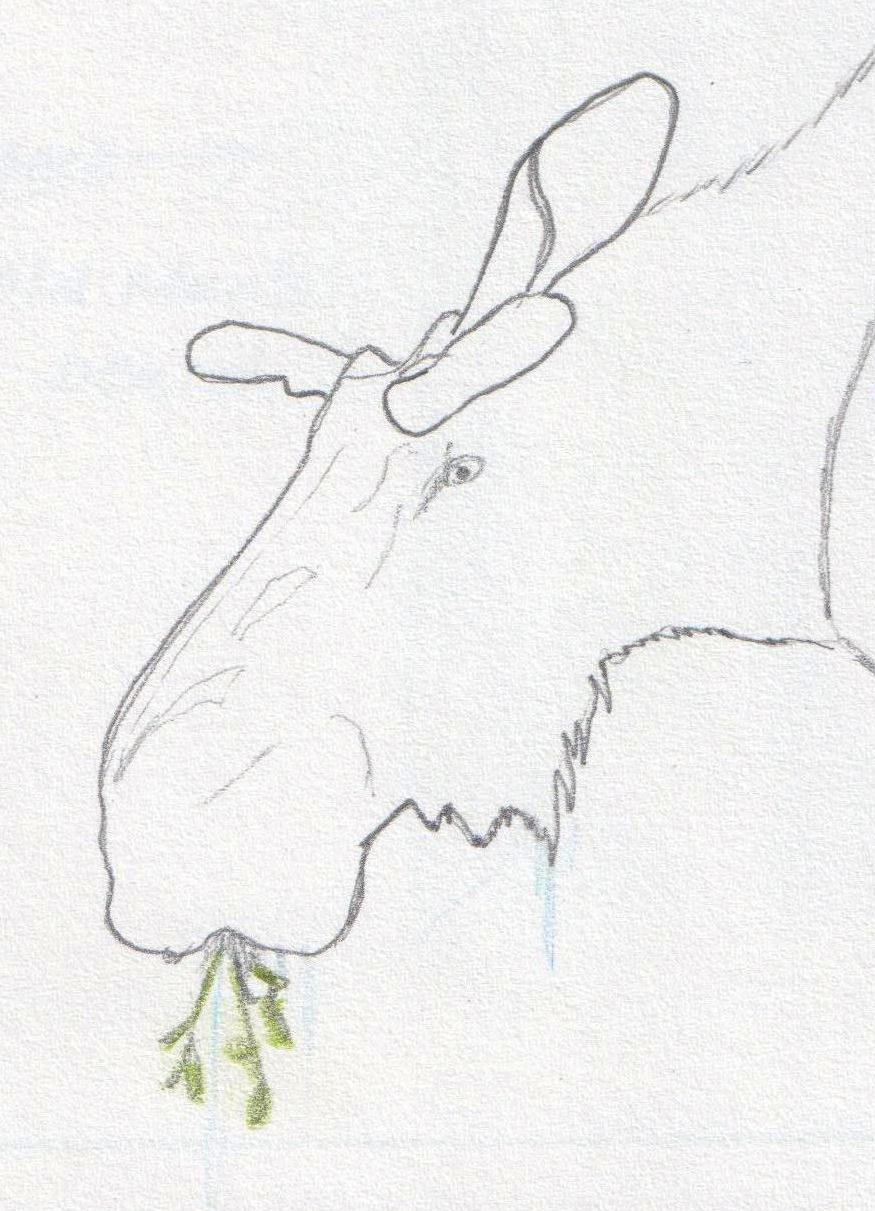
autumn black and white
Roaming around the countryside, the weekend before last, deluged by color from orange and yellow trees and crimson fields of blueberry, I was interested by the contrast in the ditches. A month ago, they were a riot of yellow or purple as the goldenrods, tansies and asters presented themselves, species by species. Now, they are done with blooming and are in the business of releasing their seeds.
To attract pollinators for setting their seeds, flowers put on a competitive display of color and form. But dispersing their seeds is a different process altogether. Many depend on the wind to carry their seeds to ideal sites for next year’s bloom and the wind is color-blind. Grey, white and even black are the dominant colors in the ditches.

Seeds dispersed by wind either flutter to the ground, or float in the air. Often, they are assisted by a special seed form. For example, maple keys are flattened and aerodynamic so they spin and travel some distance as they fall. Seeds of goldenrod and aster have feathery white bristles (called the pappus, a modified sepal) to help them float through the air. The term pappus comes from the Latin pappus meaning ‘old man’, an apt description of the white heads of the flowers, gone to seed.

Another species in the ditch, Common Tansy (Tanacetum vulgare L.), also known as Golden-buttons, ordinarily has bright yellow flowers in a flat head. Now, it has joined the black and white revue, showing black seed-heads against feathery leaves.

The seeds of Tansy, in a form called an achene, have no special adaptation for flight. This time of year, these seeds are dry and ready for dispersal by gravity.
autumn black
~
dry leaves
silent
colorless
wonder withdrawn, into the vortex of
no hue, no delight
cones suppressed, rods perceive
absence, black seed in heads of Tansy
absorb all light, feathered foliage
darkest green, approaching black
~
© Jane Tims 2011

in the shelter of the lane
Now, when the trees are shedding their foliage in yellow, red and orange, have you taken the time to stroll down a lane crackling with dry leaves?
1 lane n. 1: a narrow passageway between fences or hedges;
2: a relatively narrow way or track …
2 lane Scot var of LONE
Webster’s New Collegiate Dictionary, 1979
Words are so laden with connotative and denotative associations, those similar in meaning may not convey the same idea at all. For example, the word ‘lane’ is vastly different in meaning from ‘road’, yet a lane is a type of roadway.
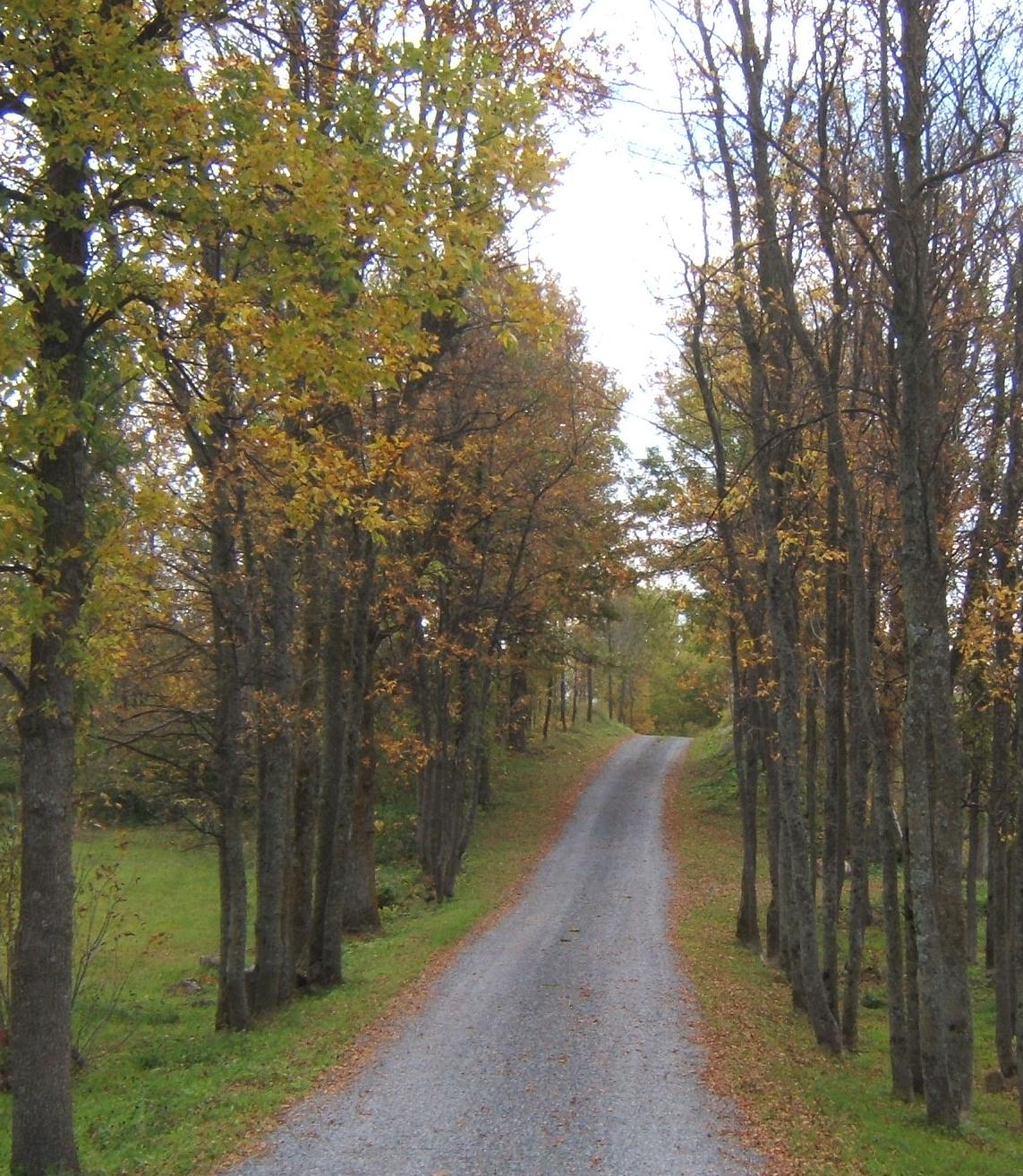
A lane, to me, is a narrow corridor, built to admit people from the ordinary world of community to the private world of home. A lane is bounded on each side by trees, hedges or fences. A proper lane must have ruts for the tires and a centerline of grass to challenge the clearance of any vehicle. Once you are in the lane, it is difficult to see anything outside.

When I was young, visiting my mother’s family took us to ‘the old home place’. It was sandwiched between the main road and the river, but because it was connected to the outside world by a long, bent, shady lane, it was truly a ‘world-apart’.

I spent many happy hours in the lane, wandering up and down its length, singing and dreaming, exploring and examining. I loved the small woodland habitat created on either side. I picked the wild blueberries growing there, watched squirrels busy at the workings of their pine-cone industry, and made friends with specific trees.
One young Silver-leaved Poplar (Populus alba L.) was a particular favourite. It stood just before the bend in the lane, its bark marked with black diamonds. When the wind blew, it turned its leaves over in a generous offering of silver.
I have other pleasant associations with the lane. I remember my Dad working there with a shovel and a pickaxe, trying to fill in the worst of the ruts to save the undercarriages of his car and trailer. I remember listening to my Mom’s stories of how she and my aunt pushed their doll carriages up the lane to visit imaginary neighbours. I remembered how excited we always were to see the gate at the end of the lane wide open, since that meant my aunt or uncles were at home.
lane
~
trees along the lane
sentinels
to guard its ways
cone scale mounds
acorn stashes
the silver undersides of poplar leaves
doll carriages with squeaky wheels
blueberries in slants of light
~
the lane a wooden shelter
its base the rutted track
its sides the trees, muscled arms
branches overhead with fingers locked
~
charmed paths
moss tablecloths
fairy rings and follows
~
protected by
the closing of eyes
~
© Jane Tims 2011

refections on the water
I have realised there is a sequence to the vanishing of the autumn colour.
First the maples lose their leaves in the early autumn winds. The next will be the poplars, now glowing with banana colours. The oak leaves, ruddy and slick with reds and oranges, will succumb by late October. Tamarack, a deciduous conifer, will lose its amber needles in early November. The beech trees will keep their ochre, papery leaves all through the winter, finally losing them in spring when the new leaves emerge.
This past weekend, we found some maples still in autumn garb. At Watty Brook, flowing into McDougall Lake in south-west New Brunswick, at least one maple has taken longer than most to lose its leaves. At its sheltered location in the low valley of the brook, the tree has eluded the winds. It was reflected clearly in the brook, and its orange and gold were captured in the rocks showing through the tea-coloured water.

In spite of the movement of the water, the tree was reflected in all its splender.
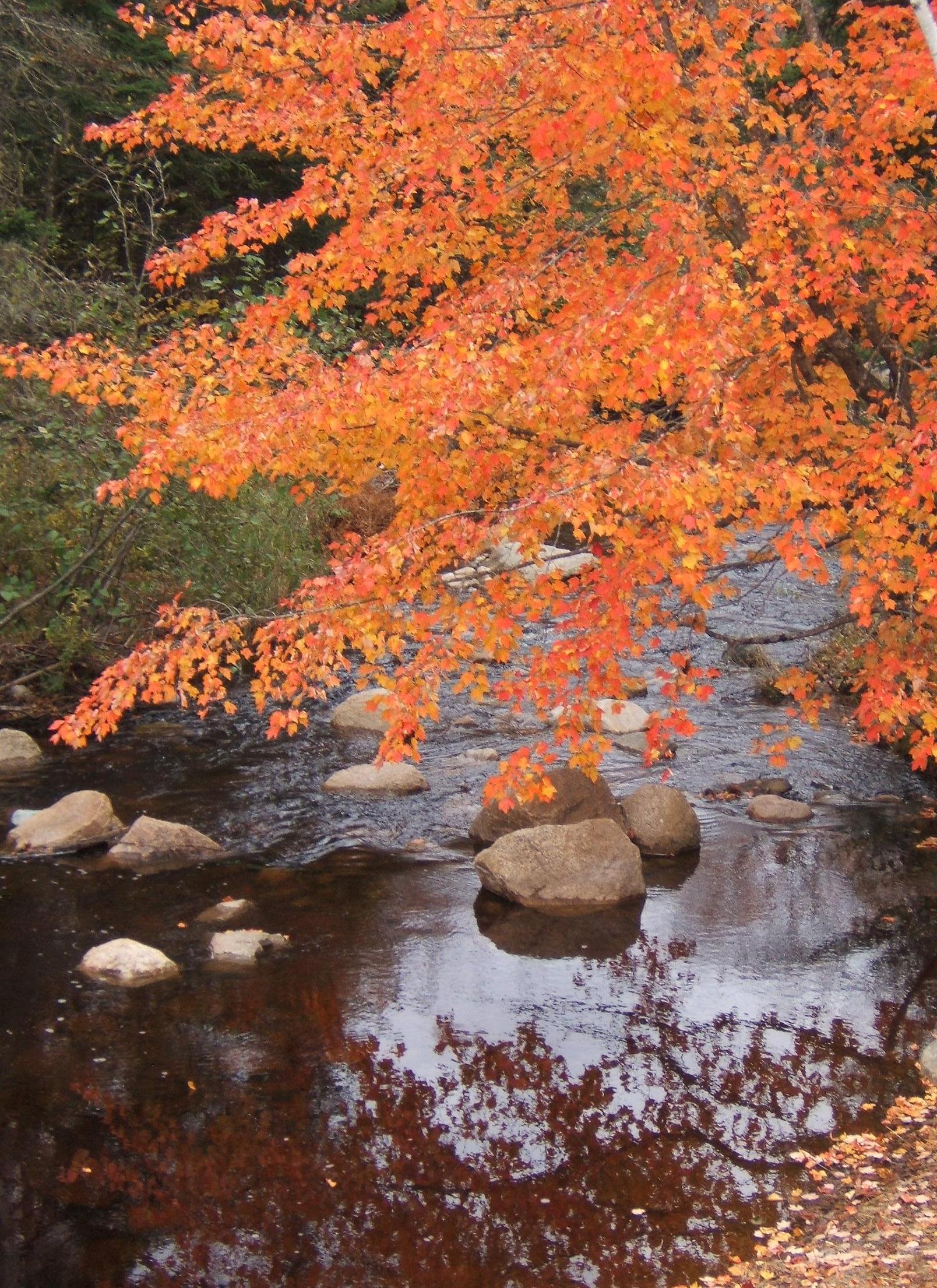
in the millstream
~
upstream
deer are drinking
and the raindrops
swell the running
this I know
from bubbles
rising
~
I am a rock
in the millstream
seasons and freshets
have smoothed
my edges
~
once I met the water
a cleaver
divisive
now I ask the water
to flow
around me
~
© Jane Tims 2003

‘blue’berry fields in autumn
This time of the year, the only thing ‘blue’ about our blueberry fields is the blue sky above them. The fields themselves are a blanket of scarlet and orange.
These are a few scenes of the October blueberry fields in south-west New Brunswick…


legacy
~
remaining in the room
a well-used blanket
red with two black stripes
inexpensive facsimile of
~
a white
three-beaver blanket
stripes red, yellow, green
~
a blue sky
two vapor contrails
~
the yellow double line
on an asphalt road
~
a band of stars
across a light-starved sky
~
a red leather book
with black ribbons
mark passages for giving
thanks:
look down from heaven
upon the fields, now white
unto the harvest
~
a crimson blueberry field
in October, draped across bones
of the landscape
double tracks leading away
over the horizon
~
© Jane Tims 2011

not naming any names (along the country road # 7)
What do you do if you are stranded beside a highway and have to wait for a long while? I name the plants I see growing in the ditches.
Part of my fascination with plant taxonomy is the interesting origin of the plant names. This includes both the Latin ‘scientific’ names and the common names. Many scientific names for plants can be traced to their physical characteristics. However, with references to mythology and local lore, and the modern unfamiliarity with Latin and Greek, the origin of many names may seem quite obscure.
For example, the Latin species name for Buttercup is Ranunculus, from the Latin name for ‘little frog’; Pliny gave this name to the plant because it grew where frogs lived. Some plants were named because they resembled parts of common animals; Larkspur has the specific name Delphinium since the flower resembles the shape of a dolphin. Other plants were given names because they reminded botanists of everyday objects – the species name of Meadowsweet is Spirea, from the Greek speira, wreath.

Meadowsweet (Spirea latifolia (Ait.) Borkh.)
Common names may vary with location. One of the reasons for using scientific names is the variety of common names assigned to a single plant by people of different localities. Botanists needed a way to make sure they were talking about the same plant. So Virgin’s Bower, or Devil’s-darning-needle, or Devil’s Hair, or Lovejoy, or Traveller’s Joy, or Love Vine are known by one scientific name, Clematis virginiana L.
Many common names also include references to mythology or religion. Coltsfoot (Tussilago farfara L.), the dandelion-like flower blooming in our ditches almost before the snow has disappeared, is also called Son-before-the-Father, which refers to the appearance of flowers before the leaves.
Since New Brunswick is a bilingual province, I like to know the French common names for plants as well as the English. Some examples of French names for common flowers include pas-d’âne (literally donkey-steps) for Coltsfoot, immortelle (meaning immortal) for Pearly Everlasting (Anaphalis margaritacea (L.) C.B. Clarke), and herbe aux gueux (meaning beggar or tramp) for Virgin’s bower.
So, what is this plant, discovered beside a stretch of highway while we waited for our friends to arrive?

what is my name?
~
common name unknown
~
1.
stranded beside the highway
entirely industrial
chain-link fence, ditches sandy dry
we passed the time
naming the familiar
giving names to unknown
road-side
vegetation
~
2.
three-leaflets
definitely clover
but what species
what common names might suit
a crowded cloud
of soft and purple
flower?
~
3.
we tried ‘common’
clover cloud
clover crowd
muffin-mound
rabbit’s whiskers
pussy-toes
pillow-fill
billow hill
lavender clover
Purple Pleiades Pleione
please!
~
3.
we tried Latin
Trifolium
lavandula
purpura
porphyrophobia
fluffense
~
we mixed Latin with Italian
musical notation
Trifolium pianissimo
very soft
~
4.
our drive arrived
our wait was over
botanical field-guide
verified Trifolium arvense
Rabbit-foot, ‘of-the-field’, Hare’s-foot, Stone Clover
~
a footnote: sometime the botanical description is no help at all…
Trifolium arvense L.
“…long-villous 10-nerved sessile campanulate calyces crowded, spreading, their setiform teeth much longer that the tube and the marcescent corolla…”
Fernald, Gray’s Manual of Botany, 1950.
© Jane Tims 2011
beneath the vine
Vines sculpt spaces as they grow, clinging to and draping across the surfaces they choose to colonise.
Telephone poles display armloads of Virginia Creeper (Parthenocissus quinquefolia ( L.) Planch.) …

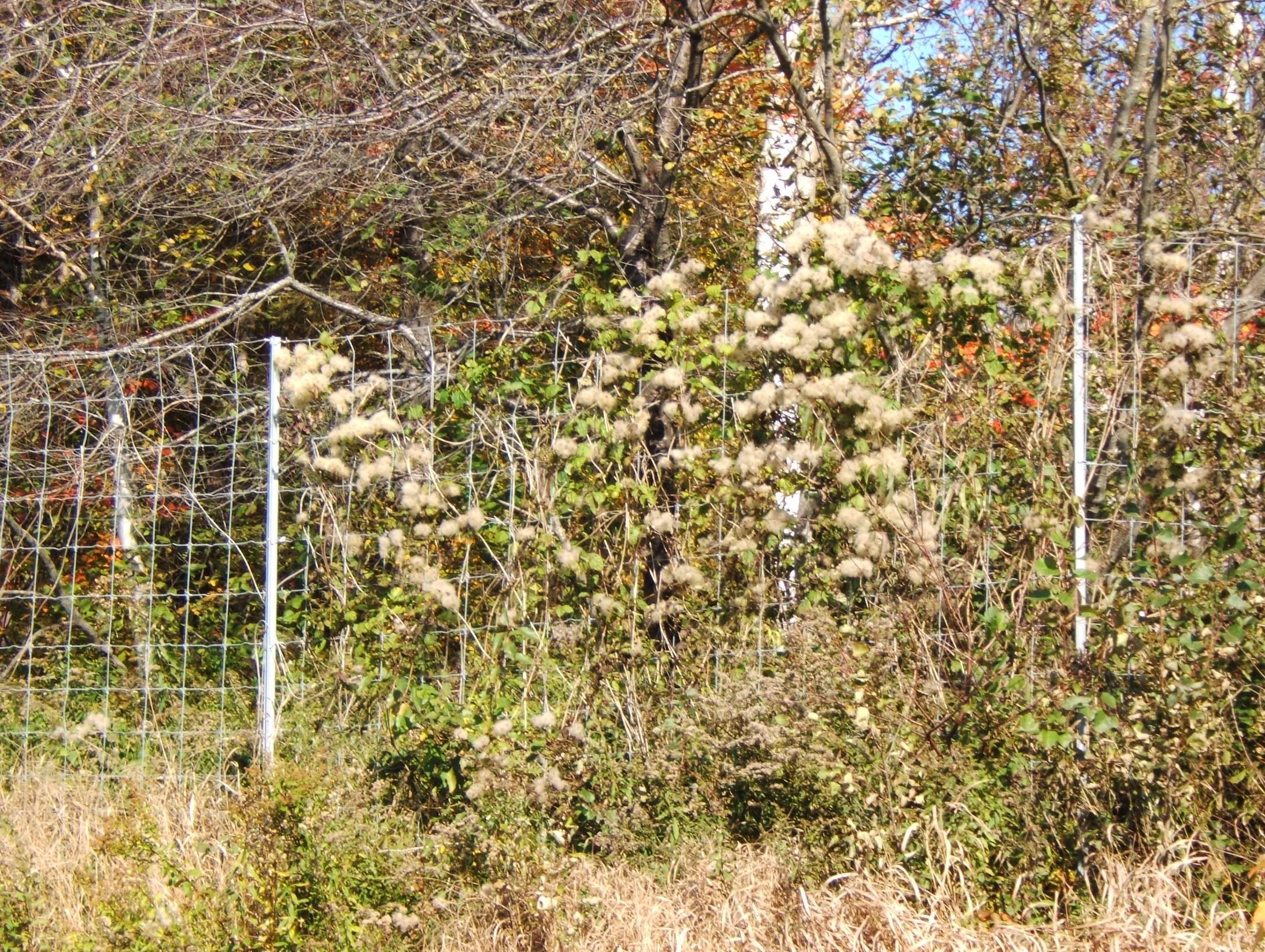
The moose fence along the highway is softened by a curtain of Virgin’s Bower (Clematis virginiana L.) …
Purple grapes, ready to pick, fill the arbour with soft shade…
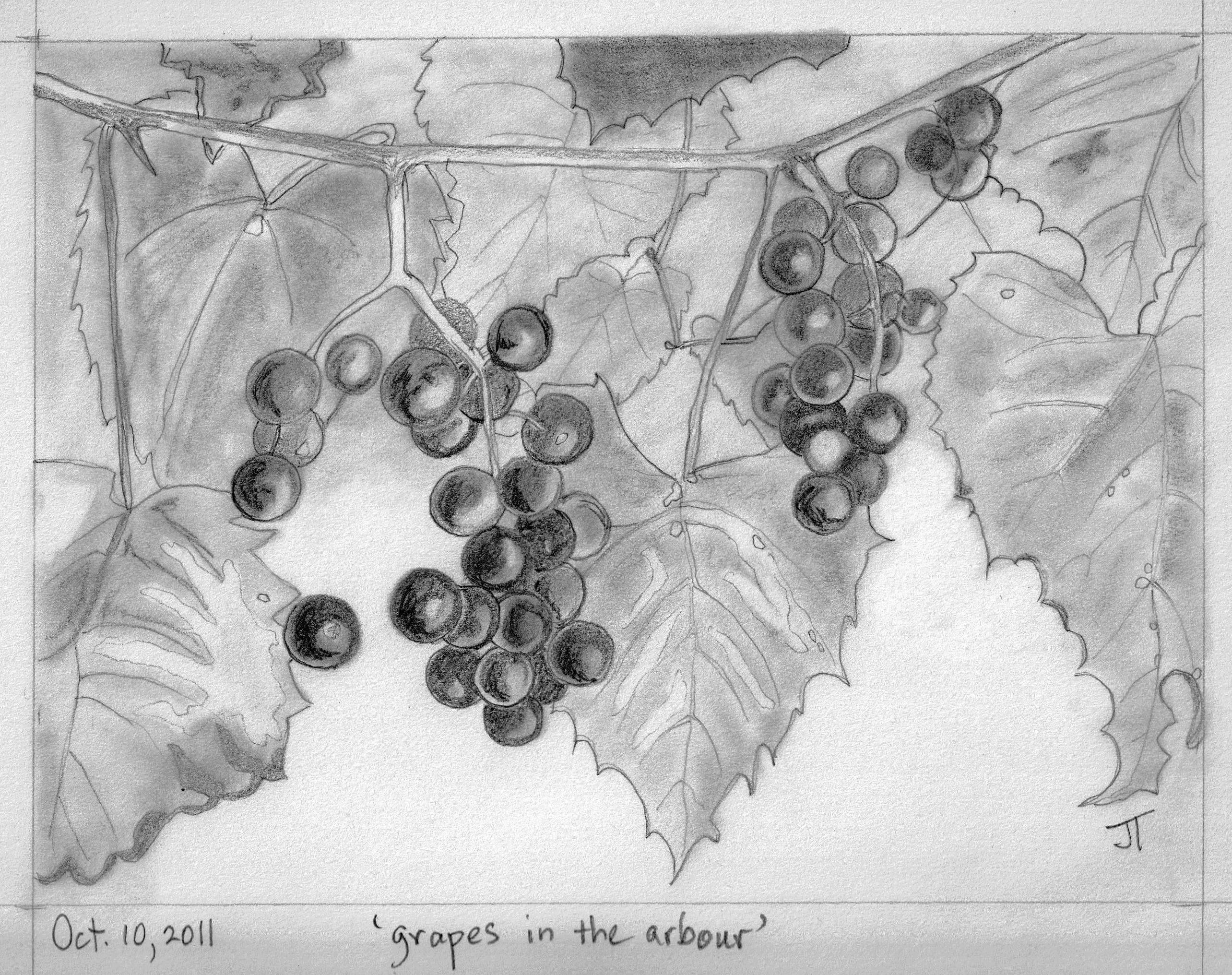
ripened shadows
~
under layered leaves
marbled shadows hang
in cloistered dark
~
cool nonchalance
columnar grey intensifies
as grapes grow ripe
~
taut green ferments
to purple must
and effervesces air
~
even where no surface intercepts
clustered shadows
ready to pick
~
© Jane Tims 2011
keeping watch
Some eleventh and twelfth century Scandanavian rune stones were established as memorials to family members.
The Bro rune stone in Uppland, Sweden, was raised by a wife, Ginnlög, in honor of her dead husband, Assur. It also commemorates the building of a bridge (a causeway across marshy ground) in memory of Assur.
The stone is carved with two serpent bands, around an ornamental cross. It says that Assur kept watch with a comrade Gæitir, as part of the Víkinga vorđr, a local defense force against Viking raiders. The photo below is taken from:
http://www.arild-hauge.com/sweden.htm

Beginning in the 8th century, Viking raids were carried out regularly in England and Ireland. Two well-known raids were on the monasteries at Lindesfarne in England (793 AD) and Glendalough in Ireland (834 AD).
In the first stanza of the poem below is a poetic form called a ‘kenning’. The ‘kenning’ is a figure of speech using two or more words to convey an idea or image. It is usually associated with Norse and Anglo-Saxon poetry. For example, ‘silver sun’ is a kenning for ‘moon’, and ‘summer smoke’ is a kenning for the windborne seeds of milkweed.

'summer smoke' of Rough Hawkweed (Hieracium scabrum Michx.)
keeping watch
the Bro Stone, Uppland
~
bitter is the wind this night
which tosses up the ocean’s hair so white
merciless men I need not fear
who cross from Lothland on an ocean clear
– Irish monk, 8th century
~
1.
on a calm night
under the shine of the silver sun
the shadow-self of dragon
square sail, glint of gold
swords polished and drawn
~
2.
these are signs:
blue sky
the white belly of a gull
lifted on the thickness of air
stalks of milkweed bent
their summer smoke pushed inland
~
3.
no fear tonight
the wind bitter
the ocean tossed
Gætir, new leader of the watch
may sleep
I warm my hands
in Assur’s cloak, now mine
today I raised a bridge
and this sad stone
to my husband
my Víkinga vörđr
my protector from the raid
~
4.
bitter this night
but safe
no dragon-kind
from the Danish shore
yet will I watch
listen to the whisper of milkweed stems
rumors of Lindesfarne
and Glendalough
where the coil of a serpent
may strangle a simple cross
~
© Jane Tims 2004

under the red maple
We have a huge red maple (Acer rubrum L.) in front of our house. It forces a turn in the walkway, but I love to greet it every morning and watch it through the seasons. When we first lived here 30 years ago, the tree was small enough to encircle with thumb and finger. Now I can’t fit my arms around its girth.

Autumn inspires this tree. It takes its time, gradually turning yellow, red and orange over several days. Then it gives up all its leaves within a day.
When I drive my car away the next morning, a dark rectangle of driveway remains, within the circle of new-fallen leaves.
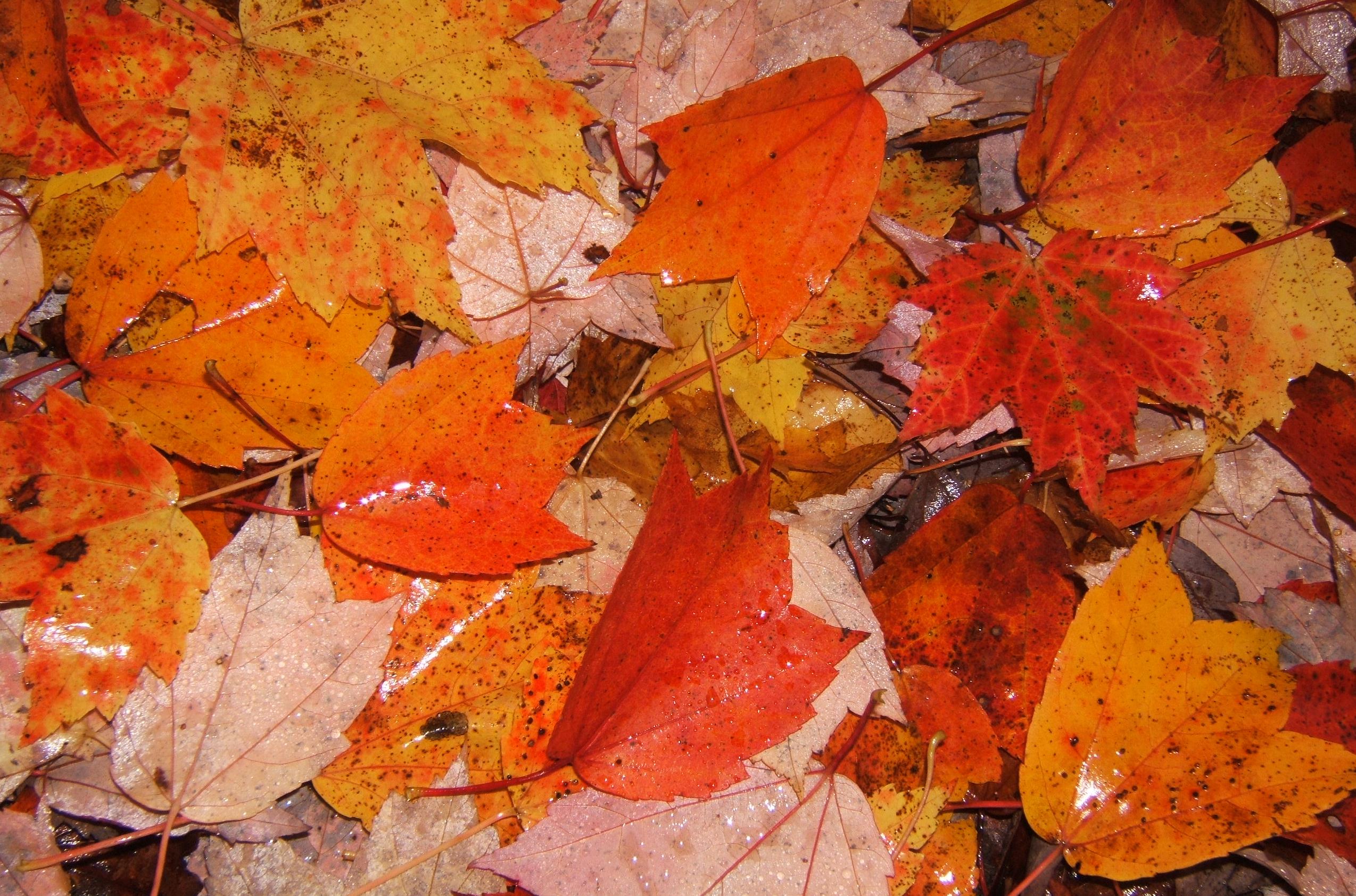
summer in flames
~
suddenly
leaf fall
embers settle
on the walkway
patio table and chairs
~
suddenly
impossible
to walk in silence
red flames
and careful steps
a conflagration
~
suddenly
shadows lost
and branches
scratch the sky
sun bright
hands warm before the fire
~
© Jane Tims 2011

reflection
reflection n. 1: reflecting or being reflected; reflect light, heat, colour or image;
2: reflex action;
3: censure; thing bringing discredit on;
4: reconsideration;
5: mental faculty dealing with products of sensation and perception;
6: idea arising in the mind, mental or verbal comment.
Oxford dictionary, 1950.
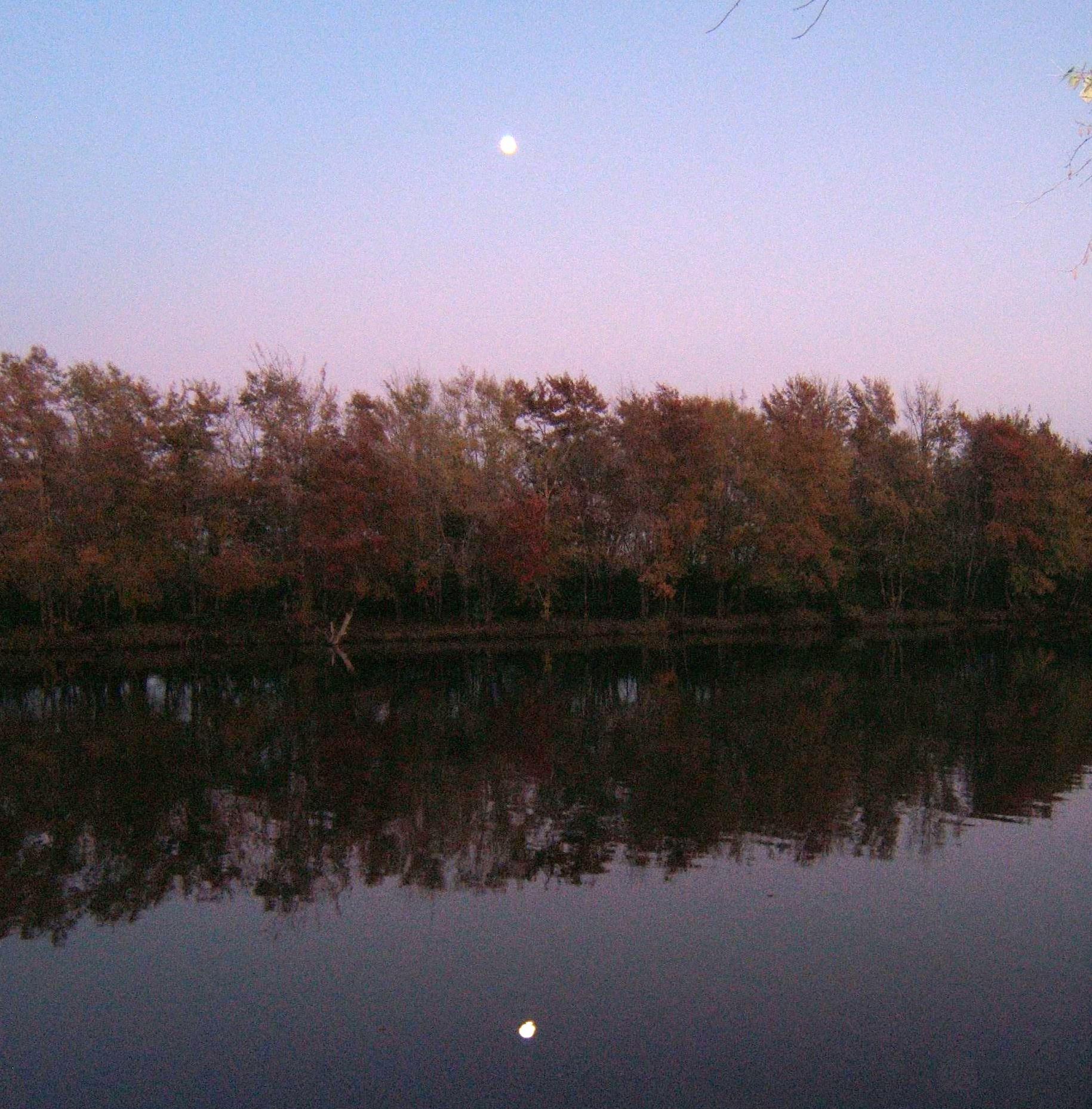
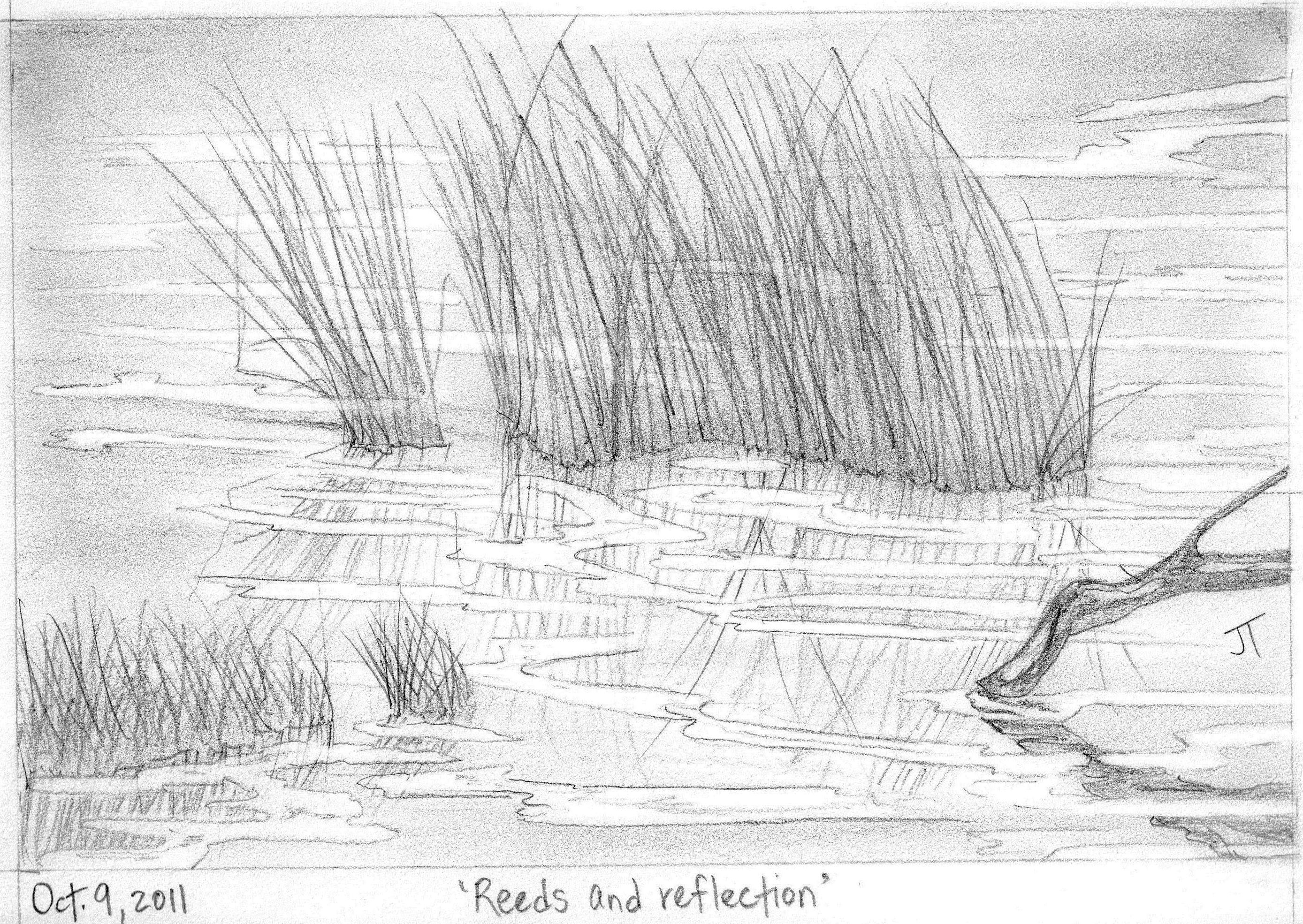
In autumn, I seek out rivers and lakes because they reflect the colour of the trees and magnify the effect of autumn fire.

Reflections are tricky. Sometimes they are so clear, you can turn a picture upside down and be momentarily confused about which way is up. Reflections are true, but show the inverse of self… the left side is on the right, the right side on the left. Refections take on the characteristics of the mirroring surface… in a mirror, a flaw in the glass will create a distorted image… in the water this results in wavy or doubled images as the water is disturbed.
search for the essence of sun
~
1.
~
the river is molten
brimming with sunset
part water part sun imprisoned
by river reeds
~
2.
~
I am empty
less the thickness of reflection
~
the hollow
in begging hands
the void in the pipe
after the note has faded
darkness in the cradle of the moon
~
3.
~
if I had a straw
I could drink this sun
if the light would lift in folds
I could wrap it around my brain
tie it like a bandana
or I could scoop it into my hands
let it run honey and golden
along my arms
cut it with a knife
keep one half
to show my lover
~
I could sink into the river
rise through the sun’s reflection
slip it over my shoulders like raiment
~
4.
~
I could take the sun
in all these ways
weave it through me
like ribbon
~
but that would be only
the image of sun
not warm
~
© Jane Tims 1990




 nichepoetryandprose