Posts Tagged ‘nature’
decorating for Christmas #1
Mid-December and the countdown to Christmas has begun. I love to decorate for the holiday. At one time, the entire house was decked out … one year I decorated seven Christmas trees!
~
As I get older, I keep the decorating to a few well-loved vignettes and I always try to include some natural greenery.
Last week we went to our cabin and I snipped a bouquet of cedar boughs …
~

~
The crock is one of my collection of crocks, this one special since it was made at MEDALTA Potteries Ltd., not far from where I lived in Medicine Hat in Alberta.
Hope your seasonal decorating is going well!
~
Best regards,
Jane
spaces underground – a wasp nest
Not far from where I sit-for-a-bit on my walk in our woods, I found a nest of wasps. Built underground, beneath the roots of a spruce tree, this nest has been revealed by some digging marauder (a skunk or raccoon) trying to get at the wasp larvae. The nest is interesting to watch, but caution is necessary.
~

~
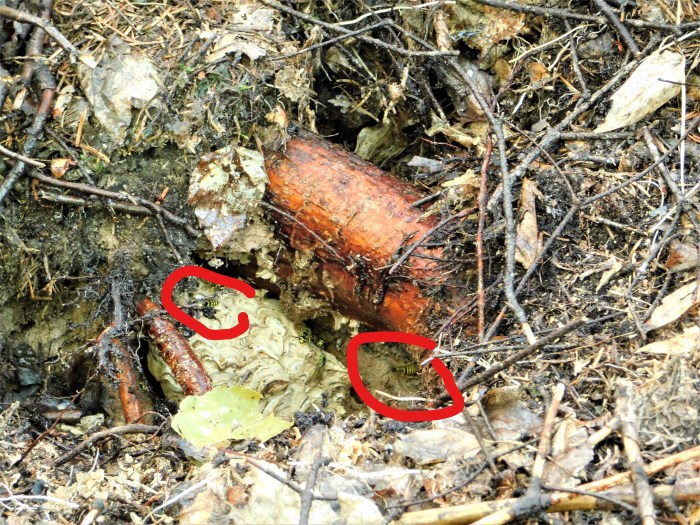 ~
When I found the nest, I took a little time to learn the difference between wasps and hornets. Hornets build their nests above ground and are larger, with black and white striped bodies. Wasps sometimes build nests underground and are small (1-2.5 cm), with black and yellow striped bodies. The insects in the underground nest are definitely wasps.
~
Copyright Jane Tims 2017
getting the better of … a squirrel?
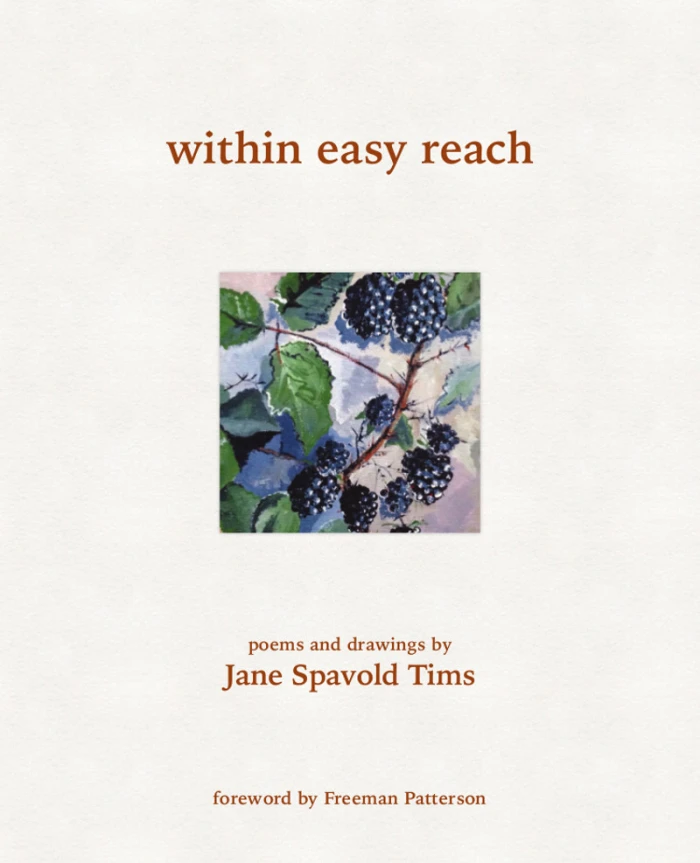
At readings of my book within easy reach, I often include the poem ‘beaked hazelnuts’ and tell my audience:
If I don’t pick my hazelnuts by August 6, the squirrels will get there ahead of me. They watch the calendar!
~

hazelnuts viewed from the underside of the shrub canopy
~
The Beaked Hazelnut is a wiry shrub found in mixed woods. The edible nut is contained in a bristly, beaked husk. We have three clumps of the shrubs in our yard, probably sprung from the stashes of squirrels over the years!
For my battles with the squirrels over the hazelnuts, just have a look at
https://janetims.com/2011/08/07/competing-with-the-squirrels/
and
https://janetims.com/2011/08/18/competing-with-the-squirrels-2/
~
This year, I also watched the calendar. And on August 5, I picked most of the hazelnuts on our hazelnut ‘trees’. Picking is tricky because those pods are covered with sticky sharp hairs that irritate thumb and fingers.
~

~
Never-the-less, I have a small bowl of hazelnuts to call my own (I left a few for the squirrels, more than they ever did for me). Now I will wait for them to dry and then have a little feast!
~
beaked hazelnuts
(Corylus cornuta Marsh.)
~
hazelnuts hang
husks curve
translucent, lime
they ripen
~
this year, they are mine
~
uptight red squirrels agitate, on guard, we watch
the hazelnuts ripen, slow as cobwebs falling, nut pies
browning through the glass of the oven door
green berries losing yellow, making blue
dust motes in a crook of light
float, small hooked hairs
shine
~
two more days
~
hesitate
and red squirrels
bury their hazelnuts
~
~
From within easy reach (Chapel Street Editions, 2016)
https://www.amazon.ca/Within-Easy-Reach-Jane-Spavold/dp/1988299004
~
Copyright Jane Tims 2017
wildflowers – Bladder campion
One of my favorite roadside flowers is the Bladder campion, Silene vulgaris (Moench) Garcke. The flowers are white, with five deeply lobed petals. The flowers protrude from an inflated, papery calyx, greenish, purple-veined and bladder-like. This time of year, the flowers are almost past.
~

~
I love the scientific generic name Silene, derived from the name of a Greek woodland deity. Another common name for Bladder campion is maidenstears.
~

~
The leaves of Bladder campion are edible, used raw in a salad or cooked in a stew.
~

~
Copyright 2017 Jane Tims
wildflowers – Canada lily
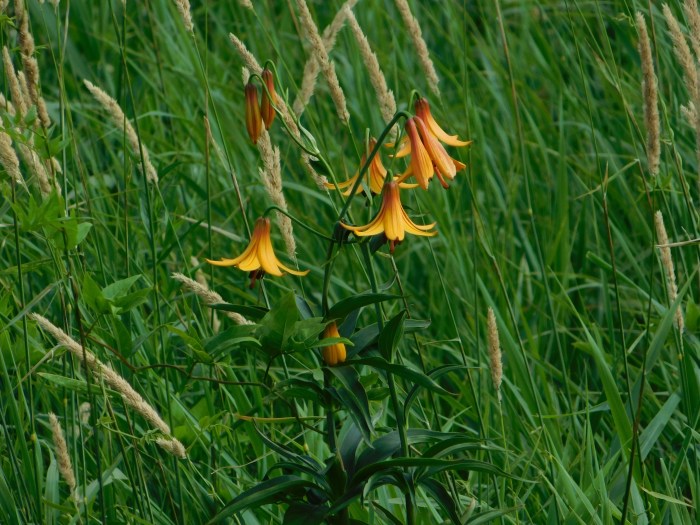
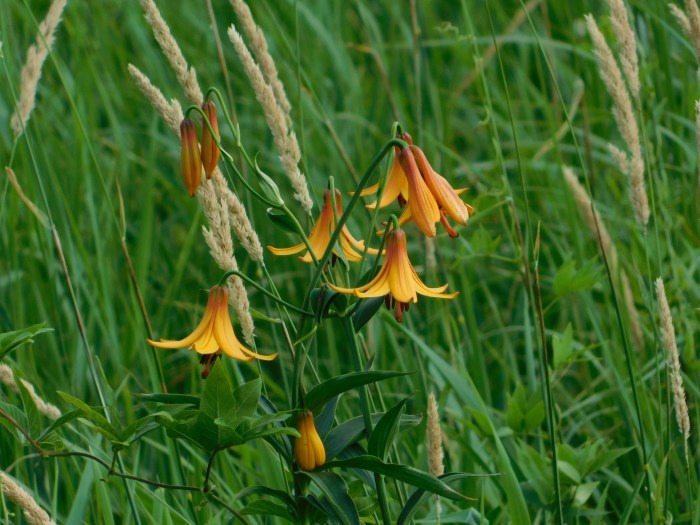
A drive this time of year through Grand Lake Meadows, along the old Trans-Canada Highway, will show you one of our prettiest wild flowers — Lilium canadense L., the Canada lily.
~

~
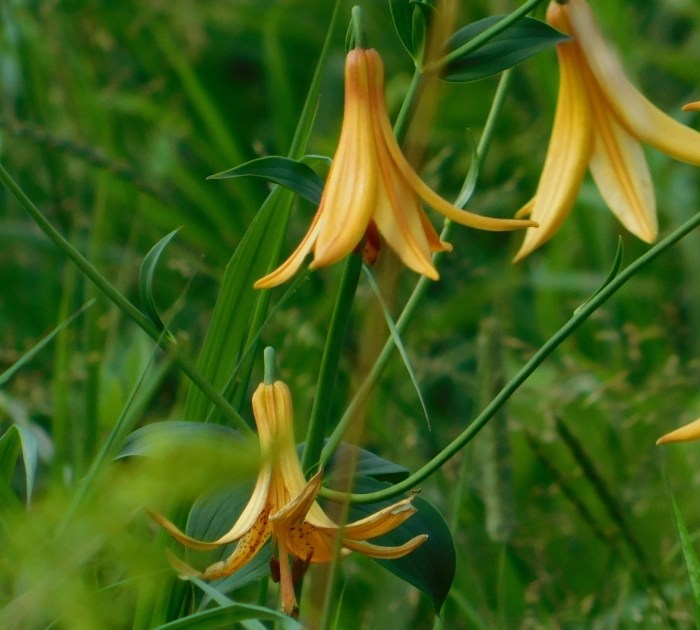
The flowers are a glimpse of orange in vast fields of greenery. The flowers are down-ward pointing, reminding me of a chandelier of light. They bloom from June through August in the moist wetlands of this part of central New Brunswick.
~
~
~
As the meadow winds flip the flowers upward, you can catch a glimpse of the dark red anthers and the spotted interior of the petals.
~
~
Copyright 2017 Jane Tims
a touch of Monet
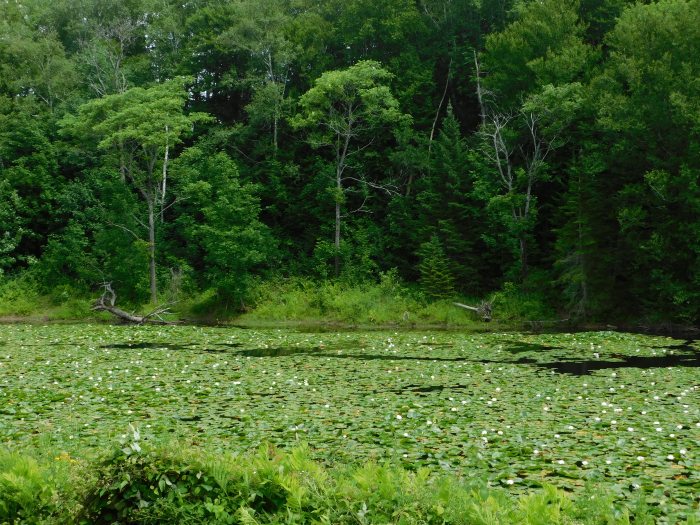
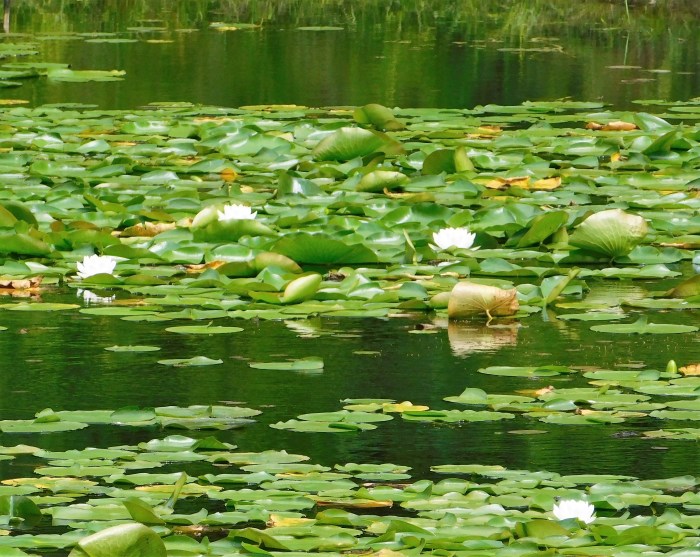
Last week, on a drive to Plaster Rock, we passed a pond along the Saint John River filled with water lilies (Nymphaea sp.).
~
 ~
Lovely. Calming. And reminiscent, in the way they lay on expanses of open water, of Monet’s water lilies at Giverny.
~
~
When I think of water lilies, I also remember Edgar Allan Poe’s short story Silence – “And the water lilies sighed unto one another….”
~
~
So to add to these greats, I have my own snippet from my poem ‘Bear Creek Meadow by Canoe’ (published in Canadian Stories 14 (82 ), Dec 2011 ):
~
dignity quiets our paddles
hushed voices heed
the diminishing echo
~
pliant as stems of pickerel weed
we honour the whisper
of wild rice
the edgewise touching
of nymphaea and nuphar
amphibian eyes
in the harbour-notch of lily pads
~
we are threaded by dragonflies
drawn by water striders
gathered in a cloak of water shield
~

~
Copyright Jane Tims 2017
a moment of beautiful: tendrils
the place: a planting of cucumber vines on the deck
the beautiful: winding tendrils
~
I have a small garden on our deck. This year I tried a new technique; I put a bag of soil on a table, cut a slit in the horizontal part of the bag, punctured the bottom for drainage and planted some cucumbers. Later, when the leaves were established, I ran a couple of lengths of string from the table to a nearby tree.
~

~
Now the tendrils are searching for support. When the cells of the tendril encounter a surface, such as the edge of a string, the cells respond in such a way to twist the tendril. The resulting coils and spirals are so charming!
~

a note of music
~

Hang on little fellow!
~

~

coils and curls
~
 ~
Copyright Jane Tims 2017
pink lady’s slipper
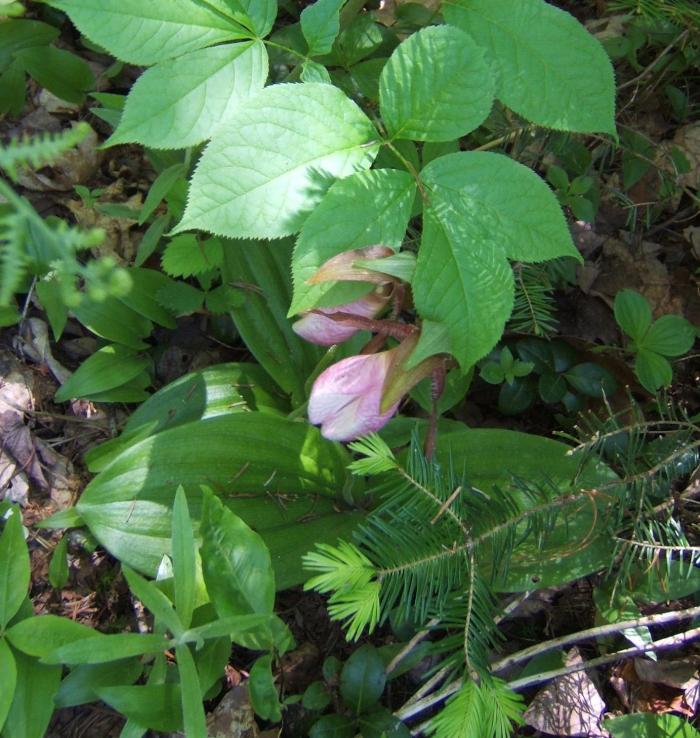
This time of year, my husband does an inventory of the Pink Lady’s Slippers (Cypripedium acaule) on our property.
~

~
This year, he found 10. He only saw three last year but there have been as many as 15 in bloom at one time. We never pick them and try to keep our property natural and wooded.
~
The Pink Lady’s Slipper prefers acidic soil and partly shady conditions, making our grey woods an ideal habitat. Our flowers are often a pale pink or white variety.
~
~
Copyright Jane Tims 2017
planting trees at our cabin
Last weekend, we planted about 30 Scots pine (Pinus sylvestris L.) seedlings at our cabin property. There are lots of trees there already, but we are thinking ahead.
We bought our seedlings at the Irving Tree Nursery in Sussex, $.50 each. We planted them with the help of a metal dibble stick made especially for planting young trees.
~

~

~

~

~

~
Here is a photo of our cabin, taken from far away, on the other side of the lake in early spring. Lots of tree there already, you say? You can never have too many trees!
~

~
We still have more trees to plant, including some Red Pine and Eastern White Cedar. Great time spent outside where the black flies are never very bad!
~
Copyright Jane Tims 2017
morning birdcalls – Northern Parula
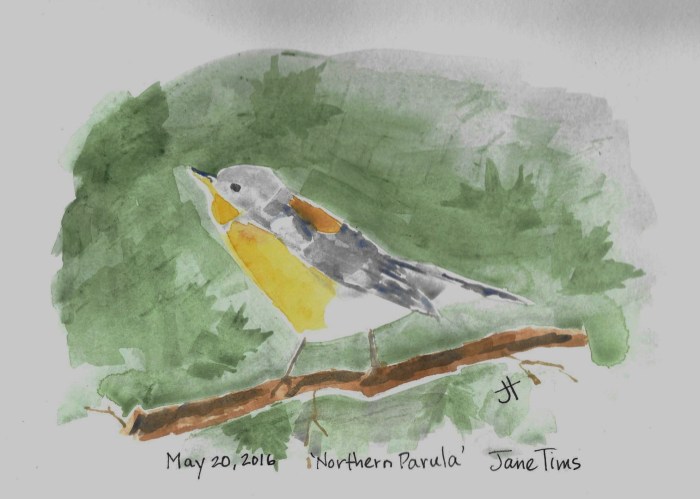
After a hot day, a cool night. This morning, our windows are wide open and a Northern Parula is busy in our grey woods.
~
His distinctive call – ‘whirrrr-zip’ – has an upward lilt at the end. I can catch only a glimpse of him, certainly not long enough for a photograph.
~
The Northern Parula is a small warbler with a bright orangy-yellow upper breast. He builds his nests of Old Man’s Beard lichen (Usnea spp.) – there is lots of this lichen hanging from the trees in our grey woods, so of course he is here! This is a watercolour I did of him last year.
~
~
Copyright Jane Tims 2017