Posts Tagged ‘nature’
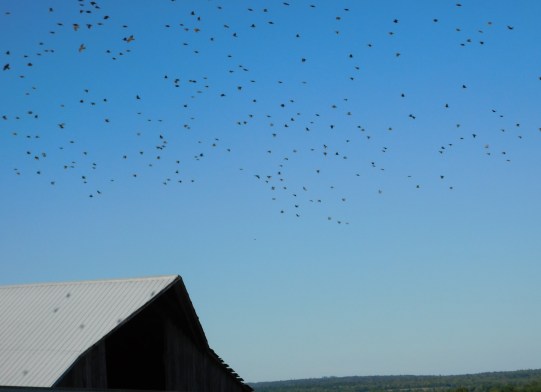
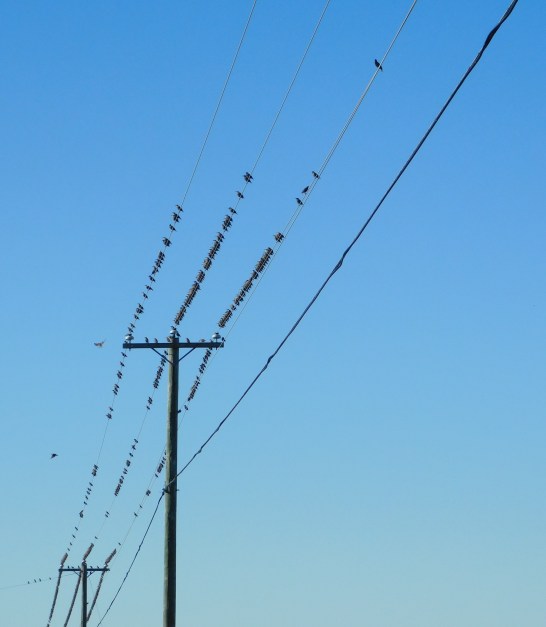
a gulp of swallows
The days are warm and humid. The nights offer compensating cool. The gardens are full of produce and, yesterday, we made our first stop at a roadside stand to get apples. People say “feels like fall.” On the weather channel they call this “hurricane season.” We turn the calendar on the kitchen wall to September.
~
Fall is a month away, but the birds know the time of year. They flock with a sense of urgency, even desperation.
~
A flock of swallows is called a ‘flight’ or a ‘gulp.’
~
~
~

~
gulp
~
barn swallow (Hirundo rustica)
~
Flight of swallows
against blue sky
gapes, as thousands
thicken cables,
telephone lines,
weather reports,
gossip. Feels like
fall. Birds follow
clues of day length,
temperature,
scarcity of food.
Gulp of swallows
expands, contains
every straggler.
~
~
Copyright Jane Tims 2019
~
All my best,
Jane
Tea berries

~
Teaberry
Gaultheria procumbens
~
leaves shiny, thick
capsules waxy, red
aromatic oil
methyl salicylate
mint and wintergreen
tea soothing, blood thinning
creeping wintergreen
spice berry, drunkards
staggering over
the forest floor
~
~
Copyright Jane Tims 2019
~
All my best
Jane
Raspberries
It’s a great year for berries. Our blueberry bushes are loaded with the biggest, sweetest berries I have ever tasted. The raspberries are full and sweet. The blackberries are still mostly unripe but the canes are heavy with future berries.

~
raspberry ramble
~
every berry
a sweet cup
detached
from its cosy seat
deep in brambles
juice pressed
between teeth
seeds and briars
handfuls of sun
rain clouds
warm winds
gravel soil
eager fingers
~
~
Copyright Jane Tims 2019
~
All my best
Jane
showy wildflowers along New Ireland Road, Albert County, NB
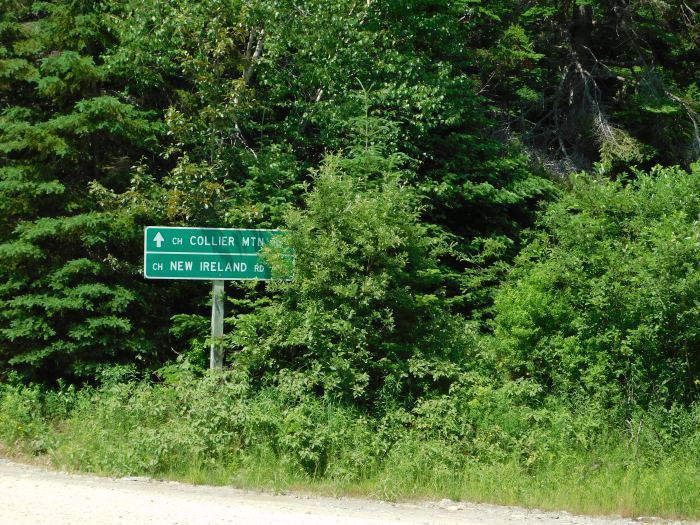
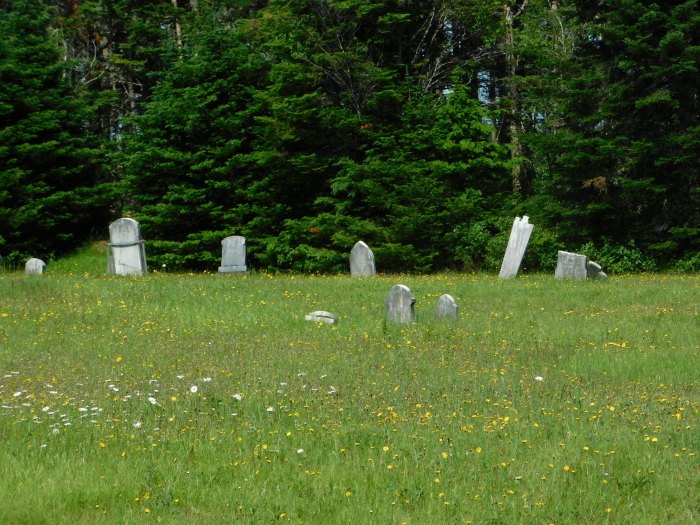
Last week we went for a drive on the New Ireland Road in Albert County, New Brunswick. Our purpose was to visit the graveyard and to see if we could spot any persisting or escaping flower species from flower gardens associated with the now abandoned settlement.
~
~
New Ireland was once a community along the eastern section of the Shepody Road (now called the New Ireland Road).
~
settled in 1816: PO 1857-1892: in 1866 New Ireland was a farming community with 68 families: in 1871 it had a population of 150: in 1898 New Ireland had 1 post office, 1 church and a population of 100: included the community of New Ireland Road: PO 1864-1903: in 1866 New Ireland Road was a farming settlement with approximately 25 families: in 1871 it had a population of 150: in 1898 New Ireland Road had 1 post office and a population of 30: included the community of Kerry which was named for County Kerry in Ireland: PO 1876-1931: in 1898 Kerry was a farming settlement with 1 post office, 1 church and a population of 75: New Ireland was abandoned about 1920 (Source: N.B. Archives, https://archives.gnb.ca/Exhibits/Communities/Home.aspx?culture=en-CA ).
~
Today, only the graveyard (St. Agatha’s Catholic Cemetery) remains.
~
~
… Farmland has sadly returned to forest. Occasionally you can see a culvert that once led into a farmer’s home or field, and there is the occasional rose bush or wild apple tree struggling to survive amid reforested lands. (Source: http://newirelandnb.ca/irish-migration/ )
~
Although the rose bush did not show itself, we saw old apple trees and two showy species, viper’s bugloss and golden ragwort. These could be garden escapes but perhaps are just wild volunteers on abandoned ground.
~
Viper’s bugloss
~

Viper’s bugloss growing at the Fortymile Brook crossing, not far from the former New Ireland settlement
~
Viper’s bugloss (Echium vulgare) is also known as blueweed, blue thistle, blue devil, snake flower. It is an introduced plant (from Eurasia) and is often cultivated as an ornamental. It is invasive and lives on calcareous or poor soils. At first glance the plant is like a scrawny lupin. Up to a metre in height, it is very bristly-looking. The tall stem has a number of arching lateral floral stalks where one flower blooms at a time. Flowers are briefly pink as they bloom, changing to blue. The stem and sepals are hairy and the long red stamens add to the bristly appearance. Viper’s bugloss is melliferous (honey producing) since it produces nectar and blue pollen loved by bees, bumblebees and butterflies.
~

~
Golden ragwort
~
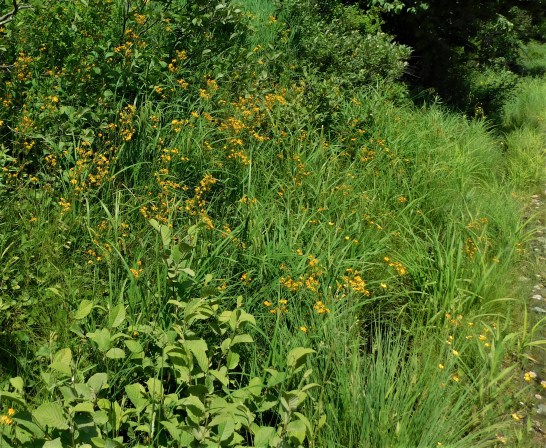
Golden ragwort growing along the New Ireland Road
~
Golden ragwort (Senecio aureus) is a tall composite with flat-topped flower clusters. The flowers are golden with sparse rays. The basal leaves are long-stemmed and heart-shaped; the leaves on the flower stalk are elongated and finely divided. The plant is native, and grows on wet ground, in low woods and in meadows.
~
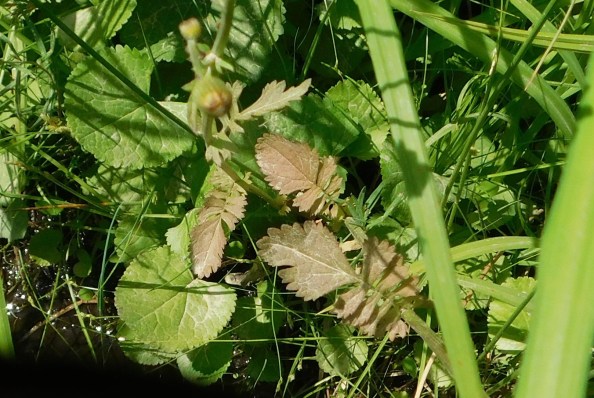
leaf shapes of Senecio aureus – heart-shaped (green leaves) and divided (reddish leaves)
~
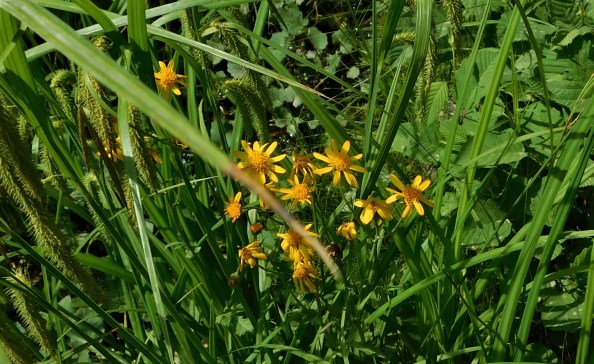
flowers of Senecio aureus
~
These two plants will star in a poem about long-gone flower gardens along the New Ireland Road. Wandering along the road, taking photos and researching the flowers are the first steps to building the poem.
~
I will be sharing the poem once I have a draft!
~
All my best,
Jane
Partridge and Grouse – which are you???
In New Brunswick, we have three birds which I confuse and name ‘Partridge‘. Remember I am a botanist and come by my bird knowledge through secondary sources.
~

a ruffed grouse or a grey partridge? the first clue is habitat (the mainly hardwood woodlands)
~
The Ruffed Grouse (Bonasa umbellus) is a bird of the woodlands (mostly hardwood) and is the bird heard ‘drumming’ in our woods in spring. Its plumage varies from pale brown to bright mahogany. It has a fanning tail and head feathers which stand up like a crown. The feathers around the neck ruff up too. Since these birds are locally referred to as ‘partridge’, there can be confusion between the Ruffed Grouse, the Spruce Grouse and the Grey Partridge.
~
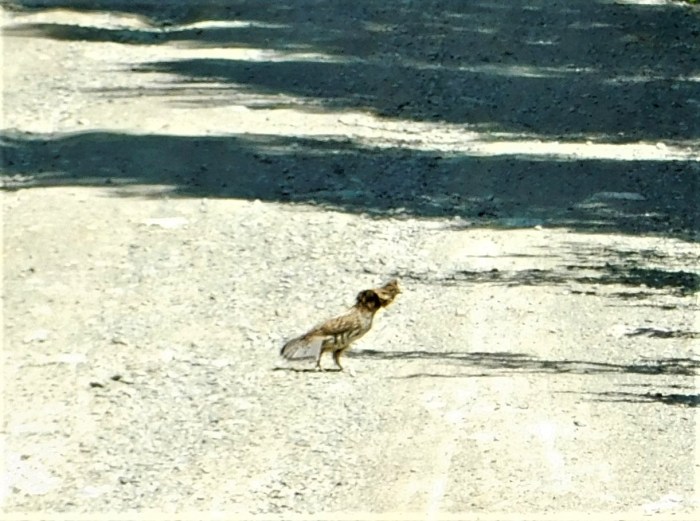
Ruffed Grouse crossing the Old Shepody Road in eastern New Brunswick
~

Ruffed Grouse in our grey woods
~
The Spruce Grouse (Falcipennis canadensis) is a bird of mainly coniferous woodlands. It eats spruce and pine needles. It is a chicken-like bird with variable plumage, mostly grey and black in the male and grey-brown in the female. The bird has a fanning tail, but does not raise its head feathers the way the Ruffed Grouse does. For a good photo of the Spruce Grouse see https://www.allaboutbirds.org/guide/Spruce_Grouse/id
The Grey Partridge (Perdix perdix) is a bird of open areas and grass lands. It is a roundish bird with a brown back and grey sides and neck. The chest-area has a darker brown mark. When startled, the bird flies upwards on rounded wings. For a good photo of a Grey Partridge see https://www.allaboutbirds.org/guide/Gray_Partridge/id
~
All my best,
Jane
bracket fungi
On a drive last weekend, we saw this great example of bracket fungi growing on an old maple.
~

~
Bracket fungi belong to a group of fungi called polypores. These produce the characteristic spore-producing bodies called conks. The shelf-shaped or bracket-shaped conks are a reproductive outgrowth of the main fungal body called the mycelium. As with all fungi, the mycelium is mostly unseen since it resides in wood or soil.
~
Polypores are a significant part of the forest ecosystem because they are agents of wood decay. These fungi are efficient decomposers of lignin and cellulose.
~

~
On a more fanciful note, the brackets of these fungi always remind me of ‘faerie stairs’, a way to ascend an ancient tree.
~
bracket fungi
~
in this forest
(staid
practical
grey)
could any form
construe to magic?
~
fairy rings
moths in spectral flight
spider webs, witches brooms
burrows and subterranean
rooms, hollows in wizened
logs, red toadstools
white-spotted, mottled
frogs
~
bracket fungi
steps ascending
a branchless tree
~
(Previously published October 28, 2011 http://www.nichepoetryandprose.wordpress.com )
~

~
All my best,
Jane
scribble bird
~
~
~
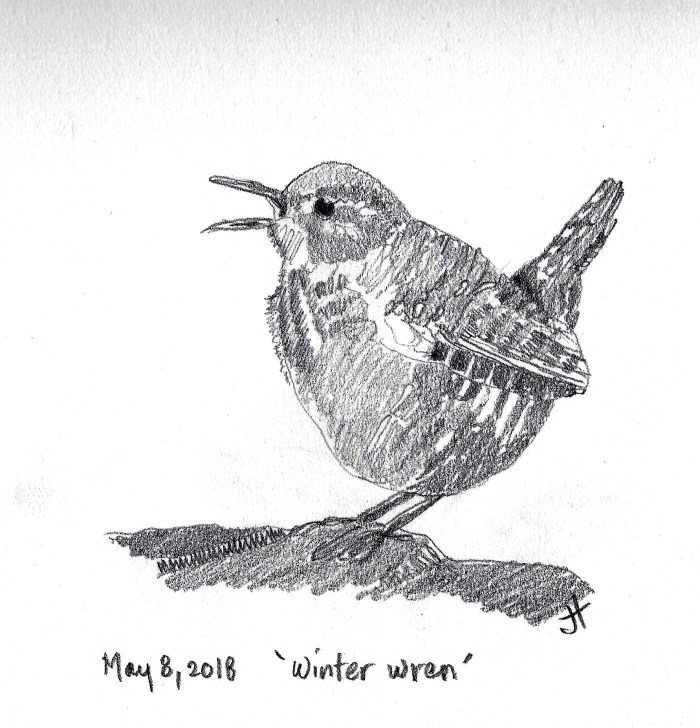
Winter Wren
Troglodytes hiemalis
~
How to find
centre of forest.
Joy the objective.
~
Tiny tail
shivers as he sings.
Delirious trill.
~
Troglodyte
darts into thickets,
creeps into crevasses.
~
Lifts an eyebrow,
joins a chime of wrens.
Elusive ripple,
~
varied trill,
incoherent whir,
tremble to warble.
~
Distinguish
the note, the half-note,
the tone, the tangle.
~
Forget where
you once were going,
indecisive
scribble bird.
~
~
All my best,
Jane
a feast of wild strawberries
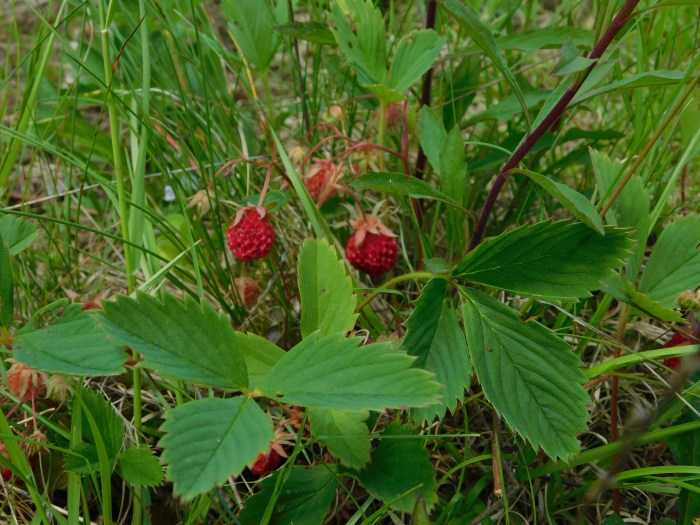
This week at our cabin the wild strawberries are hanging from their stems. When I see them I think of the sweet wild strawberry jam my mom used to make. And, after this weekend, I will think of cedar waxwings.
~
~
As we sat in the cabin, eating our dinner, we saw a bird making trips between the birch tree in front of the cabin and the grassy field to the side, where the wild strawberries grow.
~

~
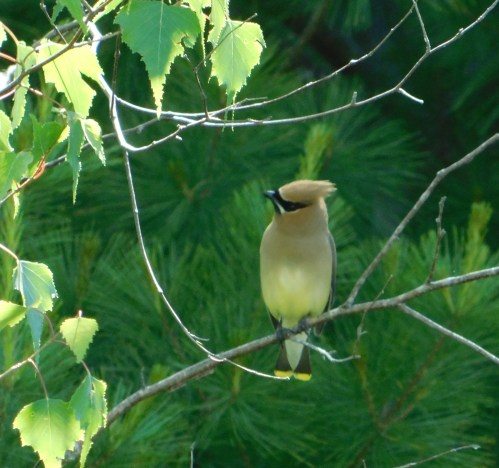
My husband identified the bird and spotted where it perched in the tree. The cedar waxwing is one of the common birds at the cabin. They love to eat fruit and we have wild strawberries, raspberries, blackberries, and blueberries on the property.
~
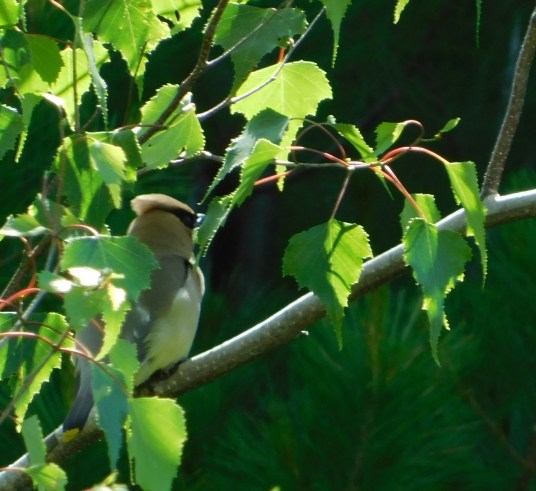
There were two cedar waxwings on the branch, sharing a meal of wild strawberries. Sharing fruit is a ritual behavior between male and female cedar waxwings.
~

~
~
The cedar waxwings nest in our big white pines and sing in the top branches of other nearby trees. I will never see them without thinking of their little feast of berries.
~
All my best,
Jane
~
A place to be still
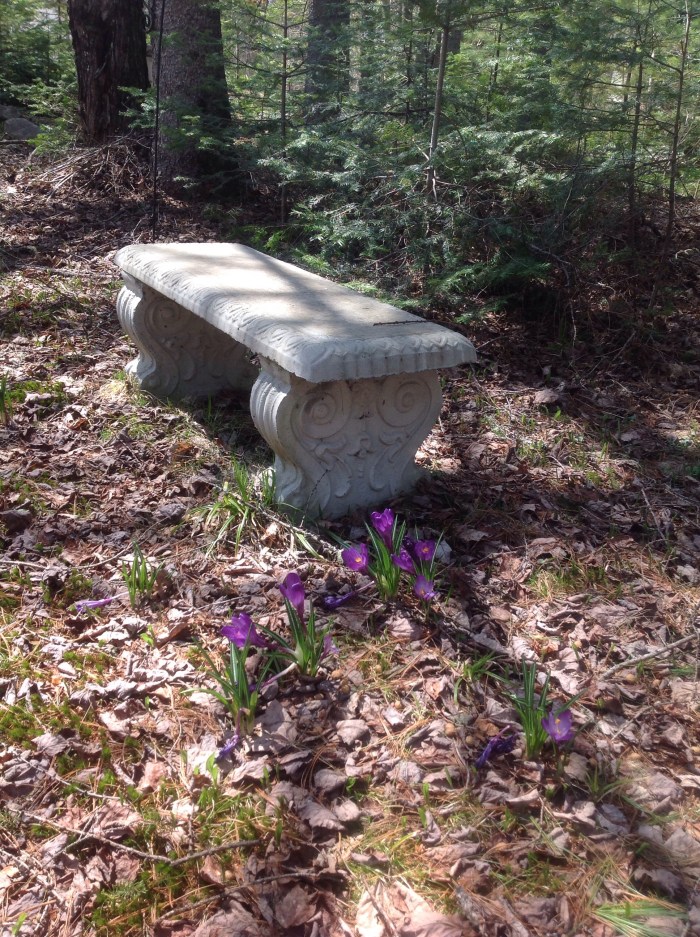
I love to be outside but my knees do not always cooperate. So, I make certain I have a place to sit on my walk-about. I love my concrete bench. I get a great view of the yard. In spring there are crocuses. At this time of year, a huge patch of sensitive fern. In fall there will be red maple leaves. But the bench is cold. Not a place to sit for long! Not a place to linger.
~
~
A place to be still
~
Cold concrete,
embedded, still,
where leaves
of purple crocus
press through turf,
sensitive fern
overtakes lawn,
autumn builds
layer on layer.
Cold concrete,
embedded, still.
~
~
~
All my best,
Jane
Birdbath
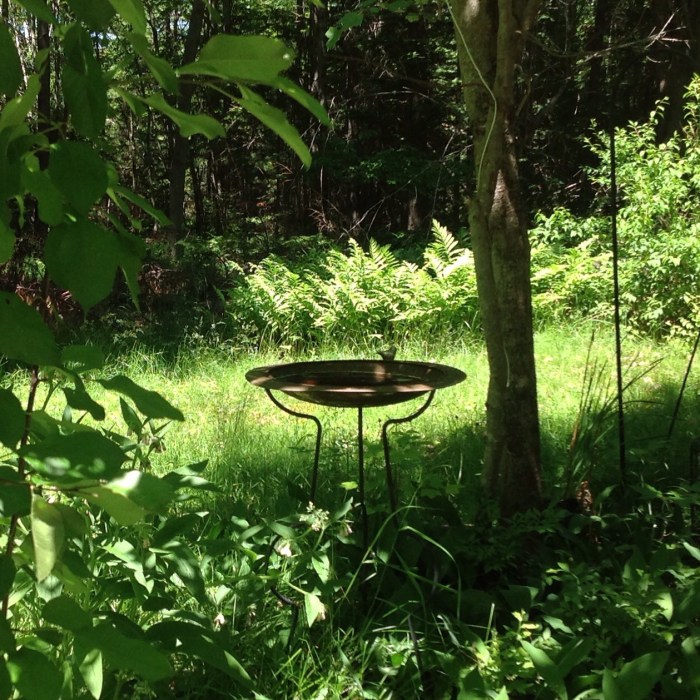
Our copper birdbath includes a silver-coloured metal bird, in case no real birds come to call. In the shade of the maple tree the water shimmers. But the little silver bird never flutters, not even a feather.
~
~
birdbath
~
embedded in dapple
edge of copper
silver bird never moves
never flutters a feather
never pecks a sparkle
from crystal water
~
bird with heartbeat
and dusty wing-feathers
lands for a bath
sputters and splashes
chooses to ignore
immobile effigy
~
~
All my best,
Jane




 nichepoetryandprose