Posts Tagged ‘landscape’
early schooling – finding the one room schools
I am continuing to find interesting information in the Annual Report of the Schools of New Brunswick 1888 (Fredericton, 1889). This report includes information on the number of one room school houses in the late 1800s. Although the numbers are for all schools, you can see, by comparing the numbers of teachers to the numbers of schools, most schools had only one room.
~
Statistics on Schools in Four Counties of New Brunswick as of December 31, 1887
| County | Number of Schools | Number of Teachers | Number of Students | Number of Boys | Number of Girls |
| York | 167 | 178 | 5558 | 2811 | 2746 |
| Sunbury | 46 | 48 | 1050 | 553 | 497 |
| Queens | 85 | 87 | 2196 | 1088 | 1108 |
| Kings | 155 | 161 | 4552 | 2303 | 2249 |
| All Counties | 1542 | 1613 | 55492 | 27888 | 27604 |
~
One of the things I want to do in my new project is visit a number of the schools still standing in four counties in the lower Saint John River watershed (Kings, Queens, Sunbury and York Counties). I’ll also visit some locations where schools once stood but are now gone.
~
Finding these schools by driving the roads is a rather inefficient approach. So how do I find the whereabouts of over 400 one room schools? To start, the location of every school in Kings County in 1862 is known from the Walling Map. For more information on this map, see http://www.rubycusack.com/issue34.html
~
I have also found a valuable resource in a book I found for sale at Amazon.com : Diana Moore and Andrea Schwenke. New Brunswick Schools: A Guide to Archival Sources. Acadiensis Press: Fredericton, 1992. The Guide provides information on where to find various sources for early schooling in New Brunswick. I will be consulting some of these:
- a scrapbook by Marion Johnston Dunphy who photographed 150 schools from 1974 to 1984 (The One Room Schools of New Brunswick and What Became of Them).
- a list of one room schools in Kings County in 1983 prepared by The Kings County Retired Teachers Association
- old school records in the Provincial Archives and the Archives of the Saint John Museum
- diaries of people who taught school, for example C. Gordon Lawrence (Tracy School, Sunbury County, 1903 – 1962)
- various exercise books, workbooks and school registers from the 1800s
~
~
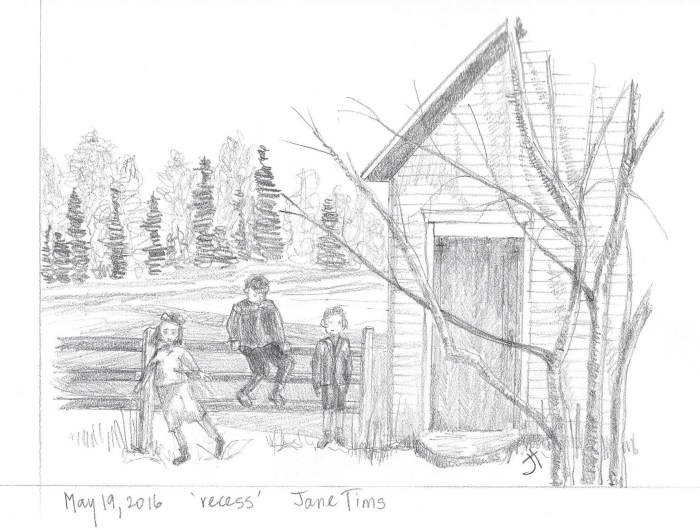
The first of many drawings about days at the one room school. I think I should take a course on drawing people. They look a little bored.
~
Copyright Jane Tims 2016
Isaac’s Way Art Auction and Sale – ‘morning sky’
On May 27, 2016, the 26th Art Auction and Sale at Isaac’s Way Restaurant in Fredericton, New Brunswick will come to an end. Only a few more days to own some reasonably-priced art and contribute to a charity for children. For a look at the paintings still available, visit http://isaacsway.ca/art/.
~
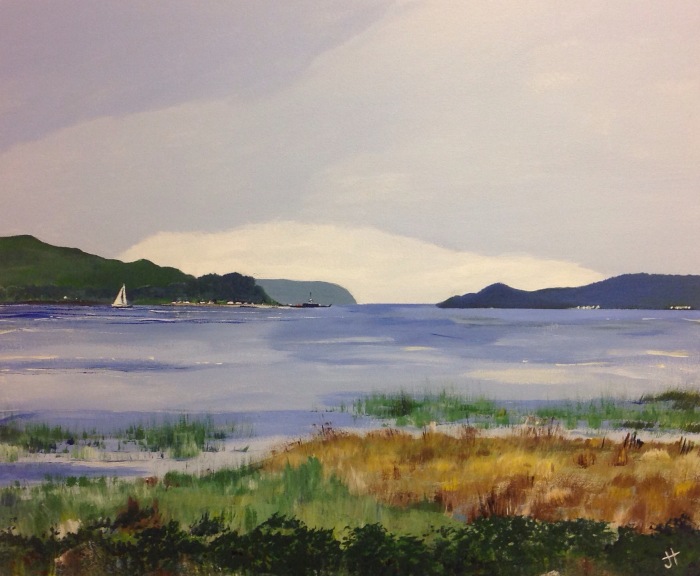
My painting in the 26th Art Auction and Sale is a landscape of the Saint John River as viewed from the Nerepis Marsh. It is entitled ‘across the bay’ (24” wide by 20” high, acrylic on canvas, unframed with gallery edges). The current bid is $100. I donate 50% of the proceeds to Isaac’s Way Kids-in-Need. To make a bid on this or other paintings, just drop in at Isaac’s Way in Fredericton or call 506-474-7222.
~
~
My submission to the next (the 27th!) Art Auction and Sale is of a brilliant sunrise behind our grey woods. The painting, entitled ‘morning sky’, is 24″ wide by 20″ high, acrylic with gallery edges. This auction will run from May 27, 2016 to late September 2016. The proceeds from the auction will go to sponsor Kids-in-Need for music lessons and I am donating 50% of the proceeds from my painting to the charity.
~

May 10, 2016 ‘morning sky’ Jane Tims (24″ X 20″ acrylic)
~
Copyright 2016 Jane Tims
old schools in the landscape
In my last few posts, I have focussed on my research toward a new poetry project I will be beginning. I know there are interesting stories to be told about the ‘inside’ of the one room school. Because of my interests in botany and community history, I would like to reflect on the ‘outside’ of the one room school – its surroundings and geographic location.
~
I still have to do some thinking about this project. I know that people who attended one room schools will have stories to tell about how the local terrain and landscape influenced their schooling.
~
A school’s surroundings would have impacted learning in many ways. For example, the view of a lake from the school window may have caused many a pupil to settle into daydreams. Interesting fields, hills, and watercourses would provide the teacher with opportunities for nature study.
~
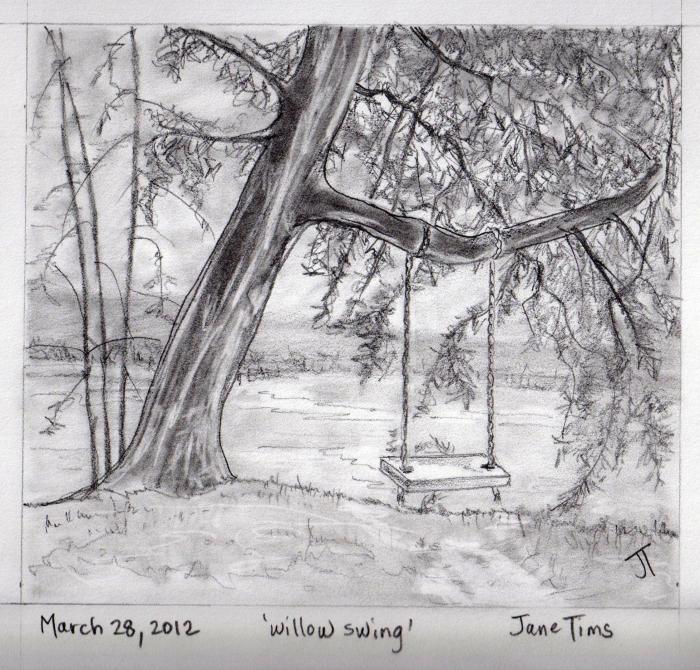
The location of the school would also influence recess and lunch-time activities. My Dad wrote about damming a local stream so they could skate in the winter months. The same stream meant fishing in May and June. A nearby hillside would be great for sledding in January and February. Trees in the school yard? – A place to climb or to hang a swing.
~
~
Students walked to school before the 1950s. The study I made of schools in Upham Parish, New Brunswick suggests that students walked as many as three miles to school in the late 1800s. Hills made the long walk to school more difficult. The winds by a lake or other shore land would be bitter on a winter day. Rivers, lakes and wetlands meant a place to hunt tadpoles. A spring by the road? – A cool drink. My Uncle, forced to wear a hat/scarf he hated, used the bridge on the way to school as a place to hide his headgear!
~
One room schools were located near clusters of houses and various community activities. The walk to school may have passed a church, a post office or a community store. Hardwood forests meant lumber mills and, in spring, maple syrup and the sugar shack. Good land meant farms; grazing land meant cows to outstare.
~
On a drive last weekend, we found an older building along the Saint John River that may have been a school. The Upper Queensbury Community Hall has all the characteristics of a one room school – the steep roof, rectangular footprint, and tall side windows.
~
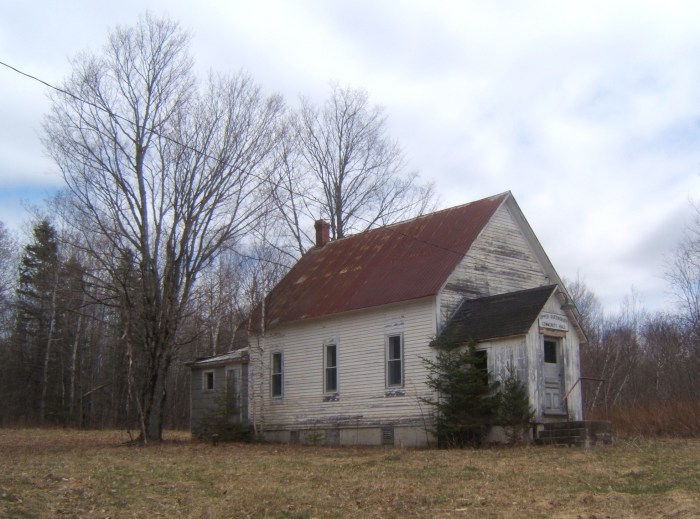
Upper Queensbury Community Hall near Nackawic, New Brunswick. I will have to make some inquiries to find out if it was a school house at one time.
~
A look at a map shows some of the landscape features in the area.
~

Map showing landscape features of part of Queensbury Parish, near Nackawic, New Brunswick. The yellow dot is the location of the Upper Queensbury Community Hall which may have been a one room school.
~
The Saint John River was nearby, although further than it is today since the Mactaquac Dam (built in 1968) has raised the level of the water. The river’s possibilities for fishing, skating and boating were only a downhill trek away. The terrain is gently undulating, as the names of nearby communities (Day Hill and Granite Hill) suggest. Local geographic points the community children may have known include the many-tiered Coac Falls and Coac Lake (an old road runs past the community hall back through the woods to the lake, about a mile away). The aerial photo (taken near the end of September) shows the red of the cranberry bog – picking cranberries may have been a well-known activity. Sugar maples are common in the area, as are old ‘sugar shacks’. When I interview people who went to the one room school I will have to remember to ask them about their memories of these places.
~
Writing poetry about these ideas will be so much fun!
~
~
Copyright 2016 Jane Tims
one room school houses – hiding in the landscape
Last Friday, we took a drive along the west side of Grand Lake, in the Youngs Cove area of Queens County, New Brunswick. We were searching for old one room school houses. As far as I know, there is no list for these buildings in Queens County, New Brunswick, although a list does exist for nearby Kings County.
~
I had seen one old school in the Whites Cove area, so we began there. This school was operated as a local craft store for a few years but is now a private cottage. The one room school is in good shape, painted bright red. The round plaque in the gable of the roof says 1837. The building had two front doors – one for boys and one for girls.
~
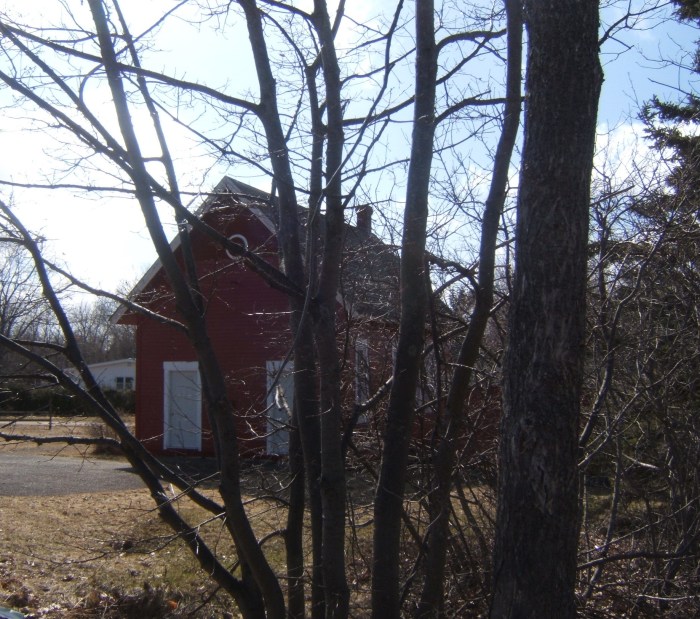
Whites Cove school house
~
We then continued toward Chipman, taking old roads when possible. I know that in the late 1800s and early 1900s, each small community (each Parish) had its own school, so we watched for the tell-tale design of the one room school house – a small, rectangular, one-storey building with a steep-sloped roof and rather high side walls. Each school had two or three tall rectangular windows on each side and one or two front doors. Some New Brunswick schools had a small anteroom or vestibule on the front. The bell-tower common on school houses in the United States was not typical of one room schools in New Brunswick.
~
We followed the road along the shoreline of the peninsulas extending into Grand Lake. In particular, we were watching for the older homes that show what the community may have looked like a hundred years ago.
~
As we came over a hill, we first saw the Rees school house. It had some of the characteristics I describe above. However, I am new to one room school hunting, so I was not really certain this little building had once been a school. And then my husband pointed to the sign on the small road opposite the building – School House Lane. The school house was being used as a cottage and was in poor condition with broken windows and a crumbled brick chimney. But I was happy to see the original stone foundation, a straight roof line, a large flat stone as a threshold, original clapboard on the front of the building, and evidence of the original vestibule.
~

Rees school house
~
Thrilled by our discovery, we continued to the next community and followed a side road. Almost immediately, we saw the Cumberland Bay School, announced by a sign above the door. It was a typical school house design, built on a hill. There was a rock foundation (with some brick) and a straight roof. The building was in good shape with evidence of regular maintenance and use, perhaps as a hall. A cold wind was howling and I felt sorry for the kids who must have come to school in all kinds of bitter weather.
~
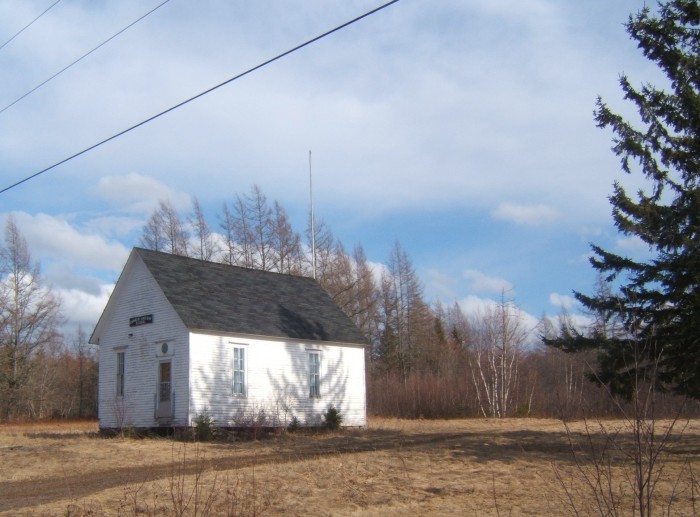
Cumberland Bay school house
~
After seeing three school houses, we felt like pros. We took the next road along the shore, toward Cox Point, and found a school house outside the community of Range. It was set back from the road, used in conjunction with a family cottage. The roof was straight, the side windows were intact and the shingles were in good repair.
~
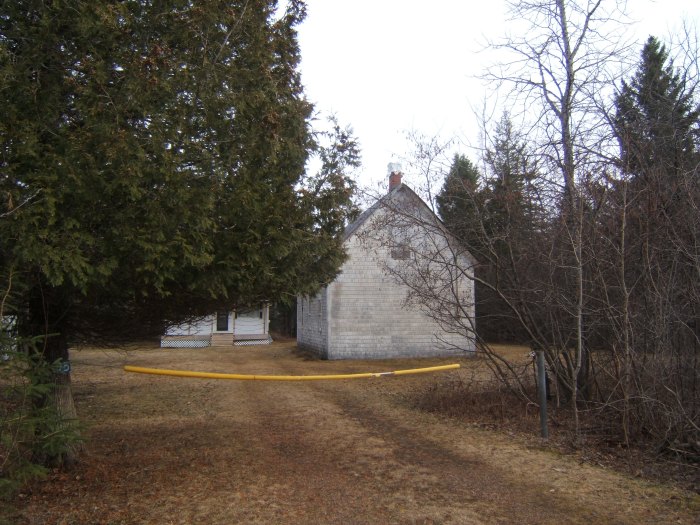
Range school house
~
I was delighted with our drive – we had discovered three school houses we did not know about! I also got a feel for some of the characteristics of these buildings and how they fit into the local landscape.
~

a map showing the old school houses we found … you can see a pattern emerging … I expect there were once school houses in some of the other communities indicated on the map
~
Why am I interested in this topic? My interests in landscape, the environment and history all come into play. I am also beginning to think about my next poetry project and have decided to explore the idea of school houses in the landscape.
~
To do this project, I will think about the setting of the school house in the community and how topography (hills and lakes and rivers), vegetation (fields and forests, orchards and big old swinging-trees) and other built landscape (bridges, churches, stores and farms) would have influenced the students, teachers and members of the community. Visits to old schools, some talk with people who remember attending these old school houses and reading at the Provincial Archives would give me lots of material for my writing.
~
Do you have examples of old one room school houses in your area? Did you attend school in a one room school house? I would love to hear your stories!
~
Copyright 2016 Jane Tims
in the shelter of the covered bridge – manuscript completed!!

~
Last year, in the competition of April 1, 2015, I was awarded a Creation Grant from artsnb (The New Brunswick Arts Board). The award was to create a manuscript of poems about plants and animals living in the shelter of covered bridges in New Brunswick.
I have now completed the manuscript and am ready to submit my final report. During the project I visited 28 covered bridges in the drainage basin of the Saint John River and 5 in Charlotte and Westmorland Counties. I was also able to use the notes and records from my visits to some covered bridges in 1992.
~
The final manuscript includes 81 pages, 8 new drawings, and 63 poems, organised into five themes:
liminal spaces – 8 poems about bridges as places of transition and change
notch of a lily pad – 10 poems about the covered bridge as habitat
grit of a blade – 9 poems about engravings and graffiti produced by human visitors to the covered bridge
a blade of grass between thumbs -10 poems about mysterious discoveries in covered bridges
heads of timothy – 6 poems about encounters at the bridge
gaps between boards – 10 poems about deterioration and loss due to vandalism, fire and flood
a loose board rattles – 10 poems about the sounds resonating in a covered bridge
~
Many thanks to artsnb for helping me in the making of the manuscript and for the chance to undertake such an enjoyable project!
~

Copyright 2016 Jane Tims
Next painting for Isaac’s Way art auction …
On January 25, 2016, the 25th Art Auction and Sale at Isaac’s Way Restaurant in Fredericton, New Brunswick will come to an end. Only a few more days to own some reasonably-priced art and help kids-in-need. As of January 4, 2016 this 25th auction has sold 22 paintings and raised $7,600 for art lessons for kids. For a look at the paintings still available, visit http://isaacsway.ca/art/. To have a look at my submission to the 25th Art Auction, see my post for September 18, 2015 https://janetims.com/2015/09/18/art-auction-new-painting/
~
My next submission, for the Isaac’s Way 26th Art Auction and Sale, is a landscape. The piece features a view of the Saint John River, from the Nerepis Marsh at Grand Bay-Westfield towards the Westfield Ferry. It is entitled ‘across the bay’ (24” wide by 20” high, acrylic on canvas, unframed with gallery edges). This auction will run from January 27, 2016 to late May, 2016. The proceeds from the auction will go to sponsor kids-in-need. I am donating 50% of the proceeds from my painting to the charity.
~
‘across the bay’ Jane Tims
~
Copyright Jane Tims 2016
in the shelter of the covered bridge – Baker Brook #2
Of the 60 covered bridges in New Brunswick, most are in the southern part of the province. Last week we went to see the three remaining covered bridges in Madawaska County in the north-western part of the province.
~
One of these was Baker Brook #2. It crosses the Baker Brook west of Edmunston and is no longer in service. The bridge has been protected in a small park with a parking area. Bird boxes, flags and hanging flower baskets show there is local stewardship of the bridge.
~

Baker Brook #2 in Madawaska County, New Brunswick
~
The Baker Brook #2 bridge was the essence of quiet. As we entered the bridge, the only sound was the patter of rain and the trickle of water under the bridge.
~
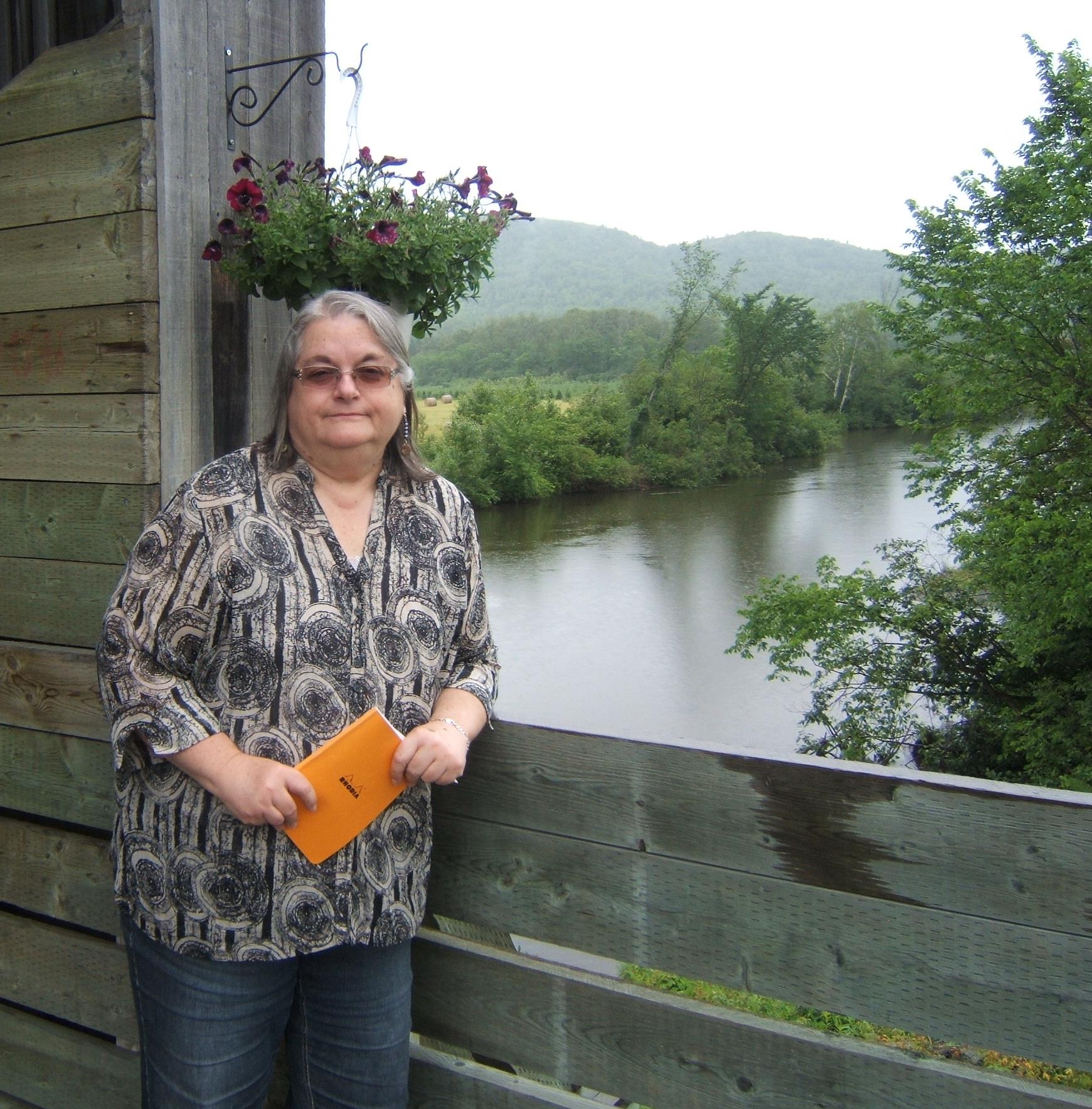
I don’t get many photos of myself, but this is a good one – I am ready to take notes on the plants and animals I see in the Baker Brook # 2 covered bridge … these notes and my photos and memories become the basis for future poems
~
The bridge is set against a backdrop of tranquil hills and fields. A deer watched us from a hayfield at the north end of the bridge. A white-throated sparrow called once and a crow made a few comments from the top of a round bale of hay. Otherwise, we were alone.
~

~
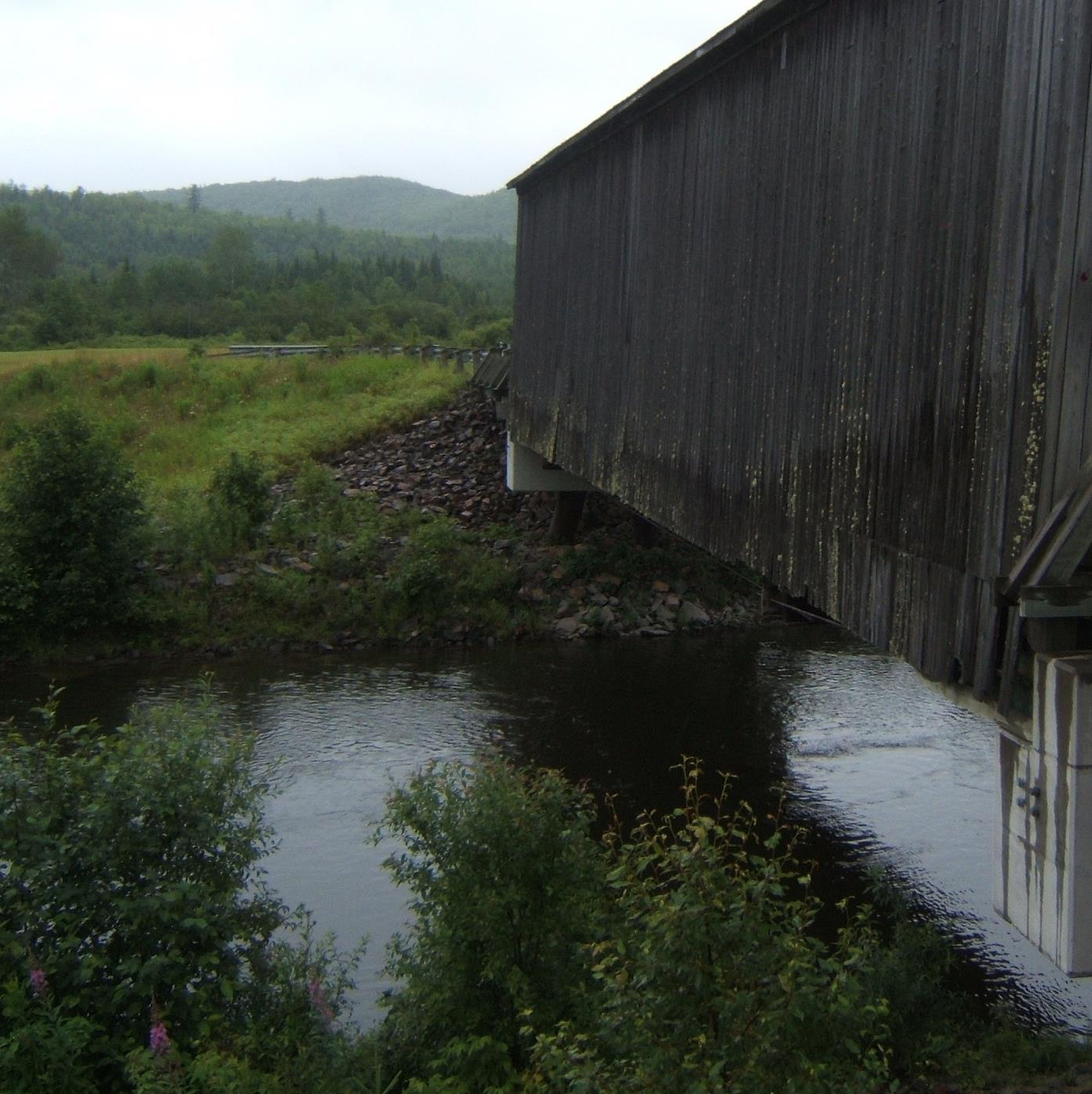
I love the way the lichens have colonized the bridge and follow the boards, like rain, in lines down the outer walls.
~
~
Some visitor had left a small collection next to the outer wall of the bridge. Three rocks and a broken bit of glass…
~

~
Copyright Jane Tims 2015
beaver slap – Bloomfield Creek Covered Bridge
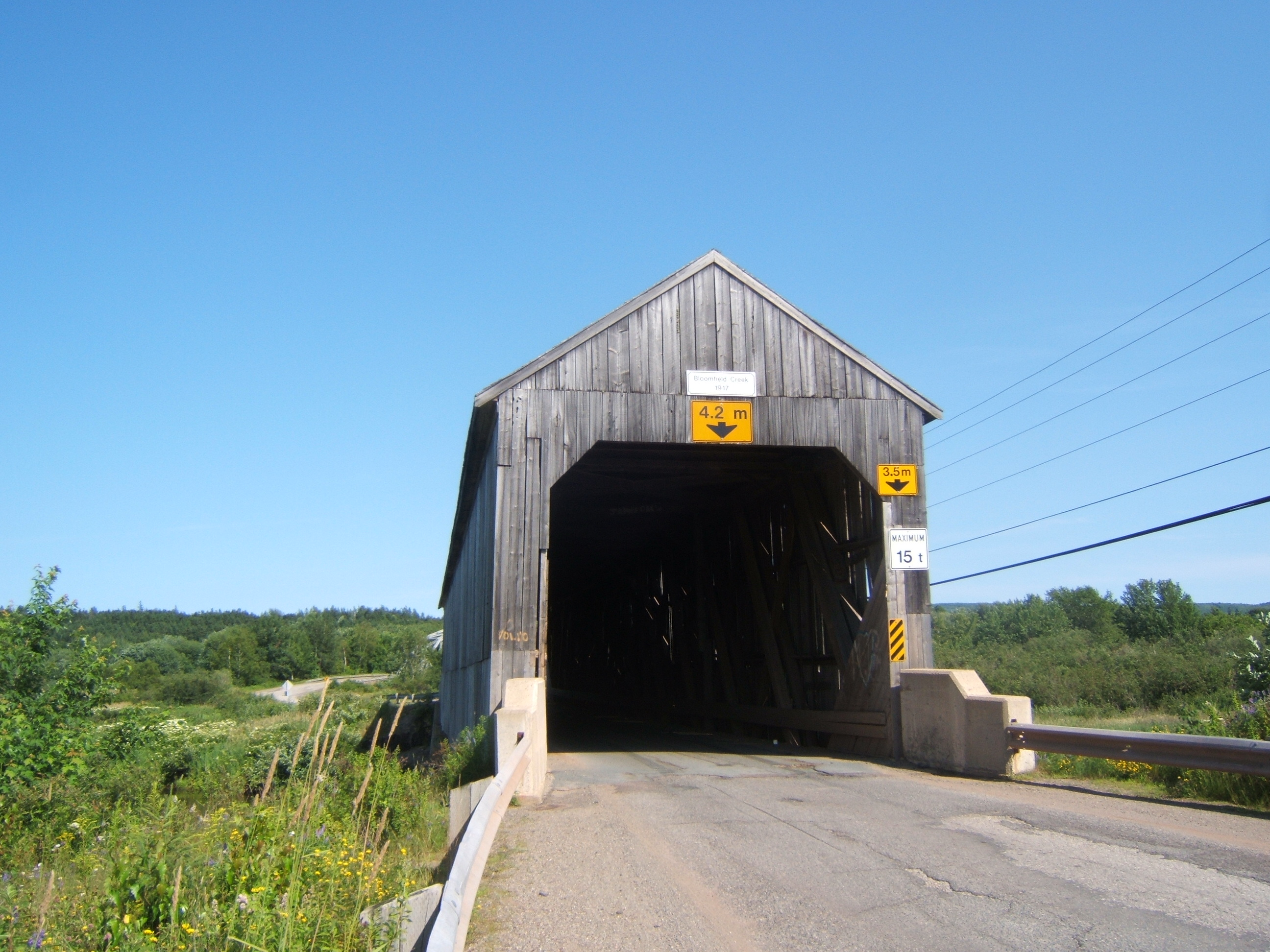
On a recent weekend tour of four covered bridges in southern Kings County in New Brunswick, we stopped at Bloomfield Creek. Built in 1917, this bridge is busy and well-used. It crosses a broad creek, very pond-like with its growth of lily pads (the yellow pond-lily Nuphar) and pickerel weed (Pontederia).

~
Along the grassy banks of the creek is a beaver lodge.
~
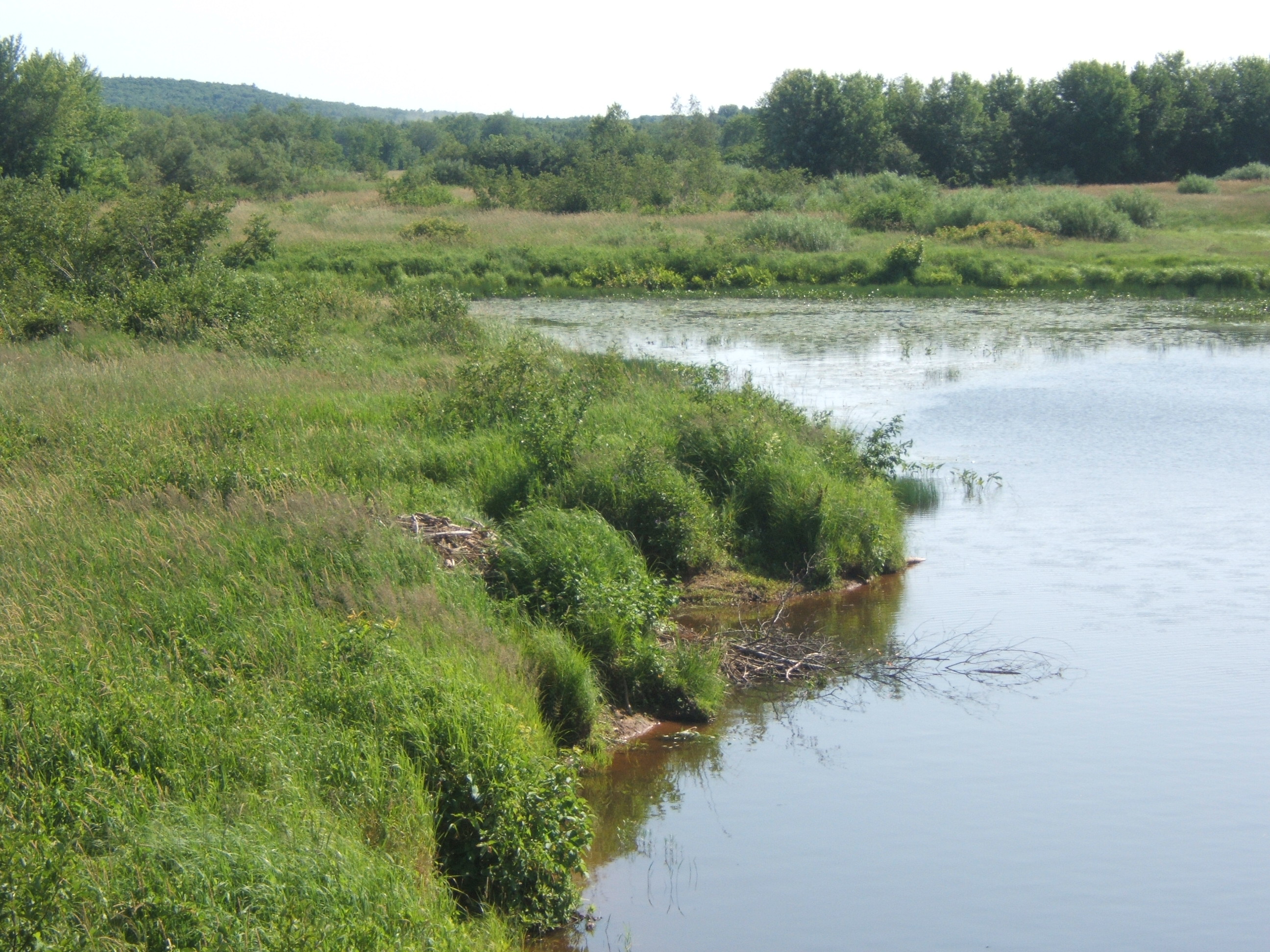
beaver lodge on the bank of the creek – the beaver has dragged lots of extra branches to keep near the underwater opening of his home
~
A large beaver kept us company while we visited the bridge. He swam back and forth along the river, in a course we were certain was designed to confuse and hide the location of his lodge. Most of the time he stayed on the surface – so soothing to watch his smooth brown body ‘towing’ a ‘V’ across the water. Every few minutes he would pause in his swim, arch his body, scissor his tail and lift it perpendicular to the water surface. Then he would slap the water and produce a loud ‘k-thud’ before he dove beneath the surface. In a minute or so, he would reappear to swim as calmly as before.
~
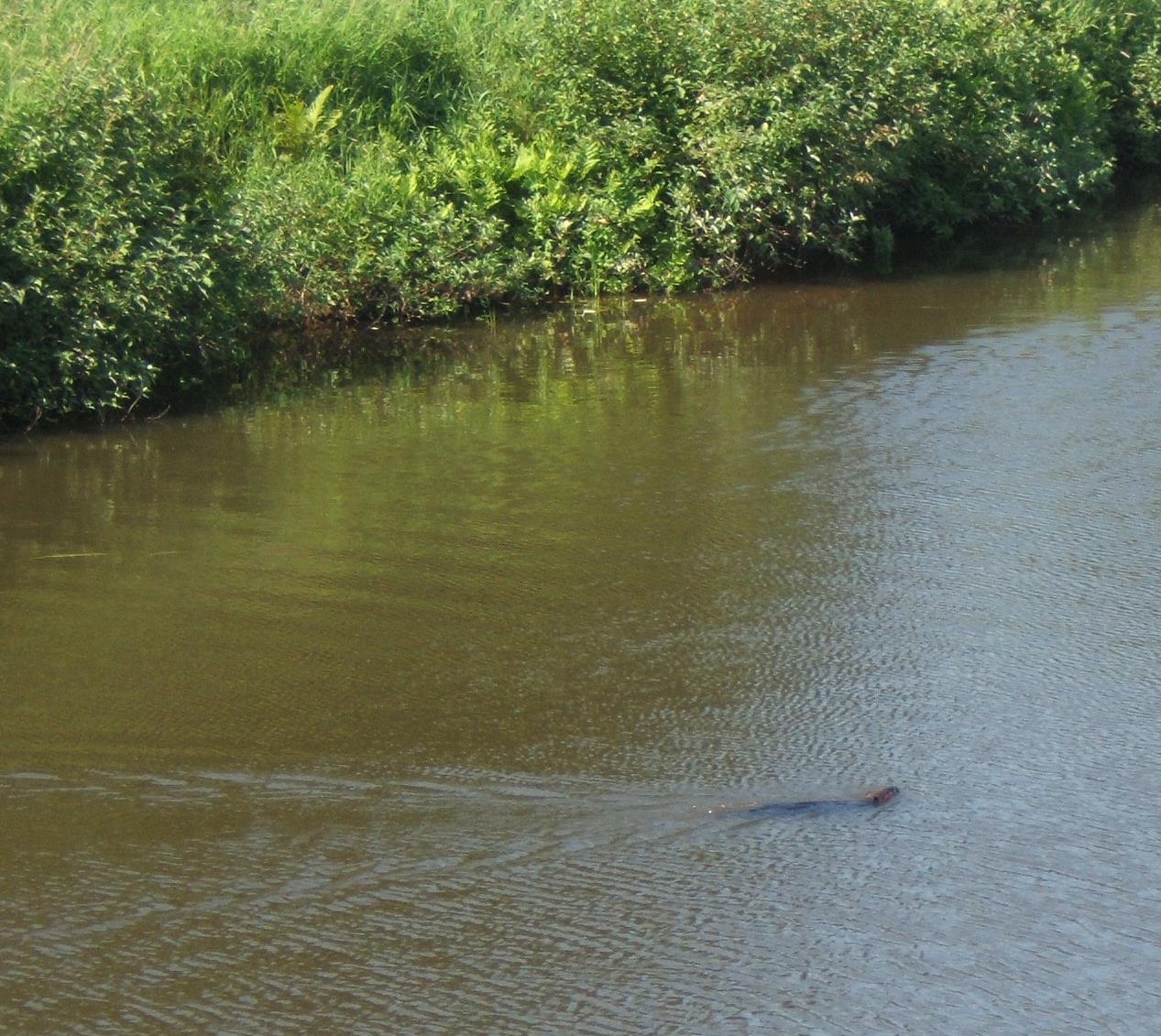
close-up of the beaver towing the ‘V’

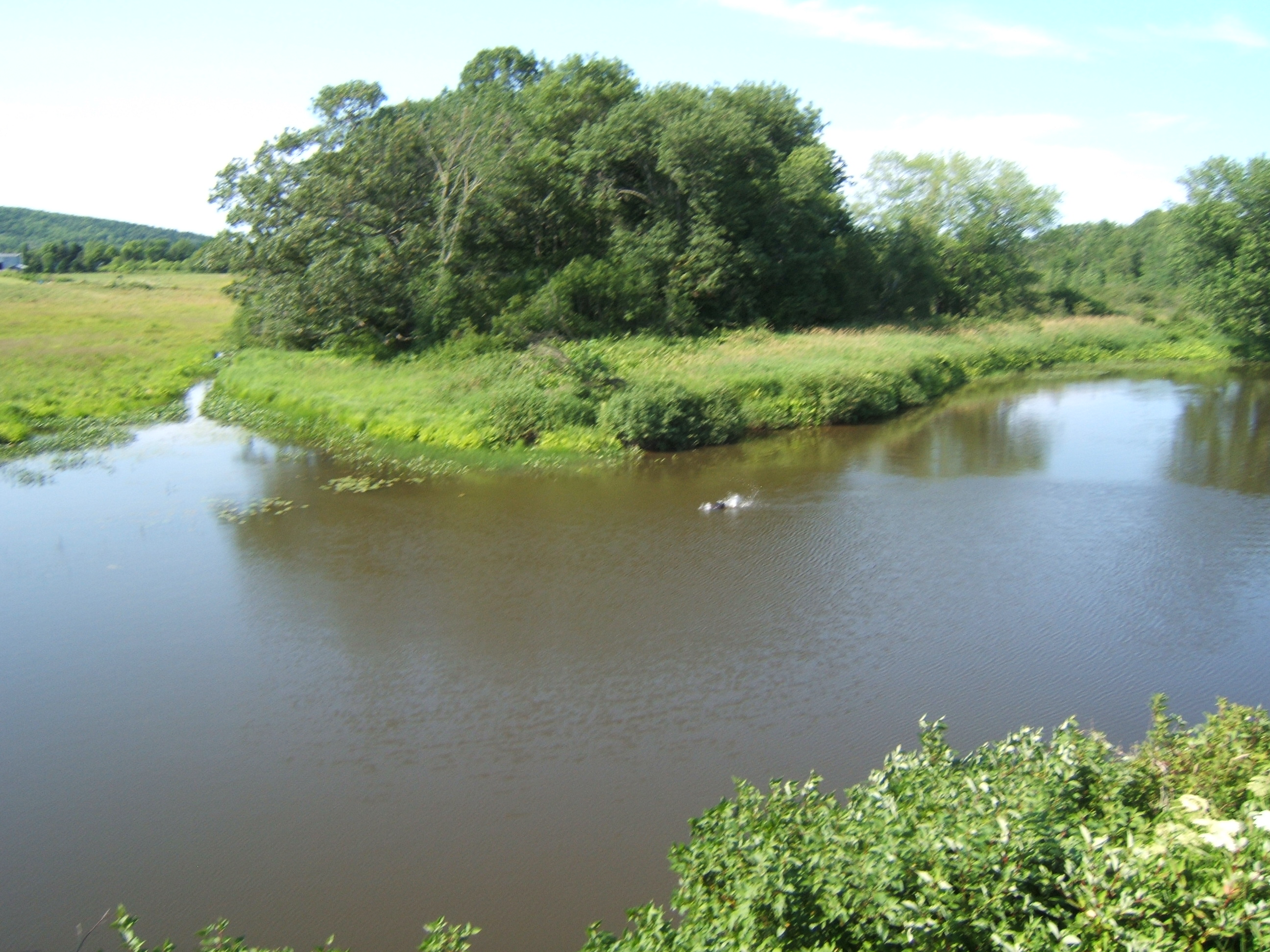
big splash as the beaver slaps its tail on the water
~
Copyright 2015 Jane Tims
linden – linden wing #2

~
~
linden wing #2
~
thin green pale
I hoist my, turn my
tapered, paper sail
to wind-tasks, two
~
first I nudge my mast
of flowers, rudder
to the breeze, my pollen-folk
hitch a ride with the bees
each captured grain a triumph
each launch a score
~
later, I loose my mooring
detach, hoist spinnaker and main
samara of linden
and passenger seeds
sail away
~
~
Copyright 2015 Jane Tims
linden – linden wing #1

the mature linden is heart-shaped like its leaf … this time of year it is filled with flowers, each cluster held on a stem in a long, leaf-like bract
~
linden wing #1
Tilia cordata
~
green, veined tongue
apex and base
alien, unlike leaf, unlike tree
winged though planted
grounded yet ready to fly
~
tiny tree on a bract landscape
wind walks through
shudders still shadow
percussion, tousles unlikely flower
~
olive feather of linnet
tongue and an idea is spoken
cluster of notes
sprinkled on air
~
bitterness flows from basswood
taste bud to taste bud
trail of robin song
~
~
near the center of the photo, you can see the pale green bracts, each holding a stem of several small flowers
~
Copyright 2015 Jane Tims




 nichepoetryandprose