Archive for the ‘wild life’ Category
at the bird feeder #3
I am amazed at the volume of seeds these little visitors eat.
The deer, racoons and squirrels take their unfair share, of course. Last year, I watched a deer attack the feeder with its tongue, scooping up every bit of seed in a matter of minutes. Even without the deer and racoons and squirrels, the birds descend in a flock and the food is soon reduced to a scattering of seed-husks.
We have come to a conclusion – next year we will put up a mammal-proof feeder. My brother-in-law has it figured out. He has installed a large cedar post in an open area and encased it in aluminum pipe and flashing. Enough seed falls on the ground to give a treat to the squirrels and other marauders, and the birds are the focus of the money-drain.
~
~
feeding the birds
~
I wait, no patience to speak of
for the next bird to find
~
this food more delicious than seed offered
by my neighbour, swears
~
he had cardinals, mine the left-over
chickadees and nuthatches, flocks of redpoll
~
litter the feeder, red-dotted heads, their toes
grip courtesy branches, a perch
~
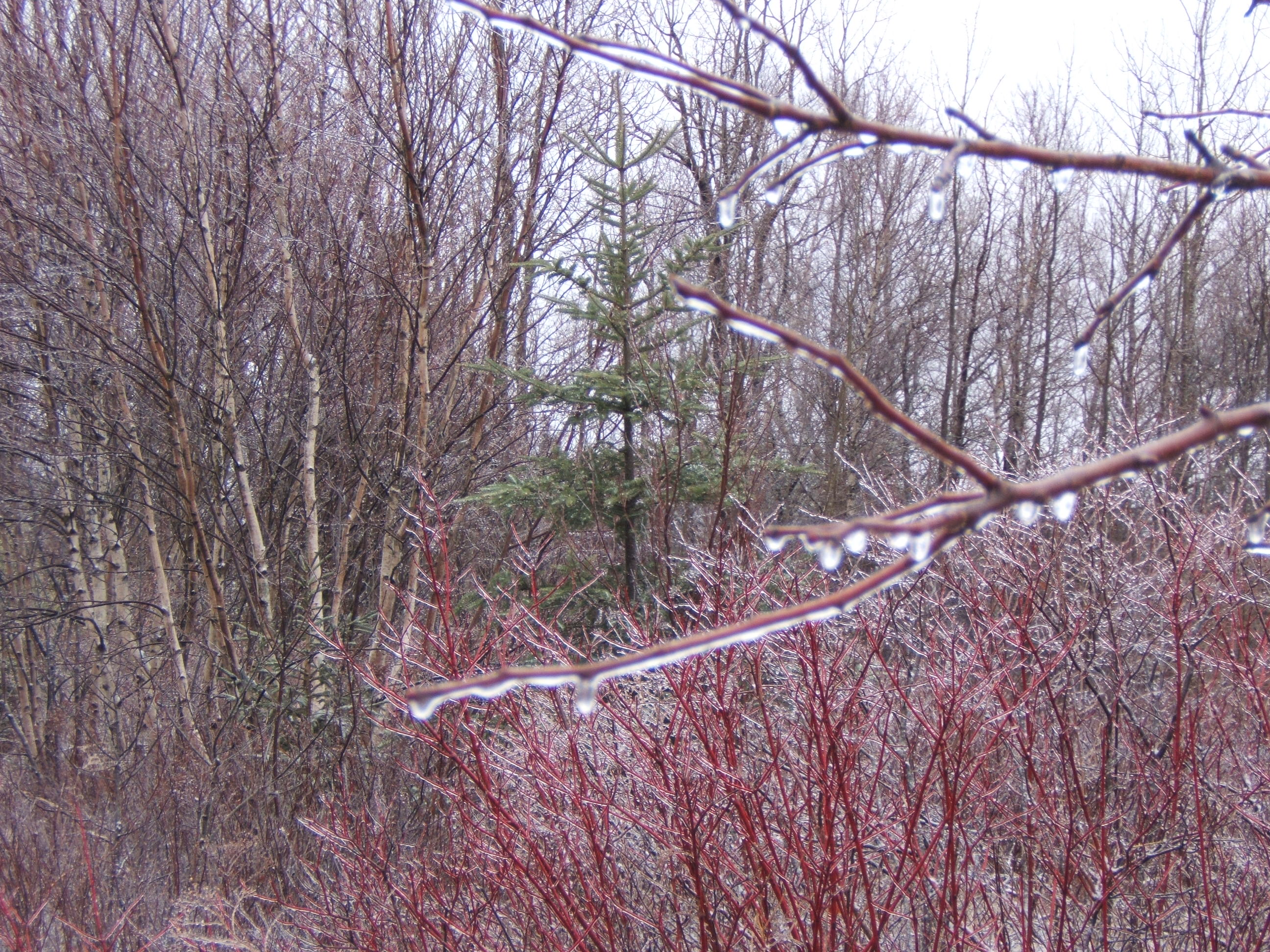
impossible to find, after the freezing rain, branches
encased in slip-and-slide, candy-coated nutrition
~
won by complication, every kernel harder than stone
seed in a casing of black, sunflower
~
and pencil draw the finches, grosbeaks smash seed-coats
with deliberate jaws, shards of sunflower husk and ice-coat
~
fall as rubble
~
~
© Jane Tims 2012
at the bird feeder #2
We had snow during the night and I can see clearly who has been at the feeder this morning… so far, only a few chickadees and nuthatches, and , of course, the pesky grey squirrel.
Do you have a bird feeder and what birds do you see?
~
~
birds at the feeder
~
feeder fill
seeds spill
nuthatch and chickadee
upside-down
crowds of goldfinch, redpoll
branch to branch
to ground
~
~
© Jane Tims 2011

at the bird feeder #1
Today our bird feeders are a mess. Racoons and grey squirrels don’t keep neat houses. However, the seeds scattered across the deck are attracting a delightful array of birds. The last few mornings we have had:
a few chickadees (Black-capped Chickadee, Parus atricapillus)… they grab a seed and swoop to the nearest low branch to break the seed open… they seem to travel in small groups, but bicker with one another at the feeder…
a few nuthatches (Red-breasted Nuthatch, Sitta canadensis)… they are acrobats, grabbing to the feeder and then flipping inside to get the seed… they are solitary, sometimes in small groups of two or three… they leave one another alone, each taking their turn…
a flock of goldfinches (American Goldfinch, Carduelis tristis)… gregarious, they are all a-flutter and feed together side by side… they hang around to break open the seed and tolerate other species beside them…
~
~
goldfinches
~
bright feathers distil
yellow from atmosphere
essence of sunflower
tipple and sip champagne
make small talk at parties
gesture with hands
paint scallops on air, animated discussion
~
the gregarious obtain information
best feeder in the neighbourhood
best seed
least squirrel
~
~
© Jane Tims 2011

groundhog burrow
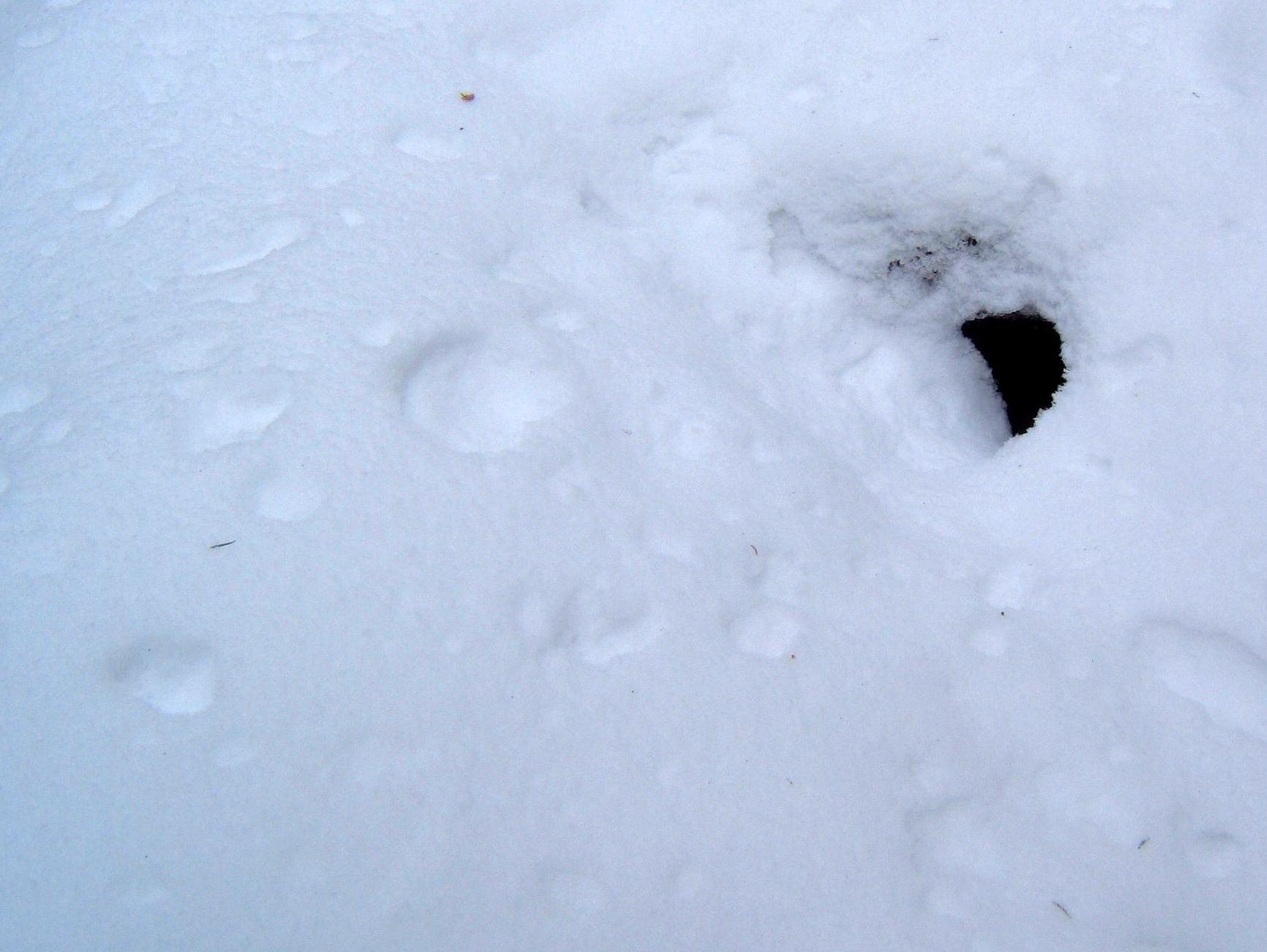
On my walk in the snowy grey woods, I checked on the burrows of the Groundhog (Marmota monax) near our picnic table. I have read about the winter habits of the Groundhog and I know he enters true hibernation this time of year. He does not wake through the winter to feed. For this reason, I was not surprised to find the snow around the main entrance untouched by any tracks leading to or from the burrow. The snow has buried the other burrow entrances. Sleep well, Groundhog family!
~
~
hibernation
~
groundhog excavates
beneath the fir, a meter cubed of dug
and snug and sifted dirt, disturbed
observes from veiled backdoor
under fibred curtain, dangled root
twisted tunnel, tilted floor
~
eats well and sleeps but
wakes, stumbles down his bleary halls
for green but white still sifts between
the burrow walls, tells his mate shove over
settles back to hibernate
~
~
© Jane Tims 2011

tracks in the snow
On Tuesday I went for a walk in the grey woods. Snow fell just before Christmas, so my walk turned into a quest to see who else had been walking (or running) in the woods.
I found many tracks, large and small. Mice had made their cylindrical tunnels, and occasionally had run across the surface. At some places, you can see where their tunnels suddenly go subterranean…
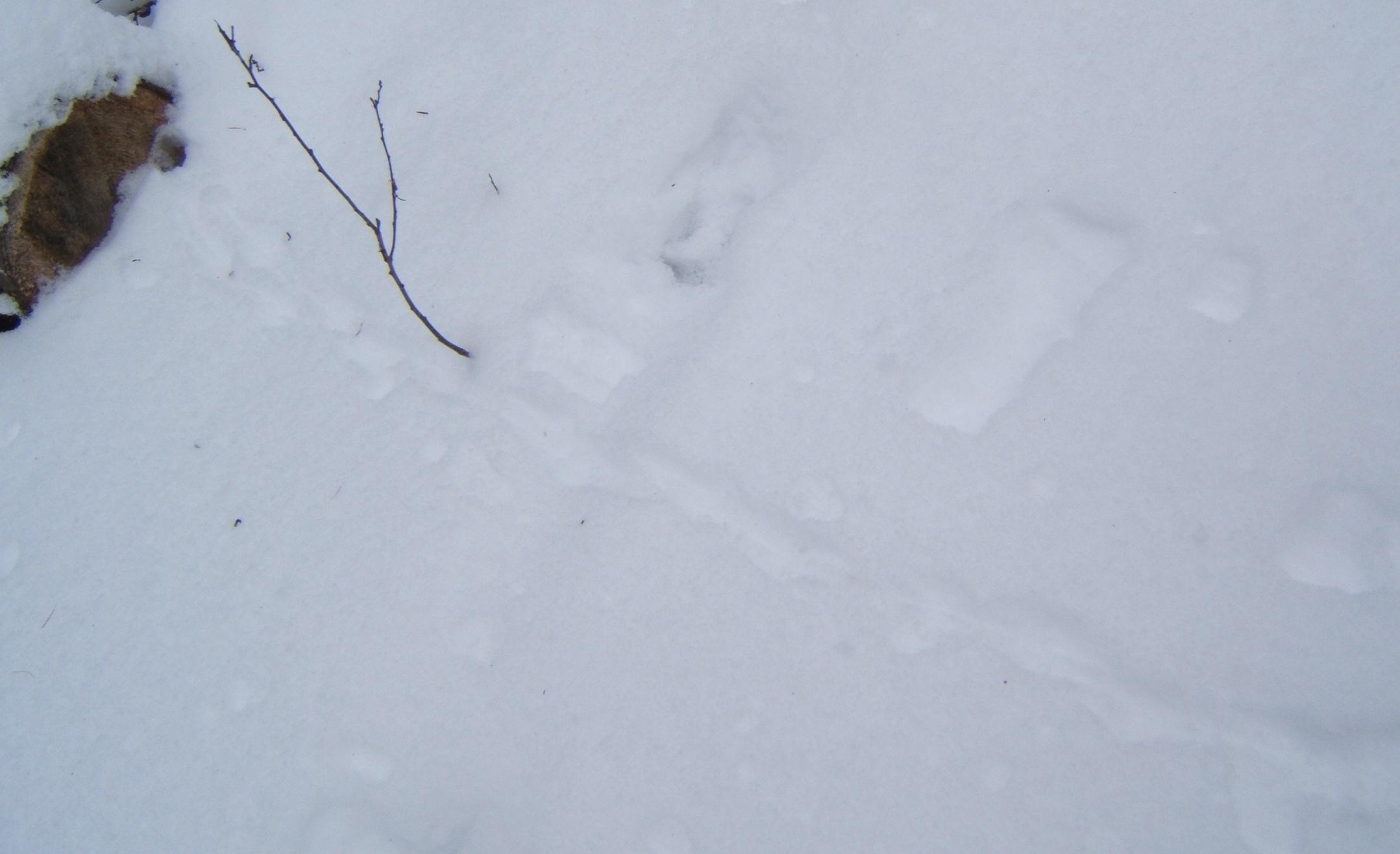
Sometimes several paths converge at a sheltered area beneath a fallen log, like a woodland bus terminal…

There were lots of squirrel tracks, often ending at the base of a tree where their paths move into the treetops…
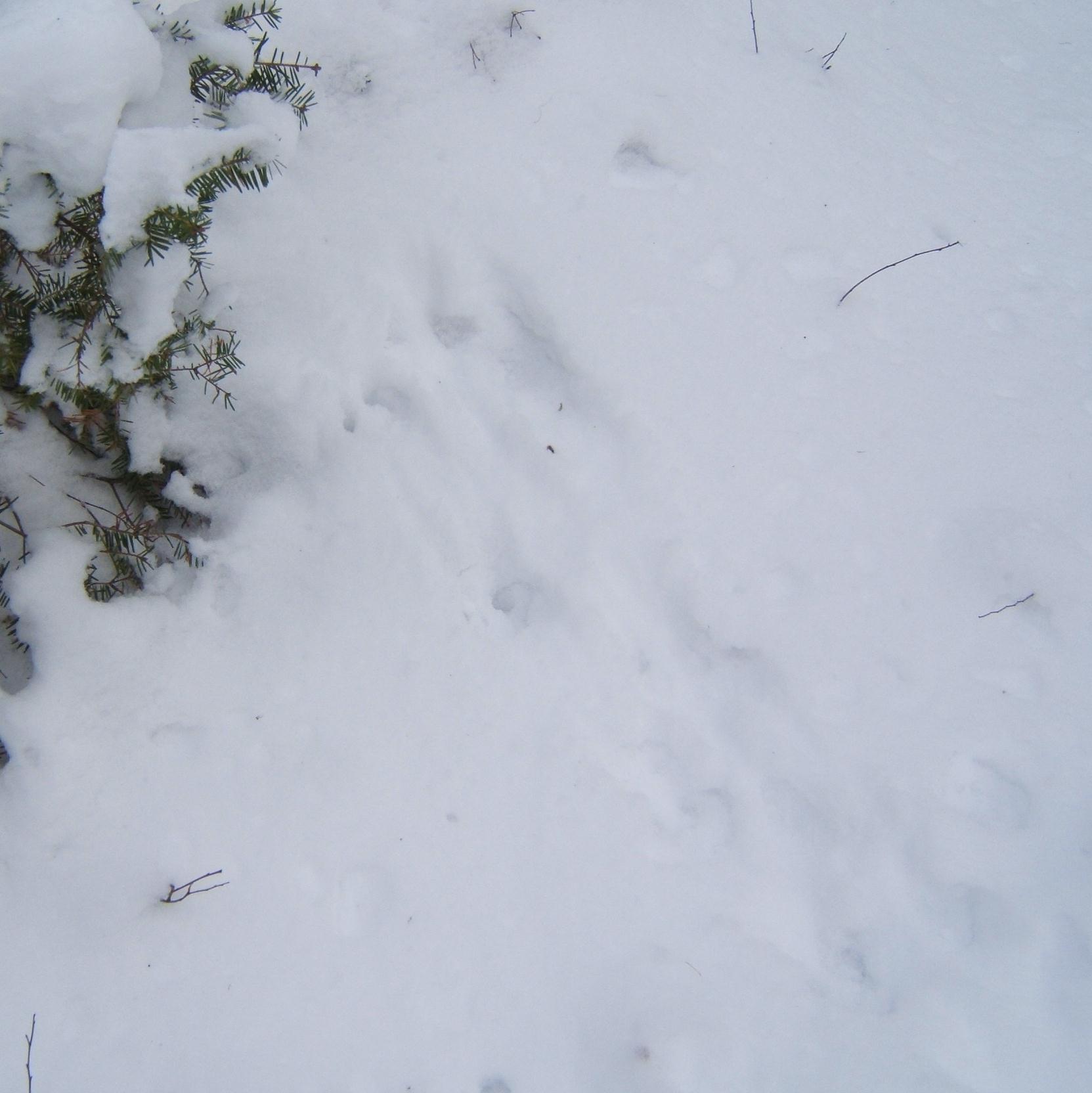
Squirrel tracks crisscrossed with those of deer…
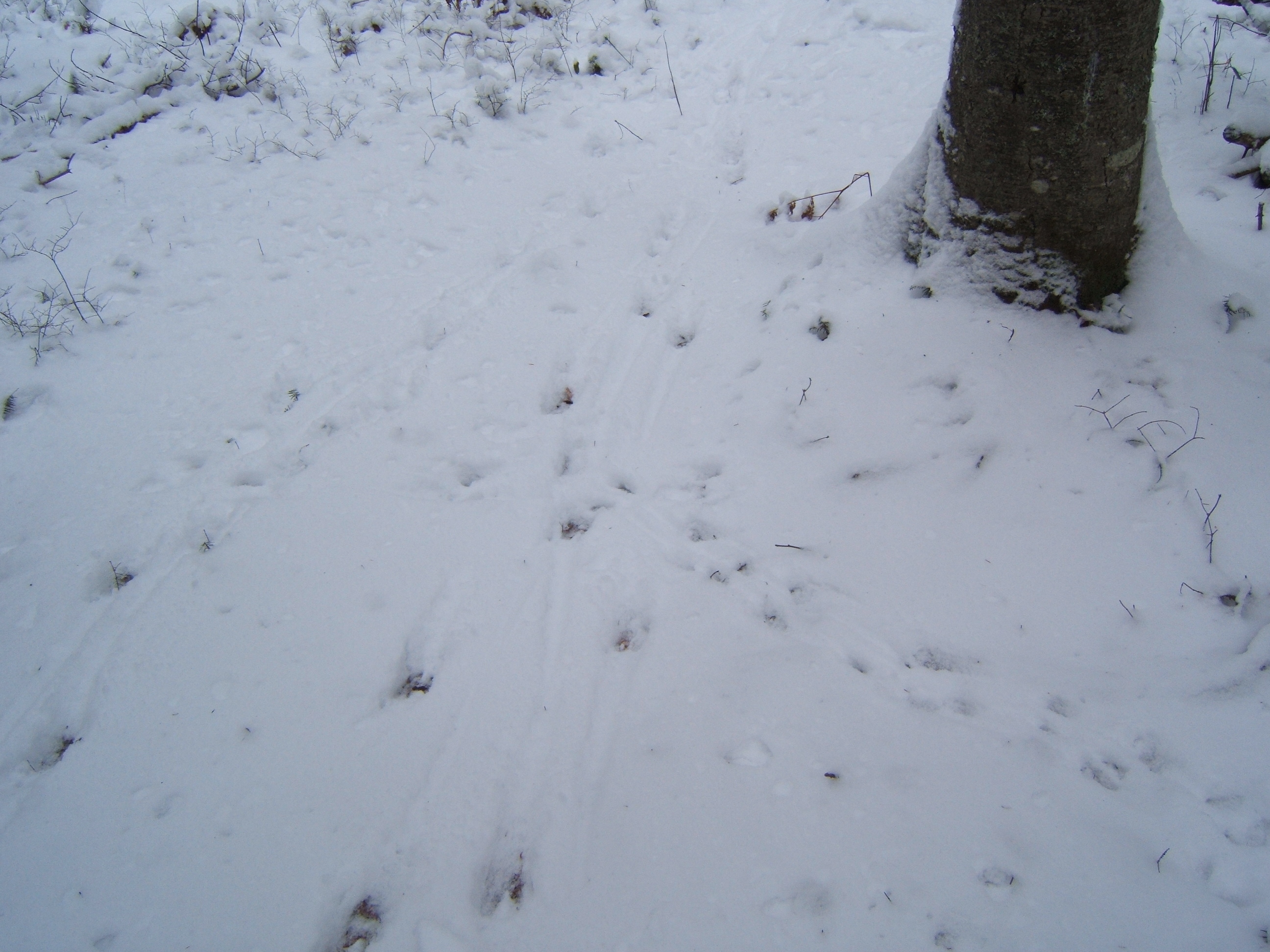
I followed the trail of two deer deep into the woods, thinking they were long gone since the tracks were filled with a slight dusting of snow…

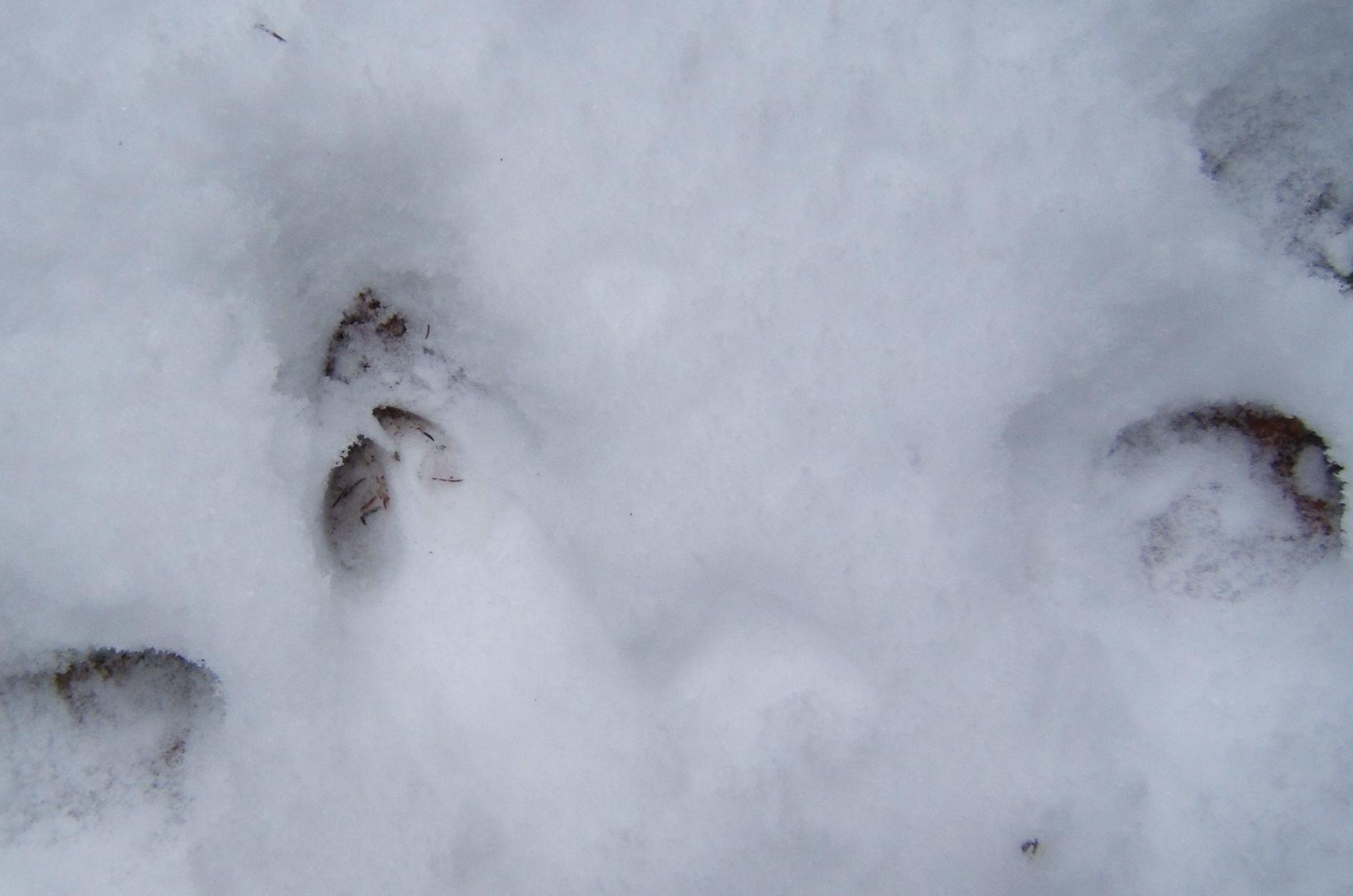
This made me a little careless, and the next thing I heard was a high-pitched snort and squeal of warning and the bounding of hooves through the woods. I got a good look at two beautiful deer, but the camera was not ready. I did capture the very fresh track of one of the retreating deer.
~
~
tracks in the snow
~
ephemeral proof
I follow the beacon
of a stash of spruce cones
stock-piled at the base
of a crooked tree
careen from a foe
slip beneath a log
dive into a hole
secret hollow
a pause to still
thud thud of my heart
~
~
© Jane Tims 2011
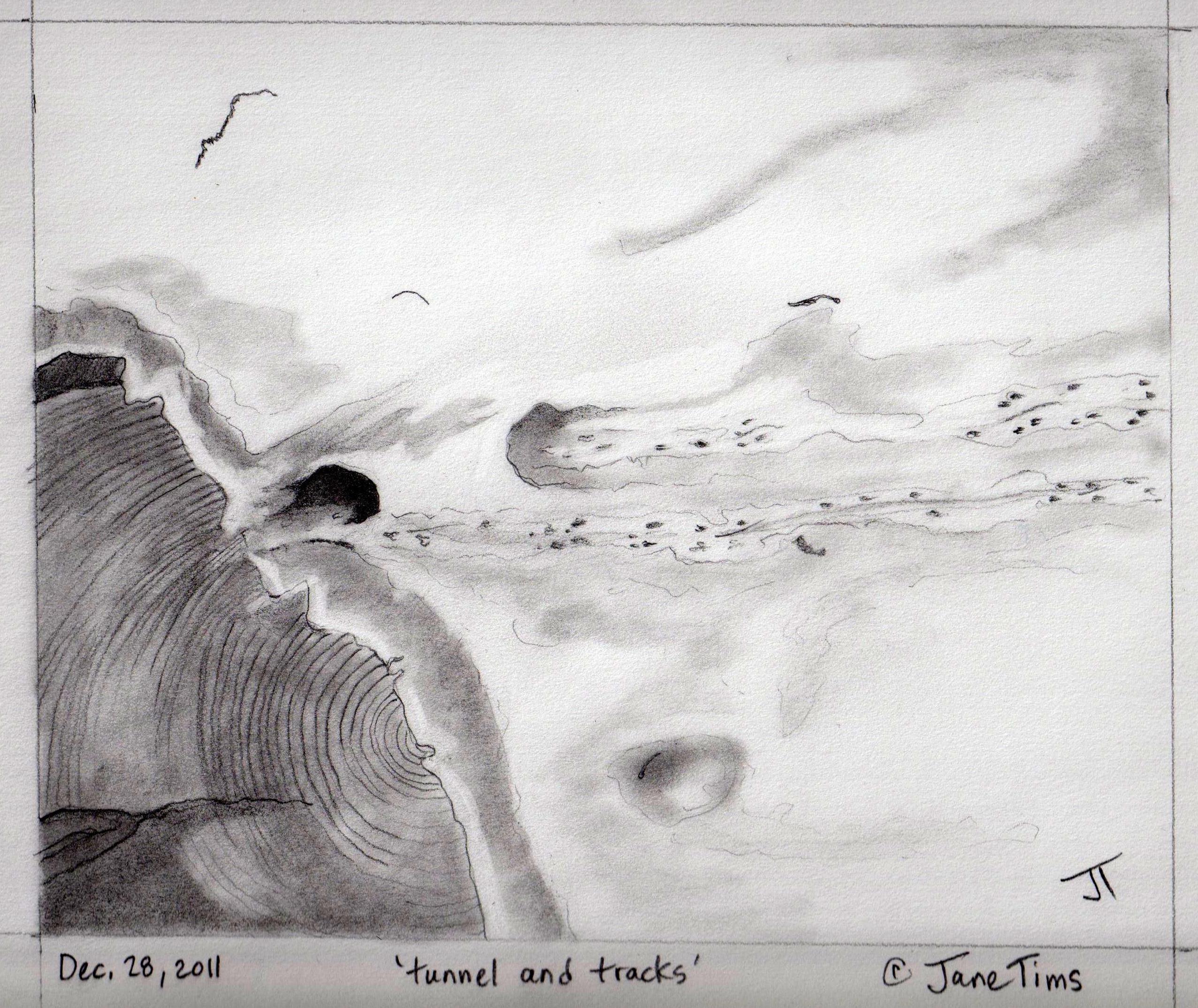
snow hollow at the base of a tree
Words are the tools of a writer’s craft. I literally wallow in words when I write a poem. Sometimes the right word comes immediately to mind. Sometimes I have to search for it, sometimes for days or weeks. When I do the final edits for a poem, I ‘press’ on every word, to make sure it is absolutely right.
Sometimes, I encounter an idea or image that seems to have no word. For example, I have searched for a word referring to the charming hollow that builds next to the base of a tree when the snow falls. Sometimes small animals use this hollow for a temporary den. Sometimes it’s a place where debris gathers, as it does in the corners of alleyways. Sometimes it is a calm, beckoning place where snow shadows rest in shades of olive green and blue.

I wonder if there is a name for these elusive places, perhaps in another language.
~
~
snow hollow
~
snow shuns the tree
manifest in the hollow
the empty gather of wind
at the base of the fir
~
where snow-shoe hares find
shelter or dry leaves skipping
across a crust of snow
assemble and rest
~
inside curve to fit
the spine of an animal
the heart of a man
curled against the cold
~
a place where shadows meet
select blue from the prism of all
indigo to illustrate the space
of no snow, no warmth, no light
~
~
© Jane Tims 2011

spacemen in our feeder
Our feeder has attracted some little space aliens!
In one of my recent posts, I talked about the Grey Squirrel and its marauding ways. Now I have two more mammals to add to my list of bird-feeder pirates.
During the weekend, we went to the Co-Op and puchased a new squirrel-proof feeder. It consists of a slim tube enclosed within a cage with the squares too small for the squirrels to squeeze through. Raccoons can’t fit through those small holes either, but they can take the new feeder off its hook and just toss it off the deck! Once they had cleaned out the spilled food, they began an assault on the older wooden feeder with its hoard of black sunflower seeds.

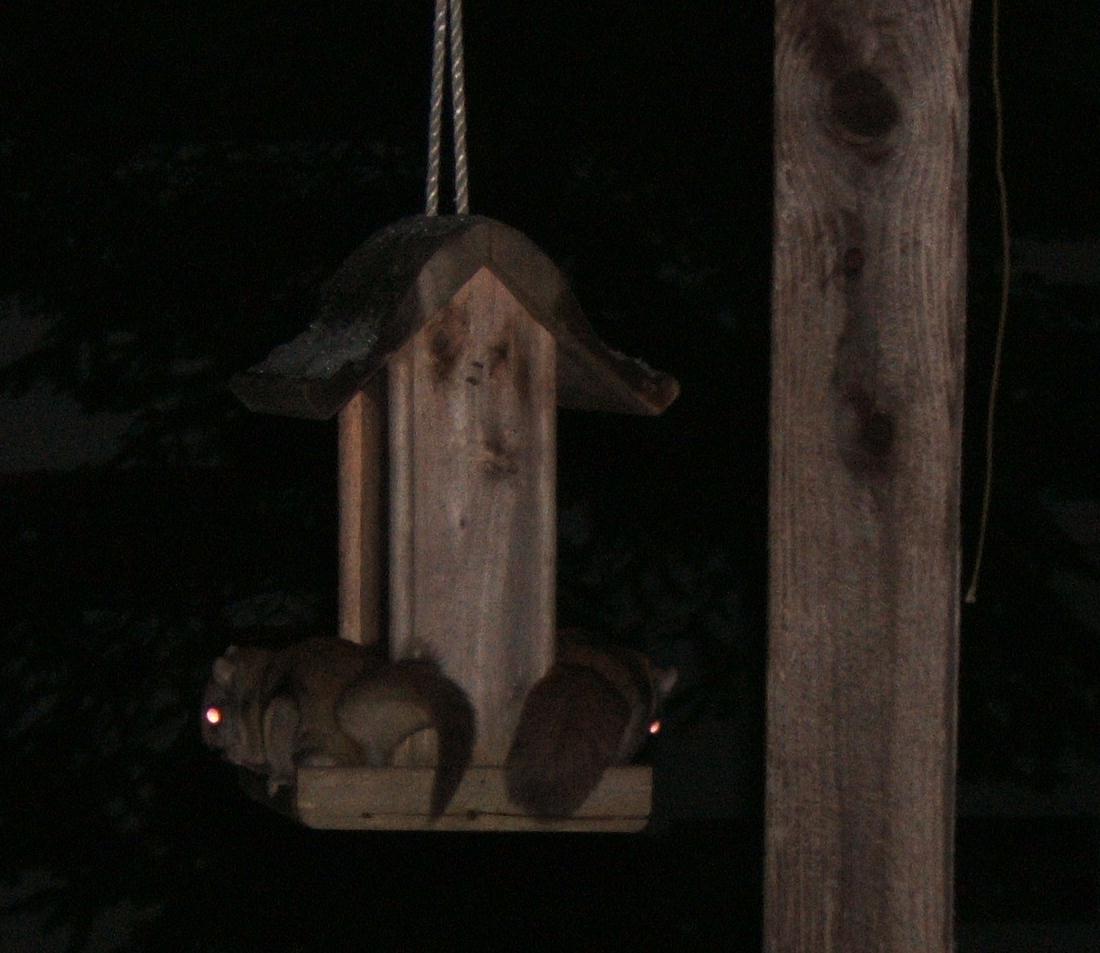
Just before I went to bed, I switched on the outer lights to see if the raccoons had returned and got a wild surprise. Two little spacemen were cleaning the rest of the sunflower seeds from the feeder! They looked like Red Squirrels, but were golden-brown in color, and had white undersides, a lot of extra folds of skin and big black ‘wombat’ eyes.
Flying Squirrels!!
We know the Northern Flying Squirrel (Glaucomys sabrinus) lives in our grey woods, but we haven’t seen them for a while. They not only look different, but move very differently from the Red Squirrels. They are very, very fast and sort of flow and fold themselves across the surfaces they are on, a little like those ‘parkour’ urban acrobats who move fluidly over obstacles.
The two Flying Squirrels argued and bickered with one another and paid no attention to me as I opened the door to snap their photo.
~
~
spacemen in the bird feeder
~
I missed the flash
the revolving light show
and high-pitched whine
just before the spacemen
(the Flying Squirrel Squadron)
set their coordinates on the feeder
~
bickered and folded over landscape
fired lasers from their eyes
took a moment for a black stare
at the earthling watching
and turned to complete the harvest
the sunflower seeds
craved by their planet
~
~
© Jane Tims 2011

one of the usual visitors to our feeder ... the Black-capped Chickadee (Parus atricapillus)
a safe space in the bridge
This past week I have been in Halifax for a conference. A part of my morning commute was the slow moving traffic on the ‘old bridge’ across Halifax Harbour, the Angus L. Macdonald Bridge. The second day, I was more familiar with the traffic and the correct lane to be in, so I had a chance to experience the architecture and some of the wild life of the bridge (by this I do not mean that the commuters are holding wild parties).
The Angus L. Macdonald is an amazing structure, built the year I was born and opened in 1955. It is a long-span suspension bridge, supported by cables between two vertical towers. The bridge is 1.3 km long, with a supported length of 762.1 meters.
The bridge is usable by pedestrians and cyclists. Because of its reputation as a suicide bridge, it is equipped with various barriers to potential suicides, including high inward-facing bars on the pedway and nets suspended in the open area between the traffic deck and the pedway.
In these areas, hordes of starlings (Stumus vulgaris) gather, creating a din and an occasional cloud of startled starlings. Starlings are known for their synchronized group flights – the birds move as one in a shifting horde of birds. To hear the birds, I had my car windows open, but I quickly rolled them up since the birds were flowing very near to my car!
Starlings are an invasive species, introduced by Eugene Schieffelin to Central Park in 1890 as part of a project of the American Acclimatization Society. Their goal was to introduce all the birds mentioned in Shakespeare’s writings into North America. All of the birds I saw in the bridge are descendants of the 60 to 100 birds released in 1890!
A group of starlings is known as a ‘murmuration’.
For those of you familiar with the excellent series of made-for-TV Jesse Stone movies (starring Tom Selleck), The Angus L. Macdonald Bridge is the bridge featured in the movies (although the setting for the movie is a small town in Massachusetts).
~
morning, Angus L. Macdonald Bridge
~
traffic huddles and a thousand Shakespearian
starlings squabble one another
yellow beaks and feathers packed
soft slate bodies rolled into the safety
of the suicide net and pedway bars
porous barriers: a cyclist whips by
and starlings sift through wire
a mumuration between orange
cables and green girders
impossible way, red and blue
pulse of bridge security
weaves the path materialized
within three tangled
lanes of traffic
~
© Jane Tims 2011

in the branches of the White Pine

- the White Pine is the larger tree to the left of the road

The most frequent denizens of the pine are a pair of Bohemian Waxwings (Bombycilla garrulus). They prefer berries for food and so are in their ideal habitat. Our property must look like a big dinner plate to them, with its orderly presentation of wild strawberries, blueberries, blackberries, hawthorn and winterberry.
Another bird who stops to rest in the pine is the American Goldfinch (Carduelis tristis), also known as the Thistle bird. These are seed-eating birds who fly across the fields in a distinctive pattern of loops. They are also one of the most common birds at our winter bird feeder.

~
~
building homes
~
we fly kites
to learn the field and sky
set copper whirligigs to spin
~
yellow flirt crosses blue
per-chick-or-ree
potato-chip potato-chip potato-chip
~
we build our cabin
with 2 by 4s, boards and trusses
woodscrews and spiral nails
~
firm framework
woven grass and birch
bark rim and spider silk
~
you fill walls with fiberglass
I quilt curtains for windows
~
goldfinch waits while his female tucks
her nest with thistledown
tufts of cattail, puffs of dandelion
~
© Jane Tims 2011

a nest in November
On Saturday, we drove to the lake to gather boughs of fir and pine for our Christmas decorations. While we were there, we poked around in the thicket. We found a few bird nests, still intact, easily seen now the trees and alders are free of leaves.
The first nest was cup-shaped, made of tightly woven grasses and weeds. Nests of songbirds are not easy to identify since they are similar in size and construction materials. If this little nest survives the winter, perhaps I can watch who uses it next spring.
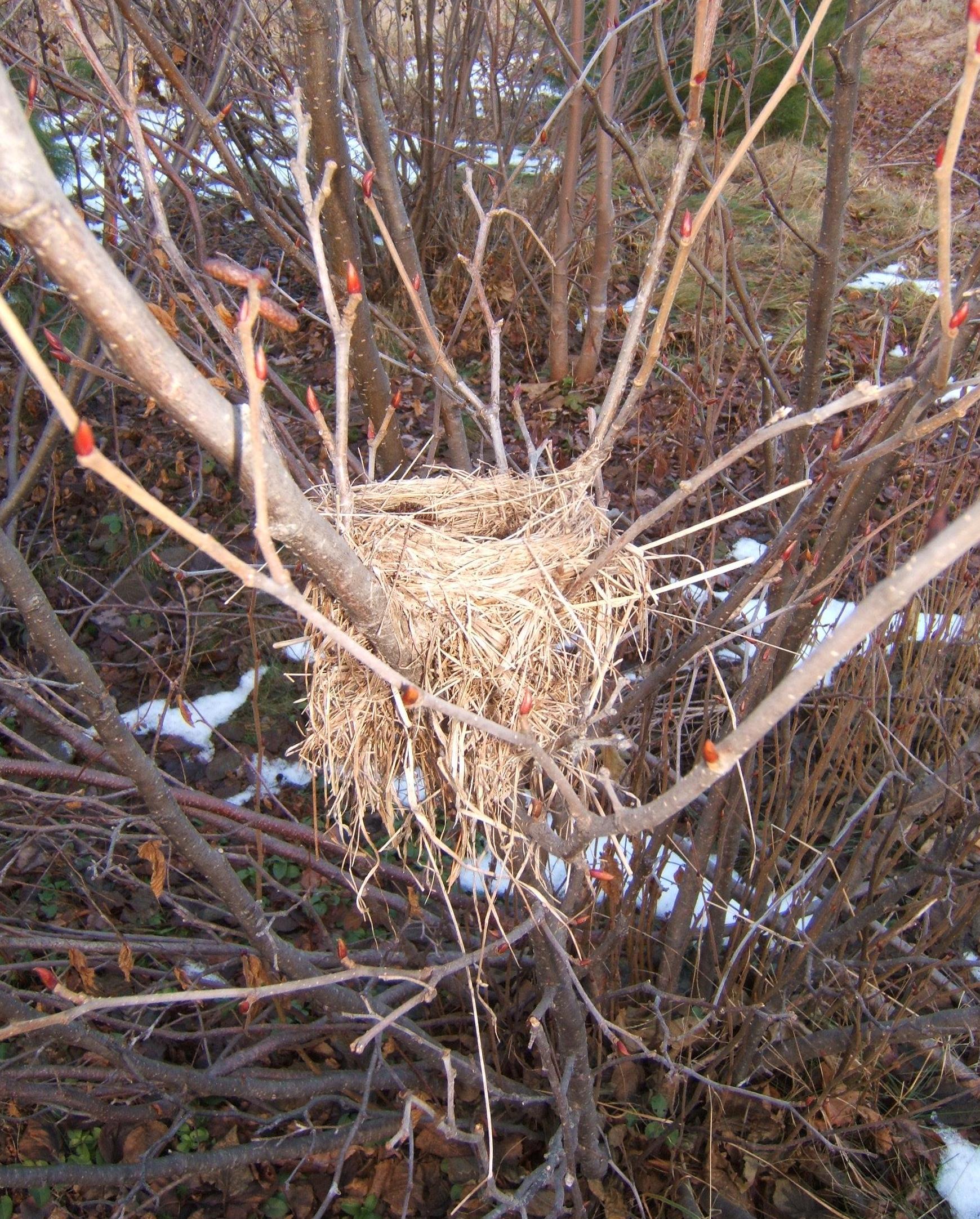
The second nest probably belonged to a Robin. It was high in a tamarack tree, welded firmly to the branches. Robins often return to the same area and sometimes use the nest of the previous summer, so I’ll be watching this nest too.

The last nest we saw was a beautiful little hanging basket covered with birch bark and woven with grasses. It appeared to be frail but it was very sturdy and stubbornly clung to the bough in spite of its exposure in the November wind. I think it is the most delightful sight I have ever seen.
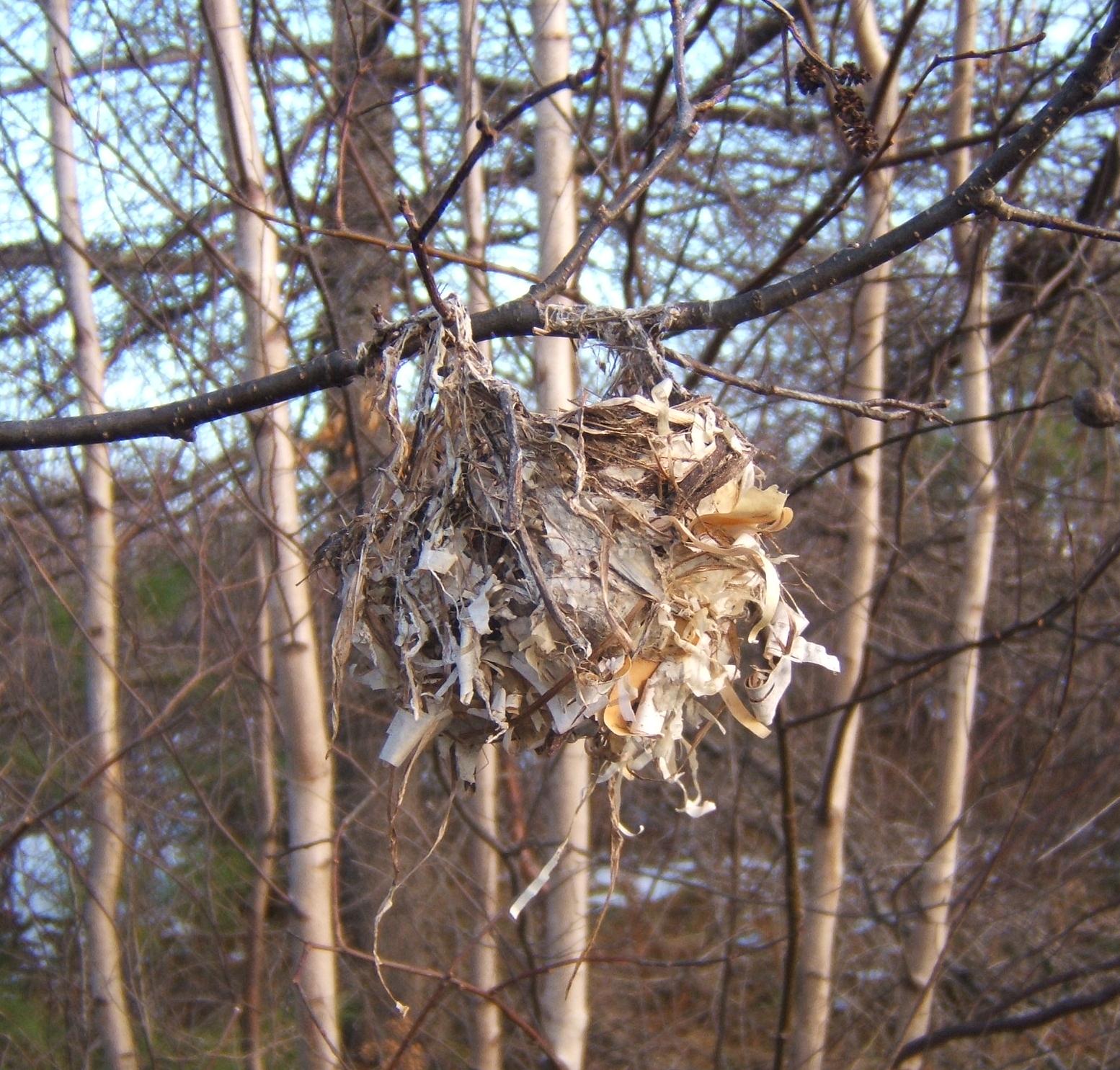
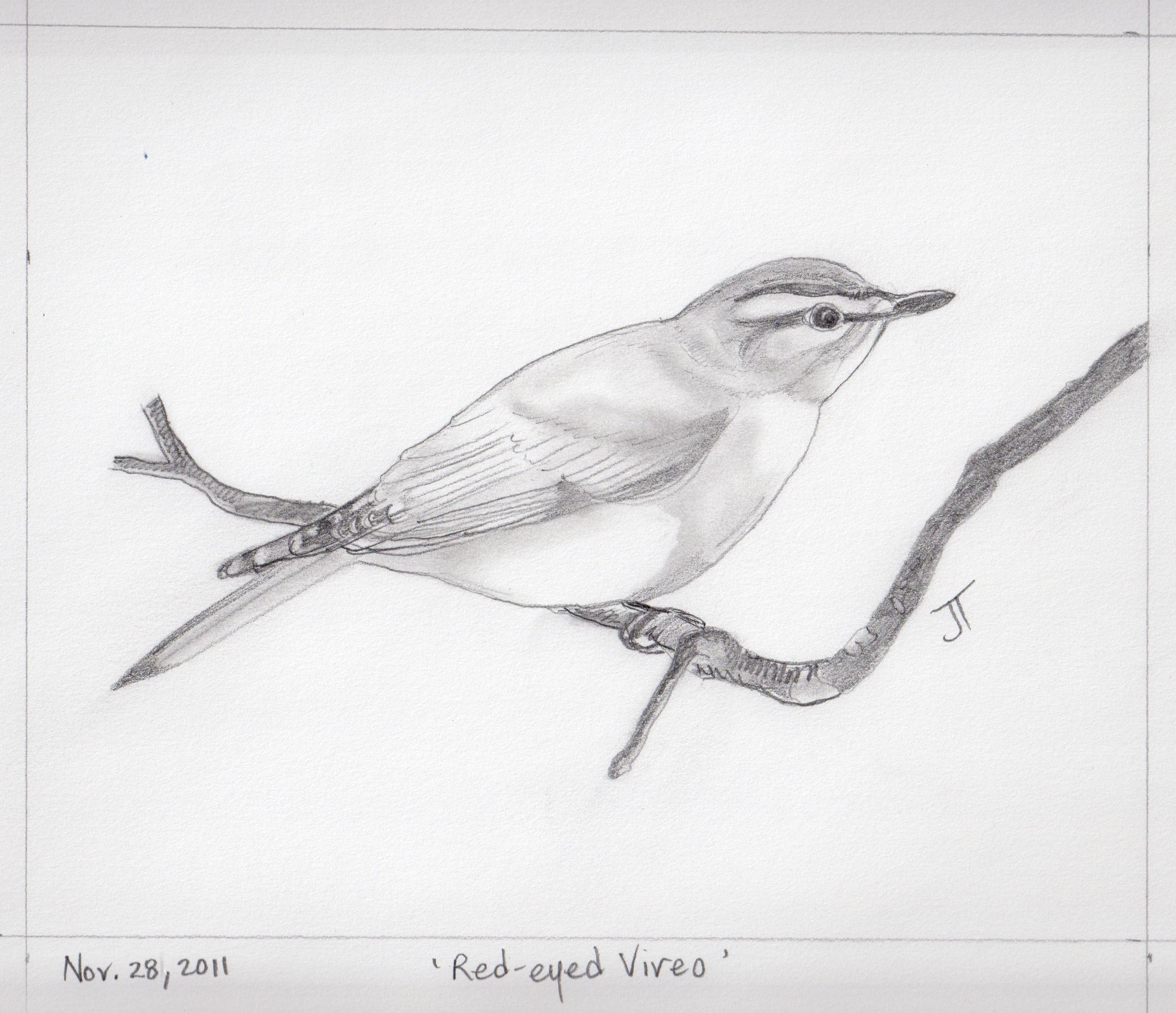
A biologist with the New Brunswick Department of Natural Resources was able to identify this nest from my photo. The nest probably belonged to a red-eyed vireo, one of our common songbirds. I have never seen this bird at our lake property, but we hear it all summer, endlessly asking its question and giving an answer.
~
~
Red-eyed Vireo
(Vireo olivaceous)
~
drab little
olivaceous outlaw
black masked
red eye
~
can’t see you
can’t find you
can hear you
where’re you?
over there
where’re you?
nowhere
~
in November
ghost-self flutters
in birch bark tatters
a basket in the alder
remnant of summer
~
gone now
what’d ya do?
did an answer finally
come to you?
~
© Jane Tims 2011





 nichepoetryandprose