Archive for the ‘strategies for winter’ Category
my favorite tea
Since I wrote a post on drinking ‘tea-berry tea’ [see Eastern Teaberry (Gautheria procumbens L.) November 16, 2011), I thought I would try a Poll, just for fun.
Drinking tea, for me, is an enjoyable experience, especially since there are so many varieties available. A cup of tea is definately part of my ‘niche’.
Teas are traditionally classified based on the processing technique (information from Wikipedia; you can also find out more about tea from the Tea Association of Canada www.tea.ca):
White tea: wilted and unoxidized
Yellow tea: unwilted and unoxidized, but allowed to yellow
Green tea: unwilted and unoxidized
Oolong: wilted, bruised and partially oxidized
Black tea: wilted, sometimes crushed and fully oxidized
Post-fermented tea: green tea allowed to ferment
To this I add the various Herbal teas.
No matter how many varieties of tea are available to me, I often select Red Rose. This is an orange pekoe tea produced originally in Saint John, New Brunswick. It’s slogan was: “Only in Canada, you say? …What a pity!” Today it is also available in the United States.
plans for a rocky road
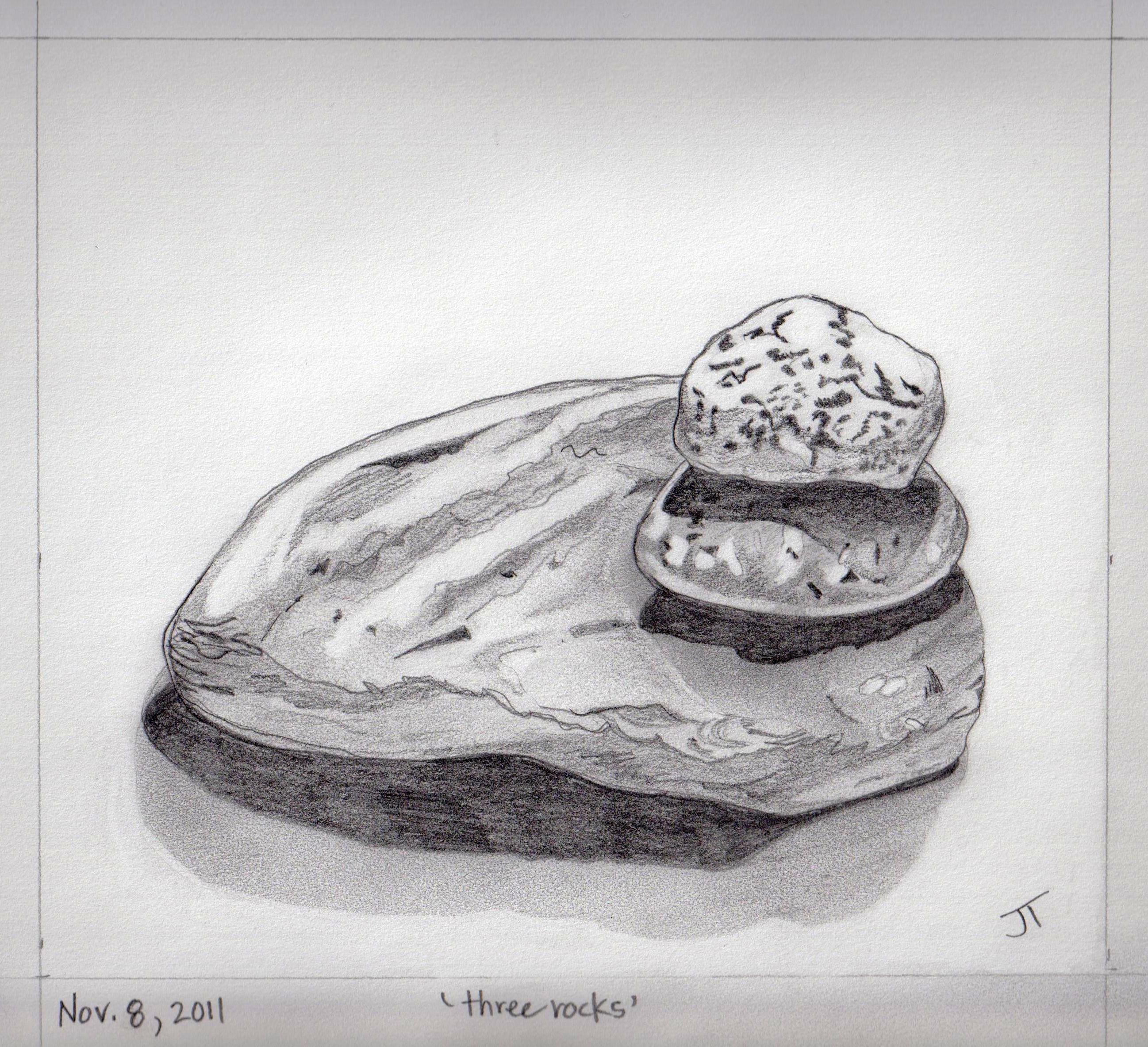
This fall, we have begun a new landscaping project, using rocks to embellish a length of road on our property.
On our travels this summer, we were impressed by the many ways home landscapers use stone as a signature element. Some of these ventures were as simple as a stone wall snaking through the woods. Some had elaborate stone benches, stone sculptures, or carefully-built piles of stones.
We have an offshoot to our driveway, intended some day to form half of a circular road. Over the years, we have added some stone embellishments to this road and its associated path, so it seems to me to be the perfect place to develop our own rock project.

To date, we have the following features in place, some in an advanced state of disrepair:
- two stone pillars, about three feet in diameter – each is a page-wire cage filled with rock
- an ‘old-fashioned’ rock wall constructed of granite stones, each about the size of a large honeydew melon
- a lopsided (fallen-down) sundial built of small angular rocks in the shape of a cone
- a chunk of black basalt, a five-sided, columnar volcanic feature, harvested from the shore where my ancestors came to Canada via shipwreck
- a stone ‘stream’ built years ago before we purchased more property and Fern Gully Brook entered our lives – this stream is a one foot wide course of small stones screened from a pile of pit-run gravel. It ‘runs’ from a small artificial pond and is now completely overflowing with dry leaves.

- existing rock and stone features on the road and path
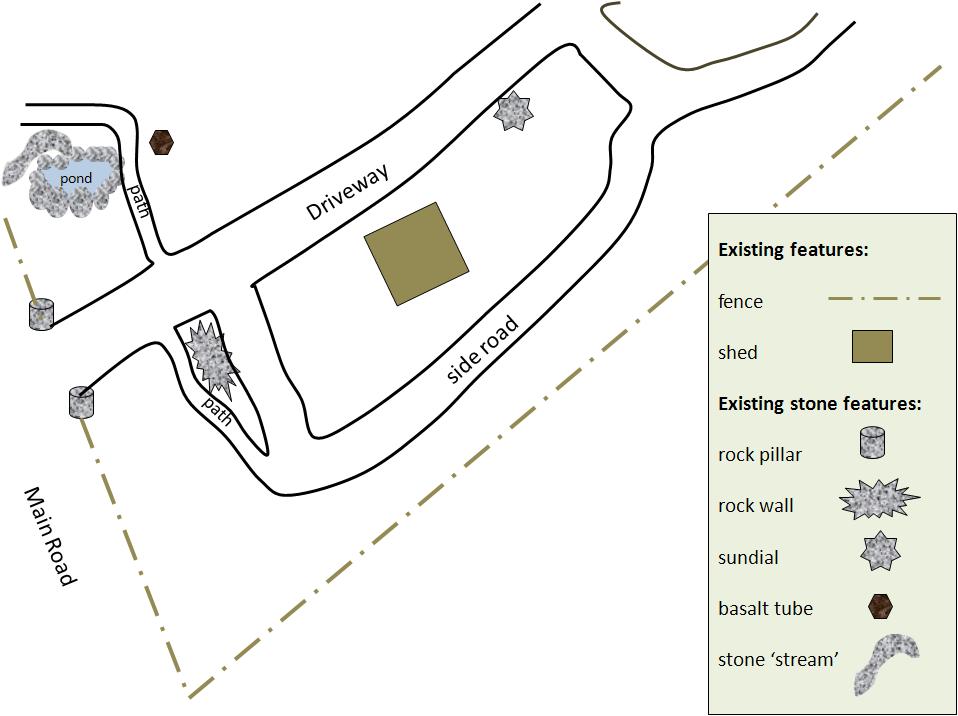
Over the next months, we want to add some features to the road:
- rebuild our formerly wonderful granite fire pit in a new location along the road
- create two new lengths of stone wall to match the existing wall
- build a stone statue or monument
- lay out a circle of stones to mark the one area where we can see the Milky Way from our property (star-gazing is difficult since we have so many trees)
- build a stone embankment-with-moss feature to emulate a lovely roadway we saw at my brother’s wedding last year.

- rock and stone features we plan to add

Over the next year, it is my intention to report back on the progress made on our Rock Project. If you never hear another word about this project, remember – I like to plan.
Copyright Jane Tims 2011
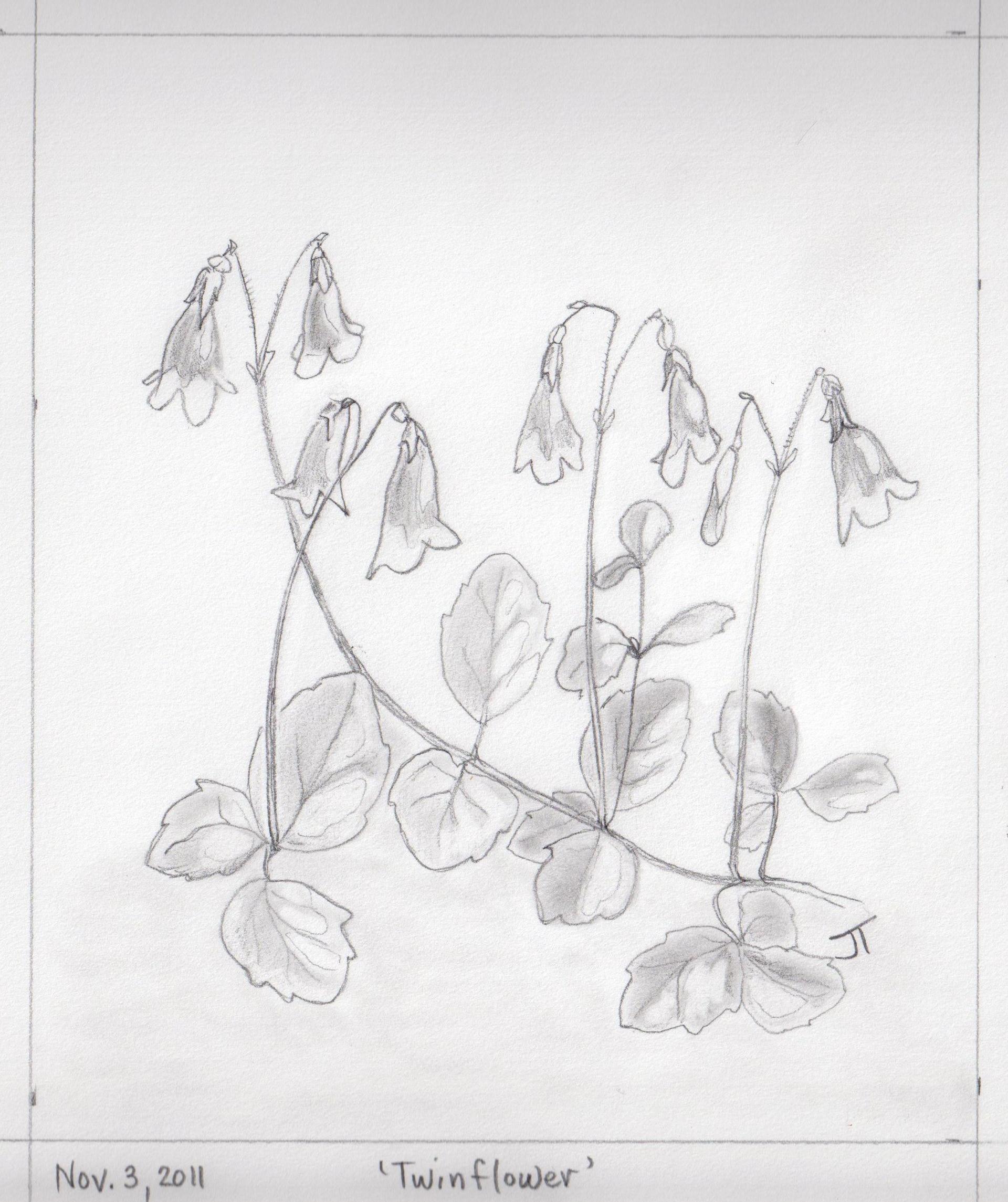
Twinflower (Linnaea borealis L.)
As we enter the winter months, I like to remember the woodland plants now waiting under the layers of fallen leaves to flower again next spring.
Twin-flower (Linnaea borealis L. var. americana (Forbes) Rehd.) is a low-growing, creeping evergreen, found blooming in late June in wooded swamps, coniferous bogs and clearings.
Each slender stalk bears a set of two delicate, nodding, fragrant flowers, white in color and tinged with pink. Other names for the plant are pink bells and, in French, linnée boréale. The specific name is from the Latin borealis, meaning northern.
The European variety was a special favorite of Linnaeus, the founder of the present system of naming flowers.
Twinflower
Linnaea borealis L.
~
conifer cathedral
slanting light
Linnaea carpets
stains the forest floor
to the edge
near the forest door
a woodland pool
~
on slender stem
mirrored
in the pool
and in the air
twinflower rings
pink boreal bells
at vespers
in whispers
a whisper
the rule
~
creeps under roots
and fallen leaves
Linnaea trails
over rude beams fallen
from fences built
when woods
were pasture
~
twin flowers
settle back to back
nodding heads
they cease to ring
and sleep
~
© Jane Tims 1992
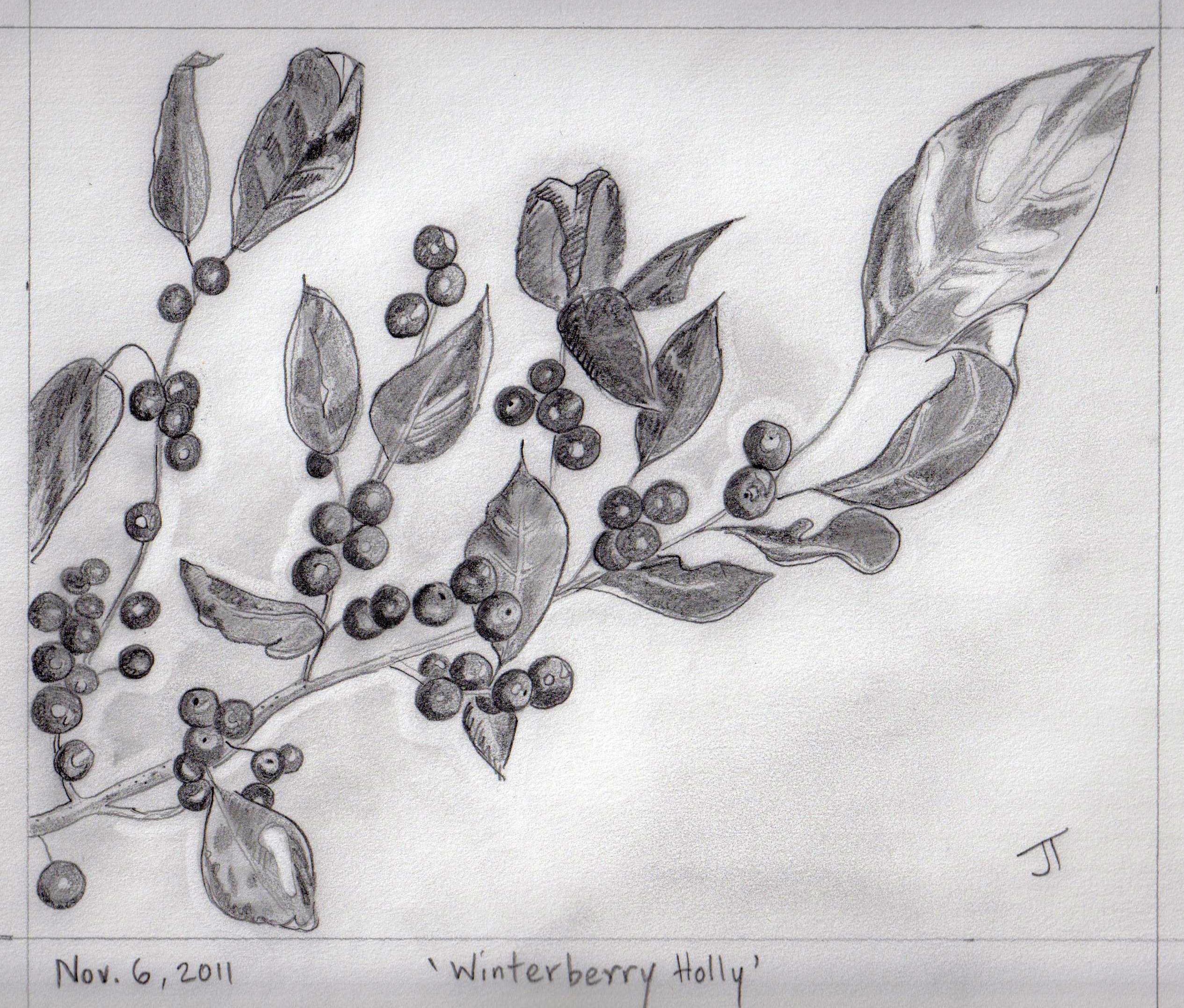
Winterberry Holly (Ilex verticillata (L.) Gray)
In contrast to October, November is a colorless month. The exception – November’s red berries.
They punctuate the roads and ditches – Highbush-cranberry, Staghorn Sumach, American Mountain-ash, Hawthhorn and Rose. Eventually the birds claim every one for food, but through most of early winter, the berries remain to cheer us.

Highbush Cranberry in November
Last November, my husband and I took a walk in the thicket of saplings above the lake. As we came around the edge of a clump of alder, we were surprised to see a sturdy bush of Winterberry Holly. It glowed with orange-red berries, set off by sprays of bronze-coloured leaves, not yet fallen. We are used to seeing Winterberry along the lake, but in the grey and white thicket, the little bush was a gift. We went there again this past Saturday, and there it was, glowing in the morning sun.

our bush of Winterberry Holly
Winterberry Holly (Ilex verticillata (L.) Gray) is also known as Canadian Holly, Swamp Holly, Inkberry, Black Alder and Feverbush. The shrub is usually found in wet areas, including wetlands, damp thickets, moist woods and along waterways. The leaves turn a brassy purple-brown before they fall. The fruit is a small, hard orange-red berry, remaining on the bush until January.

In my poem, the words ‘lexicon’ and ‘exile’ are included as imperfect anagrams for Ilex (ilex).
Canadian Holly
(Ilex verticillata (L.) Gray)
~
drab November
and lexicon
expires
umber leaves
grey verticals
dull stubble
~
winterberries
astound the wetland
red ink on page
and words explode
from exile
~
fever flush and holly
above December snow
icicles vermillion
~
© Jane Tims 2011
entering november
After the color explosion of October, I feel a little exhausted. Sensory overload. Trees and roadside plants have gone to sleep or seed for the winter. Most of the Canada Geese have left on their southward migration, and I am sure our Groundhogs have eaten themselves into a winter stupor. Not many of us left to settle in to our niche for the coming months.
My November ‘niche’ activities will include:
- daily filling of the bird feeder
- refurbishing our outside fire pit
- acquiring rock for our new project… a rock-embellished woods road (more about this later)
- sorting some of the books in my library
- return to making soups and stews for our meals

Mostly, I want to appreciate November. I am not very fond of the coming month, but I have resolved to find good in it.
November first frost
~
air brittle
a broken sliver of moon
caught among disrobed larches
silence ruptured
by craven’s cry
~
© Jane Tims 1995




 nichepoetryandprose