Archive for the ‘harvesting colour’ Category
harvesting colour – oak and iron
~
As autumn approaches, I intend to shift my ‘harvesting colour’ experiments to ‘fall themes’. I want to colour wool with ripe berries, autumn leaves and acorns. I decided to begin with oak leaves. They are still green here in New Brunswick, but I associate the oak tree, strong and ‘knowing’, with the maturity of fall. I picked leaves from the Northern Red Oak (Quercus rubra) by our garage, a tree begun naturally, probably from an acorn buried by our squirrel population.
~

~
The dye in the pot was pale brown … I was certain the wool would be another shade of brown. Hoping for variety, I added a liter of my iron acetate (horseshoe, nail and vinegar mix) and left the wool to simmer. I forgot it on the stove, running to save it after a couple of hours. And what I pulled from the dye water was amazing, a dark brown, almost black, length of wool roving.
~
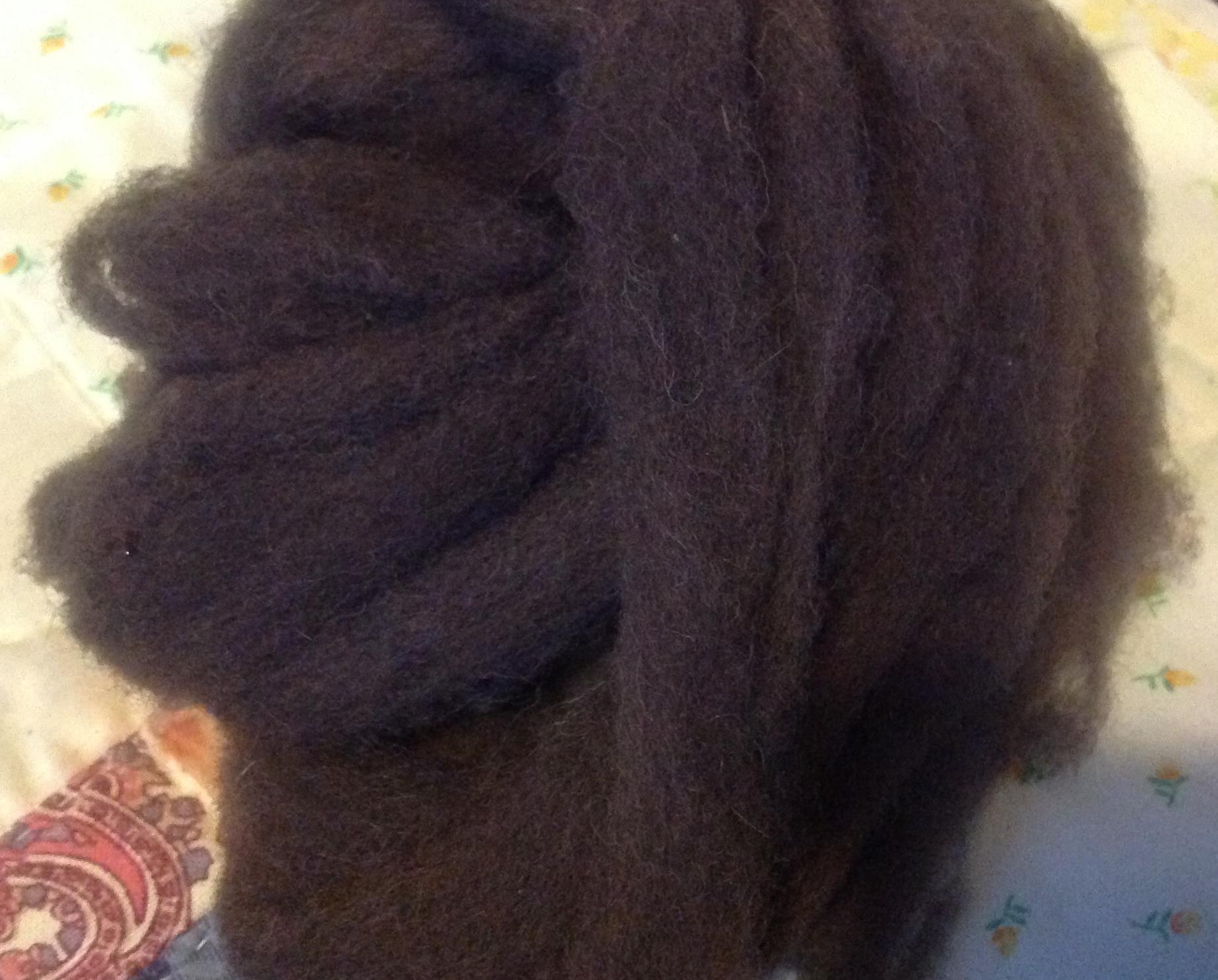
dark brown, almost black, wool, alum treated and simmered with oak leaf dye and iron acetate
~
Spun, it makes a lovely counterpoint to my yellow and light brown wools.
~

spun wool, dyed with Goldenrod (yellow), Meadowsweet (peach) and Oak leaves/iron modifier (dark brown)
~
I am almost ready for my weaving project. I have decided to arrange the bands of colour in alphabetical order so, in future, I will be able to better recall the plants used to make the dye. When I look at the woven runner, I will remember harvesting the oak leaves from our tree and the excitement of seeing the dark wool lift from the pot.
~
Copyright 2014 Jane Tims
harvesting colour – saddening the colour
Most of my experiments with natural dyes have been straightforward – collect the dyestuff, extract the dye with heat and water, and simmer the fibres in the dye. I have used alum as a mordent to make the dye more permanent, but until now, I have not used modifiers to change the colour of the dye. Modifiers include various substances added to modify the chemistry of the dye solution and change the colours obtained. Iron is one of the most commonly used modifiers.
~
To modify colour with iron, the dyer can use ferrous sulfate as a powder. Or rusty iron can be used to make an iron acetate solution. To make my iron modifier, I put an old horseshoe, a square nail and a rail spike in a pot, added some vinegar, and soaked the metal in rainwater for a month.
~
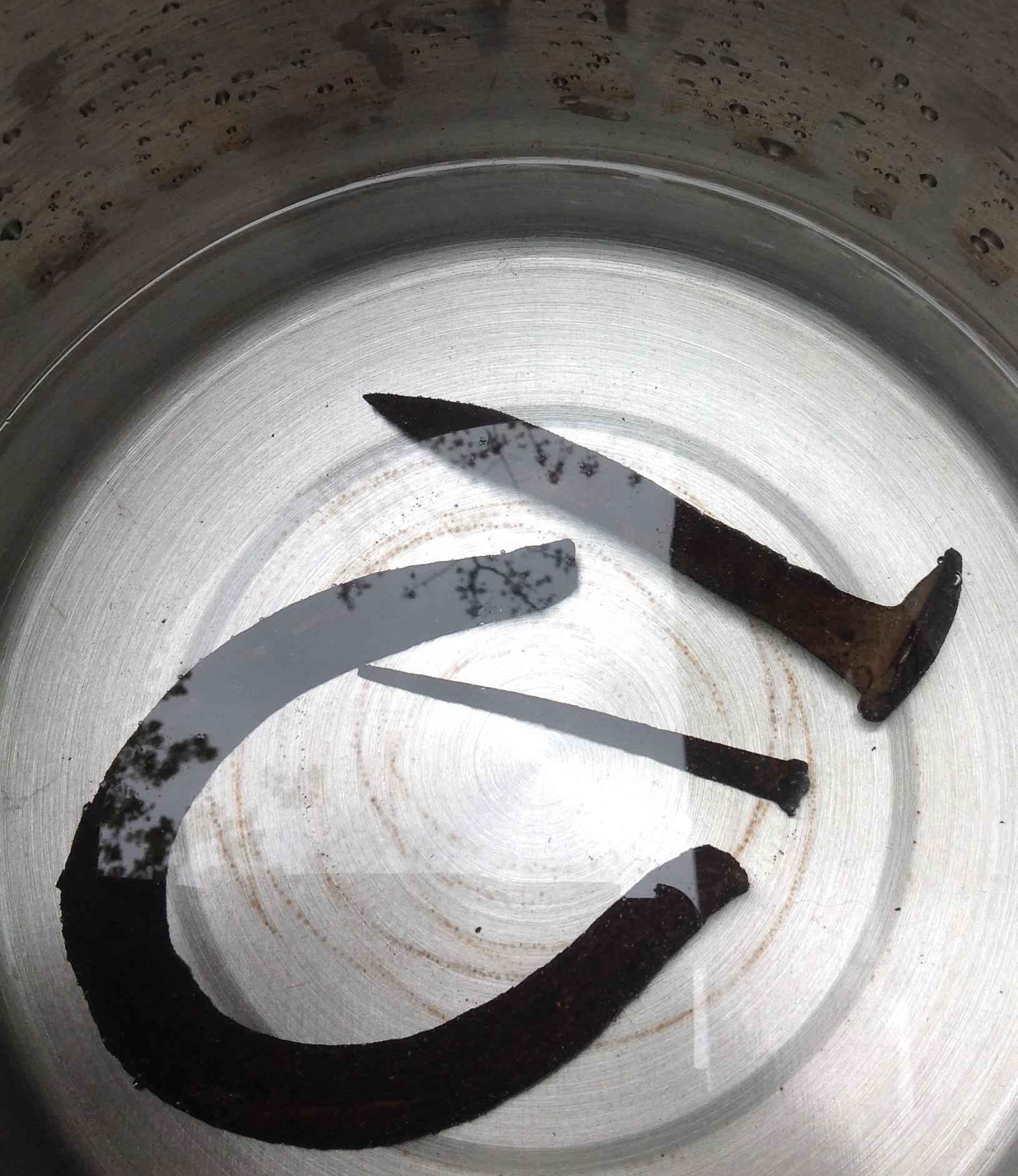
bits of iron to make an iron modifier
~
Simmering the wool roving with water and dyestuff of Meadowsweet gave the wool an apricot colour. Then I added a couple of liters of my iron mixture to the dye pot and a new length of wool roving. The second lot of wool turned out darker than the first. Dyers refer to this as ‘saddening’ the colour. The wool was also more coarse and after I had spun the wool, my hands were stained with a reddish rust.
~
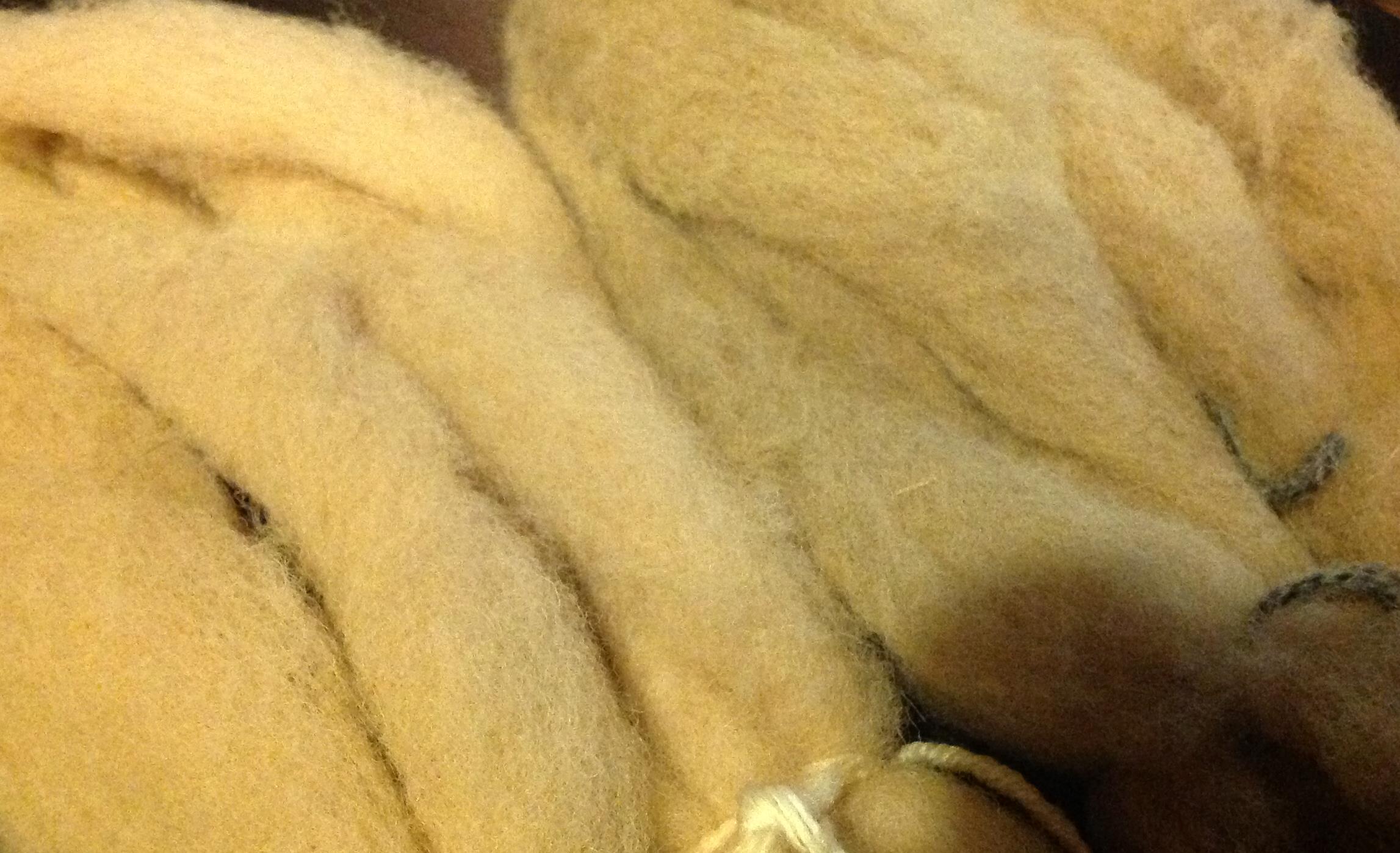
saddening the colour: on the left, alum-treated wool dyed with Meadowsweet; on the right, the same with added iron
~
Next post, I will show you the surprising results when I add my iron modifier to dyestuff of oak leaves!
~
Copyright 2014 Jane Tims
harvesting colour – Meadowsweet
Last week, we finished installing the new gate at our cabin. To make our leveling easier, we had to cut some of the Meadowsweet (Filipendula ulmaria) growing in profusion along the road. And into the dye pot it went!
~

Meadowsweet
~
My botany skills are showing their age. When I learned my plants, we called Meadowsweet Spirea ulmaria. But times have changed and so has the name for the genus (it will take me a while to get used to Filipendula!). Other common names for Meadowsweet are Queen of the Meadow, Lady of the Meadow, Mead Wort, and Brideswort.
~
Meadowsweet is a fragrant plant. The scent of its flowers is reminiscent of roses – it belongs to the same family as the rose. But the stem has a faint smell of wintergreen or almonds.
~
Meadowsweet has a long history of use. The chemical in Aspirin was first discovered in its leaves and named from the old generic name Spirea. In past centuries, Meadowsweet was used as a ‘strewing herb’ to cover floors because its fragrance underfoot disguised less pleasant smells. The Druids considered it sacred, along with Watermint and Vervain. Across the internet, Meadowsweet is famed for being included as one of many ingredients in ‘save’, a medieval drink mentioned in Chaucer’s The Knight’s Tale. I have taken the time to read The Knight’s Tale and found the reference is not to Meadowsweet but Sage:
line 2713: ‘Fermacies of herbes, and eek save’ (middle English)
‘Medicines made of herbs, and also of sage’ (modern English translation) (see http://sites.fas.harvard.edu/~chaucer/teachslf/kt-par0.htm )
I will continue to look for an ingredient list for this mysterious drink.
~
The obsolete name for Meadowsweet (Mead Wort) is mentioned in Book II, Canto viii of Spenser’s Faerie Queen, referring to the making of Merlin’s sword:
‘The metall first he mixt with Medawart, That no enchauntment from his dint might saue;’ (see http://darkwing.uoregon.edu/~rbear/queene2.html#Cant.%20VIII. )
~
Boiling the chopped leaves and flowers in water for one hour gave me an amber dye.
~

amber dye from Meadowsweet
~
Wool roving, treated with alum and simmered in the dye for an hour turned pale yellow-brown, almost apricot in some light.
~

wool roving dyed with Meadowsweet
~
~
Copyright 2014 Jane Tims
harvesting yellow … yes, yellow!
After so many lovely browns in my palette of natural dyes, I have despaired of seeing anything but brown when I lift my wool roving from the dye pot. A friend suggested I try Goldenrod (Solidago sp.). Goldenrod, in a variety of species, is plentiful along the roads this time of year. So, this week, on a drive to see our newly opened section of Route 8, we stopped long enough to collect a bag of Goldenrod.
~

Goldenrod along the new highway
~
Collecting Goldenrod is new to me. I am always worried it may cause hay-fever, but I learned during my fact-finding – Goldenrod is rarely responsible for triggering allergies. Its pollen is large and heavy and transported by insects and not the wind. Ragweed is the real culprit, according to my reading.
~

a glory of Solidago
~
I also took a crash course in Goldenrod identification – Goldenrods have always stayed on my ‘refuse to identify’ list. They are actually quite easy to distinguish in our area. There are only 14 common species in New Brunswick and identification points include the size and number of basal leaves, leaf venation, the degree of stem hairiness and the general shape of the inflorescence. It was easy to discover the name of the species I collected – Downy Goldenrod (Solidago puberula Nutt.)
~

a bag of Goldenrod took no time at all to collect
~
The collecting experience? Bright and very aromatic. Smelling Goldenrod is like stuffing your nose in a dandelion.
~
I had lots of material to work with, so preparing the pot of dyestuff was enjoyable too. And the smell as it boiled – very sweet. Most of the plants I’ve used for dyestuff have an unpleasant smell like boiling cabbage.
~

Goldenrod added to the dye pot
~
The result was a yellow dye.
~
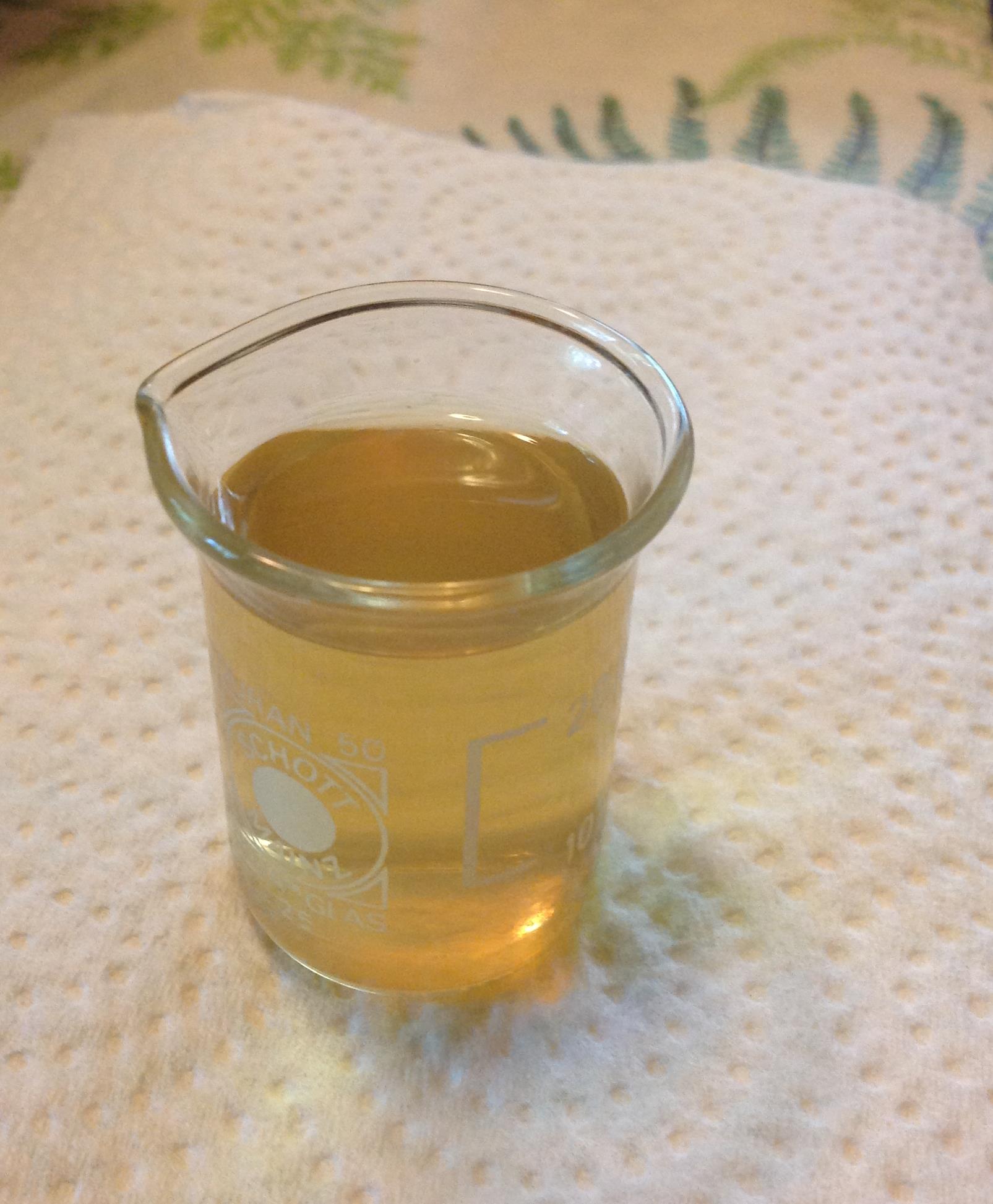
the yellow dye of Solidago
~
But since the colour of the dye seems unrelated to the resulting colour of the wool, my expectations were low. Imagine my joy when the wool emerged from the dye-bath a beautiful lemony yellow!
~

wool roving, treated with alum and simmered for an hour in Goldenrod dye
~
Yellow! Sigh.
~
Copyright 2014 Jane Tims
harvesting colour – berries of Daphne
With the help of a friend, I have been able to add Daphne berries to my growing list of plant dye experiments. She invited me to harvest some of the berries from her Daphne bushes, before the birds ate them all. We spent an hour picking berries and catching up with one another. I went home with enough berries for my dye pot and some of her excellent photos of the Daphne berries.
~
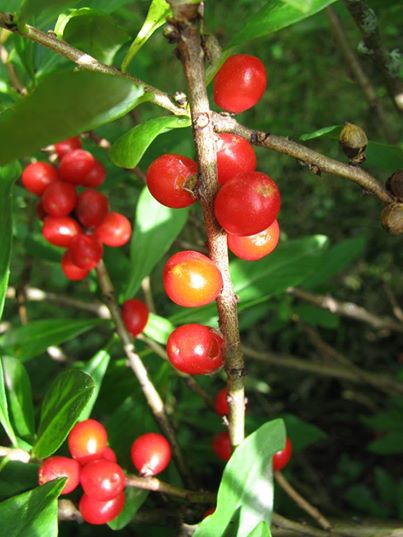
red berries on the bush (photo by L. Cogswell)
~
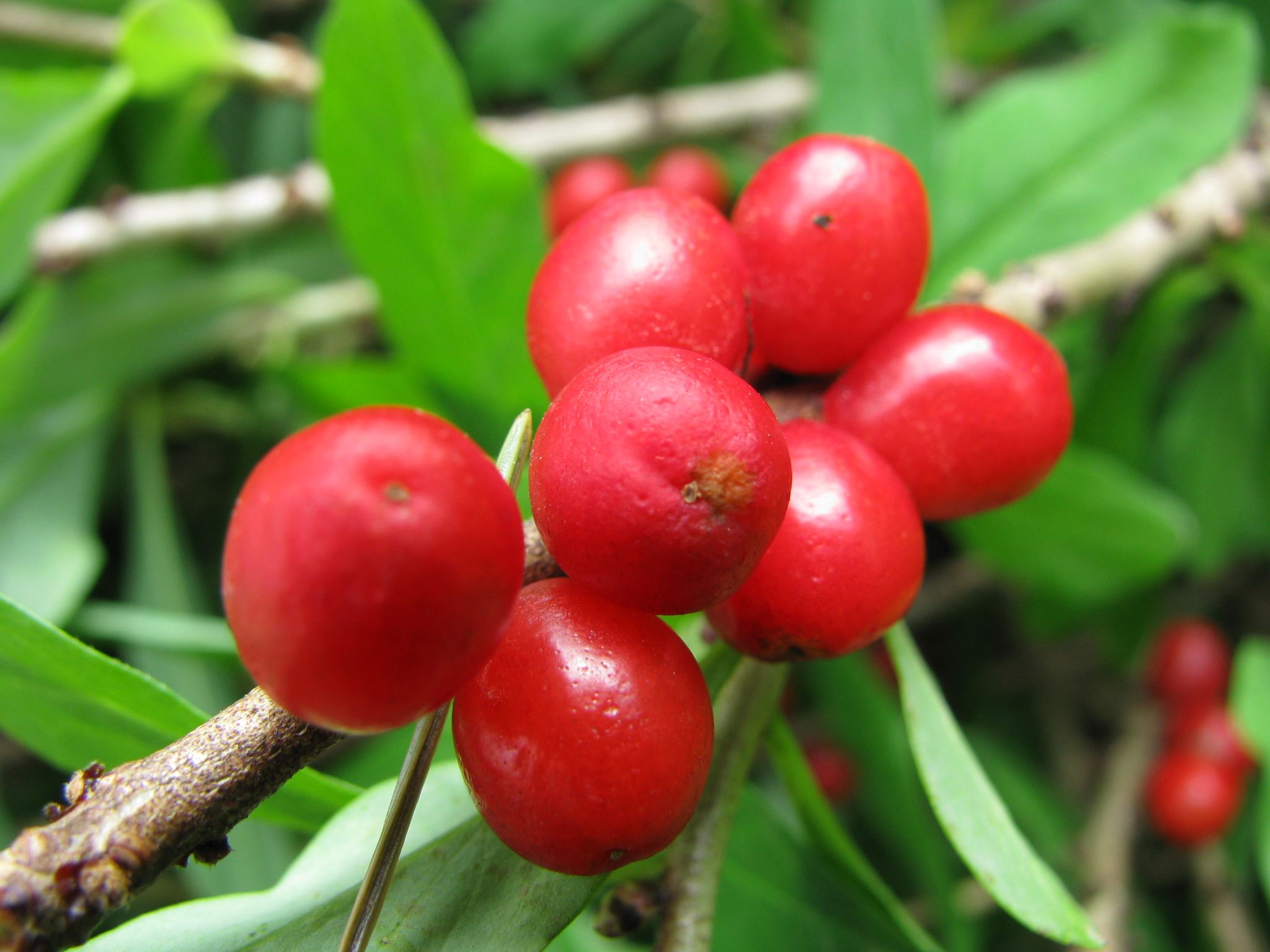
close-up of Daphne berries (photo by L. Cogswell)
~
Daphne’s beautiful crimson berries are poisonous, although the birds love to eat them. I was anxious to see what colour they would bring to my growing collection of home-dyed wool. I know from reading that the leaves and twigs of Daphne produce a yellow dye.
~
In the dye-vat, the berries quickly lost their colour to the boiling water, making a pale rose-coloured dye.
~

~
And the colour of the wool roving after an hour’s simmer in the pot? A lovely yellowish brown …
~

~
~
pretty side of poison
~
exotic, elliptic
berries among laurel
leaves droop vermillion
toxic pills, birds immune
~
spirit of bubbling wells
and water-springs, Daphne
drupes in rainwater seethe
and berries leach rosy
~
waters blush at this strange
use of poison, tint the
roving, wool lifts yellow
brown dye from the kettle
~
~

scarlet Daphne berries
~
Copyright 2014 Jane Tims
harvesting colour – the vegetable stand
Gardens are bursting with fresh produce and we have gone to the farmer’s vegetable stand every couple of days to get our fill of locally grown food. We usually look for new potatoes, yellow wax beans, beets, carrots, green onions and zucchini.
~

vegetables at the farmer’s stand
~
This year, as a result of my ‘harvesting colour’ project, I am more anxious than ever to collect those carrot tops and the abundant leaves of beet and radish. Cooking these leaves in my dyeing ‘cauldron’ fills the air with the savory smell of vegetable soup, and makes me wonder what colour will emerge from the dye pot.
~
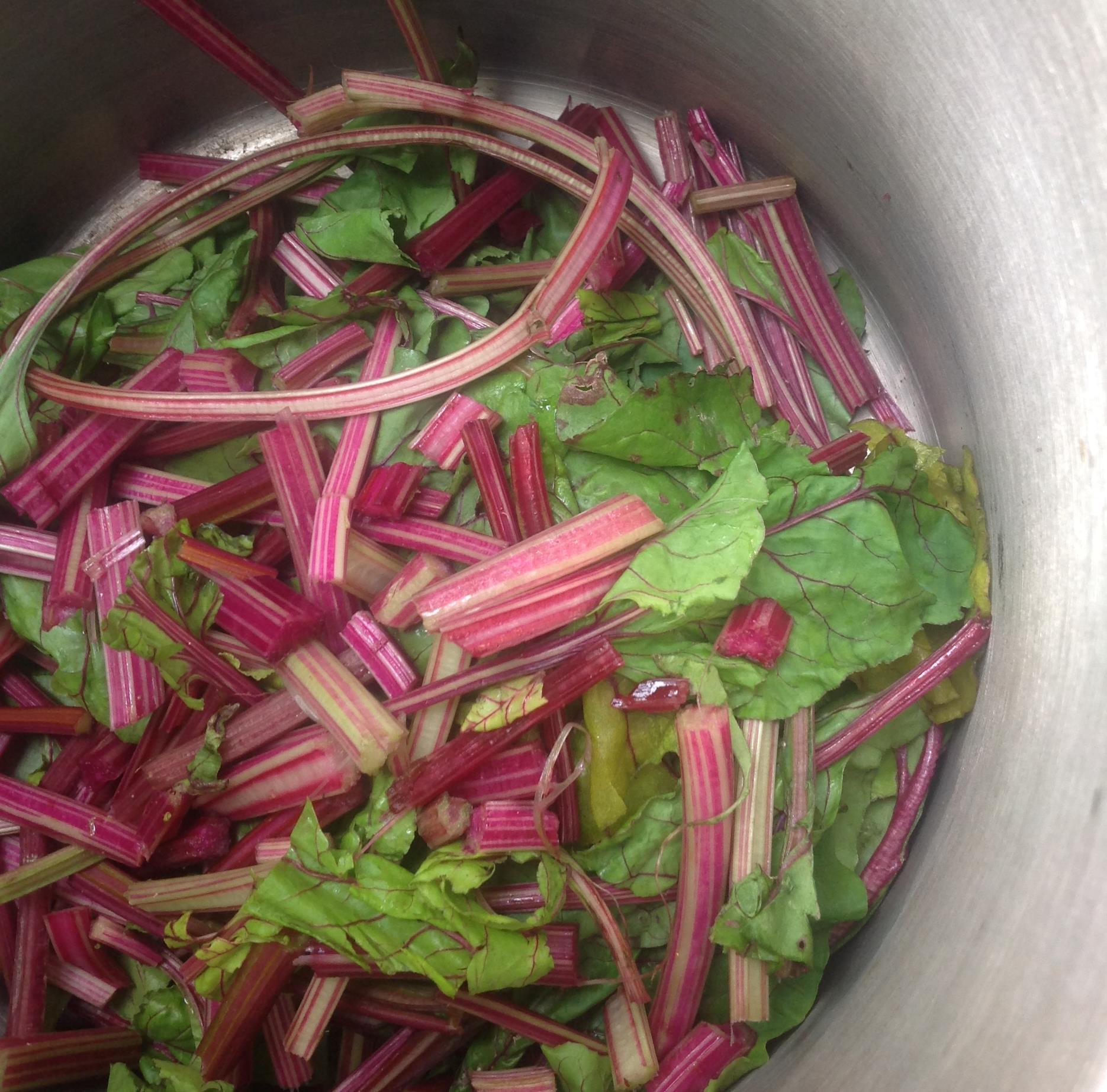
beet leaves and stems ready for the boil
~
Orange carrots, red beets and scarlet radishes … I am sad to say my expectations were low. I was certain every batch of leaves would yield yet another shade of brown. For radishes and beets, I was correct. Beautiful browns.
~
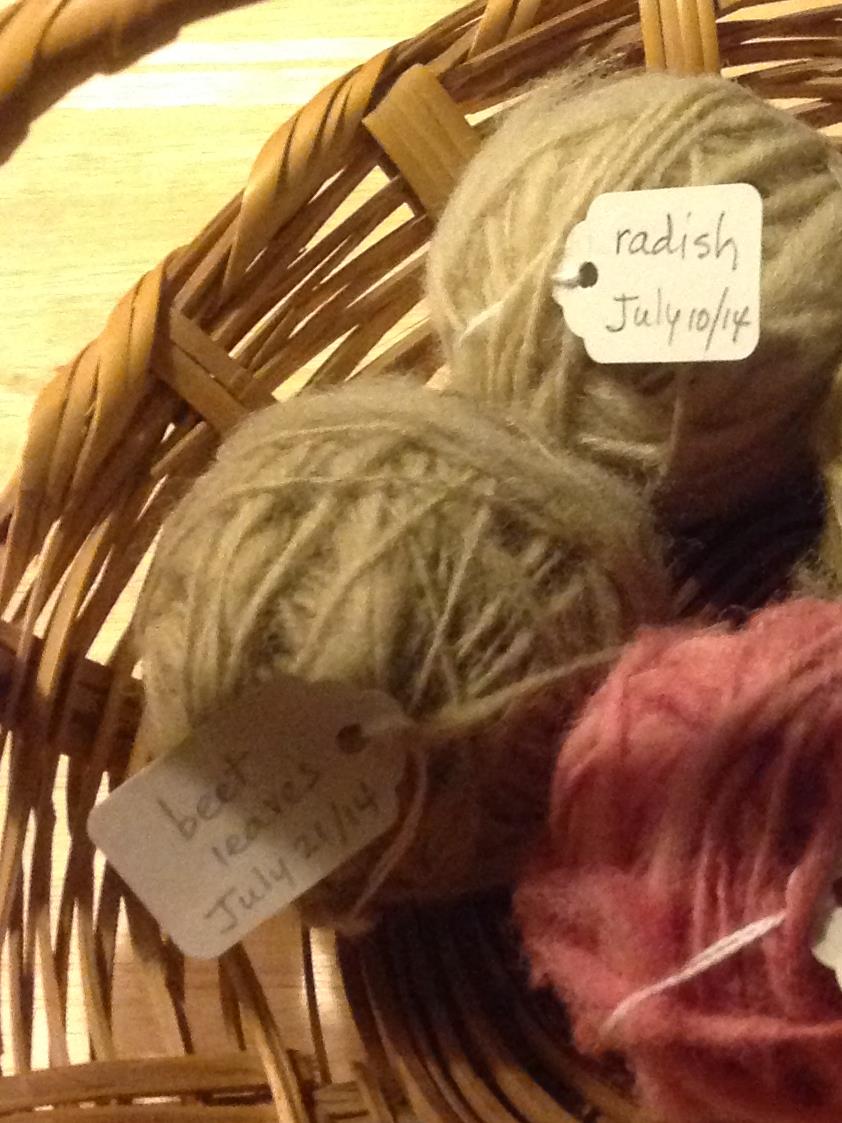
my hand-spun balls of wool from radish and beet leaves … the pink is from my earlier tests with pickled beets
~
Imagine my delight when the carrot leaves yielded a bright celery green!
~
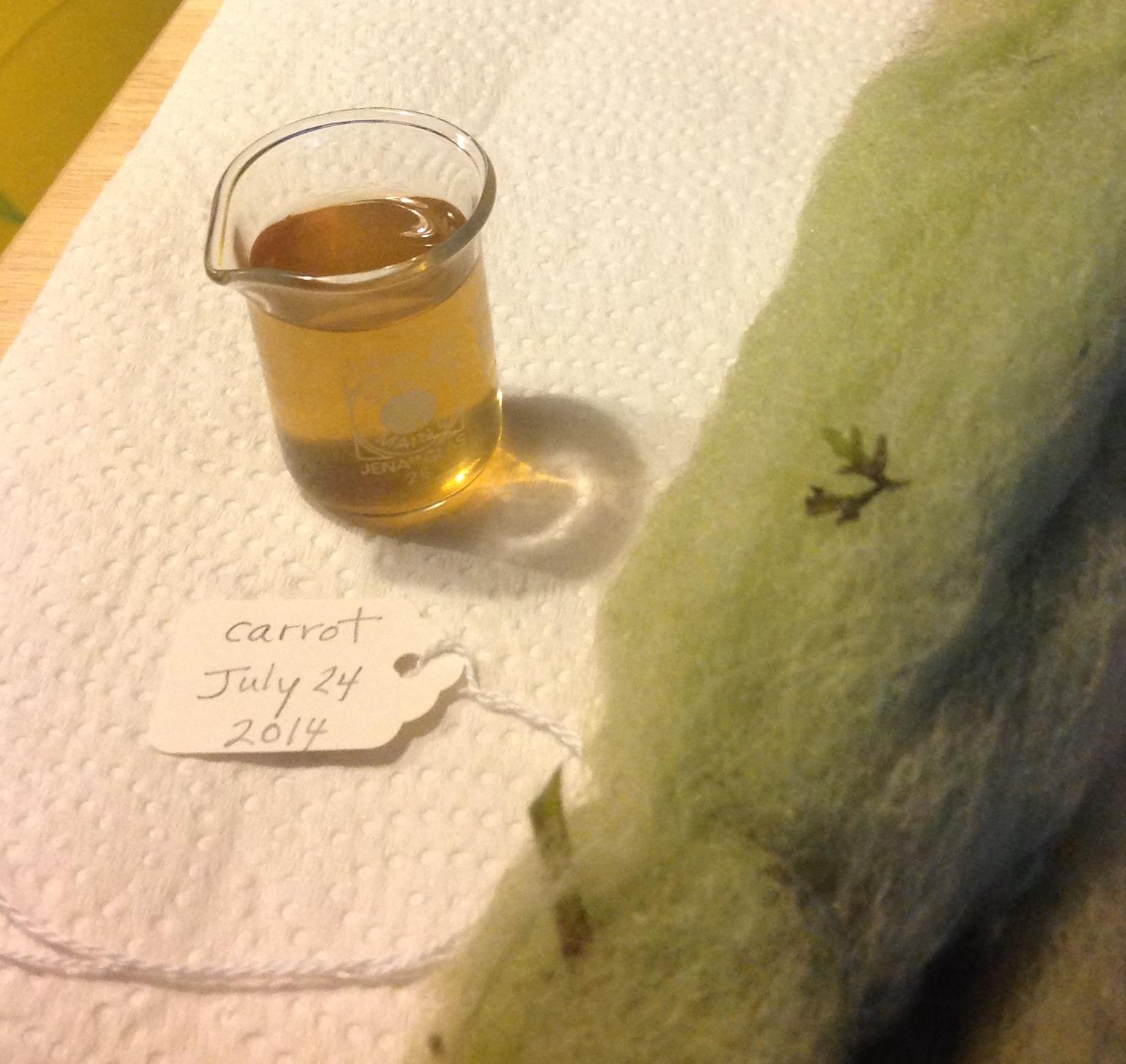
dye and wool roving from a boil of carrot tops
~
I tried to repeat the colour on a second length of wool roving, but the second simmering gave me a gold shade of brown. The dyestuff had offered up all its green colour in the first boil!
~

colours of wool obtained from the first and second boil in a dyestuff of carrot tops
~
vegetable bin
~
most look for
vitamins and
anti-oxidants
seek the colourful plate
look at the farmer’s display and see
carrot orange
radish red
spinach green
~
a dyer looks
for juicy leaves
and the possibility of yet
another shade
of brown
~
~
Copyright 2014 Jane Tims
learning to spin
All spring and summer, I have been dyeing wool roving with dyestuff collected from the roadside and garden. I have always intended to use this wool in some of my weaving projects, but lately, I have decided to first spin the wool roving into yarn. Everyone recommends learning first to spin with a drop spindle, later graduating to a spinning wheel.
~
First, I went online to learn the basics and decide which drop spindle I should use. Then I ordered my maple bottom whorl drop spindle on eBay for $7.95 ( $15.60, including shipping).
~

~
To spin, I first attach an end of the roving to the hook on the end of the spindle. The method is to tease out a sparse bundle of fibres and spin the spindle, twisting the section of wool into a thread. I spin the spindle counterclockwise, pinching the wool as I tease it out, holding the spindle still on my lap when I have to use both hands. Eventually, I will get better and be able to hold the spindle in the air with one hand and spin the spindle with the other. I do this a bit now, but I am plagued by breaking wool. For an enjoyable beginner’s lesson in spinning, see Jennifer Beamer’s video at http://www.youtube.com/watch?v=FtBLIg4JhNI .
~
Spinning with a drop spindle is addictive! I now spin the roving as soon as it is dry after dyeing. My yarn is still very knobbly – a little like the yarn you use to knit those bulky sweaters! My balls of yarn are getting better all the time, although I have trouble getting too much spin into the yarn, so it twists up on itself quite easily!
~

~
So far I have eleven balls of wool: Tansy, Old-Man’s-Beard, Bugleweed, Alder bark, Lily of the Valley (2 balls), Beet roots, Beet leaves, Carrot leaves, Radish leaves, and Comfrey.
~

~
This is so much fun!
~

~
Copyright 2014 Jane Tims
colour transfers
As I was preparing my eco-bundles for steaming ( https://nichepoetryandprose.wordpress.com/2014/06/20/an-attempt-at-ecoprinting/ ), I was thinking the words ‘heat’ and ‘steam’ – after 30 years of ironing my husband’s work shirts every morning, these words mean ‘steam iron’ to me. So I wondered if it would be possible to transfer the colour of a flower to cloth using my iron.
~
So far, I have tried two species: Bugleweed (Ajuga reptans) from under our apple trees, and Birdsfoot Trefoil (Lotus corniculatus) from the roadside …
~
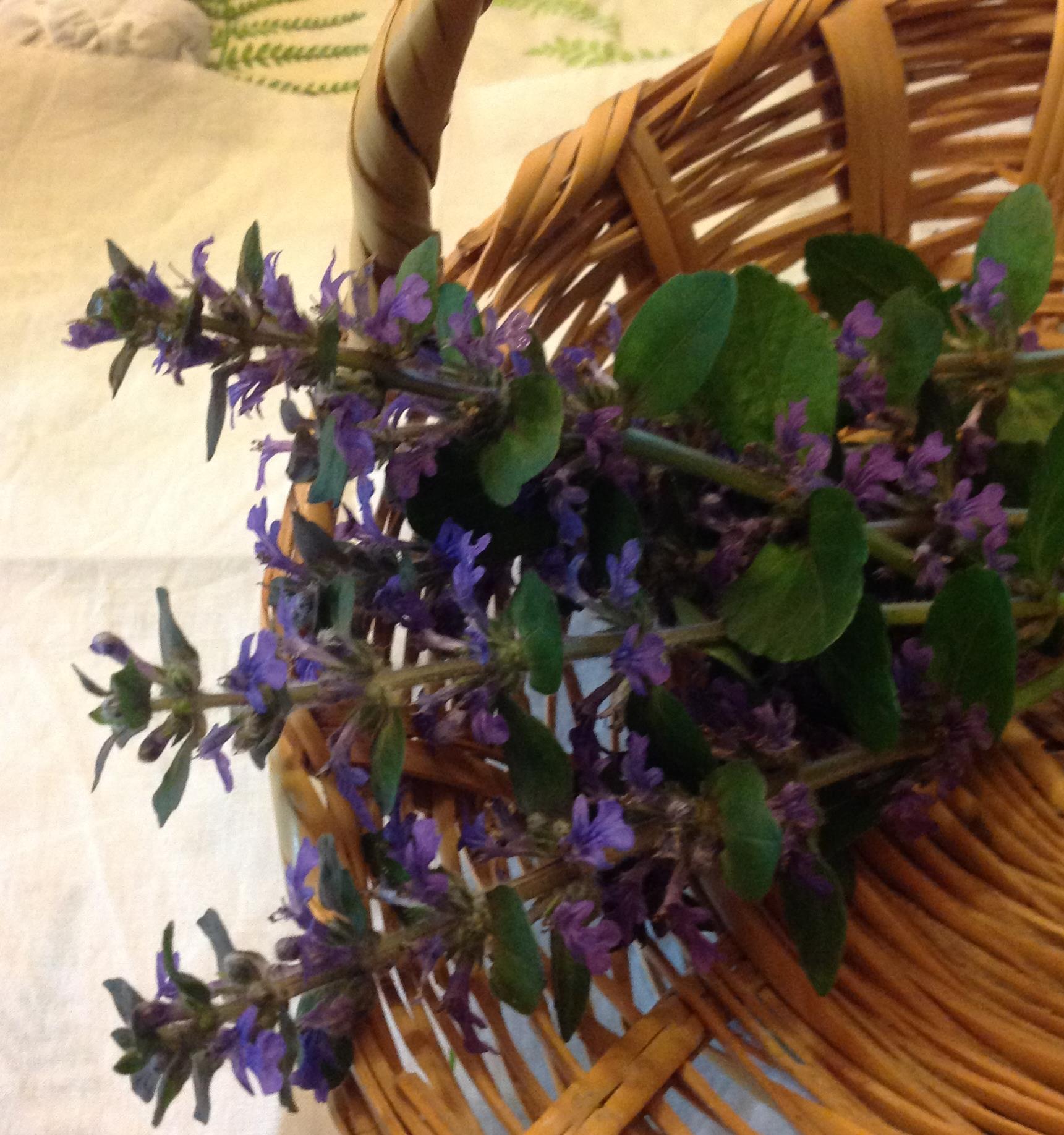
basket of Bugleweed
~
I placed the flowers between two layers of cotton, sprayed the material with water and pressed down with the steam iron set on medium. I pressed fairly hard and ironed the cloth/flower sandwich until it was dry. Then I wetted it again and continued until I had transferred the colour …
~

using the steam iron to transfer colour from Birdsfoot trefoil to cotton
~
It took five successive sets of wetting and pressing to obtain the colour. The blues of Bugleweed turned out best …
~
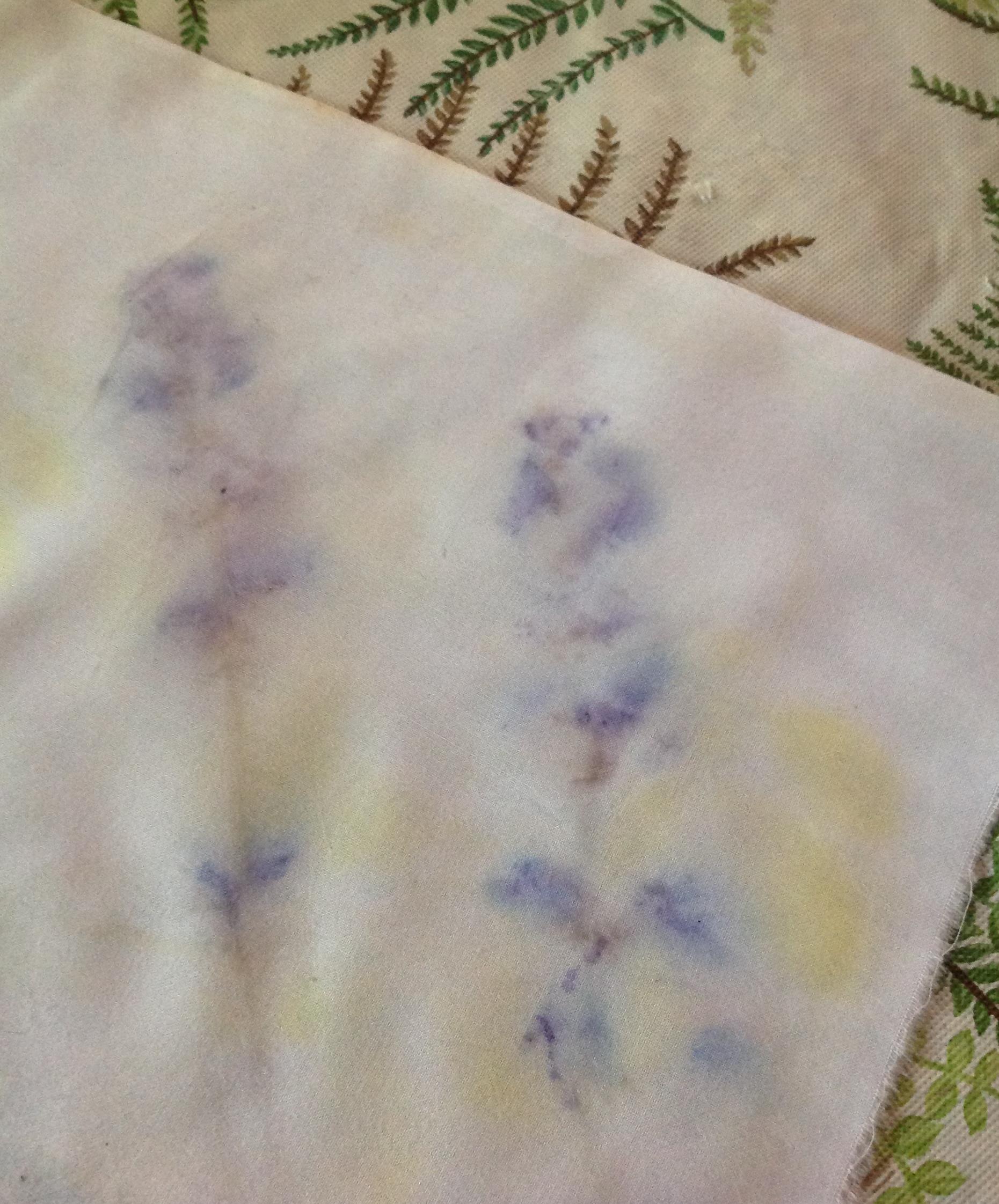
colour transfers from Bugleweed (the pale green in the background is made with leaves from my rosebush)
~
But the yellow colour from petals and stems of the Birdsfoot trefoil also came out well …
~
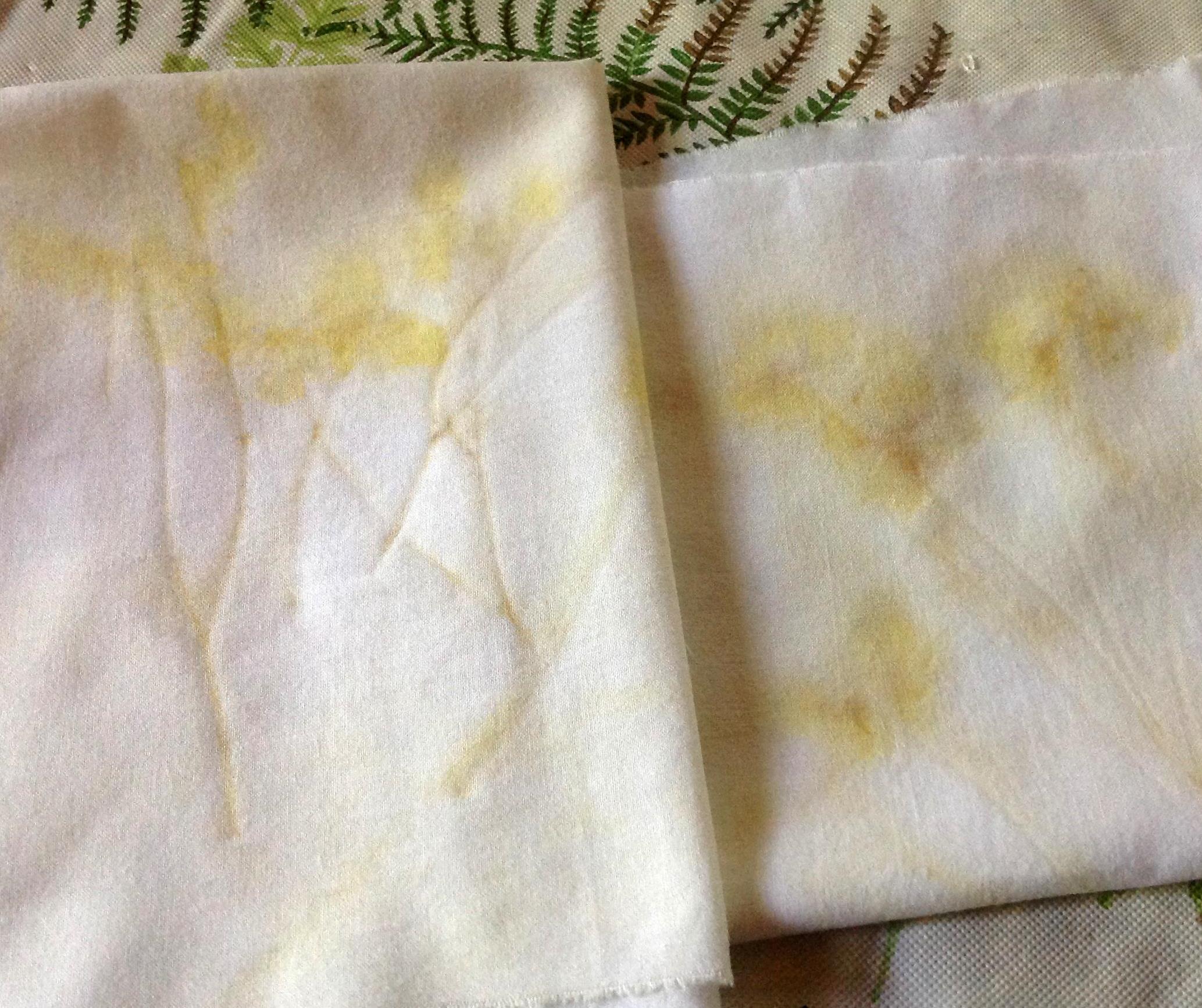
colour transfers from Birdsfoot trefoil
~
Now I have two new colour patterns to add to my future ‘harvesting colour’ quilt !
~

colour transfers using Bugleweed and Birdsfoot trefoil
~
Copyright 2014 Jane Tims
harvesting colour … colour of the harvest
On our weekend drive from Canterbury to McAdam, I saw another aspect of the ‘harvesting colour’ theme. Anywhere you travel in New Brunswick, you usually come across wood harvesting activity and Highway 630 was no exception. About half way along, a turn in the road brought us to a large forest harvest.
~

forest harvesting operation
~
The wood from the cut was stacked into gigantic walls.
~
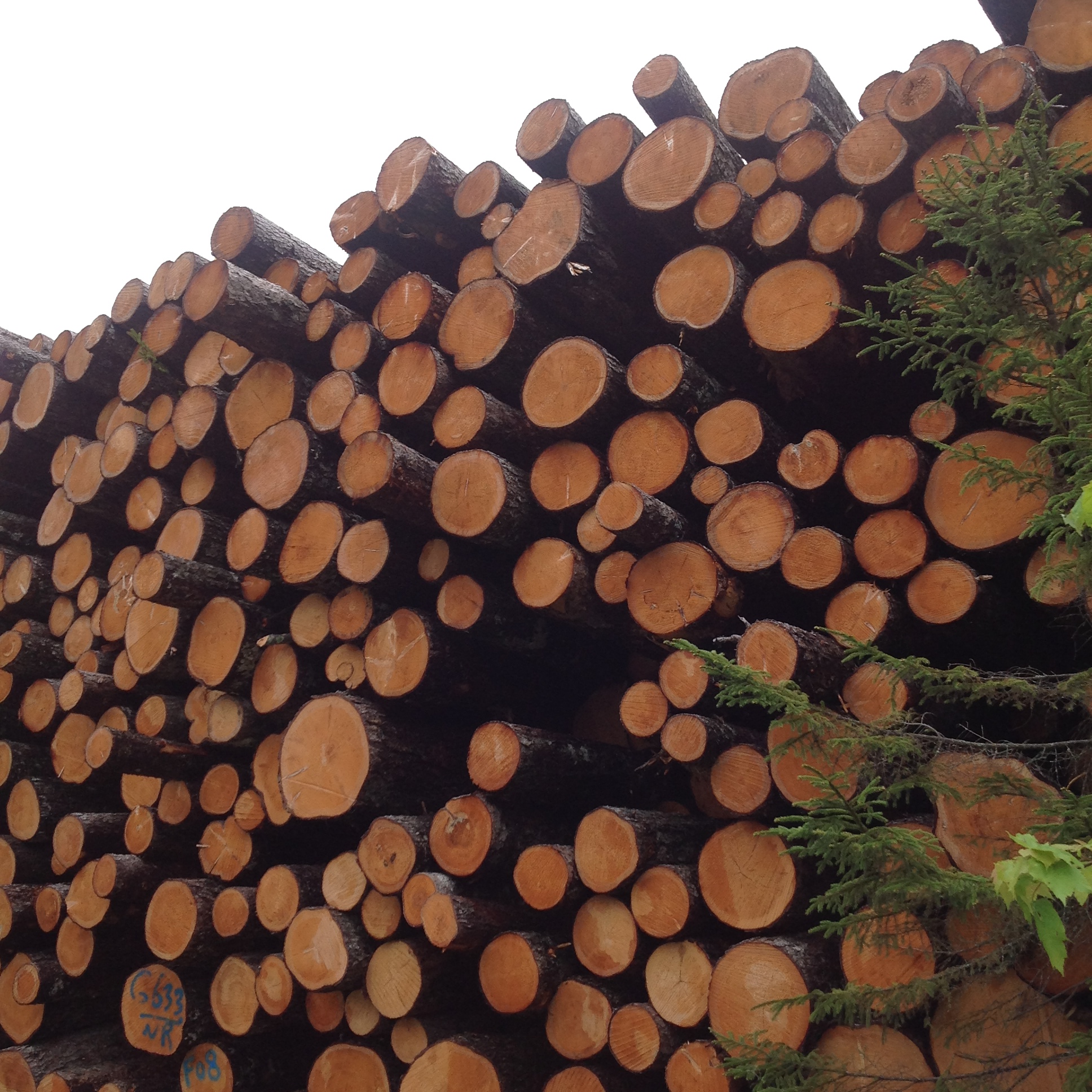
wall of cut wood
~
The clearcut laid the land quite bare. It will be many years before this area returns to the hardwood habitat typical of the area, if at all.
~

spruce and fir
~
The wood from the cutting had been piled according to species. The colours of the cut wood were quite distinctive. The largest colour contrast was between the pale almost white, ash …
~
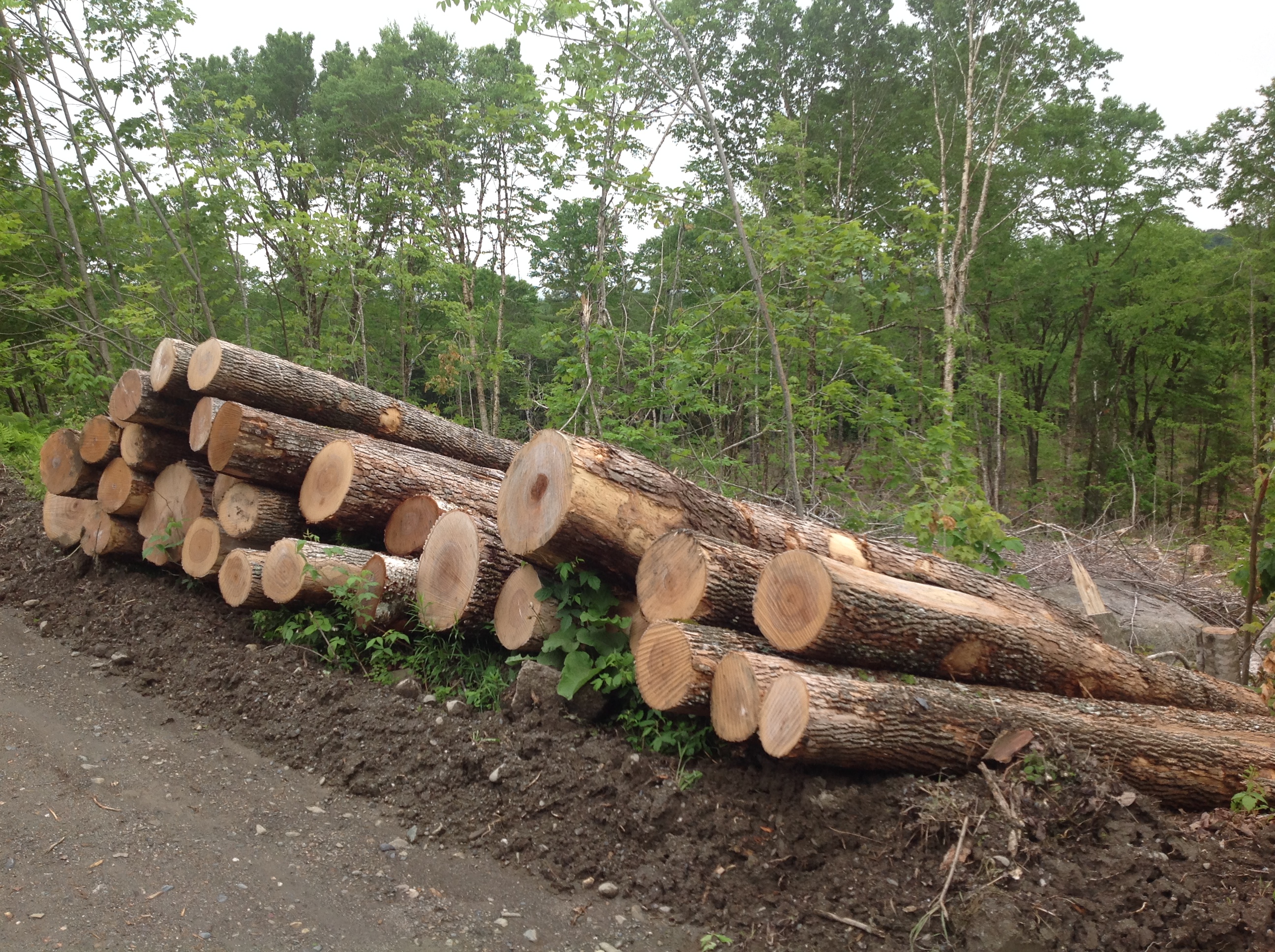
ash
~

ash
~
and the very orange wood of the spruce and fir …
~

spruce and fir
~
I have no particular point to make, except to honour the very individual characteristics of these trees.
~
Copyright 2014 Jane Tims
an attempt at ecoprinting
After our drive to Canterbury over the weekend, I was anxious to capture some of the roadside flower colour in my ‘harvesting colour’ experiments. I decided to try a technique described by India Flint in her book Eco Colour: Botanical Dyes for Beautiful Textiles (Interweave Press, 2010). ‘Ecoprinting’ involves bringing a plant into close contact with a fabric in order to transfer the colour to the cloth. I am very impressed with the effects shown in Eco Colour – prints of leaves, flowers and berries.
~
For my experiment I tried a handful of the Forget-me-nots I collected on our weekend drive …
~
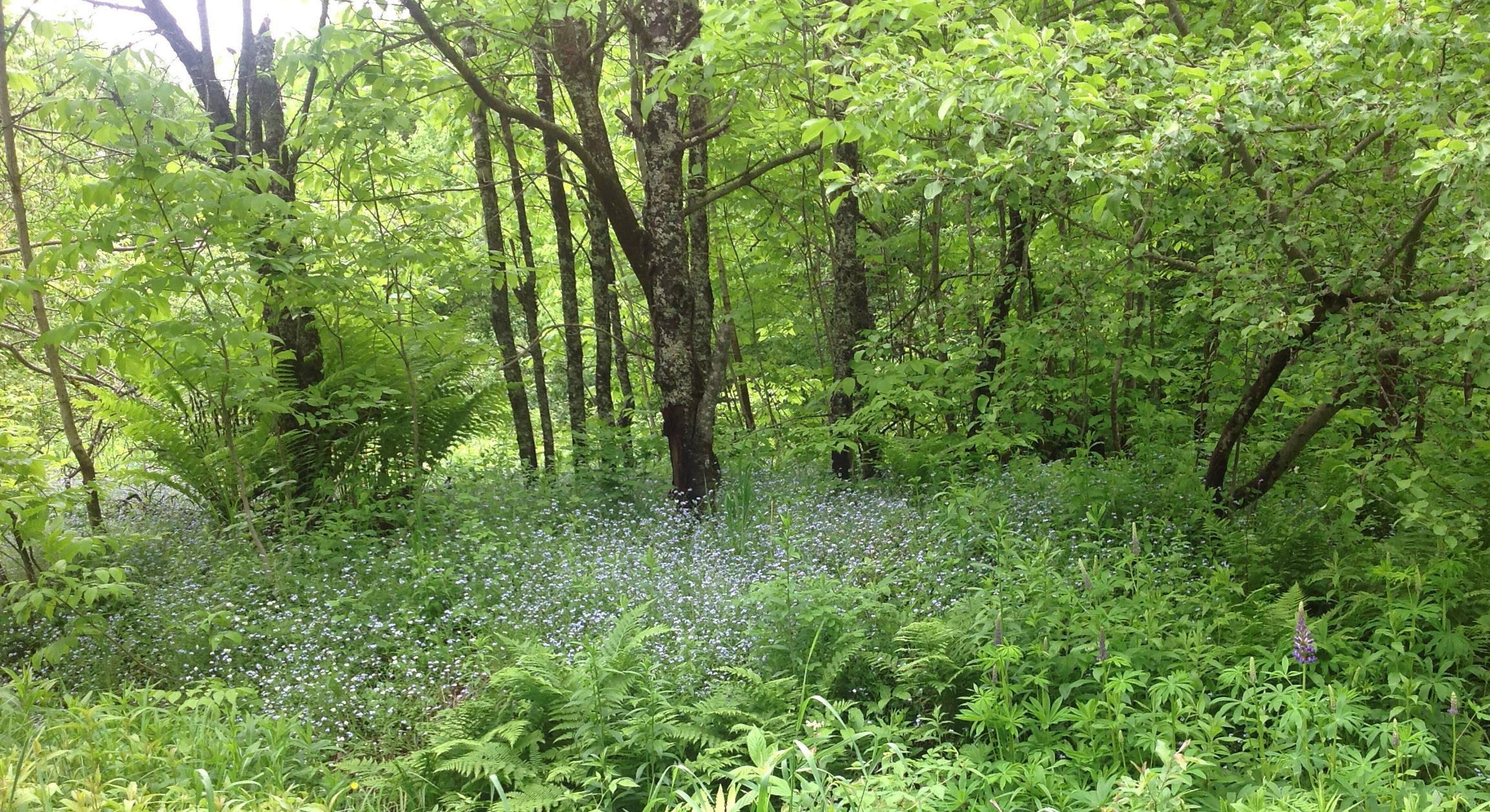
Forget-me-nots in the woods
~
a bundle of the purple Lupins growing along the road in my community …
~

Lupins along the road
~
and a bunch of a ground cover plant growing in my yard, Bugleweed (Ajuga reptans) …
~
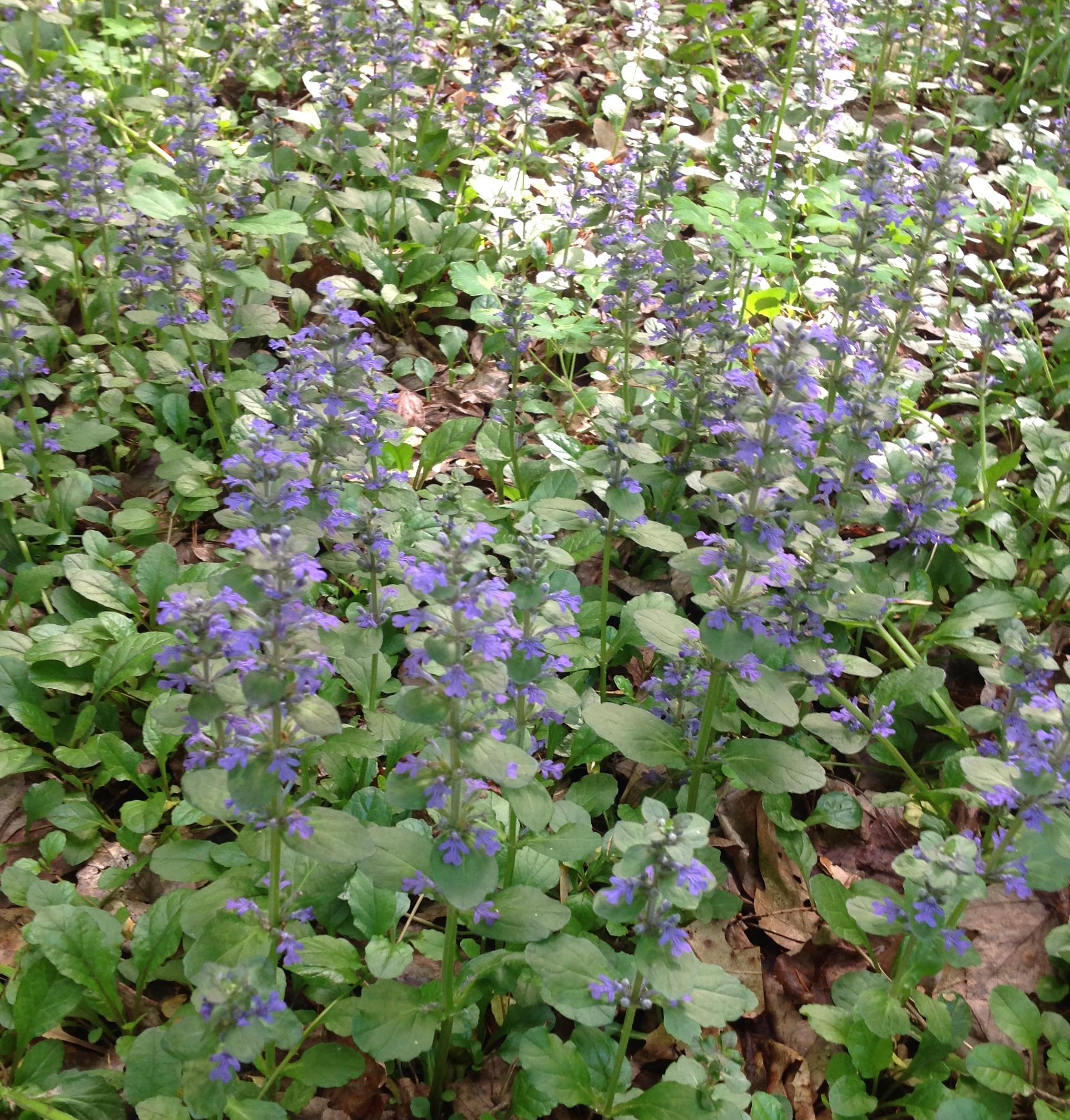
Bugleweed in the orchard
~
basket of Bugleweed
~
I only used small samples of cloth … my idea is to use these ‘patches’ to make a little quilt to show the results of my ‘colour harvest’. I arranged a few of the flowers, both petals and leaves, inside the cloth …
~

Forget-me-nots on cotton
~

Lupin petals and leaves on cotton
~
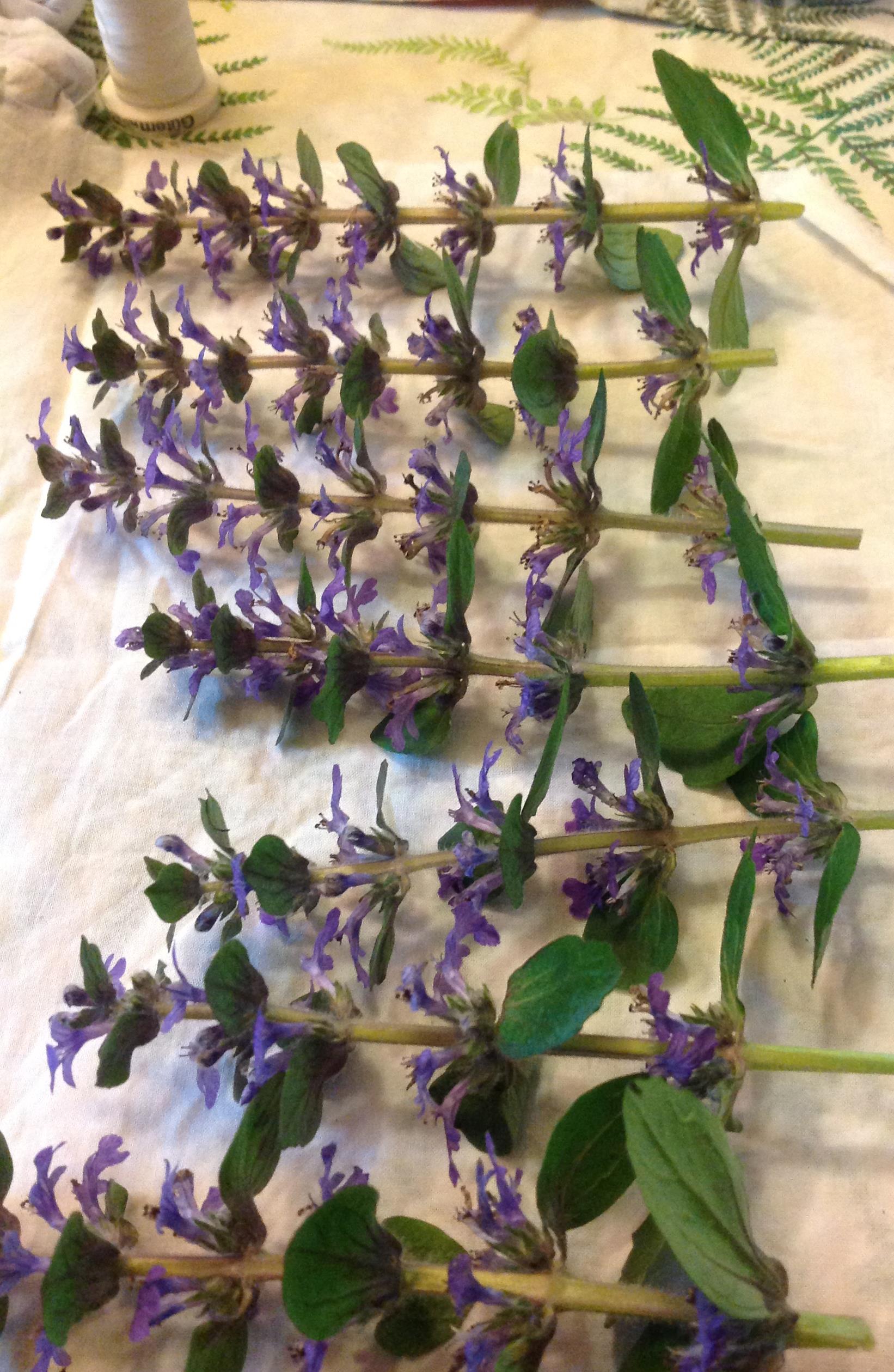
Bugleweed on cotton
~
Then I folded the cloth in half, enclosing the flowers like a sandwich …
~

flowers folded in cotton
~
and rolled the cloth up tightly …
~

rolling the bundle tightly
~
and tied it with cotton thread …
~

flower and cotton bundles
~
I put my bundles in a wire basket and steamed them for an hour …
~
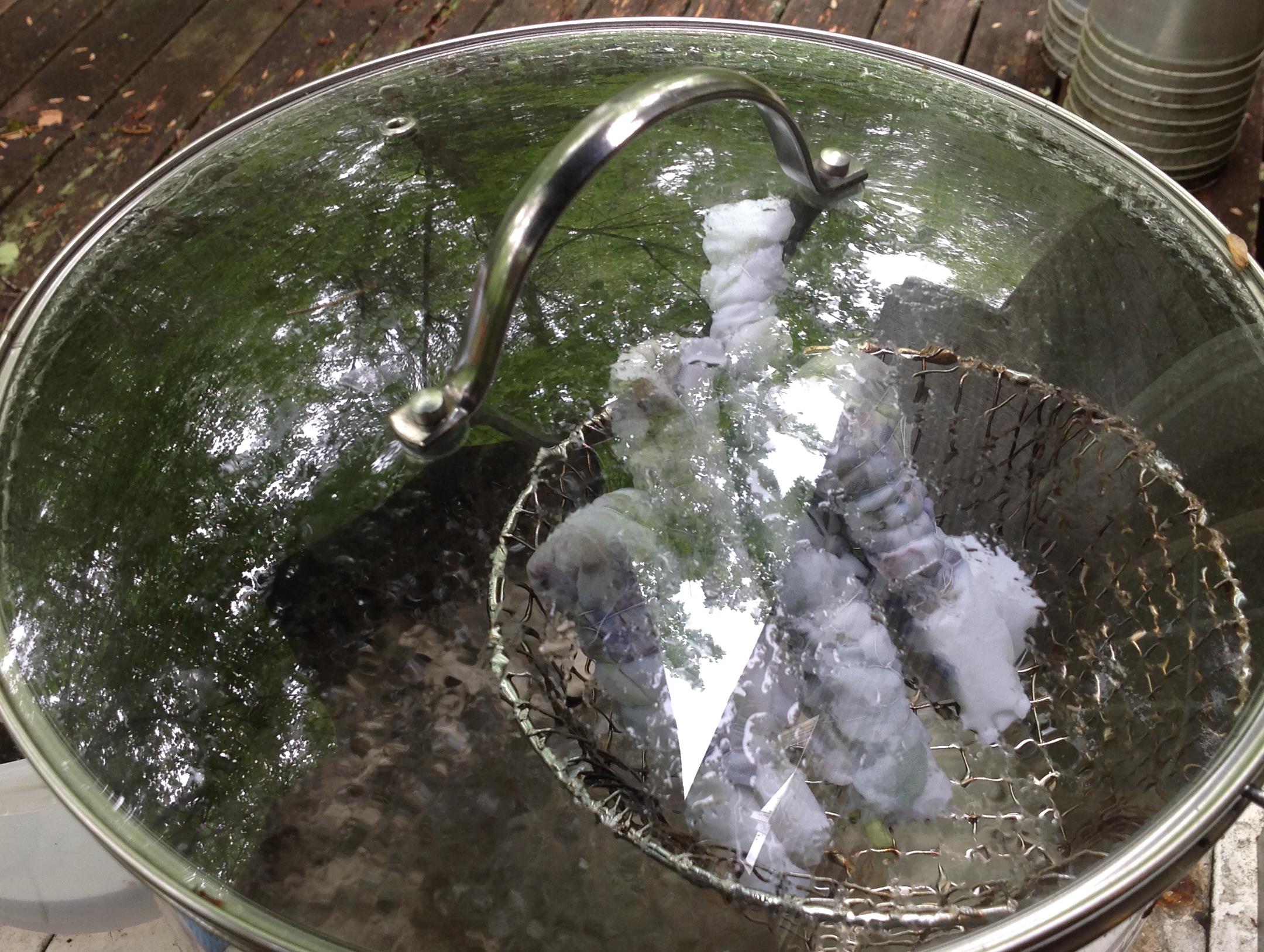
flower and cotton bundles steaming (as usual I have thrown in a bit of woods and sky)
~
After cooling, I opened the bundles, discarded the leaves and flowers, and rinsed the cloth. I was quite pleased with the results. After ironing, I have a pale array of colour. The Bugleweed left a definite lime green. The Lupin a more indefinite green and pale violet. The Forget-me-nots left a faint violet-grey.
~

pale colour
~
I did not get the flower and leaf impressions I expected, but I will keep trying. There are so many variables, steaming time and ‘unbundling’ time among them. I do hope to see that lovely lime green again!!!
~
Copyright 2014 Jane Tims




 nichepoetryandprose