Archive for the ‘family history’ Category
apple pie, no apples
~
~
apple pie, no apples
~
fooled a lot of people –
aunts with PhDs
friends from school
my father
~
now I lift the crust
from every slice of apple pie
look for evidence –
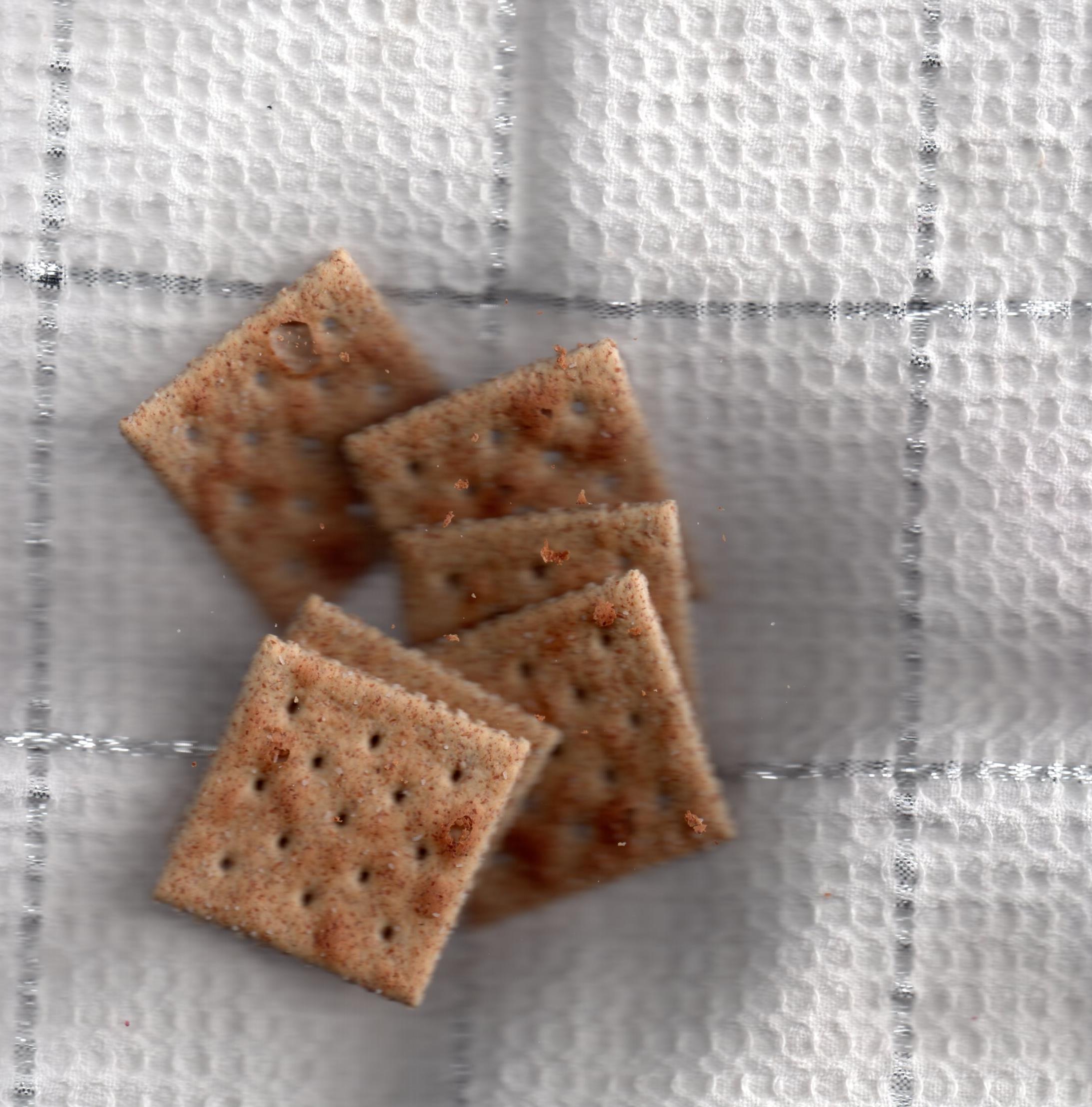
pin-holes, punched by a machine
~
the recipe, simple as substitution
pie crust
sugar
~
a shot of lemon, flour to thicken
cream of tartar (to fool taste buds)
a generous dusting
of cinnamon
~
and
a stack of soda crackers
snapped in two (hand-broken facsimile
of apple)
~
no one ever seemed to notice
the pin-holes, punched by a machine
~
~
Published as ‘apple pie, no apples’, Canadian Stories 17 (95), February/March 2014
For a recipe for Mock Apple Pie, see https://nichepoetryandprose.wordpress.com/2012/08/06/growing-and-gathering-learning/
Copyright 2014 Jane Tims
rural relics (day 10 to 12)
On my virtual bike trip along the north coast of New Brunswick, I am seeing many aspects of rural New Brunswick that are almost relics in our modern world.
~

distance travelled (map from Google Earth)
~
8-11 January 31, 2014 45 minutes 3.0 km (Eel River Bar to Charlo)
8-12 January 28, 2014 30 minutes 7.0 km (Charlo to Blackland)
~
relic:
- object that is interesting because of its age or association
- surviving custom, belief or object from a past age
(Oxford dictionary)
~
One of these relics is the rural mailbox. Amid controversy, the single mailbox at the end of a driveway is gradually being replaced, so there are very few end-of-drive mailboxes along the route I am travelling.
~
We had a mailbox for many years and it was always fun going to the end of the drive to get our mail. Once when I was at my grandfather’s farm for a vacation, my Aunt Anna sent me a parcel so I would have the fun of getting a box in the mail. I remember well reaching up to get the parcel and I remember what was inside – a snow globe!

getting a parcel at my grandfather’s mailbox
~
About ten years ago, we were shifted to a community mail box. We have a key and an assigned box. It is still fun to get the mail, but less convenient …
~
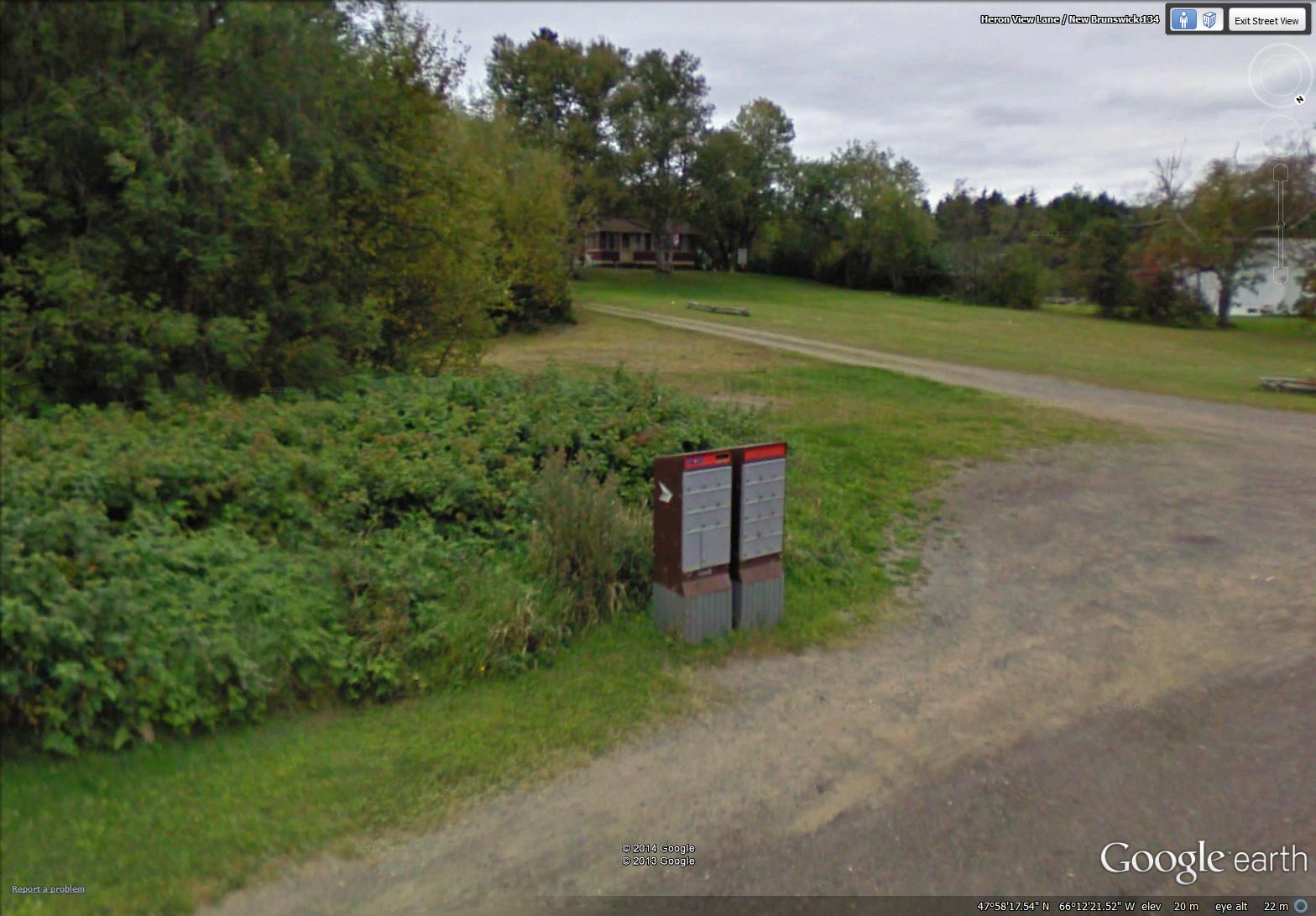
mailboxes near New Mills (image from Street View)
~
Another relic of a more self-sufficient way of life is the remnant apple orchard. In some cases, the apples are still used by thrifty families, but often the fallen fruit is left for the deer …
~

orchard near Blackland (image from Street View)
~
I also see derelict barns and sheds along the road, abandoned as people give up farming and a more rural way of life …
~

February 11. 2014 ‘old shed near Charlo’ Jane Tims
~
Do you encounter remnant bits of our past in your travels? Do they bring back memories?
~
Copyright 2014 Jane Tims
heathland and heather (day 57)
~
~
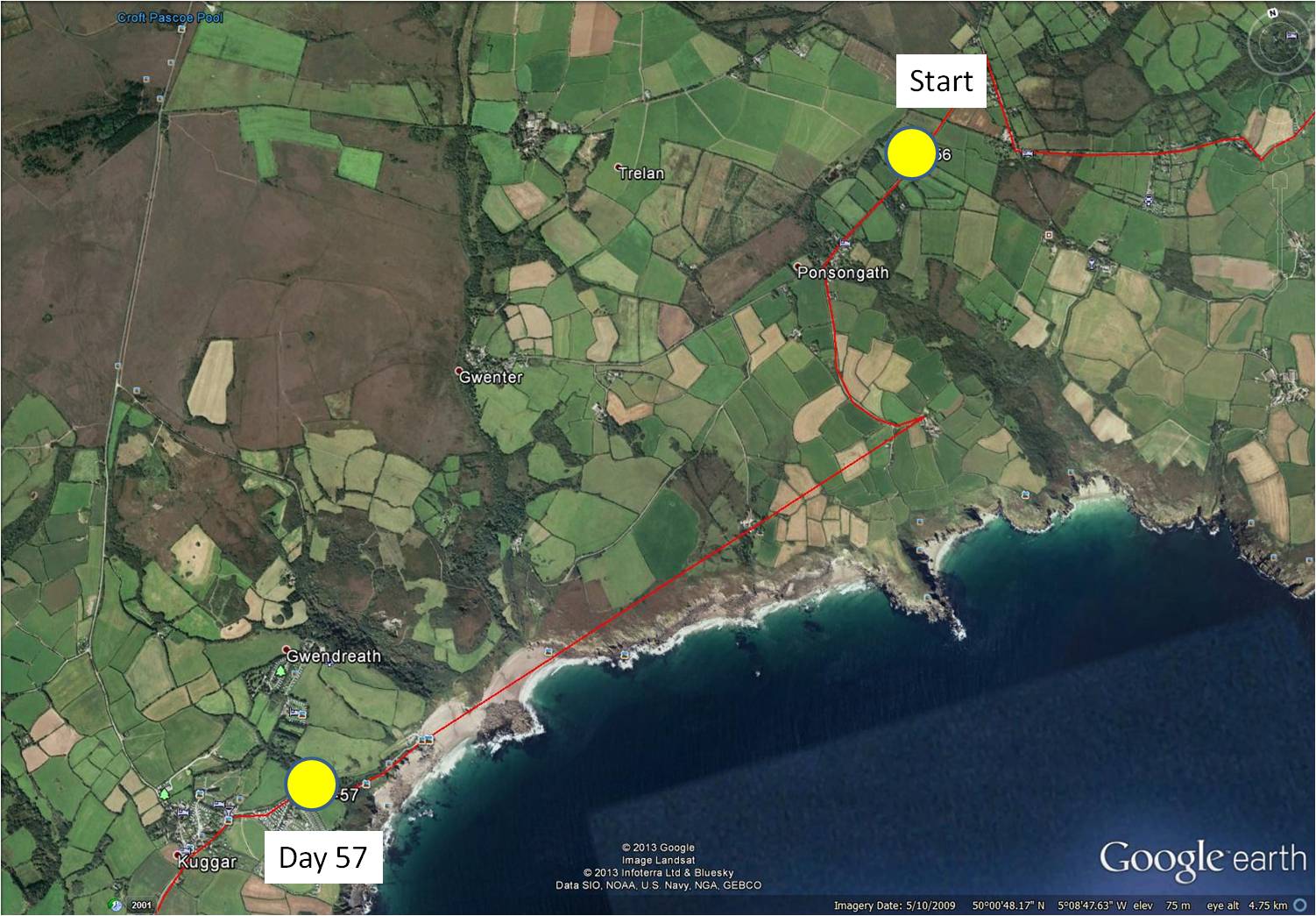
7-57 December 12, 2013 30 minutes 3.0 km (from Ponsongath to Kuggar)
~
Something different has appeared in the maps of the area where I am ‘travelling’. Today’s virtual bike trip took me just south of a large ‘brown’ area of topography (seen in the aerial photo above). To find out about this area, I turned my stationary cycle for a side trip in the direction of Gwenter, just to the north of my planned path.
~
The area I found is anything but brown (Street View images were done in July). These are the Goonhilly Downs, a raised plateau of heathlands above serpentinite rock. Besides being a Site of Special Scientific Interest and the home of many rare plants, the heathlands are the location of a large windfarm (I could just see the turbines in the distance) and the Goonhilly Satellite Earth Station (the largest in the world).
~

Goonhilly Downs … wind turbines and satellite dishes are just visible along the horizon (image from Street View)
~
From the road I could see expanses of grass, tufts of fern, and ericaceous shrubs. Patches of purple reminded me of the Rhodora that blooms here in spring. From my reading about the Cornwall heathlands, I am certain this plant must be Cornish heath (Erica vagans), a species of heather common in Cornwall. I have a small patch of heather growing in my own garden, so this plant has a spot in my heart. I first learned about heathers in our history club in high school – we took a field trip to see the heathers growing abundantly in Point Pleasant Park in Halifax. They grow there in a 3300 square meter patch, called the ‘Heather Patch’, south of the Cambridge Battery. The heathers are not native but grow there as an escape – from the stuffing in the bedrolls of British soldiers in the 1700s!
~
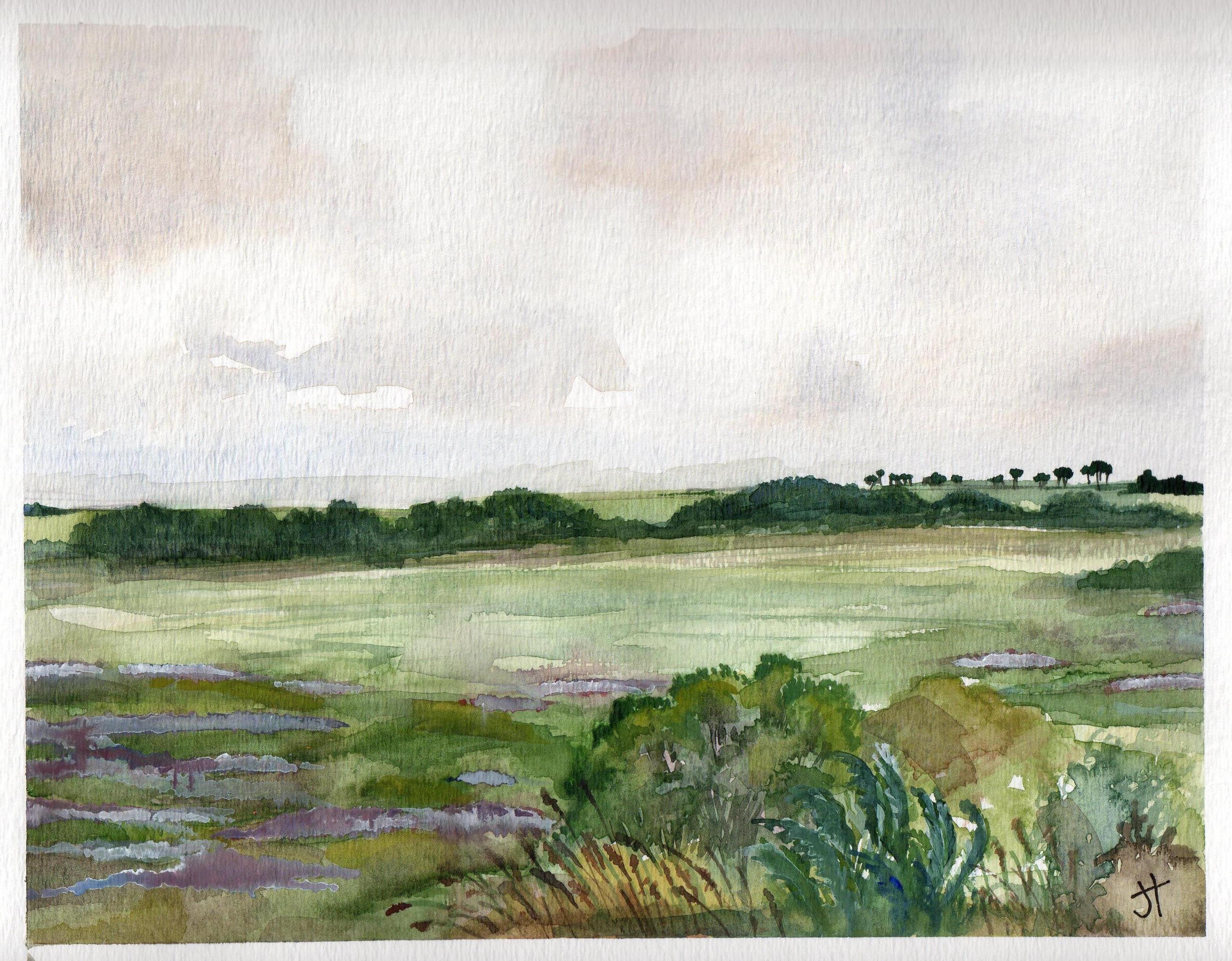
December 17, 2013 ‘Goonhilly Down’ Jane Tims
~
Copyright 2013 Jane Tims
getting ready for Christmas #4 – vintage postcards
For a few years, I have hung examples from my collection of postcards on a string above the fireplace. I have postcards for all the major holidays – New Years, Valentine’s Day, St. Patrick’s Day, Thanksgiving, Halloween and, of course, Christmas.
~
This year, when I hung my Christmas postcards, I could only find six. I need more, I decided, and went on eBay to find just three more.
~
By the time I finished my bidding and winning, I had 14 postcards to add to my collection.
~
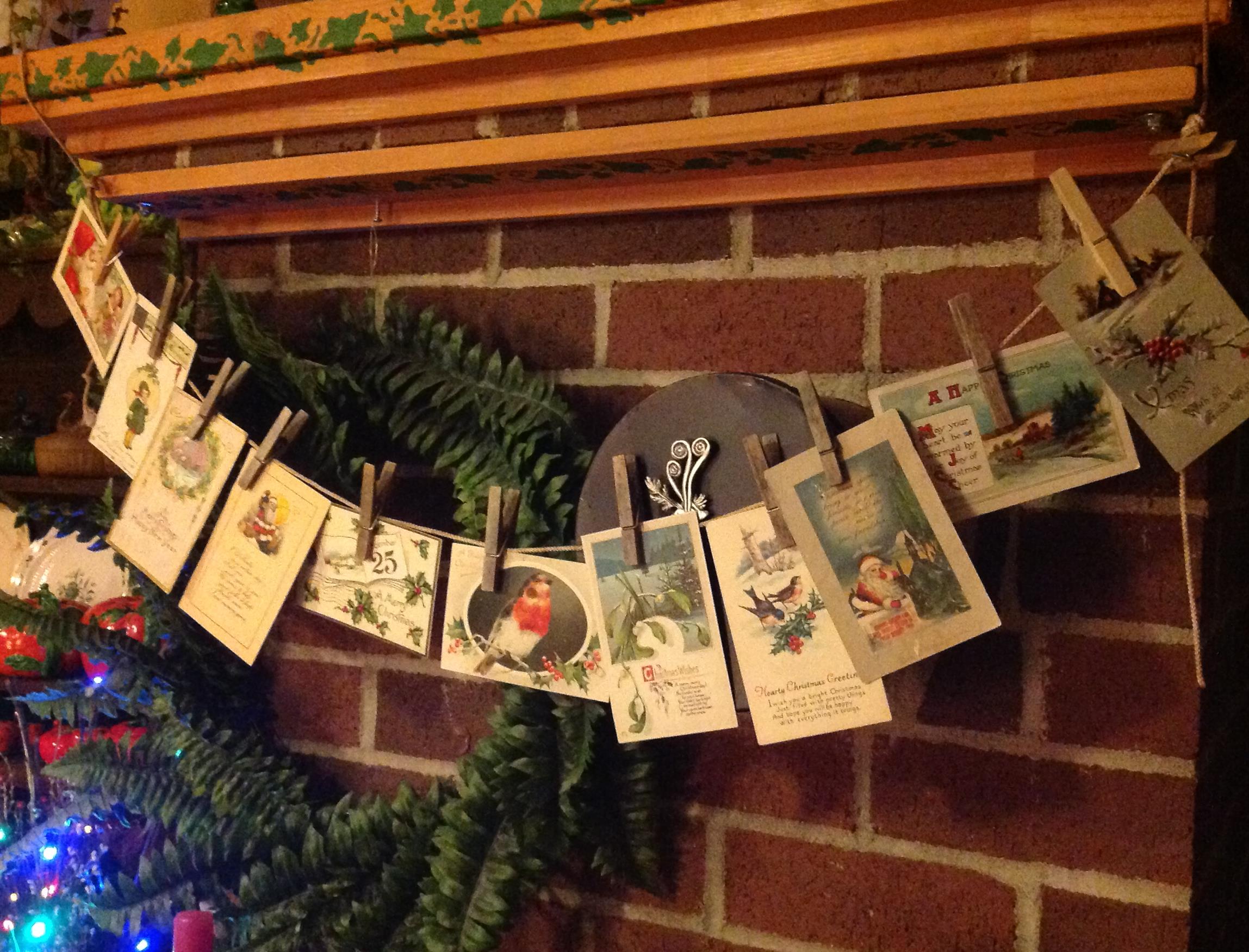
~
After I had hung some of the postcards over my fireplace, I discovered 7 other postcards from a collection that belonged to my grandmother. So now I have 27 vintage Christmas postcards. The eBay extravaganza was not necessary at all, but, oh, it was fun!
~
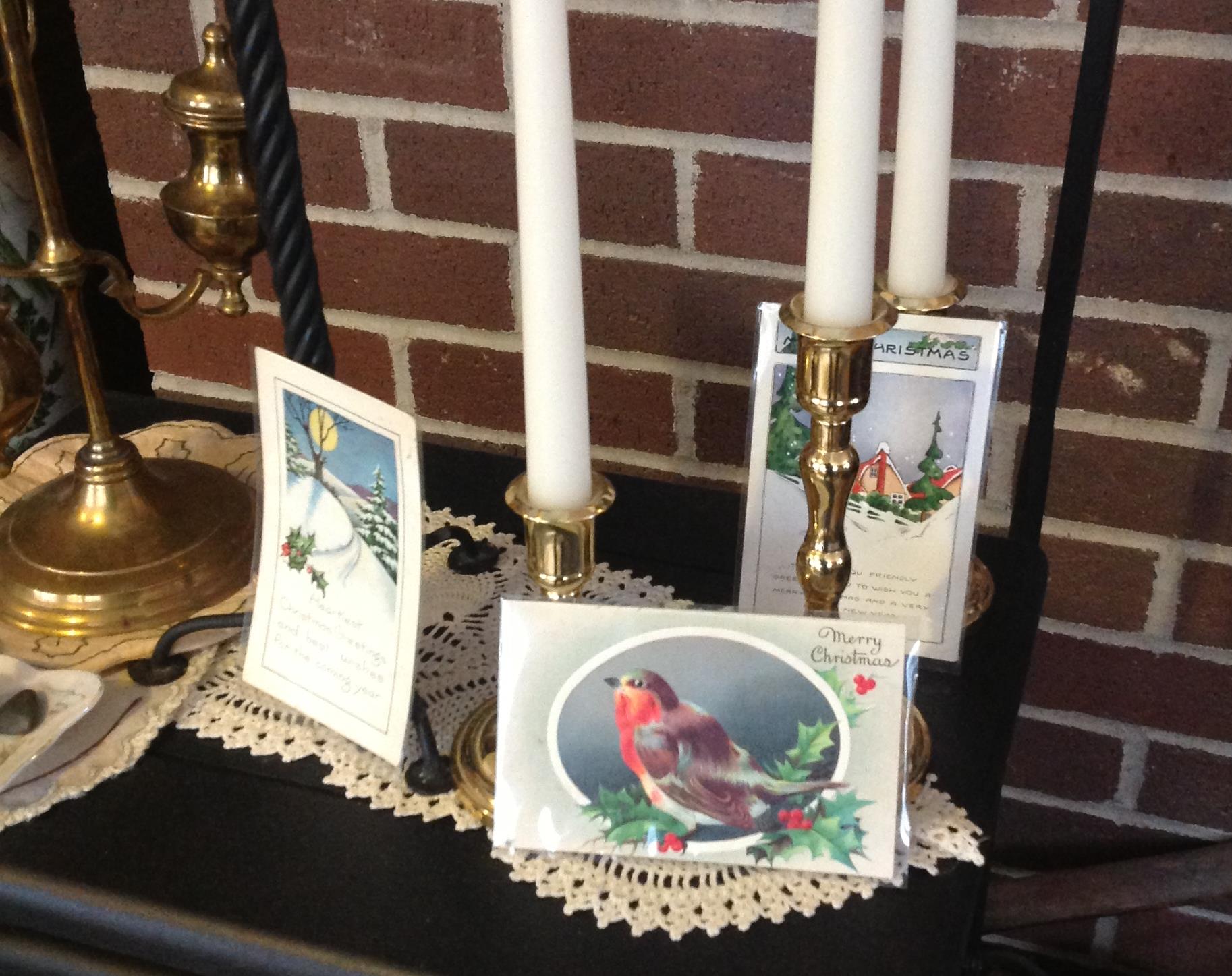
three of my new postcards – notice, I now have two of a set of ‘robin’ postcards – will I go out to find three more I know are in the set????
~

Vintage postcards, mailed in 1922 (left) and 1926 (right)
~
Copyright 2013 Jane Tims
horses in a field (day 53)
7-53 December 1, 2013 35 minutes 3.0 km (from north of Porthallow to Porthoustock)
~
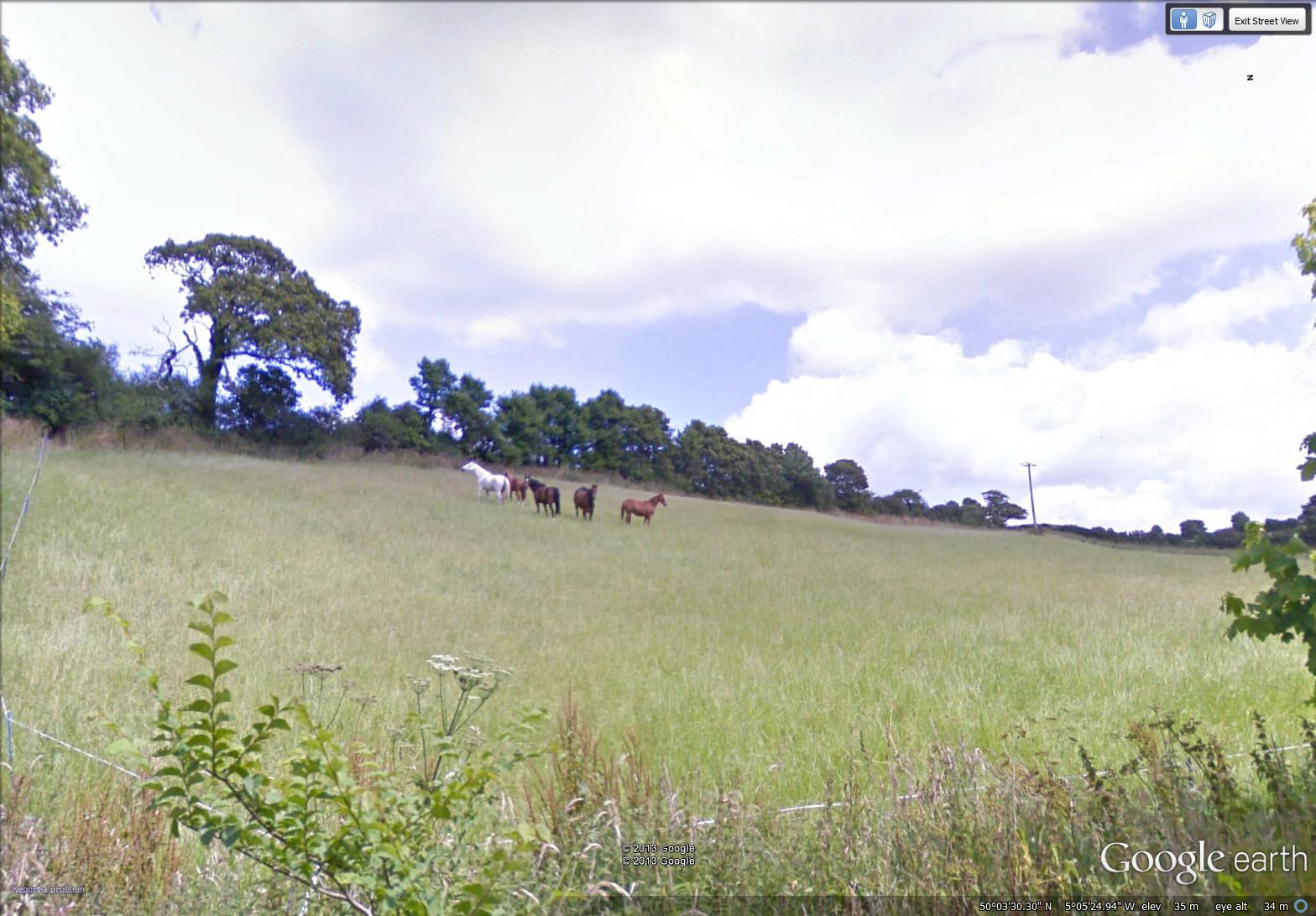
This week on my stationary bike trips and my virtual tour of Cornwall, I saw this group of horses near Porthallow. They stood so serenely in the field, I decided to paint them.
~
~

~
As anyone who knows me will tell you, I am not always comfortable around animals. I like horses and I have ridden, but this little story will tell you how afraid I am. When my sister went to England years ago, she asked me to take care of her horse for the summer. Marengo was a kind horse, and never did anything to frighten me, but my approach to feeding him probably made him wonder. I would go to one end of the pasture, count out his ‘leaves’ of hay and spread them for him to eat. By the time he got to the hay, I would be running to the other end of the fence to measure out his oats. That way, I could feed him but never have to stay near him! What a dreadful story. Most girls would be delighted to have care of a horse for a whole summer!
~
Copyright 2013 Jane Tims
the case of the missing…
My Mom always loved her belongings and kept excellent care of them. She also tried to keep track of them, but with four children (especially me), occasionally items went missing.
Once she called me in great distress. She had been all over her property and could not locate the second wheel from a pair of wagon wheels she knew she had.
I said she didn’t have to worry. I had taken the wheel as a decoration for my yard.
Today, I can look out at my winter garden, and see Mom’s missing wagon wheel.
 ~
~
Copyright Jane Tims 2013
log cabins and humble beginnings
In a recent post (October 17, 2012), I wrote about my shoemaker great-great-grandfather, Josiah Hawk, and his daughter, my great-grandmother, Ella Hawk.
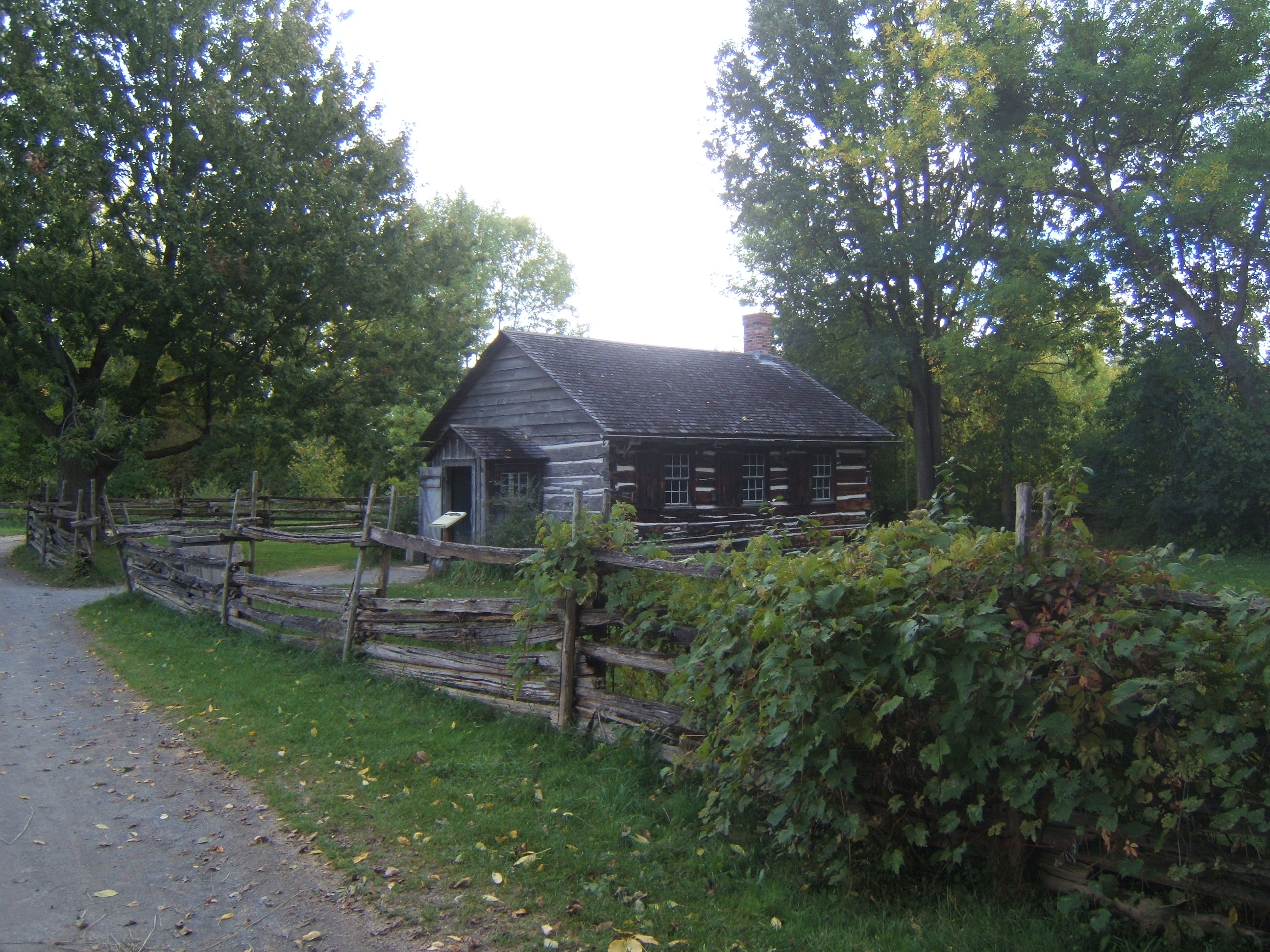
schoolhouse in Upper Canada Village, Ontario
When I was in Upper Canada Village in Ontario in September, I saw many houses and a way of life that reminded me of Ella’s family history.
Ella’s story begins before she was born, with the Hawk and Kresge families of Monroe County, Pennsylvania. I know a lot about these families, since both families have relatively complete genealogies.
Both the Kresges and Hawks were part of a large community of German immigrants who lived in the vicinity of Gilbert, Monroe County, from the late 1700s onward. In 2004, my husband, son and I visited the area and I went to church in the community. The congregation welcomed me warmly and I was told many of the people in the church shared my ancestry!

pioneer home in Upper Canada Village, Ontario
The Census of 1790 lists both of Ella’s great-grandfathers, Coonrod Crase (Conrad Kresge) and Conrad Hawke. Conrad Kresge had a son Johannes whose daughter Sarah Ann, was Ella’s mother. Conrad Hawke had a son Michael Hawk, whose son Josiah (the shoemaker) was Ella’s father.
The Kresges and Hawks were true pioneers and life for them was difficult. In about 1777, while clearing land, Conrad Kresge lost one of his sons at the hands of a band of Native Americans, who carried out raids on the community. This story is depicted in a memorial to Conrad Kresge in the Gilbert cemetary.

Memorial in Gilbert cemetary, depicting story of Conrad Kresge clearing land, and his son who was killed by an arrow
Although no other stories have survived the years, I have been able to learn quite a bit about these people from the genealogies. For example, I can piece together something of my great-great-great grandfather Michael Hawk’s life in Middle Creek, Pennsylvania. For example, for the year 1807, when he was 13 years old, he was the youngest of nine children. Of his five brothers and three sisters, only his older brothers John (19 years old) and Peter (16) remained at home. Siblings Nicholas (25) and Suzanna (23) had been married the year before, and on October 29, 1807, Suzanna gave birth to a set of twins, no doubt an exciting family event. His much older brother John George (37), living in the community of Effort, and his sister Anne Margaret (33), in Chestnut Hill, must have seemed a generation away, since John George’s daughter Elizabeth, Michael’s niece, was only four years his junior.
~
~
Michael, alone
(Middle Creek, 1807)
~
November has worked its way
into the wood pile, I use Papa’s axe
to split kindling, I blow rings into
the cold air, everyone is away, gone to
Chestnut Hill to see
Suzanna’s twins
~
everyone leaves –
they become like strangers
Catherine, run off to Seneca Lakes,
Nicholas married last year,
John and Peter, itching to go
~
Mama calls me her baby
well, I’m the same age as the Kresge boy,
killed by an arrow thirty years ago –
but that’s an old story
~
I look across the cornfield
to the oak woods where leaves still cling,
they glow like copper
noone lurks there now
~
Copyright Jane Tims 2012
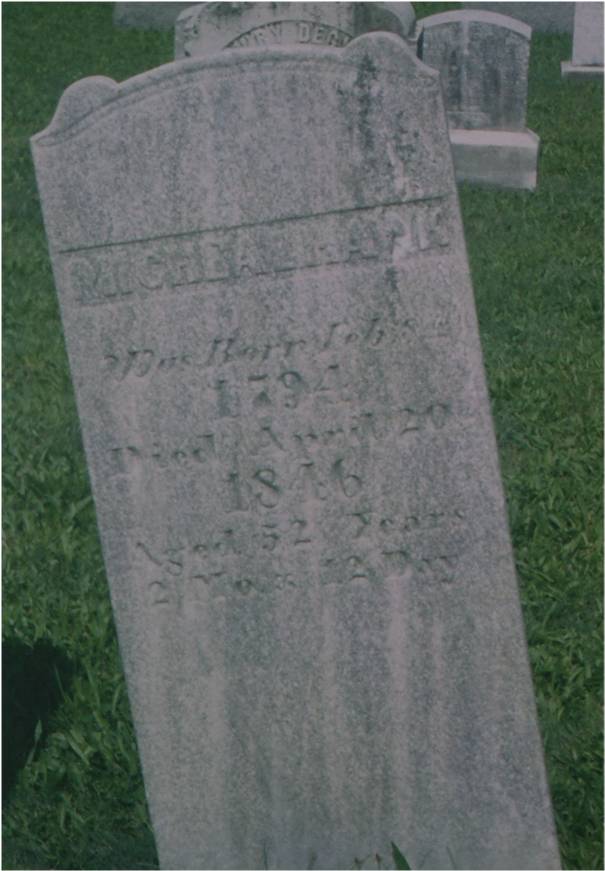
gravestone reads: Michael Hawk – was born Feb 8th 1794 – died April 20 1846 – Aged 52 years 2 months 12 day
making a quilt
One of the things I love to do as winter approaches is to make a quilt. My quilts are not the beautiful, hand-stitched, carefully patterned quilts I admire. My quilts are usually patchwork and often machine sewed, although some I quilt by hand, with long, uneven stitches.

a few of the quilts I’ve made, mostly lap-sized quilts for winter evenings
This fall, I am working on a quilt for our bed, in the theme of ferns and poppies. I have used an old blanket covered in blue roses as the batting, given to me years ago by my uncle. It has a large tea stain in one corner and is not as warm as our modern bedding, but I would like to keep it for sentimental reasons, so I am using it as the base for my new quilt.
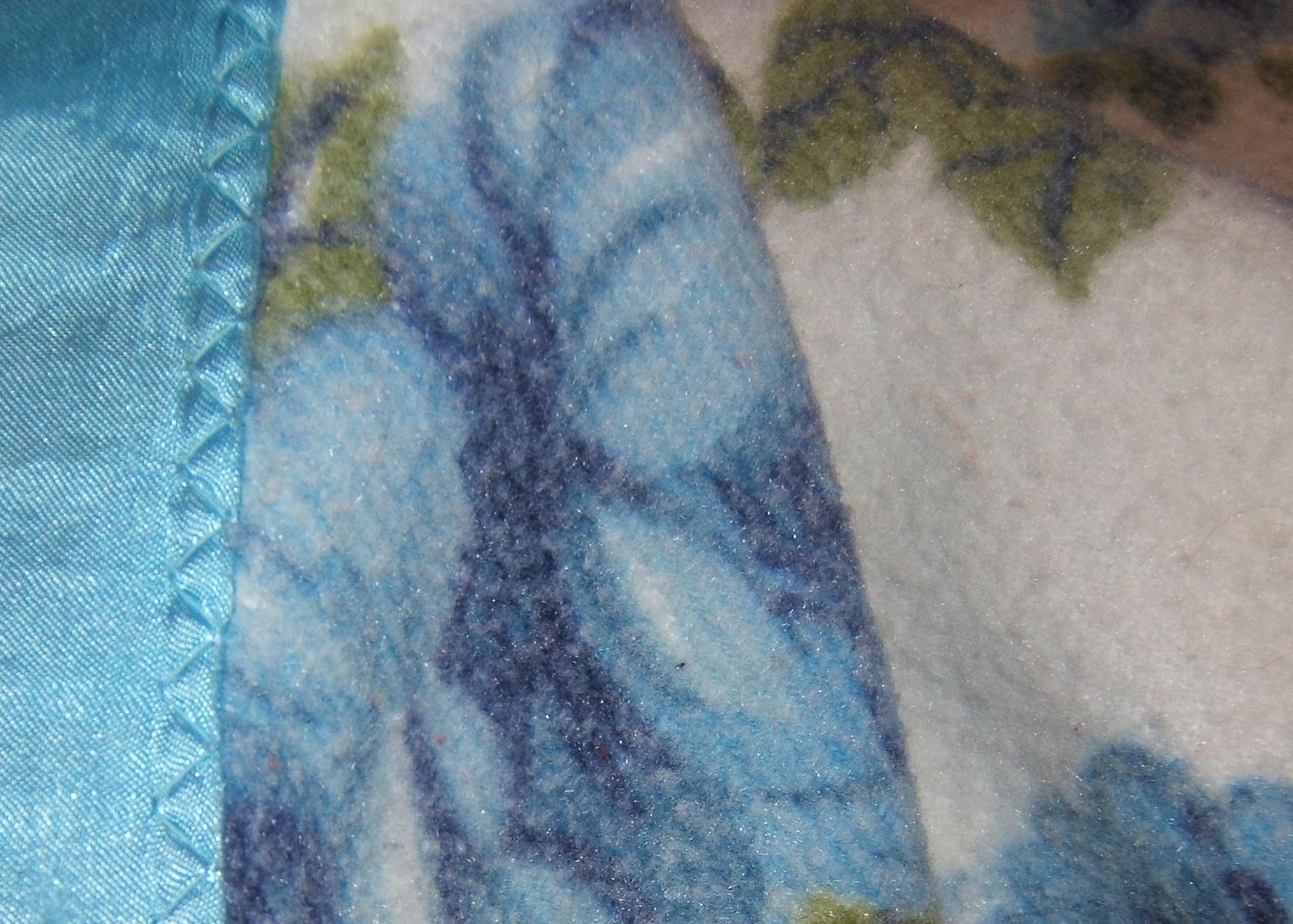
For the fabric, I am using various bits and pieces I have collected over the years. I can’t resist fabrics and when I visit the store, I often leave with a half meter of a fabric I love, even if I have no planned project.
I am planning to make the quilt entirely by machine, following a method my Dad told me his mother used. She would take an old blanket and sew the patches on by hand, one at a time, covering the adjacent seams as she went.
First, I chose a width for the patches and cut a piece of sturdy cardboard for the template. I marked the fabric with bands in the width of the template, to use as an inked guideline to keep my fabrics straight…

Then I cut my fabrics the width of the template and arrange them, right sides together and pin them to the blanket, making sure the edges of my fabric follow the inked guidelines…

Then I sew a seam…

When each piece is sewn, I open it to the right side to reveal a neatly attached patch…

Once I have worked my way around the blanket, attaching one row of patches, I will add another row, leaving one inked guideline row empty.

After I have finished the rows of patches, I will add long strips of fabric to fill in the empty rows and to cover the rough edges left by the first rows of patches.

I will have to pin and top-sew the other edge of this strip of fabric, to cover all the raw edges.
Then, when all the edges are hidden or turned in, I will top-quilt all of the patches with the machine.
The last step will be to select a fabric to cover the other side of the blanket. I think I will attach this layer with ties, another old-fashioned method of making a quilt.
I’ll show you the quilt when it is completed, probably next year!!!
Do you make quilts and what is your method???
~
~
Copyright Jane Tims 2012
occupation: shoemaker
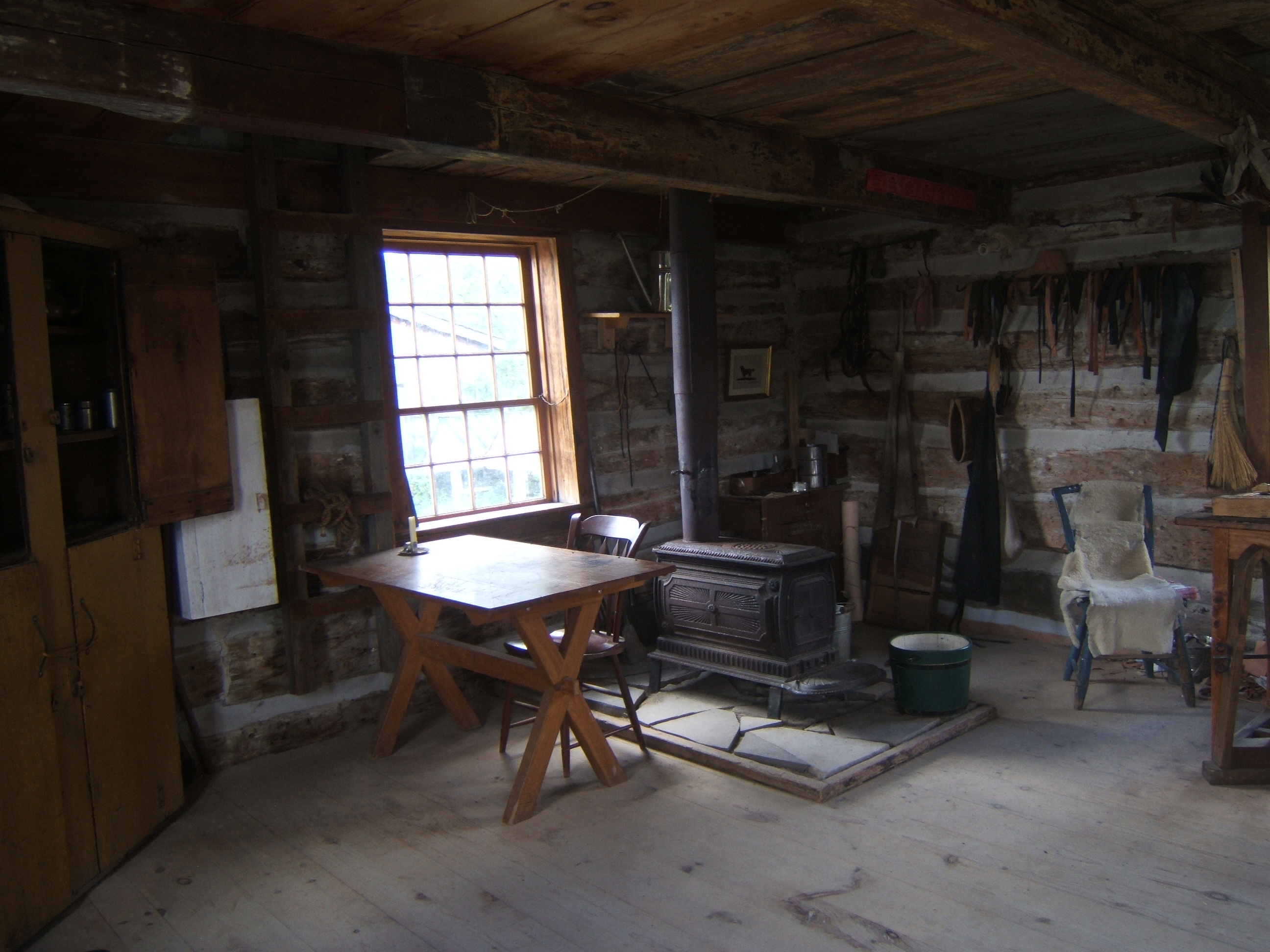
On a short vacation to eastern Ontario last month to visit my niece, we visited Upper Canada Village. It was a memorable day. My favorite of the many buildings on site was the shoemaker’s workshop. I was particularly interested because my great, great-grandfather, Josiah Hawk, was a shoemaker. I know this from two sources, an entry in the Pennsylvania Census for 1860, and a list of the items in an Inventory and Appraisement at his death in 1865 at 33 years of age.

In 2001, I became interested in studying my maternal great-grandmother Ellen’s history. Ellen (Ella) was Josiah’s daughter. One evening, I was puzzling over a poorly copied entry in the 1860 Census, trying to figure out his occupation. I was tired and my eyes went a bit blurry … by bending the paper a little, I suddenly saw what it said… ‘Master Shoemaker’. My delight at this discovery was immense.

Later, when I read a list of Josiah’s property at the time of his death, his occupation was confirmed. His belongings included: ‘…1 shoe bench, 1 lot of shoe mackers [makers] tools, one cramping [crimping] machine, [and] 1 lot of leather …’, among other worker’s tools.
I have relatively little information about my great-grandmother’s life, but I can imagine that she knew her father’s profession and his workshop. Perhaps, as a little girl, Ella played in the workshop and knew the smells of the leather and the sounds of the shoemaker at his work.
~
~
leather and boot polish
~
the leather in my Papa’s shop
makes a kind of tent
where I can play
~
Papa pays me no attention
sews seams in Mr. Gruber’s boots
heels a pair of Sunday shoes
~
at church, I bend to see
beneath the benches
all those solemn feet
wearing Papa’s leather
boots and shoes
~
~
Copyright Jane Tims 2012
Chicory – (Cichorium intybus L.)
Along the Trans-Canada near Jemseg, one colony of Chicory has taken hold. Its bright sky-blue flowers catch the eye as the usual roadside vegetation rolls by.
~

~
Also known as Blue Sailors and, in French, chicoreé, Chicory (Cichorium intybus L.) is a tall plant, found along roadsides and in other waste places.
Chicory has basal leaves resembling those of the Dandelion. When broken, the stem exudes a white milky fluid.
The bright blue flowers of Chicory occur along the length of the almost leafless and somewhat zig-zag stem. Each flower is formed of a central involucre of tiny blue flowers and a disc of larger ray flowers. The rays are square-cut and fringed. The flowers follow the sun, closing by noon, or on overcast days.
~

~
Chicory is a useful plant. Its young leaves are edible as salad greens or as a pot-herb. The roots can be dried and ground to make a coffee substitute or supplement. The root of Chicory has soothing properties to balance the edginess caused by caffeine. The roots of Chicory are large and very deep. I tried to pull them by hand, but a shovel will be needed to harvest the roots in the compact soil of the roadside.
~ When I see these flowers, I am reminded of my grandfather, my mother’s father. I never knew him, but I have a couple of photographs of him as a young man. I have made a small study of his mother, my great-grandmother, so I know quite a lot about him. ~
~
The flowers of Chicory remind me of his eyes, since they were the same startling blue. He was also a tall man, another feature of the plant.
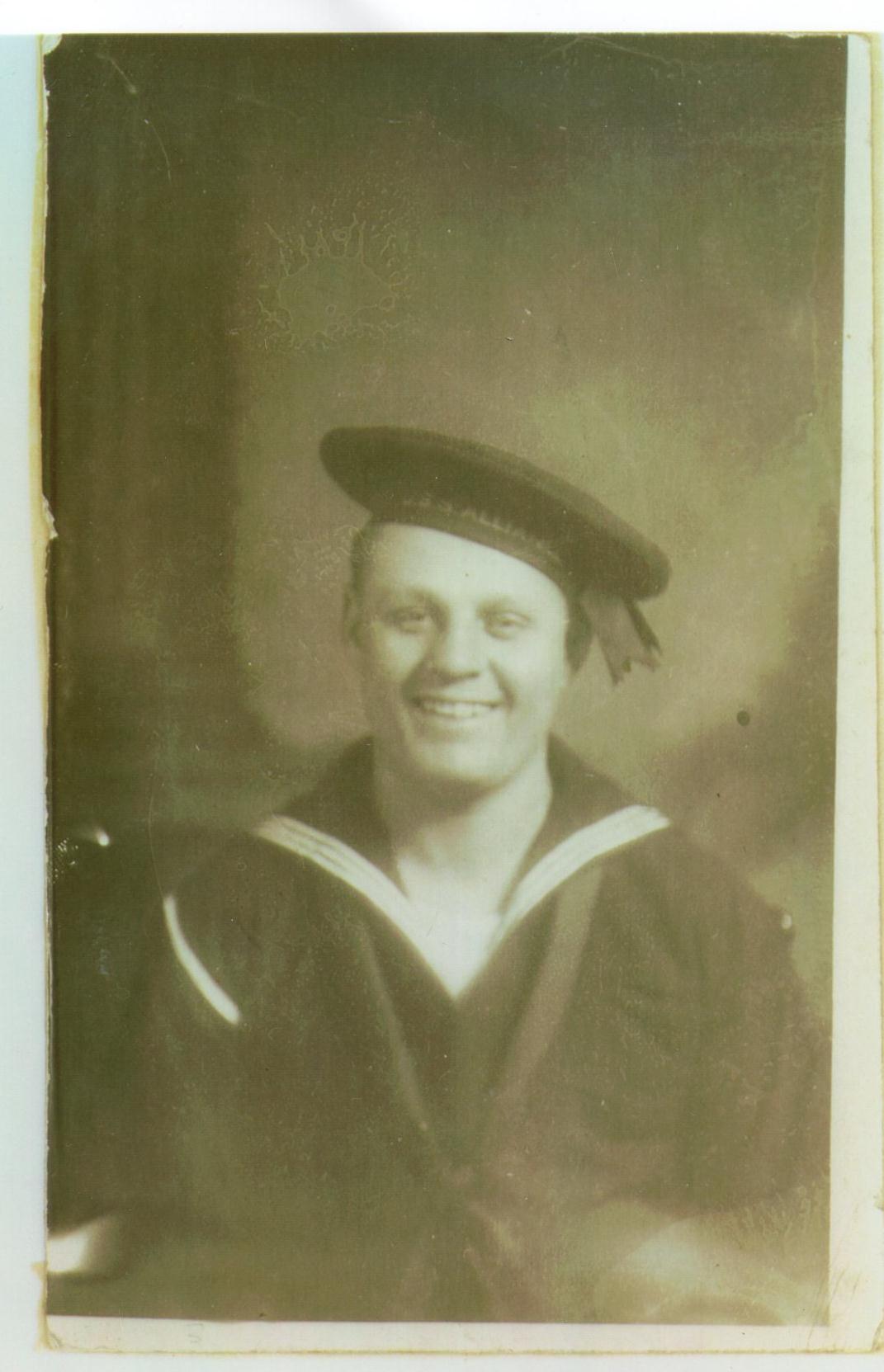
The other name for Chicory, Blue Sailors, also reminds me of my grandfather. He was a sailor, entering the navy when he was only fifteen. I know from various records that he served on at least two naval vessels, the USS Nebraska and the USS Pensacola. As so often happens when I see photographs of ancestors, there is a familiarity about his features.
~
~
Blue Sailors
Chicory (Cichorium intybus L.)
~
at the roadside
weeds surge as waves
~
on the sameness of ocean,
a buoy lifted,
a sudden swell of Chicory
~
tall, like my grandfather,
the blue ice of his eyes
its blunt petals, the square-cut of his jaw
~
joined the navy at fifteen
dressed as a sailor, headed for sea
USS Pensacola, USS Nebraska
~
his tie, a sapphire ribbon
toothed or frayed
~
~
© Jane Tims 2012
Warning: 1. never eat any plant if you are not absolutely certain of the identification; 2. never eat any plant if you have personal sensitivities, including allergies, to certain plants or their derivatives; 3. never eat any plant unless you have checked several sources to verify the edibility of the plant.




 nichepoetryandprose