Archive for the ‘family history’ Category
early schooling in New Brunswick – teachers in 1888
In my family, teaching was a much-revered profession. Both Mom and Dad were teachers, as were my Aunt and Uncle. Mom, and my Aunt and Uncle, taught in one room schools. Mom began teaching in the early 1940s, when she was only 16, just after her graduation from Grade Twelve. At first, she taught with a temporary teaching licence issued during the Second World War. Later she went to Normal School to obtain a permanent licence.
~
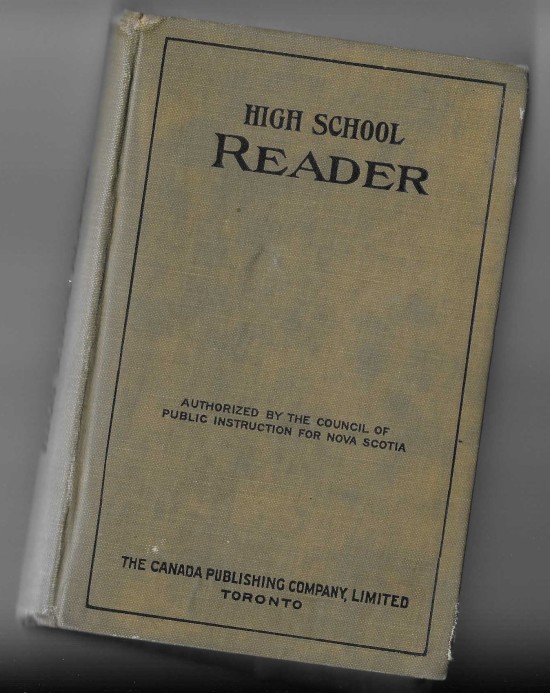
a copy of the reader my Dad used in High School in Nova Scotia, about 1933 (High School Reader, 1913)
~
To learn a little about teachers in one room schools in the late 1800s, I have continued to read the Annual Report of the Schools of New Brunswick, 1888 by the Chief Superintendent of Education. In 1888, teachers in New Brunswick were trained in the Provincial Normal School. Of the 1,582 teachers, 1,534 were trained and 48 were untrained. Teachers, depending on qualifications, were in three classes: I, II and III.
~
In 1888 in New Brunswick, there were many more female teachers than male:
| Class | #Male
Teachers |
# Female
Teachers |
| I | 114 | 141 |
| II | 157 | 644 |
| III | 108 | 404 |
~
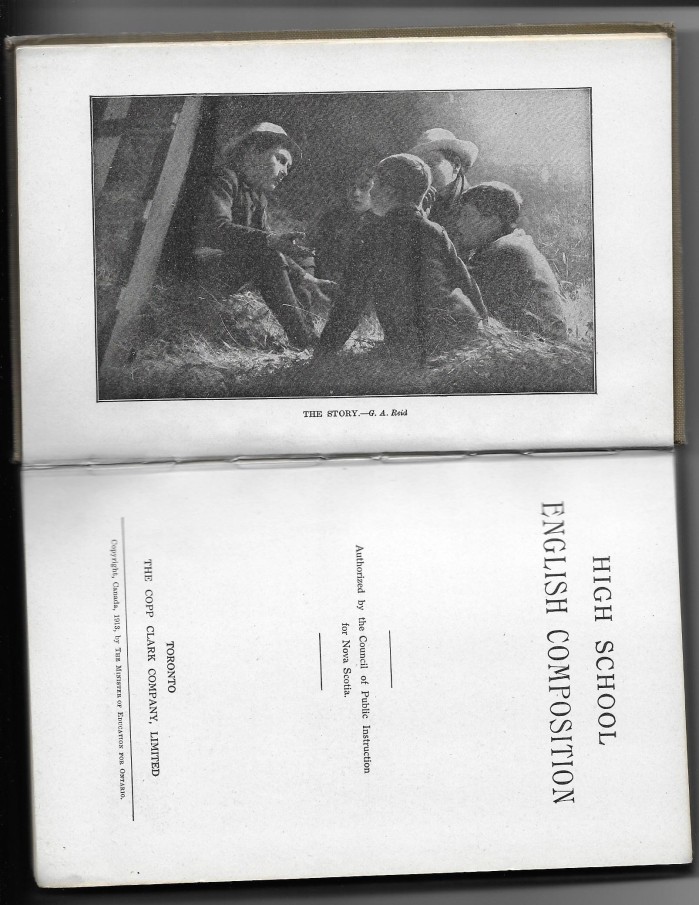
High School English Composition, 1913
~
The salary of a teacher in 1888 was certainly small compared to today! The average yearly salary for teachers in New Brunswick in 1888 was lower for female than for male teachers:
- male teachers $536.90 (First Class) (average salaries for the three Classes ranged from $231.00 to $536.90)
- female teachers $328.49 (First Class) (average salaries for the three Classes ranged from $187.47 to $328.49)
~
The Superintendent does not mention the inequity in pay for male and female teachers. He focuses on a decrease in pay from 1888 to 1889, criticizing the government for not being more generous to teachers. His worry was that teachers would not stay in the profession if salaries were too low.
… it is an ill-advised economy that seeks to maintain on the scantiest allowance a service which is essential to the preservation of order and the strength and progress of a country.
~
The budget for all schools in the Province in 1888-1889, from provincial, federal and district sources, was $404,145.00 (not including building and property costs).
~

two of the old school books in my collection: Nova Scotia Readers, 1911 (used in Nova Scotia) and The Canadian Readers, 1924 (used in Alberta)
~
Copyright 2016 Jane Tims
early schooling in New Brunswick and Nova Scotia – including nature study
Of all the classes given in 1888 in New Brunswick, I would have liked ‘Useful Knowledge’ the best. This is where I might have learned about birds and plants and butterflies.
~
Bringing ‘Useful Knowledge’ into the classroom may have been a greater challenge than it appears. The focus was on the three R’s (reading,’riting, and ‘rithmetic) and scarce resources meant less time for ‘frivolous’ subjects. In the neighboring province of Nova Scotia, educators faced a challenge when they tried to bring studies about the out-of-doors into the classroom. The situation in New Brunswick would have been similar.
~
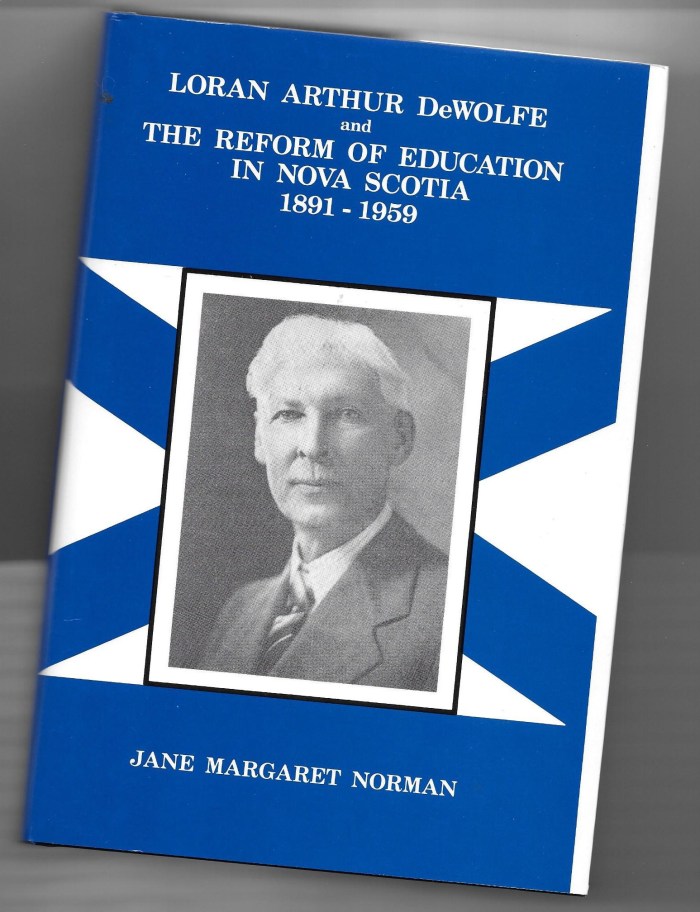
In her book Loran Arthur DeWolfe and The Reform of Education in Nova Scotia 1891-1959 (Truro, Nova Scotia: Atlantic Early Learning Productions, 1989), my aunt, Dr. Jane Margaret Norman described the situation in the late 1800s and early 1900s in Nova Scotia. Dr. DeWolfe, Director of Rural Science Schools in Nova Scotia from 1913 to 1924, focused on including studies of nature and in particular agriculture in the schools. These were times of rural out-migration – interest in staying and working on the family farm paled in comparison to the adventures promised by leaving for the west. Dr. DeWolfe was convinced that the only way to keep people in rural areas was to interest them, from the start of their education, in the world of nature.
~
~
His solution was to include in the curriculum ‘field days’, ‘spring gardens’, folk dancing, lessons in canning food, ‘Planting Days’, and school fairs. My dad, who would have attended elementary school in the late 1920s, remembered Dr. DeWolfe visiting his school in rural Digby County. He told my aunt that Dr. DeWolfe “… always had something to say about nature.”
~
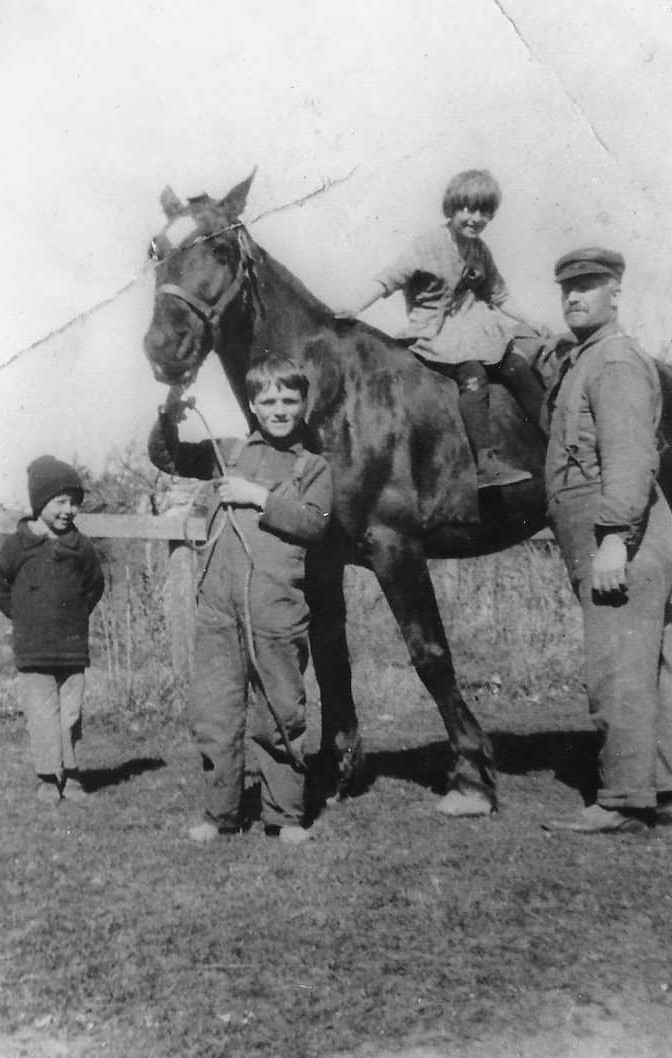
My dad as a boy (holding the horse Goldie). Dad grew up in a rural area and attended a one room school. He remembered Dr. DeWolfe’s visits to that school and his emphasis on paying attention to the out-of-doors. Dad became a teacher and, as my teacher in Grade Six, taught me about the solar system and the cause of our seasons. He also taught me how to make a whistle from a willow twig.
~
In New Brunswick, by 1888, ‘Useful Knowledge’ would have introduced many students in New Brunswick to nature studies. In rural schools (Ungraded Schools in Country Districts), the classes in Standard I (Grade 1) included ‘oral lessons on animals’ and, in Standard II (Grade 2) ‘natural specimens where possible’. Standard III (Grade 3) included ‘lessons on agricultural products of the district’, and Standard IV (Grade 4) studied ‘agricultural topics’ from Tanner’s First Principles of Agriculture. In addition to Tanner’s First Principles of Agriculture, Standards V and VI (Grades 5 and 6) used Bailey’s Natural History. Liberty Hyde Bailey (1858-1954) was a horticulturist, naturalist and advocate of nature study.
~
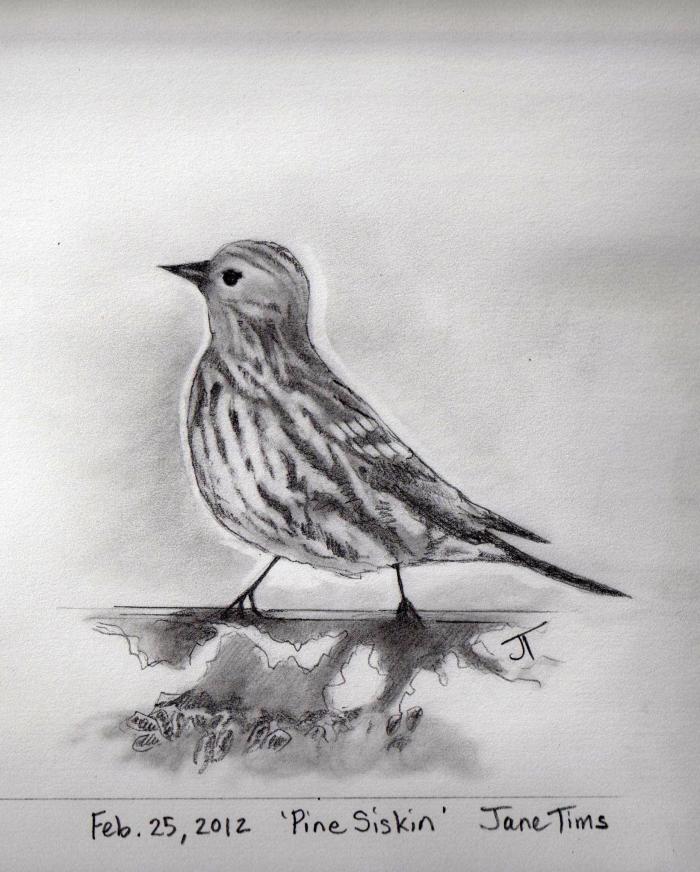
” … Stuffed birds do not sing and empty eggs do not hatch. Then let us go to the fields and watch the birds. Sit down on the soft grass and try to make out what the robin is doing on yonder fence or why the wren is bursting with song in the thicket. An opera-glass or spy-glass will bring them close to you. Try to find out not only what the colors and shapes and sizes are, but what their habits are … ” from the Birds and I , Liberty Hyde Bailey. http://libertyhydebaileyblog.blogspot.ca/
~
~
Copyright 2016 Jane Tims
Where is Frank?
In an attempt to keep making progress on my explorations of family history, and to justify my monthly contributions to Ancestry.com, I have implemented ‘genealogy Saturday’. On most Saturday’s, I pledge to discover more about my family, and to organize into a written account the information I already have. We’ll see how long this intention lasts.
~
I continue to be interested in the life and family of my great-grandmother Ella (Mary Ellen) Hawk Norman (1859-1933). I now have information on much of her life. Thanks to the City Directories at Ancestry.com, I know where she lived almost every year from 1894 onward.
~

My only photo of my Great-Grandmother Ella (Hawk) Norman (in about 1928). She is second from the right, with her hands folded. The group is standing in front of Harowitz’ Restaurant in Scranton, Pennsylvania where she worked as a pastry cook in the early 1900s.
~
I also know about her husband, my great-grandfather Frank Norman, from the date of their marriage in 1886 onward
(see my post about their marriage
https://janetims.com/2014/05/15/the-tale-of-a-marriage-certificate/
and about Frank’s fall from a horse https://janetims.com/2014/05/12/searching-the-newspapers-2/).
But I know nothing about him before 1886. Most of all, I would like to know the names of his parents, my great-great-grandparents. Of my sixteen great-great-grandparents, these are the only two names I do not know.
~
Unfortunately, the name Frank Norman was common in the mid-eighteen hundreds. I know from various documents that Frank was born about 1855 in Missouri. There were about forty Frank Normans born in Missouri in the mid-century and deciding ‘who was who’ has taken a major effort.
~
I used the following ‘rule base’ to help me sort through the many Frank Normans:
1. Discard any females (the names Francis or Frances have been used for both males and females)
2. Discard any Franks born before 1845 or after 1870 (he was at least 16 in 1886 when he married and no older than 40). Since Frank’s birth year (1855) comes from two sources and is likely near to correct, I was more stringent than this when looking at each record. I have often found birth dates in the Census suspect, probably because people were vague when providing information to the Census taker.
3. Discard any Frank Normans who had other spouses before 1896, especially those with children born in the 1880s (Ella and Frank divorced in 1896, so he could have remarried). This takes careful searching through the Census records and family trees, going back and forth to see who was in the various Frank Norman families. It is too bad we don’t have the 1890 Census !
~

Hooker, Laclede County is in south-central Missouri; Bethany is in Harrison County in northern Missouri
~
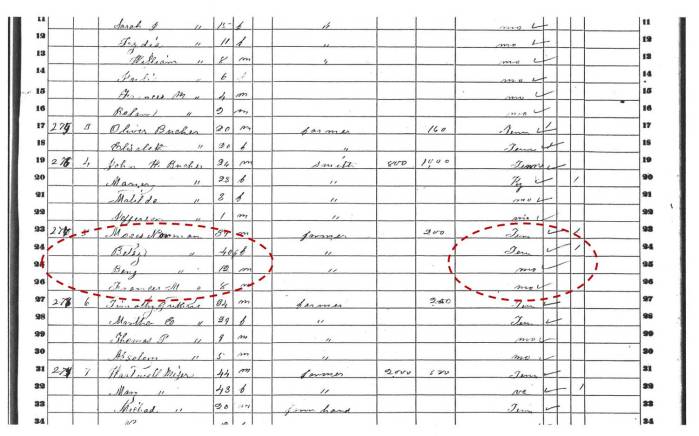
After all this, I have found only one Frank Norman who meets my criteria. Francis M. Norman (born 1852 Missouri) lives with his father Moses Norman (born 1821 Tennessee), his mother Betsy (born 1820 Tennessee) and his brother Benj (born 1848 Missouri) in Hooker, Laclede County in Missouri (1860 Census).
~
~
There were two Moses Norman families living in Hooker, Laclede in 1860. The other Moses Norman (born 1895 Tennessee) lives with wife Lucinda and their children. Moses 1895 was a landowner in Laclede. Although I have not been able to connect the two Moses Normans, it is reasonable to think they were related. In the Census, they are living fifty houses from one another, perhaps a long way in the days of large farm properties and the ‘open country neighborhood’.
~
I cannot find Moses and Betsy in any Census after 1860. A person named Benj (died 1873) is buried in the Moses Norman Cemetery in Sleeper, Laclede and this may be Moses’ (1821) son Benj.
~
On Frank’s Application for a Marriage Licence (1886), he wrote that he lived in Bethany, Harrison County, Missouri. There were Norman families in the Bethany area by 1880 and Frank may have gone there from Laclede to live or work.
~
I may never know the names of my great-great-grandparents for certain, but Moses and Betsy sound like good candidates. I will keep looking until the powers invent a time travel machine just for genealogists!
~
Copyright 2016 Jane Tims
in the shelter of the covered bridge – the Canal Bridge twenty three years later
Last Friday we drove to see three covered bridges in Charlotte County, New Brunswick – Canal Covered Bridge, McCann Bridge (Digdeguash River #4) and McGuire Bridge (Digdeguash River #3). My husband, son and I visited two of these in 1992 as part of a project for Canada’s 125th anniversary (see
https://nichepoetryandprose.wordpress.com/2011/09/05/inside-the-covered-bridge/ ).
~
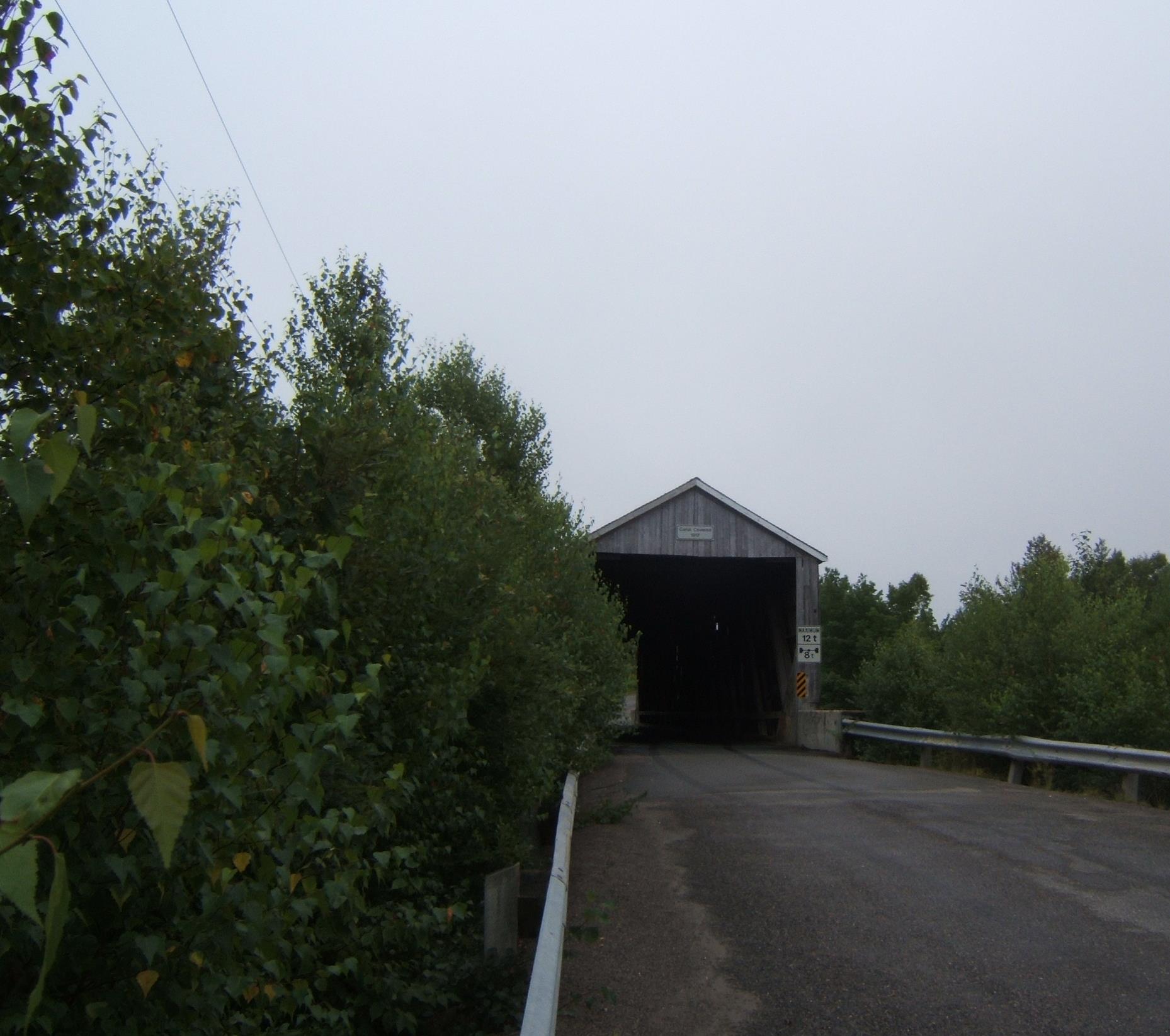
Canal Bridge, Charlotte County, New Brunswick, August 2015
~
The Canal Bridge was built in 1917. It crosses the deep natural canal connecting Lake Utopia with the Magaguadavic River.
~
The Canal is wide and sinuous, unhurried in its flow …
~

~
The water is very low this time of year. The shallow areas are inhabited by water lilies, water shield and pickerel weed …
~

~
Many people have left their initials and messages inside this bridge …
~

~
My husband couldn’t remember if we had visited the Canal Bridge in 1992. But almost immediately he found a small set of initials in black on a board heavily marked by red paint.
~

~
To me, very familiar initials! Back in May of 1992, we had left evidence of our visit. A very emotional experience, seeing our initials more than 23 years later! It was hard to go, knowing I was leaving behind a little bit of my family history.
~
Copyright 2015 Jane Tims
please affix a 1 cent stamp
Among my many genealogy projects is the study of a stack of 174 post cards sent to my Grandmother (Katie Clark) from 1906 to 1910. The post cards are a record of her travels to the United States where she was studying to become a nurse. To see more about this project, see https://nichepoetryandprose.wordpress.com/2015/02/09/a-stack-of-post-cards/
~

~
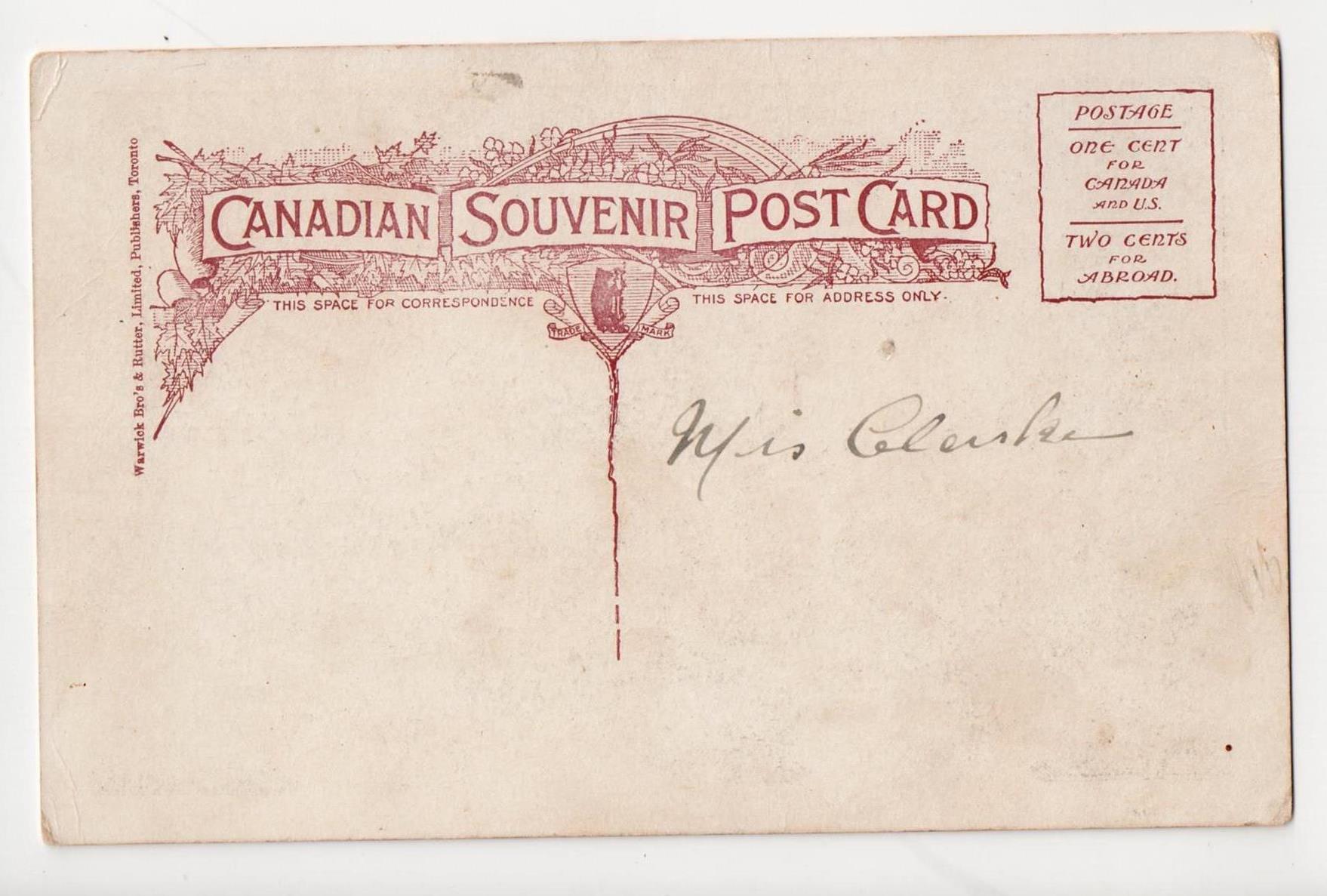
The stamps used to post the cards make an interesting study. In the early 1900s, it cost 1 cent to send a post card in both the United States and Canada. The postage requirements are printed in the upper right hand corner of this undated post card.
~
~
Since the post cards were mailed in both Canada and the United States, I have examples of stamps from both countries. The numbers in brackets (below) indicate the number of stamps I have of the type for a given year.
~
Canada
Green, Edward VII, perforated, 1 cent, 1906 (2), 1907 (7), 1908 (9), 1909 (8), 1910 (41), unknown date (10) (Note: King George V came to the throne in May 10, 1910, but stamps with his image were not issued until 1911)
Green, Cartier and Champlain, perforated, 1 cent, 1908 (1), unknown date (1)
~

~
Very occasionally, people used a 2 cent stamp to mail a post card.
Red, Edward VII, perforated, 2 cent, unknown date (2)
~

~
USA
Green, Franklin front-facing, perforated, 1 cent, 1906 (4), 1907 (5), 1908 (9), 1910 (3), unknown date (4)
Green, Franklin left-facing, perforated, 1908 (1), 1909 (9), 1910 (4)
~

~
In the collection is one USA example of a 2 cent stamp.
Red, Washington, perforated, 2 cents, 1907 (1), 1909 (1)
~

~
One card of the collection was mailed in 1913 to my Great-Grandmother, Mary Jane, Katie’s mother.
Green, Washington, perforated, 1 cent, 1913 (1)
~

~
Since Katie also received two post cards from Mexico, two of the stamps are from that country. They depict the scene on the Mexican coat of arms, an eagle holding a snake in its mouth.
Mexico
Green, Eagle Eating Snake, perforated, 2 cents, 1908 (2)
~

~
When I was young, I collected stamps for a short time, sorting through cloth pouches of bulk stamps from all over the world. Philately, the study of stamps, is not really one of my interests, but I did enjoy making a study of the stamps on my Grandmother’s post cards, mailed over one hundred years ago to help people keep in touch – the modern equivalent of a text message or e-mail.
~
Copyright 2015 Jane Tims
a stack of post cards
Saturday, for me, is genealogy day. I am interested in the history of my family and I have a lot of boxes of information to sort through. If I don’t spend a dedicated time to the study of the items in those boxes, the work will never get done. And, I want to try and get my value from the small fee I pay each month to www.ancestry.ca .
~
Over the last few Saturdays, I have been studying a small stack of post cards sent to my grandmother (Katie Clark) from 1906 to 1910. There are 174 post cards in the collection. The post cards are one record of her travels to the United States where she was studying to become a nurse.
~
~
Born in Tatamagouche, Nova Scotia in 1890, Katie Clark was raised on a farm with her brother and four sisters. When she graduated from High School, she went to Boston to become a nurse. She was joining her sister Anne who had started her nursing program there the year before.
~

Katie Clark in her nursing uniform
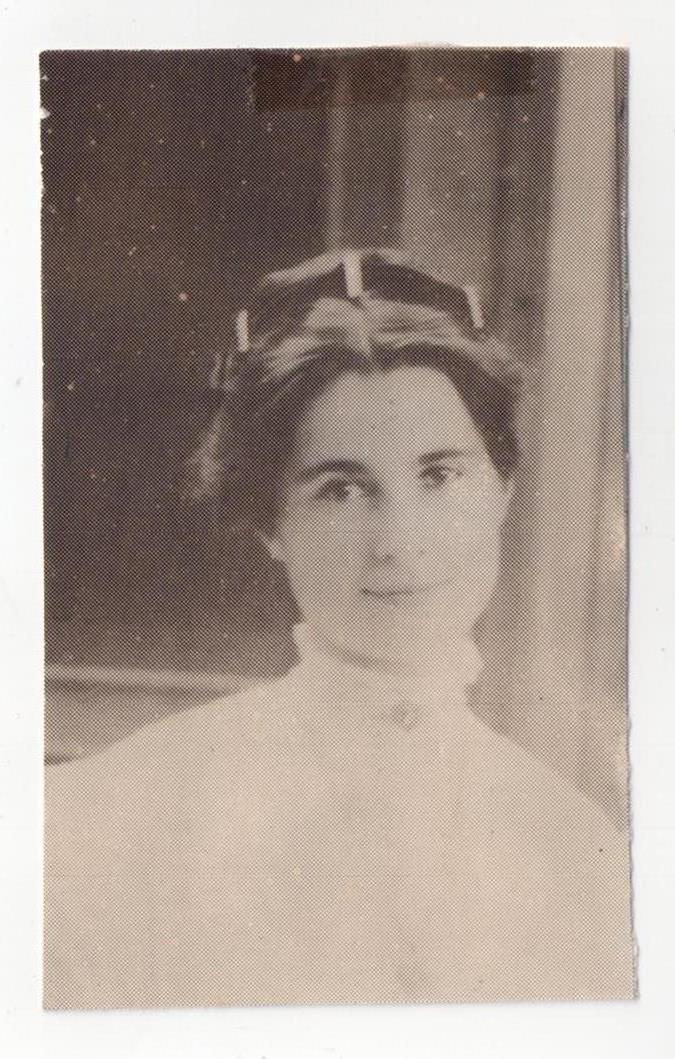
Katie Clark, my grandmother
~
Travel from the Maritimes to Boston and other cities along the Eastern Seaboard was common in the early 1900s and was usually by train. Nursing was a relatively new type of professional work for women and men. Professional nursing had been established in the 1860s largely as a result of the efforts of Florence Nightingale and others. By the turn of the century, many nursing schools were established in both the United States and Canada.
~
Katie went to school in Newton Lower Falls, on the outskirts of Boston. She studied with two of her sisters (Anne and Laura) and a small group of women and men who became her friends. Katie’s photos show sliding parties and sports activities.
~

Photos of winter sledding in Newton Lower Falls from Katie’s photo album (Katie is third from the right in the lower, right photo)
~

Photo from Katie’s album of the school’s women’s basketball team (Katie is fifth from the right in the top row; her sister Anne is second from the right in the seated second row from the front)
~
Post cards were one way friends and families could stay in touch. The post cards show that cards were mailed even within the same community and sometimes at the rate of two or three a day. The messages on Katie’s post cards often mention getting or sending letters and often ask Katie to send a post card, soon.
~
The post cards are mostly scenic in theme. There are also a large number of comedic post cards …
~
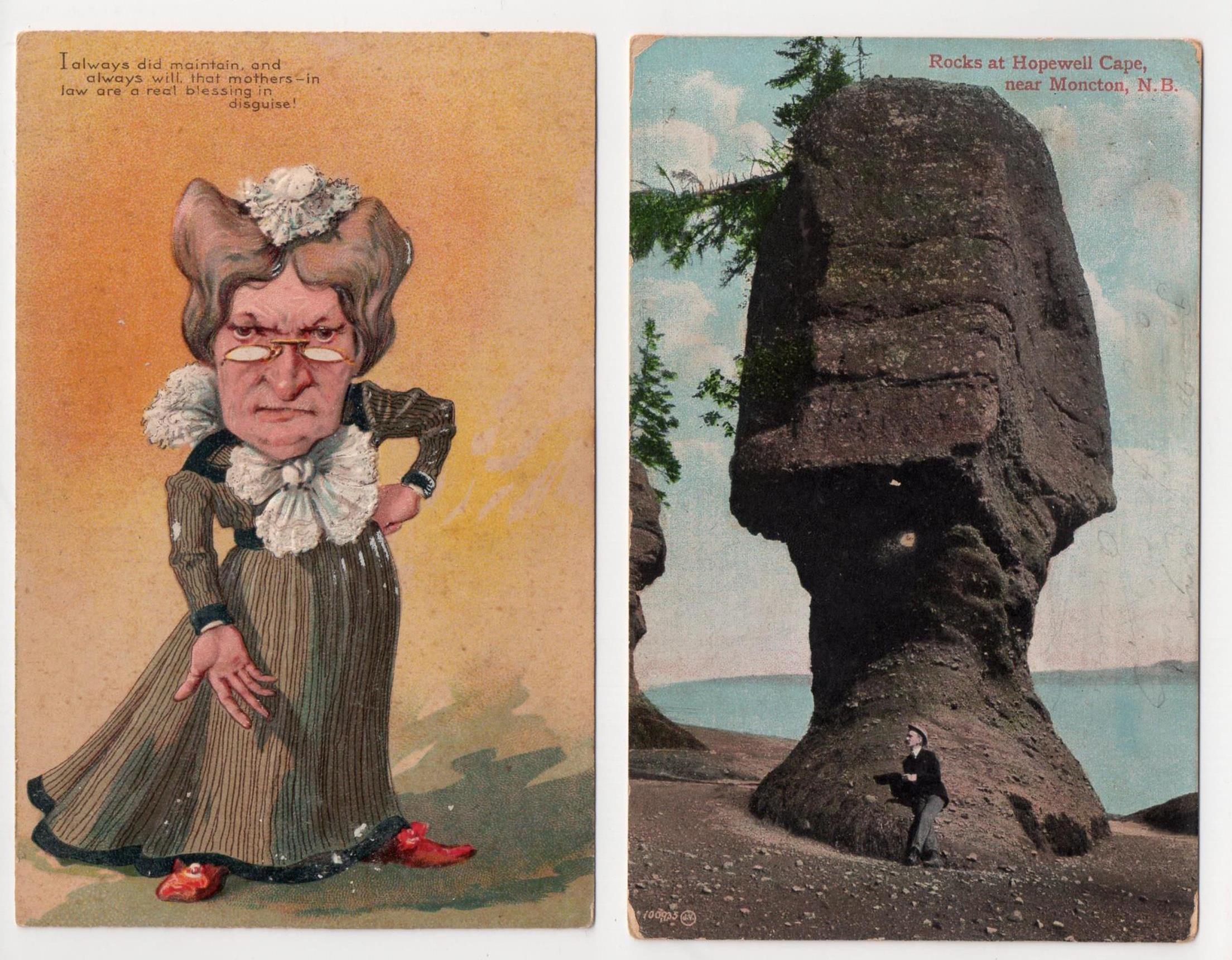
The card on the left pokes fun at Mother-in-laws (1910) ; the post card on the right is one of many scenic views, this one of the ‘flower pot’ formations near Alma, New Brunswick (1907).
~
There are also post cards with seasonal themes, for Christmas, Easter, New Years Day and Valentines Day …
~

One of Katie’s post cards with a Christmas theme (1907)
~
A few of the post cards are blank, without stamp, post mark, address or message. Perhaps these were delivered to Katie in person as a contribution towards her post card collection. Sometimes the address is the only handwriting on the card. Usually, however, the sender included a brief message to Katie, written in a special space on the back of the card. In some cases the message was written upside-down, or in various blank spaces on both front and back of the card.
~
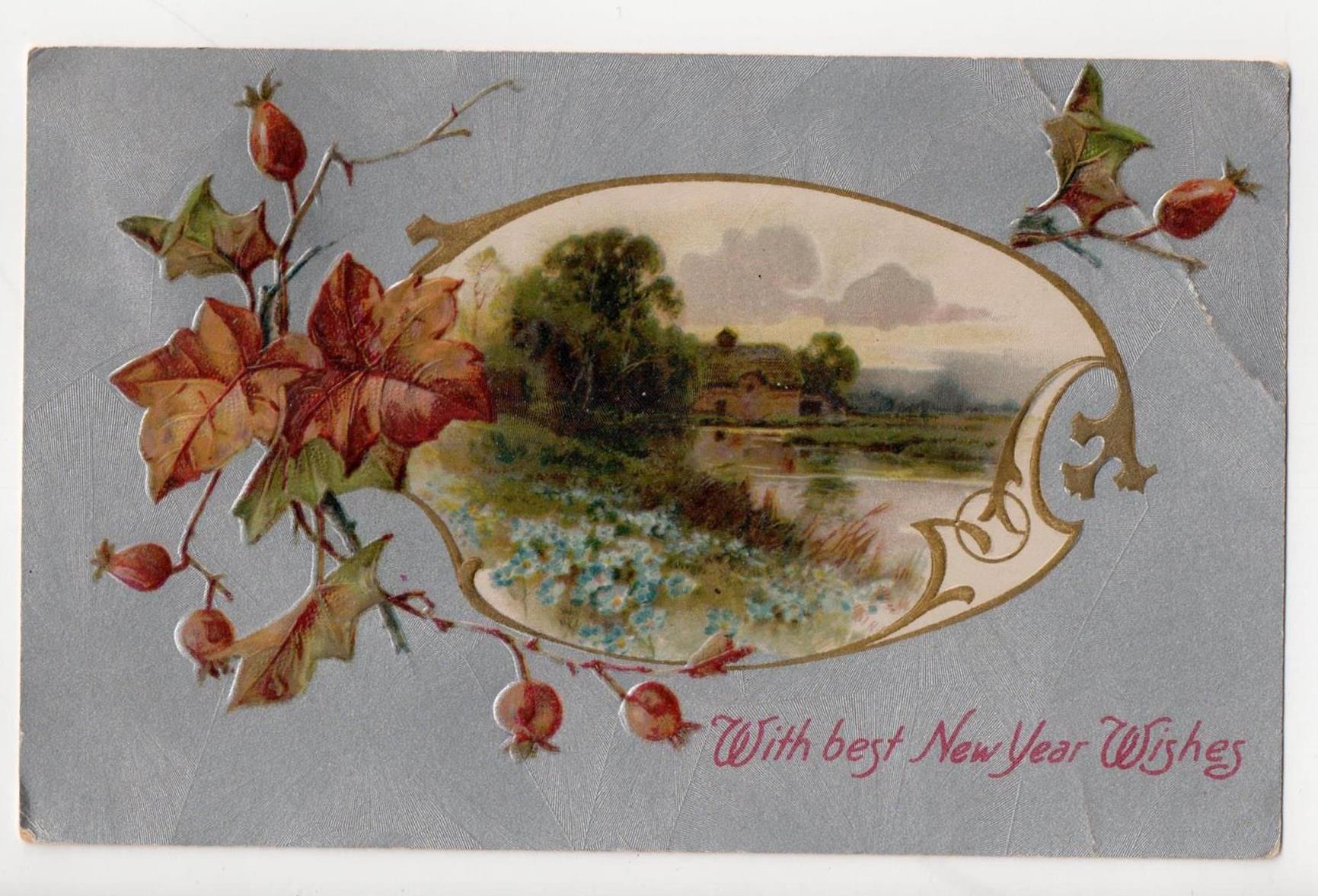
A post card with a New Year’s message (1909)

The back of the New Year’s post card with a message and a stamp affixed upside-down ! (1909)
~
The information on these cards goes beyond the written message. The cards are a record of where Katie was living at various times during the five year period. The post marks and an occasional return address indicate where Katie’s friends were living. The messages contain common expressions of the times. The post card themes tell what subjects interested people and the comedic cards show what people thought funny. And the stamps on the cards are a study of their own.
~
In future posts, I’ll have a look at some of the information contained in my grandmother’s stack of post cards.
~
Copyright 2015 Jane Tims
in winters past
~
Cold here. Last week we reached a low of -25 (degrees Centigrade). As I watched the weather statistics I saw that the record for coldest weather for the day had been in 1973. The date whisked me back to my first winter in university. I barely recall those days, but I do remember hurrying back and forth across campus from class to class and the brown scarf I knit that year to keep my face from freezing.
~
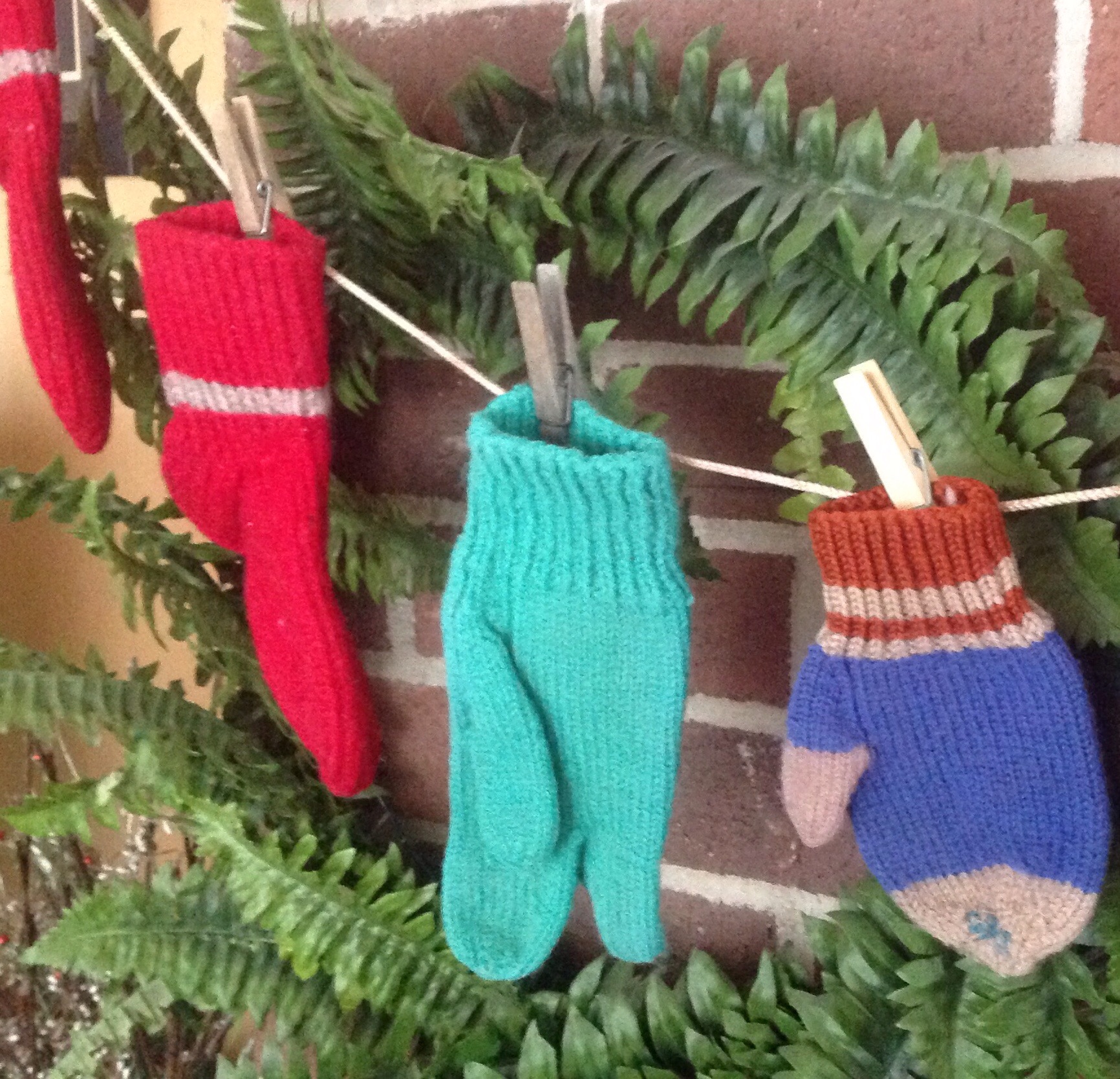
To remember other cold weather, I just look at the winter garland of children’s socks and mitts strung across our chimney.
~
The red socks and little blue mittens hanging there were knit by my grandmother almost sixty years ago. We would have worn them on many bitter days spent in the cold Alberta winter. I remember my Mom wrapping our heads with multiple wool scarves, held in place by safety pins (long before the days of fleece and high performance fibres).
~
The green glove on the line warps me forward in time to the 1980’s when my son was in elementary school and the three-fingered Teenage Mutant Ninja Turtles were all the rage. I knit three-fingered gloves for him for three winters, as fast as they were lost. The single green glove on the chimney line is the only one that has survived.
–
When the days and nights are cold, I still knit. Today, I knit socks to keep me warm both during the knitting and the wearing.
~
Cold weather? Bring it on! I have knitting needles and a skein of yarn!
~

~
Copyright 2015 Jane Tims
going for a walk
~
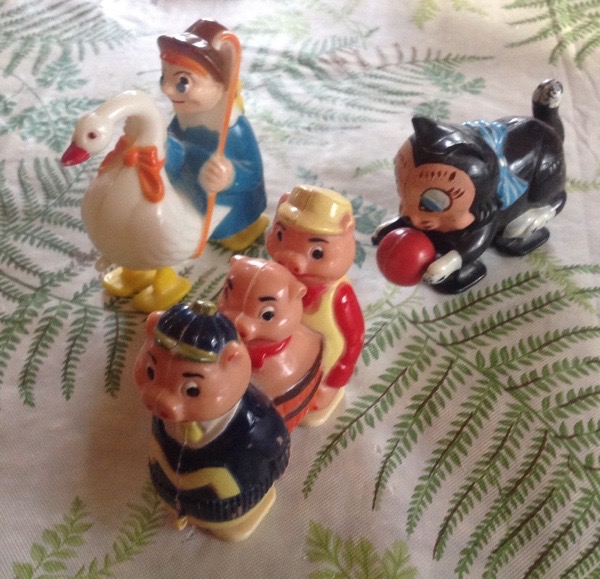
Among my prized possessions is a set of old fashioned walking toys. Made in Hong Kong of hard, painted plastic, these three charmers walk without the benefit of batteries or electricity. Put them on an inclined surface and just watch! Their little legs swing in synchrony and carry them along.
~
~
As they walk, they make a tiny clicking noise. Sometimes they fall over before they reach the end of their path, but usually they forge on to the end.
~

~
The Mother Goose and Three Little Pigs were a gift from Santa about fifty years ago. The clever black cat with his red ball was added to my collection later.
~

~
This year I am going to include these fellows among my Christmas decorations, a small celebration of Christmas Past!
~
Do you have any of the toys from your childhood Christmases?
~
Copyright 2014 Jane Tims
the influence of brothers
~
~
the influence of brothers
~
she says
I feel memory blue
today I found your brother’s G.I. Joe combat jeep
inside its trunk a canvas tent little zippered sleeping bags plastic explosives tiny guns
just as he put it all away
last day he played
~
I laugh
she says
you wait
your son will grow
and leave his toys behind
~
she misunderstands
I am remembering the day I found my box of Barbie
nylon dresses impossible buttons plastic heels and
inside her vanity with opening drawers
Barbie’s teeny tiny cold cream jars her nail polish her comb
and her
teeny
tiny
hand grenade
~
~

~
Copyright 2014 Jane Tims
crossing the brook
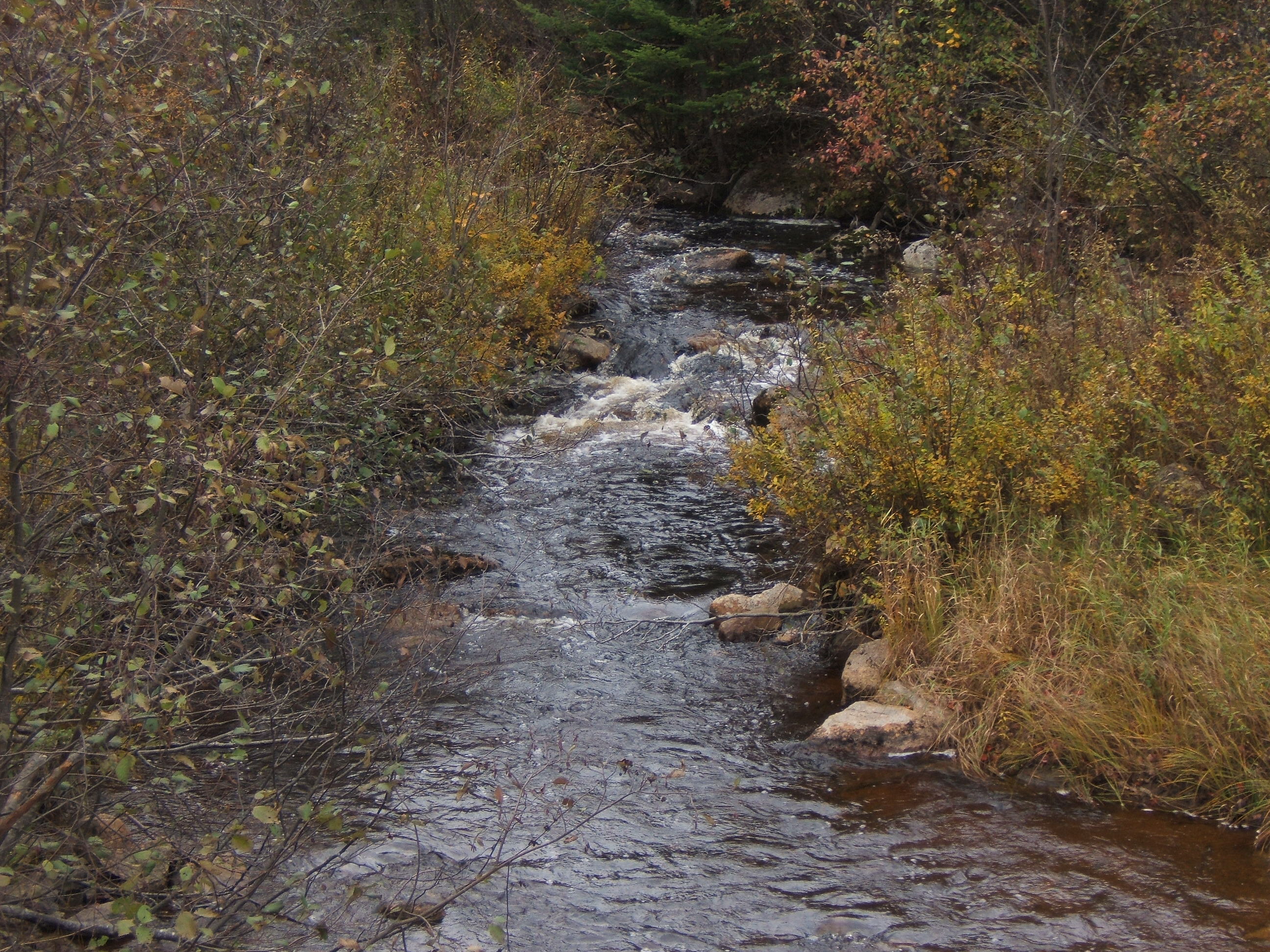
Of all kinds of waterways, I certainly love a brook the best.
~
~
When I was a child, I spent many summer hours playing in the brook at my mother’s ‘old home place’. The brook was in a small wooded valley between farms. The woods around the brook were always cool and shady, especially on a hot summer day.
~
Building stone causeways in the brook was one of my favorite pastimes. I would find flat stones and place them like stepping stones. Then, once the stones were in place, I would plant them with mosses.
~
I haven’t returned to the brook for many years, but I like to think you could still find the grey and green remnants of my causeways at intervals along the brook!
~
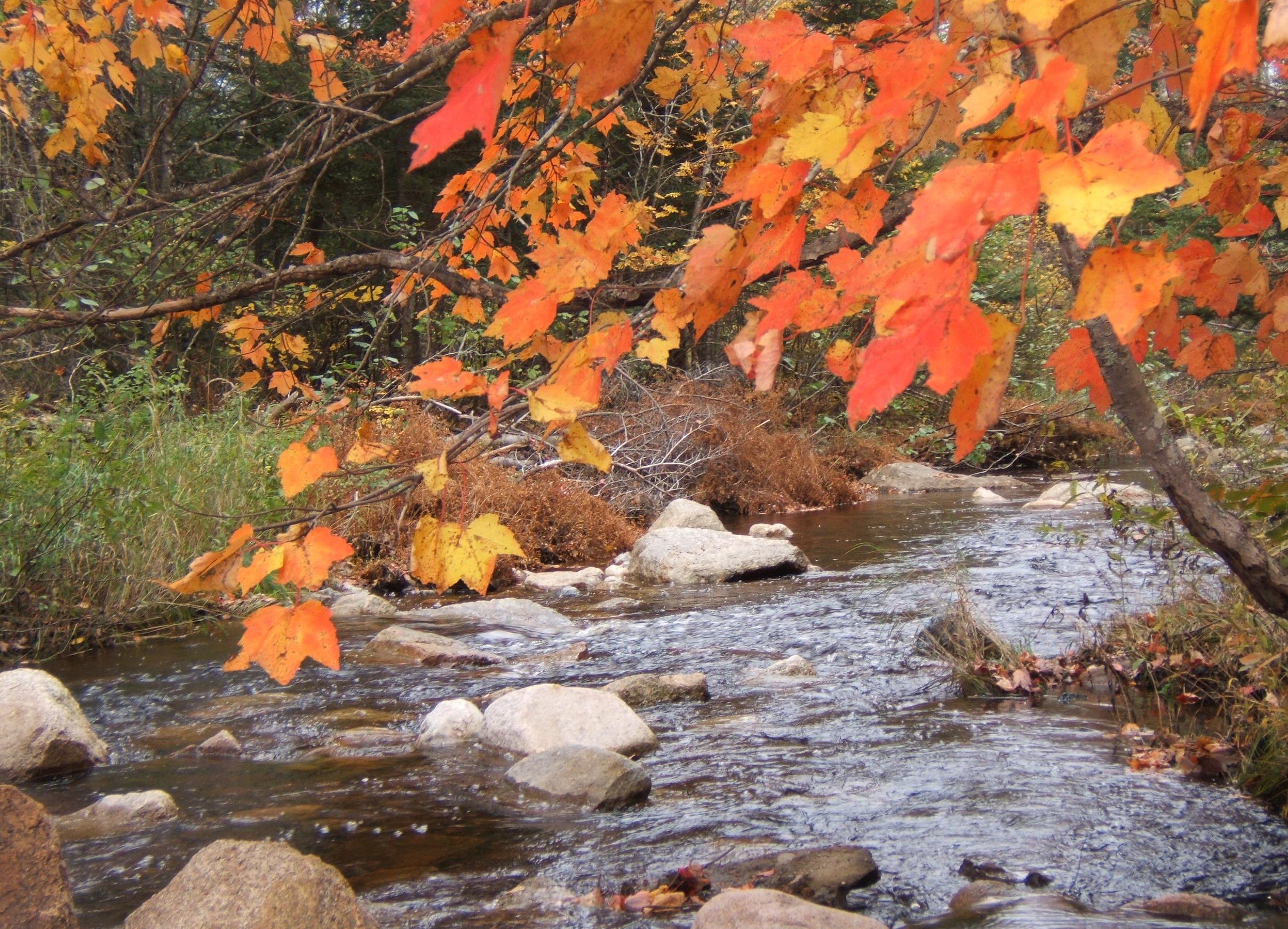
a brook in south-west New Brunswick with its own stepping stones
~
construction of moss and stone
~
in the valley between farms
a brook needs crossing
a freshet-proof ford
lattice-work built
of slate, grey stepping
stones, packed and decked with
moss, hydrophilic flourish
~
~
© Jane Tims 2014




 nichepoetryandprose