Archive for the ‘family history’ Category
virtual travel: Everton to Beckingham
The next stretch of my virtual cycling program (to visit the villages and towns of my ‘Spavold’ ancestors) took me from Everton in Nottinghamshire, to Clayworth, to Beckingham.
~

~
| Date | From | To | Distance | Time |
| November 4 | Everton | Clayworth | 5 km | 20 minutes |
| November 5 | Clayworth | Gringly on the Hill | 4 km | 18 minutes |
| November 6 | Gringly on the Hill | Beckingham | 6 km | 20 minutes |
~
~
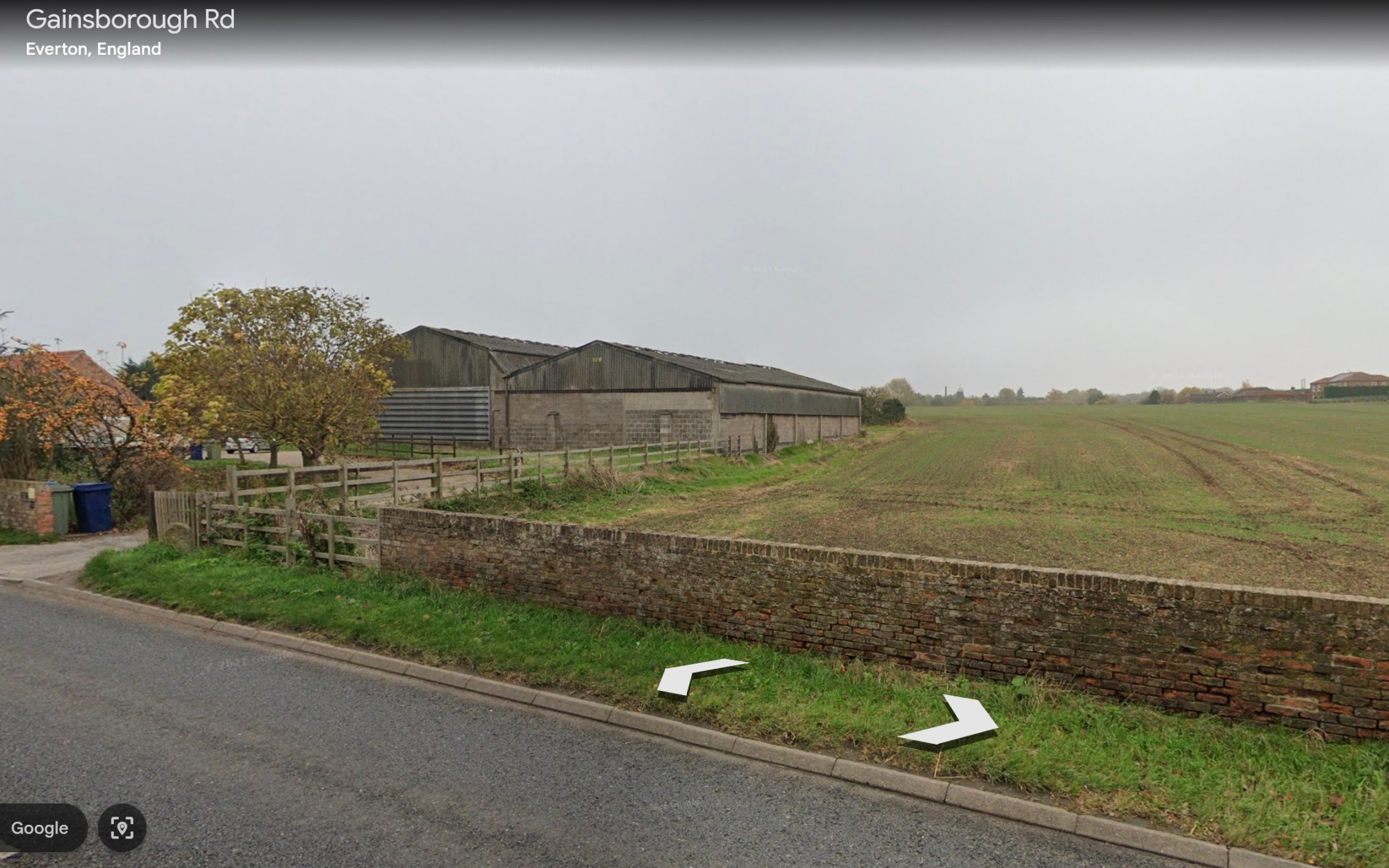
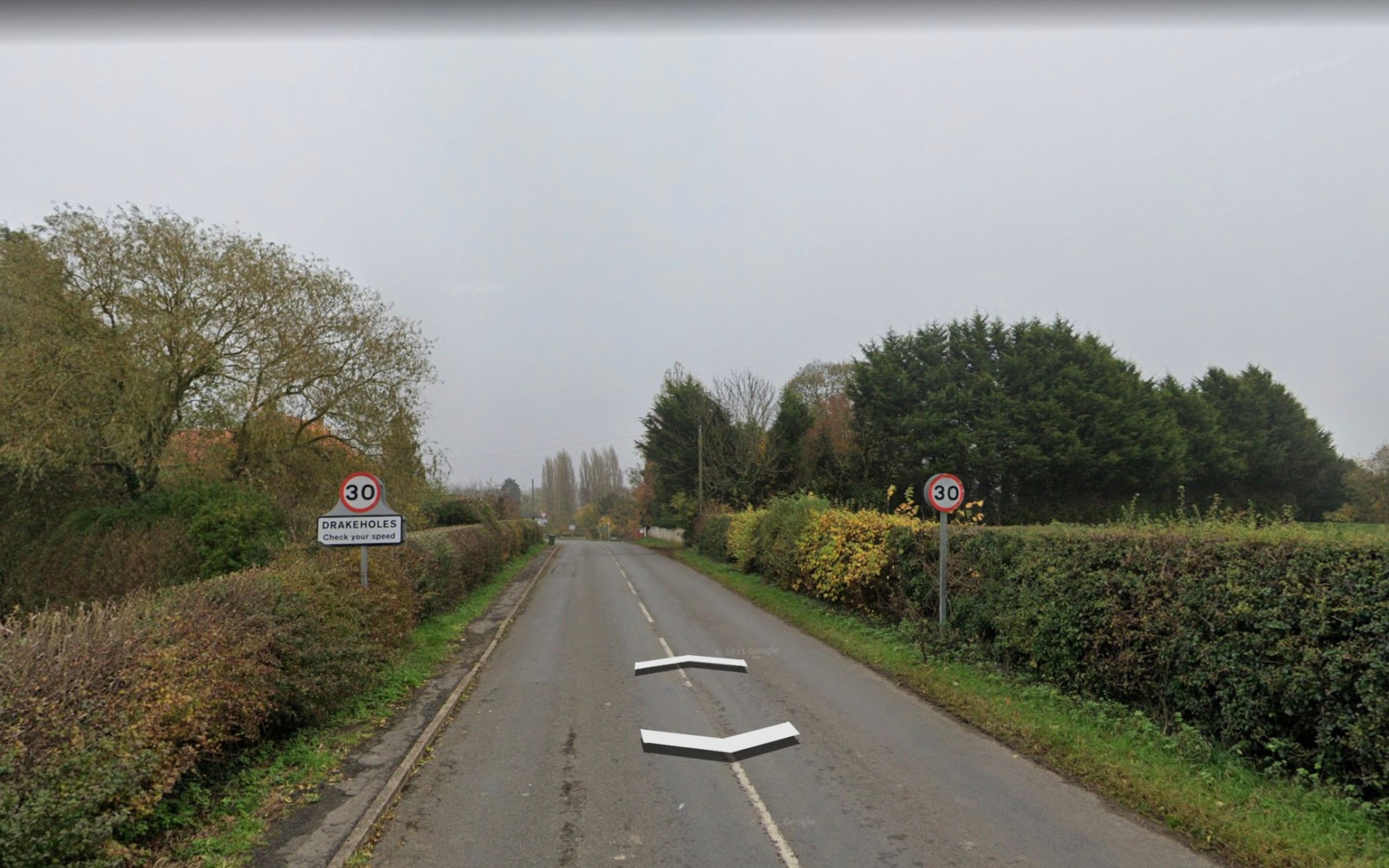
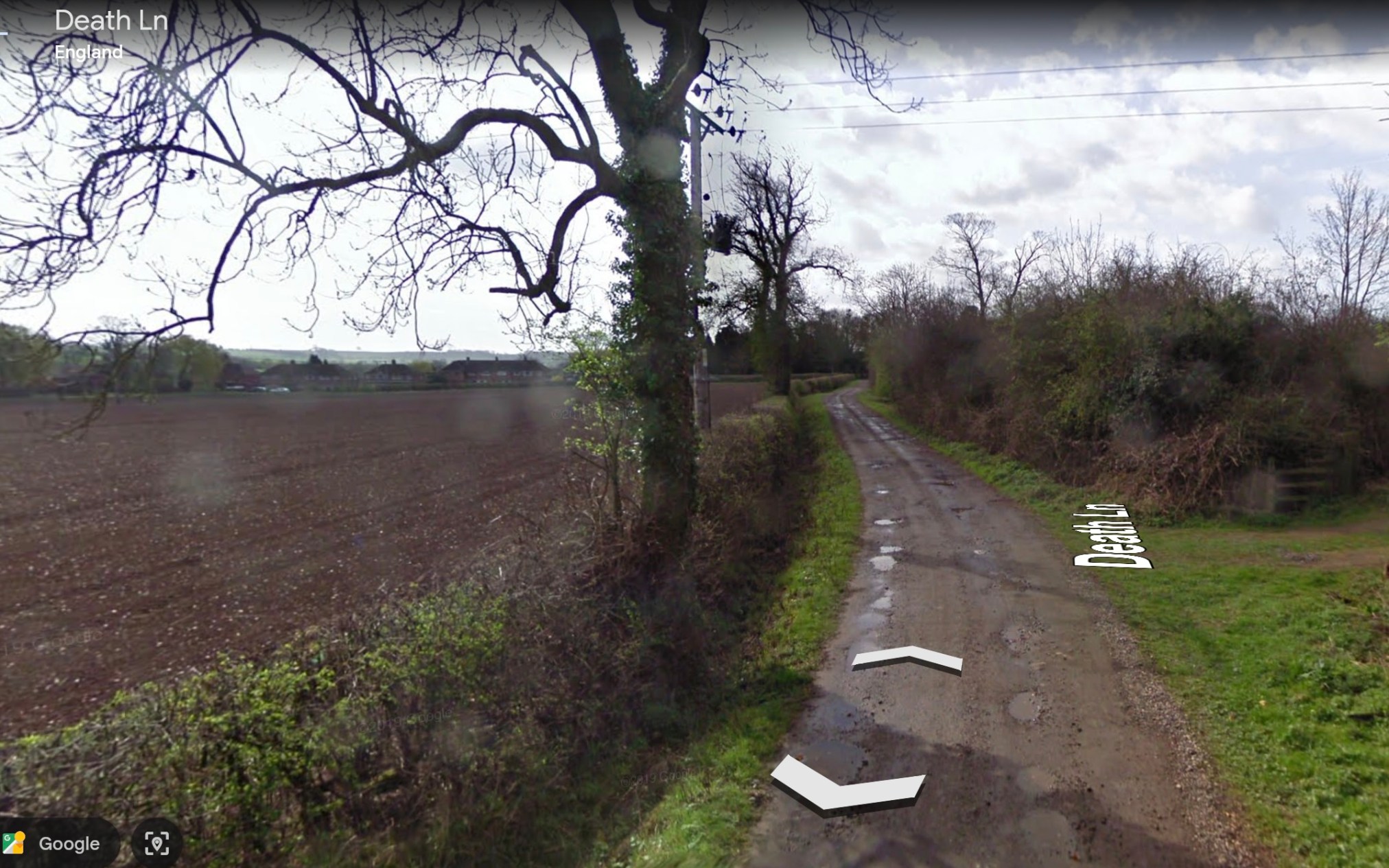
I began at Everton where the land is very flat. The area from there to Clayworth is dominated by fields and farms. The names alongtheu way are interesting… for example Drakeholes???? Death Lane???? The name Clayworth was once thought to represent the soils in the area but now it is thought to refer to a protective area of hills near the village.
~
~
~
The cycle along the road to Gringly on the Hill was flat and also agricultural. Huge fields had been planted along the road.
~

~
Also, there were wild pink roses in bloom along the way.
~

~
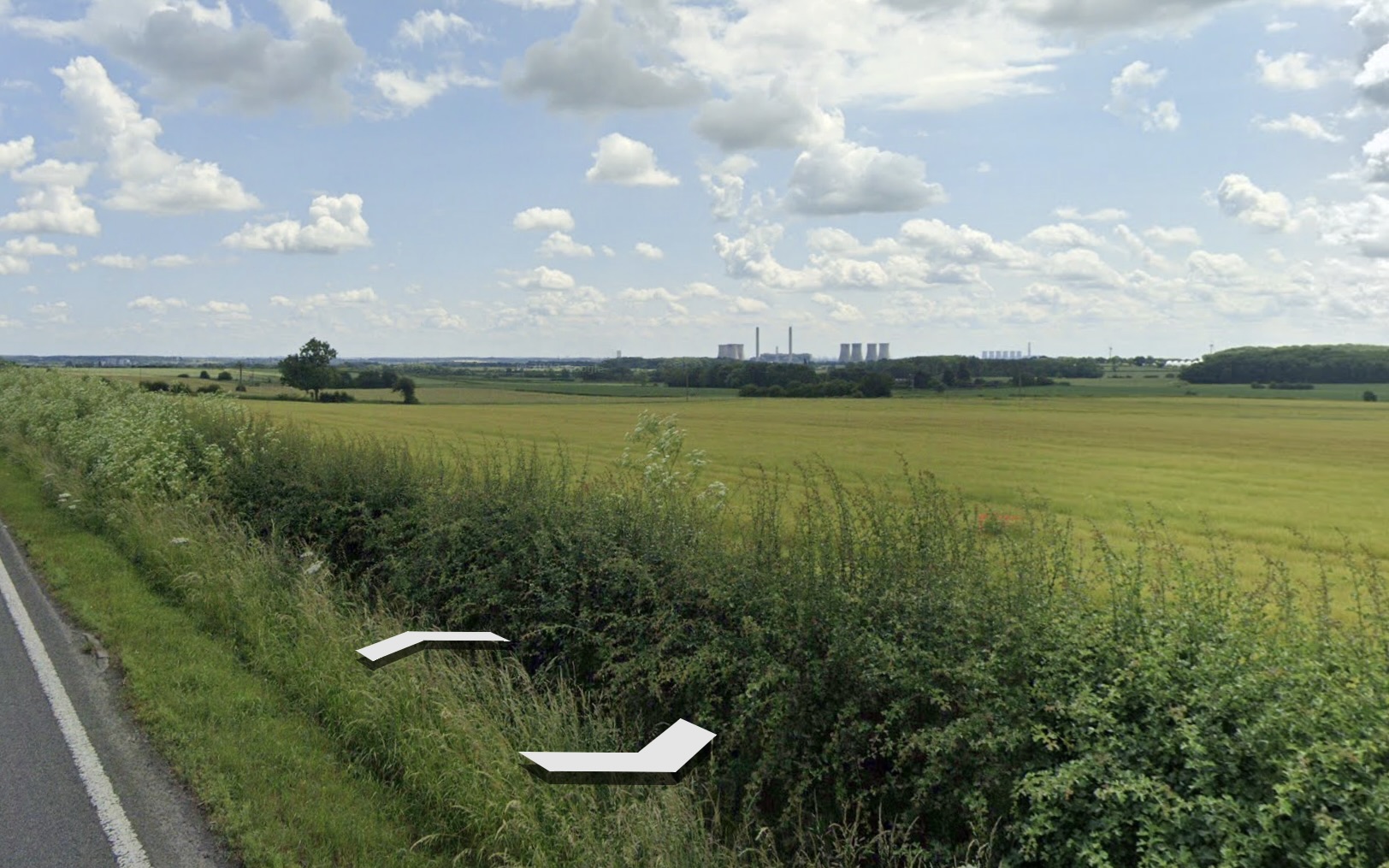
The Double highway from Gringly on the Hill to Beckingham was rather dull, except for a large industrial site on the horizon.
~
~
This turned out to be the power generating station at West Burton.
~

~
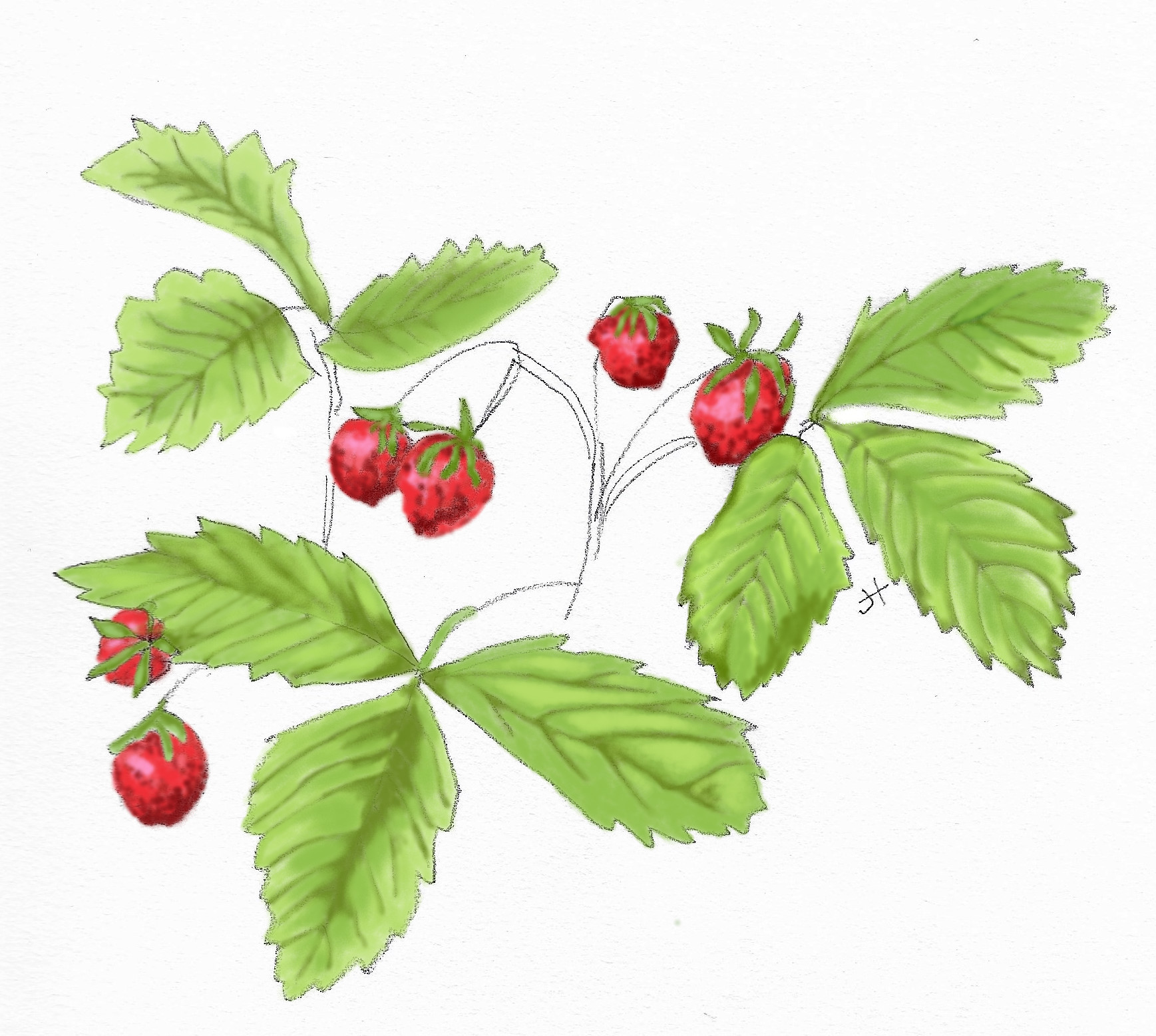
Also, in aerial view, I found a large area near North Wheatley that looked, at first, like a large solar farm. With a little reading, I now think it is more likely to be a view of extensive strawberry polytunnels … the area is known for its strawberry production and the logo for North Wheatley includes the image of a strawberry.
~

~
~
The next leg of my journey will take me to Gainsborough and Walkingerham, Lincolnshire, where three early families with the last name Spaveld/Spaven/Spavalde lived in the 1400s.
~
All my best,
Jane
Winter virtual travel: Starting off
This winter, I want to add some exercise to my days, using my stationary cylcle and Google Earth’s ‘Street View’ to travel to some of the places where my Spavold ancestors lived.
~
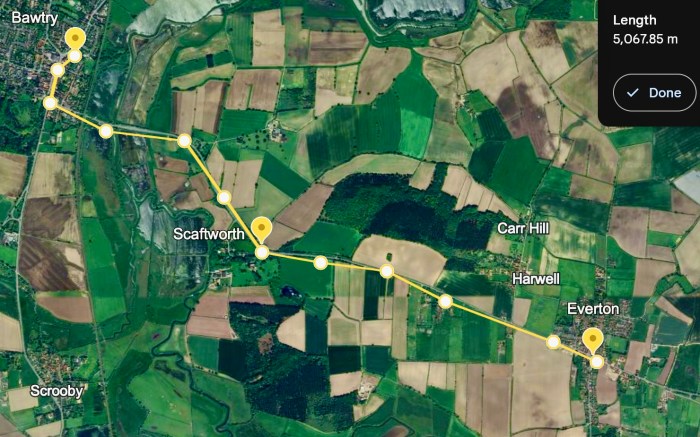
This week I began my virtual travels in Nottinghamshire, travelling from Bawtry to Scunthorpe and then to Everton.
~
~

~
| Date | From | To | distance | time |
| Oct. 28 | Bawtry | Scunthorpe | 2.5 km | 15 min |
| Oct. 29 | Scunthorpe | Everton | 2.5 kn | 20 min |
~
~

~
The highlight of the virtual trip was seeing the Holy Trinity Church in Everton. This is the church where many Spavolds were baptised, married, and buried. They once walked through those doors! They walked the street I followed! The church was built in 1066 and still stands almost 1000 years later!!!! The original settlement was Danish, called Eofortun.
~
The next stretch of my travels will be to Beckingham and then to Gainsborough in Lincolnshire where the earliest Spavold families lived in the 1400s.
~
All my Best,
Jane Tims (a.k.a. Jane Spavold)
winter cycling – a virtual trip through Nottinghamshire
In summer, my exercise routine includes a walk and some yard work around our long driveway loop. I sit for a while on my stone bench and watch the tree tops, listen to the neighbourhood sounds, and sort the bird calls from the more human sounds. This past summer I cleaned out a small pond and gave at least seven frogs a new home!
~

~
This winter, I will replace the driveway walk with some stationary cycling. As I cycle, I will follow a route in Google Earth and use the Street View feature to see the sights along the way. My chosen route is a virtual tour of the area where some of my ‘Spavold’ ancestors lived in the 15th, 16th and 17th centuries.
~

~
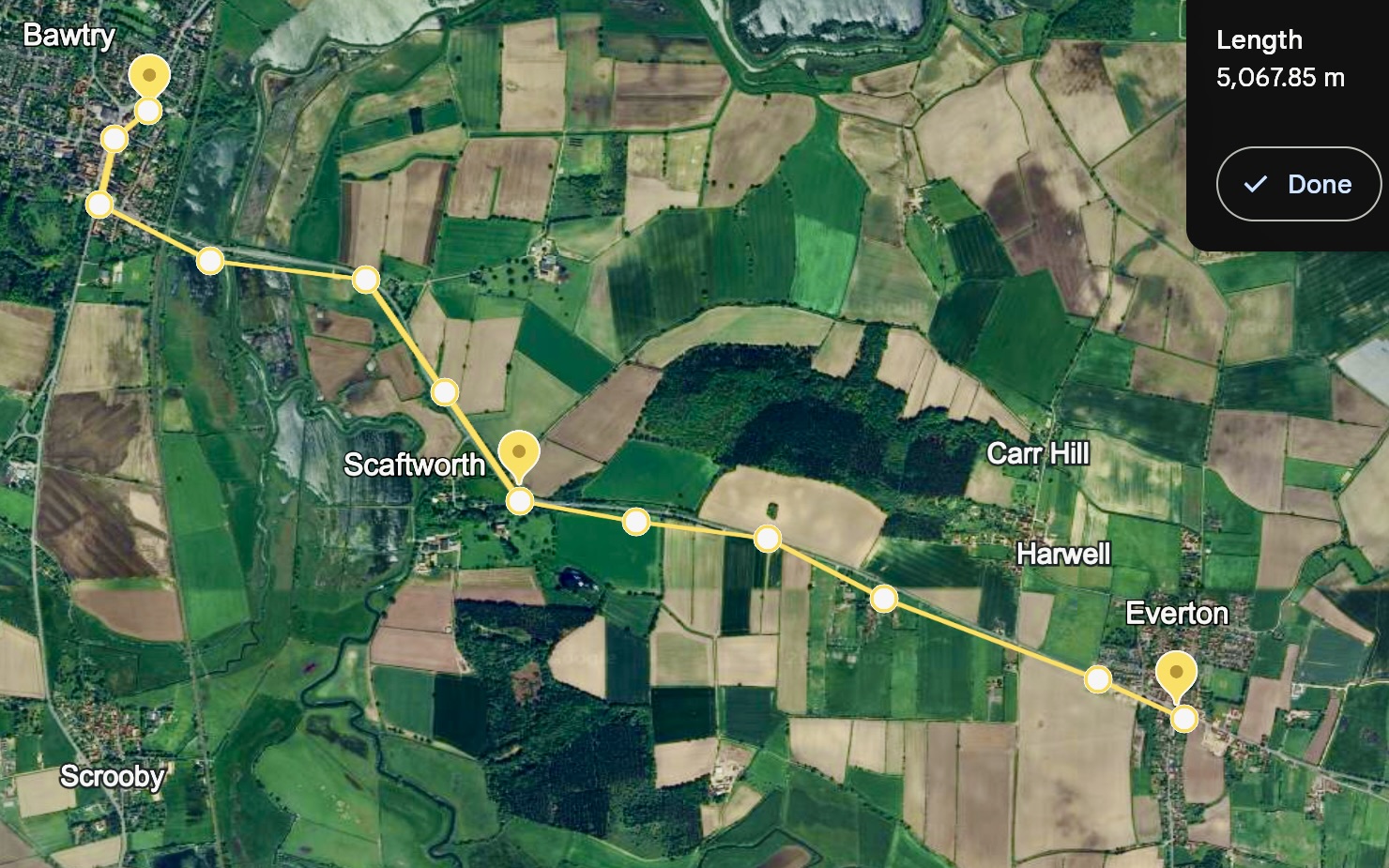
The entire route will take a lot of cycling, but I will start small, with a trip from Bawtry to Scaftworth to Everton. The baptismal, marriage and burial records of the Holy Trinity church in Everton show the many Spavolds who lived in this area, including the family of Thomas Spavold (1695-1751) and Judith Sellers (1699-1764). I realize most of the buildings existing in the early 1700s will be gone, but the landscape will be the same and the trip will give me a glimpse of where my acceptors lived.
~
~
I will keep you up to date on the things I see.
~
All my best,
Jane Tims (a.k.a. Jane Spavold Tims)
Building a Family Tree
This year, I spent the months of August, September and October tracing the roots of my great-great-great-grandfather, William Spavold, and the origins of the Spavold family. I have used the services of Ancestry.ca in my search and thank the website and others who have studied the Spavold family before me.
~
I began with these bits of information:
- William Spavold was born in Nottinghamshire in 1785 and died in 1815;
- William married Eliza Greenfield in 1807;
- William was a carpenter;
- after William died, Eliza married John Adam Hill in 1816.
~
In my search, I soon encountered Spavolds in Nottinghamshire— many Spavolds. My tree, not yet available to the public, includes over 700 people, including spouses and some parents of spouses.
~
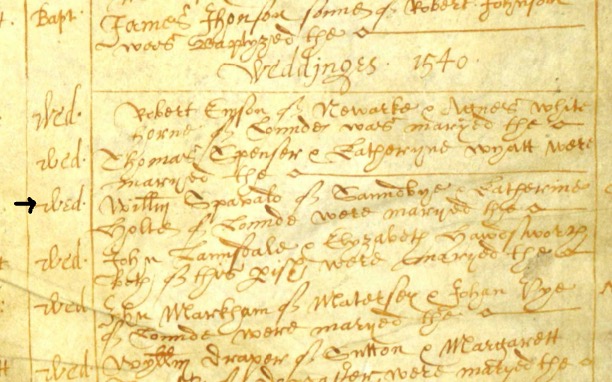
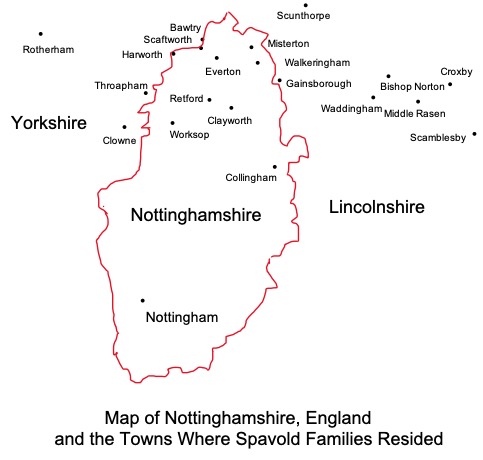
The earliest records are of three Spavold males: Anthony Spavalde (1500), an ‘Unknown Spavalde’ (1493-1552) (first name unknown), and a ‘Mr. Spavan,’ (given name also unknown). All three lived in the area of Gainsborough, in northern Lincolnshire, and may have been brothers or cousins. At the same time, there is also a family with the last name of Spafford living in the Collingham area, about 30 kms south of Gainsborough. The names Spavalde, Spavan and Spafford are so similar, I think the families were related to one another.
~
Anthony Spavalde married Alice and had a son Anthony, beginning at least seven generations of Spavolds. The Unknown Spavold married Maud of Gainsborough and had 3 sons and 1 daughter, beginning at least fourteen generations into the 1900s. Mr. Spavan had three sons and I have not yet been able to follow them into more generations. The Spafford family stayed in the Collingham area until the mid 1700s when some of the family had moved to Beckingham, near Gainsborough in northern Nottinghamshire; they also have more than fourteen generations into the 1900s.
~
The variable spelling of the name may have something to do with the difficulties tracing these families, but Ancestry.ca seems to be able to find records in spite of the various name spellings. ‘Spavold’ is an unusual name and has been listed in the various records as ‘Spaffield,’ ‘Spavin,’ ‘Spavald,’ ‘Spaviald,’ and so on. The ways of writing in the records and their tendency to use Latin phrases adds to the difficulties.
~
~
The families remained in the Gainsborough area for the first two or three generations, but by 1673 (family of Anthony) and 1583 (family of Unknown) had begun an outward migration to the nearby communities of Walkeringham and Misterton, both in Lincolnshire. By the fourth generation, with the marriage of Nicholai (1638), some of the families had shifted to the Everton area in northeastern Nottinghamshire and soon after to communities in eastern Yorkshire. The entire Spavold family, at least until the early 1800s remained in this group of communities in northern Yorkshire, Nottinghamshire and Lincolnshire.
~
~
The process of finding these Spavolds has been made more difficult due to the predominance of the given names Thomas, William, Robert, Elizabeth, Mary and Anne in the various families. I still haven’t found William, my great-great-grandfather, but in the next post I will talk about how best to sort family members with the same name.
~
All my best,
Jane Tims (a. k. a. Spavold)
Puzzling Over My Last Name
When I was growing up, I often puzzled over my last name: ‘Spavold.’ No one else in the community where we lived had that name. I made up stories to answer folks who asked me about my surname: we were Polish; we were the only family in the world to ever have that name; we were Italian and the real name was ‘Spavoldini.’
~
My dad was also interested in the orgins of the name, but he took a more studied approach. He found out the name of the first Spavold to arrive in Nova Scotia and wrote a book about the many Spavolds in Nova Scotia who were descendants of that first ‘Spavold’ in Canada: Spavold’s Wald, S.W. Spavold, unpublished, about 1990.
~
The first Spavold in Nova Scotia was a boy of only 8 years, born in England in 1808. He arrived in a shipwreck of the Trafalgar on Briar Island on July 30, 1817. He came to Briar Island with his mother (Eliza Greenfield), his step-father (John Adam Hill) and his half-brother (Thomas Hill, a boy of two). The family survived the shipwreck and stayed in the Digby area of Nova Scotia. For more about this story, see my earlier post at https://janetims.com/2011/12/03/briar-island-rock-2-the-shipwreck/ .
~

~
William’s father, my great, great, great grandfather, was William Spavold, born in Nottinghamshire in England in 1785. In 1807, when he was 22 years old, he married Eliza Greenfield. He was a carpenter and my Dad’s story was that when he died, Eliza sold his carpenter tools to get passage for Canada on the Trafalger with her second husband John Hill.
~
No other information was available to my dad, although he did track down ‘Spavolds’ elsewhere in Canada, in Australia and in England. I talked on the telephone with Helen Spavold who lives in Clowne, Yorkshire, and she said, with a proud lilt in her voice, “There are Spavolds in our graveyard.” My dad, and my brother (who lived in Australia for a time), corresponded with Joseph Spavould, who lived in Australia.
~
Now, with the help of Ancestry.com, I am determined to find out more about William Spavold of Nottinghamshire. The next few posts will talk about my discovery of the occurrence of Spavolds in England in the 15th, 16th, 17th, 18th and 19th centuries. And in the 20th and 21st centuries—I am not alone.
~
All my best,
Jane Tims (a. k. a. Spavold)
still writing
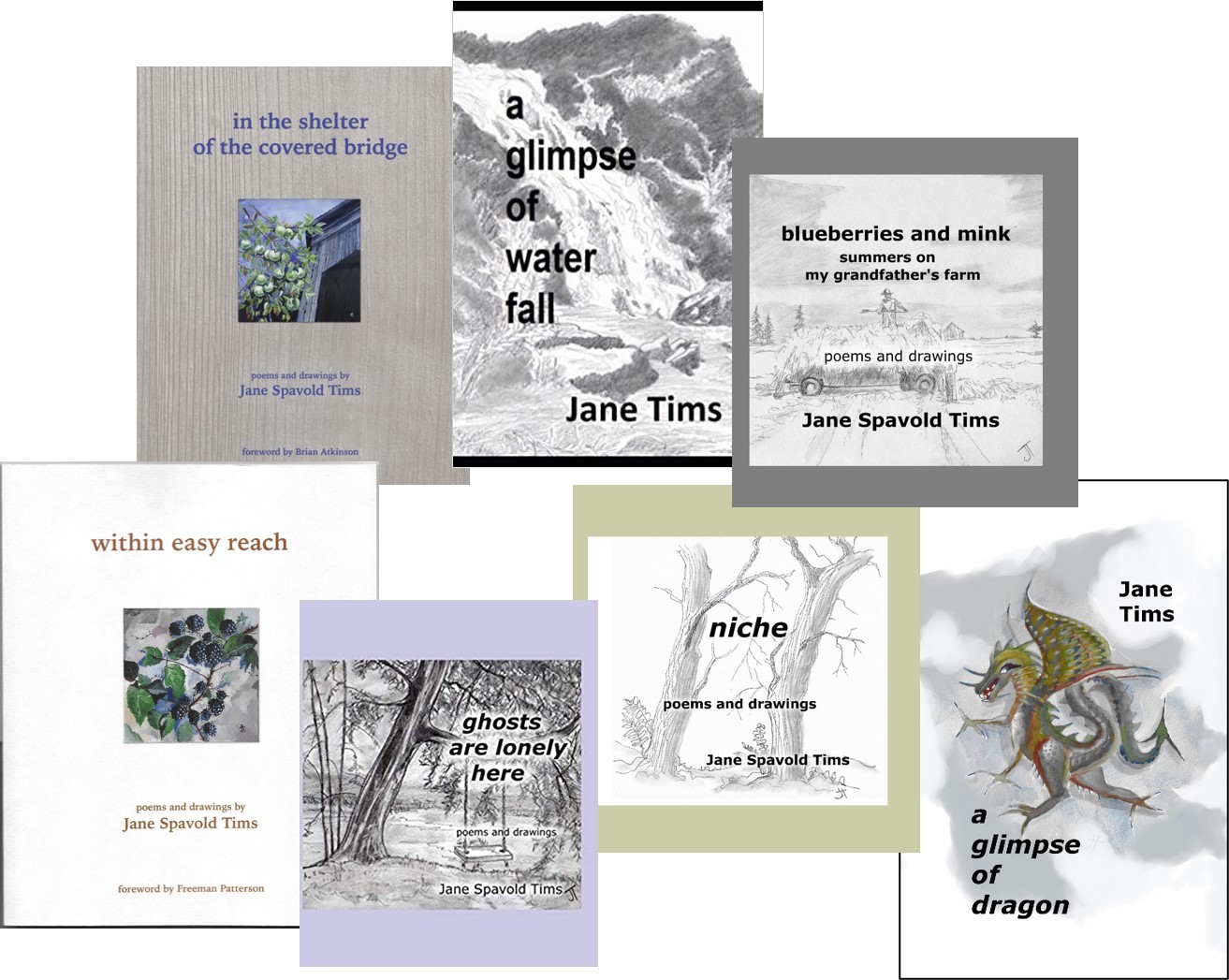
When I retired in 2012, I had my next phase of life well-planned. I had applied for a Creations grant and so stepped right into writing my first book. Since then, in ten years, I have published seven poetry books, twelve science fiction books and four Kaye Eliot Mysteries. Two of the poetry books were published with Chapel Street Editions; the rest, I have published myself with Kindle Direct, learning the formatting process as I go.
~
~
I still have a few books waiting in the wings, including three books in my upcoming Writers Retreat Mysteries and five novellas in an Urban Adventure Series. I also have the poems for at least three more poetry collections, including one about ‘sounds in nature’ to be published by Chapel Street Editions next year. And I have new ideas all the time.
~
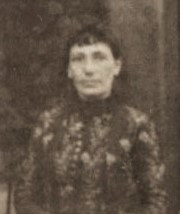
At present, I am completing my first non-fiction book, a history of my great-grandmother Ella (Hawk) Norman (Ella:1859-1933). Ella began her life as one of the Pennsylvania Deutch, the community of German immigrants to Pennsylvania established in the 1700s. As an adult, Ella traveled to the west and spent years in Laramie, Wyoming, where she married, and Denver, Colorado where she built a life for herself and her young son.
~
~
The book includes the research done by me and by my aunt, Dr. Jane Margaret Norman. Genealogy is a unique type of writing because the work can never be truly completed. There is so much still to learn about Ella and new tools, such as DNA analysis, are helping to add to her story. However, I have enough information to publish the book. Only a few more edits to go.
~
The audience for this book will include Ella’s descendants and relatives in her Family Tree, as well as other genealogists who are interested in my methods. I have also included a creative element, a series of poems written as a tribute to Ella and her family.
~
I think the book will also be of interest to those curious about ‘women’s history.’ Ella was one of those brave folks who traveled west in the 1880s at a time when the railroad made travel to the west more accessible than ever before. Her sister, Sadie Hawk, who was a big part of her life, was an example of a single woman who supported herself in a day when women had few rights and were at a disadvantage in a world where women were expected to marry.
~
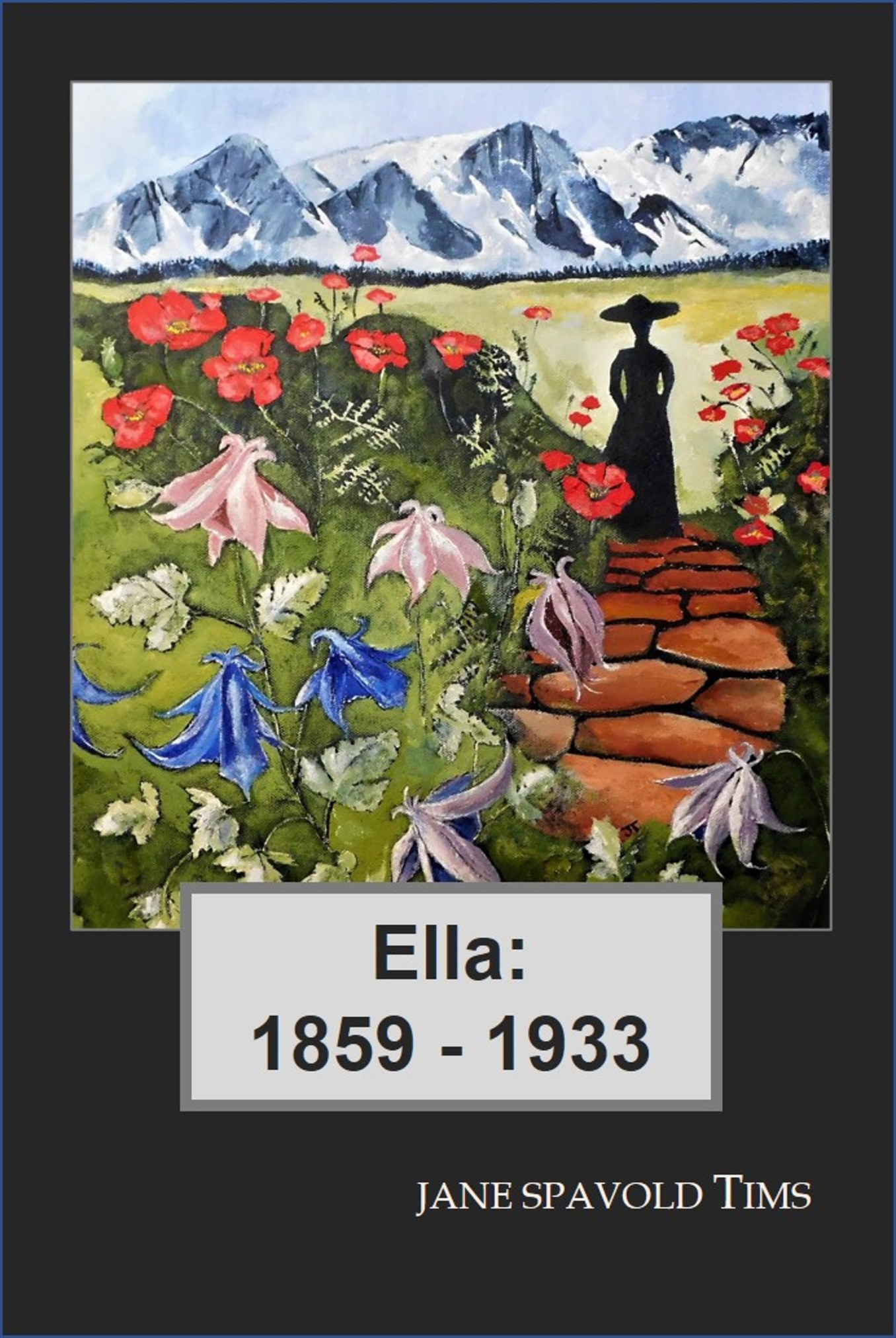
I have completed the painting for the cover of the book. The lower part of the image, a garden of columbines and poppies, represents the security of home in Pennsylvania. Ella stands at the edge of the garden path in silhouette, looking toward the west and the mountains near Laramie, Wyoming. My Uncle Francis who knew Ella, his grandmother, told me Ella never forgot the west after she returned to Pennsylvania and always planned to return some day.
~

~
I wish you well with your own endeavors. If you are a writer, what projects are you working on and what stage in the process most intrigues you? If you are interested in your own family history, what ancestor interests you the most and why? If you are a reader, perhaps you will try one of my books, or look forward to the release of Ella-1859 to 1933.
~
All my best!
Jane
another book, another cover
True to my mantra of having multiple projects on the go at one time, I have been quietly working on a new book, of the genealogical variety. The book, titled Ella: 1859-1933, is an historical account of my great-grandmother’s life, revealed through family stories, Census and City Directory records, military and other official government records, and study of other genealogical sources (I have blogged before about my great-grandmother https://janetims.com/?s=Ella+Norman+). Much of the information is the result of study by Dr. Jane Margaret Norman, my aunt, who began looking for evidence of Ella’s life in the 1970s and found out most of the known information on Ella’s life. The book will be of interest to Ella’s descendants and others in the Hawk and Kresge lineage.
~

~
A Brief Synopsis of the Book:
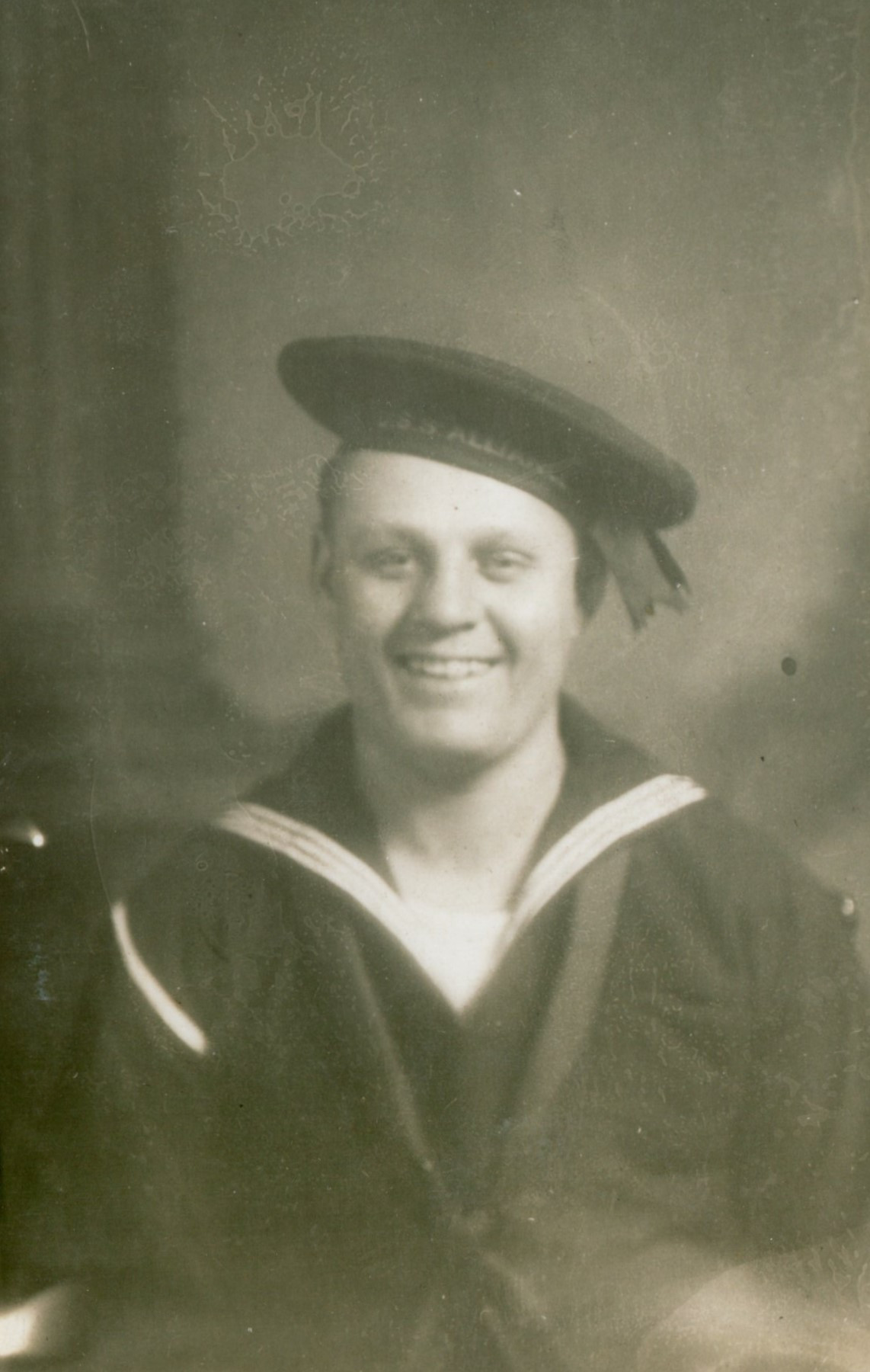
Ella Hawk (her maternal grandfather was a Kresge) was born in 1859 to a Pennsylvania German family. When she became an adult, she followed the path of many who felt the lure of the West. By 1880, she lived in Laramie, Wyoming where, in 1886, she met and married Frank Norman. She had one son, Leo, and lived in the West for another 24 years. In 1911, she returned to Pennsylvania to live with her mother and sister. Her son served in the navy and eventually met and married Katie Clark, a trained nurse. In 1927, Katie returned to Canada to raise her young family. Katie and Leo were my grandmother and grandfather.
~
The book includes a detailed presentation of these events, as well as the genealogical references. I will also include three poems as a memorial to Ella’s family and the account of a trip we took to Wyoming to see where Ella and Frank were married.
~
~
Book Cover:
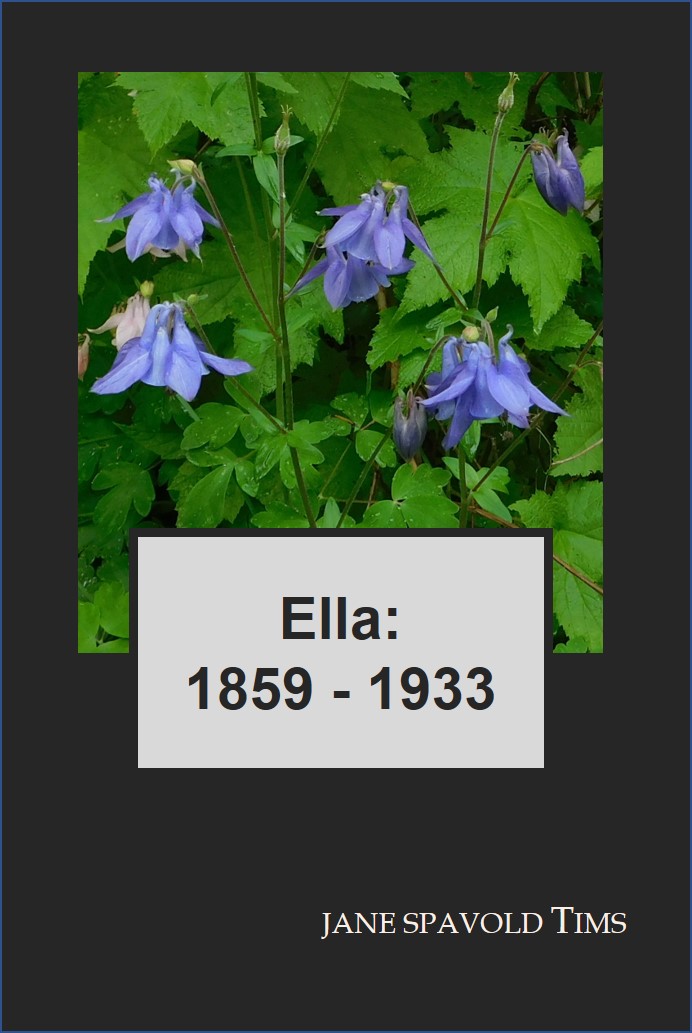
I include two references to flowers in the book, to red poppies, and pink and blue columbines. So I decided early to include these flowers on the cover of the book. I also wanted to show Ella on the cover but as a silhouette, walking in the garden. I know, from my Uncle Francis’ memories, she wore wide-brimmed hats, so the figure will be wearing such a hat.
~
~
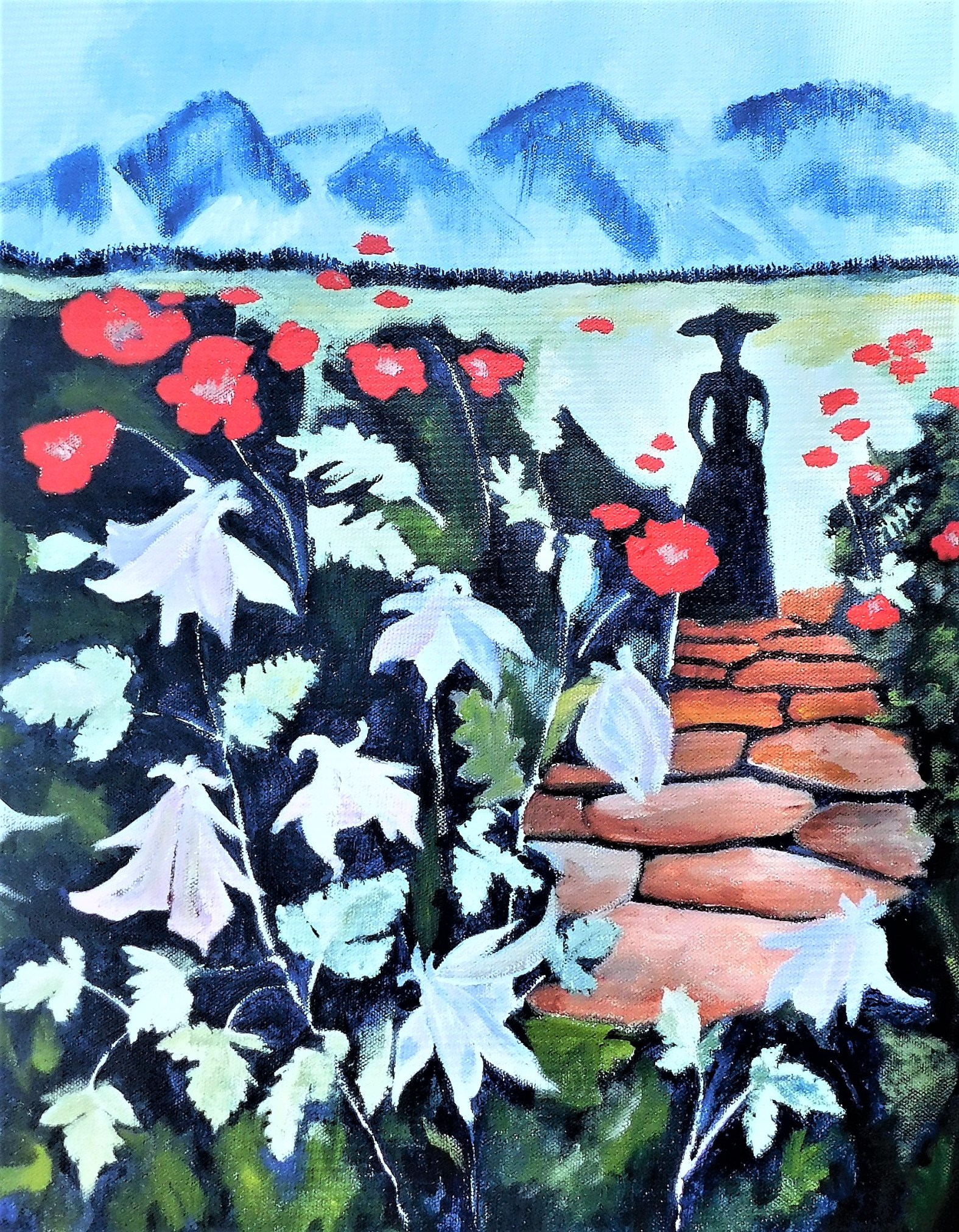
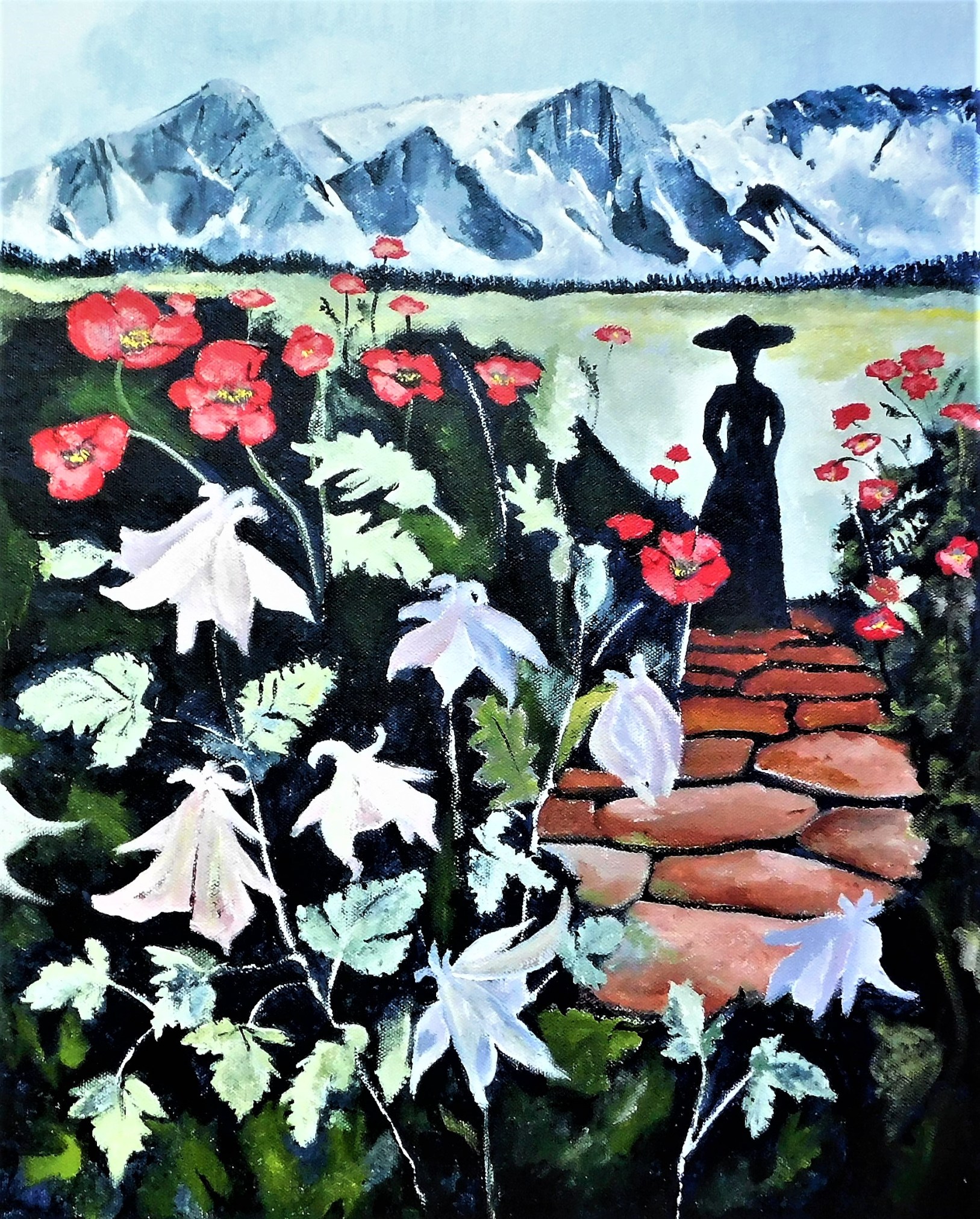
At first, I painted apple trees in the background, but the symbolism of the trees escaped me. So I removed the trees and added a scene from the Laramie area, featuring the nearby mountains (the Snowy Range), and a suggestion of foothills and plain. Now the silhouette of ‘Ella’ looks from her garden in the East towards the West. My uncle (her grandson) told me she never forgot the West and wished to return some day.
~
I completed the basic elements of the cover painting in one sitting. But a lot was left to be done: layers of colour to be added and detail in the mountains and flowers. My main objective was to add colour in such a way to make the poppies appear far away and the columbines close by.
~
Colour will do this. In general, cool colours (like red) look far away and warm colours (like blue) appear nearby. This generality is modified by the tone (darkness or lightness) of the colour: dark colours appear to get closer while pale colours appear to recede. Saturation of colour will also affect its appearance of advancing or receding: a pure colour will appear nearer; adding a bit of another colour will cause it to recede.
for more information on colour in art, see How Colors Advance and Recede in Art Science of Colour.
~
~
~

~
~
I will revisit the cover design in about a week, and perhaps tweak the border colour and other aspects. let me know what you think.
~
All my best!!!!
Jane
A little genealogy: where my ancestors once lived …
I am interested in the history of my family and I have decided to link that with my exercise program. I am again using my stationary bike to improve my fitness and using Street View (Google Earth) to travel virtually as I cycle. It is a great way to pass time and avoid getting bored with the cycle.
~
I have chosen to ‘travel’ in Scotland since that is where one branch of my family comes from. In the mid-1800s, John Clark and Jane Cooper traveled with their children to Nova Scotia, Canada. They lived in the Insch (Aberdeenshire) area of Scotland and records say that Keig, south of Insch, is a possible birthplace of my three greats-grandfather in about 1799.
~

~
Have a look at my wellness blog to find out more about my exploration of Keig, Scotland …
Enjoy your mini-tour of the roads where my ancestors may once have walked.
All my best,
Jane
in these times
Someday, my memory of these days of pandemic will have faded. But there is value in lessons learned, so I will describe my experiences here.
~
~
My situation is that of a retired person, used to working on my writing at home and going out to do errands and some volunteer work. For my husband and I, staying home is not too different from normal life.
~
~
1. Food. Before the pandemic, we had already shifted to getting curb-side delivery of our groceries from the Atlantic Superstore. For that reason, no shift was needed. During this time, we make an order every two weeks, ordering early to get a convenient delivery time. My husband also goes to Sobeys once every two weeks for milk and a few needed items. Both stores have good distancing measures in place and the few substitutions any store has made have not been significant. As for take-out food, we have continued to order pizza and other take-out food as before.
~

~
2. Passing Time in Isolation. I am so lucky that my husband and I have been able to face this time together. I have not really been isolated, since there is always someone there to talk to. We do small household projects together, read a bit together in a mystery series we both enjoy, watch some TV and plan our meals.
I am a writer and my writing life is managed by working on several projects at once, each project in a different stage. I have been very productive in the last two months, completing drafts of three new poetry books, completing work on the next book in my science fiction series, and launching two books, one science fiction and one mystery. I have seen a little spike in readership in the last few weeks, as people turn to reading to pass time alone.
~

~
3. Contributing to Local Businesses. At the best of times, we are not big consumers. But during the pandemic, I have tried to support local businesses. I have bought plants for the growing season from Scotts, art supplies and toys from Endeavours and Think Play, fabric from Fabricville and so on. These businesses have gone above and beyond to give safe and friendly service. When parcels arrive, I put them in Quarantine for three days, to minimize any risk.
~

~
4. Getting Out and About. During the pandemic, we have taken short drives, to bird watch, check on our cabin (about 3/4 of an hour away) and deliver sold books. In a stroke of luck, I had ordered author copies of my four newest books before Amazon cut delivery service to Canada, so I have books to sell. I do what I call ‘drive-by-bookings,’ making arrangements with those who want to buy my books, hanging a bag of books on the door handle and leaving to maintain social distancing. I have also put copies of my books in some of the little free libraries in town.
~
~
5. Staying in Touch. I am so grateful to live in the age of the internet. I am able to keep in touch with family and friends by way of email, Facebook and my blog. My two writer’s groups have held their meetings on Facebook Messenger and I have taken a writing course twice a week on Facebook. I have family members not on social media and we have kept touch by way of telephone.
~
~
6. Staying Healthy. Our days are very routine. We focus on getting lots of sleep, keeping our intake of fruit and vegetables high, keeping in touch with our physician and diabetic health care folk. As usual, I fall short on exercise. I have mobility problems and always do a half hour program of stretches each morning. Other than that, my success in the area of exercise is rather pitiful. I say I will do better.
~
~
7. Adaption to new standards. We are lucky in New Brunswick where I live. We have had few cases, have no new cases (according to testing) and no deaths from COVID- 19. We are in the Yellow Phase of our re-opening plan which means most business can open with social-distancing and other measures in place.
Social distancing is hard. Not because I am a huggy sort of person, but because I find confronting people difficult. If someone is getting too close, I find it hard to confront, to say back off, even in a nice way. So when the delivery fellow comes to the door and tries to pass me a box, I take it, getting nearer than I should.
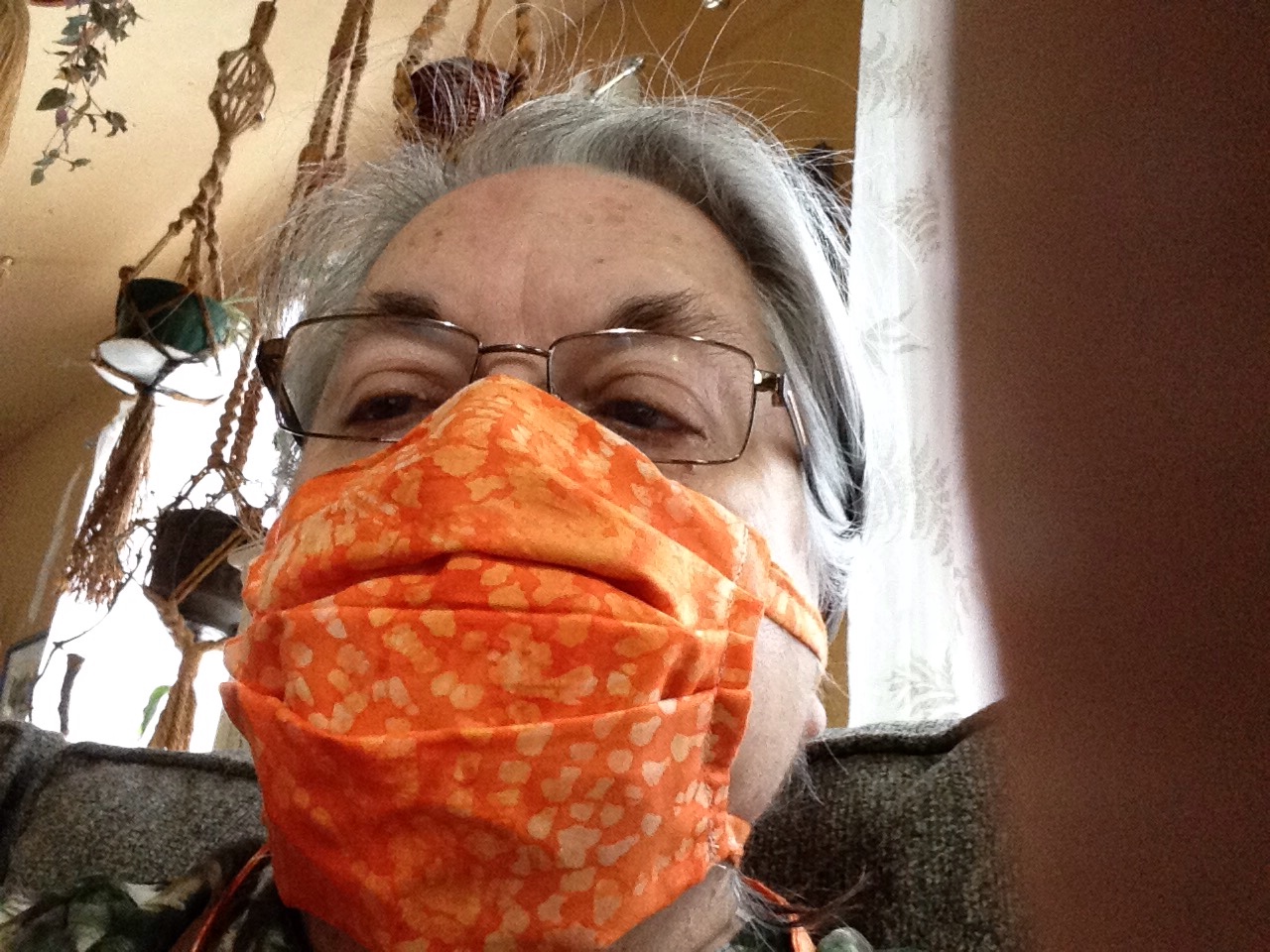
As our province tries to return to ‘normal’, I know mask-wearing will become part of our culture. So I dusted off my sewing machine and scanned the many videos showing mask-making. By the end of making ten washable masks, I could do them with my eyes shut, but my back hurt and I think I sewed through my finger at least once.
~
~
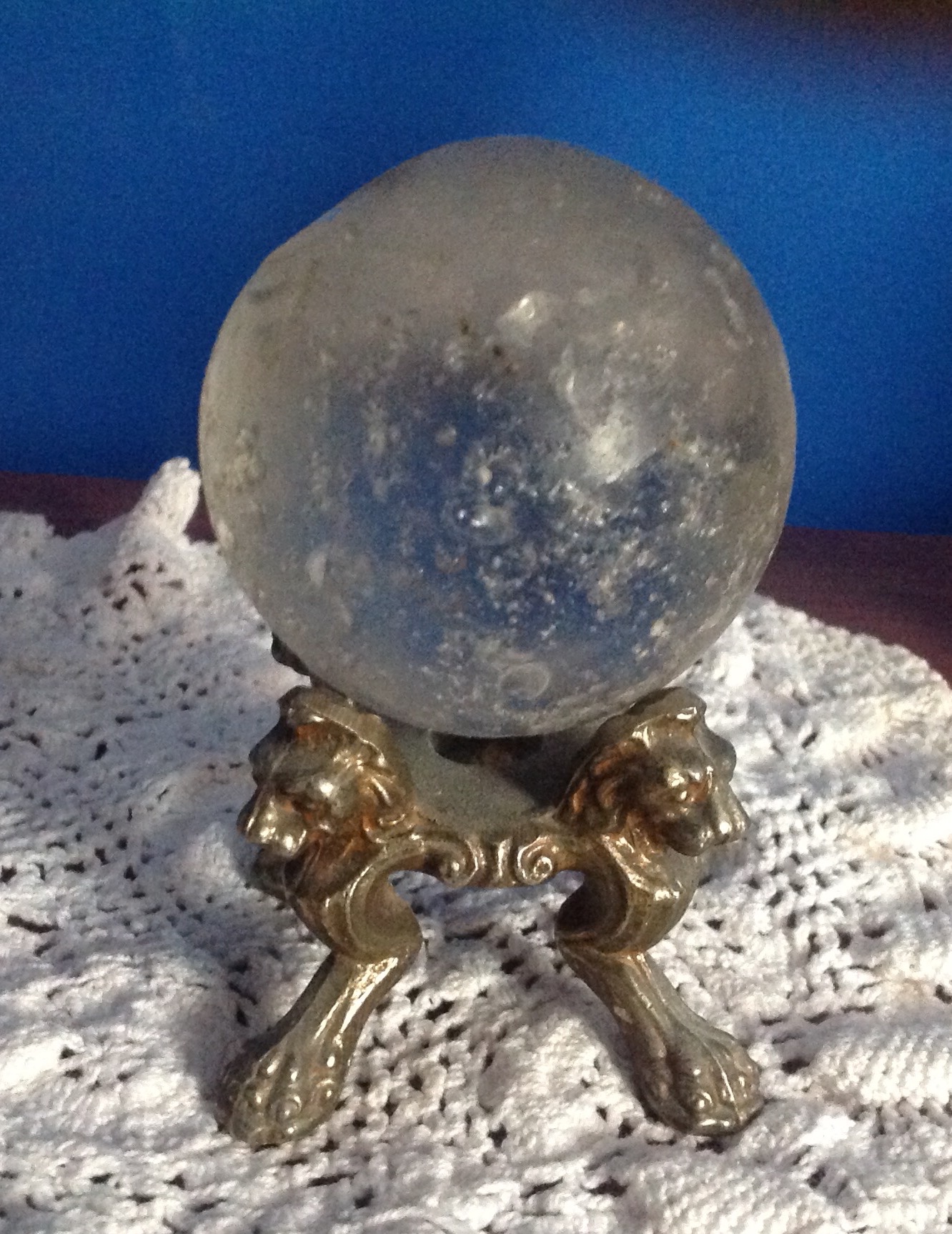
The other day, as I went through some poems I have written, I came across one about getting the H1N1 vaccine. I have almost no memory of that time in my life. Of course, our lives were not affected in quite the same way. Perhaps I will look back on the time of COVID-19 and know some things changed for the better.
~
All my best.
Stay safe. Wash your hands. Stay home as much as possible.
Find a safe way to talk to and be with those you love.
Jane
final touches
So, after a month of organizing and sorting the poems in my ‘forty-years-of-writing bone pile,’ I have three illustrated books of poetry ready for the next step:
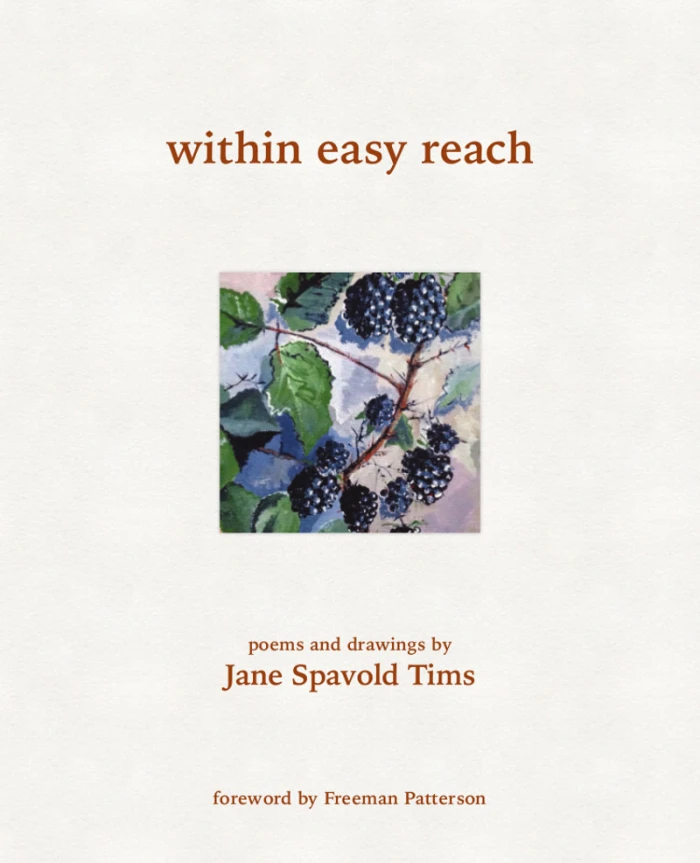
‘niche’ – poems about the spaces occupied by plants and animals, including humans, as they search for home. A good friend of mine has written the Foreword for ‘niche’ and I am looking forward to adding his name to the cover.

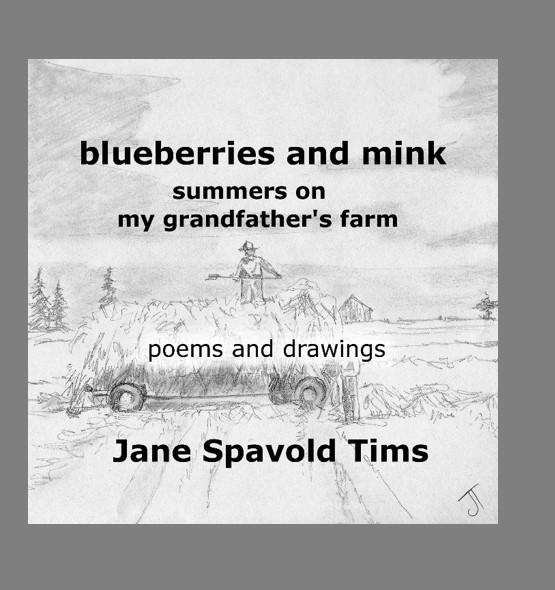
‘blueberries and mink: summers on my grandfather’s farm’ – poems about life on the farm and the changes over the years.
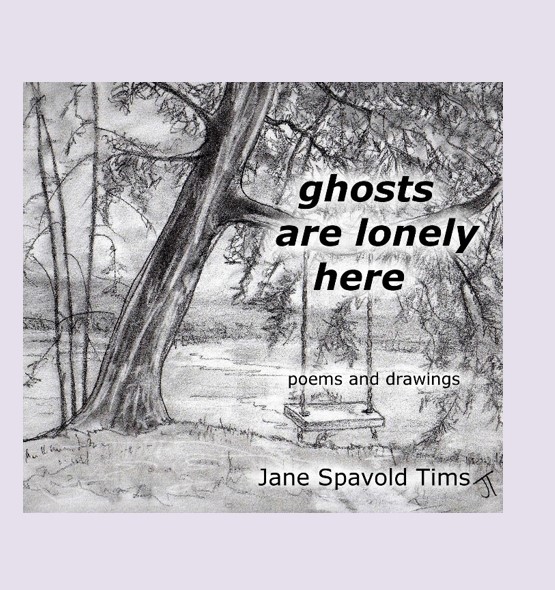
‘ghosts are lonely here’ – poems about abandoned buildings and other elements of the countryside.
~
Now that I have everything sorted, I know I have more collections to work on, but this is enough for now. My computer is more organized than it has been in years..
The next step in the process is to request Proofs. Once I get these proofs, I will do one more round of edits and make a few final decisions on formatting. Then I will publish them, using KDP. I have no intention of marketing these. I will get enough copies for family and friends who would like to read them.
Requesting Proofs is tricky right now. Amazon has turned its efforts to making and shipping Personal Protective Equipment (PPE). I don’t mind being patient.
~
Sample drawings from the three poetry books:

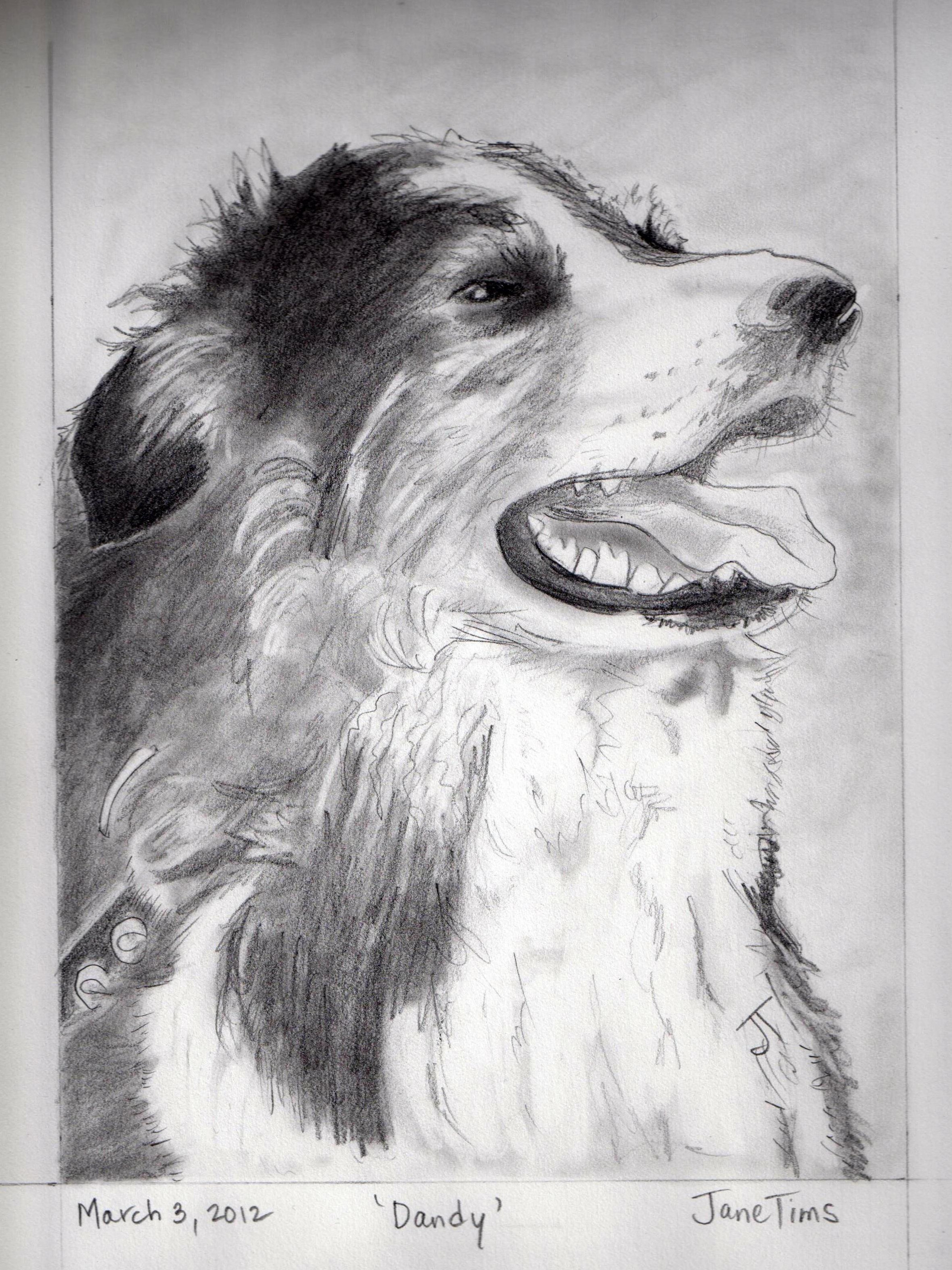
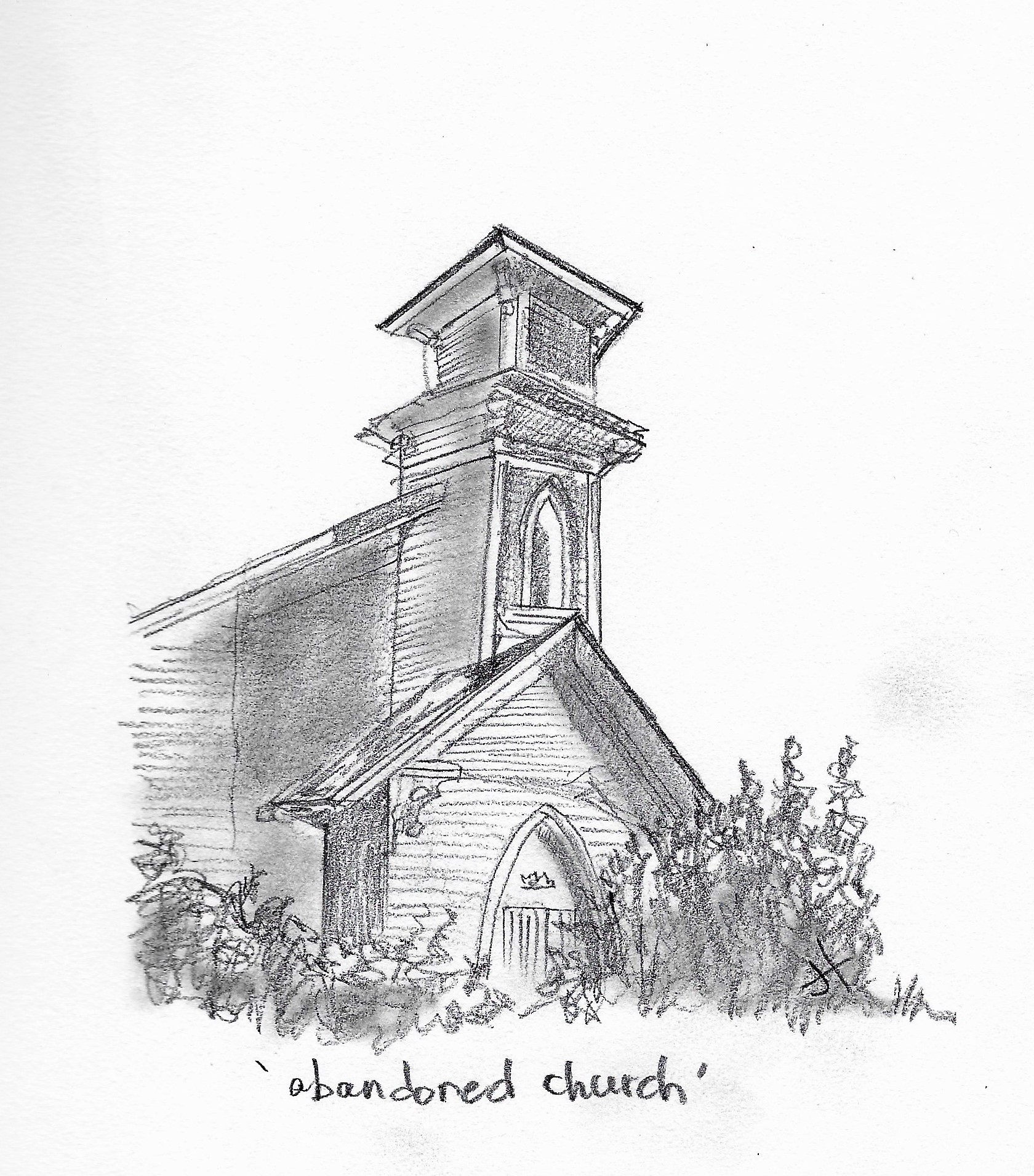
All my best
Staying in my bubble!
Jane




 nichepoetryandprose