Archive for the ‘covered bridges’ Category
woodpeckers and covered bridges

~
Woodpeckers are common in our area. Both Downy and Hairy Woodpeckers visit our feeders in winter. Pileated Woodpeckers hammer on our trees in summer, their flaming heads a blur as they excavate dead trees for insects.
~

~
Woodpeckers don’t confine their tapping to dead trees. I have seen them pounding on telephone poles, metal roof flashing and even the shingles on the side of our house.
Lately, as a result of a project I am planning, I have been thinking about covered bridges and their use as wild life habitat. So, a question …
Do woodpeckers excavate the wood of covered bridges for food?
Last week, we visited three covered bridges in Sunbury County in New Brunswick and, in two of them, we found the answer …
~

woodpecker holes in the soffit at the gable end of the Smyth Covered Bridge near Mill Settlement, Sunbury County (April 2015)
~

old woodpecker excavations on the face of the Bell Covered Bridge near Juvenile Settlement, Sunbury County (April 2015).
~

woodpecker holes inside the Bell Covered Bridge (April 2015)
~
I would love to be in a covered bridge when a woodpecker comes to play his staccato song.
~
Copyright 2015 Jane Tims
ceiling of stars

gaps in the roof, Smyth Covered Bridge, April, 2015
~
~
ceiling of stars
(Smyth Covered Bridge – South Oromocto River #2)
~
left to the years
to frost heaves, wind
and winter storms
the roof-skin peels
away
~
crisscross layers
gaps between boards
shape tiny squares
and sunlight spills
between
~
afternoon stars
constellations
and raindrops ooze
saucepans to catch
the drips
~
deafening, would
scare swallows, field
mice, snowshoe hares
and spiders, all
away
~
~
Copyright 2015 Jane Tims
~
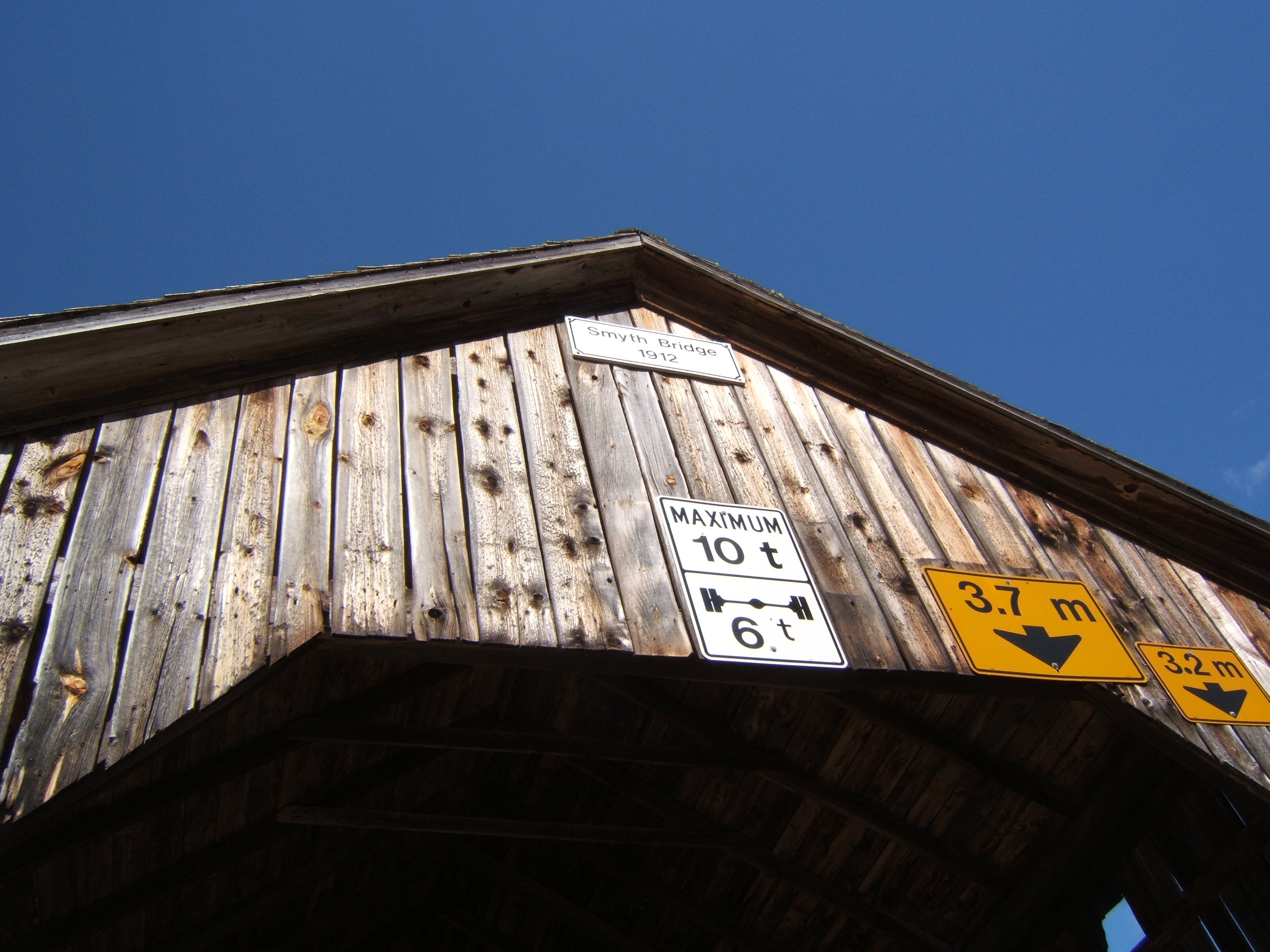
Smyth Covered Bridge, Mill Settlement, New Brunswick
~
writing a novel – pulling out the weeds
I have completed Draft Three of my novel ‘Crossing at a Walk’. The entire story is there. If I add more ‘story’ now, I will only confuse my plot and my readers. Next I have to concentrate on honing every sentence, including dealing with the oddities I allow to creep into my writing. As if I am growing a garden, I have to find and pull out the weeds.
~

~
I think these are different for every writer and writers have to learn these for themselves. For me, the culprits are:
writing in the passive voice.
using the word ‘that’. I never use ‘which’.
using adverbs, although I (quickly) drilled this one out of my system.
repeating the same word in adjacent lines or adjacent paragraphs.
using phrases like ‘she stood and … ‘, ‘I opened the door and …’ , ‘I looked at her and …’ – I sometimes tend to breathe for my characters!
using colorless words like ‘felt’, ‘drove’, ‘went’, ‘wondered’, ‘just’ and so on.
putting two spaces after every period – I learned to type on a typewriter!
~
I also have to do careful editing with respect to tense and person. I tell Sadie’s story in the third person and past tense. Tom speaks in the first person and present tense. I also have an angler who likes to fish just below the covered bridge and always speaks in the second person (something new I am trying).
~

my husband when he was a boy, fishing on the North Branch of the Rusagonis River, under the covered bridge … this covered bridge is now gone from our community
~
My husband is not looking forward to the completion of Draft Four. It ends with me reading him the entire novel, chapter by chapter, every evening, an hour before ‘Coronation Street’ on TV. Until we finish. Poor fellow.
~
Copyright 2015 Jane Tims
in the shelter of the covered bridge – drip line

clear and amber water of the South Oromocto River
~
~
Drip line
~
slices river into upstream
and down, opaque and transparent,
dead calm and riffle, dark and light.
As water and air are cut
by meniscus, erratic in rain,
as her voice slips past present tense,
concentric rings expand. Three trout
~
and gravels, perpendicular
rocks, embedded in amber. Rain
disconnects today from yesterday,
slips from the roof of the covered
bridge, slides from edge, corrugated
steel, sheet of rain, crosses river
linear, liminal, shore to shore.
~
~
Copyright 2015 Jane Tims
~
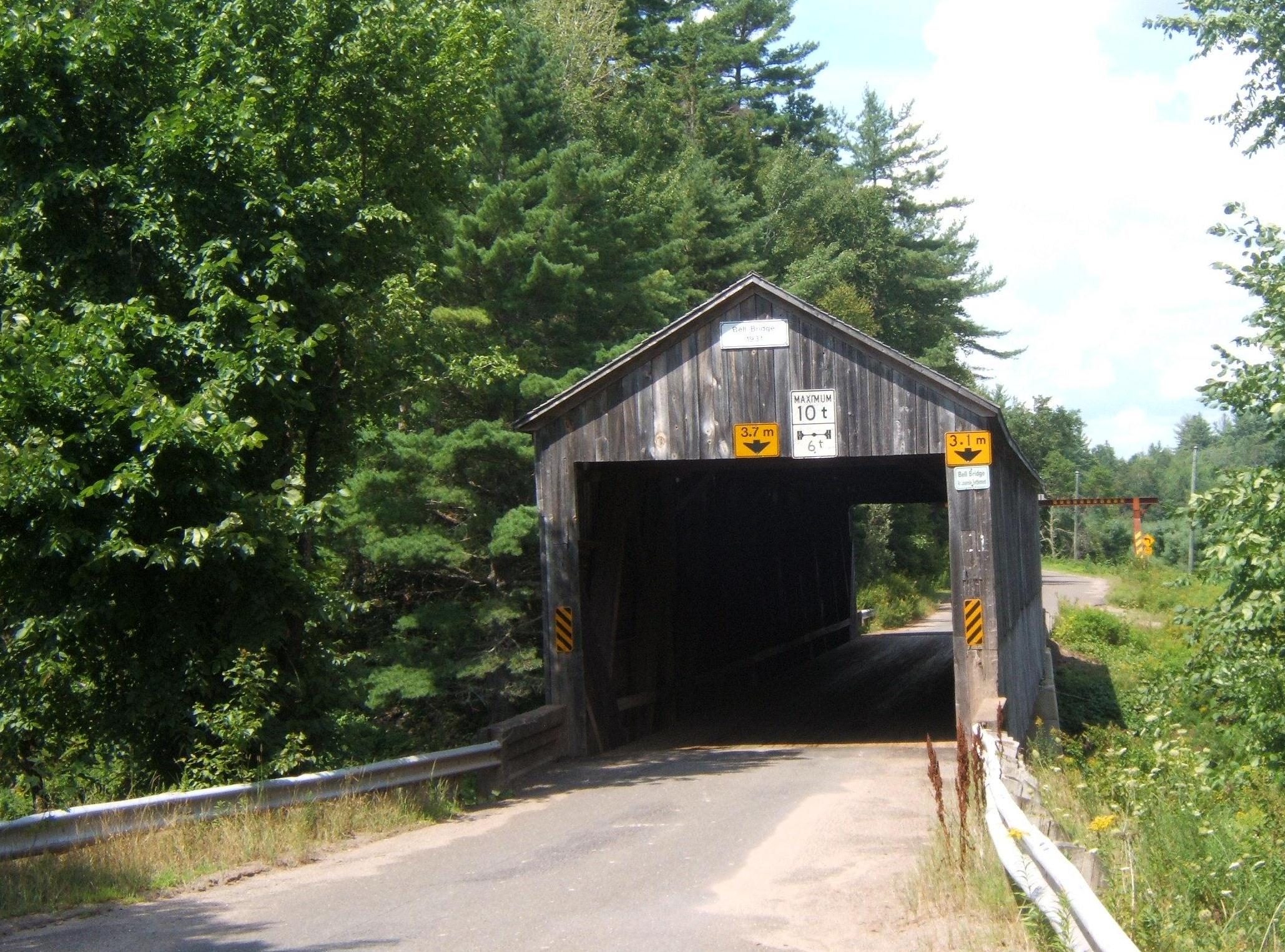
Bell Bridge, South Branch Oromocto River
in the shelter of the covered bridge – through a spider’s web
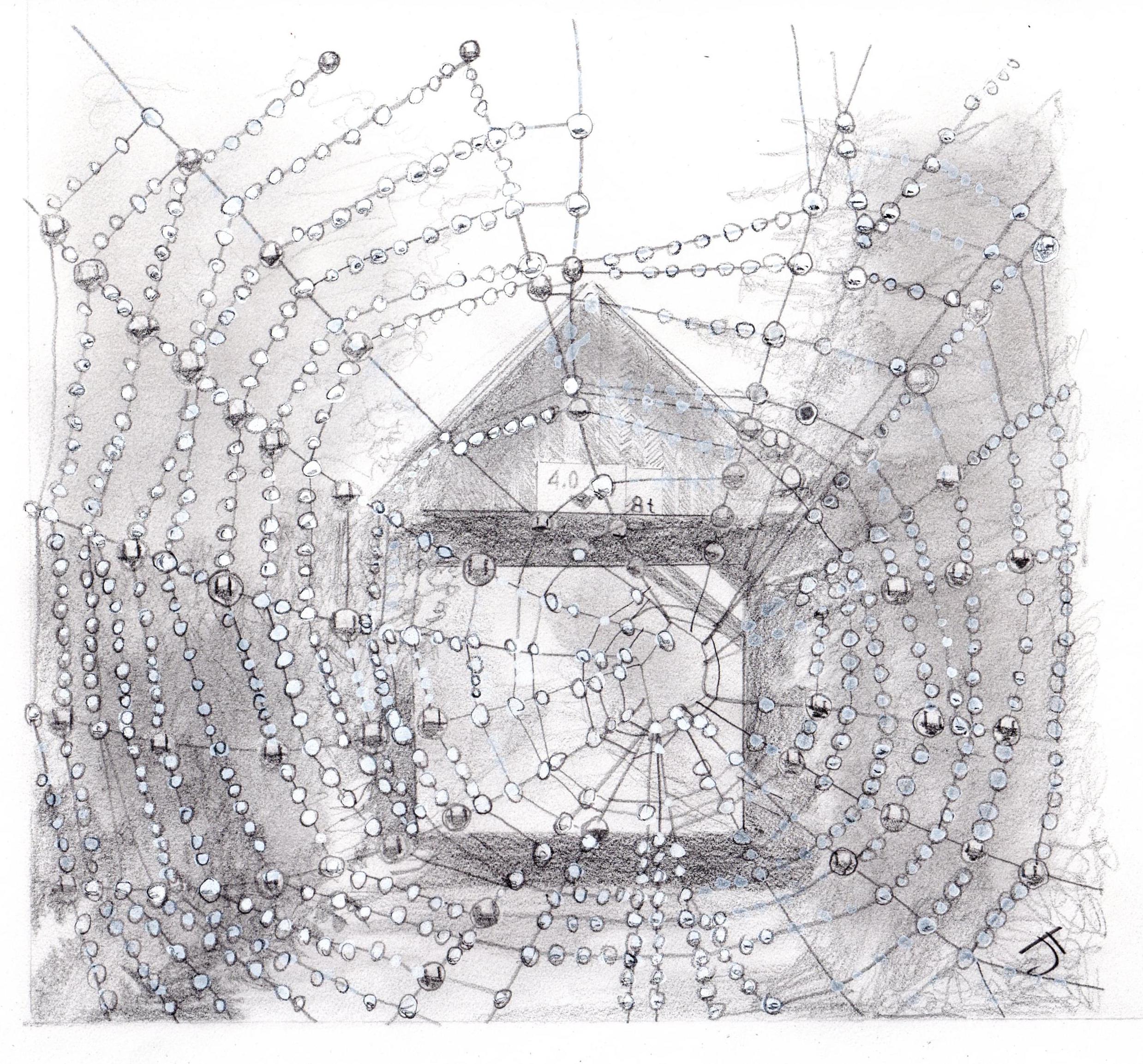
April 4, 2015 ‘web’ Jane Tims
~
web
~
after the rain,
says the spider,
I am purveyor of worlds
~
peer through my web
800 raindrops
inverse images
~
each a replica
of roof, walls and passageway
joists and beams
~
loops of lenses
strands of crossing
binocular bracelets
~
built a web to catch
the rain? I don’t think so
but insects never came to call
~
so I am content
with captured
covered bridges
~
swimmers, girls gone fishing
and the occasional
Chevrolet
~
~
Copyright 2015 Jane Tims
writing a novel – getting to know your characters
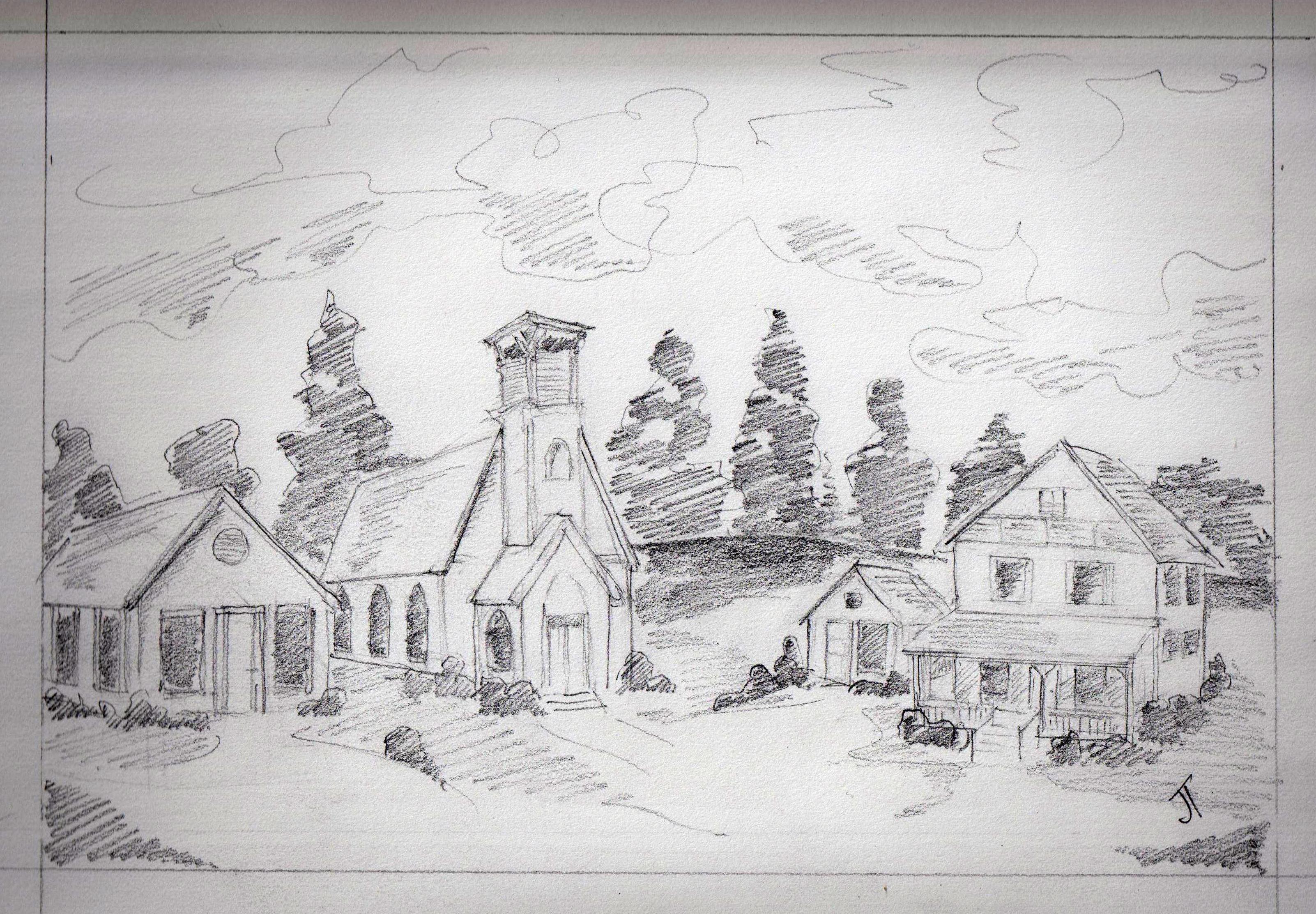
The Whisper Wind Writers’ Retreat – the setting for my novel
~
Working on the drafts of a novel is like combing hair. You start at the top/beginning and comb through the words and sentences, paragraphs and chapters, over and over. Eventually the tangles comb out and the hair becomes smooth and shiny.
~
I find the best way to do the ‘combing’ is to work at specific components of the story. Developing symbols within the story is one. Developing characters in the story is another.
~
I have a lot of characters in my books. In ‘Open to the Skies’ there are 44 characters, major, minor and dead. This is probably too many, but it is a book about a community.
So far, in ‘Crossing at a Walk’, I have 33 characters. These include Sadie and Tom, members of the community, and the six ‘retreaters’ (the writers enjoying a weekend at the Writers’ Retreat).
~
A difficulty with writing a sequel, I feel responsible for all these characters. Leaving one of them out of book #2 seems wrong to me. But by book # 25 (!) I’ll have a whole planet to contend with. So I have to make choices.
~

~
Each of my characters has a character sketch, a background story and a story arc. As I’ve said before, I try to include three ‘bumps’ in each story line.
One of the ‘combings’ I do is to look at each character as he or she appears in the book. I want to make sure the character is consistent with respect to appearance, back story, way of speaking, relationships, and so on.
~
1. Character sketch and background
As an example, let me introduce you to Ruby Milton. She is the fourth character from the left in the sketches above. She is a minor character, a constant companion to one of the major characters. Ruby is 64 and married (she was a Brunelle before she was married). She is a retired librarian and now runs a U-Pick with her husband Lars. Ruby, as a result of her name, loves all things red. She wears red and she bids on a lamp at an auction because it has a red glass finial. A quilter, she works a red patch into every quilt she makes. She was also one of the characters who opposed the sale and relocation of the Landing Church in ‘Open to the Skies’. Ruby snubs Sadie at every opportunity.
~
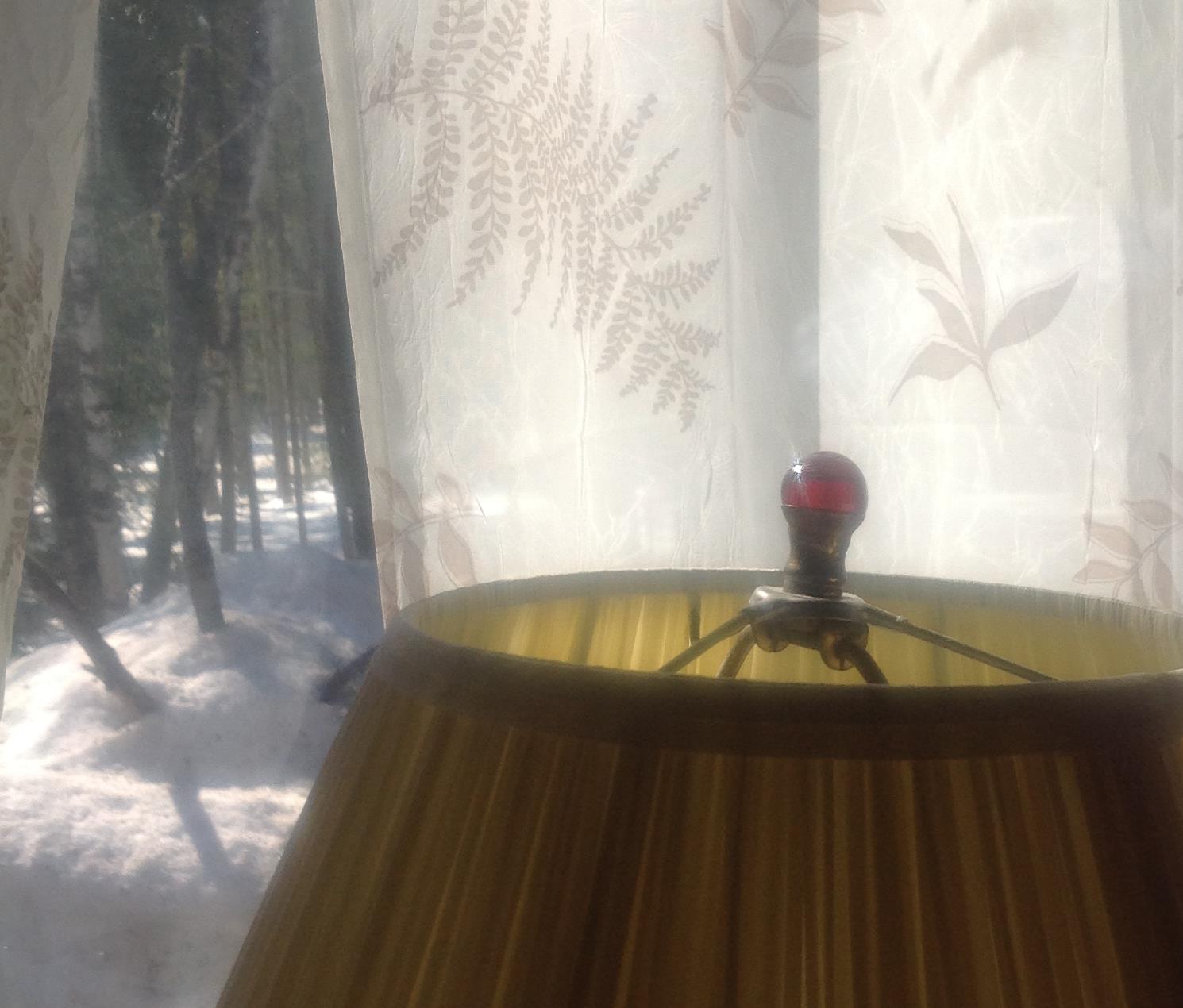
Ruby would love my lamp with the red finial – it once belonged to my mother-in-law Mary
~
It’s hard to have to keep checking on a character sketch as I write, so I prepare a chart of my characters. I keep the chart file open so I can check on it as often as I want.
~
| Name | Occupation | Characteristics | Age | Vocabulary |
| Ruby Milton | Librarian; runs a U-Pick | Wears red; thin; a quilter; maiden name Brunelle; lived in community all her life | 62 | Cemetery; uses lots of contractions |
| Lars Milton | Retired Teacher; runs a U-Pick | Tall; Full head of snowy hair | 65 | Graveyard |
| Marjory Alworth | Shop owner | Nicknamed Margie; Ruby Milton’s daughter | 41 | |
| Betsy Alworth | Waitress | Ruby Milton’s grand-daughter | 24 |
~
2. Story arc
Ruby occurs three times in ‘Crossing at a Walk’. She occurs because she is a friend to Pat, a major character; she runs a local U-Pick and food from the U-Pick is used at the Retreat; she represents the community’s continued interest in its landmarks. She wants to continue to use the Landing Church for her quilting group and she participates in celebrations of the history of the covered bridge. Ruby also represents the part of the community that Sadie hasn’t quite won over in her efforts to fit in.
~
As I read my draft so far, I realise Ruby needs to change in some small way during the book. So, in keeping with her importance as a representative of community, I add some elements to Ruby’s story. At the auction, she won’t even acknowledge Sadie. But during the book, Sadie allows Ruby’s quilters to use the church and treats Ruby as knowledgeable about community history. By the end of the book, Ruby greets Sadie as a friend and contributes a story about her memories of the covered bridge.
~

inside a covered bridge
~
I keep a table of story arcs for each of my characters, to help me build the story, be consistent and make sure that I find the story for each character.
~
| Name | First occurrence | Second occurrence | Third occurrence | Story |
| Ruby Milton | Ignores Sadie at auction (page 35) | Asks to use hall for quilting group (page 146) | Greets Sadie as a friend at a community gathering; tells a story about bridge (page 232) | Pat’s friend; represents community; changes her attitude about Sadie |
~
Ruby is a relatively minor character in the book. However, I treat her with the same respect I give my major characters. And she gives back to me. She suggests turnings for the story. And she helps make the community I have created for these characters more realistic.
~

Ruby puts a bit of red in every quilt she makes
~
Copyright 2015 Jane Tims
writing a novel – expressing the story in a single sentence
Title: unknown
Working Title: ‘Crossing at a Walk’
Setting: a writers’ retreat – the renovated Landing Church, the hall and the rectory now used as a Learning Center, a Sleeping Hall and a home and base of operations for Sadie and Tom
Characters: main character Sadie, a writer; her husband Tom, a retired welder; Alexandra, a young woman who works at the retreat; other people from the community; writers participating in the first weekend of the writers’ retreat
Plot: The ongoing history of an old covered bridge keeps getting in the way of discovering the story of a woman who once lived in the community.
~

one of the 59 covered bridges remaining in New Brunswick
~
When I think about the story I want to tell in my book, I quickly get in a tangle of characters and subplots and action. All of this can be quite confusing to the writer and end up befuddling the story and taking the writing in the wrong direction.
To avoid this tangle, it is a good idea to try to express the plot and story in single sentences as soon as possible in the writing process.
~
The plot is the cause-and-effect relationship between events in a story.
A story is a series of events, related in their chronological order.
~
I am currently taking a course from Deborah Carr, an excellent writing coach (her website ‘Nature of Words’ is at http://www.natureofwords.com/). She puts it this way: a story follows the pattern of Desire, Struggle, and Resolution. Every good story is about someone who wants something, how the someone sets about achieving the goal, and the consequences of achieving the goal.
The earlier in the process I can write my story in a single sentence that includes these three elements, the less ‘wheel-spinning’ I will do.
~
My novel will be the story of how a young staff member at a writers’ retreat discovers the name of a woman carved on the beams of a covered bridge, sets out to discover the woman’s story by asking questions and learning the history of the bridge, and reveals truths about love and loss.
~
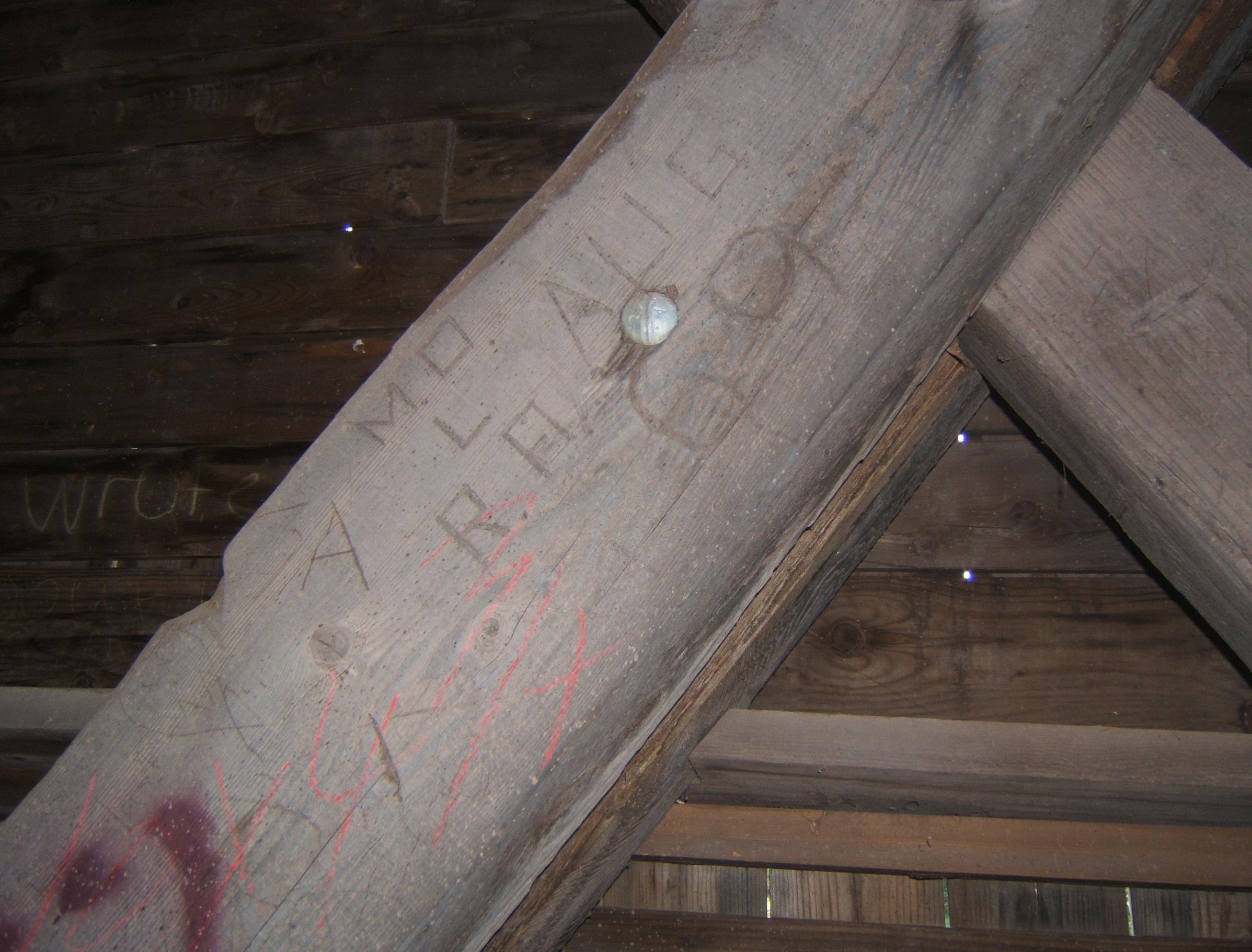
names and initials are often carved on the wood beams within a covered bridge
~
The story is different from the plot in that it expresses a series of actions in time. A plot expresses the logical relationship between elements of the story. The story and plot complement one another.
~
Before you get much further in your novel, try writing the story as a simple sentence describing Desire, Struggle, and Resolution.
~
Copyright 2015 Jane Tims
writing a novel – next in the series !
Having sent my first novel ‘Open to the Skies’ (aka ‘Saving the Landing Church’) out to three publishers, I have begun my next novel in the series. I intend for the series to focus on the adventures of running a writers’ retreat. Same characters, same setting, same struggle to be a part of the community.
~
Title: unknown
Working Title: ‘Crossing at a Walk’
Setting: a writers’ retreat – the renovated Landing Church, the hall and the rectory now used as a Learning Center, a Sleeping Hall and a home and base of operations for Sadie and Tom
Characters: main character Sadie, a writer; her husband Tom, a retired welder; people from the community; writers participating in the first weekend of the writers’ retreat
Plot: Sadie wants the first writers’ retreat to go smoothly, but the history of an old covered bridge keeps getting in the way
~
My first novel was about an abandoned church. The subject of this book will be yet another feature of our built landscape, one also having a difficult time … the covered bridge. In the 1940s there were 340 covered bridges in New Brunswick. Today there are only 60.
~
I chuckle all the time about my ‘Saving The …’ series. Lots of buildings to save out there! However, I have no intention of sinking into the formulaic (Sadie falls in love with the … and takes steps to save the …). Instead, each story will take a unique approach to honoring the bit of built landscape it portrays!
~

~
As I have said, in New Brunswick, we have 60 remaining covered bridges. Their numbers are dwindling, the losses due to flooding, fire and vandalism. For a look at the covered bridges in New Brunswick, see the map and photos at http://www2.gnb.ca/content/gnb/en/departments/dti/bridges_ferries/content/covered_bridges.html
~
So how does a covered bridge get in the way of a well planned writers’ retreat?
- Sadie includes a local tour during the retreat, to introduce the writers to the community and give them new experiences to write about. The covered bridge is outside the tour loop, but a couple of the writers would love to go there.
- the covered bridge is part of the community’s history. Inside the bridge are the carved initials of some of the many people who have lingered there. The writers want to know ‘who was Phoebe?’ a girl whose name is carved in the bridge and imprinted on the memories of some of the members of the community.
- after the retreat is over, heavy rains and flooding threaten the bridge to its very foundations. Can the bridge be saved and will Sadie be willing to take on the cause of another community icon?
~

Sadie … my main character … a writer and weaver … she wants the first weekend of the writers’ retreat to go smoothly … I still think she needs an afternoon at the hairdressers

Sadie’s husband Tom … a welder with a fatal case of welder’s lung … a likeable fellow, he refused to die in the first novel … I wonder what will happen to him in ‘Crossing at a Walk’?
~
Copyright 2015 Jane Tims
in the shelter of the covered bridge – conjunction

March 1, 2015 ‘conjunction’ Jane Tims
~
~
conjunction
~
~
planets and moonlight whisper, scamper
into crevasses in the covered bridge
half-ton’s headlights enter
overwhelm the shadows
~
chin velvet of Venus and Mars
sickle of mid-winter moon
truck lights startle a winter hare
erect on haunches, paw lifted
~
frosted by sky-gaze, worshipping
the sliver of moon, dismayed
at desecration, round glare
of predator eyes
~
fright to stop a heart
or flight to mobilize
hind-legs, straighten before
fore-legs turn
~
and long ear shadows
quit the length of the bridge
ahead of whiskers, nose
and rabbit wisdom
~
~
Copyright 2015 Jane Tims
a covered bridge – the Burpee Bridge, Queens County, New Brunswick
Last weekend, driving home from Miramichi, we followed the Grand Lake Road. It is mostly unpopulated, devoted to tree plantations and a preservation site for mature white pine.
~
Along the way, we stopped in at the Burpee Covered Bridge on the Gaspereau River near Gaspereau Forks, Queens County. This bridge is listed as Gaspereau River #2 in the April 1992 pamphlet ’Covered Bridges in New Brunswick’ (no author indicated). This means there was once another covered bridge crossing the Gaspereau River but it is now gone.
~
~
The Burpee Bridge was built in 1913. It is 167′ 9″ long with a span of 163′ 6″. The roadway width is 14′ 8″, and the load limit is 8 t. The maximum clearance is 3.9 meters.
The bridge is on a main road and the grounds on both sides of the river are nicely kept and mowed. The bridge was named for the family living nearby in 1913.
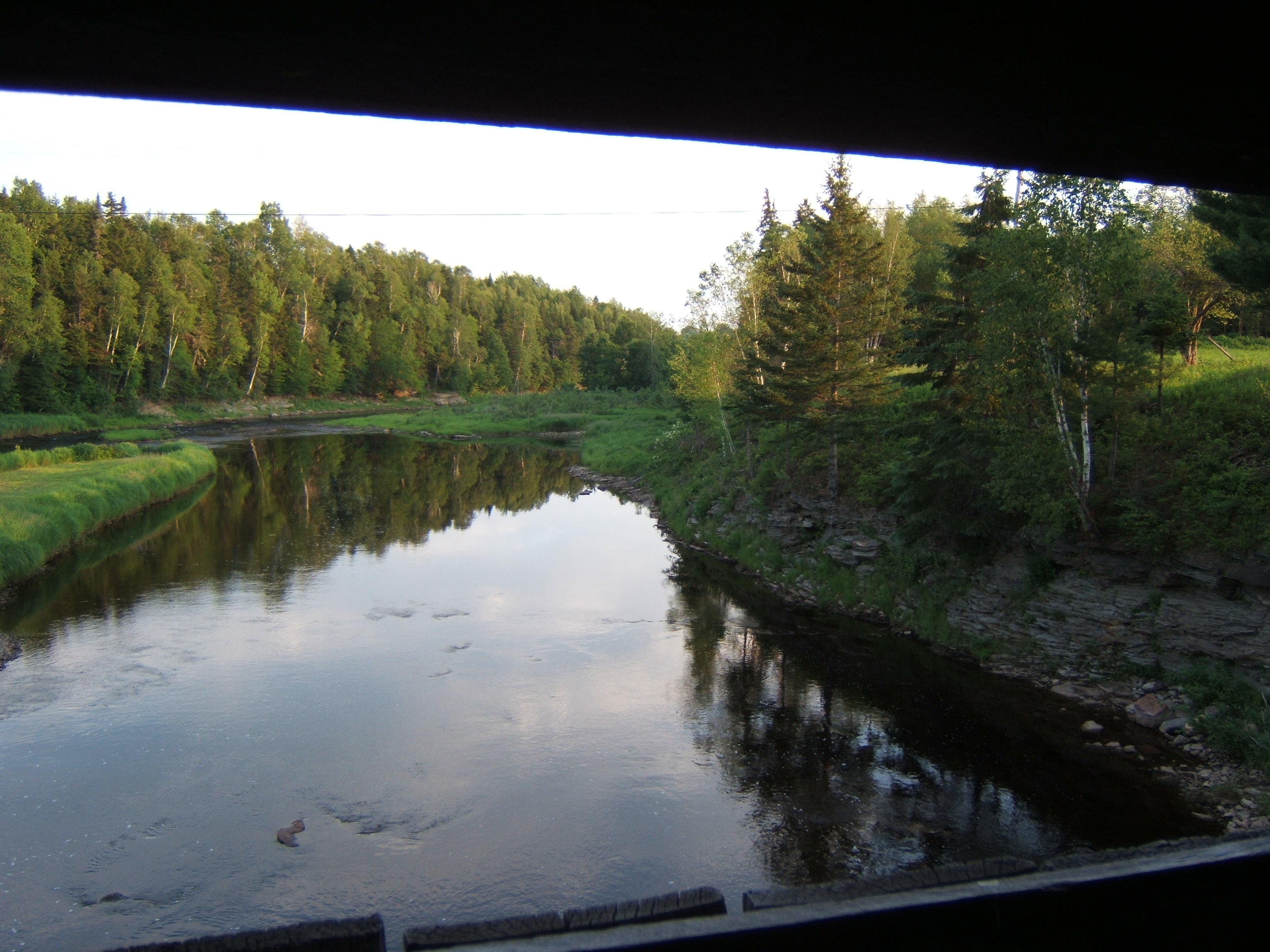
Inside the bridge, there is a window, with a good view of the Gaspereau River, showing the exposed bedrock of the river banks.
~
~
The rafters of the bridge are populated with swallows and their nests. The swallows chirped at me and swooped in and out of the bridge while I was there.
~
I couldn’t find any carvings in the failing light, but the inside of the bridge is covered in graffiti.
~

~
A lot of fluorescent paint has been used and it would be interesting to shine a black light inside the bridge … no doubt it would glow with spooky color …
~

~
We didn’t visit this bridge in 1992 as part of our Covered Bridge Project for Canada’s 125th anniversary. I am sorry we didn’t do more bridges that year … some are now gone, and it is interesting to compare the information for those that have survived.
~
This year, on July 27, the community plans a celebration of the 100th anniversary of the Burpee Bridge. The bridge will be turned (temporarily) into a museum of photos and artifacts about the bridge and community. Keeping our covered bridges in the eye of the community helps to preserve their heritage and value. It also encourages sharing of the wonderful stories about the part these bridges have played in our communities and lives.
~
Copyright 2013 Jane Tims




 nichepoetryandprose