Posts Tagged ‘writing process’
writing a novel – e-reader editing
So the poet is writing a novel…
~
Title: unknown
Working Title: Saving the Landing Church
Setting: a writers’ retreat, including an abandoned church
Characters: main character a writer; her husband Tom; people from the embedded community including next door neighbors Emma and Mark; people from the commuter community; the aberrant community
Plot: the story of how a woman tries to preserve an abandoned church with unexpected consequences for herself and for the community
~
~
I have finished my first draft!
This week, I am working on edits.
The writer’s discipline of producing something each day suits me most of the time. I characteristically accomplish enough in three or four hours of work to push back from the computer with a feeling of satisfaction.
Some days, it’s harder to focus. I find editing particularly hard. Perhaps because of the recent holidays, perhaps because it is so cold outside, this week I have been having trouble concentrating.
Yesterday, I discovered a way to make the editing easier!
Lately, I’ve been using my e-reader more and more for general reading. I thought, why not use it to read my own (draft) book?
I didn’t do any fancy work. I merely took my Word draft and saved it as a .pdf file. The first time I did this, the font was so tiny, I’d have to use a magnifier to read. So I experimented a little, and finally settled on the font Times New Roman, size 22, double-spaced. Once I made the font change in Word, I saved it as a .pdf file and copied it directly into my Kobo e-reader. There were a couple of glitches which I didn’t bother to fix. Some words transposed as bold (as you can see in the photo) and none of my italics made it through. But the book was very readable.
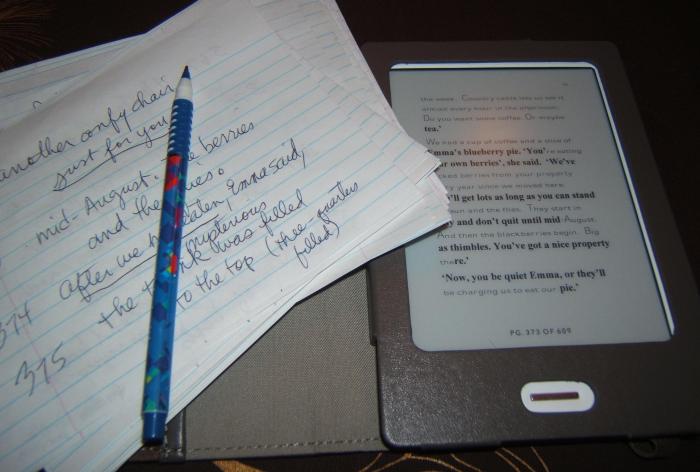
Today and yesterday, I have been editing in luxury. I have been sitting in my comfy chair, with a warm throw, a cup of tea and my Kobo. By having my draft in book format, I can see it as a book, read it with more ‘distance’ and more easily find the places I need to re-write or edit. I keep track of edits, page by page, in pen, on note paper. Of course, I’ll have to do the final edits at the computer, but that pain is somewhere in the future, made easier by the ‘Find’ feature in Word.
One step closer to completion!!!
~
Copyright Jane Tims 2013

blackberries as big as thimbles
writing a novel – another look at old churches
As I write my novel, I am amazed at how many instances of abandoned churches I have encountered in my life. I have come to think that I live at a time that will be remembered for a great turnover in our churches. With the need for energy efficiency and financial stability, congregations are actively seeking the ideal ‘place’.
I understand why this should be so. But I still love the idealized rural church of the nineteenth and twentieth centuries.
Earlier this month, we took a drive to Saint Martins. Near Garnett Settlement, we saw yet another re-purposed church.
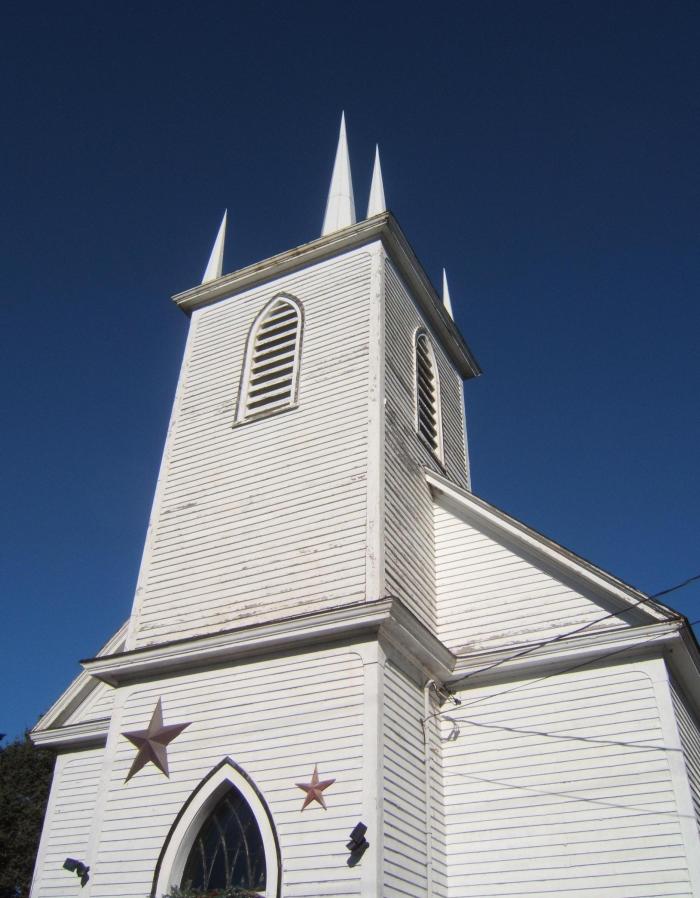
This one was abandoned a few years ago, after there were only four parishioners to keep it going. It was sold and has been turned into a country treasures gift store called the ‘Old Fangled Steeple’.
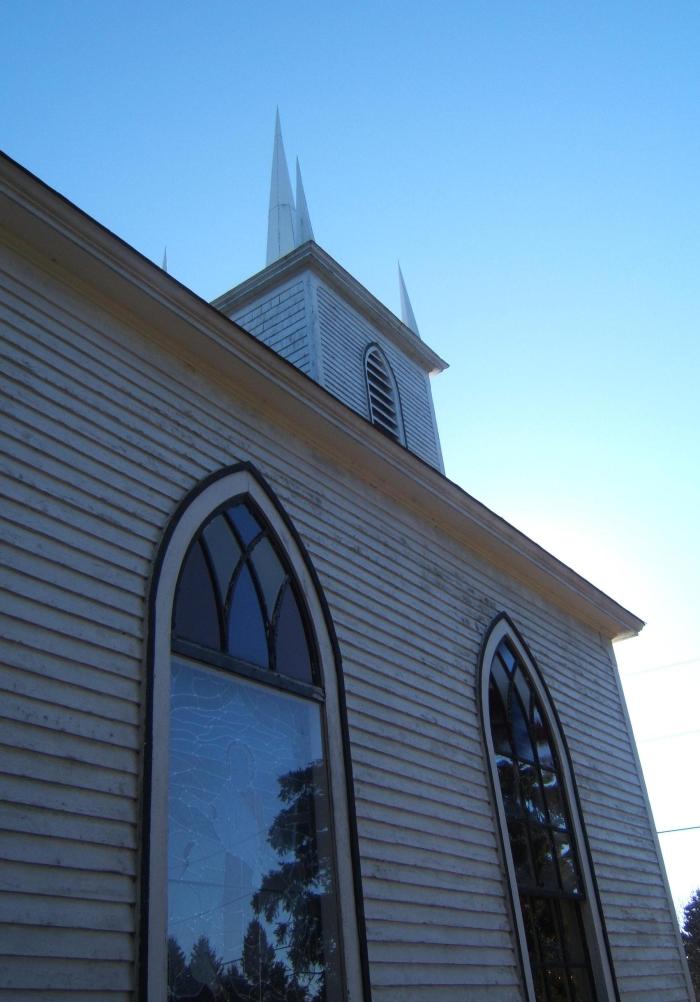
The church still has almost all of its stained glass windows intact.

~

~
For some beautiful images of abandoned churches, have a look at:
http://pinterest.com/patiluhayes/old-churches/
For a rather sad tour of the inside of some abandoned churches, see:
http://www.environmentalgraffiti.com/news-abandoned-churches?image=23
~
Copyright Jane Tims 2012

by the frozen lake, next year
It’s mild here today and we are expecting lots of snow. I’m working on my novel, doing edits.
I want this post to include an excerpt from my work, so I have chosen a wintry bit.
In this excerpt, the protagonist, Sadie, and her husband are near the edge of the lake, on the property they have bought. They’re planning to bring the Landing Church to this location, to build a writer’s retreat.
Sadie’s husband, Tom, isn’t well. He’s dying. His way of coping is to be a stoic, to face his death as inevitable, and to plan his wife’s life out for her. Usually, he talks about what she’ll be doing this time next year. Until now, he’s refused to include himself in any talk of the future. But, as the novel progresses, his thinking is changing.
~

~
The lake, in the grip of November, had frozen to plates of glass, interrupted by pebbly bands where the wind mixed snow into the surface of the ice. The distant shore presented itself in silhouette, an indigo strip between the lake and the brighter sky. The dark images of trees were frozen into the surface of the ice. The air was crisp, but we sat, as we did in summer, on the bench by the lake’s edge.
‘Next year,’ said Tom, ‘we’ll clear the ice for skating. And we’ll build a bonfire, here by the shore. There’s certainly enough dead wood to fuel it.’
I sat still, watching the lake and thinking about Tom’s words – ‘next year’ and ‘we’. These words were so different from what he would have said, even three weeks ago. Ordinarily, he’d be making plans for me alone. Ordinarily, he’d have said ’Next year, you’ll clear the ice for skating.’
We sat in silence, as we always did, just watching the lake. Tom probably didn’t notice how thoughtful I’d become. I wondered how I’d missed it, this transition from ‘no future’ to ‘plans for tomorrow’. Plans to be shared by us both. My hands began to tremble.
To distract myself, I found a flat stone embedded in the frost at my feet. I stood, moving a little closer to the edge of the lake. I turned my arm and cradled the stone in my hand. I pulled my arm back and propelled the stone toward the ice. It hit with a clear ping and bounced across the surface, leaving a line of clear notes in its wake. I tried another one. It sang a semi-tone higher, and the ice vibrated between the crisp air and the ice-cold water below. Tom bent and loosened another flat stone from the ground. He stood beside me. In another minute, the ice was ringing with the song of skipping stones.
We’d soon depleted the shore of every loose flat rock. The lake was still and silent. No note remained in its repertoire. The ice in front of us was littered with flat grey stones.
‘No skating this year,’ said Tom. ‘We’ve planted enough trippers to last into next spring.’
We turned from the lake and followed the path back to the field. As we navigated the alders and rounded a corner, we came suddenly on a sturdy bush of bright red berries. ‘Look, Sadie. Winterberry holly,’ said Tom. ‘It usually grows by the lake, but here it is, in our field. Our very own burning bush.’
The bush glowed with orange-red berries, set off by bronze-colored leaves, not yet fallen. In the silver and grey of the thicket, it was a gift…
~
~

~
If you have any comments, good or bad, about this piece of writing, let me know. Is there anything you don’t understand? I there anything I could better explain? Have you ever skipped stones on the ice of a lake or pond?
~
Copyright Jane Tims 2012
writing a novel – segues
So the poet is writing a novel…
~
Title: unknown
Working Title: Saving the Landing Church
Setting: a writers’ retreat, includes an abandoned church
Characters: main character a writer; people from the embedded community; people from the commuter community; the aberrant community
Plot: the story of how a woman tries to preserve an abandoned church with unexpected consequences for herself and for the community
~
I’ve been working on my novel since the beginning of November, and I’ve made significant progress. I’ve been aiming for about 60,000 words and I now have about 57,000 words. I would say I have a completed first draft.

Now comes the work of editing. I’ll edit for grammar and spelling errors, of course, but also for content. I have several sub-plots to contend with, so I have to make sure each of these tells a coherent story and flows through the novel.
One of the main edits I will do is to try to help the reader follow the story easily by making sure the ideas flow easily from one to another. When I write in draft, I often leap forward in my thinking, the transitions lost somewhere in the synapses of my brain. In the editing stage, I’ll have to supply these transitions.
So, as I edit, I’ll work paragraph by paragraph to provide a transition or segue between paragraphs. I learned a lot about this in university when I was working on essays for my history degree. Professors were always looking for segues to help the arguments flow smoothly. I got used to starting paragraphs with phrases like: ‘In order to accomplish this…’ or ‘After the king died…’ or ‘Before the final decision to build a new school in the community was made…’.
Segues in a formal essay are fairly easy, since there is usually a progression to arguing a thesis. In a novel, the segues are more about making sure ideas don’t come in from the blue. Shifting ideas and themes too quickly will confuse everyone and cause the reader to lose interest. Segues also help the writer to make sure threads are not dropped and the thoughts of the main character are logical.
~

~
At the risk of terrifying myself, I’ll give you an example of the way I transition from one paragraph to the next. This particular scene from the novel describes a drive home, after an evening get-together with a friend named Oliver. I have underlined the segues. To see the effect of including the segue, just read the paragraphs with and without the underlined parts.
~
… I gave Oliver a quick hug and ran outside, into the wind and rain.
The storm worsened as I drove home along the Bay. The rain was brutal, as though I drove through a cosmic car wash. I needed faster wiper blades and a second pair of eyes. As though the rain wasn’t hazard enough, the wind blew in frantic gusts and pushed against the side of the Blazer. I hung on to the wheel with both hands, but the SUV swerved in the narrow road. I drove even more slowly. Handfuls of leaves tumbled across the pavement ahead and broken branches reached from the ditches into the roadway.
To cut my driving time in the storm, I took the ferry to Westfield. As I drove down the ramp and on to the ferry, the operator came to the car window to bellow something at me. I rolled the window down a crack to hear and the storm tried to crawl into the vehicle with me.
‘Good thing you got here when you did,’ shouted the operator. ‘I’m shutting down on the other side. The wind is too high. Too much water on the deck.’
In the pale wash of the running lights I could see the river sloshing across the metal platform. Waves crashed against the sides of the ferry, chased by a fine white spray.
In spite of all the water, we made the crossing safely, and I arrived home after midnight, overloaded with adrenaline from trying to see the road, and full of coffee and cake from my dinner with Oliver…
~
When you write, do you try to include transitioning in your work?
~
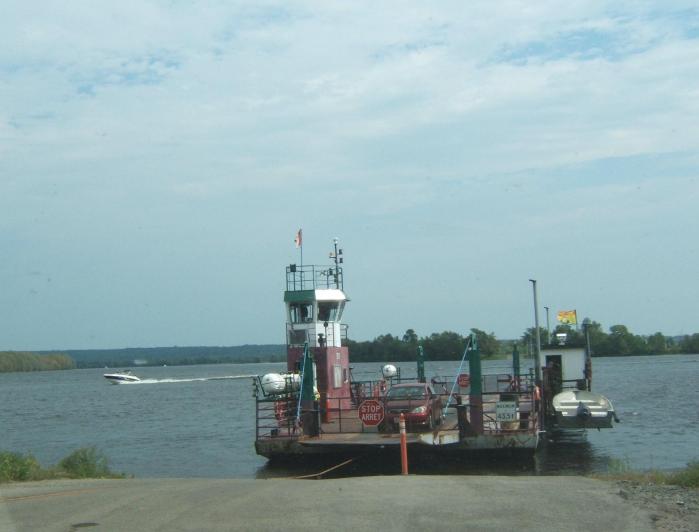
these ferries run low in the water and in storms the waves slosh over the sides
Copyright Jane Tims 2012
writing a novel – the community as a character
One of the first things I did as I was beginning my novel is create character sketches for the people in my book. By knowing as much as possible about the characters, I knew how they would react in any circumstance.
As I wrote, I began to wonder of the community itself could be a character in my book. Communities certainly have characteristics… they may be tolerant or intolerant, modern or traditional, rural or urban and so on. Sometimes a community has a mixture of these characteristics.
Famous examples of books where the community has character include Harper Lee’s To Kill a Mockingbird (J. B. Lippincott & Co., 1960) and Peyton Place by Grace Metalious (Julian Messner, Inc., 1956).
People in the community in my book will respond to the abandonment and disposal of a church both as individuals and as members of the community. In any community, places of worship are important. Churches are important to the community for their religious significance, but also for their historical connections.
Communities in rural New Brunswick, as elsewhere, are not homogeneous. In my own community, there are people whose families have lived here for generations. Other families have just moved here, attracted by the community’s rural character and by its nearness for commuting to work. Sometimes this heterogeneity is a source of divisiveness in a community. More often people from these different parts of community live together in harmony, coming together for school events, community sports or just neighborliness.
The community in my novel will also be heterogeneous, composed of people of different backgrounds and interests. For simplicity’s sake, I am thinking of them in three categories.
1. Many of the characters in the community will be part of the ’embedded community’, people whose families have lived in the community for generations. These will include most of the members of the church congregation.
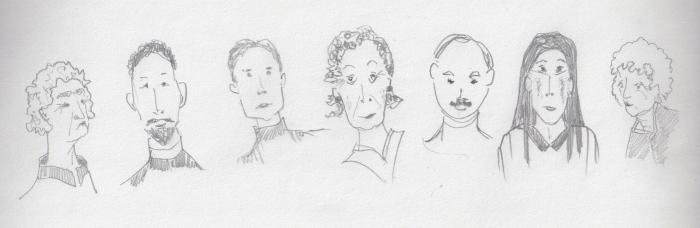
folks who were born and raised in the community
they all have good eyesight or wear contacts
second from the left is the Minister, Oliver Johnston
2. Other characters will belong to the ‘commuter community’. These will be people who have moved into the community from away. They love its rural qualities. The community is also near enough to the city for them to be able to work there.
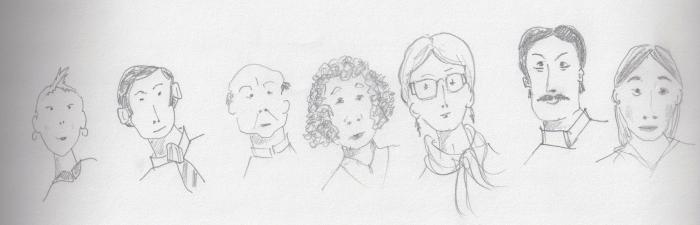
the one on the right is my main character
the man to the left of my main character is her husband… looks a little like a movie star from the 50s
I went to university with the lady on the far left
Of course, within these groups will be people who have their own interests and loyalties. For example, there may be members of the commuter community who fit very well with the embedded community. There will be those who are part of the congregation of the Landing Church and those who are not, those who will be interested in the church because of its historic importance and those who are not that interested in preserving its history.
3. There will also be a negative element in the community in my book. This element will behave very badly and I think of this as the ‘aberrant community’.

Ed Blake, the ‘bad guy’ in my novel
my sister will say he looks like Spock from Star Trek
~
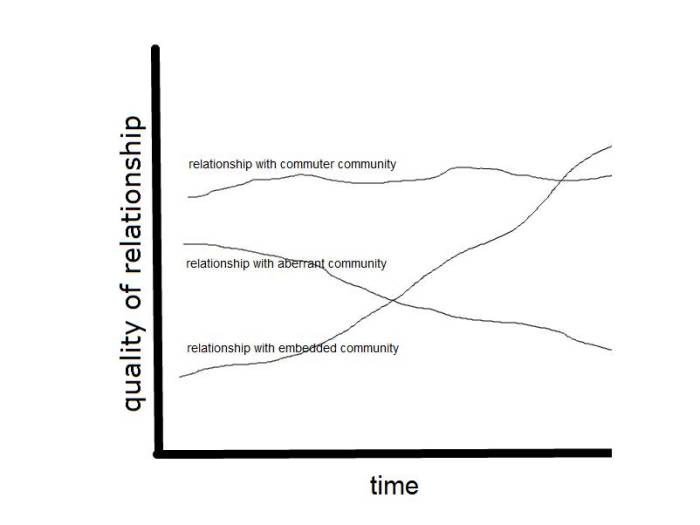
To help me plan the interactions between these three community components and the main character, I made a graph to guide my main character’s relationships through the book.
~
I want the protagonist’s relationship with the aberrant component of the community to begin on a neutral note and deteriorate with time.
Her relationship with the commuter component of community will begin high and remain that way throughout the book.
A main source of tension in the book will be her relationship with the embedded component of community. At first, she is an outsider who thinks she can solve everything by moving and re-purposing the church, and her relationship with the embedded community is very poor. However, during the book, she learns to be more understanding about the community and they learn she is not really so bad after all. This relationship will grow in a positive direction during the book.
As I write, I will check with my time-line to see if the relationships I am writing about are staying true to my graph.
~
Copyright Jane Tims 2012
writing a novel – selecting a setting #2
~
So the poet has decided to write a novel…
~
Title: unknown
Working Title: Saving the Landing Church
Setting: a writers’ retreat including an abandoned church
Characters: main character a writer
Plot: unknown
~
From the first thought I had about my novel, I knew I wanted to include a re-purposed church in my setting. I thought it would be an ideal location to tell stories about writers in search of contemplative and quiet spaces to do their work. As I thought about equipping a writers’ retreat, I realized more spaces would be needed, for eating and sleeping for example, and I thought about bringing two other buildings to the location, a house (the church manse) and a sleeping quarters (the church hall). I mentally set them on the site of our (real) property by the lake and … taa-daa! … I had the setting for my book.

Selecting a setting like this meant thinking about how these buildings could have been brought to the site. In our area we have lots of experience with moving buildings, including churches. For example, there is the fascinating story of how churches were moved to a new site along the Saint John River to allow for the flooding by the Mactaquac Dam. For a wonderful novel about the flooding and the displacement of the homes and families, Riel Nason’s book The Town That Drowned (Gooselane, 2011) is an engaging, humorous and award-winning read! http://www.rielnason.com/
To write my novel, my first step was to write a short story about moving the church to its new location at the imaginary writers’ retreat. As I wrote, I realised the move was only a small part of the story. I began to ask myself questions about how the community might react to the move, how the re-purposing of the church might change its character, and how the stress of acquiring and moving the church, and interacting with the community, might change my protagonist.
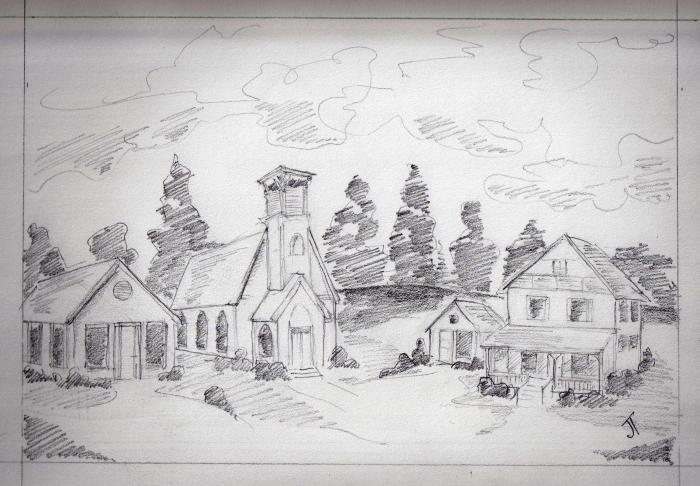
an imagined writers’ retreat
Designing the setting for the novel has been a lot of fun. I have had to think about how the buildings might be arranged at the new location. I’ve thought about what would have to be done to prepare the new site for receiving the buildings (digging a well, installing a septic system, pouring foundations, and creating access).
~
Other aspects of setting I’ve had to consider include:
- the community and landscape where the writers’ retreat would be situated,
- how the property would be embellished to make it ideal for writers seeking variety, solitude and places to write (benches, paths, and so on),
- design changes to the inside of the house, church and hall in order to make them ideal for a writers’ retreat.
~
I’ll write more these aspects of setting in a later post.
~
So, what do you think of my imagined writers’ retreat? Do you have any suggestions for how to make writers flourish in the setting?
~
Copyright Jane Tims 2012
writing a novel – stories about abandoned churches
My husband and I were married in an older local church. I remember its lovely flower garden, the church bell, the woodwork, the organ, and the beautiful stained glass windows. Our wedding day began an extremely successful marriage… so far we have been married almost 33 years!
The church was deconsecrated in 1995 and torn down. The congregation moved to a new church not far away. The new church incorporated the furniture, hanging lights and stained glass windows from the old church.
Even today, almost twenty years after the demolition, I drive past the empty space and I always feel badly. Sometimes there is a car parked on the very spot where we said our vows.

Once I took my son to the now-empty site of the old church and showed him where it once stood. He asked, as a joke, ‘Does that mean you and Dad aren’t married any more?’
His question seemed funny at the time, but now I think about how closely our lives are linked with the spaces where we celebrate. If a space disappears or changes, it may seem profoundly sad. But it doesn’t negate the actions taken there. The best things in our lives supersede the physicality of their associations.
~
Copyright Jane Tims 2012
writing a novel – telling a story
~
So the poet has decided to write a novel…
~
Title: unknown
Working Title: Saving the Landing Church
Setting: a writers’ retreat and an abandoned church
Characters: main character a writer (not a very successful writer)
Plot (a focusing statement): the story of how a woman tries to preserve an abandoned church with unexpected consequences for herself and for the community
~
Churches are like any building. They require maintenance. In these days of striving for energy efficiency, the maintenance may require expensive upgrades – better insulation, energy-efficient windows, calking to seal the cracks…
Unfortunately, maintenance of old buildings, including old churches, can be very expensive. And the consequences of not maintaining or upgrading a building can be high energy costs, a leaky roof, rotting beams…

Eventually, many church congregations face a difficult decision. Do they continue to try to maintain an older building in the face of difficult finances and declining attendance? Or do they build a new building, or perhaps amalgamate with another congregation?
These decisions are especially difficult because churches are meaningful places to the community. Sometimes generations of families have worshipped there. They are places of weddings and funerals, baptisms and confirmations, Sunday School concerts and church suppers. They are places of profound personal experience. Sometimes, they are also the location of a graveyard where family members and loved ones are buried. It is not easy for a community to let go of its older churches.
And what happens to an abandoned church? Some are demolished, some are sold and perhaps re-purposed, some are retained by the congregation as a place for special celebrations. Some are protected as heritage buildings. Sometimes church buildings are sold and must be moved to a new location.
My novel will be about one such abandoned church.
As I have learned in the courses I have taken and in my reading, every good story is about someone who wants something, how the someone sets about achieving the goal, and the consequences of achieving the goal. I have recently taken a course from Deborah Carr, an excellent writing coach (her website (Nature of Words) is at http://www.natureofwords.com/). She puts it this way: a story follows the pattern of Desire, Struggle, and Resolution.
My novel will be the story of how a woman tries to preserve an abandoned church by bringing it to a new home, with unexpected consequences for herself and for the community.
This will be a complex subject:
- It will deal with the transformation of a space from a sacred to a secular use.
- It will be a story about a community and one person’s relationship with the community.
- And it will be a story about what constitutes the sacred.
~
Are there churches in your area that have been abandoned or re-purposed?
~
Copyright Jane Tims 2012
writing a novel – re-purposing a church
~
So the poet has decided to write a novel…
~
Title: unknown
Working Title: Saving the Landing Church
Setting: a writers’ retreat and an abandoned church
Characters: main character – a writer who operates a writers’ retreat
Plot: moving a church? (in part)
~
Since the main character in my novel is a writer, it makes some sense that she would like to earn her living as a writer. However, she has not yet published her first book, so there are no book deals or royalty cheques. She turns to an occupation pursued by many talented writers, the education of other writers.
In my book, I want to establish a situation that could eventually lead to other books. So, I have given my protagonist the dream of establishing a writer’s retreat. Her idea is to hold writing workshops at this retreat, perhaps every weekend once she establishes herself. She will be able to teach writing techniques at the retreat, or hire other writers to carry out workshops. She wants to sponsor reading events for the community, to encourage interest in local writers. Now, all she needs is a place to carry out her plan. She does a little research, selects a community where the artistic sentiment has established itself, and purchases a piece of land nearby.
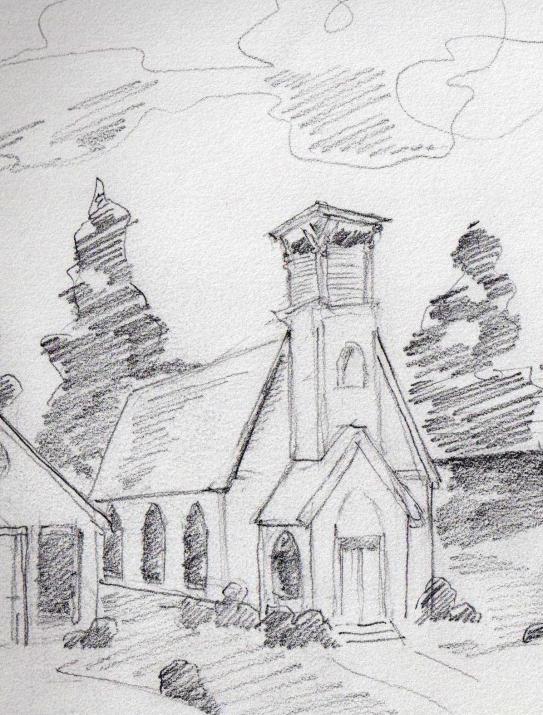
detail of a larger drawing Jane Tims November 29, 2012
And then she sees the Landing Church, about to be abandoned by its congregation. She falls in love with the church. She re-imagines it as a perfect place to hold her writing retreat. A serene, tranquil place for writers to think and write. A place with good acoustics for readings. A place 10 kilometers away.
Now, how is she going to get that lovely little church to her own property???
~
Copyright Jane Tims 2012
writing a novel – choosing a working title
~
So the poet has decided to write a novel…
~
Title: unknown
Working Title: unknown
Setting: an abandoned church (in part)
Characters: main character a writer
Plot: unknown
~
This is a first in my experience. I have no working title for my book!
At the top of the first page of my text are the words ‘Chapter One’. The file on my computer is called ‘Chapter One’.
Always, when I started a book in the past, I had the title firmly in my head, right from the start. The title drove the book. My previous books (not published, although I intend to dust them off someday) were called:
No Stone Unturned
Something the Sundial Said
How Her Garden Grew
~

~
Today, it is harder than ever to select a book title. I challenge you to think of a simple title and then type it into Google. Probably it has been used before. The authoritative source for book titles already in use, of course, is Books in Print ® (www.booksinprint.com).
A working title is useful. A good working title frames the book in your mind and keeps the central idea firmly planted. So far, I have written 24,000 words toward my novel and somewhere in there, I am sure a working title can be found. I could tentatively call my book ‘saving the abandoned church’. It won’t do for the final title since it sounds a little like a ‘how to’ book.
There are several approaches for selecting a final title for a book.
Some people choose part of a quote from a literary work. Favorites of mine are: Ring of Bright Water (Gavin Maxwell) from The Marriage of Psyche by Kathleen Raine; Far From the Madding Crowd (Thomas Hardy) from Elegy in a Country Churchyard by Thomas Gray; The Mirror Crack’d from Side to Side (Agatha Christie) from The Lady of Shalott by Alfred, Lord Tennyson; and Of Mice and Men (John Steinbeck) from To a Mouse by Robert Burns.
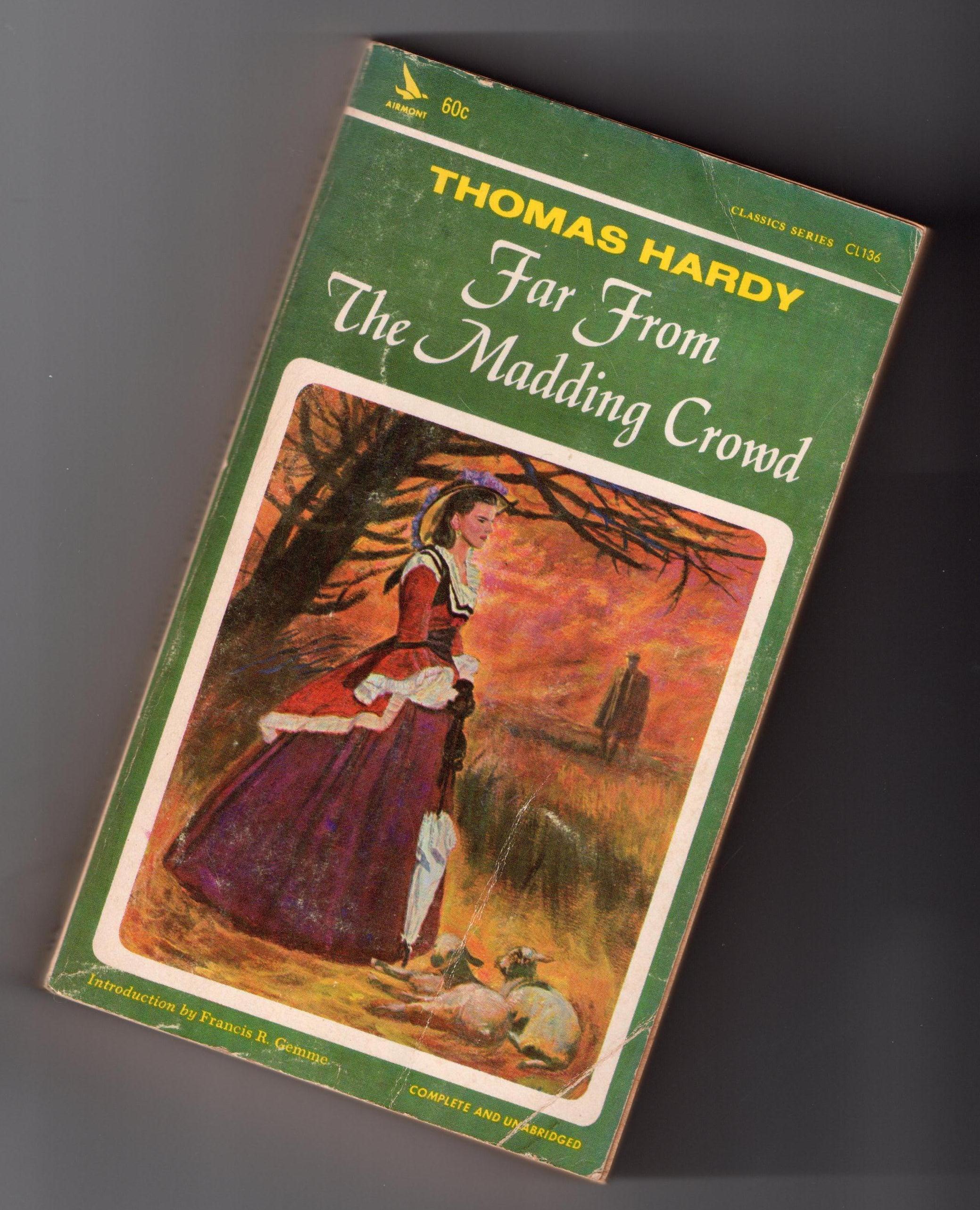
Thomas Hardy, ‘Far From the Madding Crowd’, 1967 Edition, Airmont Publishing Company, Inc.
Some titles are from an important central idea in the book. Blue Castle (L. M. Montgomery) is the name for the main character’s dreamworld, and in the end, she manages to find her fantasy world in real life. Rebecca (Daphne du Maurier) is the name of a ‘first wife’, whose memory haunts the protagonist (who is herself un-named). The Wind in the Willows (Kenneth Grahame) is a reference to the enduring music of the river environment where Rat and Mole have their adventures.

Daphne du Maurier, ‘Rebecca’, 1938, Pocket Books, of Canada, Ltd.
~
Rachel Gardner, a literary agent, has some excellent advice on choosing a title for a book (http://www.rachellegardner.com/2010/03/how-to-title-your-book/). She begins by asking a writer to identify the genre of the book and then suggests working with a list of verbs, nouns and other words associated with the book’s theme, setting or characters.
I will follow her advice and see what titles suggest themselves. I will be sure to let you know when I have chosen a final title!!!
~
Copyright Jane Tims 2012




 nichepoetryandprose