Posts Tagged ‘winter’
Snow days!
We have had lots of snow in central New Brunswick. So, just a few photos to show you my day on Friday and all the piles of snow!
~

Our driveway, partly plowed …
~
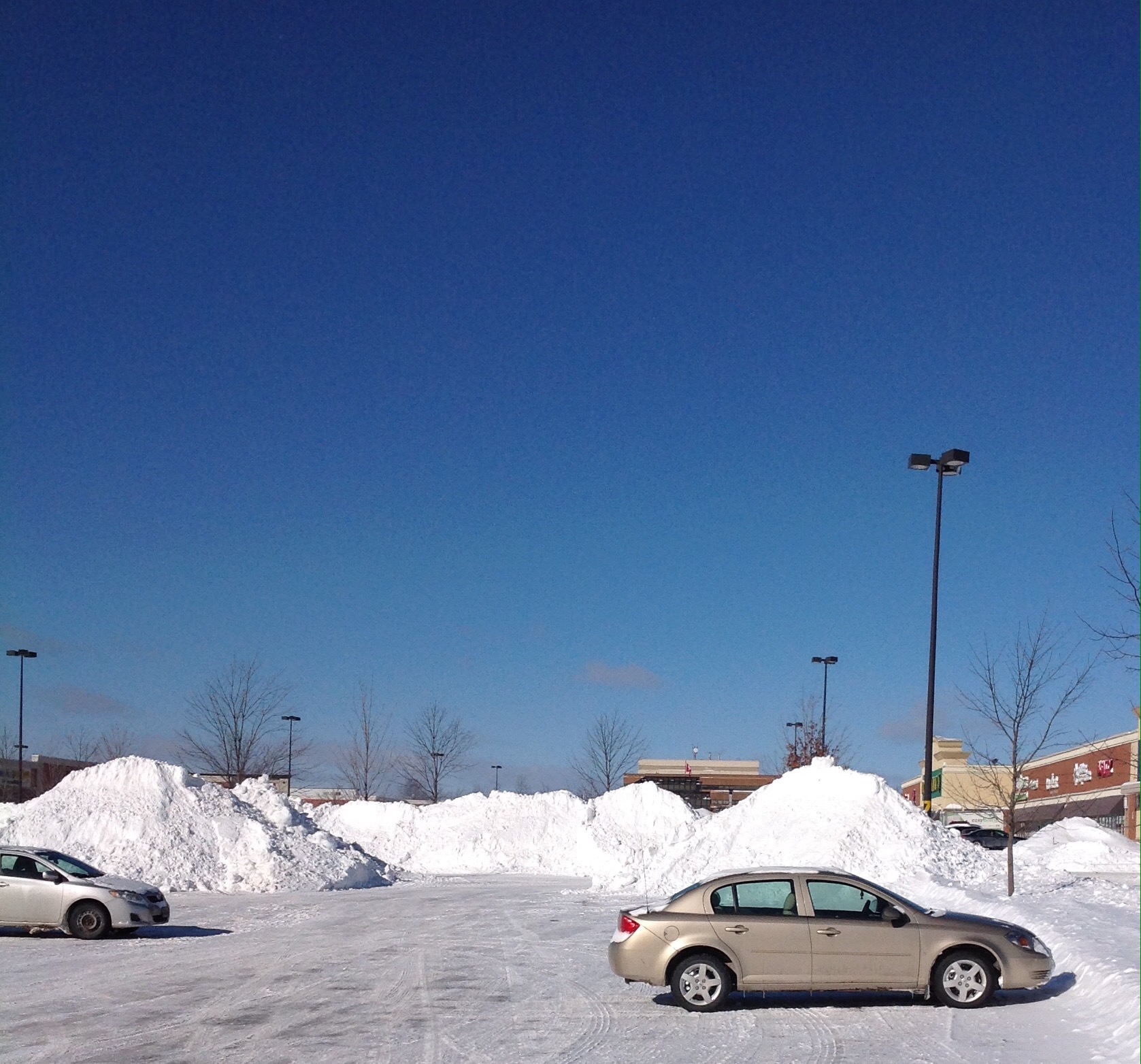
The impressive piles of snow in the box store parking lot …
~
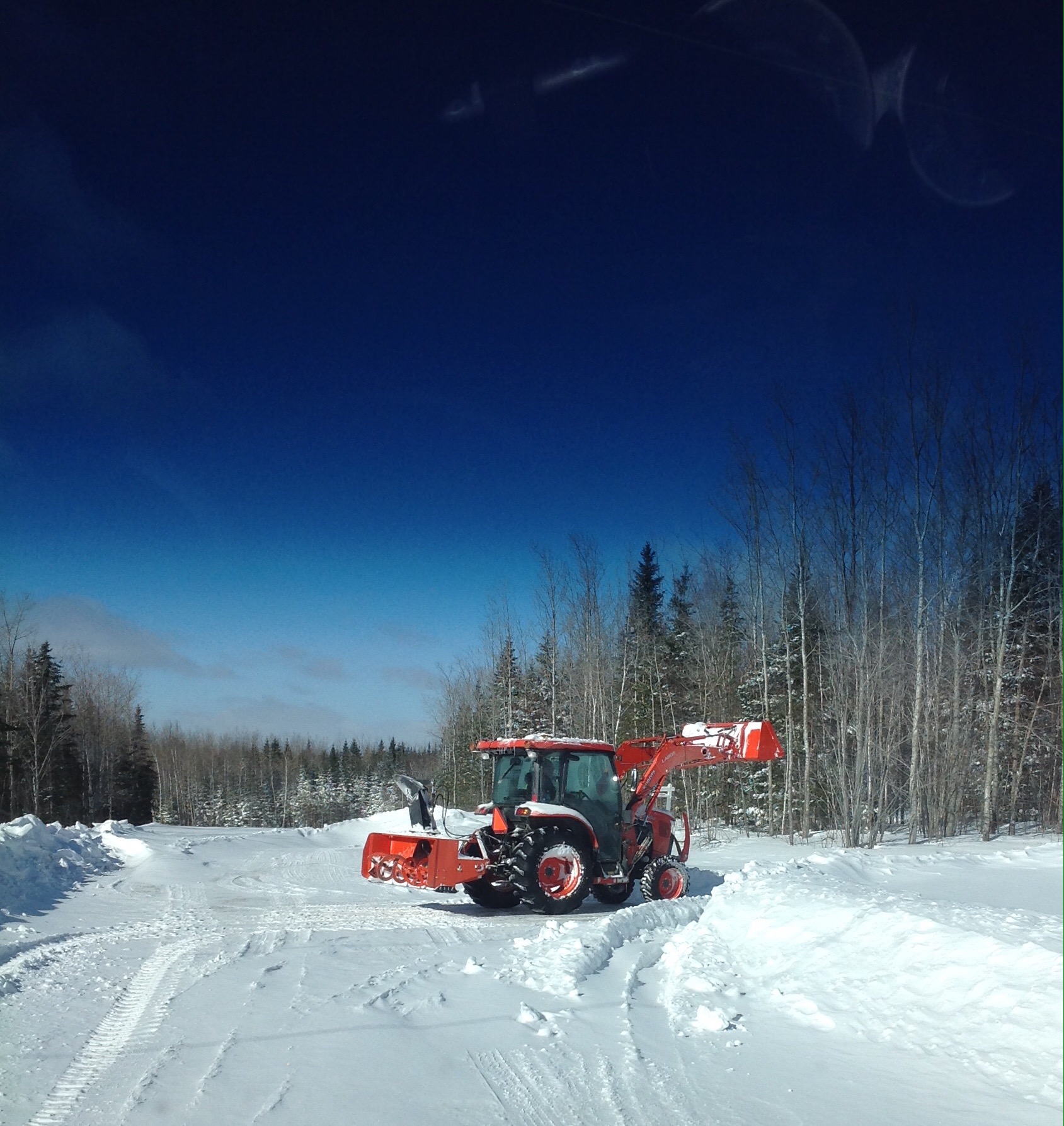
My husband and his tractor, clearing snow …
~
Copyright 2017 Jane Tims
a muse takes over – telling a story through the seasons
In New Brunswick, the passage of time is measured in part by the seasons. Right now we are in winter, in the midst of another snow storm and taking a lot of care when walking on all the ice. Soon it will be spring with crocuses blooming on the lawn and water in every hollow. Then summer, days on the deck and keeping cool. Finally, my favourite season, autumn, colourful leaves and starry nights.
~
Since I am a writer embedded in the winter-spring-summer-fall cycle, it’s natural that changing seasons are an important part of my sci-fi novel. Although weather is often a factor in story telling, I find many books ignore the changing of the seasons.
~
Seasons on planet Meniscus occur in a cycle of four, as in the northern and southern latitudes of Earth. On Meniscus the seasons are the result of a changing heat regime as once per ‘year’ one of the twinned suns slips behind the other. Whether the physics of this makes much sense, I can’t say. “I’m a biologist, Jim, not a physicist!”
~
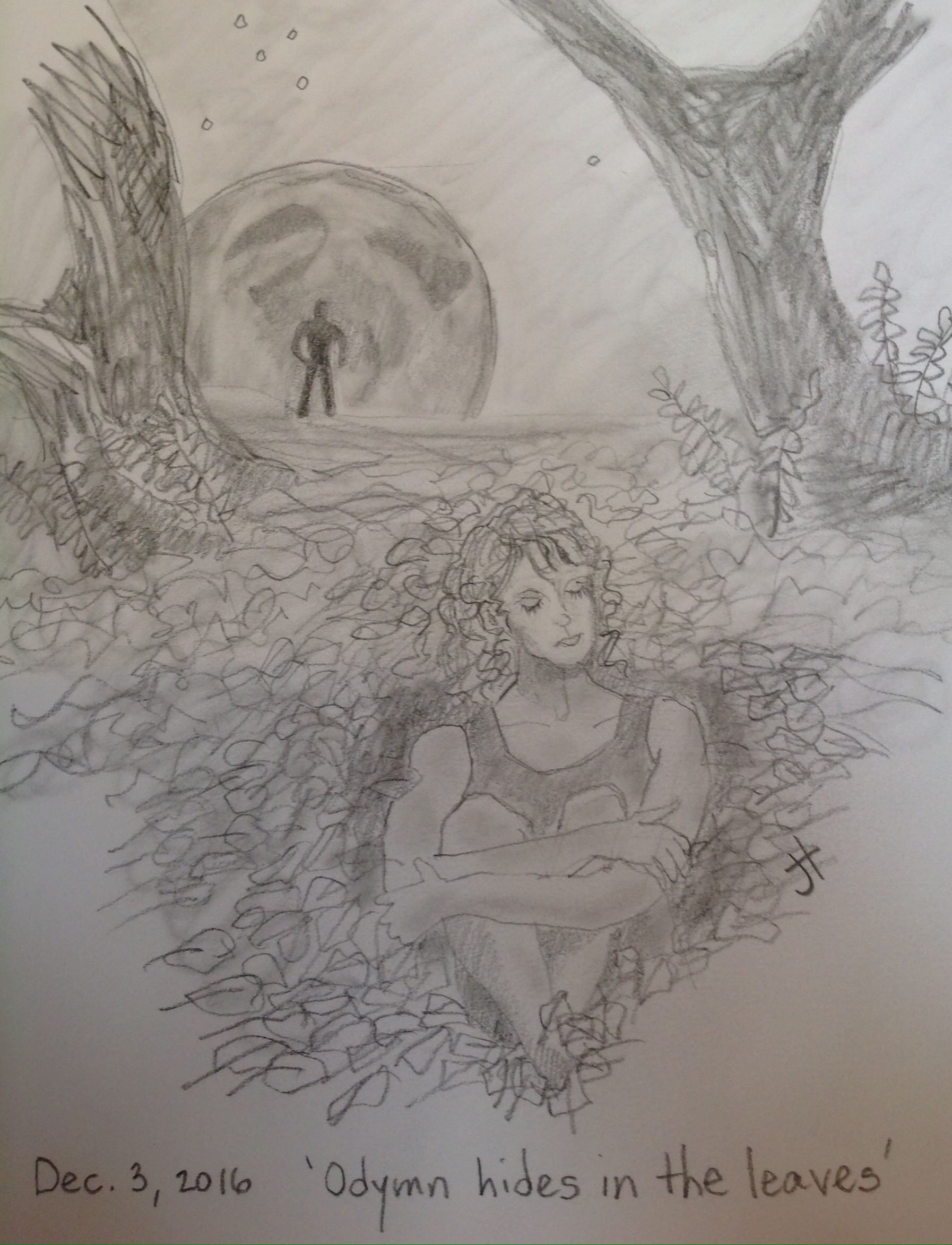
Book One, Crossing the Churn, begins in summer. Foraging for food is easy. As the days pass, leaves begin to fall and soon the characters wade rather than walk through the forest.
~
~
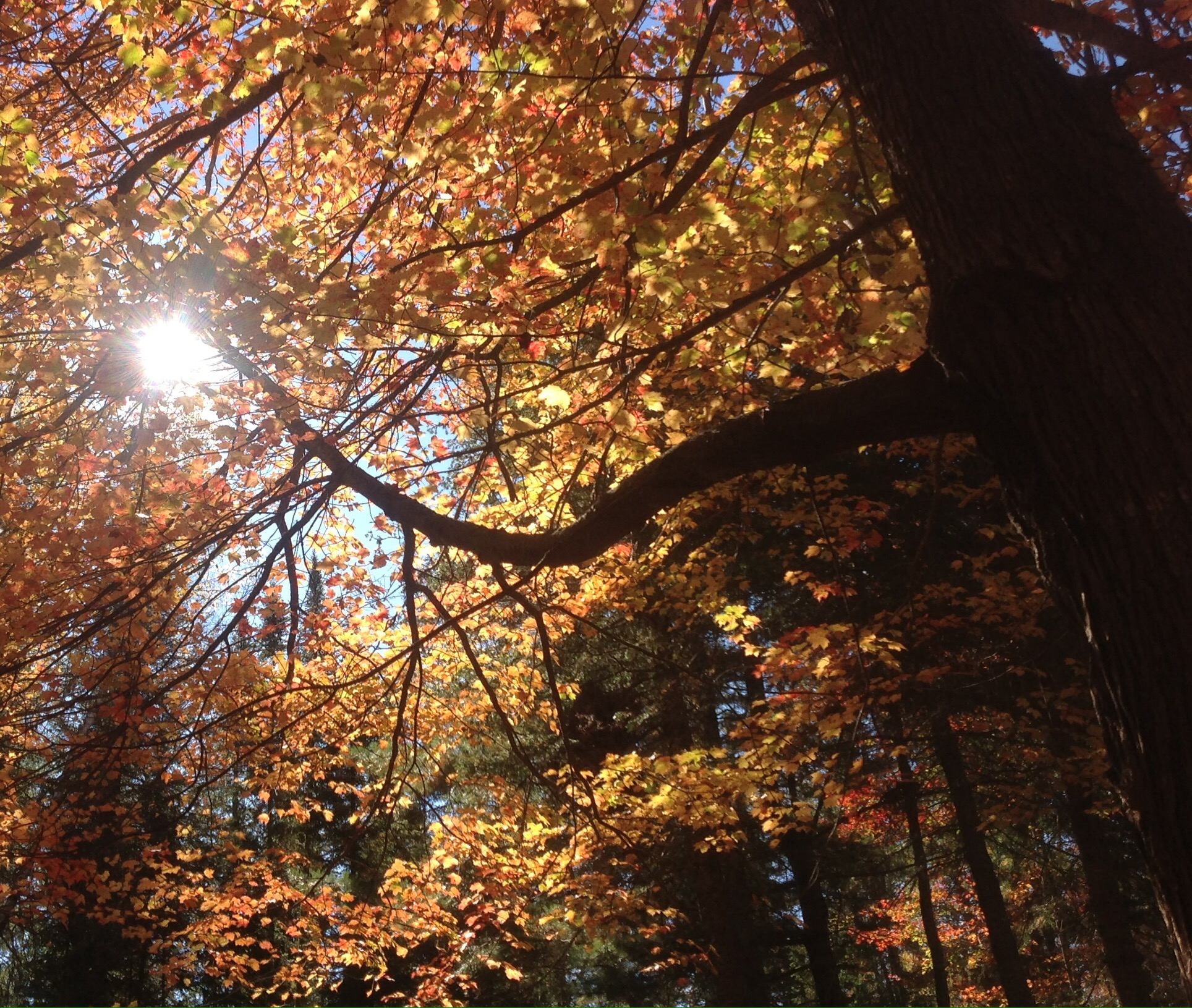
Book Two, South from Sintha, finishes in autumn, as the days grow colder. New characters in Book Two are looking for a home before winter sets in.
~
~
Book Three, Winter at the Water-climb, takes place in a world of ice. The plot focuses on the coming of cold weather and shorter days. Foraging for food is difficult since everything is hidden under snow drifts. Survival depends on what has been put into storage.
~

~
Book Four, The Town in the Themble Wood, celebrates the coming of spring and the vibrancy of summer. The Slain and Odymn scout the Themble Wood for a town-site and help the other Humans establish a new community.
~

~
Book Five, so new it has no name, will take the characters back into autumn. In many ways this book will be a race against time as winter approaches and the Slain must find Odymn and other characters who have been lost after a crisis.
~

~
Including seasons in my story adds to the possibilities for describing setting. The cinnamon scent of trees in the autumn Themble Wood, tracks in the snow of the new town, and melting water-springs add to the sights, sounds, smells and tastes my writing can explore.
~
The progress of getting my first book into CreateSpace has been hampered this week by the appearance of ‘The Blue Screen of Death’ on my computer. It is fixed now, but I am sure the folks on Meniscus have never faced such a challenge!!!
~
~
Copyright 2017 Jane Tims
flutter song
A well-known space can be transformed in an instant.
~
~
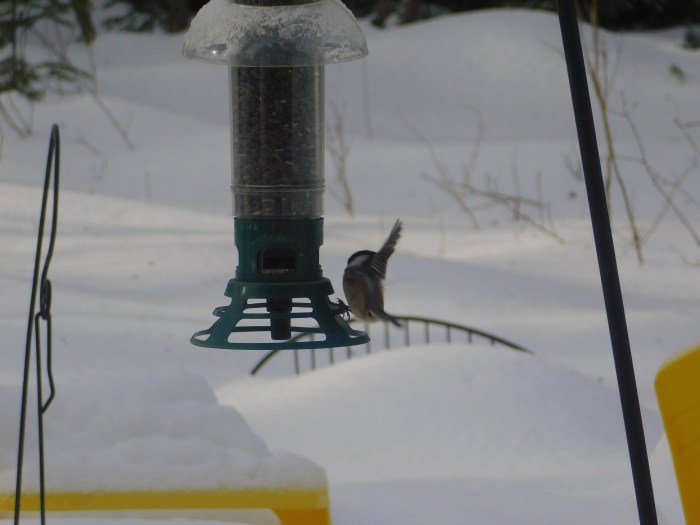
Every day I walk the path from our front door. Our bird feeders are right there, beside the path. Usually the opening door sends the birds scattering. They fly into the trees around our yard and twitter and chirp until I go.
~
~
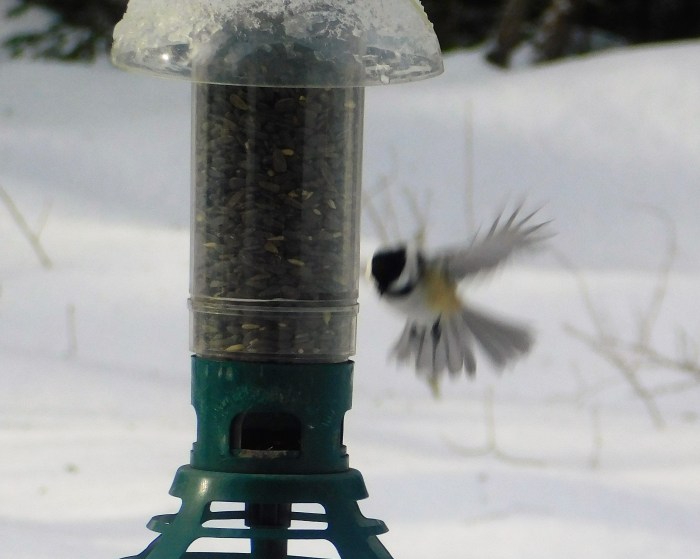
But last week, just after a new fall of snow, I had a magical experience of being in the midst of the feeding birds. And for whatever reason, they paid no attention to me at all.
~

~
The birds, mostly chickadees and goldfinches, whistle and tweet as they feed. But the prevailing sound as I stood among them was the fluttering and whirring of wings all around me.
~

~
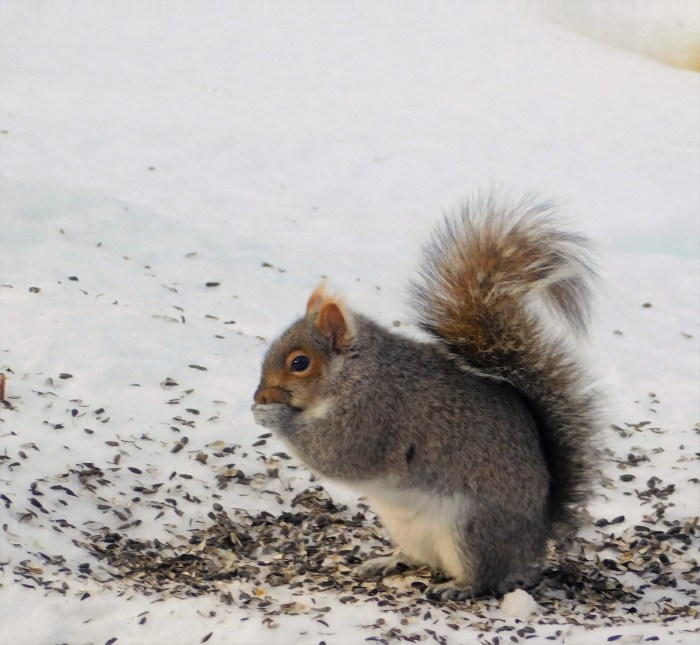
We have other visitors at the feeders, mostly a couple of cat-sized grey squirrels and a family of red squirrels, the descendants of the squirrels that moved in to take advantage of the feeders when we first moved here 37 years ago. The spaces around the feeder vary, depending on whether birds or squirrels are the dominant visitors. It was fun, just for a moment, being part of all the activity!
~
~

~
Copyright 2017 Jane Tims
ready for the next snow date
When I talk about my retirement, the conversation always seems to go to how busy we are.
~
My days are filled with activity. I spend most mornings writing and reading. In the afternoon, I spend a smaller-than-necessary time on keeping house, making supper or going into town on errands. Evenings are divided between time with my husband and writing, attending meetings or working at some of my volunteer work.
~
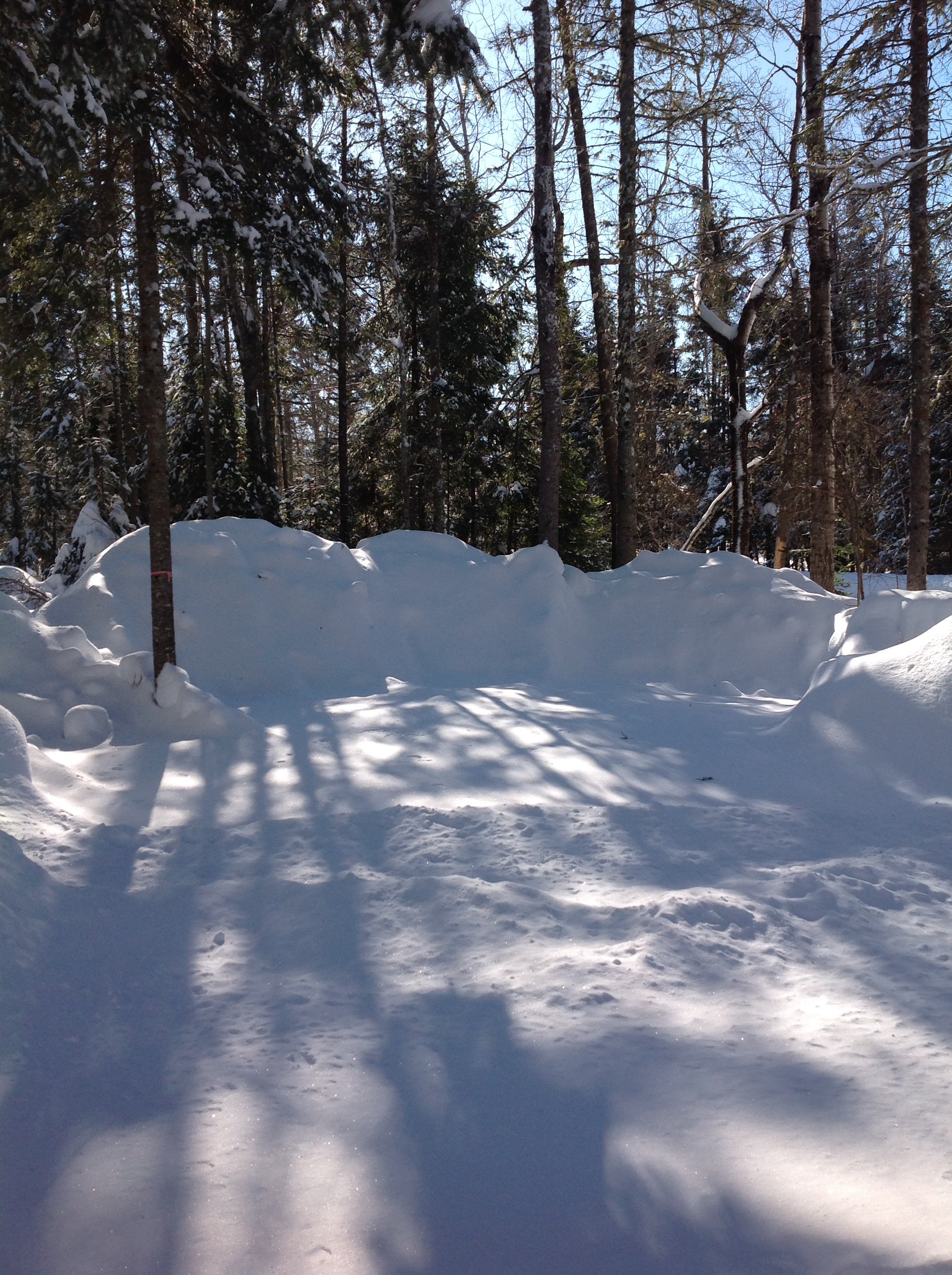
snowbanks in our turn-about last year
~
The weather can change all of this. My husband has a 40 horsepower tractor equipped with a front end loader and a snow-blower. On snow days, he plows or blows snow from his customer’s driveways. On these days, I am the ‘support worker’. I answer the phones, keep track of where my husband is blowing snow, deliver diesel when he runs low on fuel and take him his dinner.
~
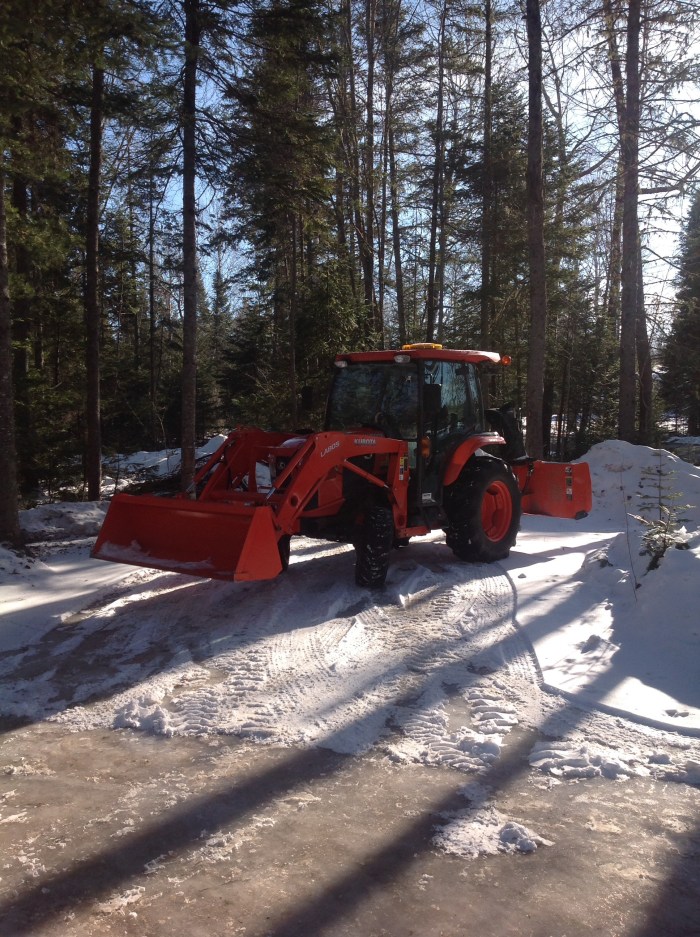
my husband’s tractor, a L4060 Kubota
~
Our day starts at about four in the morning. First, the ruler, to measure the fallen snow. Then, the first customer … us! … two passes to make sure I can get the truck out when the time comes. By the time the first refuelling call comes, the truck is cleared of snow, the bird feeders are filled and I have already finished my daily writing objectives.
~

the snowman is our snow ruler … after some storms you can’t see the measurement
~
When people complain about bad driving in winter, I can say that I have driven in the worst of the worst. Since most of our 25 or so customers are in the local subdivisions, we are often out removing snow before the side roads are plowed. I am lucky to have a four-wheel drive since this winter, snow over ice has been the norm.
~
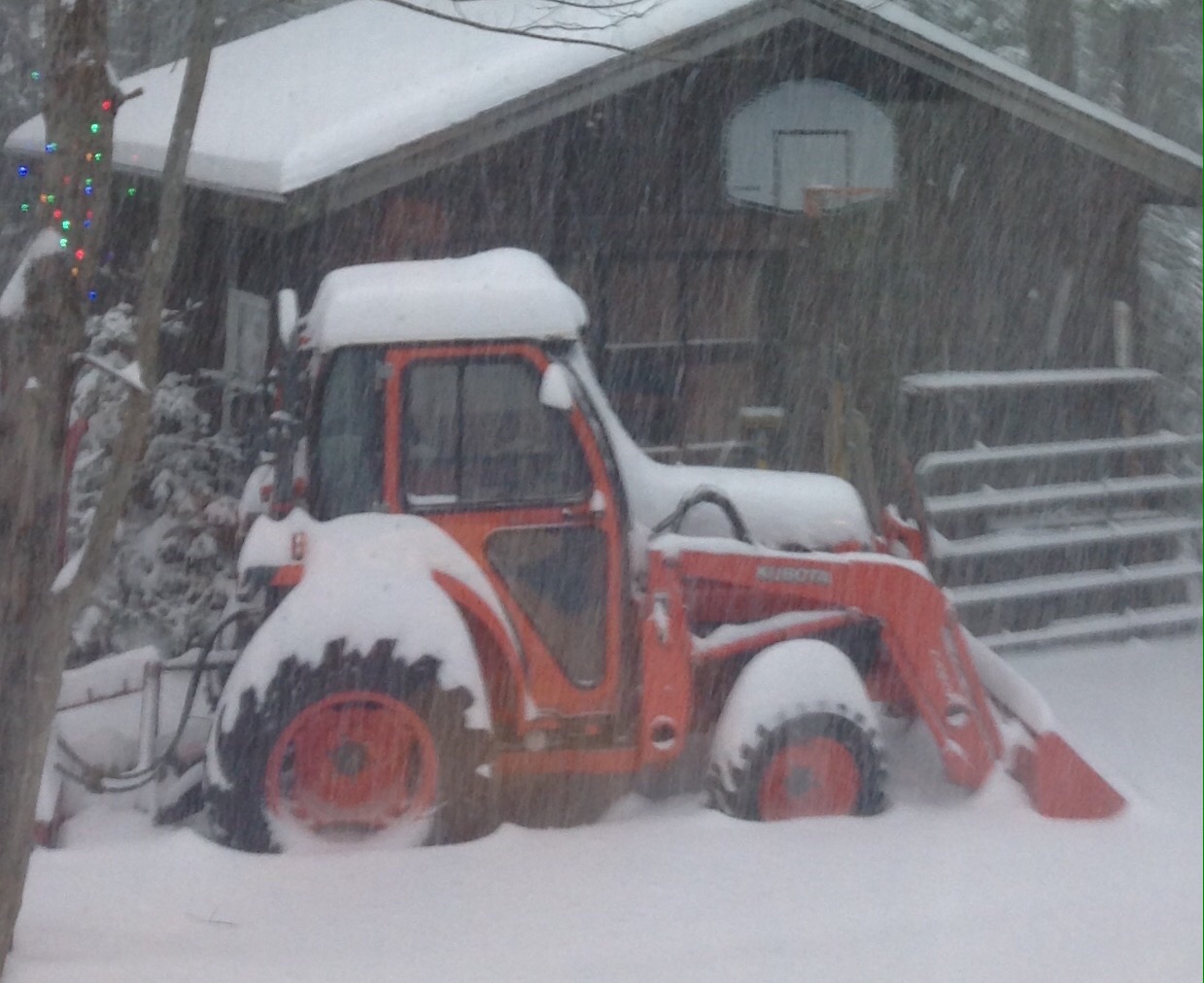
the first tractor we had, a great work-horse, but less comfortable for long days of work
~
You might think that writing takes a back-seat to my duties when it snows. But not so. I do a lot of my writing in my head as I go about my work. In the evenings, when I drive out with my husband to collect from his customers, I am gathering writing ideas. For example, a few nights ago, as I waited in the truck, a drone lifted from a neighbourhood yard and tracked overhead … a scene for the novel I am working on was born!
~
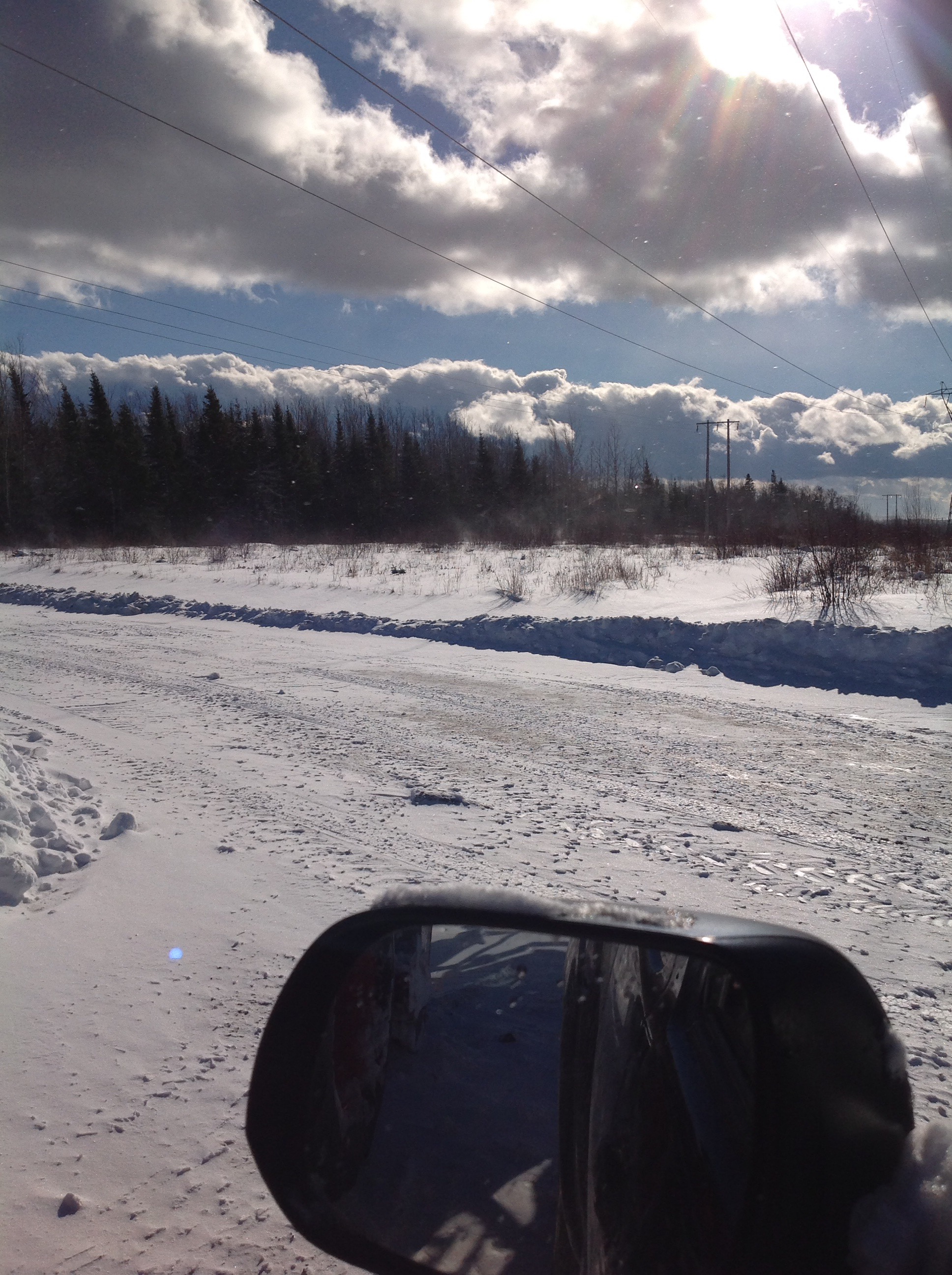
the scene where we sometimes eat our lunch
~
Our lives are busy, but I love variety. I love being part of my husband’s day as he goes about his work. When I take his lunch to him, we talk and watch the falling snow and listen to the radio. And wonder where 37 years of winters have gone!
~
Copyright Jane Tims 2017
yard work – winter wood
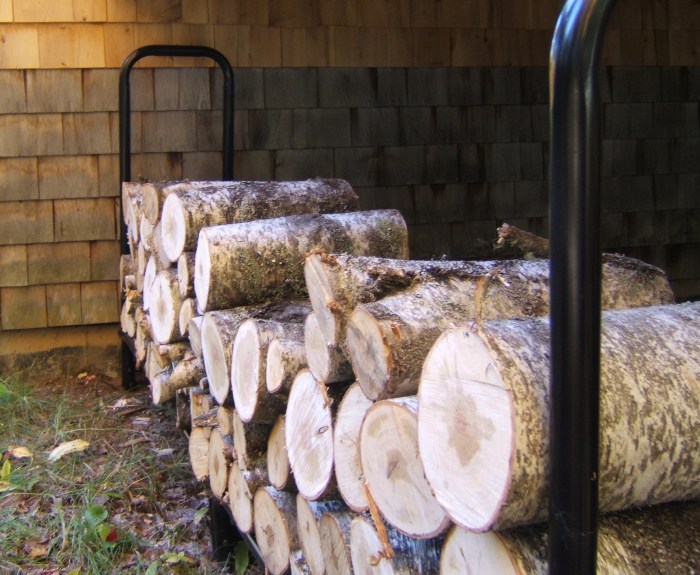
Another beautiful fall day. Today I helped my husband cut up the last of two birch trees he had felled earlier in September. Then I piled the wood in our new wood rack. Give it a chance to dry and it will be ready for splitting and burning next winter.
~
~

~
Copyright Jane Tims 2016
two old schools in Carleton County, New Brunswick
On our way home from Victoria County last weekend, we took the rural road from Hartland through Millville. We found two old one room schools along the way.
~

The location of two old schools in Carleton County. (Map Source: New Brunswick Atlas, Second Edition, 1998)
~
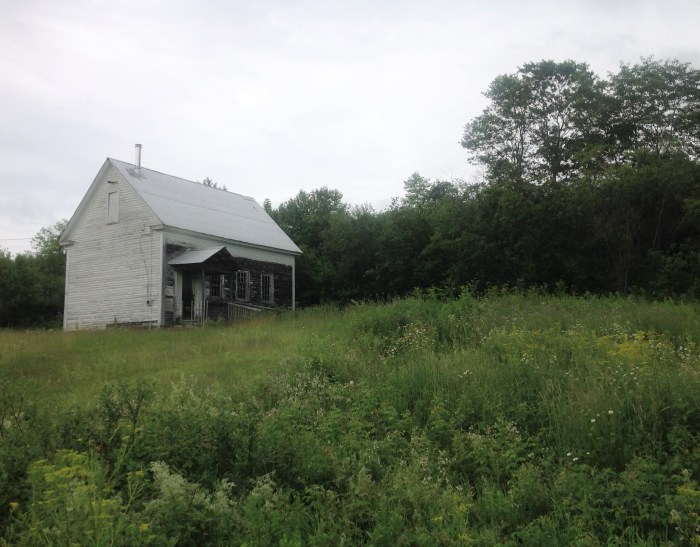
The first of these was in Lower Windsor, Carleton County (once called Windsor Settlement).
in 1898 Lower Windsor was a settlement with a post office and a population of 100
to the north was Windsor, settled about 1840: PO 1864-1945: in 1866 Windsor was a farming settlement with approximately 50 resident families: in 1871 it had a population of 200: in 1904 Windsor had 1 post office, 1 store, 1 church and a population of 200.
Source: Provincial Archives of New Brunswick
~
When I got out of the truck to take some photos, I was overwhelmed by the smell of licorice. The source was Wild Fennel (Foeniculum vulgare Mill.), probably planted at the site (now used as a cottage).
~

Carlisle School, Carleton County 2016
~
The next school was in Carlisle, Carleton County.
first called Northville Settlement: renamed Carlisle with creation of the post office: PO 1877-1924: in 1898 Carlisle was a settlement with 1 sawmill, 1 grist mill, 1 church and a population of 300.
Source: Provincial Archives of New Brunswick
~
The door of this old school was open to the elements.
~
Although I intend to focus my ‘old schools’ writing project in Kings, Queens, Sunbury and York Counties, I am delighted to have found these old schools in Carleton County!
~
The distance between these two old schools was 4.5 kilometres. Not far unless you are a young child on a snowy day!
~
Copyright Jane Tims 2016
after the ice storm

Our drive in the crystal world after the ice storm reminded me of a poem I wrote years ago.
~
It is a rebellious poem (for me), written when I was entering the workforce and unwilling to be viewed from any traditional point of view. Part of the poem uses the metaphor of ‘breaking the glass ceiling’ (Marilyn Davidson and Cary Cooper. Shattering the Glass Ceiling: The Woman Manager. Paul Chapman, Pub., 1992). The poem is about an experience in 1979 of walking in a forest after an ice storm, on one of my earliest dates with my husband. Apparently I didn’t want him to think of me in any traditional role!
~
Breaking the Glass Ceiling
we still see birch
bent in the forest
broken yet grown
fifteen years
since the ice storm
years translucent
as the curtain of fir
you held back for me
I ran ahead
wanted to walk with you
but hoped you knew
how alone I could be
above me branches
burdened
with ice
your hand on my arm
go softly ! (you said)
a touch
will shatter
twigs and tree-tops
chiselled from ice
breathe
and hear a million cymbals
tied to our wrists with ribbon
I wanted to listen with you
but hoped you knew
I would never be
coins in a wishing well
a ballerina bolted to a box of jewels
goblets clinking for a kiss
I will not let you
shelter me
I know only
shards of glass
from the ceiling
(some days I am fragile
only needing warmth
to keep from breaking)
~

~
~
Copyright 2016 Jane Tims
apple orchard after the ice storm
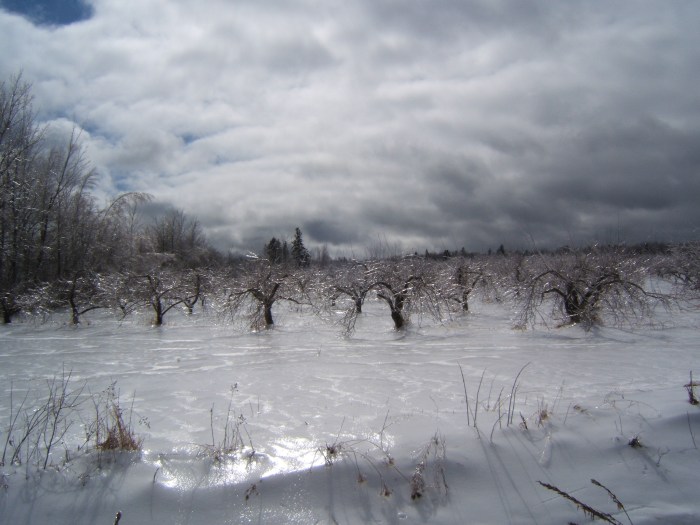
On Saturday, we went for a drive to see the results of last week’s freezing rain storm. Every tree sparkled with its layer of frozen water. When we stopped by the roadside to take some photos, the sound of cracking ice made a continuous stippling noise in the forest.
~
I was amazed at the odd miniaturized appearance of the ice-covered apple trees in an orchard not far from our cabin. The trees are normal sized but there is a lack of scale and weirdness of light in the photos that miniaturizes the entire scene. The third photo, including the ploughed side road, looks more normal.
~
~

~

~
I think this will be our last winter storm of the season. We still have snow on the ground but next week’s warming should take it all away!
~
Copyright 2016 Jane Tims
Who ate the sunflower seeds???
First week of spring! Cold and snowy!
~
~
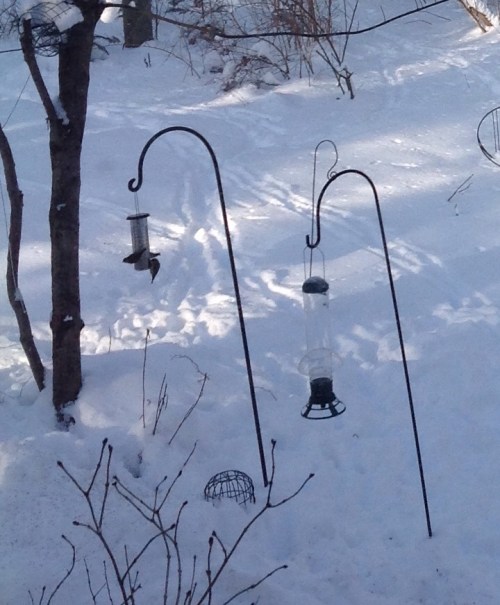
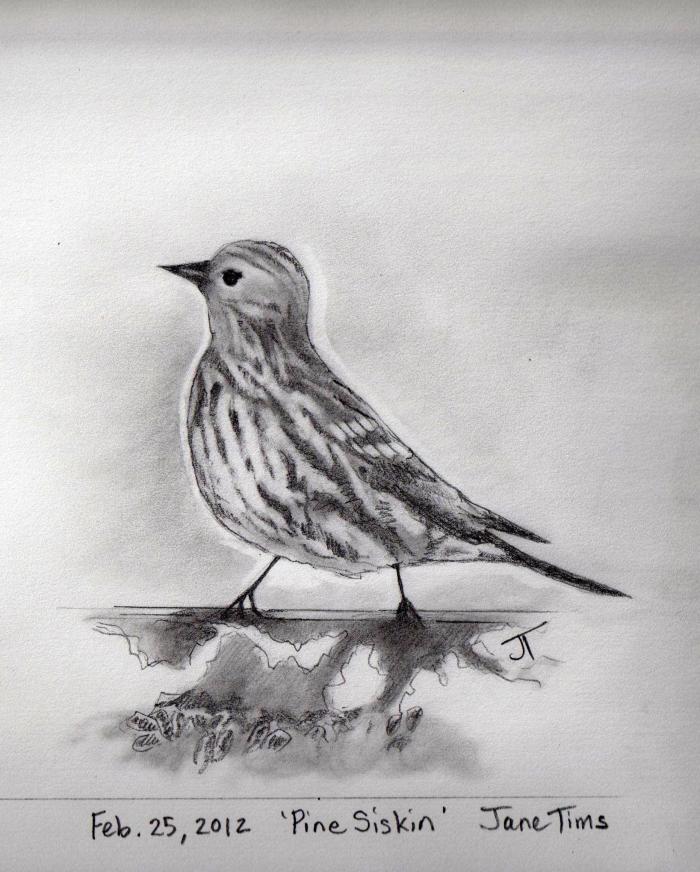
I woke this morning to find my newly-filled sunflower seed feeders all empty. Three pine siskins and a goldfinch were clinging to the finch seed feeder but the other birds are out of seed. A look at the yard will tell you who was slurping up the sunflower seeds in the night!
~

~

~
~
Copyright Jane Tims 2016
edible wild – spruce gum
In my part of North America, we have freezing temperatures and snow on the ground from December to March. With a few exceptions, most plants go into sleep mode during these months and foraging for edible plants is difficult. You can dig beneath the snow to find a few evergreens, but most of the edible wild is above ground.
~

~
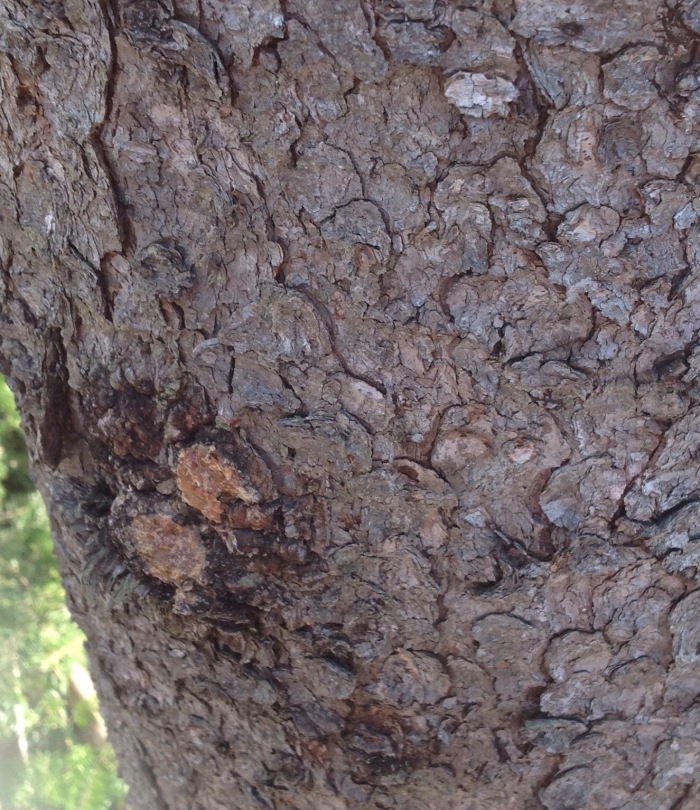
When I am in the woods, even in winter, I am always on the look-out for spruce gum, a natural sugar-free treat from the forest. Spruce gum is found, as the name suggests, on spruce tree bark. We have a large stand of spruce in our grey woods, but the tree below grows, conveniently, beside our driveway. For a map of our woods, see the right hand column ‘map of the grey woods’.
~

~
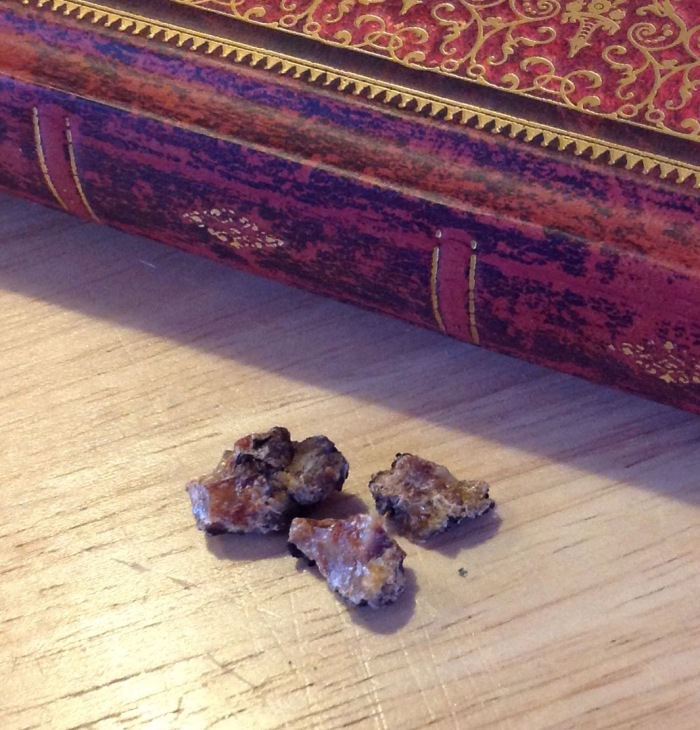
When a branch is broken or the bark is wounded in some way, the spruce oozes a sticky resin that eventually dries to a hard amber-coloured nodule. These nodules can be harvested and chewed like gum. My mom taught me about spruce gum, how to identify the spruce tree and to look for the sticky dark lumps where resin is hardening.
~

~
It is possible to collect a quantity of spruce resin, pulverize, melt and strain the substance, and solidify it, cracking it into bite-sized pieces. I chew the nodules right from the tree, with a little scraping to get rid of any rough bits. At first the gum is hard and crumbly, sticky and intensely aromatic, a little risky for dental work and made interesting by the accidental inclusion of bark bits. After a few minutes of chewing, the gum becomes pliable, woodsy-tasting and orange to pink in colour!
~
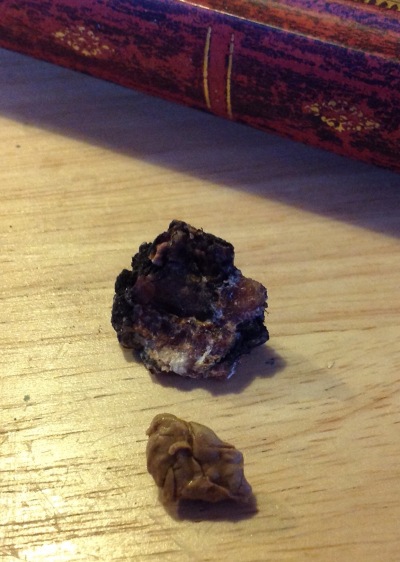
photos of chewed gum are a bit disgusting, but I want to show what normal-looking gum a two-minute chew produces. A rough nodule is shown above the chewed gum for comparison.
~
People of the First Nations have always known about this woodland edible and used it for medicinal purposes. In the nineteenth century, spruce gum was harvested with long handled spruce scrapers and sold commercially. Woods-workers made small carved boxes with sliding tops (gum books) to carry and store the resin nodules.
~
Robert Frost, wonderful poet of all things rural, wrote about spruce gum (‘The Gum Gatherer’. Mountain Interval. New York: Henry Holt and Company, 1916):
He showed me lumps of the scented stuff
Like uncut jewels, dull and rough …
~
You can find the rest of the poem at Project Gutenberg http://www.gutenberg.org/files/29345/29345-h/29345-h.htm
~
~
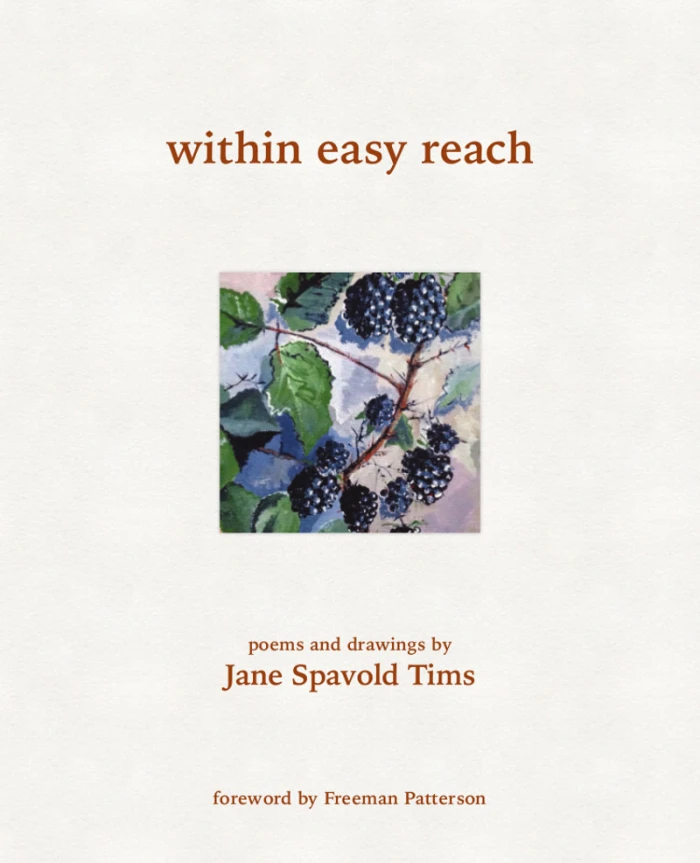
My upcoming book of poetry within easy reach includes a poem about spruce gum. The poem begins:
Black Spruce weeps if wounded
oozes to heal, embeds
pain in amber …
~
As I wait for spring, I intend to ration my small store of spruce gum and use it as a kind of countdown toward the end of our winter weather.
~

some very clean seeps of resin – these will harden eventually and make great spruce gum !
~
~
Copyright 2016 Jane Tims




 nichepoetryandprose