Posts Tagged ‘picking fiddleheads’
fiddlehead season in New Brunswick
This time of year in New Brunswick, the fields and riversides are turning green. The leaves of the alders are the size of a mouse’s ear and that means fishing in the streams. The small leaves of the red maples are like green stars against a blue sky. And bouquets of fiddlehead ferns are unfolding in the wet meadows and along the shores.
~
Fiddleheads, the young coiled leaf fronds of the Ostrich fern (Matteuccia Struthiopteris (L.) Tod.), are a local delicacy in New Brunswick. Steamed, with a pat of butter, they are the perfect vegetable for a spring meal. Fiddleheads are one of the edible wild plants featured in my book ‘within easy reach’ (Chapel Street Editions). I will be launching my book at 7 pm on June 9, 2016 at Westminster Books in Fredericton. If you live in the Fredericton area, I would be so happy to see you there!
~
For more information on the fiddlehead, see https://janetims.com/2012/05/19/making-friends-with-the-ferns-2/

Fiddleheads along the Saint John River in the Grand Lake Meadows
making friends with the ferns #2
The onset of plants in spring is overwhelming. This year, I seem to see ferns everywhere, probably because the fiddlehead of the Ostrich Fern is a delicacy in New Brunswick. The Ostrich Fern (Matteuccia Struthiopteris (L.) Todaro) grows in riparian (shoreland) areas all along the St. John River and its tributaries.
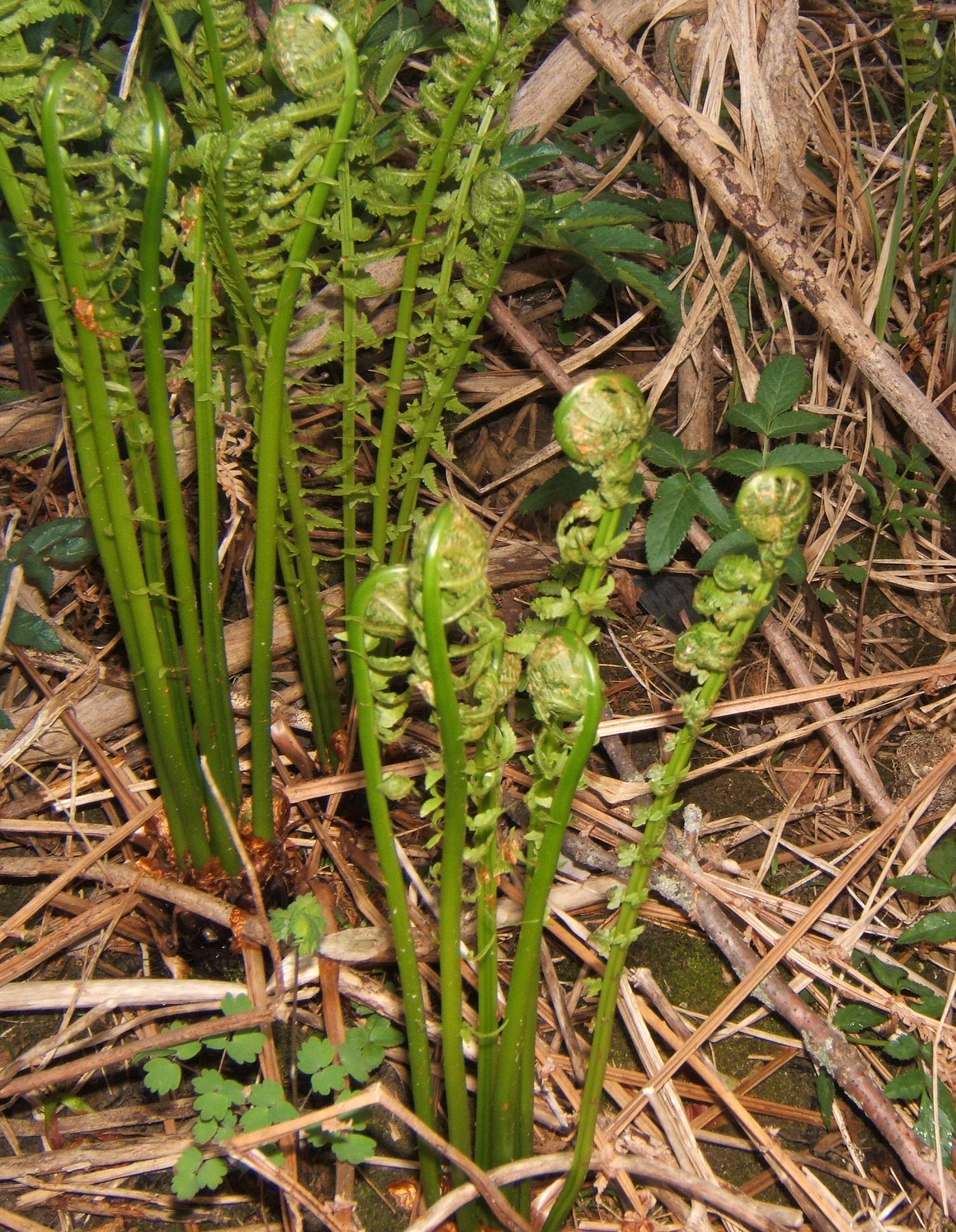
This time of year, car and trucks park in small roads off the old Trans-Canada, and you can glimpse people picking fiddleheads in lowlying places along the river. They concentrate on what they are doing, their backs bent, hardly looking up from their picking. People have favorite fiddleheading spots and usually follow a code, leaving a percentage of the fiddleheads to grow and sustain the ferns for future years.

I only picked a few fiddelheads this year. They were a little older than they are ordinarily picked, but they were delicious. The best fiddleheads are picked when they are just above the surface. After picking they are cleaned, a very easy undertaking, and boiled or steamed until very well cooked.

The cooking liquor is discarded – its dark amber-red color is due to high concentrations of shikimik acid. Once cooked, the fiddleheads are a flavorful green, served with butter or margarine. When my husband was young, his family ate a meal of fiddleheads, new potatoes and shad at fiddleheading time.
Warning: 1. never eat any plant if you are not absolutely certain of the identification; 2. never eat any plant if you have personal sensitivities, including allergies, to certain plants or their derivatives; 3. never eat any plant unless you have checked several sources to verify the edibility of the plant.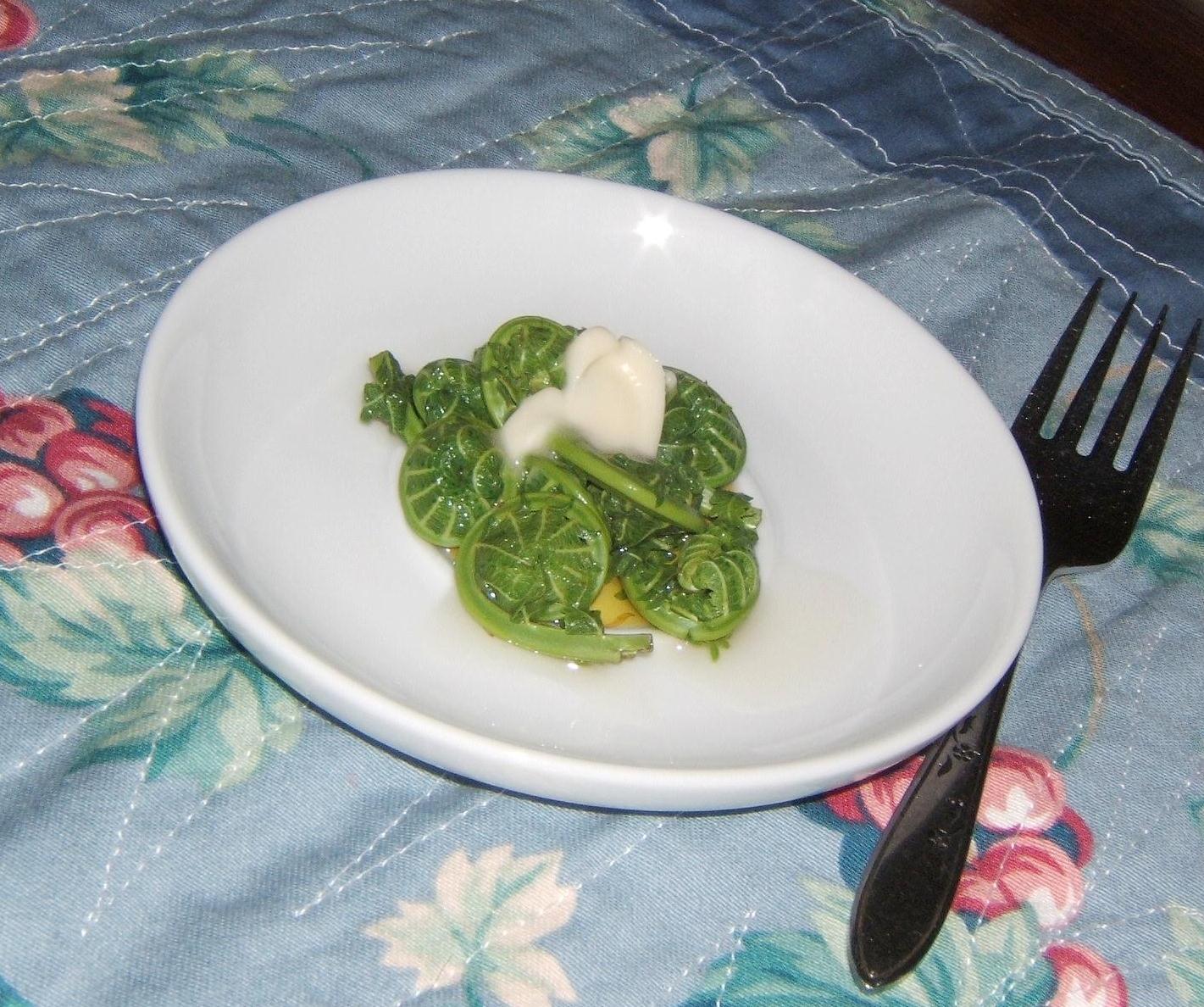
In town, people are selling fiddleheads from trucks and at small stands, and there will certainly be Fiddleheads at the Farmer’s Market today in Fredericton. Usually, the sellers do a brisk business, keeping the fiddleheads fresh in portable coolers and in buckets. I watched a vendor bagging the green fiddleheads, giving the clear plastic bag a deft twirl to seal it before he handed it to the buyer.
Have you ever eaten fiddleheads?
~
~
waking from a dream
Ostrich Fern (Matteuccia Struthiopteris (L.) Todaro)
~
bottom-land thicket
naked in spring
a rumpled bed
the throws of hibernation
~
new growth cocooned
in dry leaves, bent skeletons
last summer’s fern
~
sun surge
insult
between curtains
~
green fiddlehead
uncoils
head down
hesitant fist thrust
between pillows and down
stretches fingers
filigreed shadow
new blocking of sun
~
brown coverlet
kicked
~
new green bedspread
new green canopy
green shade
~
~
Published www.nichepoetryandprose.wordpress.com Nov. 9, 2011
© Jane Tims 2011
Warning: 1. never eat any plant if you are not absolutely certain of the identification; 2. never eat any plant if you have personal sensitivities, including allergies, to certain plants or their derivatives; 3. never eat any plant unless you have checked several sources to verify the edibility of the plant.





 nichepoetryandprose