Posts Tagged ‘pencil drawing’
in the branches of the White Pine

- the White Pine is the larger tree to the left of the road

The most frequent denizens of the pine are a pair of Bohemian Waxwings (Bombycilla garrulus). They prefer berries for food and so are in their ideal habitat. Our property must look like a big dinner plate to them, with its orderly presentation of wild strawberries, blueberries, blackberries, hawthorn and winterberry.
Another bird who stops to rest in the pine is the American Goldfinch (Carduelis tristis), also known as the Thistle bird. These are seed-eating birds who fly across the fields in a distinctive pattern of loops. They are also one of the most common birds at our winter bird feeder.

~
~
building homes
~
we fly kites
to learn the field and sky
set copper whirligigs to spin
~
yellow flirt crosses blue
per-chick-or-ree
potato-chip potato-chip potato-chip
~
we build our cabin
with 2 by 4s, boards and trusses
woodscrews and spiral nails
~
firm framework
woven grass and birch
bark rim and spider silk
~
you fill walls with fiberglass
I quilt curtains for windows
~
goldfinch waits while his female tucks
her nest with thistledown
tufts of cattail, puffs of dandelion
~
© Jane Tims 2011

Briar Island Rock #4

~
~
jointed ruler
(Wreck of the Trafalgar, 1817)
~
the ship is broken on rocks
and we leave in fog
I hold my brother’s hand
we stumble up the shore
in a yellow room of fog
it stumbles with us
they set the baggage down
together, folded
we wait
~
my step-father
pats my mother’s hand
leaves to talk with the Captain
the ship is lost
I look up at my mother
she watches him go, her lips move
she says we will lie in green pastures
~
I look for grass but only see
black rock and grinning fog
lanterns and men calling
my brother sniffs a little
in my pocket I clutch my father’s jointed ruler
he was a carpenter, would have fixed the hole
the mate says
there’s no going back to her now
we stay where we are
folded in a yellow room
luggage at our feet
~
the walls move
the ruler opens
I see the ship
black hull held high
on dark and pointed rock
against the early morning sky
white waves beyond
the ruler closes
~
pink and yellow mix, and the room
is the color of pumpkin
the ruler opens and I know
the black shore has bristles
I heard the mate call it
Briar Island
~
the rock I stand on tips a bit
I step down
the rock is wet and grey
five sides
a funny-looking stone
fits with other stones
strange puzzle
~
I take my ruler
help it to unfold
I measure the rock
I make it jiggle and my brother smiles
a little smile
the ruler folds, unfolds, the room expands
I see my step-father’s uneven walk
across uneven stones
~
~
Copyright 2011, Jane Tims
Briar Island Rock #2 ‘the shipwreck’
How did your family first come to the country where you now live?
In my last post, I introduced the story of my great-great grandfather, William, who arrived in Canada, when he was about seven years old, by shipwreck.
William and his mother, brother and step-father took the schooner Trafalger. It was a 3-masted square-sterned ship with two decks, 96 feet long and 25 feet wide. The family embarked from Hull, England for Canada on May 31, 1817.
The ship was headed for Saint John in New Brunswick, but became lost in thick fog and was shipwrecked off Brier Island, on the Nova Scotia side of the Bay of Fundy. In a letter reported in the Hull Advertiser, the Captain of the Trafalgar gave a detailed account of what happened:
I am sorry to inform you of the loss of the Trafalgar, on the 25 July, about half-past eight o’clock in the evening, upon Brier’ s Island, in the Bay of Fundy, about 60 miles below St. John’ s [Saint John, New Brunswick]. I had been running up all the day, it being very thick could not see anything; at seven p.m. I hove the ship to, with her head to the Westward, thinking we were well over to the Westward, sounding in 40 fathoms; the tide running very strong, and before we could see the land, we heard the surf against the rocks; got sail upon the ship, but being too close the strong tide set us upon the rocks; it being high water when we got on, run out a kedge to heave her off, but all to no use. At low water, the ship was dry all round, amongst the rugged rocks, which went through her in different parts; the ship having as much water in the inside as there was on the outside at high water. The passengers were all safe landed that were brought out, and got all their baggage on shore. We are saving all the stores that we can, but they must be taken up to St John’ s to be sold, as there are no people on Briers Island to purchase anything.
– ‘Letter from Captain J. Welburn to H. Cochrane, July 30, 1817. Saint John, New Brunswick’, Hull Advertiser, September 27, 1817.
The shipwreck was also reported in the New Brunswick Courier:
Shipwreck! – On Friday evening last, about half-past eight o’clock, the ship Trafalgar, Capt. Welburn, went ashore on Briar Island in a very thick fog – the ship will be a total wreck; chief part of the materials saved – The Trafalgar was from Hull bound to this port, and from hence to Quebec, and had 159 passengers, which together with the crew were all saved.
– ‘Shipwreck’, Marine Journal, New Brunswick Courier, Volume 7, No. 325, Saint John, New Brunswick, August 2,1817.
The ship’s passenger list is available at The Ships List (http://www.theshipslist.com/ships/passengerlists/trafalgar1817.htm). It lists the heads of the various families on board.
One of the saved passengers was my great-great grandfather, William, a child of about seven years. William’s father, also named William, had been a carpenter and was killed by lightning while working on a building. His mother married for a second time, and sold her first husband’s tools to get her second husband out of the army.
It would have been hard for them after the shipwreck, but there was a small community of people living on Briar Island – it had been inhabited by fishermen since 1769, and by Loyalists after 1783. After the shipwreck, William’s family eventually settled in Digby County, Nova Scotia.
Tomorrow, I will tell the story of my own family’s pilgrimage to Briar Island in 1993.

'luggage, landed on the shore' (detail of a larger drawing by Jane Tims, 2011)
© Jane Tims 2011
Briar Island Rock #1
One of the rock features already along the path in our front yard is a pentagonal chunk of black basalt. Over the next three posts, I will tell you the story of what it represents and how it came to be in our yard.
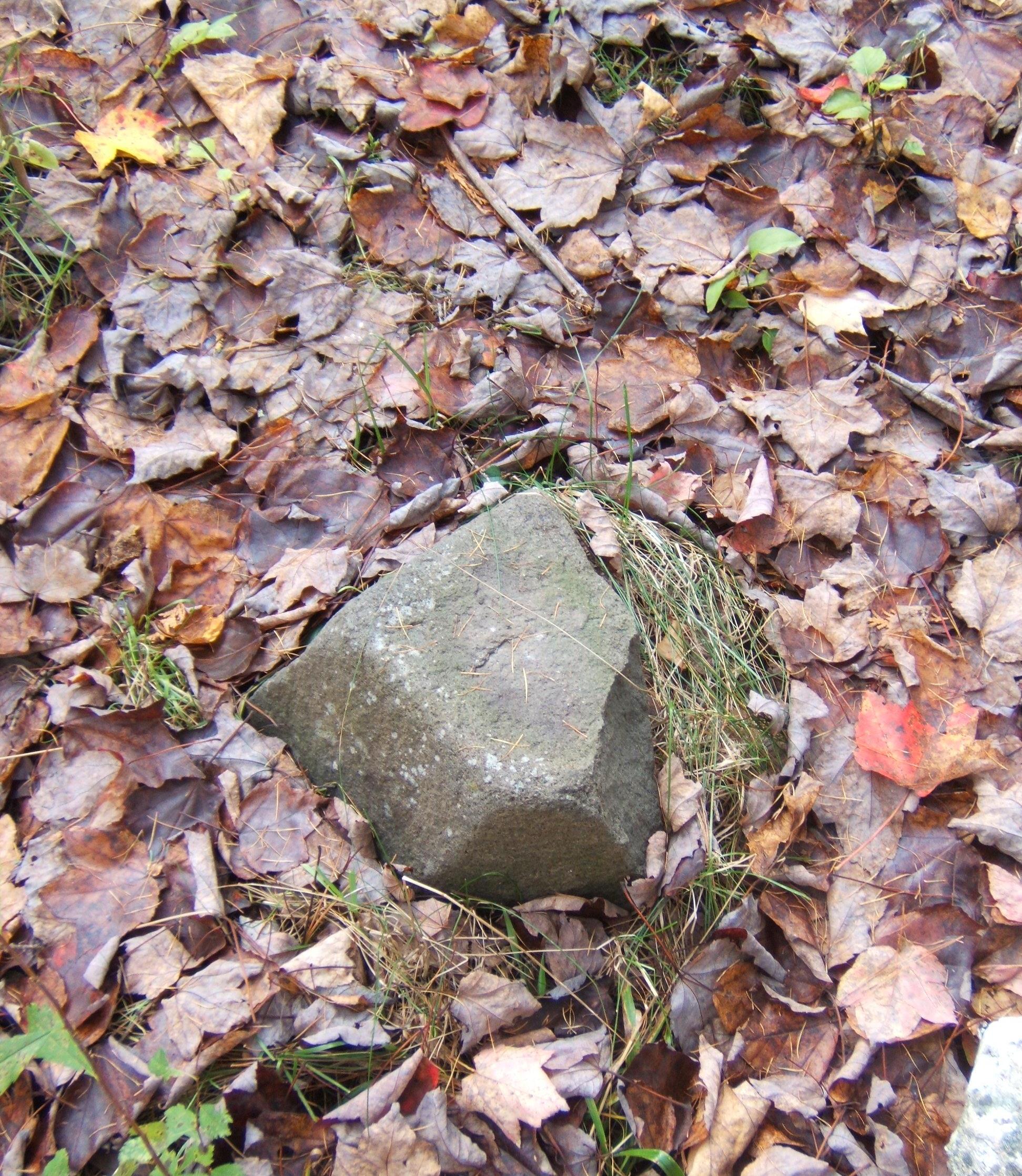
The story begins with my study of our family history and genealogy. Of course, being interested in genealogy means you will always have something to do.
As you go back in time, more and more people become part of your life story. By the time you go back only three generations (your great-grandparents), you have 8 grandparents to research. If you include your great-great grandparents, you have 16, and so on. By the time you get to eight generations, you’ll have 256 people to call your own. At 14 generations you have 16,384 grandparents! Think of how many people had to meet and procreate just to make you!
The sad thing is, you will never know most of these people by name, let alone by their many stories.
One of my great-great grandparents would have quite a story to tell. My great-great grandfather, William, came to Canada from England when he was about seven years old, with his mother, step-father, and brother. The ship they travelled on, the Trafalgar, was shipwrecked off Briar Island, Nova Scotia on July 25, 1817.
In my next post, I will tell the story of the shipwreck.

© Jane Tims 2011
a nest in November
On Saturday, we drove to the lake to gather boughs of fir and pine for our Christmas decorations. While we were there, we poked around in the thicket. We found a few bird nests, still intact, easily seen now the trees and alders are free of leaves.
The first nest was cup-shaped, made of tightly woven grasses and weeds. Nests of songbirds are not easy to identify since they are similar in size and construction materials. If this little nest survives the winter, perhaps I can watch who uses it next spring.
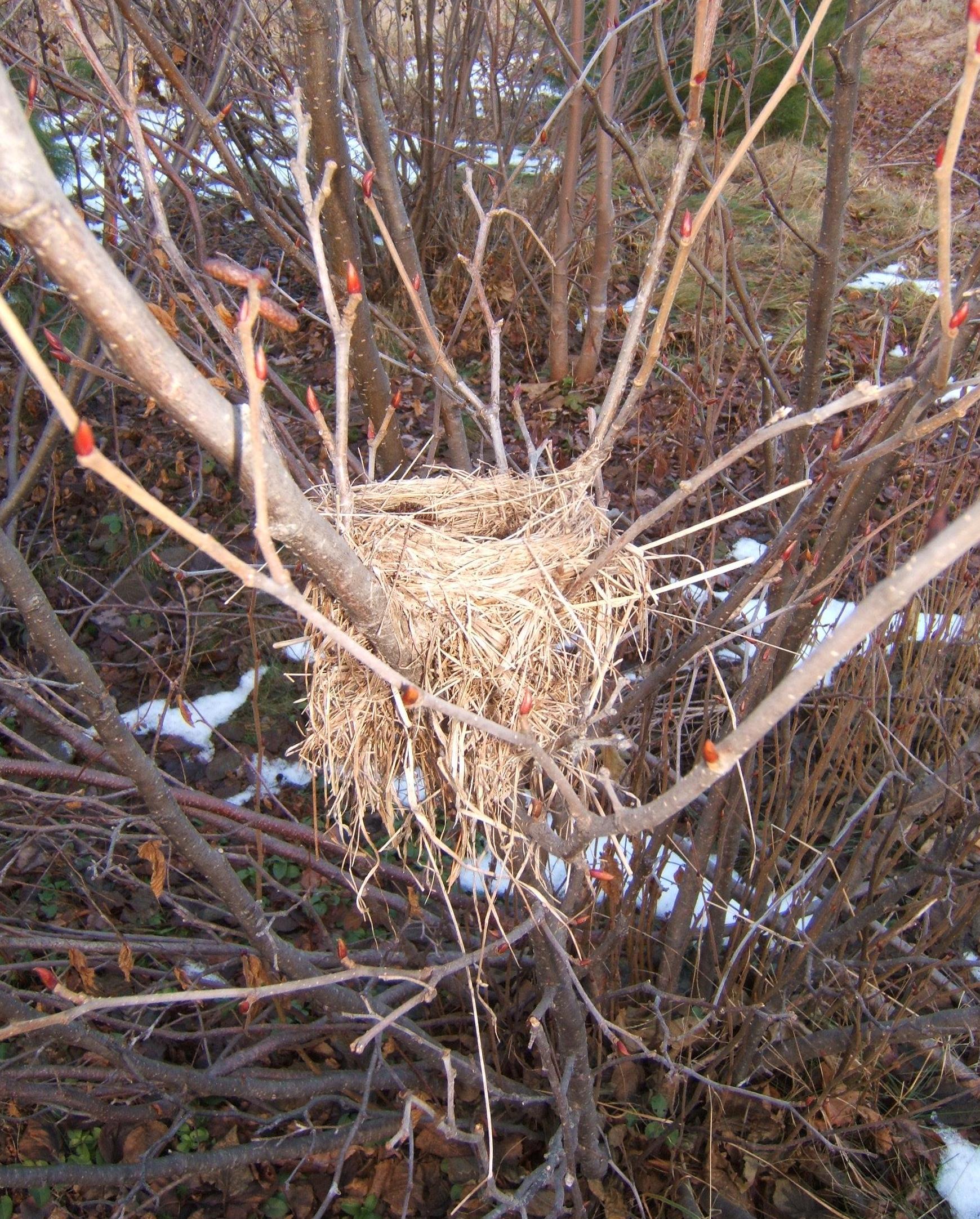
The second nest probably belonged to a Robin. It was high in a tamarack tree, welded firmly to the branches. Robins often return to the same area and sometimes use the nest of the previous summer, so I’ll be watching this nest too.

The last nest we saw was a beautiful little hanging basket covered with birch bark and woven with grasses. It appeared to be frail but it was very sturdy and stubbornly clung to the bough in spite of its exposure in the November wind. I think it is the most delightful sight I have ever seen.
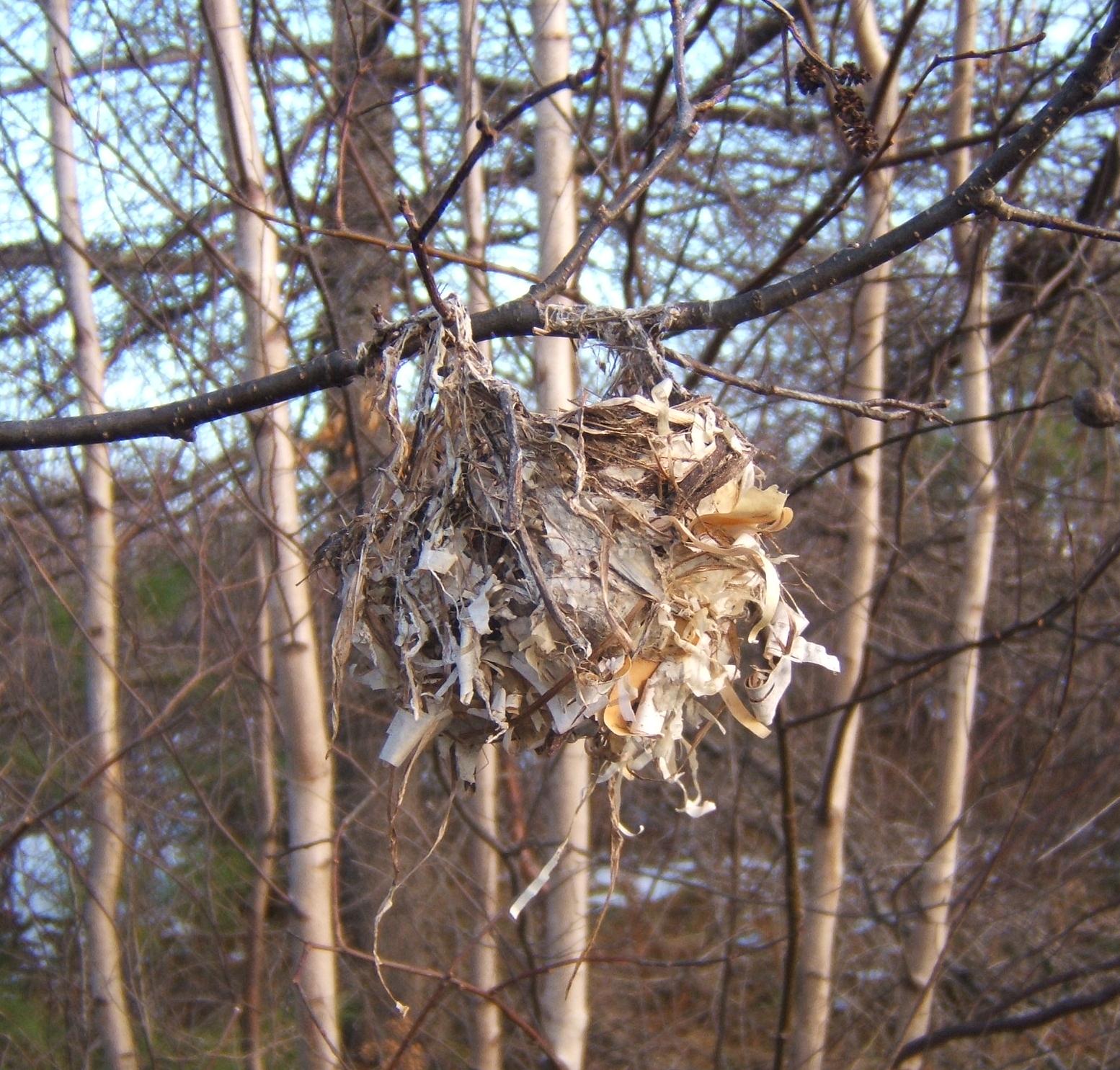
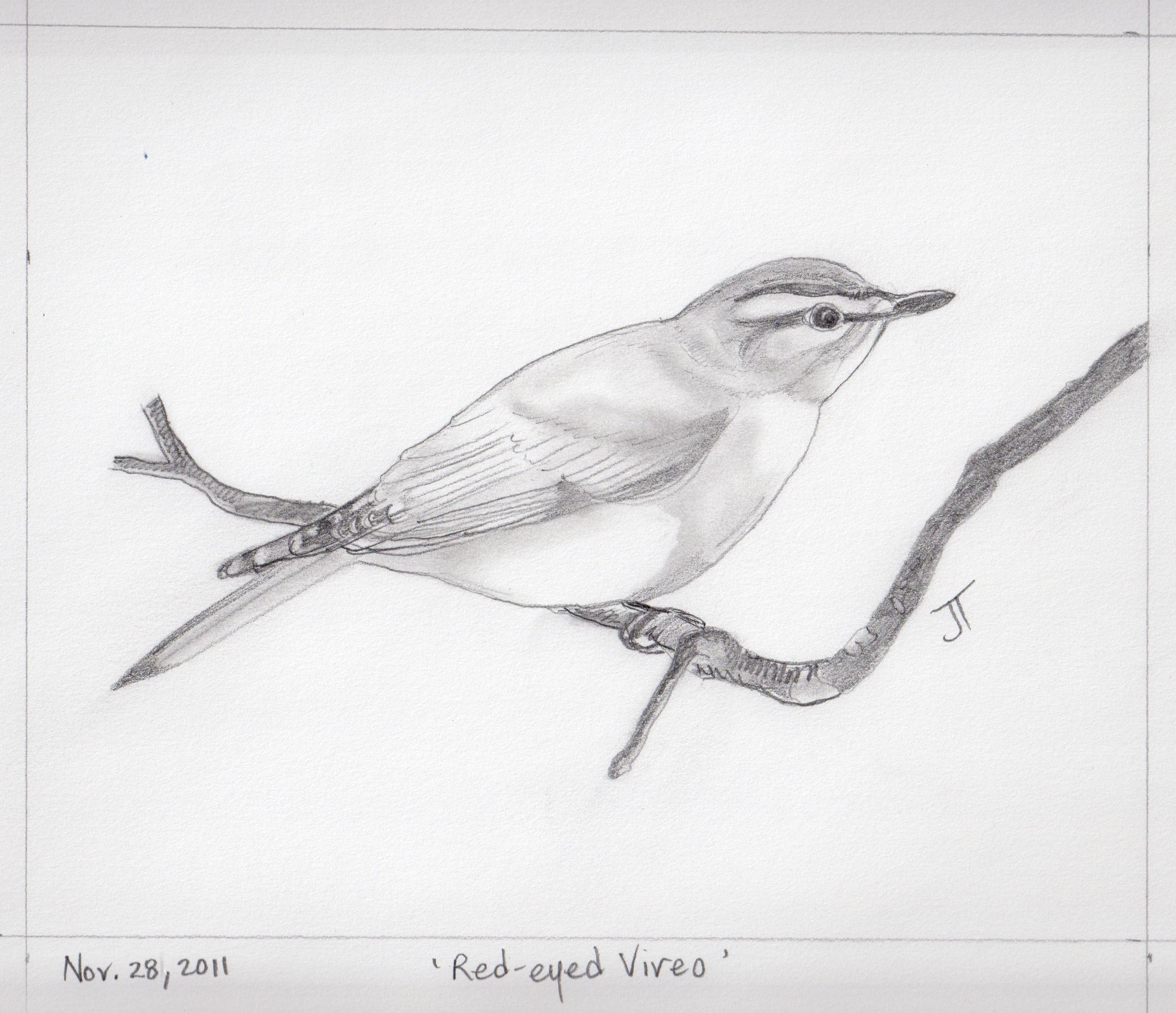
A biologist with the New Brunswick Department of Natural Resources was able to identify this nest from my photo. The nest probably belonged to a red-eyed vireo, one of our common songbirds. I have never seen this bird at our lake property, but we hear it all summer, endlessly asking its question and giving an answer.
~
~
Red-eyed Vireo
(Vireo olivaceous)
~
drab little
olivaceous outlaw
black masked
red eye
~
can’t see you
can’t find you
can hear you
where’re you?
over there
where’re you?
nowhere
~
in November
ghost-self flutters
in birch bark tatters
a basket in the alder
remnant of summer
~
gone now
what’d ya do?
did an answer finally
come to you?
~
© Jane Tims 2011
cave beneath the waterfall
In the cold weather, I think about the waterfalls we saw this summer. As the temperature gets lower, they succumb. First the water freezes at the edges, building up on the rocks and ledges. Then, gradually icicles build and the surface water freezes. By mid-winter, the waterfall will be a frozen cataract, a glass house of ice. Within the frozen falls are ice caverns and icicles, places where water runs and where water stands still, and places where the ice traps sunlight to shimmer and sparkle.
One of the waterfalls we visited this summer was Smith Falls (see ‘niche beneath waterfall’ under the category ‘waterways’, published October 21, 2011). At the base of the waterfall was a small cave. In winter, the entrance to this cave must be a crystalline curtain of icicles and glass.
Below, in my poem and drawing, I remember the cave and waterfall in summer.
~
shelter
‘a small cave is hidden beneath the falls’
– trail guide
~
sip of tea
candles lit in evening
a lap quilt tucked
relief from freshet
~
cave, respite
beneath two newly reconciled
slabs of bedrock
or where vulnerable sediments finally fail
succumb to the reach of water
~
spurt and shard
the brawl subsides
and damp recedes
pollen settles
~
concentric rings
and space is made
to occupy
~
© Jane Tims 2011

© Jane Tims 2011
jane 9 squirrels 1
Again, I am in competition with the squirrels (see ‘competing with the squirrels #1 and #2’, in the Category ‘competing for niche space’).
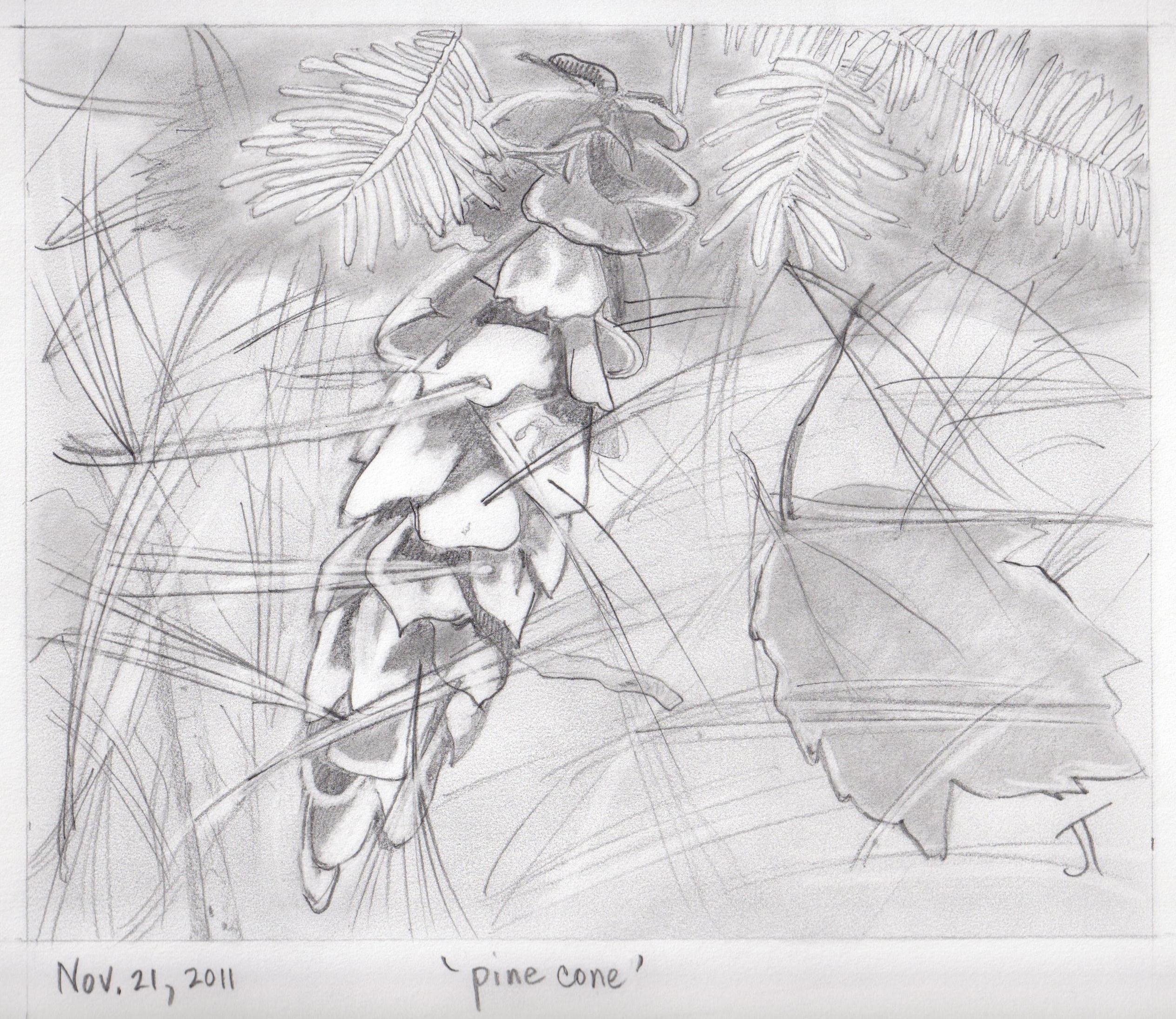
Christmas is coming and this year, I am decorating with natural elements. One of these is a ceramic bowl of large pine cones.
We have several large White Pine (Pinus Strobus L.) on our property and from time to time, they produce masses of beautiful pine cones, perfect for my decorations. White Pine are easy to remember in this area, since they have their needles in bundles of five. The cones are between 10 and 15 cm long and are a favourite food for squirrels.
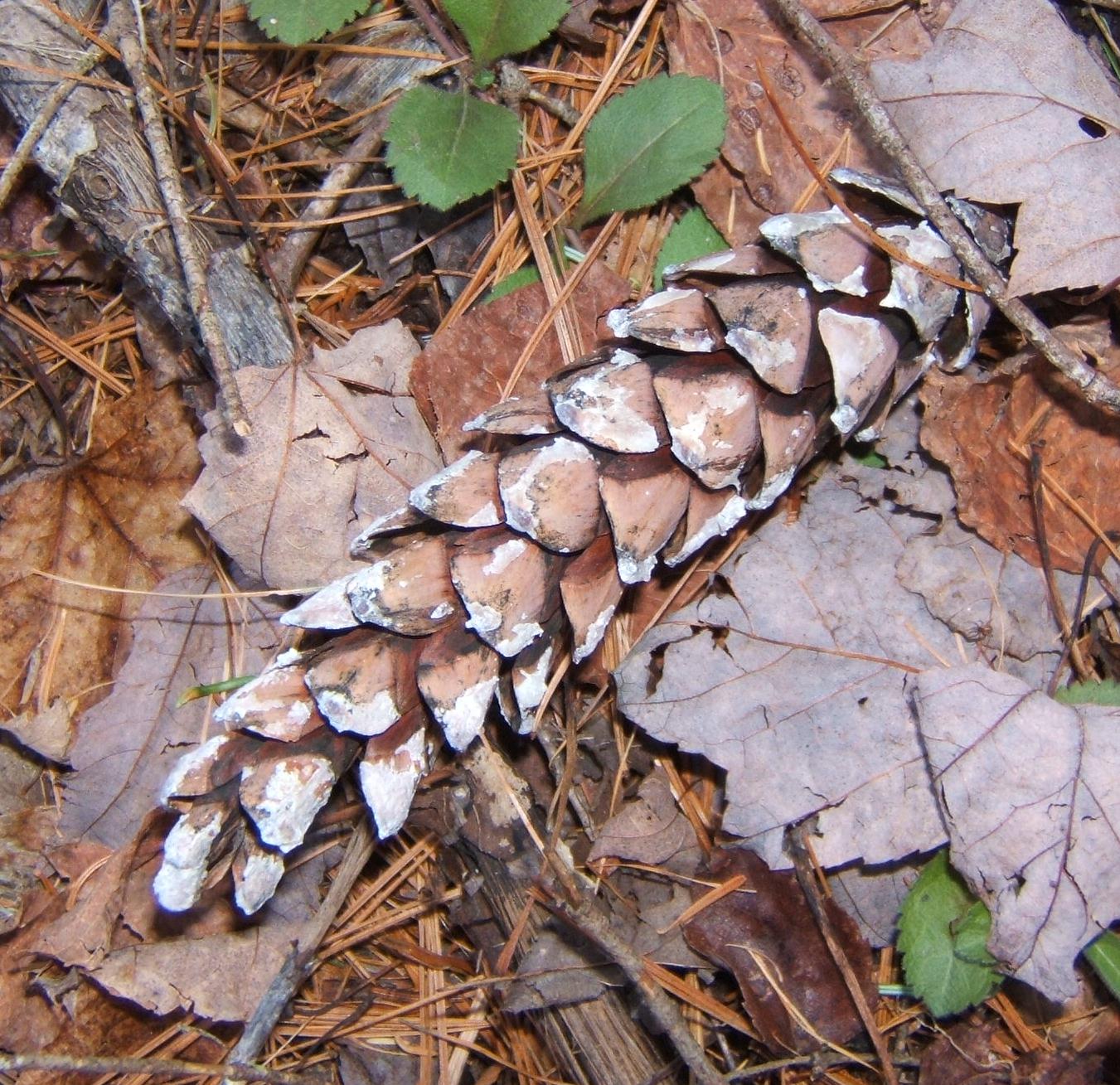
My husband came in last weekend and announced there were lots of the big cones in the pine tree next to our lawn. “Watch for them to fall, and then you should hurry to collect them,” said my savvy husband (he remembers the sad tale of the ripening hazelnuts).
I waited a couple of days and then went scavenging. And now, I am supreme. I have gathered enough cones for our Christmas. I saw a few cones with the lower scales and seeds nibbled away, but I found plenty for me. My hands were sticky, true, but I was so happy. All I can say is, with an emphasis approaching smug, “CH-CH-Ch-chchchchch-ch.”

- just to show that the squirrels do have lots of pine nuts… these cones are about half eaten

in November
~
we gather pine cones
snakes of lion’s paw
hawthorn
cedar boughs
and holly
~
we walk the wild ways
pruners and scissors
baskets and stout cord
bind bunches
of branches
~
balsam and cedar
blood berries
and evergreen
garlands of fir
rosehips and acorns, gilded
needles
and prickles
and thorns
~
© Jane Tims 2011
crows in trees

Of all the birds, I like the American crow (Corvus brachyrynchos) the best.
For one thing, they seem to me to be full of personality. I also know that crows are intelligent – research shows they can distinguish humans from one another by facial features. Crows also stay in family groups (parents and fledged offspring) for a few seasons. I feel sorry for crows; they seem to have a bad reputation and are treated poorly as a result.
If you want to learn more about crows and their habits, have a look at Michael Westerfield’s new book “The Language of Crows: The crows.net Book of the American Crow,” available at www.crows.net/crowbook.html .
A group of crows is known as a ‘murder’ of crows. The term ‘murder’ refers to the ‘observation’ that a group of crows will kill a dying cow. Some people are advocating for an alternative, since the term ‘murder’ perpetuates the notion of crows being malicious. Alternative names for a group of crows are presented in http://www.crows.net/mjw.html Michael Westerfield’s Crow Log: The Crows.net Project. I think this is an opportunity for a Poll!
~
~
Morning Song
~
in the morning
dew soaks the grass
and Canada
belongs to the crows
~
the croaking of ravens
the cawing of crows
familiar, unheard
backdrop to Canadian dawn
~
(theme music
in Canadian film)
~
in a conversational rattle
discussing gold and letters
~
a two syllable scream
haunting the fields
~
solitary sorrow
throned at the top
of a tamarack
~
black wings bruise the air
he calls an alarm
screams to his mate
the love of his life
with only the fall of the dew
for an answer
~
silent is the shroud of black feathers
strung by the feet from a pole
beside a garden
where she braved the flapping man
and dared to pull new corn
~
in the morning
Canada belongs to the crows
~
Published as: ‘Morning Song’, Spring 1995, The Cormorant XI (2)
© Jane Tims 1995
Evergreen Woodfern (Dryopteris intermedia Muhl.)
On Sunday, I looked for and found my first November fern! Since we had about 25 cm of snow yesterday, I may have found my only fern of the winter!
The fern I found is an evergreen fern, pressed close to the earth this time of year.

For me, identifying ferns is always a challenge. I use the Peterson Field Guide, ‘A Field Guide to the Ferns and their Related Families’ by Boughton Cobb, 1963. Then I turn to a very helpful website www.ontarioferns.com .
With patience and careful attention to some key features, I can usually figure them out.
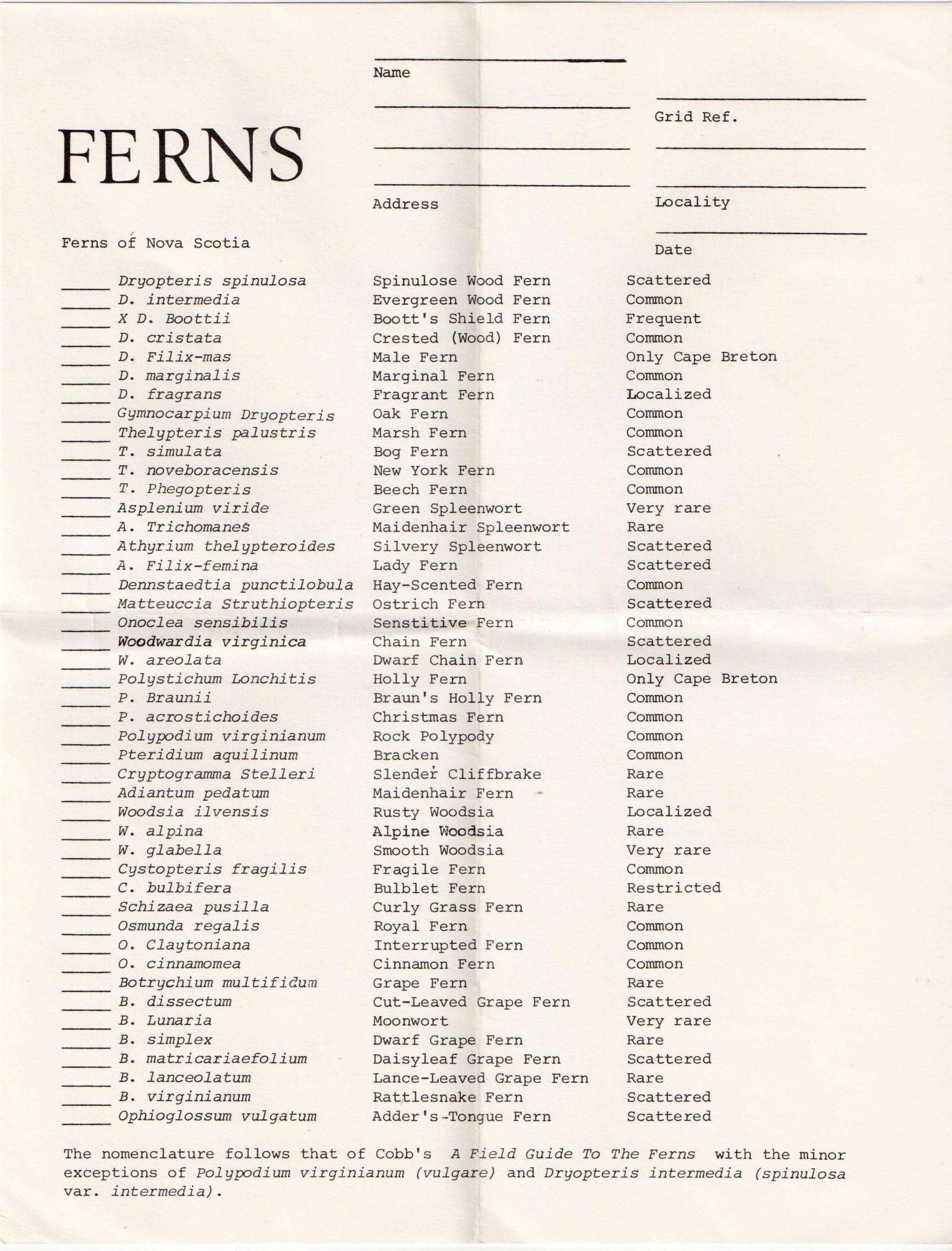
checklist issued by the Nova Scotia Museum for a fern project several years ago; a checklist like this is helpful to double-check your identification
The key features for the fern I found are:
- the roughly triangular shape
- the ‘thrice-cut’ nature of the leaves (cut once into leaflets or pinnae, a second time into subleaflets or pinnules, and a third time into lobes)
- the stalk is greenish and scaly, not hairy
- the lowest pair of inside subleaflets (next to the stem) of the lowest leaflet are slightly shorter than the second subleaflets next to the stem (if you look closely at the photo above, this feature is hard to see due to the camera’s perspective – the best example is the fern at the upper right).
This fern is the Evergreen Woodfern (Dryopteris intermedia), closely related to and difficult to distinguish from the Spinulose Woodfern.
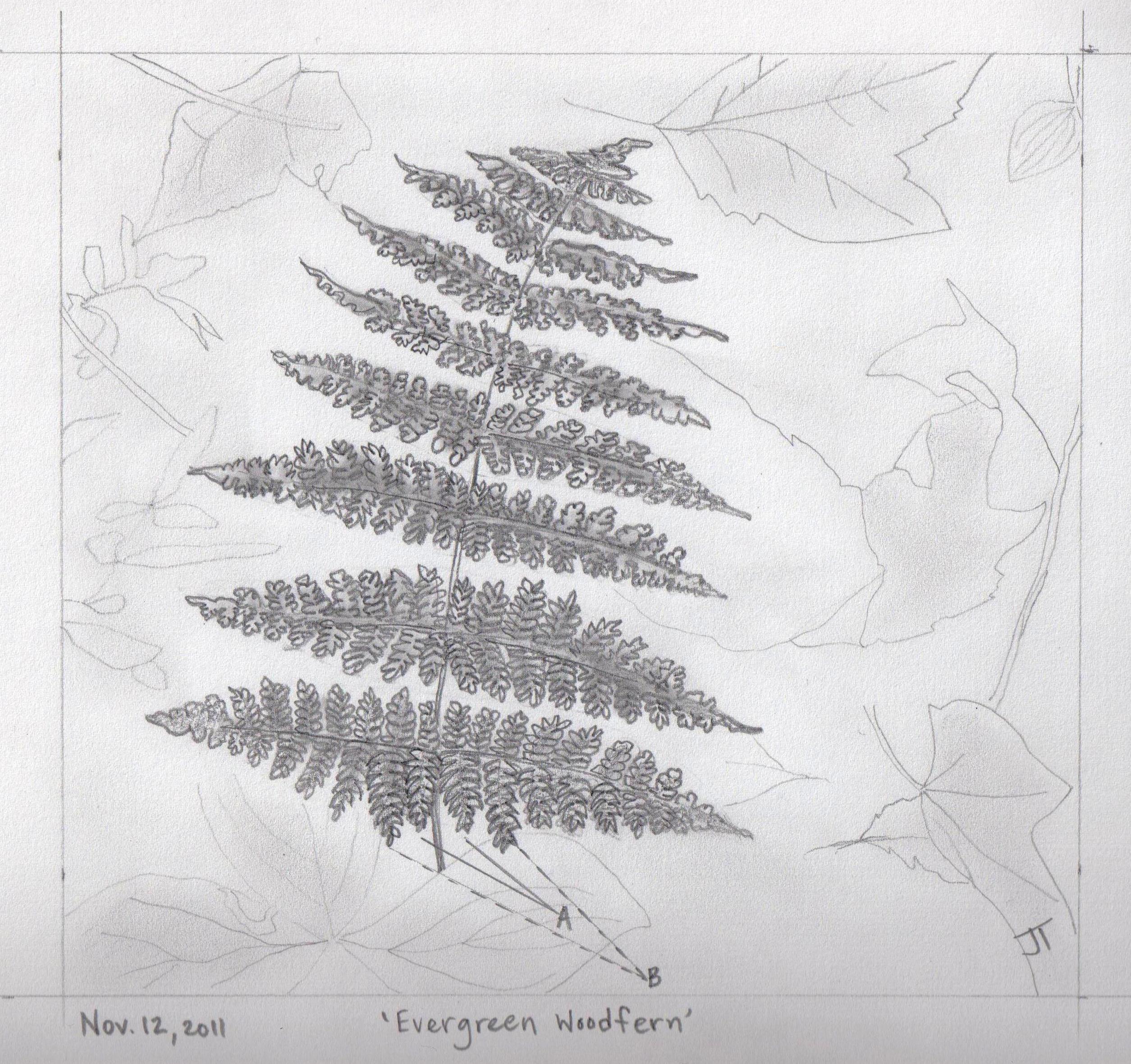
a leaf of the Evergreen Woodfern... the lowest pair of inside sub-leaflets at 'A' are shorter than the next pair at 'B'... this is the feature distinguishing the Evergreen Woodfern from other Woodferns
American Star-flower (Trientalis borealis Raf.)
Crisp November nights are a perfect time for a quick look up at the stars. I’ll be including some posts about our star-gazing, but for now, my thoughts are still turning back to summer. Stars in the sky? There are also stars in the dark summer woods.
The American Star-flower, Trientalis borealis Raf., is a plant with a delicate white, star-shaped flower, found in late spring in woodlands and on peaty slopes. Its scientific name comes from the Latin word for the third part of a foot, a reference to the height of the plant, and the Latin borealis, meaning northern. It is a common little plant, described by Fernald as a “forest pioneer”.
Some will wonder what the ‘Raf.’ refers to, at the end of the scientific name. This is an attribution to the botanist who first named the plant. In many cases, the attribution is ‘L.’, meaning the plant was first named by Carolus Linnaeus (the biologist who first introduced the ‘binomial’ naming system for plants).
‘Raf.’ stands for Constantine Samuel Rafinesque-Schmaltz who first assigned the genus and species names to the plant – Trientalis borealis. He was an eccentric polymath (knowledgeable in many fields and disciplines) who lived from 1783 to 1840. In his lifetime he published 6,700 binomial names for plants.
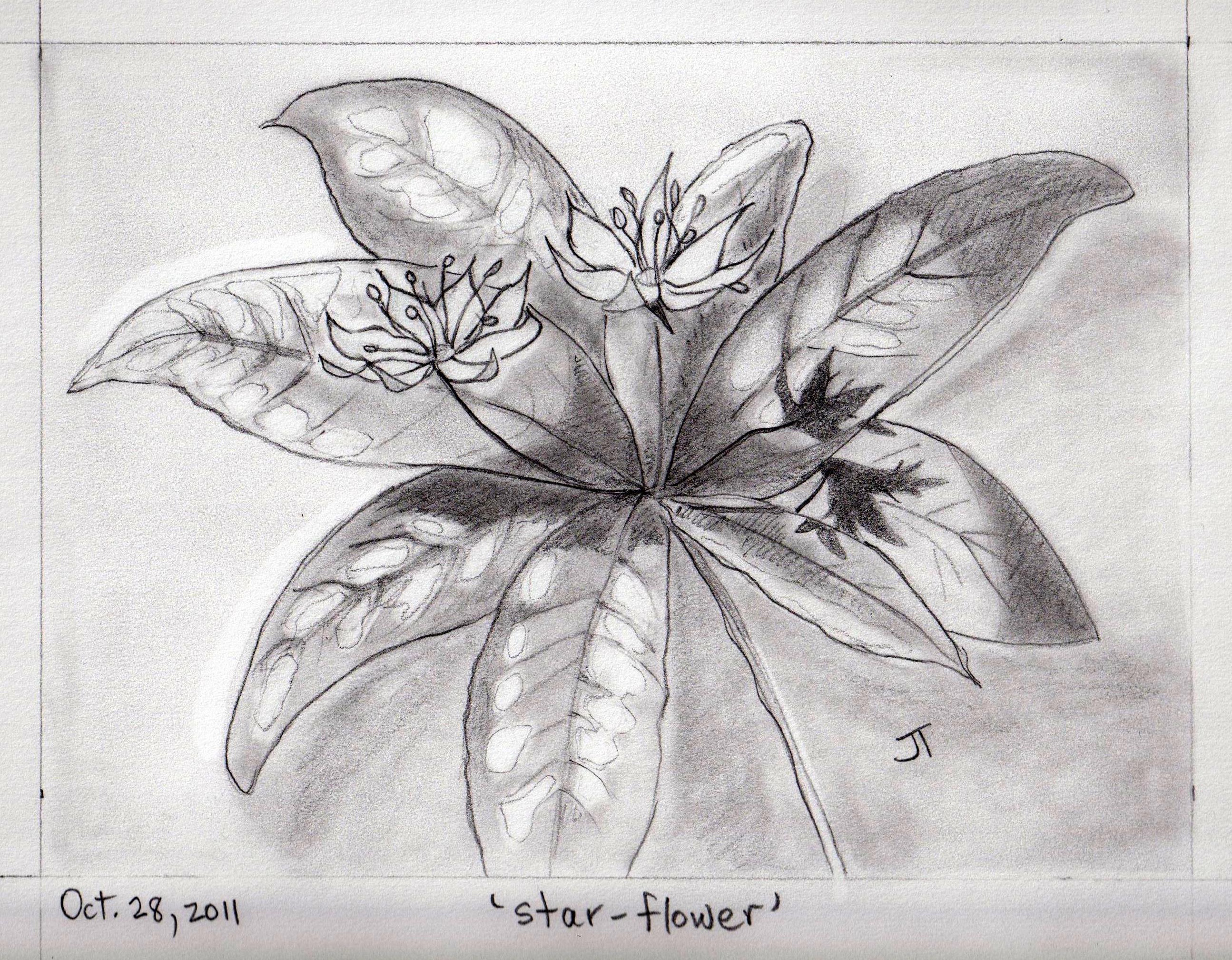
Star-flower
Trientalis borealis Raf.
~
Trientalis
borealis
star-flower
lost from the sky
four inches high
(the Latin name
makes claim)
petals white
boreal light
fallen down
first found
by Constantine
now often seen
it’s little lamp
above the damp
a forest pioneer
final frontier
up above
twinkling of
stamen and star
who you are
I wonder
and wander
down a trail blazed
by a frail flower
one candle power
~
Published as: ‘Star Flower’, Winter 1993, The Antigonish Review 92.
revised
© Jane Tims




 nichepoetryandprose