Posts Tagged ‘hay’
haying time 7-20
~

hay bales in a field along the Cornwall coast (image from Street View)
~

~
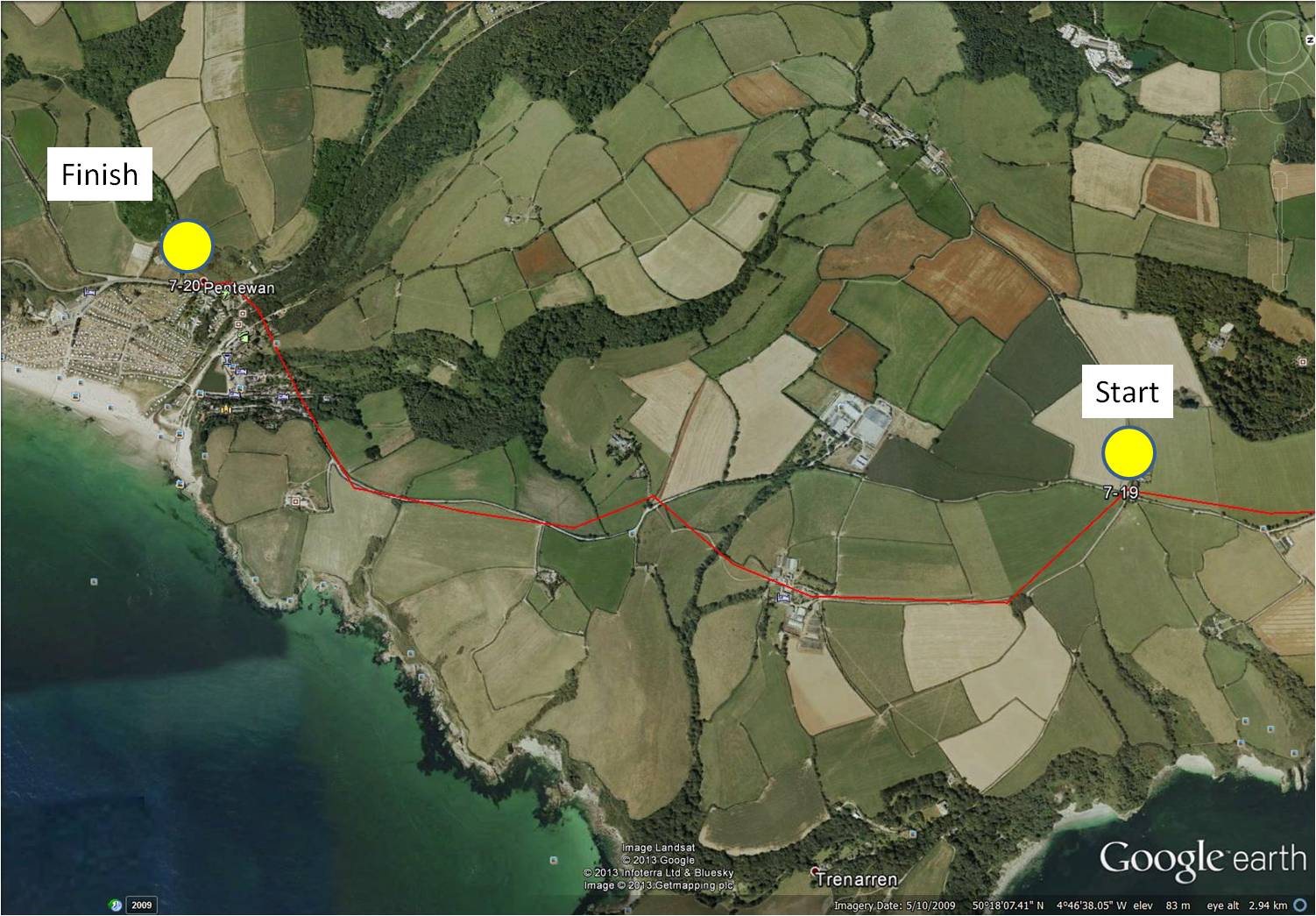
map showing distance travelled (map from Google Earth)
~
In New Brunswick, a common sight is of hayfields with their bales of hay …
~

hay bales in New Brunswick
~
Haying and hay bales are also a common sight along the Cornwall coast …
~

a farmer works at his trailer of hay near Trenarren (image from Street View)
~
So, today’s virtual biking trip felt a little like biking at home …
~

bales of hay along Cornwall coast (image from Street View)
~
Best View: round hay bales along the Cornwall coast …
~
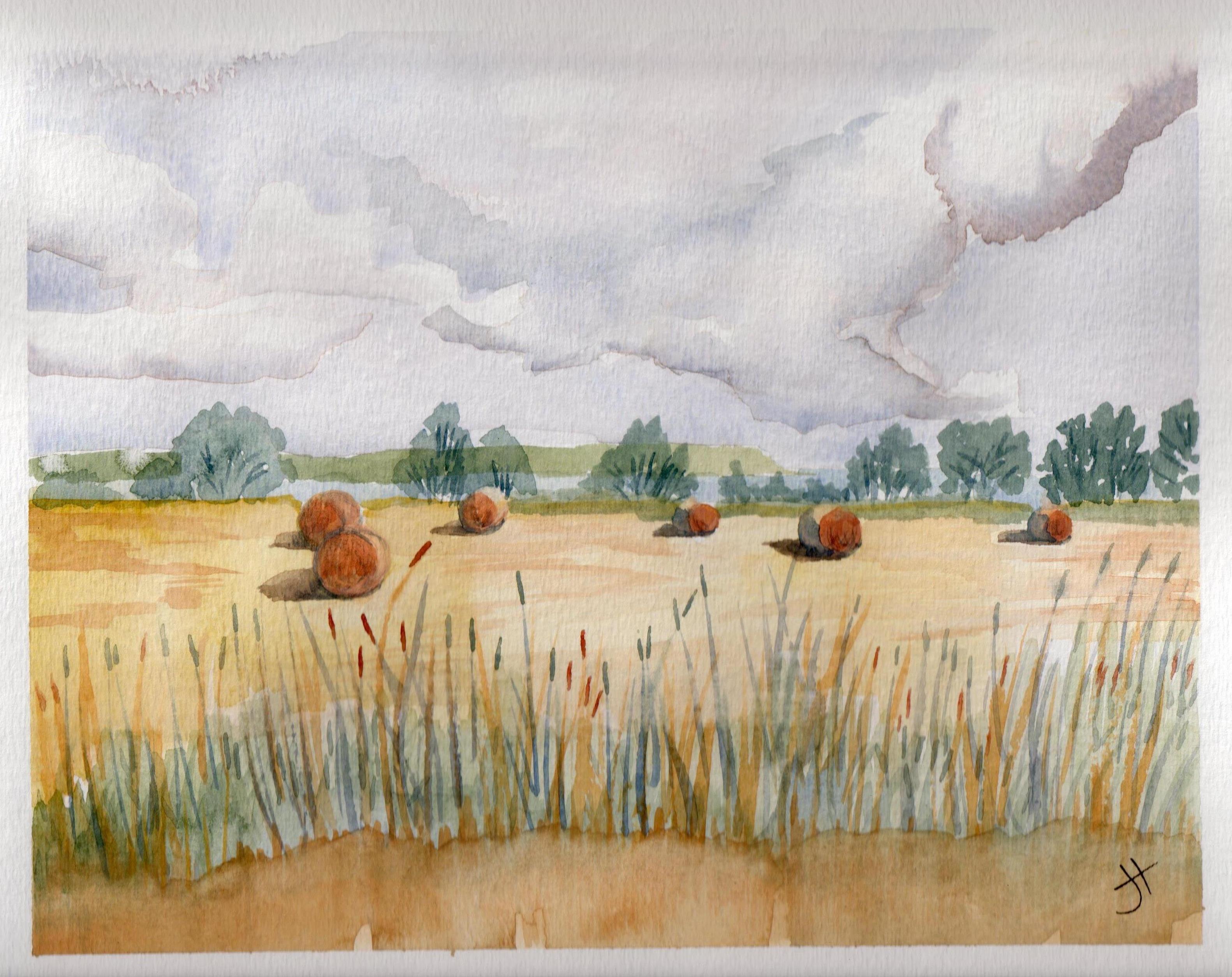
Aug 18, 2013 ‘haybales near Trenarren’ Jane Tims
~
Copyright 2013 Jane Tims
under the haystack
In our area, late summer is haymaking time. During the past two weeks, almost every field has been at some stage of mowing, bailing, or gathering. Farmers tried to bring their hay in before the August 28 tropical storm (Hurricane Irene), so most fields are now cut and cleared.
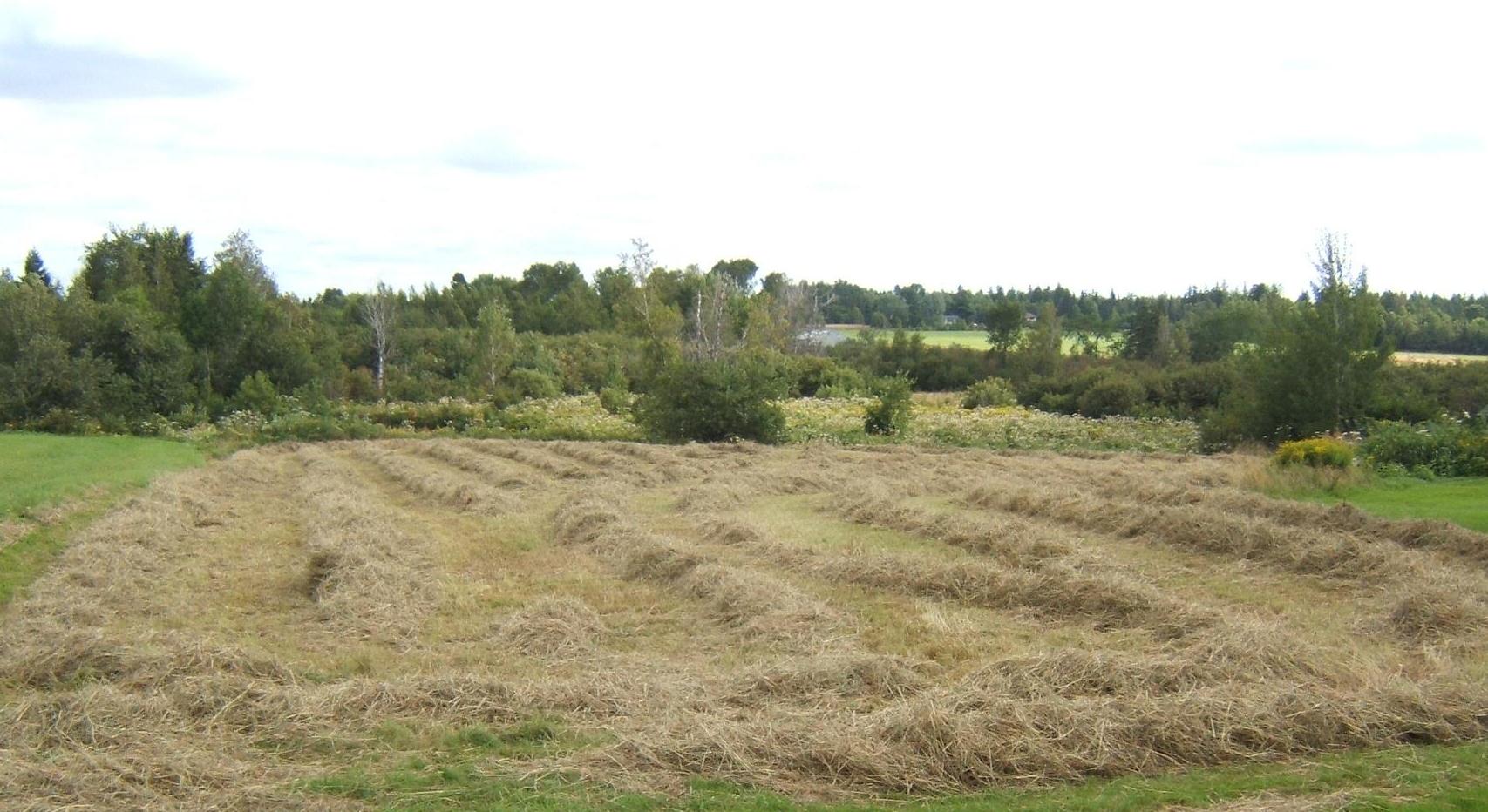
Haymaking is a picturesque activity. The cut hay is formed into parallel windrows in the fields, an artist’s lesson in perspective. The cutting and bailing and drying of hay are all fascinating to watch.
In the 1960s, at my grandfather’s farm, hay was gathered loose into a horse-drawn hay wagon and stored unbailed in the barn. One summer, I was thrilled to be asked to help ‘tramp hay’. As the fluffy hay was forked into the wagon, our work was to compress it by rolling and stomping and jumping.
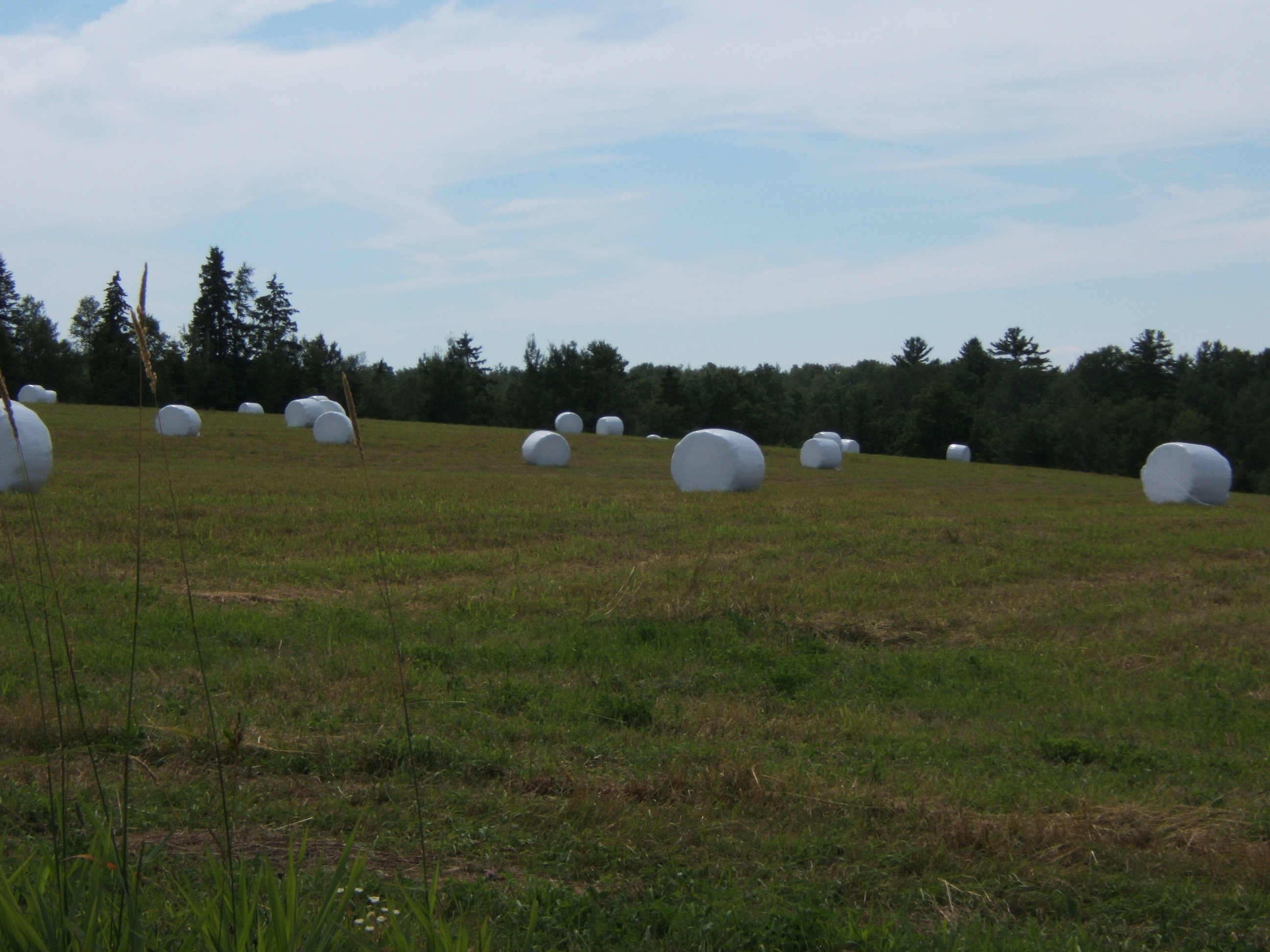
Haying methods have changed, of course. Collecting loose hay is almost non-existent. Even the smaller square bails are hard to find. The most common are the cylindrical ‘round’ bails or the white plastic-wrapped silage bails.
The round bails look like plump shredded wheat…
and the silage bails are giant marshmallows.
At sunset, the shadows of the round bails make musical half notes on the fields.

'half notes'
Summer Song
~
Sunbury County
sings in its sleep
purple vetch
hop clover
bluegrass
at the roadside
~
hay in rows
a staff
empty of song
awaiting
round bails and their shadows
half notes for an oboe
~
honey bee
ditty in the pink and red-hipped
old fashioned roses
bid country roads
enter the covered bridge
glimpses between planking
rock music on the water
tires drum on loose boards
~
deer look up
cattle low in the meadow
owl to whitethroat
counterpoint
goldenrod pollens the air
rushes by the Rusagonis River
north and south
~
over Sunpoke
big moon crescendo
~
trembles of aspen
diminish
~
Published as: Spring 1995, “Summer Song”, The Cormorant XI (2)
(revised)
© Jane Tims




 nichepoetryandprose