Posts Tagged ‘family’
Green bottles and blue berries
We have been spending time at our cabin.
~
~
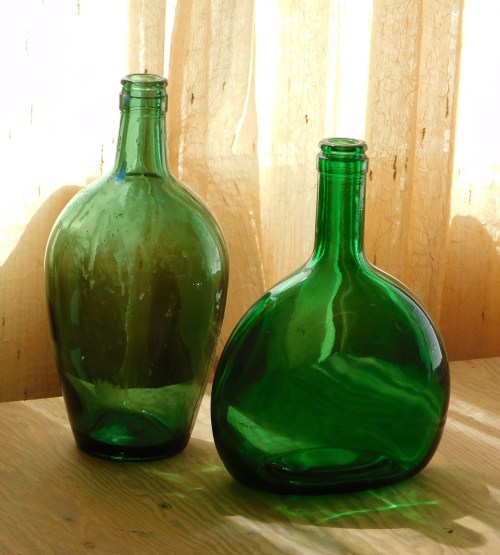
In the window, on our bench, the light flows through green bottles.
~

~
Our paths are green tunnels.
~

~
And in the fields and along the trails are blueberries.
~

~
Lots to pick and eat.
~

~
~
bitter blue
for Mom
~
of all the silvery summer days we spent none so warm sun on granite boulders round blue berry field miles across hazy miles away from hearing anything but bees
and berries
plopping in the pail
~
beside you I draped my lazy bones on bushes crushed berries and thick red leaves over moss dark animal trails nudged between rocks berries baking brown musk rising to meet blue heat
or the still fleet scent
of a waxy berry bell
~
melting in my mouth crammed with fruit sometimes pulled from laden stems more often scooped from your pail full ripe blue pulp and the bitter shock of a hard green berry never ripe
or a shield bug
with frantic legs
and an edge to her shell
~
~
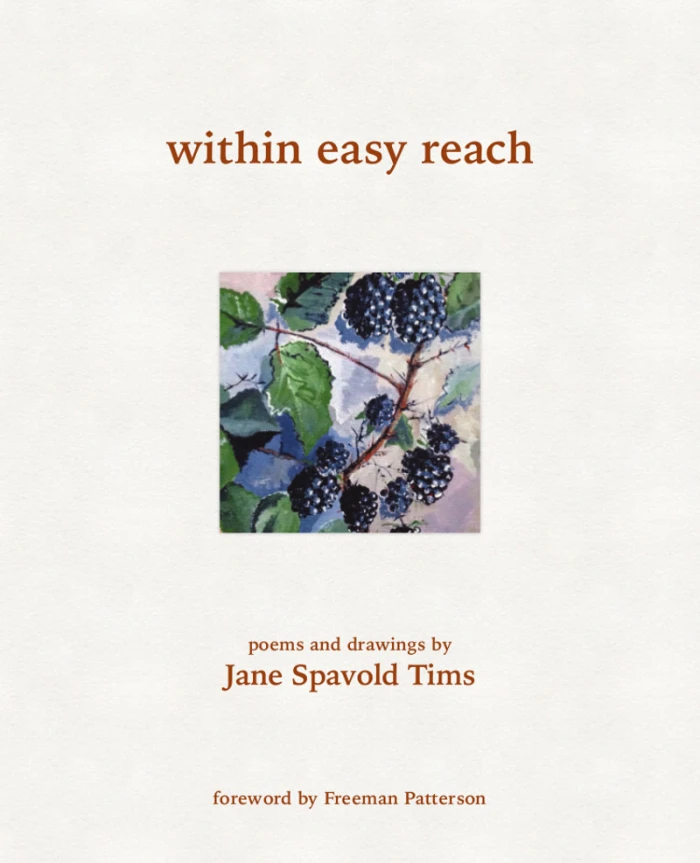
From ‘within easy reach’, Chapel Street Editions, 2016
Previously published in The Amethyst Review 1 (2), Summer 1993
~
Copyright 2017 Jane Tims

early schooling – what to do at recess
When I was young, recess was a big deal. You had to take a treat to eat and something for play. In Grade Three, tops were all the rage. My Dad made me a top from a wooden spool and we painted it in a rainbow of colours. I can still see it spinning on the concrete step. We also played hop-scotch, ball games like Ordinary Secretary, marbles, skipping and tag.
~

April 30, 2016 ‘top made from a wooden spool’ Jane Tims
~
I am lucky to have some of my Dad’s writing about his early years and his experiences in a one room school. He went to the Weaver Settlement School in Digby County in Nova Scotia in the late 1920s and early 1930s. He tells about some of the activities at the school, especially at recess. Fishing was popular, as well as playing ball and trading jack knives.
~
… There was a well out beside the school and it was a good appointment to take care of the water-cooler for a day of a week … Gave a student time off from books…
~
… There was a brook nearby … In fall we usually built a dam so the brook became a pond for winter … A place to skate or just play on the ice …every moment of recess and noon was spent there …
~
… The big contest was ‘who comes to school first in bare feet ’ … Our parents had control, not full control as there were hiding places for shoes and stockings along the way to school …
~
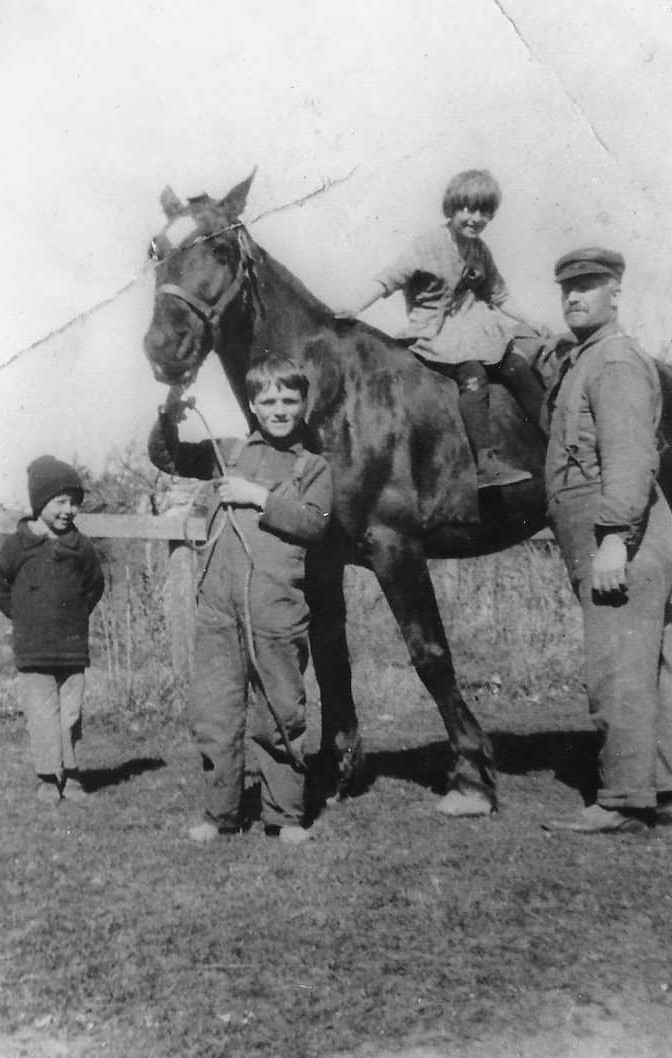
Dad with the family horse Goldie in about 1930
~
I am certain recess is still a favorite time for school kids – time to talk with friends, play games and get a little break from the classroom. I think we could all build a little ‘recess’ into our busy lives!
~
Copyright 2016 Jane Tims
in the shelter of the covered bridge – the Canal Bridge twenty three years later
Last Friday we drove to see three covered bridges in Charlotte County, New Brunswick – Canal Covered Bridge, McCann Bridge (Digdeguash River #4) and McGuire Bridge (Digdeguash River #3). My husband, son and I visited two of these in 1992 as part of a project for Canada’s 125th anniversary (see
https://nichepoetryandprose.wordpress.com/2011/09/05/inside-the-covered-bridge/ ).
~
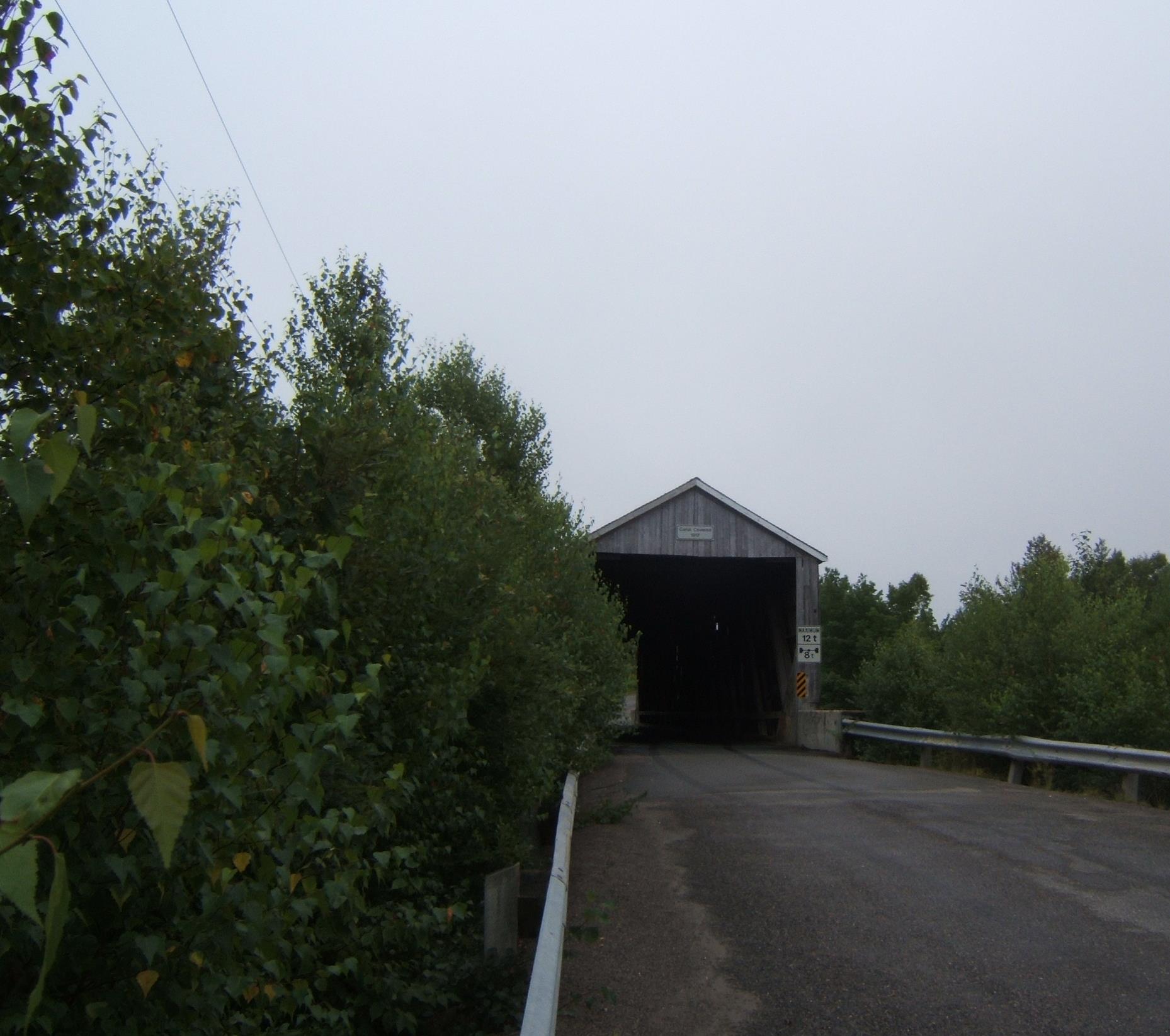
Canal Bridge, Charlotte County, New Brunswick, August 2015
~
The Canal Bridge was built in 1917. It crosses the deep natural canal connecting Lake Utopia with the Magaguadavic River.
~
The Canal is wide and sinuous, unhurried in its flow …
~

~
The water is very low this time of year. The shallow areas are inhabited by water lilies, water shield and pickerel weed …
~

~
Many people have left their initials and messages inside this bridge …
~

~
My husband couldn’t remember if we had visited the Canal Bridge in 1992. But almost immediately he found a small set of initials in black on a board heavily marked by red paint.
~

~
To me, very familiar initials! Back in May of 1992, we had left evidence of our visit. A very emotional experience, seeing our initials more than 23 years later! It was hard to go, knowing I was leaving behind a little bit of my family history.
~
Copyright 2015 Jane Tims
a stack of post cards
Saturday, for me, is genealogy day. I am interested in the history of my family and I have a lot of boxes of information to sort through. If I don’t spend a dedicated time to the study of the items in those boxes, the work will never get done. And, I want to try and get my value from the small fee I pay each month to www.ancestry.ca .
~
Over the last few Saturdays, I have been studying a small stack of post cards sent to my grandmother (Katie Clark) from 1906 to 1910. There are 174 post cards in the collection. The post cards are one record of her travels to the United States where she was studying to become a nurse.
~

~
Born in Tatamagouche, Nova Scotia in 1890, Katie Clark was raised on a farm with her brother and four sisters. When she graduated from High School, she went to Boston to become a nurse. She was joining her sister Anne who had started her nursing program there the year before.
~

Katie Clark in her nursing uniform
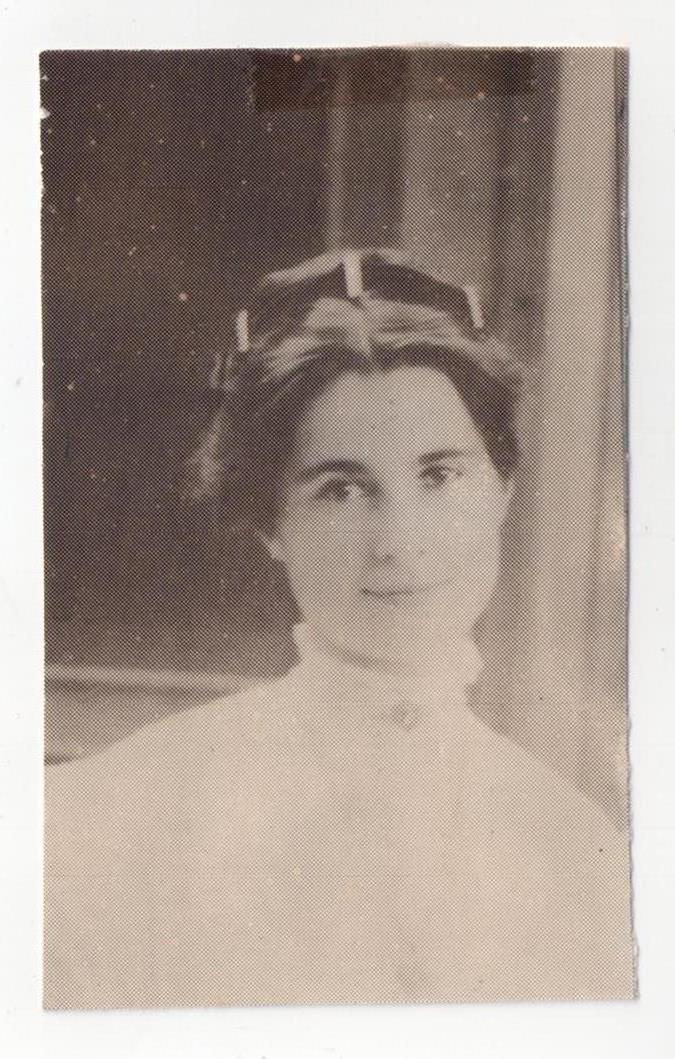
Katie Clark, my grandmother
~
Travel from the Maritimes to Boston and other cities along the Eastern Seaboard was common in the early 1900s and was usually by train. Nursing was a relatively new type of professional work for women and men. Professional nursing had been established in the 1860s largely as a result of the efforts of Florence Nightingale and others. By the turn of the century, many nursing schools were established in both the United States and Canada.
~
Katie went to school in Newton Lower Falls, on the outskirts of Boston. She studied with two of her sisters (Anne and Laura) and a small group of women and men who became her friends. Katie’s photos show sliding parties and sports activities.
~

Photos of winter sledding in Newton Lower Falls from Katie’s photo album (Katie is third from the right in the lower, right photo)
~

Photo from Katie’s album of the school’s women’s basketball team (Katie is fifth from the right in the top row; her sister Anne is second from the right in the seated second row from the front)
~
Post cards were one way friends and families could stay in touch. The post cards show that cards were mailed even within the same community and sometimes at the rate of two or three a day. The messages on Katie’s post cards often mention getting or sending letters and often ask Katie to send a post card, soon.
~
The post cards are mostly scenic in theme. There are also a large number of comedic post cards …
~
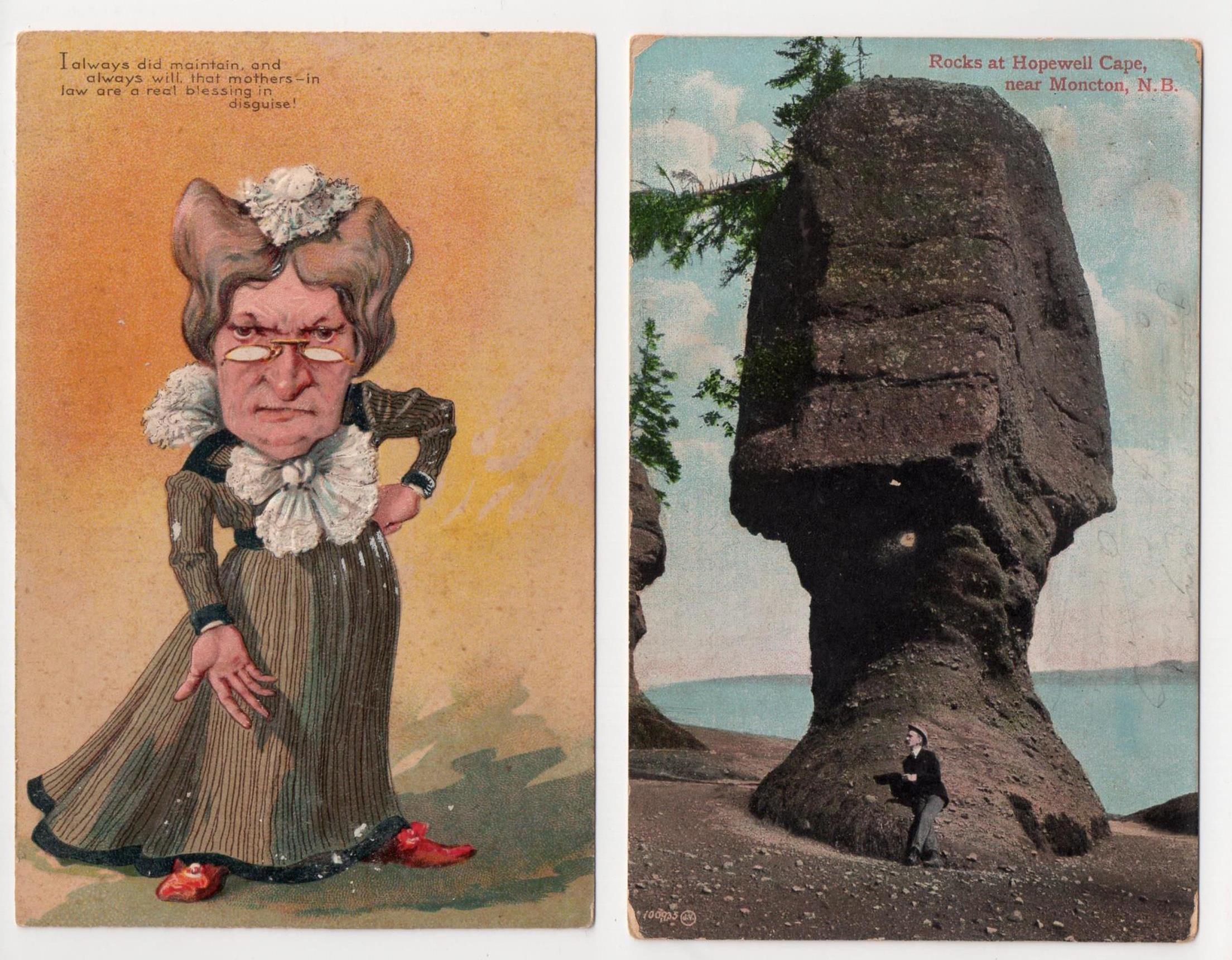
The card on the left pokes fun at Mother-in-laws (1910) ; the post card on the right is one of many scenic views, this one of the ‘flower pot’ formations near Alma, New Brunswick (1907).
~
There are also post cards with seasonal themes, for Christmas, Easter, New Years Day and Valentines Day …
~

One of Katie’s post cards with a Christmas theme (1907)
~
A few of the post cards are blank, without stamp, post mark, address or message. Perhaps these were delivered to Katie in person as a contribution towards her post card collection. Sometimes the address is the only handwriting on the card. Usually, however, the sender included a brief message to Katie, written in a special space on the back of the card. In some cases the message was written upside-down, or in various blank spaces on both front and back of the card.
~
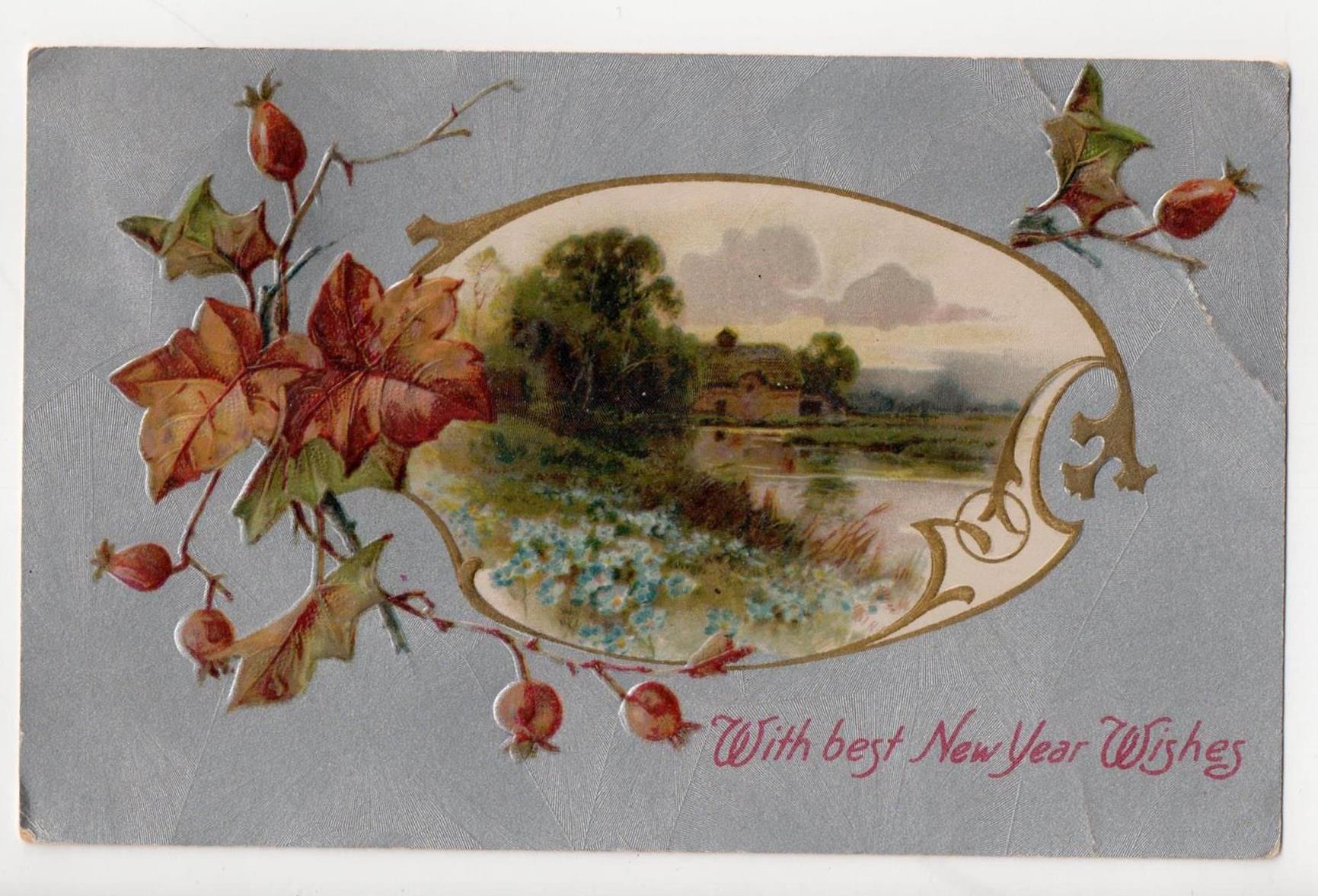
A post card with a New Year’s message (1909)

The back of the New Year’s post card with a message and a stamp affixed upside-down ! (1909)
~
The information on these cards goes beyond the written message. The cards are a record of where Katie was living at various times during the five year period. The post marks and an occasional return address indicate where Katie’s friends were living. The messages contain common expressions of the times. The post card themes tell what subjects interested people and the comedic cards show what people thought funny. And the stamps on the cards are a study of their own.
~
In future posts, I’ll have a look at some of the information contained in my grandmother’s stack of post cards.
~
Copyright 2015 Jane Tims
remembering place – Grade Four, part one
School-wise, Grade 4 was a fragmented year. I began the year in Medicine Hat at Webster Niblock Elementary. And then my family moved to a new community forty miles away, and I completed Grade 4 in the school there.
~
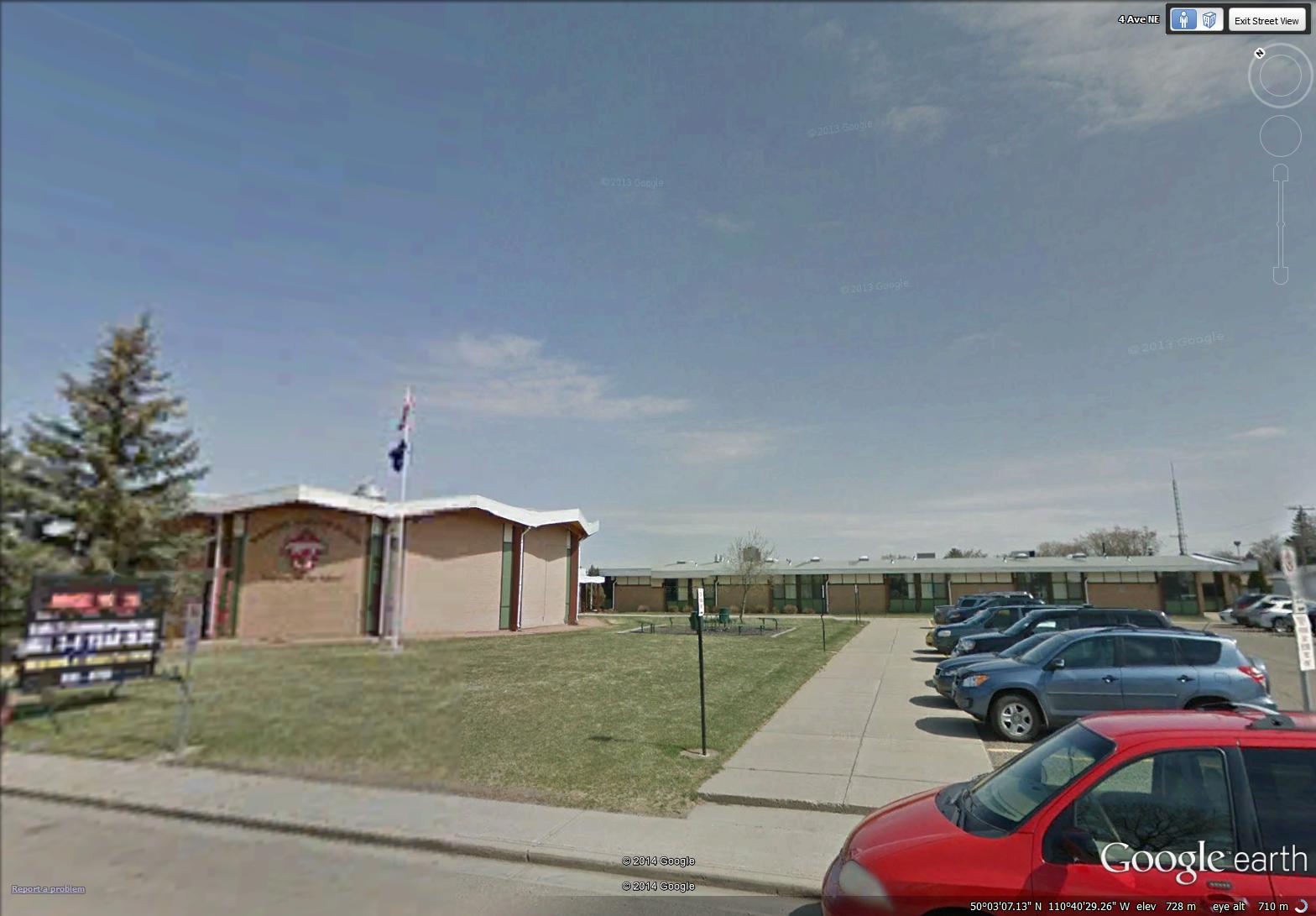
Webster Niblock Elementary School front yard
~
I have lots of memories of Webster Niblock. First, there was the walk to school (red path in the aerial photo below). On one side of the road were houses, but on the other side of the road was prairie. Today there is a row of houses on that side of the street, but in 1963 the prairie was undeveloped and raw to its very edge. I was not allowed to wander on the prairie by myself, or to take a shortcut to school. Later my Dad told me he was always afraid of rattle snakes when we lived in the west. But I could see the plants that grew at the roadside.
~

my route from home to school
~
I still remember the orange-red Prairie Mallow, also known as Scarlett Globemallow (Sphaeralcia coccinea), and the Prickly-pear cactus (Opuntia) with its grape-like berries. At the corner where I turned from Second Avenue to 11th Street (blue star) was an expanse of pineapple weed (Matricaria Discoidea) – I don’t remember picking or smelling them … to me, they looked like a miniature forest of pine where tiny people could walk. I think my interest in plants must have begun during those years, encouraged by my Mom who knew the names of all the flowers.
~

~
I also remember specific conversations with my best friend Laureen as we walked to school, including the disagreements we had. I remember that we talked about my moving away. We decided we would write letters to one another and we laughed that we would probably carry on our childish fights in those letters.
~
Another place I remember well is the ‘courtyard’ where we played at morning and afternoon recess (yellow star). Spinning tops were all the rage and my Dad made me a wooden top from an empty spool of thread and a matchstick. We also played marbles and I always lost.
~
It was common practice to bring a ‘recess’, a treat to eat at the morning recess break. My Mom usually sent a small square of fudge wrapped in wax paper or part of an apple. When a new little girl joined our class, my Mom, who wanted me to make friends, was determined I would be nice to her. Every day Mom sent a ‘recess’ treat for the little girl. And every day, I would run up to her, shove the treat into her hand and run away. I was generally shy and I don’t ever remember of saying a word to her. I often think about her – today she is a woman of about sixty years who may, from time to time, remember a peculiar child who used to bring her a square of fudge every day and run away.
~
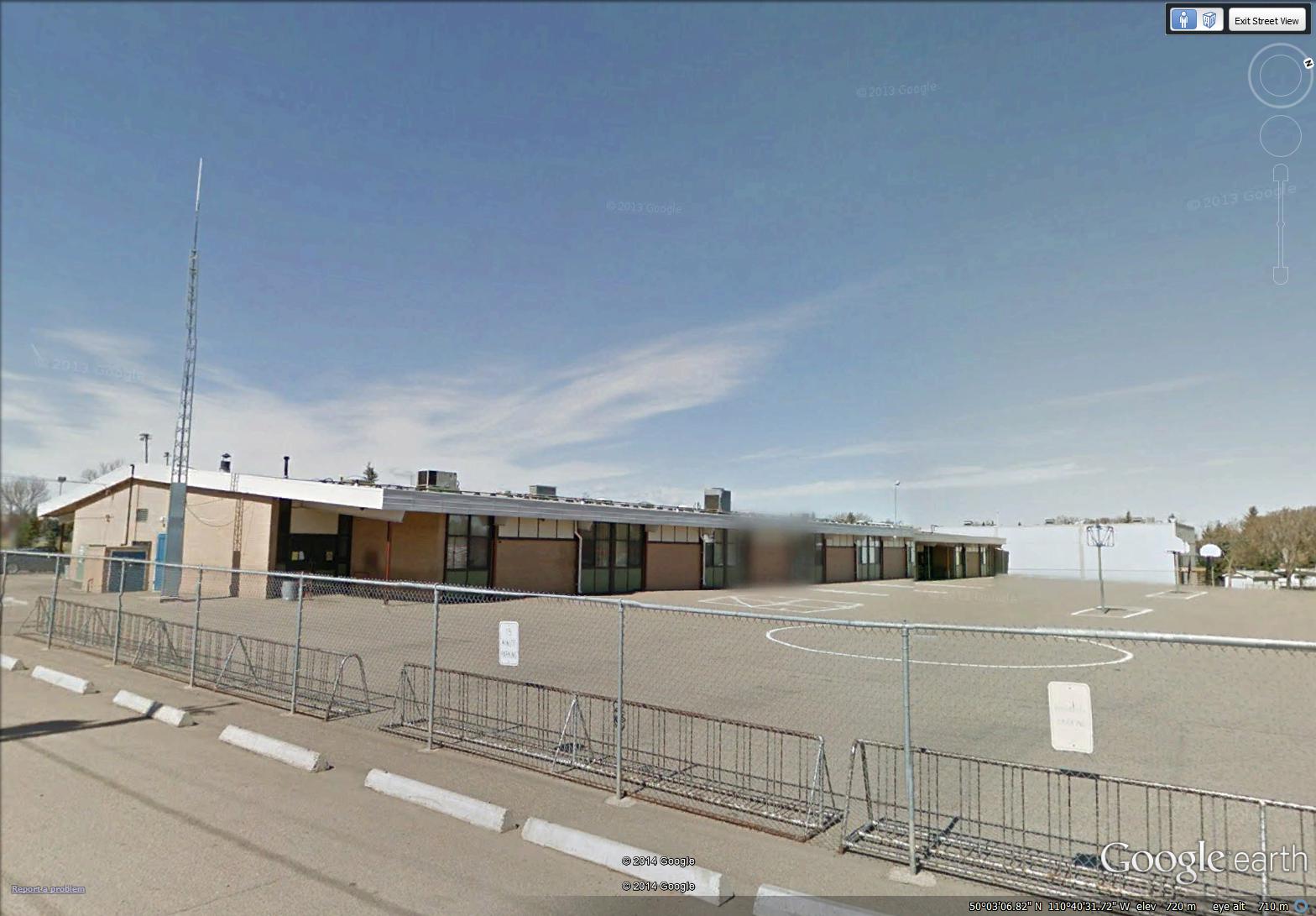
Webster Niblock Elementary School rear yard (we played with tops in the area by the red post at the corner of the school)
~
Copyright 2014 Jane Tims
remembering place – Grade Three
Grade Three, for me, is 52 years ago. Therefore, I am not surprised how little I remember of that year. I can only name two other students in the Grade Three class photo!
~
I do remember my teacher, Miss Heather Johnson, a kind gentle teacher, always smiling. I also remember her because as a high school student she was taught by my father who was also a teacher.
~
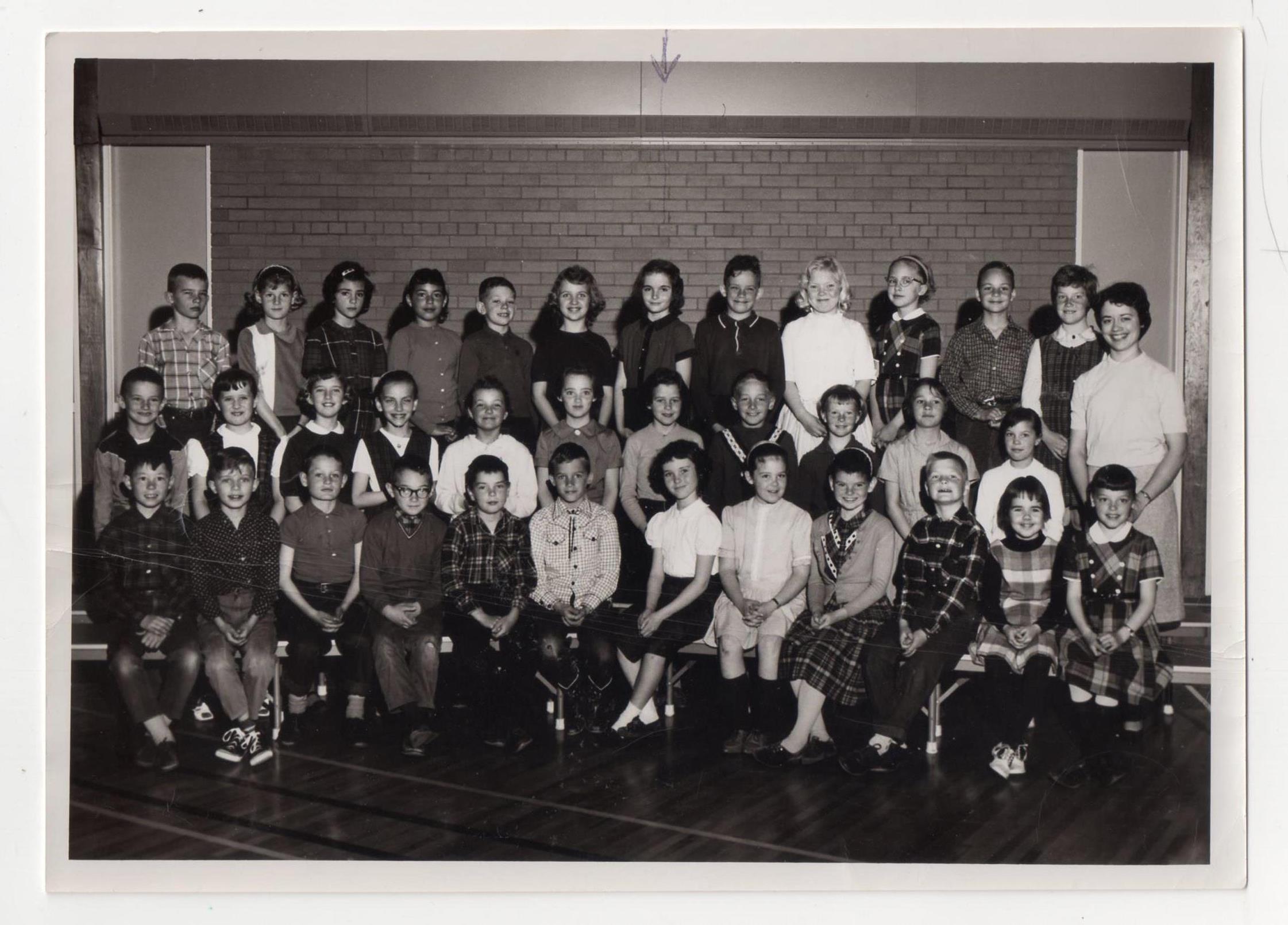
Miss Johnson’s Grade Three class, Crescent Heights Elementary School (I am in the back row, seventh from the left)
~
My only real memory of Grade Three is of my Dad. I remember him joking with me as he studied my Report Card. I always had good reports, and this time I had a whole row of ‘H’s (H was the best grade possible). I can hear him booming in his deep voice ‘I thought ‘H’ stood for Horrible!’
~
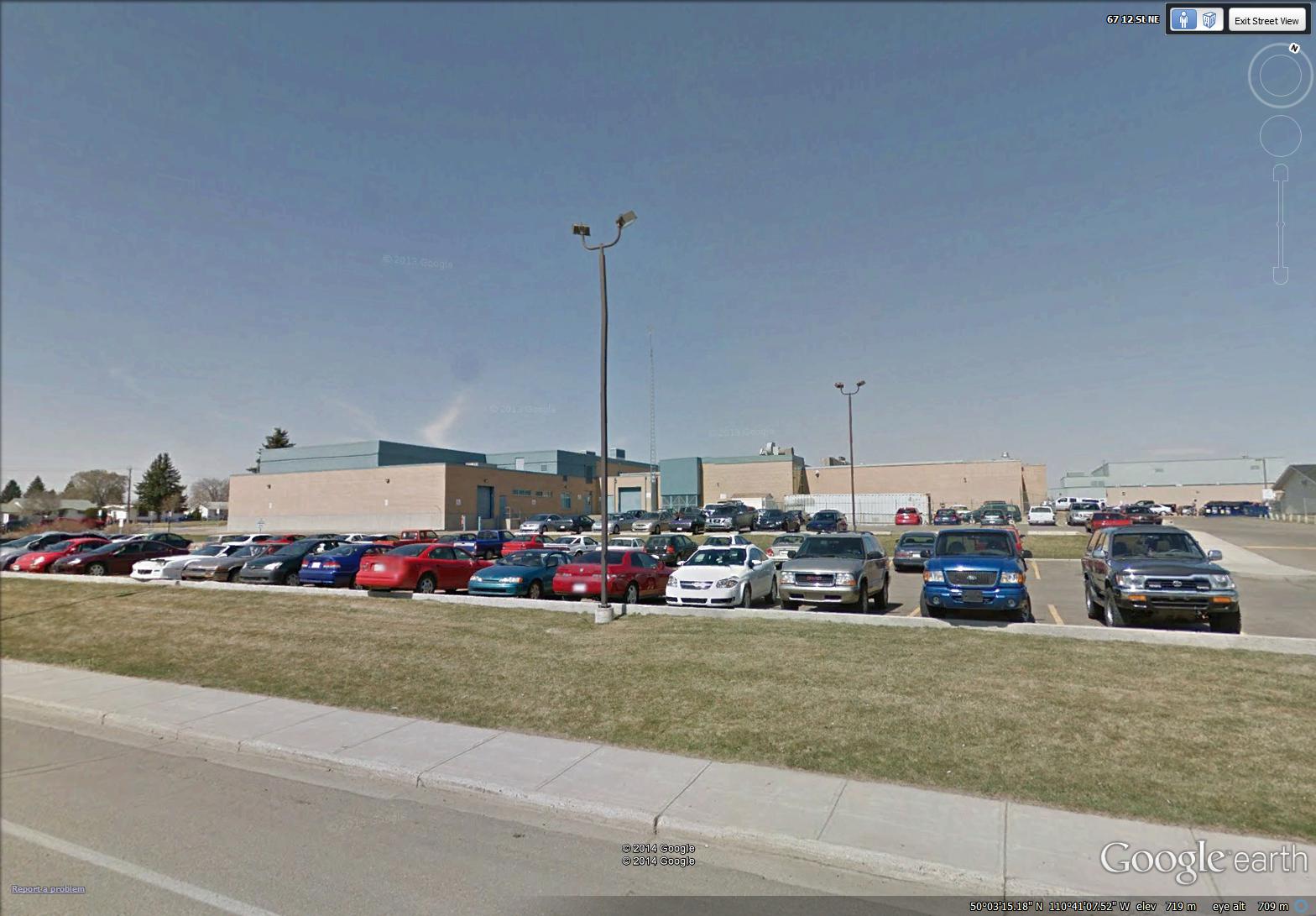
Crescent Heights High School – once Crescent Heights Elementary School (the school is barely recognisable, there have been so many additions; when I went there, the school was a long low brick building)
~
Copyright 2014 Jane Tims
remembering place – Grade Two
After a mix-up resulted in my attendance at the wrong school in Grade One (see https://nichepoetryandprose.wordpress.com/2014/06/27/remembering-place-grade-one/ ), I finally found the right school in Grade Two, Crescent Heights Elementary School. This school was only two blocks from home and easy to walk to. I also was in the same class as my best friend, Laureen.
~
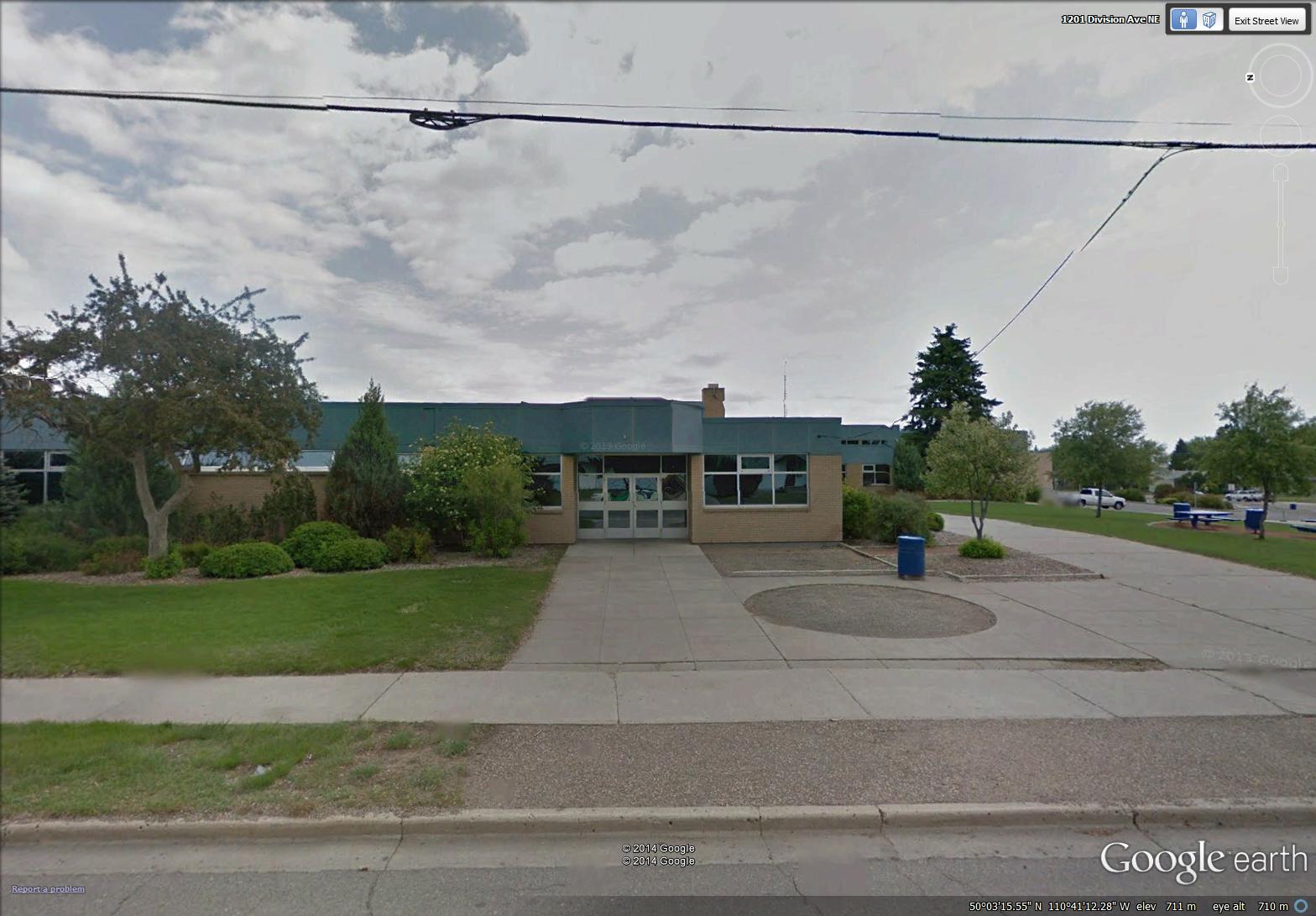
Crescent Heights Elementary School (image from Street View)
~
Miss McCallum was our teacher, a happy, brisk lady. These were the days of the Baby Boomers and she had almost 40 students in her class. I can remember only two of their names in the photo below.
~

Miss McCallum’s Grade Two Class, Crescent Heights Elementary School (I am Row 2, fifth from right)
~
I have no specific memories of being in school in Grade Two. My world consisted of my Mom and Dad, my younger brothers and sister. Life was simple and happy, though I’m sure my parents would not have agreed.
~
Copyright 2014 Jane Tims
Great Grand Uncle Ed – silver miner
My great-grandmother Ella’s brother was Edwin W. Hawk. He was born in 1864, the sixth of eight children.
~
‘Uncle Ed’ was an adventurer and went west when he was only 16, to live in southern Wyoming. The US Census of 1880 lists Ed as a laborer at Crow Creek, Wyoming (not far from Laramie, Wyoming). By 1886, my great-grandmother Ella was living in Laramie. No doubt she had come west to live near her younger brother.
~
By 1910, Ed was living in Humbolt, Nevada. In 1920, he is listed as a lodger at Broadway Ave. in Lovelock, Nevada. He is 56 years old, single, and a miner in a quartz mine. Nevada is known as the ‘Silver State’ because of its silver mines.
~
Ed continued to work as a miner. At the time of his death in Lovelock in 1940, probate documents show he had a cabin in Vernon, Nevada and six mining claims in the Seven Troughs Mining District. He had an estate of $3200, a watch and chain, and $80 in cash.
~
Vernon was established in 1905 as a base for those working in the Seven Troughs Mining District. The landscape around Vernon is hilly, dominated by yellow sand, dotted with sagebrush. The town dwindled in population as the silver depleted and was abandoned by 1918. Today, it is a ghost town.
~
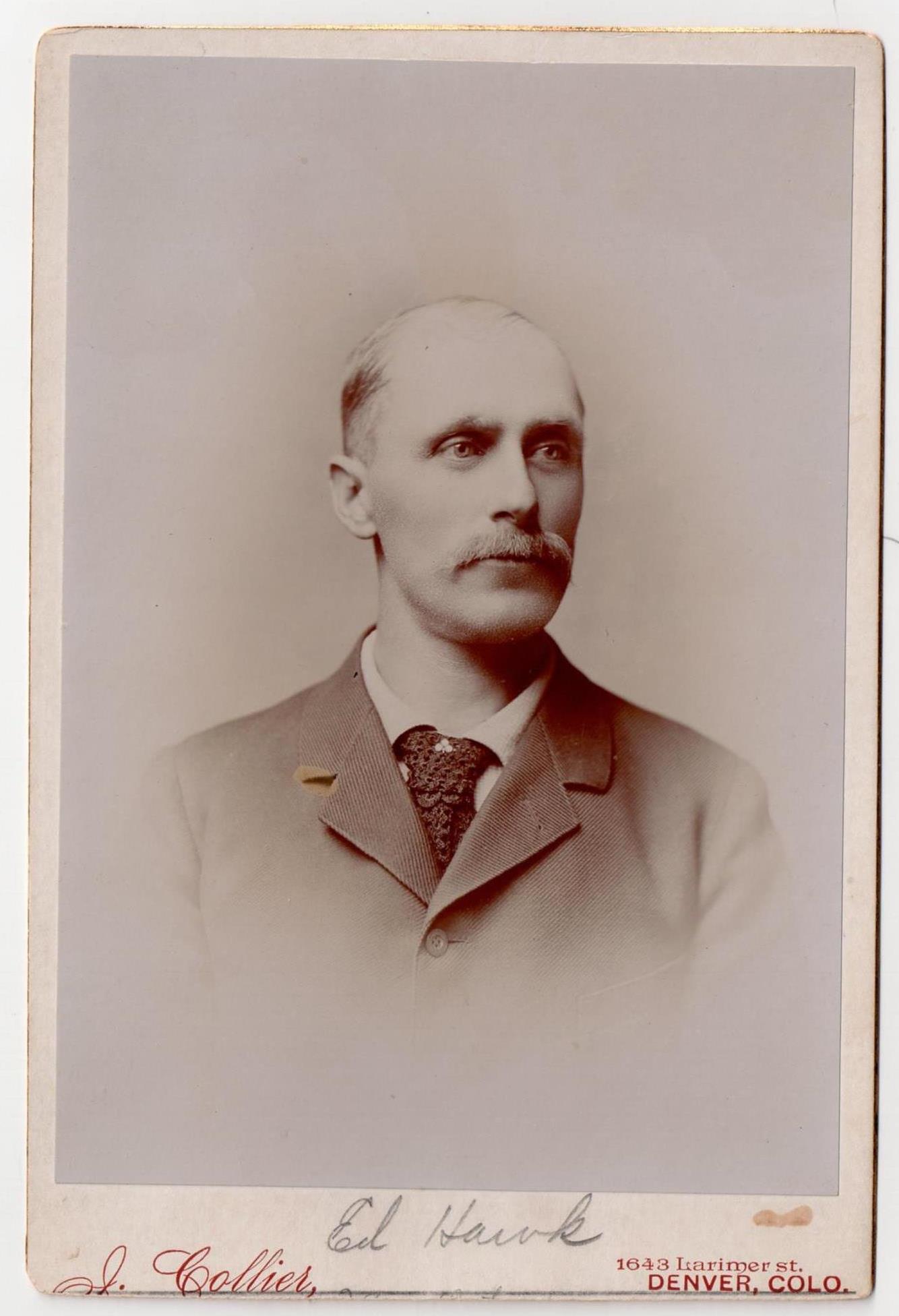
Ed Hawk, Ella’s brother
~
I notice that the same photographer (J. Collier in Denver) took both Ed’s photo and a photo of my grandfather Leo as a baby (Ella’s son). Ella lived in Denver until 1910 and perhaps Ed visited her there, and had his picture taken on a visit to see her baby. For more information on Leo, see https://nichepoetryandprose.wordpress.com/2012/07/20/chicory-cichorium-intybus-l/
~
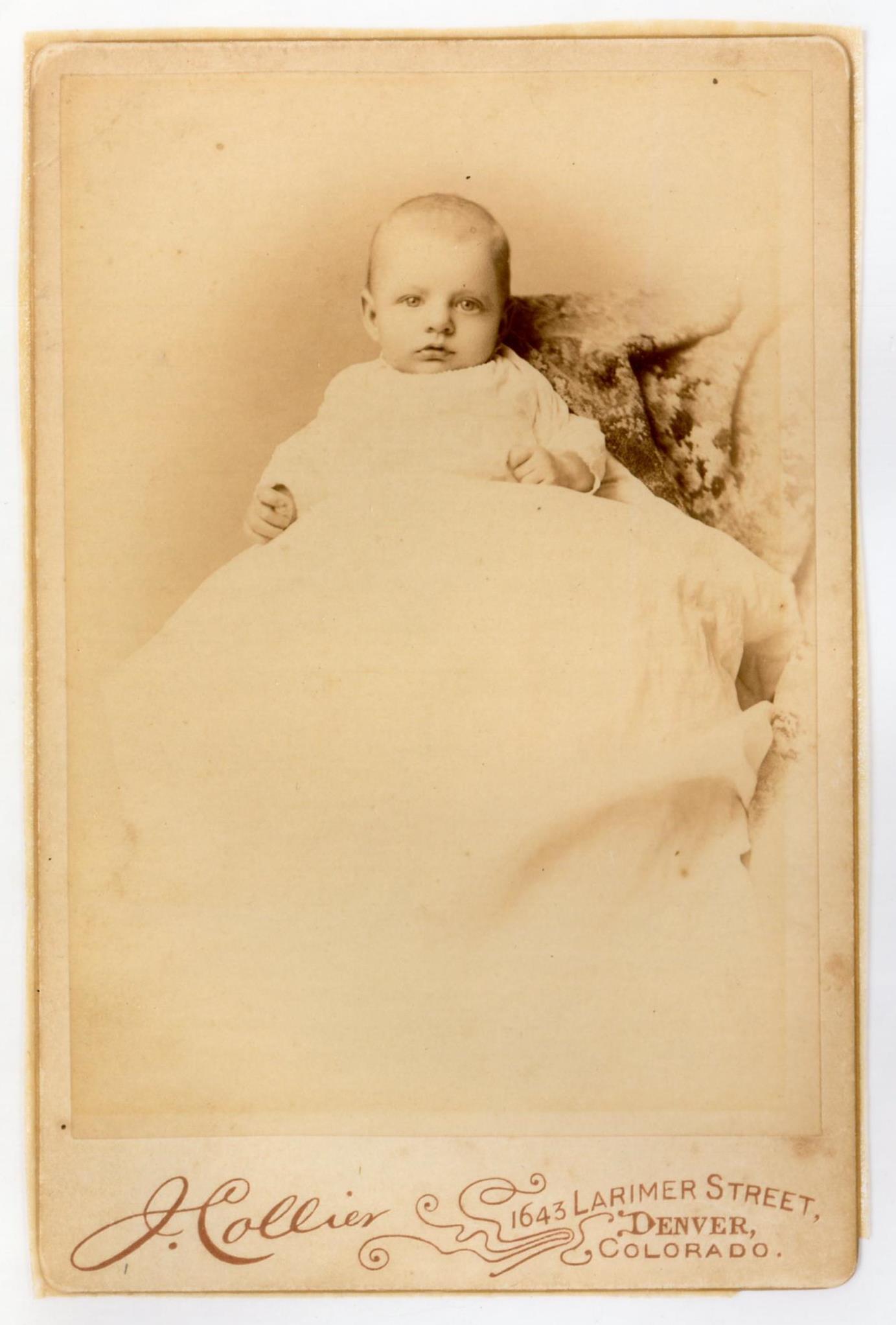
Leo Norman as a baby (son of Ella and Frank Norman), my grandfather and Ed’s nephew
~
Copyright 2014 Jane Tims
family history – changes in 10 years
As I look into my family history, I am often amazed by the changes that occur in families in short periods of time. An example is found in the early life of my great-grandmother Ella – Mary Ellen (Hawk) Norman. In the ten years from 1860 to 1870, she experienced dramatic changes in her family.
~
The 1860 US Census shows Ella’s family living in Chestnut Hills Township, Monroe County, Pennsylvania. The family included Josiah Hawk (Ella’s father, a shoemaker), Sallyann (Sarah Ann) (Ella’s mother), Owen and Ella (Ellen). Mariah Hawk, Ella’s paternal grandmother was also living with them.
~

~
In the next decade, the family underwent remarkable change. First, five children were born – Flora, Sarah, twins Edwin and Otto, and Emma. Of these, Otto and Emma did not live (Josiah and Sallie had already lost a child in 1957). Then Josiah died on June 28, 1865, a month and a half after Emma. Also, sometime during the ten-year period, Maria Hawk, who lived until 1880, went to live elsewhere.
~
John Franklin born Sept. 15, 1855 (died Dec. 26, 1857, two years old)
Owen born April 21, 1857 (death date unknown)
Ellen born January 4, 1859 (Ella, my great-grandmother, died 1933)
Flora Alice born June 25, 1860 (death date unknown)
Sarah Ann born Dec. 11, 1863 (Sadie, my great grand-aunt, died 1921)
Edwin W. born 1864 (Ed, my great grand-uncle, died 1940)
Otto born 1864 (death date unknown, before 1870)
Emma Lydia born Jan. 7, 1865 (died May 9, 1865, 4 months old)
From: Atwood James Shupp, 1990, Genealogy of Conrad and Elizabeth (Borger) Hawk: 1744 – 1990, Gateway Press, Baltimore).
~
In 1870, Ella’s mother, Sallie, married again to Joshua Popplewell.
~
The 1870 US Census shows the results of all this change. In 1870, the family is living in Williamsport, Lycoming County, Pennsylvania. The family now includes Joshua Popplewell (step-father), Salie (Sara Ann) (mother), Owen, Mary (Ella), Flora, Edwin and Sarah (Sadie).
~

~
The person most affected by these changes must have been my great-great-grandmother, Sara Ann (Sallie). During the decade she gives birth to five children (including a set of twins), her husband dies, she remarries, and she changes the location of her home at least once. In the only photo I have of her, she seems a formidable woman, steeled to withstand all manner of disruption in her life. I also see great sadness in her eyes.
~

my great-great-grandmother Sallie – Sarah Anne (Kresge) Hawk Popplewell (1835 – 1910)
~
Our lives are dynamic, full of change. New people enter our lives, others leave. The place we call home shifts to a new location. We go to school and graduate, we take a new job, we retire. Our focus changes, along with our point of view. Some change is dramatic, some subtle. Some change makes us laugh, some makes us cry.
~
What changes do you see in the decades of your life?
~
Copyright 2014 Jane Tims
Great Grand Aunt Sadie – dressmaker
As I learn about my family history, I am drawn to the stories of the individuals I encounter. One of the people important in my great-grandmother Ella’s life was her sister Sadie. Sadie was born on December 11, 1863 in Pennsylvania, the fifth child of eight children. She was called after her mother, Sarah Ann (Kresge). Sadie’s father was Josiah Hawk, a shoemaker who died when Sadie was a little over a year old and Ella was six. For a little more about Josiah, see https://nichepoetryandprose.wordpress.com/2012/10/17/occupation-shoemaker/
~
As far as I know, Sadie remained unmarried throughout her life. This meant that she had to support herself. Few opportunities were available to women in the late 1800s, but Sadie stayed connected to her family and earned her way as a seamstress. The 1910 US Census shows Sadie as a dressmaker living with her mother, a landlady.
~

~
By looking at the US Census for 1870, 1900, 1910, and 1920, as well as the City Directories for Scranton, I can account for Sadie most years.
In the 1870 census, when she was six and a half, she lived with her mother in Williamsport, Pennsylvania. That year, her mother married Joshua Popplewell, a machinist living in Scranton.
I have not located Sadie in the 1880 Census due to the commonness of her name.
From 1888 until her death in 1921, Sadie lived in Scranton. Her addresses included 330 Lackawanna Avenue (1896 – 1900), 16-18 Williams Building (1905 and 1906), 101 Spruce Street (1907 to 1916), and 116 Mulberry Street (1917 to 1921). I have looked at these addresses on Street View (Google Earth) and the houses where Sadie lived are all gone, replaced by parking lots and modern businesses.
~
Sadie made her home with her mother Sallie Popplewell from 1907 until Sallie’s death in 1910 or 1911, and with sister Ella, my great-grandmother, from 1910 to 1921.
~

~
Sadie died at 2 PM on March 26, 1921. In her will, Sadie described Ella (my great-grandmother) as her “beloved sister”.
~
When I was a teenager, my Aunt Jane told me about Sadie and gave me Sadie’s locket.
~
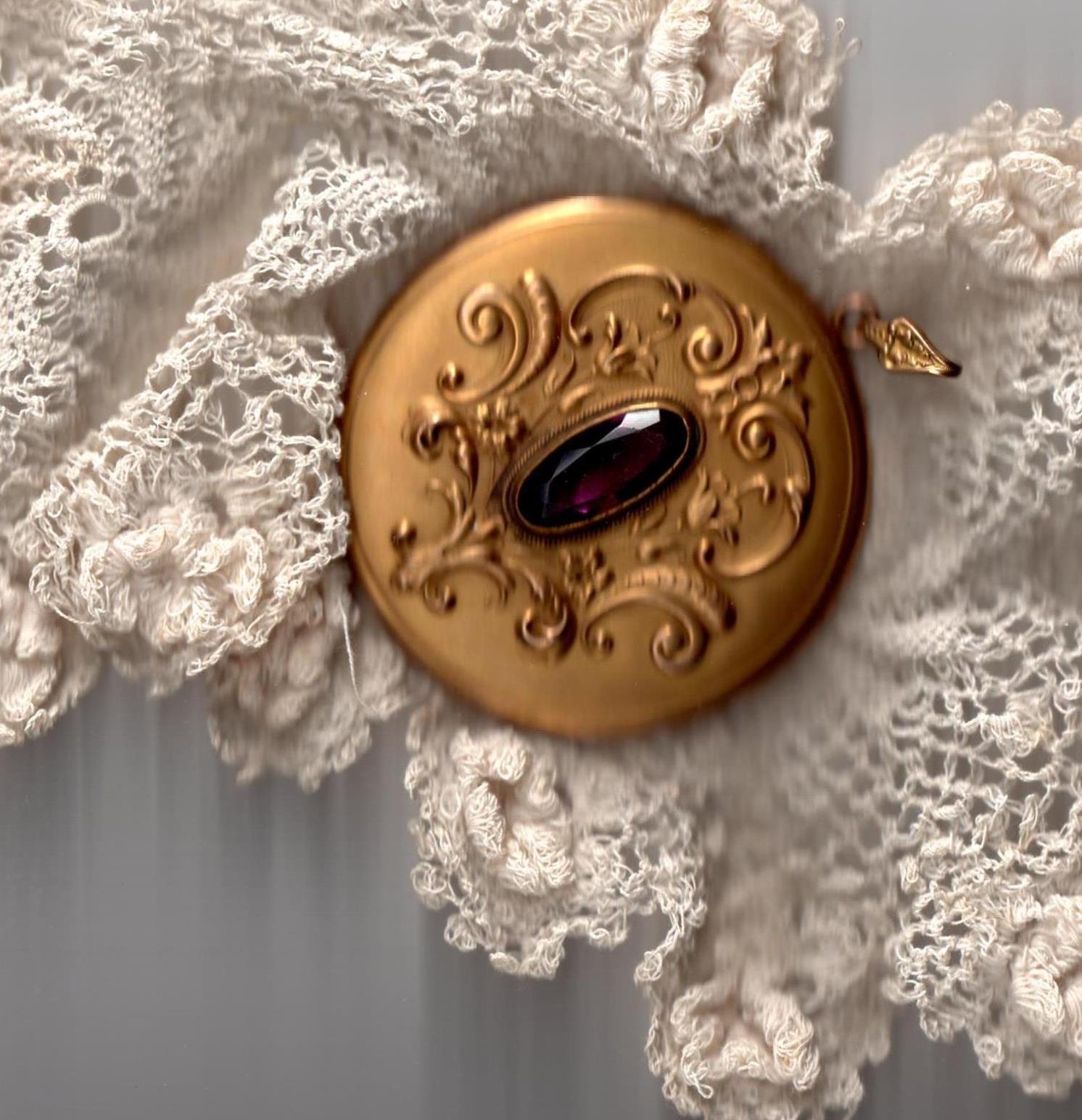
Aunt Sadie’s locket (front)
~
Her initials are beautifully engraved on the back – S A H – Sarah Ann Hawk … the sweet-faced woman in the photos above.
~

~
Copyright 2014 Jane Tims




 nichepoetryandprose