Posts Tagged ‘family history’
the tale of a marriage certificate
Of my eight great-grandparents, I have found myself most drawn to the story of Ella Hawk and Frank Norman. Before I became interested in them, my aunt did a considerable amount of work, so I have only had to fill in small gaps of information. If you follow my Blog, you will know I have looked diligently for information on their lives before 1886 when they married in Laramie, Wyoming (for a poem about Ella’s early life, see https://nichepoetryandprose.wordpress.com/2012/10/17/occupation-shoemaker/
~
I know several bits of information about the day Ella and Frank married – July 24, 1886. For one thing, I have stood in the Methodist Episcopal Church where they were married (see https://nichepoetryandprose.wordpress.com/2011/09/15/sacred-spaces-2/ ). Also, the newspapers for July 1886 are a great source of information on Laramie and the people living there at the time.
~
I also have copies of Ella and Frank’s Application for a Marriage Licence and their Certificate of Marriage. On the documents, Ella identified herself as Mary Ellen Rhoderick since she was previously married.
~

Marriage Licence Application for Frank Norman and Ella Hawk (Mary E. Rhoderick)
~

Certificate of Marriage for Frank Norman and Mary E. Rhoderick
~
Who were the people who signed my great-grandparents’ marriage documents?
~
George W. Fox, with the very elegant signature, was the County Clerk in Laramie from 1885 to 1888. An 1875 history of Laramie describes him as a ‘city alderman’, who, in 1866 crossed the Plains with an ox train, by way of Fort Laramie and the Big Horn’ to eventually work in the Laramie meat and vegetable market, and in the sales of dry goods. The history says: ‘by fair and honorable dealing has very much endeared himself to our citizens. In fact as a benevolent, high minded, business gentleman Mr. Fox has no superior’ (History and Directory of Laramie City, Triggs, 1875). George W. Fox is also known for his diary, kept in 1866 as he crossed the Plains (Annals of Wyoming 8 (3):580-601; https://archive.org/details/annalsofwyom8141932wyom ). His stories of encounters with stampeding cattle and rattlesnakes vividly portray the wild west.
~
S.H. Huber was the Minister of the Methodist Episcopal Church. According to the July 10, 1886 Daily Boomerang newspaper, Pastor Huber had been in Laramie for two years. He was in poor health and would stop preaching and leave for Illinois within the month. Another article says he performed the Sherriff’s marriage the week before Ella and Frank’s marriage. The First Methodist Episcopal Church, which still stands at 150N Second Street, was constructed in 1860 and was eventually moved across the street where today it is the oldest church building in Laramie.
~
Although there are other possibilities, it is likely that Lizzie Langhoff was a friend or acquaintance of Ella. Among three Langhoff families in the Laramie area in the 1880s are Charles and Almena Langhoff with their children Lizzie, Emma, Anna, Louis and Minnie. By 1884, this family had come from Plattsmouth, Nebraska (1880 US Census) to live in Laramie. Lizzie, Louis and Anna appear in the Roll of Honor for schools in the Laramie area several times from 1884 to 1886 (Daily Boomerang). Lizzie was born January 6, 1871, so she would have been 15 years old in July of 1886, perhaps old enough to witness a wedding. Lizzie Langhoff died in Laramie on April 25, 1892 (Wyoming: Find a Grave Index 1850-2012) at the age of 21.
~

Methodist Episcopal Church in Laramie in 2002 – this is the back and side of the original church which was rolled across the street to its present position
~
Ella and Frank did not stay in Laramie for long. In the 1890s they lived in Denver Colorado where my grandfather Leo was born in 1890.
~
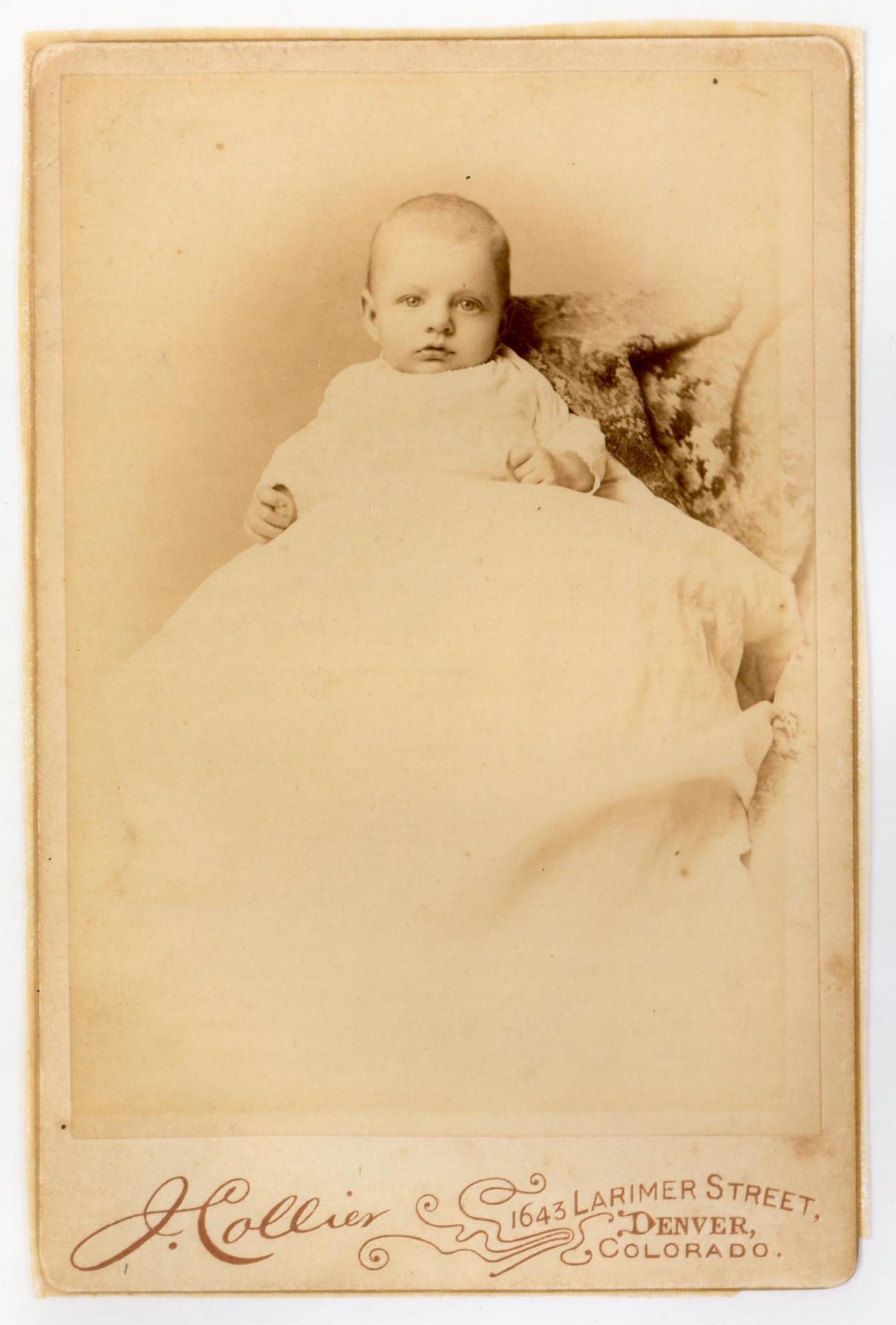
Leo Norman, born 1890
~
Unfortunately, Ella and Frank’s marriage did not last. I have the paperwork for their Divorce Decree in 1896. Nevertheless, I owe my existence to their decade-long marriage and the sense of adventure their short time in Laramie has brought to my own life.
~
Copyright 2014 Jane Tims
searching the newspapers #2
Using the search features available, I have been looking in the Wyoming newspapers of the 1800s for any item about my great-grandfather. It is slow work, partly because I don’t want to miss anything, partly because I am easily distracted by various interesting adds and articles.
~
You may recall that I already know of an item about my great-grandfather in the July 26, 1886 edition of the Laramie ‘Daily Boomerang’ (page 4). On July 25, 1886, he fell from his horse and broke his collar bone, only a day after he and my great-grandmother Ella were married.
~

~
If only to show that I am being careful about my search, I have now found a corroborating article in the ‘Cheyenne Daily Sun’ for July 28, 1886 (page 3).
~
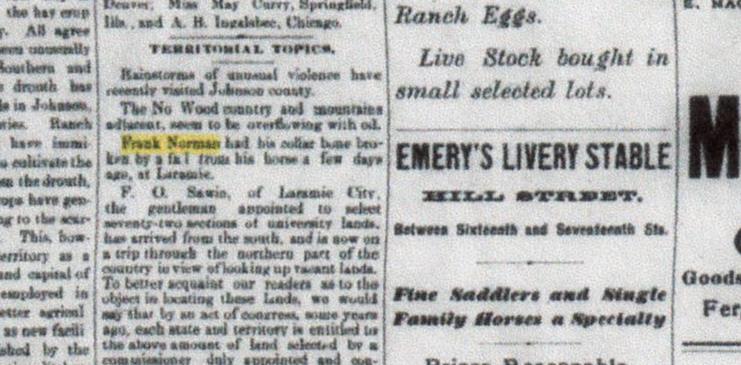
~
I will never know if Frank was riding his own horse, or if he had to hire one from a place like Emery’s Livery Stable (in the add just to the right of the article).
~
When we visited Laramie in 2002, I misread the article slightly and talked non-stop about how my great-grandfather had ridden his horse into the hills. Do you see any mention of hills in either article? Nevertheless, I was anxious to drive up into the hills east of Laramie, to see the landscape he might have seen. The road cuts there showed a orange-pink bedrock and I brought a small chunk back with me to remember Frank’s unfortunate ride. Looks a little ghostly under the scanner …
~

~
~
Copyright 2014 Jane Tims
searching the newspaper archives
Still on the trail of my great-grandfather, I have turned for a short time to the wonderful source of the newspaper archive. This may not uncover any new leads about my relative, but it is a fascinating way to search.
~
I know from my Aunt’s earlier search for information, my great-grandfather (Frank Norman) and great-grandmother (Ella Hawk) were married in Laramie, Wyoming on July 24, 1886. I have written before about my great-grandmother Ella and her father, Josiah Hawk, who was a shoemaker in Pennsylvania (https://nichepoetryandprose.wordpress.com/2012/10/17/occupation-shoemaker/). In 2002, we drove out to Laramie as part of a vacation adventure, and saw where Frank and Ella were married. It was amazing to know I was standing where they did so long ago!
~
My present search for Frank has taken me to the pages of the ‘Daily Boomerang’, a newspaper in Laramie. This was a four page daily paper, reporting local and national events and providing advertising for Laramie in the 1880’s and 1890’s and beyond. It included lots of local tid-bits in the ‘Personal Paragraphs’, ‘Personal Points’ and ‘About Town’ sections. The ‘Laramie Boomerang’ continues today.
~

~
In 2002, when I visited Laramie, I spent part of the day looking at the fragile paper archives of the ‘Daily Boomerang’. Although my time was short, I was able to find out a little about the Minister who married Frank and Ella.
~
Now, a little more than a decade later, I am able to access, online, every page of the paper. This is thanks to the Wyoming Newspaper Project. The project has converted over 800,000 pages of Wyoming newspapers into searchable digital format. Today, all I have to do is type the searchword ‘Norman’ to find if Frank or Ella are mentioned in the pages of any of over one hundred Wyoming newspapers ! To search these papers, have a look at http://www.wyonewspapers.org .
~
I know this effort may turn up some results since I already know of one article, found by my Aunt, about my great-grandfather. On July 26, 1886, only two days after their wedding in Laramie, Frank receives a short mention in the ‘Daily Boomerang’.
~

~
Just a little below the center of the page above, under ‘About Town’, it says:
Frank Norman, while out riding yesterday, was thrown from his horse and had his collar bone broken.
I know from later records that Frank made his living as a ‘hod carrier’, part of a bricklaying team. The ‘hod carrier’ is the worker who carries bricks on a hod – a v-shaped wooden carrier with a handle, carried over the shoulder. A collar bone injury would have been a hard turn of events for someone whose work involved carrying heavy loads. It must have been a tradgedy for the couple newly married.
~
I have a little work ahead of me since I want to look at all possible entries in the newspaper about Frank or Ella from the time of their marriage to about 1892 when Frank and Ella were living in Denver, Colorado. There may be nothing more to find, and the search is made complicated because a common breed of horse for sale in Wyoming at the time – the ‘Norman’ !
~
I will keep you up to date on my search for information about my great-grandfather. Have you ever used newspapers to search for information about a member of your family?
~
Copyright 2014 Jane Tims
the unknown thousands – family history
Today, I will divert a little from my usual topics and mutter about genealogy. Along with my other projects, I try to keep learning about my family. Fortunately, I have a lots of materials to look at: family letters, post cards, diaries, well-researched family trees and so on.
~
I am always surprised at how much is lost. Some of this is due to the loss of records, some is due to the overwhelming numbers of people involved in the family history of just one person. When I first became interested in family history, I thought about how many lives have contributed to make ‘me’. The numbers of ‘grandparents’ add up quickly as I go back in time.
~
| Generation | Numbers of parents/‘grandparents’ |
| 1 (me) | |
| 2 (my parents) | 2 |
| 3 (my grandparents) | 4 |
| 4 (my great-grandparents) | 8 |
| 5 (great-great-grandparents) | 16 |
| 6 | 32 |
| 7 | 64 |
| 8 | 128 |
| 9 | 256 |
| 10 | 512 |
| 11 | 1024 |
| 12 | 2048 |
| 13 | 4096 |
| 14 | 8192 |
| 15 | 16384 |
| 16 | 32768 |
| 17 | 65536 |
| 18 | 131072 … and so on … |
~
So, to make any one of us, it took thousands of people. I knew this before, but knowing I have 131 thousand ‘grand-parents’ in 18 generations is unsettling.
~
I began by just trying to know the names of those 16 great-grandparents in the 5th generation. I have them almost figured out. Those with an * beside their name have a published family tree. Those with a ? are uncertain.
~
Charles Clark (*) (farmer)
Margaret Aitcheson
James Johnson (farmer)
Mary MacIntosh
Lewis Norramon (?) (farmer)
Mary ……. (?)
Josiah Hawk (*) (shoemaker) https://nichepoetryandprose.wordpress.com/2012/10/17/occupation-shoemaker/ )
Sara Kresge (*)
William Spavold (carpenter) (shipwrecked off Briar Island) (https://nichepoetryandprose.wordpress.com/2011/12/03/briar-island-rock-2-the-shipwreck/ )
Phelena Warner
Robert Manzer
Eleanor Evan
George Cook
Eliza Jane Smith
George Sabean (*)
Jane Mullen
~
~
About some, like William Spavold, I know quite a lot (thanks to the efforts of my Dad). I am also gradually assembling a history of my great-grandmother Ella Hawk (daughter of Josiah and Sara) (thanks to the efforts of my aunt). The sad thing is, all I will ever know about most of these people is a name. In spite of this, I owe them my existence.
~

my drawing of William Spavold, his mother and brother after their shipwreck
~
Copyright 2014 Jane Tims
back streets, alleys and dead ends 5-2
~
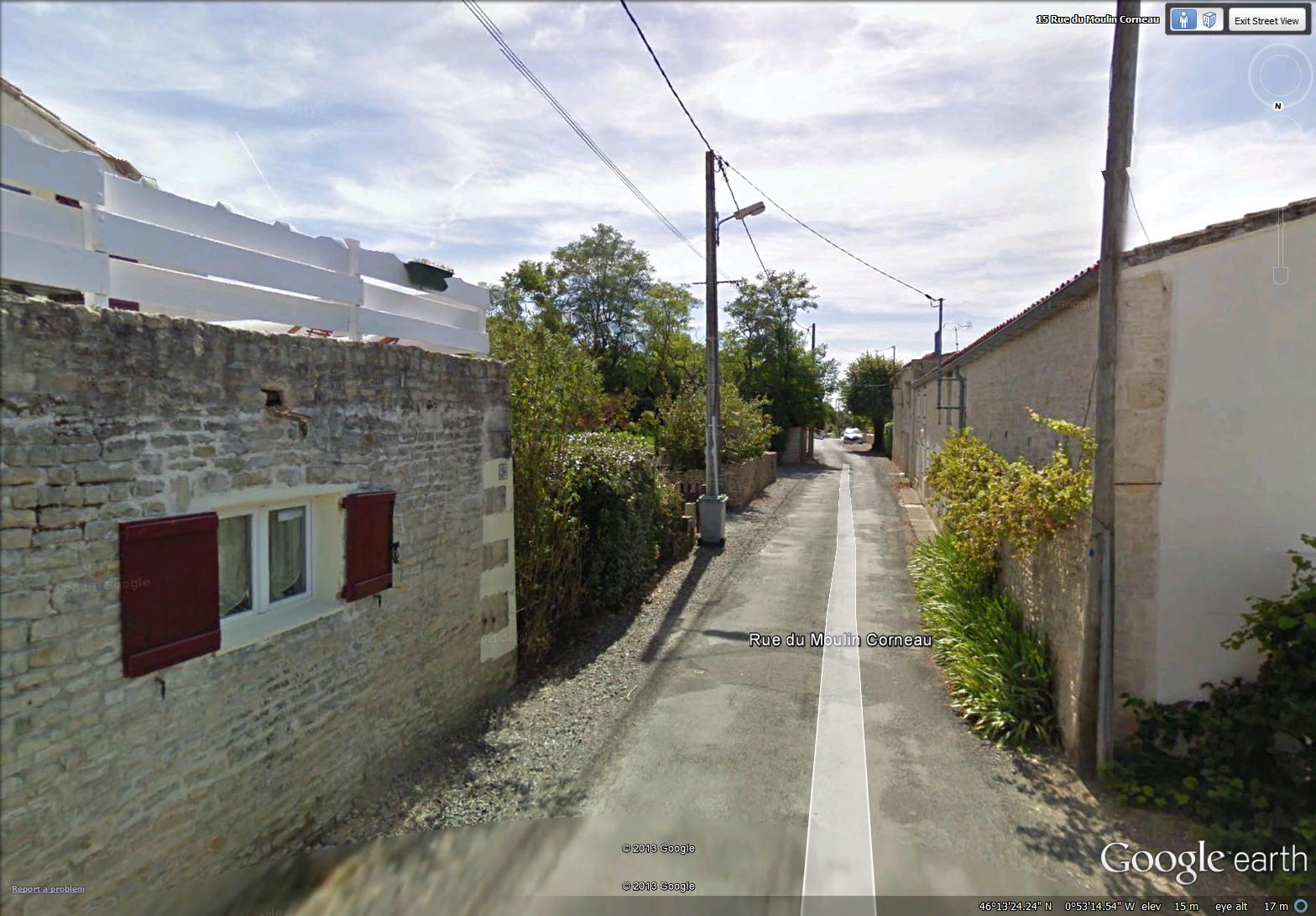
back street in Saint-Sauveur-d’Aunis (image from Street View)
~
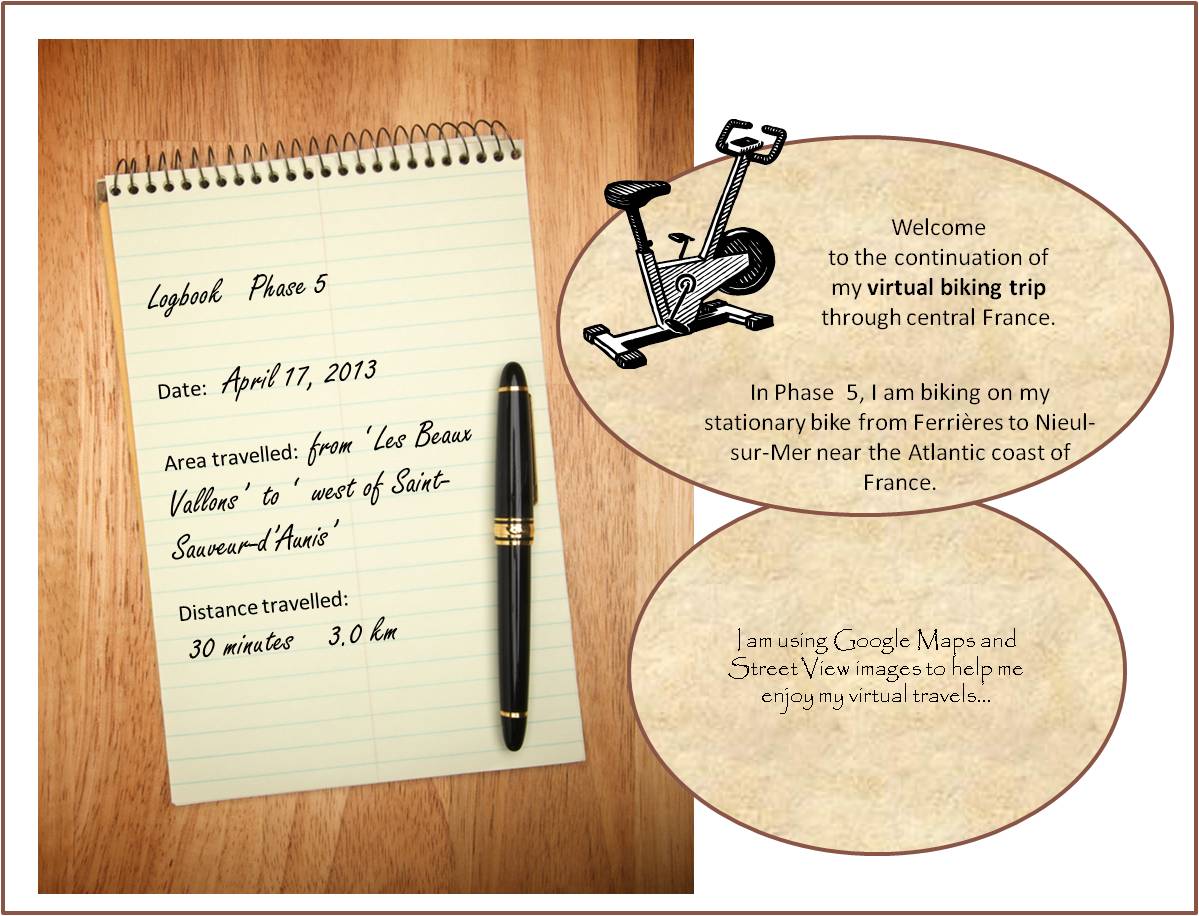
~

map showing distance travelled (map from Google Maps)
~
On the second day of Phase 5 of my virtual bike trip toward the Atlantic coast of central France, I think I was on every possible type of road. I began on the highway and almost immediately decided it was too boring …
~
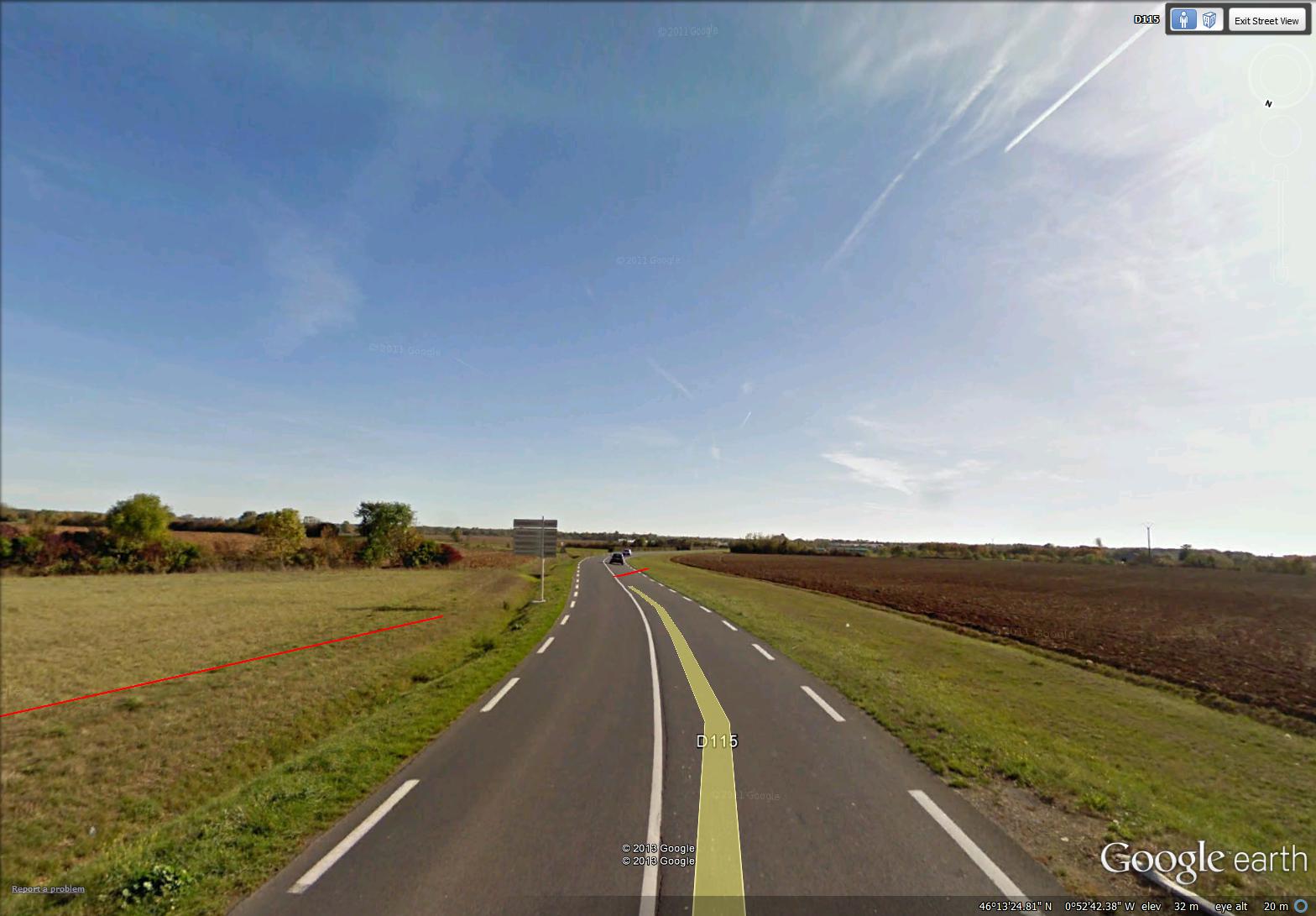
~
At the next turn, I took a detour into the village of Saint-Sauveur-d’Aunis. With its charming yards and flower gardens, it was much more interesting …
~
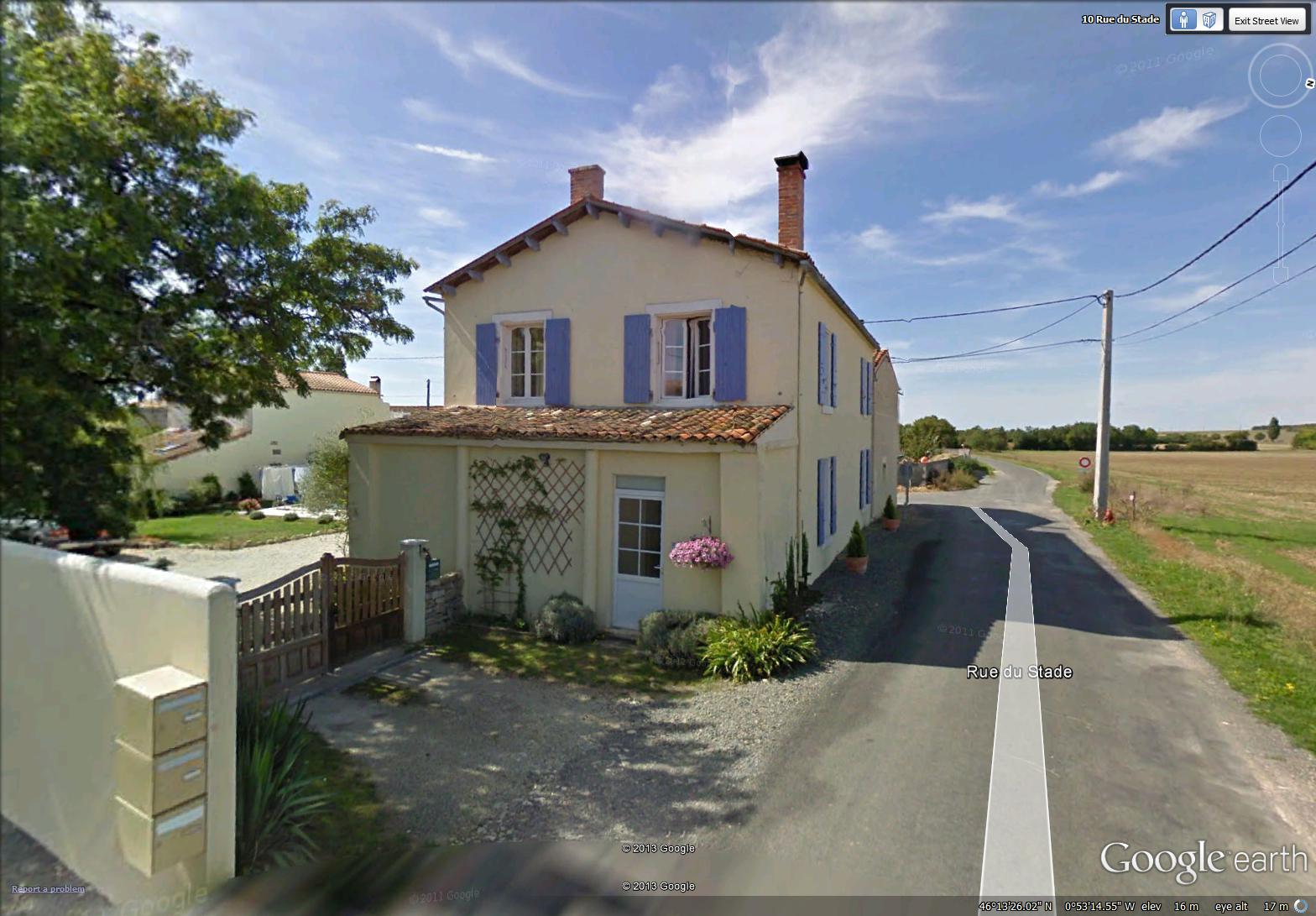
charming yard in Saint-Sauveur-d’Aunis (image from Street View)
~
Once I had peddled into the village as far as possible, I turned into a narrow side street. I tried hard not to peek into the windows as I drove by …
~

side street in Saint-Sauveur-d’Aunis (image from Street View)
~
Everywhere in France I have encountered side roads labelled ‘Impasse de … ‘. When I saw ‘Impasse du Moulin Corneau’ in Saint-Sauveur-d’Aunis, I looked up the word and found ‘impasse’ means ‘dead end’ or ‘blind alley’ …
~
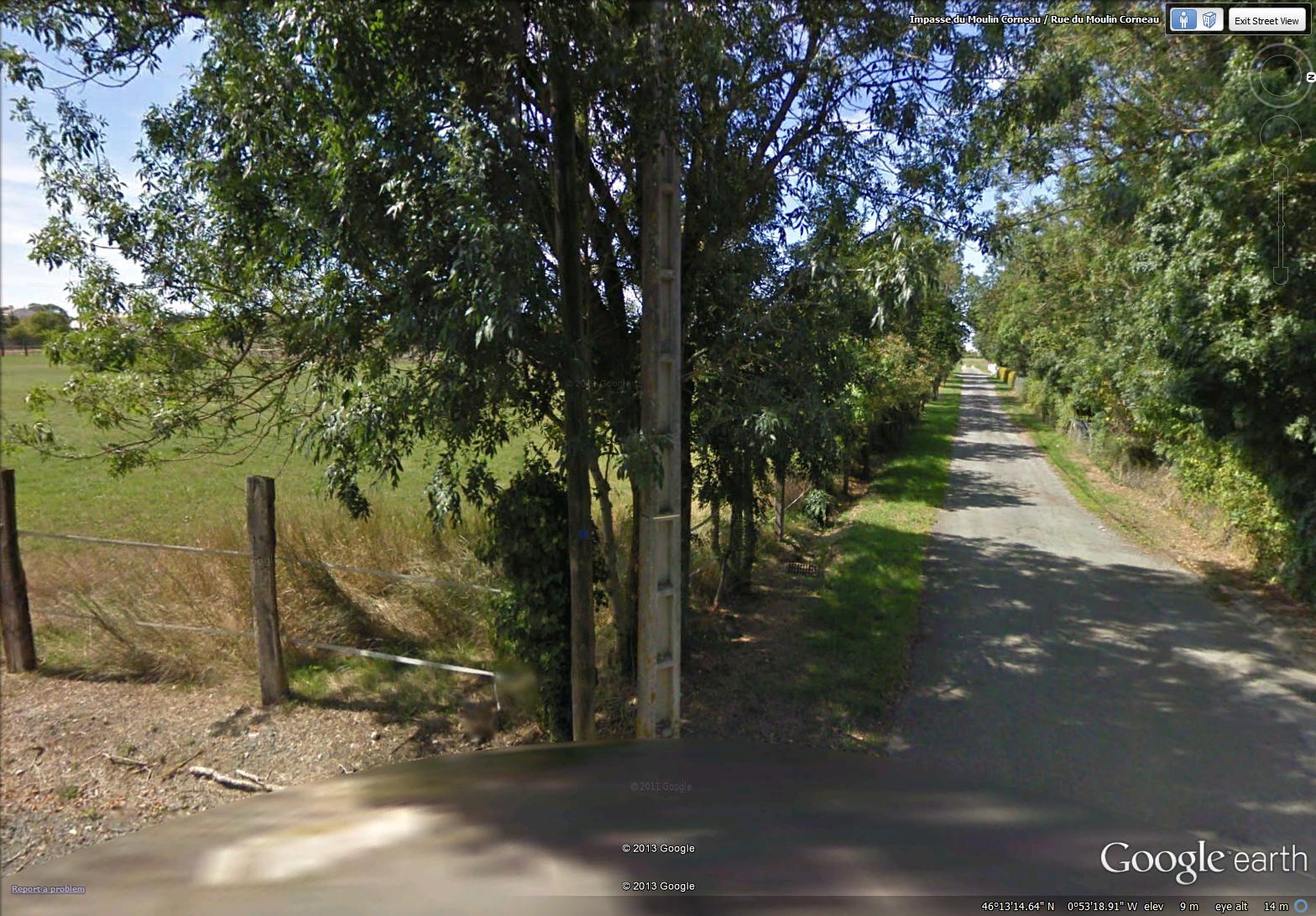
Impasse du Moulin Corneau, meaning ‘Corneau Mill Dead End’ (image from Street View)
~
In another part of the village, I saw an alley running between adjacent houses. In fact, it was not an alley at all, but access to a house set far back from the main street. Where I lived as a child, our street had a back alley. It was very convenient, used for garbage pick-up and to access the rear of our property. Back alleys are almost non-existent in our towns in New Brunswick. I think they are considered a waste of land, but, in fact, they serve a useful purpose …
~
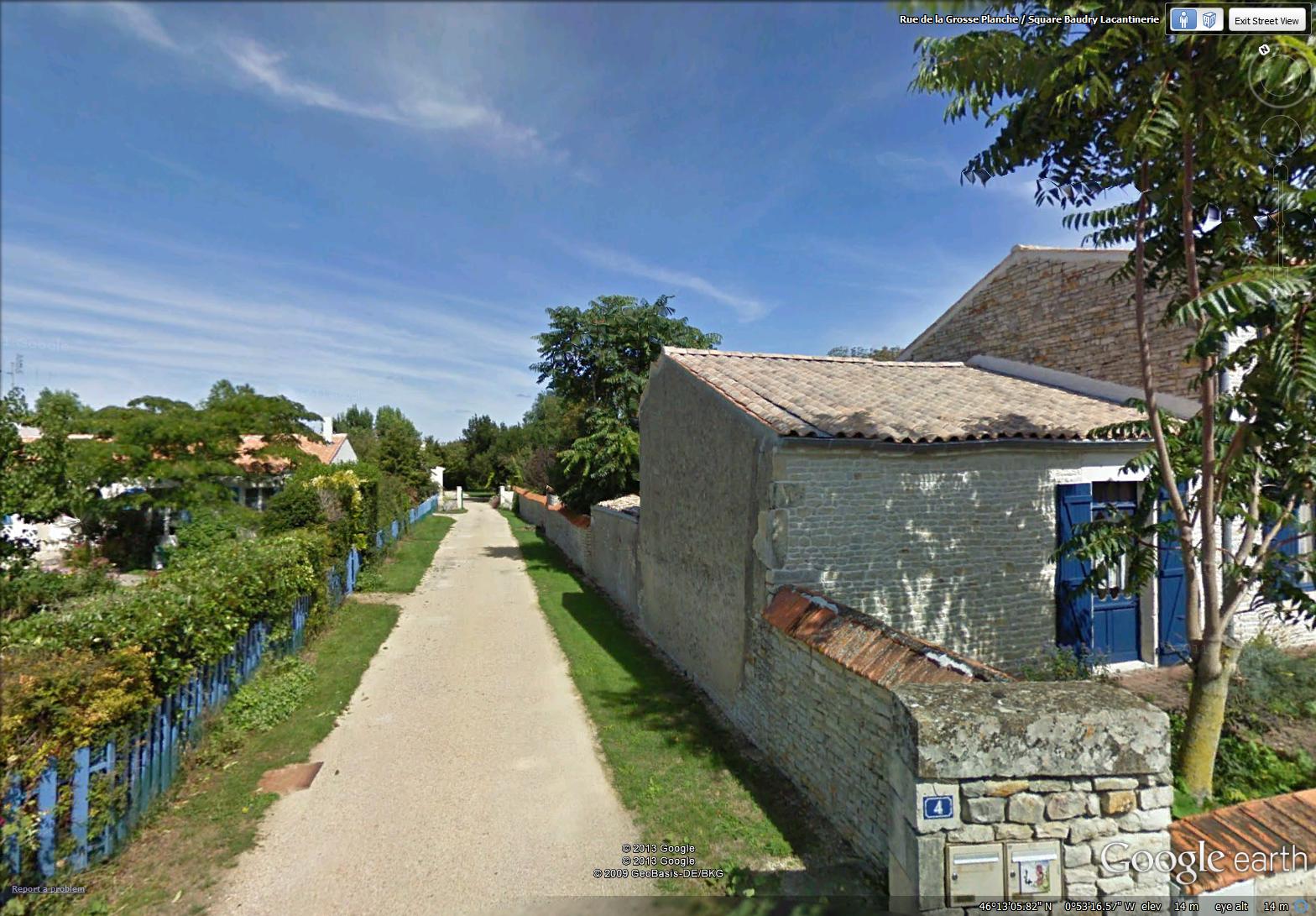
narrow alley in the village of Saint-Sauveur-d’Aunis (image from Street View)
~
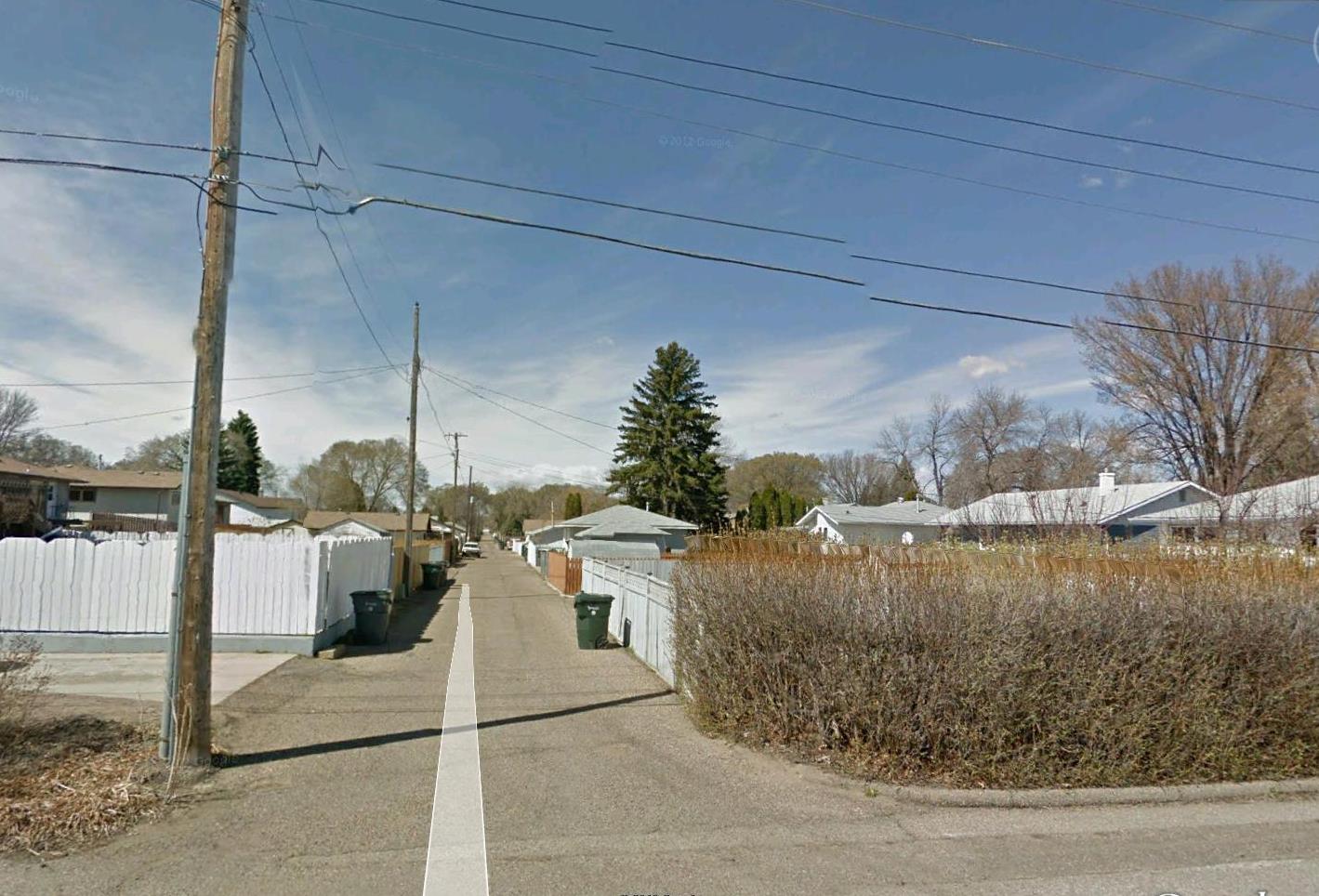
back alley behind the house where I grew up … when I lived there, the back alley was not paved … I used to skip beside the power pole to the left (image from Street View)
~
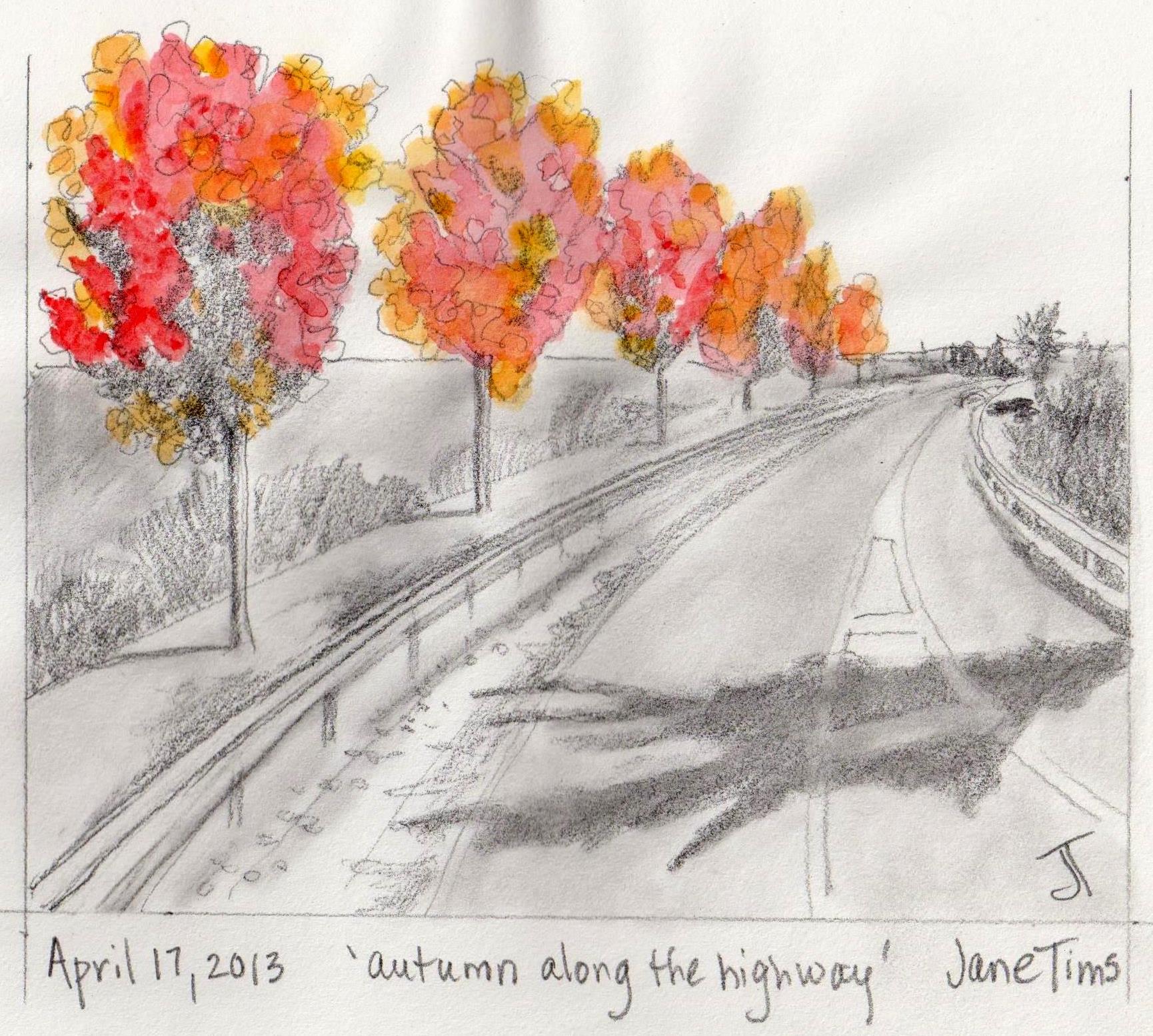
Best View: trees in autumn splendor beside the main highway …
~
~
Copyright Jane Tims 2013
log cabins and humble beginnings
In a recent post (October 17, 2012), I wrote about my shoemaker great-great-grandfather, Josiah Hawk, and his daughter, my great-grandmother, Ella Hawk.
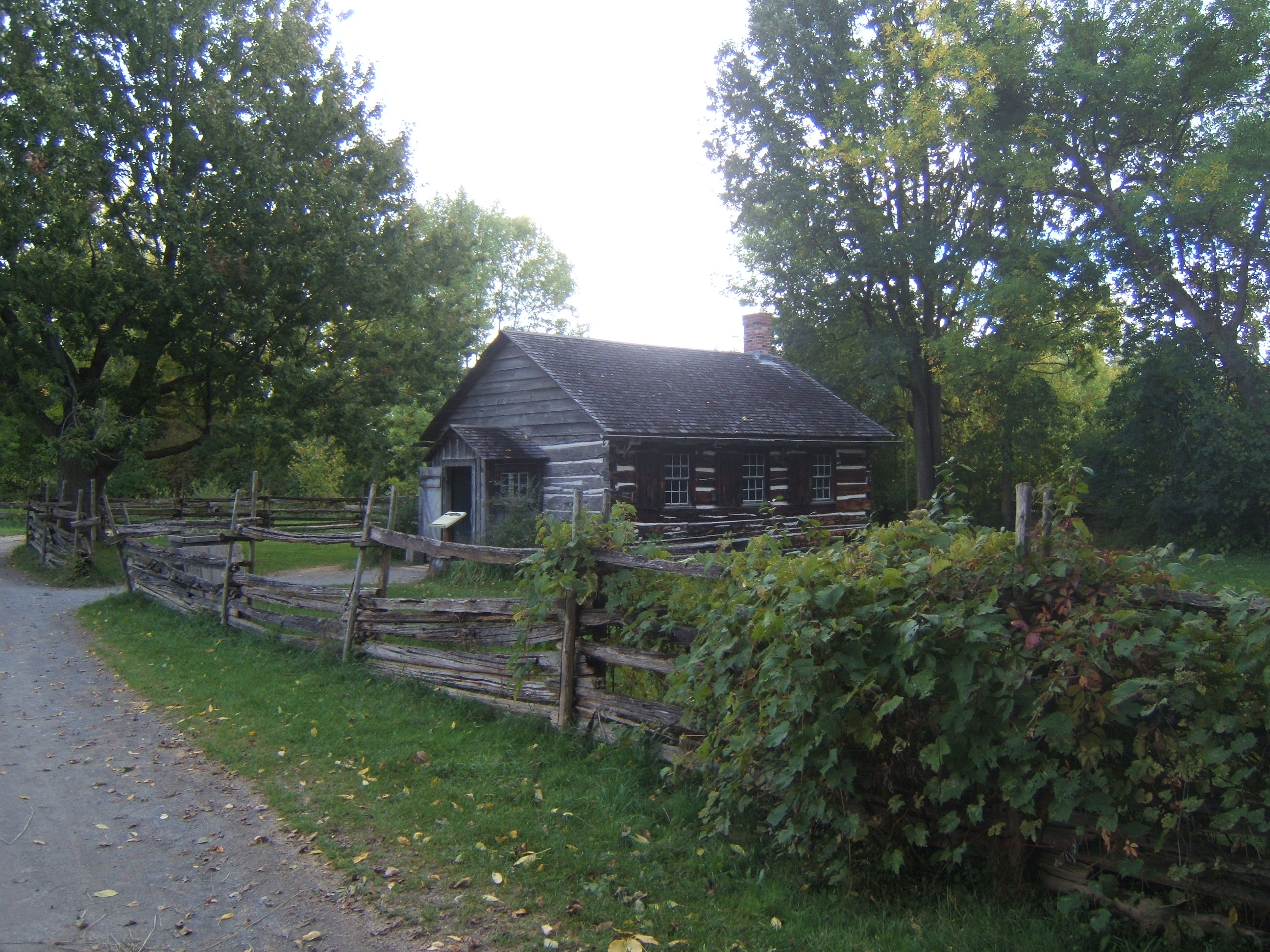
schoolhouse in Upper Canada Village, Ontario
When I was in Upper Canada Village in Ontario in September, I saw many houses and a way of life that reminded me of Ella’s family history.
Ella’s story begins before she was born, with the Hawk and Kresge families of Monroe County, Pennsylvania. I know a lot about these families, since both families have relatively complete genealogies.
Both the Kresges and Hawks were part of a large community of German immigrants who lived in the vicinity of Gilbert, Monroe County, from the late 1700s onward. In 2004, my husband, son and I visited the area and I went to church in the community. The congregation welcomed me warmly and I was told many of the people in the church shared my ancestry!

pioneer home in Upper Canada Village, Ontario
The Census of 1790 lists both of Ella’s great-grandfathers, Coonrod Crase (Conrad Kresge) and Conrad Hawke. Conrad Kresge had a son Johannes whose daughter Sarah Ann, was Ella’s mother. Conrad Hawke had a son Michael Hawk, whose son Josiah (the shoemaker) was Ella’s father.
The Kresges and Hawks were true pioneers and life for them was difficult. In about 1777, while clearing land, Conrad Kresge lost one of his sons at the hands of a band of Native Americans, who carried out raids on the community. This story is depicted in a memorial to Conrad Kresge in the Gilbert cemetary.

Memorial in Gilbert cemetary, depicting story of Conrad Kresge clearing land, and his son who was killed by an arrow
Although no other stories have survived the years, I have been able to learn quite a bit about these people from the genealogies. For example, I can piece together something of my great-great-great grandfather Michael Hawk’s life in Middle Creek, Pennsylvania. For example, for the year 1807, when he was 13 years old, he was the youngest of nine children. Of his five brothers and three sisters, only his older brothers John (19 years old) and Peter (16) remained at home. Siblings Nicholas (25) and Suzanna (23) had been married the year before, and on October 29, 1807, Suzanna gave birth to a set of twins, no doubt an exciting family event. His much older brother John George (37), living in the community of Effort, and his sister Anne Margaret (33), in Chestnut Hill, must have seemed a generation away, since John George’s daughter Elizabeth, Michael’s niece, was only four years his junior.
~
~
Michael, alone
(Middle Creek, 1807)
~
November has worked its way
into the wood pile, I use Papa’s axe
to split kindling, I blow rings into
the cold air, everyone is away, gone to
Chestnut Hill to see
Suzanna’s twins
~
everyone leaves –
they become like strangers
Catherine, run off to Seneca Lakes,
Nicholas married last year,
John and Peter, itching to go
~
Mama calls me her baby
well, I’m the same age as the Kresge boy,
killed by an arrow thirty years ago –
but that’s an old story
~
I look across the cornfield
to the oak woods where leaves still cling,
they glow like copper
noone lurks there now
~
Copyright Jane Tims 2012
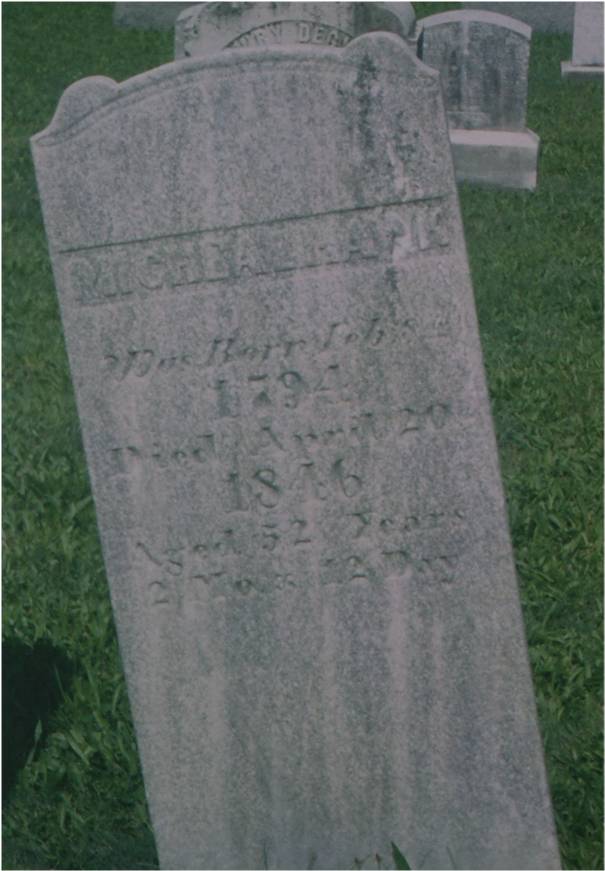
gravestone reads: Michael Hawk – was born Feb 8th 1794 – died April 20 1846 – Aged 52 years 2 months 12 day
occupation: shoemaker
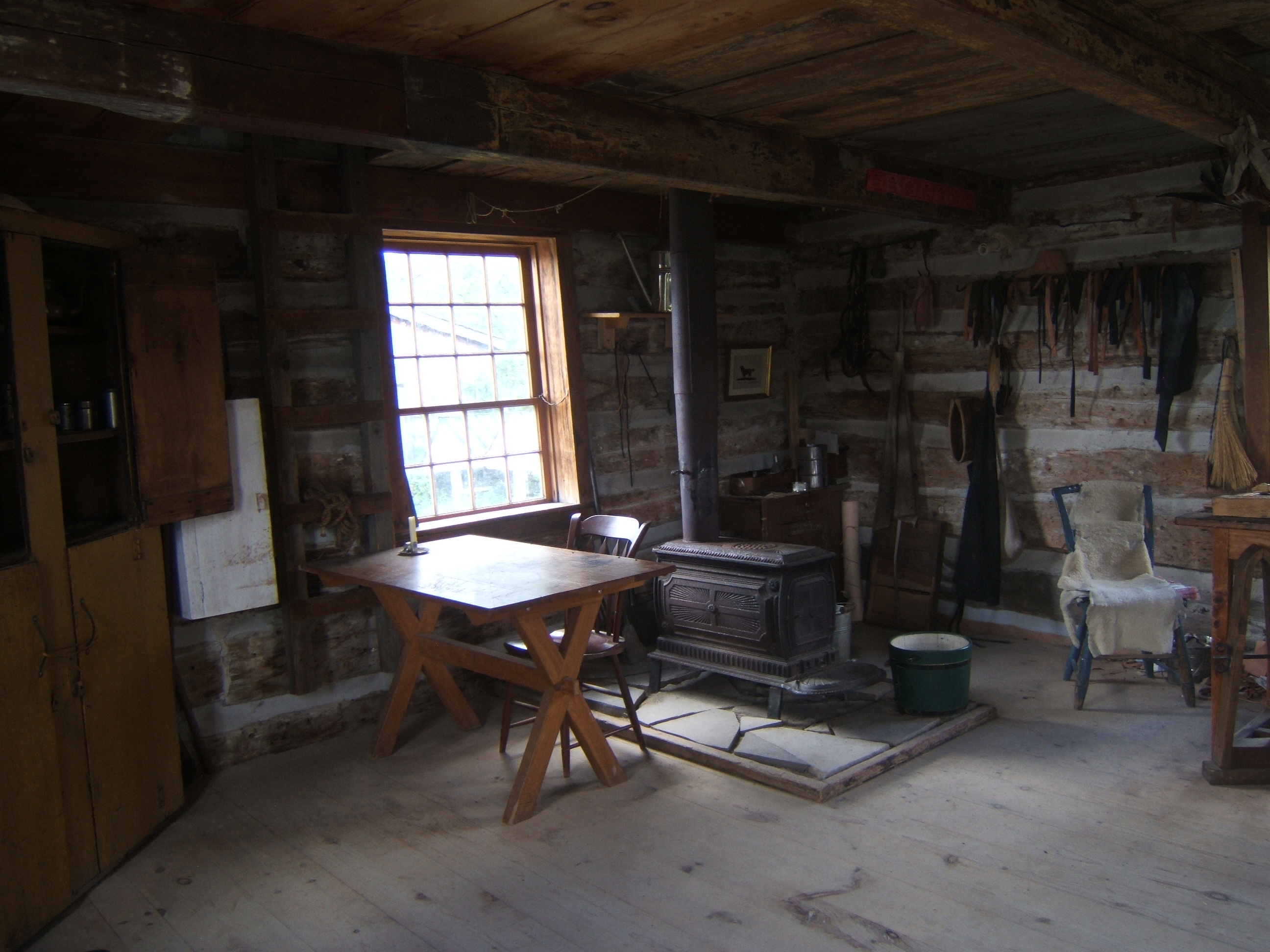
On a short vacation to eastern Ontario last month to visit my niece, we visited Upper Canada Village. It was a memorable day. My favorite of the many buildings on site was the shoemaker’s workshop. I was particularly interested because my great, great-grandfather, Josiah Hawk, was a shoemaker. I know this from two sources, an entry in the Pennsylvania Census for 1860, and a list of the items in an Inventory and Appraisement at his death in 1865 at 33 years of age.

In 2001, I became interested in studying my maternal great-grandmother Ellen’s history. Ellen (Ella) was Josiah’s daughter. One evening, I was puzzling over a poorly copied entry in the 1860 Census, trying to figure out his occupation. I was tired and my eyes went a bit blurry … by bending the paper a little, I suddenly saw what it said… ‘Master Shoemaker’. My delight at this discovery was immense.

Later, when I read a list of Josiah’s property at the time of his death, his occupation was confirmed. His belongings included: ‘…1 shoe bench, 1 lot of shoe mackers [makers] tools, one cramping [crimping] machine, [and] 1 lot of leather …’, among other worker’s tools.
I have relatively little information about my great-grandmother’s life, but I can imagine that she knew her father’s profession and his workshop. Perhaps, as a little girl, Ella played in the workshop and knew the smells of the leather and the sounds of the shoemaker at his work.
~
~
leather and boot polish
~
the leather in my Papa’s shop
makes a kind of tent
where I can play
~
Papa pays me no attention
sews seams in Mr. Gruber’s boots
heels a pair of Sunday shoes
~
at church, I bend to see
beneath the benches
all those solemn feet
wearing Papa’s leather
boots and shoes
~
~
Copyright Jane Tims 2012




 nichepoetryandprose