virtual travel: Everton to Beckingham
The next stretch of my virtual cycling program (to visit the villages and towns of my ‘Spavold’ ancestors) took me from Everton in Nottinghamshire, to Clayworth, to Beckingham.
~

~
| Date | From | To | Distance | Time |
| November 4 | Everton | Clayworth | 5 km | 20 minutes |
| November 5 | Clayworth | Gringly on the Hill | 4 km | 18 minutes |
| November 6 | Gringly on the Hill | Beckingham | 6 km | 20 minutes |
~
~
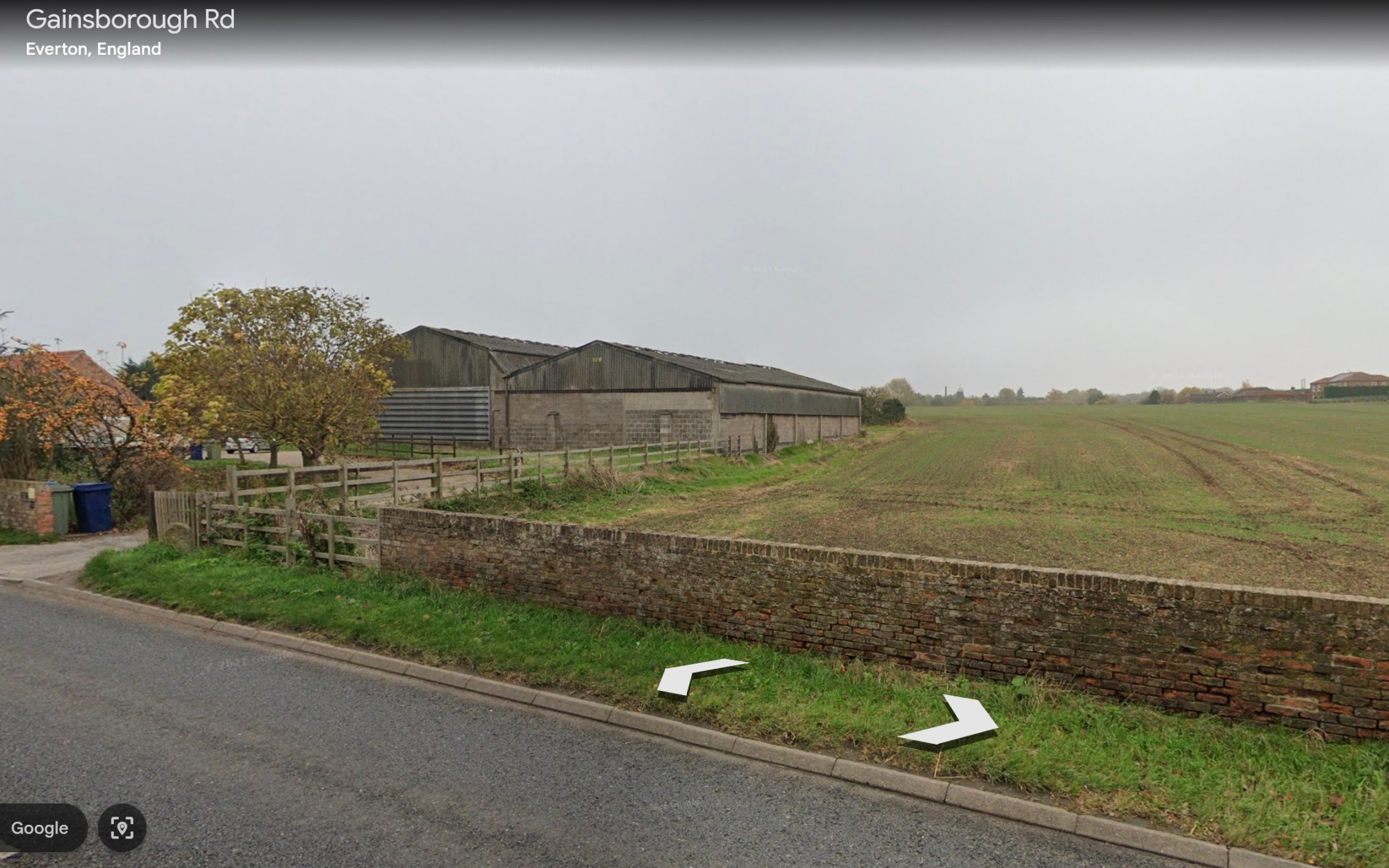
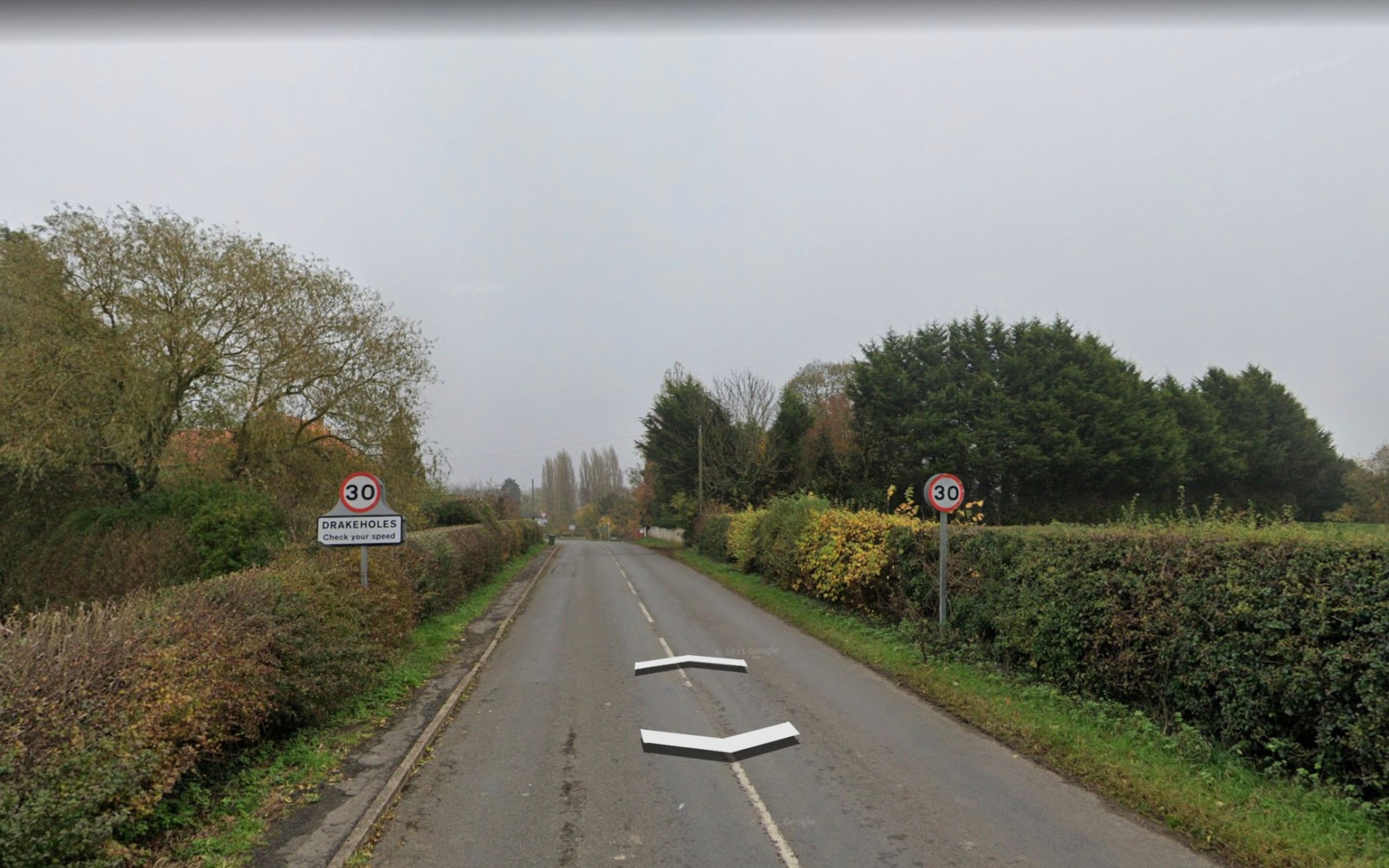
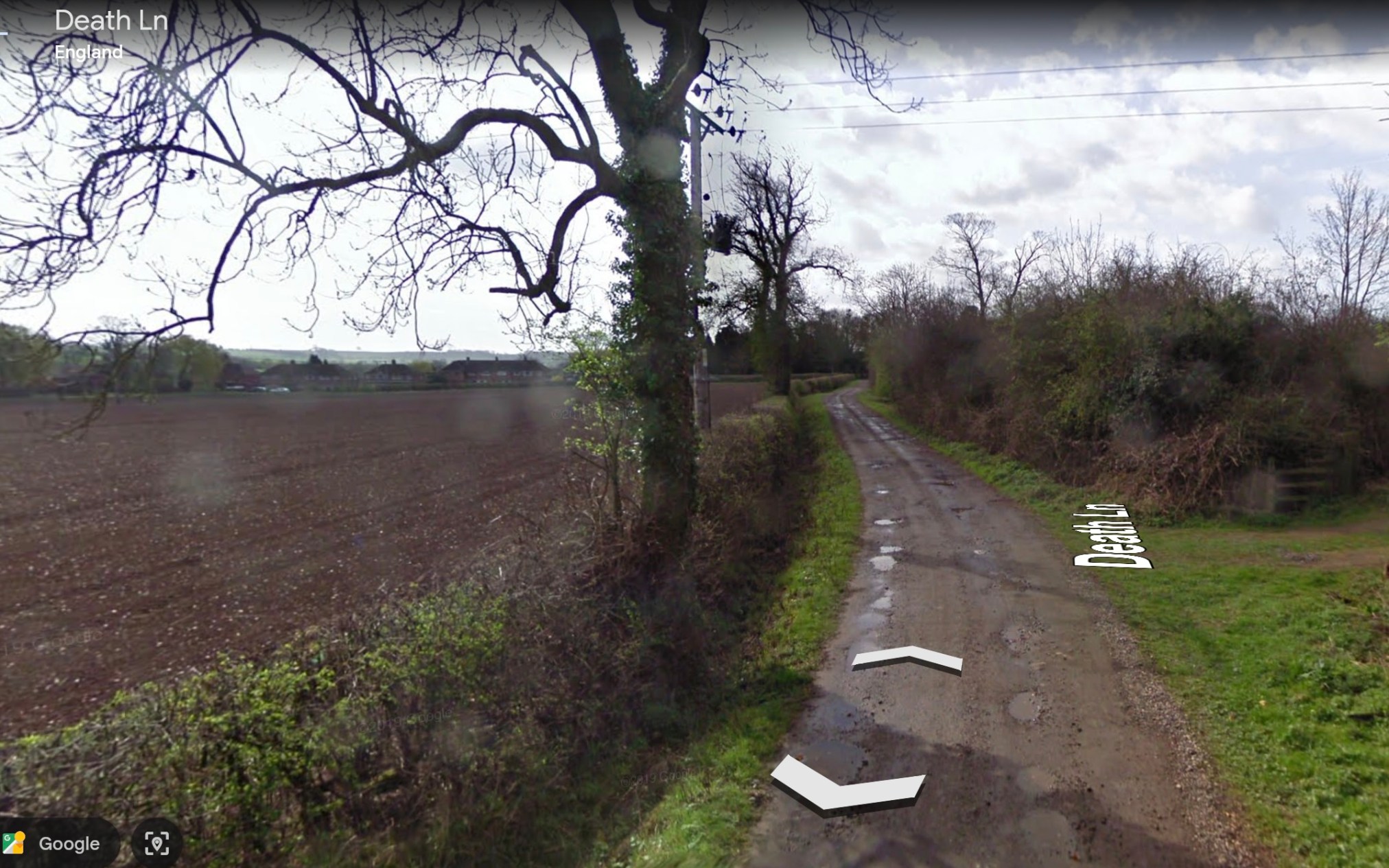
I began at Everton where the land is very flat. The area from there to Clayworth is dominated by fields and farms. The names alongtheu way are interesting… for example Drakeholes???? Death Lane???? The name Clayworth was once thought to represent the soils in the area but now it is thought to refer to a protective area of hills near the village.
~
~
~
The cycle along the road to Gringly on the Hill was flat and also agricultural. Huge fields had been planted along the road.
~

~
Also, there were wild pink roses in bloom along the way.
~

~
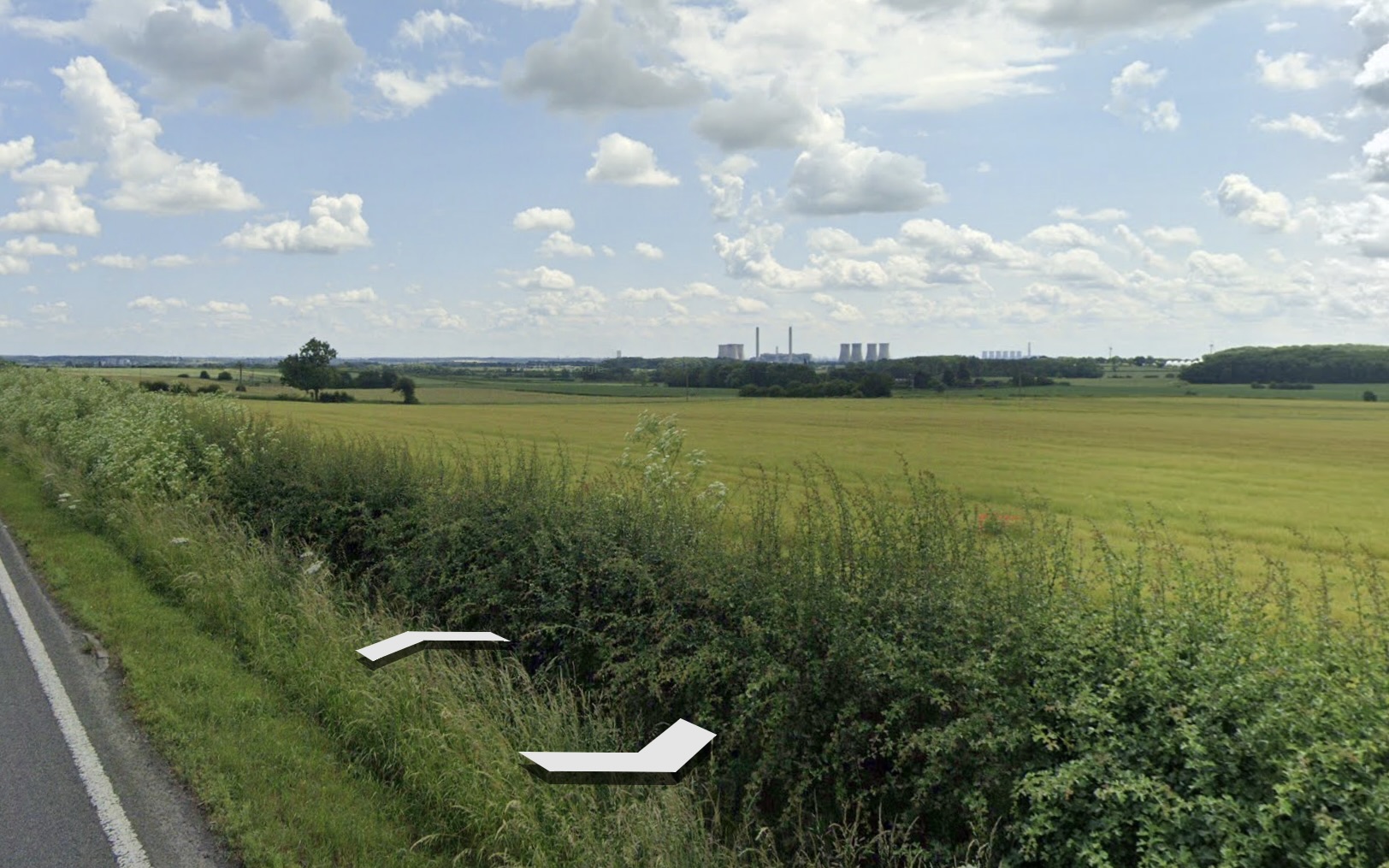
The Double highway from Gringly on the Hill to Beckingham was rather dull, except for a large industrial site on the horizon.
~
~
This turned out to be the power generating station at West Burton.
~

~
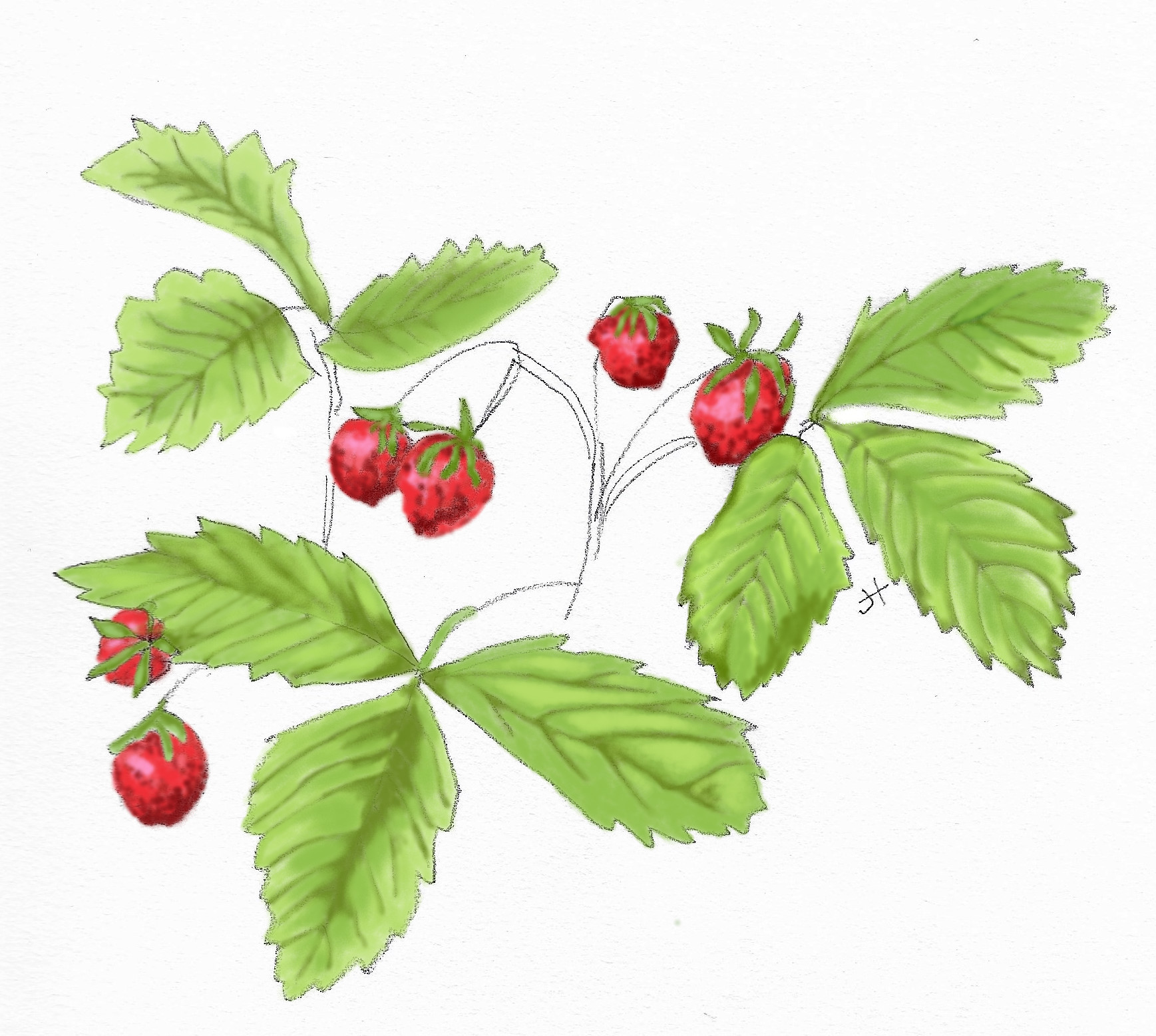
Also, in aerial view, I found a large area near North Wheatley that looked, at first, like a large solar farm. With a little reading, I now think it is more likely to be a view of extensive strawberry polytunnels … the area is known for its strawberry production and the logo for North Wheatley includes the image of a strawberry.
~

~
~
The next leg of my journey will take me to Gainsborough and Walkingerham, Lincolnshire, where three early families with the last name Spaveld/Spaven/Spavalde lived in the 1400s.
~
All my best,
Jane
Winter virtual travel: Starting off
This winter, I want to add some exercise to my days, using my stationary cylcle and Google Earth’s ‘Street View’ to travel to some of the places where my Spavold ancestors lived.
~
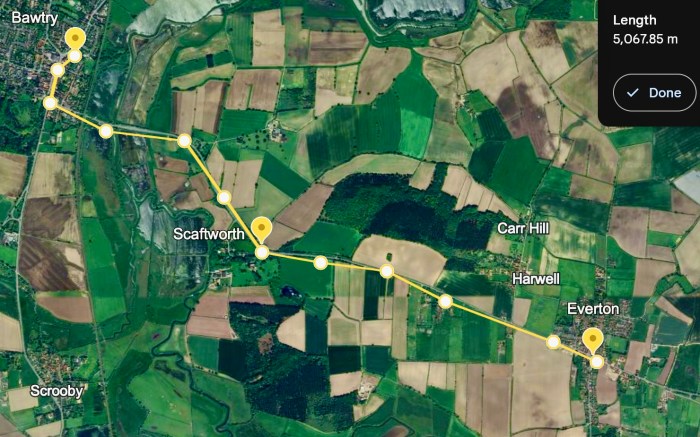
This week I began my virtual travels in Nottinghamshire, travelling from Bawtry to Scunthorpe and then to Everton.
~
~

~
| Date | From | To | distance | time |
| Oct. 28 | Bawtry | Scunthorpe | 2.5 km | 15 min |
| Oct. 29 | Scunthorpe | Everton | 2.5 kn | 20 min |
~
~

~
The highlight of the virtual trip was seeing the Holy Trinity Church in Everton. This is the church where many Spavolds were baptised, married, and buried. They once walked through those doors! They walked the street I followed! The church was built in 1066 and still stands almost 1000 years later!!!! The original settlement was Danish, called Eofortun.
~
The next stretch of my travels will be to Beckingham and then to Gainsborough in Lincolnshire where the earliest Spavold families lived in the 1400s.
~
All my Best,
Jane Tims (a.k.a. Jane Spavold)
Tricks to Improve Accuracy in Your Family Tree
In my recent searches for my Spavold ancestors in England, I have used some very useful tools, all at Ancestry.ca:
- first, the family trees of various genealogist enthusiasts like myself who work slowly to build their family trees; the family tree ‘petbar’ is a very complete ‘Spavold’ family tree and was a great help in building my own tree;
- second, the original documents accessible through the website, including, primarily, records of marriages, baptisms and burials.
~
The quality of information in some Family Trees is variable, depending on how carefully the tree-builders work. Due to the preponderance of similar names in these families, it is very easy to mix up ancestors: for example, men with the name ‘Thomas’ who were born in the same generation and on approximately the same date.
~
To counter this problem, I use the following methods:
- in my draft family tree (not available for public view), for each profile, I use the ‘prefix’ after the person’s full name to easily relocate individuals in the tree. For example, I can use this field to add question marks, possible names of spouses, and notations for examining certain questions, for example, ‘too young,’ ‘possible duplicate,’ and so on. The notations are often visible in the vertical display of the family tree, so you can locate people with respect to one another. These quick notations should be removed before the tree is made public since the field is meant for appellations such as Captain, Jr., Sr., and so on;
- for each profile, I examine the marriage dates and birth dates of children to make certain they are logical. So, a person born in 1625 cannot have children born in 1730 and 1732. And people are not likely to have been married before child-bearing age, although it does happen. Also, children cannot have been born after a mother’s death, or more than a few months after a father dies. Again, there are exceptions, for example, if another possible father is still alive. For each profile, birthdates of children make most sense when they are born one or two years apart. Variations do occur, but should be examined more closely;
- for each profile, I check information on where people lived at different parts of their lives. So, for example, for two confusing Thomases, both born in 1632, one may have been born in Gainsborough in Lincolnshire and lived there all his life, and the other may have lived all his days in Everton in Nottinghamshire. These Thomases likely ‘belong’ to families living in the respective communities or nearby. There are exceptions, of course, for individuals who were widely travelled. Also, the various small communities need to be located with respect to others in the vicinity; for example, communities of Bawtry (Yorkshire), Harworth (Yorkshire), Scaftworth (Nottinghamshire), and Everton (Nottinghamshire) are very close together and family members were mobile between nearby communities;
- consider the alternative spelling of names: ‘Spavold’ is an unfamiliar name and has been listed in the various records as ‘Spaffield,’ ‘Spavin,’ ‘Spavald,’ ‘Spaviald,’ and so on. The most interesting incorrect transcription I encountered was for Willm Epaxato, born in Gainsborough in 1523; I have read the original and I would have transcribed it with ‘Spavold’ (Source: Nottinghamshire, England, Church of England Baptisms, Marriages and Burials, 1538-1775. St Bartholomew Church, at Sutton-Cum-Lound near Retford). The spelling of the family name may provide a clue as to which family our Thomas belongs.
~

~
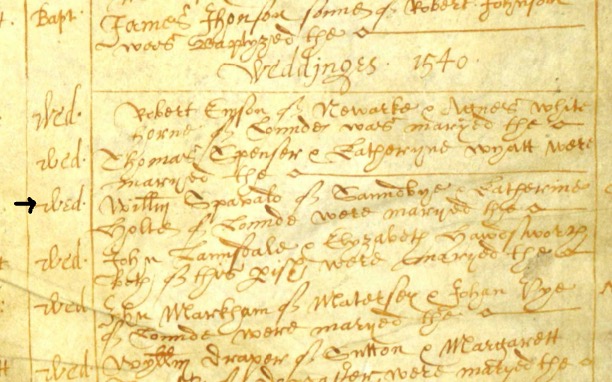
If you like puzzles, have a look at this marriage record from All Saints Church in Misterton in Nottinghamshire. I reveal the transcription for the third line from the top, written in darker black ink, in a post script at the end of the post:
~

~
Since surnames are specifically male in origin, there is a tendency to ignore women in a family line. However, they are ancestors, important and interesting in their own right. Their records provide additional information on siblings and parents, places lived, and naming traditions. They are also relatives and are represented in the growing DNA data.
~
In spite of my searching, I have yet to find my great-great-great grandfather William Spavold. However, in the various searches of baptism, marriage and burial records, I often find people who do not fit in the family tree or are listed for other areas in England. In my searches to date, I have yet to identify a DNA connection to any owner of the various family trees. This makes me think that my William Spavold will still be found, among the progeny of incomplete profiles or among some of the Spavolds who do not seem to fit in the record.
~
All my best,
Jane Tims (a. k. a. Jane Spavold)
~
Post Script: the names in the Misterton record are transcribed as ‘Robert Spavald’ (born about 1583) and ‘Alice Snell’ (born about 1580). This will give you an appreciation for difficulty historians face when transcribing old records.
winter cycling – a virtual trip through Nottinghamshire
In summer, my exercise routine includes a walk and some yard work around our long driveway loop. I sit for a while on my stone bench and watch the tree tops, listen to the neighbourhood sounds, and sort the bird calls from the more human sounds. This past summer I cleaned out a small pond and gave at least seven frogs a new home!
~

~
This winter, I will replace the driveway walk with some stationary cycling. As I cycle, I will follow a route in Google Earth and use the Street View feature to see the sights along the way. My chosen route is a virtual tour of the area where some of my ‘Spavold’ ancestors lived in the 15th, 16th and 17th centuries.
~

~
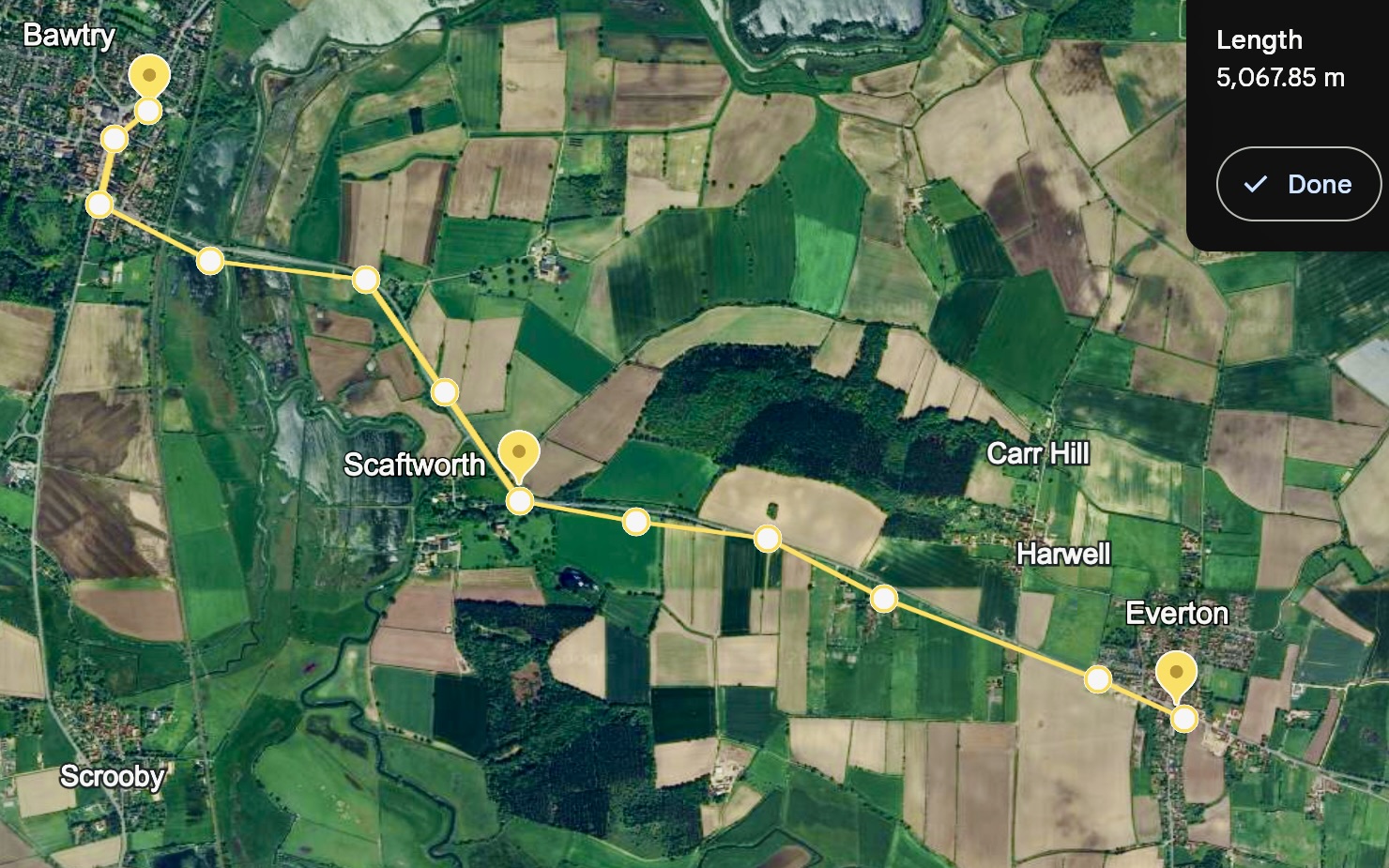
The entire route will take a lot of cycling, but I will start small, with a trip from Bawtry to Scaftworth to Everton. The baptismal, marriage and burial records of the Holy Trinity church in Everton show the many Spavolds who lived in this area, including the family of Thomas Spavold (1695-1751) and Judith Sellers (1699-1764). I realize most of the buildings existing in the early 1700s will be gone, but the landscape will be the same and the trip will give me a glimpse of where my acceptors lived.
~
~
I will keep you up to date on the things I see.
~
All my best,
Jane Tims (a.k.a. Jane Spavold Tims)
Building a Family Tree
This year, I spent the months of August, September and October tracing the roots of my great-great-great-grandfather, William Spavold, and the origins of the Spavold family. I have used the services of Ancestry.ca in my search and thank the website and others who have studied the Spavold family before me.
~
I began with these bits of information:
- William Spavold was born in Nottinghamshire in 1785 and died in 1815;
- William married Eliza Greenfield in 1807;
- William was a carpenter;
- after William died, Eliza married John Adam Hill in 1816.
~
In my search, I soon encountered Spavolds in Nottinghamshire— many Spavolds. My tree, not yet available to the public, includes over 700 people, including spouses and some parents of spouses.
~
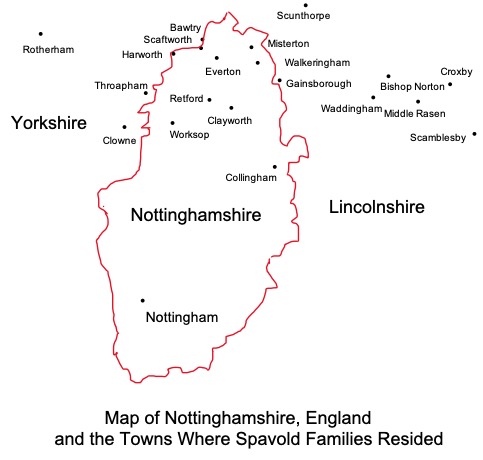
The earliest records are of three Spavold males: Anthony Spavalde (1500), an ‘Unknown Spavalde’ (1493-1552) (first name unknown), and a ‘Mr. Spavan,’ (given name also unknown). All three lived in the area of Gainsborough, in northern Lincolnshire, and may have been brothers or cousins. At the same time, there is also a family with the last name of Spafford living in the Collingham area, about 30 kms south of Gainsborough. The names Spavalde, Spavan and Spafford are so similar, I think the families were related to one another.
~
Anthony Spavalde married Alice and had a son Anthony, beginning at least seven generations of Spavolds. The Unknown Spavold married Maud of Gainsborough and had 3 sons and 1 daughter, beginning at least fourteen generations into the 1900s. Mr. Spavan had three sons and I have not yet been able to follow them into more generations. The Spafford family stayed in the Collingham area until the mid 1700s when some of the family had moved to Beckingham, near Gainsborough in northern Nottinghamshire; they also have more than fourteen generations into the 1900s.
~
The variable spelling of the name may have something to do with the difficulties tracing these families, but Ancestry.ca seems to be able to find records in spite of the various name spellings. ‘Spavold’ is an unusual name and has been listed in the various records as ‘Spaffield,’ ‘Spavin,’ ‘Spavald,’ ‘Spaviald,’ and so on. The ways of writing in the records and their tendency to use Latin phrases adds to the difficulties.
~
~
The families remained in the Gainsborough area for the first two or three generations, but by 1673 (family of Anthony) and 1583 (family of Unknown) had begun an outward migration to the nearby communities of Walkeringham and Misterton, both in Lincolnshire. By the fourth generation, with the marriage of Nicholai (1638), some of the families had shifted to the Everton area in northeastern Nottinghamshire and soon after to communities in eastern Yorkshire. The entire Spavold family, at least until the early 1800s remained in this group of communities in northern Yorkshire, Nottinghamshire and Lincolnshire.
~
~
The process of finding these Spavolds has been made more difficult due to the predominance of the given names Thomas, William, Robert, Elizabeth, Mary and Anne in the various families. I still haven’t found William, my great-great-grandfather, but in the next post I will talk about how best to sort family members with the same name.
~
All my best,
Jane Tims (a. k. a. Spavold)
Puzzling Over My Last Name
When I was growing up, I often puzzled over my last name: ‘Spavold.’ No one else in the community where we lived had that name. I made up stories to answer folks who asked me about my surname: we were Polish; we were the only family in the world to ever have that name; we were Italian and the real name was ‘Spavoldini.’
~
My dad was also interested in the orgins of the name, but he took a more studied approach. He found out the name of the first Spavold to arrive in Nova Scotia and wrote a book about the many Spavolds in Nova Scotia who were descendants of that first ‘Spavold’ in Canada: Spavold’s Wald, S.W. Spavold, unpublished, about 1990.
~
The first Spavold in Nova Scotia was a boy of only 8 years, born in England in 1808. He arrived in a shipwreck of the Trafalgar on Briar Island on July 30, 1817. He came to Briar Island with his mother (Eliza Greenfield), his step-father (John Adam Hill) and his half-brother (Thomas Hill, a boy of two). The family survived the shipwreck and stayed in the Digby area of Nova Scotia. For more about this story, see my earlier post at https://janetims.com/2011/12/03/briar-island-rock-2-the-shipwreck/ .
~

~
William’s father, my great, great, great grandfather, was William Spavold, born in Nottinghamshire in England in 1785. In 1807, when he was 22 years old, he married Eliza Greenfield. He was a carpenter and my Dad’s story was that when he died, Eliza sold his carpenter tools to get passage for Canada on the Trafalger with her second husband John Hill.
~
No other information was available to my dad, although he did track down ‘Spavolds’ elsewhere in Canada, in Australia and in England. I talked on the telephone with Helen Spavold who lives in Clowne, Yorkshire, and she said, with a proud lilt in her voice, “There are Spavolds in our graveyard.” My dad, and my brother (who lived in Australia for a time), corresponded with Joseph Spavould, who lived in Australia.
~
Now, with the help of Ancestry.com, I am determined to find out more about William Spavold of Nottinghamshire. The next few posts will talk about my discovery of the occurrence of Spavolds in England in the 15th, 16th, 17th, 18th and 19th centuries. And in the 20th and 21st centuries—I am not alone.
~
All my best,
Jane Tims (a. k. a. Spavold)
mnemonic: listening to birdsong
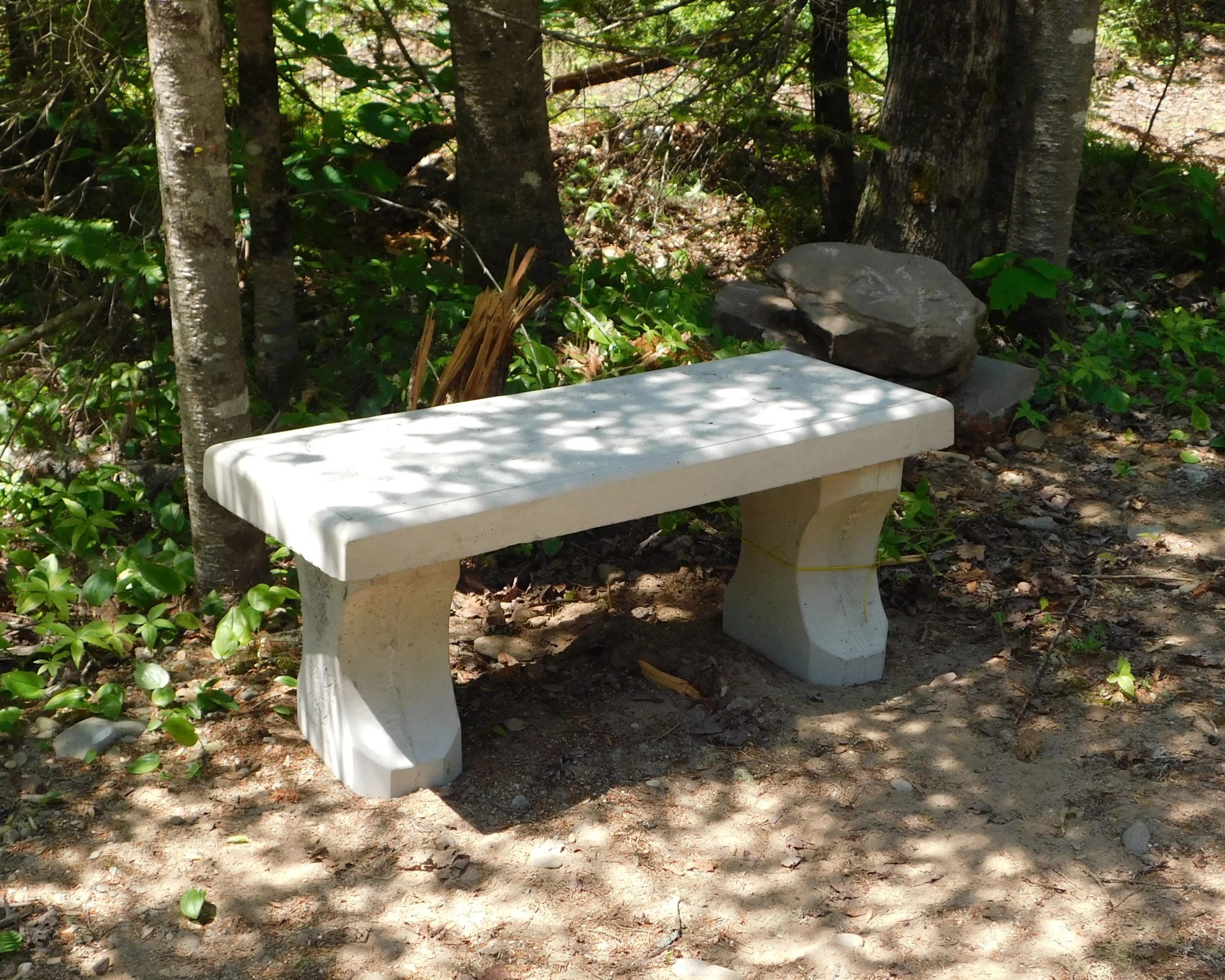
Each day, I walk the loop of our drive and stop for a moment at our concrete bench. I sit there and settle, listening to the sounds: a jet passing overhead, cars on the roadway, a neighbour using a saw. Then I start to hear the quiet mutter of the breeze, the rustling of leaves overhead, the occasional song of a bird.
~
~
This morning I heard the ‘caw’ of a crow, the ‘yank, yank’ of a nuthatch, the winnowing of a snipe. When we assign a pattern of words to mimic and remember the sound of a bird call, it is known as a ‘mnemonic.’ Various other sounds are remembered that way: the ‘chug, chug’ of a train, the ‘drip, drip’ of a tap. Bird mnemonics known to almost everyone are the ‘chick-a-dee-dee-dee’ of the chickadee, the ‘who cooks for you?’ of the barred owl, and the ‘conk-la-ree’ of the red-winged blackbird.
~
~
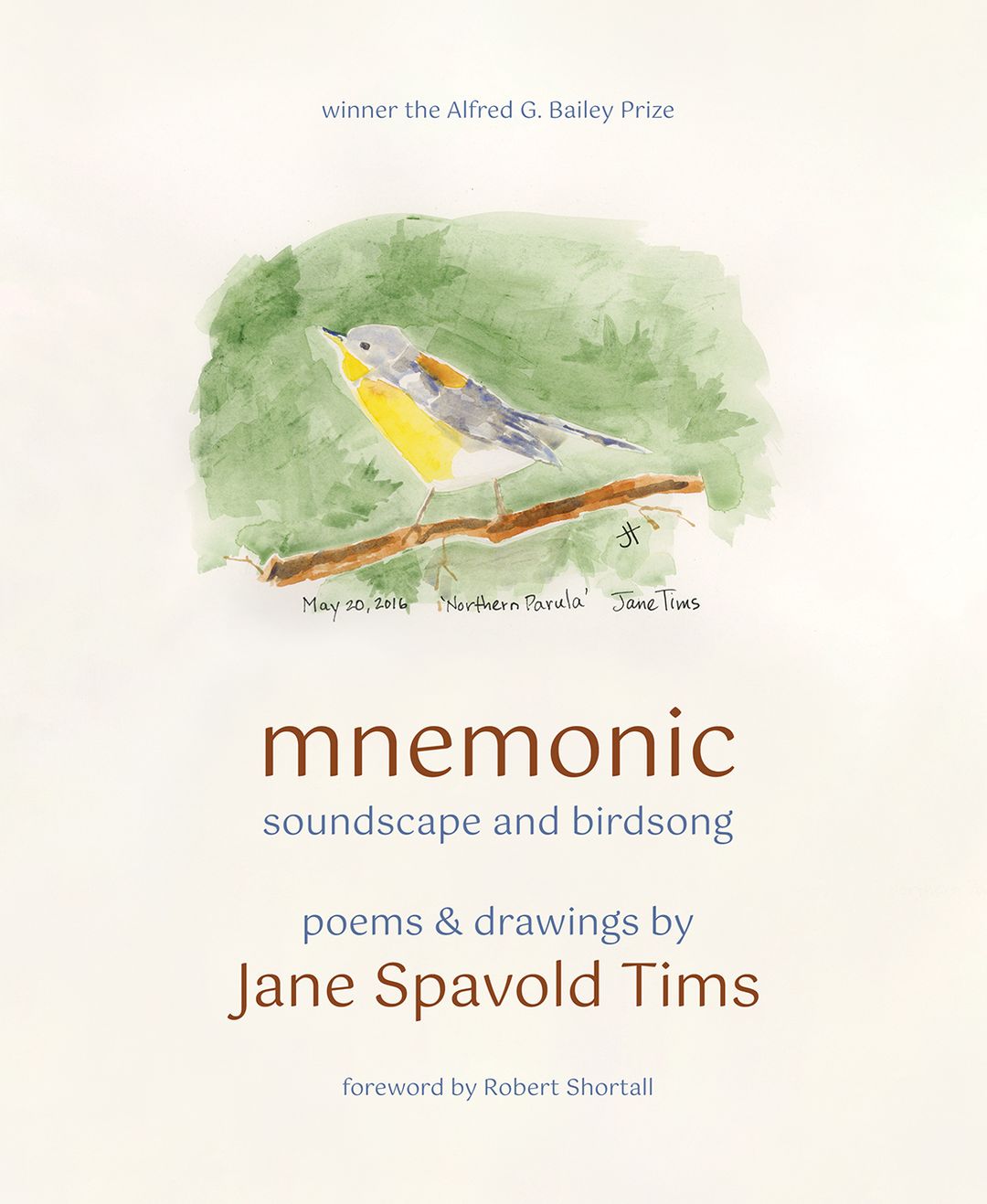
My new poetry book ‘mnemonic: soundscape and birdsong’ focusses on sounds in the woodland and along the shore. Most of the poems celebrate the way bird song can be a metaphor for the events in our lives. For example, the tapping of a pileated woodpecker on the wood of a backstop at the baseball diamond sounds like the connect of bat and ball during the game.
~
~
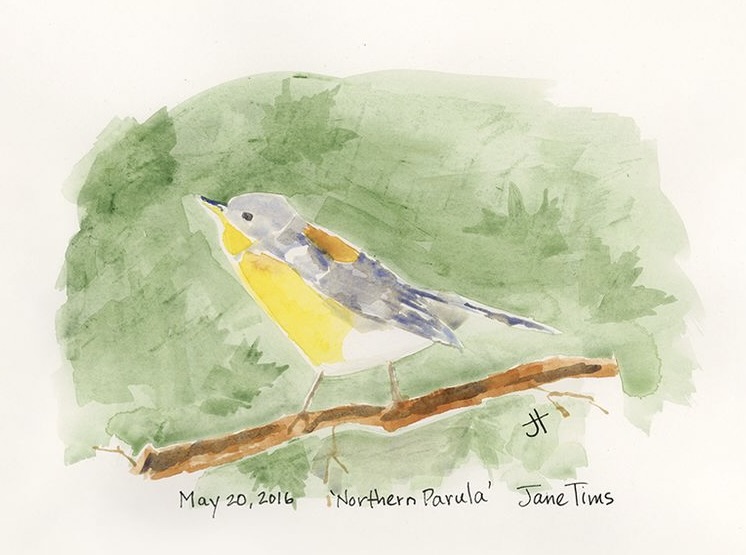
My book ‘mnemonic’ includes my poems and pencil drawings.
~
To obtain a copy of ‘mnemonic,’ take a visit to Dog Eared Books in Oromocto, or Westminster Bookmark in Fredericton. You can also order the book from Chapel Street Editions here, or from Amazon Canada here.
~
I hope you enjoy my poetry and my sketches. You can find a comprehensive list of bird mnemonics at South Bay Birders Unlimited ‘Mnemonic Bird Songs’ here.
~
All my best!
Jane Tims
daisy, daisy
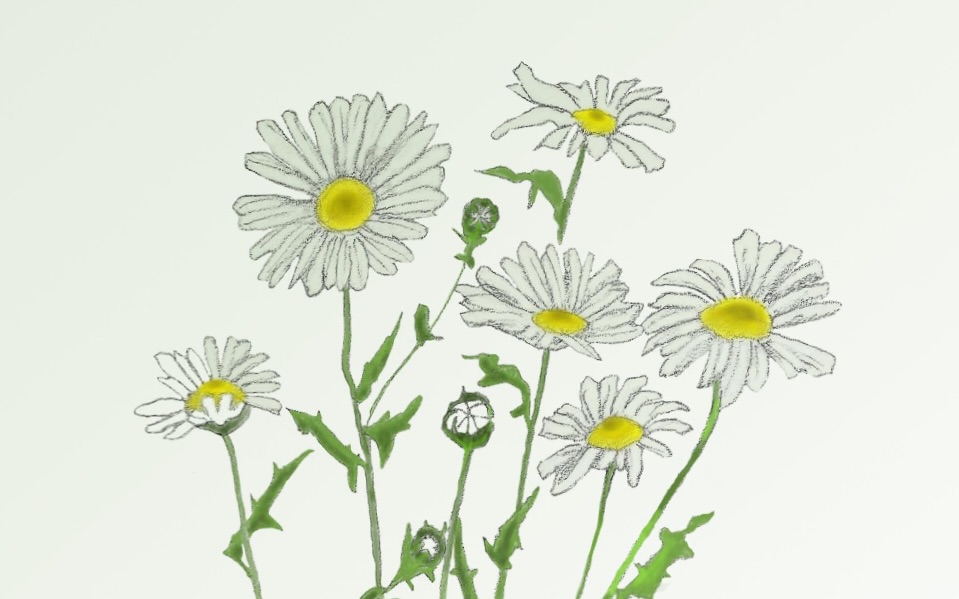
In the new book, A Child’s Botanical Alphabet, by Jennifer Houle, D is for daisy. So simple a flower, but one to be loved. Where I live in New Brunswick, this third week of June, the daisies are blooming along the edges of the road and in the meadows. Pull off the petals to ask a question: loves me, loves me not …
~

~
The common daisy (Leucanthemum vulgare) lives in ditches, meadows, fields, and other disturbed areas. The flower head consists of long white ray florets and small yellow disc florets. Where they grow wild, the flowers are arranged in perfect symmetry, each daisy head set apart from its neighbours.
~

~
~
Hope you take a moment to enjoy the gush of wildflower bloom this time of year!
All my best,
Jane
nuthatch: bold acrobat
Sometimes I hear a knocking at the door and answer, to find no-one there. Instead, a nuthatch is tapping, banging a sunflower seed against the shingles. Later, he will sound off in the grey woods, ‘yank, yank, yank.’ He is one of my favourite birds: the red-breasted nuthatch, Sitta canadensis.
~

~
This nuthatch is slightly smaller and has a shorter beak than its cousin, the white-crested nuthatch. We have both but the white-breasted species has a faster-repeating ‘song’ to announce its territory.
~

~
The red-breasted nuthatch has a reddish orange breast, a short tail, and sturdy feet and bill. It has a white eyebrow and a black line on either side of its eye. Perhaps its neatest trick is to walk upside down on branches, head downwards.
~

~
In my poetry book, mnemonic: soundscape and bird song, I pay tribute to the red-crested nuthatch in a couple of poems. Here is a stanza from ‘woodland mnemonic’ …
~
nuthatch, bored, pulls
endless rope, yank, yank, yank
hangs upside-down, beats
a seed against the shingles
~
In the book are 53 poems about bird song and other sounds in nature, and 15 illustrations of birds found in New Brunswick. Some poems are merely descriptive, others see bird calls and songs as metaphors for various life events. For a copy, contact Chapel Street Editions here, or Amazon.ca here.
~
“An orchestra of other surrounding sounds prompt the author’s poetic rendering, revealing a world chock-full of interesting information for those alert to its resonance. mnemonic offers a doorway in which to first stand, and then engage a journey from poem to poem into the author’s immersive experience of the great world’s soundscapes and birdsong.”
– publisher’s comments on the book
~
Enjoy your day and take a little time to watch our neighbours, the birds, and listen to their songs.
All my best
Jane
Bookmarks and Dog Ears-A Mystery
A few posts ago, I introduced you to my new poetry project: ‘Bookmarks and Dog Ears.‘ One of the subjects I want to include (briefly) in my manuscript is the ‘gloss.’ According to Merriam-Webster, a ‘gloss’ is a brief explanation (as in the margin or between the lines of a text) of a difficult or obscure word or expression.
~
A gloss marks a book using pencil or pen marks in the margins and counts in the scope of my writing about ‘bookmarks.’ Some think writing in a book is not a good idea and defaces the book. However, I have found during this project that glosses reveal a lot about the history of a book.
~
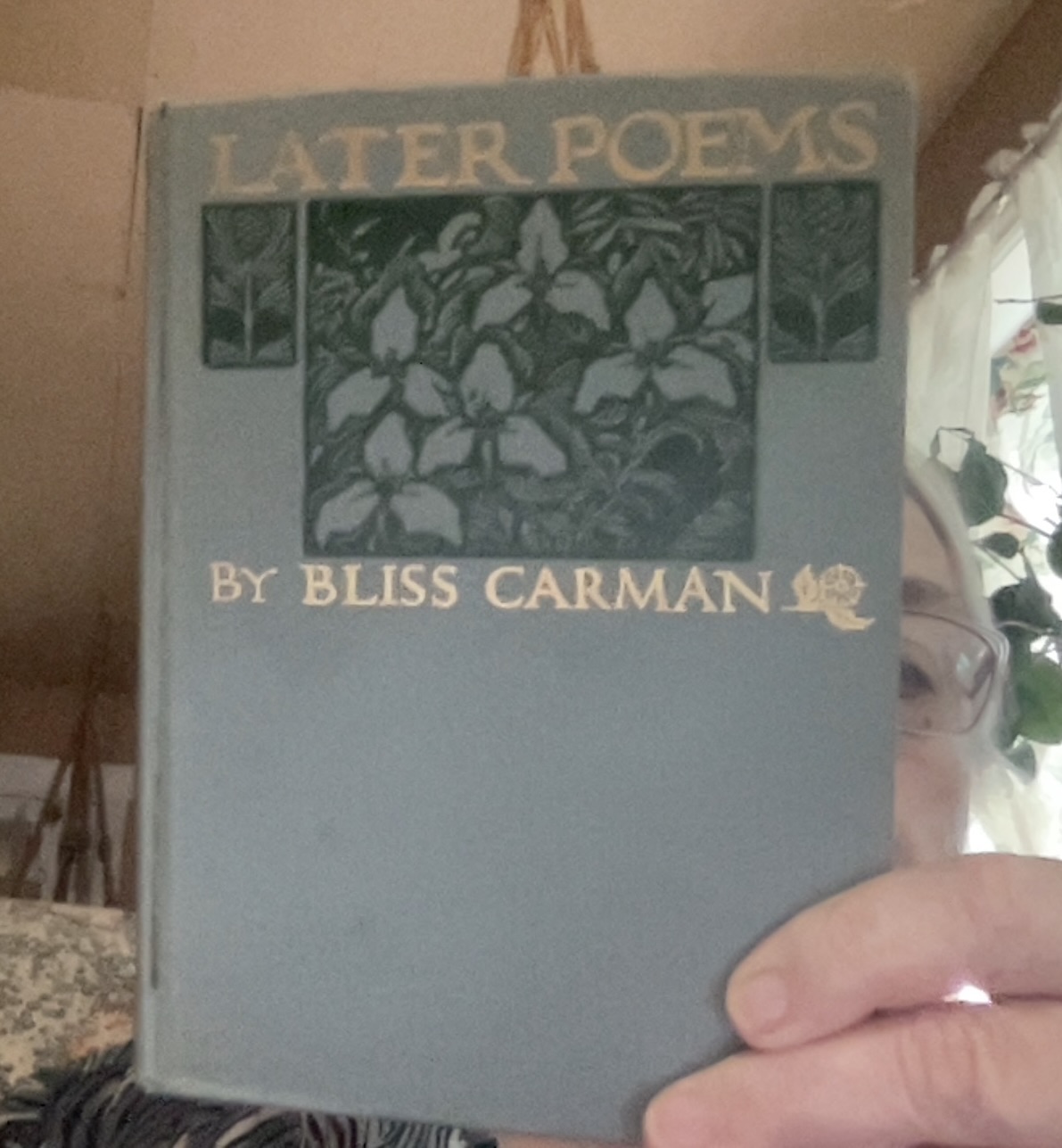
I will use one of my prized possessions to illustrate the power of glosses. This item is a book, a first edition, signed copy of Bliss Carman’s Later Poems, published in Toronto by McLelland & Stewart, 1921. Bliss Carman was a famous poet, born in Fredericton. The book Later Poems includes many poems I love, including ‘Vestigia’ which begins … ‘I searched for God and found him not…’ and goes on to say the poet finds God in many aspects of nature. I bought the book on-line for $80 some years ago. It is a ‘presentation copy’ and includes an inscription by Carman to friend, publisher and author, Irving Way.
~

~
Even better, my copy of Later Poems is glossed with pencil and points out some differences in this 1921 Edition from the 1922 American Edition (Small, Maynard and Company, Boston) and the 1926 Canadian Edition (McLelland & Stewart, Toronto). For example, my 1921 Edition is missing four lines from the end of the poem ‘Easter Eve.’ The lines are present in both 1922 and 1926 Editions. In another example, the glosses point out a duplication of two stanzas in the book: identical stanzas occur in ‘A Christmas Eve Choral’ and ‘The Sending of the Magi.’ The stanzas are entirely missing in the 1922 Edition and are included only in the poem ‘The Sending of the Magi’ in the 1926 Edition.
~

~
At first, I thought perhaps the book was a sort of ‘proof’ copy, and the glosses were Bliss Carman’s. But recently, I found a date in pencil in the same handwriting – 24 July 1932. The glosses were added by another person, not Bliss Carman who died in 1929, or Irving Way who died in 1931. The glosses were also added after the 1926 edition and so could not have been the impetus for changes in either of the other Editions.
~
So, who was the person who wrote in pencil in the book? An heir of Irving Way? An editor considering yet another Edition? Or simply a lover of poetry who did some research between Editions.
~
This is a first draft of part of my poem about the glosses in this book – this part of the poem explains why I love Bliss Carman’s work. One of the reasons – the writing group I meet each month (Wolf Tree Writers) has a member who is a distant cousin of Bliss Carman: Virginia Bliss Bjerkelund, author of Meadowlands- A Chronicle of the Scovil Family (Chapel Street Editions, 2020) and A Nurse for All Seasons (Chapel Street Editions, 2023); for a review of the book Meadowlands, click here.
~
My poem includes quotes from Bliss Carman’s Later Poems.
~
First Edition Glosses
~
1.
as she walked the forest edge
my mother quoted poets
William Cullen Bryant
‘Whither, ‘midst falling dew’
Bliss Carman
‘I took a day to search for God …’
~
at her funeral, knowing
she still ‘dwelt within my heart’
I read ‘Vestigia,’ by Carman
my poet of choice
~
I hear his voice
when purple lilacs ‘stir’
when I hear the wind
‘conversing with the leaves’
~
when I wander
in the meadow
chasing ‘stealthy shadows
of the summer clouds’
~
distant cousin brings his
charm and talent
to our writing group
when it meets each month
~
~
The poem goes on to talk about the other Editions, the glosses and how many hands have held the book before mine.
~
I am loving this Bookmark project. I am learning so many new things and I find the writing of ‘fact-filled’ poetry a bit of a challenge.
~
Enjoy your own reading and discoveries!
~
All my best,
Jane




 nichepoetryandprose