first draft
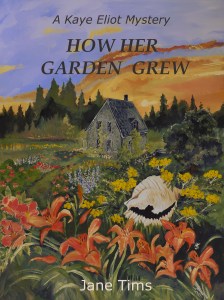
This past weekend, I finished the first draft of the third novel in the Kaye Eliot Mystery Series. This is my favorite part of the long process of working on a book.
~
I plan my novel to an extent. From the beginning, I knew the basic story: Kaye Eliot finds a packet of old postcards and is set on a search for a valuable stone. The idea for the story was sparked way back in 1989 when I first saw an abandoned stone house during field work in Nova Scotia. I also had most of my characters to work with: Kaye and her husband and two kids. And Daniel Cutter, a stonemason, a character introduced in Book Two of the series. To read Book Two (Something the Sundial Said), click here.
~


~
As I write, I let the characters and story take me where they want to go. Sometimes this takes me in unusual directions. Unless an idea is ridiculous, I usually run with it.
~
The props I encounter in the story have their own push and pull. The stone house, the postcards, a stone chimney, a set of architectural plans. When these objects are repeated in the story, they become symbols of ideas in the book.
~

~
The next stage in writing is the revision. This means reading the book, cover to cover, over and over. I will fix the misspellings and grammar, I add some description. I polish the dialogue. I adjust the story points. I fix the names of villages and bridges and social groups in the story. I do some research. Revision takes the bulk of the time devoted to writing the book, probably 80%. I do at least ten revision sweeps.
~
I love the first revision. Although I wrote the first draft, reading it for the first time, cover to cover, is like discovering a new book.
~

~
Next post, I will talk about choosing a title for the book, not as easy as it may seem.
~
All my best.
Please stay safe.
Jane
Pareidolia
pareidolia: the tendency to perceive a specific, often meaningful image in a random or ambiguous visual pattern
(Merriam-Webster Dictionary)
~
When you look at marble, or at clouds in the sky, or bubbles in a glass of milk, do you see faces? Can you see The Man in the Moon? Pareidolia refers to the seeing of human faces or other images where they don’t exist. Pareidolia is a normal human tendency.
~
I often see images in the marble patterns of our flooring. It can be quite entertaining. Mostly, I see animals. I think it is the biologist in me!
~

~

~
Perhaps aliens also have pareidolia. In my upcoming book Meniscus: The Knife, I devote a chapter to this phenomenon. On planet Meniscus, there is a dirth of paper. One of my early characters, Ning, made paper from plant fibres for her girlfriend Kathryn, an artist. By Meniscus: The Knife, Book 8 in the series, (spoiler alert) only three sheets of Ning’s paper remain. Don-est, the alien child, wants to draw, so Kathryn shows her how to draw on the marble walls of the dwellings in the Village.
~


~
Vicki sets her laundry
on the marble floor.
Tries to see
what Don’est is doing.
~
As her eyes adjust
to smoky light,
she sees markings on the walls.
Drawings of bug-eyed evernells
and fuzzy elginards.
A slear-snake
with myriad eyes.
A cardoth moon,
slim sickle
of glowing white
in marble green.
~
Don’est feels eyes on her.
Swivels her neck.
“What do you think
of my drawings?”
she says.
~
“What are you doing?”
says Vicki.
~
“I asked Kathryn for paper
but she has only a sheet or two
of the paper Ning made.
“So she showed me
an idea she had.
~
“The marble walls,
you see,
have hidden secrets.
Lines and shadows
look like evernells
and Humans and slear-snakes
and grammid trees.”
~
Vicki looks
at faint green lines on the walls.
Sees an old man in the pattern.
A thready waterfall.
A leaf-bare tree,
branches reaching for sky.
~
“But what are you using to draw?”
she says.
“
Eyebrow pencil.
Kathryn and Ning
found it on a transport
long ago.”
~
~
All my best,
staying at home,
drawing on the floors and walls,
Jane
spring flowers
Our dominant ground greenery at this time of year is from the leaves of lily-of-the-valley (Convalleria majalis). Like emerald flames they light up the yard. And now they are in bloom. The fragrance is amazing!

All my best
and please stay safe at home.
Jane

my COVID-19 kit
Since March 12, I have been almost nowhere. I am so careful, washing my hands until I have developed a thin outer layer of skin. I have stood six feet apart, even when no one else is there. I wore a mask when I went into the only store I’ve been inside in two months. My husband does the same. We quarantine every bit of mail coming into the house. I wipe down all our groceries. The grocery bags go into quarantine as well.
*
In spite of all these precautions, I worry. I am probably paranoid. The only thing that helps me be OK is my COVID-19 kit. Each morning and each night I pull it out. I take my temperature with my thermometer. 36.2 Whew! I lift my little bag of lavender to my nose. Sweet, potent, floral. Whew!
*

*
A high temperature and loss of the sense of smell are not the only symptoms of COVID-19. Our New Brunswick Department of Health lists the following:
fever above 38°C or signs of fever (such as chills);
a new cough or worsening chronic cough;
sore throat;
runny nose;
headache;
a new onset of fatigue;
a new onset of muscle pain;
diarrhea;
loss of sense of taste or loss of sense of smell; and
in children, purple markings on the fingers or toes.
*
Do you have a ritual that makes things seem OK? Even when they are not?
*
All my best,
staying at home,
Jane
my place, my niche
All of us, as we self-isolate and stay at home, have become more familiar with our own place or space. We also have become familiar with our ‘niche.’ It is also a sort of space, but is more about how we use that space.
~
My space, on the macro-scale, is in the Northern Hemisphere and the temperate zone. I love the four seasons: perhaps summer, with it’s high humidity, least of the four. I live in a rural area; the bird chorus I hear each morning is associated with mixed hardwood and softwood. For more information on our ‘grey woods’ click here.
~
Our house seemed big when we built it 40 years ago. Today it is considered modest with two floors, three bedrooms and a loft. As I grow older, arthritis means I hang out mostly on the main floor. But upstairs, the loft stores my genealogy interests and the library holds all my books. On the main floor is my computer, my bird watching corner, my sewing basket and my drawing and painting supplies. Often, my husband is there too. So you see, I have most of what it takes to make me happy.
~
My space is more and more often in cyberspace. These days my family and friends are mostly there, on Facebook and Messenger. Just today I had my first meeting on Zoom.
~
I spend about half of my day on the computer, in one phase or other of one of my writing projects. Last week our wifi went down for four days. Usually, I refer to the on-line dictionary or thesaurus about once every fifteen minutes. With the wifi down, I wondered for a moment what to do and then thought, “Thesaurus. Dictionary.” A little dusty but serviceable.
~
So what is not part of my niche?
Music. I have a piano which I can play. And a guitar. And I have a stack of discs and a way to play them. I also have a small selection of my favourite music in my iPad. I tell myself it would be good to include more music in my life, in my ‘niche.’ So far it is only a thought.
Exercise. I will start by saying I do about 30 minutes of yoga-like stretches every morning. Otherwise I would not be able to get out of bed. If you follow my blog you know I am also dedicated to my stationary cycle but, since the first of the year, it aggravates my knees and I have not been doing this with any regularity. I have plans to reincorporate exercise into my niche, but so far, it is also a thought.
~

~
Of course, the world is full of possibilities and I have many gaps in my space/niche. I have interests in coins, stamps, games, puzzles, calligraphy and so on. I have no interest in flying kites, cooking, speaking another language or clock-making. But perhaps, someday, one of these may insinuate itself into my niche. So much to include, so little time!
~
So, what is in your space? Your niche? What is not in your space/niche?
~
All my best,
staying at home, wearing my mask in public,
Jane
in these times
Someday, my memory of these days of pandemic will have faded. But there is value in lessons learned, so I will describe my experiences here.
~

~
My situation is that of a retired person, used to working on my writing at home and going out to do errands and some volunteer work. For my husband and I, staying home is not too different from normal life.
~

~
1. Food. Before the pandemic, we had already shifted to getting curb-side delivery of our groceries from the Atlantic Superstore. For that reason, no shift was needed. During this time, we make an order every two weeks, ordering early to get a convenient delivery time. My husband also goes to Sobeys once every two weeks for milk and a few needed items. Both stores have good distancing measures in place and the few substitutions any store has made have not been significant. As for take-out food, we have continued to order pizza and other take-out food as before.
~

~
2. Passing Time in Isolation. I am so lucky that my husband and I have been able to face this time together. I have not really been isolated, since there is always someone there to talk to. We do small household projects together, read a bit together in a mystery series we both enjoy, watch some TV and plan our meals.
I am a writer and my writing life is managed by working on several projects at once, each project in a different stage. I have been very productive in the last two months, completing drafts of three new poetry books, completing work on the next book in my science fiction series, and launching two books, one science fiction and one mystery. I have seen a little spike in readership in the last few weeks, as people turn to reading to pass time alone.
~

~
3. Contributing to Local Businesses. At the best of times, we are not big consumers. But during the pandemic, I have tried to support local businesses. I have bought plants for the growing season from Scotts, art supplies and toys from Endeavours and Think Play, fabric from Fabricville and so on. These businesses have gone above and beyond to give safe and friendly service. When parcels arrive, I put them in Quarantine for three days, to minimize any risk.
~

~
4. Getting Out and About. During the pandemic, we have taken short drives, to bird watch, check on our cabin (about 3/4 of an hour away) and deliver sold books. In a stroke of luck, I had ordered author copies of my four newest books before Amazon cut delivery service to Canada, so I have books to sell. I do what I call ‘drive-by-bookings,’ making arrangements with those who want to buy my books, hanging a bag of books on the door handle and leaving to maintain social distancing. I have also put copies of my books in some of the little free libraries in town.
~

~
5. Staying in Touch. I am so grateful to live in the age of the internet. I am able to keep in touch with family and friends by way of email, Facebook and my blog. My two writer’s groups have held their meetings on Facebook Messenger and I have taken a writing course twice a week on Facebook. I have family members not on social media and we have kept touch by way of telephone.
~

~
6. Staying Healthy. Our days are very routine. We focus on getting lots of sleep, keeping our intake of fruit and vegetables high, keeping in touch with our physician and diabetic health care folk. As usual, I fall short on exercise. I have mobility problems and always do a half hour program of stretches each morning. Other than that, my success in the area of exercise is rather pitiful. I say I will do better.
~

~
7. Adaption to new standards. We are lucky in New Brunswick where I live. We have had few cases, have no new cases (according to testing) and no deaths from COVID- 19. We are in the Yellow Phase of our re-opening plan which means most business can open with social-distancing and other measures in place.
Social distancing is hard. Not because I am a huggy sort of person, but because I find confronting people difficult. If someone is getting too close, I find it hard to confront, to say back off, even in a nice way. So when the delivery fellow comes to the door and tries to pass me a box, I take it, getting nearer than I should.
As our province tries to return to ‘normal’, I know mask-wearing will become part of our culture. So I dusted off my sewing machine and scanned the many videos showing mask-making. By the end of making ten washable masks, I could do them with my eyes shut, but my back hurt and I think I sewed through my finger at least once.
~

~
The other day, as I went through some poems I have written, I came across one about getting the H1N1 vaccine. I have almost no memory of that time in my life. Of course, our lives were not affected in quite the same way. Perhaps I will look back on the time of COVID-19 and know some things changed for the better.
~
All my best.
Stay safe. Wash your hands. Stay home as much as possible.
Find a safe way to talk to and be with those you love.
Jane
bird songs in the grey wood
Today I sat on the back deck and listened to the birds. I can’t stay for long because our robin who has returned for year three gets upset with me. The photo below was taken in 2018, but taking a new photo just gets the robin very agitated.
~

So, here is the list for today:
mourning doves – hooo hooo
northern parkland last – whirrrrr-zip!
robin – cheer cheer cheery weee
ovenbird – t-cheer, t- cheer, t-cheer
hairy woodpecker – pit, pit, pit … this fellow has been beating on the metal flashing of our roof daily. This morning he began at 5:30. Just before sun-up. I took the photo below in 2017.


All the best to you,
staying home and
in my two household bubble.
Jane
next book in the Meniscus Series: the Gel-head dictionary
From the beginning, I have included an alien language dictionary at the end of my science fiction books. Gel-speak is the common language on the planet Meniscus. Many of my Human characters speak a little Gel-speak; the genetically-altered Humans, the Slain, speak it fluently. In each book, there are lines of Gel-speak, usually translated, occasionally not.
~


The Gel-speak language originates with the Gel-heads, the most maligned of the aliens on Meniscus. The intelligent Dock-winders also have a language but it is not spoken in the presence of other species.
~
By the eighth book, I have added to the dictionary until there are 170 words.
~
The Gel-speak language has a grammar, or set of rules governing the words and their order. There are verbs and nouns, articles and adjectives. The Gel-speak language includes many of the same sounds as English and includes a ‘click’ at the end of certain words. Any linguists among you are now laughing.
–


~
So, with the dictionary, you can count in Gel-speak to five:
u-hath – one
ull – two
undel – three
urth – four
v-hath – five
~
Gel-speak words have ‘roots’ and build on one-another. For example, here are words associated with the female gender:
ora – light
ora-nee – home
ora-nell – female
ora-nell-elan – mother
~
or, with the idea of sharing a hearth:
parelan – family
parennel – friend
pargath – hearth
~
OK linguists, you can stop laughing now. This is fiction, after all.
~
Want a look at the entire dictionary? Have a look at the books in the Meniscus Series, beginning here.
~

~
All my best,
staying home (ora-nee),
and staying in my two-family (ull-paralan) bubble,
Jane
next book in the Meniscus Series: the illustrations
For the last two days, I have been in a drawing mood. Not many authors illustrate their books (not including those who work on graphic novels), but I love this part of the process.
~


~
I have had lots of discussions with readers about the right and wrong of illustrating. Some think it takes away from the reader’s wonderful ability to imagine characters and scenes. Others think the illustrations take a reader deeper into the author’s intentions. As an author, I think drawings help get my ideas across. Since my books are told as narrative poetry, my words tend to be vary spare and I think of the drawings as extensions of the narrative.
~
I include two types of drawings in my books: portraits of the characters and sketches of the action.
~
The portraits are useful to me as a writer. They help fix the character’s face so the image does not migrate from book to book. I am really proud of the portraits and looking at them inspires my writing.
~


~
I am also proud of some of my drawings of scenes from my books. When the drawing is close to the idea I want to portray, sometimes it suggests new details in the text. Some drawings are not so good but I rarely re-draw. Instead, I think of these as representative of the weirdness of planet Meniscus. It reminds me of a line from my favorite TV show Lost. Daniel Faraday, on his first visit to the island says,
The light… it’s strange out here, isn’t it? It’s kind of like, it doesn’t, it doesn’t scatter quite right.”
On Meniscus, the pencil doesn’t behave quite right.
~


~
In every book, there are 23 +/- 4 drawings. Some are portraits or repeats of earlier scenes. Today, I did two drawings, both unique to Meniscus: The Knife.
~
All my best,
staying home
and staying in my two-family bubble,
Jane