what is a ‘Meniscus Peripheral?’
On the cover of each of my new Urban Mystery novellas is the subtitle ‘A Meniscus Peripheral.’ What is this strange thing? Some new treatment for failing knees? A more accurate way to read your measuring cup?
~
~
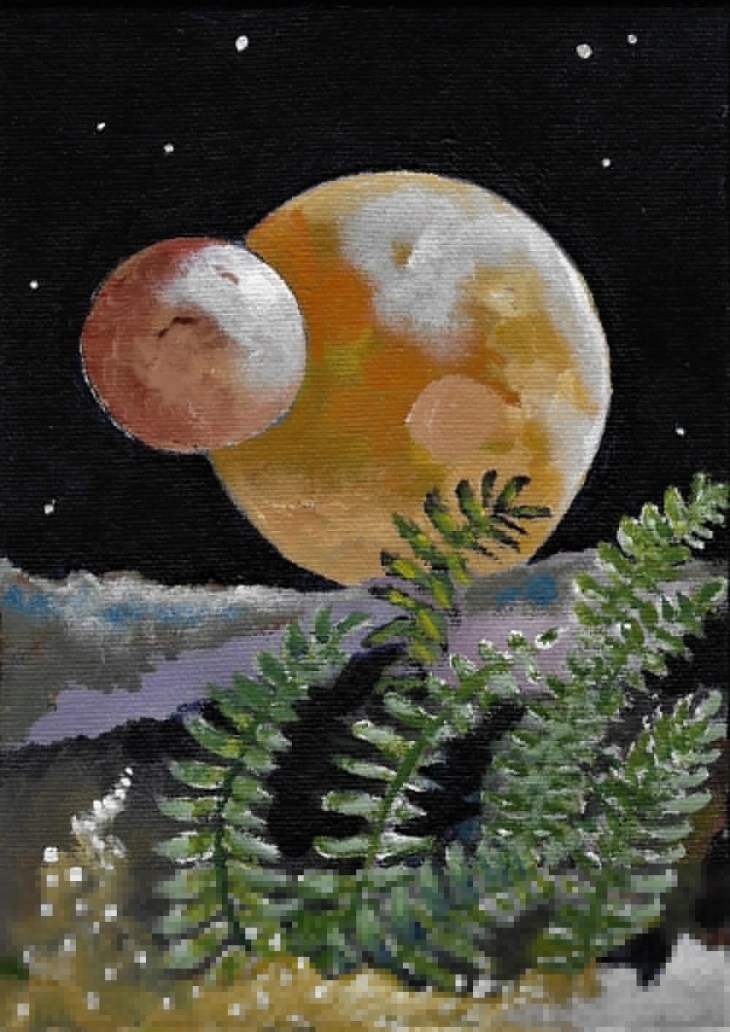
No. A ‘Meniscus Peripheral’ connects each of my Urban Mysteries with another series I write, the Meniscus Science Fiction Series. The science fiction series tells the story of Humans who have been kidnapped and taken, against their will, to the planet Meniscus, somewhere out in the Galaxy.
~
The novellas in the Urban Mystery Series (Office Green, City Grotesque, Roundabout, and Hollow Hotel) are written in the same universe as the Meniscus Science Fiction Series.
~


~
In the Meniscus series, the aliens of planet Meniscus, the Dock-winders and Gel-heads, visit Earth seven times (in 1982, 1988, 1995, 2008, 2013, 2020, and 2023), harvesting Humans for transport to their planet and to a life of enslavement.
~
Some of these Humans escape to the wilds of Meniscus, sharing adventures and building new Human communities.
~
Look for titles in the Meniscus Science Series, starting with Meniscus: Crossing the Churn.
~

~
In A Meniscus Peripheral, the world of Meniscus and the associated alien abductions are always mentioned, but not explained. Each of the abducted Humans mentioned in the novella are living on Meniscus, alive and well.
~
For example, in Roundabout, the story begins with a car, deserted in the middle of a traffic circle. The owner of the car is identified as Mary Fitzgerald, a twenty-year-old student of the Community College, studying Information Technology. No one ever sees Mary Fitzgerald again. But…
~
On Meniscus there is a character named Aagle, also known as ‘The Stone.’ She is a formidable member of the Blood-Let resistance movement. She was abducted from Earth in 2020 as she was driving around the Victoria Circle in Fredericton!
~
~
Reading the two series together will reveal more about the backgrounds of some of the characters on planet Meniscus.
~
Both series of my books are available at ‘Dog Eared Books‘ in Oromocto and, soon, at ‘2nd Story‘ in Harvey. Drop in sometime to enjoy browsing through these great local book stores! Reading is so much fun!!!!
~
All my best,
Jane (a.k.a. Alexandra)
Hollow Hotel – a new Urban Mystery
This week is the release of book 4 in my Urban Mystery Series: Hollow Hotel. There are three previous titles in the Series: Office Green, City Grotesque, and Roundabout. These are novellas, each a quick read and packed with adventure and mystery.
~
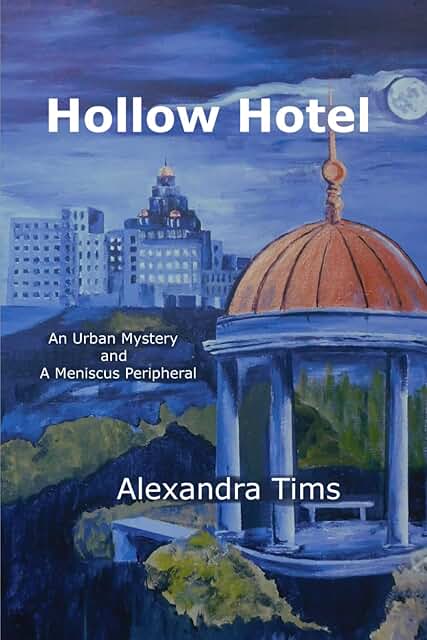
Set in Saint John, New Brunswick, Hollow Hotel features three young climbers who attempt to scale the exterior of the old Saint John Hospital (now demolished). They get into all sorts of trouble: with the climb itself, and with a group of thugs who have taken up residence in the abandoned building. After a brutal fall from the dome of the hospital, one of the climbers must team up with a homeless woman to save her friends.
~
~
The book is available through Amazon Canada, or Dog Eared Books in Oromocto.
~
All my best,
Alexandra Tims
(a.k.a. Jane)
eulogy for a covered bridge
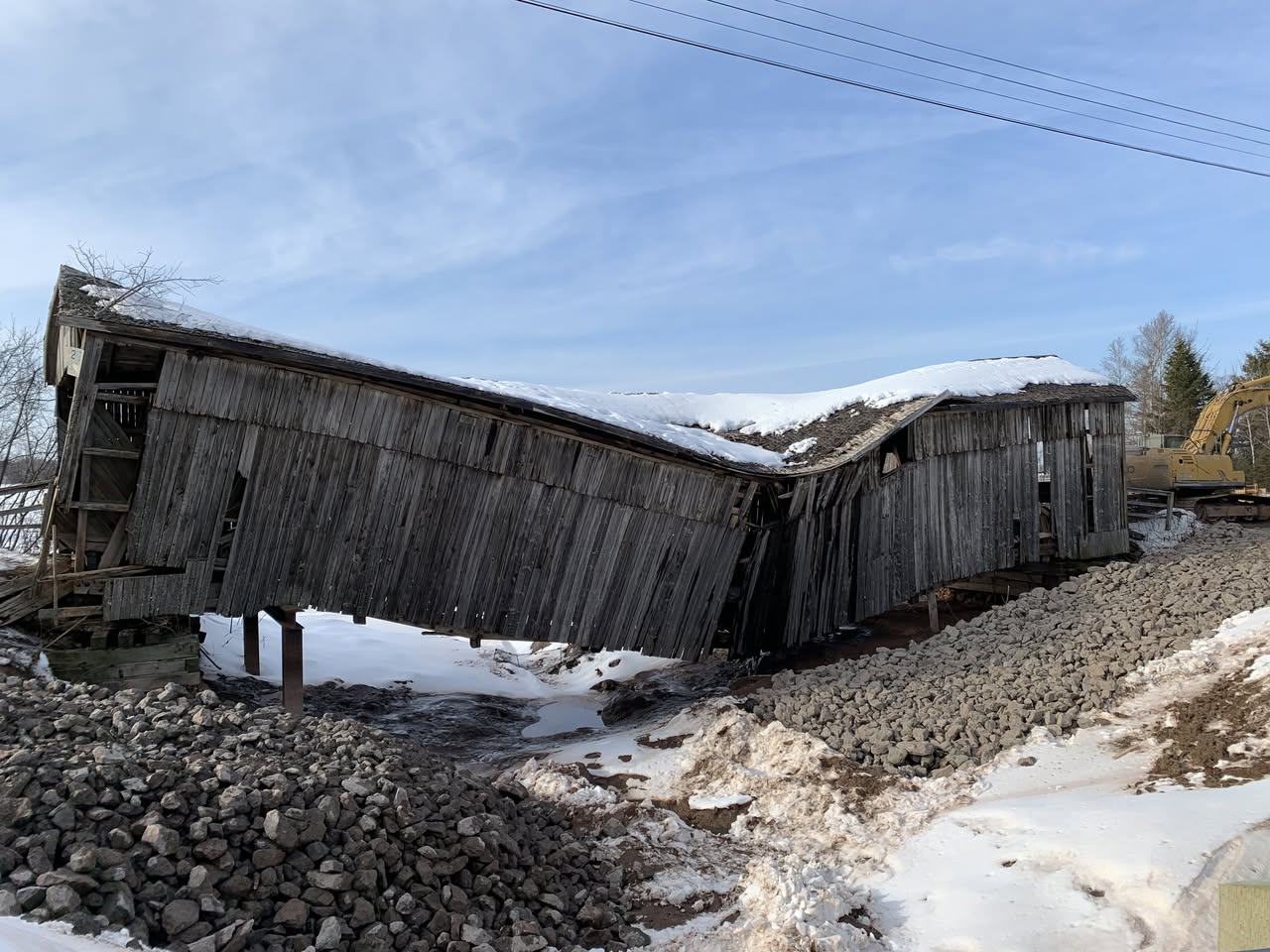
This past week, New Brunswick lost another covered bridge: the William Mitton Covered Bridge in Riverview. Ray Boucher, Chairman of the Covered Bridges Conservation Association of New Brunswick, suggested I write a poem. Of the 340 covered bridges in the province in the 1950s, only 58 remain.
~
sorrow
William Mitton Bridge
1942 – 2025
“…because I’ve seen it die.”
- Ray Boucher
advocate for covered bridges
in New Brunswick
~
crosses the river
for the last time
its reflection brief
in the brown stream
tributary of Turtle Creek
~
mud banks carved and sculpted
a waterbird, neck broken, a mangle
rubble of broken beams and boards
weakened burr trusses, punky beams
broken boards, holes for sunlight
to drill through
~
initials scratched and scrawled
on greying surfaces, overcome
with lichen, moss and mildew
inscriptions at weddings
graduations, tourists
school photos
~
its twenty-three metres
or more, once crossed
an Acadian river
Sainte-Marie-de-Kent
~
in myth, the ‘travelling bridge’
floated down the river
~
in fact, removed, by a resourceful
farmer, William Mitton
~
purchased the bridge
took it down, plank by plank
moved, rebuilt in 1942, to connect
his farm to Coverdale Road, his name
became the name of the bridge
~
a place to play
between rafters
thump and climb
chase echoes
a place to relax
watch the river
between gaps
in wall boards
~
spring floods
and abutments reel
snow loads break its back
echoes fail beneath snap
and sag of weakened boards
~
an excavator, a high hoe
a crane, lifts its rigid neck
takes the Mitton Covered Bridge
apart, one wood fibre
at a time
~
All my best
Jane Tims
going round and round!
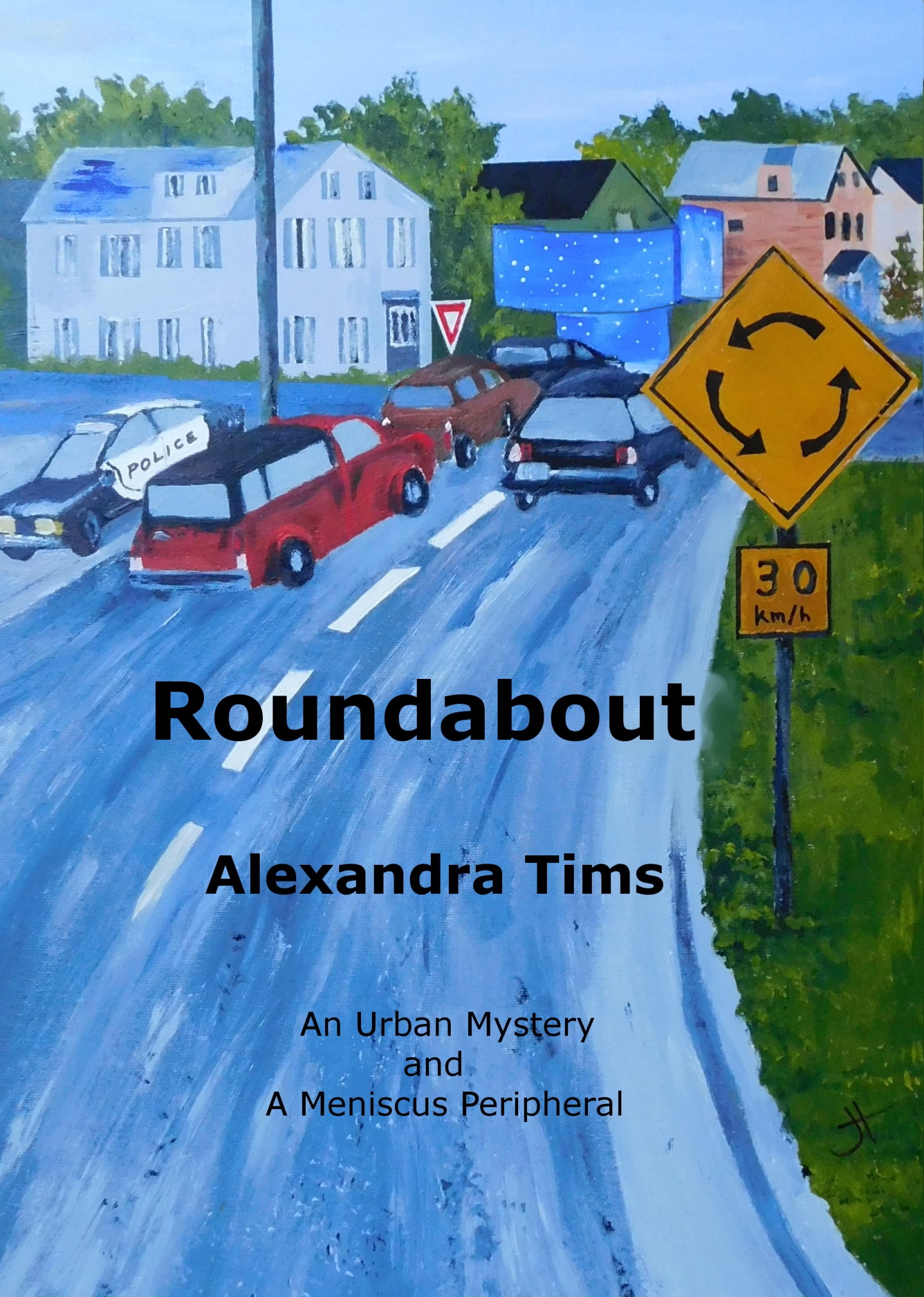
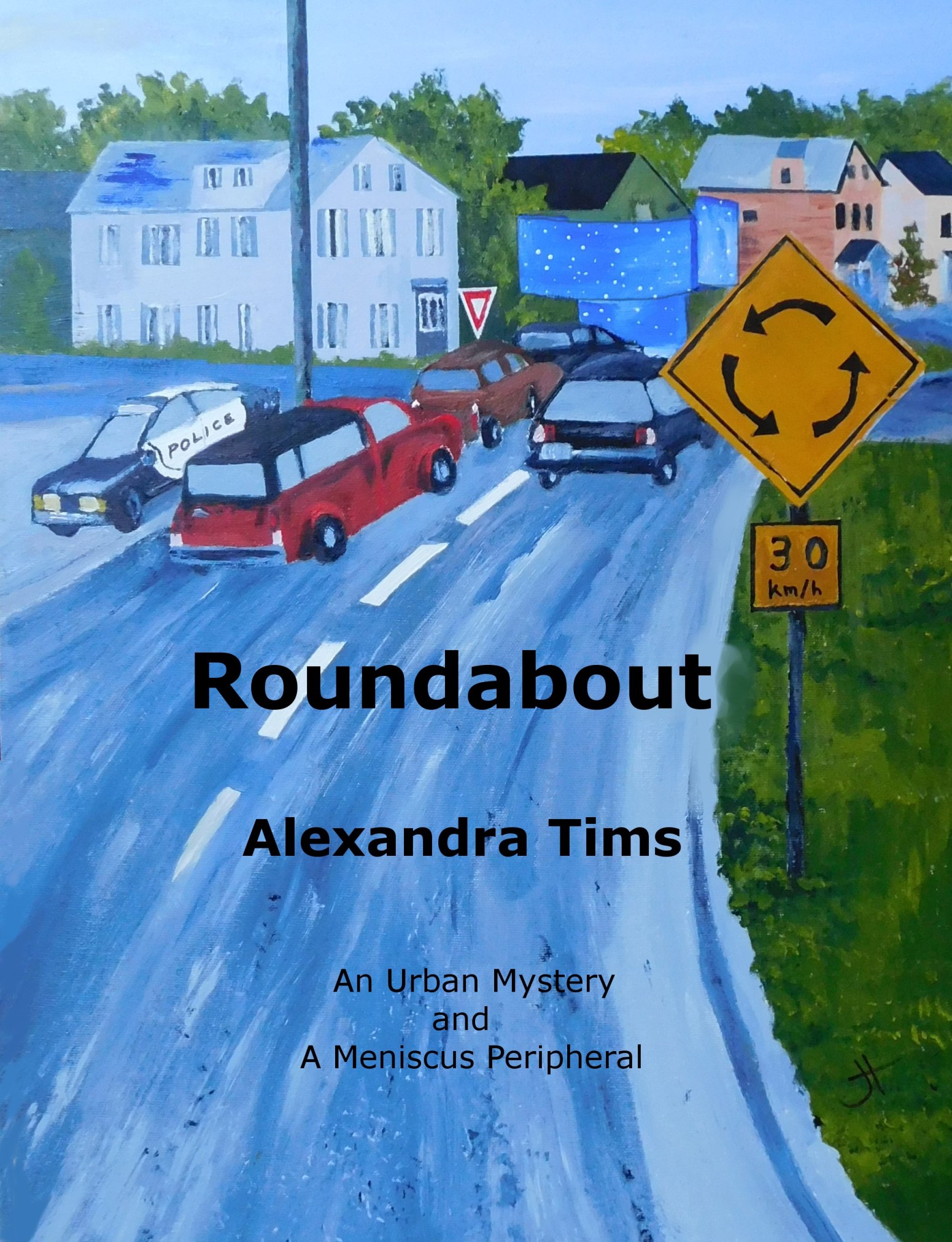
The third book in my Urban Mystery Series, ‘Roundabout,’ is set in Fredericton, New Brunswick. In the last fifteen years, we have been introduced gradually to the idea of the traffic circle, also known as the roundabout. As of this year, there are nine larger roundabouts and a few smaller ‘chicanes,’ to calm traffic. In general, this form of traffic control is more economical than traffic lights and safer in terms of numbers of accidents.
~
~
In my book, ‘Roundabout,‘ an artist sets out to capture the business of a city as expressed in the daily traffic of the Victoria Circle roundabout. Various events in the city are exemplified by her observations: for example, the numbers of tractors and work trucks indicate increased construction activity. The artist realizes there are patterns to the traffic and one of those patterns may indicate nefarious activity.
~

~
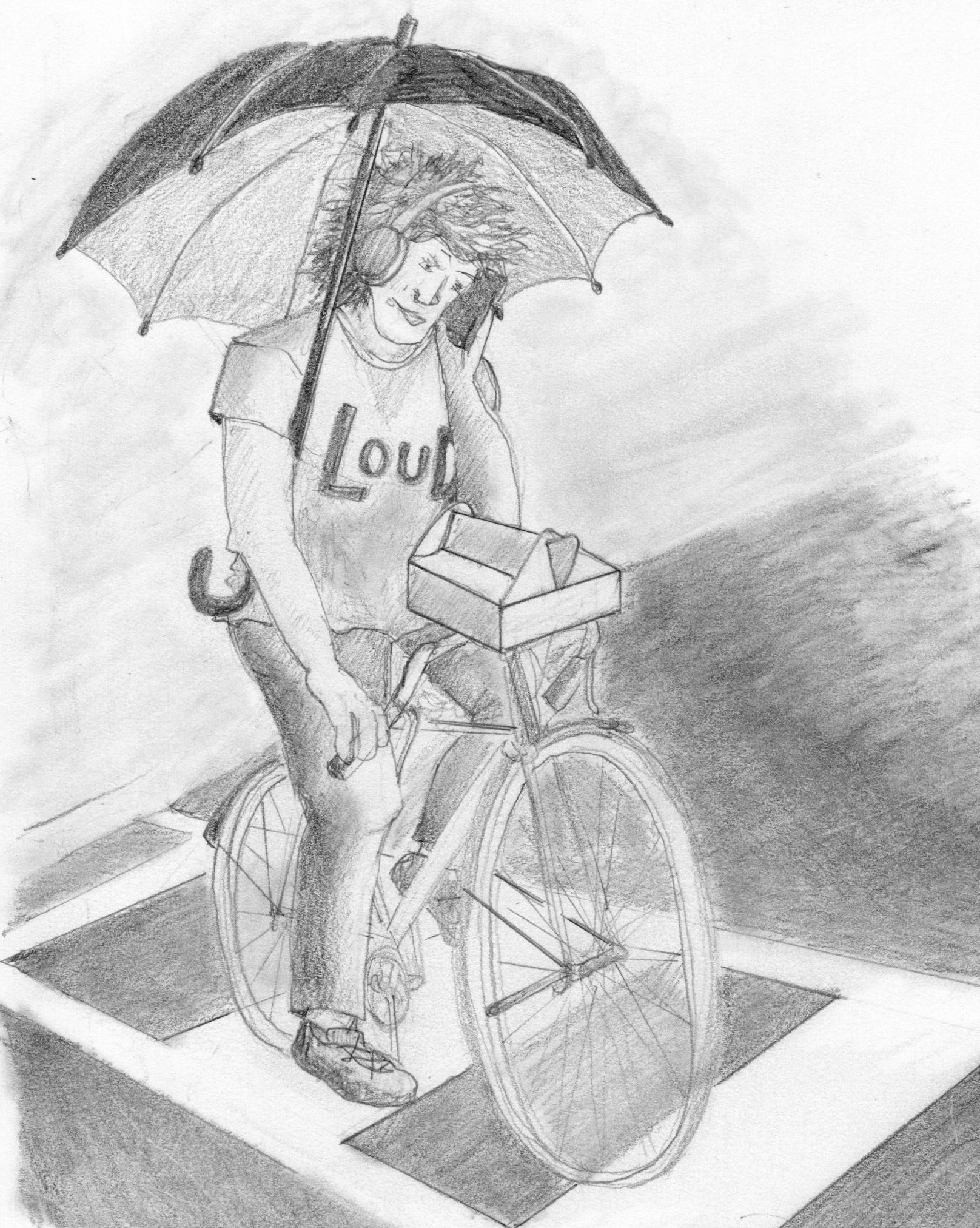
Doing research for this book was lots of fun. My husband and I parked down by the Victoria Circle and took note of the number and types of vehicles, the interactions of pedestrians and traffic, and the way people approach and use the roundabout. One cyclist, a multitasker, made it into the book in words and a drawing.
~
~
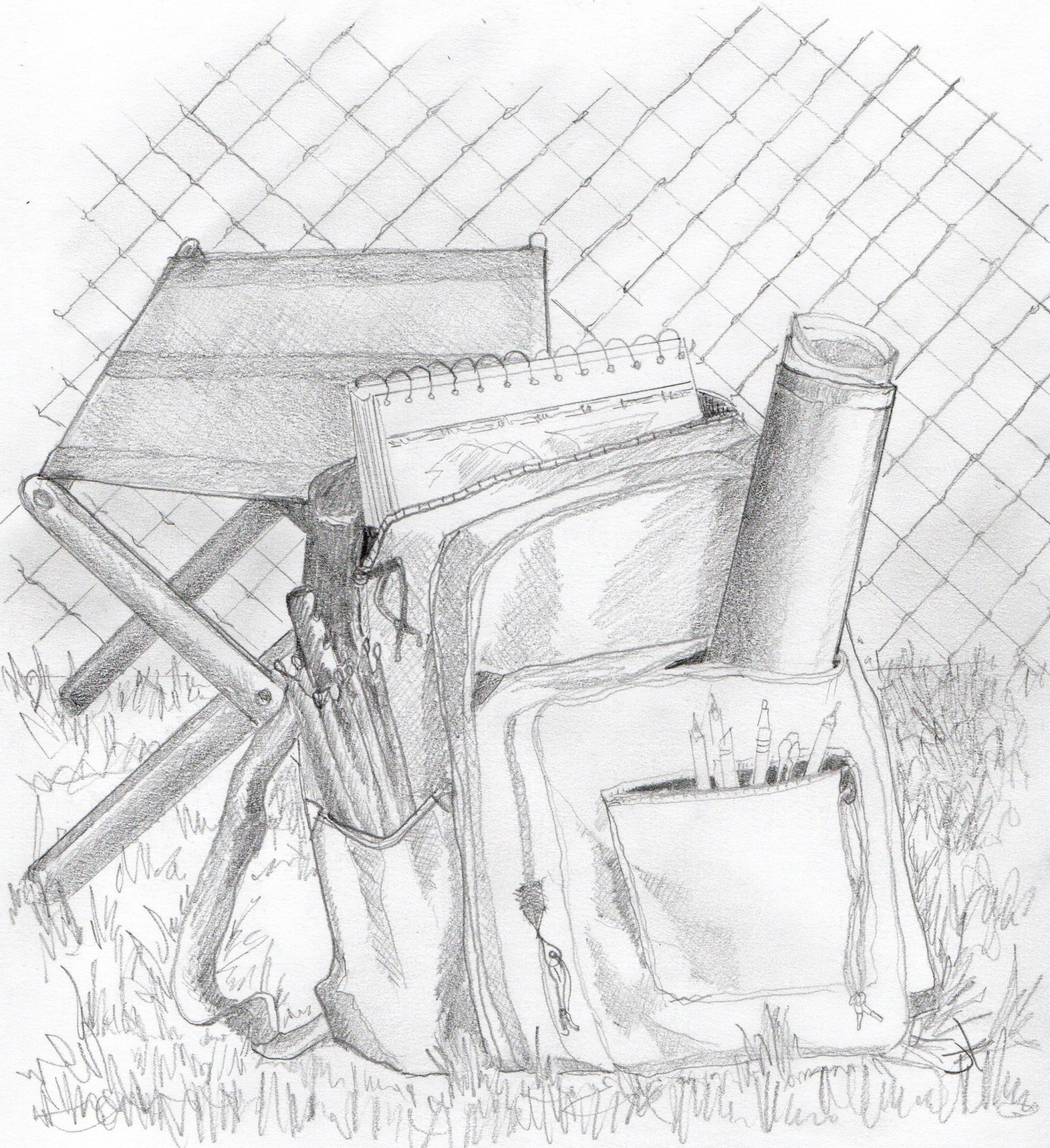
I hope you enjoy this book. The book is illustrated and includes a map of Victoria Circle. Traffic circles are almost everywhere; my interest in traffic circles began long ago when I used the Armdale Rotary in Halifax regularly. If you live in the Fredericton area, you will recognize a little of the city’s history and demographics. If you live elsewhere, I hope I will show you some of the interesting features of our beautiful city.
~
~
‘Roundabout’ is available in Dog Eared Books in Oromocto, or, to order, just click here.
~
All my best,
Jane (a.k.a. Alexandra)
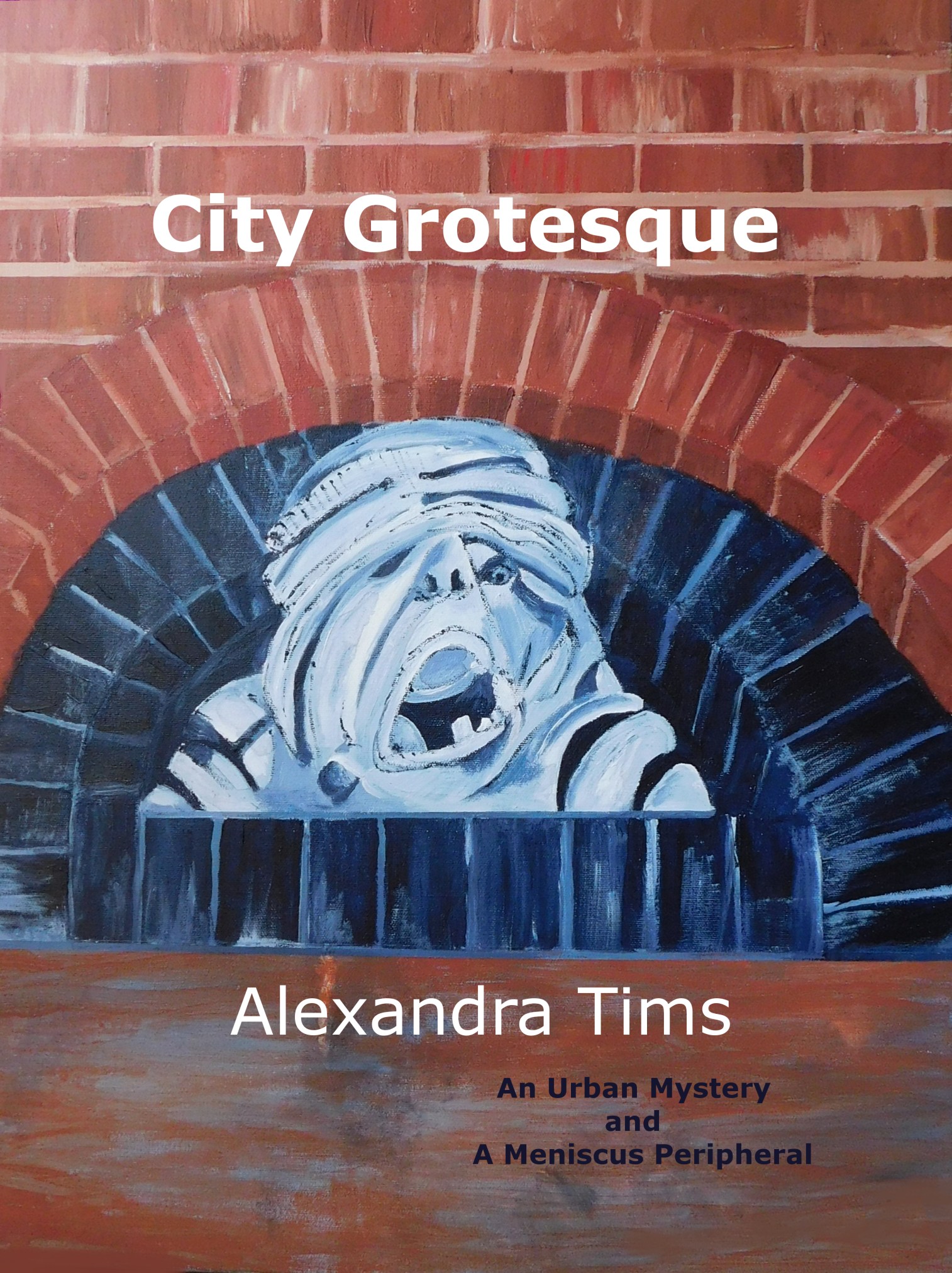
City Grotesque: what is a ‘grotesque?’
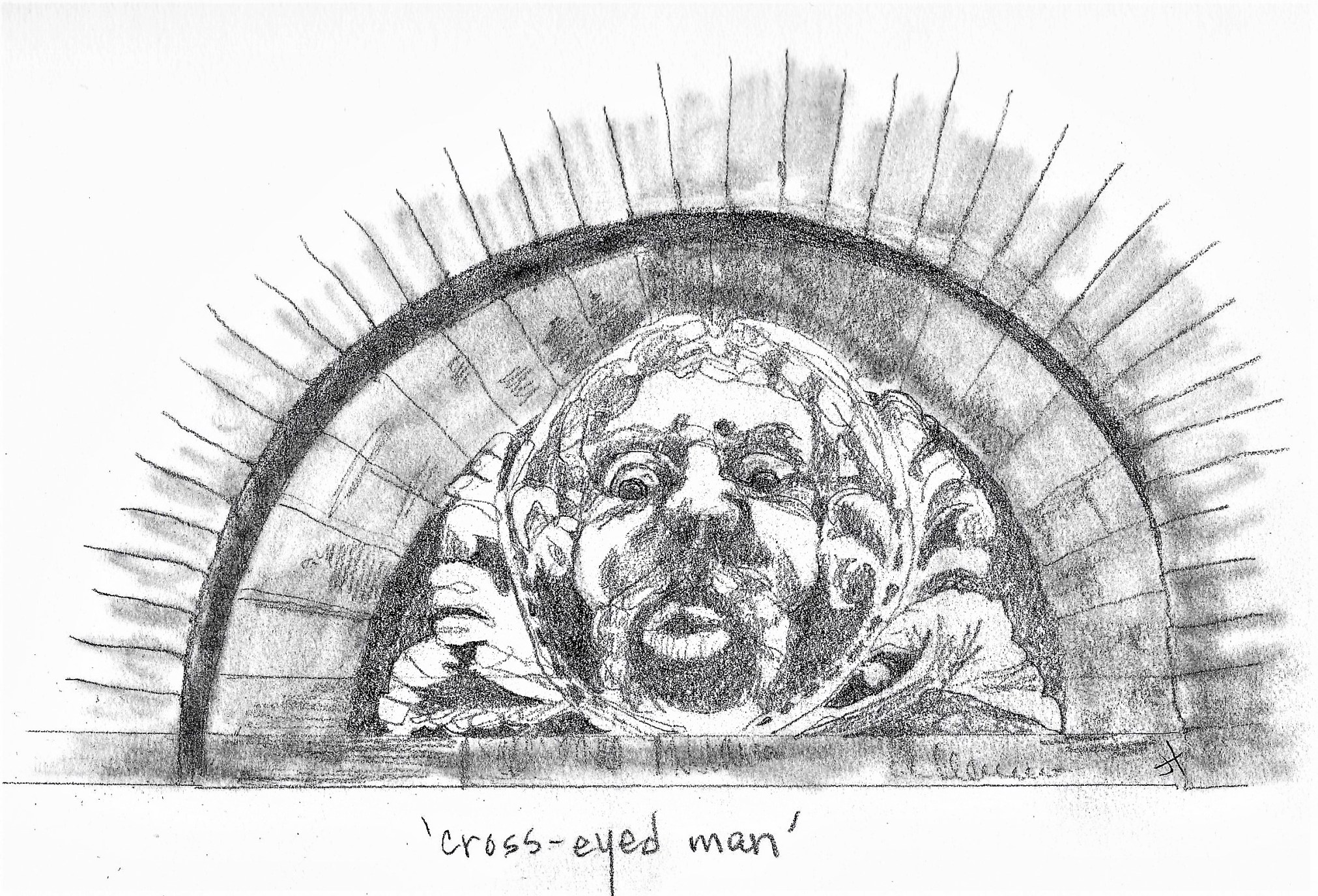
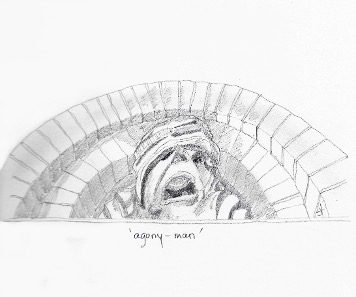
A grotesque is a type of architectural sculpture that represents a fantastical or mythical figure. A gargoyle is a type of grotesque directing and carrying water from a roof or other surface.
~
~
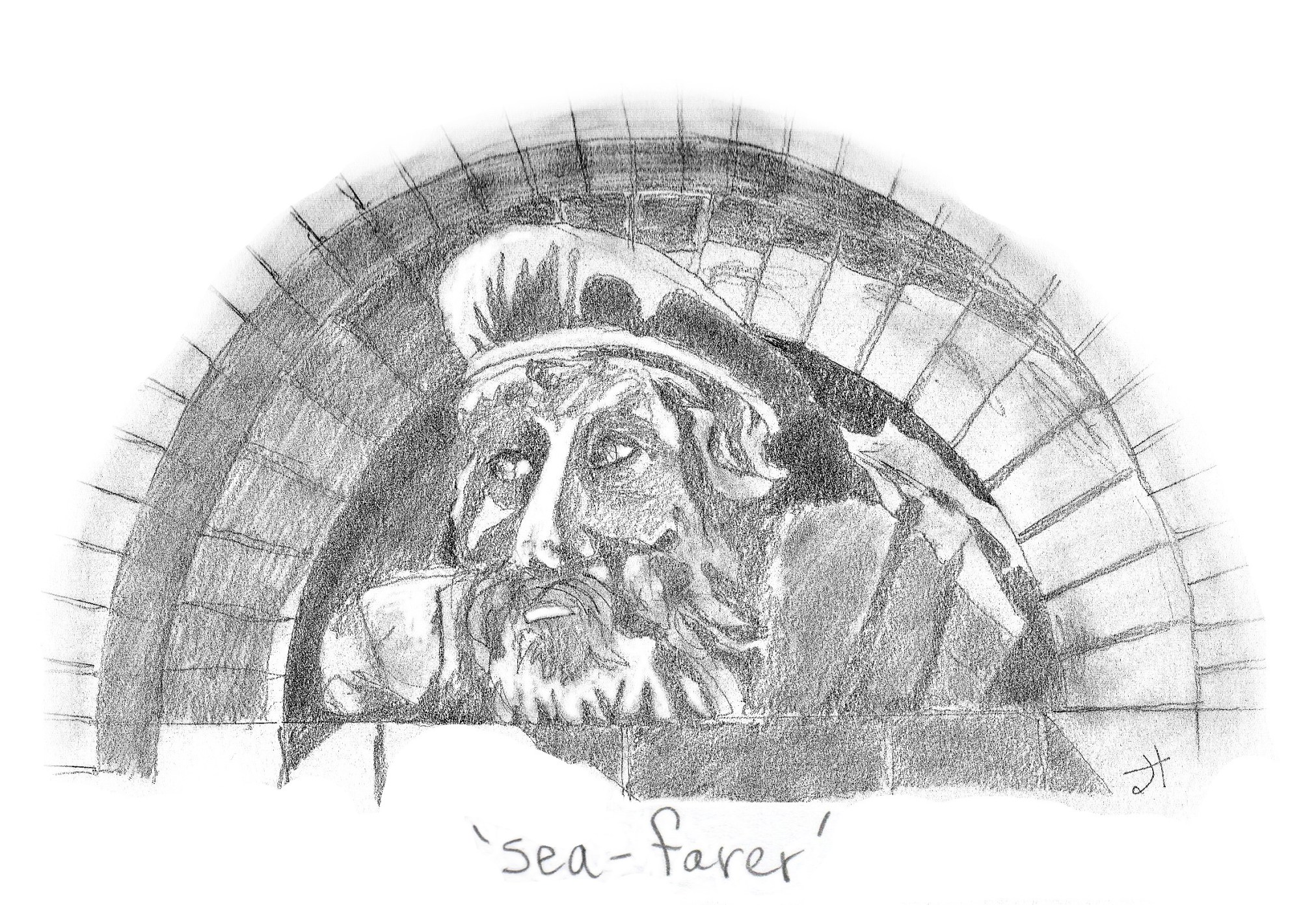
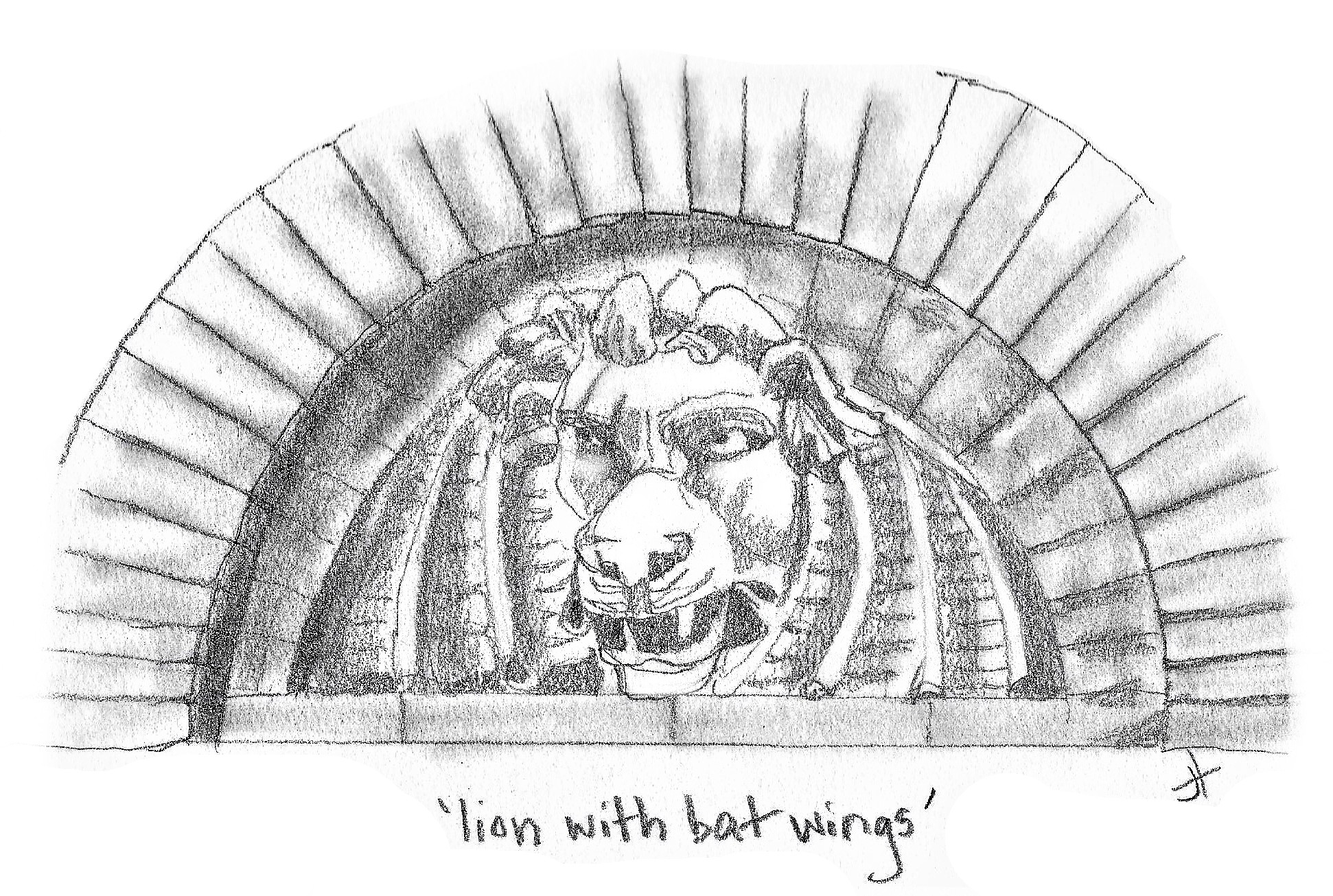
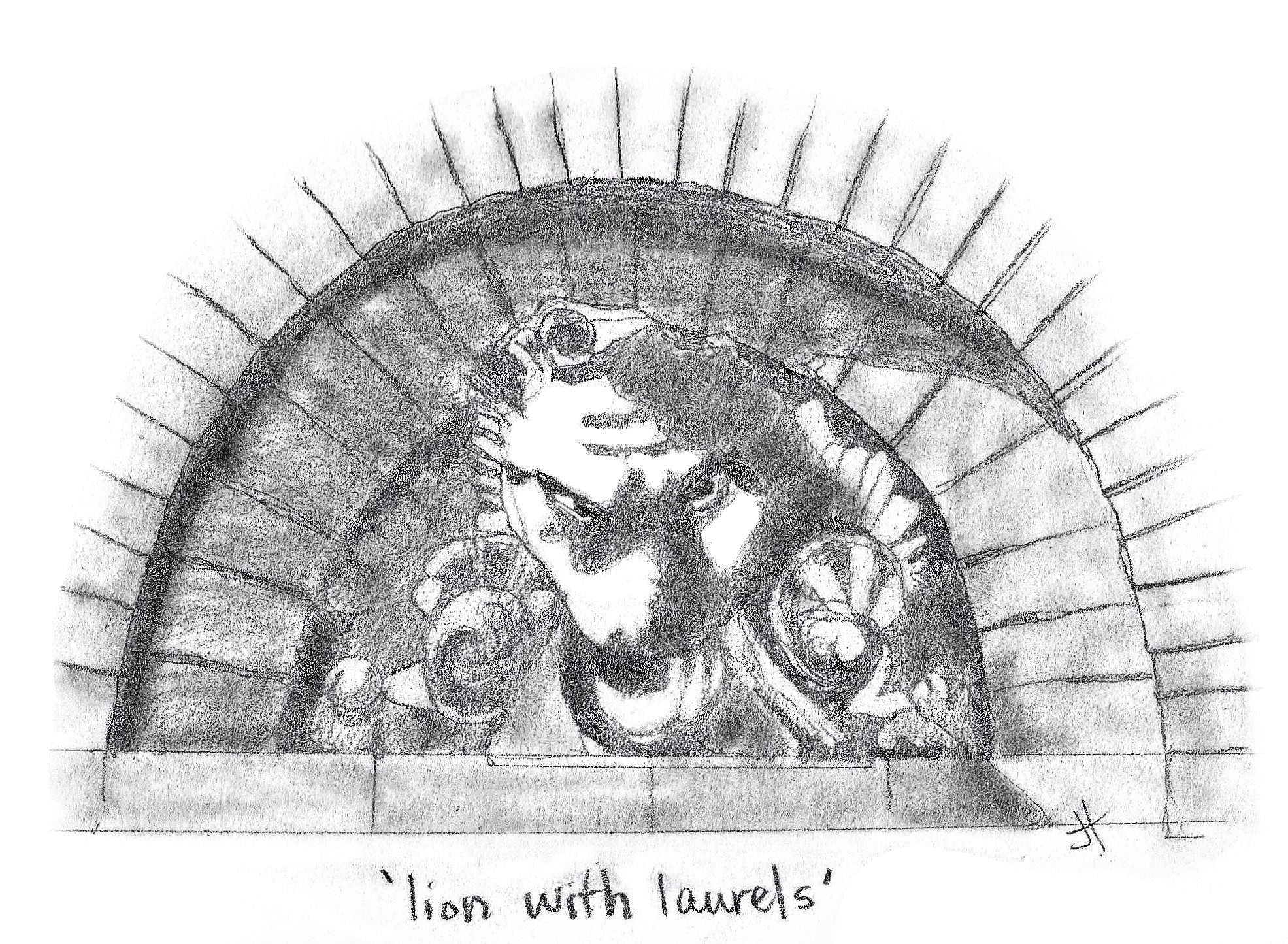
At the Chubb’s Corner Building in Saint John, New Brunswick, there are 16 sculptural grotesques above the third floor windows. Although a couple of them seem to represent actual people who lived in Saint John in 1878 (when the building was constructed), most are strange, unknown figures.
~


~
In my book, ‘City Grotesque,’ a contest is held to find modern look-alikes for the sixteen grotesques. The protagonist, a young artist working in the City, tries to find some of the grotesques with unfortunate consequences.
~
~
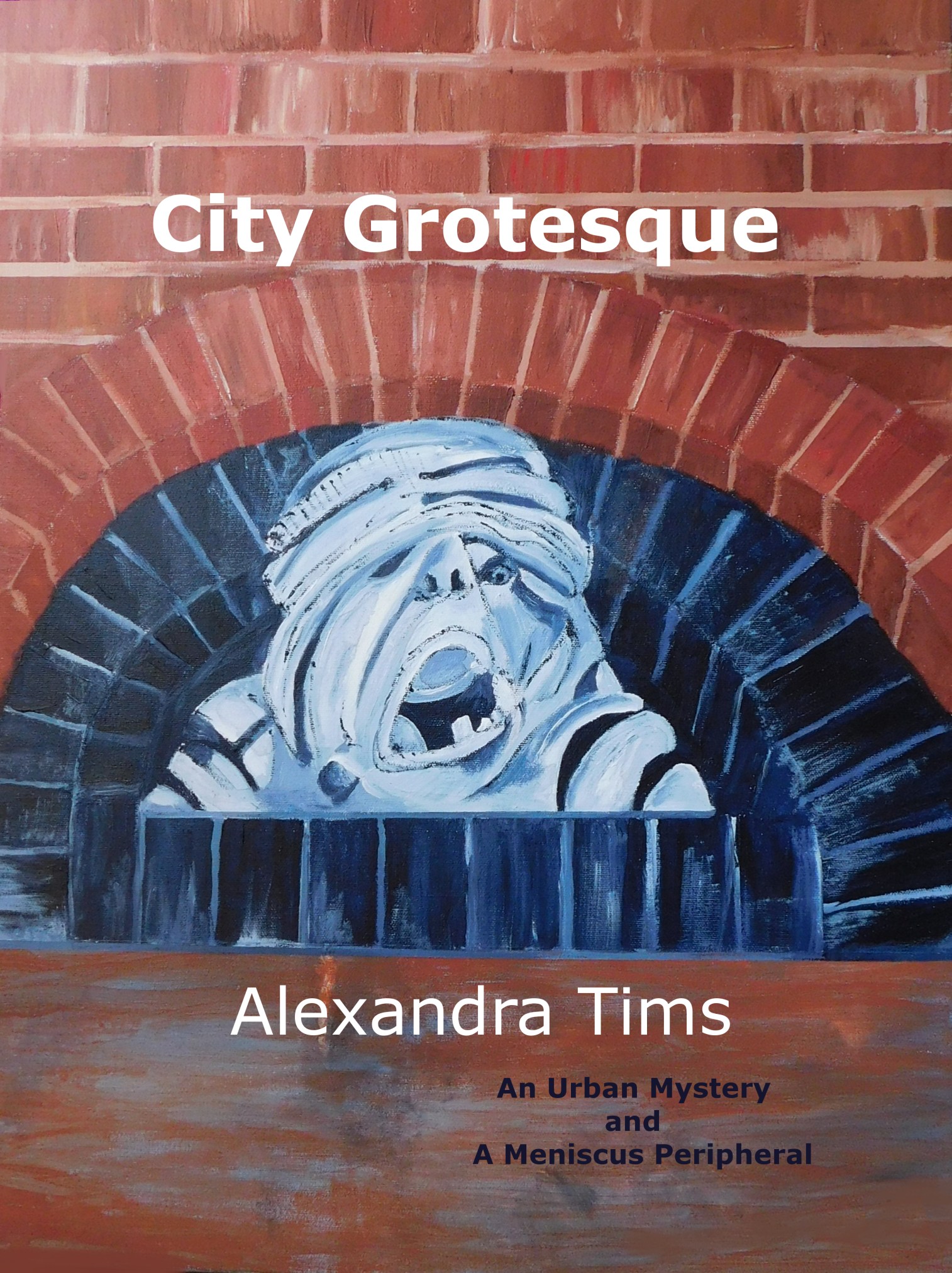
This story is one of three Urban Mysteries I have written. To get a copy of ‘City Grotesque,’ visit Dog Eared Books in Oromocto or order from Amazon.ca by clicking here.
~
~
I hope you enjoy learning more about some of the grotesques in the city of Saint John. For more information on the interesting uptown architecture, click here.
~

~
All my best,
Jane (a.k.a. Alexandra)
Office Green: a new urban mystery
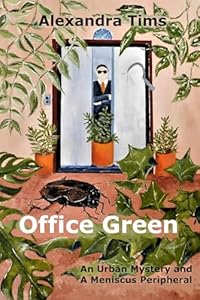
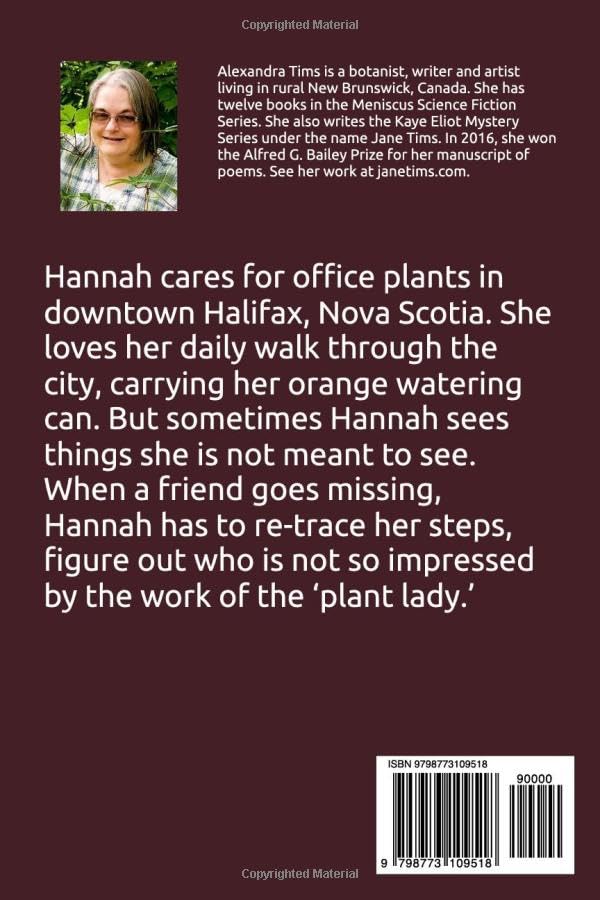
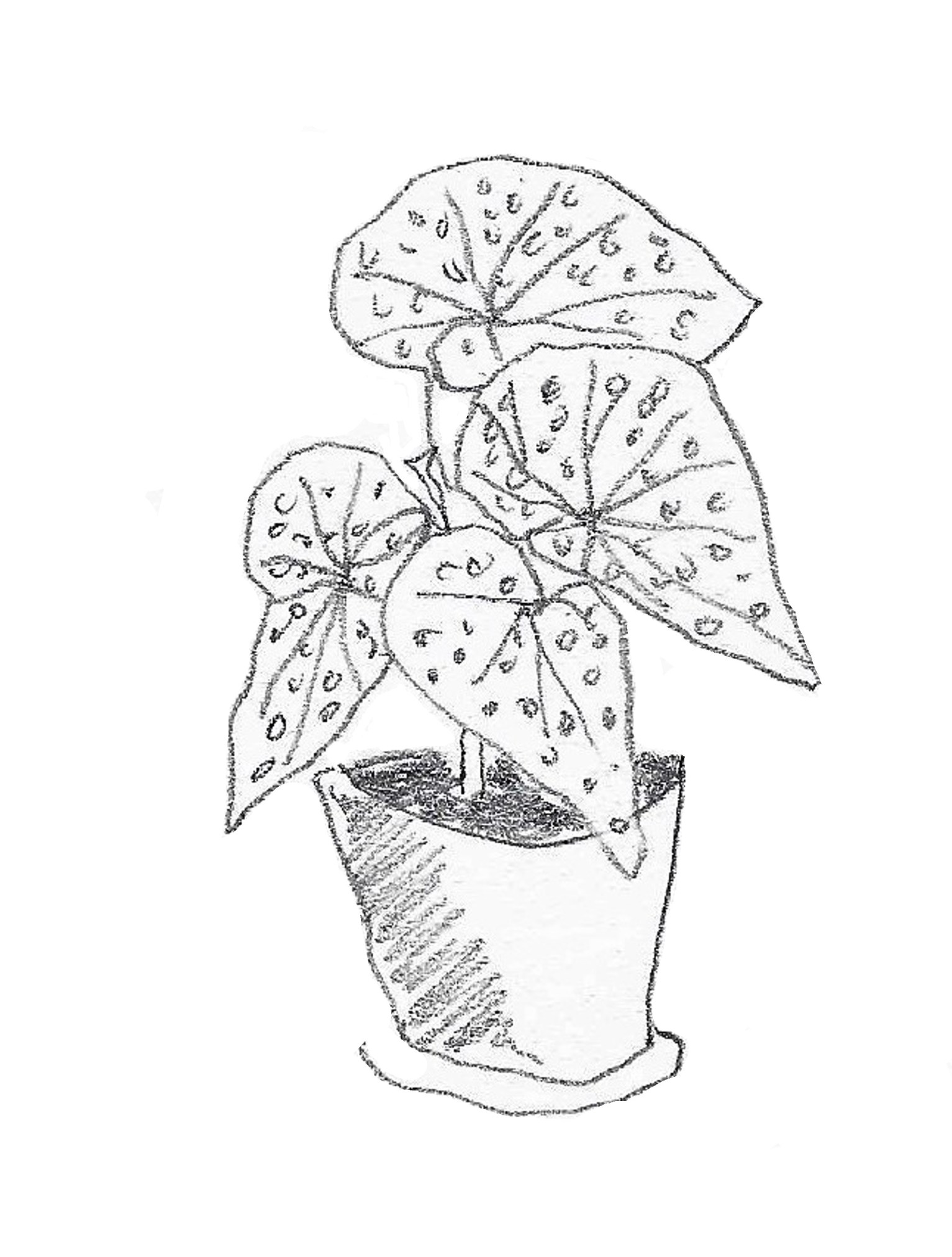
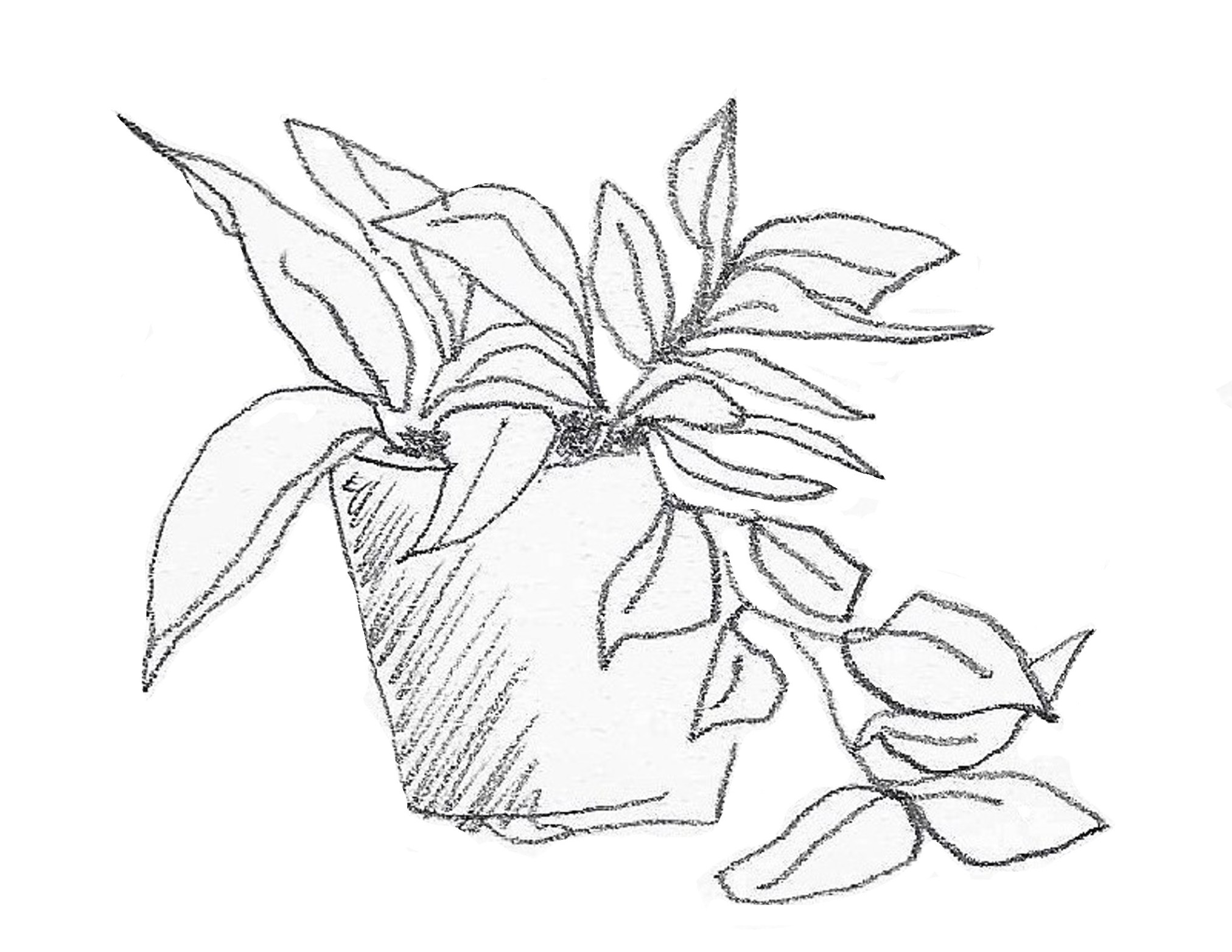
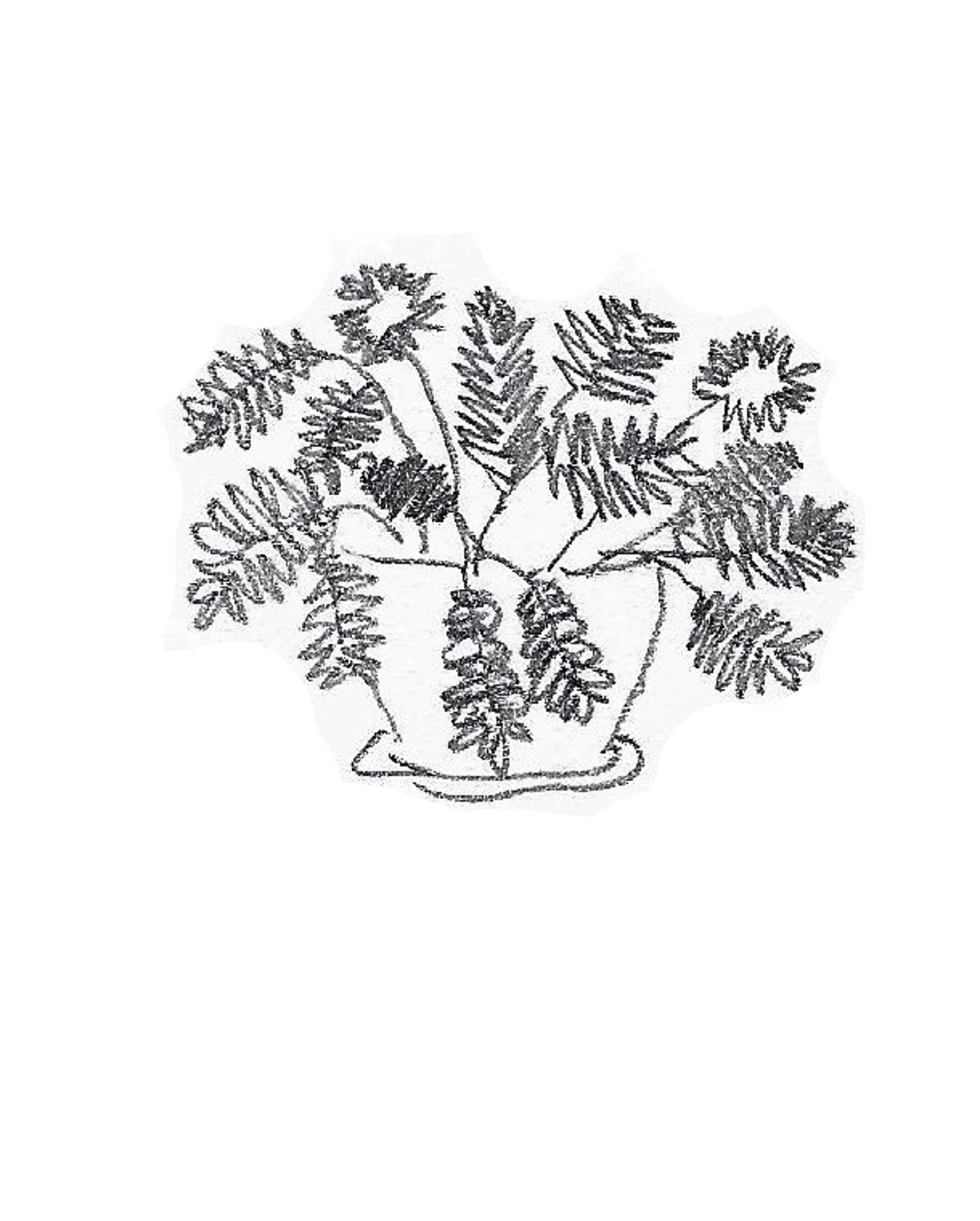
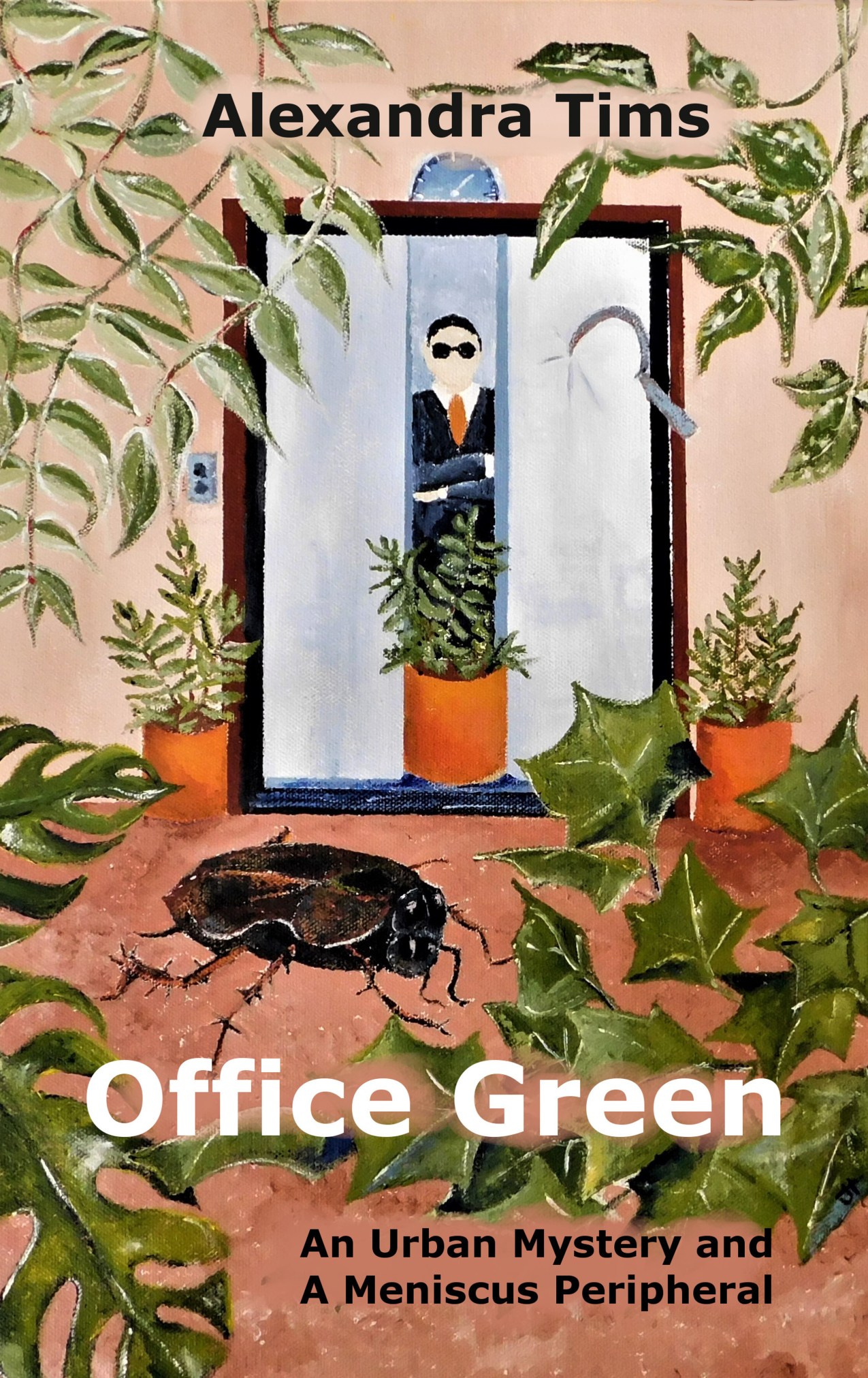
I am so happy to have published the first in my Urban Mystery Series: Office Green. The book tells the story of Hannah and her plant care business. She goes from office to office in the city of Halifax, watering office plants and battling plant diseases, white fly, and nutrition problems. She also sees things she is not meant to see and gets herself into all kinds of trouble.
~

~
So, what’s with the cockroach on the cover??? During her adventures, Hannah keeps a few handy ‘weapons’ within reach in case she gets in trouble. And what better scare-tactic than a huge African cockroach, rescued from the university biology labs. You’ll have to read the book to find out how that cockroach helps her escape from a few bad guys.
~



~
If you like tending to indoor plants, if you love a quick read, and if you like reading about resourceful amateur detectives, you will like Office Green. You can get a copy at Dog Eared Books in Oromocto (Unit #218, 281 Restigouche Road). You can also order a copy from Amazon, just click here.
~
All my best,
Alexandra Tims (a.k.a.Jane)
new: three Urban Mysteries
I have released three of my new books in the Urban Mysteries Series: Office Green, City Grotesque, and Roundabout. These three are set in the cities of Halifax (Nova Scotia), Saint John (New Brunswick), and Fredericton (New Brunswick). The stories are fiction, but the settings are real and illustrate the diversity of downtown Halifax, some of the interesting architecture of Saint John, and the traffic movements in Fredericton.
~
Office Green is dedicated to Susan, good friend and co-worker, who operated a real business, watering plants in office buildings in a city out west. The image of her carrying her watering can through the streets inspired my story. The book is available here.
City Grotesque is dedicated to wonderful friend and author, Ana, a member of my writing group, Fictional Friends. Ana first introduced me to the ‘grotesques,’ sculptures on the Chubb’s Corner building in Saint John. The book is available here.
Roundabout is dedicated to my husband, Glen, a patient man and good friend. He sat with me for hours beside the Victoria Circle roundabout in Fredericton, to identify categories of vehicles and record possible elements for my story. The book is available here.
~
All three books are available from Amazon, here.
~

~
The next three books in the Urban Mystery Series will be released next year: Hollow Hotel, Dancing with Trees, and Hunting the Dragon.
~
Enjoy the reading of these books as much as I enjoyed writing them. They are illustrated with my pencil drawings and a few personal experiences are included within the pages.
~
All my best and Merry Christmas!!!!
Jane (a.k.a. Alexandra)
cover reveals for five Urban Mysteries
I have been busy, working on a novella series called Urban Mysteries. These mystery stories are quick reads, set in cities where I have lived or worked: Halifax, Saint John and Fredericton. Each story follows the adventures of a young woman whose interests get her into deep trouble. The books are illustrated with my pencil drawings and I create my own cover art.
~
I will release the books in two groups, the first later this month. The first set of three books will be:
Office Green – Hannah’s work, tending to office plants in Halifax, means she sometimes sees more of the people in the city than she should;
City Grotesque – Eleanor decides to help the Heritage Conservation Group in Saint John to find look-alikes for sixteen sculptures in the city, and one of the look-alikes does not want to be identified;
Roundabout – Katie, making an artistic record of the travel in the new roundabout in the city, notices how regularly a particular van uses the traffic circle.
~
~
The second set of books will be released next year:
Hollow Hotel – Helen goes urban climbing with her friends and must rescue them when they have a terrible accident;
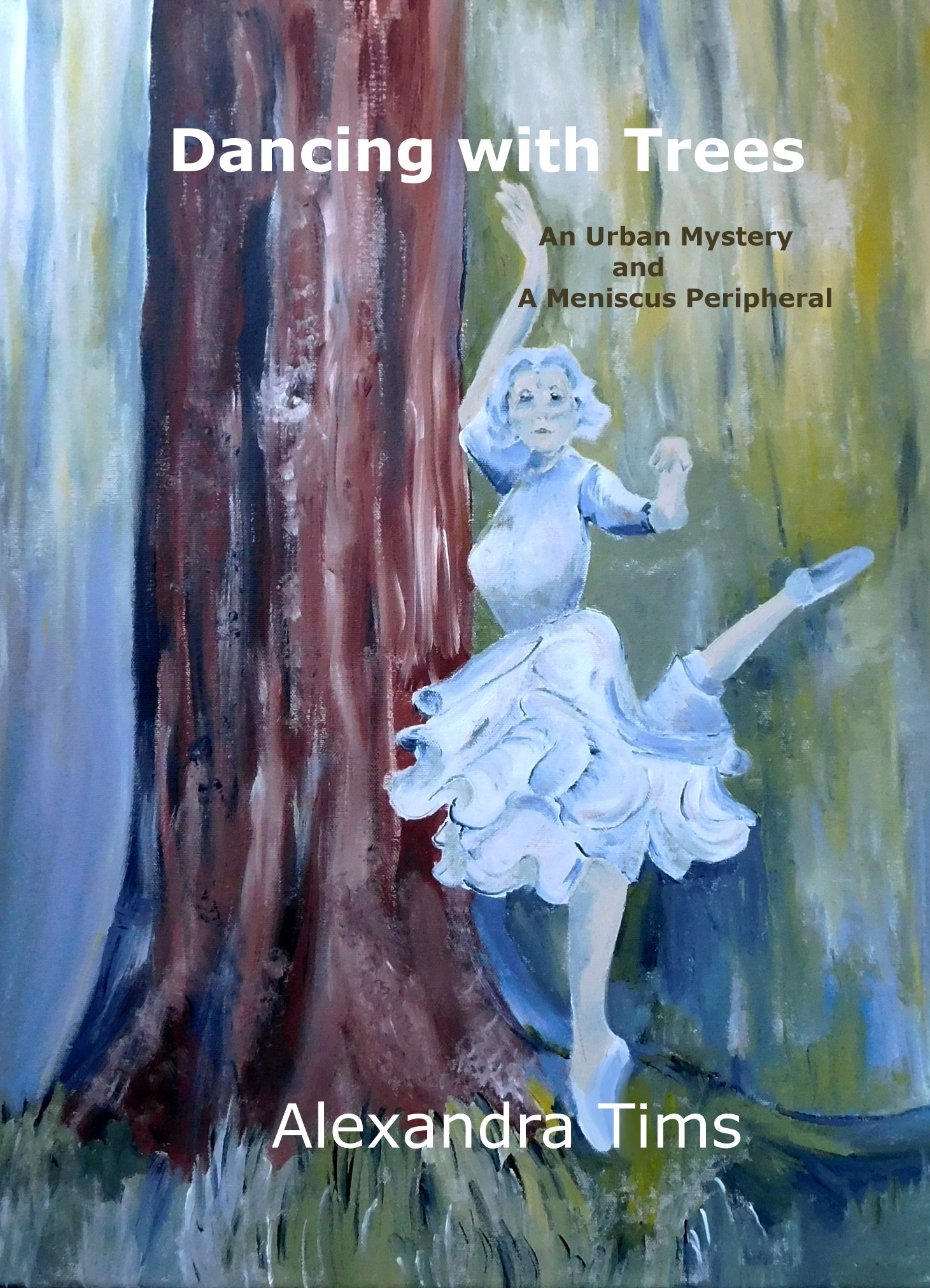
Dancing with Trees – Katie is making a record of the trees in Fredericton and encounters an urban legend to be unraveled;
Hunting the Dragon (cover image not yet available) – Hannah tries to find the thieves of a local art installation.
~

~
As you can see, I will be releasing the series under my pseudonym, Alexandra Tims.
~
I’ll let you know as soon as the first three are available for reading!
~
All my best! And Merry Christmas!
Jane Tims (a.k.a. Alexandra)
creating a cover: identifying a motif
As I prepare to release my new Urban Mysteries Series, I still have some work to do. Because I both write and illustrate my books, I also do my own covers. Selecting a motif or theme for a cover takes some thought.
~
~
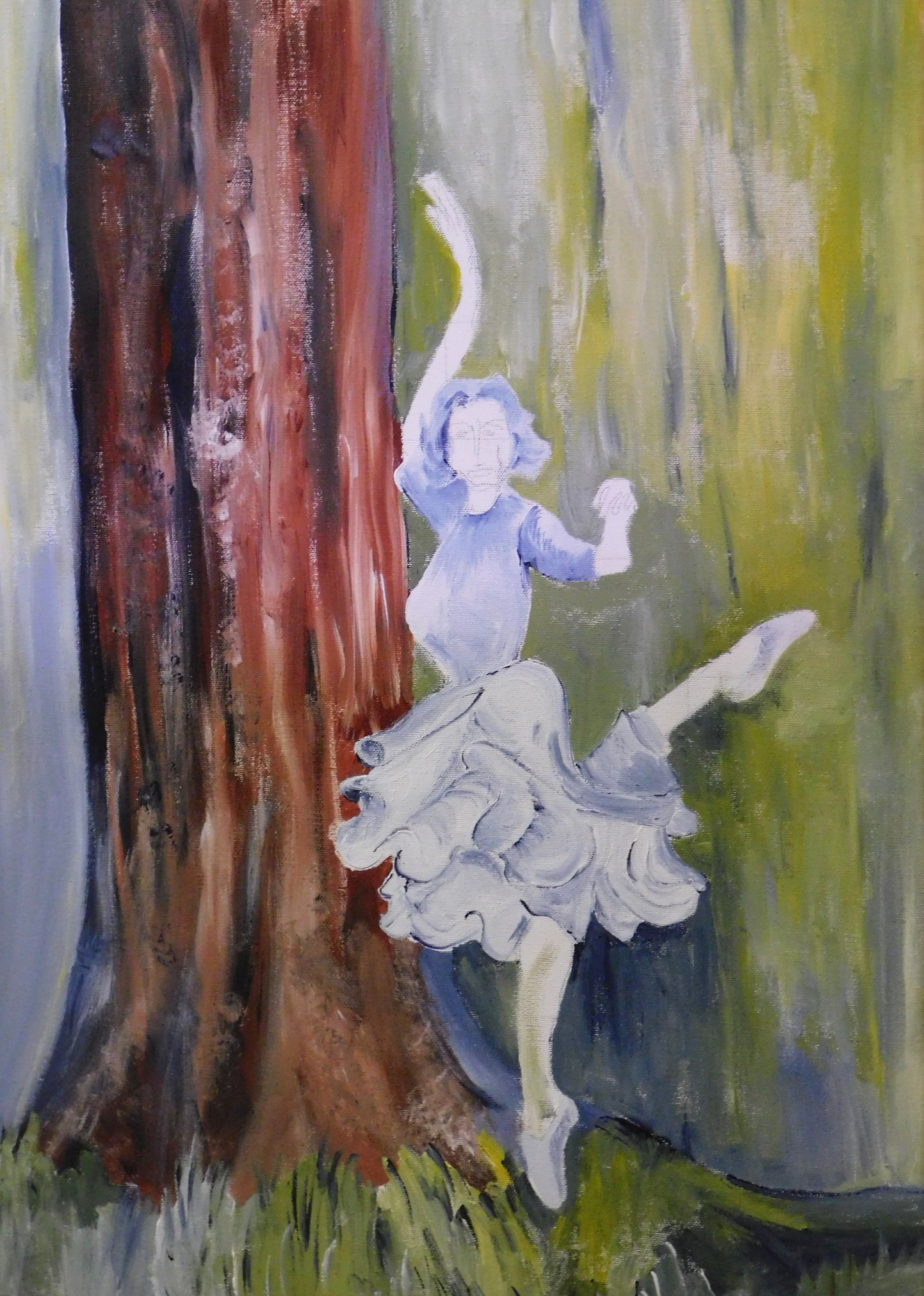
Most of my books focus on a central theme. The fifth book in the Urban Mystery Series (currently titled ‘Dancing with Trees‘) is set in Fredericton and tells the story of an artist who is making an drawn record of the trees in the community. As she draws, she encounters a mysterious woman who appears and dances with some of the trees. The woman is associated with an urban legend of a man and woman who hid a treasure in a local tree and vowed to only retrieve it together.
~
Creating a book cover is a little different from ordinary painting. A cover must:
- represent the themes and symbols in the book;
- entice a reader to know more about the story;
- present a strong focal point;
- leave room for the title, and sub-title and the author’s name;
- consider the style of other books in the series.
~
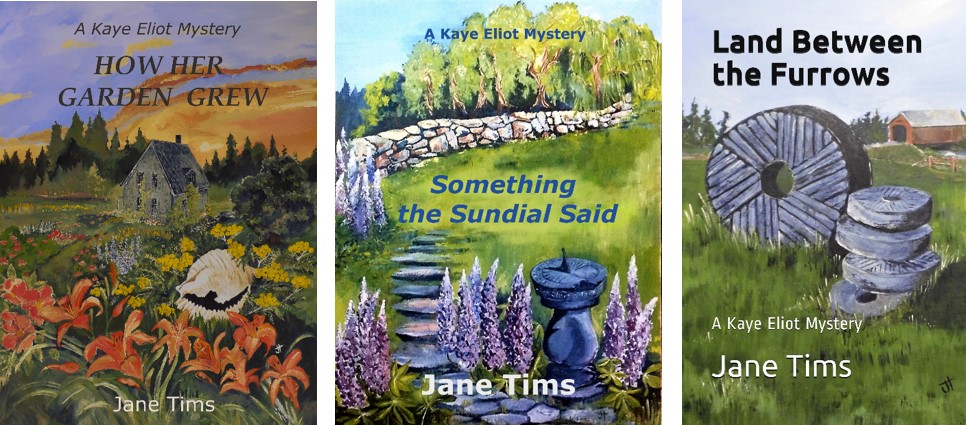
When I chose a theme for the cover of my book, I already have about twenty drawings to illustrate parts of the story. I choose one of the drawings and modify it to represent the story as a whole. The painting can be embellished by including various symbols from the story. In the case of my Kaye Eliot Mystery ‘How Her Garden Grew,’ I include a Grinning Tun, a sea shell that appears in the story, over and over.
~


~
In the Urban Mystery, ‘Dancing with Trees,’ trees and dancers are central motifs. So, for the cover, I chose to paint one of the drawings in the book.
~

~
I work with acrylics and seek to use only a set number of colours in the cover painting. This is partly to allow the font and colour of the lettering to show well on the cover. It also reduces the busy-ness of the image for the reader.
~
~
In a few days, I will be able to reveal the look of the final cover for ‘Dancing with Trees.’
~
All my best,
Jane (a.k.a. Alexandra)
upcoming: my new ‘urban mysteries’
With all my posts about genealogy, you may be wondering if I am doing any creative writing. Oh yes! I am busy on the final touches to a new series: Urban Mysteries.
~
The five mysteries are set in the Maritimes, in cities where I have lived or worked: Halifax, in Nova Scotia, and Fredericton and Saint John, in New Brunswick. They are adventure stories as much as mysteries, although the protagonist in each solves a problem encountered. The main character in each story is a young woman, independent and resourceful.
~
The five books are also Meniscus Peripherals, meaning they occur in the same universe as my Meniscus Science Fiction Series: each of the books mentions an alien abduction but the rest of the abduction story is found in one of the Meniscus Science Fiction books.
~
There will be five books in this first set of the Urban Mysteries Series:
Office Green … in Halifax, a young woman who cares for office plants, crosses the paths of some unsavoury characters;
Hollow Hotel … in Saint John, a climber takes on the outside of an abandoned hospital and must save her two friends after a terrible fall;
Roundabout … in Fredericton, an artist, who is recording life in a new city traffic circle, encounters … well, more unsavoury characters;
City Grotesque … in Saint John, an artist, working on a mural for tourists, takes part in a contest to find look-alike for sixteen stone carvings on one of the Uptown buildings;
Dancing with Trees … in Fredericton, an artist, drawing some of the city trees, stumbles on a mysterious dancer who is connected to a local urban legend.
~

~
Each of the five Urban Mysteries is less than 20,000 words, so they are properly called ‘novellas.’ All five will be released in December. I’ll keep you up to date!
~
~
All my best,
Jane (a.k.a. Alexandra)




 nichepoetryandprose