at the bird feeder #5 – Hairy Woodpecker
Our Hairy Woodpecker was back today. She was determined to get to the feeder, so we got a very good look at her in all her black and white splendor.
This time the identification was not a problem. This woodpecker is a noticably large bird, compared to the smaller Downy Woodpeckers we have seen at the feeder before. Also, the outer tail feathers are white, not marked in black as they are with the Downy Woodpecker.
I like to compare illustrations in the various bird books. Have a look at these two sets of Downy and Hairy Woodpeckers, both drawn by Roger Tory Peterson, first in his ‘A Field Guide to the Birds East of the Rockies’ (1980)…

Roger Tory Peterson, 1980, 'A Field Guide to the Birds East of the Rockies', Houghton Mifflin Company, Boston.
… and second, from his illustration in ‘The Birds of Nova Scotia’ by Robie W. Tufts (1973). In the ‘Field Guide’ , the markings on the white tail feathers of the Downy Woodpecker are clearer.
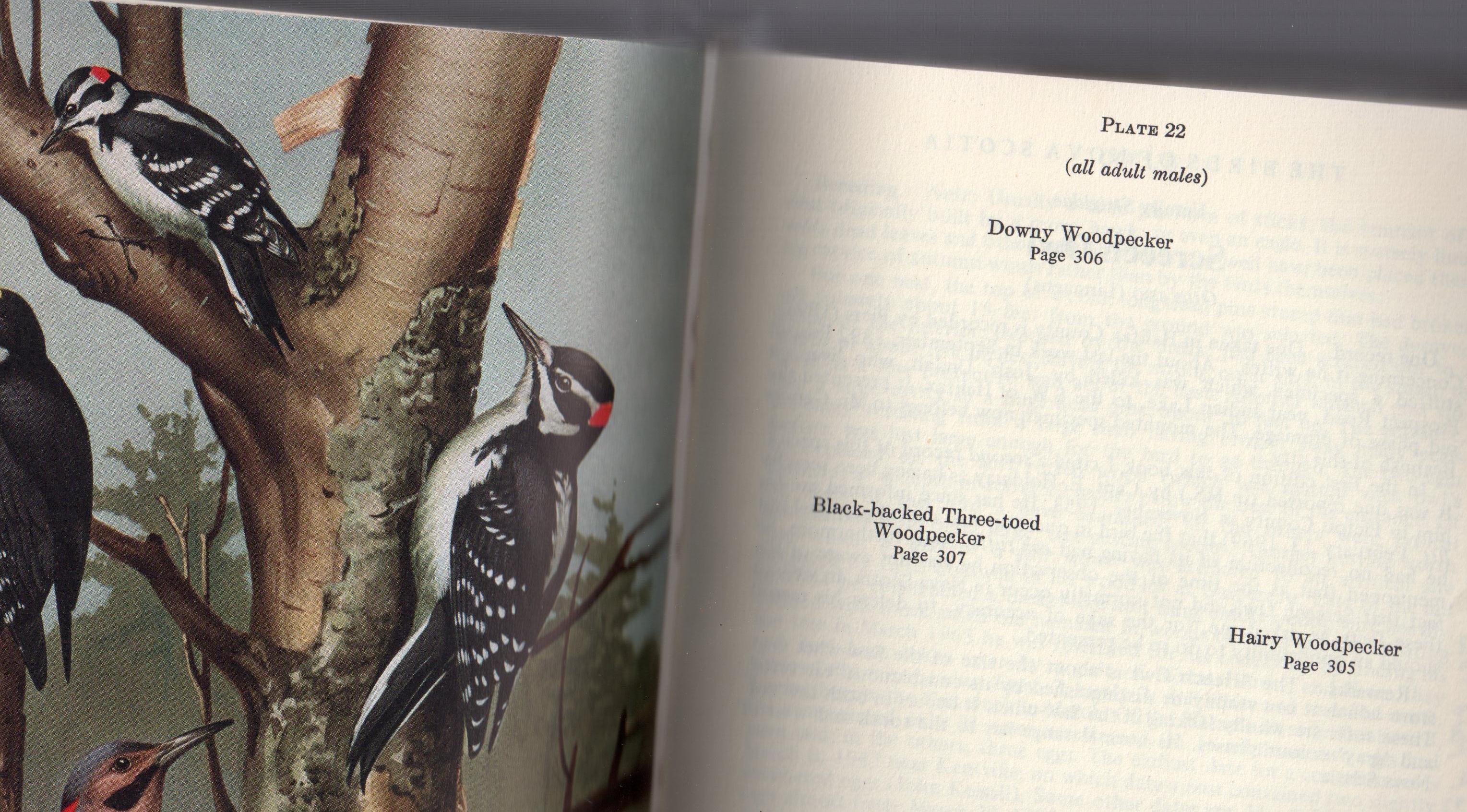
Robie W. Tufts, 'The Birds of Nova Scotia', 1973, Nova Scotia Museum, Halifax. Color illustrations in this book are by Roger Tory Peterson.
Both Downy and Hairy Woodpeckers are cavity nesters. They stay through the winter and are frequent visitors at feeding stations… they love suet and black sunflower seeds.

Zoë, watching
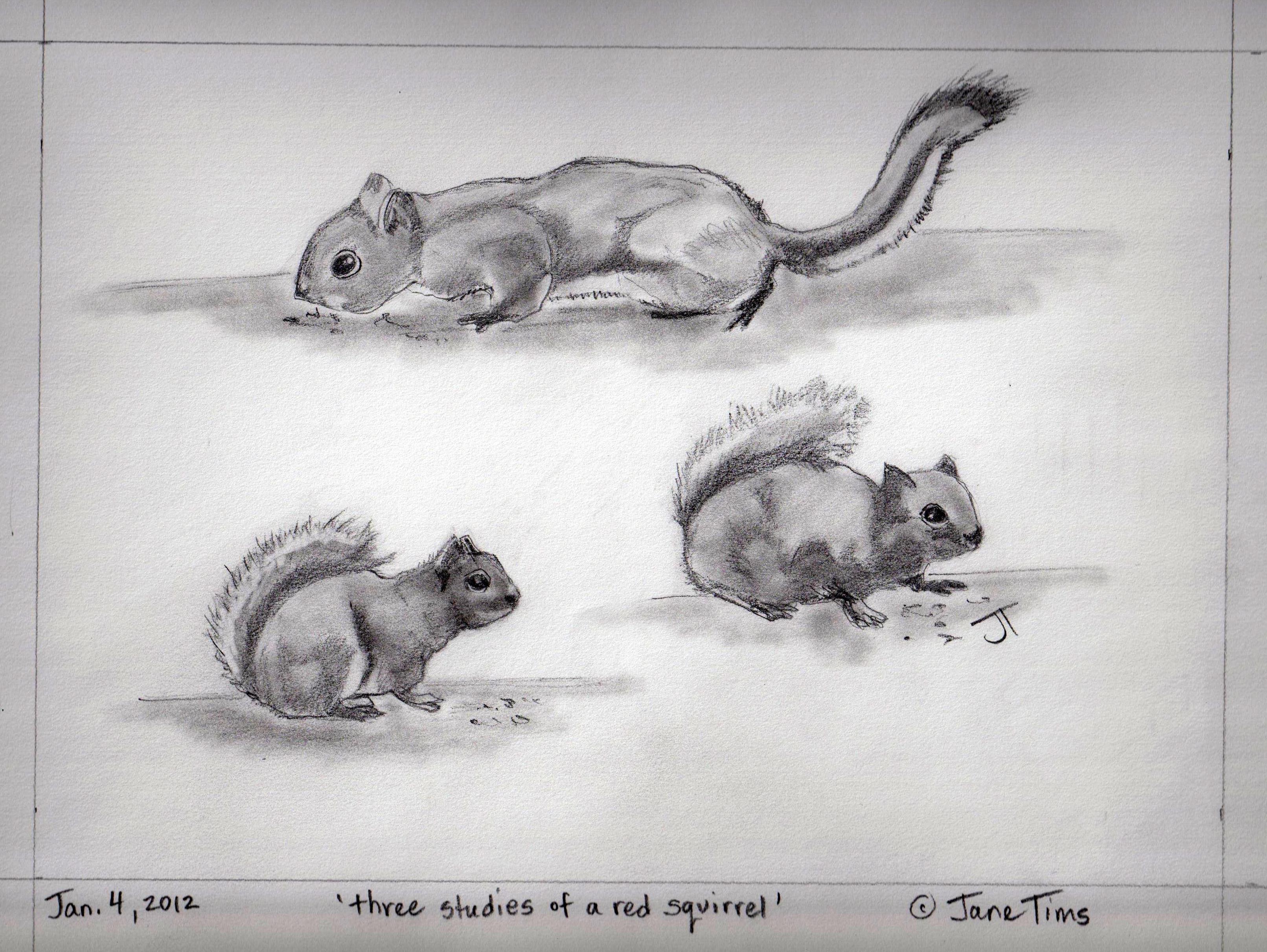
Our feeding of the birds has given our cat, Zoë, a new form of entertainment. She sits in the chair in front of the glass of the door leading to the deck and watches. Her head swivels as each new arrival lands and selects its seed. All evening, the pupils in her eyes are as black as those of the little Flying Squirrels she sees outside the window.

The birds and squirrels know they are being watched but have decided the sphinx behind the window glass cannot harm them. For her part, Zoe knows she can only observe the antics around the feeder. She contents herself with the pantomime of predation.
~
~
strategic hyphenation
~
patience nestles into space
between edge-wise foliage
strategic paw-placement where
no dry-leaf crackle, dry-twig snap
disturbs the nothingness downwind
of furred-or-feathered prey
no tattling breeze
can carry scent-anticipation
nostril-expectation
to be pounced-upon
all muscle-twitch contained
in nervous, horizontal
flick-of-tail
~
~
© Jane Tims 2012
keeping warm
After some variable weather over the last weeks, the cold has arrived.
The birds at the feeder are plumped and fluffy, and look twice their usual size. The cat curls up a little more tightly than usual, puts her paws over her face, and finishes off with her tail coiled across the paws.
Inside we use our electric fireplace more often and cover up with some of the little lap quilts I’ve made. But outside is a different matter and another strategy is required.
I’m determined to stay warm this year, so I make the following pledge:
🙂 I will wear mittens and a scarf … you would think I would be past the ‘scarves-and-mittens-are-not-cool’ stage.
🙂 I will have a warm drink before I leave the house … my new discovery is real ginger root chopped into fine pieces and steeped for tea.
🙂 I will take a chair seat from the house to warm the seat of the car … I used to make fun of my Mom for doing this.
🙂 I will warm up the car before I leave … this is in the face of my usual ‘no-idling’ policy.
And so I would like to know, on these cold days, how do you keep your niche warm????
stay warm
~
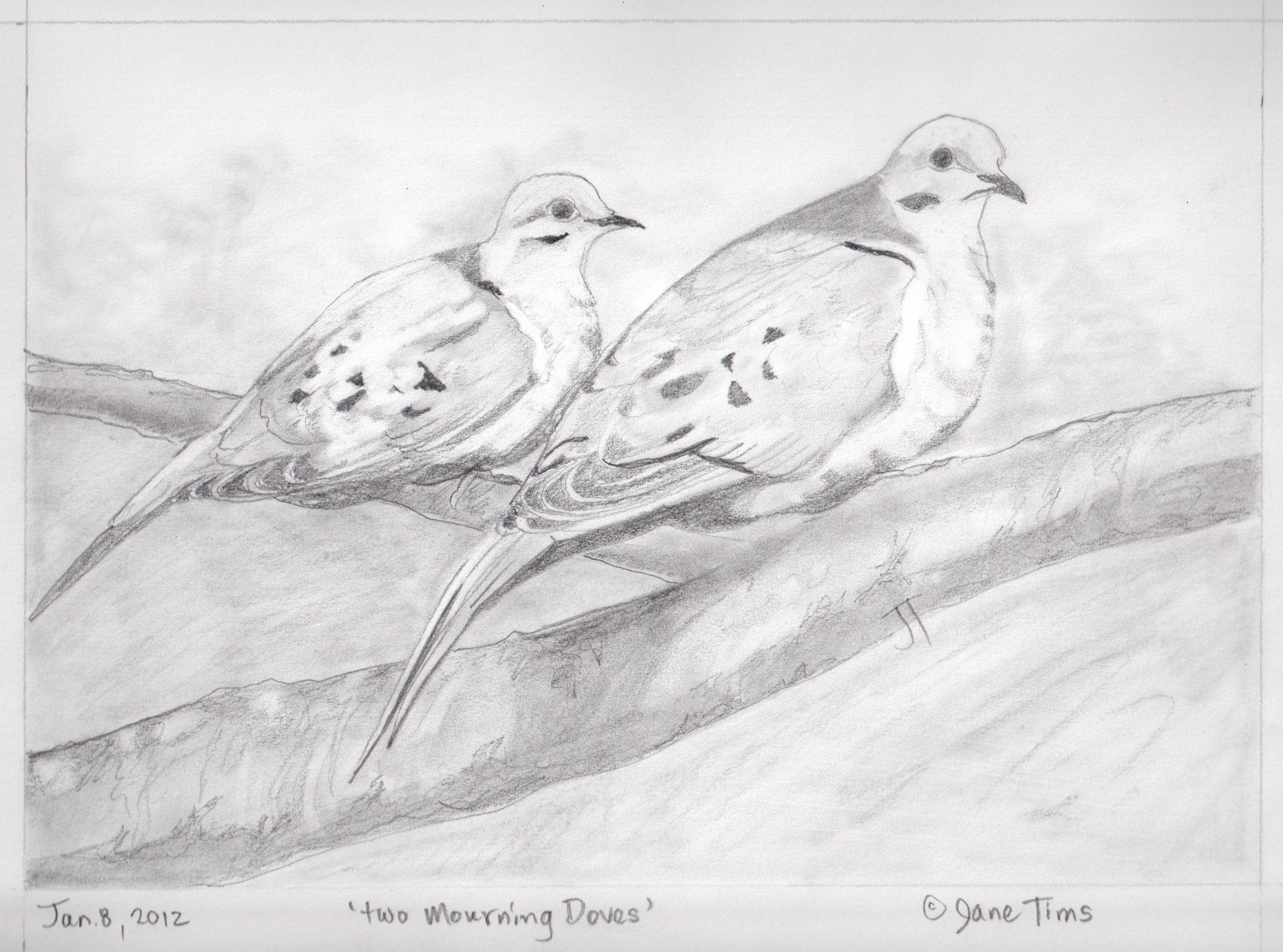
two mittened mourning doves
sit on the ledge in sun, exaggerate
their approach to keeping warm
fluff the pillows, bar the doors, make a nest by the fire
spaces between feathers fill with air and fibre, energy from
sunflower seeds, cracked corn and cider
~
~
© Jane Tims 2012
at the bird feeder #4 – Woodpeckers
The bird feeder had a new visitor last Thursday, a woodpecker. My husband saw it at the feeder, but by the time he had the camera ready, it was gone. Undaunted, he went outside and chased the little lady through the woods until he had several photos.
We identified the bird from the photos. There were two possibilities, a Downy Woodpecker (Picoides pubescens) and a Hairy Woodpecker (Picoides villosus). Both have a white stripe on the back. The males of both species have a red patch on the back of the head (the one at our feeder was a female). The differences between the two are body size (the Hairy Woodpecker is the larger of the two) and the size of the beak (the Hairy Woodpecker has a much longer beak, about 3/4 of the depth of the head).
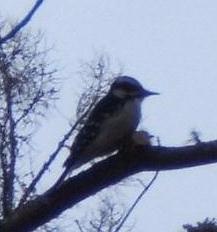
We are reasonably certain our bird was a Hairy Woodpecker. Its beak is noticeably long. Also, the round cut branch on the tree in the photo (in front of the bird’s feet) is at least an inch in diameter, making the length of this bird about nine and a half inches.
~
~
hand-crafted
Downy Woodpecker (Picoides pubescens)
~
daft little bird
propped, pubescent, plump
bang your silly
head against the tree
eat a bug
~
your sculptor used
deft fingers
to point your beak
solidify your tail
paint feathers
foam on black water
snow on dark woods
night sky with planets
berry-stain
your downy crown
~
~
© Jane Tims 2012

at the bird feeder #3
I am amazed at the volume of seeds these little visitors eat.
The deer, racoons and squirrels take their unfair share, of course. Last year, I watched a deer attack the feeder with its tongue, scooping up every bit of seed in a matter of minutes. Even without the deer and racoons and squirrels, the birds descend in a flock and the food is soon reduced to a scattering of seed-husks.
We have come to a conclusion – next year we will put up a mammal-proof feeder. My brother-in-law has it figured out. He has installed a large cedar post in an open area and encased it in aluminum pipe and flashing. Enough seed falls on the ground to give a treat to the squirrels and other marauders, and the birds are the focus of the money-drain.
~
~
feeding the birds
~
I wait, no patience to speak of
for the next bird to find
~
this food more delicious than seed offered
by my neighbour, swears
~
he had cardinals, mine the left-over
chickadees and nuthatches, flocks of redpoll
~
litter the feeder, red-dotted heads, their toes
grip courtesy branches, a perch
~
impossible to find, after the freezing rain, branches
encased in slip-and-slide, candy-coated nutrition
~
won by complication, every kernel harder than stone
seed in a casing of black, sunflower
~
and pencil draw the finches, grosbeaks smash seed-coats
with deliberate jaws, shards of sunflower husk and ice-coat
~
fall as rubble
~
~
© Jane Tims 2012
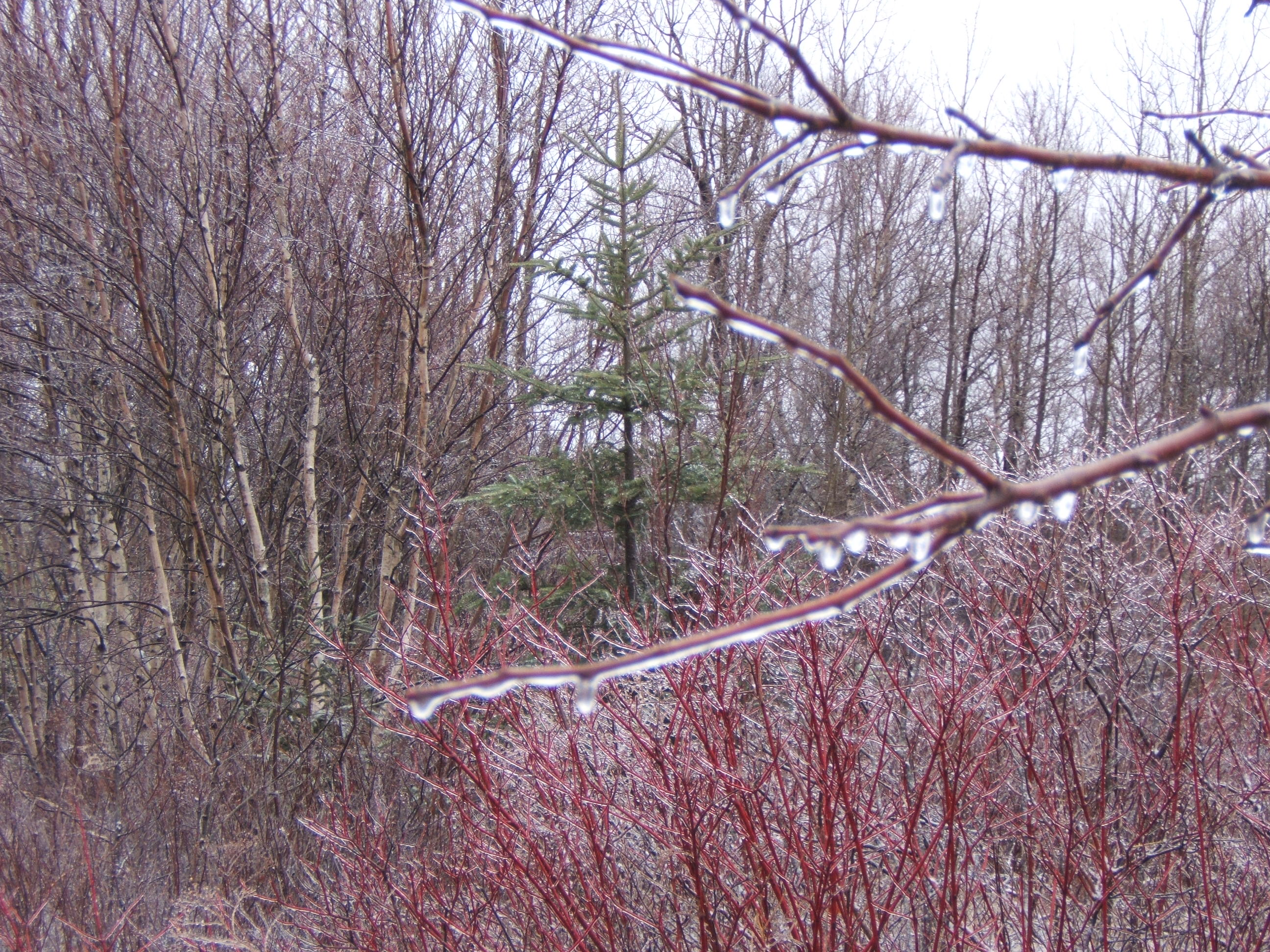
on pond ice
The days are short, reminding me of days when my son was young and I resented the brief daylight. We left for work in the dark and arrived home after the sun set. To spend just a little time with my son in the snow, I would turn on the outside light and play with him for a few precious minutes at the end of every day.
On weekends, we would seek out the smallest patch of ice and skate together. Any patch of ice would do. Some years we tried to make a small rink. Usually, we made do with the strip of ice formed at the edge of our driveway…

Our favourite place to skate was a small hollow in the grey woods behind our house. We dubbed it “Hoot-and-Hollow Pond” (because it was just ‘a hoot and a holler’ out back, and because we hear owls so often in the grey woods). The pond was small, but just the right size for my son to wobble around on his first skates.
In the years since we skated there, the trees have grown thick and tall around the pond. I went looking for it this week and found the ruin of the little bridge we built across a narrow place in the pond…

ruined bridge over Hoot-and-Hollow Pond...you can see the broken boards and old nails
and ice on the little pond itself…
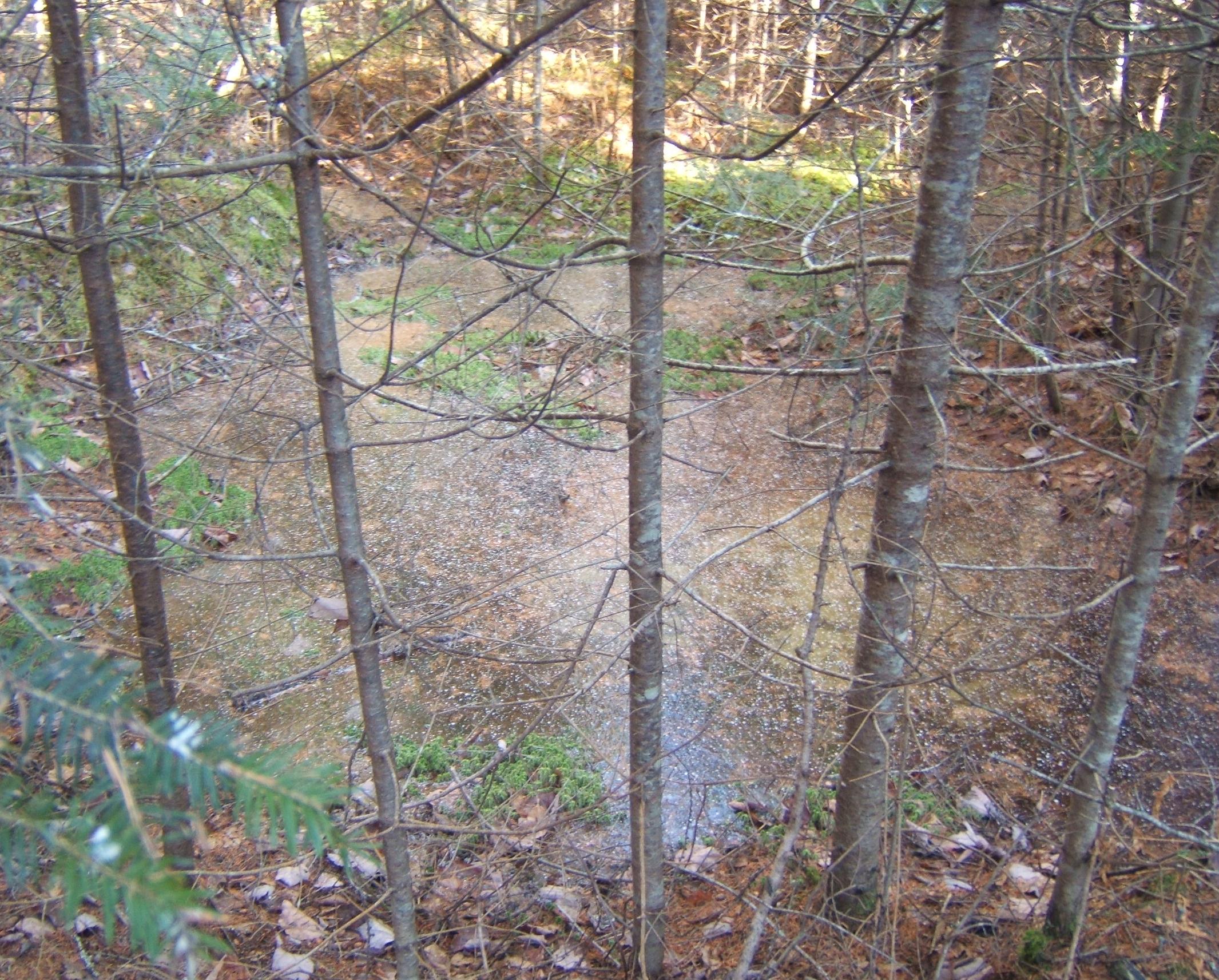
Hoot-and-Hollow Pond today, the water level a little lower than when we skated there
~
~
a skate on the woodland pond
~
~
etch
brittle cracks beneath the weight
of blades, we spread our bodies thin
twirl on the delicate lift
of snowflakes drift
above the pond, gather
firs around us, lean away, bend
beneath the weight of snow, find
room to glide, the edge where white birch
cage faint light
magnify the gleam
of paper bark, frail ice
white snow and stars
resist the dark
~
~
© Jane Tims 2011

the skater
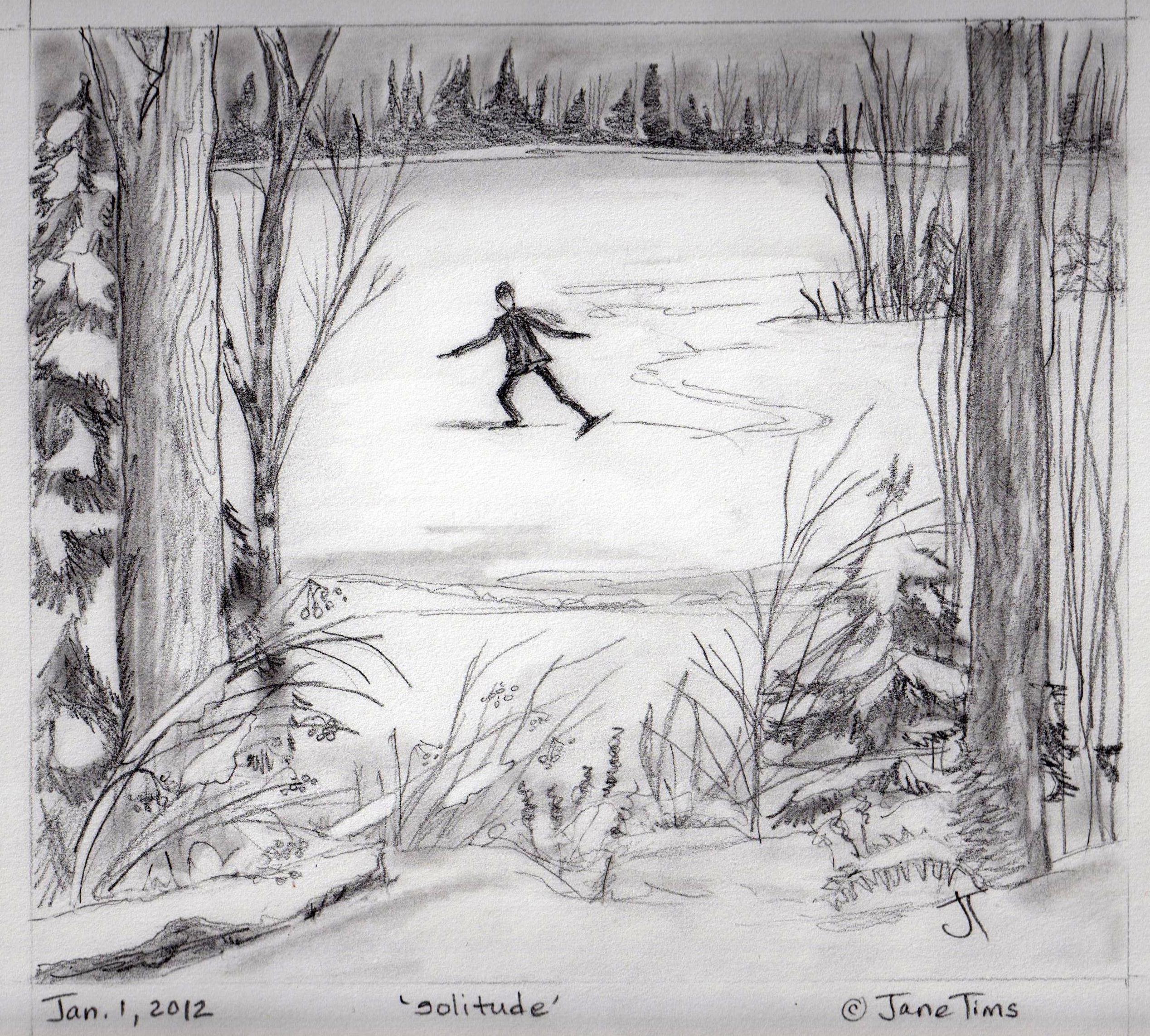
One winter day in the early 1970’s, I took a walk, alone, down to the shore of one of the chain of lakes extending from Dartmouth to Fall River in Nova Scotia. Near the edge of the lake, I sat down on a log to watch the snow fall. As I sat there, I had a memorable experience. A lone skater, on racing blades, skated into the cove. He had no idea I was there and skated with the abandon of solitude. This event remains unique in my experience and will always be one of the loveliest happenings of my life.
~
~
solitudes
~
shortest hour
shortest day
hike to the lake
on the rail line
~
stunted stride
grey rails
grey sky
blue mittens
~
2.
the cove is a glimpse
between branches
birch and maple support the sky
expectant with snow
~
I wiggle to warm
a place on a log
to watch
snowflakes like mayflies
~
bark cracks
twigs snap
mittens, knees and elbows
tucked
~
3.
the cove is an oh!
of unspoilt ice, black
smooth, bound
by ice-skinned cobbles
~
last summer I turned one
found a salamander, red as berries, crushed
beneath the weight of air
skin panting in dapples of sun
~
today all colour is trapped
in the droop of high bush cranberries
fat sickles of ice
and the electric blue of mittens
~
the snow sifts down
I lift my mitt to catch a flake
clings to the wool, white jigsaw
puzzles with atmospheres between
~
dark ice dwindles
~
4.
a cymbal rings on heavy air
not the crack of hardened bark
but the ring of steel, the scratch
ice shaved by a metal edge
~
a lone man skates
round the curve of the shore
long-limbed as a spider he strides
on racing blades
stretches his arms
~
turns one toe and leans, a compass
marks a circle on the empty page
three quick strides and a figure
he touches a hand to ice
to steady the turn
~
alone, he dances
and I am nothing
a stump, bent vibernum
berries under snow
~
neither breath nor mittened hands
only eyes, watching
and in a while
closed
~
5.
fines of snow
ease the heavy sky
the trees lean
the skater gone, the cove unwritten
~
white on the lake, the shore
the tree bark
the berries
even the mittens, white
~
~
© Jane Tims 2000
at the bird feeder #2
We had snow during the night and I can see clearly who has been at the feeder this morning… so far, only a few chickadees and nuthatches, and , of course, the pesky grey squirrel.
Do you have a bird feeder and what birds do you see?
~
~
birds at the feeder
~
feeder fill
seeds spill
nuthatch and chickadee
upside-down
crowds of goldfinch, redpoll
branch to branch
to ground
~
~
© Jane Tims 2011

at the bird feeder #1
Today our bird feeders are a mess. Racoons and grey squirrels don’t keep neat houses. However, the seeds scattered across the deck are attracting a delightful array of birds. The last few mornings we have had:
a few chickadees (Black-capped Chickadee, Parus atricapillus)… they grab a seed and swoop to the nearest low branch to break the seed open… they seem to travel in small groups, but bicker with one another at the feeder…
a few nuthatches (Red-breasted Nuthatch, Sitta canadensis)… they are acrobats, grabbing to the feeder and then flipping inside to get the seed… they are solitary, sometimes in small groups of two or three… they leave one another alone, each taking their turn…
a flock of goldfinches (American Goldfinch, Carduelis tristis)… gregarious, they are all a-flutter and feed together side by side… they hang around to break open the seed and tolerate other species beside them…
~
~
goldfinches
~
bright feathers distil
yellow from atmosphere
essence of sunflower
tipple and sip champagne
make small talk at parties
gesture with hands
paint scallops on air, animated discussion
~
the gregarious obtain information
best feeder in the neighbourhood
best seed
least squirrel
~
~
© Jane Tims 2011

snowdrift
Wind is not visible, yet we can describe the shape of the wind. Along the shores of our lakes, White Pines are wind-blown into irregular forms to show the direction of the prevailing wind. In my poem ‘Clear Lake’ (see the post for August 26, 2011, ‘deep waters – Clear Lake’ under the category ‘waterways’), I describe these as “group of seven trees/ flung southward”. Artists from the Group of Seven were famous for their depiction of this symbol of the Canadian wilderness. A good example is the painting ‘White Pine’ by A.J. Casson.
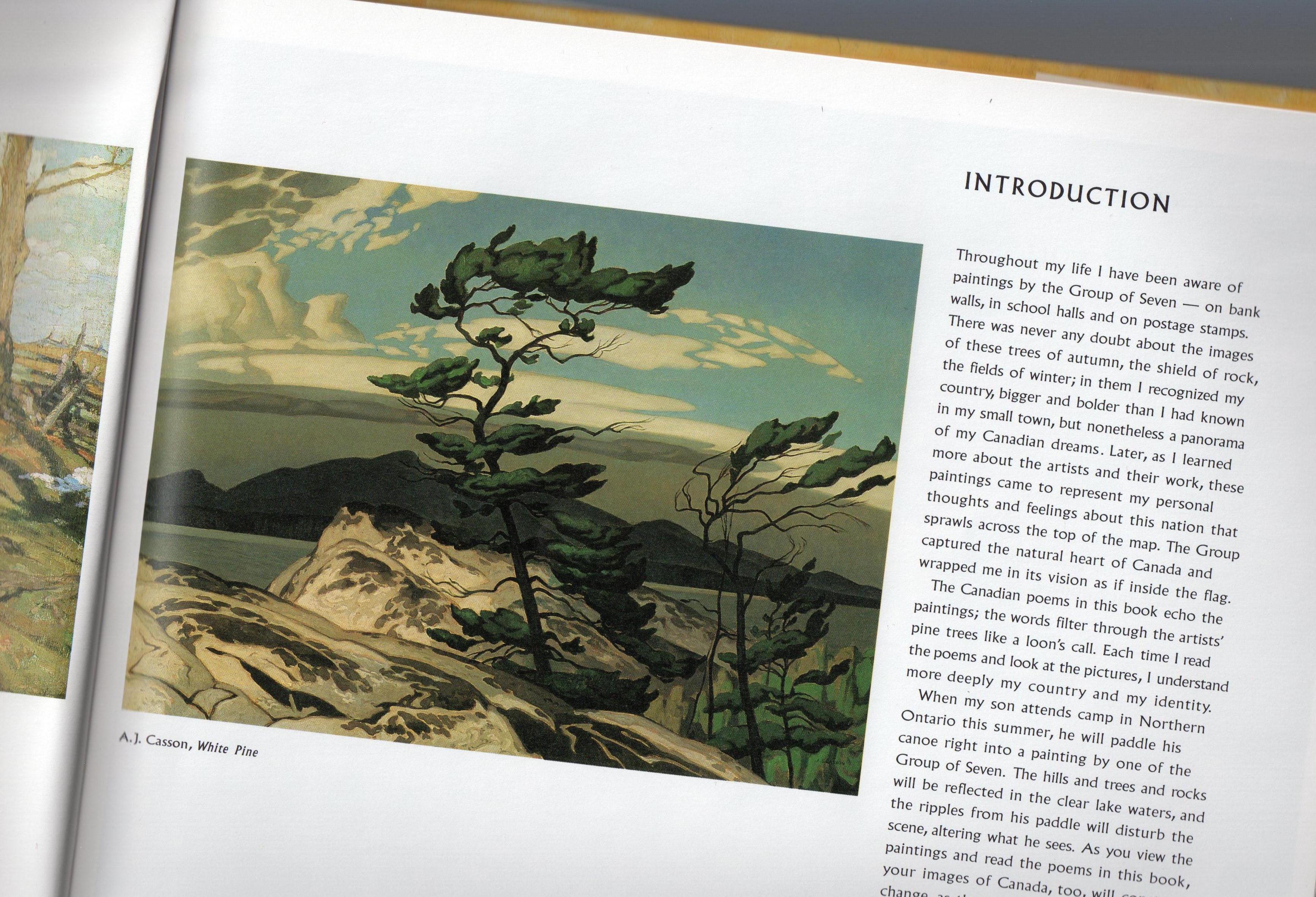
'White Pine' by A.J. Casson, from the book 'Images of Nature: Canadian Poets and the Group of Seven' compiled by David Booth, Kids Can Press, Toronto, 1995.
In winter, the shape of the snow also captures the three dimensional form of the wind. The easiest manifestation of this is the way horizontal surfaces record the direction of blowing snow.

Snowdrifts form as the wind blows quantities of snow into shapes resembling dunes of sand. As kids on the prairie, we loved these snowdrifts since we could tunnel in them and build fantastic snow shelters. Today, I can watch the drifts build across our lawn and transform its flat surface into the artistry of the wind.
~
~
Drift
~
after the storm
snow heaps
high against the wall
fingers of the wind sculpt
etch shadows
into vacant white
~
sunshine flashes
summons prisms
from hollows of snow
warmth shivers through the drift
crystal
into cataract
~
a tendril of snow
clings
damply to the wall
a lingering winter ivy
~
~
Published as: ‘Drift’, 1994, The Cormorant (Fall 1994) XI (1)
revised
© Jane Tims 2011