Archive for the ‘writing’ Category
transitions
Now, as I am finishing my manuscript of poetry on local foods, I am aware of the change this means for me. I know there will be a new project but I am not yet certain what it will be. I have many things to choose from… perhaps I’ll begin a new series of poems… perhaps I’ll write some non-fiction on an environmental theme… perhaps I’ll finish some of the paintings I have begun.
Although I like best to write, I find creative activities substitute for one another. For example, when I am not writing for an extended period of time, I am often embedded in some other creative work such as painting or sewing. Now, as I finish my manuscript, I have begun to weave on my loom. It gives me thinking time as I approach the end of my writing project, to work through the final steps in my mind. It also creates some certainty for me and provides a transition to my next project.
To me, weaving exemplifies the lure of creative endeavor. The producing requires knowledge and skill, and builds confidence. The process is relaxing and time is made available for thought and concentration. The threads and fabrics are luxurious to touch and the colors are bright and joyful. When I am finished a project, I am so proud of the resulting textile, I want to show the world.

My loom is a simple floor loom, 24 inches wide. I bought it at a country auction, about 15 years ago. My sister and I were among the stragglers at the auction, trying to outlast a heavy rain. In the corner, we saw a bundle of varnished wood and some metal parts. “I think that’s a loom,” whispered my savvy sister. When the item came up for bid, there were few left in the audience, and no one knew just what ‘it’ was. I can’t remember what I paid for it, but I know it was a bargain.
My loom and I have not been steady company. It takes forever to install the warp (I began to install my current warp in May!), and weaving is hard on my back. But the fabrics we have made together, my loom and I, are beautiful and comfortable and good for the soul.

~
~
yellow line
~
the road is fabric
weave of asphalt
ditch and yellow line
warp of guard rail
fence and heddle
~
trees in plantations
lines on the hayfield
hip and curve of the earth
weft as she turns in her sleep
~
shuttle, piloted
through landscape
and watershed
textile in folds
texture the yearn of the loom
~
faults in the granite
potholes in pavement
rifts in the fabric
where weavers might falter
revisit the work
of earlier times
~
learn the lessons
taught by the loom –
choose the weft wisely
balance the color, the texture
maintain the tension
fix mistakes as you go
~
when your back hurts,
rest
~
listen to the whisper
of weave
of yellow line
~
~
Copyright Jane Tims 2012

growing and gathering – names of edible wild plants
As I have worked on my poetry project about eating local foods, I have researched each wild plant, found it in its natural environment, and then written about it. With all this, I am exposed to the words and characteristics of a particular plant and it is never certain which way the ‘muse’ will take me when I write the poem. Sometimes, I end up creating a poem about eating local food, and sometimes, I get a poem about something else. Usually these stray poems are, in some way, about the name of the plant.
I find the names of plants are very inspiring. First is the Latin or scientific name, familiar to me after years of botanizing, but mysterious to most people. I love to find out about the origins of the name and I usually discover the name is descriptive of the plant. An example is the scientific name for Yellow Wood-sorrel (Oxalis stricta L.), a small yellow-flowered, three-leaved plant of waste areas. The name stricta means ‘erect’, referring to the way the plant grows when young or the way its seed pods are held. The word oxalis is from the Greek oxys meaning ‘sour’, a reference to the taste of the leaves.
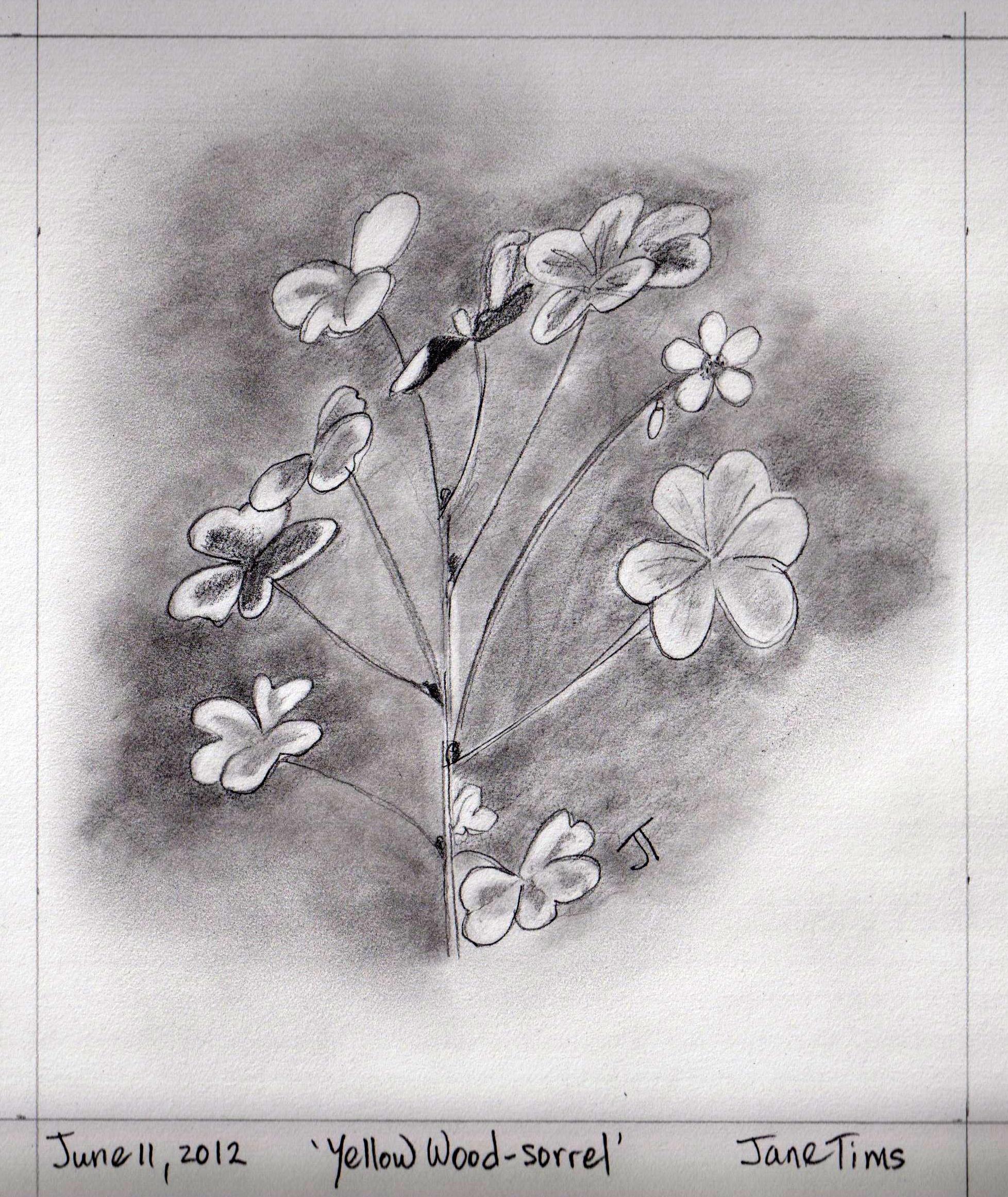
The common names of plants are also intriguing. Sometimes these are different for each area where the plant is found. For example, the Cloudberry (Rubus Chamaemorus L.), a small relative of Blackberry with a peach-colored fruit, is known locally (and particularly in Newfoundland) as Bakeapple. Plant names may also refer to a characteristic of the plant. A good example is Heal-all (Prunella vulgaris L.), a small purple flower. It inhabits waste areas and lawns, becoming small and compact if mowed. One of its common names, ‘Carpenter Weed’, comes from this characteristic… Carpenter Weed mends holes in lawns! The name Heal-all comes from the old belief that the plant has medicinal properties.

‘heal-all’ Copyright Jane Tims 2011
So, among my collection of poems about edible plants, I have a group of poems about the plants and their names, but not about their use as local foods. I have to decide whether or not to include them in my collection, or to set them free!
~
~
Heal-all
(Prunella vulgaris L.)
~
snug Prunella, neat little weed
prim and proper, gone to seed
~
first called Brunella: gatherers found
Prunella purple fades to brown
~
a carpenter weed, busy, strong
mends bare patches on the lawn
~
heal-all, self-heal – your name suggests
an herbal secret you possess
~
~
© Jane Tims 2012
growing and gathering – years and seasons
As I work on my collection of poems about growing and gathering, I am aware of the passage of time. I am in the revision stage. This means my manuscript will soon be ‘complete’. I will worry over it and list the last things to be done. I will prepare my final report to artsnb (the New Brunswick Arts Board), the source of my Creations Grant, and send it away to them for approval.
The project will be over, but there will still be work to do. I will have to decide what poems should go in the final manuscript, re-order them a few times, do some more revisions and them send them away, to a publisher, hoping I will be able to get a book from all this work.
Then I will be at the end and facing a new beginning, a new project. I have a few to choose from, so I won’t be relaxing for long.
In all this is the dimension of time, with its deadlines and unforgiving rush forward. Even in a project about growing and gathering local foods, there are poems about time.
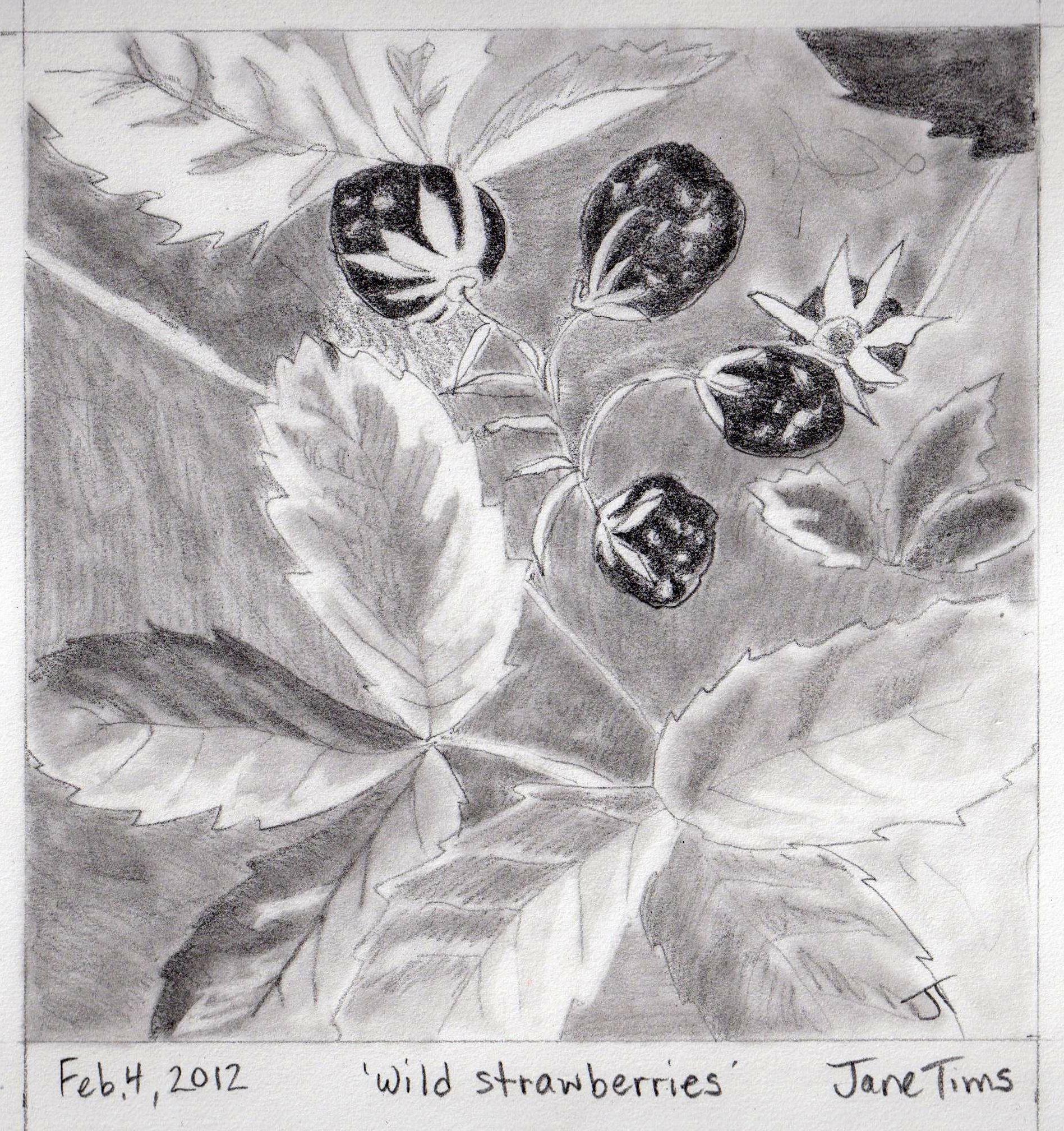
A number of my poems are about the ephemeral nature of local foods. Another way to think of this is ‘eating local foods in season’. In spring, everything is plentiful – new plants arrive in a rush, so fast, you can hardly keep up. Then there is the patient waiting for berries to ripen and, again, a rush… blueberries are quickly followed by blackberries and raspberries and so on. But everything has its season, so leaves become too old to harvest, and berries shrivel and fall to the ground.

This seasonal aspect of local foods can be thought of as as a metaphor for aging, and some of my poems work with this comparison. I have poems about resisting aging, and about the ailments of age including arthritis, lethargy, forgetfulness, and aging memory.
Many of my poems on the theme of ‘time’ overlap with other themes, about ‘companionship’, or changes to ‘place’. For this reason, I find myself shifting poems around in my manuscript. I ask myself if the poems flow well, one to another.
I also find I don’t seem to have many poems about the differences between our historical use of local foods and our present day use. I have lots of source material, particularly among my great-aunt’s diaries… she loved to pick berries. So away I go, to write a few more poems about time!
~
~
Old Man’s Beard
~
Usnea subfloridana Stirt.
~
you and I
years ago
forced our ways
bent through the thicket
of lichen and spruce
~
Usnea
caught in your beard
and we laughed
absurd!
us with stooped backs
and grey hair?
~
found a game trail
a strawberry marsh
wild berries
crushed into sedge
stained shirts
lips
and fingers
strawberries
dusted with sugar
washed down with cold tea
warmed by rum
~
today
an old woman
alone
lost her way in the spruce
found beard
caught in the branches
and cried
~
~
Published as ‘Old Man’s Beard’, The Fiddlehead 180, Summer, 1994
© Jane Tims 2012

growing and gathering – value
These days I am working to complete my manuscript of poems on the subject of ‘growing and gathering’ local foods.
As I sort my poems, I find several are about the ‘value’ of wild plants as food.
Sometimes this value is simple value for money. Every cup of blueberries I pick is one I don’t have to buy. When I pick enough berries to freeze, I can have blueberries or blackberries when they cost a fortune to buy fresh at the store. I am also bringing the warm summer and its memories forward into the chill of winter.

A few of my poems focus on the value of substitution. For example, I will never run out of tea leaves for my daily tea break. I have Pineapple Weed, Sorrel and Sweet-fern teas to make. Thanks to my sister and brother-in-law, and my own little herb garden, I have a rack of fresh herbs drying, including Camomile and several varieties of Mint. If I run out of salad ingredients, I have a stash of salad greens just outside my door.

Storage is the subject matter of a few of my poems. When I was young, my Mom showed us how to collect Spruce Gum from the trees for a sticky but tasty chew. During my project, I learned that some woodsmen make little wooden boxes for the gum, to keep it for later use. I also have a few poems about making jelly and jam.
Thinking about the value of food, I can’t forget the people for whom growing and gathering local foods is an occupation, not just a ‘hobby’. I have written poems about the people who sell shad and fiddleheads and lobster from their roadside trucks, about children who earn their summer money by picking and selling berries, and, of course, about the farmer.
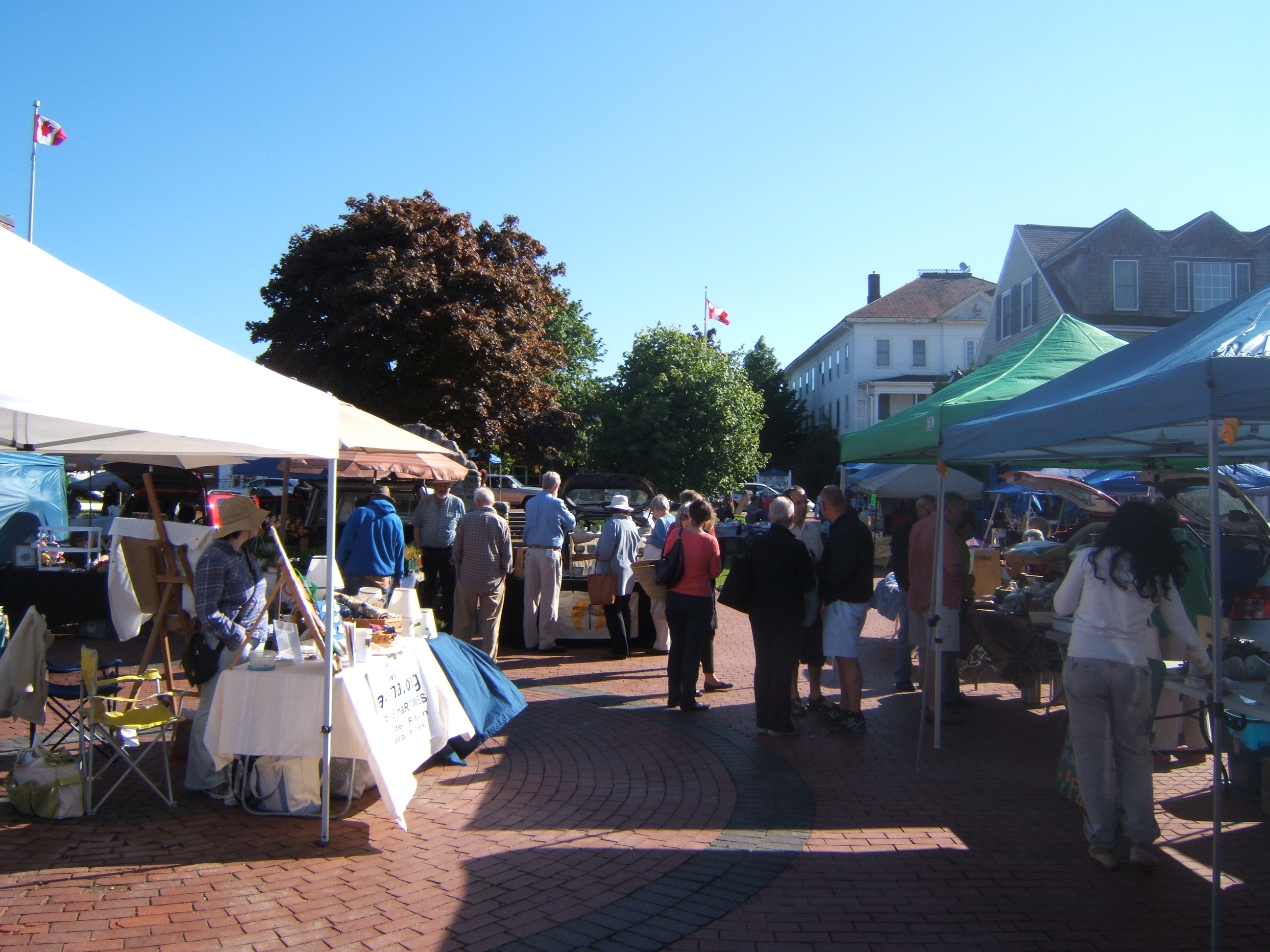
Last but not least, there is just the joy of finding or producing and eating your own food. I always say, the best part of a home garden is the taste of the first carrot or the snap of the first wax bean!
What do you think is the greatest value associated with growing and gathering local foods?
Warning: 1. never eat any plant if you are not absolutely certain of the identification; 2. never eat any plant if you have personal sensitivities, including allergies, to certain plants or their derivatives; 3. never eat any plant unless you have checked several sources to verify the edibility of the plant.© Jane Tims 2012
growing and gathering – a sense of place
The theme of eating local foods has its essence in the idea of ‘place’. The book ‘The 100 Mile Diet – A Year of Local Eating’ by Alisa Smith and J.B. MacKinnon (2007), introduced many to the idea of eating foods grown within a certain radius of home. Eating local is also place-based in terms of the settings we associate with local foods – the woods, the blueberry field, the home garden, the local farm, the roadside stand, and, of course, the farmers market are all places associated with obtaining food from local sources.
‘Place’ is a complex topic. Most of my poems about ‘growing and gathering’ include at least a little information about the ‘place’ where foods are found. Some poems, however, are specifically about ‘place’, and I want to group these together in my manuscript.
The poems I will include under the theme of ‘place’ will be focused on habitat, landscape, local food traditions, and the people-based concept of ‘home’.
~
1. the ‘place’ where plants grow
Plants, of course, depend on their habitat to live. The ideal ‘place’ for a plant is determined by the availability of moisture, light and nutrients. These factors are, in part, the result of climate, soil type, slope, exposure, and interactions with other plants and animals. In my collection, I have poems about the habitat of seaside plants, the need for water in landscapes where water is scarce, and why woodland plants often bloom in the early spring, when light is most available.
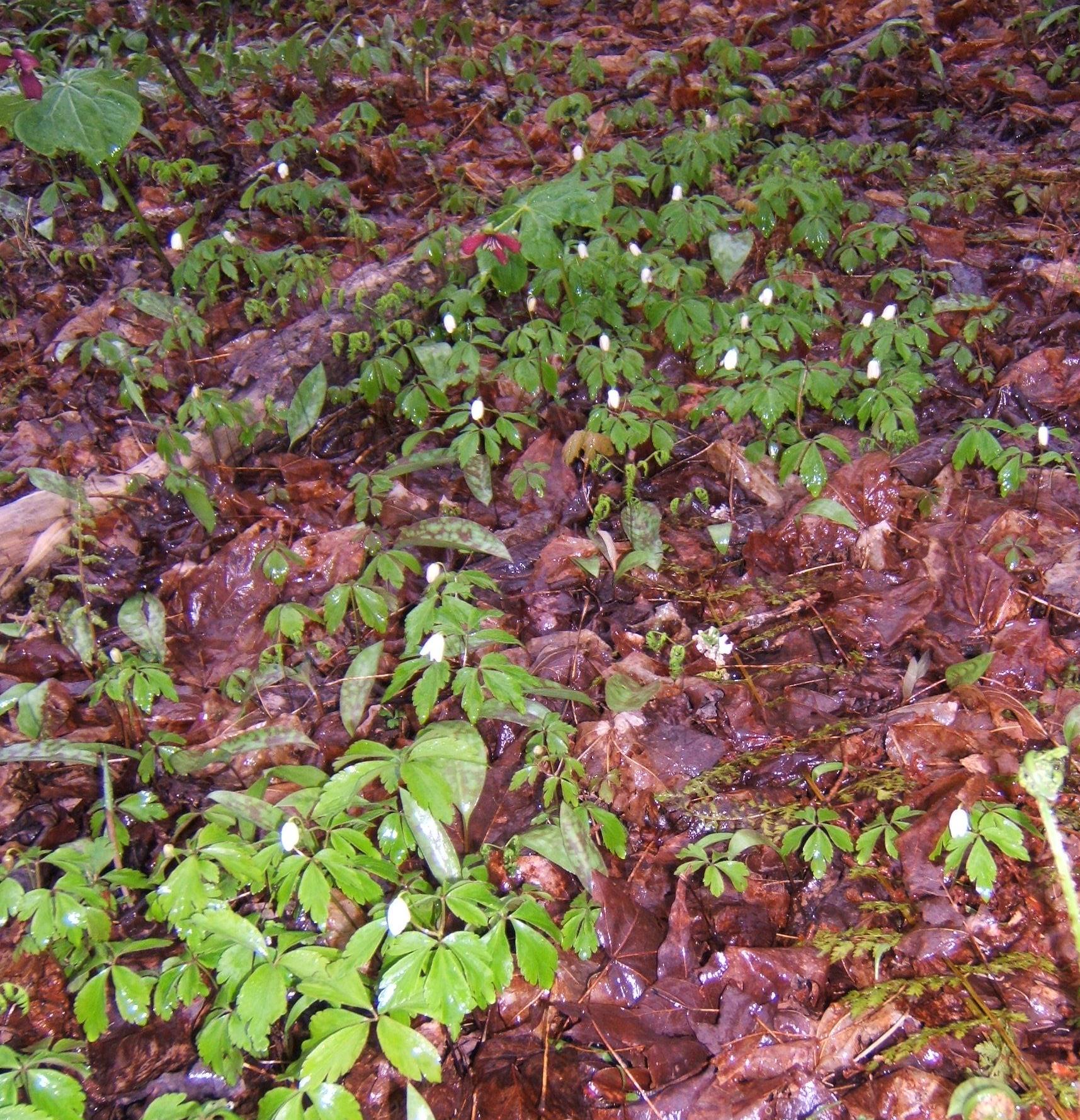
2. plants shape their surroundings and their landscape
Plants create habitat, modifying the regimes of moisture, light and nutrients in a local space. Plants also help to create the broader landscape. I have poems about how ripening apples change the space under an apple tree, how large and small-scale characteristics affect the value of a property, and how plants contribute to the way landscape appears.
3. ‘place-based’ food traditions
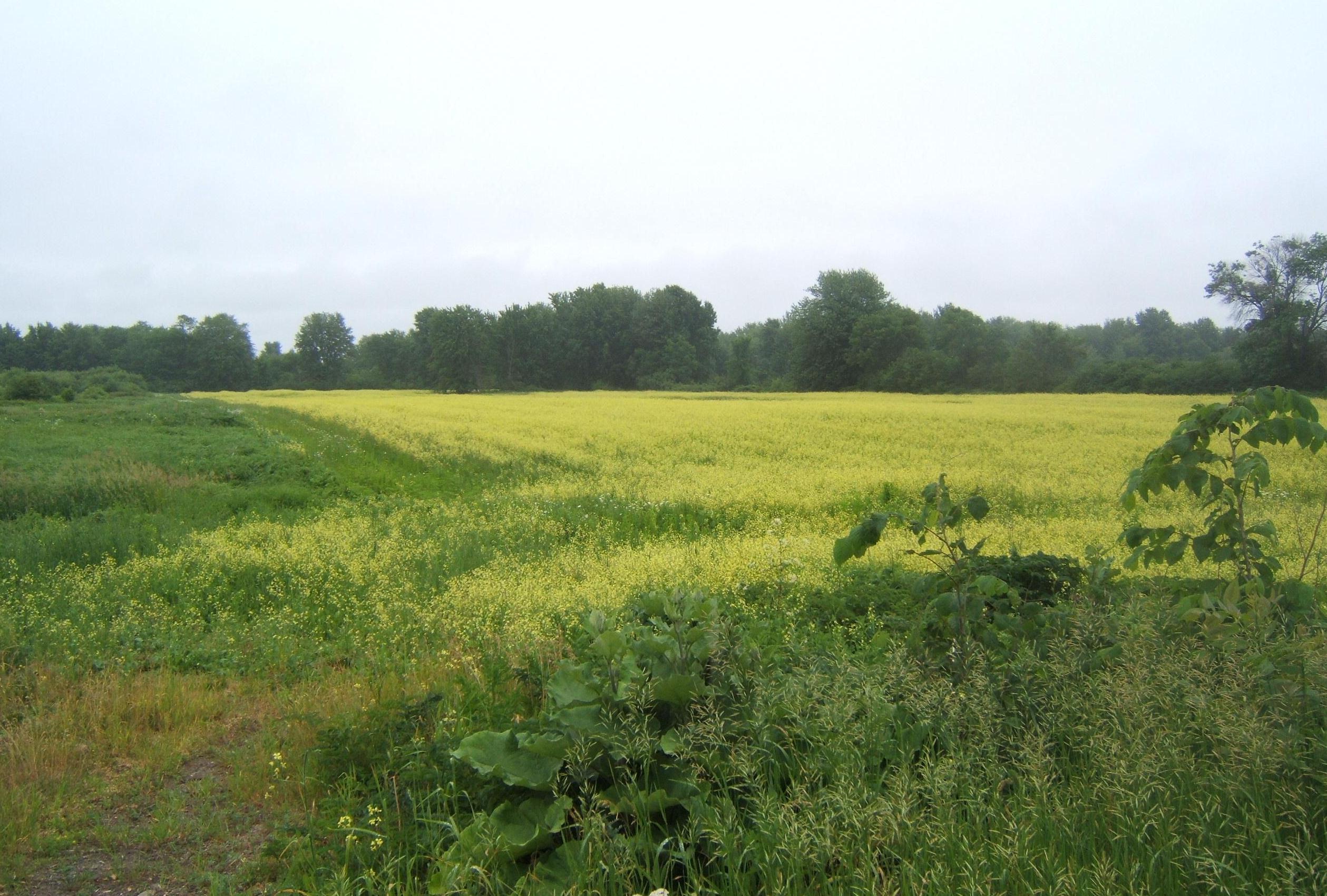
As a result of the interaction between wild life and the landscape, people have access to different kinds of foods and develop area-specific wild food traditions. In New Brunswick, fiddleheads of the Ostrich Fern (Matteuccia Struthiopteris (L.) Todaro) are abundant in the spring, along the banks of rivers and wetlands, and many New Brunswickers consider a feed of cooked fiddleheads to be a rite of spring. In Newfoundland, a relative of the blackberry, the Bakeapple (Rubus Chamaemorus L.), is common in the bogs and barrens. Children often stand beside the road, their arms out-stretched, to sell their bottles of yellow Bakeapples packed in water. I have poems about these two local foods as well as others about traditional local foods.

4. ‘place’ as a metaphor for home
Plants and their ‘place’ can be a metaphor for the relationships between humans and the spaces where they are raised, or where they live. ‘Place’ may imply ‘home’ and ideas of belonging or familiarity. Several of my poems are about this aspect of ‘place’.

As I am working on the theme of ‘place’, a song by the 1990’s band Toad the Wet Sprocket is going around in my head:
‘…show me your home
Not the place where you live
But the place where you belong…’
Toad the Wet Sprocket, ‘Something to Say’, Fear, 1991
Exploring the theme of ‘place’ with you has helped me to organise my poems, to revise them, and to understand that I still have a few poems to write toward my manuscript. I am so grateful for this blog and for all my readers!
~
~
landscape
~
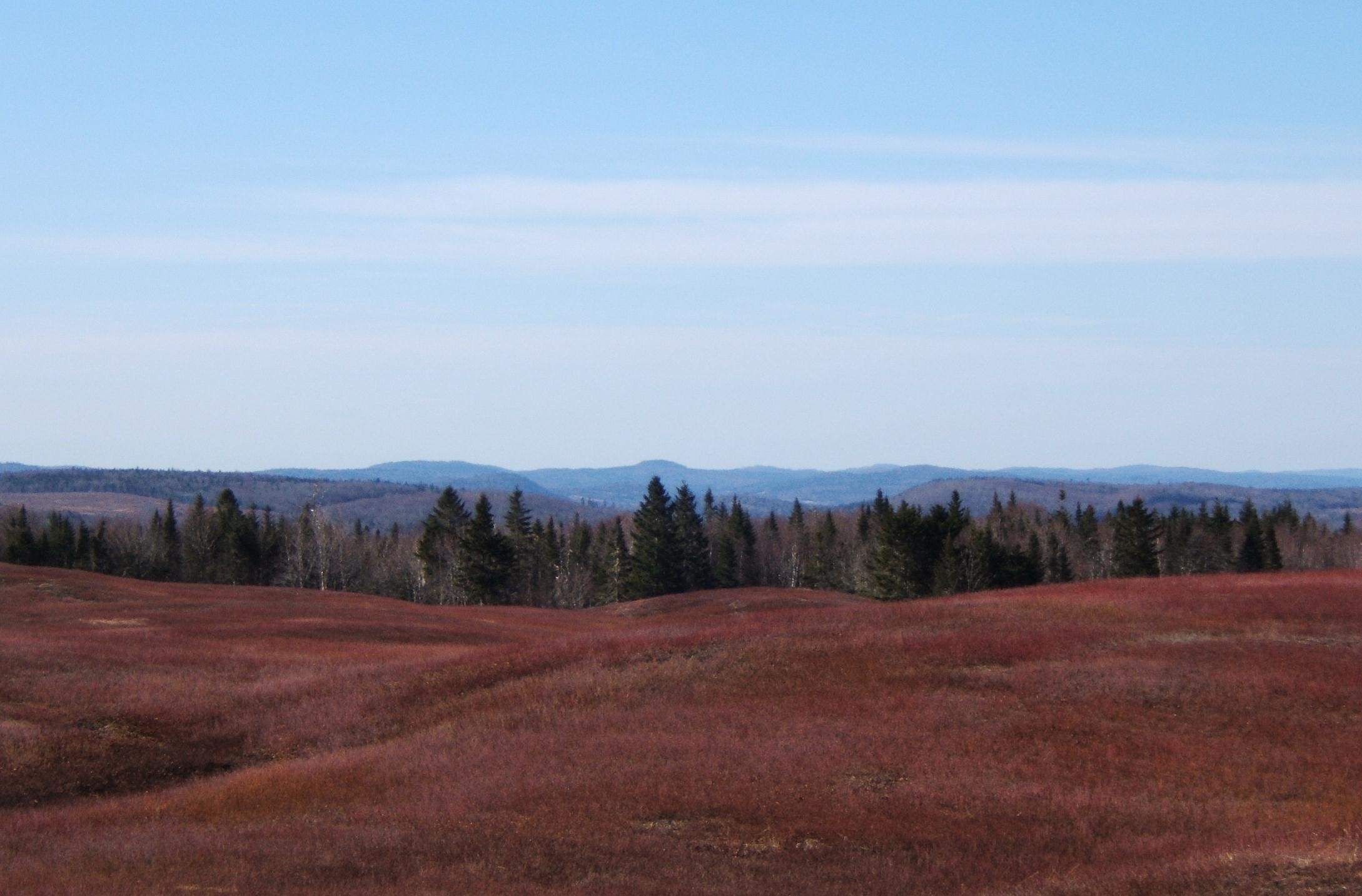
a veil draped across bones of the earth
pointed tents supported by forest
settles in pockets, lichens and moss
~
beneath the cloth is texture, the way
I know life on the land, fast or slow,
near or far, through clear eyes or through tears
~
to know form follows function – practice
repeated, detailed observation
see the sweep of a field of brambles
also the berries, also the thorns
~
Published as ‘landscape’ on www.nichepoetryandprose.wordpress.com September 3, 2011
Revised
© Jane Tims 2012
growing and gathering – learning
When I embarked on my project to write poetry about ‘growing and gathering’, I wanted to learn as much as I could about the subject. It is not surprising, then, to find I have written quite a few poems on the theme of ‘learning’.
Some of these poems are in the spirit of ‘how to’. I have poems about collecting maple syrup, making jelly, harvesting and preparing wild sarsaparilla, stringing peas in the garden, gathering eggs and picking fiddleheads, among others. As poems can be a little obtuse, sometimes these directions are not very helpful in a practical way. However, I try to capture the essence of the growing and gathering of local foods.

I have also written poems about learning itself. I have a poem about my childhood experience of running free on the prairie, picking thorny cactus berries and bottles of scorpions (yes, scorpions… they were interesting and pretty, and I didn’t know they were dangerous!). I also have a poem to remind busy young mothers to learn from the rhythms of nature – the calm conspiring of bees and clovers to make honey, or the way a bird collects the makings of a nest, a little at a time. Another poem is about learning how to negotiate the traditions of the farmers market (if you buy fresh carrots, keep the green tops for your compost bin!!!).

I also have two poems about imitating nature. In the 1960s, my Mom used to make a few substitutions in her cooking to make up for a lack of ingredients. You have probably seen these recipes before: Apple Pie, No Apples and Mock Cherry Pie.
One of the reasons Mom made these recipes was to have some fun and make us laugh. But fake food is no laughing matter. My goal, in part, has been to show that we are now a little distanced from our food and its sources. By considering what wild foods might still be available, I have tried to get others to think about the source of our food and the greater simplicity of eating local.
~
~
Apple Pie, No Apples
Prepare pastry for a double pie
Break 15 salted soda crackers into wedge-shaped pieces and place in the unbaked pie shell
Bring to a boil:
1 1/2 cups water 1 1/4 cups white sugar 4 tbsp. margarine 3/4 tsp. cinnamon 1 tsp. cream of tartar 1 tsp lemon flavoringPour mixture over crackers
Cover with pastry
Bake as for apple pie
~
Mock Cherry Pie
Prepare pastry for a double pie
Fill pie shell with:
2 cups fresh cranberries 1 cup raisins 1 1/2 cups sugar 2 tbsp. flour 1 cup cold water 1 1/2 tsp. vanillaCover with a lattice of pastry.
Bake as for cherry pie
~
~
Mock Cherry Pie
~
I am not easy to fool –
embellished covers, empty pages
‘baby’ carrots, shapened like pencils
knock-off purses, no money inside
diet soda and servings of fries
~
who else would look
under the lattice crust
to discover cranberries and raisins?
~
cherries in the orchard
never picked
~
~
© Jane Tims 2012
~
~
Warning: 1. never eat any plant if you are not absolutely certain of the identification; 2. never eat any plant if you have personal sensitivities, including allergies, to certain plants or their derivatives; 3. never eat any plant unless you have checked several sources to verify the edibility of the plant.~
growing and gathering – picking berries with friends
As I am deciding how to organise my poetry manuscript on ‘growing and gathering’ local foods, I am considering the themes of the various poems. I think these themes will become the sections in my manuscript.
One of the first themes to emerge, perhaps the easiest to examine, is about ‘relationships’.
Although I have often picked berries alone, my best memories are of picking berries with members of my family. Both my Mom and Dad loved to pick berries. My Dad was a fast picker and I was always in silent competition with him to pick the most berries… I never won. My Mom picked berries quickly, but took the time to enjoy the fresh air, the blue sky and the expanse of the berry field. When I think of picking berries with her, I feel calm and a little lazy. My relationship with my mother-in-law was also shaped by our many berry-picking experiences; when I pick raspberries, I hear her quiet laughter in the breeze.
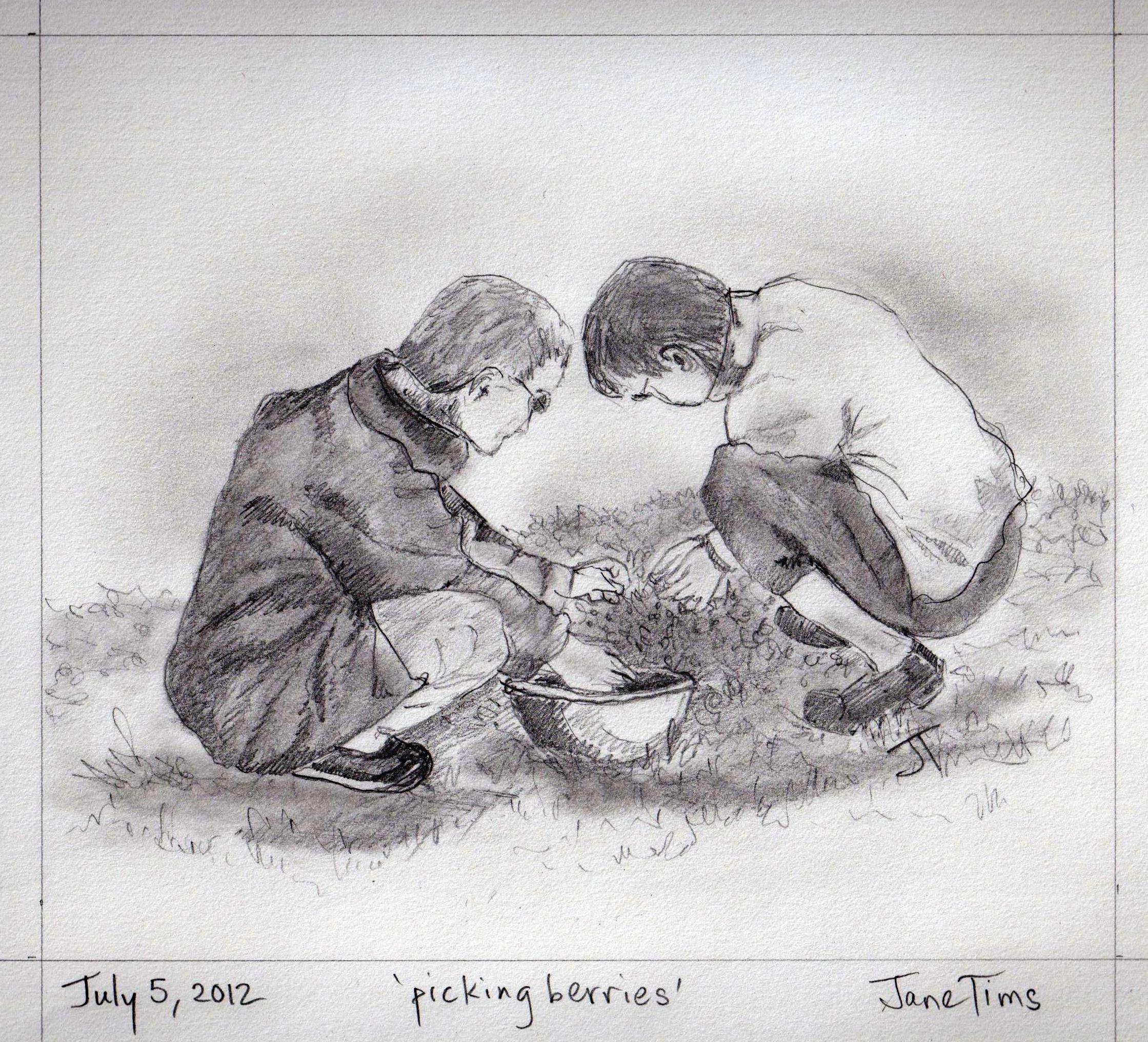
As I write poetry for my ‘growing and gathering’ manuscript, I have explored my relationships with the various people in my life.
Some of these are based on real experiences I have had picking berries or gathering greens. Examples include poems about trying to find an old berry field, now grown over, or how changes in a relationship can be observed over the years in the annual picking of berries. Although most of the poems are about plants, I have included production of other local foods – so a poem about beekeeping, for example, explores how two people interact during a small emergency.
In other cases, the gathering of local foods is a metaphor for some aspect of a relationship, whether good and bad. At least some of these metaphors are related to the characteristics of plants or animals – for example, the serrated edges of leaves, the slipperiness of a trout, the gentle feel and fragrance of Bedstraw, or the bitterness of taste common to so many ‘salad’ greens.
Some of the metaphor is based on the place where plants grow. Examples include the seclusion of many berry-picking spots, or the physical spaces created by rows of corn plants.
As I look over the Table of Contents for my manuscript, I realise some poems will be stronger if placed within another theme. So I have moved, for example, a poem about picking berries over a three-week period from the theme on ‘relationships’ to a theme about ‘change’.
This consideration of the themes in my poetry has given me a good start to organising the poems, and identifying gaps I have to fill. I know now there are lots of gaps, and many poems yet to write!
~
~
Bitter Blue
~
of all the silvery summer days we spent none so warm sun on
granite boulders round blue berry field miles across hazy miles
away from hearing anything but bees
and berries
plopping in the pail
~
beside you I draped my lazy bones on bushes crushed berries and
thick red leaves over moss dark animal trails nudged between rocks
baking berries brown musk rising to meet blue heat
or the still fleet scent
of a waxy berry bell
~
melting in my mouth crammed with fruit sometimes pulled from
laden stems more often scooped from your pail full ripe blue pulp
and the bitter shock of a hard green berry never ripe
or a shield bug
with frantic legs
and an edge to her shell
~
~
Published as: ‘Bitter Blue’, Summer 1993, The Amethyst Review 1 (2)
Published on www.nichepoetryandprose.wordpress.com on July 31, 2011
© Jane Tims 2012
Warning: 1. never eat any plant if you are not absolutely certain of the identification; 2. never eat any plant if you have personal sensitivities, including allergies, to certain plants or their derivatives; 3. never eat any plant unless you have checked several sources to verify the edibility of the plant.sacred spaces #2
One of the repurposed churches I have encountered is the church where my great-grandmother and great-grandfather were married on July 24 in 1886 in Laramie, Wyoming. The church was the First Methodist Episcopal Church on Second Street in Laramie.
The church building, constructed in 1860, still stands at 152 North Second Street, but when my great-grandparents were married there, it stood at a location across the street from its present location. When it was abandoned as a church, it was rolled across the street on logs, where today it is the oldest church building in Laramie.
When we visited Laramie in 2002, we did not find the church immediately because it did not look like a church. When it was rolled across the street, the back of the church faced the street…

A look at the rear of the building shows what the face of the church would have looked like in its previous location…
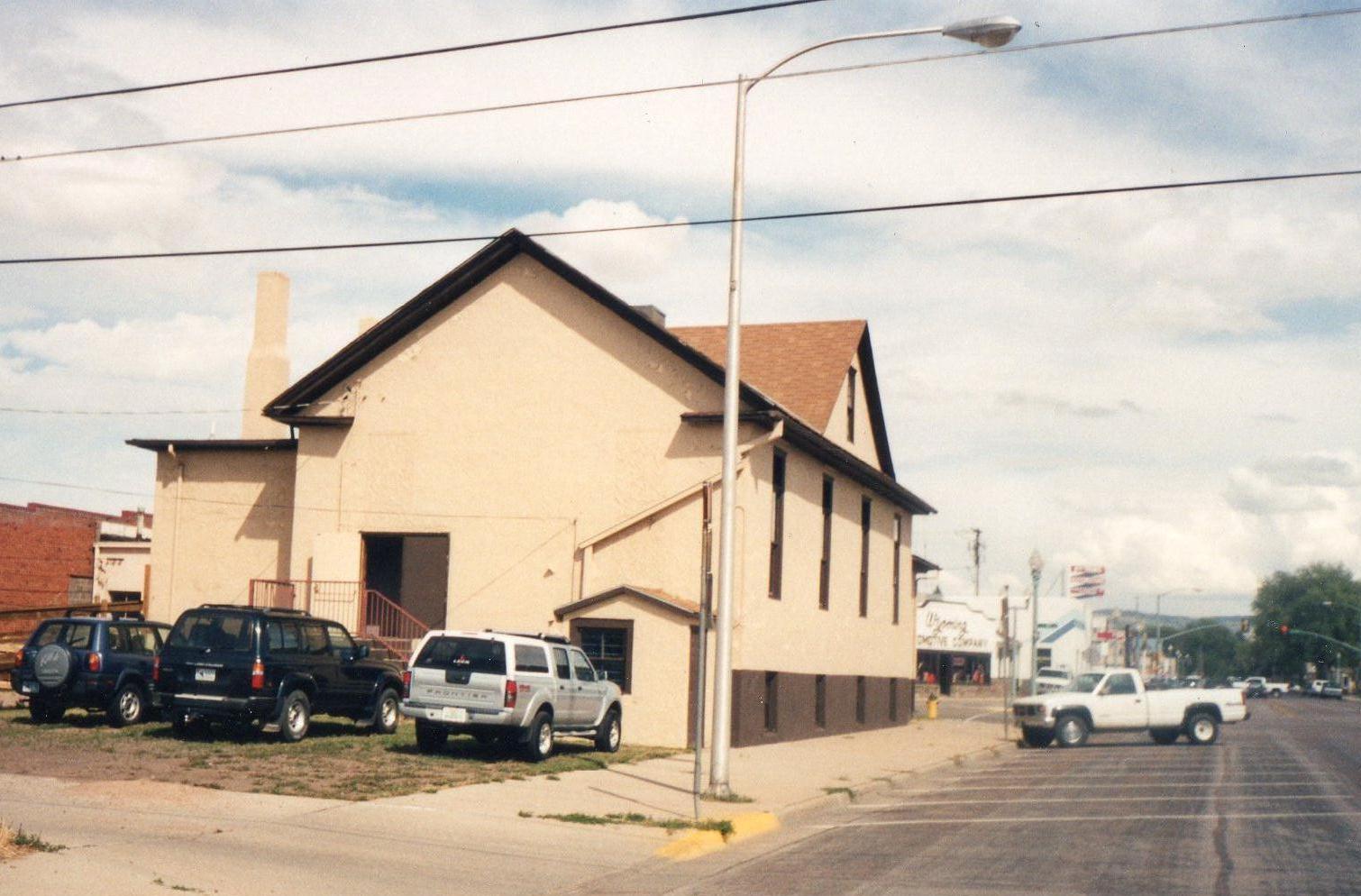
The church has been repurposed and today is used by a distance-training business. Inside the church, I could see the windows overlooking the spot where once my great-grandparents stood to say their vows…

Have you gone on a journey to discover the people in your family history? Have you stood where their feet once stood?




 nichepoetryandprose