Archive for the ‘where plants grow wild’ Category
a botany club excursion
Earlier this summer, we went on a hike with other members of a local botany club to the Cranberry Lake Protected Natural Area, an area protected for its extensive forest community of Red Oak and Red Maple.
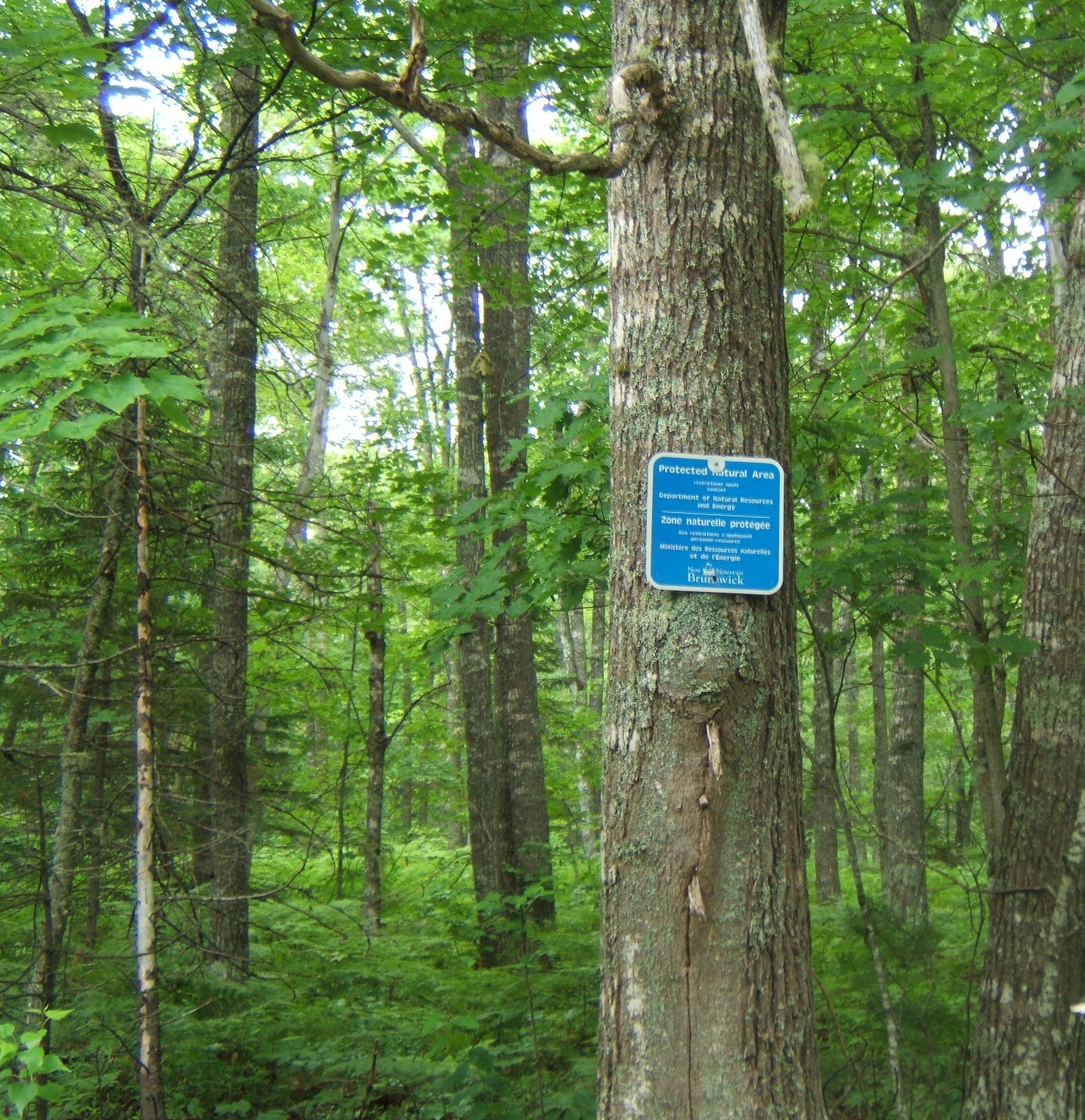
The New Brunswick Department of Natural Resources website describes the Cranberry Lake Protected Natural Area as follows:
An extensive Red Oak forest community. Predominantly Red Oak – Red Maple association. Red Oak make up a large percentage of the regeneration, most likely the Oak component will increase as the stand matures. The individual trees are impressive size.
This type of forest is rare in New Brunswick.
The woods were open with a thick understory of Bracken (Pteridium aquilinum (L.) Kuhn, var. latiusculum (Desv.) Underw. ex A. Heller), Blueberry (Vaccinium spp.), Common Lady’s Slipper (Cypripedium acaule Aiton) and some of the other species of the Canadian Element associated with woodlands in the Maritimes (see my post for April 30, 2012, Trailing Arbutus, https://nichepoetryandprose.wordpress.com/2012/04/30/trailing-arbutus-epigaea-repens-l-var-glabrifolia/ ).

My husband standing in the thick growth of Bracken… it was about waist-height… he says he was standing in a hole!
It was so much fun working with the other botanists and enthusiasts to identify the various species we encountered. The plant lists prepared during the day will be part of an effort by Nature New Brunswick to update a database of Environmentally Significant Areas in New Brunswick. During my years of work, I was privileged to work on the development and use of this database.
I saw many familiar species during the hike, but I was so excited to see three plants I have not seen in a while.
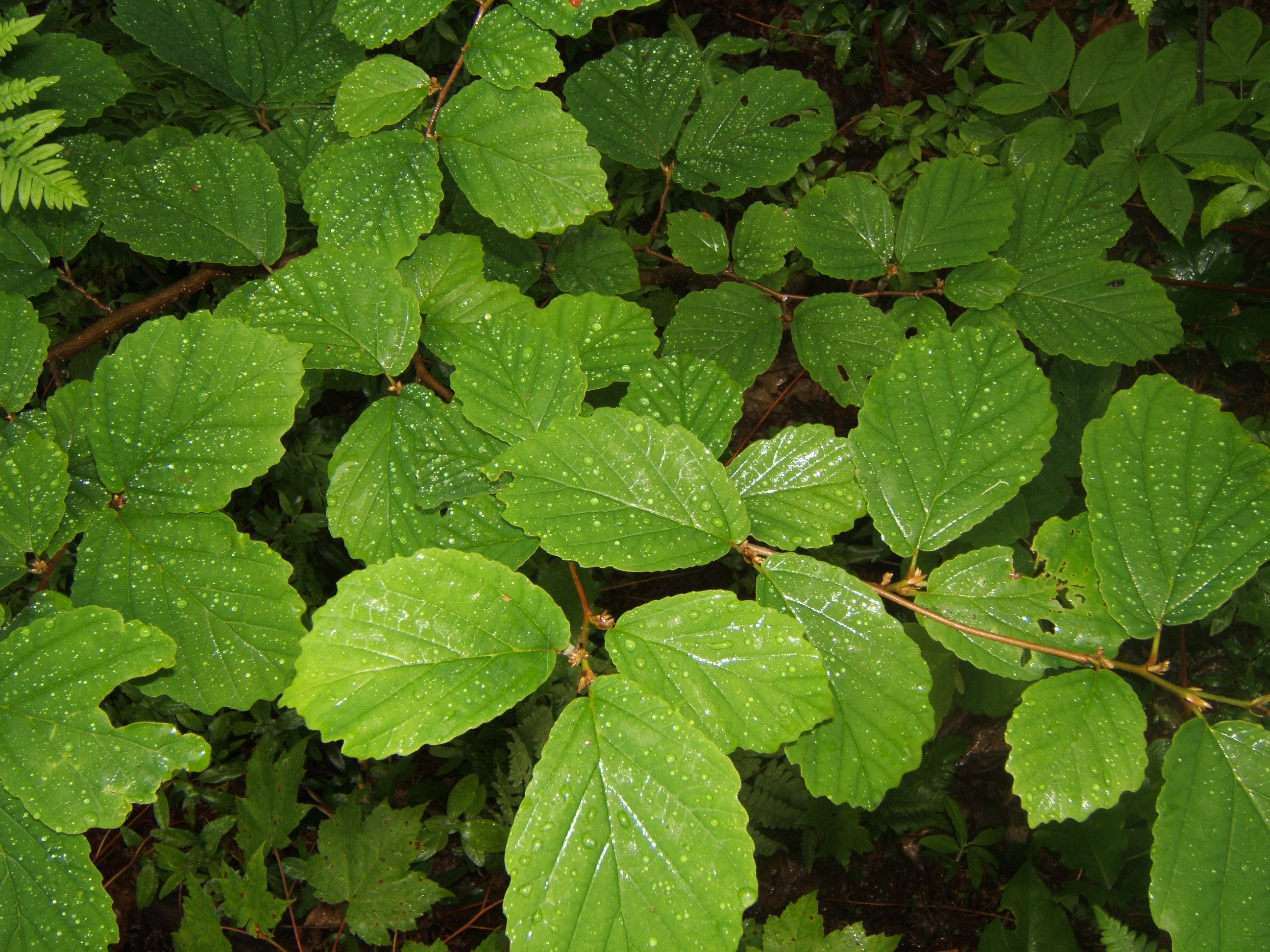
I renewed my acquaintance with Witch-hazel, Hamamelis virginiana L. (notice the asymmetrical shape of the leaves)…
and Shinleaf (Pyrola elliptica Nutt.), identifiable by its thick oval leaves, longer than the leaf-stalks or petioles…

a single plant of Shinleaf, with its straight stem of small creamy flowers, growing among Blueberry, and Red Maple and Red Oak seedlings
I also was introduced to a plant I thought I had never seen before, Cow-wheat (Melampyrum lineare Lam., a branchy variety found in dry woods). When I looked it up in my Flora, though, I found a notation to say I had seen this plant in the summer of 1984. It is always good to record the plants you see and identify!

While there, we saw a perfect example of the interaction of species. A bright orange fungus, known as Chicken of the Woods (Laetiporus sulphureus), growing on an aged Red Oak, was being consumed by a horde of slugs.

A hike with a group is a great way to expand your knowledge and boost your confidence. Everyone benefits from the knowledge of the various participants, and being with like-minded people is good for the soul!
© Jane Tims 2012
Warning: 1. never eat any plant if you are not absolutely certain of the identification; 2. never eat any plant if you have personal sensitivities, including allergies, to certain plants or their derivatives; 3. never eat any plant unless you have checked several sources to verify the edibility of the plant.snippets of landscape – evidence of old roads
This week, we drove to the south-west corner of the province and spent a little time at the Ganong Nature and Marine Park, at Todd’s Point near St. Stephen. The area is managed by the Quoddy Futures Foundation and is the former property of Eleanor and Whidden Ganong (Whidden Ganong was President of the Ganong Bros. candy factory in St. Stephen). The property is beautiful and good for the soul. We walked through the fields, identified wildflowers, listened to the birdsong, and were returned to a simpler time.
The fields along the path were yellow with Buttercup (Ranunculus sp.) and the largest population of Yellow Rattle (Rhinanthus Crista-galli L.) I have ever seen. The flowers of the Yellow Rattle were bright yellow, but the inflated calyx was tinged with red, giving the field a stippled glow (for more information on Yellow Rattle, see my post for August 3, 2011, ‘along the country road #1’ ).

Yellow Rattle among the field flowers… the fused sepals are tinged and veined with red
The Buttercups were everywhere, but concentrated in certain areas of the field. One area in particular seemed to mark the path of an abandoned road. The Buttercups have found some aspect of the old road to their liking. Perhaps the soil is compacted and they have a competitive ‘edge’ on the other plants. Perhaps the hidden track provides some alteration in the water regime or a place where certain types of seeds concentrate as they are dispersed. Perhaps there are subtle differences in the soil chemistry.
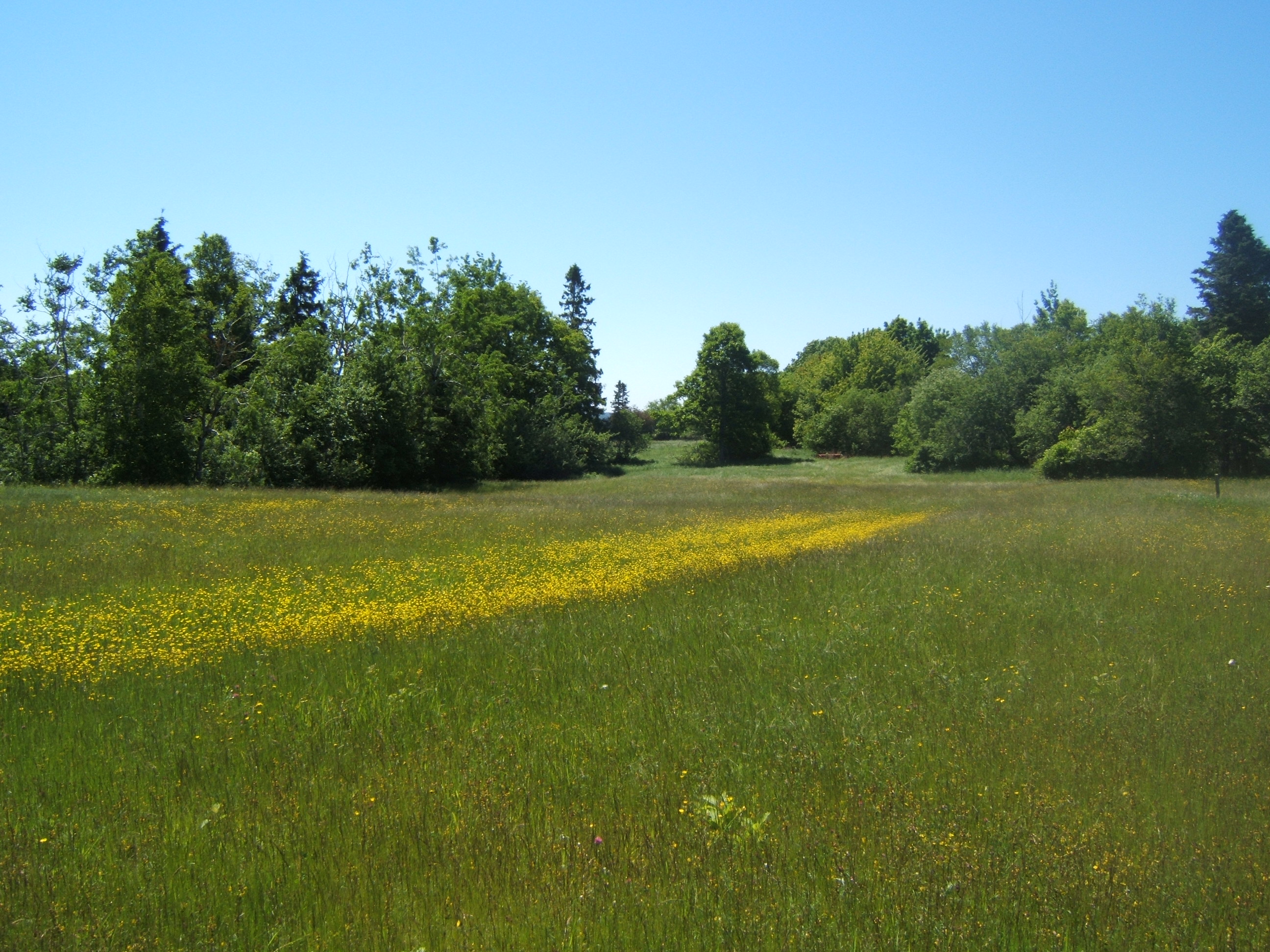
an abandoned track marked in Buttercups… the red tint in the foreground is from the reddish coloration of the Yellow Rattle
Years ago, I visited a property where the roadway to a back field was clearly marked with Bluets (Houstonia caerulea L.). The owner of the property said he thought they grew there because he always took his lime in an open cart back to his fields, and enough had spilled to make the way especially attractive to the Bluets.
Perhaps you will have a look in your landscape for wildflower clues to past activities.
~
~
Invitation to Tea
~
in the afternoon,
I huddle over tea
and watch
the road
~
an old road,
rarely used –
walks scarcely part
the tangle of fern
~
I scan the woods,
I love the look
of ancient trunk
and horizontal green
~
and always,
in the corner of my eye,
the road
~
overgrown –
a narrow course of saplings
intercepts
the sameness
of maturity
~
I watch
expectantly
~
but the road is abandoned –
cart-tracks worn
to rivulets,
culverts buried
by fallen leaves,
rusted oil tins,
depressions in the mould
~
~
© Jane Tims 2012
Common Plantain (Plantago major L.)
When we were children, we often pretended to be storekeepers and picked various wild plants as the ‘food’ for sale. We collected weed seeds for our ‘wheat’, clover-heads as ‘ice-cream’, vetch seed pods as ‘peas’, and (gasp) Common Nightshade berries as ‘tomatoes’.
This is probably a good place to urge you to teach your children – everything that looks like a vegetable or fruit may not be good for them to eat! I don’t remember ever trying any of our pretend ‘groceries’, but some of them, such as the Common Nightshade berries, were poisonous and harmful.

berries of Common Nightshade are poisonous… later in the season, they are red and quite beautiful… children should be warned that all red berries are NOT good to eat
We also ‘sold’ the leaves of Common Plantain at our ‘store’. They looked like spinach, and the Plantain leaves would have actually been fine for us to eat.
Common Plantain (Plantago major L.) is a very easily found weed since it grows almost everywhere, especially along roadsides, in dooryards and in other waste places. Plantain is also known as Ribwort, Broad-leaved Plantain, Whiteman’s Foot, or, in French, queue de rat. The generic name comes from the Latin word planta meaning ‘foot’. Major means ‘larger’.
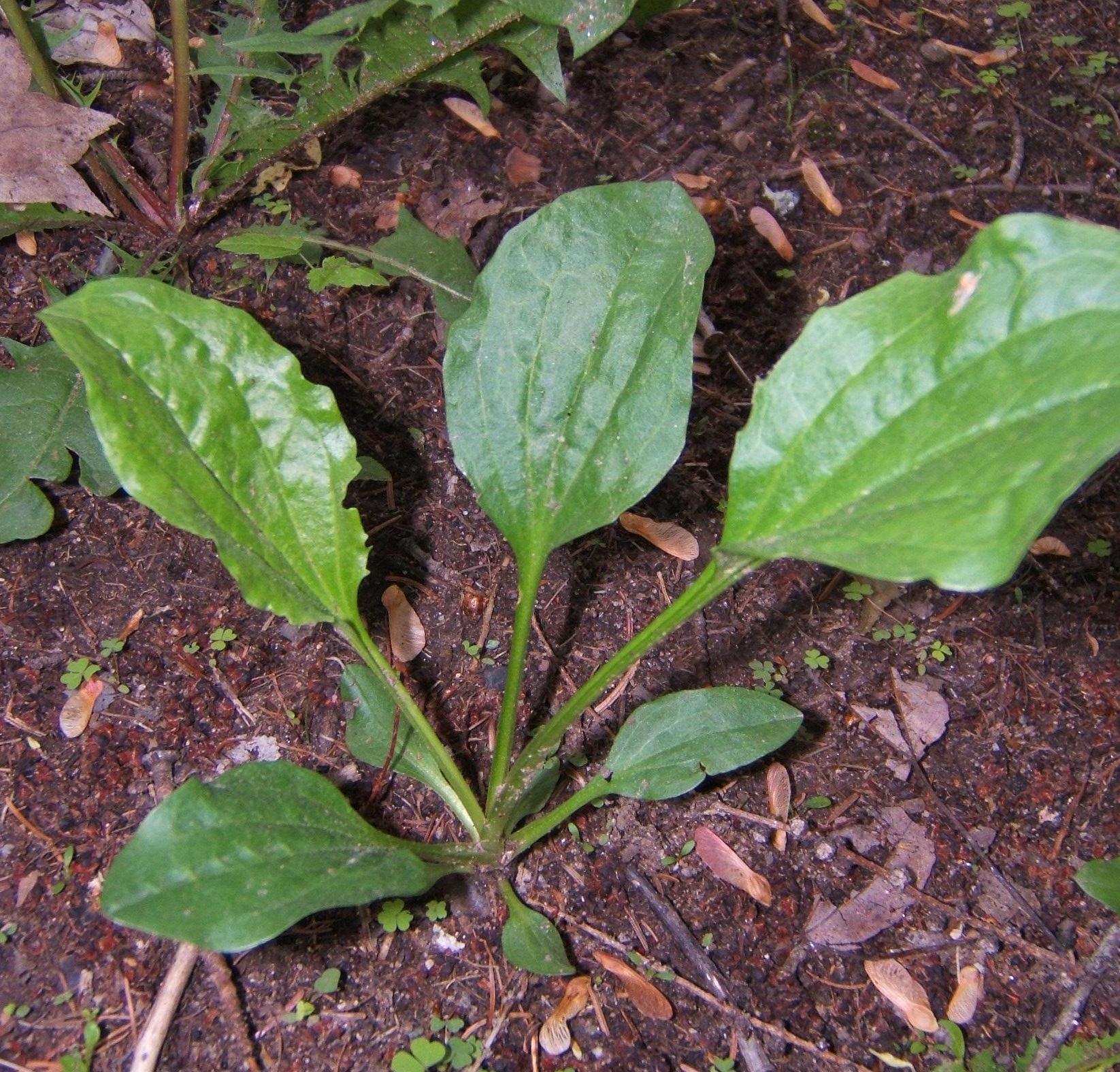
Plantain has thick, dark green, oval leaves. These grow near the ground in a basal rosette. The stems of the leaves are long and trough-like. The leaves themselves are variously hairy and feel rough to the touch. The leaf has large, prominent veins, and, as the plant grows older, these veins become very stringy. The veins resist the breakage of the leaf and stick out from the stem end of a harvested leaf like the strings of celery.
Flowers of Plantain grow in a dense spike on a long, slender stalk rising from the leaves. The flowers are small and greenish-white, appearing from June to August.
The young leaves of Common Plantain can be used in a salad or cooked and seasoned with salt and butter. The older leaves become tough and stringy.
Warning: 1. never eat any plant if you are not absolutely certain of the identification; 2. never eat any plant if you have personal sensitivities, including allergies, to certain plants or their derivatives; 3. never eat any plant unless you have checked several sources to verify the edibility of the plant.
leaves of Common Plantain and Dandelion, picked from our dooryard, not yet washed or looked over for insects… note the strings protruding from the stem ends
Yesterday, I gathered the youngest leaves of plantain I could find and cooked them for my lunch. They might be fine in times of need, but I found the cooked product to be just like eating soggy cardboard.

I should say, since I have begun my almost daily tests of edible wild plants, my husband asks me almost hourly how I am feeling.
~
~
wisdom
~
plantain, past the picking –
a pulled leaf resists,
tethered to a thread
~
~
© Jane Tims 2012
Warning: 1. never eat any plant if you are not absolutely certain of the identification; 2. never eat any plant if you have personal sensitivities, including allergies, to certain plants or their derivatives; 3. never eat any plant unless you have checked several sources to verify the edibility of the plant.Sheep Sorrel (Rumex Acetosella L.)
At this time of year, some of the fallow fields adjacent to our Federal-Provincial Agricultural ‘Farm’ in Fredericton are shadowed with bright red. Closer inspection shows these fields are filled with Sheep Sorrel, in scarlet bloom.

The common Sheep Sorrel (Rumex Acetocella L.) is a small, slender plant, less than a foot high, with distinctive leaves shaped a little like an arrowhead or halberd. The lobes at the base of each ‘arrowhead’ leaf point backwards, a shape described in botany as ‘hastate’.
Sheep Sorrel is considered a weed, growing along roadways and in fields. It prefers acidic, ‘sour’ soils and is considered an indicator of these soils.
Sheep Sorrel (Rumex Acetosella ) is also known as Common Sorrel, Field Sorrel, Red Sorrel, and Sour Weed. In French it is called surette or oseille. The old generic name Acetosella means ‘little sorrel’. Sheep Sorrel is from the Buckweat Family of plants.

The flowers of Sheep Sorrel are small, distributed in an open cluster along the stem. The female flowers are maroon and the male flowers are brownish-green.
The leaves of Sheep Sorrel are well-known as an edible plant. They have a pleasantly tart, sour flavour and make a good nibble, an iced tea, or an addition to a salad. They can also be used as a pot-herb – when cooked they reduce in size like spinach, and they lose the acid taste. The Sheep Sorrel plant has a chemical called oxalate so cannot be consumed in large quantities. Long-term consumption can affect calcium absorption in the body. As always, please be sure of your identification before you consume any wild plant.
Warning: 1. never eat any plant if you are not absolutely certain of the identification; 2. never eat any plant if you have personal sensitivities, including allergies, to certain plants or their derivatives; 3. never eat any plant unless you have checked several sources to verify the edibility of the plant.~
~
red field
~
walk in the field with the scarlet flowers
arrowheads and halberds surely leave
a sour taste on the tongue
titration with alkaline needed
to sweeten the ground, dilute the red
return the soil
to more productive ways
~
~
© Jane Tims 2012

keeping watch for dragons #6 – Water Dragon
The last full week in May, we took a day to drive the Plaster Rock-Renous Highway. This is an isolated, but paved, stretch of road, called Highway 108, connecting the sides of the province through a large, unpopulated area. The highway runs from Plaster Rock in the west, to Renous in the east and traverses three counties, Victoria, York and Northumberland. It takes you across more than 200 km of wetland, hardwood, and mixed coniferous forest, some privately owned, and some Crown Land. A large part of the area has been clearcut, but the road also passes through some wilderness of the Plaster Rock-Renous Wildlife Management Area and the headwaters of some of our most beautiful rivers.
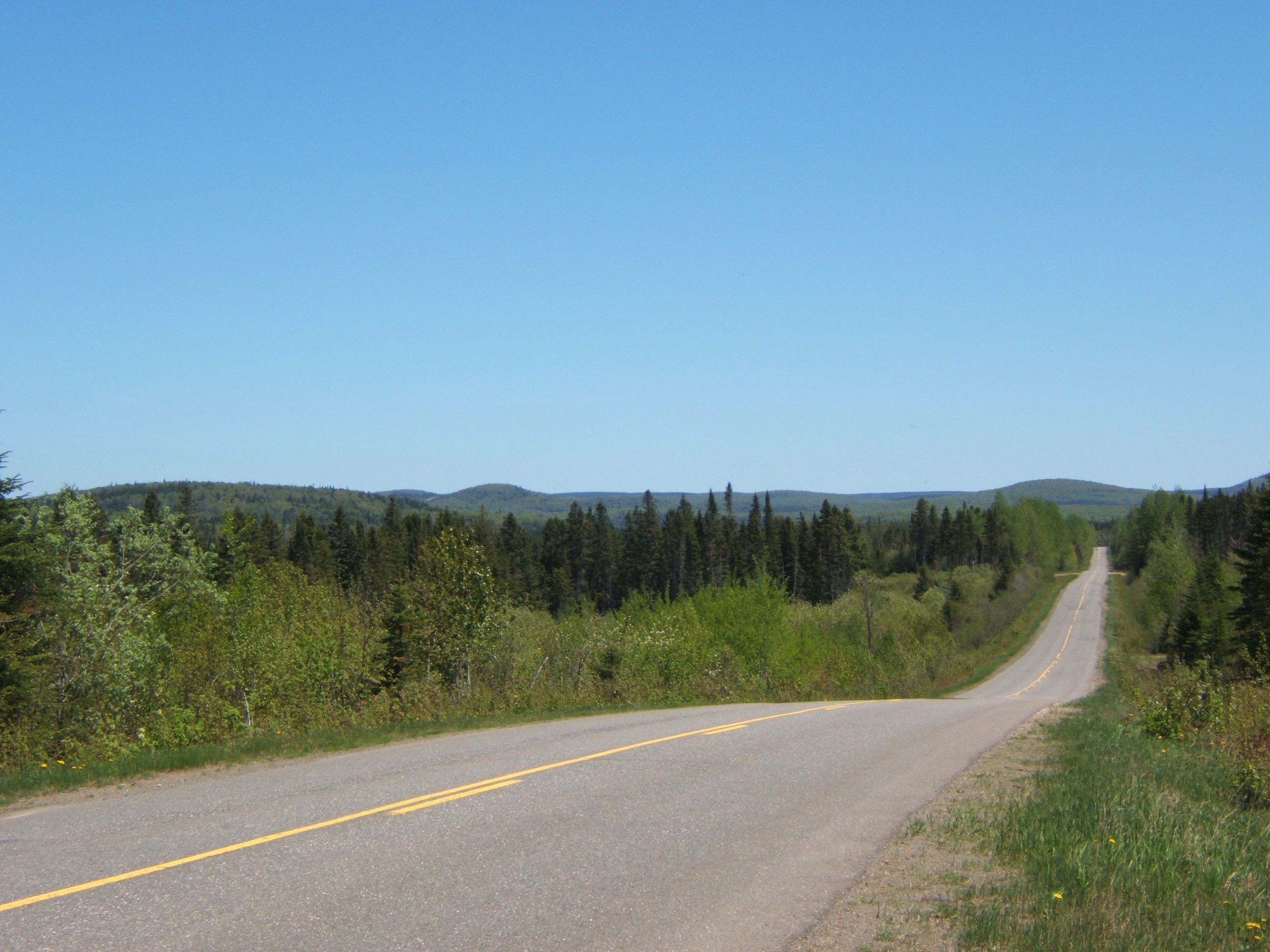
From the east, the highway first runs along the waters of the Tobique River, across the Divide Mountains, and into the drainage of the Miramichi River, crossing the Clearwater Brook, and running along the South Branch of the Dungarvon River and the South Branch Renous River.
Along the way, we stopped at a boggy pond next to the road between Clearwater Brook and the Dungarvon, to listen to the bull frogs croaking. There among the ericaceous vegetation filling most of the pond was a dragon for my collection.


look closely near the center of the photo… the single white spot is the spathe of a Wild Calla or Water Dragon
Water Dragon, more commonly known as Wild Calla or Water Arum, was present in the shallow, more open waters of the pond, appearing as startling white spots on an otherwise uniform backdrop of green and brown.
Wild Calla (Calla palustis L.) is also known as Female Dragons, Frog-cups, Swamp-Robin and, in French, calla des marais, arum d’eau, or aroïde d’eau. It lives in wet, cold bogs, or along the margins of ponds, lakes and streams.
The Wild Calla belongs to the Arum family, along with Jack-in-the-Pulpit (Arisaema Stewardsonii Britt.) and Skunk Cabbage (Symplocarpus foetidus (L.) Nutt.). These plants have tiny flowers along a thick spike known as a ‘spadix’. The spadix is enclosed by a leafy bract called the ‘spathe’. The spathe of Wild Calla is bright white, ovoid and abruptly narrow at the tip. The leaves are glossy green and heart-shaped. The flowers growing among them are often overlooked. On the pond, there were about ten visible spathes, and likely many more hidden among the plentiful leaves.
The various parts of the Wild Calla are considered poisonous since they contain crystals of calcium oxalate. These cause severe irritation of the mouth and throat if eaten. However, there is a twist to this story of a poisonous plant. Scandanavian people, in times of severe hardship, prepared flour for ‘Missen bread’ from the dried, ground, bruised, leached, and boiled seeds and roots of Wild Calla. Do I have to warn you not to try this at home!!!!????
Warning: 1. never eat any plant if you are not absolutely certain of the identification; 2. never eat any plant if you have personal sensitivities, including allergies, to certain plants or their derivatives; 3. never eat any plant unless you have checked several sources to verify the edibility of the plant.Linnaeus, the botanist who invented the binomial (Genus + Species) method of naming plants, described the laborious process the Swedish people used to remove the poisonous crystals from the Water Dragon in order to make flour. To read Linnaeus’ account, see Mrs. Campbell Overend, 1872, The Besieged City, and The Heroes of Sweden (William Oliphant and Co., Edinburgh), page 132 and notes (http://books.google.ca/books?id=IAsCAAAAQAAJ&pg=PA222&lpg=PA222&dq=missen+bread&source=bl&ots=ZO8cl_2nBl&sig=Gtr5Lq6PvG3DXV_l-kfECNuhWfo&hl=en&sa=X&ei=gGLFT-79B4OH6QG1m-nOCg&ved=0CC8Q6AEwAA#v=onepage&q=missen%20bread&f=false Accessed May 29, 2012).
~
~
~
desperate harvest
‘… they can be satisfied with bark-bread, or cakes made of the roots of water-dragon, which grows wild on the banks of the river…’
– Mrs Campbell Overend, 1872
~the pond beside the road
simmers, a kettle
of frog-croak and leather-leaf
~
spathes of Water Dragon
hug their lamposts, glow white
lure the desperate to the pond
~
bull-frog song deepens the shallows
the way voices lower when they speak
of trouble, of famine
~
people so hungry, harvest so poor
they wade in the mire
grind roots of Wild Calla for flour
~
needles to the tongue
burns to the throat
crystals of calcium oxalate, poison
~
worth the risk –
the drying,
the bruising,
the leaching,
the boil,
the painful test to know
if poison has been neutralized
~
the toughness of
the Missen bread
~
~
© Jane Tims 2012

making friends with the ferns #3
Although the fiddleheads of the Ostrich Fern are edible and a delicacy in New Brunswick, all fiddleheads are not edible. The fiddlehead is the tightly-rolled, earliest emergence of the immature fern leaf. This coil of the leaf resembles the head of a fiddle, hence the name. As time passes, the fiddleheads uncoil and become the mature leaves of the fern.
In the Grey Woods, we have two species of fern with very distinctive fiddleheads.
The fiddleheads of the Sensitive Fern (Onoclea sensibilis L.) are slim and red. They are not edible and are poisonous to horses.

red fiddleheads of the Sensitive Fern are hard to see against the dried leaf layer
The Sensitive Fern grows at the edges of the Grey Woods, along our house foundation and in a large patch on our ‘lawn’.
The common name ‘sensitive’ refers to the fern’s characteristic dying at the first frost. The Sensitive Fern is also called the Bead Fern, a reference to the hard brown spore cases on the fertile spikes. Once the green leaves have died, only the tall brown fertile spikes remain, and these persist until spring. The Sensitive Fern is a once-cut fern (the leaves are cut once into simple leaflets) with wavy margins and sometimes deep indentations in the leaflets. The upper leaflets are ‘winged’ or ‘webbed’ where they join the main axis of the plant.
The fiddleheads of the Cinnamon Fern occur in clumps and are densely covered with coarse white hairs. The fiddleheads can be eaten but are not used as commonly as those of the Ostrich fern.
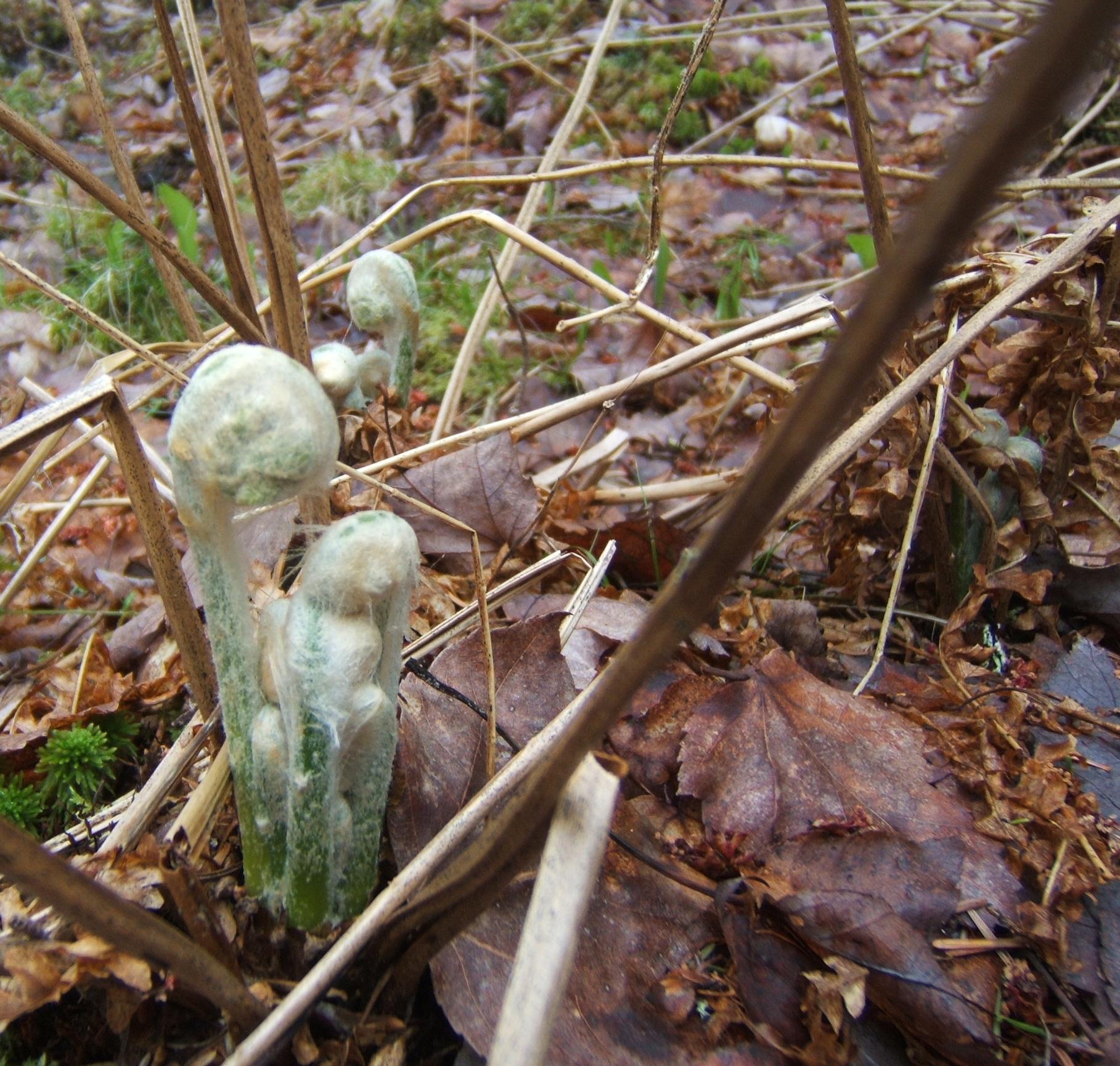
the wooly fiddleheads of the Cinnamon Fern are common in wet woods in New Brunswick
The Cinnamon Fern (Osmunda cinnamomea L.) grows in wet woods and other water-logged areas. In our Grey Woods, it grows in the fern gully (see the ‘map of the grey woods’ under ‘about‘).
Cinnamon Fern is a twice-cut fern (the leaves are cut into leaflets and these, in turn, are cut into sub-leaflets). As the sterile leaves expand, you can see fine cinnamon-colored wooly hair along the stalk, and tufts of cinnamon-colored hairs on the underside and at the base of each leaflet. The plant produces separate fertile spikes that turn cinnamon-brown in color.
~
~
fiddleheads
~
thin music in the May-woods,
trowie tunes from the peerie folk,
a bridge between spring
peepers and the wind,
fiddleheads carved in
Sensitive red and Ostrich green,
the bow strung by spiders,
the riff in the violin trembles
as potential uncoils,
music befuddled in a web
of Cinnamon wool
~
~
© Jane Tims 2012
Warning: 1. never eat any plant if you are not absolutely certain of the identification; 2. never eat any plant if you have personal sensitivities, including allergies, to certain plants or their derivatives; 3. never eat any plant unless you have checked several sources to verify the edibility of the plant.Staghorn Sumac (Rhus typhina L.)
One of the berry bushes common in our area is Staghorn Sumac (Rhus typhina L.). Its leaves and berries turn brilliant red in autumn, and its berries are displayed in distinctive red ‘horns’.
Staghorn Sumac is a small tree or shrub found at forest edges and in wastelands. The shrub has a flat crown and an umbrella-like canopy. It has pinnately compound leaves and toothed leaflets.
Staghorn Sumac is a ‘pioneer’ species, often one of the first plants to invade an area after the soil is disturbed. Although it reproduces by seed, it also grows from its vigorous underground root system, and forms dense colonies with the oldest trees at the centre. In this way, it causes dense shade to out-compete other plants.
The flowers of Staghorn Sumac are greenish-yellow and occur in spiked panicles from May to July. The berries are velvety, hairy red drupes, and ripen in June to September, often persisting through winter. The berries are held in dense clusters or spikes at the ends of tree branches.

Staghorn Sumac is also called Velvet Sumac, or Vinegar-tree, and Vinaigrier in Quebec.
The common name of Staghorn sumac is derived from the velvet feel of its bark, reminiscent of the texture of deer antlers. The word sumac comes from the words for red in Latin (sumach) and Arabic (summāq). The specific name ‘typhina’ means ‘like Typha’ (cat-tail), a reference to its velvety branches.
The Staghorn Sumac provides food for birds including Evening Grosbeaks and Mourning Doves, and its twigs are eaten by White-tailed Deer.
It has many human uses, including for medicine, decoration, tanning and dyes. Staghorn Sumac berries are used to make a lemon-flavored ‘sumac-ade’ or ‘rhus juice’. Remember, before you consume any wild plant, be certain of your identification.
Sumac lemonade
Pick and clean the berries (removing them from the stem)
Soak berries in cool water
Rub the berries to extract the juice
Strain
Add sugar to taste
~
~
Staghorn Sumac
Rhus typhina L.
~
from a single stem
and subterranean creep
a crowd of sumac
~
umbrellas unfurl
roof by roof
shield the hillside
from ministrations of sky
~
shadowed ways beneath
to shelter and imitate
a gathering of deer
with velvet antlers lift
~
an occidental village
red spires like minarets
insist on sky
~
~
Warning: 1. never eat any plant if you are not absolutely certain of the identification; 2. never eat any plant if you have personal sensitivities, including allergies, to certain plants or their derivatives; 3. never eat any plant unless you have checked several sources to verify the edibility of the plant. © Jane Tims 2012Sweet-fern (Comptonia peregrina (L.) Coult.)
Last weekend, we went on a short hike to the lake to collect some dried Sweet-fern, with the goal of making Sweet-fern sun tea. To make the tea, fresh or dry leaves of Sweet-fern are steeped in a jar in the sun for three hours.
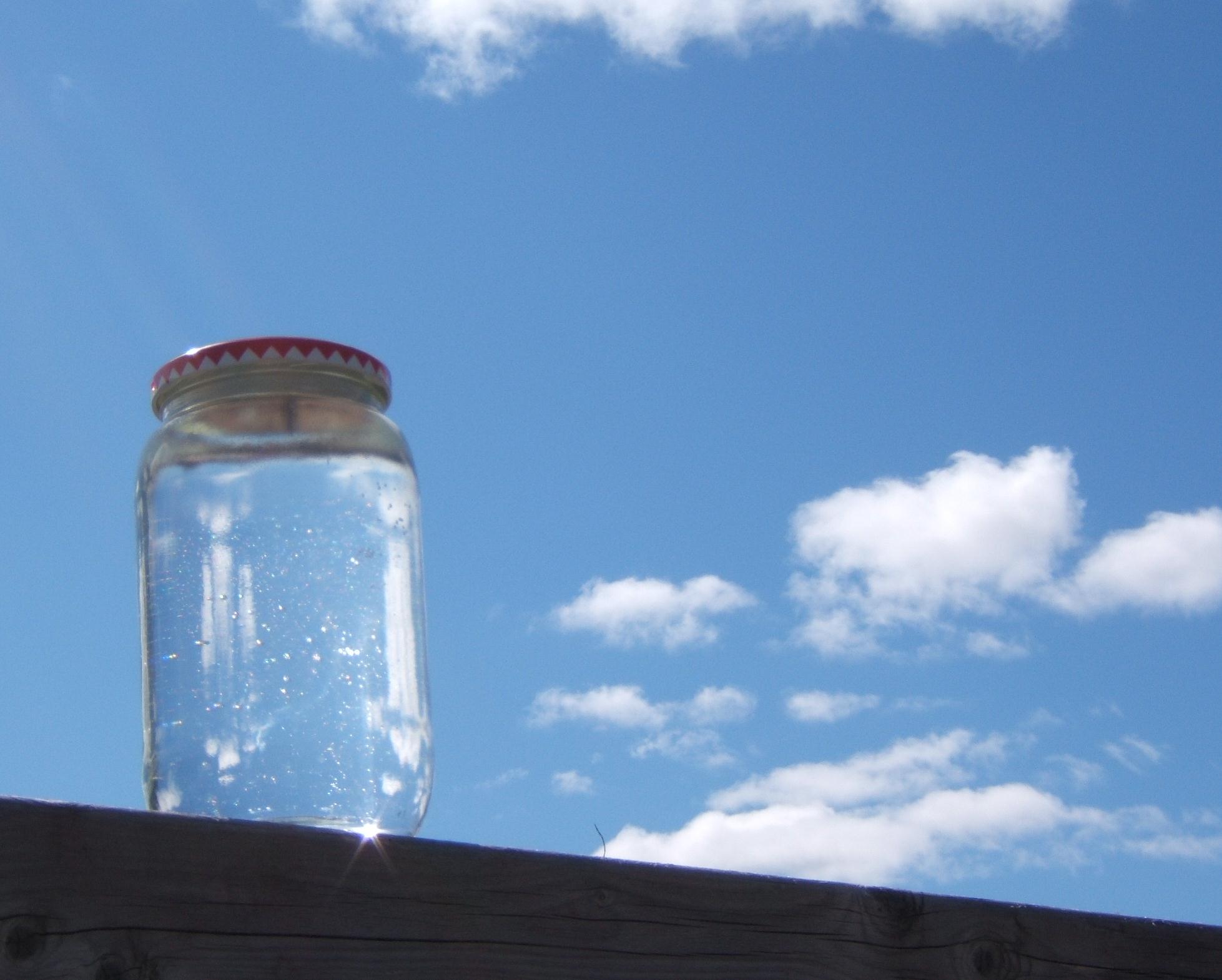
Unfortunately, the wind was too cold to allow the spring sun to warm the jar. So I collected the dry leaves and, on Sunday afternoon, I enjoyed a cup of fragrant Sweet-fern tea, made the usual way, steeped in boiling water.

Later in the spring or summer, I’ll be trying the sun tea method again.
Sweet-fern(Comptonia peregrina (L.) Coult.) is a small rounded shrub with fernlike green leaves found in dry rocky waste areas, clearings or pastures. The leaves are simple and alternate, long, narrow and deeply lobed. The shrub sometimes grows as a weed in blueberry fields.
Sweet-fern is called Comptonie voyageus in French, since peregrina means traveller. The generic name is after Henry Compton, a 17th century Bishop of London who was a patron of botany.
The fruit is a green burr enclosing 1-4 nutlets. These can be harvested in June or July while still tender.
Sweet-fern is a member of the Sweet Gale family. The plant is very fragrant, particularly when crushed, due to glands on the leaves and twigs. The tea made from the leaves is also fragrant. To make the tea, use 1 tsp dried or 2 tsp fresh leaves per cup of water. Remember, to always be absolutely certain of the identification before you try eating or drinking anything in the wild.
~
Directions for Sweet-fern sun tea
8 tsp of fresh chopped leaves
1 quart of clean fresh cold water in a jar
cap and place in sun three hours until water is dark
strain and serve
~
~
Sweet-fern sun tea
Comptonia peregrina (L.) Coult.
~
to quench the thirst of a traveller
and reward a hike too far
~
steep sweet-fern
in the solar flare
~
gives up fragrance to air
and to water in a sun-drenched jar
~
~
Warning: 1. never eat any plant if you are not absolutely certain of the identification; 2. never eat any plant if you have personal sensitivities, including allergies, to certain plants or their derivatives; 3. never eat any plant unless you have checked several sources to verify the edibility of the plant. © Jane Tims 2012accents in red
We are still in the greys and browns of spring.
There are a few wildflowers blooming. The Coltsfoot is spreading carpets of yellow along the roadside. And flowers in the deep hardwoods have begun to display their delicate beauty. But most places are drab and colorless.
I watch for red this time of year. There are a few red berries, still clinging to their branches after winter.
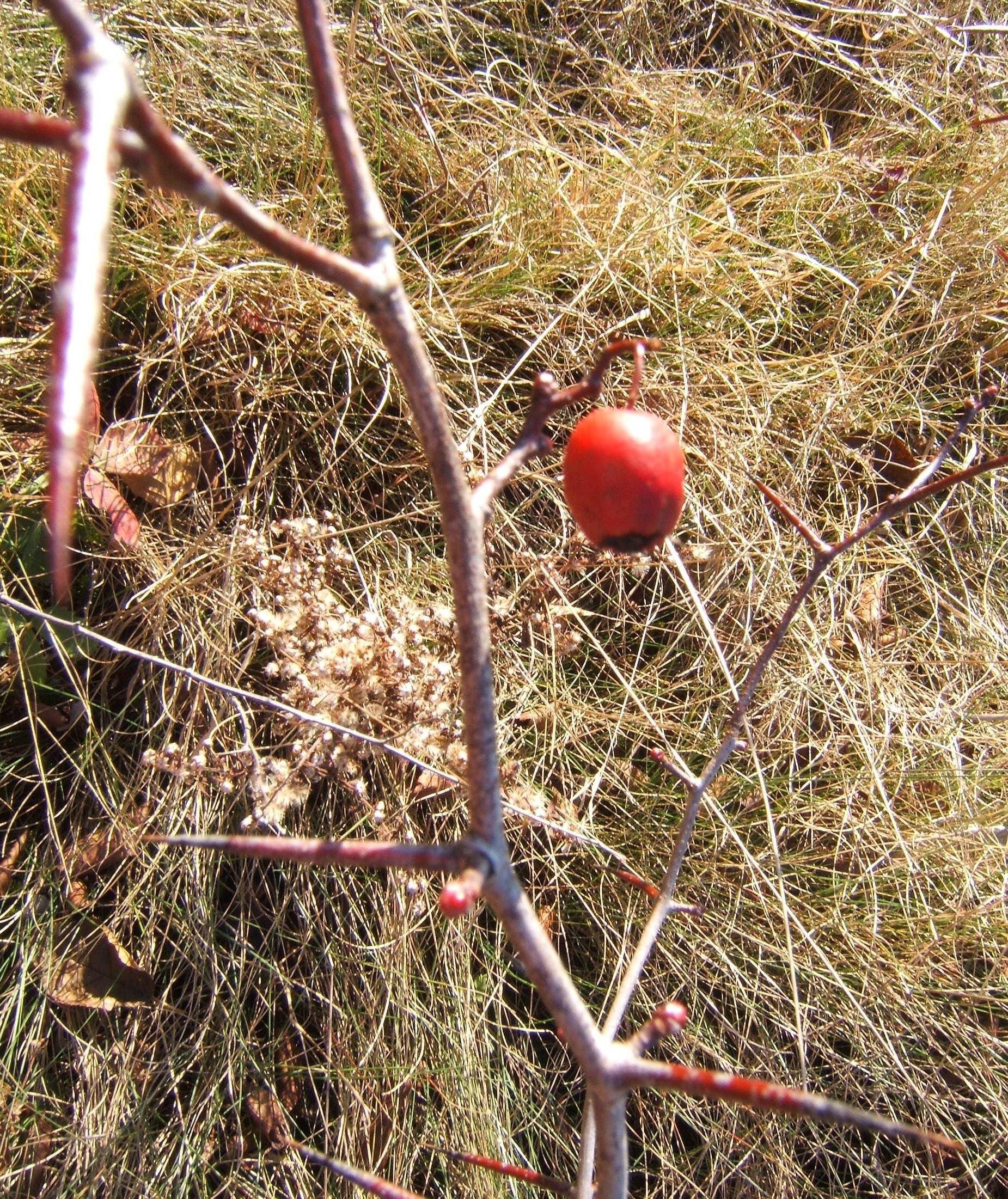

And the stems of Red Osier Dogwood (Cornus stolonifera Michx.) are brilliant in the fields and ditches.

My favorite ‘red’ of spring is the muted red of the blueberry fields.

~
~
fancy
~
the blueberry barren
is faded scarlet
red osier in ditches
rosebush and hawthorn
a single berry, a single haw
Earth in brown
toenails red
~
© Jane Tims 2012
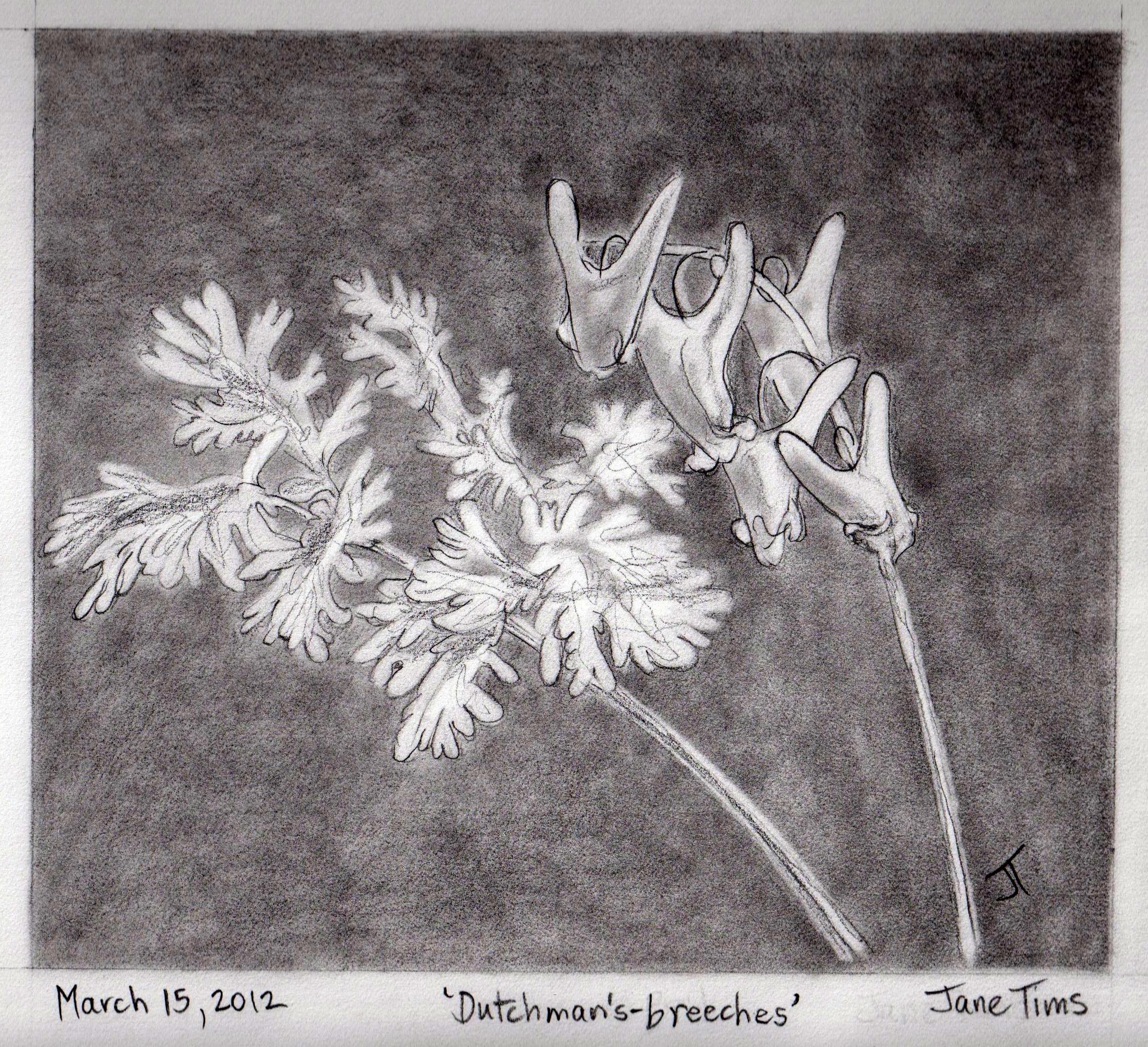
Dutchman’s-breeches (Dicentra Cucullaria (L.) Bernh.)
Our first summer home was located in a rich hardwood of Sugar-Maple (Acer saccharum Marsh.), Beech (Fagus grandifolia Ehrh.) and White Ash (Fraxinus Americana L. ). In these woods, in early spring, as the snow melted, wildflowers found ideal habitat. Many plants take advantage of the few days when the leaves of the overstory trees are still developing, and there is bright light in the understory of the woods.
One of these wildflowers is Dutchman’s-breeches (Dicentra Cucullaria (L.) Bernh.). This charming little plant blooms early in spring, in rich, rocky hardwoods. The white flowers are two-spurred, in groups of four to ten along a stem held just above finely divided, feathery leaves.
The plants is also known as breeches-flower, cullottes de Hollandais, and dicentre à capuchon. The generic name is from the Greek di meaning twice and centron meaning a spur. Cucullaria is the old generic name meaning hoodlike. The plant was named by Johann Jacob Bernhardi.
The flowers of Dutchman’s-breeches are an example of plant adaptation for pollination. The flower has a clever mechanism, in the form of fused flower parts, to ensure only certain insects (such as the bumblebee) can access the nectar and pollen.
In my copy of Roland and Smith (The Flora of Nova Scotia), I recorded my first encounter with this little plant – April 28, 1985, during one of our first visits to our property before we purchased it. We called our cabin Whisperwood, in part because of the subtle breezes in those wildflower-dotted spring woods.
~
~
Dutchman’s Breeches
Dicentra Cucullaria (L.) Bernh.
~
~
Dutchman’s breeches
brighten in sun
woodland washdays
have begun
~
spring-clean trousers
hung in rows
inflated with breath
the May wind blows
~
sprites are playing
tossing their hoods
above the damp
in the spring-fed woods
~
little fairy laundry
trembles on the line
before greening trees
block spring sunshine
~
~
© Jane Tims 1993




 nichepoetryandprose