Archive for the ‘Uncategorized’ Category
upcoming: my new ‘urban mysteries’
With all my posts about genealogy, you may be wondering if I am doing any creative writing. Oh yes! I am busy on the final touches to a new series: Urban Mysteries.
~
The five mysteries are set in the Maritimes, in cities where I have lived or worked: Halifax, in Nova Scotia, and Fredericton and Saint John, in New Brunswick. They are adventure stories as much as mysteries, although the protagonist in each solves a problem encountered. The main character in each story is a young woman, independent and resourceful.
~
The five books are also Meniscus Peripherals, meaning they occur in the same universe as my Meniscus Science Fiction Series: each of the books mentions an alien abduction but the rest of the abduction story is found in one of the Meniscus Science Fiction books.
~
There will be five books in this first set of the Urban Mysteries Series:
Office Green … in Halifax, a young woman who cares for office plants, crosses the paths of some unsavoury characters;
Hollow Hotel … in Saint John, a climber takes on the outside of an abandoned hospital and must save her two friends after a terrible fall;
Roundabout … in Fredericton, an artist, who is recording life in a new city traffic circle, encounters … well, more unsavoury characters;
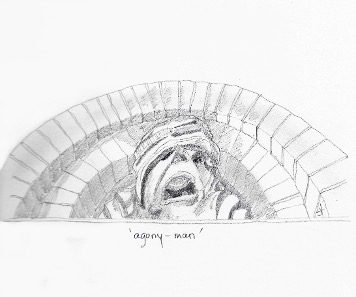
City Grotesque … in Saint John, an artist, working on a mural for tourists, takes part in a contest to find look-alike for sixteen stone carvings on one of the Uptown buildings;
Dancing with Trees … in Fredericton, an artist, drawing some of the city trees, stumbles on a mysterious dancer who is connected to a local urban legend.
~

~
Each of the five Urban Mysteries is less than 20,000 words, so they are properly called ‘novellas.’ All five will be released in December. I’ll keep you up to date!
~
~
All my best,
Jane (a.k.a. Alexandra)
Tricks to Improve Accuracy in Your Family Tree
In my recent searches for my Spavold ancestors in England, I have used some very useful tools, all at Ancestry.ca:
- first, the family trees of various genealogist enthusiasts like myself who work slowly to build their family trees; the family tree ‘petbar’ is a very complete ‘Spavold’ family tree and was a great help in building my own tree;
- second, the original documents accessible through the website, including, primarily, records of marriages, baptisms and burials.
~
The quality of information in some Family Trees is variable, depending on how carefully the tree-builders work. Due to the preponderance of similar names in these families, it is very easy to mix up ancestors: for example, men with the name ‘Thomas’ who were born in the same generation and on approximately the same date.
~
To counter this problem, I use the following methods:
- in my draft family tree (not available for public view), for each profile, I use the ‘prefix’ after the person’s full name to easily relocate individuals in the tree. For example, I can use this field to add question marks, possible names of spouses, and notations for examining certain questions, for example, ‘too young,’ ‘possible duplicate,’ and so on. The notations are often visible in the vertical display of the family tree, so you can locate people with respect to one another. These quick notations should be removed before the tree is made public since the field is meant for appellations such as Captain, Jr., Sr., and so on;
- for each profile, I examine the marriage dates and birth dates of children to make certain they are logical. So, a person born in 1625 cannot have children born in 1730 and 1732. And people are not likely to have been married before child-bearing age, although it does happen. Also, children cannot have been born after a mother’s death, or more than a few months after a father dies. Again, there are exceptions, for example, if another possible father is still alive. For each profile, birthdates of children make most sense when they are born one or two years apart. Variations do occur, but should be examined more closely;
- for each profile, I check information on where people lived at different parts of their lives. So, for example, for two confusing Thomases, both born in 1632, one may have been born in Gainsborough in Lincolnshire and lived there all his life, and the other may have lived all his days in Everton in Nottinghamshire. These Thomases likely ‘belong’ to families living in the respective communities or nearby. There are exceptions, of course, for individuals who were widely travelled. Also, the various small communities need to be located with respect to others in the vicinity; for example, communities of Bawtry (Yorkshire), Harworth (Yorkshire), Scaftworth (Nottinghamshire), and Everton (Nottinghamshire) are very close together and family members were mobile between nearby communities;
- consider the alternative spelling of names: ‘Spavold’ is an unfamiliar name and has been listed in the various records as ‘Spaffield,’ ‘Spavin,’ ‘Spavald,’ ‘Spaviald,’ and so on. The most interesting incorrect transcription I encountered was for Willm Epaxato, born in Gainsborough in 1523; I have read the original and I would have transcribed it with ‘Spavold’ (Source: Nottinghamshire, England, Church of England Baptisms, Marriages and Burials, 1538-1775. St Bartholomew Church, at Sutton-Cum-Lound near Retford). The spelling of the family name may provide a clue as to which family our Thomas belongs.
~

~
If you like puzzles, have a look at this marriage record from All Saints Church in Misterton in Nottinghamshire. I reveal the transcription for the third line from the top, written in darker black ink, in a post script at the end of the post:
~

~
Since surnames are specifically male in origin, there is a tendency to ignore women in a family line. However, they are ancestors, important and interesting in their own right. Their records provide additional information on siblings and parents, places lived, and naming traditions. They are also relatives and are represented in the growing DNA data.
~
In spite of my searching, I have yet to find my great-great-great grandfather William Spavold. However, in the various searches of baptism, marriage and burial records, I often find people who do not fit in the family tree or are listed for other areas in England. In my searches to date, I have yet to identify a DNA connection to any owner of the various family trees. This makes me think that my William Spavold will still be found, among the progeny of incomplete profiles or among some of the Spavolds who do not seem to fit in the record.
~
All my best,
Jane Tims (a. k. a. Jane Spavold)
~
Post Script: the names in the Misterton record are transcribed as ‘Robert Spavald’ (born about 1583) and ‘Alice Snell’ (born about 1580). This will give you an appreciation for difficulty historians face when transcribing old records.
hermit thrush – a poem put to song
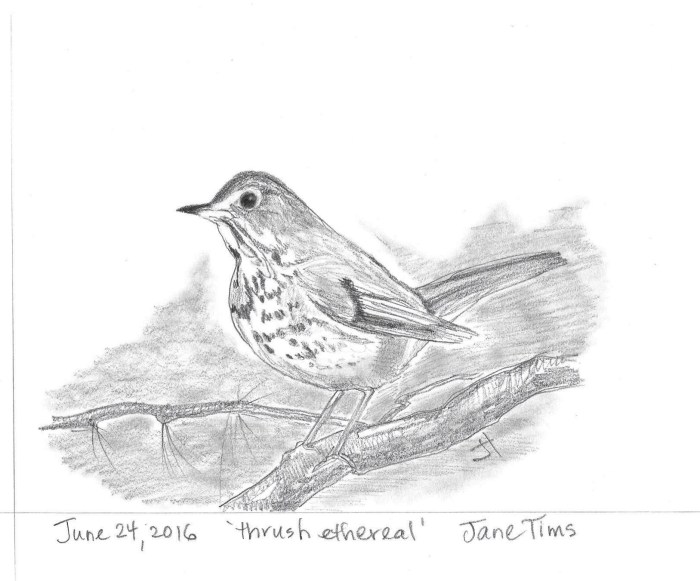
One of the poems in my new book ‘mnemonic’ is about my favourite bird – the hermit thrush (Catharus guttatus). Once you have listened to this bird singing in the woods, your life will be forever changed.
~
Many thanks to Alan Edgar (alan@science-music.karoo.co.uk) who put the words of ‘hermit thrush’ to music after a study of the bird’s complex melody. ‘Hermit Thrush Song’ is the resulting musical arrangement. https://www.sheetmusicplus.com/title/hermit-thrush-song-soprano-with-pianoforte-digital-sheet-music/22120849. Thanks also to Mary Lee McKenna for playing the ‘Hermit Thrush Song’ on the piano for me, to help me know Alan Edgar’s melody.
~
~
Here is ‘hermit thrush,’ an ‘author’s favourite’ poem in my book mnemonic.
~
Hermit thrush
~
Catharus guttatus
~
neither visceral nor guttural, ethereal
tip-toe in tree tops
air pulled into taffy thread
a flute in the forest
froth on a wave
~
rain trembles on leaf tips
guttation drops on strawberry
a lifted curtain of mayflower
~
I saw you there
hidden in the thicket
and I followed
~
climb the ladder and sing
then step to the rung below
heads up, thoughts of the new day
parting of the beak
pulse at the throat
hairs lift
at the nape
of the neck, fingers
warble the keys
between middle and ring
catharsis
~
This poem and drawing are with others in my poetry book ‘mnemonic,’ now available from Chapel Street Editions (https://chapelstreeteditions.com/book-catagories/poetry/mnemonic/ ). The book is also available at Westminster Bookmark in Fredericton and Dog Eared Books in Oromocto.
~
Hope you love my book!
All my best….
Jane Tims
making November warm #2
From my childhood, I have considered November ‘the bleak month.’ The days are cold, without the mollifying effect of snow. Trees have lost their leaves and leaves on the ground have lost their colour. Days are short and nights are long. Christmas seems so far away.
~
As an adult, I have battled ‘bleak November’ in various ways. #1 is to spend time with family and friends. #2 is to turn my creative impulses to sewing and making quilts, always a warming activity.
~
I am not an expert seamstress by any definition. My stitches are long and uneven and my quilts are usually too short, rarely reaching from head to toe. But I love fabric designs and colours, and I love the feel of various fabrics.
~
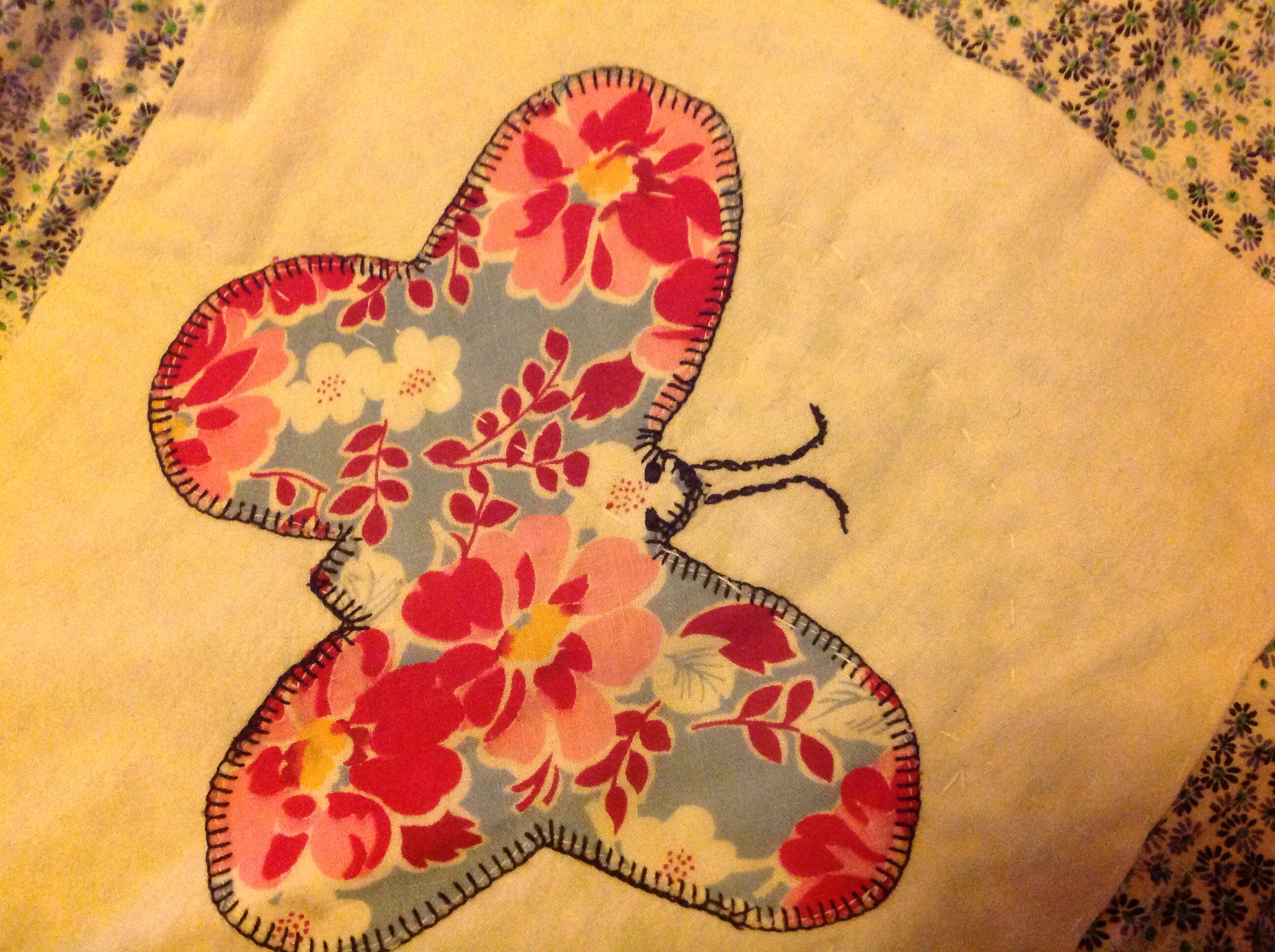
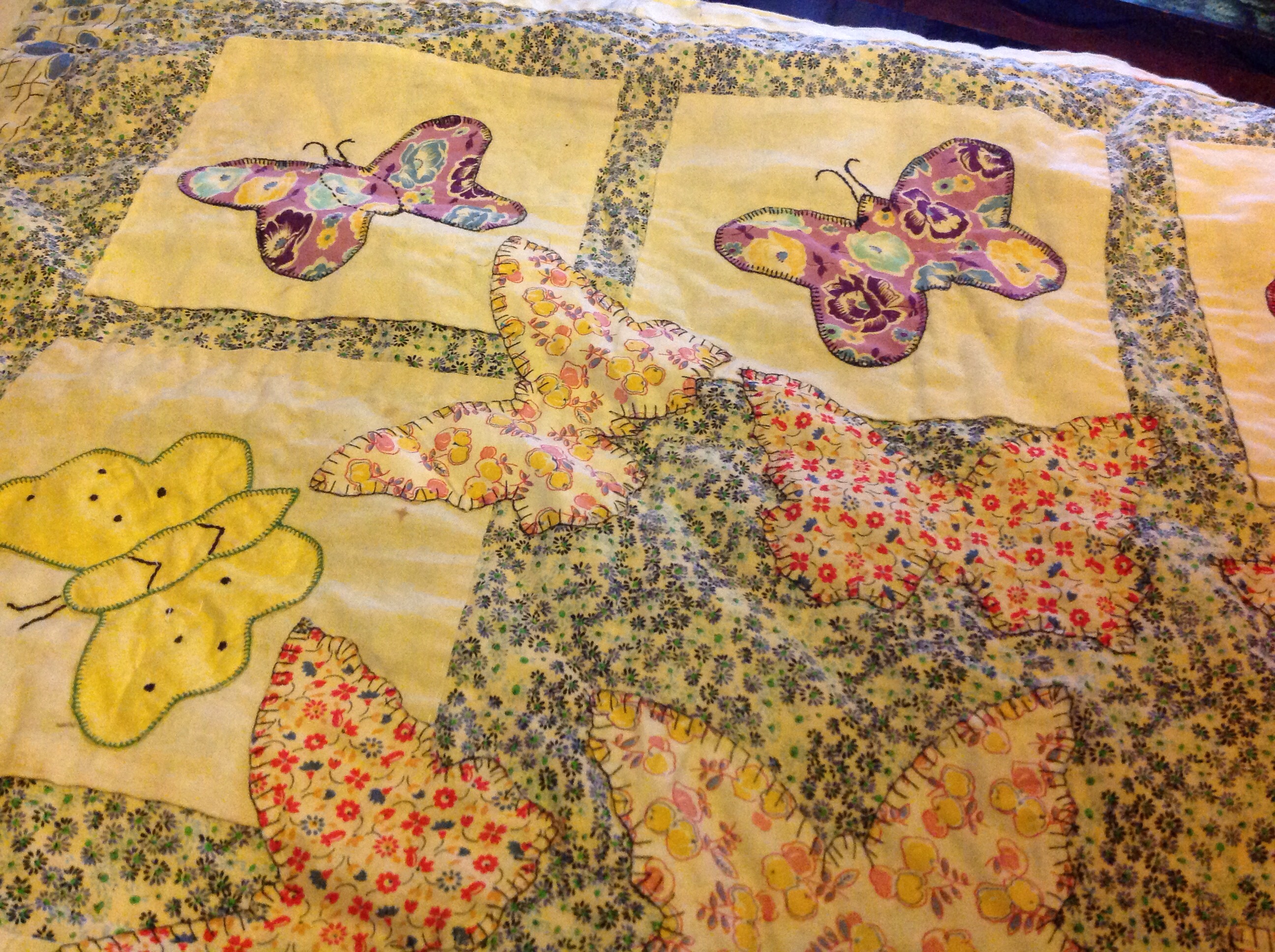
One of the quilts I grew up with was a butterfly quilt, made by my maternal grandmother. Somehow I acquired a couple of extra butterfly blocks she made. Perhaps she was intending to make another butterfly quilt. Her stitches are small and even, the envy of any serious quilter. The blocks are at least 65 years old, probably more.
~
~
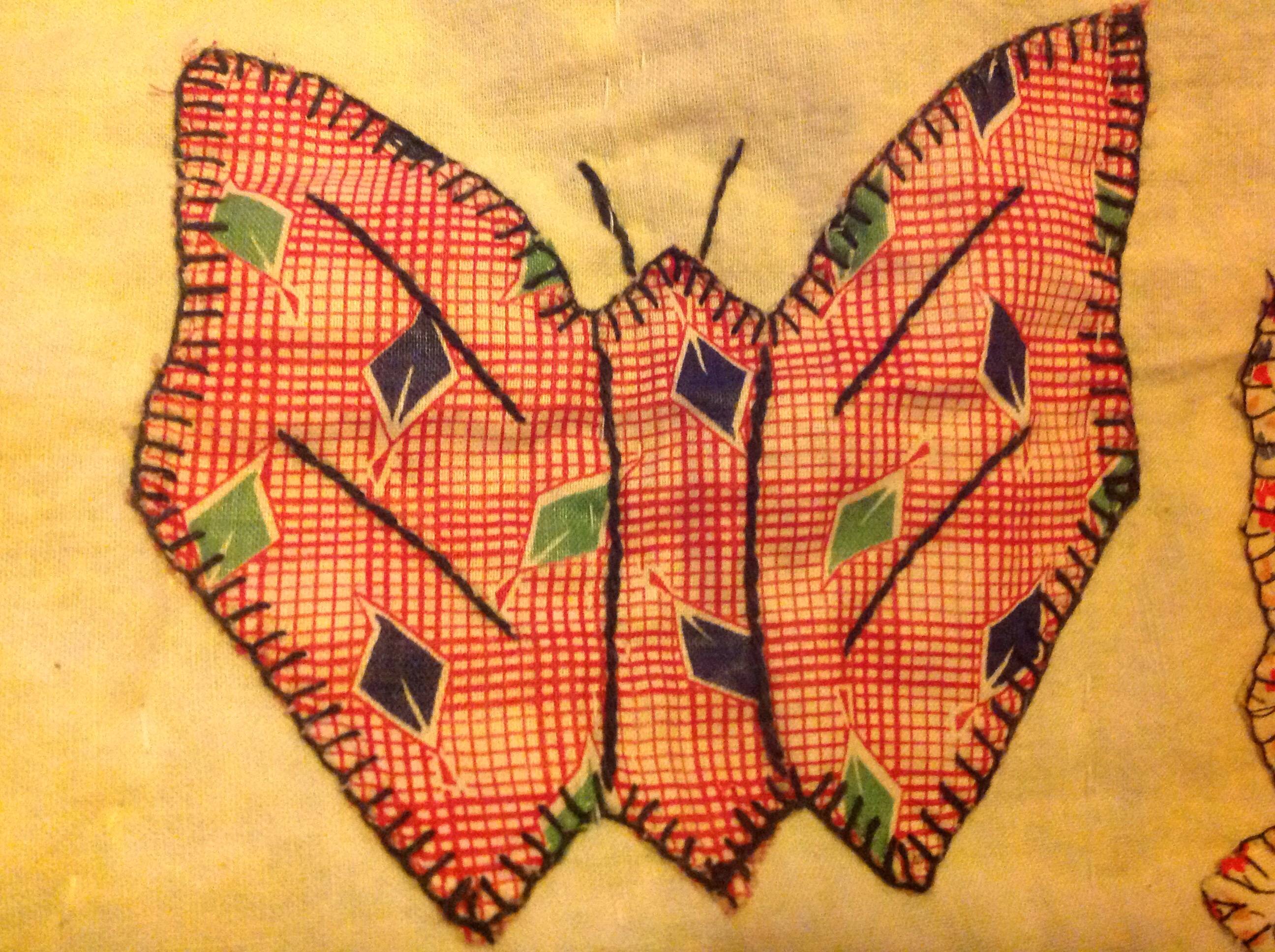
When I was going to yard sales regularly, I happened across three more butterfly panels and some cut-out butterflies, ready for the needle. Two of these blocks were not as well executed as those of my grandmother; one was very well done and quite charming (see the yellow block, below). Together they suggested a finished quilt.
~
~
This fall I have finished appliquéing the cut-out butterflies to a top for the quilt. Rather than prepare blocks, I scattered them across a background of tiny blue flowers. Side by side, my appliquéd butterfly and one of my grandmother’s show you what a poor seamstress I really am.
~

~
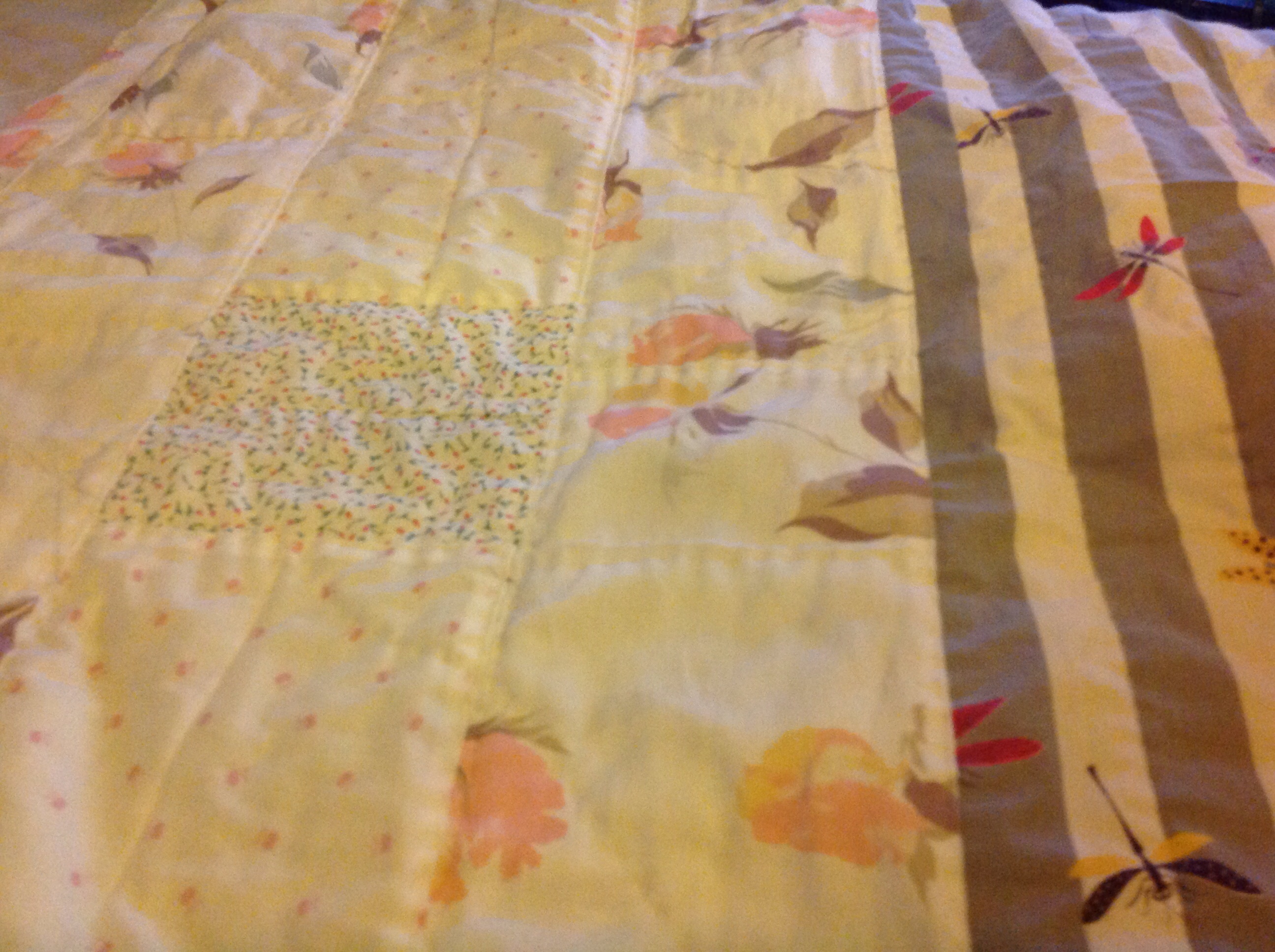
However, I finished the quilt top and in the first week of November, I have added the batt and lower side of the quilt. Last night I finished binding the quilt.
~
~
I often make my quilts for someone I know or for a particular room in my house. This quilt is for me. I will use it all winter to keep the chills away and make my corner of the couch a little cosier. Be gone, ‘bleak November!’
~
~
All my best wishes
for a cosy winter,
Jane
awash in wild flowers!!!!!
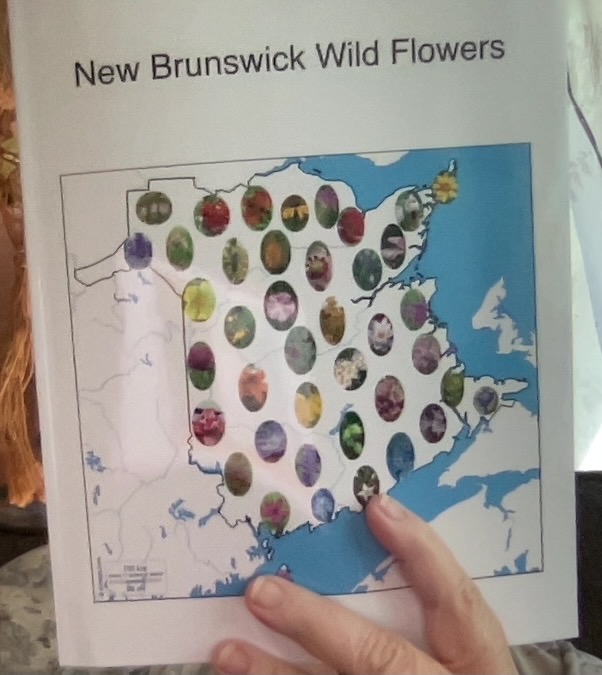
I just got a lovely gift for myself, ‘New Brunswick Wild Flowers,’ a colouring book produced by the Connell Memorial Herbarium at the University of New Brunswick. Created by Elizabeth Mills in 2021, this is a book to take you on an expedition throughout the province, month by month, season by season.
~
~
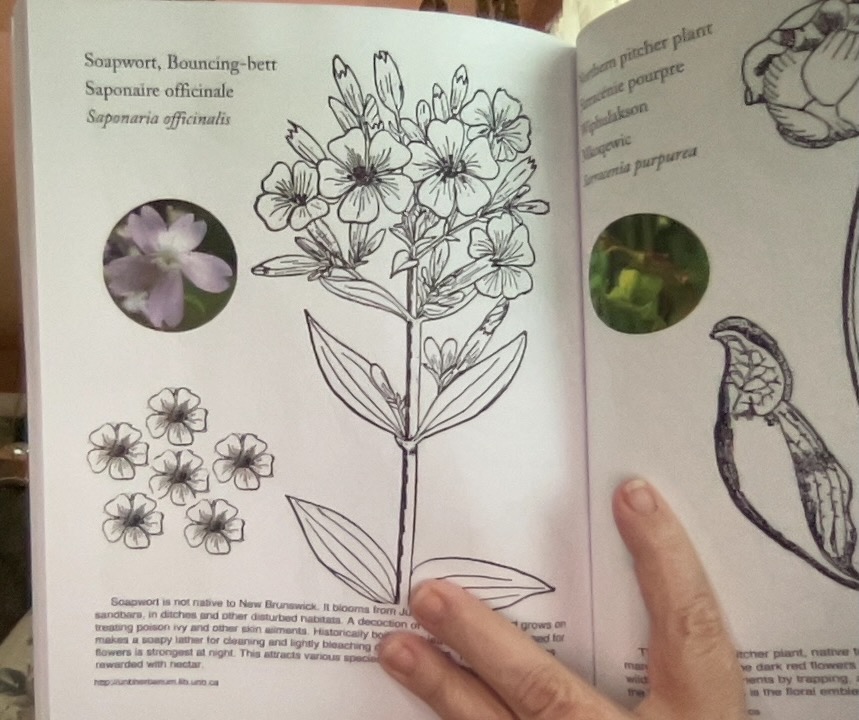
Edited by Friends of the Herbarium, each page presents a wildflower in black and white, a brief description, and a small photo to help get the colours just right! The plants are presented by name as well, including names in English, French, Wolastoqiyik, Mi’kmaq and Latin.
~
If you’d like a book of your own, just click here, and order one from Blurb.ca
~
a flower just now in bloom
by the covered bridge
in Rusagonis!
~
All my best as you hunt for wild flowers!!!
Jane
drawings of waterfalls
For me, a waterfall is the most beautiful expression of water on the landscape. The feeling of water droplets on your face, the sound of splashing water, the sight of sunlight on fast-moving water. I have tried to capture these in my collection of waterfall poems a glimpse of water fall. The book includes forty-four poems and twenty-three pencil drawings of waterfalls and other water scenes.
~

~
We have many beautiful waterfalls here in New Brunswick. Over the years I have visited quite a few. In New Brunswick, we are lucky to have two great resources for lovers of waterfalls: a great guide by Nicholas Guitard (Waterfalls of New Brunswick: A Guide, now in its Second Edition, Goose Lane Publications), and a very active Facebook Group – Waterfalls of New Brunswick.
~

~
My poetry book about waterfalls, ‘a glimpse of water fall,’ is now available from Westminster Books in Fredericton and from Amazon (click here). Enjoy!
~

~
All my best,
Jane
garden escapes: starting a project
This summer, one of my main occupations will be to work on a collection of poems about garden escapes. Specifically, this means abandoned gardens, plants left behind when homes or communities are abandoned. This work is being supported by a Creations Grant from artsnb.
~
I have a short mantra to refer to these abandoned plants: “die, thrive or escape.” In a way, the project theme can be used as a metaphor for any abandonment. For example, when someone abandons a relationship, the one left behind can languish, or pick up and start over, or just leave, find a place to start over. I will be watching for these metaphors throughout my project.
~
For today, I have to arrange my materials and get started with a plan for my project.
- To start I have my grant application (outlines what I intend to do), a bit of reconnaissance work I did in 2018 to develop some ideas for the project, six blog posts from that time and eight older poems that fit the theme.

orange day-lilies, found in many of new Brunswick’s ditches, are escapes from older gardens
- To identify abandoned communities, I can refer to information sources and databases developed by others: the Facebook pages Abandoned New Brunswick and New Brunswick Upon Days Faded where interested people post photos and short anecdotes about abandoned houses and buildings; the Provincial Archives of New Brunswick website called Place Names of New Brunswick: Where is Home? New Brunswick Communities Past and Present https://archives.gnb.ca/Exhibits/Communities/Home.aspx?culture=en-CA; additional information on communities will be available in Census Records at https://www.ancestry.ca/; various maps including the New Brunswick Atlas (Second Edition); Google Earth and the associated Street View; maps posted in the Facebook page New Brunswick Upon Days Faded; the Walling Map of 1862 which I have used in other projects, F. Walling, Topographical Map of the Counties of St. John and Kings New Brunswick: From Actual Surveys under the direction of H. F. Walling (Publishers W.E. and A.A. Baker, New York, 1862); and, the Monograph about place-names in New Brunswick, Ganong, William F. A Monograph of the Place-Nomenclature of the Province of New Brunswick. Transactions of the Royal Society of Canada: Second Series 1896-97, Volume II, Section II. 1896.

a sample of the Walling Map for an area in Kings County, New Brunswick. The map shows individual buildings and houses from 1862.
- For anecdotal stories about the gardeners and their gardens, I plan to use the resources of the Provincial Archives of New Brunswick since often diaries and other documents contain amazing bits of information about New Brunswick history. Obtaining anecdotal information about abandoned gardens is tricky during the time of COVID-19 since social distancing means ordinary interviewing is not easy. I will use the websites above to obtain some information and, where possible, talk to people I encounter. I will create a Facebook Page called Abandoned New Brunswick Gardens to obtain some of these stories.
- For plant identification, I have my own skills as a botanist and my trusty guides: Harold R. Hinds, Flora of New Brunswick, Second Edition: A Manual for Identification of the Vascular Plants of New Brunswick, University of New Brunswick, 2000; A. E. Roland and E. C. Smith, The Flora of Nova Scotia, Nova Scotia Museum, 1969; Roger Tory Peterson and Margaret McKenny, A Field Guide to Flowers of Northeastern and North-central North America, 1968; and the website The Plant List: A Working List of all Plant Species (this is to verify plants names since I use older plant guides). http://www.theplantlist.org/
~
My methodology is simple:
- identify possible abandoned homes and communities and create an efficient plan to visit these places
- drive to these locations and look for plant species that may be garden remnants
- photograph the sites and plants
- make notes about the sites, the plants encountered and various sensations encountered (sight, smell, taste, touch and sound)
- do pencil drawings of some plants and locations
- obtain any anecdotal or archived information about the former communities, their gardens and their gardeners
- write the poems using all the information collected
I am going to write mostly free verse but I will also use some poetic forms, for example the ghazal and the pantoum.
~
Sounds like fun!
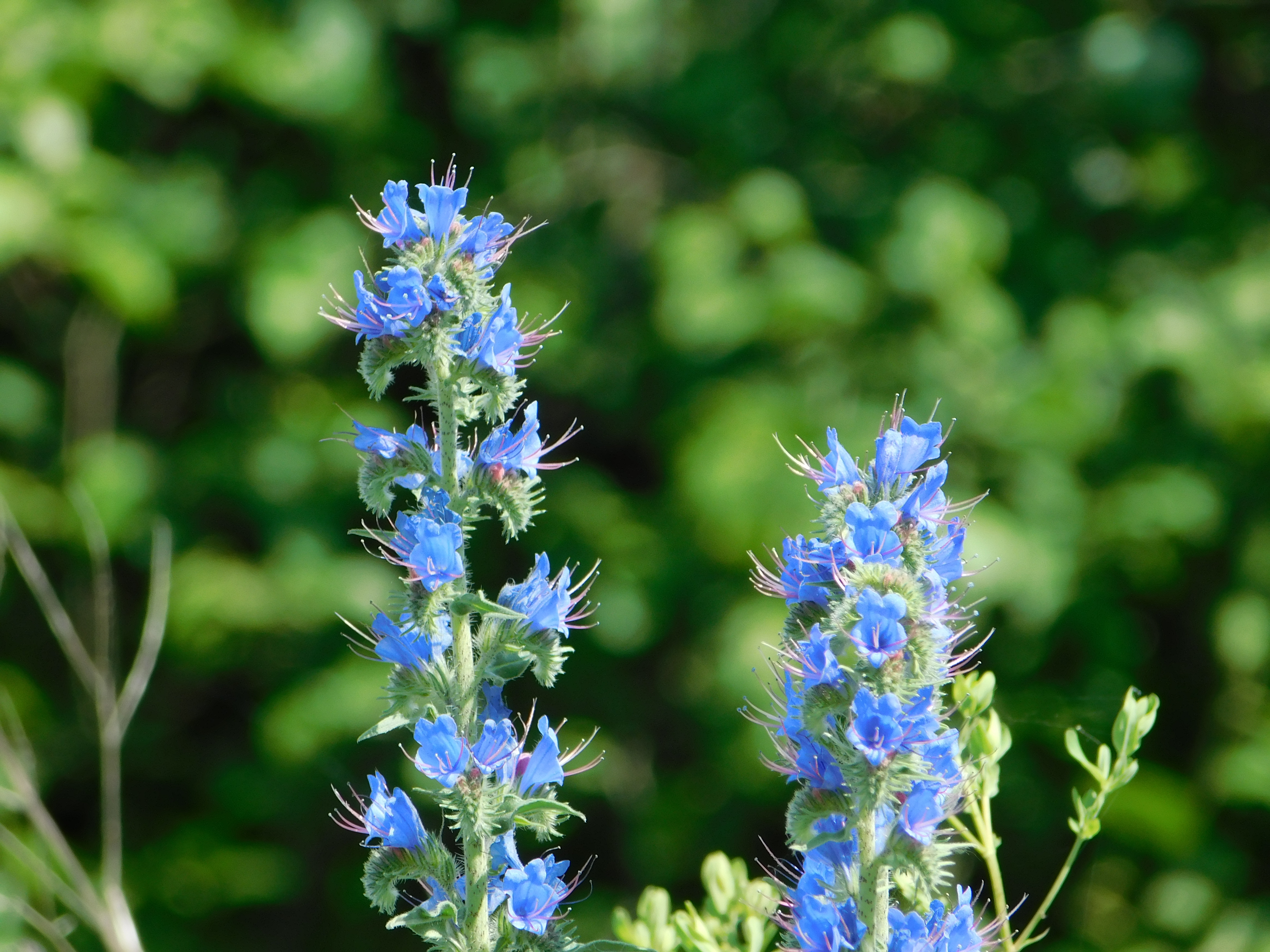
Viper’s bugloss (Echium vulgare) is an introduced plant in New Brunswick. These are plants found on the New Ireland Road in Albert County, New Brunswick. In 1866, there were 68 families in the community (Source: NB Archives); today all the houses are gone.
~
I will keep you up to date on my adventures and show you some of the plants I find. If you know of any abandoned gardens in New Brunswick, or abandoned communities, please let me know! I will acknowledge you in my book!
~
This work is supported by a Creation Grant from artsnb (the New Brunswick Arts Board)!
~
All my best,
stay safe,
Jane
Pareidolia
pareidolia: the tendency to perceive a specific, often meaningful image in a random or ambiguous visual pattern
(Merriam-Webster Dictionary)
~
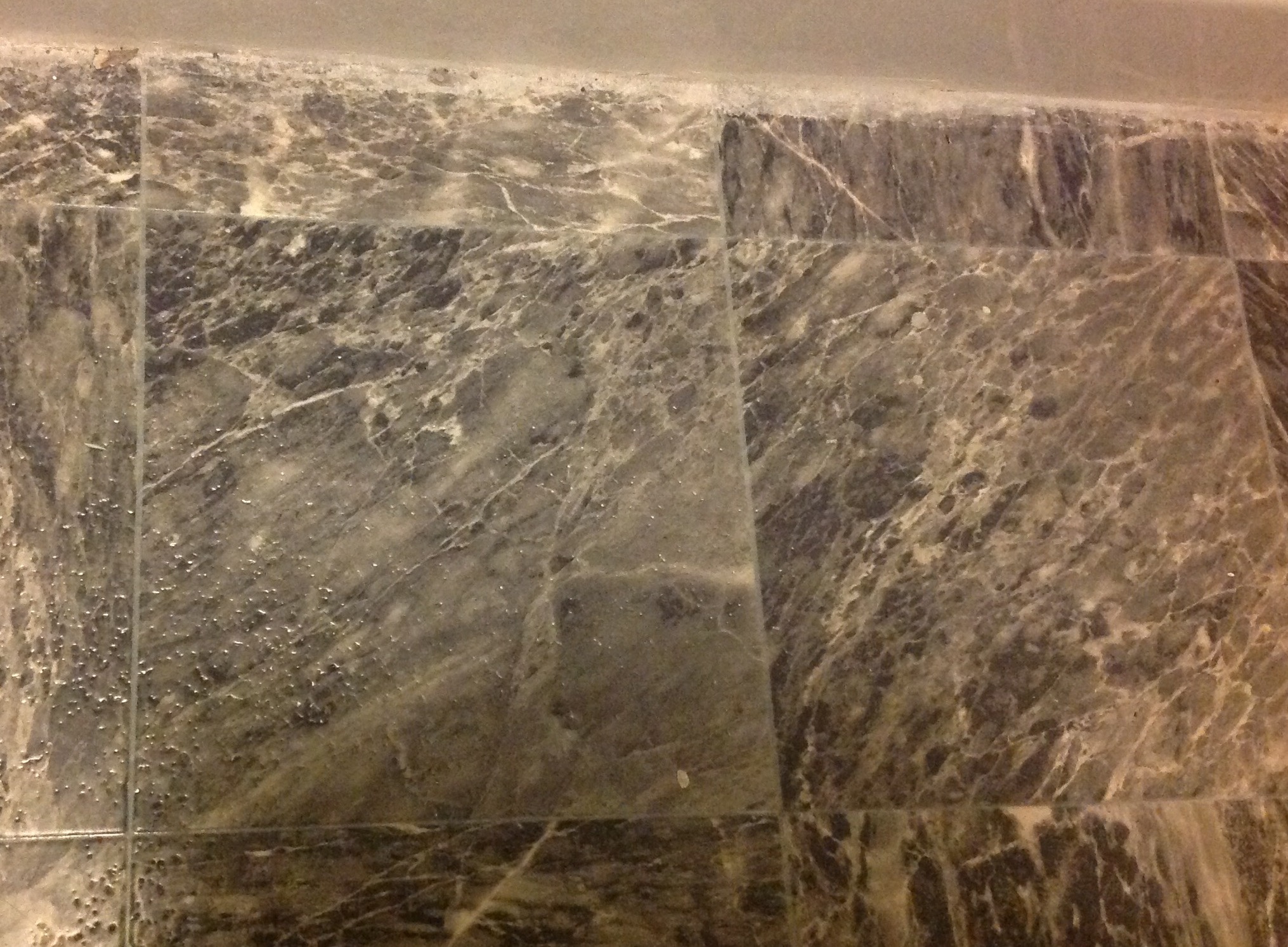
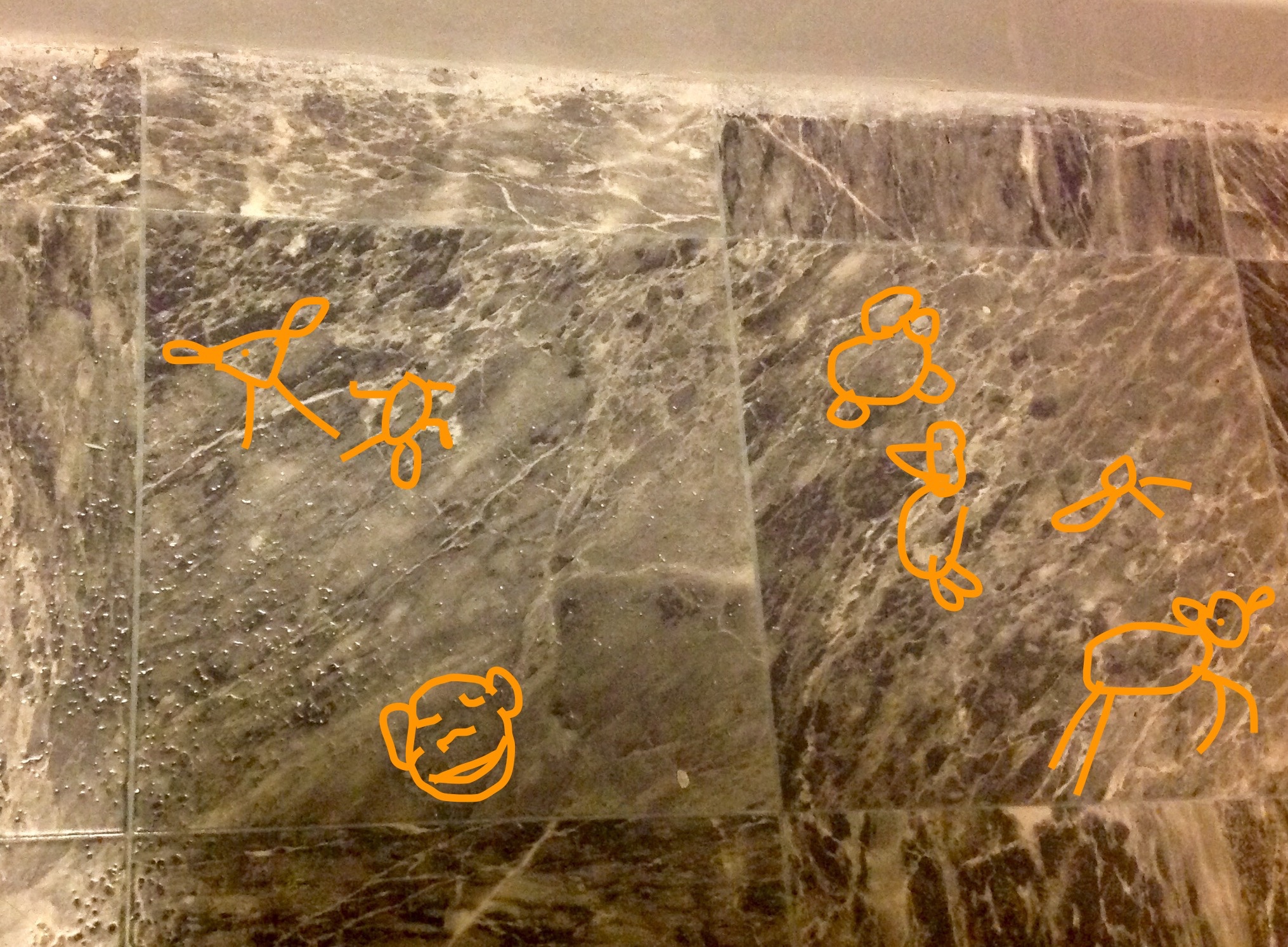
When you look at marble, or at clouds in the sky, or bubbles in a glass of milk, do you see faces? Can you see The Man in the Moon? Pareidolia refers to the seeing of human faces or other images where they don’t exist. Pareidolia is a normal human tendency.
~
I often see images in the marble patterns of our flooring. It can be quite entertaining. Mostly, I see animals. I think it is the biologist in me!
~
~
~
Perhaps aliens also have pareidolia. In my upcoming book Meniscus: The Knife, I devote a chapter to this phenomenon. On planet Meniscus, there is a dirth of paper. One of my early characters, Ning, made paper from plant fibres for her girlfriend Kathryn, an artist. By Meniscus: The Knife, Book 8 in the series, (spoiler alert) only three sheets of Ning’s paper remain. Don-est, the alien child, wants to draw, so Kathryn shows her how to draw on the marble walls of the dwellings in the Village.
~


~
Vicki sets her laundry
on the marble floor.
Tries to see
what Don’est is doing.
~
As her eyes adjust
to smoky light,
she sees markings on the walls.
Drawings of bug-eyed evernells
and fuzzy elginards.
A slear-snake
with myriad eyes.
A cardoth moon,
slim sickle
of glowing white
in marble green.
~
Don’est feels eyes on her.
Swivels her neck.
“What do you think
of my drawings?”
she says.
~
“What are you doing?”
says Vicki.
~
“I asked Kathryn for paper
but she has only a sheet or two
of the paper Ning made.
“So she showed me
an idea she had.
~
“The marble walls,
you see,
have hidden secrets.
Lines and shadows
look like evernells
and Humans and slear-snakes
and grammid trees.”
~
Vicki looks
at faint green lines on the walls.
Sees an old man in the pattern.
A thready waterfall.
A leaf-bare tree,
branches reaching for sky.
~
“But what are you using to draw?”
she says.
“
Eyebrow pencil.
Kathryn and Ning
found it on a transport
long ago.”
~
~
All my best,
staying at home,
drawing on the floors and walls,
Jane

ice
As I go over the many poems I have written over the years, I find a lot of poems about ice. Ice is very poem-worthy. It glitters and drips. It is cold and changes form. Icicles make great popsicles (if they are dripping from a clean surface). Ice can be a metaphor for emotion, life experience, change, danger, and so on.
~
Today we had a high of 7 degrees C and all the snow and ice are melting. Not really sad to see them go this year.
~
river ice
~
builds in shallows
at the rim of river, incremental
embellishment to transparent sheets
of glass, ice envelopes winter
remnants, reeds and willows
thickness increased as frost
penetrates, sharp edges
cauterized by cold
~

~
freezing rain
~
trees, bare branches, wait
wood snaps in the stove
budgies peck at cuttle bone
pellets of rain, tossed
at the skylight
a second transparency
~
bare twigs turn in wind
distribute their coating
in these last moments
before temperature turns
the snowpack on the picnic table
shrinks at the edges
shoves over, makes room
~
branches gloss so gradually
candles dipped in a vat of wax
over and over, acquiring thickness
the sky, through the skylight
dimpled tile, rumpled mosaic
~
rain stipples bark as narrative
appends to memory, pane here,
light there, layers of glass
cedar twigs turn downward
as fingers, ice builds
layers of skin
~
~
All my best
(staying home!)
Jane




 nichepoetryandprose