Archive for the ‘old school houses’ Category
early schooling in New Brunswick – teachers in 1888
In my family, teaching was a much-revered profession. Both Mom and Dad were teachers, as were my Aunt and Uncle. Mom, and my Aunt and Uncle, taught in one room schools. Mom began teaching in the early 1940s, when she was only 16, just after her graduation from Grade Twelve. At first, she taught with a temporary teaching licence issued during the Second World War. Later she went to Normal School to obtain a permanent licence.
~
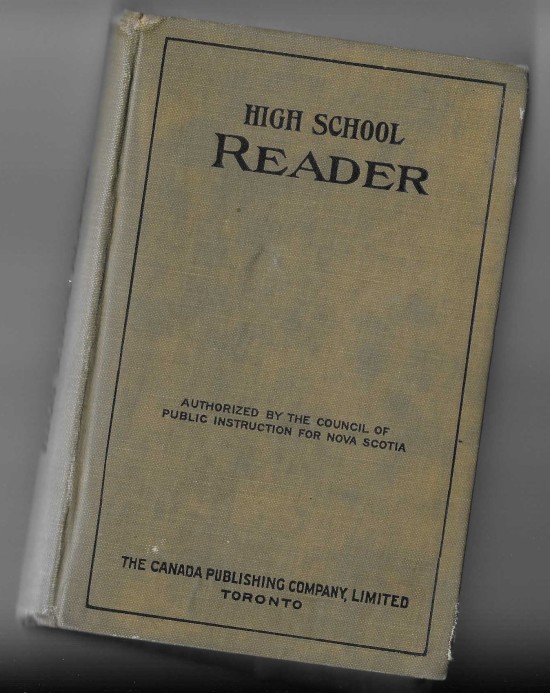
a copy of the reader my Dad used in High School in Nova Scotia, about 1933 (High School Reader, 1913)
~
To learn a little about teachers in one room schools in the late 1800s, I have continued to read the Annual Report of the Schools of New Brunswick, 1888 by the Chief Superintendent of Education. In 1888, teachers in New Brunswick were trained in the Provincial Normal School. Of the 1,582 teachers, 1,534 were trained and 48 were untrained. Teachers, depending on qualifications, were in three classes: I, II and III.
~
In 1888 in New Brunswick, there were many more female teachers than male:
| Class | #Male
Teachers |
# Female
Teachers |
| I | 114 | 141 |
| II | 157 | 644 |
| III | 108 | 404 |
~
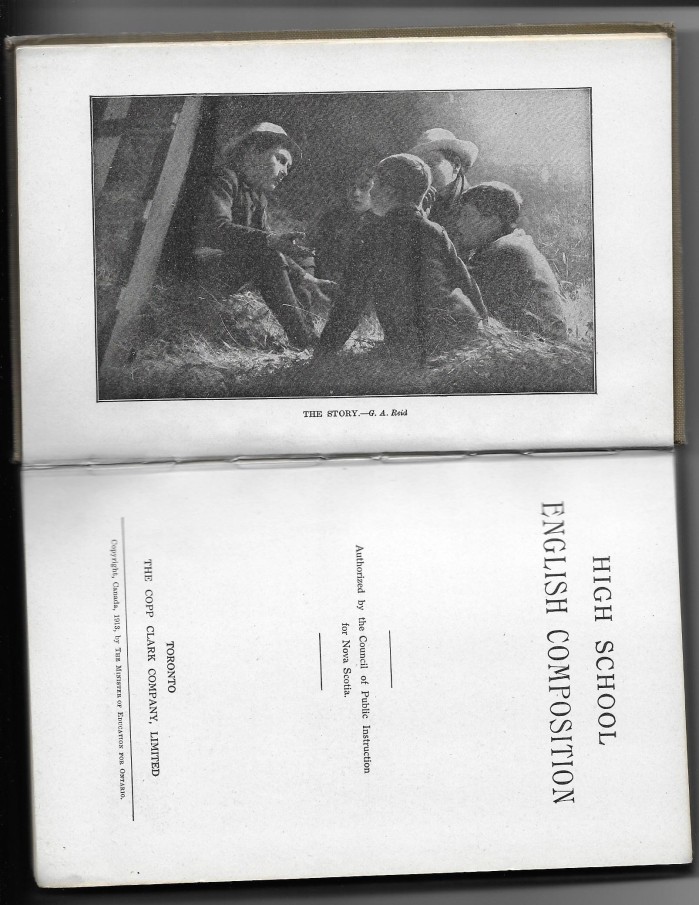
High School English Composition, 1913
~
The salary of a teacher in 1888 was certainly small compared to today! The average yearly salary for teachers in New Brunswick in 1888 was lower for female than for male teachers:
- male teachers $536.90 (First Class) (average salaries for the three Classes ranged from $231.00 to $536.90)
- female teachers $328.49 (First Class) (average salaries for the three Classes ranged from $187.47 to $328.49)
~
The Superintendent does not mention the inequity in pay for male and female teachers. He focuses on a decrease in pay from 1888 to 1889, criticizing the government for not being more generous to teachers. His worry was that teachers would not stay in the profession if salaries were too low.
… it is an ill-advised economy that seeks to maintain on the scantiest allowance a service which is essential to the preservation of order and the strength and progress of a country.
~
The budget for all schools in the Province in 1888-1889, from provincial, federal and district sources, was $404,145.00 (not including building and property costs).
~

two of the old school books in my collection: Nova Scotia Readers, 1911 (used in Nova Scotia) and The Canadian Readers, 1924 (used in Alberta)
~
Copyright 2016 Jane Tims
early schooling in New Brunswick and Nova Scotia – including nature study
Of all the classes given in 1888 in New Brunswick, I would have liked ‘Useful Knowledge’ the best. This is where I might have learned about birds and plants and butterflies.
~
Bringing ‘Useful Knowledge’ into the classroom may have been a greater challenge than it appears. The focus was on the three R’s (reading,’riting, and ‘rithmetic) and scarce resources meant less time for ‘frivolous’ subjects. In the neighboring province of Nova Scotia, educators faced a challenge when they tried to bring studies about the out-of-doors into the classroom. The situation in New Brunswick would have been similar.
~
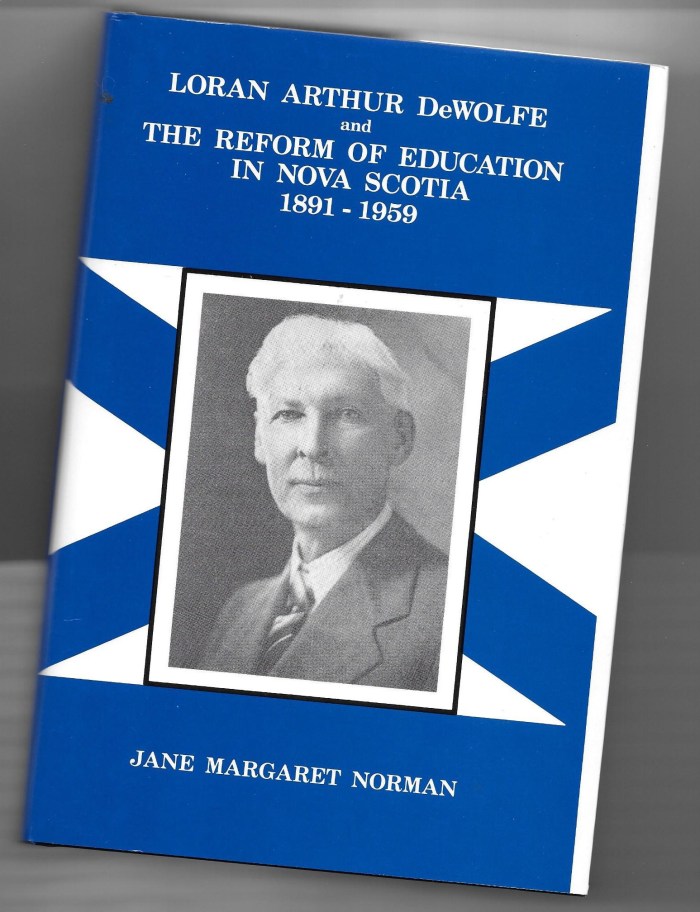
In her book Loran Arthur DeWolfe and The Reform of Education in Nova Scotia 1891-1959 (Truro, Nova Scotia: Atlantic Early Learning Productions, 1989), my aunt, Dr. Jane Margaret Norman described the situation in the late 1800s and early 1900s in Nova Scotia. Dr. DeWolfe, Director of Rural Science Schools in Nova Scotia from 1913 to 1924, focused on including studies of nature and in particular agriculture in the schools. These were times of rural out-migration – interest in staying and working on the family farm paled in comparison to the adventures promised by leaving for the west. Dr. DeWolfe was convinced that the only way to keep people in rural areas was to interest them, from the start of their education, in the world of nature.
~
~
His solution was to include in the curriculum ‘field days’, ‘spring gardens’, folk dancing, lessons in canning food, ‘Planting Days’, and school fairs. My dad, who would have attended elementary school in the late 1920s, remembered Dr. DeWolfe visiting his school in rural Digby County. He told my aunt that Dr. DeWolfe “… always had something to say about nature.”
~
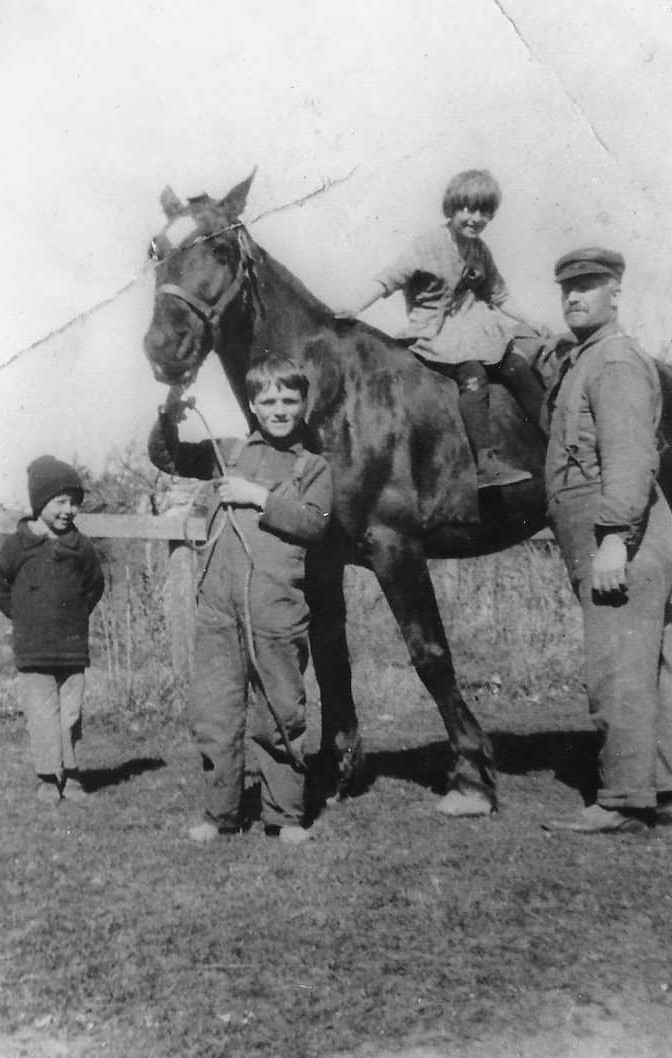
My dad as a boy (holding the horse Goldie). Dad grew up in a rural area and attended a one room school. He remembered Dr. DeWolfe’s visits to that school and his emphasis on paying attention to the out-of-doors. Dad became a teacher and, as my teacher in Grade Six, taught me about the solar system and the cause of our seasons. He also taught me how to make a whistle from a willow twig.
~
In New Brunswick, by 1888, ‘Useful Knowledge’ would have introduced many students in New Brunswick to nature studies. In rural schools (Ungraded Schools in Country Districts), the classes in Standard I (Grade 1) included ‘oral lessons on animals’ and, in Standard II (Grade 2) ‘natural specimens where possible’. Standard III (Grade 3) included ‘lessons on agricultural products of the district’, and Standard IV (Grade 4) studied ‘agricultural topics’ from Tanner’s First Principles of Agriculture. In addition to Tanner’s First Principles of Agriculture, Standards V and VI (Grades 5 and 6) used Bailey’s Natural History. Liberty Hyde Bailey (1858-1954) was a horticulturist, naturalist and advocate of nature study.
~
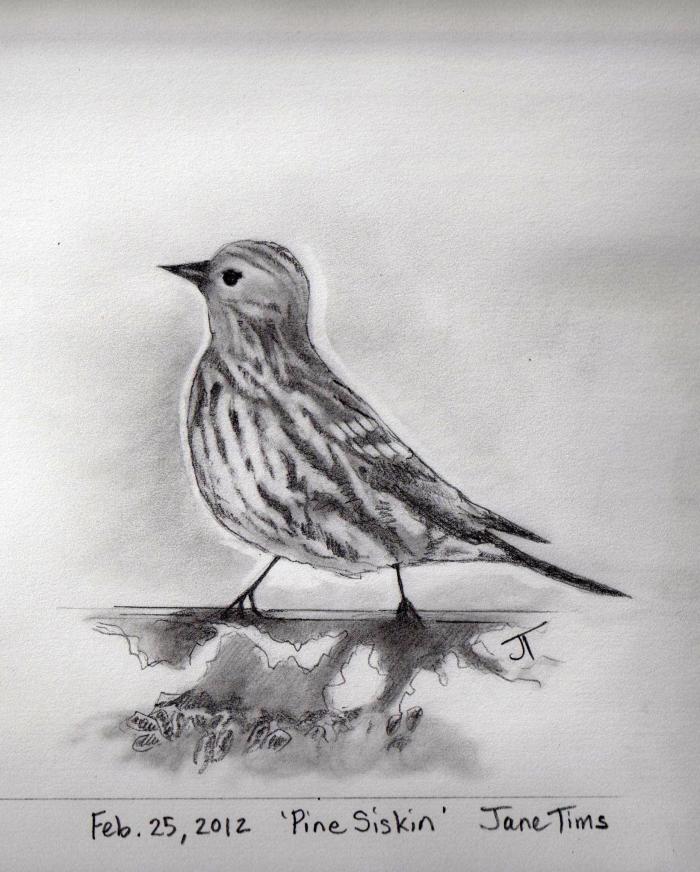
” … Stuffed birds do not sing and empty eggs do not hatch. Then let us go to the fields and watch the birds. Sit down on the soft grass and try to make out what the robin is doing on yonder fence or why the wren is bursting with song in the thicket. An opera-glass or spy-glass will bring them close to you. Try to find out not only what the colors and shapes and sizes are, but what their habits are … ” from the Birds and I , Liberty Hyde Bailey. http://libertyhydebaileyblog.blogspot.ca/
~
~
Copyright 2016 Jane Tims
Useful Knowledge
I have continued to read the Annual Report of the Schools of New Brunswick 1888 (Fredericton, 1889) by the Chief Superintendent of Education, to discover more about New Brunswick’s one room schools.
~
Since I am a botanist, interested in natural history, I wondered what students in 1888 were taught about the natural world. Below, I have listed the subjects included in ‘Useful Knowledge’ in Standards I through VI (Grades One though Six). The theme of temperance, moderation in alcohol consumption, was central to ‘Useful Knowledge’ in Grade Four and beyond. I also like the animals listed in Standard IV – Animal Life !
~.
Standard I (Grade 1)
Minerals.—Distinguishing and naming coal, slate, clay, iron, lead, etc.
Plant Life.—Distinguishing and naming common garden vegetables, flowers,
field crops, trees in the neighbourhood.
Animal Life.—Distinguishing and naming principal parts of the human
body by means of pictures ; to point to and name principal parts of familiar
animals.
Standard II (Grade 2)
Minerals—Pointing out objects in school room made in part or in whole of
iron or any mineral. Names of implements made of iron, steel, &c. Cooking
utensils of iron, tin.
Plant Life.—Distinguishing parts of plants—stems, leaves, roots.
Animal Life. —Distinguishing and naming the chief sub-divisions of the prin
cipal parts of the human body and lessons on such parts as skin, nails—use and
care of. Familiar animals—their food, habits, uses.Standard III (Grade 3)
Minerals (Oral).—Lessons on minerals or stones in the district—names and
how distinguished from each other.
Plant Life (Oral).— Agricultural products of the district. Trees, shrubs,
herbs—different ways of distinguishing one from another, &c, by form, colour,
and size of trunk, branches, leaves, bark.
Animal Life (Oral).—Ear and Eye—use and care of. By means of pictures, to distinguish and name such animals as are treated of in the Reader, and give their
prominent structural characteristics. Domestic and wild animals of the district.
Oral lessons on all Useful Knowledge Lessons in Reader before the pupil is
required to memorize the answers to the questions.Standard IV (Grade 4)
Reader.
Minerals (Oral).— Principal Minerals of the Province, localities and uses.
Oral lessons on Metals (similar to those in Useful Knowledge lessons in
Reader).
Plant Life (Oral).— Names of the principal forest trees of the Province—
their uses. Agricultural productions of the Province.
Animal Life (Oral).— Organs of Respiration —-Effects of alcoholic stimulants thereon. Domestic and wild animals of the Province. General structure of such animals as are treated of in Reader. Oral lessons on Useful Knowledge lessons in Reader before the pupil is required to memorize the answers to the questions.Standard V (Grade 5)
Minerals.—General qualities and uses of the more useful metals and minerals
of the Province (Oral).
Plant Life. —General characteristics of the useful and hurtful plants of the Prov
ince (Oral).
Animal Life.—Organs of digestion and circulation. Effects of alcoholic stimu
lants thereon. Adaptation of structure to habit of such animals : the cow, the
squirrel, the camel, the lion, the elephant and the whale (Oral).Standard VI (Grade 6)
The Mineral Kingdom.—Lessons to be illustrated by specimens, (Text-book,
Part I, Baileys Natural History).
Physical effect of alcoholic stimulants upon the human system. Lessons
to be illustrated by experiments where practicable. Text-book, Palmer’s Tem
perance Teachings of Science, Chaps. I-IV inclusive.
Physics, (Oral).—Hotze’s First Lessons in Physics for Teacher’s use only.
Lessons 1-13 inclusive.
~
Long after my own days in elementary school are past, I am still learning about the ‘Adaptation of Structure to Habit’ of such animals as the squirrel:
~

Adaptation of structure to habit of such animals : the cow, the
squirrel, the camel, the lion, the elephant and the whale. Part One: The Squirrel, perfectly adapted to stealing seed from birdfeeders.
~
~
Copyright 2016 Jane Tims
Schools of New Brunswick in 1888
I love beginning a new project … love learning, love doing the research, love the dusty old books holding the information.
~
A project about the old schools of New Brunswick won’t be totally new to me. I grew up hearing the stories my Mother told about teaching in one-room schools. In University, I wrote a research paper about school in the 1800s and how schools were situated in the community and in the landscape. And I am always interested in older buildings and how they survive in the built landscape.
~
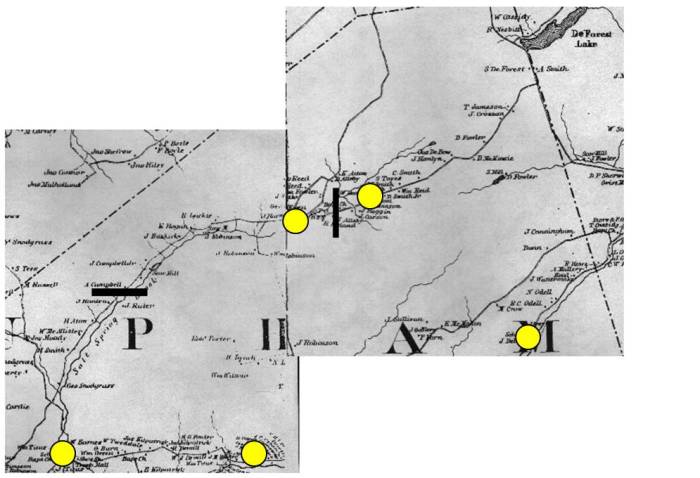
location of some schools in Upham Parish, Kings County in 1862, showing the effects of linear settlement on school location (map shown is from H.F. Walling, Topographical Map of the Counties of St. John and Kings New Brunswick, 1862)
~
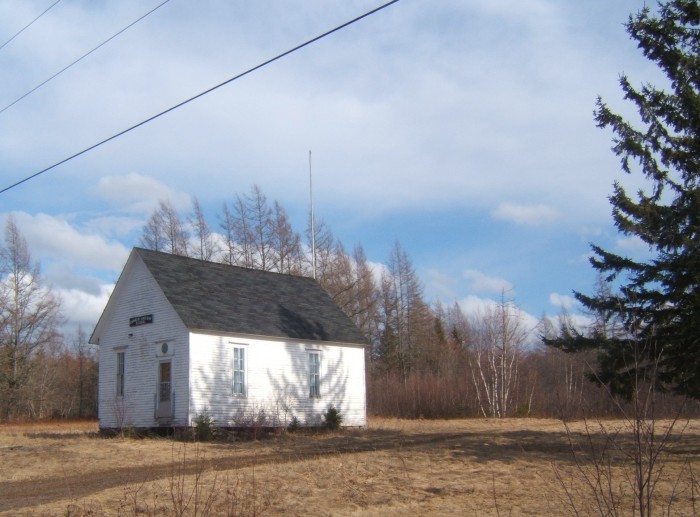
My first step to research this topic was to take a drive in the countryside, to find some old schools (see post for April 26, 2016). My next step is to do some more reading about the school system in the nineteenth century.
~
I began with an old book, not dusty at all, but available on-line at Google Books (https://books.google.ca/books): Annual Report of the Schools of New Brunswick 1888 (Fredericton, 1889) by the Chief Superintendent of Education.
~
In 1888 there were 1,532 schools in New Brunswick. Some of these would have been larger schools, but the majority were one room schools in rural settings. There were 1,587 teachers and 59,636 pupils. Only 50% of these students were ‘daily present’ during the time the school was in session – “…falls far short of what it ought to be …” reports the Superintendent! He suggested that teachers could help a lot if they would “… carefully inquire into the cause of every absence …”
~
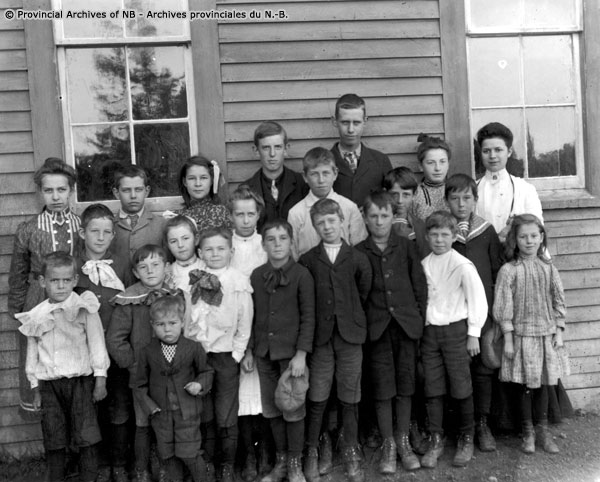
children and teacher at Carter’s Point School on the Kingston Peninsula (Source: Provincial Archives of New Brunswick)
~
The report contains over 1000 pages and lists the classes given most often:
Reading, Spelling, Recitations
Oral Lessons on Morals
Physical Exercise
Health, including Temperance
Composition
Print Script
Writing
Number Standards/ Arithmetic
Geography
Useful Knowledge (for example Plant Life)
~
I love the description of the Health instruction:
pure air, sunlight, good water,
wholesome food, proper clothing, cleanly and temperate habits, avoidance of draughts,
and the sudden checking of perspiration, dry feet, etc.
~
I think I will go check my perspiration and feet …
~
~
Copyright 2016 Jane Tims
one room school houses – hiding in the landscape
Last Friday, we took a drive along the west side of Grand Lake, in the Youngs Cove area of Queens County, New Brunswick. We were searching for old one room school houses. As far as I know, there is no list for these buildings in Queens County, New Brunswick, although a list does exist for nearby Kings County.
~
I had seen one old school in the Whites Cove area, so we began there. This school was operated as a local craft store for a few years but is now a private cottage. The one room school is in good shape, painted bright red. The round plaque in the gable of the roof says 1837. The building had two front doors – one for boys and one for girls.
~
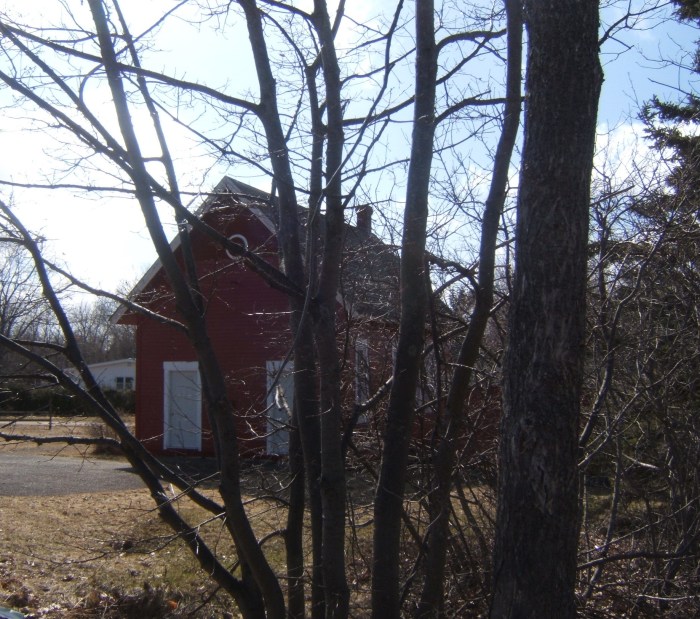
Whites Cove school house
~
We then continued toward Chipman, taking old roads when possible. I know that in the late 1800s and early 1900s, each small community (each Parish) had its own school, so we watched for the tell-tale design of the one room school house – a small, rectangular, one-storey building with a steep-sloped roof and rather high side walls. Each school had two or three tall rectangular windows on each side and one or two front doors. Some New Brunswick schools had a small anteroom or vestibule on the front. The bell-tower common on school houses in the United States was not typical of one room schools in New Brunswick.
~
We followed the road along the shoreline of the peninsulas extending into Grand Lake. In particular, we were watching for the older homes that show what the community may have looked like a hundred years ago.
~
As we came over a hill, we first saw the Rees school house. It had some of the characteristics I describe above. However, I am new to one room school hunting, so I was not really certain this little building had once been a school. And then my husband pointed to the sign on the small road opposite the building – School House Lane. The school house was being used as a cottage and was in poor condition with broken windows and a crumbled brick chimney. But I was happy to see the original stone foundation, a straight roof line, a large flat stone as a threshold, original clapboard on the front of the building, and evidence of the original vestibule.
~

Rees school house
~
Thrilled by our discovery, we continued to the next community and followed a side road. Almost immediately, we saw the Cumberland Bay School, announced by a sign above the door. It was a typical school house design, built on a hill. There was a rock foundation (with some brick) and a straight roof. The building was in good shape with evidence of regular maintenance and use, perhaps as a hall. A cold wind was howling and I felt sorry for the kids who must have come to school in all kinds of bitter weather.
~
Cumberland Bay school house
~
After seeing three school houses, we felt like pros. We took the next road along the shore, toward Cox Point, and found a school house outside the community of Range. It was set back from the road, used in conjunction with a family cottage. The roof was straight, the side windows were intact and the shingles were in good repair.
~
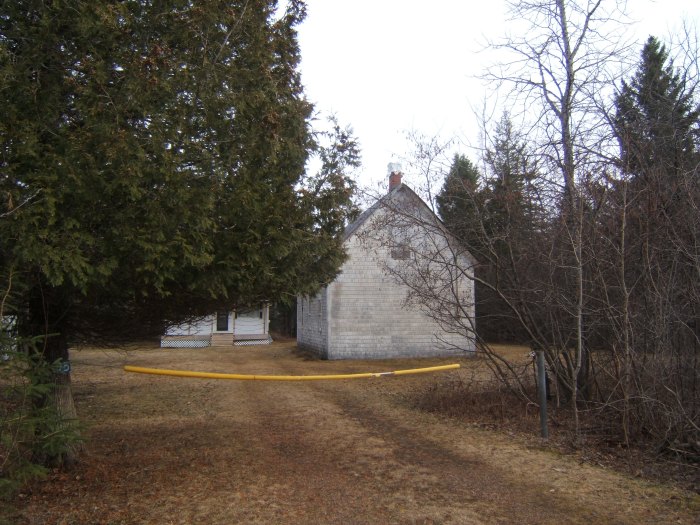
Range school house
~
I was delighted with our drive – we had discovered three school houses we did not know about! I also got a feel for some of the characteristics of these buildings and how they fit into the local landscape.
~

a map showing the old school houses we found … you can see a pattern emerging … I expect there were once school houses in some of the other communities indicated on the map
~
Why am I interested in this topic? My interests in landscape, the environment and history all come into play. I am also beginning to think about my next poetry project and have decided to explore the idea of school houses in the landscape.
~
To do this project, I will think about the setting of the school house in the community and how topography (hills and lakes and rivers), vegetation (fields and forests, orchards and big old swinging-trees) and other built landscape (bridges, churches, stores and farms) would have influenced the students, teachers and members of the community. Visits to old schools, some talk with people who remember attending these old school houses and reading at the Provincial Archives would give me lots of material for my writing.
~
Do you have examples of old one room school houses in your area? Did you attend school in a one room school house? I would love to hear your stories!
~
Copyright 2016 Jane Tims




 nichepoetryandprose