Archive for the ‘natural history’ Category
rafting event – what to carry when you leave home
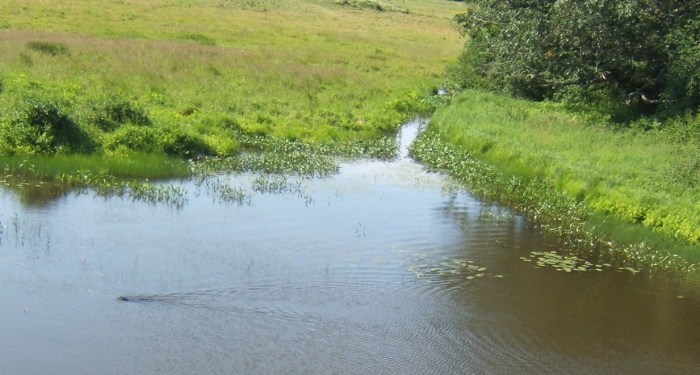
A few years ago, I was thinking of writing a series of poems about plant pollination and dispersal. It seemed a great idea. Poems about bumble bees and butterflies, ultra-violet landing strips and hummingbirds. Poems about burr baskets, rafting events, maple samara and dandelion parachutists. I wrote the poem below and found it so depressing, I abandoned the project. Now, as I sort through my library and wonder which books to keep, the poem seems appropriate.
~
rafting event – a type of biological dispersal that occurs when terrestrial organisms transfer from one land mass to another by way of a water crossing. Often this occurs via large rafts of floating vegetation, sometimes seen floating down major rivers in the tropics and washing out to sea, occasionally with animals trapped on them. (Source Wikipedia)
~
~
rafting event
~
Let the door handle slip
from your hand, leave
the home you’ve tried to know.
~
Behind a deadpan face, dry tears
and palpitations, carry knowledge
away on a frail raft.
~
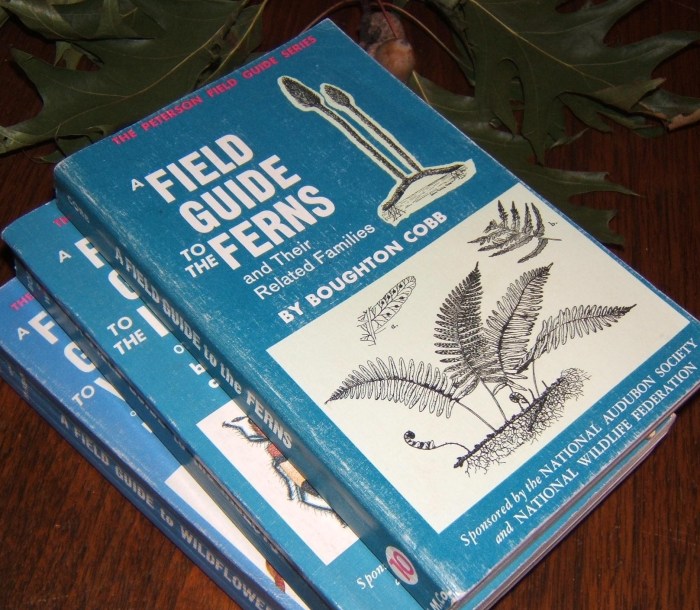
Peterson Field Guides and Salinger,
a poem by Shelley,
three Shakespearean sonnets.
~
They cling to the raft, these bits
of memory, rely on slippery
fronds of rough-glued vegetation.
~
Recalled when someone asks
the writers you prefer or claim to have read.
You say, ‘the collected works of Heaney’.
~
And is there an island where
new roots can catch and old seeds germinate?
The choice – survival or well-read.
~
Hear the hinges do their work –
the dead bolt slips into the lock,
last home you will ever know.
~
~
 ~
~
Copyright 2018
Jane Tims
bees in our goldenrod
At our cabin, we often watch birds from the front window. This time of year, the goldenrods grow along the front of the cabin and we are able to watch the honey bees working to gather nectar for the hive. I imagine the bees have come to us from a group of commercial hives not far from our camp. I remember when my dad kept bees and I always admired his ability to remain calm as he tended the hives.
~

~
how to collect honey
~
Honeysuckle and amber
coil from the spoon
tangle light
For this
~
you charm a bee
to crawl, hexagonal
on human skin
unalarmed
~
Adrenalin fear
hidden by the scent
of cherry blossom
and pear
~
~
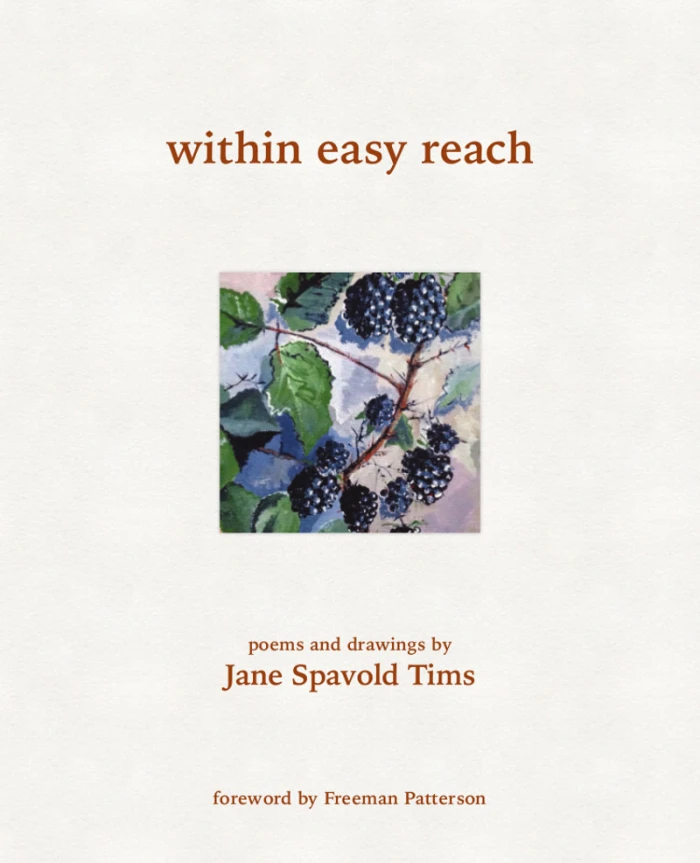
Published in my book of poetry ‘within easy reach’, Chapel Street Editions, 2016.
~
Copyright 2017 Jane Tims
spaces underground – a wasp nest
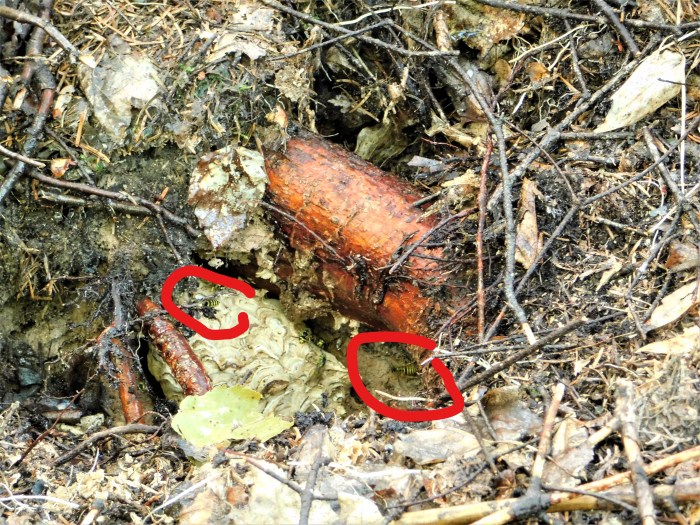
Not far from where I sit-for-a-bit on my walk in our woods, I found a nest of wasps. Built underground, beneath the roots of a spruce tree, this nest has been revealed by some digging marauder (a skunk or raccoon) trying to get at the wasp larvae. The nest is interesting to watch, but caution is necessary.
~

~
 ~
~
When I found the nest, I took a little time to learn the difference between wasps and hornets. Hornets build their nests above ground and are larger, with black and white striped bodies. Wasps sometimes build nests underground and are small (1-2.5 cm), with black and yellow striped bodies. The insects in the underground nest are definitely wasps.
~
Copyright Jane Tims 2017
early schooling in New Brunswick and Nova Scotia – including nature study
Of all the classes given in 1888 in New Brunswick, I would have liked ‘Useful Knowledge’ the best. This is where I might have learned about birds and plants and butterflies.
~
Bringing ‘Useful Knowledge’ into the classroom may have been a greater challenge than it appears. The focus was on the three R’s (reading,’riting, and ‘rithmetic) and scarce resources meant less time for ‘frivolous’ subjects. In the neighboring province of Nova Scotia, educators faced a challenge when they tried to bring studies about the out-of-doors into the classroom. The situation in New Brunswick would have been similar.
~
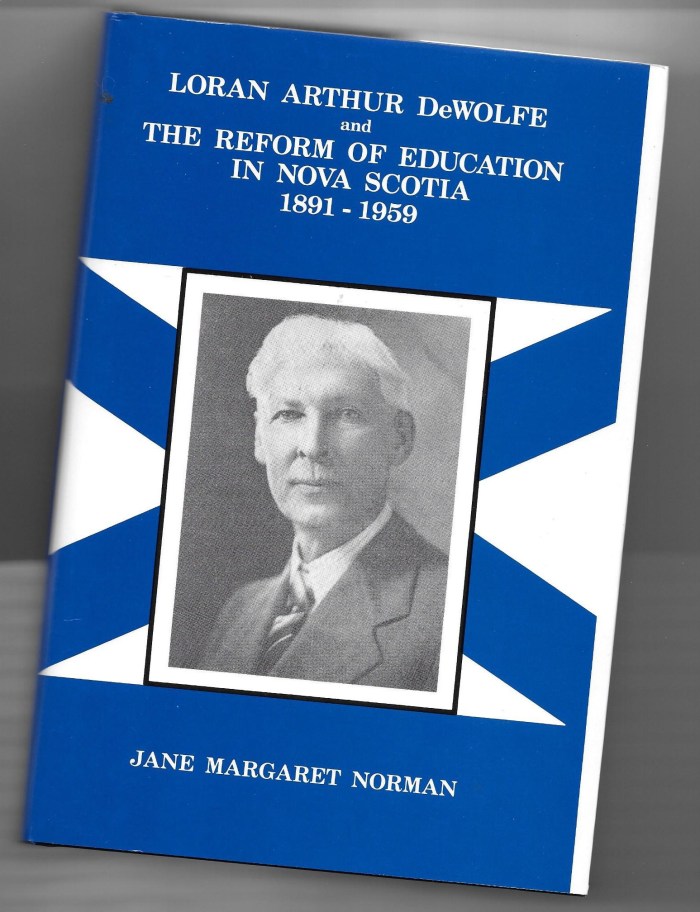
In her book Loran Arthur DeWolfe and The Reform of Education in Nova Scotia 1891-1959 (Truro, Nova Scotia: Atlantic Early Learning Productions, 1989), my aunt, Dr. Jane Margaret Norman described the situation in the late 1800s and early 1900s in Nova Scotia. Dr. DeWolfe, Director of Rural Science Schools in Nova Scotia from 1913 to 1924, focused on including studies of nature and in particular agriculture in the schools. These were times of rural out-migration – interest in staying and working on the family farm paled in comparison to the adventures promised by leaving for the west. Dr. DeWolfe was convinced that the only way to keep people in rural areas was to interest them, from the start of their education, in the world of nature.
~
~
His solution was to include in the curriculum ‘field days’, ‘spring gardens’, folk dancing, lessons in canning food, ‘Planting Days’, and school fairs. My dad, who would have attended elementary school in the late 1920s, remembered Dr. DeWolfe visiting his school in rural Digby County. He told my aunt that Dr. DeWolfe “… always had something to say about nature.”
~
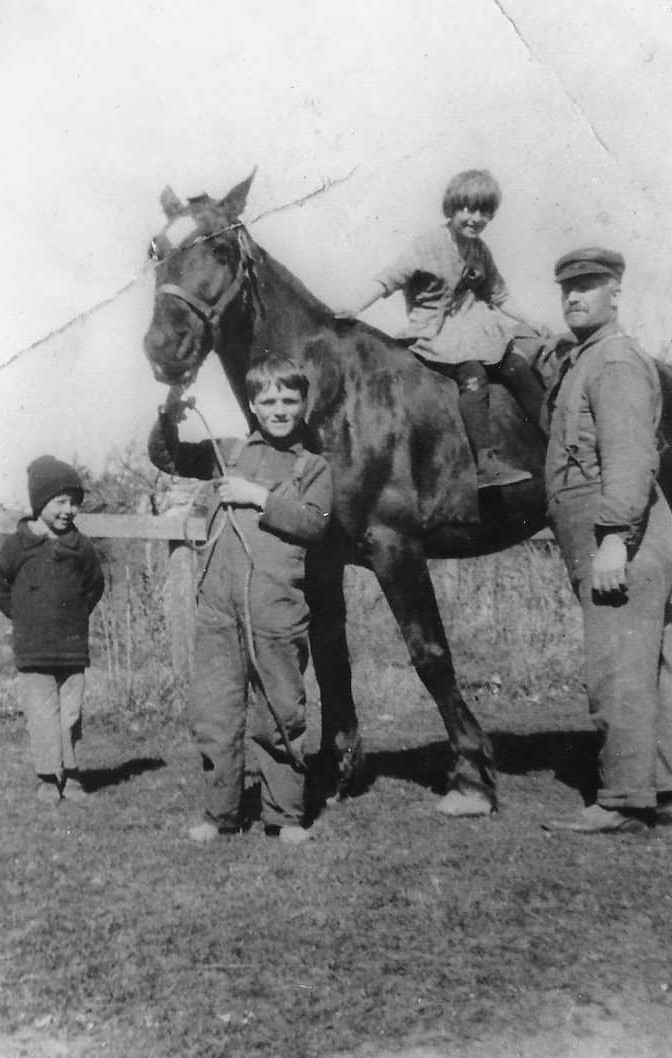
My dad as a boy (holding the horse Goldie). Dad grew up in a rural area and attended a one room school. He remembered Dr. DeWolfe’s visits to that school and his emphasis on paying attention to the out-of-doors. Dad became a teacher and, as my teacher in Grade Six, taught me about the solar system and the cause of our seasons. He also taught me how to make a whistle from a willow twig.
~
In New Brunswick, by 1888, ‘Useful Knowledge’ would have introduced many students in New Brunswick to nature studies. In rural schools (Ungraded Schools in Country Districts), the classes in Standard I (Grade 1) included ‘oral lessons on animals’ and, in Standard II (Grade 2) ‘natural specimens where possible’. Standard III (Grade 3) included ‘lessons on agricultural products of the district’, and Standard IV (Grade 4) studied ‘agricultural topics’ from Tanner’s First Principles of Agriculture. In addition to Tanner’s First Principles of Agriculture, Standards V and VI (Grades 5 and 6) used Bailey’s Natural History. Liberty Hyde Bailey (1858-1954) was a horticulturist, naturalist and advocate of nature study.
~
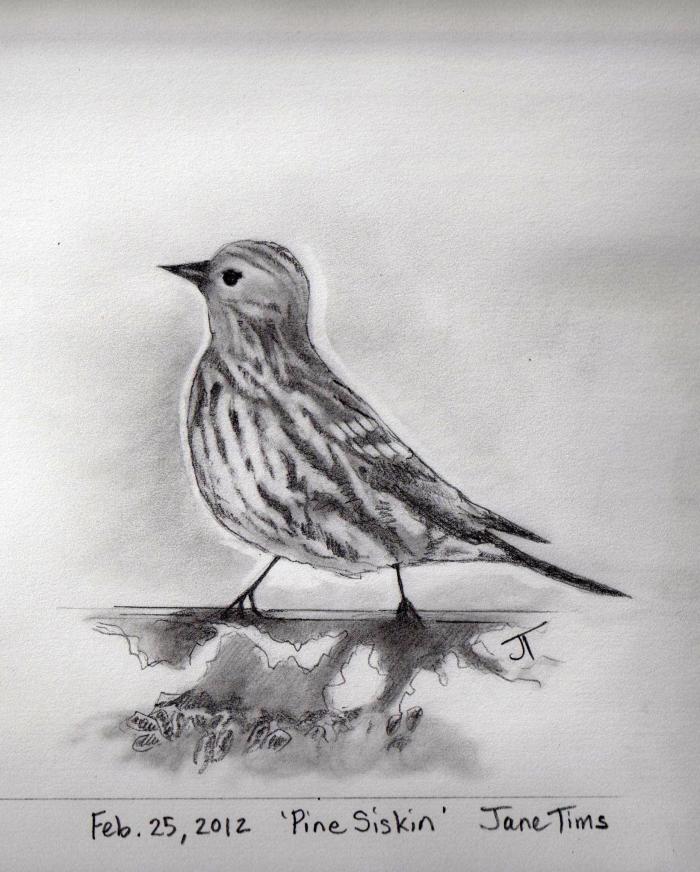
” … Stuffed birds do not sing and empty eggs do not hatch. Then let us go to the fields and watch the birds. Sit down on the soft grass and try to make out what the robin is doing on yonder fence or why the wren is bursting with song in the thicket. An opera-glass or spy-glass will bring them close to you. Try to find out not only what the colors and shapes and sizes are, but what their habits are … ” from the Birds and I , Liberty Hyde Bailey. http://libertyhydebaileyblog.blogspot.ca/
~
~
Copyright 2016 Jane Tims




 nichepoetryandprose