Archive for the ‘my grandfather’s farm’ Category
a moment of beautiful – a swing in the orchard
the space: in the shade of a tree
the beautiful: an old wooden swing
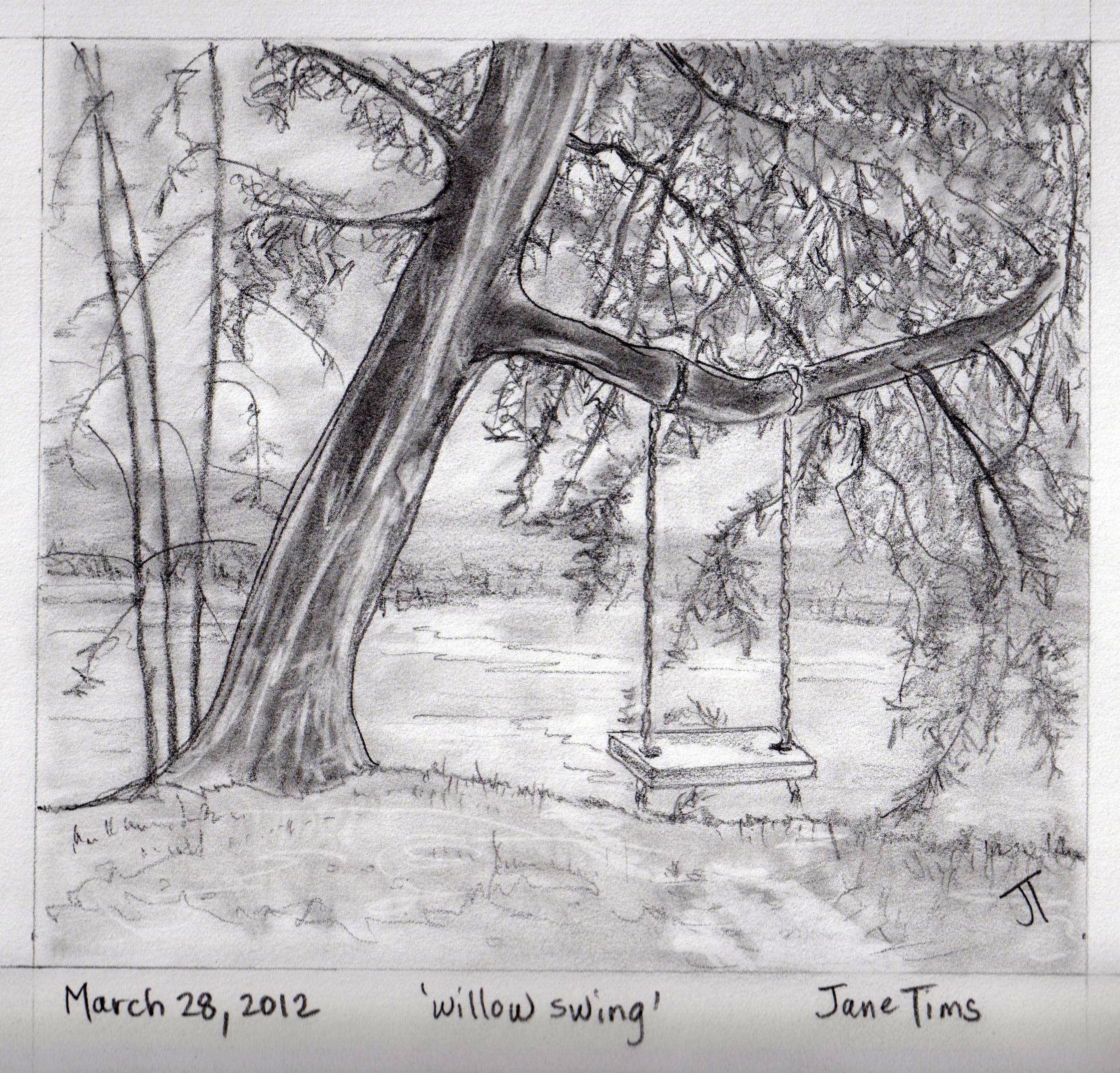
The sight of a swing hanging from the solid limb of an old tree recalls happy hours of swinging when I was a child.
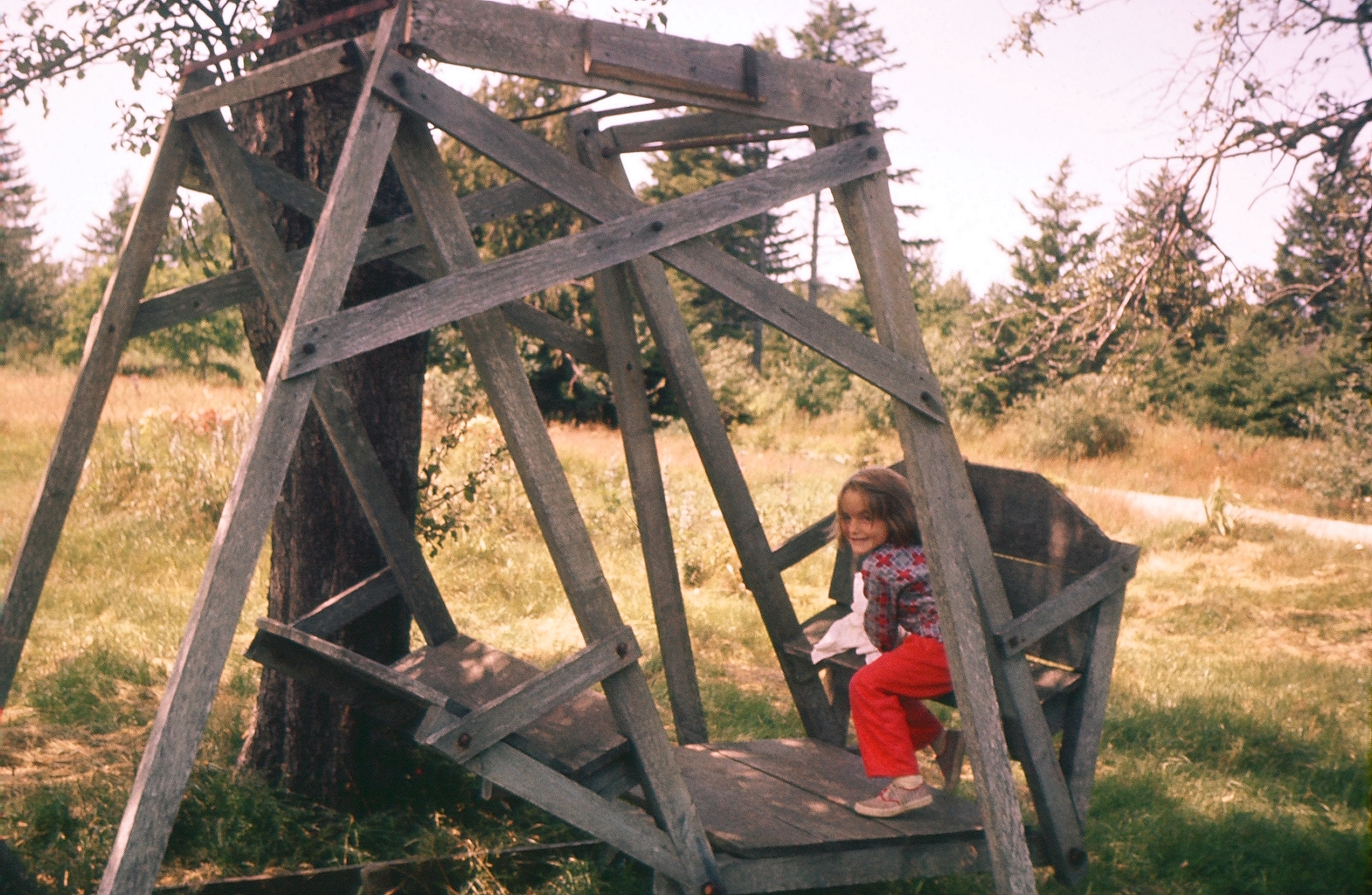
On my grandfather’s farm, the swing was a swing-chair, and I spent hours pushing the old swing to its limits (see ‘in the apple orchard’ the post for August 9, 2011, under the category ‘my grandfather’s farm’). At home in Ralston, Alberta, the community playground had an adult-sized swing set, strong enough to withstand our approach of ‘stand on the seat and pump’. And, when my son was little, we had an old-fashioned board and rope swing – it was a little off-kilter and seemed to go side-to-side rather than forward-and-backward but I remember he and I had lots of fun.
My own childhood story about board and rope swings is bitter-sweet. My Dad built me a swing and hung it from the rafters in the basement of our house in Medicine Hat. I loved it, but … one day I let go of the ropes and fell backwards, hitting my head on the concrete floor. I can still remember the intense pain and the big black star that dominated my vision for a moment. People who know me will say this explains a lot.
~
~
swing sway
~
the old swing
hangs frayed from a limb
of the apple tree
sways
hips as she waits
for the downtown bus
rocking learned
in baby years
when rhythm brought peace
and a quiet evening
~
~
© Jane Tims 2012
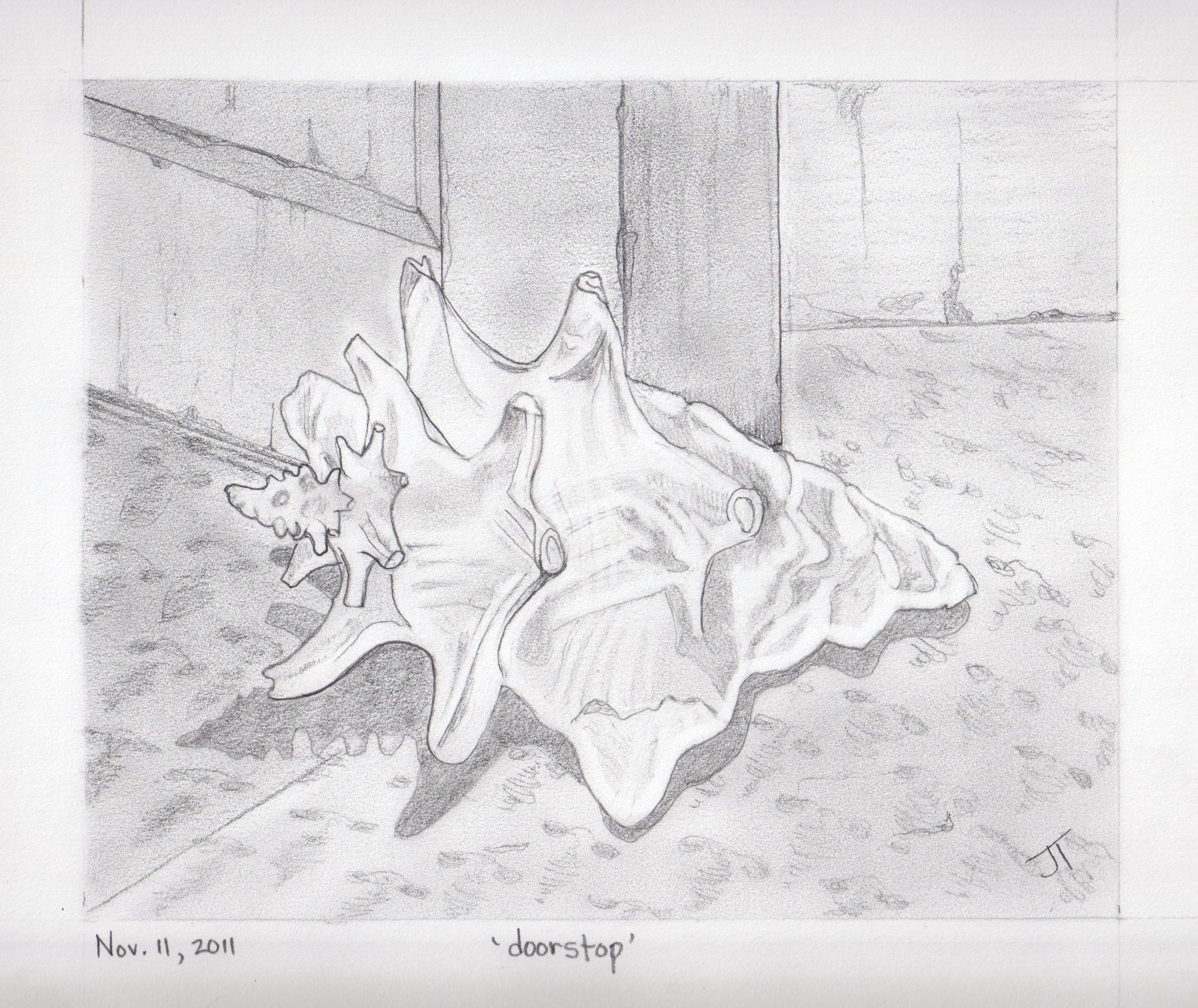
a conch shell doorstop
Do you have a conch shell for a doorstop in your home?
If you visit a farm or home museum in the Maritime Provinces (Nova Scotia, New Brunswick or Prince Edward Island), look down as you enter the house. You will often see a large sea shell used as a doorstop. These are usually a conch-type shell (the Queen Conch is a large Caribbean sea-snail). The shells were usually brought to maritime doorways by seafarers who collected them on their travels.
My grandfather’s house had one of these shells, a large white conch with a pearly pink interior and whorls of spines. Always on duty at the door of the glassed-in porch, it was an imported marvel of the exotic seas.
I remember my Dad holding it to my ear, saying, “listen”. From deep within the shell came the steady hum of the ocean, like the sound of waves advancing and pulling back from the shore.
This shell was part of my Dad’s life, growing up in the big farmhouse. As an adult, Dad gradually built his own collection of sea shells, large and small, usually buying them at auctions. A couple of the large shells are now in my own home. When I am far from the ocean, I can still lift one of those shells to my ear and hear its eternal roar.
~
doorstop
~
kitchen door kept
open with a conch shell
stop
~
spines cropped
by incoming and outgoing
careless cousins
~
ignore
complaining ocean
captured roar
~
© Jane Tims 2011
Copyright Jane Tims 2011
in the apple tree
How many hours did I read in the apple tree in my grandfather’s orchard?
At least a couple of hours every day were spent lost in a book.
I was ten or so and my reading was relatively simple – Nancy Drew, Anne of Green Gables, Blue Castle, animal stories by Thorton W. Burgess , and books about a young adventurer named Madge Morton. Most of these were books my Mom had given me, and a few were borrowed from my aunt’s summer house. Have a look at ‘books about natural spaces’ to see some of my favorites. Are you old enough to remember some of them?
The search for a comfortable place to read has often eluded me. Today I read at my desk or in the car. Anything more soothing and I fall asleep, in spite of the quality of the read.
Where is your favorite place to read a book?

reading in the orchard
~
comfortable limb of
apple tree, how many
books read in the days of
summer, mysteries, tales of
plucky girls, animals personified, sunlight
and apple-shadows highlight words
sentences and paragraphs read at
a glance, breezes turning pages
faster than I read, solve
the crime, blood as red as apples
creaky doors and creepy windows
branches rub together somewhere in
the orchard, forget to go in
for supper, my mother’s voice written into
story, calling
~
© Jane Tims 2011

under the haystack
In our area, late summer is haymaking time. During the past two weeks, almost every field has been at some stage of mowing, bailing, or gathering. Farmers tried to bring their hay in before the August 28 tropical storm (Hurricane Irene), so most fields are now cut and cleared.
Haymaking is a picturesque activity. The cut hay is formed into parallel windrows in the fields, an artist’s lesson in perspective. The cutting and bailing and drying of hay are all fascinating to watch.
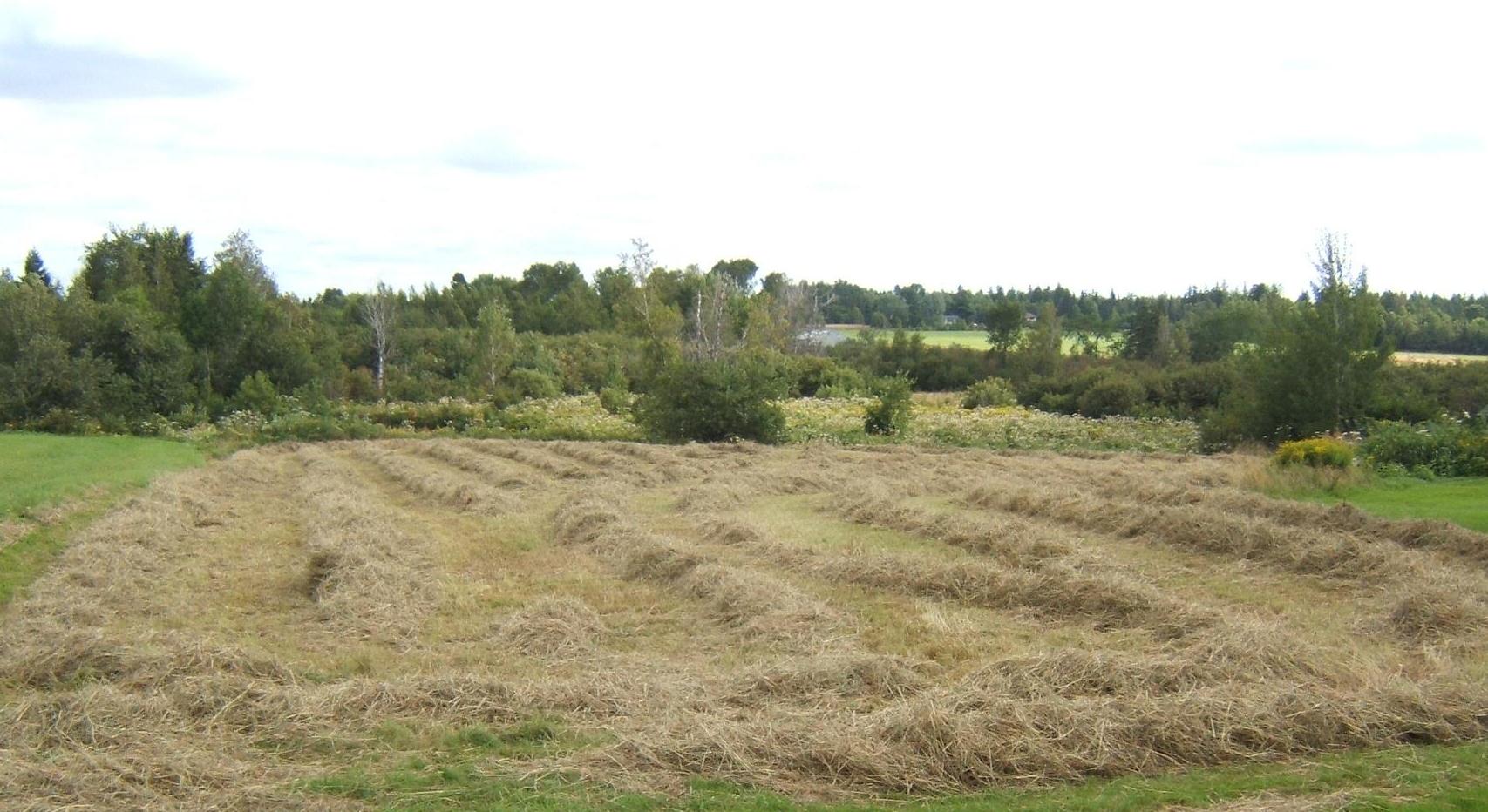
In the 1960s, at my grandfather’s farm, hay was gathered loose into a horse-drawn hay wagon and stored unbailed in the barn. One summer, I was thrilled to be asked to help ‘tramp hay’. As the fluffy hay was forked into the wagon, our work was to compress it by rolling and stomping and jumping.
Haying methods have changed, of course. Collecting loose hay is almost non-existent. Even the smaller square bails are hard to find. The most common are the cylindrical ‘round’ bails or the white plastic-wrapped silage bails.
The round bails look like plump shredded wheat…

and the silage bails are giant marshmallows.
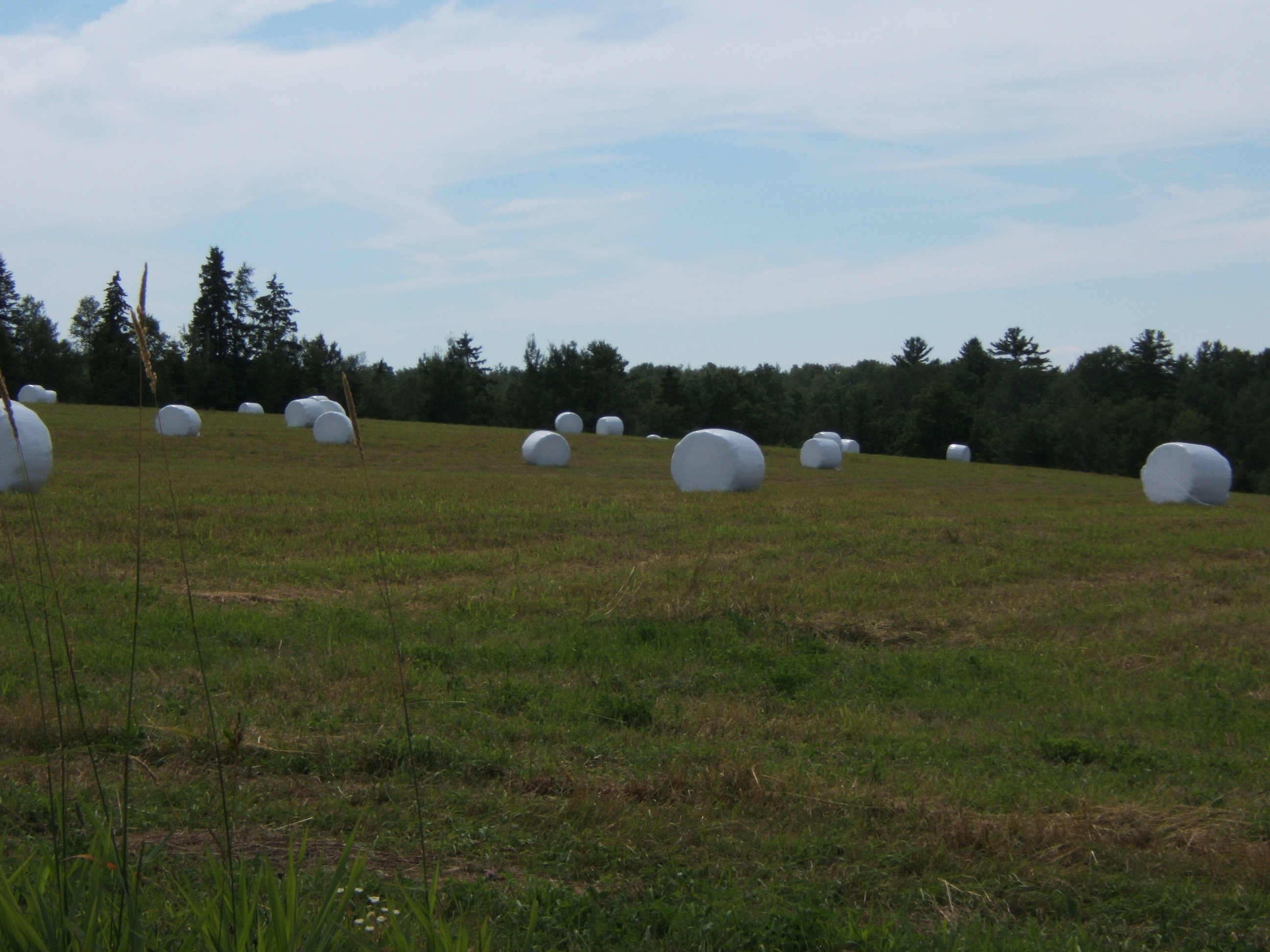
At sunset, the shadows of the round bails make musical half notes on the fields.

'half notes'
Summer Song
~
Sunbury County
sings in its sleep
purple vetch
hop clover
bluegrass
at the roadside
~
hay in rows
a staff
empty of song
awaiting
round bails and their shadows
half notes for an oboe
~
honey bee
ditty in the pink and red-hipped
old fashioned roses
bid country roads
enter the covered bridge
glimpses between planking
rock music on the water
tires drum on loose boards
~
deer look up
cattle low in the meadow
owl to whitethroat
counterpoint
goldenrod pollens the air
rushes by the Rusagonis River
north and south
~
over Sunpoke
big moon crescendo
~
trembles of aspen
diminish
~
Published as: Spring 1995, “Summer Song”, The Cormorant XI (2)
(revised)
© Jane Tims
the glassed-in porch
My grandfather lived in a big white farmhouse. It had rooms and rooms, but the focus of life was the kitchen. On rainy days, we could play there quietly.
Sometimes we were allowed to spend the afternoon in the glassed-in porch just off the kitchen. It was whitewashed, and had filmy white curtains and wide window ledges.
On those ledges was a fastinating collection of knick-knacks and trinkets. Examining these items was very entertaining although we were not really allowed to touch anything.
I have tried to emulate this magical jumble of artifacts in my own home, but some spaces are impossible to duplicate.
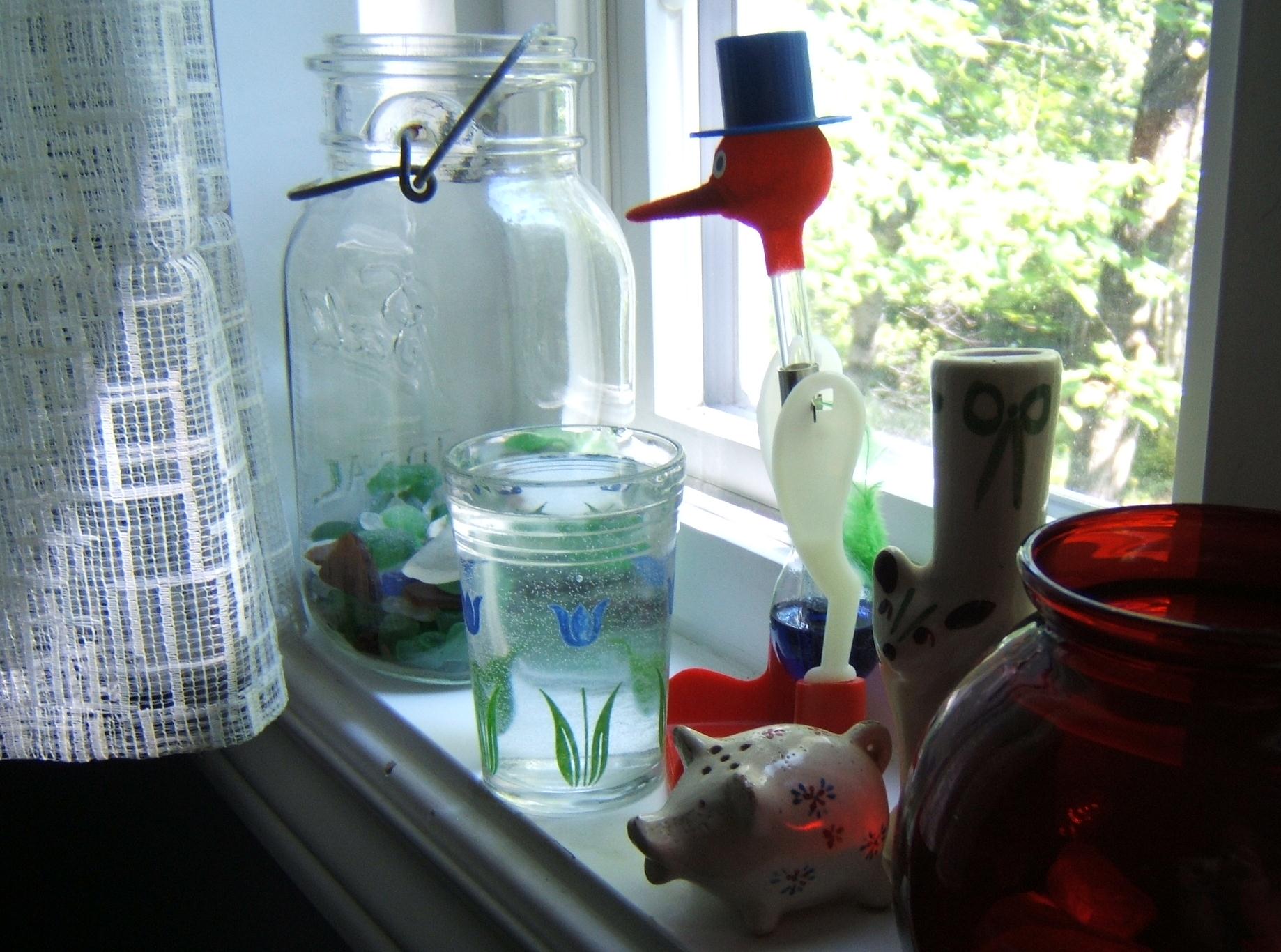
a collection on a window ledge
glassed-in porch in rain
~
rainy day glassed-in porch
tall windows and white step
down from the kitchen
to linoleum wicker table a cot
~
never-used porch door
at the windows, white ledges
keepsakes and trinkets
‘look but don’t touch’
~
big clock in the kitchen ticks
red-eared slider frantic against
the frosted sides of his bowl
rain taps at the window
~
irresistible urge to give the turtle
respite, lift the curtain to admire
the rain, lift the velvet lid
of the purple box, Port Maitland
~
iron pyrite safe inside, encourage
dippy bird to tip and drink
from the glass of water, blue tulips
and a chip in its rim
~
nudge the red and yellow-flocked
parrot above the cot, swing him
on his metal perch, rearrange ceramic chicks
to peck at whitewashed window ledge
~
focus rose bowl ruby light
on china pig, puzzle out flowers
and holes on his back, turn the bud vase over
‘where is Occupied Japan?’
~
pour buttons from the jar, sort
and match Meteghan sea glass, marbles
in a coffee can, take a ship with scallop shells
for sails along the sill
~
trace paths of hesitant rain
droplets on glass
~
© Jane Tims 2011
a map of my grandfather’s farm
“My grandfather’s farm was like a community itself, a miniature village of buildings. They included the main house, the big barn and various out-buildings. In my memory, there were about eight buildings in all, each with its own purpose, and its own sights, sounds, smells, tastes and stories.” (August 1, 2011, on my grandfather’s farm)
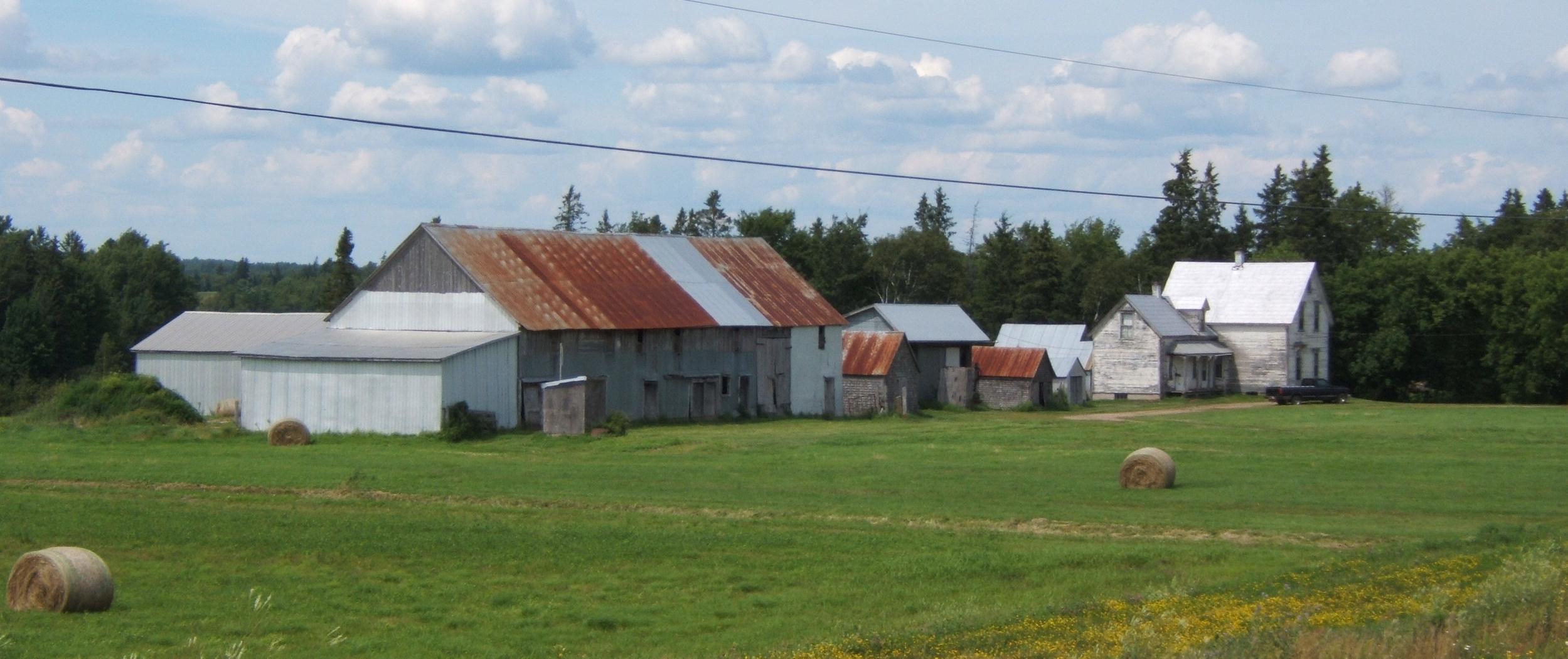
a farm near Moncton ... like a village of buildings
Below is a map of my grandfather’s farm, as I remember it.
The buildings were in a setting of the spaces around them – the orchard, the pastures, the barn yard and the garden.
Some of the buildings, the barn, the house, the mink pen, the garage and the bird loft, I remember very well. Other buildings, the wagon shed, the machine shed, and the shed beside the pasture, I remember only a little. Since my brothers and sister don’t remember these last three at all, or remember other configurations, perhaps these buildings are part of a manufactured memory.

a simple map of my grandfather's farm (not to scale)
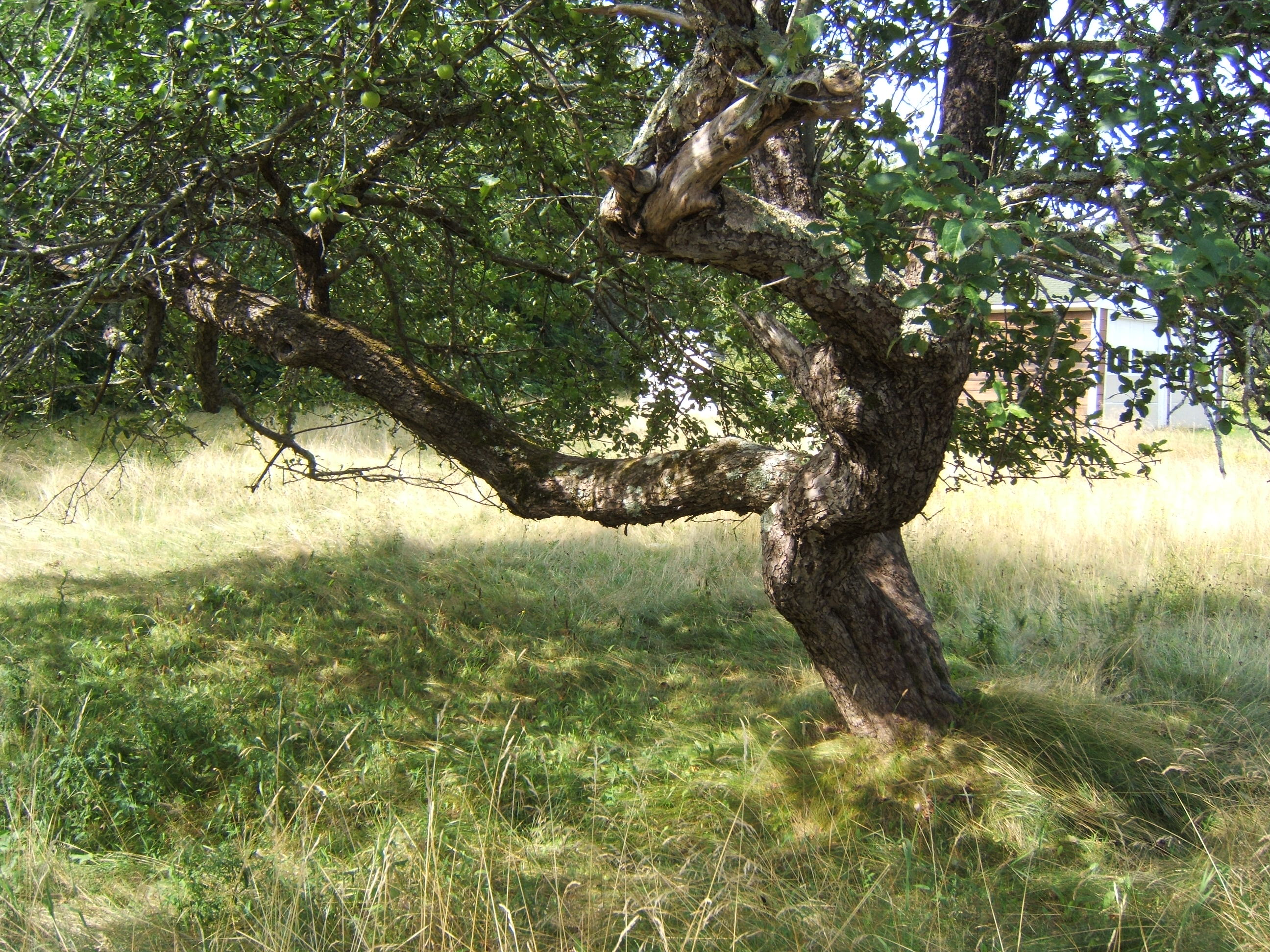
an apple tree like the one I remember, with a branch made for sitting and reading
water from the well
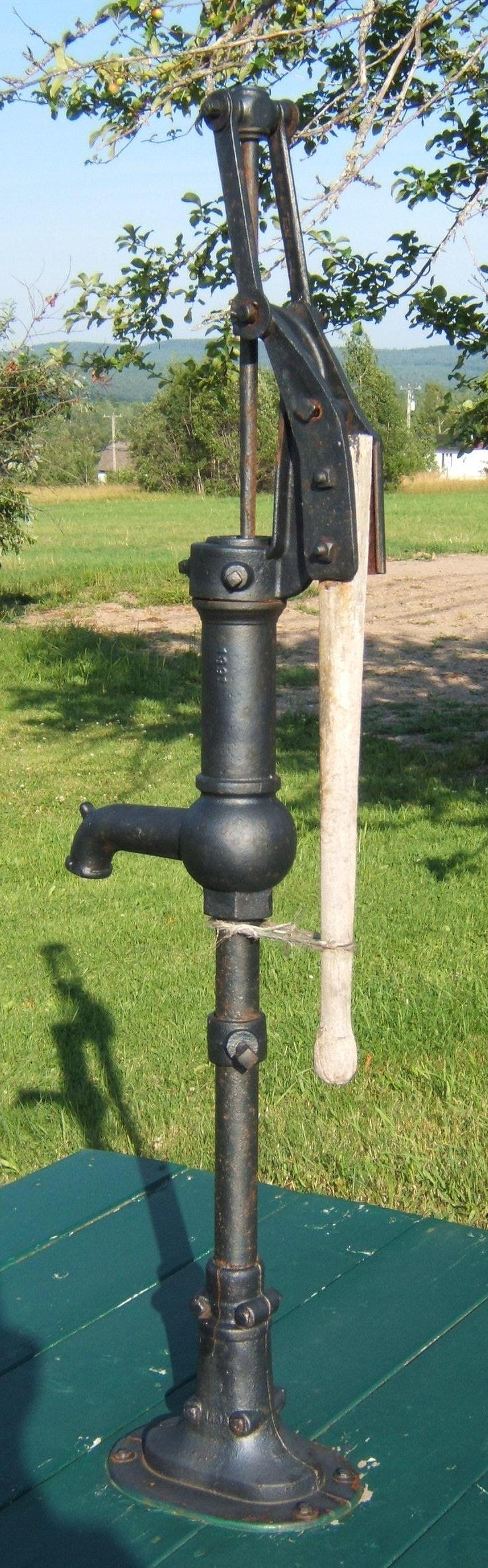
an old-style water pump
water from the well
~
taps in the house
running water hot and cold
why did my grandfather
carry in from the well
two pails of water each day?
handle pumped
well primed
~
he filled three buckets
one he poured
half into Dandy’s bowl
half he left beside the well
for the next day’s prime
~
two he lifted to the narrow step
set them down
opened the screen door
with a squeak
shut with satisfying thunder
~
carried the pails into the entry
set them down
settled his cap on a hook
row of hooks made of wire
hangers bent double and painted
~
carried the pails to the white door
a narrow door
with a latch
set them down
opened the door and climbed the stair
returned in a minute or so
carried the pails
into the kitchen
~
set one next to the sink
by the inside door
where I brushed
my teeth in the morning
enameled metal
narrow mirror
one tap for warm water, one for cold
wire basket for a bar of soap
and a bucket of water
cold from the well
~
set one pail in the pantry
narrow room by the woodstove
lined with shelves
counter where my grandfather
kneaded his bread
rolled the crust for pie
metal canister for sugar
ice box for milk and eggs
and a bucket of water
cold from the well
~
© Jane Tims 2011
my grandmother’s eyes
Although my grandmother, my Dad’s mother, died shortly after I was born, she was always a part of our summer visit to my grandfather’s farm. Her photographic portrait, taken when she was a child, hung in the kitchen, above the cot where we played board games on rainy days.
I think about her sometimes, working in the kitchen, gathering apples in the orchard, making quilts for winter. My Dad, who called her Mama, told me how she made warm quilts by sewing wool squares from old sweaters to a blanket ‘backing’.
I know so little about her. I wish I had asked my Dad to tell me more.
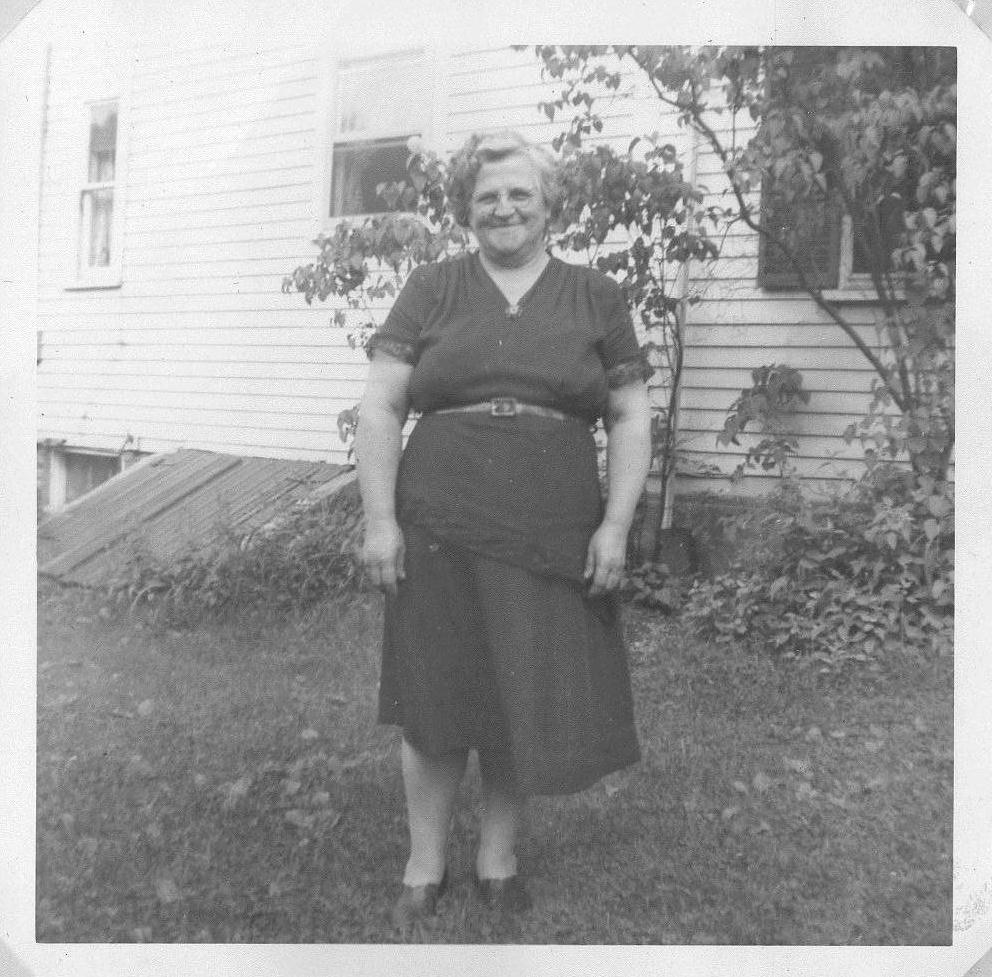
my grandmother (photo taken in 1954)
Her Eyes Follow Me
~
1.
~
my grandmother
the one I never knew
was a portrait
a life-sized photograph
under curved glass
blurred at the edges
hung in the kitchen
~
she leaned over me
her eyes followed me
a child’s eyes
though she died at fifty
~
2.
~
the three of us
played a game
my brother watched her eyes
and I would creep
along the wall
~
leap out
~
her eyes found me
in an instant
~
3.
~
I know her eyes were blue
though the portrait was grey and white
~
4.
~
she is also
~
her last card at Christmas
a paper poinsettia
in the branches
of our tree
~
the dim photo of a mother
in a faded housedress
some unknown cousin
gathered in her arms
~
her last letter
love to the baby
~
5.
~
to say I never knew her
is a kind of lie
~
I knew her eyes
and they have
followed me
~
Published as: ‘Her Eyes Follow Me’, Winter 1996, The Antigonish Review 104:59.
(revised)
© Jane Tims
abandoned spaces
When I drive through the countryside, I am drawn to the sight of abandoned farms or houses. I wonder why they have gone from being loved and used, to being alone.

abandoned farm buildings
Sometimes, the leaving is from economic necessity. Sometimes the last one who lived or worked there has died or moved on. Sometimes the government decides it can’t provide services anymore to out-of-the-way places. Occasionally, we are just seeing a moment in time, and new tenants and new life may be just around the corner.

an abandoned house
During the Depression, in the 1930s, many farms out west were abandoned because the combination of eroded land and poor economic conditions made staying impossible.
The poem below was written to remember one such place in southern Alberta. In the 1960’s, we went there once with my Dad, on a drive to explore the prairie roads.
Why do we abandon the spaces we know best?
The Reason for Leaving
~
1964
~
I remember the place
without texture
a line drawing
plainly coloured
~
two tracks on the prairie
one to come
and one to go on
~
a grey house
on a rise of green
(not grass, just green)
the door fallen away
~
a brown canal
still, without depth
sluice gears and flood gates
making the most
of insufficient water
~
and a bridge, also brown
boards laid without nails
~
~
1933
~
the truck
heavy on the driver’s side
steps down from the bridge
(the bridge ironic)
(three years, the Creek’s been dry)
~
in the rear-view mirror
a wooden house
on a low hill
a thin brown wind
and thirsty grasses
~
only the young ones
turn to stare
~
home
now hollow
stripped of voice and windows
the door left open
for tumbleweeds
~
Published as: ‘The Reason for Leaving’, 2010/2011, Canadian Stories 13 (76).
© Jane Tims
in the apple orchard
One of the spaces I loved the best on my grandfather’s farm was the apple orchard. It was a small orchard, perhaps twenty trees. I have never seen it in spring when the apple blossoms are in bloom, in fall when the trees are laden with fruit, or in winter when the stark bones of the trees are visible. But I knew the orchard in summer, when the green canopies of the trees shed thick shade over the meadow grasses beneath.

an apple orchard in August
In summer, the orchard was usually a private space. The farm yard could be bustling with people and animals, but the orchard was set apart. It was a still room of dark and dapple.
When I wasn’t pushing the swing to its limits, I was climbing apple trees, one in particular. Its main side branch was as thick as its trunk and jutted out parallel to the ground. A little jump and you could sit on it like a chair. Swing a leg across and you had a horse. Stand on it and you were in the crow’s nest of a sailing ship. Sit down again, lean against the trunk and you had the ideal perch for reading the afternoon away.

an apple orchard in spring (photo by G. Tims)
The orchard was usually a private space. But on Family Reunion Day, it was the focus of the festivities. Big tables covered with white cloths were assembled in a line. Enough chairs were unfolded for every person in our very large family. Cars turned in at the driveway and claimed a spot in the farm yard. Cousins rolled from the cars and were soon climbing and swinging in the orchard. The table gradually filled with a conundrum of casseroles, bean pots, roasters and platters.
After the eating was done, wire hoops went up for a game of croquet. My Dad loved croquet and would show me all the tricks – how to get through the starting hoops in a single turn and how to ricochet off the goal post. He also showed me how to bump up against the ball of another player and send their ball flying out of bounds on the next turn. Armed with my learning, I gripped my croquet mallet, certain to win. And realised my brothers and sister and some of the cousins had some strategies of their own!
After the Reunion was over and the last car was waved from the driveway, I was left alone in the orchard and it seemed more empty and silent than before.
I would love to return to the apple orchard on my grandfather’s farm and read a book in my tree one more time. Are you ever too old to climb an apple tree?
dapple
the worn blanket flung
over the bough
of the apple tree
is an old woman
she hugs the limb
reaches for a branch
or an apple
barely beyond
the crook
of her fingers
she would dare
to set her foot
on the branch
and the next
step up
put the orchard
below her
rise above
the canopy
the valley
the meander of the river
feeble
she waits
in the dapple
clings to the branch
endures the tremble
delays the fall
Published as: ‘dapple’, 1998, Green’s magazine (Autumn 1998) XXXVII (1)
(revised)
© Jane Tims




 nichepoetryandprose