Archive for July 2013
a mysterious mechanism 6-13

salt ponds on Ile de Re (image from Street View)
~

~
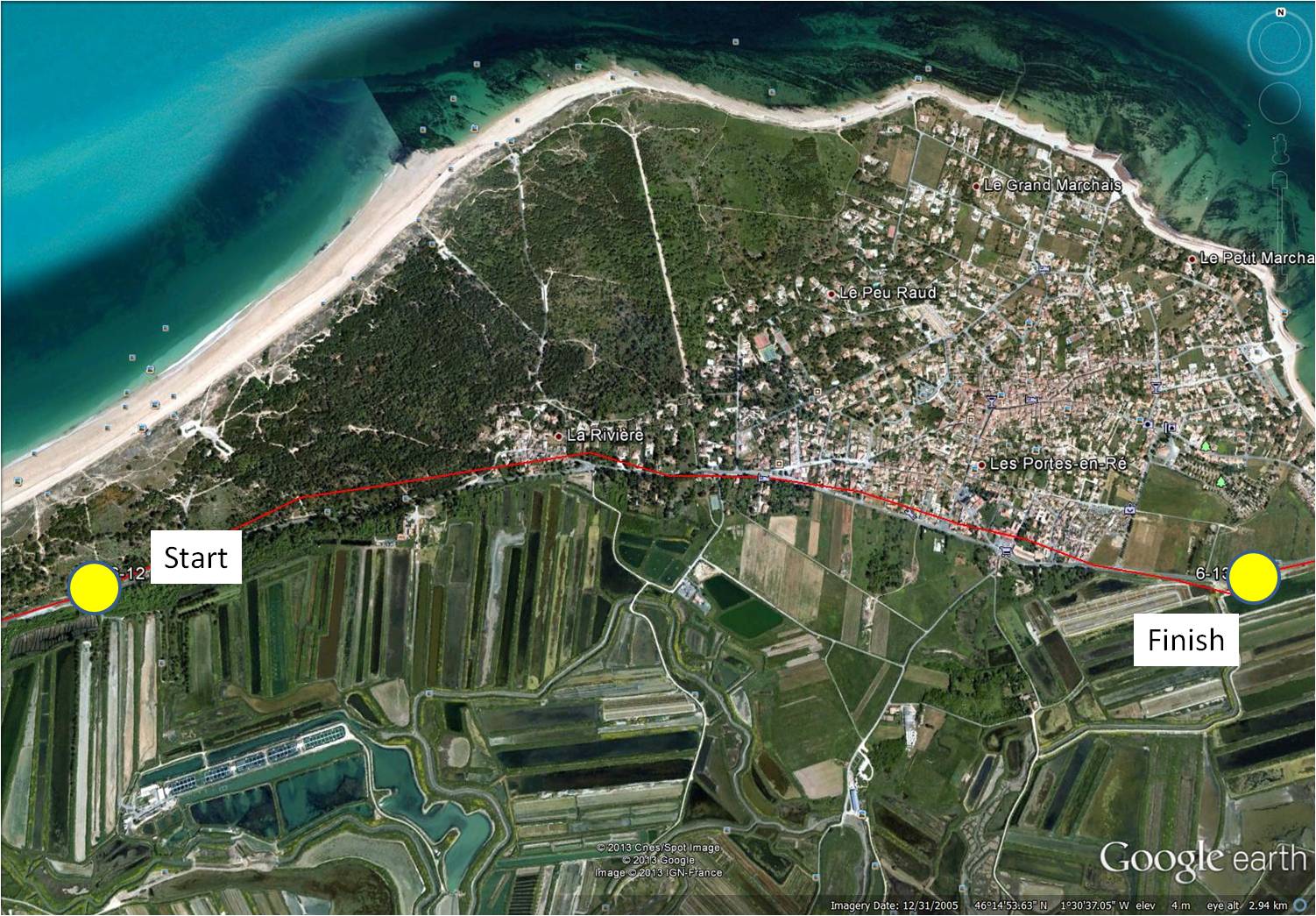
map showing distance travelled … the rectangular salt ponds on Ile de Re are visible (map from Google Earth)
~
On this second-to-last day of my virtual travels through France, I found a mystery. The disadvantage of travelling far away from the images you see is, you can’t stop and ask when you see something you don’t understand. As I drove along the salt ponds dominating the eastern part of Ile de Ré, I saw a circular structure. It was corral-like and at first I thought it must be a corral for a horse. But, closer observation suggests another purpose …
~

circular ‘corral’ … click the photo to enlarge and see the internal mechanism … rectangular salt ponds are visible in the background (image from Street View)
~
The clues are these:
1. the structure is circular
2. a fence surrounds the structure, suggesting need to contain an animal or something else
3. on second look, the fence is more like a wall, perhaps able to contain some substance, perhaps even a liquid
4. a horse trailer is parked in the yard
5. a grass-free track surrounds the structure
6. the corral is not empty, but contains a complex structure, including an elevated ‘pipe’ near the middle, and two long horizontal poles supported by wires
7. at the end of each pole is a flat, paddle-like structure
~
I have a theory about this mysterious device. I think it is a horse-driven mechanism for collecting salt.
~
My theory: salt water is pumped into the structure, a horse is used to turn the paddles through the water and salt is collected on the paddles.
~
Although I searched on the Internet, I could not find any reference to this method of collecting salt.
~
On Ile de Ré, salt is typically collected from large rectangular salt ponds called ‘pans’. The salt is formed as the sun and wind ‘lift’ the salt from the water. The collection process is very labour-intensive. People stand on the narrow grassed dividers between ponds and ‘rake’ the fleur de sel (top layer of crystallised salt), collecting it into large salt piles. Fleur de sel is more expensive than table salt because of the complexity of the harvest. It is often sold in jars, is moist and contains sand which gives it a grey color. Some Ile de Ré salt has a pink tint, from its phytoplankton content!
~

~
Do you know what the circular corral is used for? Do you think I have solved the mystery???
~
Best View: a house covered with white roses …
~
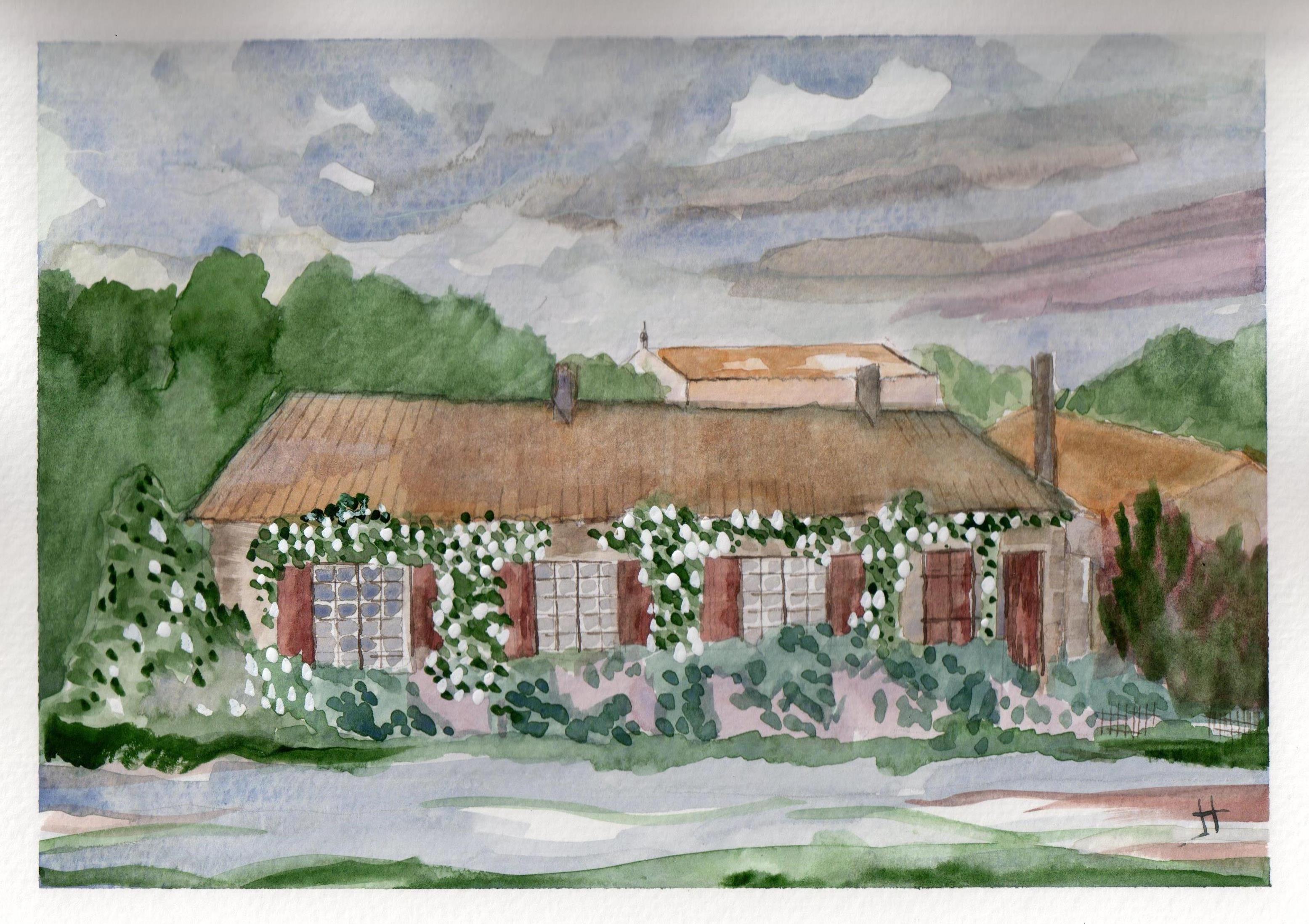
June 25, 2013 ‘house with white roses’ Jane Tims
~
Copyright 2013 Jane Tims
forested dunes 6-12
~
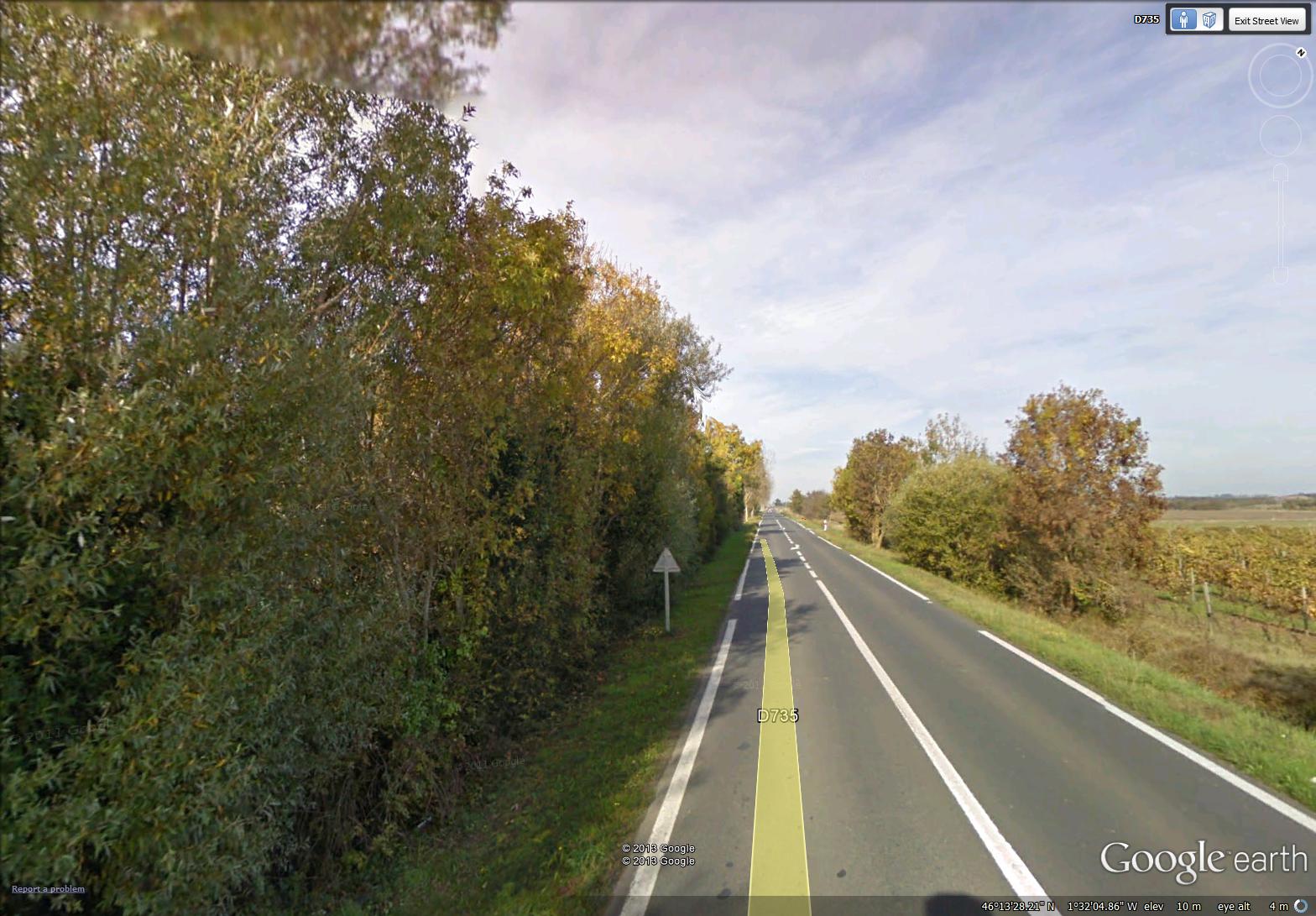
long empty roads (image from Street View)
~
~

~
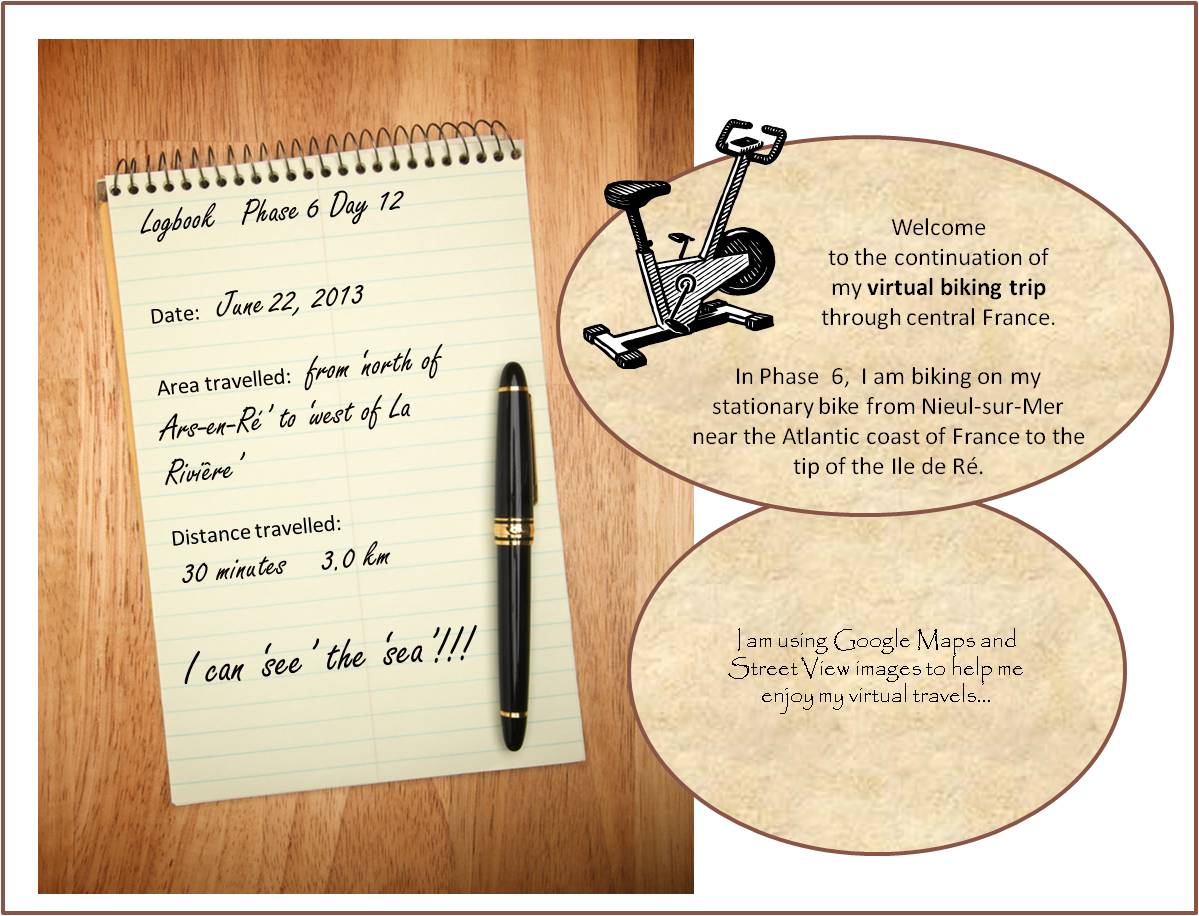
My virtual bike trip on day 12 of Phase 6 took me along a very uninteresting length of highway. Other, more interesting roads showed on the map, but Street View just didn’t go there. The houses along the way were screened by long stretches of walls …
~

miles of walls (image from Street View)
~
Sometimes the walls were covered in graffiti …
~

miles of graffiti-covered walls (image from Street View)
~
When I turned to travel along the beach, the first house I saw was a charming cottage named ‘Solitude’ …
~
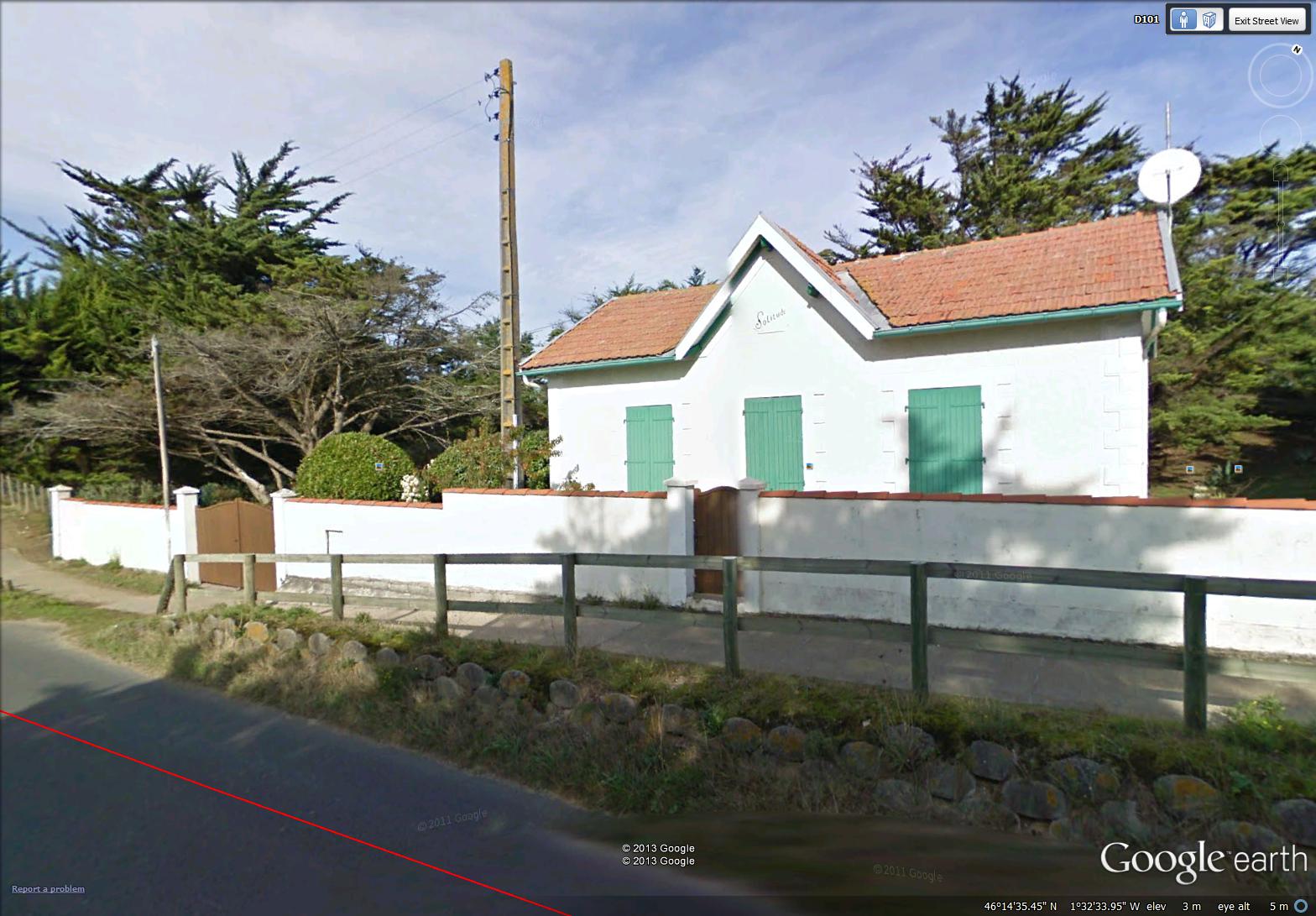
cozy cottage named Solitude (image from Street View)
~
The rest of the route along the beach was obscured by trees. Although it meant I couldn’t see the beach, a forested dune is actually an environmental goal. There is lots of evidence that the eventual natural state of a dune is forest. In New Brunswick, we have only three forested dunes. Usually erosion of the grassed dune occurs long before forest is able to establish itself …
~

forested dune along the north shore of Ile de Ré (image from Street View)
~
Best View: a view across the salt marsh ponds near Le Gillieux ….
~

June 25, 2013 ‘salt marsh on Ile de Re’ Jane Tims
~
Copyright Jane Tims 2013
seaweed for gardens and vines for trees 6-11
~
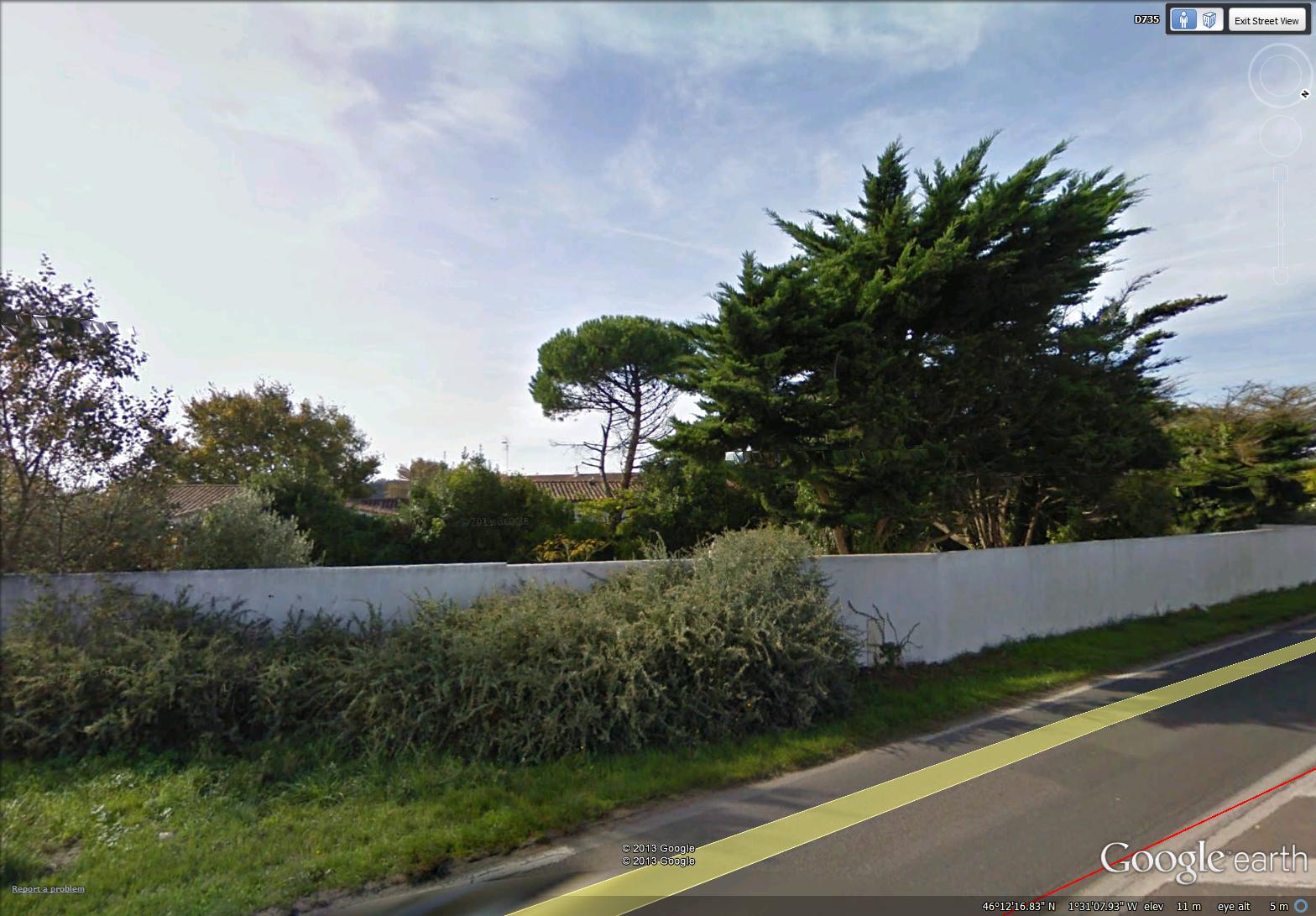
greenery in a walled yard (image from Street View)
~

~

map showing distance travelled (map from Google Earth)
~
I am nearing the end of Phase 6 of my virtual cycling trip through central France, but I am seeing so many interesting things, it is hard to look forward to the end. Today I saw a man digging seaweed into his garden. He had spread the seaweed uniformly across his garden and was slowly digging it into the soil …
~

man digging seaweed into the garden (image from Street View)
~
I am interested in gardening, so of course, I stopped to talk …
Jane: Bonjour. ‘Qu-est-ce que vous ajoutez au jardin???’ (‘Hello! What is it you are digging into your garden?’)
Gardener: ‘Bonjour. Ce sont des algues marines! Il sont très bon pour le sol.’ (‘Hello. I am adding seaweed. It is very good for the soil.’)
Jane: ‘Bon pour le sol? C’est vrai?’ (‘Good for the soil. Is that true?’)
Gardener: ‘Mais oui! Ils ajoutent la nourriture et les matières organiques aux sol!’ (‘Of course! They add nutrients and organic matter to the soil!’)
Jane: ‘D’où est-ce que vous avez obtainer ces algues marines?’ (‘Where did you get the seaweed?’)
Gardener: ‘Ah, juste à côté de l’ocean! Ils ne coûtent rien!’ (‘Ah, just by the ocean!’ It’s free!!!’)
~
Using seaweed on gardens is common on this side of the Atlantic Ocean also. For example, in his book Vineyard Chill (Scribner, New York, 2008), Phillip R. Craig opened his mystery novel with a family going to the beach to gather seaweed for their garden on Martha’s Vineyard.
~
There was lots of evidence of gardening and green thumbs on this part of my bike drive across Ile de Ré …

greenhouses on Ile de Ré (image from Street View)
~
Best View: old trees, their trunks covered with vines (I loved doing this watercolor so much, I tried three versions) …
~
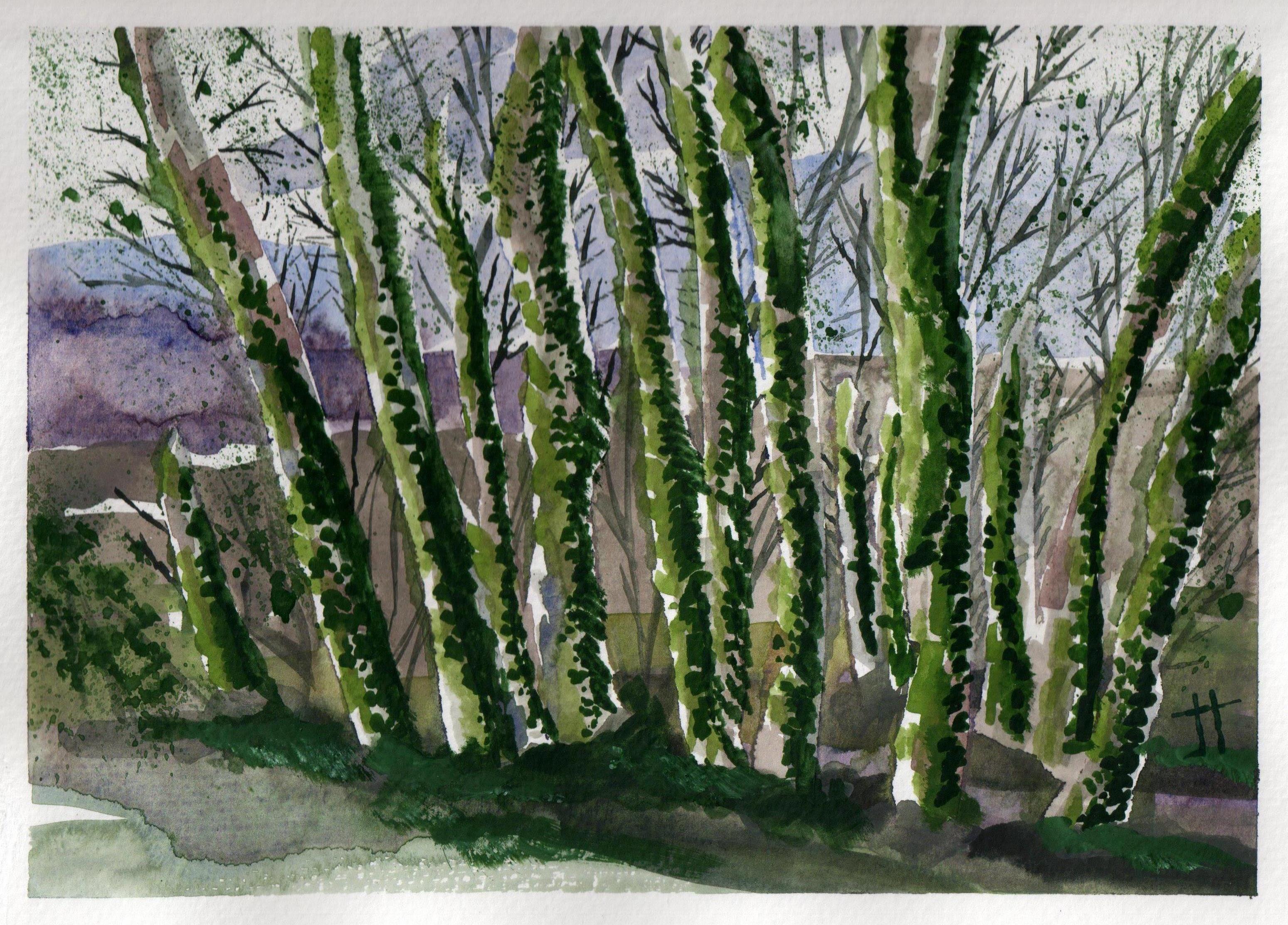
June 17, 2013 ‘vine-covered trees #1’ Jane Tims
~

June 17, 2013 ‘vine-covered trees #2’ Jane Tims
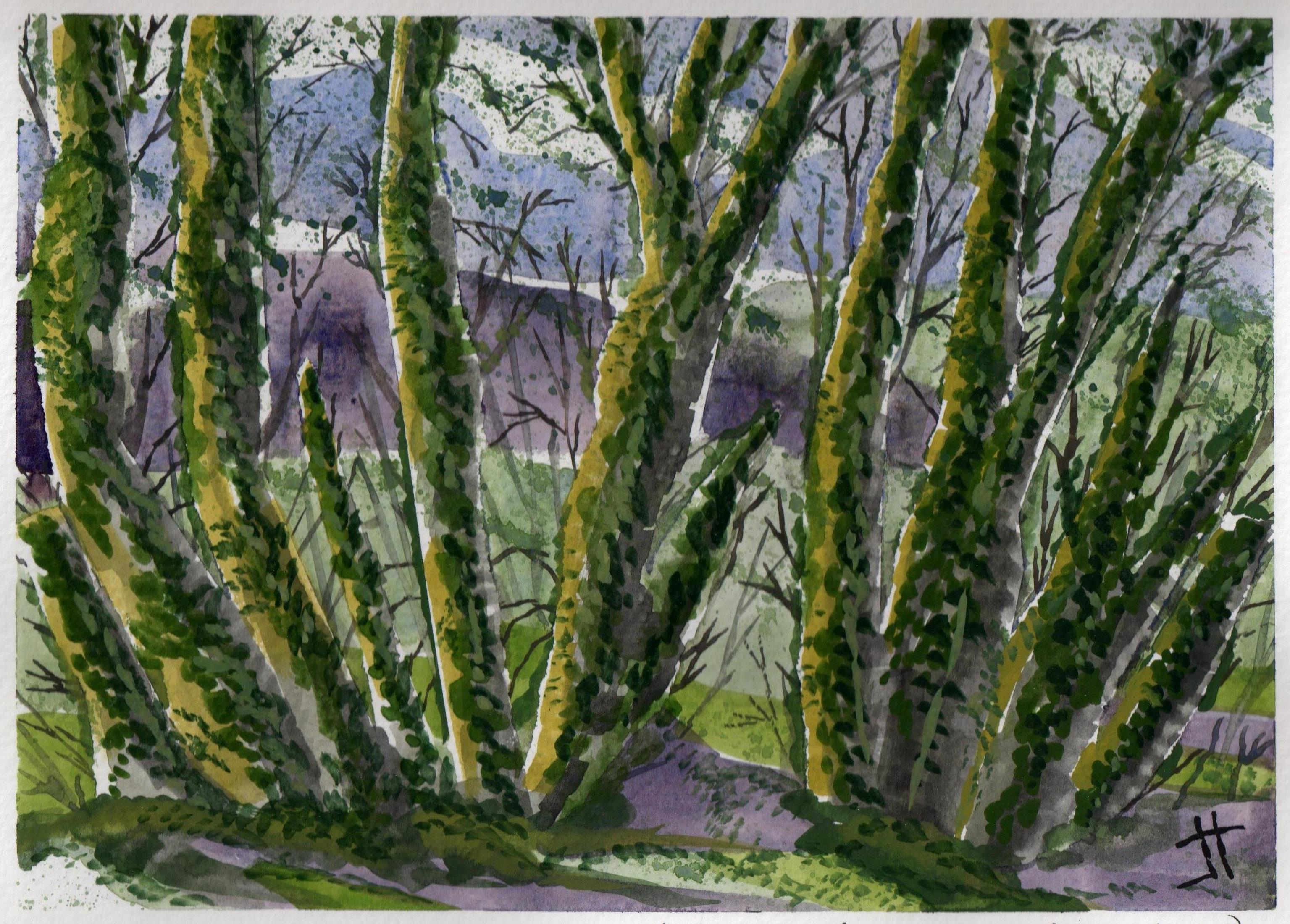
June 18, 2013 ‘vine-covered trees #3’ Jane Tims
~
This is the view that inspired the paintings …
~

vine-covered trees (image from Street View)
~
Copyright Jane Tims 2013
trying to glimpse the beach 6-10
~

pines inland of beach on Ile de Ré (image from Street View)
~
~
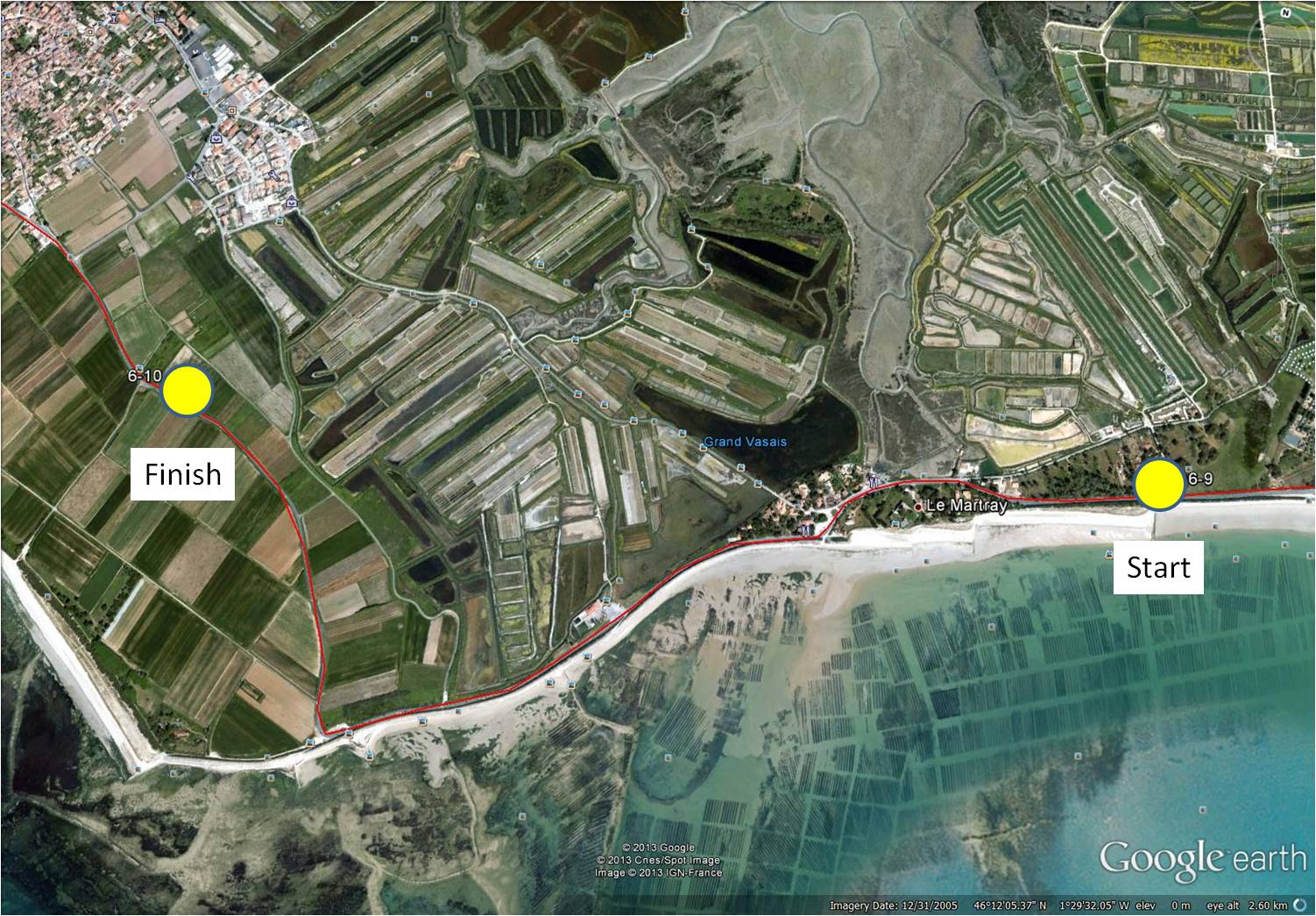
map showing distance travelled (map from Google Earth)
~
Biking from one town to the next on Ile de Ré, I know the beach and the ocean are just ‘over there’, but a berm, a dune and a sea-wall prevent any good views …
~
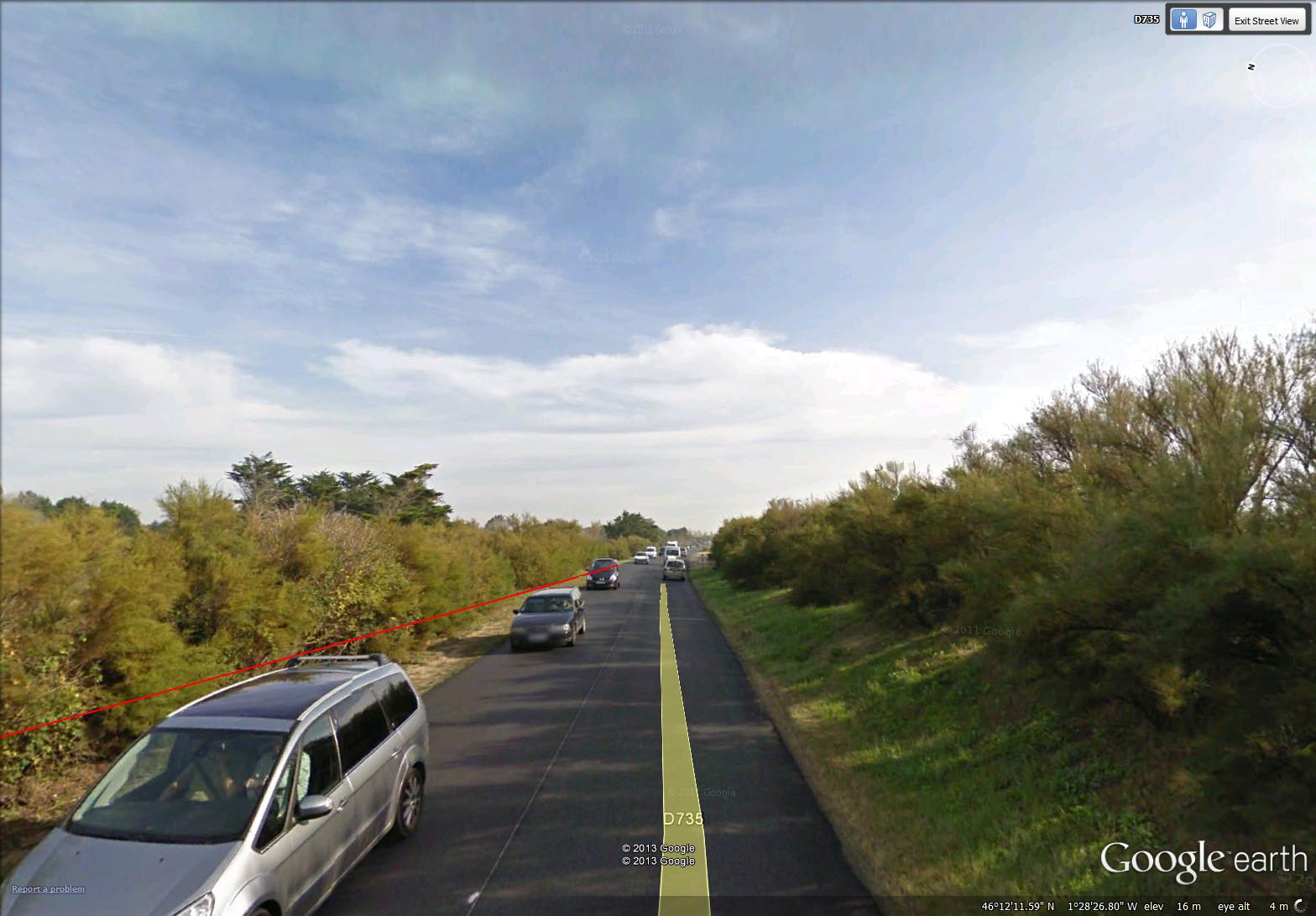
road along beach near Le Martray on Ile de Ré – beach is across the berm to the right (image from Street View)
~
Once in a while, I catch a glimpse of the beach through a private yard …
~
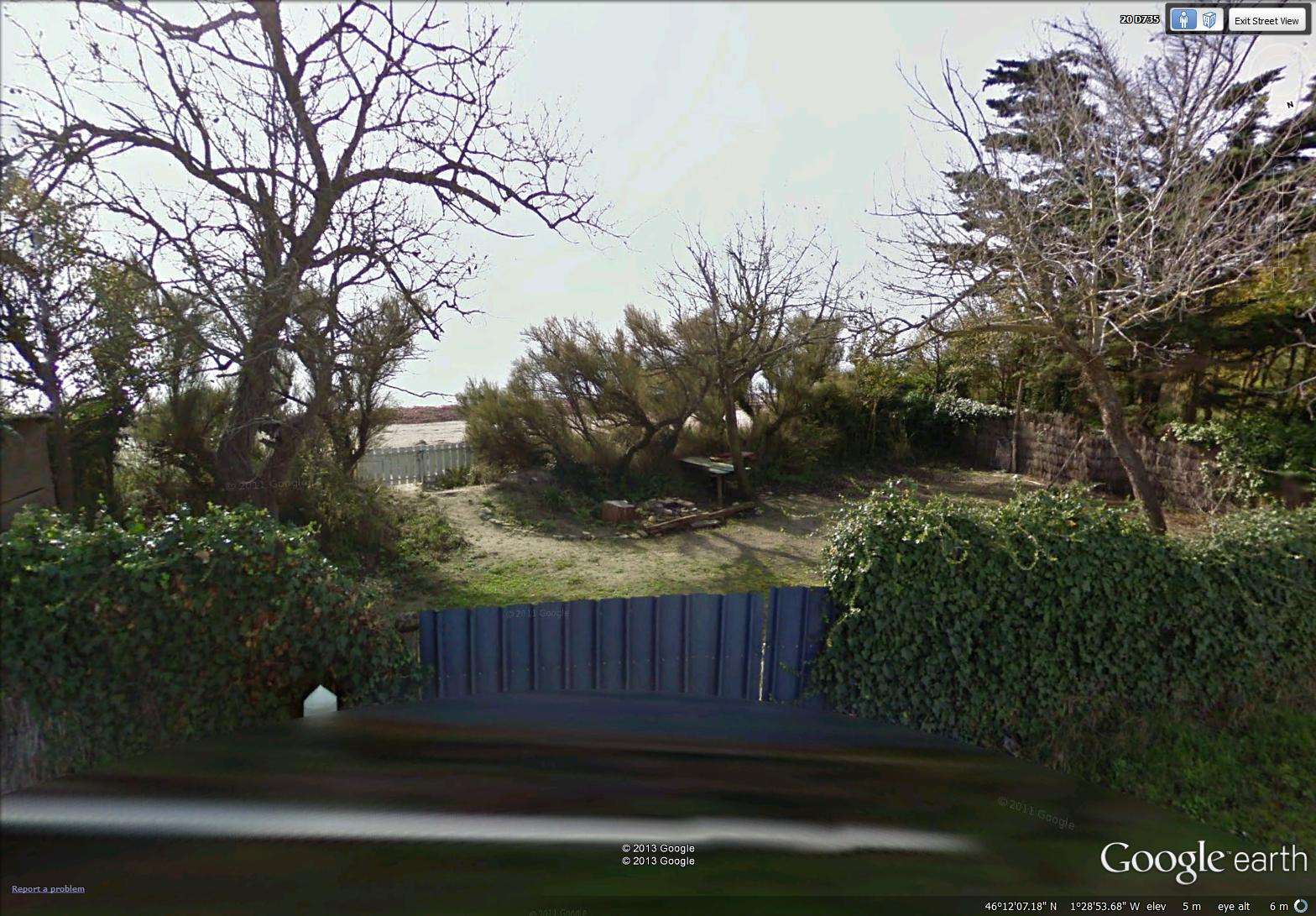
glimpse of beach (image from Street View)
~
On the right side of the road, facing inland, I have excellent views of the salt marsh …
~

salt marsh (image from Street View)
~
A large area of these marshes are dedicated to producing salt …
~
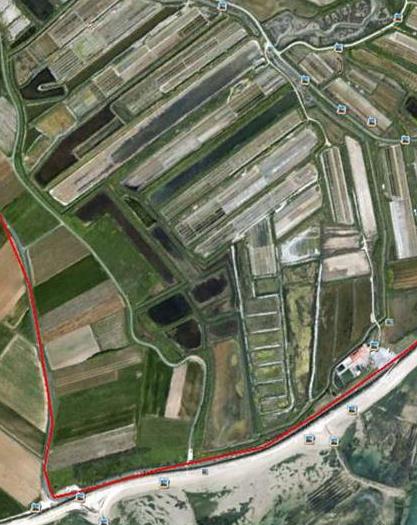
map showing rectangular salt reclaiming areas (map from Google Earth)
~
I also see the extensive vineyards I have encountered elsewhere on the island …
~
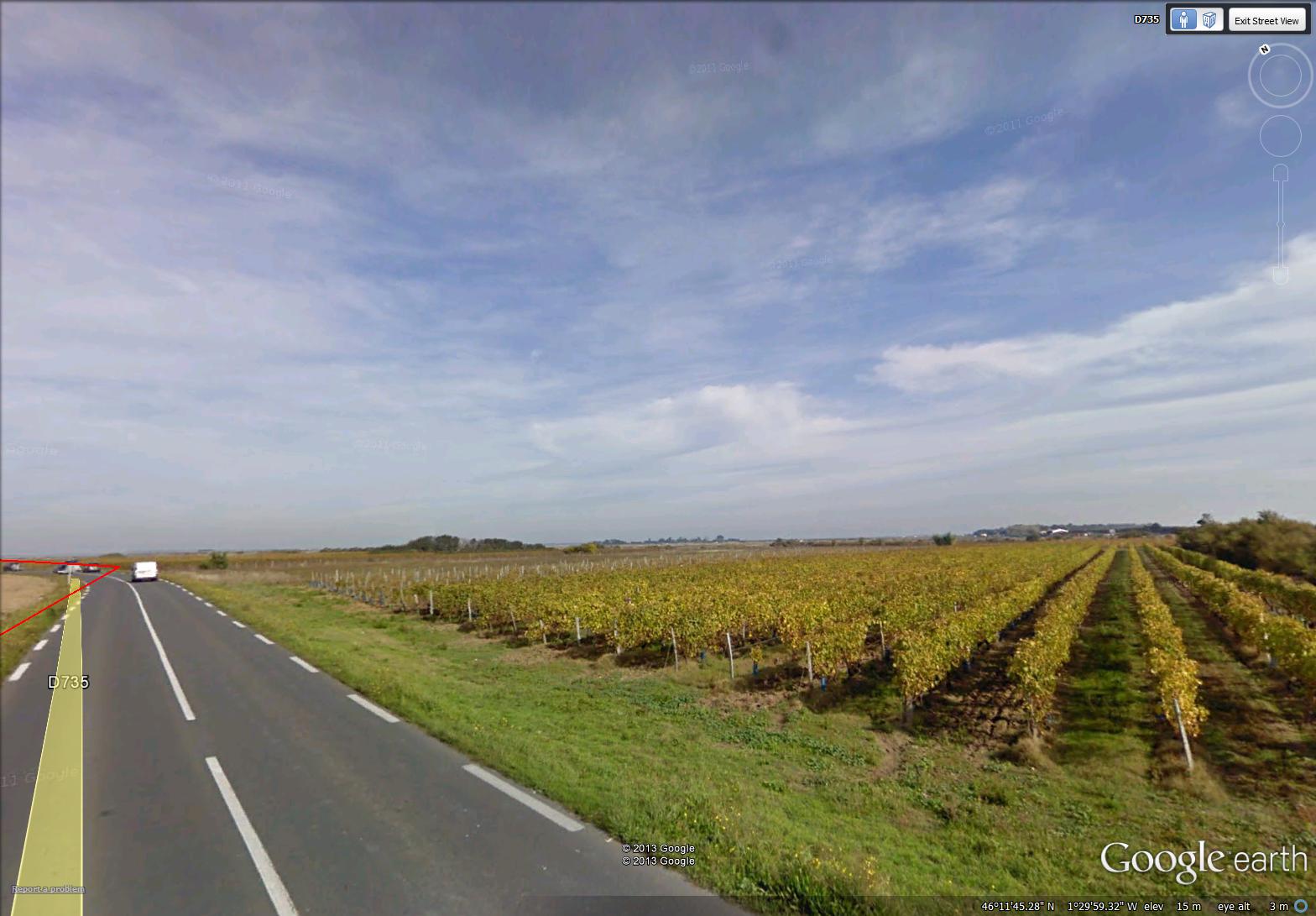
rows of vines in vineyards near Ars-en-Ré (image from Street View)
~
Best View: grapes ripe on the vine …
~

‘grapes’ June 5, 2013 Jane Tims
~
Copyright Jane Tims 2013




 nichepoetryandprose