Archive for August 2012
a botany club excursion
Earlier this summer, we went on a hike with other members of a local botany club to the Cranberry Lake Protected Natural Area, an area protected for its extensive forest community of Red Oak and Red Maple.
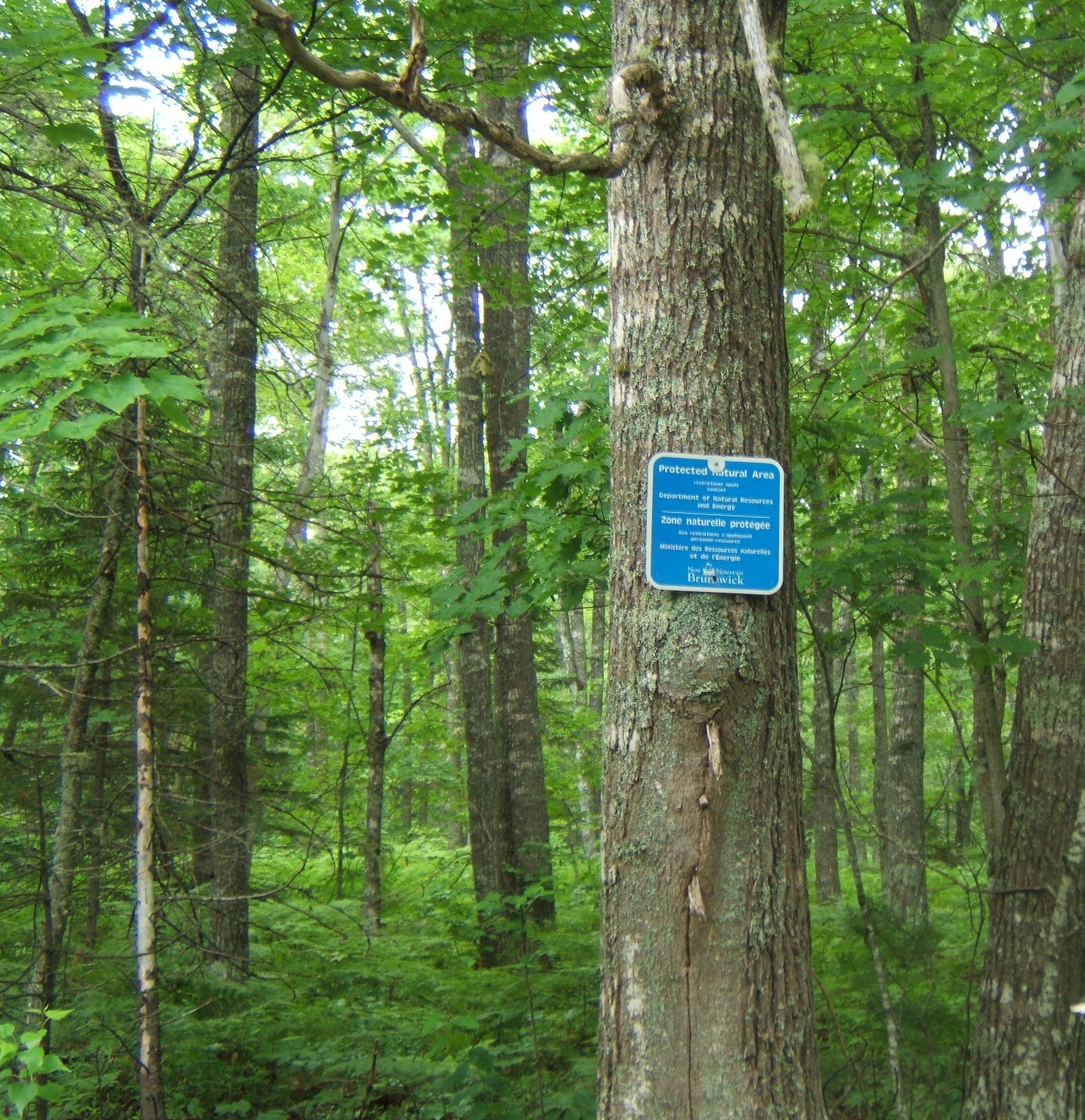
The New Brunswick Department of Natural Resources website describes the Cranberry Lake Protected Natural Area as follows:
An extensive Red Oak forest community. Predominantly Red Oak – Red Maple association. Red Oak make up a large percentage of the regeneration, most likely the Oak component will increase as the stand matures. The individual trees are impressive size.
This type of forest is rare in New Brunswick.
The woods were open with a thick understory of Bracken (Pteridium aquilinum (L.) Kuhn, var. latiusculum (Desv.) Underw. ex A. Heller), Blueberry (Vaccinium spp.), Common Lady’s Slipper (Cypripedium acaule Aiton) and some of the other species of the Canadian Element associated with woodlands in the Maritimes (see my post for April 30, 2012, Trailing Arbutus, https://nichepoetryandprose.wordpress.com/2012/04/30/trailing-arbutus-epigaea-repens-l-var-glabrifolia/ ).

My husband standing in the thick growth of Bracken… it was about waist-height… he says he was standing in a hole!
It was so much fun working with the other botanists and enthusiasts to identify the various species we encountered. The plant lists prepared during the day will be part of an effort by Nature New Brunswick to update a database of Environmentally Significant Areas in New Brunswick. During my years of work, I was privileged to work on the development and use of this database.
I saw many familiar species during the hike, but I was so excited to see three plants I have not seen in a while.
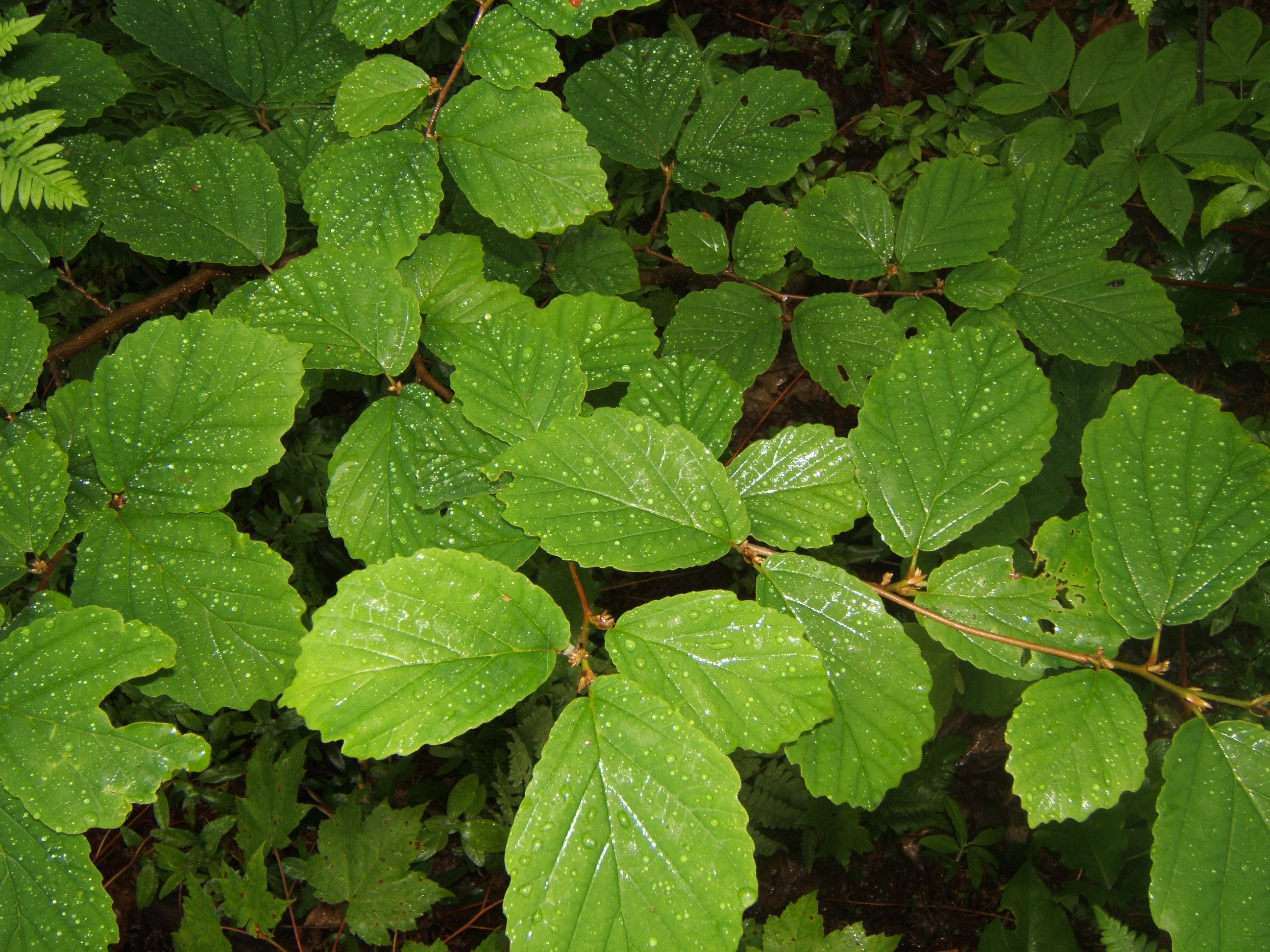
I renewed my acquaintance with Witch-hazel, Hamamelis virginiana L. (notice the asymmetrical shape of the leaves)…
and Shinleaf (Pyrola elliptica Nutt.), identifiable by its thick oval leaves, longer than the leaf-stalks or petioles…

a single plant of Shinleaf, with its straight stem of small creamy flowers, growing among Blueberry, and Red Maple and Red Oak seedlings
I also was introduced to a plant I thought I had never seen before, Cow-wheat (Melampyrum lineare Lam., a branchy variety found in dry woods). When I looked it up in my Flora, though, I found a notation to say I had seen this plant in the summer of 1984. It is always good to record the plants you see and identify!

While there, we saw a perfect example of the interaction of species. A bright orange fungus, known as Chicken of the Woods (Laetiporus sulphureus), growing on an aged Red Oak, was being consumed by a horde of slugs.

A hike with a group is a great way to expand your knowledge and boost your confidence. Everyone benefits from the knowledge of the various participants, and being with like-minded people is good for the soul!
© Jane Tims 2012
Warning: 1. never eat any plant if you are not absolutely certain of the identification; 2. never eat any plant if you have personal sensitivities, including allergies, to certain plants or their derivatives; 3. never eat any plant unless you have checked several sources to verify the edibility of the plant.growing and gathering – learning
When I embarked on my project to write poetry about ‘growing and gathering’, I wanted to learn as much as I could about the subject. It is not surprising, then, to find I have written quite a few poems on the theme of ‘learning’.
Some of these poems are in the spirit of ‘how to’. I have poems about collecting maple syrup, making jelly, harvesting and preparing wild sarsaparilla, stringing peas in the garden, gathering eggs and picking fiddleheads, among others. As poems can be a little obtuse, sometimes these directions are not very helpful in a practical way. However, I try to capture the essence of the growing and gathering of local foods.

I have also written poems about learning itself. I have a poem about my childhood experience of running free on the prairie, picking thorny cactus berries and bottles of scorpions (yes, scorpions… they were interesting and pretty, and I didn’t know they were dangerous!). I also have a poem to remind busy young mothers to learn from the rhythms of nature – the calm conspiring of bees and clovers to make honey, or the way a bird collects the makings of a nest, a little at a time. Another poem is about learning how to negotiate the traditions of the farmers market (if you buy fresh carrots, keep the green tops for your compost bin!!!).

I also have two poems about imitating nature. In the 1960s, my Mom used to make a few substitutions in her cooking to make up for a lack of ingredients. You have probably seen these recipes before: Apple Pie, No Apples and Mock Cherry Pie.
One of the reasons Mom made these recipes was to have some fun and make us laugh. But fake food is no laughing matter. My goal, in part, has been to show that we are now a little distanced from our food and its sources. By considering what wild foods might still be available, I have tried to get others to think about the source of our food and the greater simplicity of eating local.
~
~
Apple Pie, No Apples
Prepare pastry for a double pie
Break 15 salted soda crackers into wedge-shaped pieces and place in the unbaked pie shell
Bring to a boil:
1 1/2 cups water 1 1/4 cups white sugar 4 tbsp. margarine 3/4 tsp. cinnamon 1 tsp. cream of tartar 1 tsp lemon flavoringPour mixture over crackers
Cover with pastry
Bake as for apple pie
~
Mock Cherry Pie
Prepare pastry for a double pie
Fill pie shell with:
2 cups fresh cranberries 1 cup raisins 1 1/2 cups sugar 2 tbsp. flour 1 cup cold water 1 1/2 tsp. vanillaCover with a lattice of pastry.
Bake as for cherry pie
~
~
Mock Cherry Pie
~
I am not easy to fool –
embellished covers, empty pages
‘baby’ carrots, shapened like pencils
knock-off purses, no money inside
diet soda and servings of fries
~
who else would look
under the lattice crust
to discover cranberries and raisins?
~
cherries in the orchard
never picked
~
~
© Jane Tims 2012
~
~
Warning: 1. never eat any plant if you are not absolutely certain of the identification; 2. never eat any plant if you have personal sensitivities, including allergies, to certain plants or their derivatives; 3. never eat any plant unless you have checked several sources to verify the edibility of the plant.~
Blueberries!
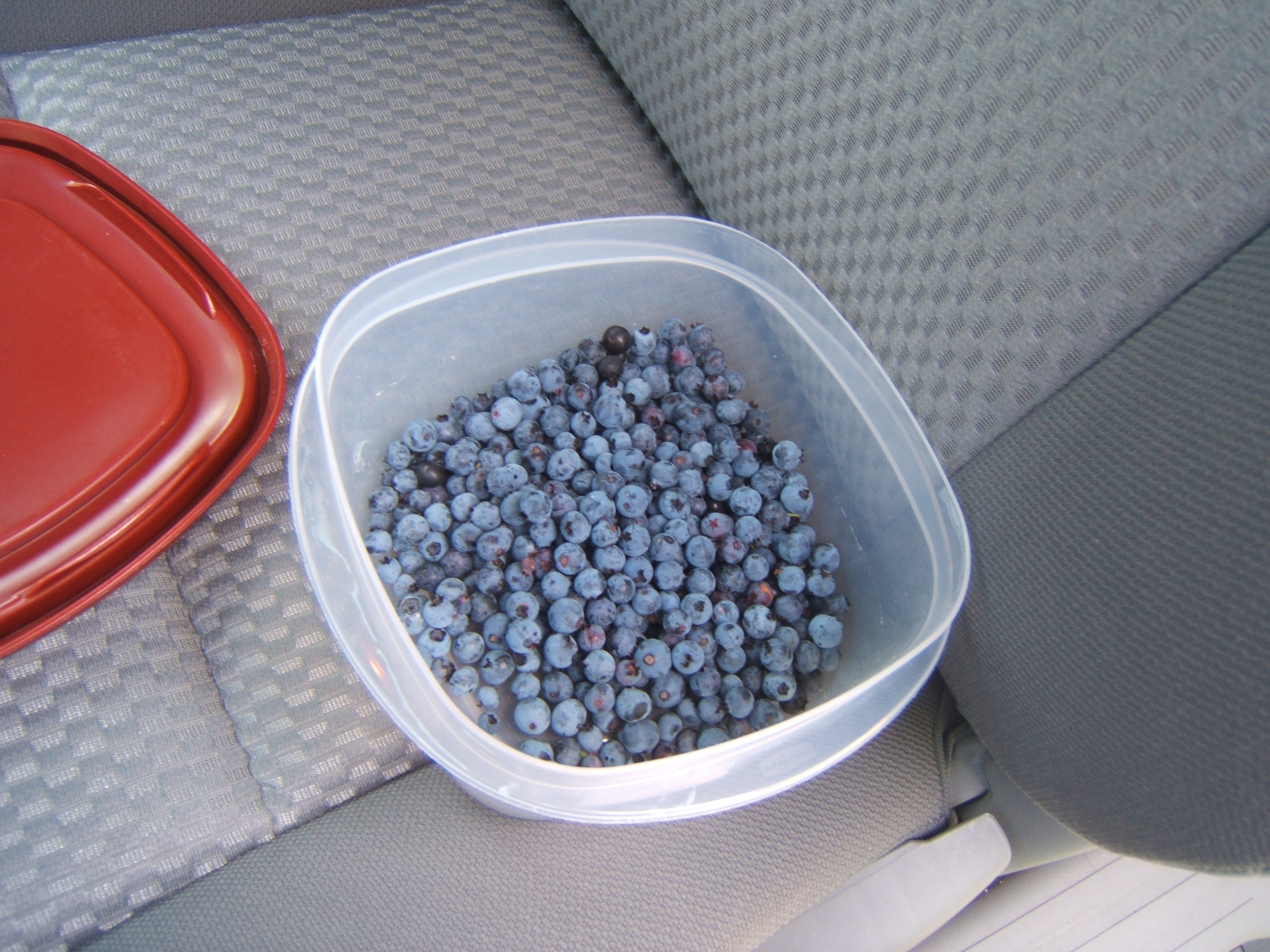
I love blueberries and so I am very happy – our blueberries are blue and ready for the picking at our summer property.

There are two ways to pick blueberries, with your hands…

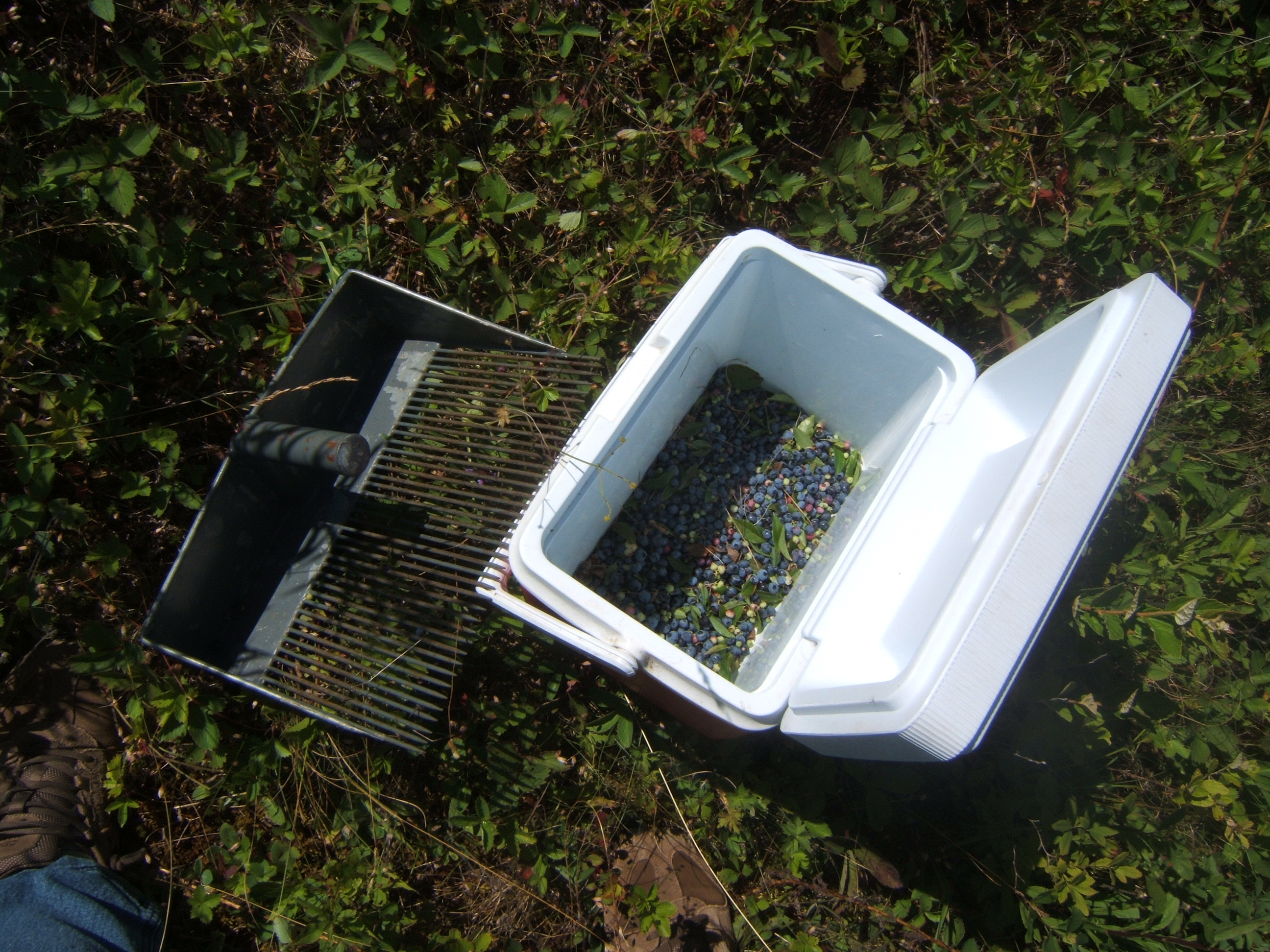
or with a rake…

My husband bought me my rake years ago, so I use it when there are lots of berries and most are ripe. There is a bit of a knack to harvesting with a rake. The ripe blueberries are loosened and captured with the tines of the rake. The basic technique is to sweep the surface of the bushes, tipping the rake upward as you sweep, since the ripe berries fall into a tine-less part of the pan. The experience of raking berries is very different from picking. The process is less calm, although you do get into a rhythm. Also, the tines of the rake vibrate as you sweep, making a lovely musical sound!
We compared the yields between picking and raking, and we get about five times as many berries per unit effort with the rake (I am sure professional rakers do much better than this). The rake gets lots of leaves and debris along with the berries, so the time saved in raking instead of picking is lost in the cleaning (in a professional operation, the debris is removed with fans or another sorting method).
Although we have lots of berries on the property, they are getting fewer each year because the growth of other vegetation crowds the blueberry bushes. But we have a backup plan!
We also travel to the southern part of the province where the berries are in full production this time of year. Our preferred place to get blueberries by the box or by the pie is in Pennfield, at McKay’s Wild Blueberry Farm Stand.

We eat most of our own blueberries almost immediately. They also freeze very well. Our favorite way to use the berries is by making Blueberry Dumplings.
~
Blueberry Dumplings
two to three cups of fresh blueberries 1/2 cup of water 2 tbsp. of sugar (more if you prefer a sweeter dish) ~Bring the berries, sugar and water to a boil.
When the mixture is bubbling, turn down the heat.
Dumplings:
1 cup flour 2 tsp. baking powder 1 tbsp. of shortening, cut into the flour/baking powder mixture 1 tsp. sugar 1/2 cup milk ~Mix well and add by spoonfuls to the top of the cooking blueberries.
Cover the pan tightly with a lid (otherwise, you will have a blue-spattered stove).
Cook at low for about 12-15 minutes or until dumplings are fluffy and done in the middle.
Enjoy!
~
~
raking blueberries
~
the sweep of the rake, the berry
touch, the ring of the tines
vibrato in blue, duet with the wind
in the whispering pines
~
~
© Jane Tims 2012
Warning: 1. never eat any plant if you are not absolutely certain of the identification; 2. never eat any plant if you have personal sensitivities, including allergies, to certain plants or their derivatives; 3. never eat any plant unless you have checked several sources to verify the edibility of the plant. ~One Lovely Blog
This will be a different kind of post!
I have been nominated for the ‘One Lovely Blog Award’.
Thanks very much to ‘sunontiepost’ at www.sunontiepost.wordpress.com for nominating me for this award! Sunontiepost, aka ‘choosing words to choose worlds’, writes direct, hard-hitting poetry about many things, but often about dealing with the complications of diabetes.

I would like to nominate the following very nicely presented blogs, by some very talented people, for this award. I hope you visit them and enjoy their posts as much as I do:
http://carolsteel5050.blogspot.com/
http://leafandtwig.wordpress.com/
http://robbyrobinsjourney.wordpress.com/
http://snowbirdpress.wordpress.com
~
~
Seven possibly unknown things about me:
- I am very messy but extremely well organized…is this even possible?
- My earliest memory is of my Mom teaching me ‘Twinkle, Twinkle, Little Star”
- One of my favorite possessions is a little carved wooden cat, given to me by my son.
- My favorite poets are Seamus Heaney, Robert Frost, and Sara Teasdale.
- My favorite color is green.. oh and purple…no, red…except for orange, my absolute favorite… and then there is blue…..
- The first movie I ever saw was ‘Tarzan’ with my Dad (Tarzan the Ape Man, 1959).
- My best friends are my husband, my sister and my son, as well as my two brothers, and all my sister- and brother-in-laws, not in any particular order. Also my nieces and nephews. Also all the friends who are not related to me. I have really got myself into trouble with this item #7.
The Rules of Acceptance:
- Thank the person/people who nominated you and link back to them in your post:
- Share seven possibly unknown things about yourself.
- Nominate fifteen or so bloggers you admire.
- Contact the chosen bloggers to let them know and link back to them
Thank you so much to all the blogs mentioned above for making my life more and more interesting. Jane
poisonous Lathyrus – when ‘wild’ plants are not edible
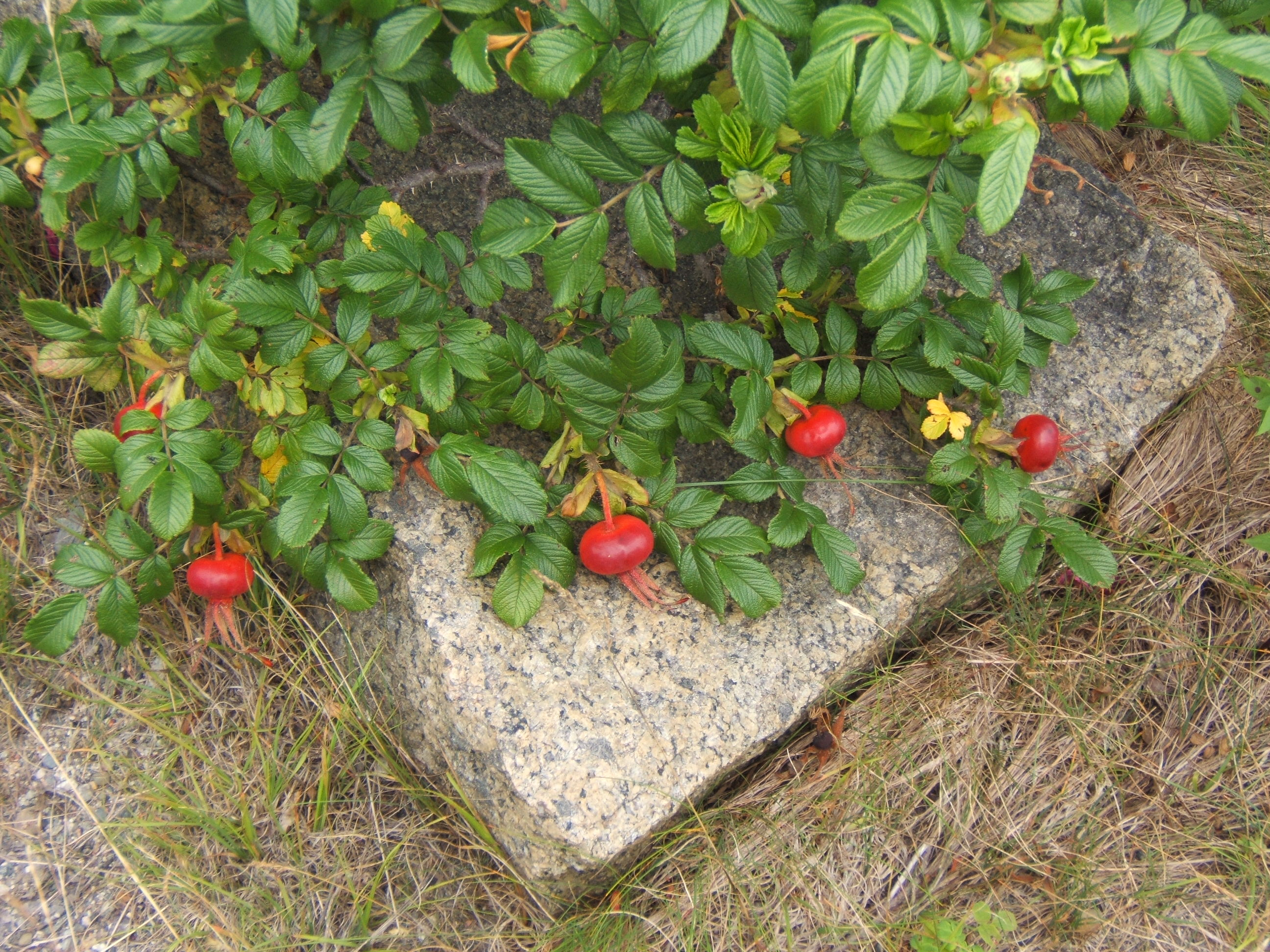
Yesterday, August 1, 2012, I posted a description of the Beach Pea (Lathyrus japonicus Willd.) and said the peas could be collected, boiled and eaten. This is the advice of the Peterson Field Guide to Edible Wild Plants (1977). My further reading, from more up to date sources, says you should not eat the seeds of Beach Pea or other species of wild pea. Many Lathyrus species contain a neurotoxin that can lead to a condition called lathyrism, a type of paralysis. Although there are other guides saying that Beach Pea is edible in small quantities, I have revised the post to remain on the safe side.
When we choose to include wild plants in our diets, it is very important to know for certain they will not be harmful. In my posts, I have talked about avoiding berries that may look pretty to eat, but contain toxins (for example the bright blue berries of Clintonia (see my post for May 23, 2012, ‘Bluebead Lily’ https://nichepoetryandprose.wordpress.com/2012/05/23/bluebead-lily-clintonia-borealis-ait-raf/ ) or the tomato-like berries of the Common Nightshade (see my post for July 16, 2012, ‘growing and gathering – barriers to eating wild foods’ https://nichepoetryandprose.wordpress.com/2012/07/16/growing-and-gathering-barriers-to-eating-wild-foods/ ).
I have also talked about cases in history of people who risk eating poisonous plants when hunger or famine strike. An example is the making of Missen Bread in Scandinavia, using a long complicated process designed to remove the burning, poisonous crystals contained in the roots of the Wild Calla (see my post for June 4, 2012, ‘keeping watch for dragons #6 – Water Dragon’ https://nichepoetryandprose.wordpress.com/2012/06/04/keeping-watch-for-dragons-6-water-dragon/ ). Poisonous species of Lathyrus (for example Lathyrus sativus, the Grass Pea), in the same genus as the Beach Pea, have been used throughout history for food when people are desperate, in times of drought, famine or poverty.
So, please, take the following steps before you ingest any wild plant:
1. check out as many sources as you can find, to discover the current wisdom and science about ingesting a plant
2. be certain of your identification – many plants look very similar to one-another and can be confused
3. think about your own sensitivities, since you may react to foods that do not bother other people.
4. when in doubt, take the route of caution and safety and do not eat
~
© Jane Tims 2012
Beach Pea (Lathyrus japonicus Willd.)
During our vacation to Nova Scotia, we stopped at several places along St. Margaret’s Bay. All along the beaches, tucked just out of reach of the highest tides, were crowds of Beach Pea. Beach Pea (Lathyrus japonicus Willd.) is a common plant of the coast, growing on sandy and gravelly shorelines and beaches.

This plant resembles the garden pea. It has vine-like, trailing, compound leaves, each composed of 6-8 leaflets. At the base of each leaf is a clasping stipule; at the leaf’s tip is a curling tendril. The flowers are showy, pink and blueish-purple, blooming from June to August.

The seeds of the Beach Pea are podded peas, from 1 to 2 inches long. They are greyish-green and ripen in August.
Some sources, including Peterson’s Field Guide to Edible Wild Plants (1977), say that Beach Peas can be collected, boiled and eaten when they are young and tender. Other sources, more up to date, say they are not edible because they contain a toxic substance that effects the nervous system. In my next post, I’ll talk a bit about being cautious before eating wild plants.
~
~
Beach Pea
Lathyrus japonicus Willd.
~
she feints on the rocks
sighs on the sand
beckons with the tendrils
of her feathery hand
~
ruffles her skirts
in the salted breeze
and squanders her love
on indifferent seas
~
~
© Jane Tims 2012
Warning: 1. never eat any plant if you are not absolutely certain of the identification; 2. never eat any plant if you have personal sensitivities, including allergies, to certain plants or their derivatives; 3. never eat any plant unless you have checked several sources to verify the edibility of the plant.




 nichepoetryandprose