Posts Tagged ‘woodland’
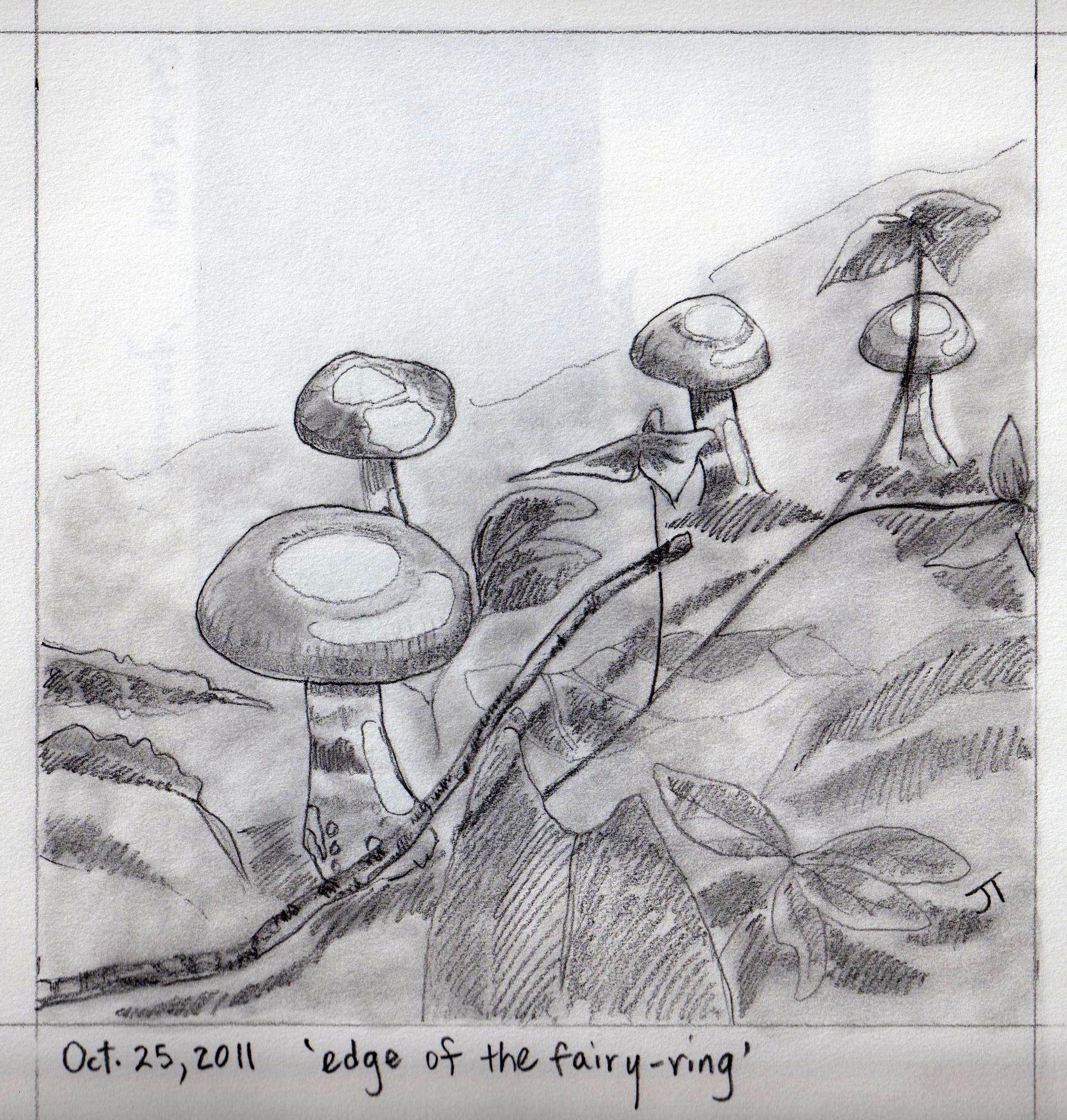
(brackets in the birch grove)
Last week we went for a walk (more like a struggle) through the birch grove at the base of the grey woods (see the ‘map of the grey woods’ under ‘about’). To get there, we crossed the fern gully, mostly dry this time of year, and entered a mixed wood of birch, maple, spruce and fir, much younger than the mature spruce in the grey woods.

These trees grow in very wet conditions, and the forest floor is a hummocky, spongy growth of Sphagnum moss and fern.

There is no path through this woodland, so the ‘walk’ was an up-and-down, over-and-under kind of trek. To stay dry, you must take giant steps from hummock to hummock. To stay upright, you must check your footing and hang on to the young trees. With all this concentration on moving forward, I tend to miss some of the interesting detail, so I try to use each ‘balancing moment’ as a time to look around and observe the wild life.
One occupant of the birch grove is the bracket fungus. This is a type of fungus that grows like shelves on both living and dead trees. The fungus forms thick flat pads on the tree, usually parallel to the ground. They remind me of steps, a spiral stair to ascend the tree.

The semi-circular body of the bracket fungus is called a conk. The conks of the bracket fungus growing in our woods are thick, often oddly shaped, and constructed of various cream, tan and brown coloured layers. The conks are the outwardly visible, reproductive part of the fungus. The vegetative portion of the fungus grows as an extensive network of threads within the tree.
bracket fungi
~
1.
in this forest
staid
practical
grey
could any form
construe to magic?
~
fairy rings
moths in spectral flight
spider webs, witches brooms
burrows and subterranean
rooms, hollows in wizened
logs, red toadstools
white-spotted, mottled
frogs
~
2.
bracket fungi
steps ascend
a branchless tree
~
© Jane Tims 2011
sounds in the silence #1
If niche has colour, it also has sound. Some of those sounds are soothing, the sound of a babbling brook, or the wind in the Red Pine. Some sounds are alarming, the cry of a child, or the squeal of brakes. At my office, there are multiple sounds in the background – people talking, computers whirring, copiers copying, printers printing. When there is a power outage, I am amazed at the silence of the building, and wonder how I can possibly work with all the noise.
When I can’t sleep, I turn to a trick my Mom taught me – I count the sounds in the sleeping house. Last week, a welcome sound was added to the usual repertoire, the three part hoot of a Great Horned Owl. Hoo-Hoo-Hoo Hoo-o Hoo-o. It was a gentle but penetrating sound and it ruled the night. The owl hooted three times at about five minute intervals and then I fell asleep.
Not long ago I went for a walk in the grey woods and heard a sound I have heard so often before, the grating squeal of two trees rubbing together. These trees, a Balsam Fir and a Grey Birch, have tried to grow into the same space and now they reproach one another in an endless competition.
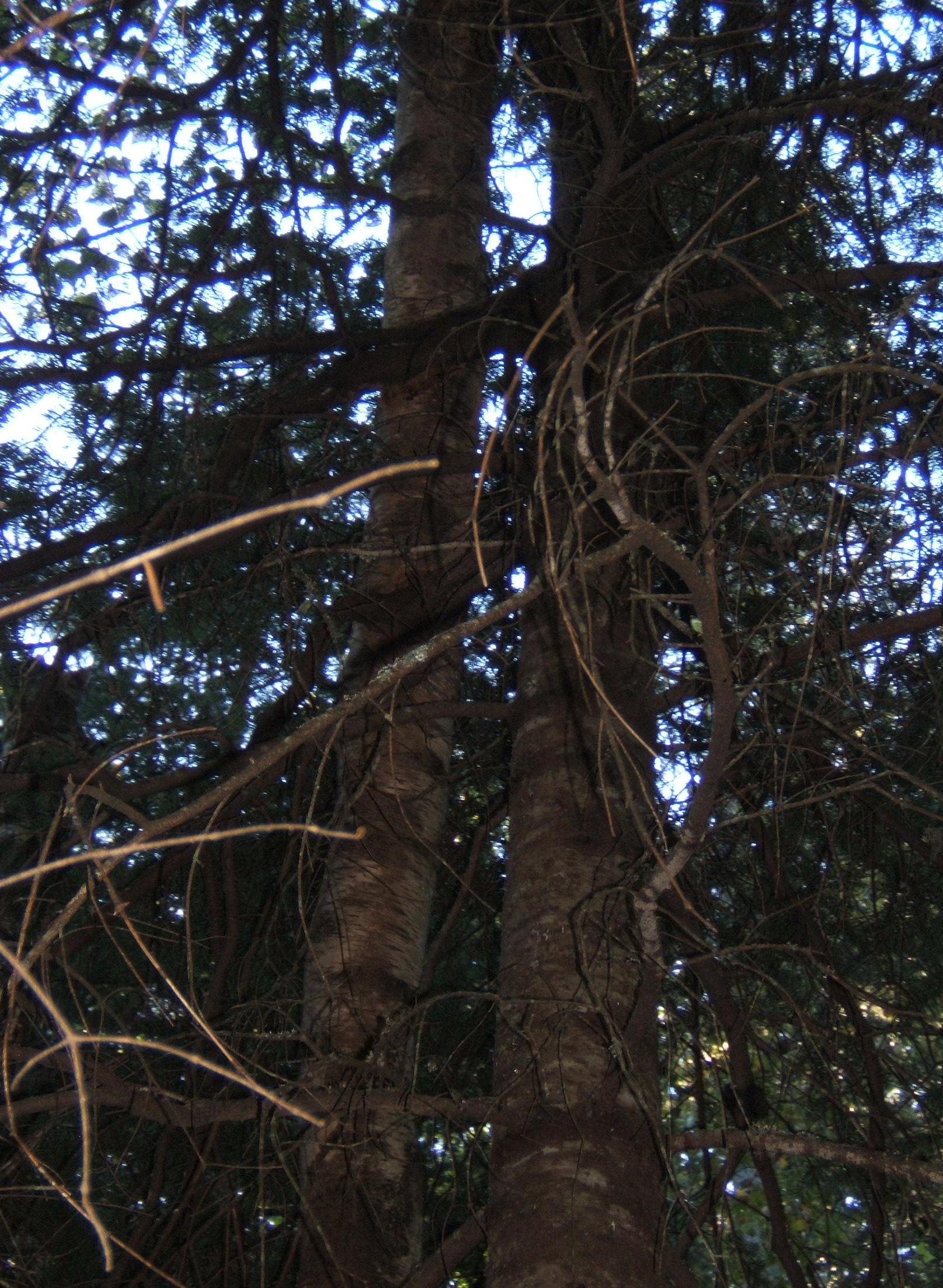
the branches of one tree grate against the bark of the other
fear of heights
~
as dizzying to look up
in the forest
as down
into the abyss
the trees taper so
~
they lean
birch
against fir
rubbed raw
where branches touch
and reach for one another
~
and sudden, wrenching sounds
a branch swings back or breaks
loosened by a squirrel
or burdened where crows complain
~
or where a warbler scolds
teacher teacher teacher
~
© Jane Tims 1996
settling into unfamiliar
After three decades of work, I am retiring within the year. Another milestone. A new ‘way’ to settle into.
I remember when I made the transition into full-time employment. It was a huge change for me.
Previously, I had been a student, living at home. Suddenly, I was away from familiar places, in a new province, on my own.
Fortunately, I had solid back-up… my Mom and Dad were supportive and helped me whenever they could. I loved my apartment, my new friends, my responsibilities. Everything was new. I learned as I went, meeting each new experience as if it was a page being turned in a book.
This transition, my retirement, will be so different. I should be ahead of the change. I am settled. I know my home. I have my husband to steady me and my son to give me advice! I have a plan.
But the transition is still scary. For three decades, my work has structured my life, providing deadlines and places to be, people to see. I’ll have to establish a new daily routine. I’ll have to set goals and celebrate milestones. I’ll have to work a little harder to maintain my social contacts.
It will be like my first walks in the grey woods. In those days, I didn’t know the paths very well and worried about getting lost (even though I could hear the cars on the main road!). Sounds were strange, even frightening. I worried about wild animals.
But gradually I learned the ways of the grey woods. Every time I walked the paths, they became more familiar, and also more worn and easier to follow. I learned the sounds to expect and the animals and birds I would encounter. I learned the pitfalls. I learned to expect a gem on every walk… a fairy ring of mushrooms, a Pileated Woodpecker hammering at a tree trunk, a chorus of frogs from the ephemeral pools…

walk in the grey forest
~
I walk on unknown land
land I have not seen
but dreamed, the wary dream of intruder
where silence is fragile
snapped in two
by leaf fall
~
I step carefully
my disturbance less
than the exhalation of wind
or the mutter of moths
between moribund trees
~
this is ancient land
mossy logs, weary paths
where others may have walked
slanted cathedral light
lichened stones
~
the unknown watches me
crouched in a hollow
flattened to the bole of the oak
betrayed by a ripple on the vernal pool
by the rattle of beech leaf or birch bark paper
it will surely shake free of its leaf garment
rise from the forest floor
to chastise me
desecrator of place
~
even a careful step
is hard on hollow land
~
it will take time
to learn to walk here
to discover game trails in the half-light
to understand words unspoken
to know the dying trees
not as omen
but as part
of the forest
~
© Jane Tims 1998
a trail through grey woods
In our grey woods, an old trail follows the top of the slope, between the trees. It takes constant care to keep it free for walking. The spruce are old and every winter takes down a new raft of trees. My husband works at it constantly, cutting a way through the fallen logs and filling the hollows with wood chips.
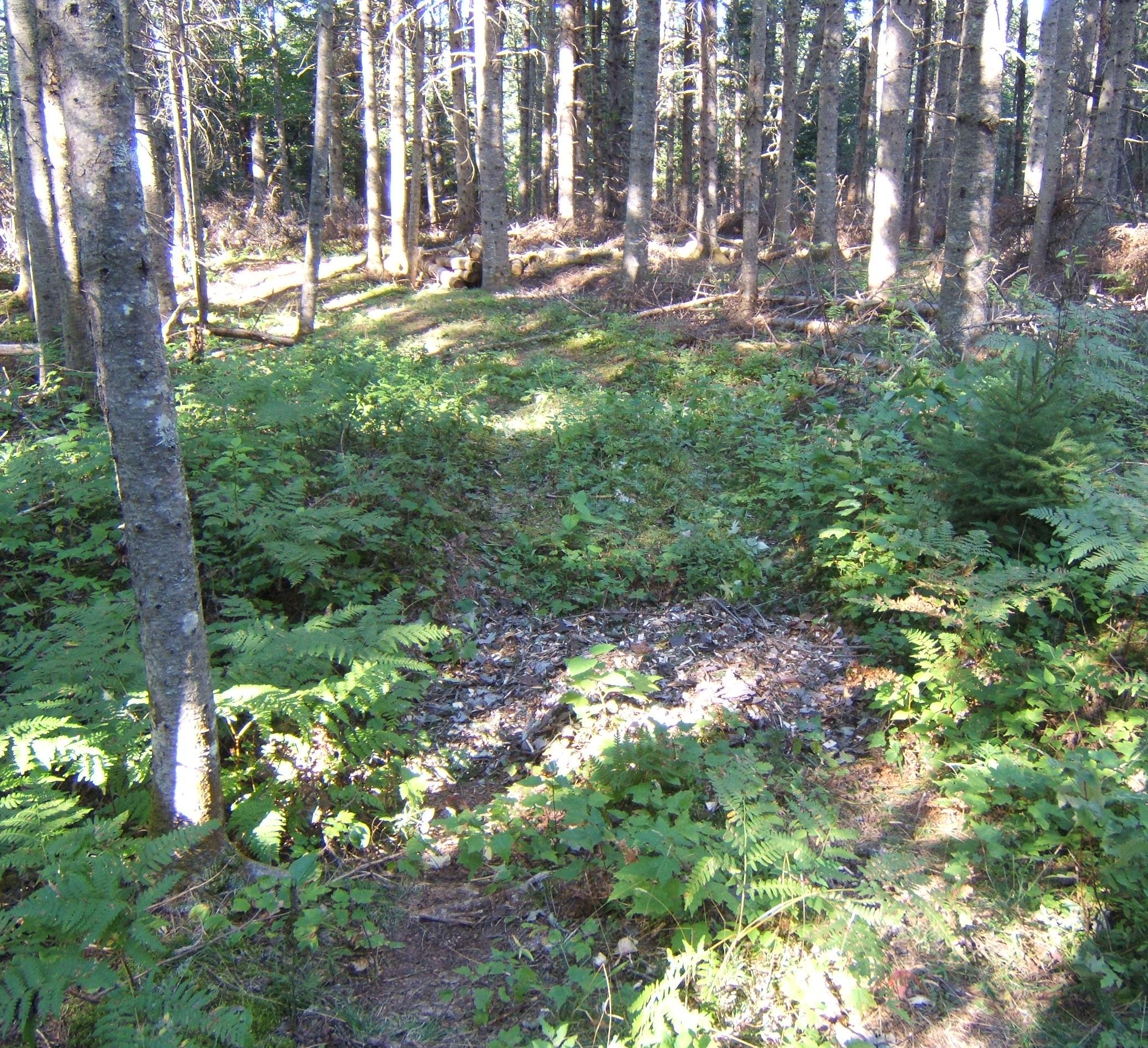
When I walk there, I always find something I haven’t noticed before. Yesterday I made three discoveries:
A maple seedling sprouting in the cut surface of a maple tree felled for firewood…

A pair of bracket fungi on a fallen birch log (notice the shadows of fern leaf on the surface of the fungi)…

And various other types of fungi, sprung up after the rain…
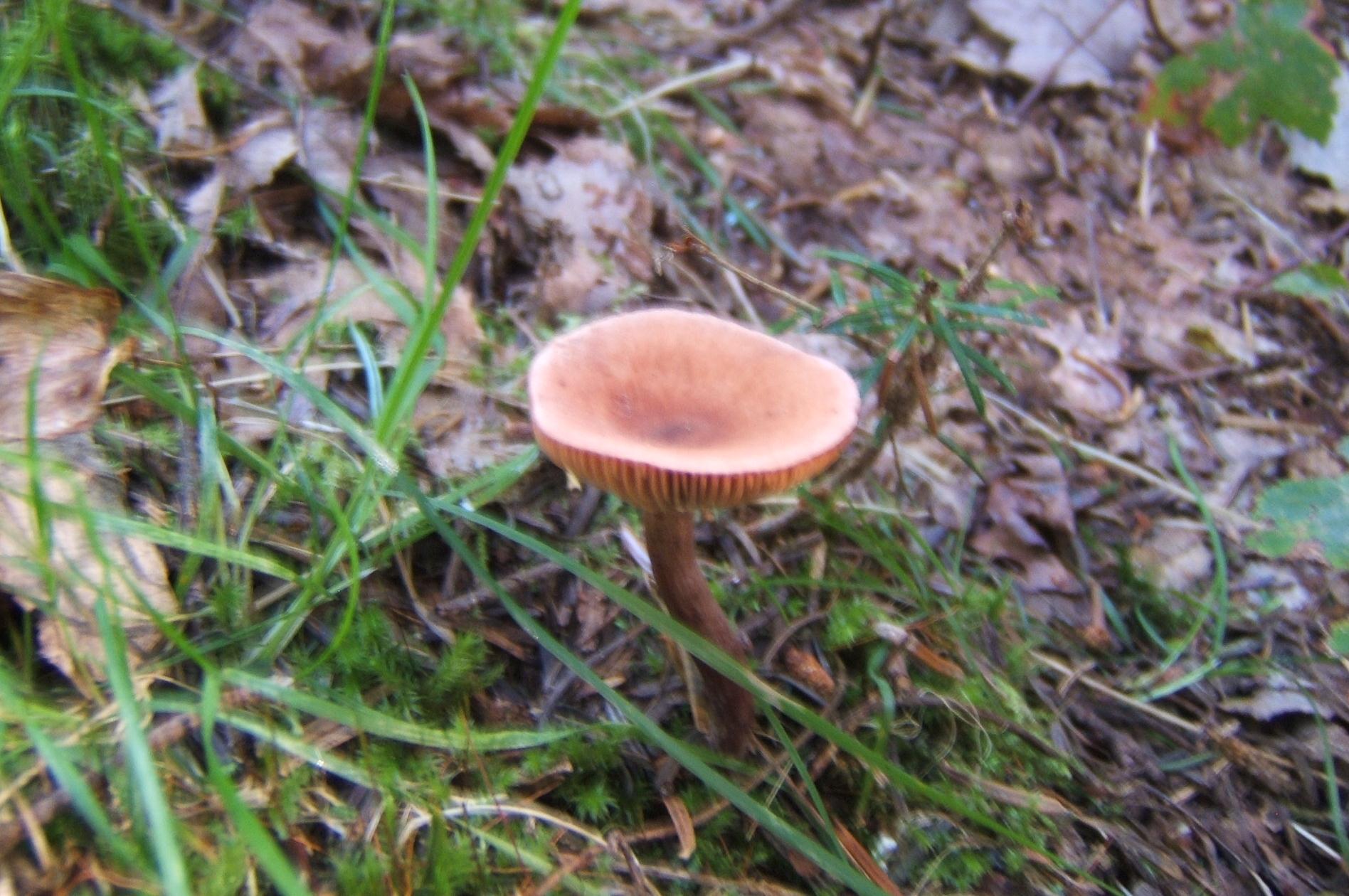
In each case, the discovery was about hope – life from death, new growth from decay.
The woods have so many lessons to teach… I only need to slow down and look closely to learn.
slow walk in the woods
~
1.
more to woods
than a path between trees
slow pace
check perspective
~
2.
discover texture on trunk
scar and indentation
detail in the duff upset
by careless feet
~
note how light scatters
through pollen and powder
now sifts slantwise, shadow
on brackets of fungi
light from lichen
chandeliers
~
3.
slow beat and breath
match the stealth of forest, realise
branches gather rain
an hour before they weep
~
© Jane Tims 2005
hidden in the hollow heart of an oak
Hollow trees create mysterious spaces in the woods.
When I was young, a hollow in a tree was a secret hiding place for treasures, and one of my favourite books was a Nancy Drew mystery – “The Message in the Hollow Oak”. In the story, a hollow tree is used as a secret mailbox between long lost lovers.
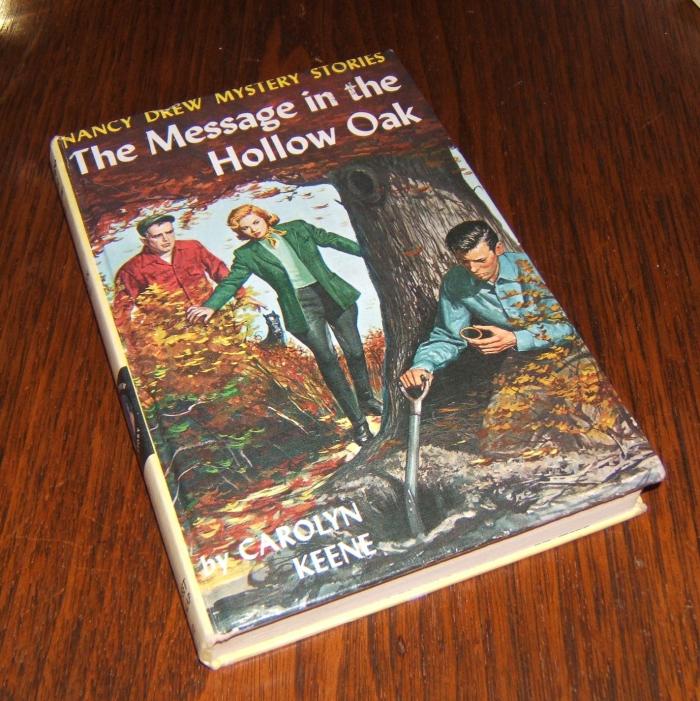
- Carolyn Keene 1935 The Message in the Hollow Oak (a later edition, probably around 1965)

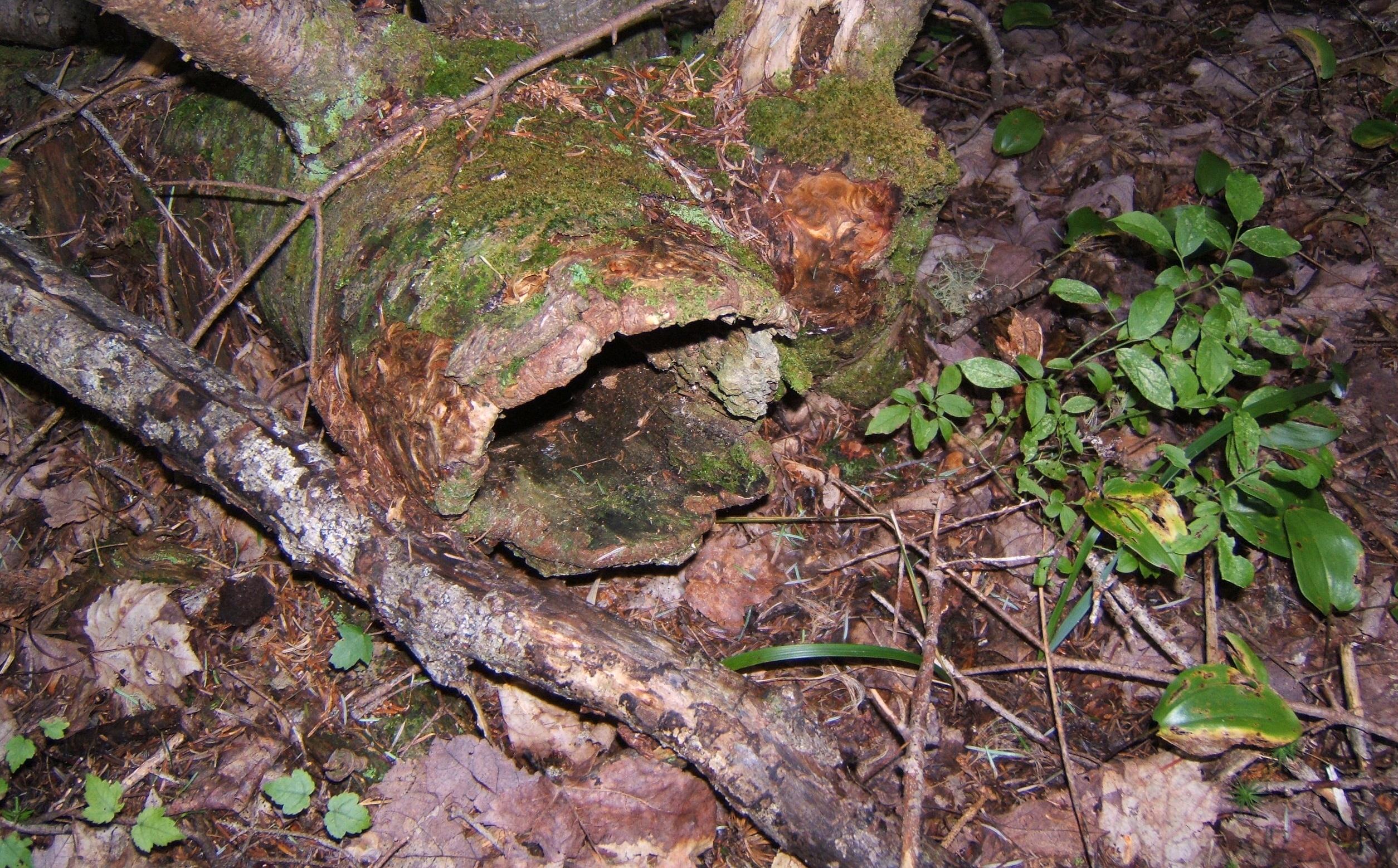
a hollow log in the woods
Cavities are usually found in mature trees. Their importance as habitat is a good reason for protecting older, mature trees in the woodlot. When my son was young, we made wooden signs saying “DEN TREE” for the older hollow trees in our woods, so we would remember not to cut them down.
Do you know a hollow tree and would you reach into the cavity to retrieve a letter???
requesting the favour of a reply
~
these leafless trees
brush against
a linen sky
ink strokes
on rice paper
letters
penned at midnight
~
hidden in the hollow
heart of an oak
afraid to reach in
to feel only
curls of bark
desiccated leaves
~
these trees
all seem the same
empty envelopes
parchment ghosts
~
branches tangled
messages
lost
~
black spruce scribbled on sky
~
Published as: ‘an answer in silence’, Spring 1995, The Cormorant XI (2)
(revised)
© Jane Tims




 nichepoetryandprose