Posts Tagged ‘nature’
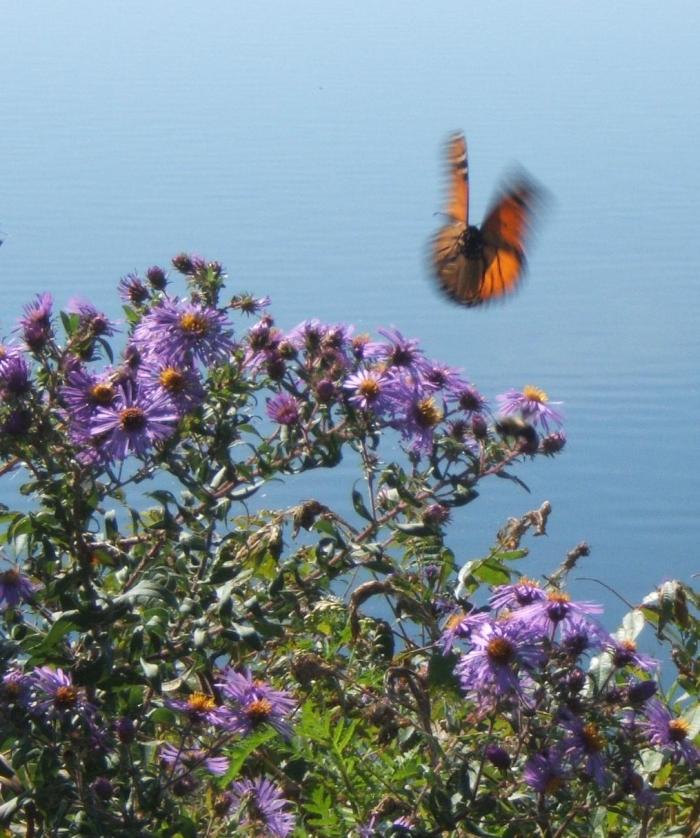
butterfly
~
~
butterfly
~
scrap of paper
plucked from my hand
wind a tease
always one wing beat
beyond the finger tip
attempts to read
its delicate code
of dots
and dashes
~
a yellow Post-it note
folded on the tower
of a blue sky cornflower
a tatter
a musical note
set to the panic
of butterfly flight
~
a curtsy and away
across the field
~
pursued by a butterfly net
and a killing jar
~
~
Copyright Jane Spavold Tims 2018
Safe place for a nest
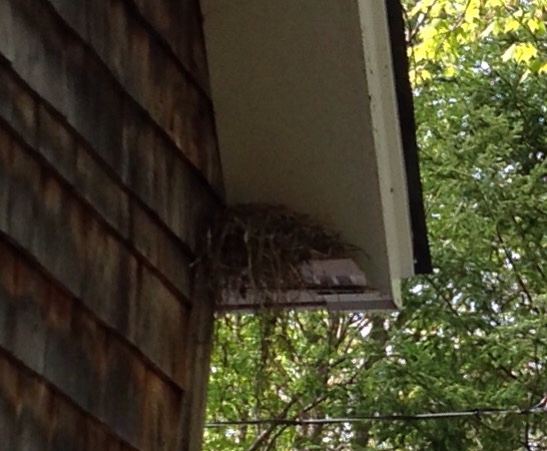
No surprise to me … a robin has built a nest in the eaves of our house. Eighteen feet above the ground, this is a safe place for a nest. The robin does not think so. When I sit on the deck for my daily cup of tea, the robin sits in a near-by tree and scolds me. He gives a single annoyed chirp. If a robin could scowl, he is certainly scowling.
natural treasures – gems from a day in early spring
After a wet spring, we were not certain when we would be able to reach our camp this year. Although the snow is gone, we don’t want to risk getting stuck or damaging our lane.
~

just a week ago there was still snow on the road and the ruts we could see were very spongy
~
We were so happy when we were able to drive all the way to our cabin door. We did a bit of tidying, put markers at the base of the little cedars we lost in the tall grass last fall and my husband did some clipping of trees over-growing the road.
~

~
I did a small display of two of the treasures we found last year, a big pine cone and a chunk of pinkish stone. But I can’t display the best treasures of the day:
- the back and forth banter of two Barred Owls. This is the big owl who calls ‘Who cooks for you?’
- the tremolo of a Common Loon on the lake. The tremolo is one of at least four distinctive vocalisations from this bird. The vibrating ‘who-hoo-hoo-hoo-hoo’ is usually a call to warn of intruders or to announce arrival at a lake.
- the ‘I love dear Canada, Canada, Canada’ of the White-throated Sparrow or the nasal ‘fee-bee’ of the Eastern Phoebe.
~
I love our trips to our cabin and the treasures offered to us by nature every time we visit.
~

~
Hope you are enjoying the spring season.
All my best,
Jane
puddle ducks
This time of year the St. John River is at flood levels and backwaters are good places to see many species of duck.
Last weekend, when the water still had a few shallow grassy places for dabbling, we saw these fellows along the old Trans Canada between Oromocto and Jemseg:
~

Wood Duck … notice the long crest at the back of the head …
~

American Widgeon … a rosy breast and a white cap on his head …
~
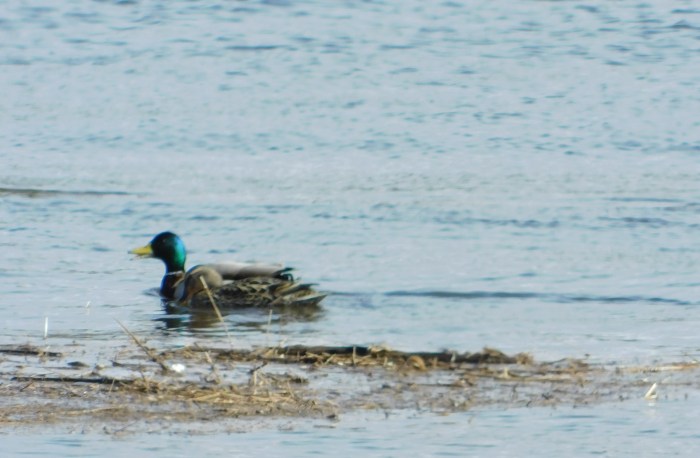
Mallards … notice the white ring around his neck and his yellow beak …
~

Ring-necked Duck … a terrible photo … note the grey beak with a white ring, vertical white before wing and black back …
~
There were also lots of Canada geese and a Blue Heron we scared up from a roadside pond …


~
I am not a good photographer but that cannot take away from the thrill of seeing these birds every spring!
~
~
Happy bird watching!
Jane
Pileated Woodpecker excavations
The Pileated Woodpecker (Dryocopus pileatus) is a common visitor in our yard. The size of the woodpecker and its triangular red crest are impossible to miss. The male also has a red stripe on the side of its face.
There is a big spruce tree in our grey woods where the Pileated Woodpecker loves to visit. The hole in the tree and the pile of woodchips below the hole say this woodpecker has been very busy. The woodpeckers drill these holes to get insects.
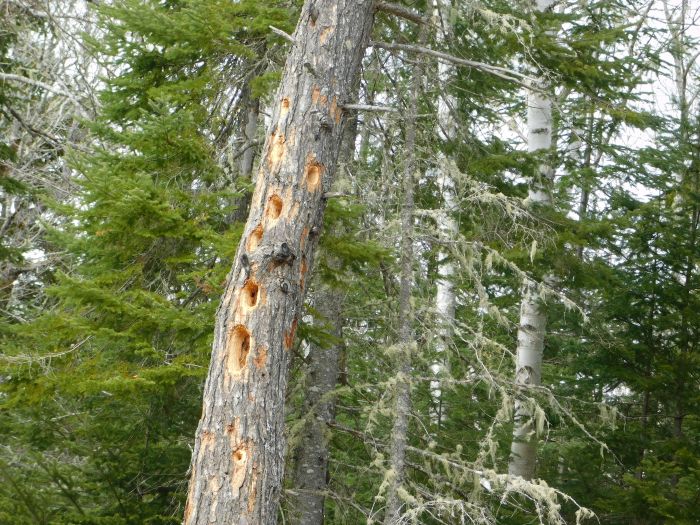
On a drive to see the Smyth Covered Bridge near Hoyt, New Brunswick, we found a roadside tree with evidence of the Pileated Woodpecker’s industry. The holes are almost a foot in length and deep enough to hide a hand.
~
~

~
To humans, the best forests may seem to be woods with healthy trees. To provide good habitat for the Pileated Woodpecker, a forest should have lots of dead and fallen trees, to provide food and nesting sites.
~

~
Copyright Jane Tims 2018
someone has a plan!
This time of year the winter ice on the rivers in New Brunswick is starting to break up. At the concrete bridge over the South Branch of the Rusagonis Stream, not far from where I live, there is a narrow band of melted ice.
~
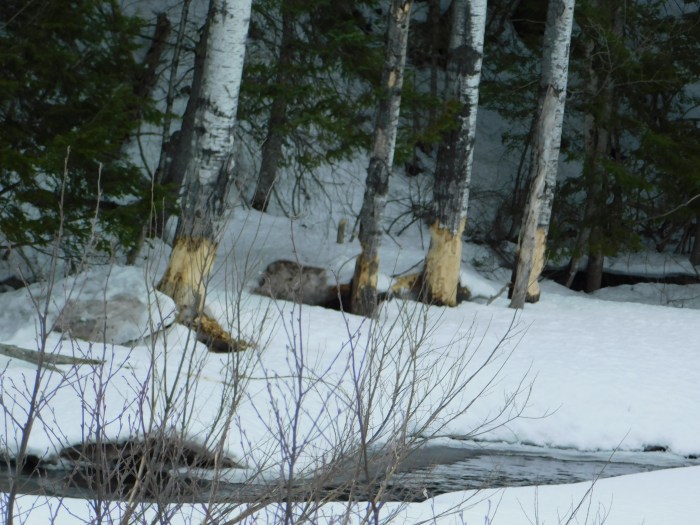
However, someone has plans for that part of the river. Have a look at the next two photos and guess who the ‘planners’ are.
~

~
~
Beavers! Not ice scour since softer trees at the same level are not involved. Also, two of the trees have deep ‘v’s cut out on the bank side.
~
We will be watching to see the next stage and the results of this plan. A beaver dam on the Rusagonis. Oh my!
~
Copyright Jane Tims 2018
in the shelter of the covered bridge
 ~
~
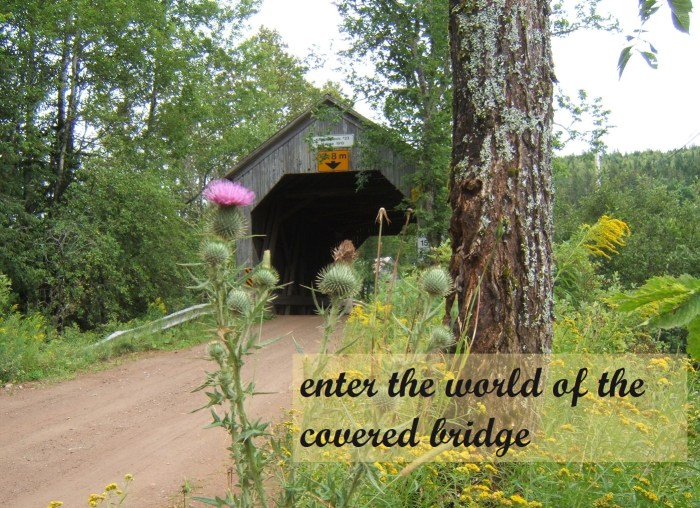
in the shelter of the covered bridge
by Jane Spavold Tims
poetry with illustrations
Chapel Street Editions 2017
poems about plants and animals living in the vicinity of the covered bridge
~

~
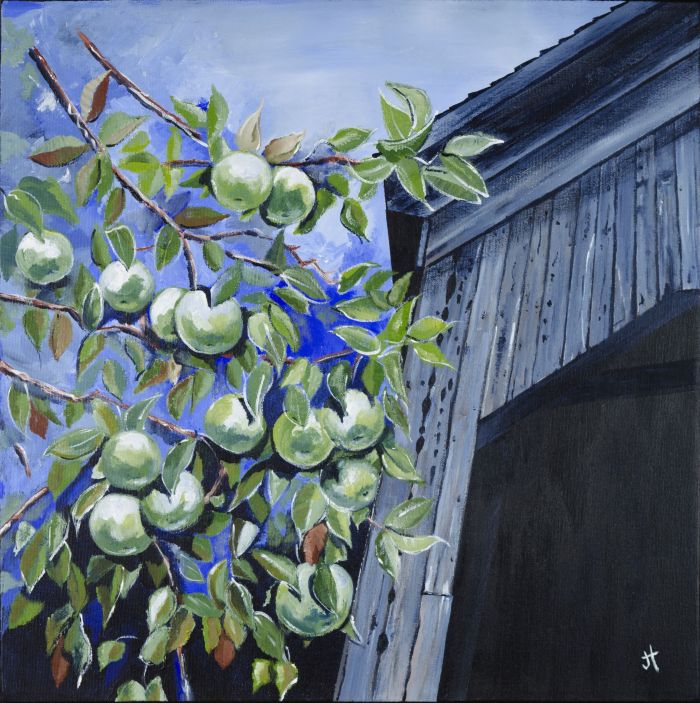
73 poems, 35 bridges, 21 illustrations
~
~
From the Preface:
Where I live in rural New Brunswick, driving through a covered bridge is a daily occurrence. The sounds of the tires on the decking, the glimpses of river and sunlight between boards, the fun of seeing a family fishing and the sight of a groundhog carrying her kit across entryway of the bridge — these are touch-stones for my existence.
The inspiration for this book came in 2015, when my husband and I crossed the Patrick Owens Bridge on the Rusagonis Stream and startled a rabbit in the middle of the span. The rabbit raced through the bridge in front of the truck. I can still see the shadow of his long ears and the scurry of his feet. Since the incident occurred during the February 21, 2015 conjunction of Venus and Mars, with the sickle moon just above the planets, I thought of all the legends about the hare and the moon. This led to the poem “conjunction” and a question about what other plants and animals find shelter in or around our covered bridges in New Brunswick.
My husband and I carried out the field work for the book during 2015. We focused on covered bridges in the entire Saint John River Valley, but we also visited bridges in Charlotte and Westmorland Counties. Travelling around the province, visiting covered bridges and paying special attention to the nearby wild life, was an ideal way to spend a spring and summer in New Brunswick. Some bridges were easy to find, others a challenge. Each bridge contributed its own personality, history and component flora and fauna.
The covered bridge is endangered in New Brunswick. In 1900, there were about 400 covered bridges in the province. By 1944, there were only 320. In 1992, when Glen, Michael and I visited some of the bridges for Canada’s 125th birthday, there were 71. In 2017, as I write this, there are only 60 remaining. Vandalism, flood, accident, fire and age claim more bridges every few years.
~
… In 2018, there are 58 covered bridges remaining …
~
Book available from Chapel Street Editions
~
dry wind
French Village Bridge
Hammond River #2
the bridge leans, upriver
wind enters, a beer can
rolls on the deck
white butterflies obey
the valley breeze
navigate the scent of wild roses
avoid the dogs
cooling off in the river
the beach folk, sunning themselves
bracts of Yellow Rattle
and Silene, inflated bladders
dry as old boards
aspens tremble
a song sparrow stutters
a loose shingle rattles in wind
~
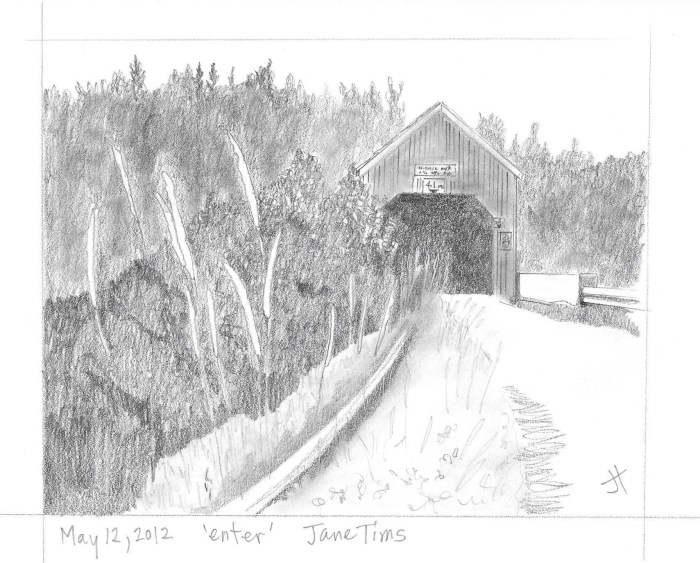
drawing of the French Village Bridge 2015: ‘enter’
~
About the Author
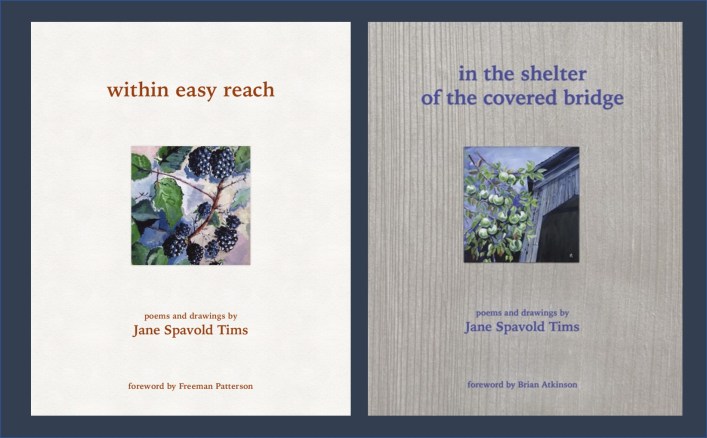
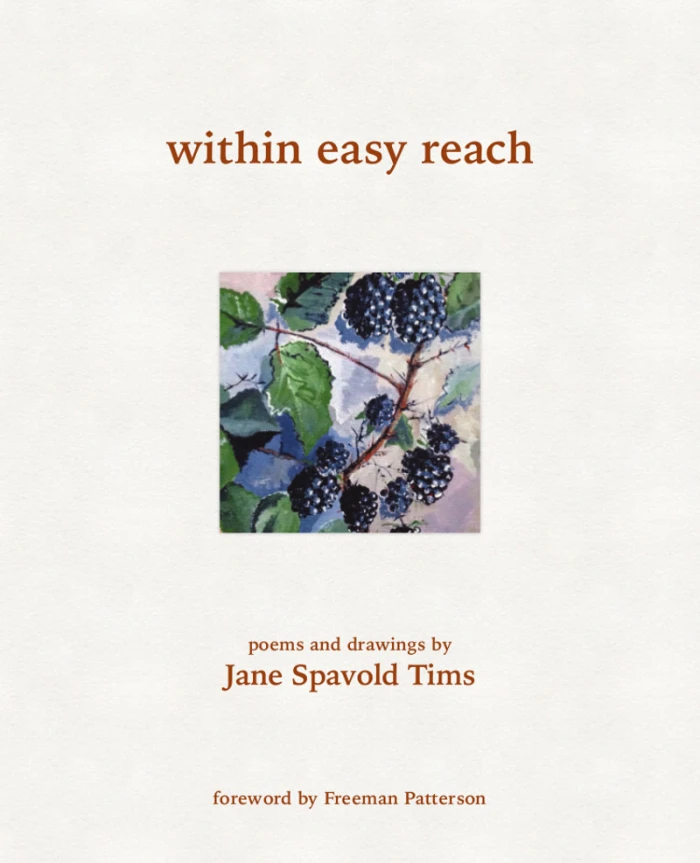
Jane Spavold Tims is a botanist, writer and artist living in rural New Brunswick, Canada. She has published two books of poetry, within easy reach (2106) and in the shelter of the covered bridge (2017), both with Chapel Street Editions, Woodstock. Her first four books in the Meniscus series, Meniscus: Crossing The Churn, Meniscus: One Point Five – Forty Missing Days, Meniscus: South from Sintha and Meniscus: Winter by the Water-climb, were published with CreateSpace in 2017 and 2018 under the name Alexandra Tims. In 2016 she won the Alfred G. Bailey Prize in the Writers’ Federation of New Brunswick Writing Competition for her manuscript of poems about bird calls. She is interested in identifying plants, bird-watching, science fiction and the conservation of built heritage. Her websites feature her drawings, paintings and poetry.
www.janetimsdotcom.wordpress.com
~
~
both books available from Chapel Street Editions
~
a new bird feeder #2
I have given up manufacturing. In the last month I built two bird feeders: one from a two liter Coke bottle and one from coconut shells. The squirrels bounced on the bottle feeder and broke it, bad squirrels. And the snow filled up the coconut shells, bad snow. So we went to Co-op and bought a new feeder. Metal, very fancy, a simulated lantern. No anti-squirrel technology (our squirrels puzzle out every one).
The birds are delighted. A day after our big snow storm, they are here by the dozens: goldfinches, chickadees, nuthatches, lots of blur-birds (my photography is not stellar).
~

chickadee at the new feeder (sunflower seeds)
~

chickadee and goldfinch at the new feeder
~
Copyright Jane Tims 2018
abandoned buildings
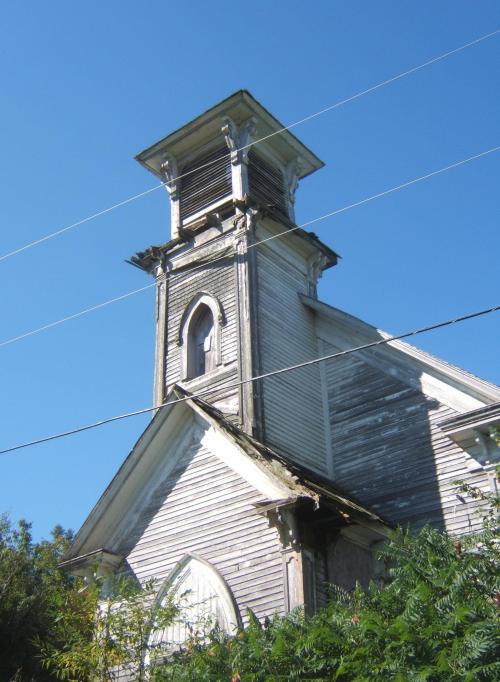
We are living in a time when many of our older buildings are reaching the end of their useful lives. Old churches, old covered bridges, old schools and old houses are everywhere, facing the indignity of old age. So many succumb, end up in landfills or as rotting derelicts. Yet these are buildings where history whispers. Buildings with stories to tell, our stories.
~
~
abandoned church
~
highbush cranberry
first, fruit hard and green
then, red, ready for wine
then shriveled raisins
hang on a leafless vine
~
the wick of a candle stub
competes with cobwebs
for thickness, thin sunlight
oozes, amber glass, a saber
along the empty aisle
threatens motes
in stale air undisturbed
where stray wind never
finds its way
~
deconsecrated and so
not desecrated when mice
squeeze under the threshold
gnaw at the pulpit, or when
vines whisper
vague obscenities
at the lintel, tap on glass
~
stripped of cross and steeple
people, prayers
stained glass and benches
removed and sold at auction
mice pause at their industry
to assess ambiguous whispers
~
the young girl who sat on the stair
sang a song to her mother
the warden who argued to fix
the seep in the roof
the Minister
who stuttered
~

~
~
Copyright Jane Tims 2018
bird feeder visitors – personalities
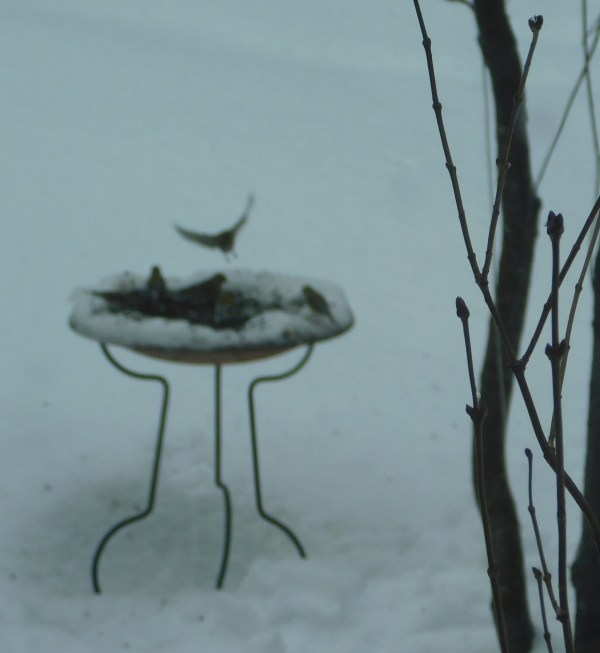
I put my feeders up late this year, but the birds have found them. So far the diversity is low, but the numbers are high. We have chickadees, goldfinches and nuthatches. I know from my bird diary of other years, redpolls, purple finches and blue jays will come later.
~
~
I spend a little time each day watching the birds. And, as in other years, I am amazed at how different are the personalities of these birds.
~

~
Black-capped Chickadee (Poecile atricapillus) – sings ‘chick-a-dee-dee-dee’ or ‘fee-bee’
- the chickadee hoards food, storing food in times of plenty under bits of bark or a patch of lichen. Canada’s Hinterland Who’s Who says a chickadee can remember where it has stored its food up to 28 days.
- the chickadee is a grab and go kind of feeder. They zoom in on a sunflower seed, pick it and leave.
- chickadees hang out in flocks, and have a hierarchy and a ‘pecking order’. The birds are very aggressive with other birds, chasing away other chickadees, nuthatches and goldfinches.
~

~
Red-breasted-Nuthatch (Sitta Canadensis) – sings a nasal ‘yank-yank-yank’ over and over
- the nuthatch walks head-downward after it lands and in Newfoundland is called the ‘upside-down bird’.
- nuthatches are very solitary at the feeder and are easily chased away by chickadees.
- they get-their-food-and-get-going, not hanging around even for a second.
- nuthatches also hoard and hide food.
- Hinterland Who’s Who says these birds carry tree pitch to build their nests!
~

~
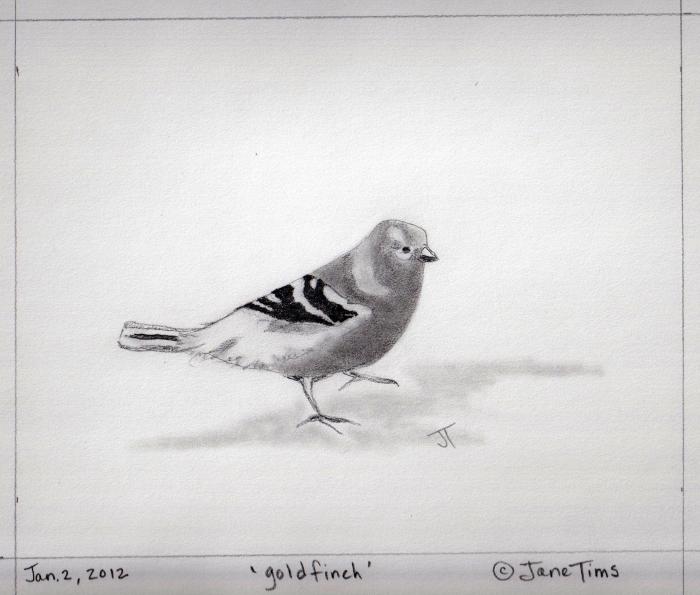
American Goldfinch (Carduelis tristis) – sings ‘perchickoree’ and flies in a series of hanging loops, potato chip, potato chip.
- at this time of year goldfinches are dull olive-yellow.
- they hang out at bird feeders, staying put until they are chased away. They arrive at feeders in flocks and feed quite happily side by side.
- although they eat sunflower seeds, they seem to prefer thistle seed.
- Hinterland Who’s Who says goldfinches go into feeding frenzies before snowstorms, putting on significant weight before times when seeds are scarce.
~
~
Do you feed the birds and what kinds of birds come to your feeders? Do they have distinct personalities?
~
Copyright 2018 Jane Tims




 nichepoetryandprose