Posts Tagged ‘iron’
harvesting colour – saddening the colour
Most of my experiments with natural dyes have been straightforward – collect the dyestuff, extract the dye with heat and water, and simmer the fibres in the dye. I have used alum as a mordent to make the dye more permanent, but until now, I have not used modifiers to change the colour of the dye. Modifiers include various substances added to modify the chemistry of the dye solution and change the colours obtained. Iron is one of the most commonly used modifiers.
~
To modify colour with iron, the dyer can use ferrous sulfate as a powder. Or rusty iron can be used to make an iron acetate solution. To make my iron modifier, I put an old horseshoe, a square nail and a rail spike in a pot, added some vinegar, and soaked the metal in rainwater for a month.
~
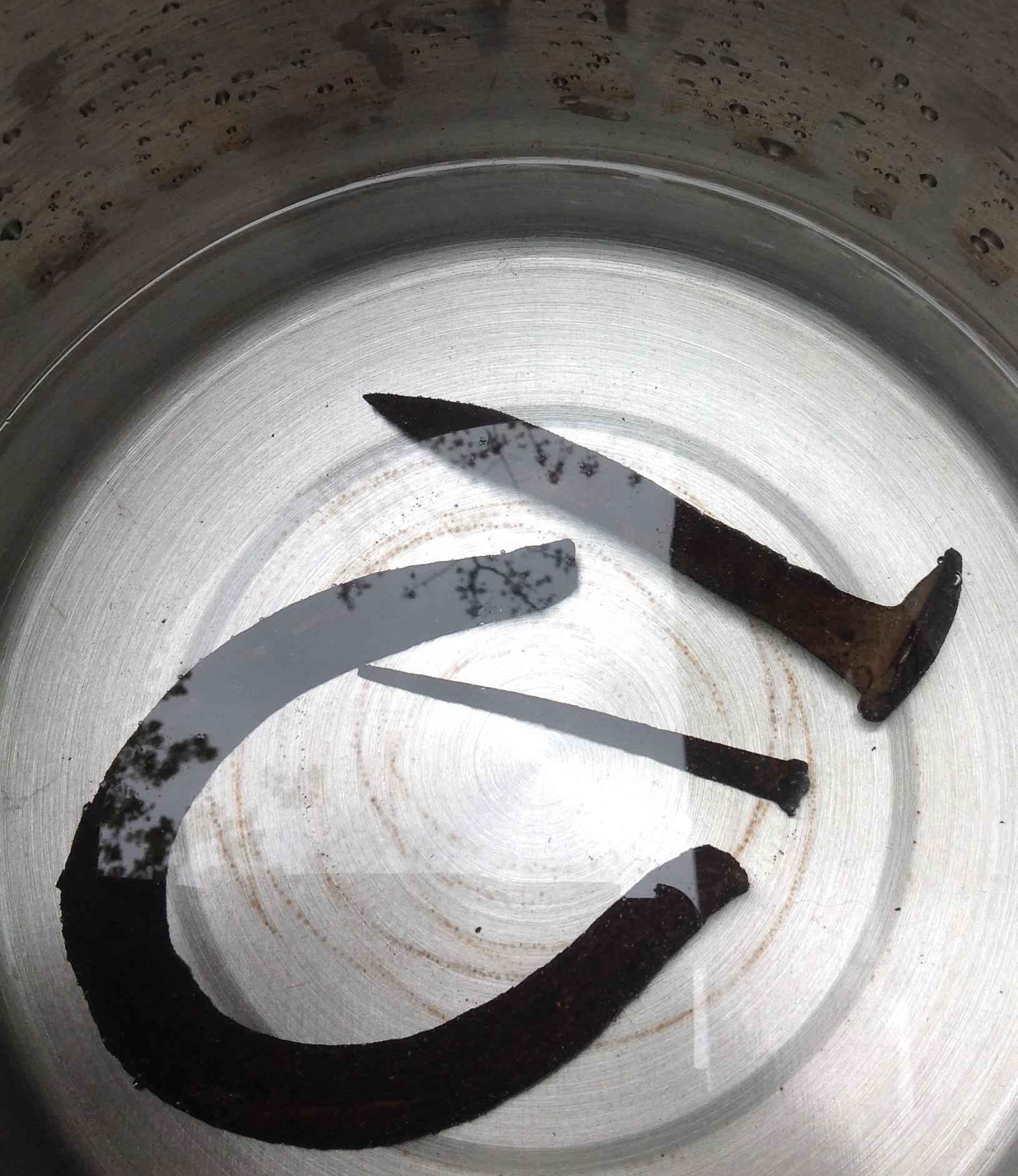
bits of iron to make an iron modifier
~
Simmering the wool roving with water and dyestuff of Meadowsweet gave the wool an apricot colour. Then I added a couple of liters of my iron mixture to the dye pot and a new length of wool roving. The second lot of wool turned out darker than the first. Dyers refer to this as ‘saddening’ the colour. The wool was also more coarse and after I had spun the wool, my hands were stained with a reddish rust.
~
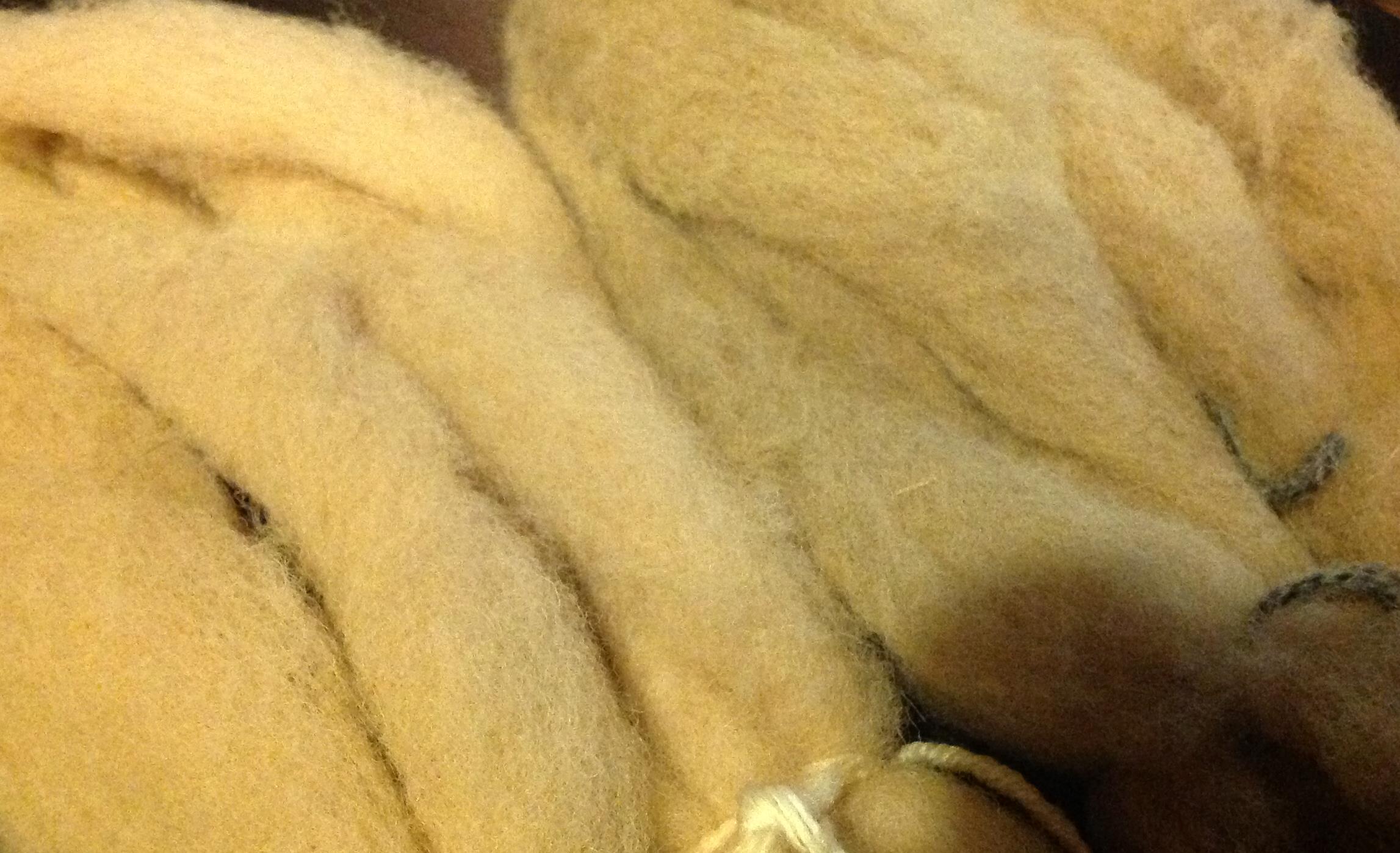
saddening the colour: on the left, alum-treated wool dyed with Meadowsweet; on the right, the same with added iron
~
Next post, I will show you the surprising results when I add my iron modifier to dyestuff of oak leaves!
~
Copyright 2014 Jane Tims
from the pages of an old diary – ironing day
Do people iron anymore? In these days of permanent press and busy scheduling, who even has an iron?
Until my husband retired last year, I ironed a shirt for him every work day for 30 years. They were permanent press shirts, too, but no one could ever remember to retrieve the shirt from the dryer when it could be hung up without wrinkles. And so, I ironed.
Most people grimace when I tell them this, but I found it an enjoyable task. It was soothing work, with the warmth of the iron, the cool of the fabric, the rhythmic slide of the iron back and forth, and the ironing of each part of the shirt, always in the same order.
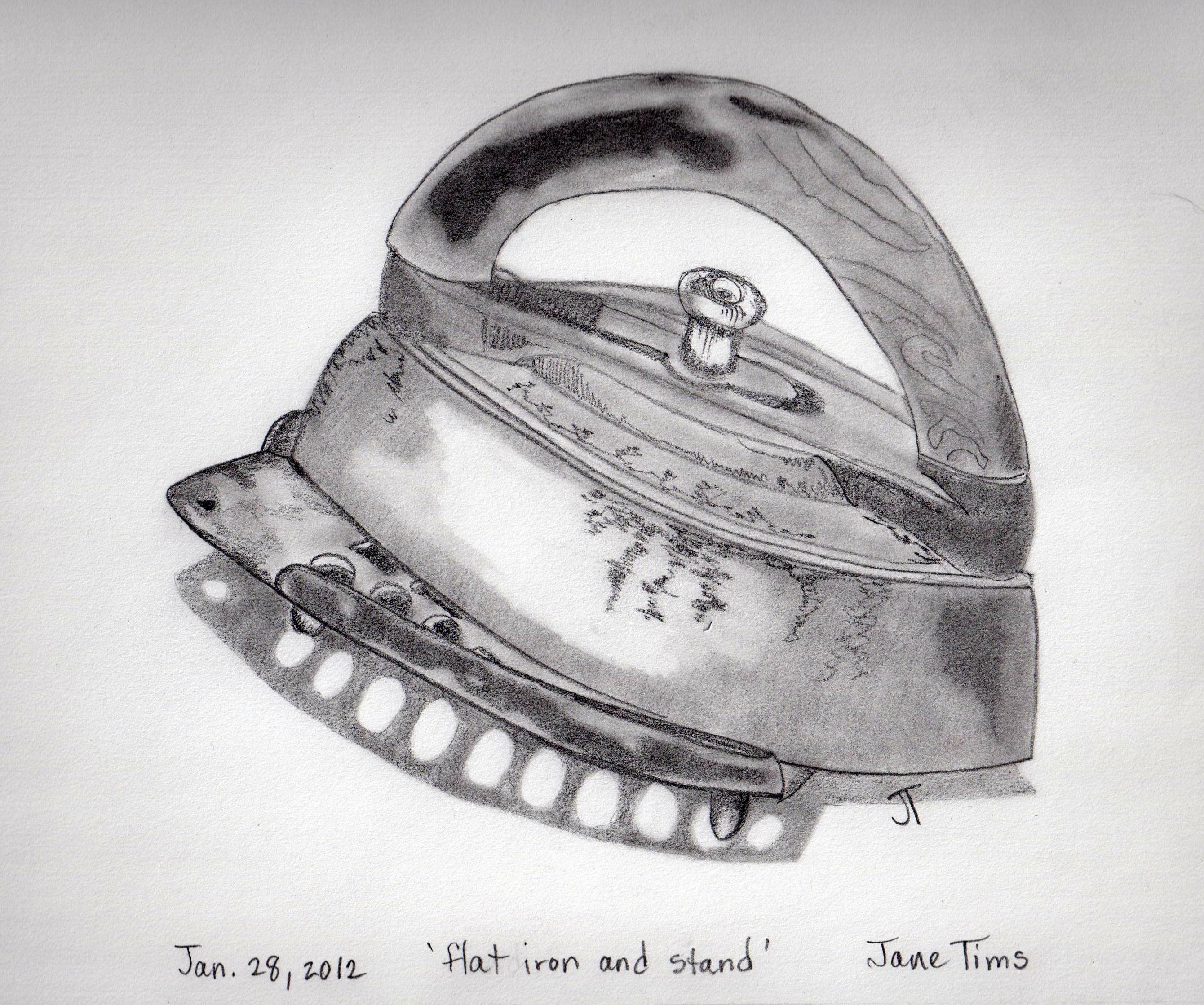
Ironing wasn’t always so easy. On our hearth are two flat irons and a stand, the ones my Mom’s family used for ironing when she was a little girl and they had no electrcity. Each flat iron could be fitted with a handle, and irons were exchanged as the first iron cooled and had to be replaced with the hot iron on the wood stove. Inattention would be rewarded by a neat triangle of burn on the ironed linens.
My great-aunt would have used an electric iron. In her diary, during 1957, an entry like ‘did a big wash and hung it out’ occurs approximately every second week (she and her husband lived alone, so this was probably an effective and efficient approach). In every case, the diary entry the following day says ‘did a big ironing’. In 1957, she did her ‘big ironing’ 25 times, a major task in her round of housework.
~
~
ironing day
~
a wedding band wears thin
endless washing of dishes
scrubbing of floors
holding wrists, stroking arms
and heads
~
worn as wooden handles
on the flat irons by the stove
hand clasps and presses
back and forth, the lift to test the heat
to fit a hotter iron from the fire
to seal the press, prevent the burn
~
a molecule of gold, residue
on every task
~
~
© Jane Tims 2012




 nichepoetryandprose