Posts Tagged ‘history’
in the shelter of the covered bridge – a villanelle
I have been working at my series of poems on the plants and animals living around covered bridges in New Brunswick. I decided to try a new form (for me) – the villanelle.
~
The villanelle is a structured poem with 19 lines and a prescribed rhyming scheme – A1 b A2 / a b A1 / a b A2/ a b A1/ a b A2 / a b A1 A2 . A famous villanelle is by Dylan Thomas – ‘Do not go gentle into that good night’.
~
The poem below is based on my observations at the Marven Bridge (Belleisle Creek #2) in Kings County, New Brunswick. I have taken liberties with the form, most obviously in using words beginning with the same letter in place of rhyming. I would appreciate any comments, including for improvement of the poem.
~

Marven Bridge, Belleisle Creek #2, in New Brunswick
~
~
wobble
~
Belleisle Creek #2 (Marven Covered Bridge)
~
bridge shudders as we walk
spaces between boards cast light on the floor
photos out of focus, faint tremble
~
cribwork and rafters, new wood
old nails work loose, grey walls frail
bridge shakes as we walk
~
in the rafters, the paper nest of a wasp
in the mud, ephemeral, the tracks of a fox
photos out of focus, faint tremble
~
a blue jay calls thief across brown water
at the shoreline, sensitive fern
bridge shivers as we walk
~
on the ledge, bones, bleached white
skeleton of a bear, backbone and fingers
photos out of focus, faint tremble
~
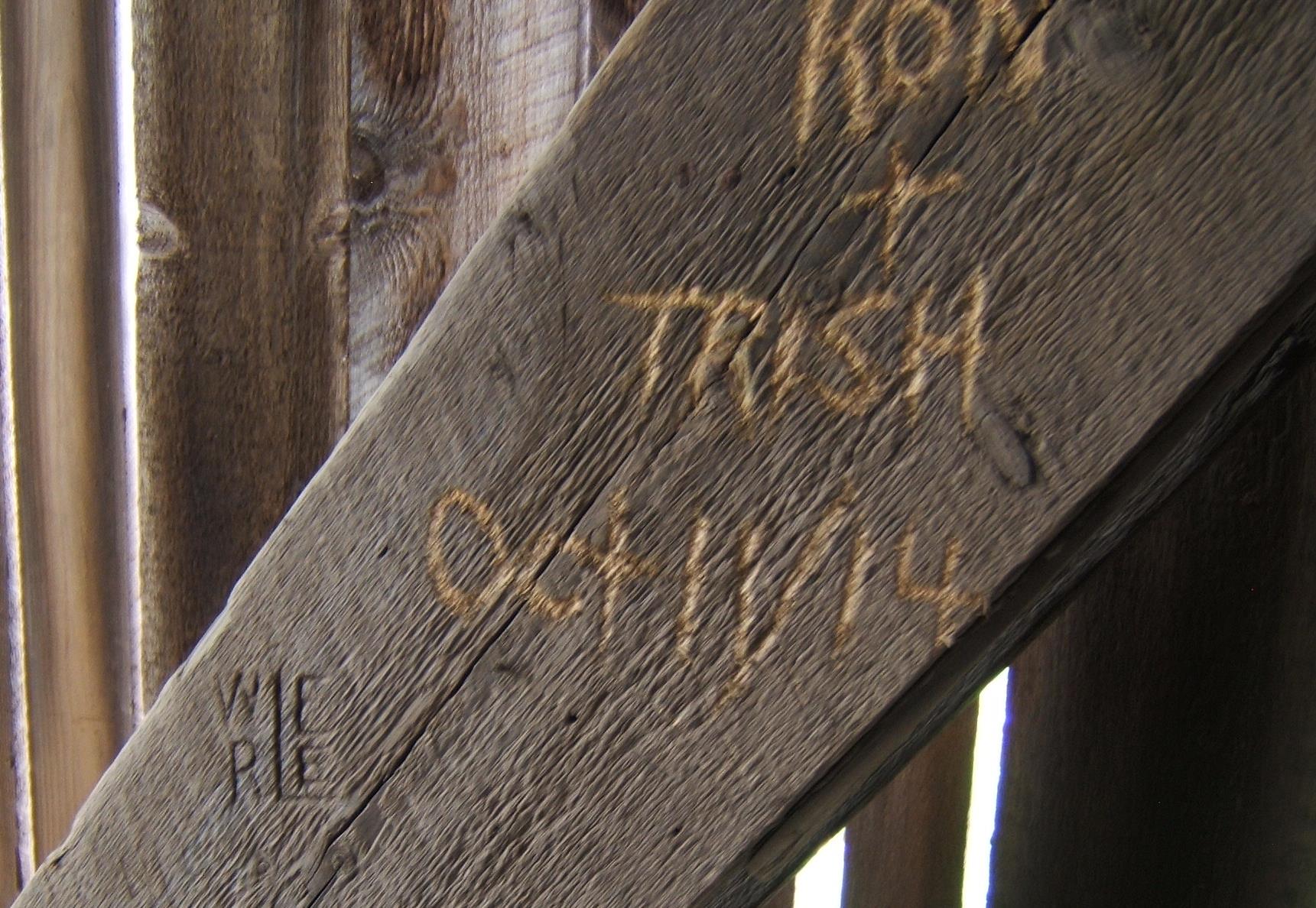
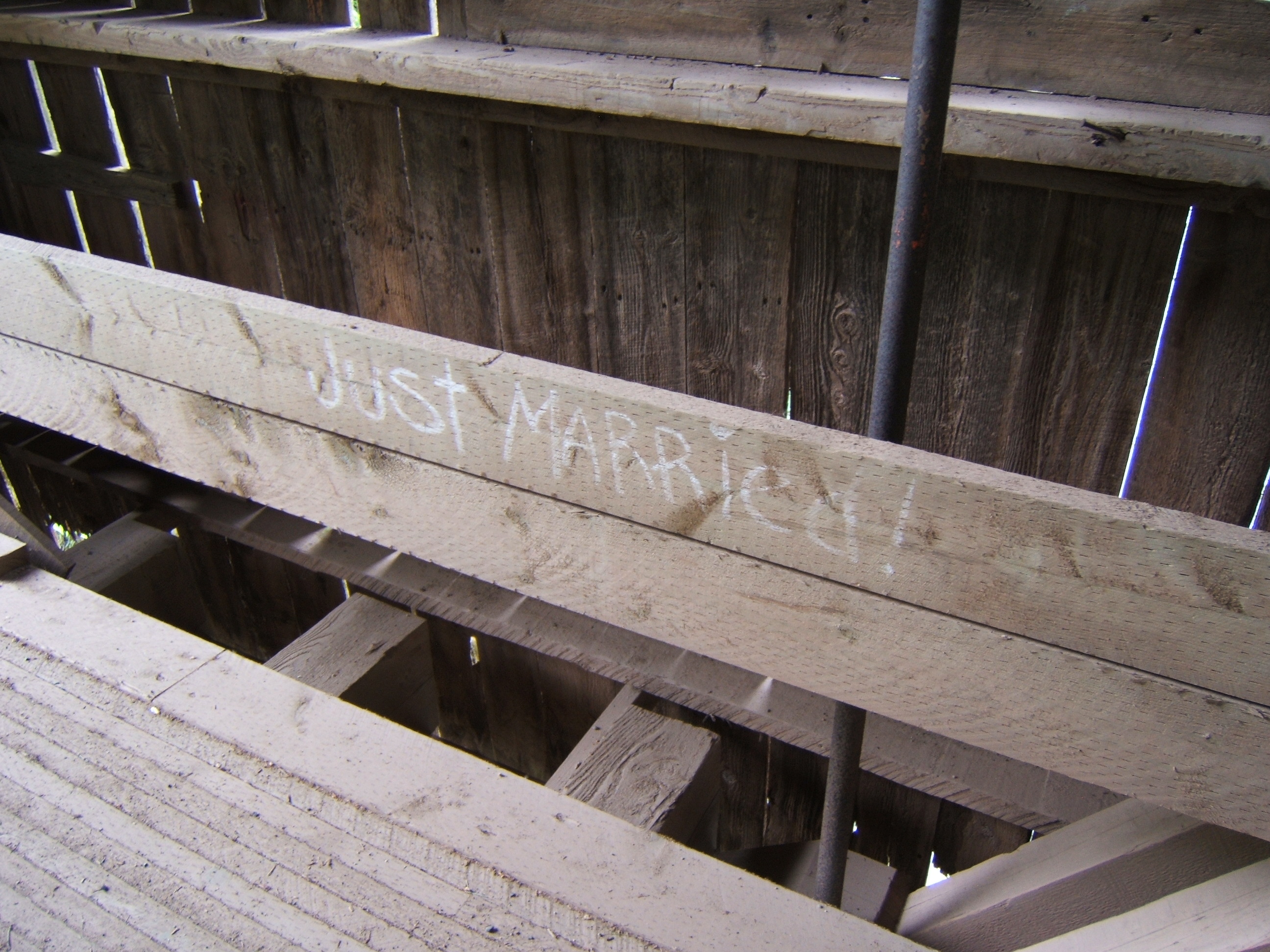
orange graffiti, letters round and wide
initials carved on the beams are faded
bridge quivers as we walk
photos out of focus, faint tremble
~
~
Copyright Jane Tims 2015
in the shelter of the covered bridge – passage for horses
Why are covered bridges covered? The usual explanation says that a covered bridge lasts longer if the wood is protected from the elements. However there are other explanations.
~
One of these claims the covering of the bridge made it easier to coax horses to cross the river. The horses, accustomed to entering and leaving a barn, would be less alarmed if a bridge was covered.
~
In the early 1900s, when most of the remaining covered bridges in New Brunswick were built, horses were still a common means of conveyance.
~
In my travels to study the plants and animals associated with covered bridges, I have come across three instances of the association between covered bridges and horses.
~
In June, while visiting the Tantramar River #2 (Wheaton Covered Bridge, built in 1916), we saw a team of horses pulling a sight-seeing group across the Tantramar marshes.
~
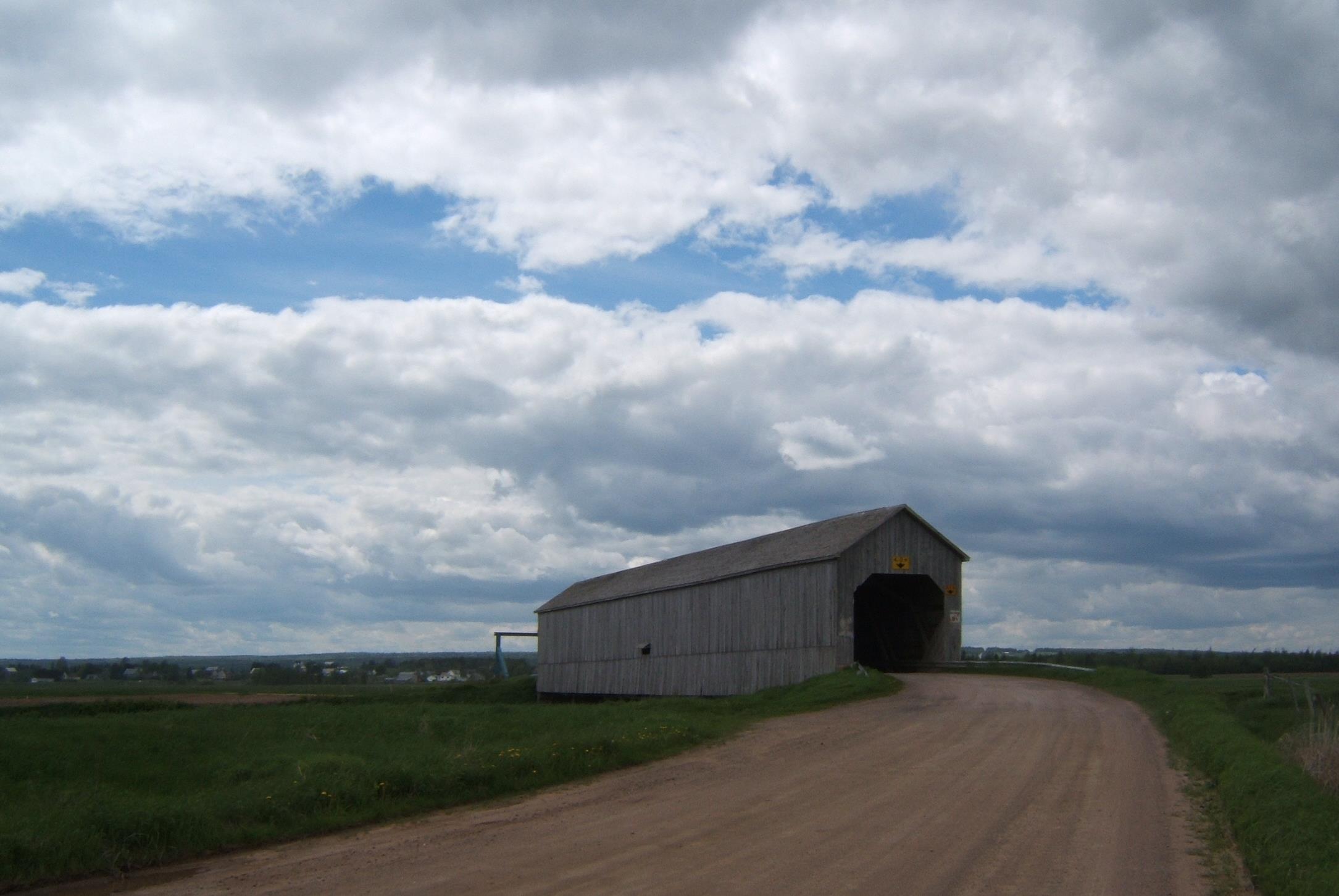
Wheaton Covered Bridge over the Tantramar River in Westmorland County (photo taken June 2015)
~

team of horses drawing a sightseeing wagon near Wheaton Covered Bridge (June 2015)
~
A notation in the Nackawic River #5 (Nackawic Siding Covered Bridge, built in 1927) mentions the use of the horse-drawn wagon.
~
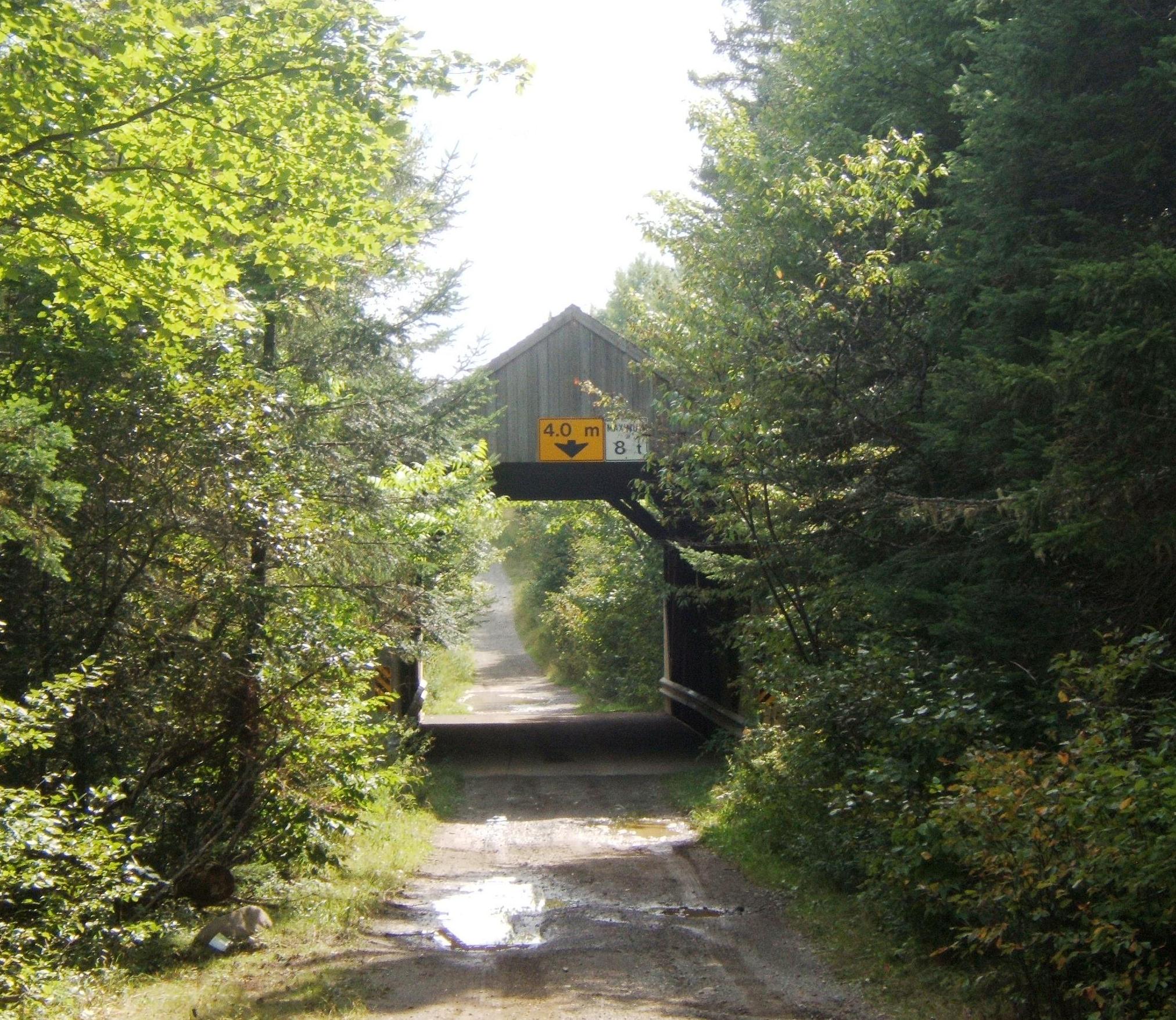
Nackawic Siding Covered Bridge in York County (photo taken 2012)
~
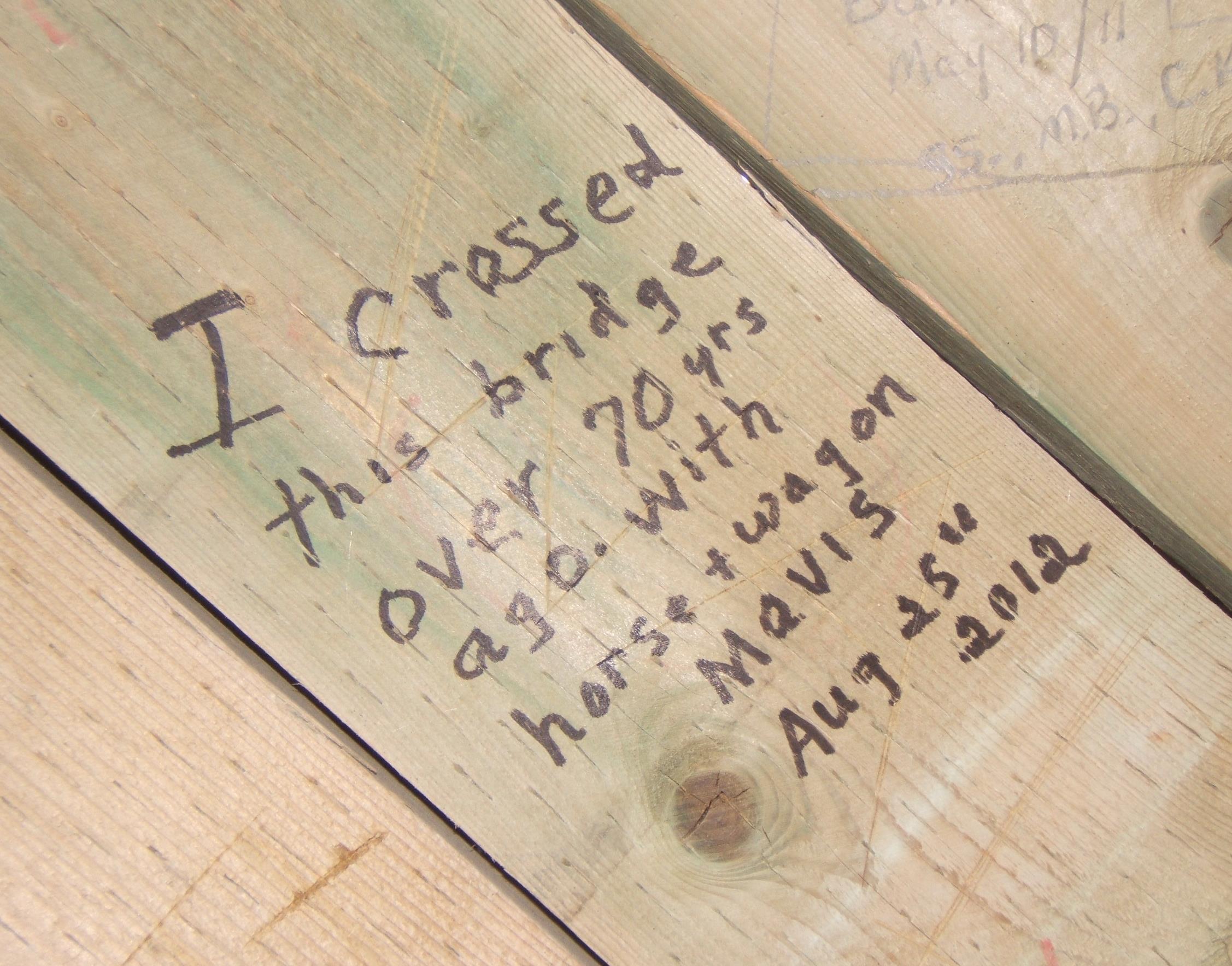
notation in the Nackawic Siding Covered Bridge (photo taken 2012)
~
And last weekend, in the covered bridge over the Quisibis River (Quisibis River #2, Pont Lavoie, built in 1951), we found a painting of a horse. Whoever painted the horse resisted the urge to make any other black marks on the bridge walls. Clearly, he or she had a single intent – to depict the horse.
~

Pont Lavoie over the Quisibis River in Madawaska County (photo taken July 2015)
~

portrait of a horse, in the Quisibis River #2 Covered Bridge (photo taken July 2015)
~
When I close my eyes and imagine a covered bridge, I always hear the clatter of horses hooves on the wooden boards …
~
Copyright Jane Tims 2015
in the shelter of the covered bridge – Milkish Inlet
We continue to drive around to look at covered bridges in New Brunswick. Eventually, I would like to write a series of poems about the plants and animals living in or around a covered bridge.
~
Last Saturday we visited a covered bridge on the Kingston Peninsula at Bayswater. The Milkish Inlet #1 (Bayswater Covered Bridge) was built in 1920. At 66.5 meters, it is the longest covered bridge in Kings County, New Brunswick. It is by far the busiest bridge I have seen – it was hard to amble through the bridge since there always seemed to be a car going through and a car waiting.
~

~
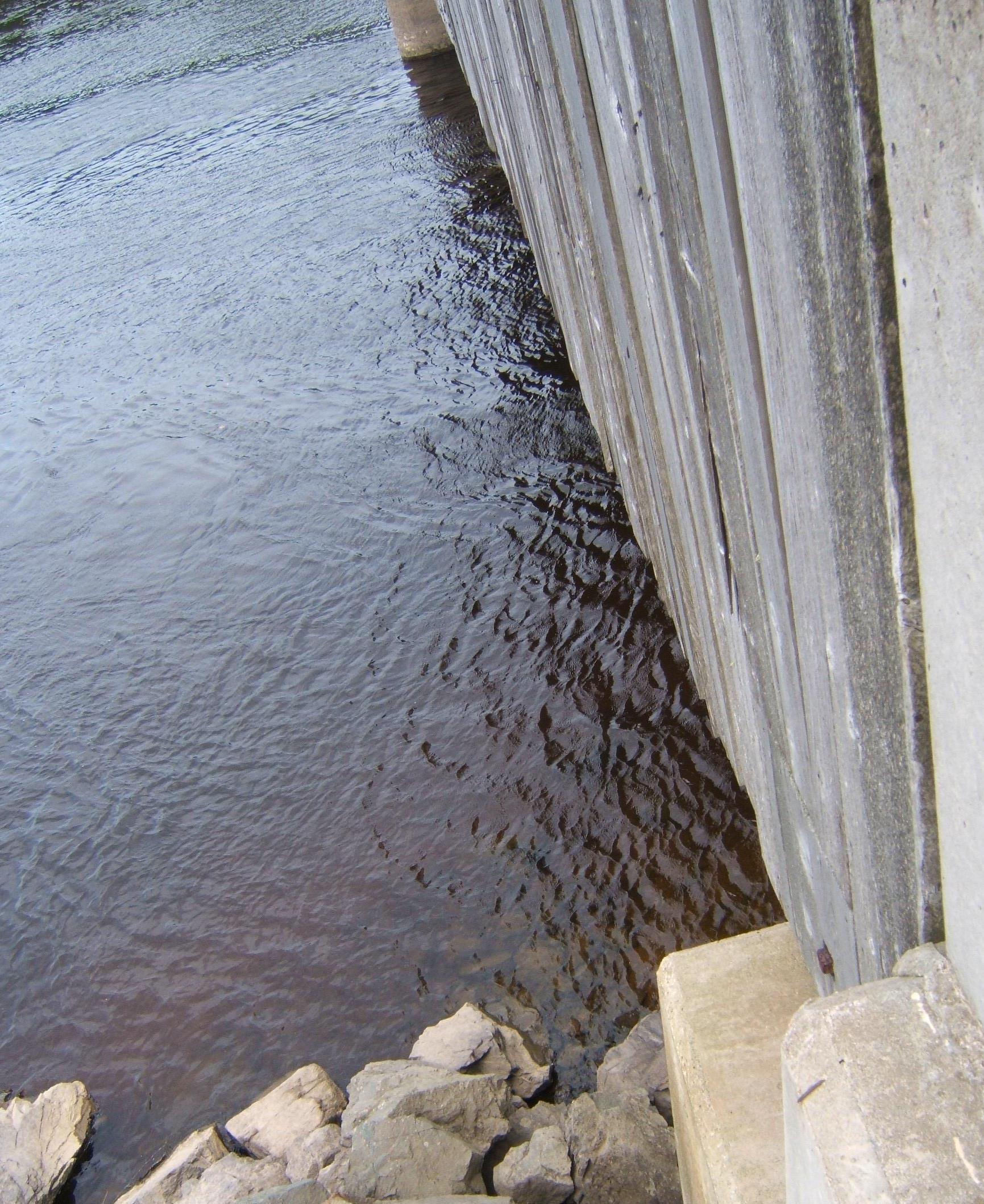
The bridge crosses the Milkish Inlet at Bayswater. The water here is under the influence of the tides.
~
~
Swimmers, wanting to dive from the height of the bridge, have removed a section of the bridge’s wall boards.
~

~
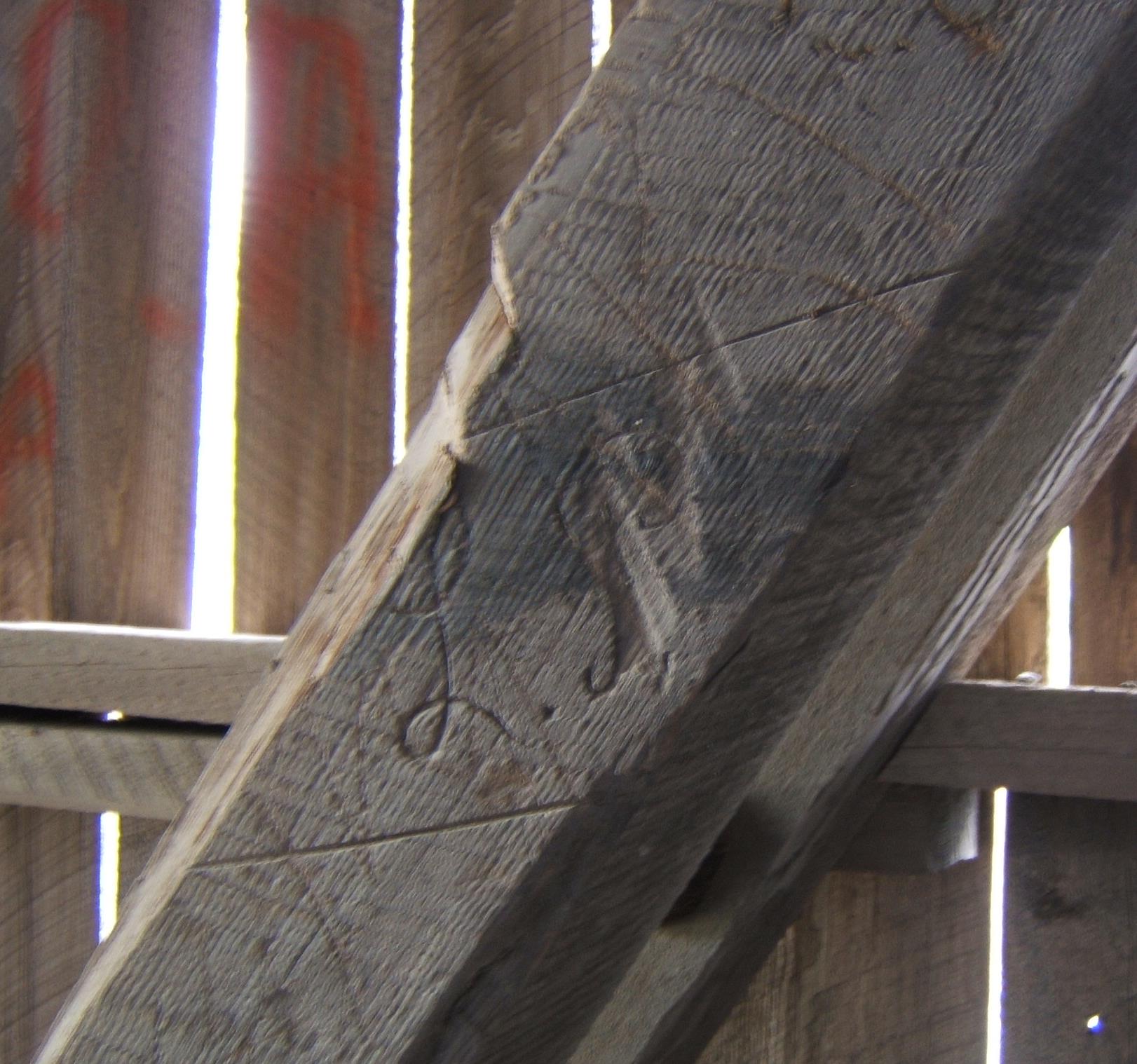
There are many carvings inside the bridge, including this rather charming L. P.
~
~
Another covered bridge once crossed Milkish Creek, but it has been replaced by a causeway.
~
I wondered about the name of the Inlet. The water is not ‘milkish’ in colour!
~
I have discovered the name is from a First Nations word meaning ‘the place where food is dried’ (Source: http://coveredbridgevic.com/festival/Bridges.htm ).
~
Copyright 2015 Jane Tims



ceiling of stars

gaps in the roof, Smyth Covered Bridge, April, 2015
~
~
ceiling of stars
(Smyth Covered Bridge – South Oromocto River #2)
~
left to the years
to frost heaves, wind
and winter storms
the roof-skin peels
away
~
crisscross layers
gaps between boards
shape tiny squares
and sunlight spills
between
~
afternoon stars
constellations
and raindrops ooze
saucepans to catch
the drips
~
deafening, would
scare swallows, field
mice, snowshoe hares
and spiders, all
away
~
~
Copyright 2015 Jane Tims
~
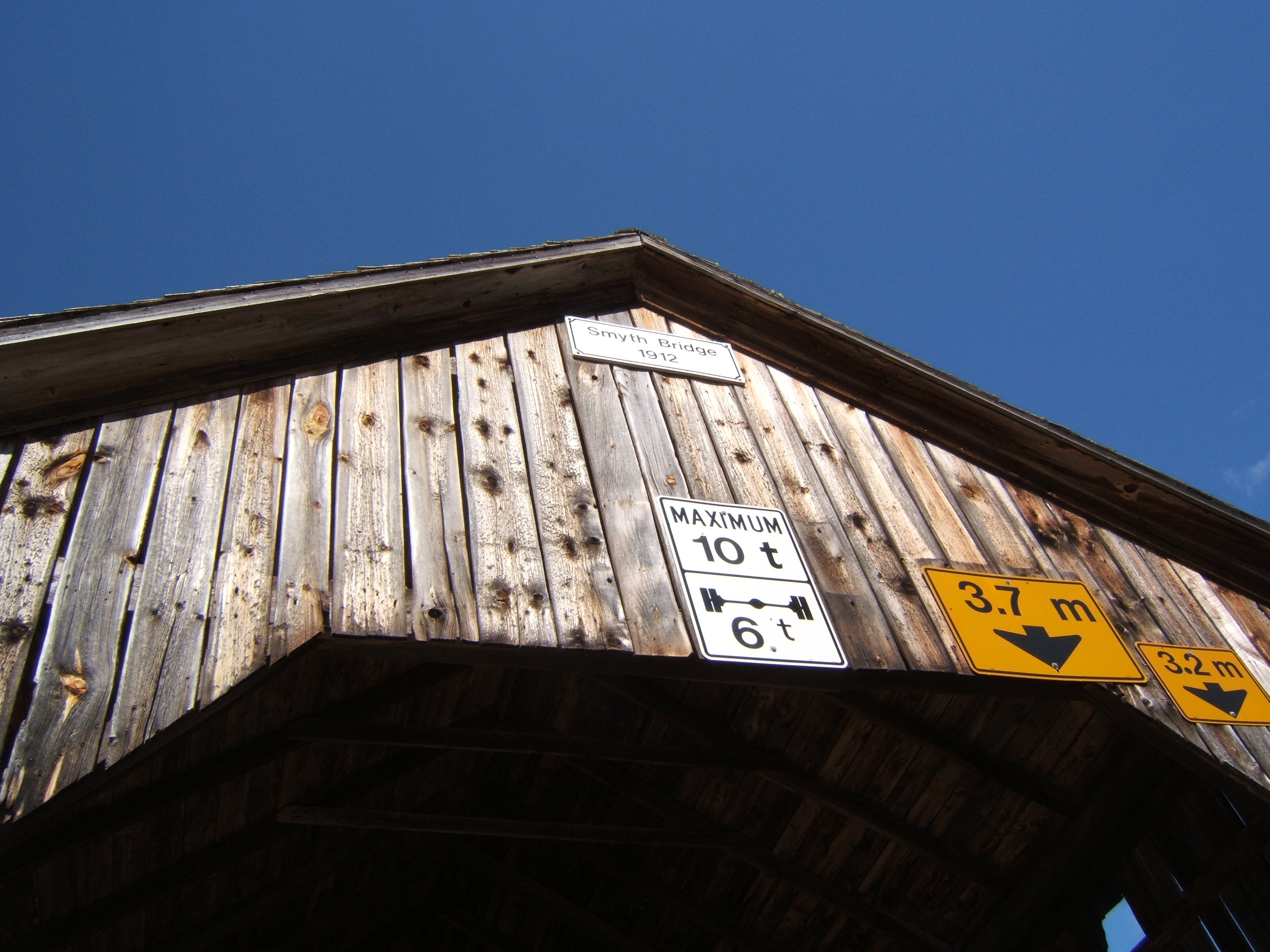
Smyth Covered Bridge, Mill Settlement, New Brunswick
~
writing a novel – next in the series !
Having sent my first novel ‘Open to the Skies’ (aka ‘Saving the Landing Church’) out to three publishers, I have begun my next novel in the series. I intend for the series to focus on the adventures of running a writers’ retreat. Same characters, same setting, same struggle to be a part of the community.
~
Title: unknown
Working Title: ‘Crossing at a Walk’
Setting: a writers’ retreat – the renovated Landing Church, the hall and the rectory now used as a Learning Center, a Sleeping Hall and a home and base of operations for Sadie and Tom
Characters: main character Sadie, a writer; her husband Tom, a retired welder; people from the community; writers participating in the first weekend of the writers’ retreat
Plot: Sadie wants the first writers’ retreat to go smoothly, but the history of an old covered bridge keeps getting in the way
~
My first novel was about an abandoned church. The subject of this book will be yet another feature of our built landscape, one also having a difficult time … the covered bridge. In the 1940s there were 340 covered bridges in New Brunswick. Today there are only 60.
~
I chuckle all the time about my ‘Saving The …’ series. Lots of buildings to save out there! However, I have no intention of sinking into the formulaic (Sadie falls in love with the … and takes steps to save the …). Instead, each story will take a unique approach to honoring the bit of built landscape it portrays!
~

~
As I have said, in New Brunswick, we have 60 remaining covered bridges. Their numbers are dwindling, the losses due to flooding, fire and vandalism. For a look at the covered bridges in New Brunswick, see the map and photos at http://www2.gnb.ca/content/gnb/en/departments/dti/bridges_ferries/content/covered_bridges.html
~
So how does a covered bridge get in the way of a well planned writers’ retreat?
- Sadie includes a local tour during the retreat, to introduce the writers to the community and give them new experiences to write about. The covered bridge is outside the tour loop, but a couple of the writers would love to go there.
- the covered bridge is part of the community’s history. Inside the bridge are the carved initials of some of the many people who have lingered there. The writers want to know ‘who was Phoebe?’ a girl whose name is carved in the bridge and imprinted on the memories of some of the members of the community.
- after the retreat is over, heavy rains and flooding threaten the bridge to its very foundations. Can the bridge be saved and will Sadie be willing to take on the cause of another community icon?
~

Sadie … my main character … a writer and weaver … she wants the first weekend of the writers’ retreat to go smoothly … I still think she needs an afternoon at the hairdressers

Sadie’s husband Tom … a welder with a fatal case of welder’s lung … a likeable fellow, he refused to die in the first novel … I wonder what will happen to him in ‘Crossing at a Walk’?
~
Copyright 2015 Jane Tims
silence
How many stories written by Edgar Allan Poe can you name? Certainly ‘The Pit and The Pendulum’. Perhaps ‘The Fall of the House of Usher’ and ‘The Purloined Letter’. Perhaps ‘The Murders in the Rue Morgue’.
~
My favorite story by Poe is ‘Silence – A Fable’, published in 1837. As many of Poe’s tales of the macabre, after numerous readings it still has the power to send shivers along the spine. The setting of the story is vividly portrayed with words. These were the inspiration for my painting.
~

Jane Tims (2002) ‘Silence by Edgar Allan Poe’ (acrylic on canvas, 20″ X 26″)
~
The waters of the river have a saffron and sickly hue; and they flow not onwards to the sea, but palpitate forever and forever beneath the red eye of the sun with a tumultuous and convulsive motion. For many miles on either side of the river’s oozy bed is a pale desert of gigantic water-lilies. They sigh one unto the other in that solitude, and stretch towards the heaven their long and ghastly necks, and nod to and fro their everlasting heads. And there is an indistinct murmur which cometh out from among them like the rushing of subterrene water. And they sigh one unto the other.
From Edgar Allan Poe, ‘Silence – A Fable’, 1837
‘Silence – A Fable’ describes the waters of the Zaire River and a strange man who sits on a rock along the river. A Demon in the water, wants the man to get down from the rock. So the Demaon sends all manner of horrors: the hippopotamus and the behemoth, and the tempest with torrential rains, thunder and lightening. But the man will not get off the rock. So what does the Demon do to get the man down from the rock. You need to read the story.
~
For a full text of this wonderful fable, see http://classiclit.about.com/library/bl-etexts/eapoe/bl-eapoe-silence.htm
~
I have a book of stories by Edgar Allan Poe that belonged to my Uncle Alec. The stories are illustrated with wood engravings by Fritz Eichenberg. These engravings are, in themselves, a study in horror. I thought you might like to see a couple of my favorites.
~

Illustration by Fritz Eichenberg of the Edgar Allan Poe story ‘The Fall of the House of Usher’ (Poe, 1944, Tales of Edgar Allan Poe, New York: Random House)
~

Illustration by Fritz Eichenberg of the Edgar Allan Poe story ‘The Black Cat’ (Poe, 1944, Tales of Edgar Allan Poe, New York: Random House)
~
I wonder how Fritz Eichenberg would have illustrated ‘Silence – A Fable’. Perhaps illustrations can never be as frightening as ‘… and the lilies sighed one unto the other in the solemnity of their desolation’. Just try reading the story aloud!
~
Copyright 2015 Jane Tims
a stack of post cards
Saturday, for me, is genealogy day. I am interested in the history of my family and I have a lot of boxes of information to sort through. If I don’t spend a dedicated time to the study of the items in those boxes, the work will never get done. And, I want to try and get my value from the small fee I pay each month to www.ancestry.ca .
~
Over the last few Saturdays, I have been studying a small stack of post cards sent to my grandmother (Katie Clark) from 1906 to 1910. There are 174 post cards in the collection. The post cards are one record of her travels to the United States where she was studying to become a nurse.
~

~
Born in Tatamagouche, Nova Scotia in 1890, Katie Clark was raised on a farm with her brother and four sisters. When she graduated from High School, she went to Boston to become a nurse. She was joining her sister Anne who had started her nursing program there the year before.
~

Katie Clark in her nursing uniform
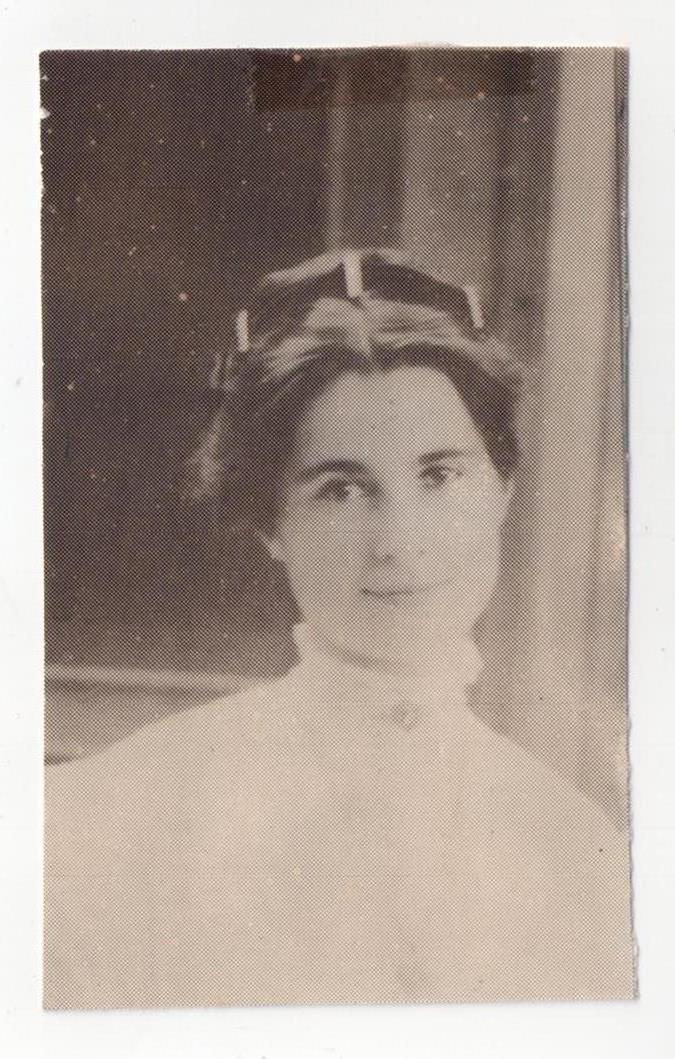
Katie Clark, my grandmother
~
Travel from the Maritimes to Boston and other cities along the Eastern Seaboard was common in the early 1900s and was usually by train. Nursing was a relatively new type of professional work for women and men. Professional nursing had been established in the 1860s largely as a result of the efforts of Florence Nightingale and others. By the turn of the century, many nursing schools were established in both the United States and Canada.
~
Katie went to school in Newton Lower Falls, on the outskirts of Boston. She studied with two of her sisters (Anne and Laura) and a small group of women and men who became her friends. Katie’s photos show sliding parties and sports activities.
~

Photos of winter sledding in Newton Lower Falls from Katie’s photo album (Katie is third from the right in the lower, right photo)
~

Photo from Katie’s album of the school’s women’s basketball team (Katie is fifth from the right in the top row; her sister Anne is second from the right in the seated second row from the front)
~
Post cards were one way friends and families could stay in touch. The post cards show that cards were mailed even within the same community and sometimes at the rate of two or three a day. The messages on Katie’s post cards often mention getting or sending letters and often ask Katie to send a post card, soon.
~
The post cards are mostly scenic in theme. There are also a large number of comedic post cards …
~
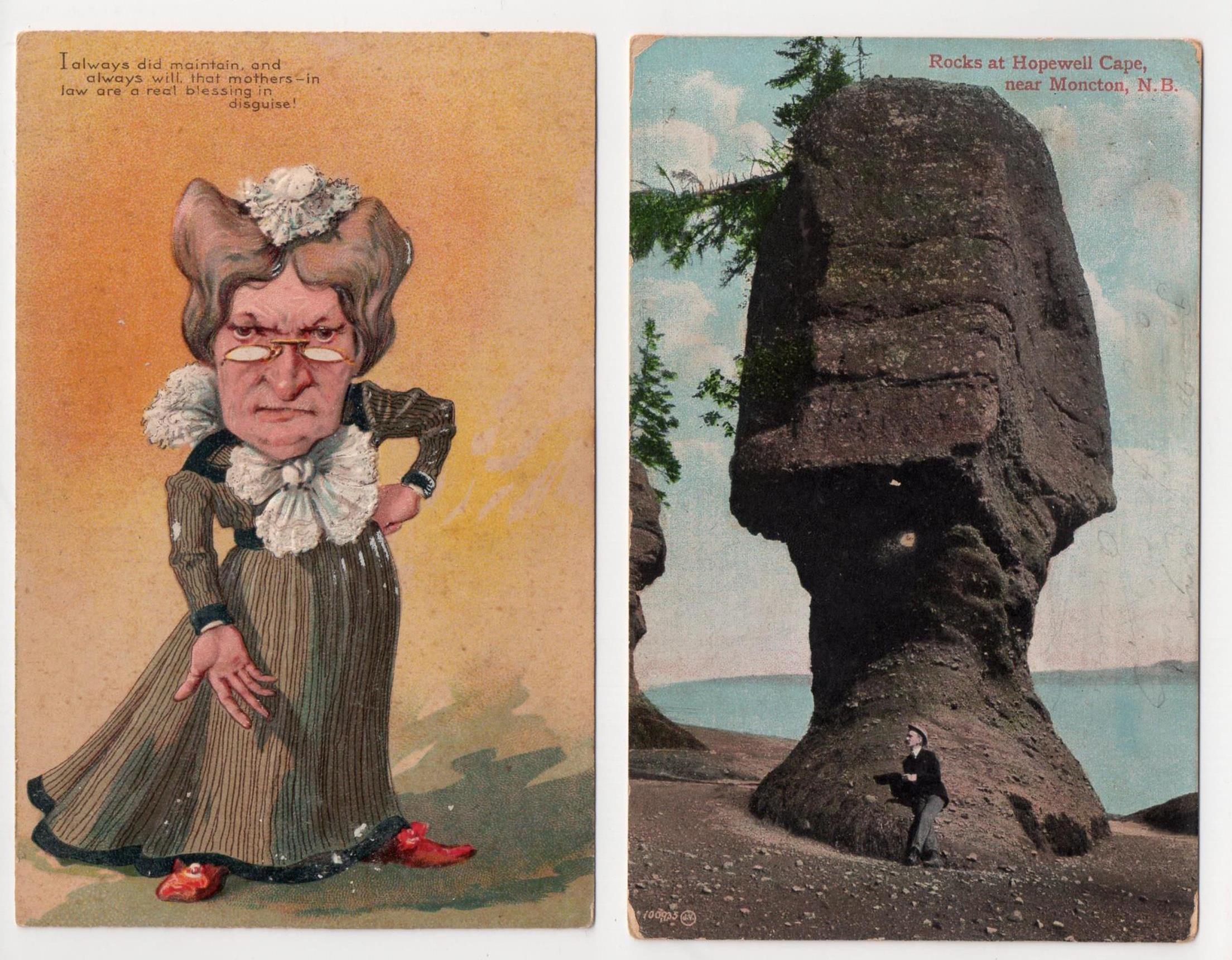
The card on the left pokes fun at Mother-in-laws (1910) ; the post card on the right is one of many scenic views, this one of the ‘flower pot’ formations near Alma, New Brunswick (1907).
~
There are also post cards with seasonal themes, for Christmas, Easter, New Years Day and Valentines Day …
~

One of Katie’s post cards with a Christmas theme (1907)
~
A few of the post cards are blank, without stamp, post mark, address or message. Perhaps these were delivered to Katie in person as a contribution towards her post card collection. Sometimes the address is the only handwriting on the card. Usually, however, the sender included a brief message to Katie, written in a special space on the back of the card. In some cases the message was written upside-down, or in various blank spaces on both front and back of the card.
~
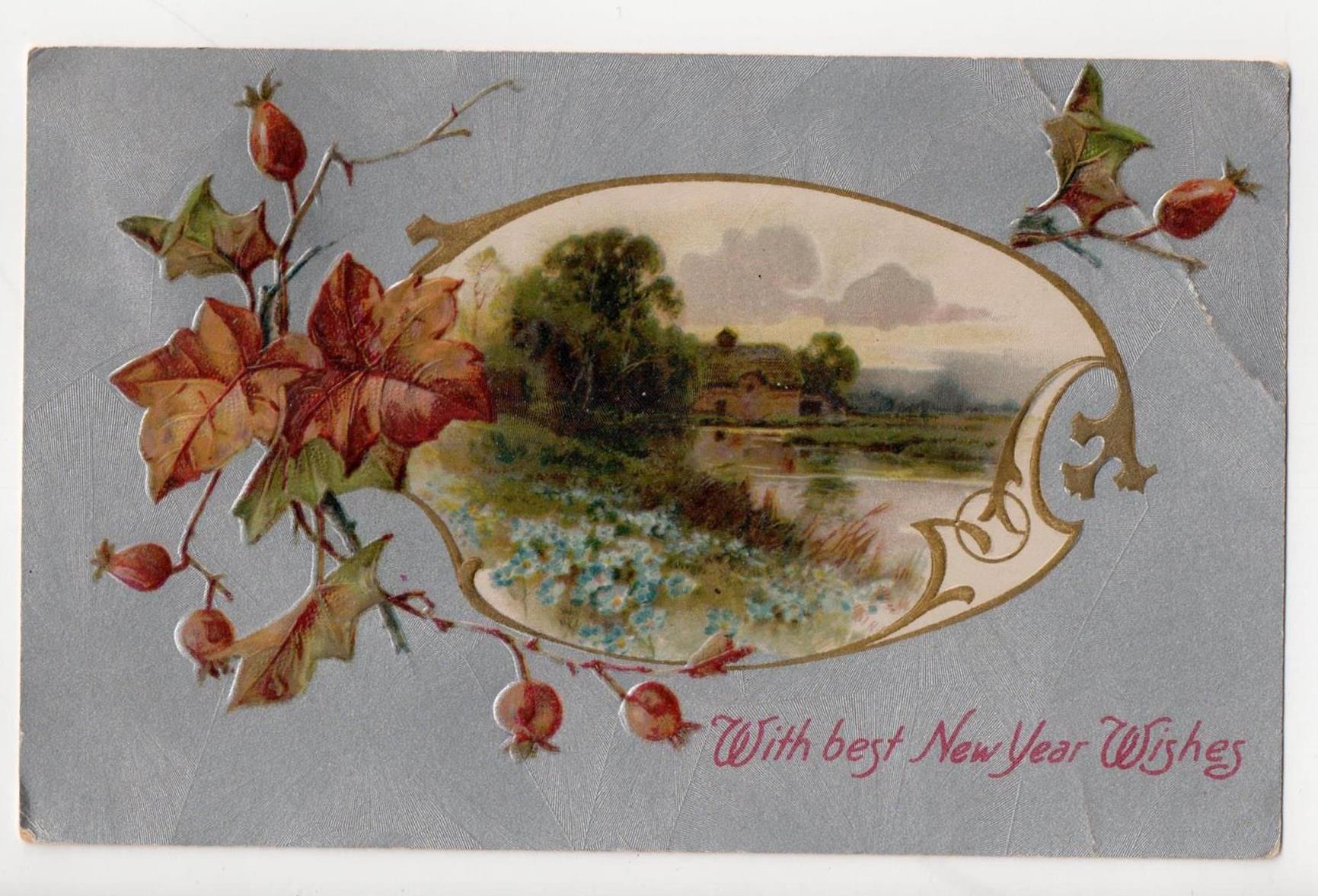
A post card with a New Year’s message (1909)

The back of the New Year’s post card with a message and a stamp affixed upside-down ! (1909)
~
The information on these cards goes beyond the written message. The cards are a record of where Katie was living at various times during the five year period. The post marks and an occasional return address indicate where Katie’s friends were living. The messages contain common expressions of the times. The post card themes tell what subjects interested people and the comedic cards show what people thought funny. And the stamps on the cards are a study of their own.
~
In future posts, I’ll have a look at some of the information contained in my grandmother’s stack of post cards.
~
Copyright 2015 Jane Tims
abandoned meeting house
~

~
the meeting house
~
~
crooked clapboards
doors nailed shut
remember
~
they argued
into the supper hour
words threaded, knotted
~
violent voices
eyes wool, ears cotton, lips
flax flayed to linen
~
over wages paid
to the man who splits
the wood, stokes the fire
~
at home, needles
slid, silent, through layers
of quilting
~
women forgot their thimbles
pricked thumbs
left blood on fabric
~
~
Copyright 2014 Jane Tims
family history – changes in 10 years
As I look into my family history, I am often amazed by the changes that occur in families in short periods of time. An example is found in the early life of my great-grandmother Ella – Mary Ellen (Hawk) Norman. In the ten years from 1860 to 1870, she experienced dramatic changes in her family.
~
The 1860 US Census shows Ella’s family living in Chestnut Hills Township, Monroe County, Pennsylvania. The family included Josiah Hawk (Ella’s father, a shoemaker), Sallyann (Sarah Ann) (Ella’s mother), Owen and Ella (Ellen). Mariah Hawk, Ella’s paternal grandmother was also living with them.
~

~
In the next decade, the family underwent remarkable change. First, five children were born – Flora, Sarah, twins Edwin and Otto, and Emma. Of these, Otto and Emma did not live (Josiah and Sallie had already lost a child in 1957). Then Josiah died on June 28, 1865, a month and a half after Emma. Also, sometime during the ten-year period, Maria Hawk, who lived until 1880, went to live elsewhere.
~
John Franklin born Sept. 15, 1855 (died Dec. 26, 1857, two years old)
Owen born April 21, 1857 (death date unknown)
Ellen born January 4, 1859 (Ella, my great-grandmother, died 1933)
Flora Alice born June 25, 1860 (death date unknown)
Sarah Ann born Dec. 11, 1863 (Sadie, my great grand-aunt, died 1921)
Edwin W. born 1864 (Ed, my great grand-uncle, died 1940)
Otto born 1864 (death date unknown, before 1870)
Emma Lydia born Jan. 7, 1865 (died May 9, 1865, 4 months old)
From: Atwood James Shupp, 1990, Genealogy of Conrad and Elizabeth (Borger) Hawk: 1744 – 1990, Gateway Press, Baltimore).
~
In 1870, Ella’s mother, Sallie, married again to Joshua Popplewell.
~
The 1870 US Census shows the results of all this change. In 1870, the family is living in Williamsport, Lycoming County, Pennsylvania. The family now includes Joshua Popplewell (step-father), Salie (Sara Ann) (mother), Owen, Mary (Ella), Flora, Edwin and Sarah (Sadie).
~

~
The person most affected by these changes must have been my great-great-grandmother, Sara Ann (Sallie). During the decade she gives birth to five children (including a set of twins), her husband dies, she remarries, and she changes the location of her home at least once. In the only photo I have of her, she seems a formidable woman, steeled to withstand all manner of disruption in her life. I also see great sadness in her eyes.
~

my great-great-grandmother Sallie – Sarah Anne (Kresge) Hawk Popplewell (1835 – 1910)
~
Our lives are dynamic, full of change. New people enter our lives, others leave. The place we call home shifts to a new location. We go to school and graduate, we take a new job, we retire. Our focus changes, along with our point of view. Some change is dramatic, some subtle. Some change makes us laugh, some makes us cry.
~
What changes do you see in the decades of your life?
~
Copyright 2014 Jane Tims




 nichepoetryandprose