Posts Tagged ‘history’
lost communities – an old flower garden
Do you ever see an old flower garden, no house in sight, growing alone, expanding and reseeding where it can?
~
On our drives to find old one room school houses in the landscape, we often find bits of domesticated flowers, indicating a home once flourished there. Sometimes these old gardens are all that is left of a rural community.
I have seen first hand, how many small rural communities in New Brunswick are little more than memories.
~
A good example of this is Fredericksburg near Stanley in York County. Today it is a pleasant rural landscape with three or four homes. In 1866 Fredericksburg was a farming settlement with approximately 12 families. This information comes from an information-packed website from the Provincial Archives of New Brunswick: ‘Place Names of New Brunswick: Where is Home? New Brunswick Communities Past and Present’. By typing the name of a community, you can discover information about original land grants, the size of a community in the eighteen hundreds, how many families lived there, the population and whether there was a post office, store, or church. http://archives.gnb.ca/exhibits/communities/Home.aspx?culture=en-CA
~
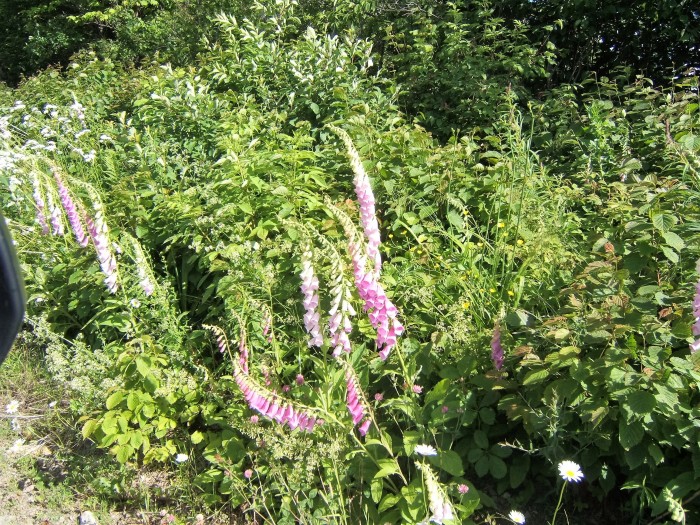
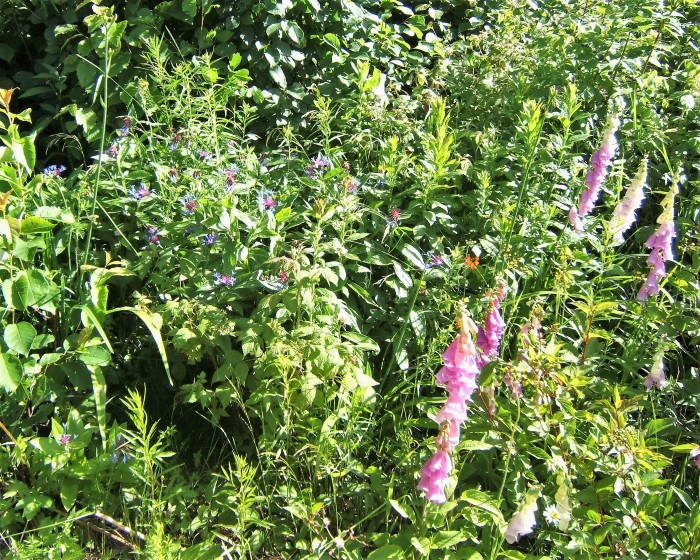
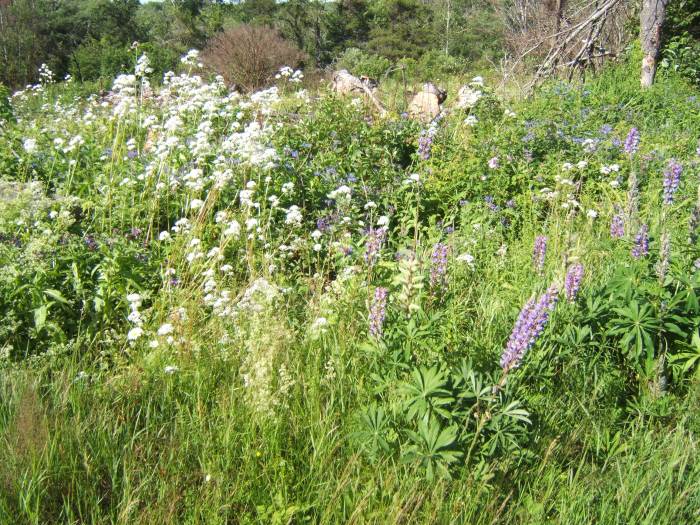
I am sorry these are not better photos, but the colour among all the green shows the remnants of a flower garden that someone once loved.
~

~
Musk Mallow (Malva moschata) …
~
~
Common Foxglove (Digitalis purpurea) …
~
 ~
~
Some more Foxglove and blue Bachelors Button (Centaurea cyanus) …
~
~
Lupin (Lupinus perennis). I don’t know the identity of the white flowers, but they make a lovely overall ‘bouquet’!
~
Have you seen any abandoned flower gardens? Do you wonder what stories they would tell?
~
~
Copyright 2016 Jane Tims
in the shelter of the covered bridge – final manuscript
In the last weeks, I have been working towards completion of the book-length manuscript for ‘in the shelter of the covered bridge’. It includes poems and drawings about the plants and animals living in and around some of the covered bridges in New Brunswick.
~
Earlier this summer I was lucky enough to win a mentoring package from the Writers’ Federation of New Brunswick. I chose a talented, award-winning local poet to work with me on the manuscript and during the early part of the summer, with her expert guidance, I made revisions to the poems. She focused my attention on word choice, clarity and ‘showing not telling’. She also helped me with a handful of poems I thought were not salvageable and now some of these will make it into the manuscript!
~
In the last few weeks, I have worked on revisions, ordering of the poems, and, hardest of all, my footnotes. Since the poems are about the remaining covered bridges in the St. John River watershed, I want to include some basic information in the footnotes as well as notes I made during my visits to each bridge. I have also worked on the drawings I will include in the manuscript.
~

~
The process of preparing a manuscript is long and certainly goes beyond the fist few lines written on the page way back when this manuscript was just an idea. But if the way is about the journey, this has been such a memorable experience. Best of all, I have been lucky to make the acquaintance of many of New Brunswick’s covered bridges. Last Thursday, as we returned home from a visit, we saw a double rainbow in the sky and I was able to snap a shot as we waited to take our turn crossing the covered bridge across the Rusagonis River (the Patrick Owens Bridge):
~
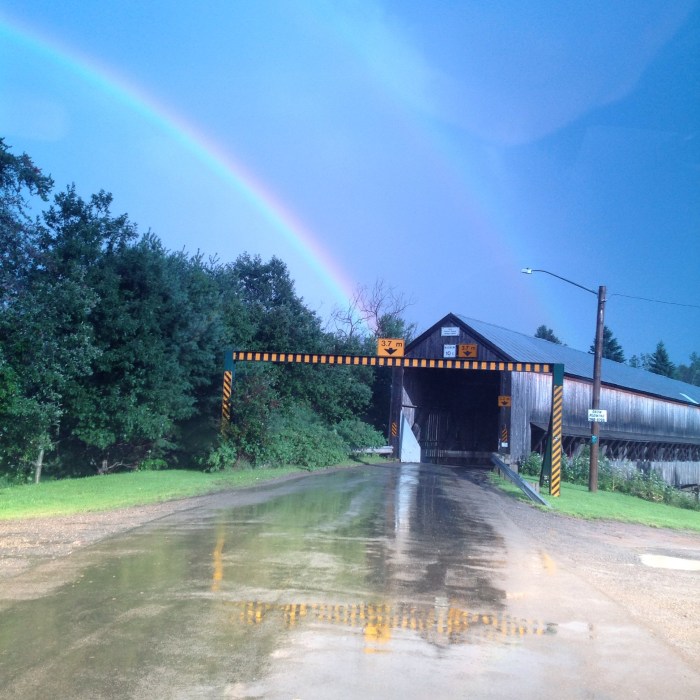
double rainbow over the Rusagonis #2 Covered Bridge in Rusagonis, New Brunswick – August 19, 2016
~
Copyright Jane Tims 2016
on my bookshelf – Covered Bridges of Central and Eastern Canada by Lyn and Richard Harrington
Thanks to a friend, I have added a gem to my small collection of covered bridge books! Covered Bridges of Central and Eastern Canada, published in 1976, gives a glimpse of days when there were over a hundred covered bridges still standing in New Brunswick.
~

~
Harrington, Lyn and Richard Harrington. Covered Bridges of Central and Eastern Canada. Toronto: McGraw-Hill Ryerson Limited, 1976.
~
Covered Bridges of Central and Eastern Canada includes black and white photos (and two in colour) of many of the covered bridges of the time, including one of the Southwest Otnabog Covered Bridge on Base Gagetown.
~
These photos provide a glimpse into history: the types of signage used, the vintage cars, and the land uses in the vicinity of the bridge. Photos show the stacking of wooden lobster traps and log drives on the river. From the days when the bridges were used for private notices, there are photos of a circus poster and a painted eye glass advertisement.
~
The book also includes written information on the history of covered bridges, bridge construction, enemies of the covered bridge and hopes for the future. The text covers topics such as traditions and superstitions, sources of bridge names, and anecdotes. I like the detailed story of the creation of the picnic park beside the Patrick Owens Bridge in Rusagonis.
~
The Chapter ‘Hope for the Future’ is informative and somewhat sad. In the 1970s The League for Rural Renewal was seen by the author as the cornerstone for covered bridge protection and appreciation.
~
Since the book was published, we have lost over forty covered bridges. On the positive side, appreciation for rural landscape is still alive in New Brunswick, evidenced by the many efforts of the Department of Transportation and Infrastructure. On our visits to covered bridges we have seen new roofs, mended walls and upgrades to abutments. Some of the photos in the book show deteriorated bridges now renovated and mended.
~
The book provides a list of covered bridges in New Brunswick and Quebec in 1970. Although the list includes the names of 101 covered bridges in New Brunswick, the authors say 113 bridges existed in 1974/75 when they made their visits. The book also says there were 307 covered bridges in New Brunswick in 1950. Many of the names in the list are no longer familiar in today’s covered bridge lexicon: two bridges over the Shikatehawk River in Carleton County; Windgap Brook #1 in Kings County; Southwest Long Creek in Queens County; and Chemical Creek #1 in Albert County. As a point of interest, in the 1960s, there were still three covered bridges in Nova Scotia.
~
The Foreword to the book is by Milton Gregg, born in Kings County, New Brunswick – cabinet minister, recipient of the Victoria Cross for bravery in World War II and Officer of the Order of Canada. He was also the founder and head of the League for Rural Renewal mentioned above.
~
I was very fortunate to receive my copy of this book from a friend and I thank him again for the gift. Amazon lists the book as available through one of their associated sellers.
~
Copyright 2016 Jane Tims
morning bird chorus – ephemera
When I was a child, one of the things I prized was my collection of ‘bird cards’. These were an advertising give-away from ‘Cow Brand Baking Soda’ (Church and Dwight Limited, Montreal, Canada).
~

~
I would spend hours looking at these, putting them in order of the ones I liked best, thinking about the birds depicted. The Meadowlark was a local bird I had seen many times and his call was as familiar to me as breathing – he always made it to the top of the pile! Today the winner would be the Cedar Waxwing who sits in the tops of the pines at our cabin, or the Goldfinch who spends all winter at our feeders!
~

~
Today I still have two packs of these cards. They are in sets of 16 in a paper envelope. The card sets are called ‘Useful Birds of America’ and the front of each card shows an image of a bird by artist Louis Agassiz Fuertes (1874-1927), an American ornithologist and artist. On the back, there is a tip on how to use ‘Cow Brand Baking Soda’, the bird’s common name, its scientific name and a charming paragraph about its appearance and habits. The card concludes with a short message still relevant today:
For the good of all, do not destroy the birds
~

~
Copyright 2016 Jane Tims
two old schools in Carleton County, New Brunswick
On our way home from Victoria County last weekend, we took the rural road from Hartland through Millville. We found two old one room schools along the way.
~

The location of two old schools in Carleton County. (Map Source: New Brunswick Atlas, Second Edition, 1998)
~
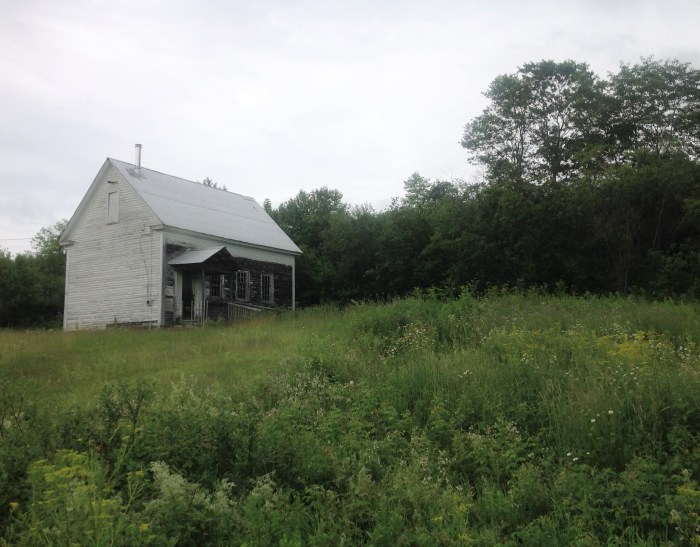
The first of these was in Lower Windsor, Carleton County (once called Windsor Settlement).
in 1898 Lower Windsor was a settlement with a post office and a population of 100
to the north was Windsor, settled about 1840: PO 1864-1945: in 1866 Windsor was a farming settlement with approximately 50 resident families: in 1871 it had a population of 200: in 1904 Windsor had 1 post office, 1 store, 1 church and a population of 200.
Source: Provincial Archives of New Brunswick
~
When I got out of the truck to take some photos, I was overwhelmed by the smell of licorice. The source was Wild Fennel (Foeniculum vulgare Mill.), probably planted at the site (now used as a cottage).
~

Carlisle School, Carleton County 2016
~
The next school was in Carlisle, Carleton County.
first called Northville Settlement: renamed Carlisle with creation of the post office: PO 1877-1924: in 1898 Carlisle was a settlement with 1 sawmill, 1 grist mill, 1 church and a population of 300.
Source: Provincial Archives of New Brunswick
~
The door of this old school was open to the elements.
~
Although I intend to focus my ‘old schools’ writing project in Kings, Queens, Sunbury and York Counties, I am delighted to have found these old schools in Carleton County!
~
The distance between these two old schools was 4.5 kilometres. Not far unless you are a young child on a snowy day!
~
Copyright Jane Tims 2016
uphill and down
While doing a search for a particular plant we know grows in the area, my husband and I took a side road through rural Victoria County in New Brunswick. We drove from Route 109 (near the top of the map), south through Upper Kintore and Lower Kintore, to Muniac, a distance of about 23 kilometres.
~

(Map Source: New Brunswick Atlas, First Edition)
~
Kintore was settled in 1873 and named for the town of Kintore near Aberdeen, Scotland. In 1898, Kintore was a railway station and had a post office and a population of 75. (Source: New Brunswick Archives)
~

church and school house in Upper Kintore 2016
~
Interesting to me was the very well-cared-for one room Upper Kintore School, built in 1877.
~
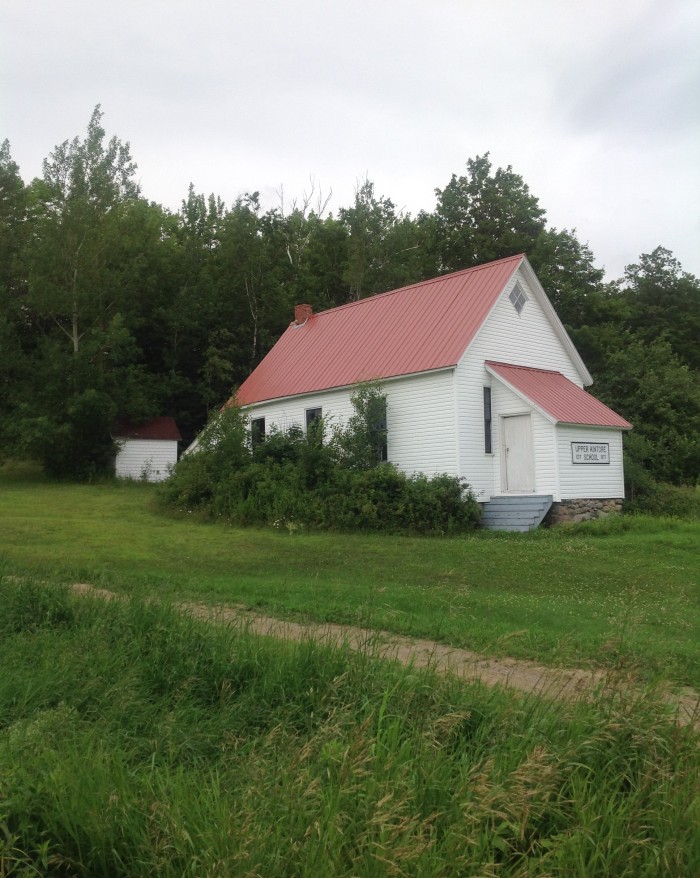
Upper Kintore School built 1877
~
Our drive took us uphill through Upper Kintore, along Big Flat Brook (a tributary of the Tobique River). The road peaked at Lawson Hill and then ran down, through Lower Kintore. Again, the road followed a watercourse, the Muniac Steam (a tributary of the Saint John River). As we drove we talked about the road — the earliest roads took the easy way, along the brooks. The southern part of the road was banked by steep rocky roadcuts.
~
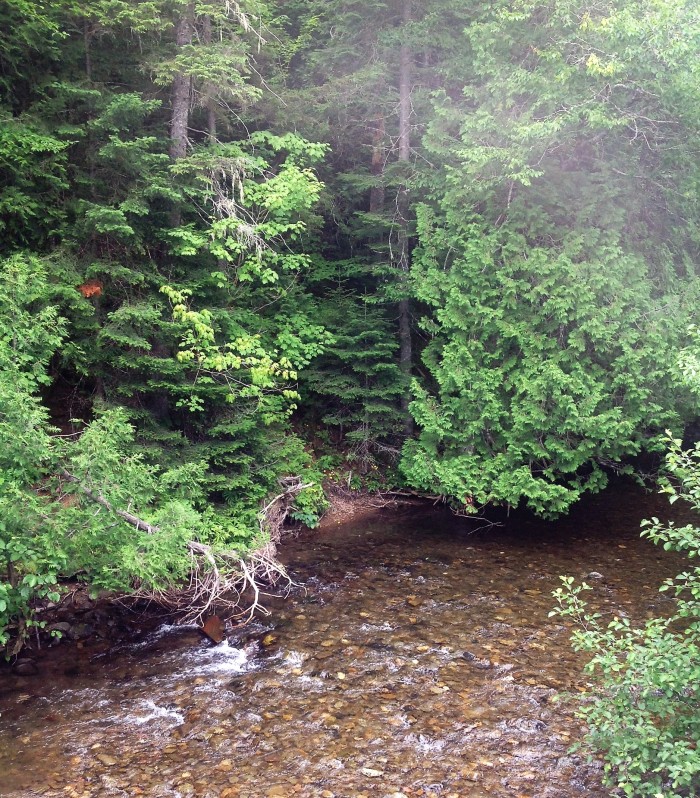
the Muniac Stream near Lower Kintore
~
Since I am interested in the plants children might encounter on their way to school, I was happy that this is the time in New Brunswick when most of our roadside wild flowers are in bloom. We saw Black-eyed Susan (Rudbeckia serotina Nutt.), Red Clover (Trifolium pratense L.), Bedstraw (Galium sp.), Daisy (Chrysanthemum Leucanthemum L.), Bladder-Campion (Silene Cucubalus Wibel) and Meadow Rue (Thalictrum polygamum Muhl.). Quite a bouquet! I have to remain aware that some of these plants have become very weedy and invasive since the early 1900s and may have been hard to find in the 1800s. For example, in the photo below, just above the Black-eyed Susan, you will notice a plant of Wild Parsnip (Pastinaca sativa L.). In New Brunswick, Wild Parsnip is a invasive species, probably introduced by Europeans in the 18th century as a food source.
~
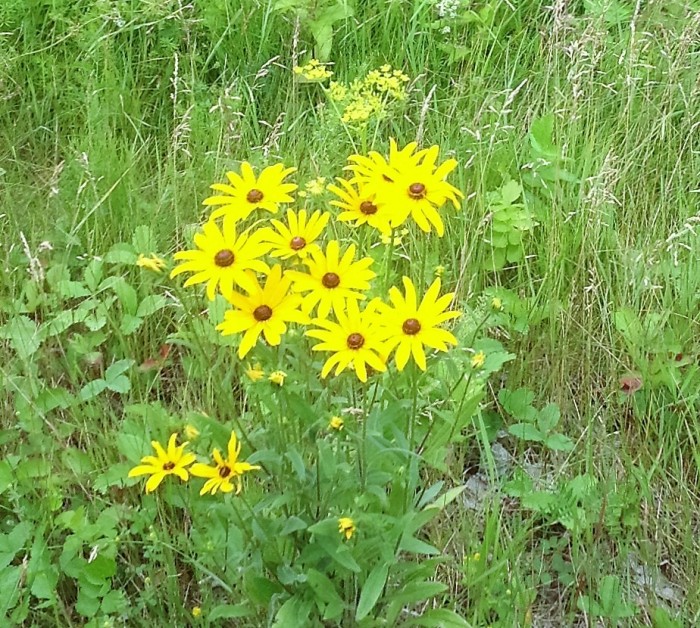
Black-eyed Susan along the road
~
Do you have any favorite rural drives through communities with interesting histories?
~
Copyright Jane Tims 2016
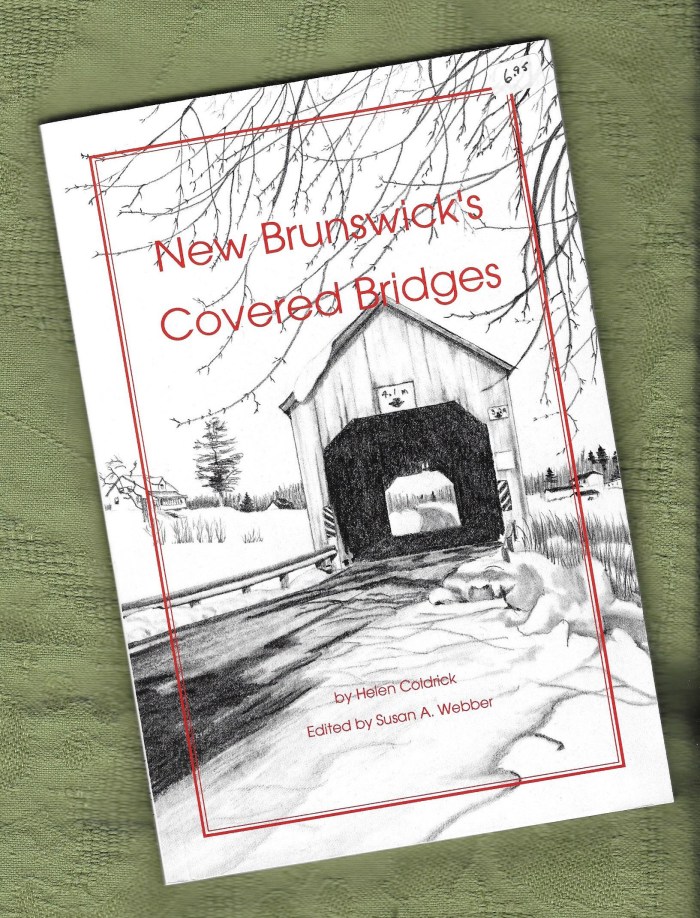
on my bookshelf: New Brunswick’s Covered Bridges by Helen Coldrick
~
One of the ‘must haves’ in a collection of books about covered bridges in New Brunswick is Helen Coldrick’s soft cover book New Brunswick’s Covered Bridges. It includes drawings and information on the 70 bridges that existed in 1992. Today there are only 60 covered bridges in New Brunswick and Helen’s book is one way of seeing some of what we are missing.
~
Helen Coldrick. New Brunswick’s Covered Bridges. Neptune Publishing Company Limited: Saint John, 1992.
~
~
In her book, Helen includes 30 of her black and white drawings of various covered bridges and construction features. I love these drawings because I can see the artist’s process in the lines: her way of using shadow and white space, and her approach to portraying the reflections in water. The drawings also show the setting of each bridge and in some cases, the dramatic landscape of the river beneath.
~
Drawings in the book include bridges now lost: the Aaron Clarke Bridge (lost to flooding in 2014) and Iroquois River #4 (no longer standing). The book also includes a listing of the covered bridges in New Brunswick in 1992. I think one of the values of the book is its snapshot of the situation in years past. The New Brunswick government keeps a list of today’s covered bridges but finding information on those no longer existing is more challenging. Helen’s book shows us what some of these lost bridges looked like and tells some of their stories.
~
New Brunswick’s Covered Bridges includes a general history of covered bridges in New Brunswick, and a description of covered bridges by county. The book also includes lots of information on bridge construction, including pages on trusses, abutments, bases, sidings, entrances, windows and walkways, and roofs.
~
New Brunswick’s Covered Bridges is available for $7.95 from Nimbus Publishing (www.nimbus.ca). If you are interested in New Brunswick, covered bridges, history or architecture, or if you just like books with lovely drawings, this would be a great addition to your library!
~
~
Copyright Jane Tims 2016
.
one room schools – distractions on the way to school
I am thinking about the ways landscape would have influenced the day at a one room school in New Brunswick one hundred years ago. As we drove some of the back roads in the Stanley area this past weekend, I tried to think like a child on the way to school. So many distractions!
~
~
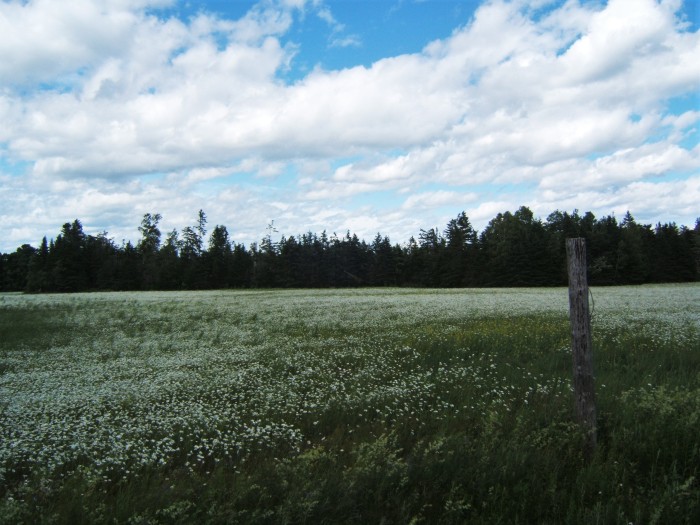
First, the views. Fields green with new corn, yellow with buttercups, winter-white with daisies …
~
~
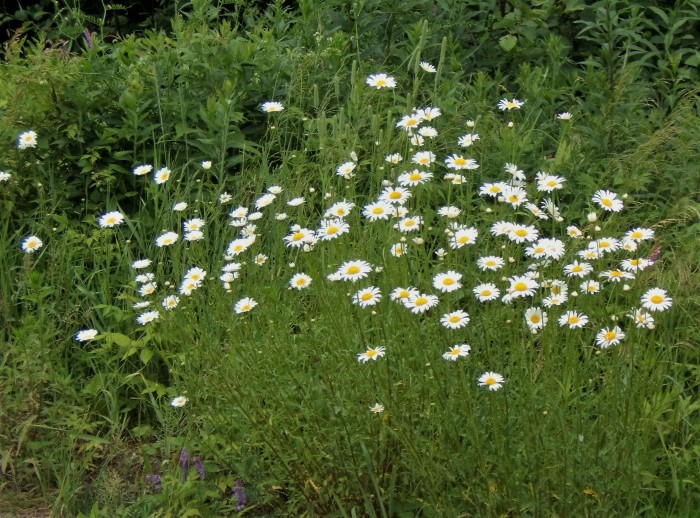
And daisies to pick, perhaps a bouquet for a favorite teacher …
~
~
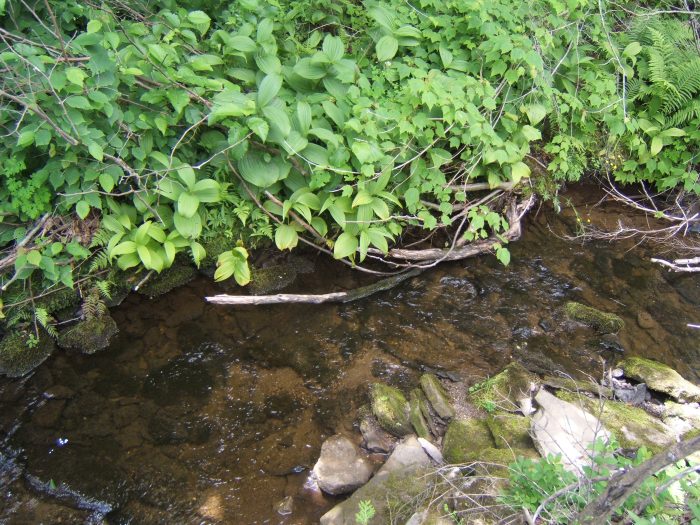
Brooks to cross, and the lure of watching for fingerlings in the clear water …
~
~
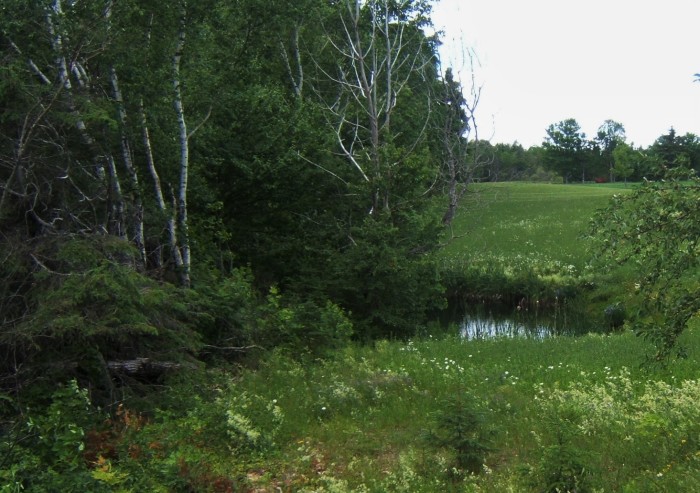
And a farmer’s pond, with ducks to watch, fish to feed, frogs to hunt and cat-tails …
~
~
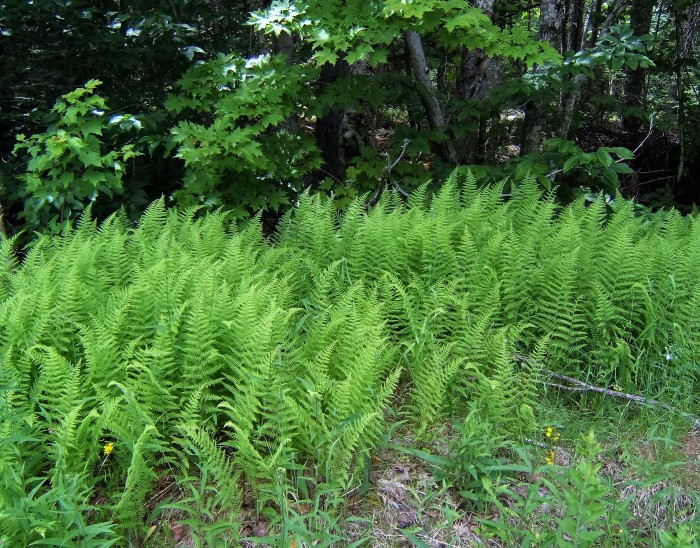
Hillsides of fragrant hay-scented fern to roll in …
~
~
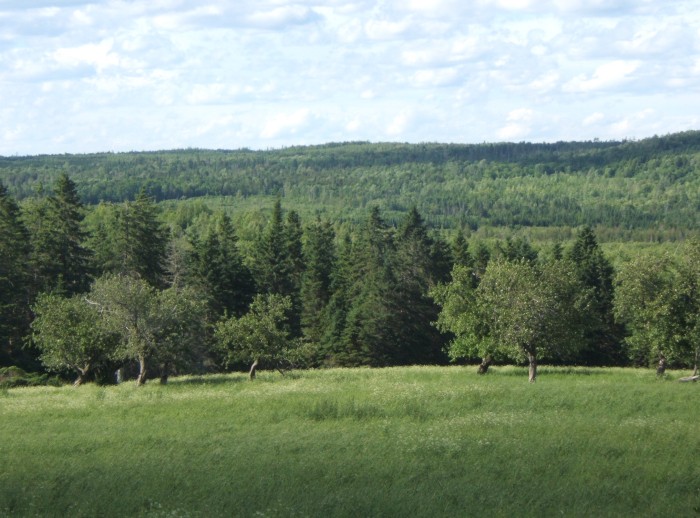
Orchards to play in and ripe fruit to gather …
~
It makes me wonder how anyone ever made it to school.
~
Copyright Jane Tims 2016
Arbour Day in New Brunswick – 1888
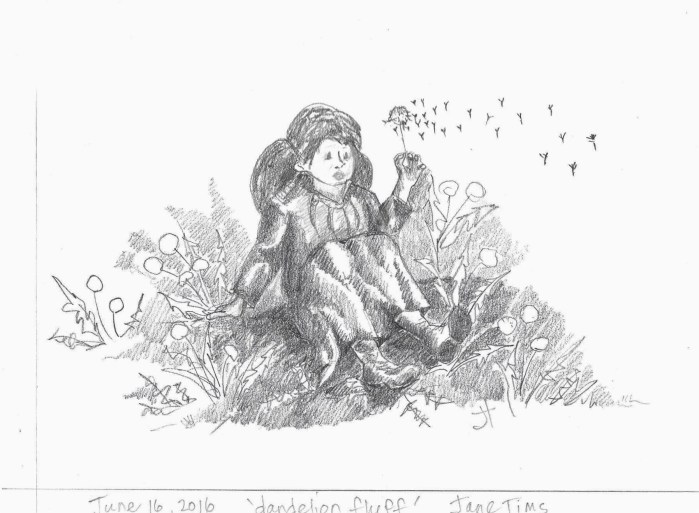
In a previous post, I wrote about the importance of trees in the school yard and the celebration of Arbour Day in schools in Nova Scotia during the early 1900s. One room schools in New Brunswick also celebrated Arbour Day.
~
The 1888 Annual Report of the Schools of New Brunswick, by the Chief Superintendent of Education, reports on 1888 Arbour Day celebrations in New Brunswick, years before the first official Arbour Day in Ontario, Canada (1906). The purpose of Arbour Day celebrations in the school was:
~
to encourage the improvement and ornamentation of school grounds and thereby of cultivating on the part of pupils habits of neatness and order, and a taste for the beautiful in nature …
~
In 1888 New Brunswick schools celebrated Arbour Day on May 18. In the whole province, students planted 6,571 trees, 650 shrubs and 393 flower beds!
~
~
Copyright Jane Tims 2016
early schools – the autograph book
A tradition in schools before the 1960s was the autograph book. I had one of these books in the 1960s, but although I collected some autographs, it was considered a quaint activity.
~
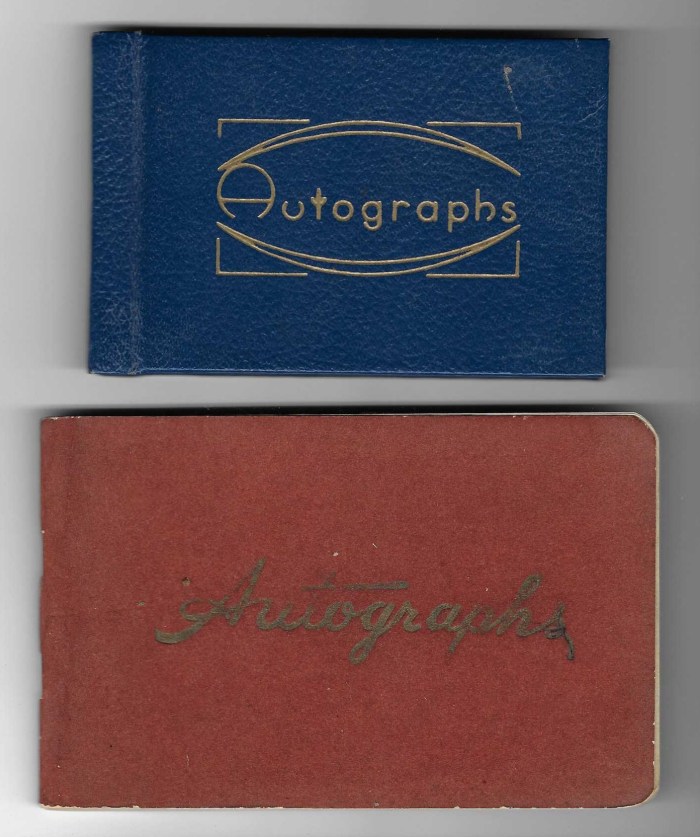
two of Jane Margaret Norman’s autograph albums
~
Both my mother and my aunt had autograph books in the 1940s and 1950s. One of my aunt’s albums was from her students when she taught in a one room school.
I also have my great-grandmother’s autograph album with messages from 1885 to 1914. Her name was Mary Jane (Johnson) Clarke. Her daughters (including my grand-mother) wrote in the album in the later years.
~

Mary Jane Johnson Clarke’s autograph album from the 1880s
~
These books are small, rectangular in shape. The covers are heavy stock paper, sometimes flocked. The older albums have embossed leather covers. The albums range in size from about 3″ by 5″ to 7 3/4″ by 4 3/4″ (the oldest books are the largest). Each page of the book held one autograph: the date, a message, saying or poem, perhaps an address and a signature. Males as well as females wrote in the albums. The albums from the 1940s and 1950s have variously coloured pages in now-faded pink, yellow and blue. The pages in my great-grandmother’s album are beige and white.
~
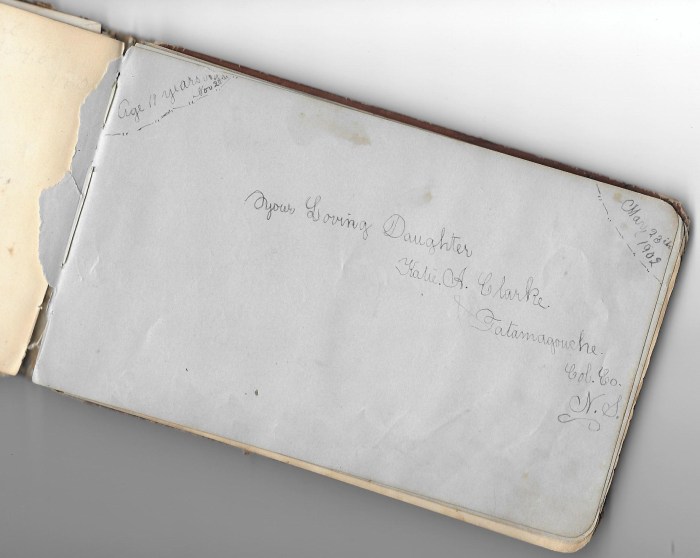
my grandmother’s autograph in my great-grandmother’s autograph album
~
Some of the messages offer serious advice for a good life:
Life is like a mirror
Reflecting what you do
And when you face it smiling
It smiles right back at you
~
Some messages are amusing or even politically incorrect. One from 1947 shows a disturbing flippancy about marital violence:
~
When your husband at you flings
Knives and forks and other things
Seek revenge and seek it soon
In the handle of a broom
~
Some messages are just funny, and seem almost modern:

Great-Aunt Laura Clarke’s autograph in my Great-Grandmother’s autograph album in 1909
~
Since my focus in my ‘old schools’ project will be on the school in the context of the landscape, I was pleased to find one or two messages about landscape!
~
When hills and dales divide us
And distance is our lot
Just cultivate the little flower
That is called forget-me-not
~
And:
~
I’m glad the sky is painted blue
And the earth is painted green
And such a lot of nice fresh air
Is sandwiched in between
~

June 8 2016 ‘the autograph’ Jane Tims (Is she writing the autograph for her friend or her doll?)
~
Did you ever have an autograph album? Do you remember any of the verses people wrote?
~
Copyright 2016 JaneTims




 nichepoetryandprose