Posts Tagged ‘covered bridge’
in the shelter of the covered bridge – the record we leave
The Odellach River #2 Covered Bridge (Tomlinson Mill), built in 1918, is the only covered bridge remaining in Victoria County, New Brunswick.
~
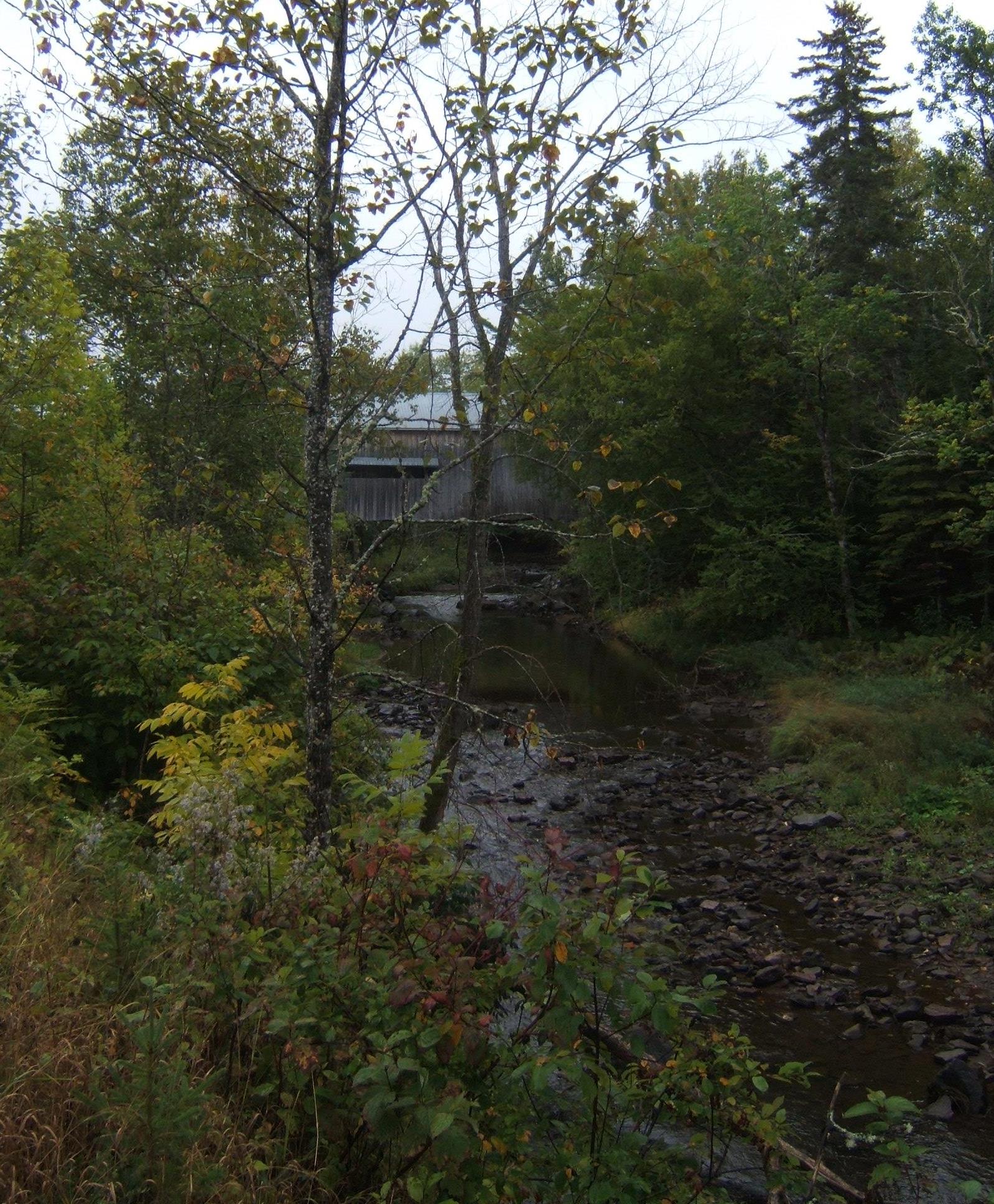
Odellach River #2 Covered Bridge, Victoria County, New Brunswick
~
It is a charming bridge, with a long roofed window on one side.
~

long window in Odellach River #2
~
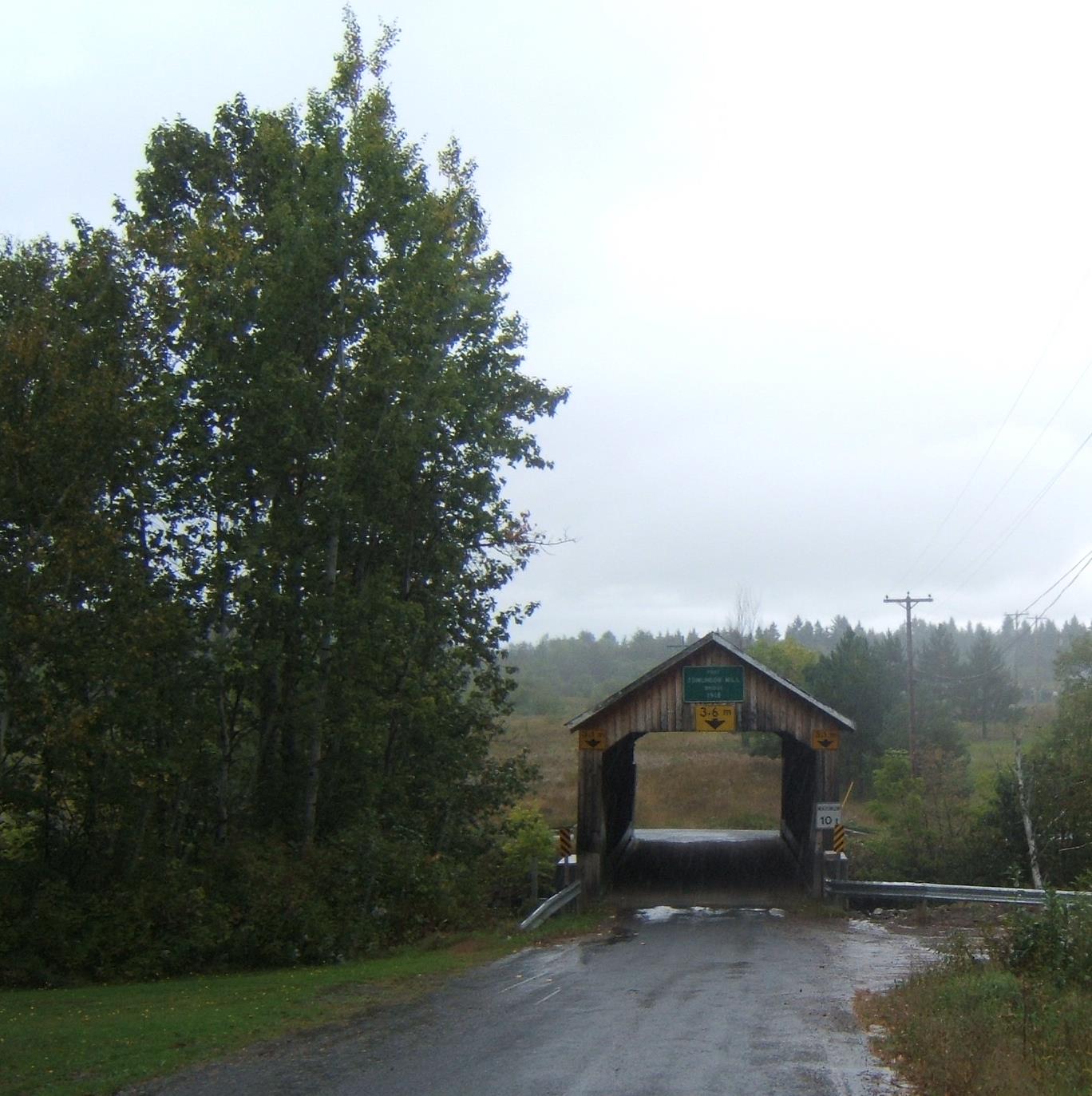
Odellach River #2 Covered Bridge, Victoria County, New Brunswick
~
The sound of the nearby mill is part of the personality of the bridge. A small distance away are the foundations for an old water mill.
~
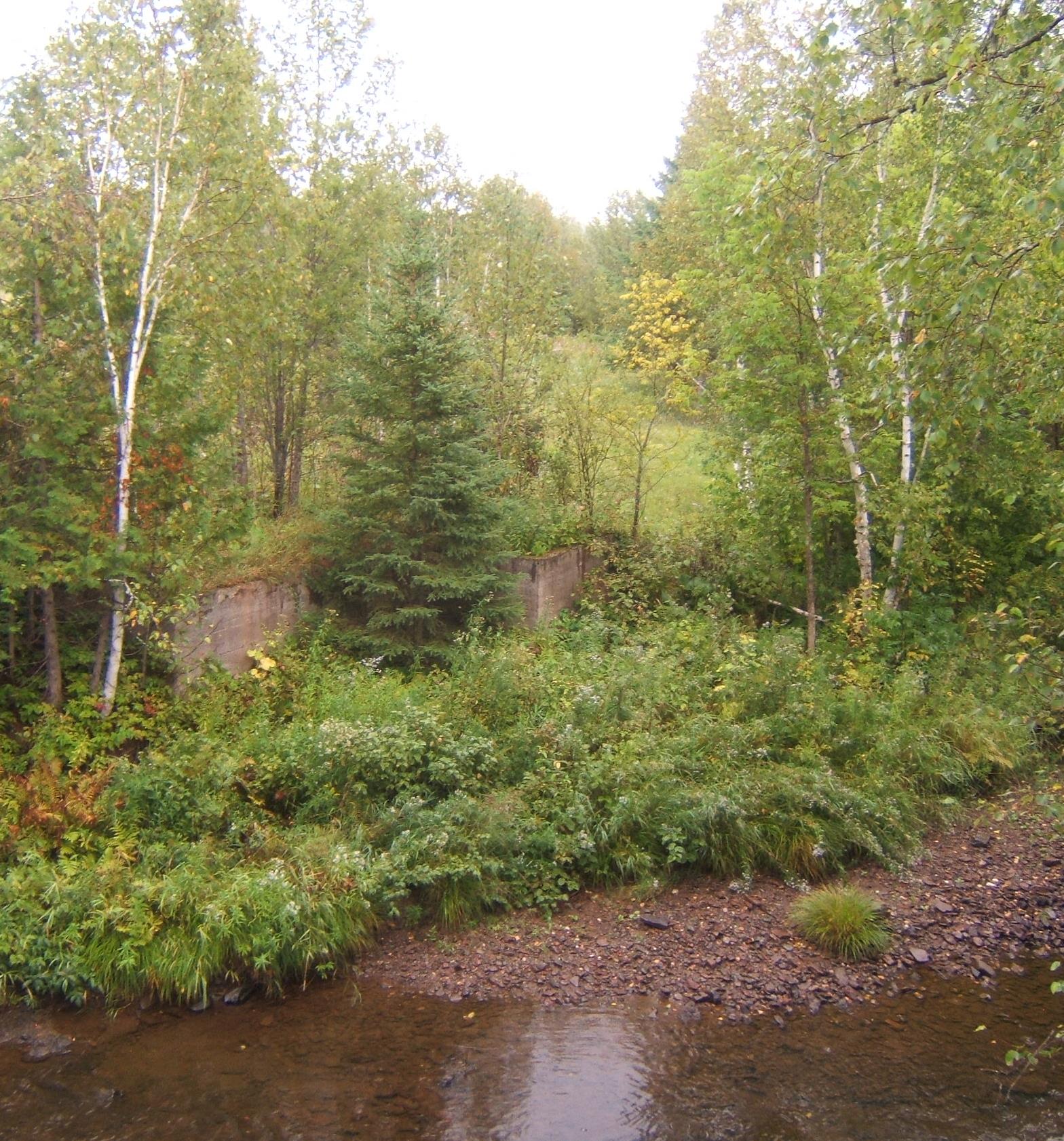
old mill foundation – Odellach River #2 Covered Bridge
~
Every covered bridge has a record of people who have visited. Some carve initials, some make brief statements, some draw. I know from finding my own initials 20 years after I left them, that these records persist.
~

CT in the Odellach River #2 Covered Bridge
~

CT and RF in the Odellach River #2 Bridge
~
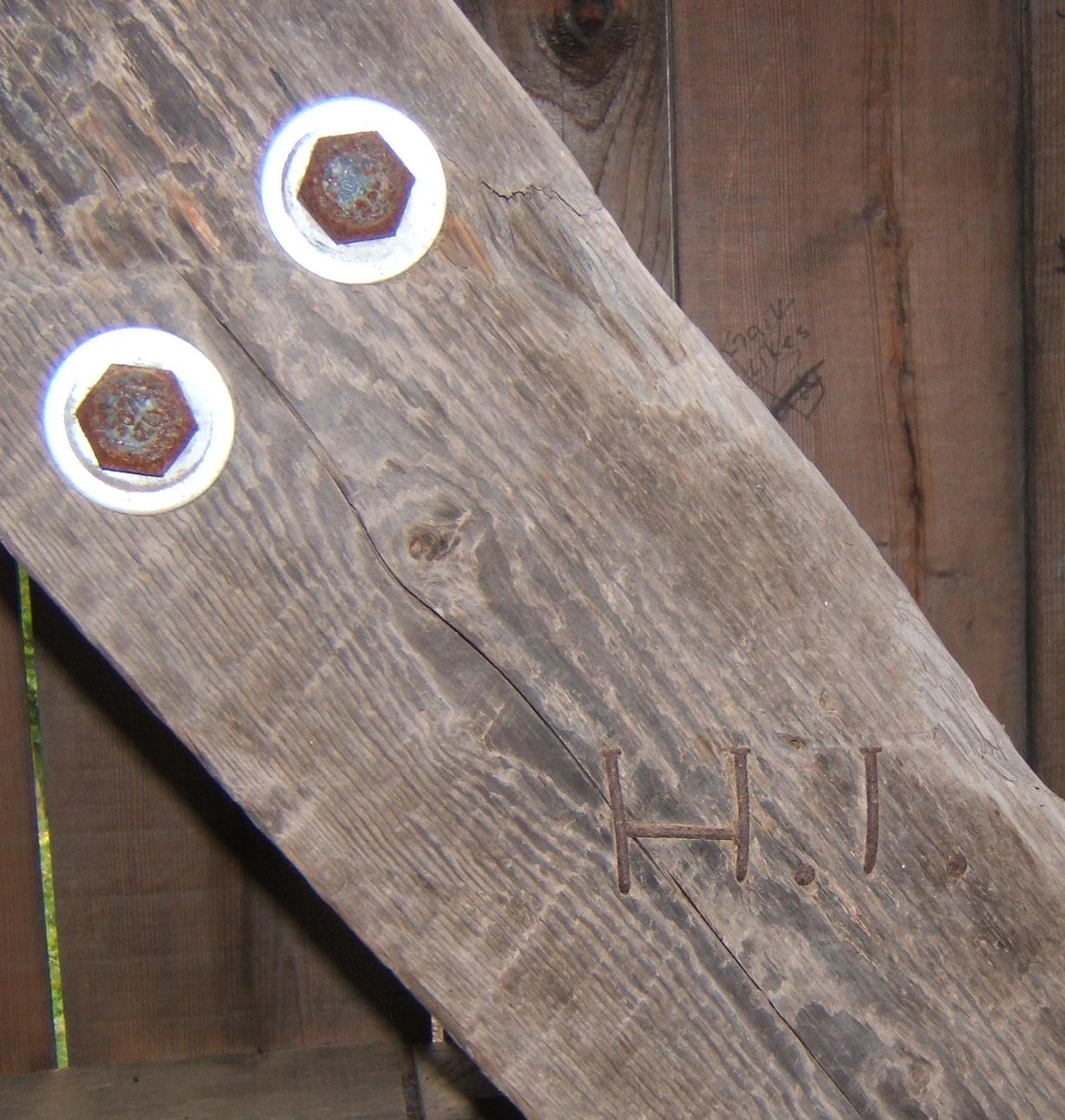
initials made with nails in the Odellach River #2 Covered Bridge
~

how was the summer ‘orange’ ? … who was Laurel?
~

who were the ‘Hillbilly Bikrs’ ?
~

graffiti, names and initials left on a wall of the Odellach River #2 Covered Bridge
~
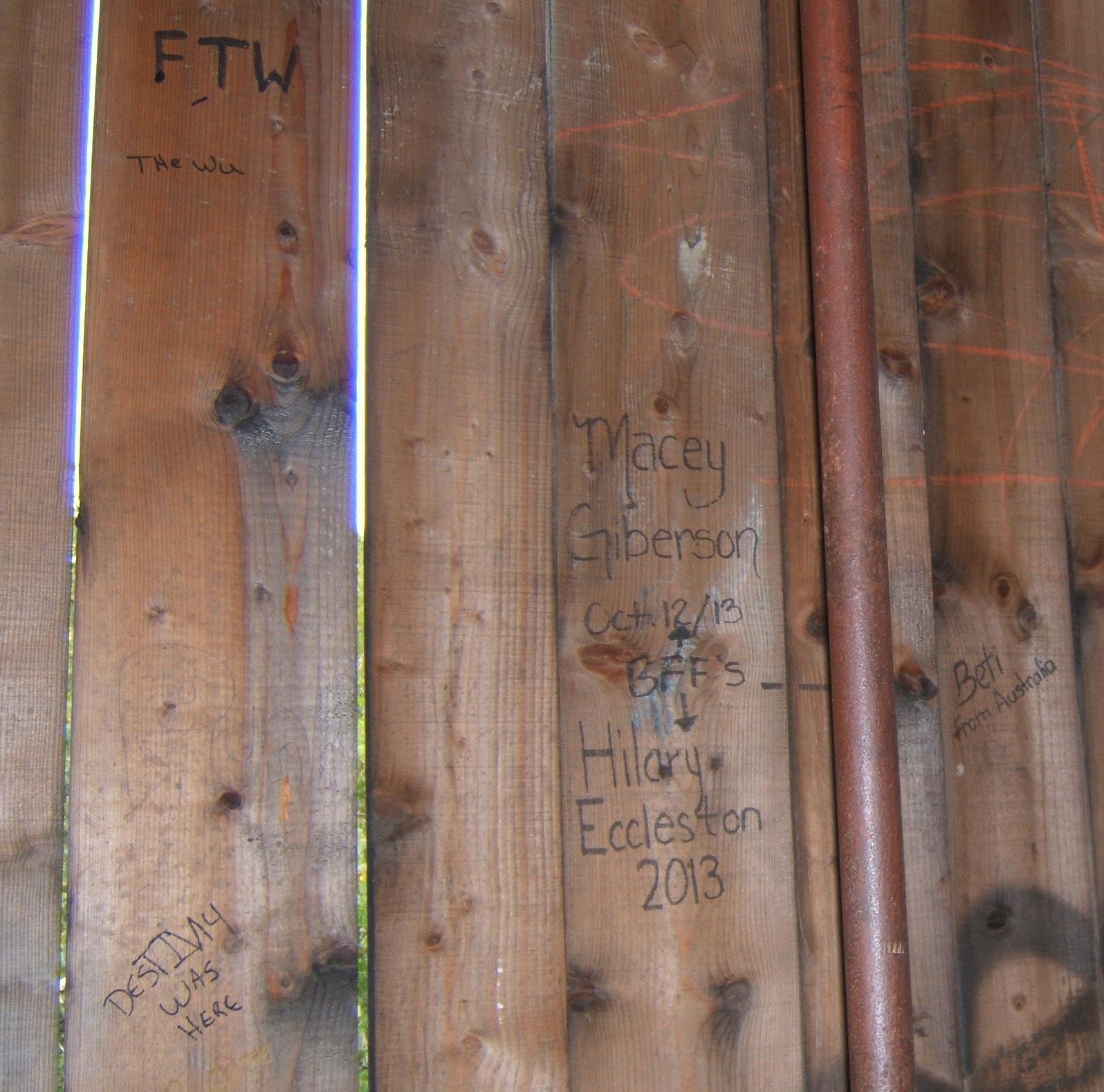
Beti from Australia … Hilary and Macey were BFFs … Destiny was here … FTW – ‘the Wu’
~

some of the inner structure of the Odellach River #2 Covered Bridge, Victoria County, New Brunswick
~
Have you ever left your initials or a message for others to find?
~
Copyright 2015 Jane Tims
in the shelter of the covered bridge – update
Although my blog has been a bit silent this fall, I have been working! Among other projects, I am making great progress on my poetry manuscript ‘in the shelter of the covered bridge’.
~

~
To provide experiences and inventory the plants and animals living in and around covered bridges in the province, my husband and I have visited 28 covered bridges in the drainage basin of the Saint John River and 5 covered bridges in Charlotte and Westmorland Counties. I have a few more bridges to visit, but to give a little seasonal diversity to my project, I’ll travel to these in early winter.
~

Reading at WordsFall 2015, an annual event of the New Brunswick Writers’ Federation (photo by WFNB)
~
As a result of these bridge visits, I’ve written 60 poems. I read five of these last weekend at two writers’ events: WordsFall (Writers’ Federation of New Brunswick http://wfnb.ca/ ) and Odd Sundays (a monthly Fredericton reading event). The poems include the results of my work on different poetic forms – in the manuscript I have examples of the sonnet, ghazal, haiku, tanka and villanelle.
~
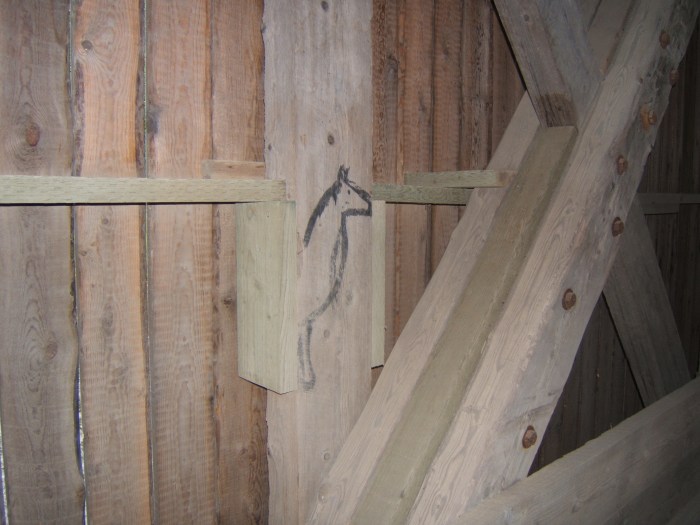
black horse painted in the Quisibis River Covered Bridge (Pont Lavoie)
~
As I develop the manuscript, and to help organize the poems, I have sorted them into categories:
- gaps between boards (deterioration and loss)
- liminal, shore to shore (transitions)
- grit of a blade (carvings and history)
- notch of a lily pad (habitat)
- a blade of grass between thumbs (mystery)
- heads of timothy (miscellaneous)
- a loose board rattles (sounds)
~
Writing these poems has given me a glimpse into the living world of the covered bridge. We may cross a bridge daily but it takes a little time to know a bridge and discover the life there. Most of the animals living in or around a covered bridge are timid or hidden, and avoid human contact. The plants provide the setting for the bridge but there is a pattern to the places they grow and some will only be seen if visitors to the bridge slow down. And carved in the beams are the stories of the humans who have been part of the history of the covered bridge.
~

Baker Brook #2 Covered Bridge – a deer and a crow are watching us from the hay field
~
Copyright 2015 Jane Tims
in the shelter of the covered bridge – a puzzle
Most covered bridges in new Brunswick have some unique feature that makes them memorable, distinct from all other covered bridges. Sometimes this is because of a puzzle. Why, for example, are ropes and chains hung from the rafters of a covered bridge?
~
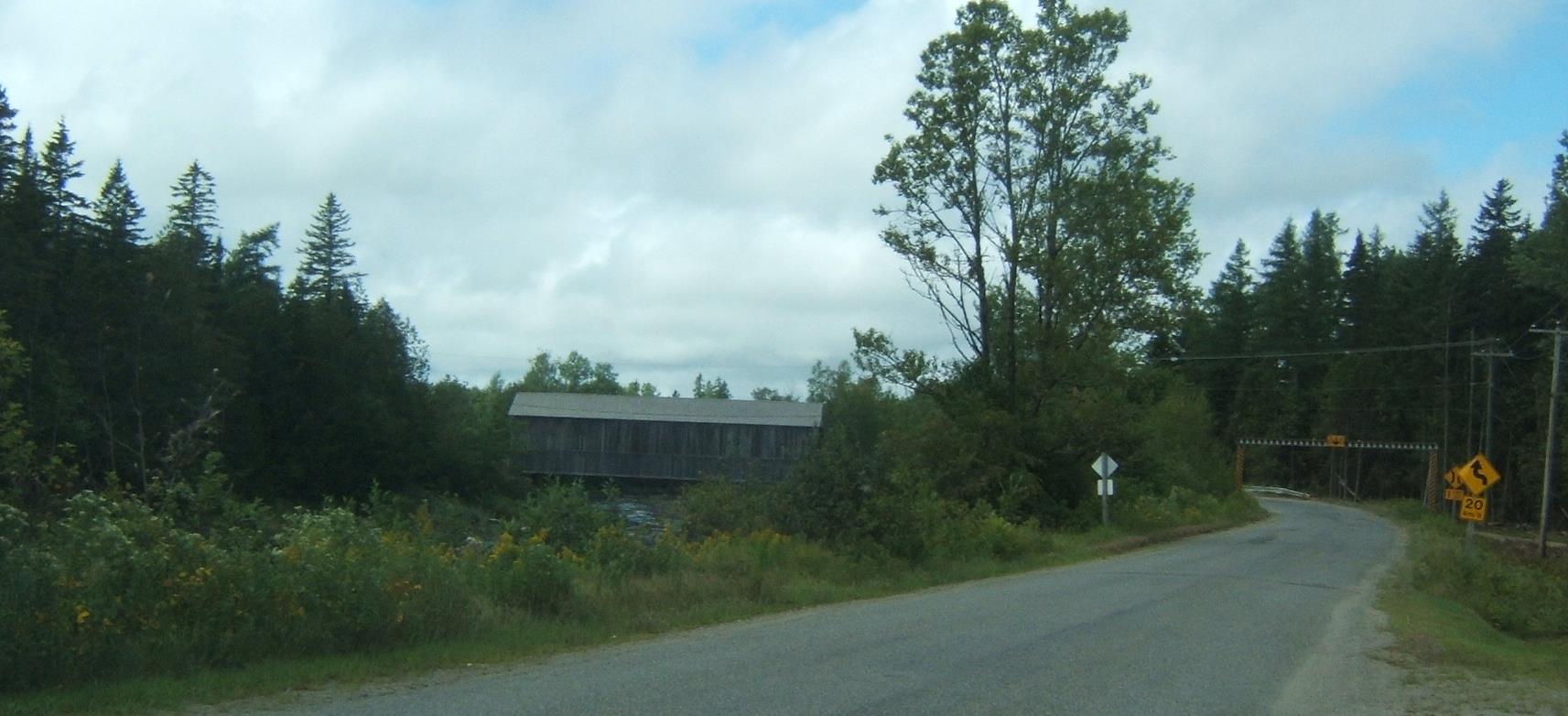
Digdeguash #4, McCann Covered Bridge in New Brunswick. 2015
~
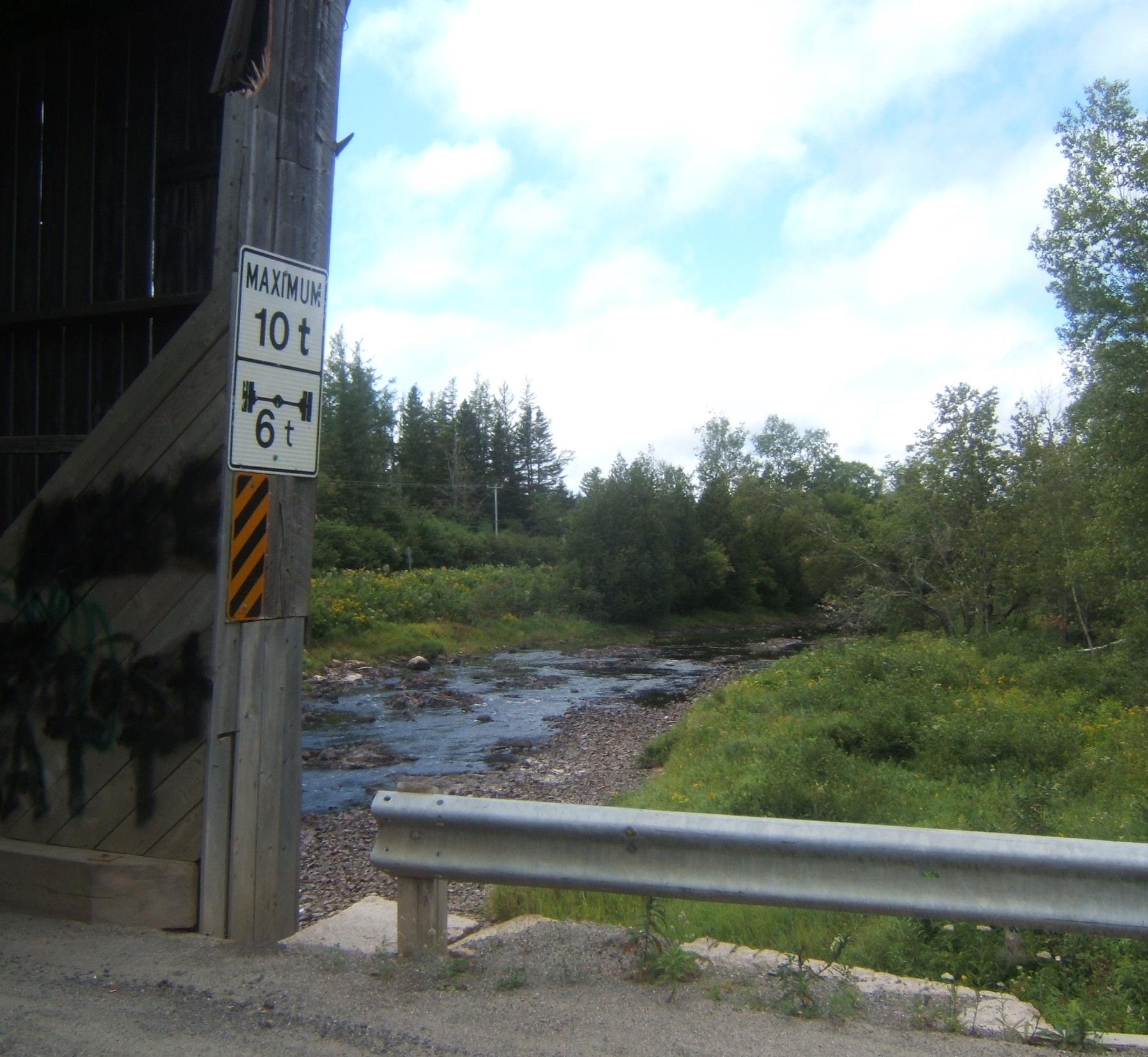
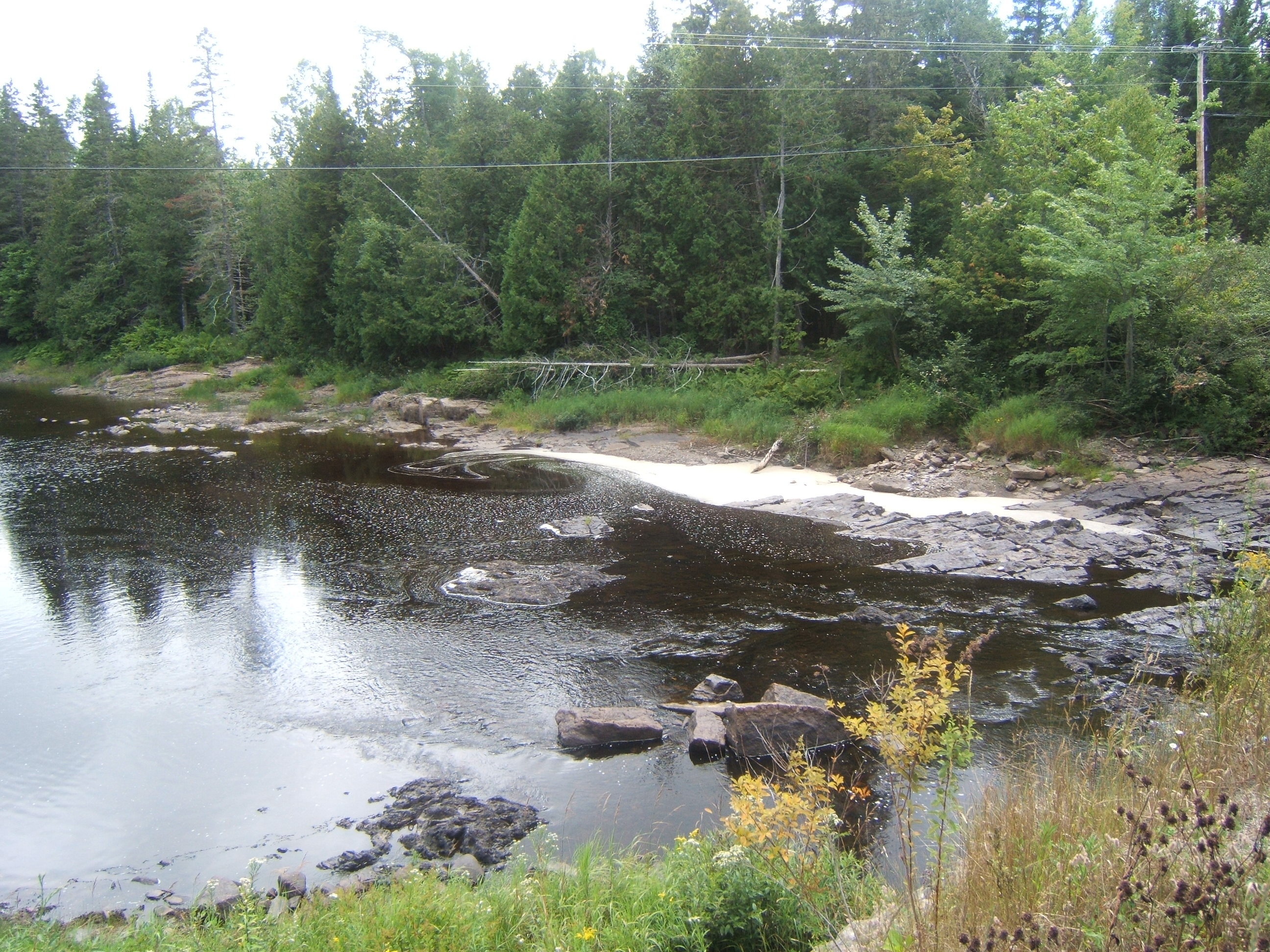
At the end of August, we travelled to some of the covered bridges in Charlotte County. One of these was Digdeguash River #4, the McCann Covered Bridge near Rollingdam. The bridge was built in 1938. On the day we visited, the water was very low, so we could see the ‘bones’ of the Digdeguash River. The bridge walls and beams were covered with names of people, done in knife and pencil and pen, felt marker and paint. The air was thick with the whirr of cicadas.
~
~
~
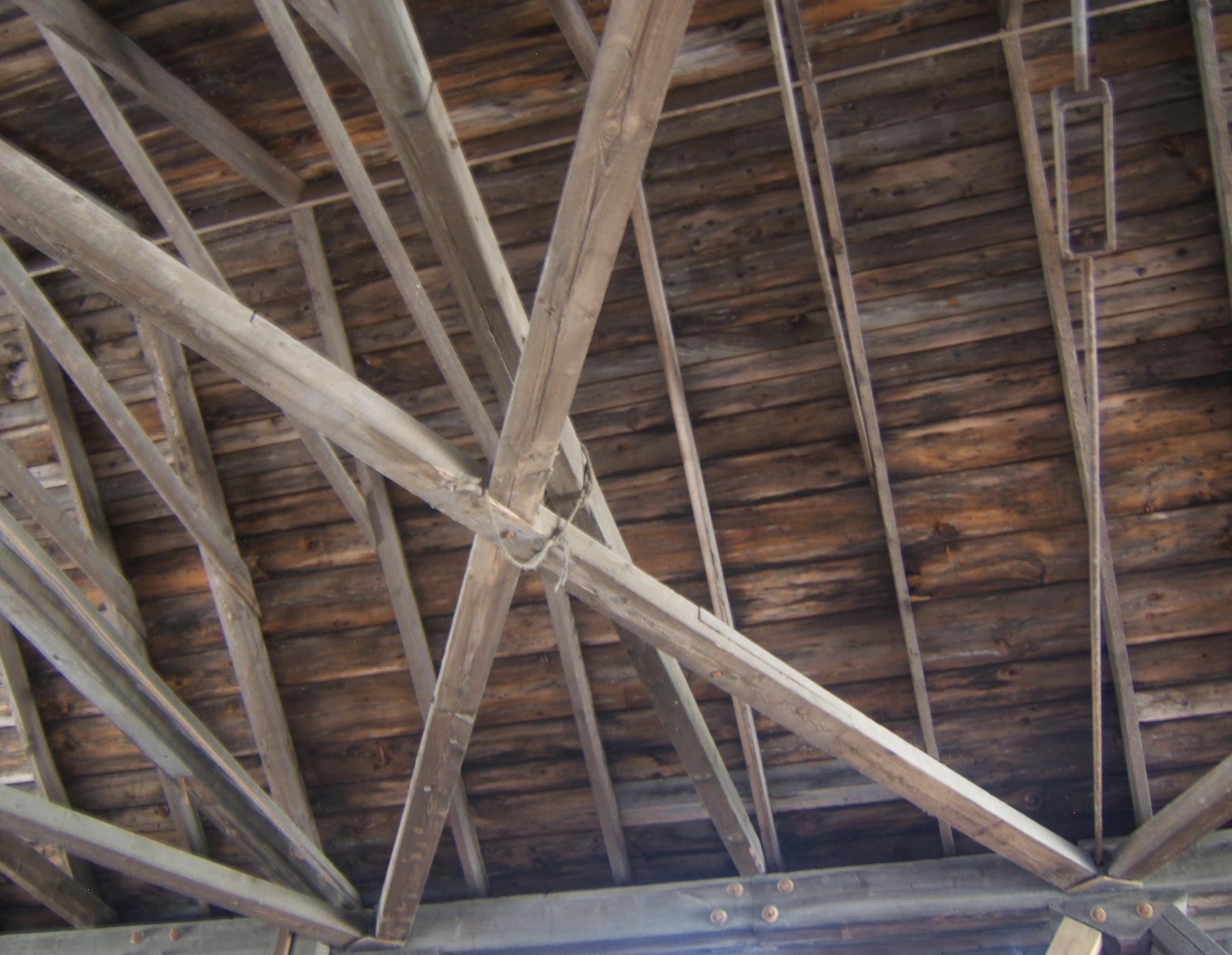
In the rafters of the bridge thick ropes, now frayed, had been hung from the cross beams. There was also a chain hung from one rafter and a piece of steel cable from another. We discussed possible reasons for these, but didn’t have a chance to talk to any local people who may have known the true reason.
~
~
This is my list of possibilities (some more sad, ridiculous or unlikely than others):
- a rope swing inside the bridge after midnight
- a suicide pact
- a hanging
- ghosts and ghouls strung from rafters at Halloween
- a challenge – a timed climb of a knotted rope
- a hammock slung, a cool snooze to the trill of cicadas
- a banner draped by a graduating class
- a way to right a truck’s load after striking the top of the bridge
~
What do you think might be the reason for the ropes and cable and chains?
~

~
Copyright 2015 Jane Tims
in the shelter of the covered bridge – a narrow bridge
On our drive last weekend, we visited three covered bridges.
Usually our visits last at least an hour. At each bridge, we:
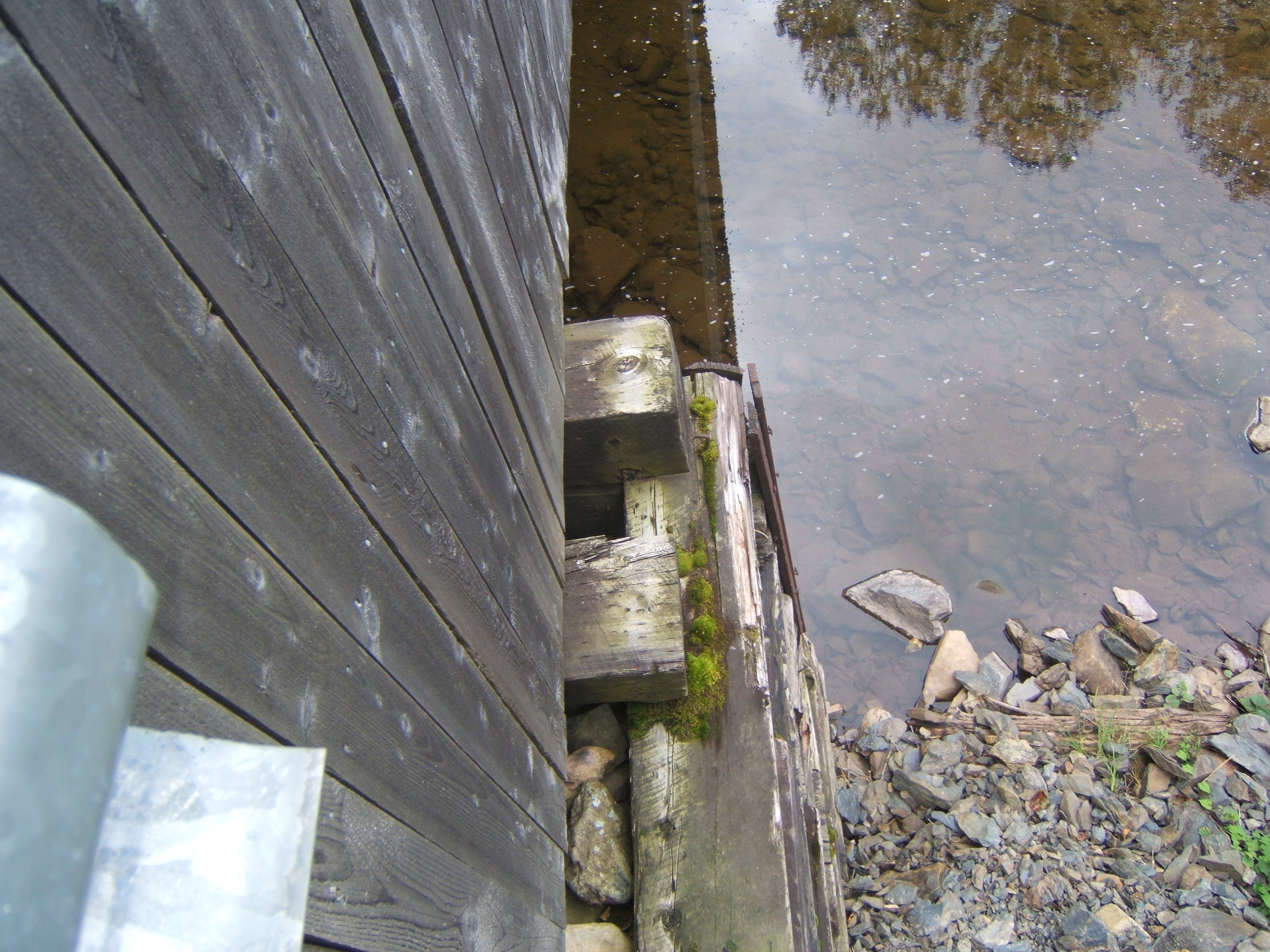
- get a good look at the abutments beneath the bridge
- watch and listen for birds
- identify the trees near the bridge and any wild plants in the vicinity
- photograph the covered bridge and any interesting architectural elements
- take notes about the state of the bridge, any new construction and the condition and covering of the roof
- look for animal tracks, holes made by woodpeckers, birds nests, spider webs and feathers
- record any notations in the bridge – carvings, chalk, felt marker, pencil, pen and paint
- make a list of the sounds I hear and try to absorb the ‘feeling’ each bridge evokes.
~
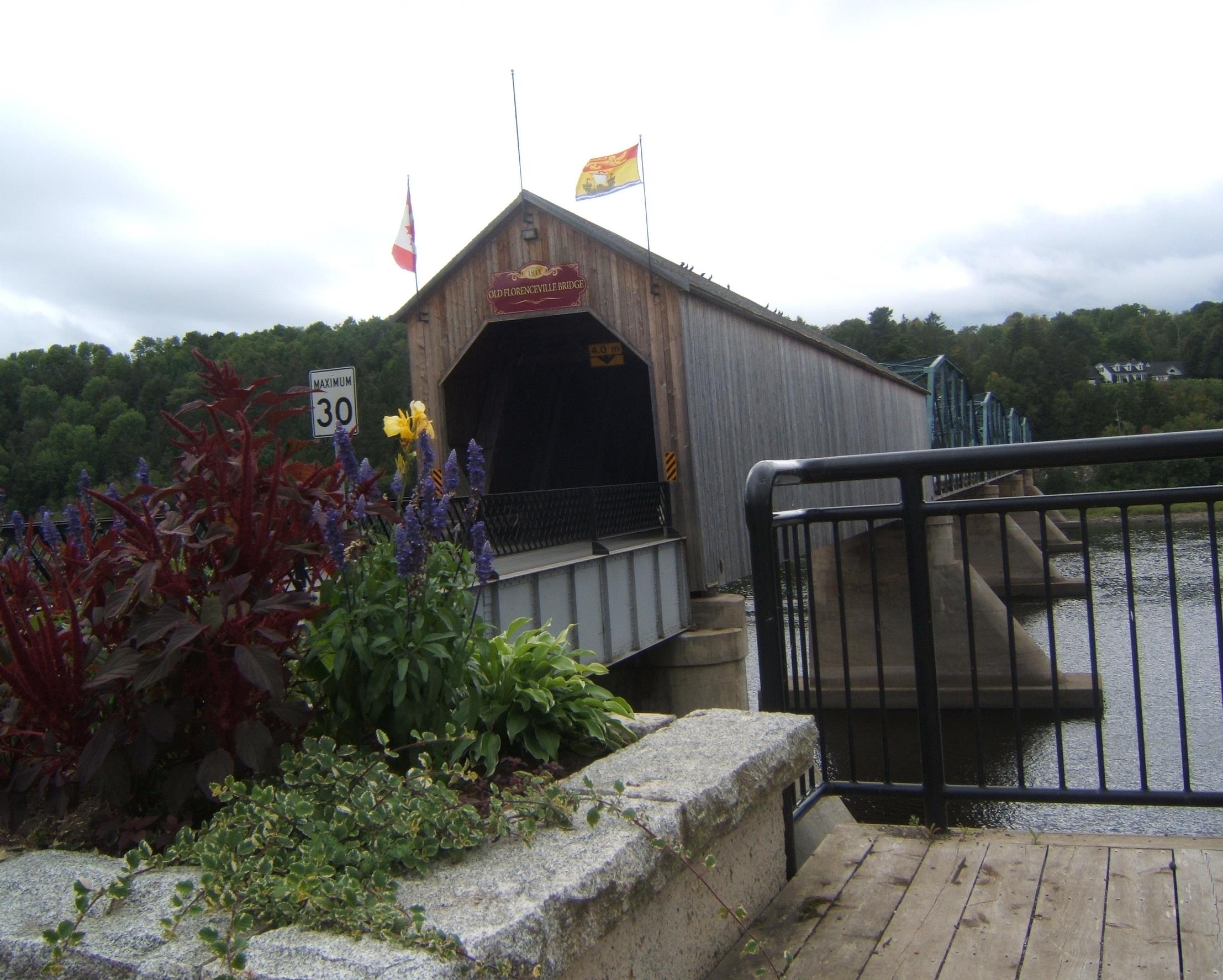
Florenceville Bridge, New Brunswick
~
I knew ahead of time, the Florenceville Bridge across the St. John River would be a different experience. Walking the bridge would be unlikely – there is no pedestrian walkway, the traffic is quite heavy and the bridge is narrow. I did cross the bridge in our truck, a harrowing adventure since the bridge traffic is two-way. Cars slow down when they meet, but the locals are seasoned to the width and scary-brave.
~

a red truck and a white truck meet and pass on the narrow bridge
~
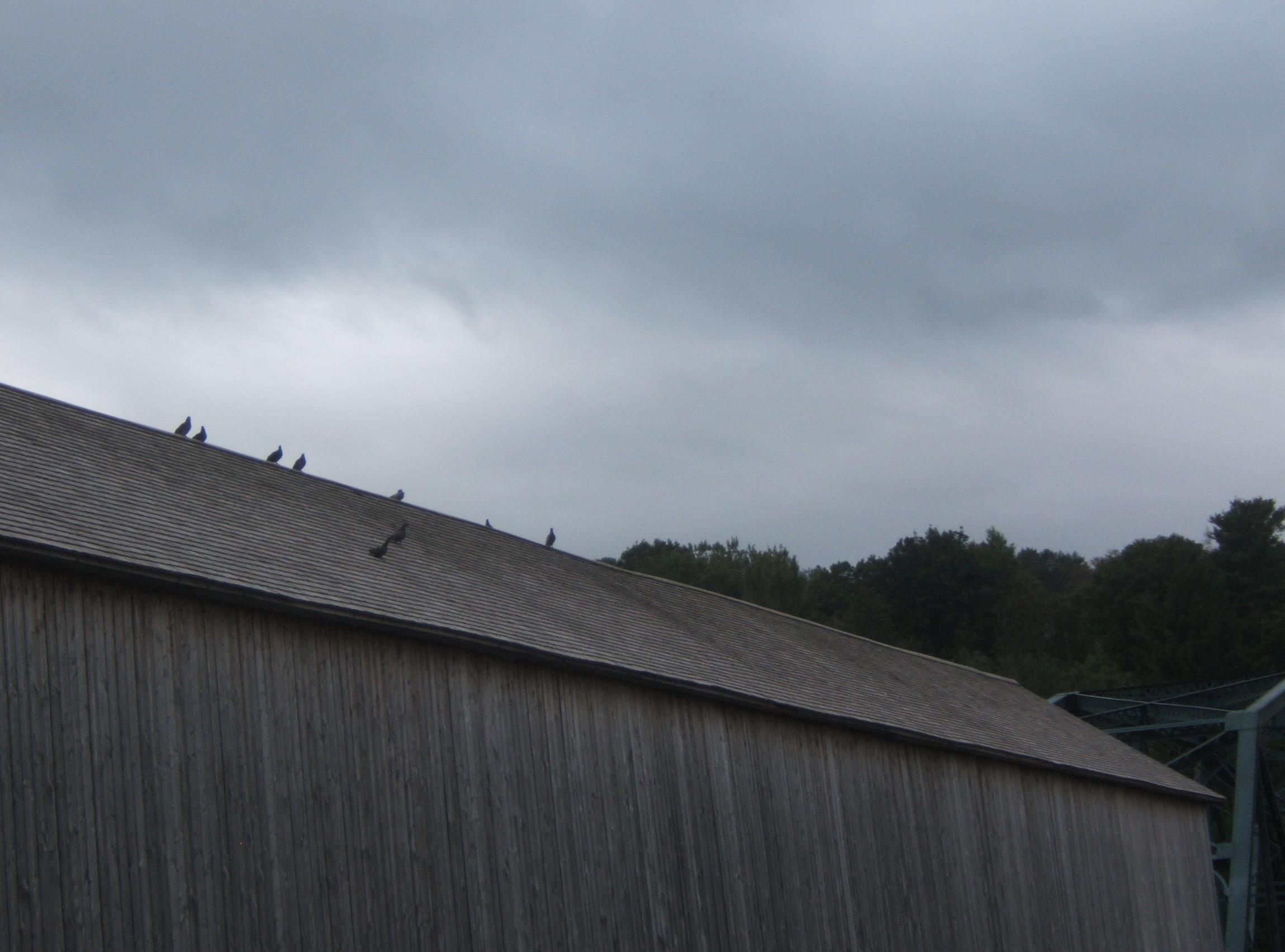
Only one span of the Florenceville Bridge is covered (built in 1907) and this is very well maintained. The other four spans are steel trusses. The pigeons perching on the roof of the bridge are its most obvious wild life.
~
~
~
keeping watch
(Florenceville Bridge)
~
fifteen pigeons swim through air
fill gaps on the ridge line
~
perch on the shingled roof
scrutinize the traffic
the squeeze of half-tons
on the bridge
the kiss of mirrors
~
pigeons quit the ridge, glide
to the shingled shore
~
river winds shiver
hawkweed and sumac, displace
blankets of wild cucumber, billow
the skirts and Tilley
hats of tourists
~

~
Copyright 2015 Jane Tims
in the shelter of the covered bridge – a ghazal
Yesterday, we drove to see a few bridges in north-western New Brunswick. One of these was the North Becaguimec River #4 (Ellis Covered Bridge) in Carleton County.
~
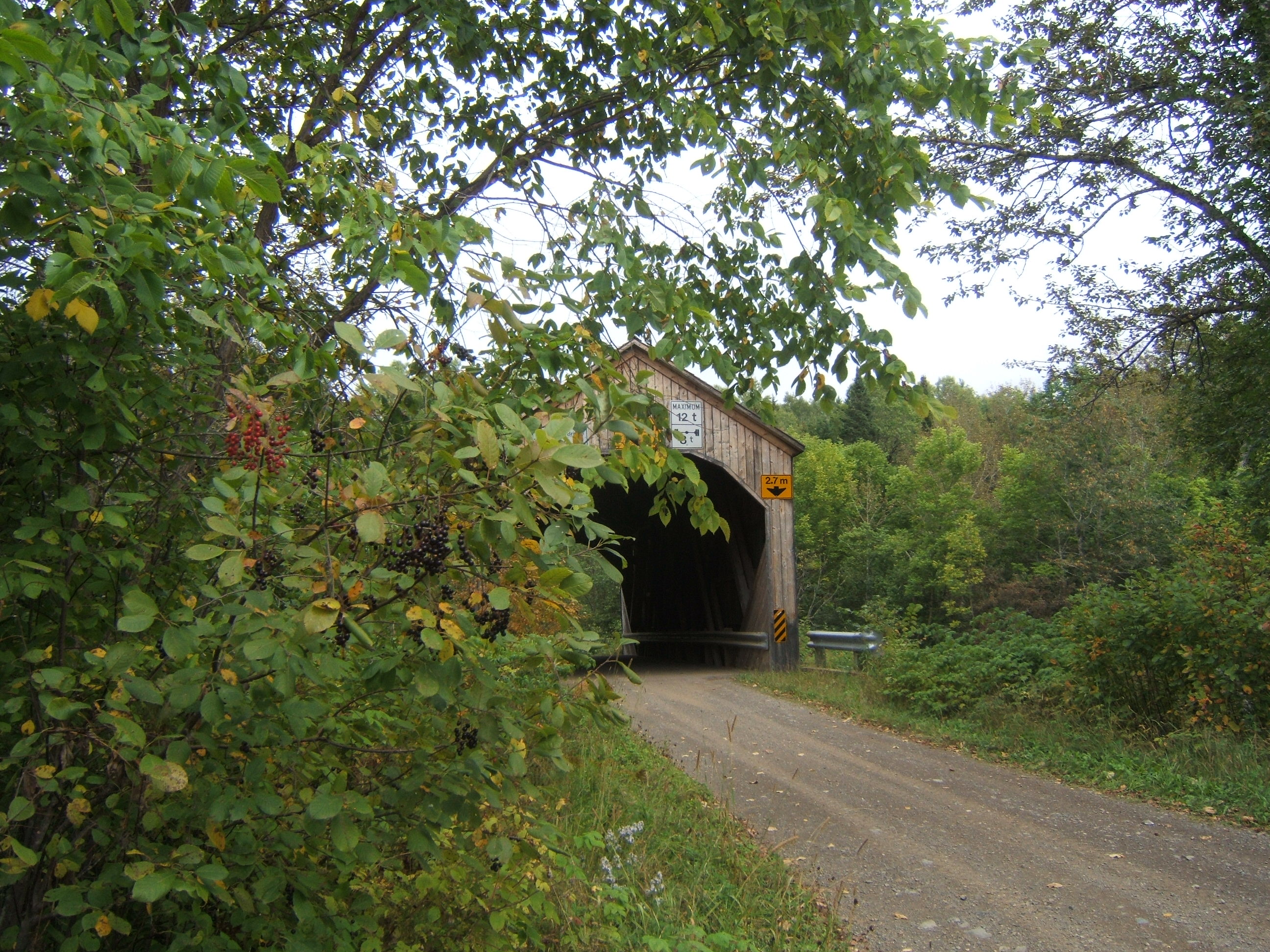
the North Becaguimec River #4 (Ellis Covered Bridge) in Carleton County (Sept 2015)
~
The bridge was built in 1909 and is 18.3 meters long. It shows lots of recent maintenance, including a shingled roof and new timbers and boards in the roof area.
~
The late summer season dominates the atmosphere of the bridges we are visiting. At this bridge, the choke cherries are black, the purple asters are the dominant flower and clematis has set its fuzzy balls of seed.
~

the North Becaguimec River
~
The North Becaguimec is a rocky brook, very shallow after a dry summer.
~
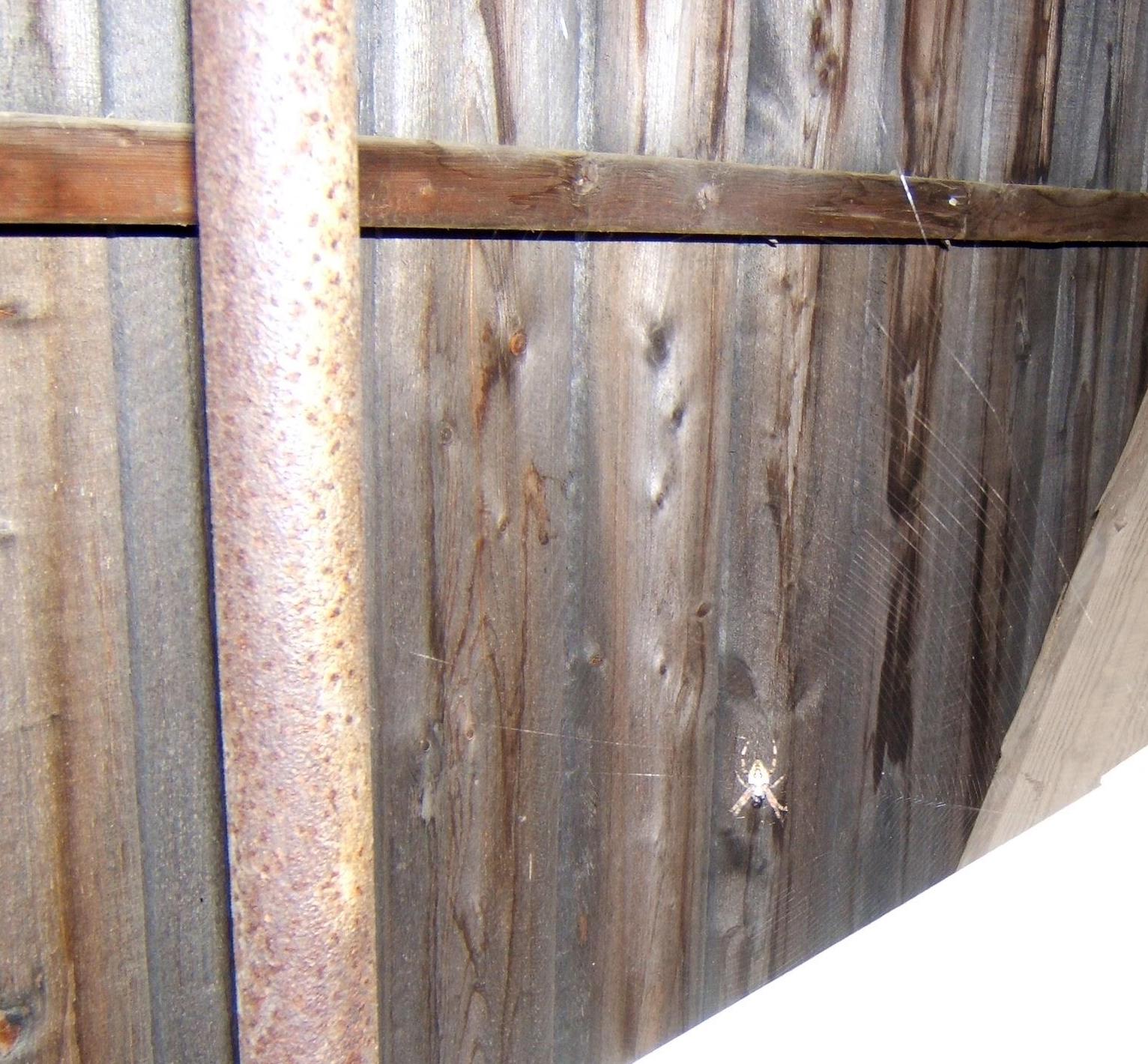
Although there are usually lots of spider webs in a covered bridge, this was the first time I saw a spider. The spider was still and stubborn, not moving for me or my camera.
~
~
As I have said before, in making my manuscript of poems about plants and animals living in the shelter of the covered bridge, I have been trying some different poetic forms. This is my first ghazal.
~
Ghazals are meant to tell of the pain of loss and the triumph of love in spite of loss. A ghazal consists of 5-15 couplets. The second line of each couplet repeats a refrain established in the first couplet. The poem can follow any meter but the meter must stay consistent in every line of the poem.
~
~
the spider waits
~
North Becaguimec River #4 (Ellis Covered Bridge)
~
in the covered bridge a spider weaves and sets its bait
between the beams, and confident, the spider waits
~
cedar shingles, boards replaced and rafters new
but traffic sparse, and in the web the spider waits
~
aster, shepherd’s purse and mullein crowd the road
no risk from the press of tires, and the spider waits
~
after the flood, drifts of birch and maple high
on the river shore, the spider mends its web and waits
~
a skater bug steps and skips on the river’s skin and fears
the water’s dry, and in its web the spider waits
~
on aging crib work velvet moss and lichens grow
landscape formed on rotting wood, and the spider waits
~
years since they wrote their names on the wall of the covered bridge
crickets sing, and in its web the spider waits
~
~
Copyright 2015 Jane Tims
~
in the shelter of the covered bridge – the Canal Bridge twenty three years later
Last Friday we drove to see three covered bridges in Charlotte County, New Brunswick – Canal Covered Bridge, McCann Bridge (Digdeguash River #4) and McGuire Bridge (Digdeguash River #3). My husband, son and I visited two of these in 1992 as part of a project for Canada’s 125th anniversary (see
https://nichepoetryandprose.wordpress.com/2011/09/05/inside-the-covered-bridge/ ).
~
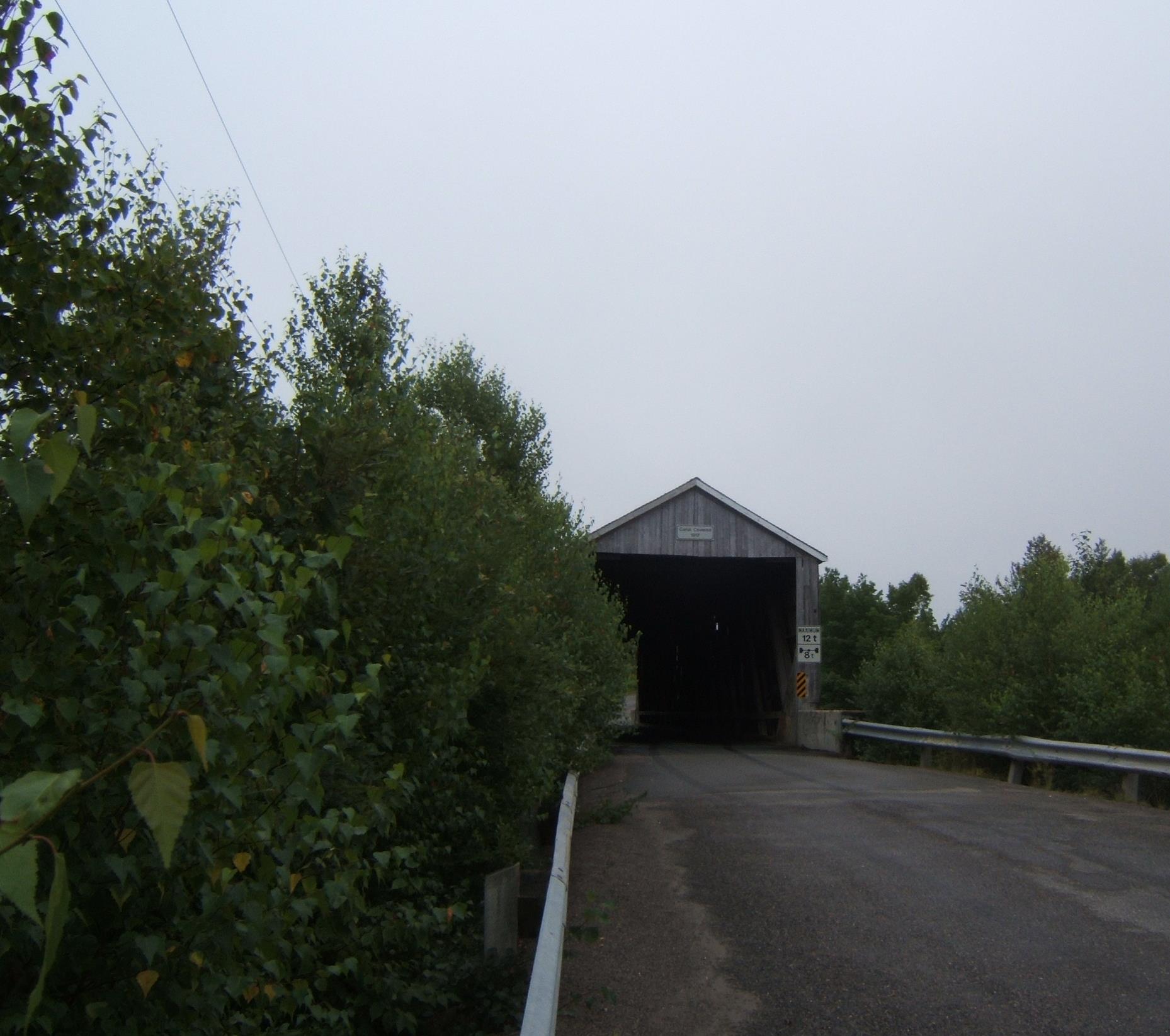
Canal Bridge, Charlotte County, New Brunswick, August 2015
~
The Canal Bridge was built in 1917. It crosses the deep natural canal connecting Lake Utopia with the Magaguadavic River.
~
The Canal is wide and sinuous, unhurried in its flow …
~

~
The water is very low this time of year. The shallow areas are inhabited by water lilies, water shield and pickerel weed …
~

~
Many people have left their initials and messages inside this bridge …
~

~
My husband couldn’t remember if we had visited the Canal Bridge in 1992. But almost immediately he found a small set of initials in black on a board heavily marked by red paint.
~

~
To me, very familiar initials! Back in May of 1992, we had left evidence of our visit. A very emotional experience, seeing our initials more than 23 years later! It was hard to go, knowing I was leaving behind a little bit of my family history.
~
Copyright 2015 Jane Tims
in the shelter of the covered bridge – a villanelle
I have been working at my series of poems on the plants and animals living around covered bridges in New Brunswick. I decided to try a new form (for me) – the villanelle.
~
The villanelle is a structured poem with 19 lines and a prescribed rhyming scheme – A1 b A2 / a b A1 / a b A2/ a b A1/ a b A2 / a b A1 A2 . A famous villanelle is by Dylan Thomas – ‘Do not go gentle into that good night’.
~
The poem below is based on my observations at the Marven Bridge (Belleisle Creek #2) in Kings County, New Brunswick. I have taken liberties with the form, most obviously in using words beginning with the same letter in place of rhyming. I would appreciate any comments, including for improvement of the poem.
~

Marven Bridge, Belleisle Creek #2, in New Brunswick
~
~
wobble
~
Belleisle Creek #2 (Marven Covered Bridge)
~
bridge shudders as we walk
spaces between boards cast light on the floor
photos out of focus, faint tremble
~
cribwork and rafters, new wood
old nails work loose, grey walls frail
bridge shakes as we walk
~
in the rafters, the paper nest of a wasp
in the mud, ephemeral, the tracks of a fox
photos out of focus, faint tremble
~
a blue jay calls thief across brown water
at the shoreline, sensitive fern
bridge shivers as we walk
~
on the ledge, bones, bleached white
skeleton of a bear, backbone and fingers
photos out of focus, faint tremble
~
orange graffiti, letters round and wide
initials carved on the beams are faded
bridge quivers as we walk
photos out of focus, faint tremble
~
~
Copyright Jane Tims 2015
in the shelter of the covered bridge – passage for horses
Why are covered bridges covered? The usual explanation says that a covered bridge lasts longer if the wood is protected from the elements. However there are other explanations.
~
One of these claims the covering of the bridge made it easier to coax horses to cross the river. The horses, accustomed to entering and leaving a barn, would be less alarmed if a bridge was covered.
~
In the early 1900s, when most of the remaining covered bridges in New Brunswick were built, horses were still a common means of conveyance.
~
In my travels to study the plants and animals associated with covered bridges, I have come across three instances of the association between covered bridges and horses.
~
In June, while visiting the Tantramar River #2 (Wheaton Covered Bridge, built in 1916), we saw a team of horses pulling a sight-seeing group across the Tantramar marshes.
~
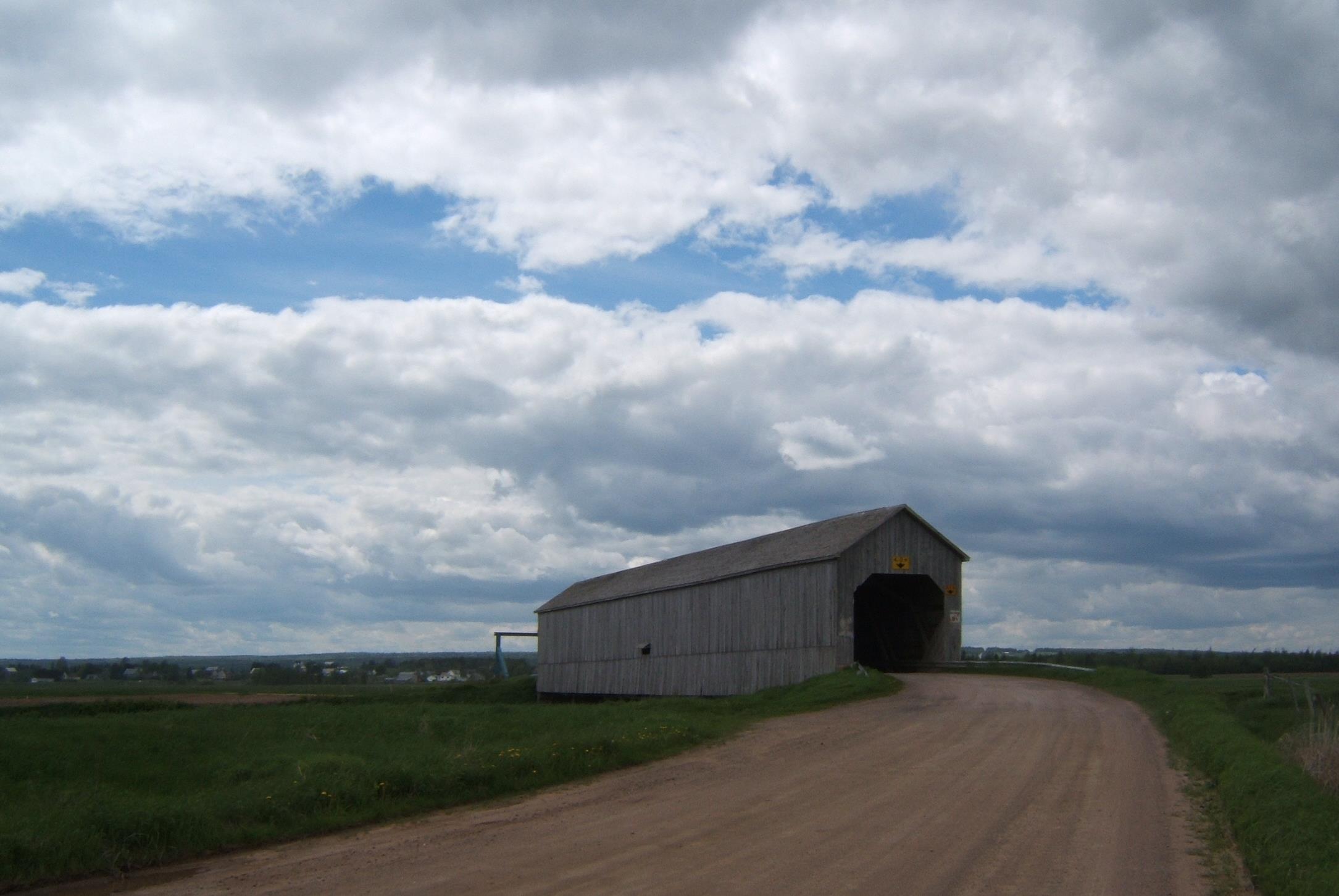
Wheaton Covered Bridge over the Tantramar River in Westmorland County (photo taken June 2015)
~

team of horses drawing a sightseeing wagon near Wheaton Covered Bridge (June 2015)
~
A notation in the Nackawic River #5 (Nackawic Siding Covered Bridge, built in 1927) mentions the use of the horse-drawn wagon.
~
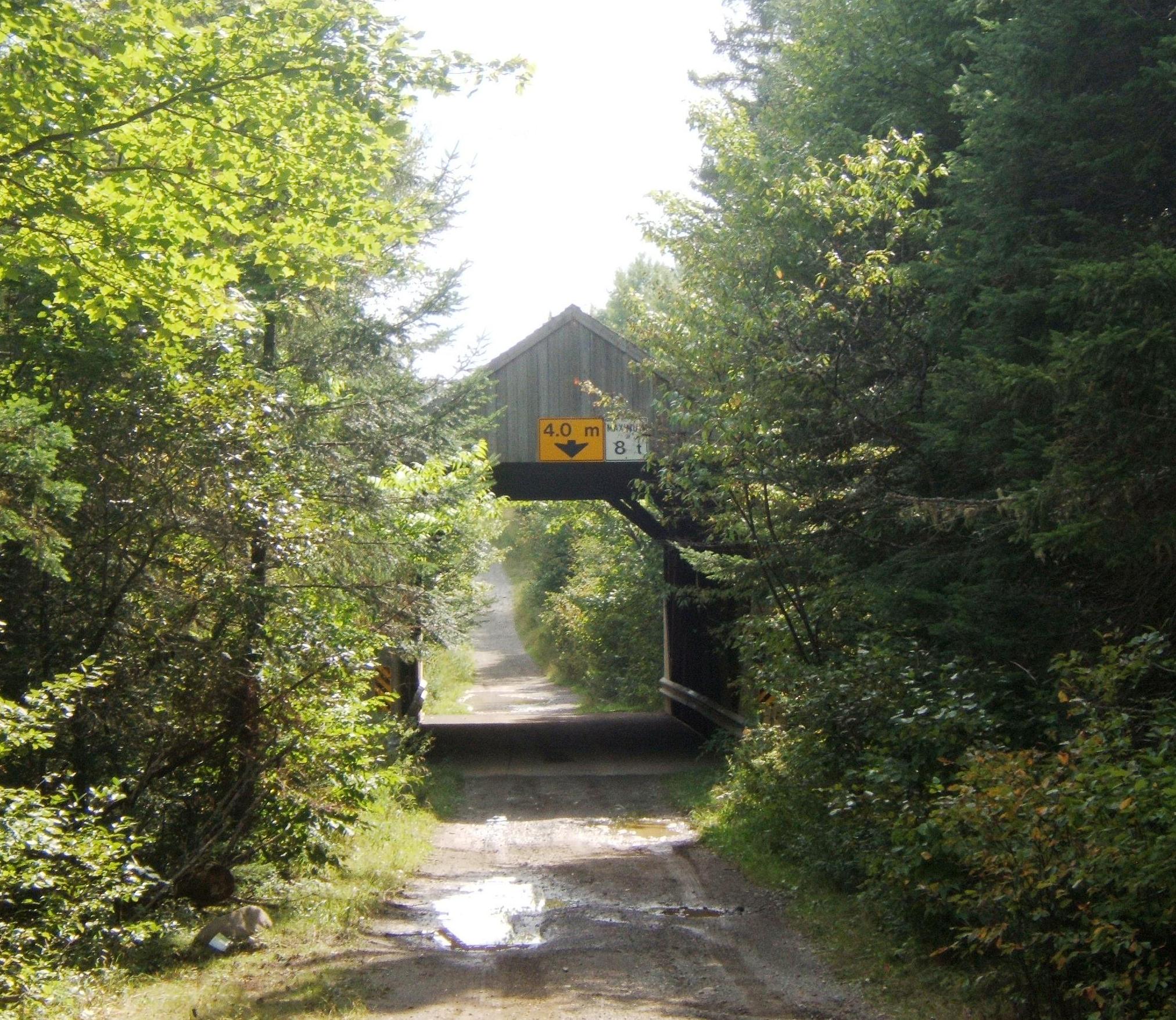
Nackawic Siding Covered Bridge in York County (photo taken 2012)
~
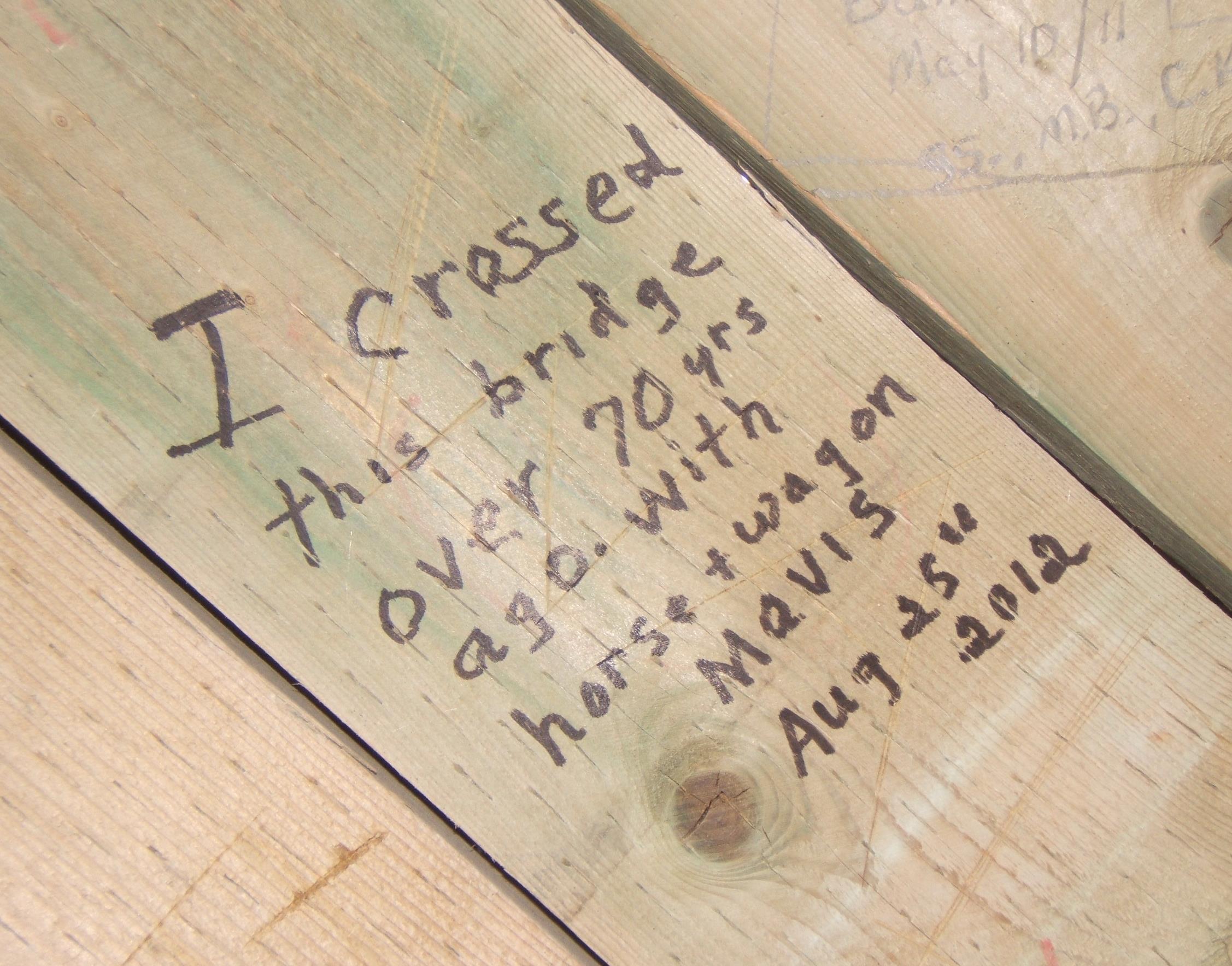
notation in the Nackawic Siding Covered Bridge (photo taken 2012)
~
And last weekend, in the covered bridge over the Quisibis River (Quisibis River #2, Pont Lavoie, built in 1951), we found a painting of a horse. Whoever painted the horse resisted the urge to make any other black marks on the bridge walls. Clearly, he or she had a single intent – to depict the horse.
~

Pont Lavoie over the Quisibis River in Madawaska County (photo taken July 2015)
~

portrait of a horse, in the Quisibis River #2 Covered Bridge (photo taken July 2015)
~
When I close my eyes and imagine a covered bridge, I always hear the clatter of horses hooves on the wooden boards …
~
Copyright Jane Tims 2015
in the shelter of the covered bridge – Baker Brook #2
Of the 60 covered bridges in New Brunswick, most are in the southern part of the province. Last week we went to see the three remaining covered bridges in Madawaska County in the north-western part of the province.
~
One of these was Baker Brook #2. It crosses the Baker Brook west of Edmunston and is no longer in service. The bridge has been protected in a small park with a parking area. Bird boxes, flags and hanging flower baskets show there is local stewardship of the bridge.
~

Baker Brook #2 in Madawaska County, New Brunswick
~
The Baker Brook #2 bridge was the essence of quiet. As we entered the bridge, the only sound was the patter of rain and the trickle of water under the bridge.
~
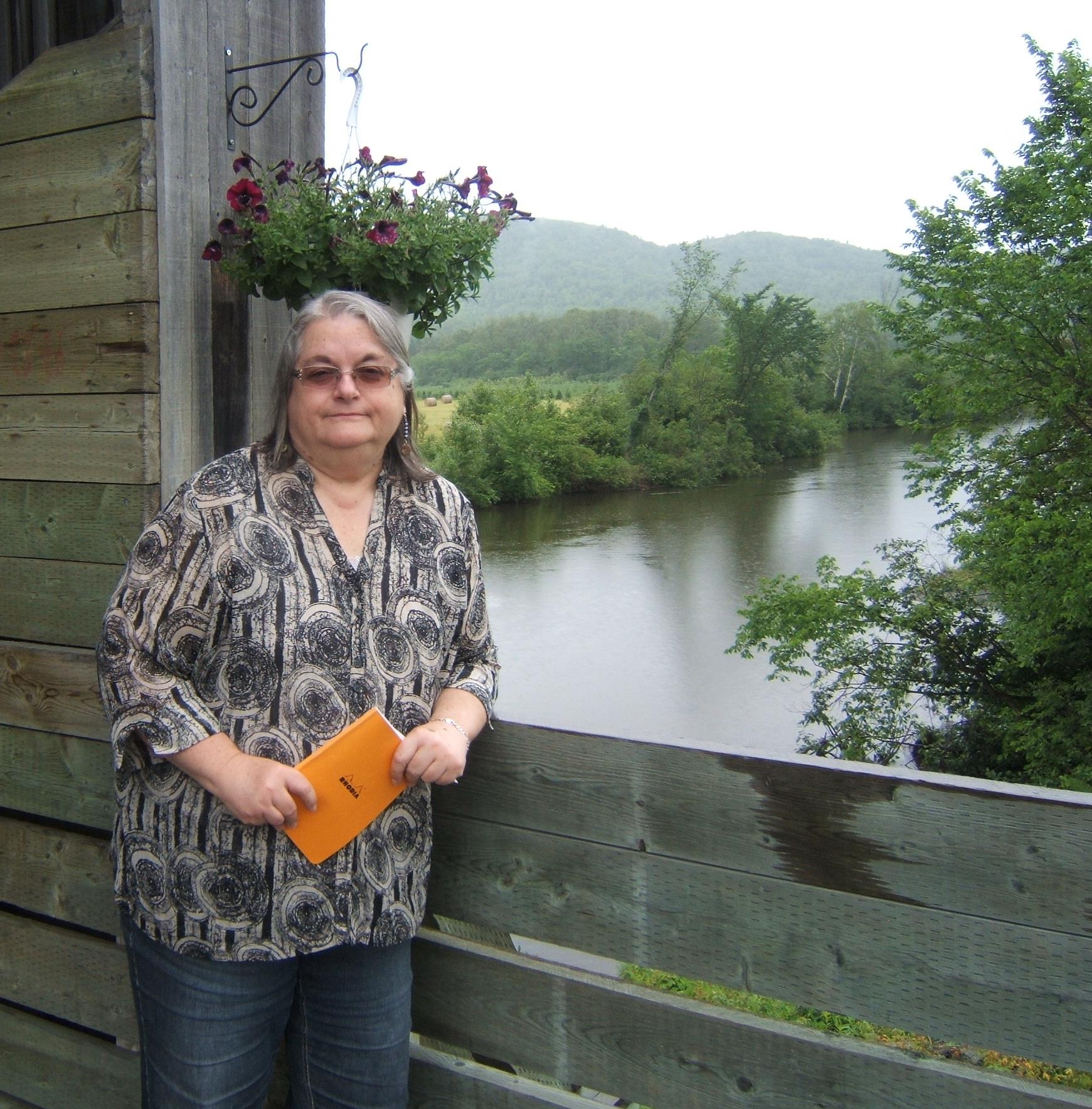
I don’t get many photos of myself, but this is a good one – I am ready to take notes on the plants and animals I see in the Baker Brook # 2 covered bridge … these notes and my photos and memories become the basis for future poems
~
The bridge is set against a backdrop of tranquil hills and fields. A deer watched us from a hayfield at the north end of the bridge. A white-throated sparrow called once and a crow made a few comments from the top of a round bale of hay. Otherwise, we were alone.
~

~
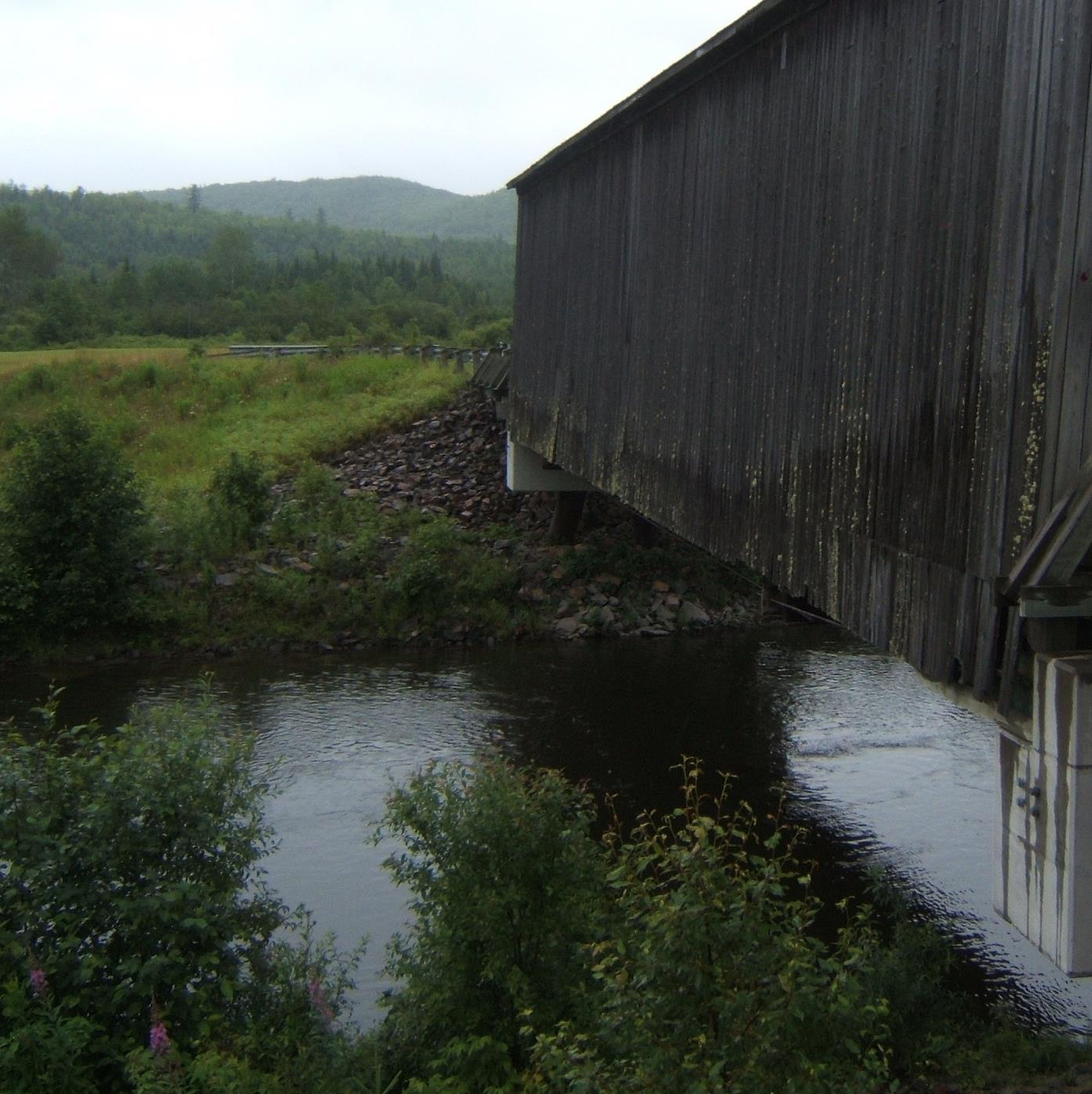
I love the way the lichens have colonized the bridge and follow the boards, like rain, in lines down the outer walls.
~
~
Some visitor had left a small collection next to the outer wall of the bridge. Three rocks and a broken bit of glass…
~

~
Copyright Jane Tims 2015
beaver slap – Bloomfield Creek Covered Bridge
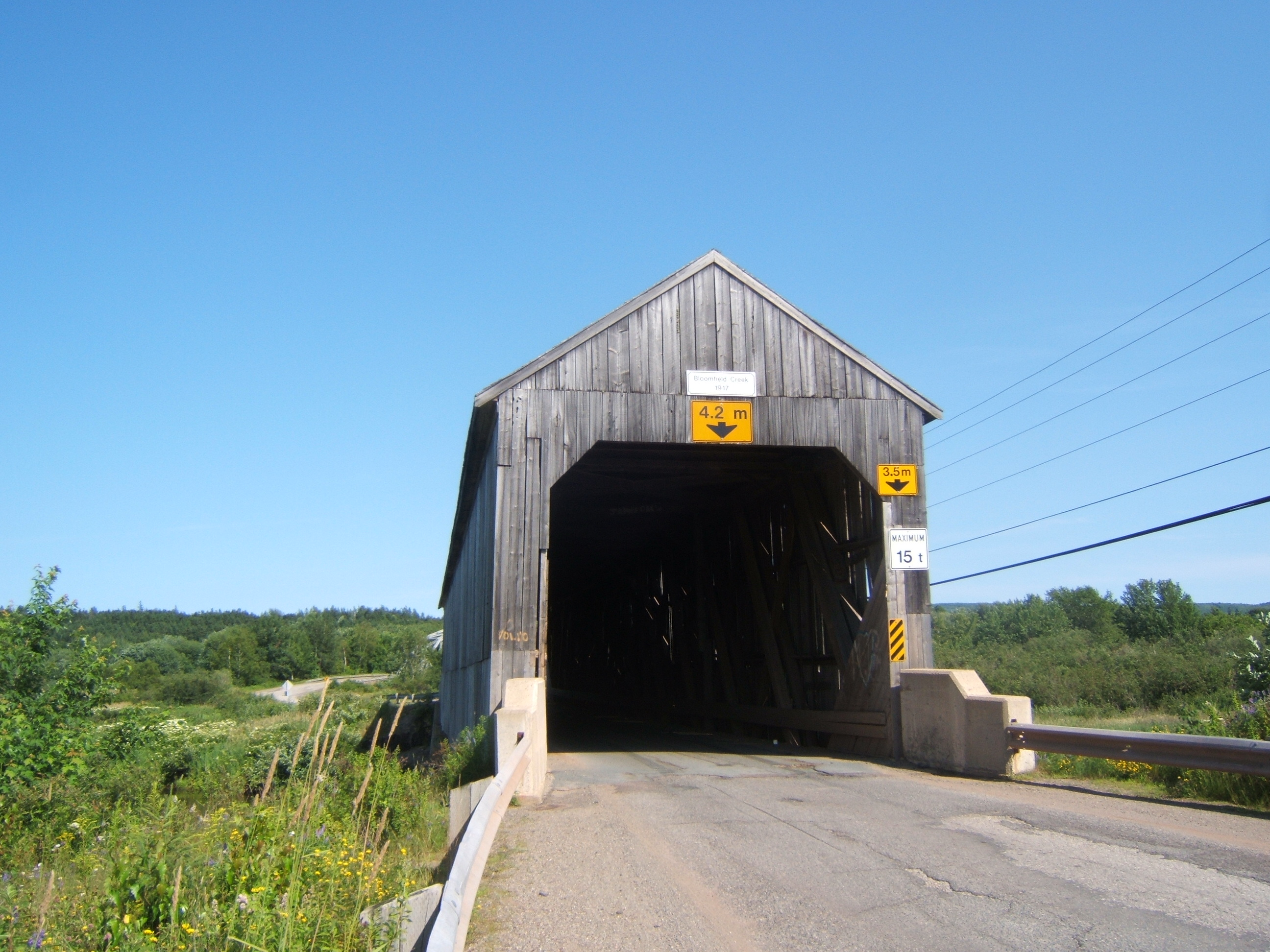
On a recent weekend tour of four covered bridges in southern Kings County in New Brunswick, we stopped at Bloomfield Creek. Built in 1917, this bridge is busy and well-used. It crosses a broad creek, very pond-like with its growth of lily pads (the yellow pond-lily Nuphar) and pickerel weed (Pontederia).

~
Along the grassy banks of the creek is a beaver lodge.
~
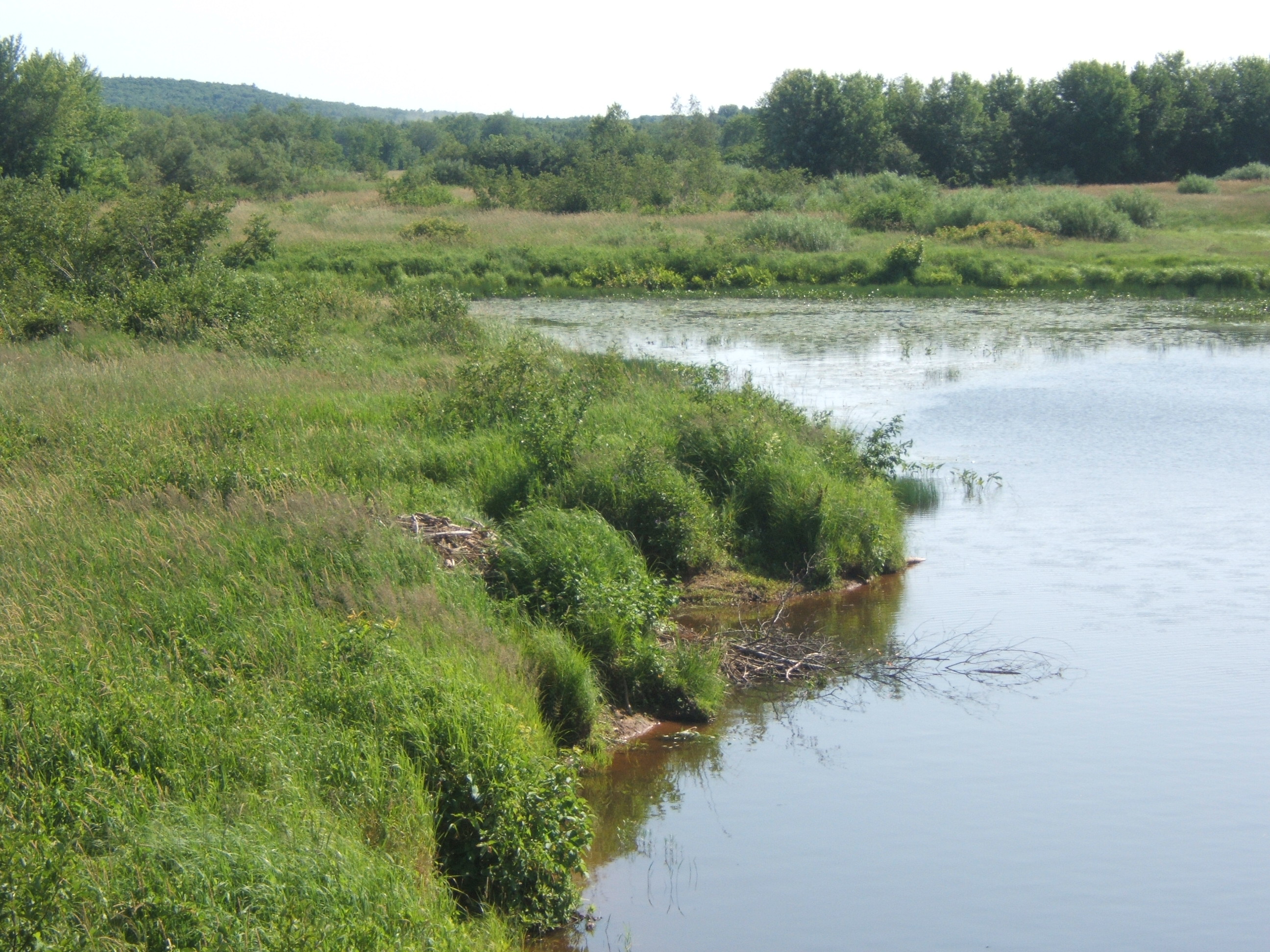
beaver lodge on the bank of the creek – the beaver has dragged lots of extra branches to keep near the underwater opening of his home
~
A large beaver kept us company while we visited the bridge. He swam back and forth along the river, in a course we were certain was designed to confuse and hide the location of his lodge. Most of the time he stayed on the surface – so soothing to watch his smooth brown body ‘towing’ a ‘V’ across the water. Every few minutes he would pause in his swim, arch his body, scissor his tail and lift it perpendicular to the water surface. Then he would slap the water and produce a loud ‘k-thud’ before he dove beneath the surface. In a minute or so, he would reappear to swim as calmly as before.
~
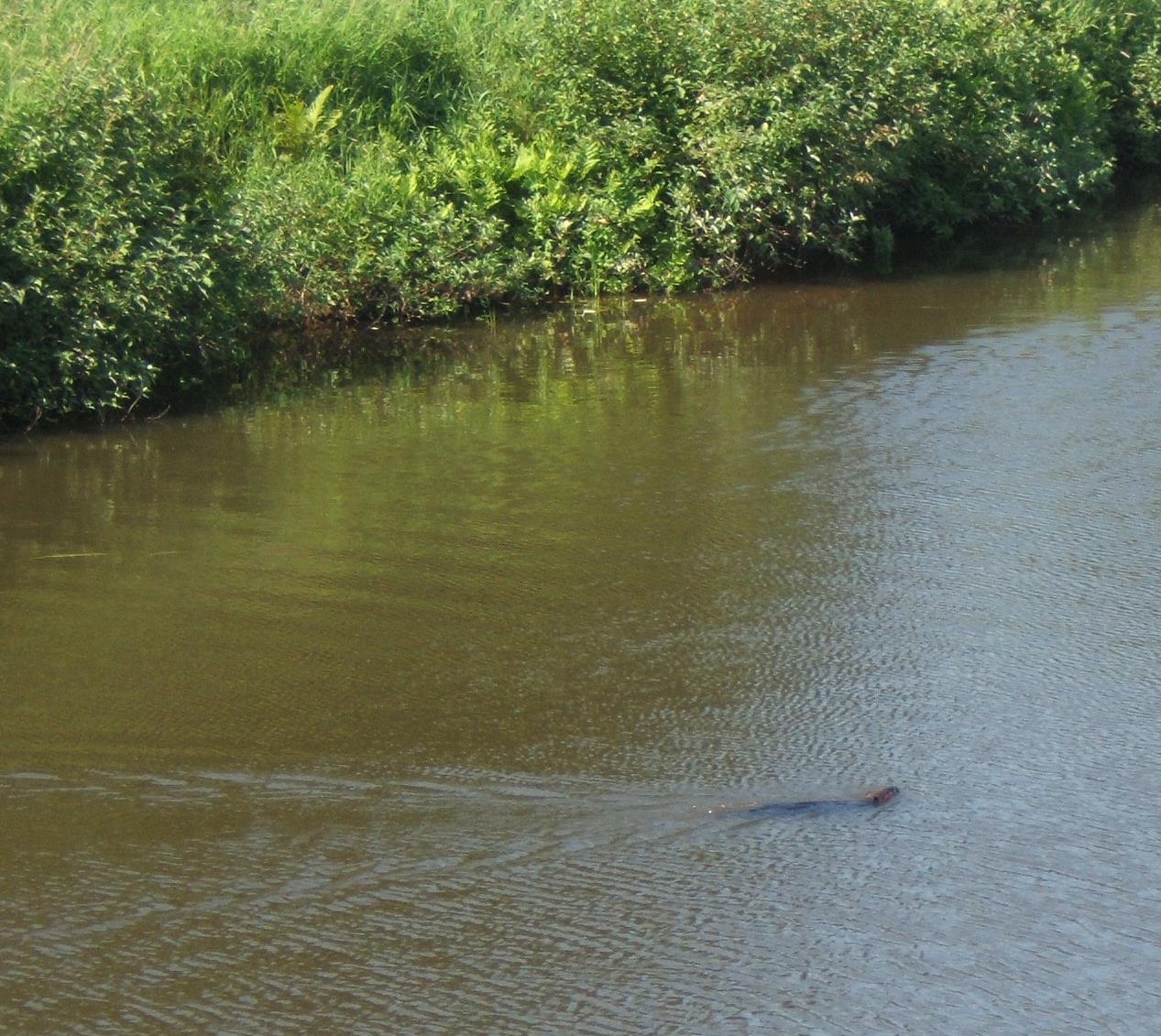
close-up of the beaver towing the ‘V’

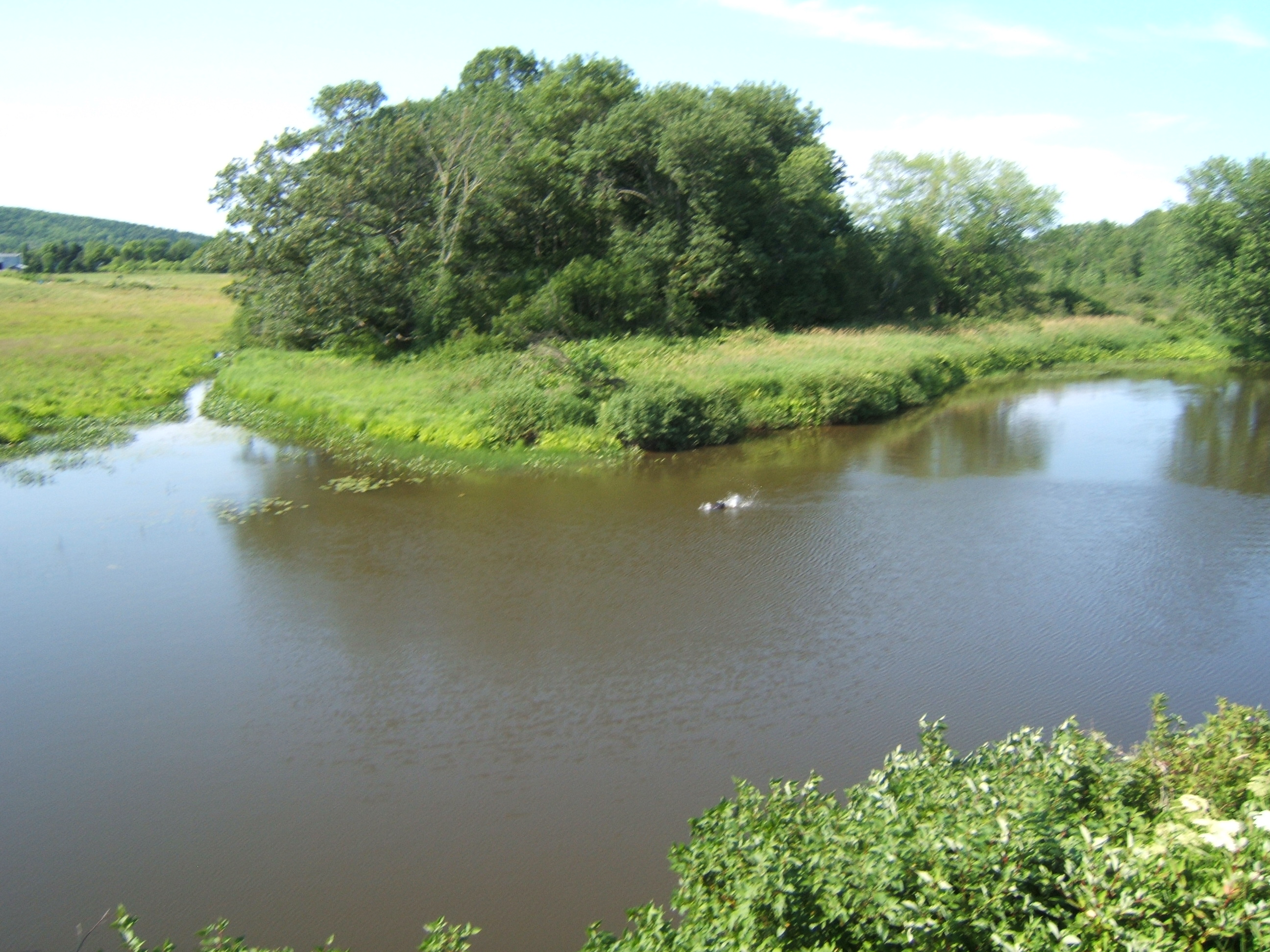
big splash as the beaver slaps its tail on the water
~
Copyright 2015 Jane Tims




 nichepoetryandprose