Posts Tagged ‘autumn’
the color of niche
What are the color characteristics of niche? Are humans the only species to prefer certain colors for their spaces?
Other species also have color preferences. The best example I know is the preference of insects for color in their interactions with plants. Some insect pollinators, for example, prefer certain colors over others. Bumble bees have been shown to prefer the color purple. Also, flowers appearing monochromatic to us may be perceived quite differently by insects since they also see in the ultraviolet range of the spectrum. Some flowers, such as the yellow Evening-Primrose (Oenothera biennis L.), have ‘runway markers’ on their petals, to help insect pollinators to find their way to the nectar-producing parts of the plant.
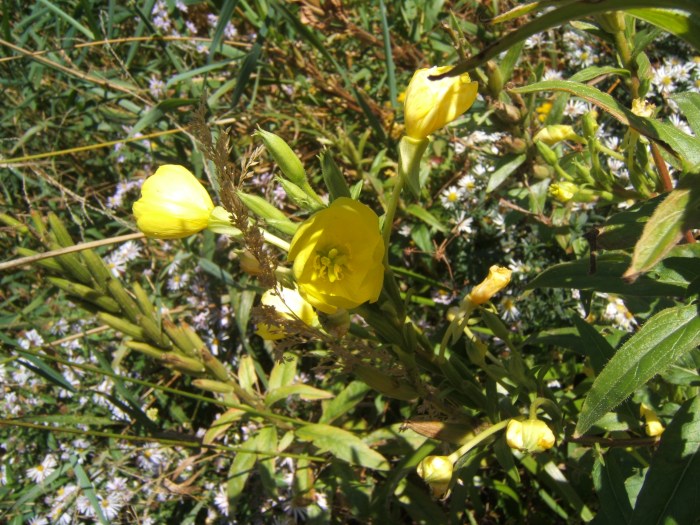
- Evening- Primrose (Oenothera biennis L.) Under uptra-violet light, the central area of the inner petals shows dark ‘runway markers’… if you look closely, you can see some vein-like variation in the yellow of the inner petals

Knowing about color-preference in insects can help us to spend more time in the out-of-doors. Science has shown us that mosquitoes prefer black or other dark colors over lighter colors. Greens, yellows and white are the colors to wear to reduce your attractiveness to mosquitoes.
An early paper on color preference of insects is A.S. Packard, 1903, ‘Color Preference in Insects’, Journal of the New York Entomological Society 11: 132-137. This paper is over one hundred years old but has charming anecdotes of the color preferences of houseflies, butterflies, moths and other insects. It is available on-line at:
http://www.jstor.org/stable/25003044
In the article, Packard reports mosquitoes are attracted to navy-blue, dark red and reddish brown.
My favorite color is definitely green, followed closely by orange. I also find I associate these colors strongly with the seasons: autumn with orange, summer with green. Although I would not select red as a favorite color, I notice my house, not at all color-coordinated, has definite red accents in almost every room.
What is the preferred color of your niche?
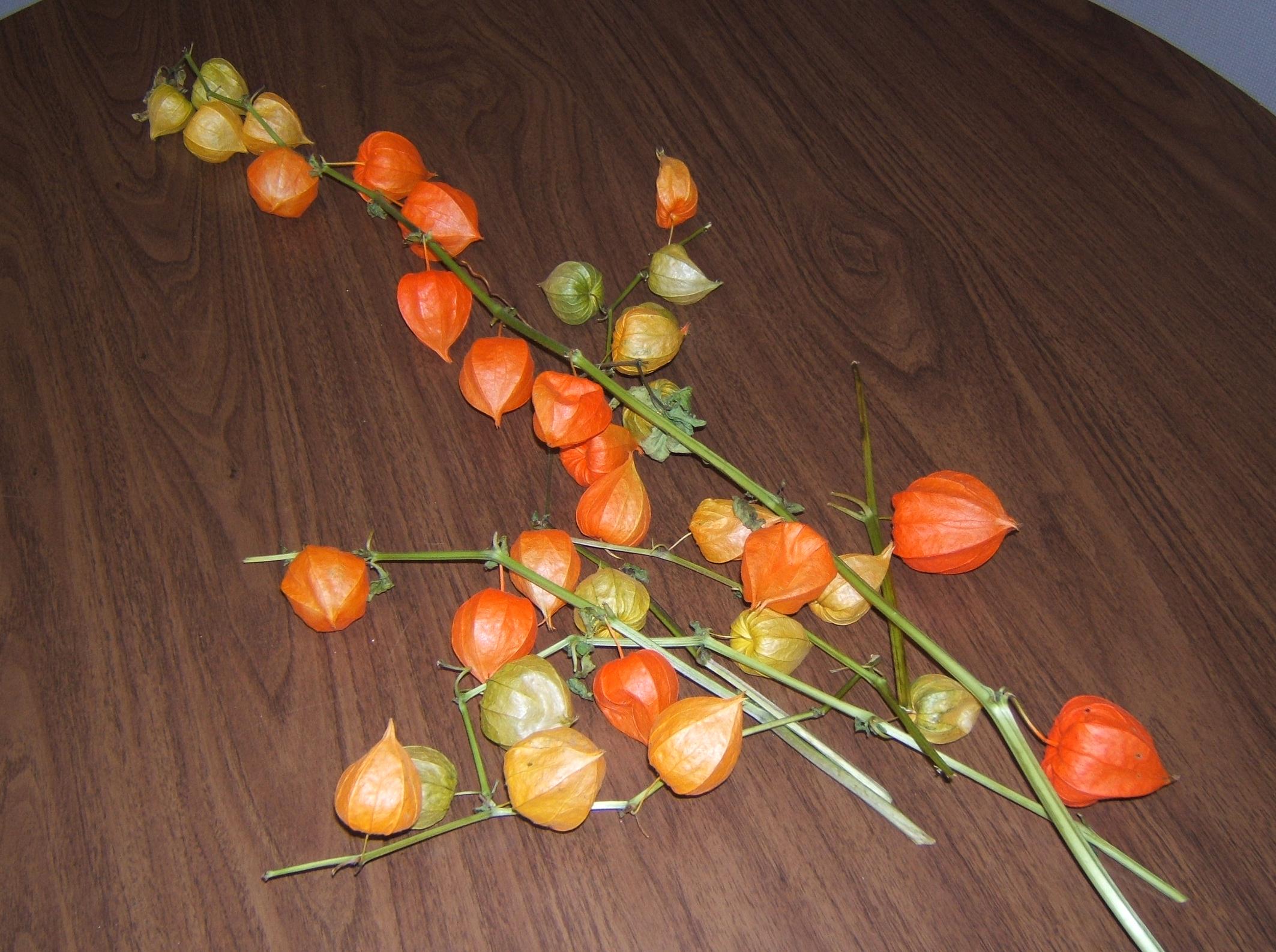
Chinese lanterns (Physalis alkekengi L.) from a friend's garden... also called Bladder cherry or Japanese lantern
orange peel
~
orchard bees
wings of monarch or viceroy
citrus oil, flames spurted in dark
weightlessness of Chinese lanterns, evolution of green
~
jack-o-lantern grin on the compost heap
taste and root-thread trace of carrot
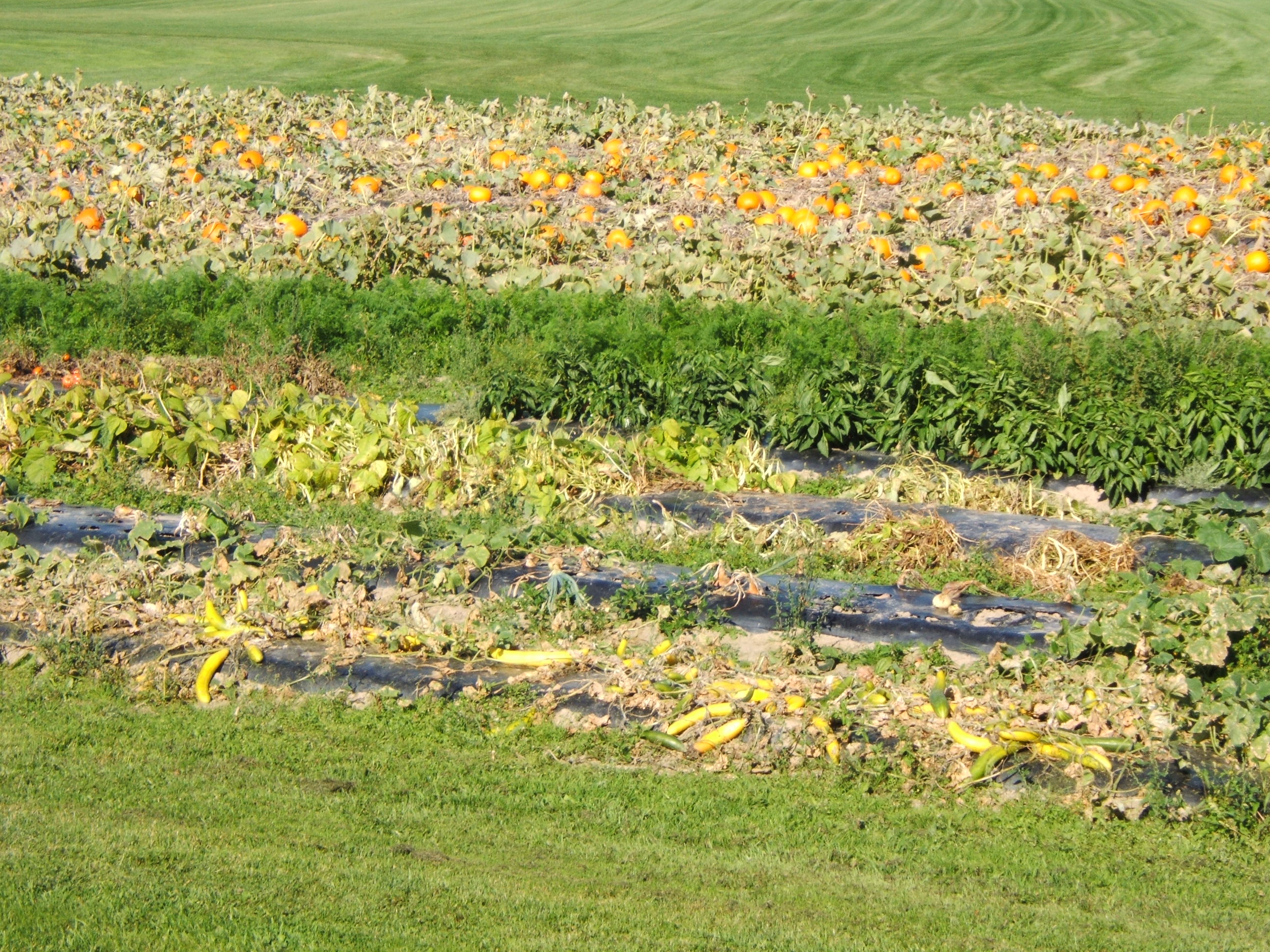
pumpkins on the vine
~
furniture polish stain
on an empty page
~
nothing rhymes
with orange
~
© Jane Tims 2011
more horizons
horizon: line at which earth and sky appear to meet (Oxford dictionary)
After thinking more about horizons, I looked through our photos for some horizons we have captured in New Brunswick. Once you start to look for them, they are everywhere!

overlooking the hilly area of Sussex... Poley Mountain (a local ski hill) is in the background

a blueberry field and the distant hills of Queens County
- Horizons are made more interesting by the passing seasons…
- in autumn…
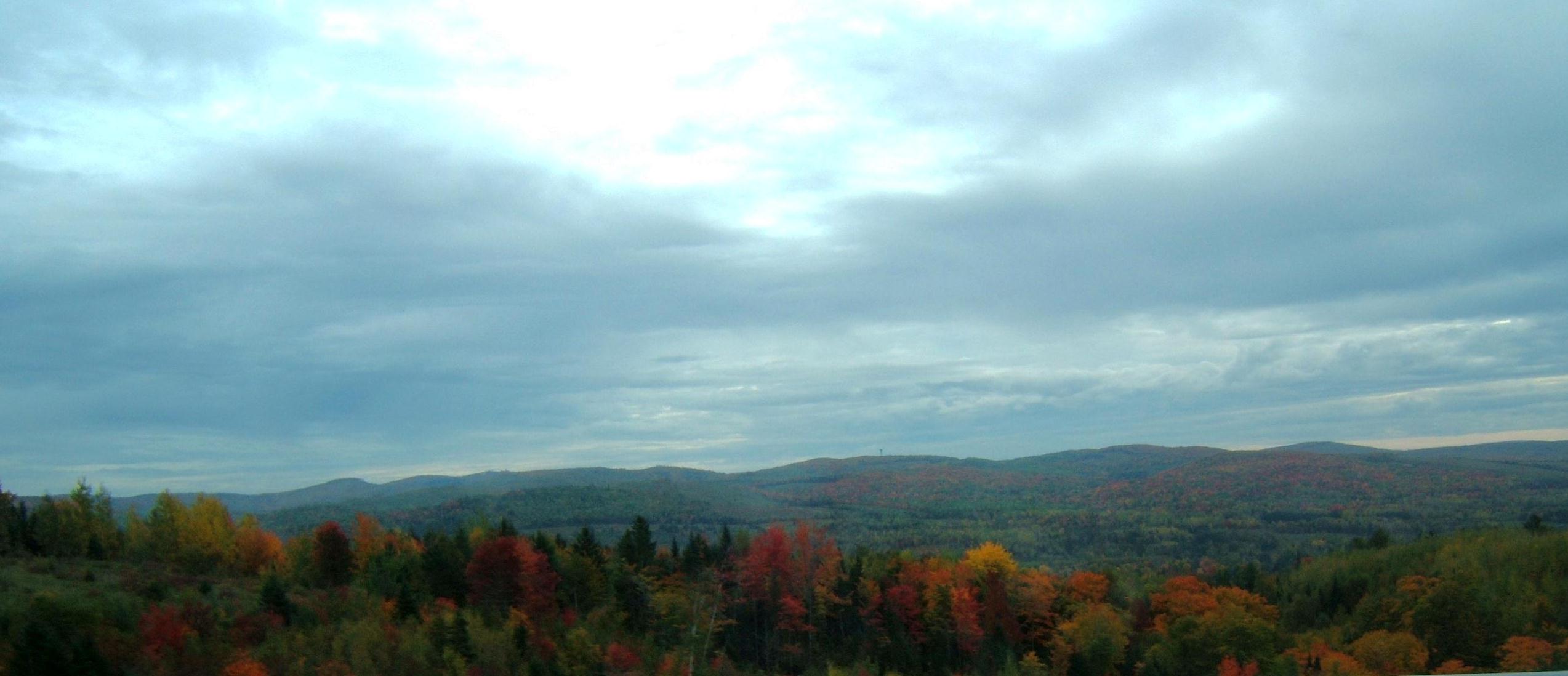
maple trees in autumn costume along the Trans-Canada Highway in Victoria County
…and in winter.

bare trees in the Grand Lake Meadows area in winter... a hawk in the tree and a treed horizon if you look carefully
Of course, I can’t forget the horizon of the Bay of Fundy…

Bay of Fundy at Saint Martins
…the horizon viewed from the ocean…

Charlotte County viewed from the waters of the Bay of Fundy
…and the horizon created by islands.

'The Wolves', special islands in the Bay of Fundy
Look to the hoizon, and see where land and sky, and sometimes water, meet.
horizontal haiku
~
horizon distant intersection land water sky
~
© Jane Tims 2011
along the country road #2
Here in New Brunswick, although it is only August, the flowers along the roadside are changing. The daisies and buttercups of summer are giving way to the flowers we associate with autumn – the goldenrods, the asters, and Pearly Everlasting.
Pearly everlasting (Anaphalis margaritacea (L.) C.B. Clarke), called immortelle in French, is a weed of roadsides, fields, open woods, and clearings. Its flowers are borne in clusters on an upright, leafy stem. They are easy to dry in bouquets since most of the so-called flower consists of a small yellow floral head surrounded by pearly-white dry bracts.
The generic name is an anagram of Gnaphalium, the name of another genus of everlasting flowers. This, in turn, is an ancient Greek name for a downy plant, derived from the word gnaphallon, lock of wool. Margaritacea means pearly.
What flowers mark the change of seasons in your area?
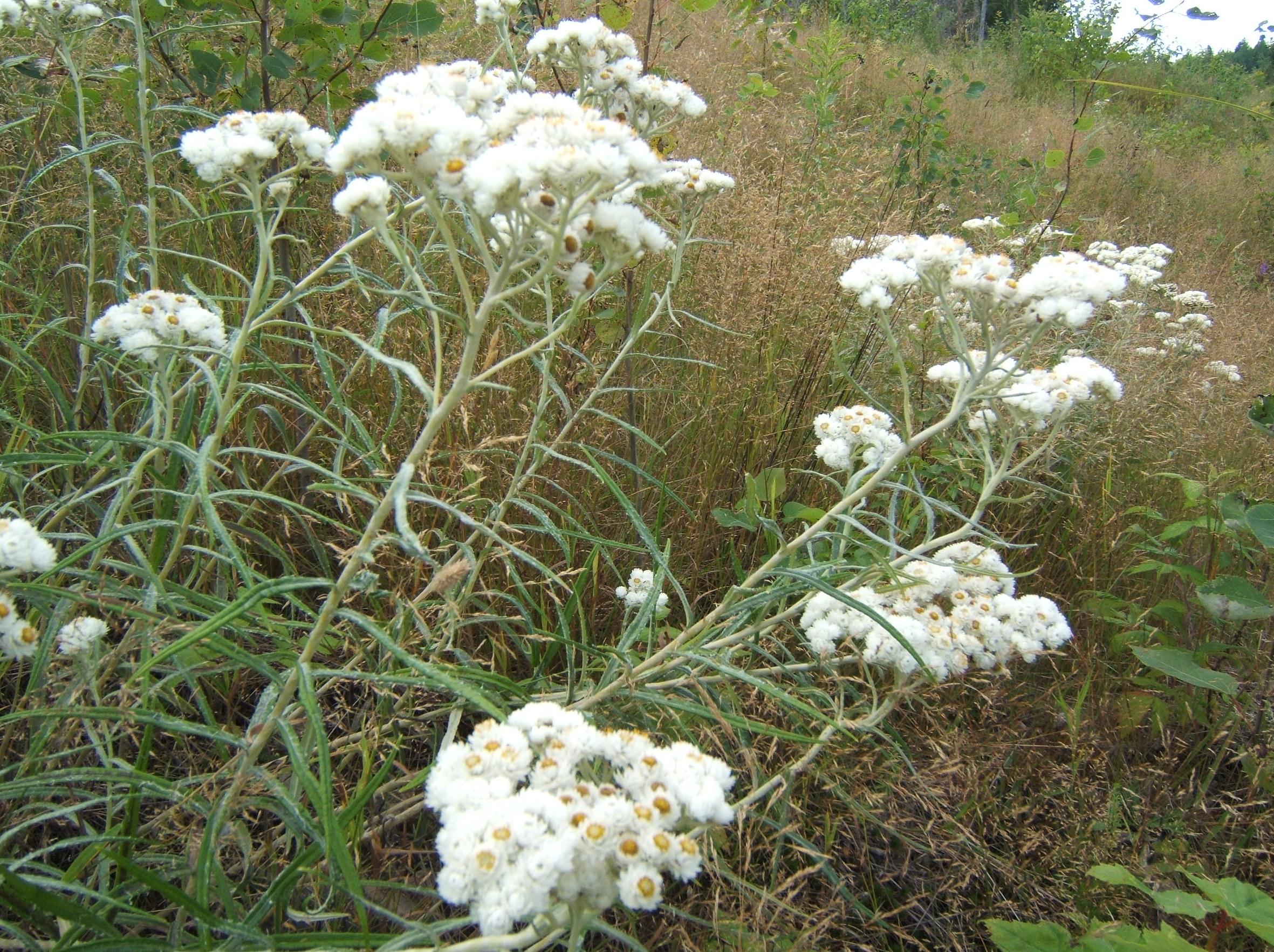
Pearly Everlasting (Anaphalis margaritacea (L.) C.B. Clarke)
Pearly Everlasting
Anaphalis margaritacea L.
Pearly Everlasting
sign of summer’s passing
yet- immortelle
picked by the road
by the armload
hung from rafters
children’s laughter
runs beneath
downy leaf, woolly stem
white diadem
perfectly matched flowers
thatched in gold
dry and old
Linnaeus-named
for Marguarite
memory sweet
paper petals keep
pale perfume
summer
grace
in a winter room
Published as: ‘Pearly Everlasting’, Winter 1993, The Antigonish Review 92.
(revised)
© Jane Tims




 nichepoetryandprose