spring orchestra – fee-bee

Carving of the name ‘Phoebe’ on a beam of the Tantramar #2 Covered Bridge near Sackville, New Brunswick
~
~
Phoebe
~
unknown, she nudges
her way into Monday –
carved name in the covered bridge
~
Black-capped Chickadee pipes
fee -bee, hey-sweetie
(bored with chick-a-dee-dee-dee)
~
and Eastern Phoebe, rasps fee-bee
whee-zy, Phoe-bee
black bed-head, smuggie throat
~
unknown, Phoebe nudges
her way into Monday
~
~
Copyright 2015 Jane Tims
~

one of the usual visitors to our feeder … the Black-capped Chickadee
Born to Walk – a book review
‘… Marooned at my desk, I swiveled round and round, drowning in digital static …‘ (page XIII).
So many of us can relate in a personal way to Dan Rubenstein’s description of his work life in the field of journalism. When he talks about managing his stress by checking emails every few minutes, I can say, I’ve been there! Dan’s book, Born to Walk, shows us a way to change our lives in a very simple way … just walk!
~
~
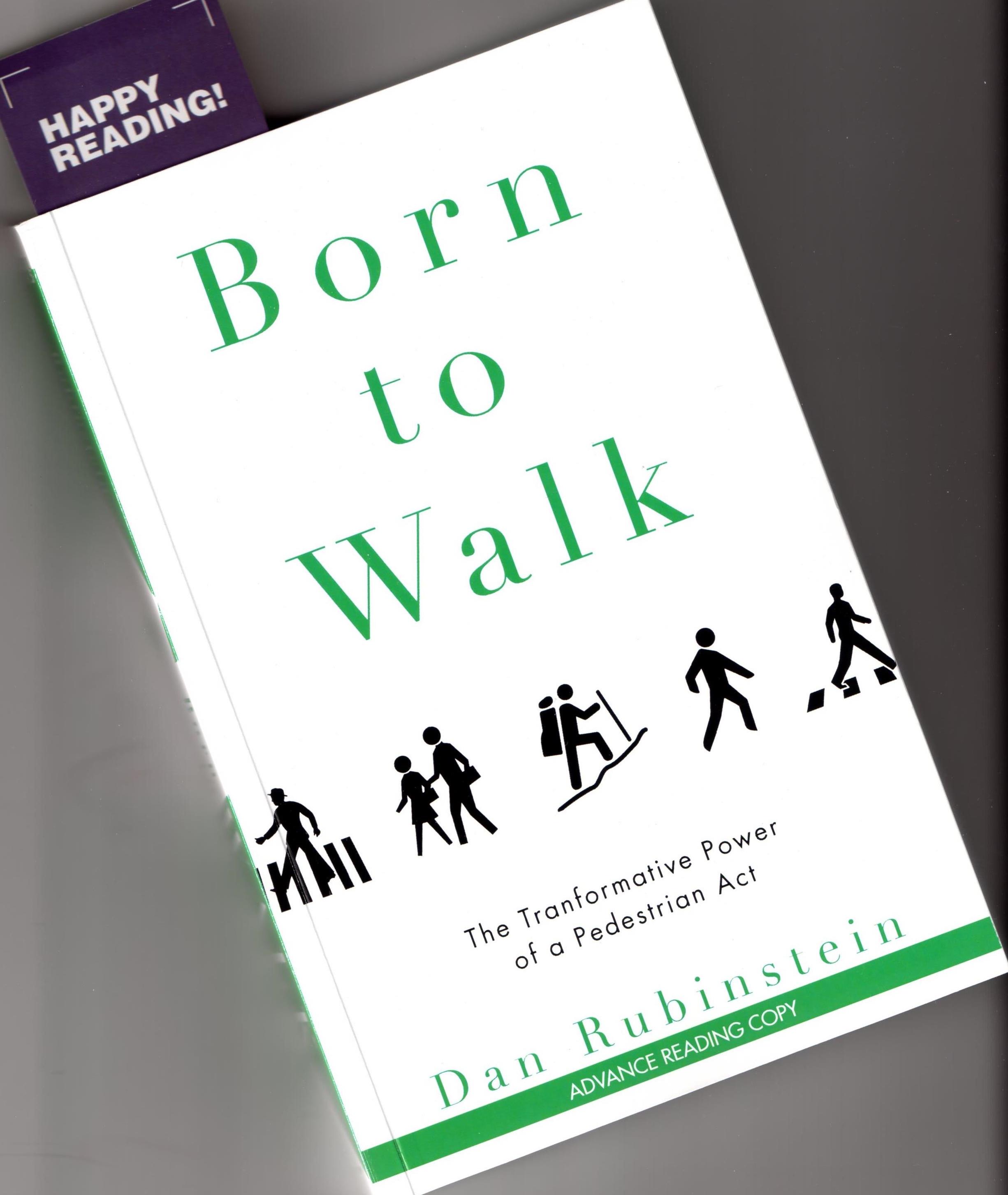
Born to Walk – The Transformative Power of a Pedestrian Act (Dan Rubinstein, 2015, ecw press, Toronto) is a book of non-fiction with a strong narrative component. It could be described as a self-help book of the environmental kind. Born to Walk describes the health benefits of walking, fitting this into the context of what it is to be human in the natural world. This book would be interesting for those who walk already and those who are thinking about taking up or accelerating a walking program. As I was reading, I often wanted to quit reading and start (you guessed it) walking.
~
In a discussion of the benefits and pleasures of walking, Dan considers walking a key life strategy. He tells the tales of people who feel compelled to walk or who walk for a living. Dan’s credentials for writing this book become more obvious as we read – the writer has learned through doing. Over the course of the book, we learn about his interviews with some of the most outstanding walkers in the world – interviews conducted while on foot and on the trail! The walkers he tells us about include a postal ‘delivery agent’ in Ottawa, a police officer walking the beat in Philadelphia, a photographer in New York City, and a medical doctor walking between Native communities in eastern Canada.
~
The book considers, chapter by chapter, specific topics about walking: the effects of walking on the body and mind; how society can benefit from pedestrian ways; the economic and political connections of walking; and the influences of walking on creativity, spirituality and family life.
~
My interest in the book sparked when I read the sub-title – ‘The Transformative Power of a Pedestrian Act’. My struggle with arthritis and the inactivity that accompanies mobility problems, has convinced me that activity and walking should have been a focus of my life, especially in my thirties and forties when I started sitting more than walking. The book points out that isolation and sitting are the new smoking.
~
In opposition to the ‘sitting disease’, Born to Walk explores the benefits walking can deliver. Dan describes the positive effects of being in nature. Sneakers, he says, are as important as medications in dealing with our many health issues. With careful consideration of the sage advice of the walkers of our time, backed up by health statistics and epidemiological studies, Dan explains how walking can improve our sense of ‘personal mastery’ and ‘self-regard’. I was intrigued by his descriptions of the experiences of those who are serious walkers – for example, the ‘green blur’ overtaking those who have been on a difficult trail for days.
~
As a planner, I was most interested in Dan’s insightful ideas about planning for a ‘walkable city’. He describes new approaches to creating urban areas where cars and people can coexist in safety. Some of the ideas he explores include development of road-skinny cities, the benefits of ‘walking meetings’, and the possibility of finding tranquil urban spaces to make up for our lack of being in more natural locations.
~
Reading this book was a pleasure. The narrative lines are engaging, the stories are often funny and Dan’s style is sensitive and not at all condescending. He writes with the conviction and knowledge of one who practices what he advocates. My favourite chapter of the book was definitely ‘Creativity’. As a writer, I have often noticed that the rhythms of walking inspire both the metre and cadence of poetry. Born to Walk describes ‘participatory art walks’ in Brooklyn and the ephemeral art of an ‘X’ walked into a field of daisies. ‘People get ideas when they are out walking’ (page 190).
~
My only problem with the book is related to the way I personally prefer to read. I found the chapters long (eight chapters plus prologue and epilogue for a book of 251 pages with about 300 words per page). I tend to read in chunks and consider it a smooth read if I can take in a full chapter at a sitting.
~
As a person with mobility problems, I applied much of what Dan said to my preferred mode of exercise (the stationary bike). While the stationary bike gives me some of the physical benefits of walking out-of-doors, I realise I am missing out on other benefits. For this reason, I am motivated to walk to the extent of my ability. One truth I read in the book is the idea of embracing and putting up with some pain as long as I am not doing damage to my joints.
~
Born to Walk – The Transformative Power of a Pedestrian Act is a thought-provoking, walk-inspiring book. I am eager to read other books by Dan Rubenstein!
Dan has an interesting blog describing some of his adventures leading to the writing of Born to Walk ( http://borntowalk.org/ ).
~
~
Copyright 2015 Jane Tims
writing a novel – being the reader
At some point during the writing of a novel, the writer must become reader.
~
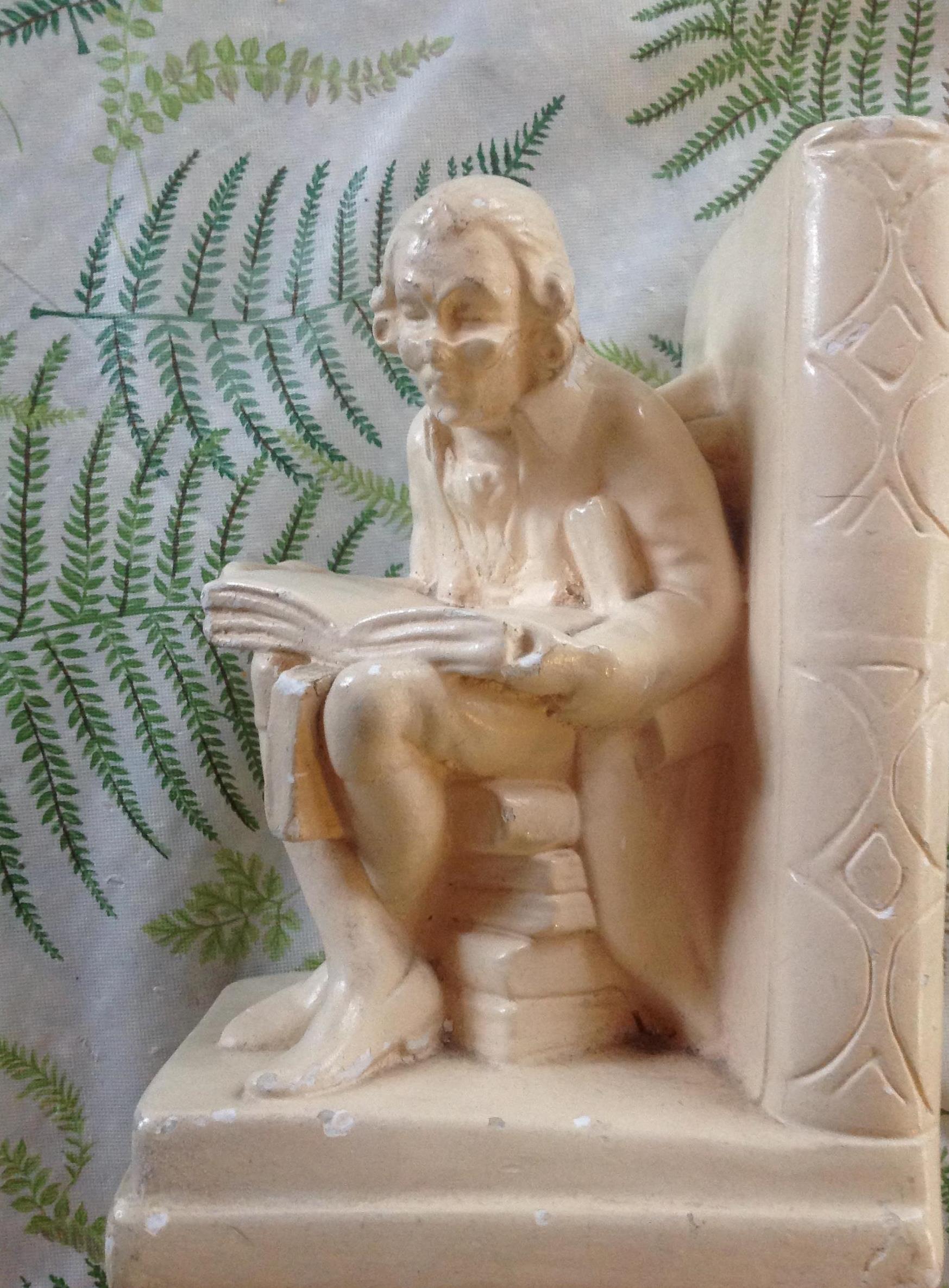
a ‘reader’ in my library – one of a very old set of bookends I call the ‘Two Muses’
~
The writer reads their work, over and over and over. Eventually, the sentences and paragraphs, the story itself, become so familiar, the writer can’t ‘see’ them properly any more.
~
The writer has two disadvantages.
First is familiarity. The writer knows every detail of the story, even details not written down. The writer’s mind fills in the gaps and the poor reader is, perhaps, left wondering. But the reader has experience as well. The writer has to know how much detail to include and how much to leave to the imagination. Sometimes the details the reader fills in make the better story. Have you ever read a book, having a perfect idea of what the protagonist looks like, only to be told, mid-way through the story, he has a twitch in one eye?
Second is love. Writers tend to become enamoured of their characters, their stories and their own writing. A description or sub-plot or character may take root and grow within the novel, even though it has little to do with the larger story. Once written, it is difficult to rip those paragraphs from the whole. Keeping track of word number will help, since it is an objective measure of progress towards a goal. In my novel ‘Crossing at a Walk’ I often write bits that I later remove. Too allay the fear that they will be lost forever, I have a file for a bone-yard – I can always return to this pile in future. I rarely do. ‘Murder your darlings‘ (Arthur Quiller-Couch, 1914).
~

This young lady never reads … she just sits among the potted plants and dreams.
~
The writer must also consider the questions the reader is asking as he or she reads the book. If the book hints at a problem or something that needs resolution, the reader will watch for an answer. For example, if a character mentions she has heard a cousin is coming to visit, the reader will wait for the cousin to arrive. If the cousin never shows up, the result may be a disgruntled reader.
~
I read my book, cover to cover, at every draft. I also think it’s important to read it aloud at some point, once the story is complete. Reading aloud to another person will give the writer some feedback. The act of hearing the word spoken will also suggest problems with rhythm, word choice or continuity. I read aloud to my husband and to the members of the two writing groups where I am a member.
~
In the end, the writer cannot be an objective reader. Every writer must find a test reader, someone who will provide honest feedback on characters, plot and story, as well as editorial advice.
~

I use my Kobo to read drafts of my book …
~
Copyright 2015 Jane Tims
woodpeckers and covered bridges

~
Woodpeckers are common in our area. Both Downy and Hairy Woodpeckers visit our feeders in winter. Pileated Woodpeckers hammer on our trees in summer, their flaming heads a blur as they excavate dead trees for insects.
~

~
Woodpeckers don’t confine their tapping to dead trees. I have seen them pounding on telephone poles, metal roof flashing and even the shingles on the side of our house.
Lately, as a result of a project I am planning, I have been thinking about covered bridges and their use as wild life habitat. So, a question …
Do woodpeckers excavate the wood of covered bridges for food?
Last week, we visited three covered bridges in Sunbury County in New Brunswick and, in two of them, we found the answer …
~

woodpecker holes in the soffit at the gable end of the Smyth Covered Bridge near Mill Settlement, Sunbury County (April 2015)
~

old woodpecker excavations on the face of the Bell Covered Bridge near Juvenile Settlement, Sunbury County (April 2015).
~

woodpecker holes inside the Bell Covered Bridge (April 2015)
~
I would love to be in a covered bridge when a woodpecker comes to play his staccato song.
~
Copyright 2015 Jane Tims
ceiling of stars

gaps in the roof, Smyth Covered Bridge, April, 2015
~
~
ceiling of stars
(Smyth Covered Bridge – South Oromocto River #2)
~
left to the years
to frost heaves, wind
and winter storms
the roof-skin peels
away
~
crisscross layers
gaps between boards
shape tiny squares
and sunlight spills
between
~
afternoon stars
constellations
and raindrops ooze
saucepans to catch
the drips
~
deafening, would
scare swallows, field
mice, snowshoe hares
and spiders, all
away
~
~
Copyright 2015 Jane Tims
~
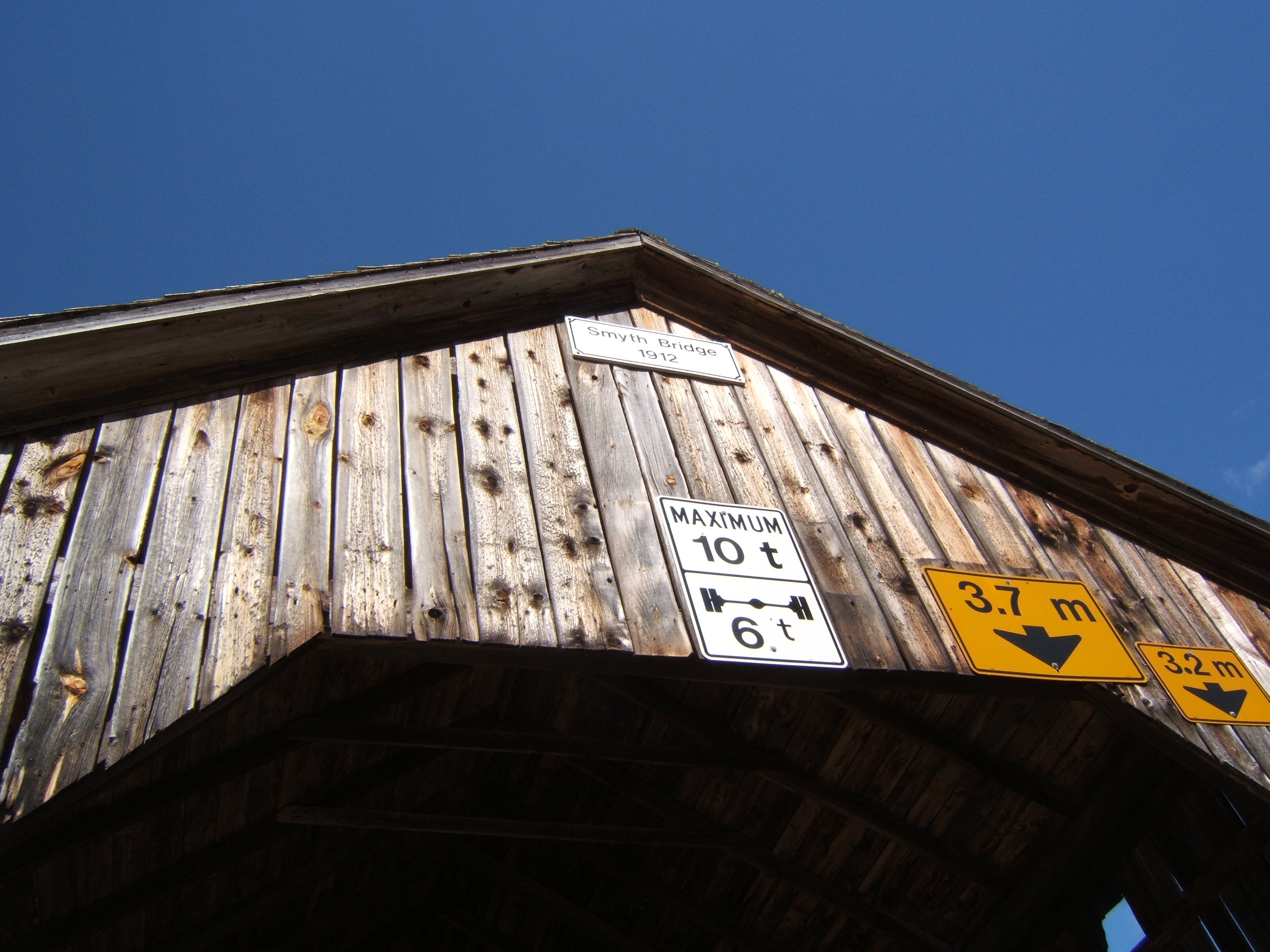
Smyth Covered Bridge, Mill Settlement, New Brunswick
~
I’m a Shelf Monkey!
I see myself in many roles in this life – mother, wife, reader, writer, botanist, artist, friend, sister, and so on. Recently, I have added one more role … I am a Shelf Monkey!
~
My life as a Shelf Monkey began when I responded to a message from ecw press in Toronto. They seek folks who love to read and would be willing to write a review of one of their titles.
~
To be a Shelf Monkey, you must be 16 years or older and live in Canada or the United States. Once ecw accepts you as a Shelf Monkey, they ask you to read and review one of their books. First, they email you a choice of books. Then you are entered into a draw (since there are other Shelf Monkeys). If you win the draw, you receive an advance reading copy of your chosen book in the mail. Your book review can be by Blog, Facebook, Amazon, and so on. They encourage posting a review within a month of receiving the book.
~
For more information on becoming a Shelf Monkey, see http://www.ecwpress.com/be-shelf-monkey .
~

Jane, reading
~
I am currently reading my first Shelf Monkey book – Born to Walk – The Transformative Power of a Pedestrian Act by Dan Rubinstein (ecw press, 2015, Toronto). I chose the book because of my interest in mobility and the simplicity of the idea – walking can transform our lives. I should be finished the book within the next couple of weeks and I’ll be posting a review on my Blog.
~
~
I would read faster, but the first chapter has inspired me to get out and do more walking!!!
~
Copyright 2015 Jane Tims
writing a novel – being consistent
As I work on the Forth Draft of my novel ‘Crossing at a Walk’, I need to consult reference material. I check the correct spelling and meaning of words, odd bits like ‘is Tim Hortons coffee spelled with an apostrophe?’ (no, it’s Tim Hortons coffee), and technical information such as the correct name for the shape of the windows of the Landing Church (‘Gothic with extended legs!’).
~

The windows in the Landing Church are referred to as ‘Gothic with extended legs’. This is an old church in Upper Canada Village in Ontario.
~
I also keep a project-specific ‘guidance document’ (a ‘concordance’ or ‘style guide’) to make certain I am consistent about how I deal with people, objects and conversations within the text.
~
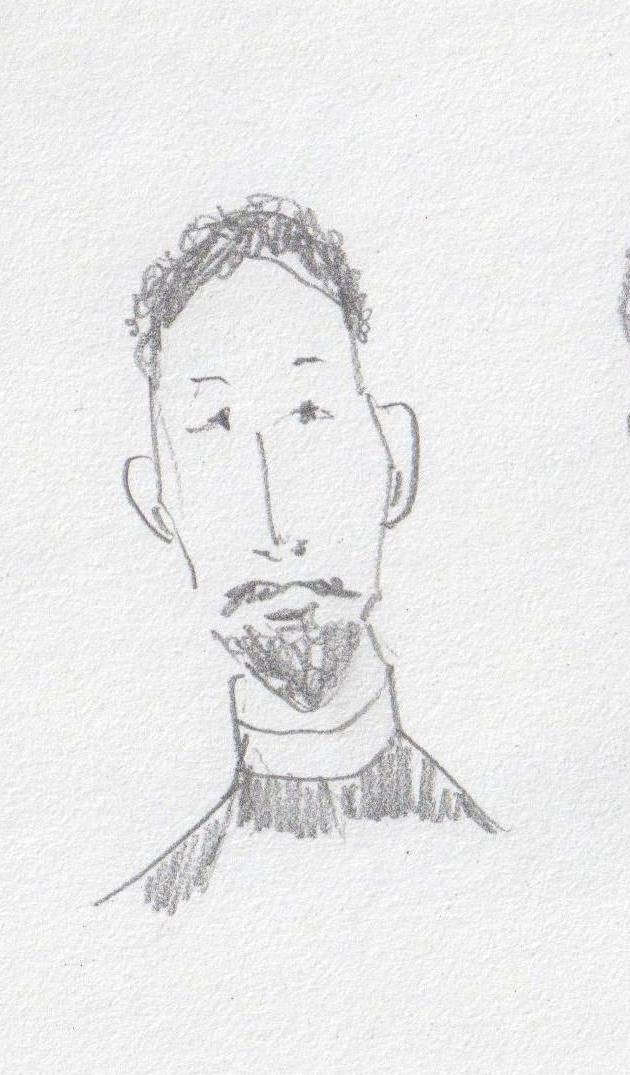
One of my main characters is Oliver, the former minister of the Landing Church. My ‘guidance document’ reminds me that Oliver always says ‘graveyard’ rather than ‘cemetery’.
~
A ‘guidance document’ is a useful tool to prepare from the beginning of writing a longer piece of fiction. It provides a set of rules to follow, to help me remember how I have previously dealt with many aspects of the book. In dialogue, it tells me if a particular character uses the word ‘dinner’ or ‘supper’. It reminds me that I put all business names in italics. It tells me to use ‘towards’ instead of ‘toward’ (the words are interchangeable and I often can’t remember which of the two I have typically used). It means I don’t have to remember the title of Sadie’s university thesis: ‘Consideration of the Contribution of Writers to the Field of Cinematography’. It also tells me details about the characters: Pat has a brother; Minnie has bright red hair; Reid’s best seller was titled ‘No Small Truck’.
~
Some of the items I will only ever use once. Often I have to look up information again and again, so I keep my ‘guidance document’ file open whenever I am working on the novel.
~

Matt Cromwell is a theatre student participating in the first writing weekend at Sadie’s writing retreat. The ‘guidance document’ reminds me Matt’s eyes are blue, he is 24 and he is a star-gazer in his spare time.
~
You may wonder why I would forget these things. Some items ensure consistency between my two books. In dealing with 70,000 words and 33 characters, I don’t need to keep everything in my head if I keep my ‘guidance document’ up to date.
~
Copyright 2015 Jane Tims
writing a novel – words, day by day
I have reached Draft Four of my novel ‘Crossing at a Walk’ and the story is all told. I want to see how I reached my current word count of 78,598 words, so I have created some graphs showing my progress. I began in 2013 with 8 days of writing. I did a little more on one day in 2014. And this year I have worked steadily since early March.
~

~
My daily writing goal was 2000 words, as Stephen King recommends in his book On Writing (Scribner, 2000). I was quite variable in the number of words written each day. Early in the writing, in 2013, I had three very productive days when I wrote more than 3000 words.
~

~
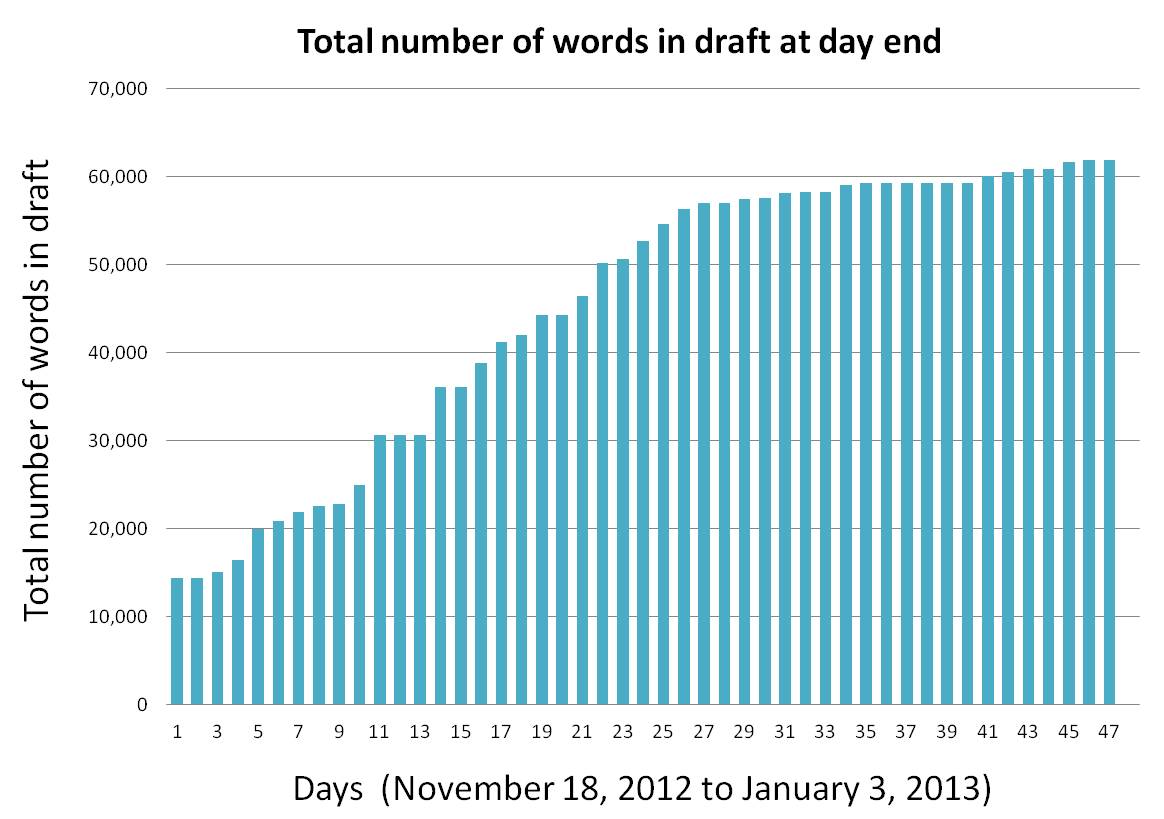
A graph of the cumulative number of words shows I was steady in my progress. Now, with editing, the total number of words should stay steady, or decrease.
If I compare this to my progress during the writing of ‘Open to the Skies’ (‘Saving the Landing Church’), my progress was similar. You can see below where I began editing, at about 25 days. For this book, it took 27 days to reach this point.
~
~
Keeping track of the number of words I write has three purposes:
- the daily number of words is a tangible record of progress and for me, a reward at the end of the writing day.
- the cumulative number of words shows me how long the book is getting; may aim is for less than 90,000 words, usual for books of the type I am writing.
- I report the number of words I have written to my husband, keeping him ‘involved’ and making him extra joyous as the day comes when I will read my book to him.
~
For your writing, do you have an aim for your daily number of words?
~
Copyright 2015 Jane Tims
writing a novel – pulling out the weeds
I have completed Draft Three of my novel ‘Crossing at a Walk’. The entire story is there. If I add more ‘story’ now, I will only confuse my plot and my readers. Next I have to concentrate on honing every sentence, including dealing with the oddities I allow to creep into my writing. As if I am growing a garden, I have to find and pull out the weeds.
~

~
I think these are different for every writer and writers have to learn these for themselves. For me, the culprits are:
writing in the passive voice.
using the word ‘that’. I never use ‘which’.
using adverbs, although I (quickly) drilled this one out of my system.
repeating the same word in adjacent lines or adjacent paragraphs.
using phrases like ‘she stood and … ‘, ‘I opened the door and …’ , ‘I looked at her and …’ – I sometimes tend to breathe for my characters!
using colorless words like ‘felt’, ‘drove’, ‘went’, ‘wondered’, ‘just’ and so on.
putting two spaces after every period – I learned to type on a typewriter!
~
I also have to do careful editing with respect to tense and person. I tell Sadie’s story in the third person and past tense. Tom speaks in the first person and present tense. I also have an angler who likes to fish just below the covered bridge and always speaks in the second person (something new I am trying).
~

my husband when he was a boy, fishing on the North Branch of the Rusagonis River, under the covered bridge … this covered bridge is now gone from our community
~
My husband is not looking forward to the completion of Draft Four. It ends with me reading him the entire novel, chapter by chapter, every evening, an hour before ‘Coronation Street’ on TV. Until we finish. Poor fellow.
~
Copyright 2015 Jane Tims
a moment of beautiful – sun on icy drops of rain
~
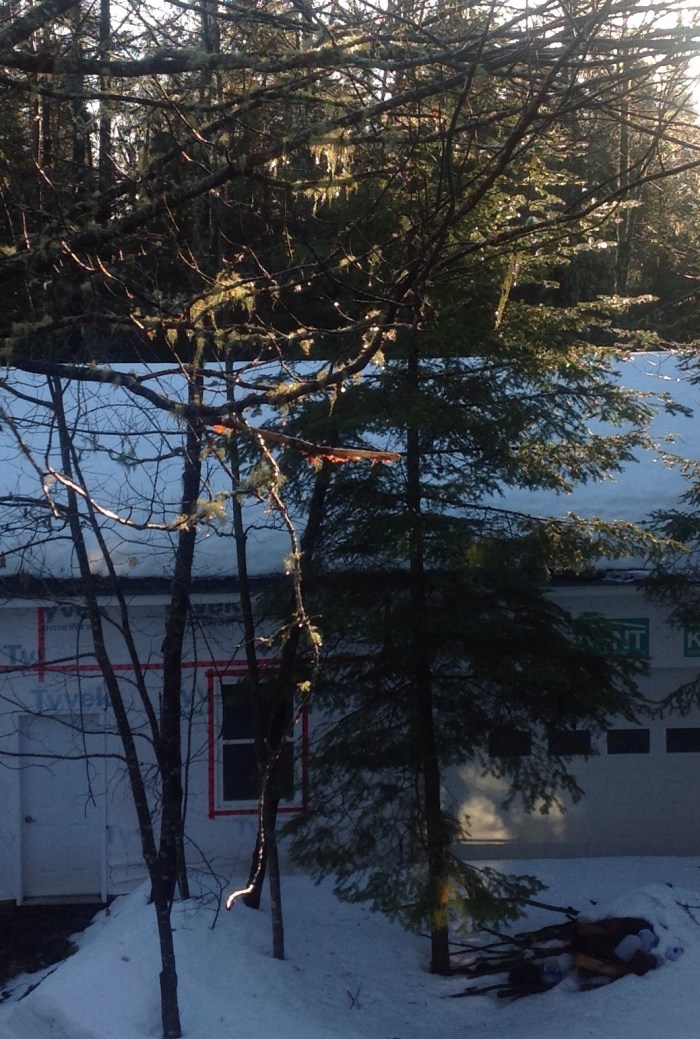
After the rain overnight and some icy temperatures, the melting ice on the Old Man’s Beard lichen and the ice coat clinging to the branches made for a beautiful scene outside my guest room window. To add to the show, a stray reflection of sun projected dazzles of light on the garage doors.
~
~
Copyright 2015 Jane Tims





 nichepoetryandprose