trampled grass on a flat-topped hill
I change the spaces I enter, even when I enter only for a moment. I am an intruder. I am certain feet have scurried into hiding just as I arrive. Sounds have ceased. Scents and tastes have been altered.
Once in a while, my difference can be disguised. I can enter before the space can know I am there. If I am quiet, if I walk softly, some agent will help me pass through the veil and remain unnoticed, just long enough to see and hear and taste the true essence of the place. Often, the generous agent is the wind.
It was a favorite hike, an old cart track winding up the side of a dome-shaped hill in the Elkwater Lake area of the Cypress Hills in southern Alberta. The hill had a flat top and a thick bristle of conifers along the sides. On the flat top was a fescue grass meadow, a bit of prairie perched a layer above the mixed grasslands.
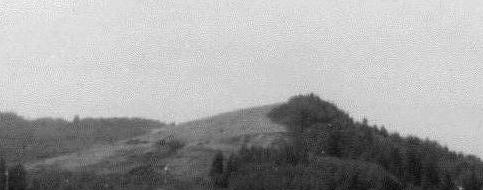
a hill at Elkwater Lake ... coniferous woods and grassland on the same hill
The track was not much more than two ruts, worn into the grass. It curved up the side of the hill, so the approach was gentle, gradual. Then, abruptly, the hilltop. If the wind was right, I could surprise the deer. They yarded there, grazing the grasses, etching paths into the meadow.
If the wind stayed in my favor, the deer would linger, chewing their cuds, watching me, but not registering my difference. As long as the wind blew I could watch, but if it settled, my scent would reach the deer. They would lift their heads and tails and be off in a few zigzag bounds.
deer yard
on a flat-topped hill
~
1.
below the hill is the distant prairie
speargrass and grama grass
and the sweetgrass hills of Montana
~
the grass at my feet is different
fescues of the Cypress Hills
flat-topped remnants of the Great Plateau
untouched by glacier scour
~
2.
bless the wind
it sorts the grasses
lifts each hair
ruffles the limp and fine
~
wind nudges the stubble
the artist’s bristle
the tail hairs of the doe
the chop of fresh grass
~
her gentle cud
her watchful eyes
wind in the spokes
of the mule deer wheel
~
the trampled paths
a game of fox and geese
or the part teased by wind
into sun-blond hair
~
3.
if the wind takes a breath
if the grass or the hair
settles on the shoulder
of the hill
she runs!
~
seeks the safety
of the downslope
downwind
trees
~
4.
fescue
curious on this flat-topped hill
its rightful place
the ancient prairie
~
Published as: “deer yard on a flat-topped hill”, 2010, Canadian Stories 13 (76)
(revised)
© Jane Tims

deer on the grasslands of Nebraska (2002)
a place to wait, out of the rain
My husband and I love to go for drives in the countryside, and we often turn these trips into ‘expeditions for collection’. For example, in 1992, we began a project to see all the covered bridges in the province; of the more than 60 covered bridges in New Brunswick, we have ‘collected’ about three-quarters. Recently, we began a quest to see as many waterfalls as possible (the state of my arthritic knees puts the emphasis on the ‘as possible’).
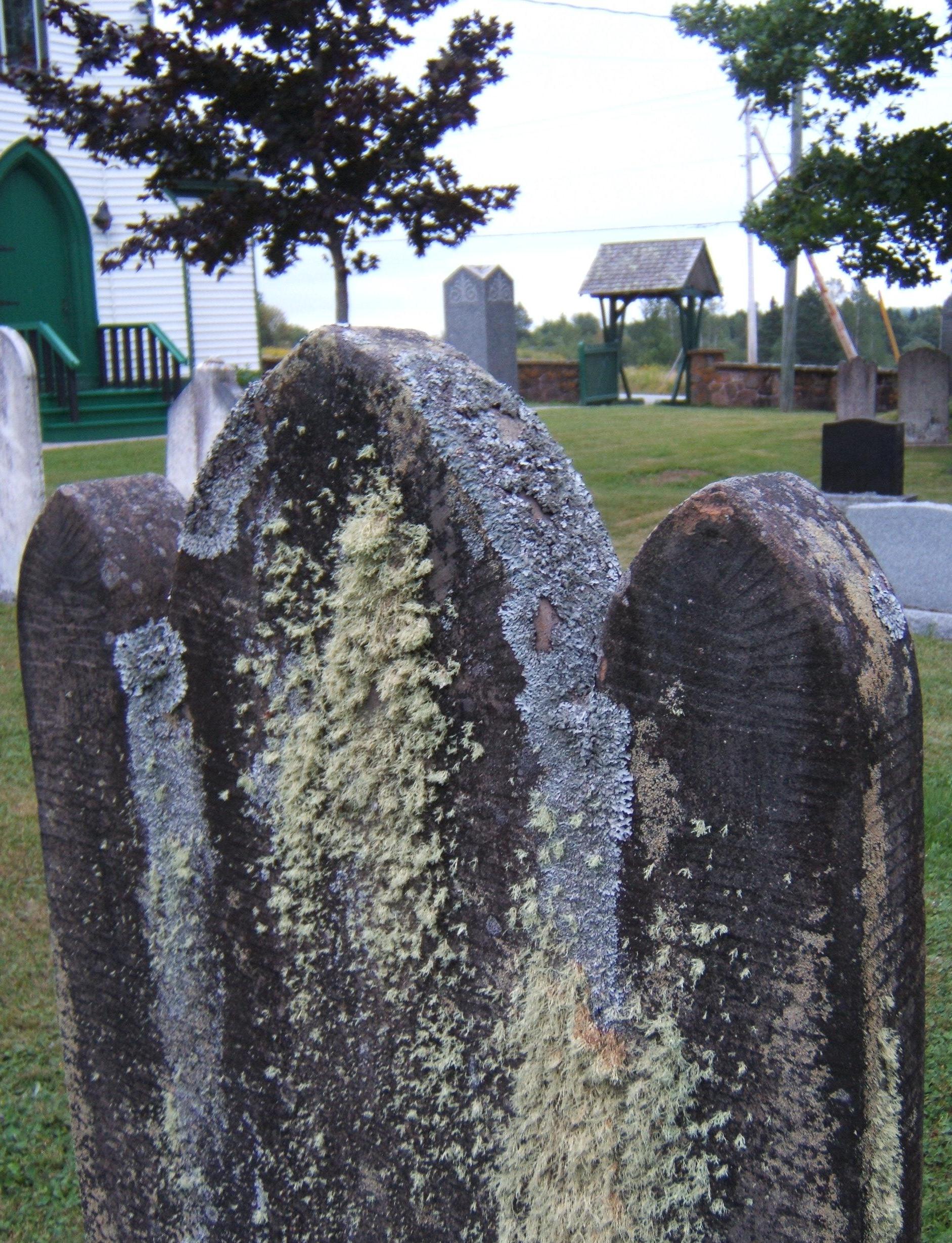
This spring, we set out with a very reasonable goal, to see the three lychgates at Anglican churches in the Diocese of Fredericton (all of the Parishes in New Brunswick are located in the one Diocese). This idea came from a short article in the New Brunswick Anglican in 1997 by Frank Morehouse (‘Only three lych gates remain in the diocese’). The three lychgates are at St. Anne’s Chapel in Fredericton, St. James Church in Ludlow, and St. Paul’s Church in Hampton.
Lychgates are an architectural remnant of past practice, dating back to the 13th century. They were used as a part of the funeral service, a place for the priest to meet the body of the deceased on its way to burial, and a shelter for the pall bearers to stand out of the rain. The word lychgate comes from the Anglo-Saxon word lych meaning corpse.
A typical lychgate is made of wood, and consists of a roof supported by a framework of two or more posts, and a gate hung from the framework. Lychgates usually stand at the entrance to the church property or the graveyard. They can be architecturally ornate.
Today the lychgate is a picturesque feature of the churchyard, but they also create habitat for wild life. Spiders tuck their webs in the rafters of the structure where they are safe from wind and rain. The shingled roof of a lychgate is often a place where lichens and mosses can grow without competition from other plants.
Our collection of lychgates at Anglican churches in New Brunswick is complete. We found the lychgate in Fredericton on a rainy day in April…
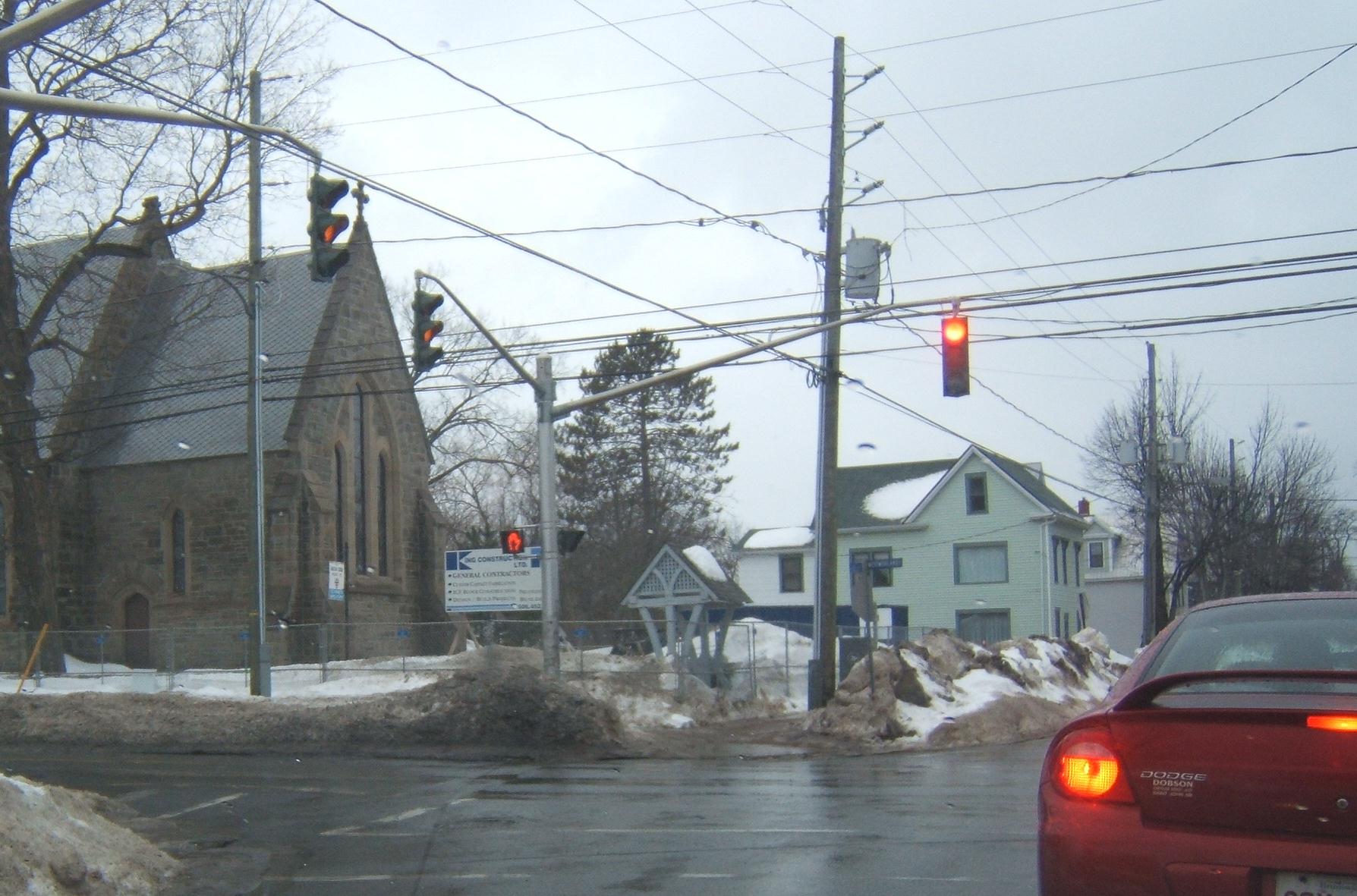
lychgate at St. Anne's Chapel in Fredericton, on a rainy day
… the Ludlow lychgate on a hillside in early July…

- lychgate at St. James Church, Ludlow

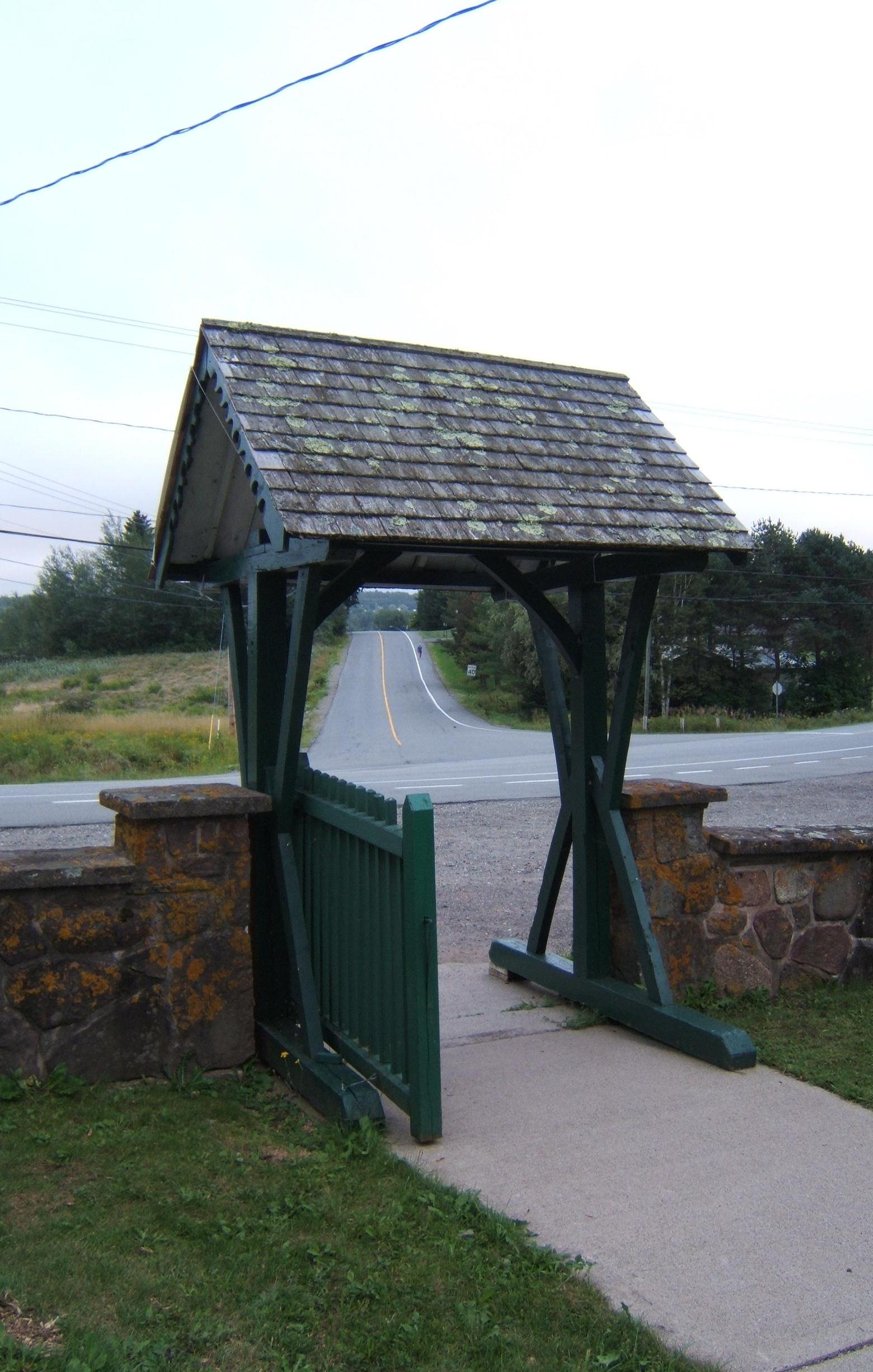
lychgate at St. Paul's Church, Hampton... green lichen on the lychgate roof and orange lichen on the stone wall
a place to wait, out of the rain
~
as if the rain matters
all of us drenched in tears
best for this to be
a grey day
heaven opened
for two way passage
~
the Sentences encourage me
to lift my eyes
and in the rafters of the lychgate a spider
spinning its web
~
as if it were a tale that is told
about a roof that protected me
the sun shall not burn thee by day,
neither the moon by night
neither the rain
~
(quotations in the poem are from The Book of Common Prayer, ‘The Order for the Burial of the Dead’, Canada, 1962)
© Jane Tims 2011
a map of my grandfather’s farm
“My grandfather’s farm was like a community itself, a miniature village of buildings. They included the main house, the big barn and various out-buildings. In my memory, there were about eight buildings in all, each with its own purpose, and its own sights, sounds, smells, tastes and stories.” (August 1, 2011, on my grandfather’s farm)
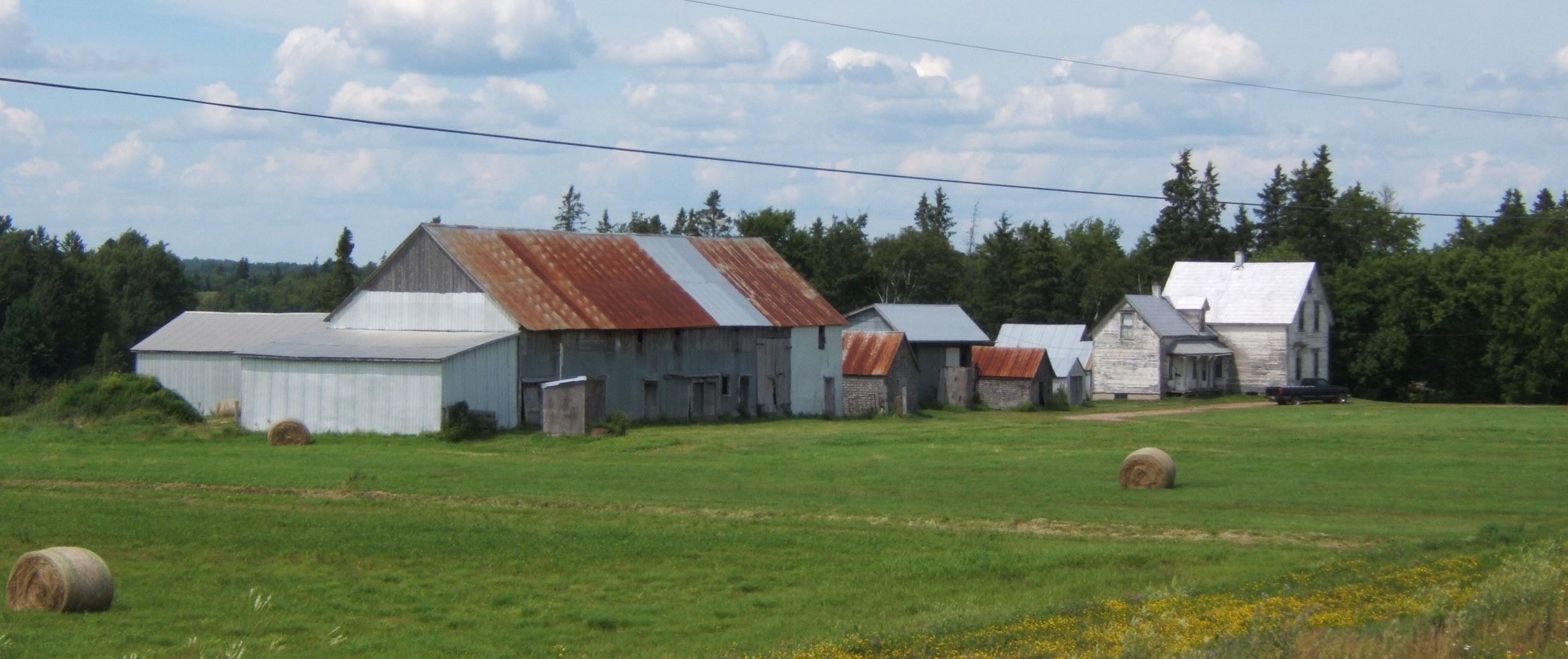
a farm near Moncton ... like a village of buildings
Below is a map of my grandfather’s farm, as I remember it.
The buildings were in a setting of the spaces around them – the orchard, the pastures, the barn yard and the garden.
Some of the buildings, the barn, the house, the mink pen, the garage and the bird loft, I remember very well. Other buildings, the wagon shed, the machine shed, and the shed beside the pasture, I remember only a little. Since my brothers and sister don’t remember these last three at all, or remember other configurations, perhaps these buildings are part of a manufactured memory.

a simple map of my grandfather's farm (not to scale)
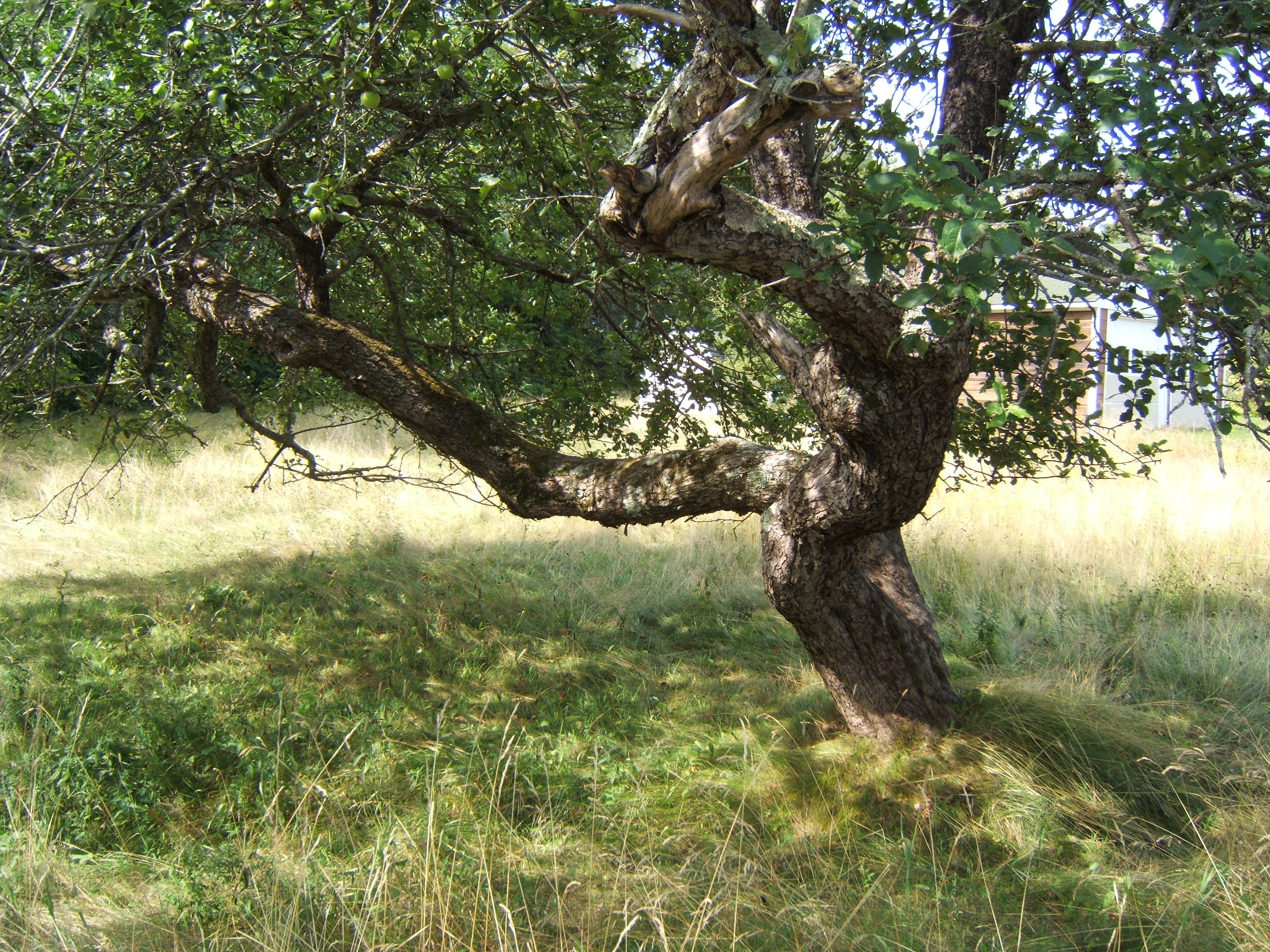
an apple tree like the one I remember, with a branch made for sitting and reading
deep waters – Clear Lake
As a result of my work, I have been privileged to see some remote, very special places in New Brunswick.
One of these is Clear Lake, a pristine lake in the south west area of the province. To reach Clear Lake, we canoed across Sparks Lake and made the short portage from Sparks to Clear. The portage crosses the narrow divide between two watersheds – Sparks Lake eventually flows into the Magaguadavic River, while Clear Lake is part of the Pocologan River system.

topographic map showing Clear Lake, Horseback Lake and Sparks Lake
Clear Lake is a deep lake with remarkably clear water. Lake depth measurements from the New Brunswick Aquatic Data Warehouse show the maximum measured depth to be 29.6 meters (97 feet), although deeper depths have been recorded. Stones on the bottom of the lake look like they are only centimetres away, but when you put your hand into the water, you quickly realise they are far out of reach.

standing beside Horseback Lake, a small lake just west of Clear Lake, October 1992 (photo by J. O'K.)
Clear Lake
~
behind us
dry leaves settle
waves on Sparks and Redrock
~
Clear Lake
bottle blue
silences our chatter
reeds and aluminium
whisper
~
we glide
~
between islands
group of seven trees
flung southward
quartz cobbles
rim the shore
dark Porcupine
bristles with conifers
tangled in the surface
plunge eighteen fathoms
to a cove
gathered in arms
of granite and pine
a cabin perched green
shadows peering
over the edge
~
sudden and silent
sunken logs
caressed by crescent suns
cast through ripples
only a touch away
~
through the mirror
shattered
numb fingers search
down
down
~
essence always
out of reach
~
dissolved
in the clear lake
~
Published as: “Clear Lake”, 1999, River Revue 5
(revised)
© Jane Tims
a woodland stream in southern Alberta
When we were children, living in Alberta, Mom and Dad took us for drives on the weekends. Usually, we explored the prairie roads or the landscape of the South Saskatchewan River. Sometimes, though, we sought the wooded areas of southern Alberta.
A place we visited more than once was a small wooded stream in the Cypress Hills. We called it ‘Greyburn Gap’, probably after the nearby community of Greyburn’s Gap. The site had a picnic table and shelter, woods to explore, and the little stream.
The Cypress Hills area is an eroded plateau, rising above the Alberta and Saskatchewan prairies. It was left unglaciated during the last ice age and has a flora and fauna much different than the surrounding prairie. Part of the Cypress Hills is protected as the Cypress Hills Interprovincial Park.

Elkwater Lake and the wooded landscape of the Cypress Hills Interprovincial Park as they appeared in 1967
My parents were raised in Nova Scotia and were accustomed to the forests of the Atlantic Provinces. The Cypress Hills, and the woods of Elkwater Lake, where we had a cabin, must have helped them feel more at home in Alberta.

mixed woods of Elkwater Lake area (2002)

our cabin at Elkwater Lake (1967)
Greyburn Gap, Alberta
~
I remember a brook threaded through the trees like string
black water in the gap between gossamer and fern
a fence to mark its moving a fallen fir
to tangle its water our hands
trailing in the eddy
~
a jug of root beer sunk to the neck to move the brook’s cold shiver
into our summer bodies
~
© Jane Tims, 2011
watching the wind
The wind fills empty air space with movement and sound. When the wind blows, the void above us suddenly has form and power and dimensionality. It can lift a kite. It can steal a balloon. It can fill the air with dandelion fluff. It can convince you a seagull lives to soar.
My favourite way to ‘see’ the wind is to watch clothes drying on a line. Colourful towels, flowered table cloths, patterned pyjamas, and white cotton underwear. They sway together and lift as the wind catches them. Surely the whole line will sail away.
Do you have a clothesline and do you hang out your bedding to dry?

a clothesline in the countryside
Hanging out bedding to dry
~
by the last acre
of oat field
grown golden in the sun
and wind
~
wet sheets billow
up
up and outward
the long husks of the grainheads
sigh like pebbles
sorted by the sea
~
pillowcases
pegged to a blue horizon
tug at the line
cedar masts are set
firm in the island till
~
quilts and coverlets
spinnaker and mizzen
carry me
over the wind-washed
waves of grain
~
Published as: ‘hanging bedding to dry’, Summer 1995, The Amethyst Review 3(2)
© Jane Tims
niche beneath waterfall
This past weekend, we made a visit to two of New Brunswick’s waterfalls: Erbs Falls and Smith Falls, both on the Kingston Peninsula.

Erbs Falls begins as a quickening of the water of Peters Brook in a narrowing gorge.
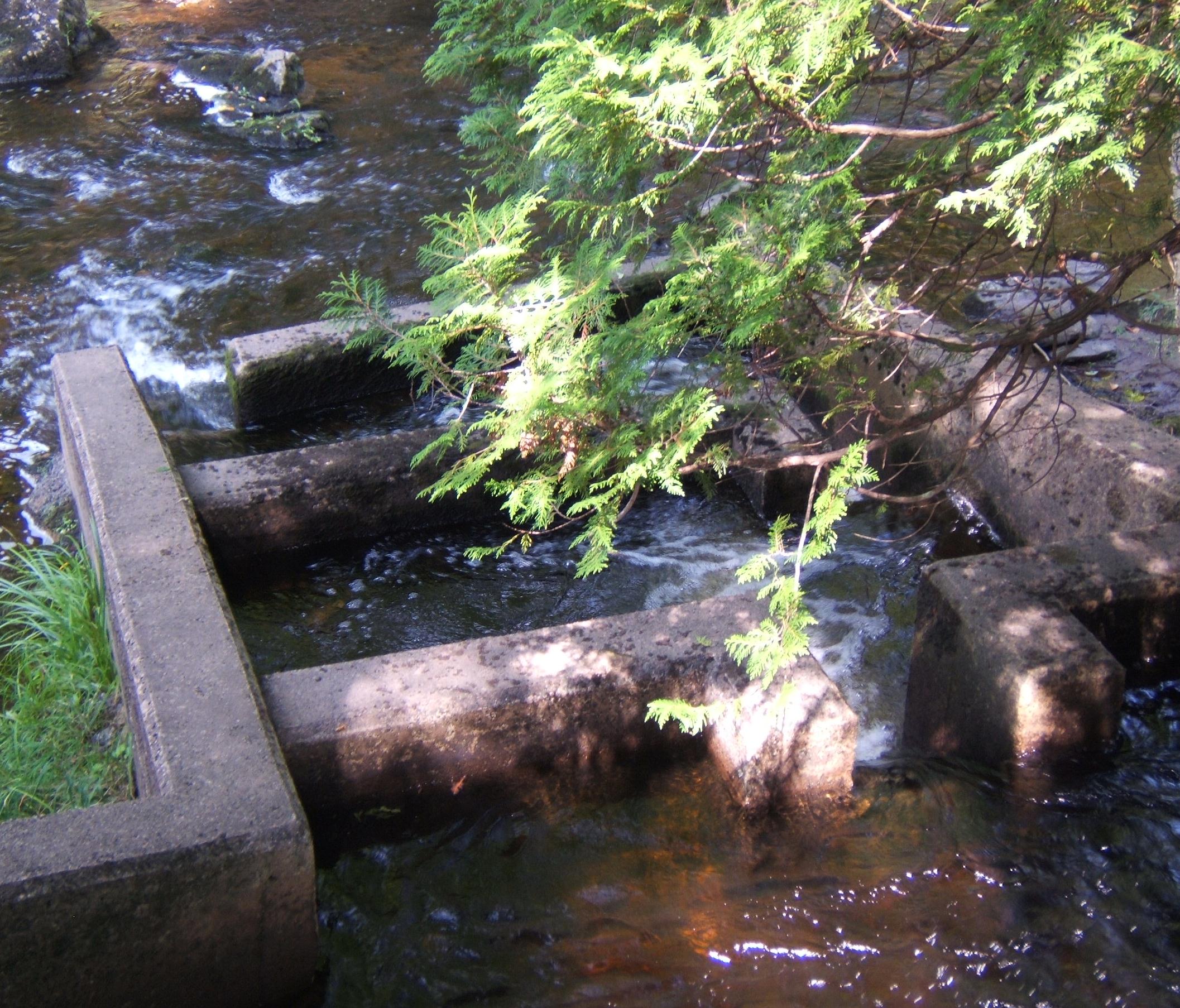
At this time of year, the water proceeds in one of two pathways, down the labyrinth of the fish ladder…

…or into a deep, narrow gorge through the bedrock…

… to emerge into the sunlight as Erbs Falls.

Smith Falls begins as a series of smaller falls in the brook. The path runs along the brook, so we saw every ripple and dip.
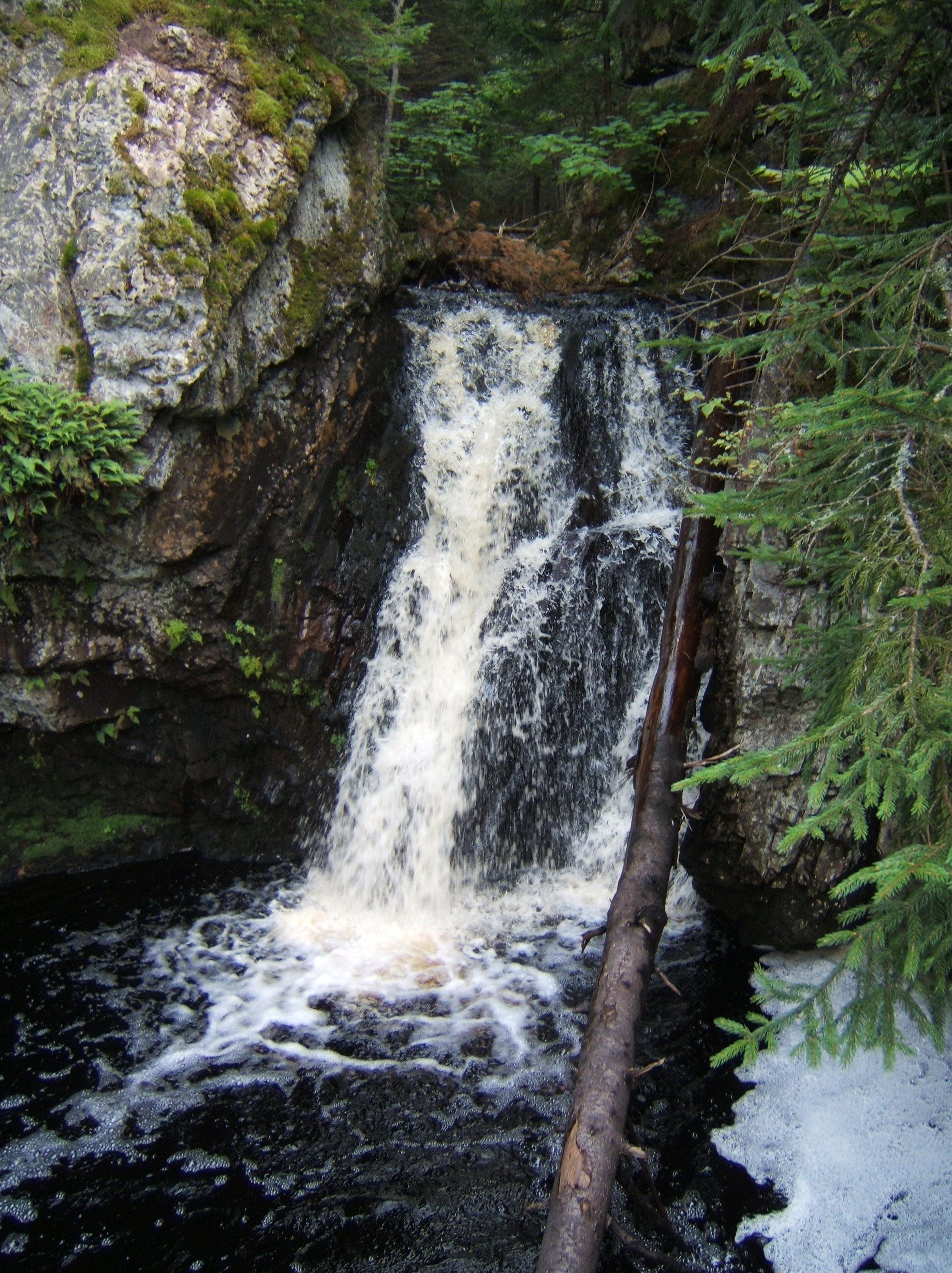
The water plunges over the lip of the falls…
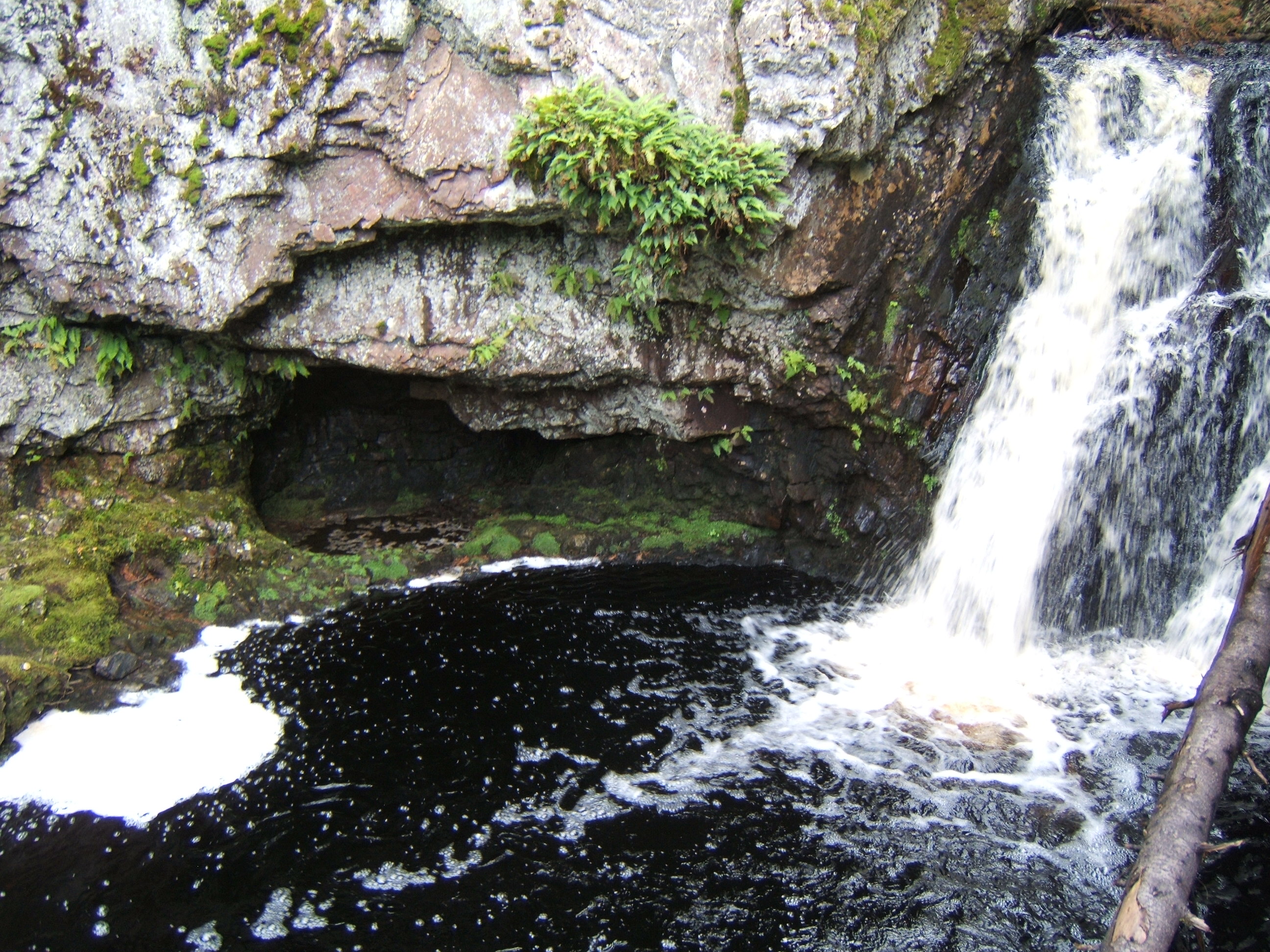
…flows past a small cave…

… and forces its way between rocks over the lower part of the falls.
Waterfalls are the ultimate experience of water. At the base of the waterfall are the mingled sounds of the thundering water and the gurgle of the stream. The shade and mists are cooling, refreshing. Sneakers get wet, hands are washed in cold water, and balance is tested as you follow the downward path of the waterfall.
I also like to think about the shape of the rock under the falls. I watch the spout and flume of the water to see what solid shapes beneath the flow have shaped the waterfall. I try to see through the white curtain of water to see the rock and stone, and understand how they are both revealed and concealed by the waterfall.
beneath waterfall
~
what can I do
to cover me
feign a drip of waterfall
from a single eye
or a flume
from the fluid of two
~
shall I arrange
my hair to hide beneath
my skin a wasp-nest
paper waterfall
hung lightly
~
who will see me
if I place my hands on rock
freckles are dapples of sun
fingernail glints of mica
or whorls in fingerprint
swirl like water
~
the spare notes of white-throat
or fluid jubilee of robin
flow over, compose sheet
music of quarter notes
to cover me
~
sitting here
on the edge of the bed
far from waterfall
electric fan for breeze
electric bulbs for sparkle
down-filled white duvet
to hide beneath
~
© Jane Tims 2011
water from the well
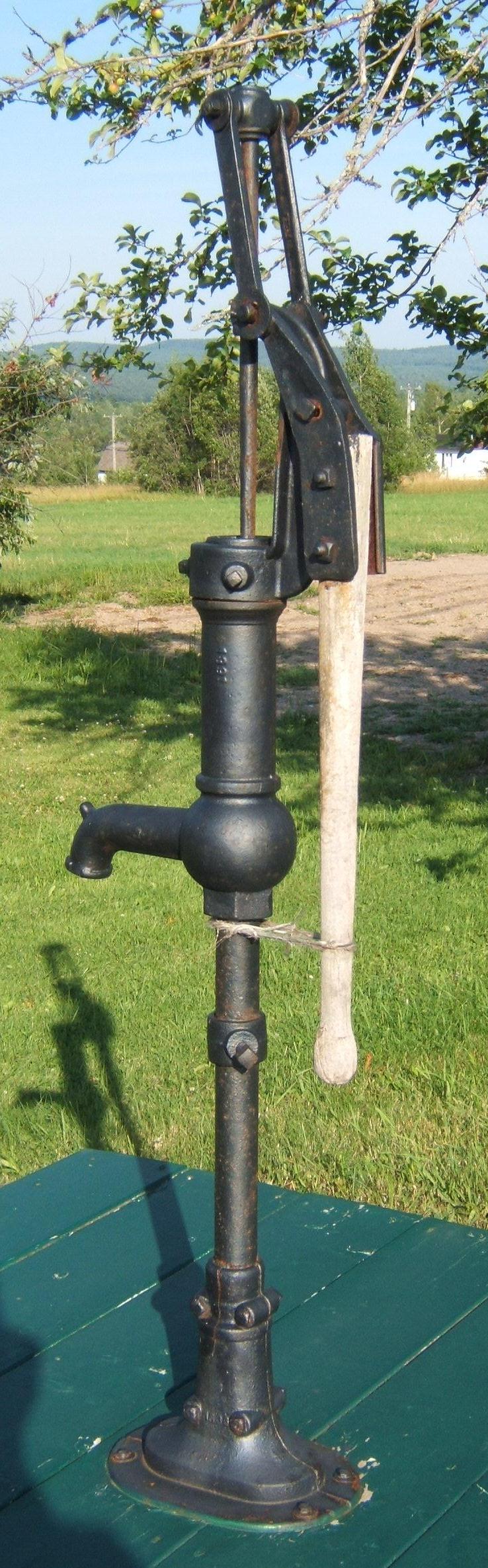
an old-style water pump
water from the well
~
taps in the house
running water hot and cold
why did my grandfather
carry in from the well
two pails of water each day?
handle pumped
well primed
~
he filled three buckets
one he poured
half into Dandy’s bowl
half he left beside the well
for the next day’s prime
~
two he lifted to the narrow step
set them down
opened the screen door
with a squeak
shut with satisfying thunder
~
carried the pails into the entry
set them down
settled his cap on a hook
row of hooks made of wire
hangers bent double and painted
~
carried the pails to the white door
a narrow door
with a latch
set them down
opened the door and climbed the stair
returned in a minute or so
carried the pails
into the kitchen
~
set one next to the sink
by the inside door
where I brushed
my teeth in the morning
enameled metal
narrow mirror
one tap for warm water, one for cold
wire basket for a bar of soap
and a bucket of water
cold from the well
~
set one pail in the pantry
narrow room by the woodstove
lined with shelves
counter where my grandfather
kneaded his bread
rolled the crust for pie
metal canister for sugar
ice box for milk and eggs
and a bucket of water
cold from the well
~
© Jane Tims 2011
the location of our picnic table
Back in our grey woods is a place we don’t visit regularly any more. Our picnic table is there, in a mossy area among mature spruce and fir, at the top of a slope. It overlooks a wet spot in the woods. In the spring the wet area becomes an ephemeral stream, and a series of vernal pools among the mosses and ferns.
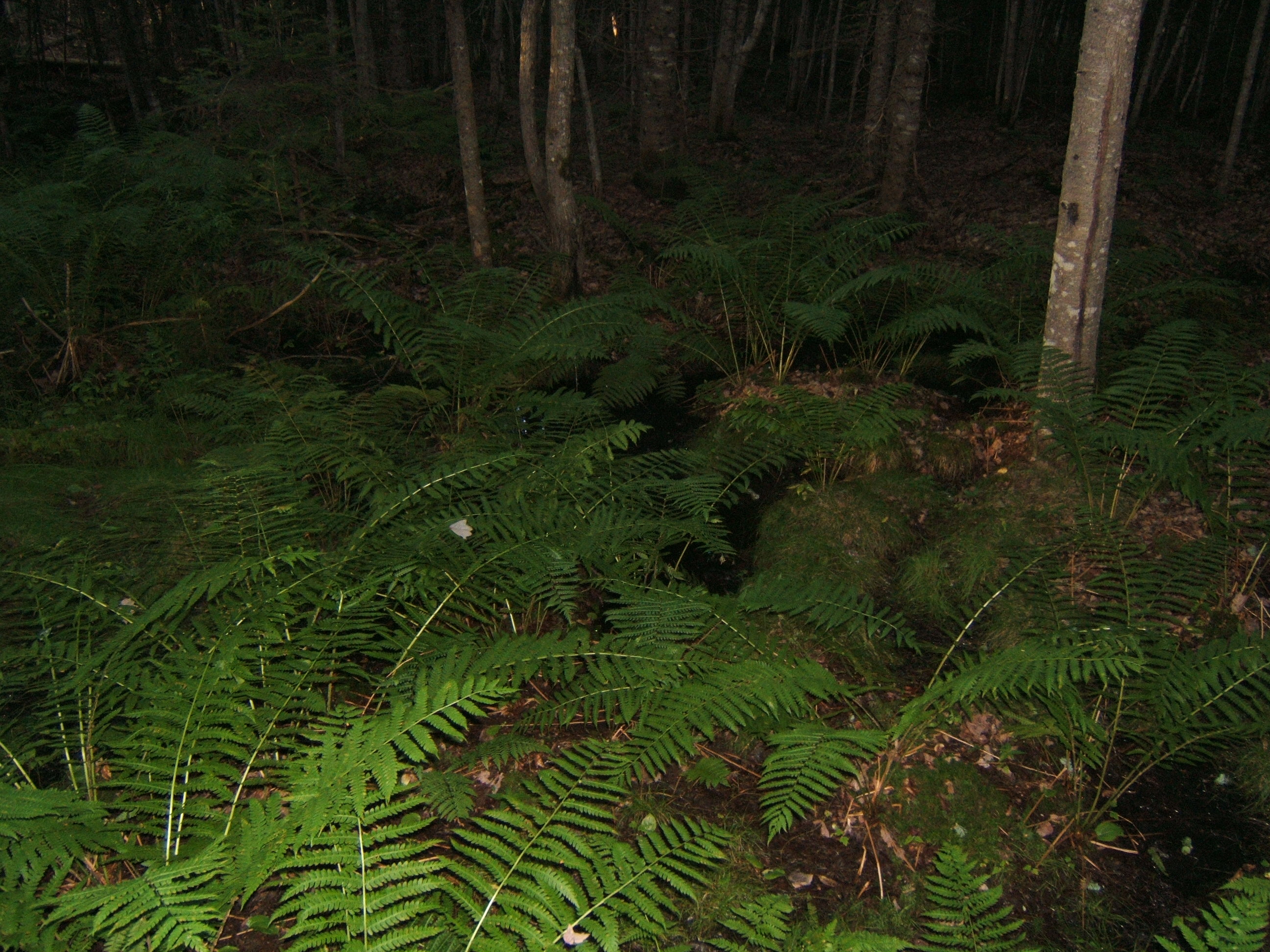
down-slope of the picnic table is a ferny area with an ephemeral stream... the dark areas in the photo are pools of water
Once, almost 28 years ago, the space was perfect for our new picnic table. The table was given to my newborn son by his Great-Aunt Jane and we took considerable care in choosing its location.

our picnic table in the woods
In years past, we took a picnic lunch there regularly. Sometimes I went there to write.
Today I pass the table when I follow the path through the woods, but I haven’t stopped to eat a picnic there in years. Another family has taken over, probably of Groundhogs (Marmota monax). They have built a labyrinth of burrows among the tree roots in the soft soil of the slope. Where each burrow exits is a mound, the remains of deep-earth excavation. One of the six burrow openings is larger than the others. My reading tells me this complex of burrows and exits provides quick escape from predators, a place to store food, and a place to hibernate.

the main entrance to the burrows, under the roots of a fir
Once this place was the ideal location for our new picnic table and our family picnics. Now the same site is perfect habitat for the Groundhog family.
concerning the location
of our new picnic table
~
share a meal with the unknown
to make it your friend
~
we find a clearing
near the path
where the sun will shine at noon
where we will not have to cut the trees
where the neighbours’ voices
and the passing cars
are quiet
~
we load the picnic table
into the cart
haul it through the woods
behind the Yamaha
~
we eat peanut butter sandwiches
and applesauce
drink cola
and sunshine
~
we laugh
make friends with the woods
and with each other
~
© Jane Tims 1983
hidden in the hollow heart of an oak
Hollow trees create mysterious spaces in the woods.
When I was young, a hollow in a tree was a secret hiding place for treasures, and one of my favourite books was a Nancy Drew mystery – “The Message in the Hollow Oak”. In the story, a hollow tree is used as a secret mailbox between long lost lovers.
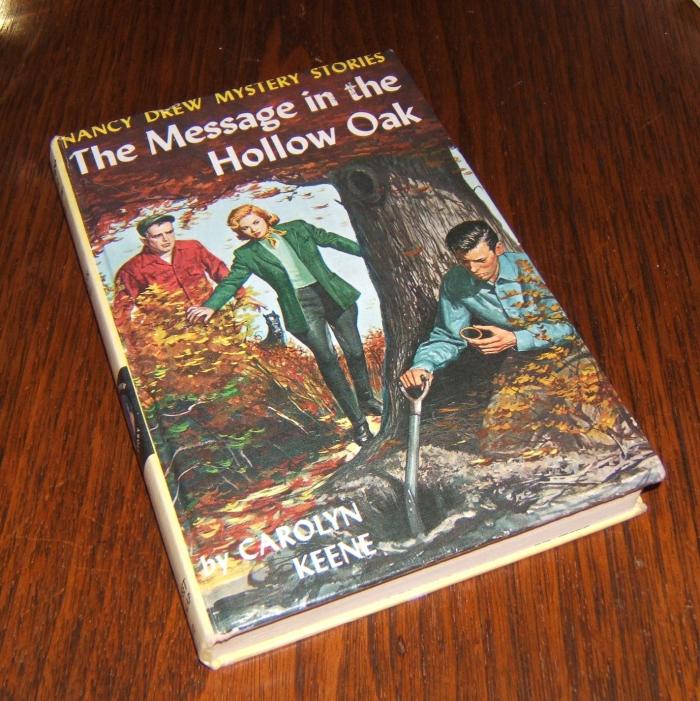
- Carolyn Keene 1935 The Message in the Hollow Oak (a later edition, probably around 1965)

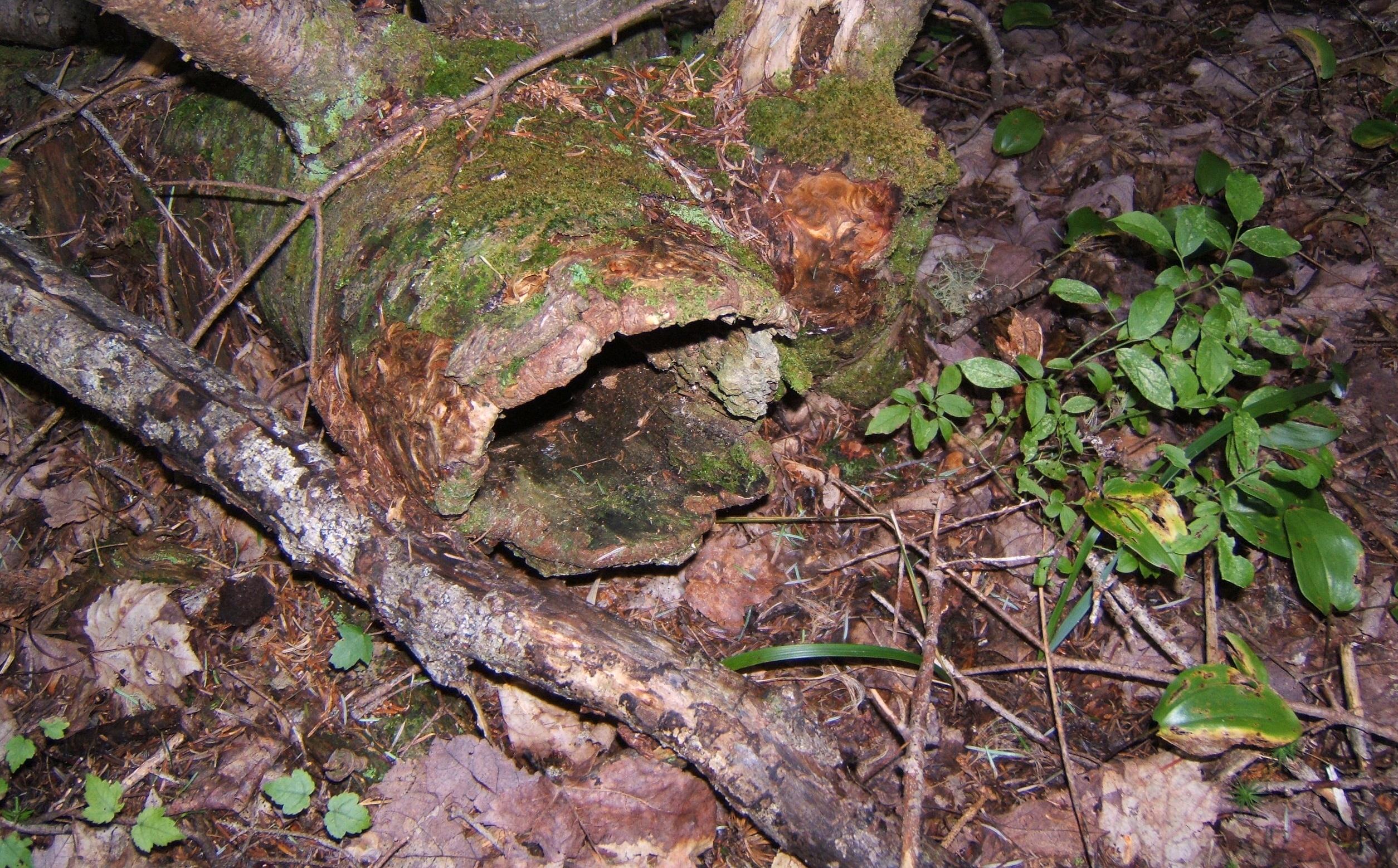
a hollow log in the woods
Cavities are usually found in mature trees. Their importance as habitat is a good reason for protecting older, mature trees in the woodlot. When my son was young, we made wooden signs saying “DEN TREE” for the older hollow trees in our woods, so we would remember not to cut them down.
Do you know a hollow tree and would you reach into the cavity to retrieve a letter???
requesting the favour of a reply
~
these leafless trees
brush against
a linen sky
ink strokes
on rice paper
letters
penned at midnight
~
hidden in the hollow
heart of an oak
afraid to reach in
to feel only
curls of bark
desiccated leaves
~
these trees
all seem the same
empty envelopes
parchment ghosts
~
branches tangled
messages
lost
~
black spruce scribbled on sky
~
Published as: ‘an answer in silence’, Spring 1995, The Cormorant XI (2)
(revised)
© Jane Tims