Archive for the ‘writing’ Category
places for writers … writing workshops – part one

St. Thomas University workshop ‘Understanding Our Stories’, facilitated by Deborah Carr, 2015
~
For a writer, spring is often a time for attending writing workshops. Last month I attended part three of a workshop about writing life stories. In the next couple of months, I plan to attend short courses as part of the Writers’ Federation of New Brunswick’s WordSpring weekend, and a workshop about nature writing ( http://www.natureofwords.com/writing-workshops/write-in-nature/ ).
~
Partly because my current fiction project ‘Crossing at a Walk’ is about a writers’ retreat, I have been thinking about the spaces where writing workshops are held. I have attended workshops at hotels with comfortable meeting rooms and lovely gardens. I have also been at workshops in huge community auditoriums and cosy private homes. One year my writing group went to a retreat at the Abbey in Rogersville in eastern New Brunswick and experienced simple dormitory surroundings in a very spiritual setting.
~
Some of the rooms have been so noisy or full of echoes thinking is impossible. Some spaces are quiet, meditative. Auditoriums can be freezing cold. Workshops in summer can be stifling and hot. I remember one July week at the University of New Brunswick during the Maritime Writers’ Workshop … every writer in the poetry workshop had an electric fan. Our instructor shook her head and said, ‘Those poets, they want to carry their own space with them!’
~
I think the most variable aspect of space in the writers’ workshop is the ‘chair’. Some are comfortable, built to allow both body and mind to relax. At one workshop the designer chairs were so flimsy, I spent the entire time worrying I would fall to the floor!
~
Although I have attended many workshops on writing, in many different spaces, I continue to benefit from these experiences and to learn more about the craft of writing.
~
- Every workshop facilitator or leader offers a unique perspective on approaches to writing. It is rare for me to leave a workshop without some new technique or method for improving my writing.
- Writing workshops cover a variety of themes. I am a writer of poetry and fiction, but I have received some of my most valuable training from workshops about writing screenplays and non – fiction.
- Learnings can be so simple, obvious even. For example, it seems I have to be reminded, over and over, to try techniques such as writing from the perspective of various characters.
- Workshops create an opportunity to meet other writers. Meeting old and new friends and renewing past acquaintances is a constant source of inspiration for me.
- The workshops I attend contribute to my own history of being a writer and demonstrate my interest in the writing community and in improving my skills as a writer. Even retired, I continue to build my resumé since publication and grant applications are an important part of my writing life.
~
Hot or cold, noisy or quiet, on chairs designed to break backs or to summon comfort, the workshop space itself can be a source of experience and inspiration. A lot of those chairs, cold spaces and pinging echoes have found their ways into my writing. For some reason, the places I encounter on the drive home from a workshop also make it into my poems.
~
Have you attended any writing workshops and has the workshop space influenced your writing for better or worse?
~
Copyright 2015 Jane Tims
a preface for a poetry manuscript
~
As followers of my Blog will know, I am working during these first months of 2015 to finalise, for eventual publication, a manuscript of the poetry I wrote for my ‘growing and gathering’ project (see the Category ‘growing and gathering’ for more information).
Now that the poetry is ordered within the manuscript, I have to pay attention to the ‘Front Matter’. This includes:
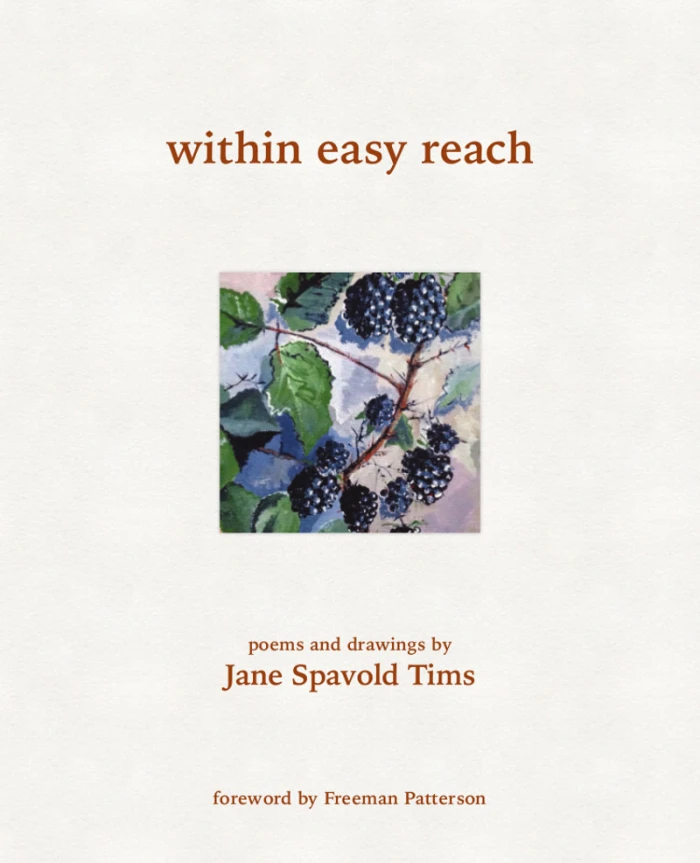
title: ‘within easy reach’
dedication: the manuscript is dedicated to my husband
table of contents: a listing of the poems
acknowledgements: all the people I want to thank and the support of artsnb and the Creations Grant
~
The above four items are straightforward. I needed some information about the next three:
~
foreword
preface
introduction
~
Foreword: written by someone other than the author of the book, usually an authority – celebrates the work and provides credibility.
Preface: written by the author of the book – includes the purpose and scope of the work, explains the origins of the central idea in the book, and may acknowledge those the author wants to thank.
Introduction: written by the author or an editor – includes information on the contents of the book, the author, and the audience.
Source: http://www.quickanddirtytips.com/education/grammar/foreword-versus-forward#sthash.No5DaWpu.dpuf
~
Many of the poetry books I have in my library do not include a Foreword or Preface, and Acknowledgements are often placed in the back of the book. I find this is true of collections where the theme of the poems is not immediately obvious. But collections about a particular subject, such as those about history, often have a Preface or Introduction.
~

~
For example, Jack’s Letters Home (Cynthia Fuller (2006) Stable Cottage, U.K., Flambard Press) includes an Introduction. The book is a collection of gritty poems based on real letters written by a British soldier in the First World War. The Introduction tells the soldier’s history, the story of how the letters were found and a little about the characters in the poems.
~

~
I have two poetry collections by Shari Andrews. Both focus on history. Crucible (Shari Andrews (2004) Canada, Oberon Press) is an insightful collection of poems depicting characters and events in the life of Saint Catherine of Sienna. It includes a Foreword by the poet. The Foreword includes background on Saint Catherine of Sienna, information about the inspiration for the book, and acknowledgements.
~
The Stone Cloak (Shari Andrews (1999) Canada, Oberon Press) is a collection of tactile, sometimes fierce, poems about the lives of settlers of New Denmark in New Brunswick. The Foreword includes information about the poet’s connection to the community and briefly describes the history of New Denmark. It includes acknowledgements.
~

~
Although it is not a book of poetry, in an 1843 edition of A Christmas Carol Charles Dickens includes a brief Preface, consistent with the spirit (!) of his story:
I have endeavoured, in this Ghostly little book, to raise the Ghost of an Idea, which shall not put my readers out of humour with themselves, with each
other, with the season, or with me. May it haunt their houses pleasantly, and no one wish to lay it!Their faithful friend and Servant,
CD.
December 1843.(Source: http://www.themorgan.org/collections/works/dickens/ChristmasCarol/3, accessed February 23, 2015)
~

a ‘grown and gathered’ salad – leaves and flowers of violet, leaves of mint and dandelion, bean sprouts and green onions
~
My poetry manuscript has a very specific theme – the ‘growing and gathering’ of local foods. Since all of the poems are about a particular topic, I think including a Preface is appropriate. I want the Preface for my manuscript to:
- be short (less than a page)
- inspire my audience
- include the purpose of my poems
- provide an overview of the contents
~
When I was young, I always skipped the Preface of any book I read. Now, I read the Preface first, eager to find information about the process the author followed in conceiving of or writing the book.
~
Copyright 2015 Jane Tims
shaping a visual poem
Rather than being a mere mechanism for conveying ideas, words themselves can become a visual part of a poem’s theme or meaning. In a ‘shape’, ‘visual’ or ‘concrete’ poem, the words of the poem are arranged in a way to represent an idea or image from the poem.
The shape poem is a relatively old form and occurs many times in literature. For example, the Mouse’s ‘Long Tale’ in Chapter III of Alice’s Adventures in Wonderland is in the shape of a tail ( http://www.gutenberg.org/files/11/11-pdf.pdf ). Other visual poems include parts of ‘Easter Wings’ by George Herbert and ‘Vision and Prayer’ by Dylan Thomas (see Poetry through the Ages: http://www.webexhibits.org/poetry/explore_21_visual_examples.html ).
~
So, does a poet begin with the goal of creating a visual poem or does the shape of the poem evolve as part of the creative process? For me, the shape suggests itself well into the process, as part of my considerations of line length and punctuation.
~
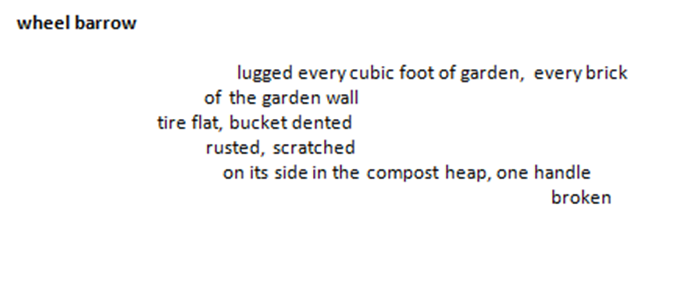
Here is a poem about an abandoned wheel barrow, part of my manuscript on derelict elements of our landscape. Like so many items, this wheel barrow has outlived its usefulness.
~
First, the basic poem:
~
wheel barrow
~
lugged every cubic foot of garden, every brick
of the garden wall
tire flat, bucket dented
rusted, scratched
on its side in the compost heap, one handle
broken
~
And now, as a shape poem:
~
~
Children are often asked to write shape poems as an introduction to writing poetry. Writing a shape poem can be a challenge for any writer and a way to explore ideas about line length, punctuation and word choice.
~
Copyright 2015 Jane Tims
words from the woodland – where branches touch

‘birch trees’ Jane Tims
~
fear of heights
~
as dizzying to look up
in the forest
as down
into the abyss
~
the trees taper so
~
they lean
water birch
against fir
rubbed raw
where branches touch
or reach for one another
~
and sudden, wrenching sounds
a branch swings back or breaks
loosed by a squirrel
burdened where crows complain
~
or where a warbler scolds
teacher teacher teacher
~
~
Copyright 2015 Jane Tims
take flight, metal wings, take flight
A fellow blogger recently suggested a different way to present poetry in a post – to give a little background on the poem’s origins and perhaps show the evolution of the poem from draft to ‘final’ stage.
~
Sounds like fun!
~
The poem below began with a watchful eye. I am always on the lookout for an image to inspire a poem. Walking the path to the door of our house, my mind was on the rain, the warmish day and the forecast, an expected return to freezing temperatures.
~
I spotted the bird bath, full of leaves and melted water. And perched on the edge of the bird bath, a moulded metal bird. This bird is bolted to the edge of the bird bath’s copper rim. Presumably he is there to attract the real birds. But since no real birds use the bath, he is the only one ever there. My relationship with this metal bird is mixed. I like its quiet perching on the edge of the bath. I like its rusty patina. I don’t like its occasional disappearance when its metal bolt lets go. Then, I have a struggle to find its little metal body in the thick layer of leaves under the bird bath.
~
So this is the set-up for the poem – a day of January thaw, melt water everywhere and knowledge the metal bird will not stay put.
~
First, a photo of the metal bird. The words ‘take flight’ were bumping around in my brain and I knew I would have a poem from this. I want this poem to be about opportunity, about taking change and turning it into possibilities for an altered future.
~

I’m a poet, not a photographer …
~
Then, I grabbed my ‘rough book’, the place where every poem I ever write begins. Sometimes, I hand-write several drafts, but in this instance, I felt like typing, so I copied the rough draft into the computer, almost word for word, but not quite.
~
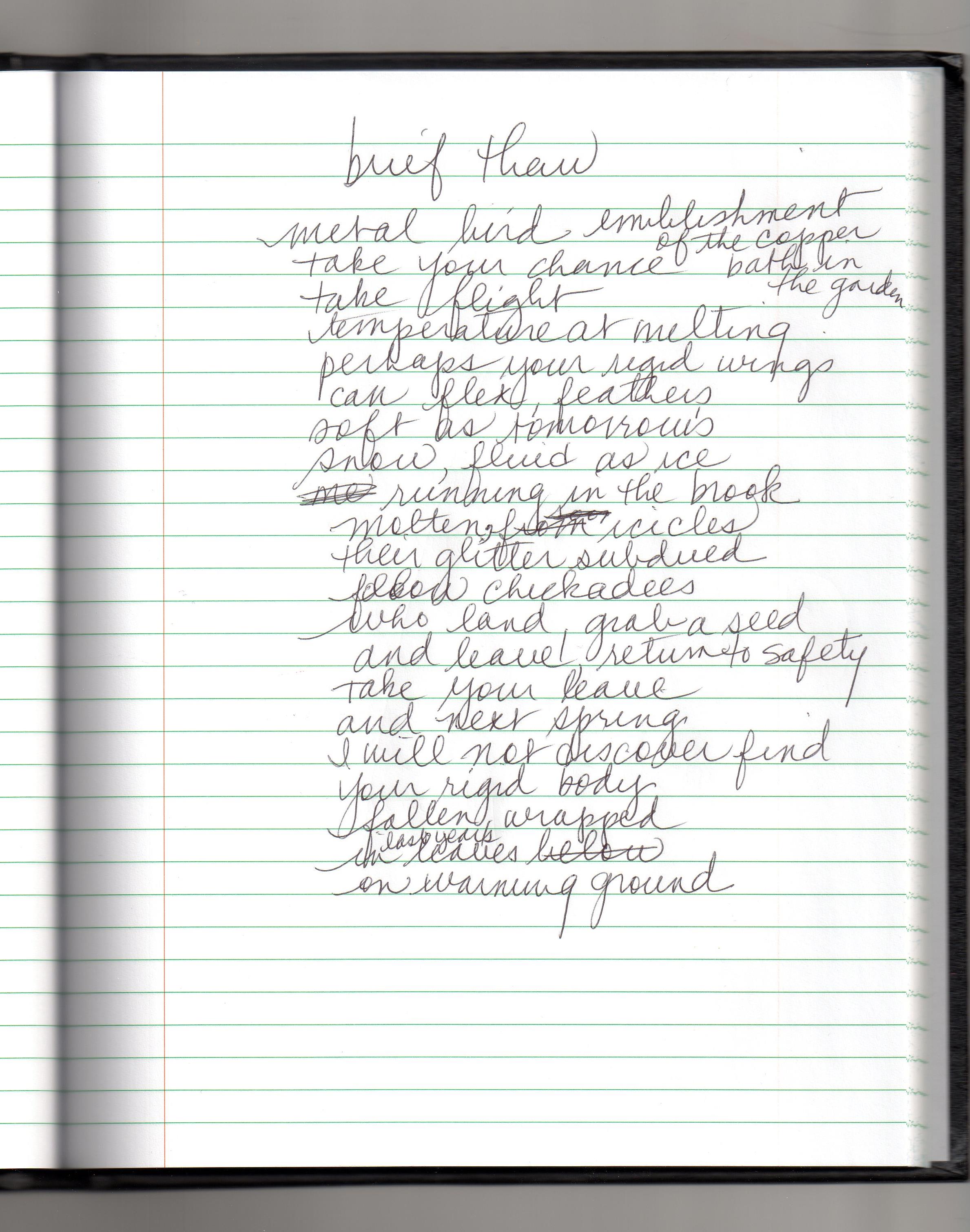
~
brief thaw
2nd draft
~
metal bird, embellishment
of the copper bird bath in the garden
take your chance, your flight
temperature at melting
perhaps your rigid wings
can flex, find feathers soft
as tomorrow’s snow
fluid as ice now running
in the brook, molten icicles
their glitter subdued
follow chickadees who land
grab a seed and return to the
woods for safety, take your leave
and next spring I will not
find your rigid body fallen
wrapped in last year’s rotting
leaves on warming ground
~
So that is the rough poem. I like it. It flows, it contains some interesting metaphors, and it captures the possible flight and altered future of the metal bird. It needs editing.
~
For the next draft, I ‘press’ on words, getting rid of some, replacing others. I annotate the earlier draft, finding places where I like the flow, where I find internal rhyme or alliteration. In this poem, there are lots of words about metal, and I hope to include others. I change ‘ing’ words and the past tense to verbs in the present when possible.
~
brief thaw
3rd draft
~
metal (iron) bird, (silver-plated ?) embellishment
of the copper bird bath in the garden (doesn’t matter if it is in the garden)
take your chance, your (take ?) flight
temperature at melt (title says this)
perhaps your (rusted?) rigid wings
can flex, find feathers soft (fine?)
as tomorrow’s snow (when, last week ? next week ?)
fluid as ice, now running runs
in the brook, molten icicles
their glitter subdued
(take flight ?)
follow chickadees, who land
grab a seed (from the bird bath ????) and return fly to the
woods for (woods for ?) safety (of the trees ?) , take your leave (take flight ?)
and (and or/ore) next spring I will not (not ?)
find your rigid (rigid ?) body fallen (fallen ?), wrapped
in last year’s rotting muck rot of
leaves on warming (new-warmed?) ground
~
Well, I made a complete mess. Perhaps the fourth draft will be an improvement.
~
In the fourth draft, I incorporated the above ideas, and made a lot of changes. For example, I tried some different approaches to stanza … some of my poems are very irregular in their stanza breaks. I think this poem needs stanza breaks to help the reader. I also wanted to repeat ‘take flight‘ at intervals in the poem. Although I considered stanzas of three and five lines, my final decision, four stanzas of four lines, was based on the syllable counts of the lines and the sloping shape of each stanza. I am a rabid syllable-counter. I find it helps me decide what words are not needed at all and makes me consider alternatives.
~
brief thaw
4th and (for now) final draft
~
iron bird, embellishment
of the copper bird bath
take your chance
take flight
~
perhaps your rusted wings can
flex, find feathers, fine as
next week’s snow
take flight
~
molten as icicles from
the feeder where chickadees
seize a seed
take flight
~
or next spring find your metal
body rigid, wrapped in
last year’s rot
of leaves
~
take flight
~
~
Before I make further changes to the poem, I will read it aloud several times. The repetition of ‘take flight’ may have to go. Notice, I have not changed the title of the poem … that could change, although I like not mentioning the actual thaw in the poem. The title is a great place to add other information for the reader and I often forget this opportunity.
Do you have suggestions for other changes I could make to the poem? I welcome your comments!
~
Copyright 2015 Jane Tims
first and last and in between

~
This past Saturday, I worked to create a manuscript of some poems I have written on the theme of discarded and abandoned elements of life and landscape.
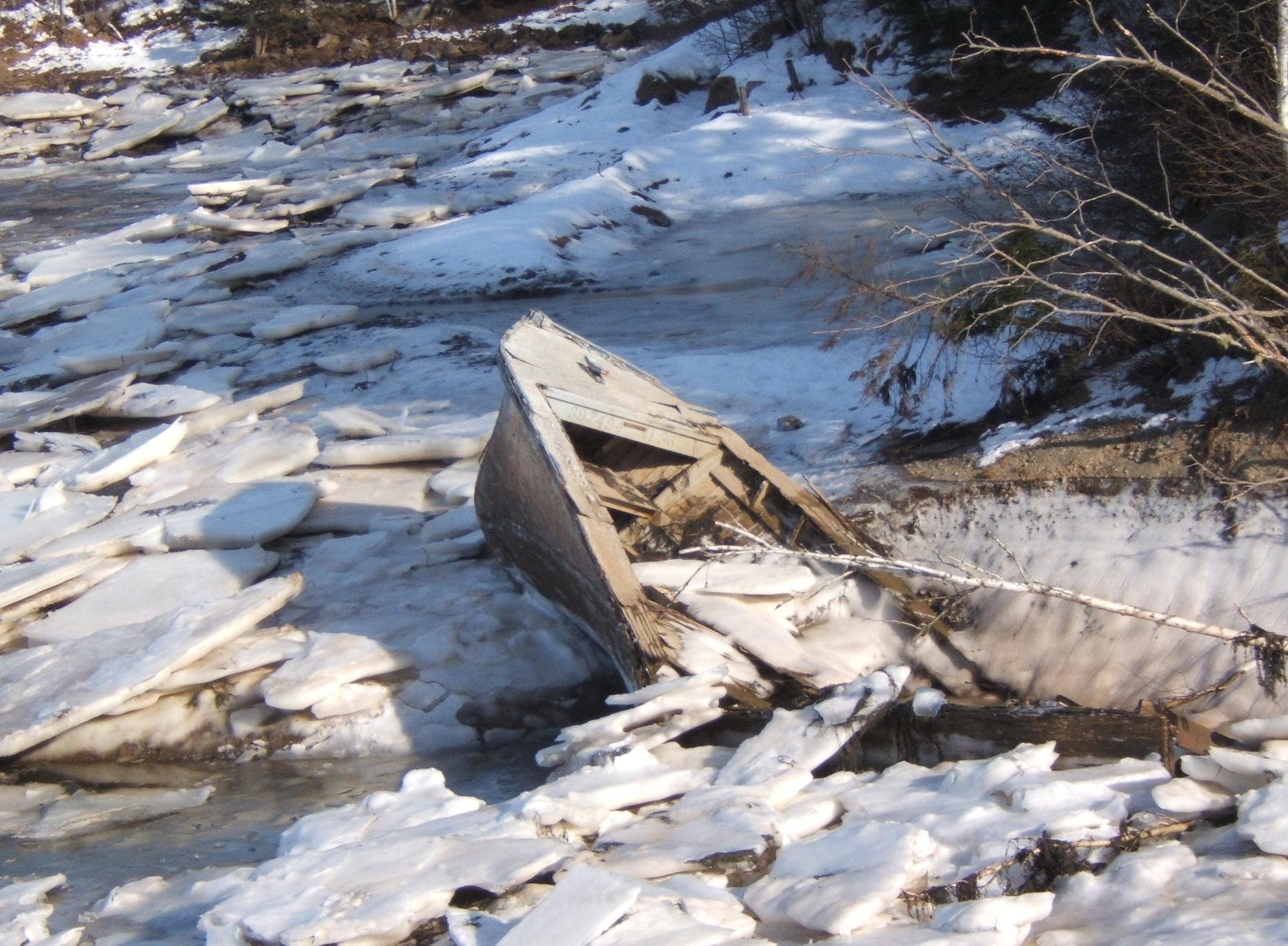
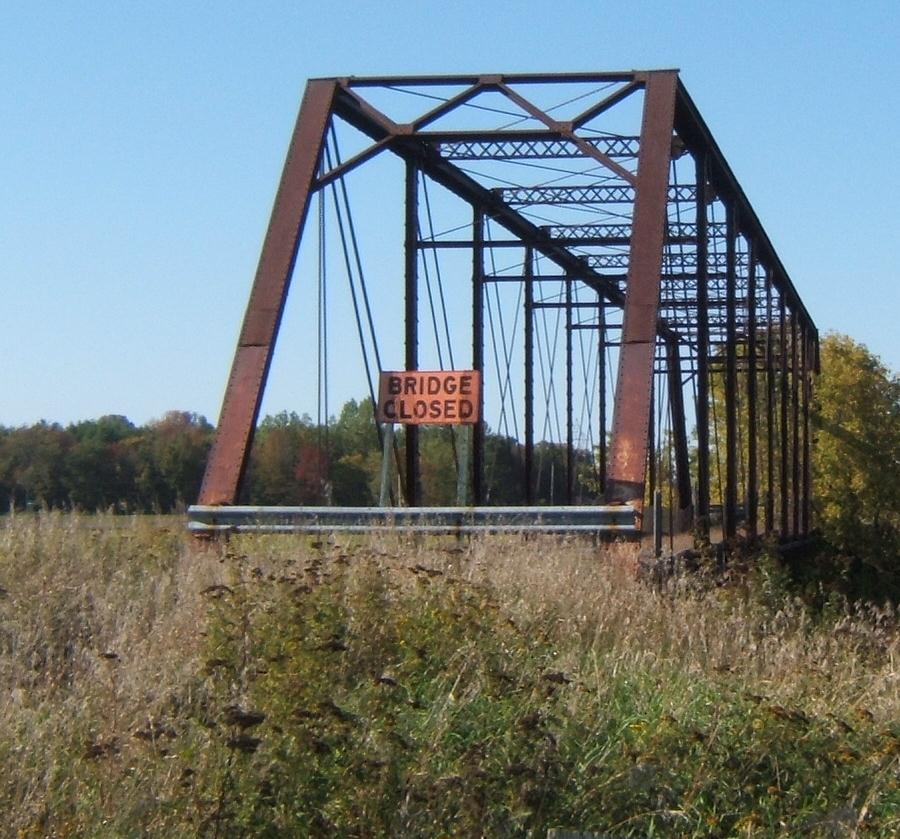
There are 38 poems in the rough manuscript, making up about 50 pages. The poems are a study of change. They include poems about abandoned boats, roads, churches, toolboxes, sheds, trucks, bridges and so on.
I have published a few of these on this blog … for an example, see ‘Foggy Molly’, a poem about an abandoned boat (https://nichepoetryandprose.wordpress.com/2013/01/30/abandoned-boat/ ).
~
~
Part of creating this manuscript is to put the poems in order. I find it hard to decide how to arrange 38 poems so they flow, one into the other, and so they tell a story.
~

~
1. My first step is to print a table of contents of the rough manuscript. I read each poem through and assign a couple of key words to describe it, jotting these into the table of contents. For my 38 poems on abandonment, I obtained 27 key words. Many of these are shared by various poems, but a few are unique to one or two poems. My key words are, in no particular order:
lost ways, regret, grown over, barriers, evidence, sadness, history, haunted, adaptation, voice, intention, anger, change, memory, denial, improvement, new life, lost function, buildings, items, understanding, cruel, resistance, life/death, shock, keeping past, lost/misplaced, broken
~
~
2. Next, I put everything into a table, with Xs to show which key words fit each poem. This does not take too long to do and helps me consider the meaning of each poem. Below is just a small section of my table:
| Poem Title | lost ways | regret | grown over | barriers | evidence | sadness | history | haunted | adaptation |
| Recovery | X | X | X | X | |||||
| Reason for Leaving | X | X | X | X | X | ||||
| South Nation Bridge | X | X | X | ||||||
| Outfield | X | X | |||||||
| Diverted road | X | X | |||||||
| Invitation to tea | X | X | X | X | X | ||||
| Lane | X | X | |||||||
| Abandoned church | X | X |
~
3. Once I have the table created, I tally the Xs in the columns and decide which key words are most common. Key words occurring in more than 10 poems are shown in bold:
lost ways, regret, Grown over, barriers, evidence, sadness, history, haunted, adaptation, decay, intention, anger, change, memory, denial, improvement, new life, lost function, buildings, items, understanding, cruel, resistance, life/death, shock, keeping past, lost/misplaced, broken
The words that apply to almost every poem usually speak to the theme of the poetry collection: in this case, the words ‘change’, ‘memory’ and ‘lost function’ were very common, no surprise in a collection about things abandoned. Other key words, common to a few poems, suggest possible themes for the sub-sections.
~

~
4. My next step is to look at the key words and see what themes ‘speak’ to me. I also want to have a progression of ideas through the manuscript. In this case, some of the poems are sad and rather hopeless, while some show how abandonment leads to understanding, and, in some cases, to new purpose and new life. From the key words, I selected six sub-sections: ‘lost ways’, ‘decay’, ‘haunted’, ‘broken’, ‘understanding’ and ‘new life’.
~
5. Now comes the long work of re-ordering the manuscript. I create a new document and, one at a time, transfer the poems into their new sections.
~
6. I like to name each section, taking the name from a line in one of the poems in the section. These may change later, but for now, they give me a reference within each group of poems:
lost ways – ‘overgrown …’
decay – ‘left to rust …’
haunted – ‘ghosts are lonely here …’
broken – ‘dry putty, broken glass …’
understanding – ‘the rock to stand on …’
new life – ‘a turn towards horizon …’
~

February 11. 2014 ‘old shed near Charlo’ Jane Tims
~
Today, I will begin a read of the manuscript to see how the poems flow within their sections. Many revisions are ahead, but this is my favorite part of the work!
~
Have you ever gathered poems into a manuscript and did you use any particular method to decide the order of the poems?
~
Copyright 2015 Jane Tims
newfall of snow
~

~
newfall: words escape me
~
the white ephemeral
perhaps frost
the fir boughs divided
the sculptured steel
of a flake of snow
~
try again
~
paper stencil
on chocolate cake
powdered sugar
sifted on the rills
of the new plowed field
~
again
~
sweet in my mouth
the bitter melted in morning sun
white hot on my cheek
the writing lamp
~
a lamp to the left
casts no shadow
(the shadow of a pen
or a hand)
~
(unless you are wrong-handed)
~
chimney shadow
on a fresh-snowed roof
or trees on the eastern edge of the road
where the sun cannot warm
~
the morning
dusting of ice
~
try again
~
~

~
Published as ‘newfall: words escape me’, The Fiddlehead 196, Summer 1998.
Copyright 2014 Jane Tims
harvesting colour – the poems
After six months of work, I am nearing the ‘end’ of my project ‘harvesting colour’. Although the main product of all my work sometimes seems to be my basket of hand-dyed and hand-spun wool, the actual goal of my plant dyeing adventures is a manuscript of poems.
~

in background, alum-treated wool dyed with rose hips; in the foreground, spun wool dyed with lichen, beet leaves and alder bark
~
I have not shared many of these poems here, since I want to publish as many as possible in literary magazines. This will increase my chances of publishing a book of poems. Most publishers consider poems presented on-line to be already published and will not consider them for their magazines.
~

wool simmering in dyestuff of alder bark
~
At this point I have completed enough poems to be considered a ‘manuscript’. Although I may write more in the coming month, the core of my manuscript will be these 58 poems (60 pages). The poems are included in four sections:
- the imprint of toadflax – 11 poems about the stains left in our lives: the red of cranberries on the tablecloth, grass stains on children’s knees
- take comfort in brown – 12 poems about specific plants and their use as dyestuff
- simmer, never boil – 10 poems about the home-dyeing process: mordanting, dyestuff simmering in the pot, the chemistry of dyeing.
- all the colours of columbines – 10 poems about how the colour of plants intersects with our daily lives – the colour of petals in a bouquet, the relationship between mothers and daughters, unexpected outcomes. In this set are two poems dedicated to my Great-aunt who made her living as a seamstress and my Great-grandmother who used home-dyed fabrics in her hooked rugs.
- the twist travels the line – 15 poems about dyers, spinners and weavers who use natural plant dyes. Some of the poems are about dyers I have met through their blogs.
~

pink wool dyed with blackberries is front and center … other wools are dyed with (clockwise) oak, meadowsweet, bugleweed, tansy, lily-of-the-valley, beet root, and in the center, carrot tops
~
One of the purposes of making this manuscript is certainly to improve my writing and my poems. I have deliberately tried to do two things with these poems:
1. pay attention to line lengths. In most of the poems, I have counted the syllables, using this as a method of improving the rhythm and suggesting new ways of ordering words. I have also considered various ways of ending lines, looking for ways to emphasise the multiple meanings of some words.
2. make the ideas understandable. I have a background in science and I love to use the words of chemistry and biology in poems. Sometimes this makes the poems hard to understand. I am trying to reconcile the two poets within me – one who wants to explore the technical and the other who wants to understand the everyday.
~
I hope I have been able to accomplish these objectives in my poems. The poems are full of gathering and boiling and simmering and I hope these poems feel familiar to dyers and craftspeople, and honor their work. I also want the poems to to be relevant and healing for those who have never stirred a pot of dyestuff.
~
~
olfactory memory
~
wool from the drying rack pale, new
lifted from the vat, well water
and blackberries, dim burgundy
~
the draft of the fibre, the twist
of the spindle, release scent
from the berry patch, the curved space
~
beneath the bend of primocane
floricane drowsy with berries
black and thorn, crisp calyx and leaves
~
drenched bramble, sweet notes and a lilt
dark against palate, the scramble
for a berry, dropped between stems
~
barbed, at the rim
of purple
~

~
Copyright 2014 Jane Tims
The Light Never Lies – A Guest Post from Francis Guenette
I am so pleased to welcome a guest in this post. Francis Guenette is a Canadian writer, the author of two books, ‘Disappearing in Plain Sight’ ( FriesenPress, 2013) and ‘The Light Never Lies’ (Huckleberry Haven Publishing, 2014). When I read ‘Disappearing in Plain Sight’, I was drawn to the setting – Crater Lake, the cabins and the garden. In this post, Frances writes about the setting, its origins and how the setting influences the story. Welcome Frances! And thank you so much for your Crater Lake Series of books!
~
 To begin – a synopsis of The Light Never Lies:
As circumstances spiral out of control, Lisa-Marie is desperate to return to Crater Lake. The young girl’s resolve is strengthened when she learns that Justin Roberts is headed there for a summer job at the local sawmill. Her sudden appearance causes turmoil. The mere sight of Lisa-Marie upsets the relationship Liam Collins has with trauma counsellor, Izzy Montgomery. All he wants to do is love Izzy, putter in the garden and mind the chickens. Bethany struggles with her own issues as Beulah hits a brick wall in her efforts to keep the organic bakery and her own life running smoothly. A native elder and a young boy who possesses a rare gift show up seeking family. A mystery writer arrives to rent the guest cabin and a former client returns looking for Izzy’s help. Life is never dull for those who live on the secluded shores of Crater Lake. Set against the backdrop of Northern Vancouver Island, The Light Never Lies is a story of heartbreaking need and desperate measures. People grapple with the loss of cherished ideals to discover that love comes through the unique family ties they create as they go.
~
My first order of business is to extend many thanks to Jane for inviting me over to her blog. Jane thought it would be interesting to hear how architectural and garden elements of the setting for Disappearing in Plain Sight and The Light Never Lies contributed to the story.
~
Write what you know. It’s a common sense piece of advice. After all, fiction writers have enough work in the making-things-up department. When I first envisioned writing a novel, it was because a group of characters had made a sudden appearance in my imagination. I always knew they would live in a rural setting, on the shores of a lake, some in elaborate cabins with expansive gardens and some in more rustic dwellings. Fiction mirroring reality – where I live is somewhere in the grandiose middle.
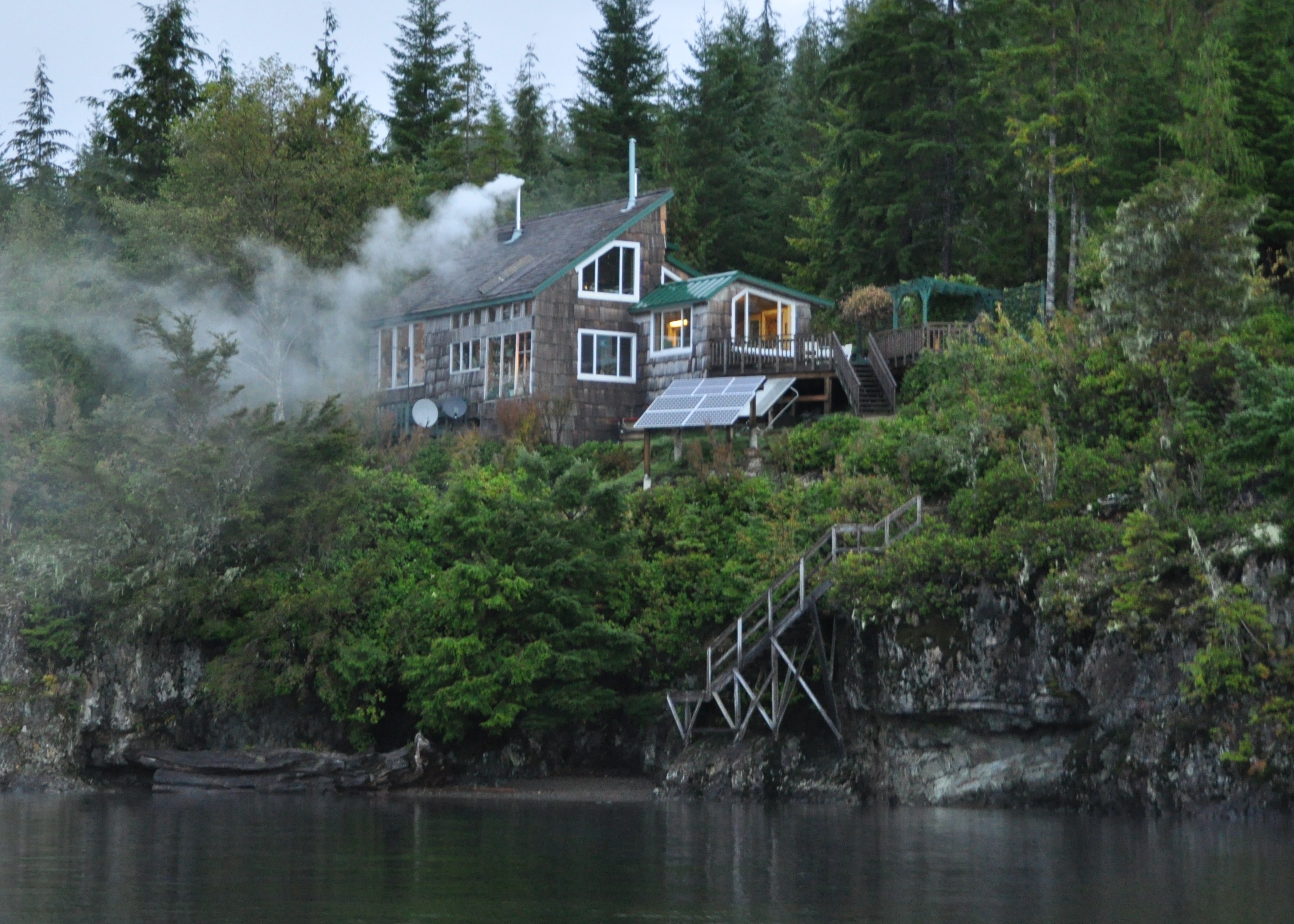
I thought about my own home and a few cabins in the vicinity and from there I embellished, stretched and massaged the reality of these settings into a small community on the shores of a fictional place called Crater Lake.
I have lived on the shores of a lake, in a cabin, with a garden in the wilderness for over twenty years. I’ve walked the trails around this place so many times my feet have worn smooth my route. In many ways, it’s hard for me to separate my own environment from that of the books – except to stress that Crater Lake is fictional, Micah Camp is a product of my imagination, the characters likewise. The cabins and gardens described are all altered, sometimes to a grander scale, sometimes to include elements not present anywhere but in my imagination. I suspect many writers have gone through a similar process.

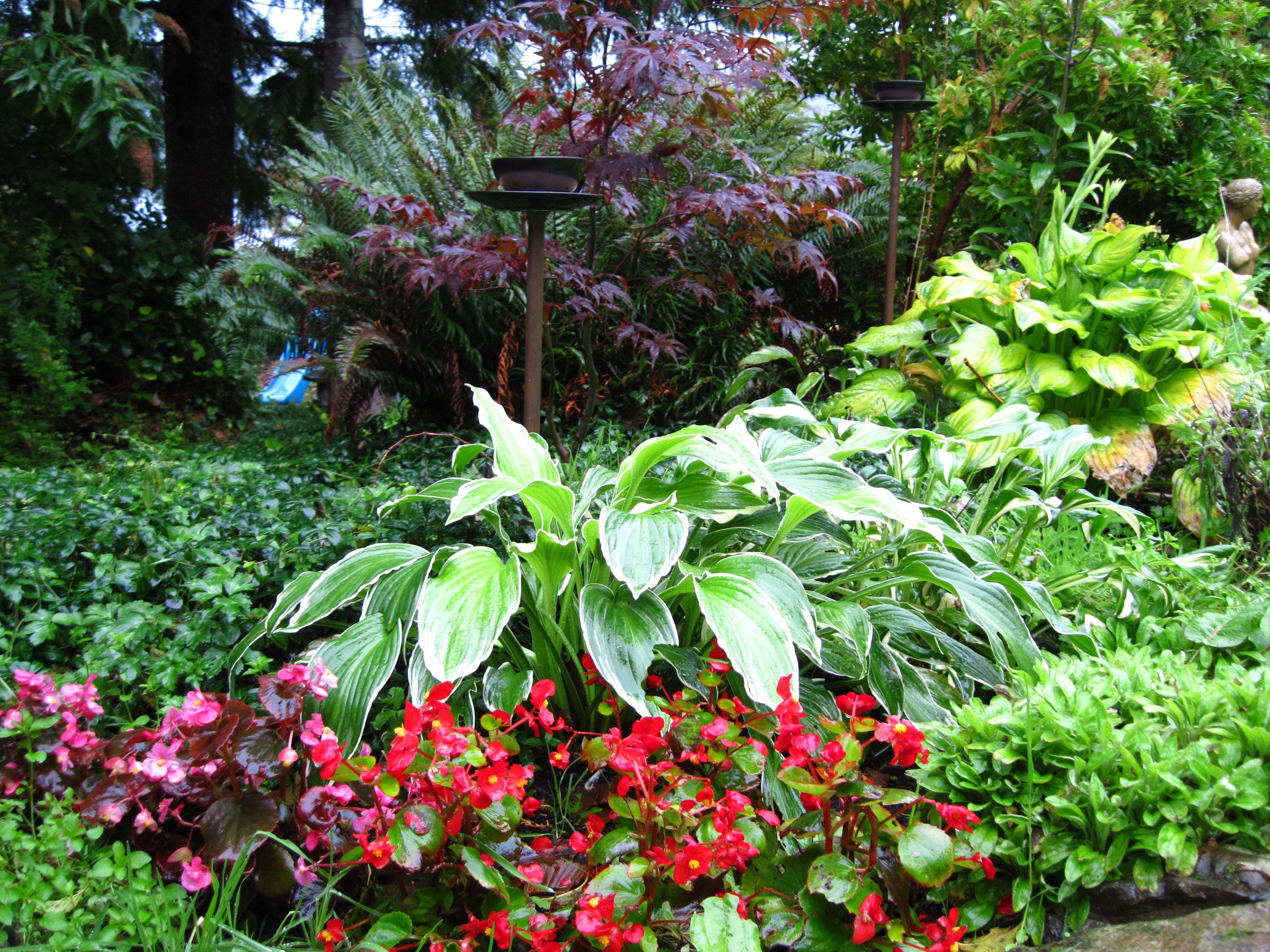
Living in a particular place shapes people. A rural, semi-isolated setting, homes that reflect local materials open to multiple views of lake, mountains and trees, gardens and small businesses carved out of wild landscapes – all of these factors make the characters in my books the people they are and dictate (to a degree) the situations they find themselves in.
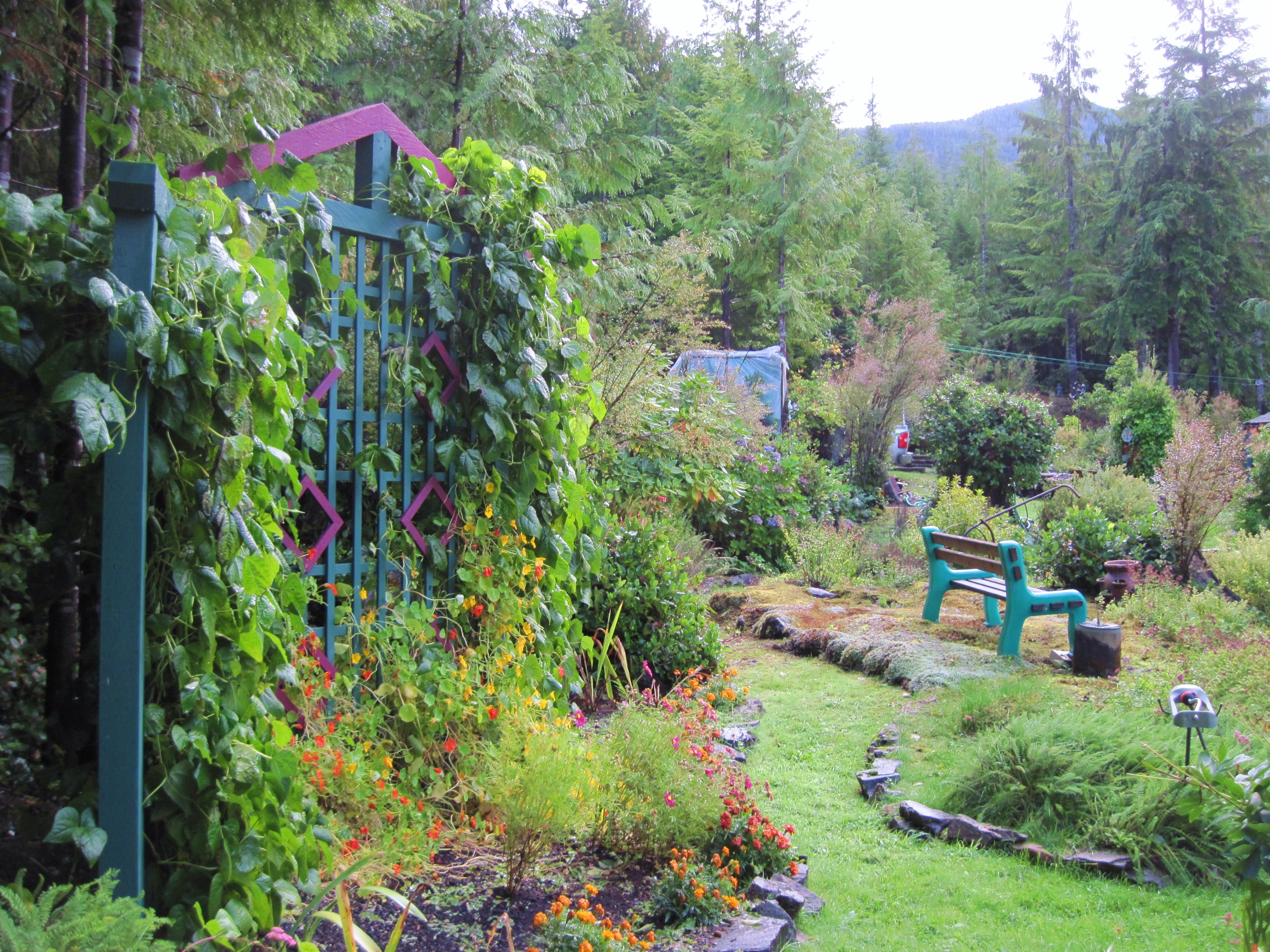
I have a couple of anecdotes that illustrate well a juxtaposition of fiction and reality. A close friend who has never visited our lakeside home, read Disappearing in Plain Sight and she loved it. When her husband managed a quick visit last summer, he told me he would tell his wife that our cabin and the view were just like walking into the book. The view perhaps – the cabin not so close, but close enough to resonate.
I recently ran into a woman who borrowed one of my books from her daughter. She and her husband had bought some land out in the wild and were getting ready to build. She asked me it the architect Caleb used to design his cabin in Disappearing in Plain Sight was based on a real person. She shrugged and said, “Oh, I suppose that would be too much to ask, but I want a place like the one you described in that book.”

Here is a dichotomy, for sure. If you come and visit me, at first glance you will recognize, in broad brush strokes, the setting of Disappearing in Plain Sight and The Light Never Lies. But don’t go looking for more. You’ll only end up disappointed. It is in the fine details that fiction has taken off to soar away from the landing strip of reality.
~
~

Francis Guenette has spent most of her life on the west coast of British Columbia. She lives with her husband and finds inspiration for writing in the beauty and drama of their lakeshore cabin and garden. She has a graduate degree in Counselling Psychology from the University of Victoria, British Columbia, Canada. She has worked as an educator, trauma counsellor and researcher. The Light Never Lies is her second novel. Francis blogs over at http://disappearinginplainsight.com and maintains a Facebook author page. Please stop by and say hello.

http://www.amazon.com/dp/B00I8XKIDK
new-fallen snow
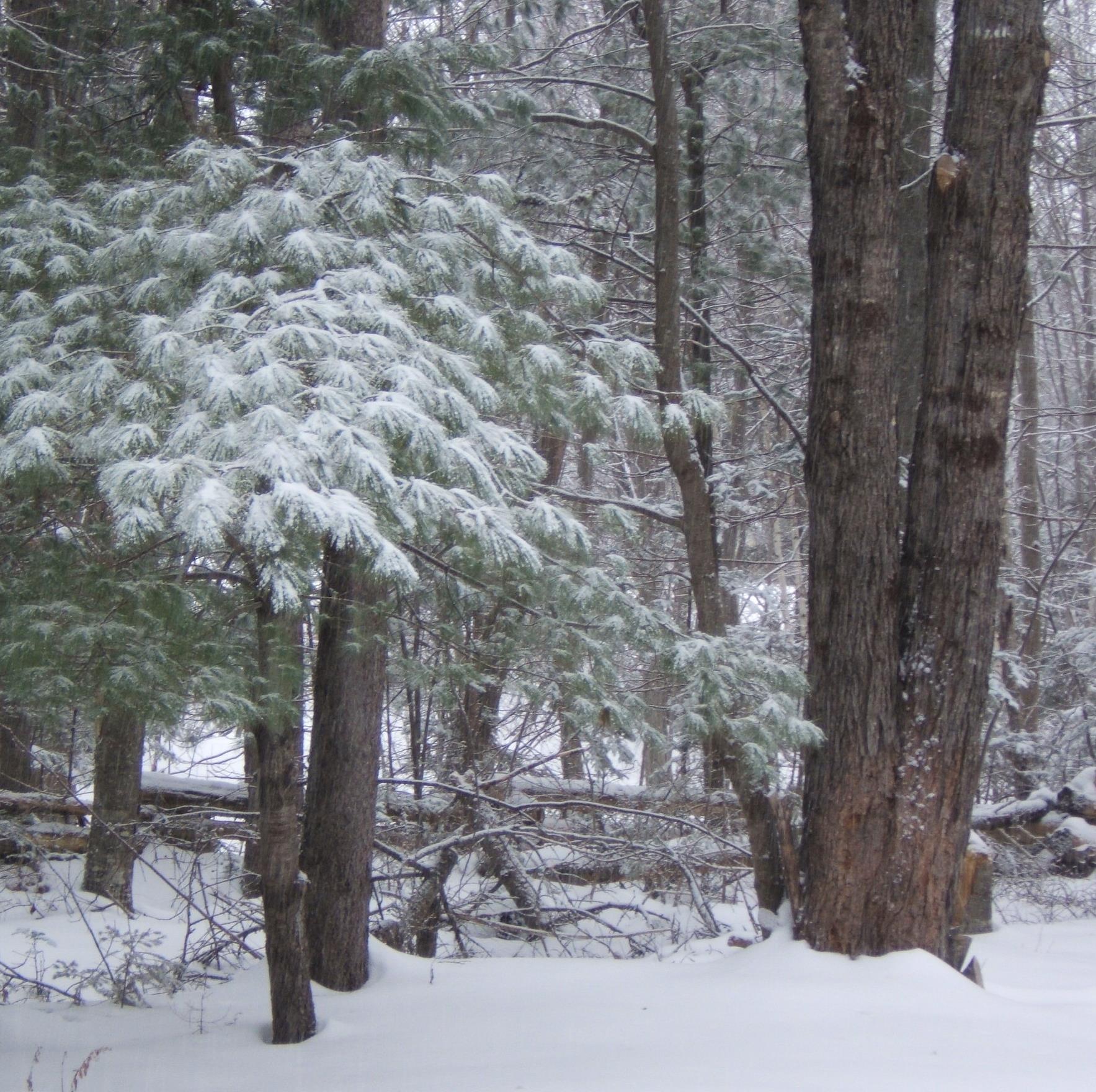
On this wintry day … finding the right words to describe new-fallen snow …
~

~
newfall: words escape me
~
the white ephemeral
perhaps frost
the fir boughs divided
the sculptured steel
of a flake of snow
~
try again
~
paper stencil
on chocolate cake
powdered sugar
sifted on the rills
of the new plowed field
~
again
~
sweet in my mouth
the bitter melted in morning sun
white hot on my cheek
the writing lamp
~
a lamp to the left
casts no shadow
(the shadow of a pen
or a hand)
~
(unless you are wrong-handed)
~
chimney shadow
on a fresh-snowed roof
or trees on the eastern edge of the road
where the sun cannot warm
~
the morning
dusting of ice
~
try again
~
~
Published as ‘newfall – words escape me’, the Fiddlehead 196, Summer 1998
~

~
~
Copyright 2014 Jane Tims




 nichepoetryandprose