Archive for the ‘shelter’ Category
in the branches of the White Pine

- the White Pine is the larger tree to the left of the road

The most frequent denizens of the pine are a pair of Bohemian Waxwings (Bombycilla garrulus). They prefer berries for food and so are in their ideal habitat. Our property must look like a big dinner plate to them, with its orderly presentation of wild strawberries, blueberries, blackberries, hawthorn and winterberry.
Another bird who stops to rest in the pine is the American Goldfinch (Carduelis tristis), also known as the Thistle bird. These are seed-eating birds who fly across the fields in a distinctive pattern of loops. They are also one of the most common birds at our winter bird feeder.

~
~
building homes
~
we fly kites
to learn the field and sky
set copper whirligigs to spin
~
yellow flirt crosses blue
per-chick-or-ree
potato-chip potato-chip potato-chip
~
we build our cabin
with 2 by 4s, boards and trusses
woodscrews and spiral nails
~
firm framework
woven grass and birch
bark rim and spider silk
~
you fill walls with fiberglass
I quilt curtains for windows
~
goldfinch waits while his female tucks
her nest with thistledown
tufts of cattail, puffs of dandelion
~
© Jane Tims 2011

a nest in November
On Saturday, we drove to the lake to gather boughs of fir and pine for our Christmas decorations. While we were there, we poked around in the thicket. We found a few bird nests, still intact, easily seen now the trees and alders are free of leaves.
The first nest was cup-shaped, made of tightly woven grasses and weeds. Nests of songbirds are not easy to identify since they are similar in size and construction materials. If this little nest survives the winter, perhaps I can watch who uses it next spring.
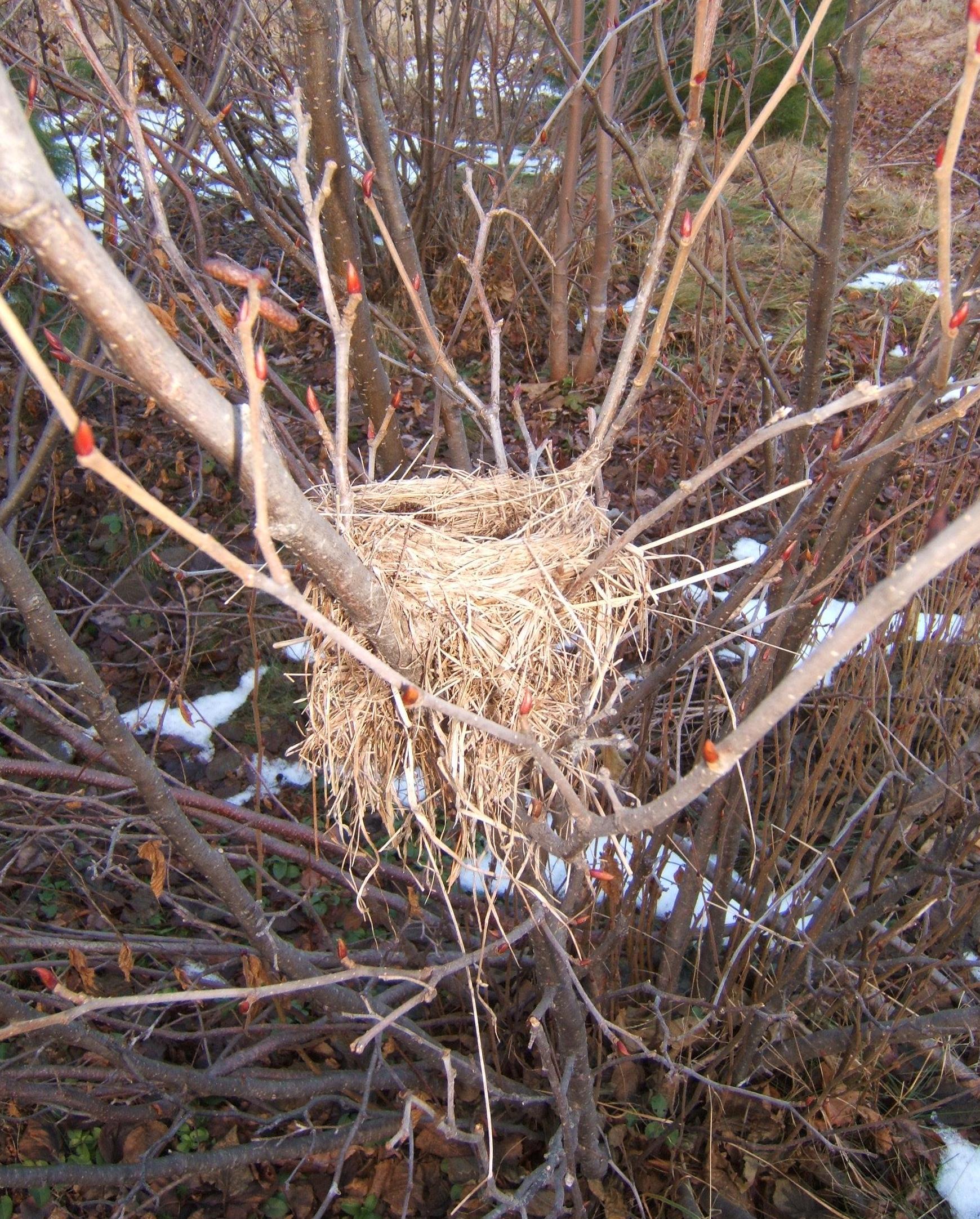
The second nest probably belonged to a Robin. It was high in a tamarack tree, welded firmly to the branches. Robins often return to the same area and sometimes use the nest of the previous summer, so I’ll be watching this nest too.

The last nest we saw was a beautiful little hanging basket covered with birch bark and woven with grasses. It appeared to be frail but it was very sturdy and stubbornly clung to the bough in spite of its exposure in the November wind. I think it is the most delightful sight I have ever seen.
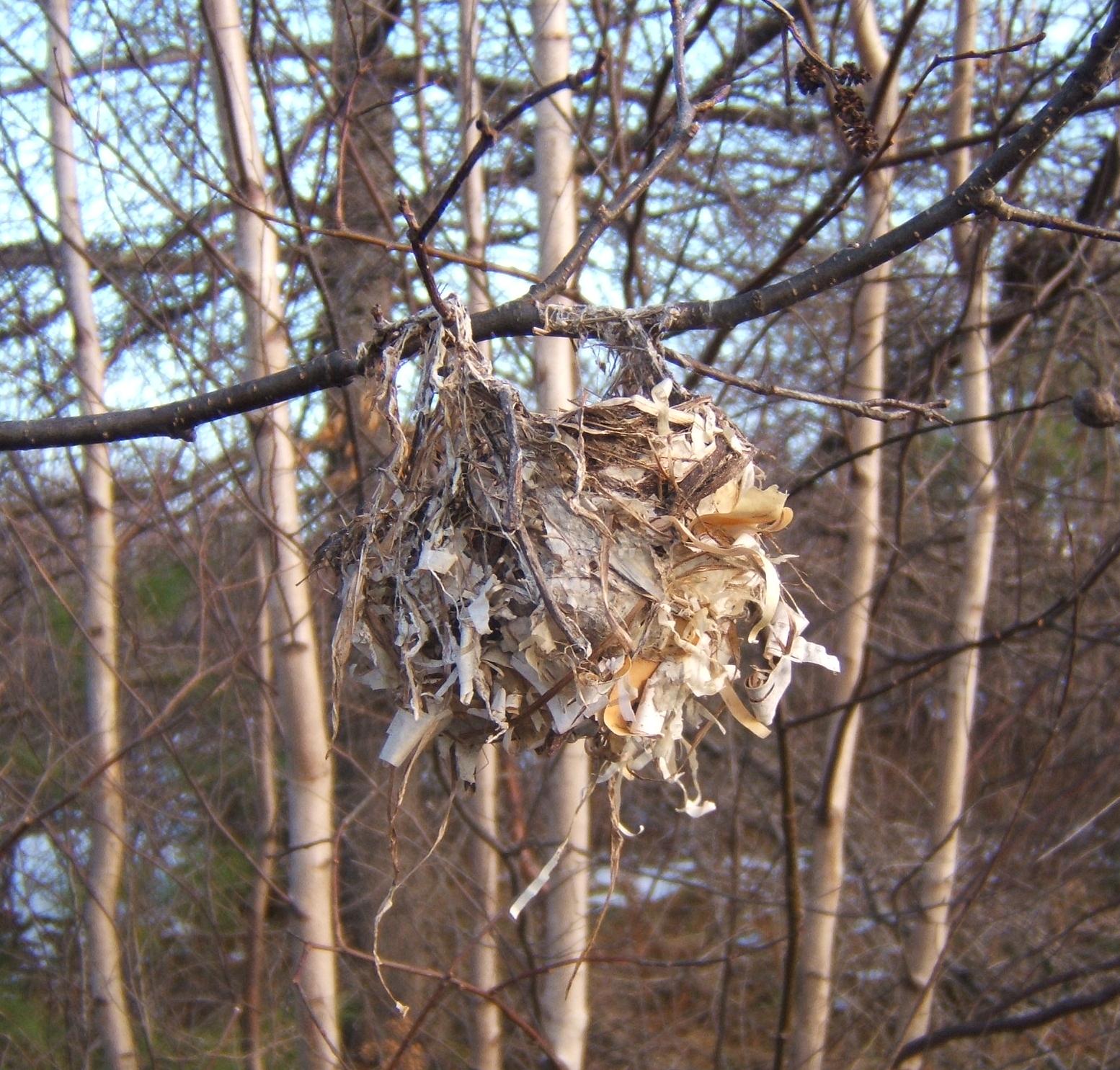
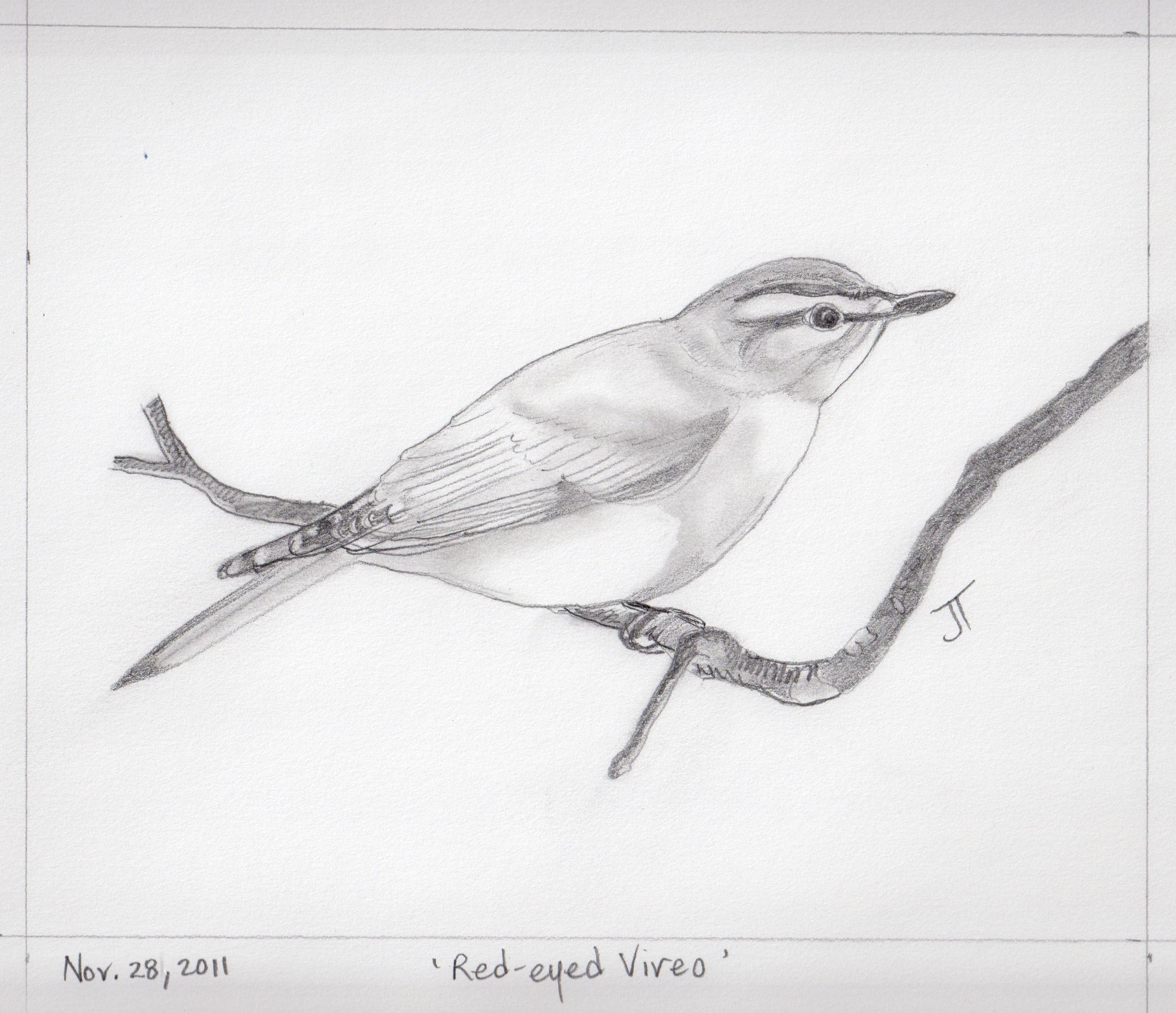
A biologist with the New Brunswick Department of Natural Resources was able to identify this nest from my photo. The nest probably belonged to a red-eyed vireo, one of our common songbirds. I have never seen this bird at our lake property, but we hear it all summer, endlessly asking its question and giving an answer.
~
~
Red-eyed Vireo
(Vireo olivaceous)
~
drab little
olivaceous outlaw
black masked
red eye
~
can’t see you
can’t find you
can hear you
where’re you?
over there
where’re you?
nowhere
~
in November
ghost-self flutters
in birch bark tatters
a basket in the alder
remnant of summer
~
gone now
what’d ya do?
did an answer finally
come to you?
~
© Jane Tims 2011
cave beneath the waterfall
In the cold weather, I think about the waterfalls we saw this summer. As the temperature gets lower, they succumb. First the water freezes at the edges, building up on the rocks and ledges. Then, gradually icicles build and the surface water freezes. By mid-winter, the waterfall will be a frozen cataract, a glass house of ice. Within the frozen falls are ice caverns and icicles, places where water runs and where water stands still, and places where the ice traps sunlight to shimmer and sparkle.
One of the waterfalls we visited this summer was Smith Falls (see ‘niche beneath waterfall’ under the category ‘waterways’, published October 21, 2011). At the base of the waterfall was a small cave. In winter, the entrance to this cave must be a crystalline curtain of icicles and glass.
Below, in my poem and drawing, I remember the cave and waterfall in summer.
~
shelter
‘a small cave is hidden beneath the falls’
– trail guide
~
sip of tea
candles lit in evening
a lap quilt tucked
relief from freshet
~
cave, respite
beneath two newly reconciled
slabs of bedrock
or where vulnerable sediments finally fail
succumb to the reach of water
~
spurt and shard
the brawl subsides
and damp recedes
pollen settles
~
concentric rings
and space is made
to occupy
~
© Jane Tims 2011

© Jane Tims 2011
in the shelter of the lane
Now, when the trees are shedding their foliage in yellow, red and orange, have you taken the time to stroll down a lane crackling with dry leaves?
1 lane n. 1: a narrow passageway between fences or hedges;
2: a relatively narrow way or track …
2 lane Scot var of LONE
Webster’s New Collegiate Dictionary, 1979
Words are so laden with connotative and denotative associations, those similar in meaning may not convey the same idea at all. For example, the word ‘lane’ is vastly different in meaning from ‘road’, yet a lane is a type of roadway.
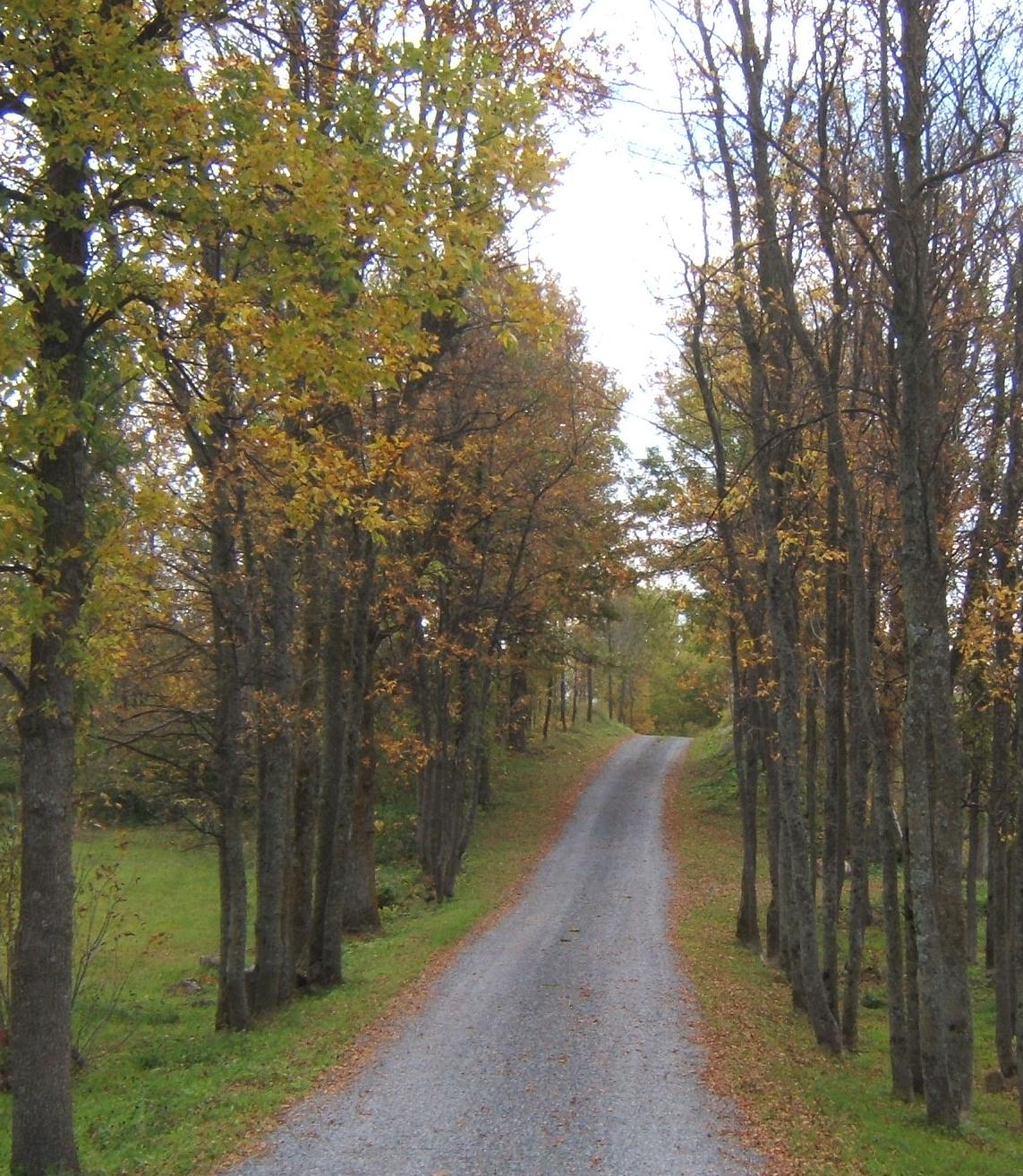
A lane, to me, is a narrow corridor, built to admit people from the ordinary world of community to the private world of home. A lane is bounded on each side by trees, hedges or fences. A proper lane must have ruts for the tires and a centerline of grass to challenge the clearance of any vehicle. Once you are in the lane, it is difficult to see anything outside.

When I was young, visiting my mother’s family took us to ‘the old home place’. It was sandwiched between the main road and the river, but because it was connected to the outside world by a long, bent, shady lane, it was truly a ‘world-apart’.

I spent many happy hours in the lane, wandering up and down its length, singing and dreaming, exploring and examining. I loved the small woodland habitat created on either side. I picked the wild blueberries growing there, watched squirrels busy at the workings of their pine-cone industry, and made friends with specific trees.
One young Silver-leaved Poplar (Populus alba L.) was a particular favourite. It stood just before the bend in the lane, its bark marked with black diamonds. When the wind blew, it turned its leaves over in a generous offering of silver.
I have other pleasant associations with the lane. I remember my Dad working there with a shovel and a pickaxe, trying to fill in the worst of the ruts to save the undercarriages of his car and trailer. I remember listening to my Mom’s stories of how she and my aunt pushed their doll carriages up the lane to visit imaginary neighbours. I remembered how excited we always were to see the gate at the end of the lane wide open, since that meant my aunt or uncles were at home.
lane
~
trees along the lane
sentinels
to guard its ways
cone scale mounds
acorn stashes
the silver undersides of poplar leaves
doll carriages with squeaky wheels
blueberries in slants of light
~
the lane a wooden shelter
its base the rutted track
its sides the trees, muscled arms
branches overhead with fingers locked
~
charmed paths
moss tablecloths
fairy rings and follows
~
protected by
the closing of eyes
~
© Jane Tims 2011

refections on the water
I have realised there is a sequence to the vanishing of the autumn colour.
First the maples lose their leaves in the early autumn winds. The next will be the poplars, now glowing with banana colours. The oak leaves, ruddy and slick with reds and oranges, will succumb by late October. Tamarack, a deciduous conifer, will lose its amber needles in early November. The beech trees will keep their ochre, papery leaves all through the winter, finally losing them in spring when the new leaves emerge.
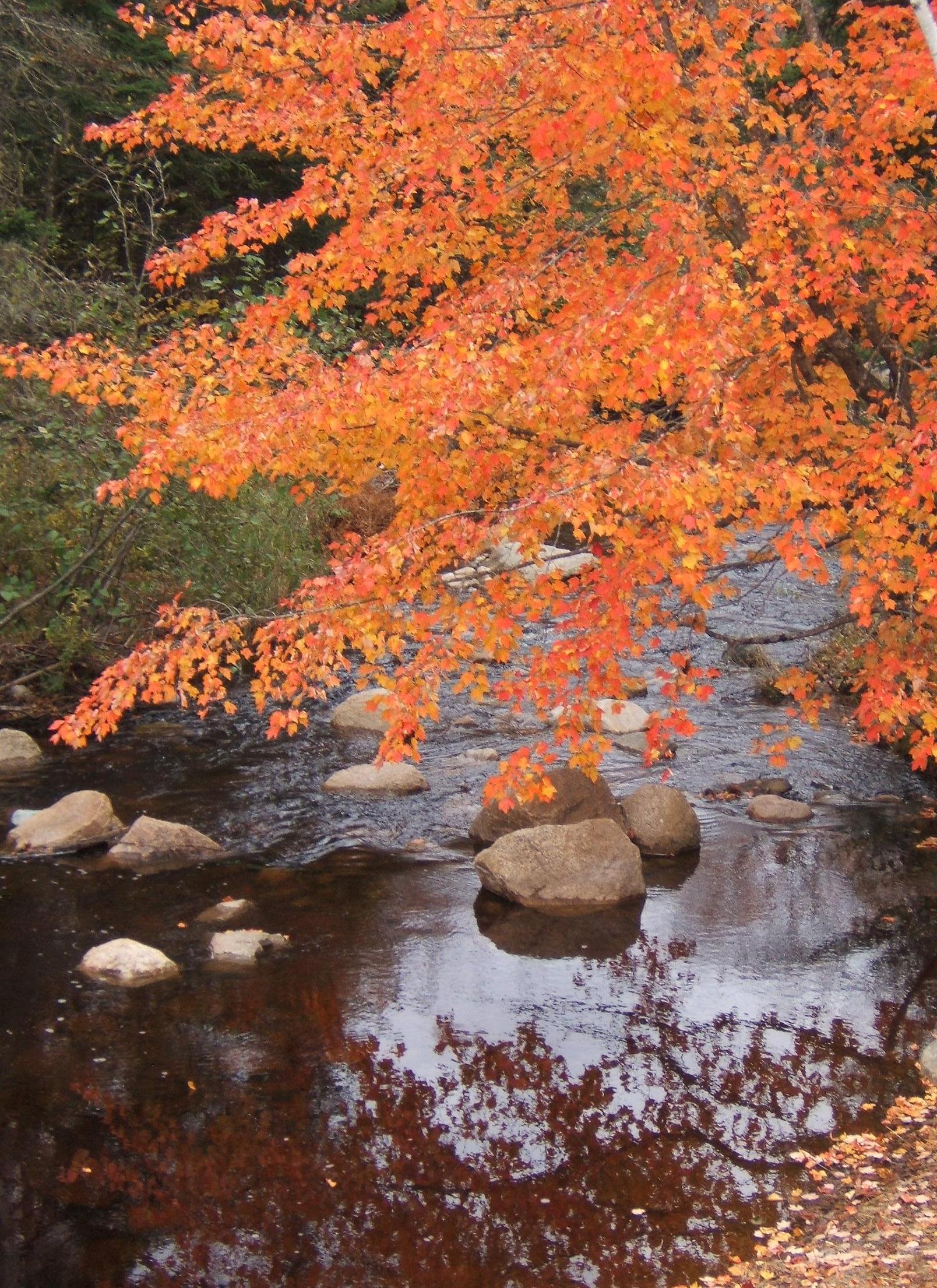
This past weekend, we found some maples still in autumn garb. At Watty Brook, flowing into McDougall Lake in south-west New Brunswick, at least one maple has taken longer than most to lose its leaves. At its sheltered location in the low valley of the brook, the tree has eluded the winds. It was reflected clearly in the brook, and its orange and gold were captured in the rocks showing through the tea-coloured water.

In spite of the movement of the water, the tree was reflected in all its splender.
in the millstream
~
upstream
deer are drinking
and the raindrops
swell the running
this I know
from bubbles
rising
~
I am a rock
in the millstream
seasons and freshets
have smoothed
my edges
~
once I met the water
a cleaver
divisive
now I ask the water
to flow
around me
~
© Jane Tims 2003

beneath the vine
Vines sculpt spaces as they grow, clinging to and draping across the surfaces they choose to colonise.
Telephone poles display armloads of Virginia Creeper (Parthenocissus quinquefolia ( L.) Planch.) …

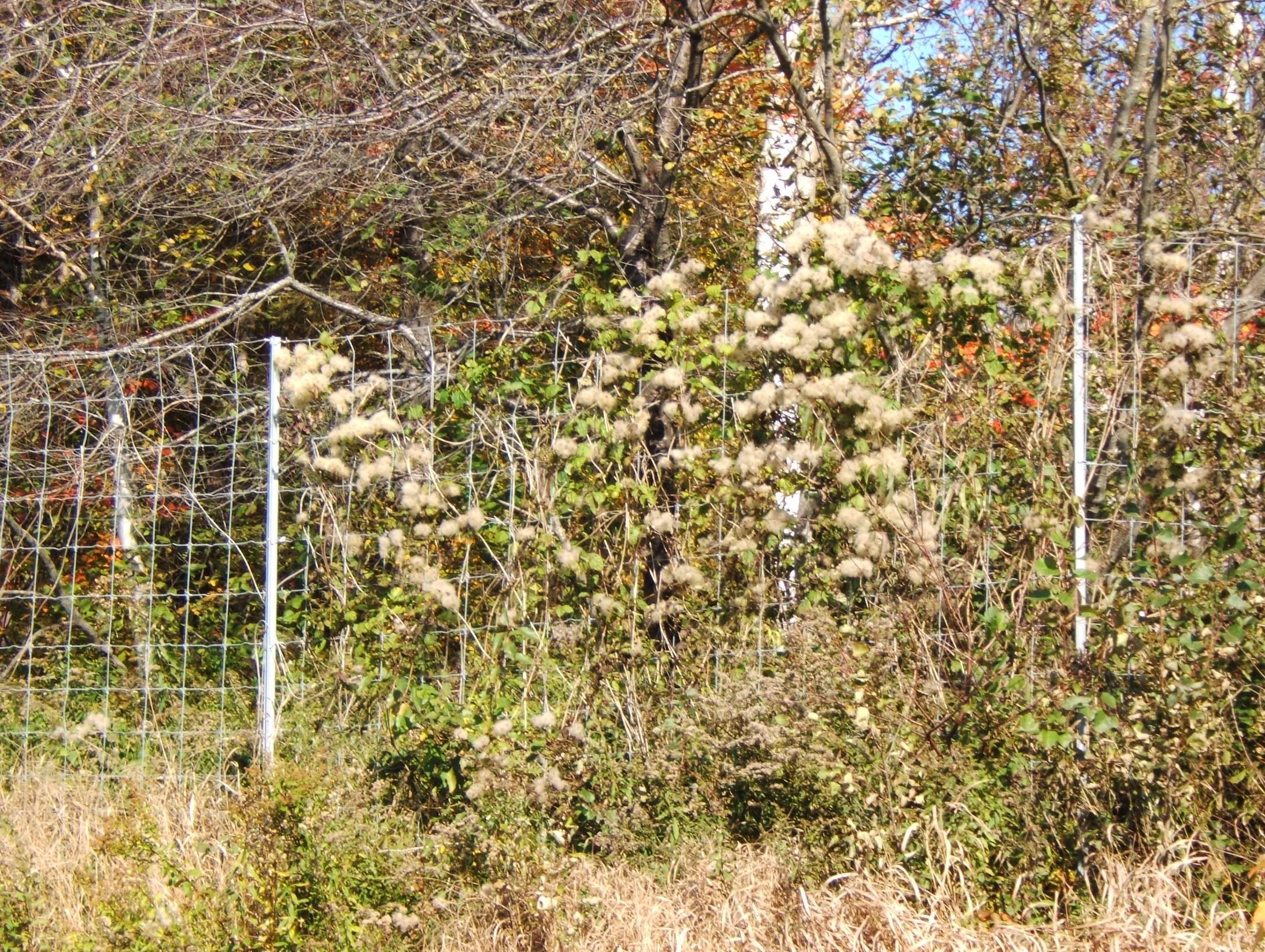
The moose fence along the highway is softened by a curtain of Virgin’s Bower (Clematis virginiana L.) …
Purple grapes, ready to pick, fill the arbour with soft shade…
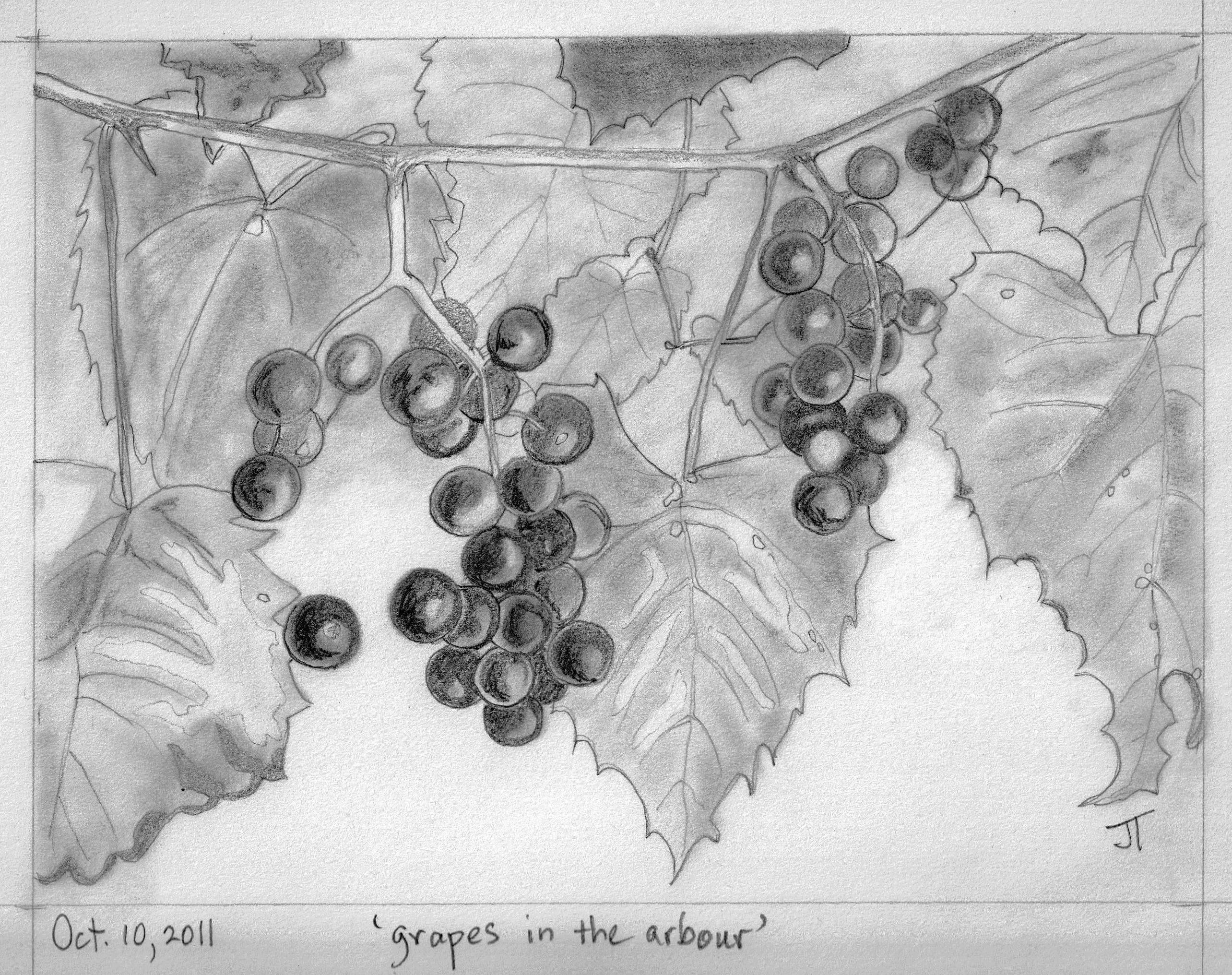
ripened shadows
~
under layered leaves
marbled shadows hang
in cloistered dark
~
cool nonchalance
columnar grey intensifies
as grapes grow ripe
~
taut green ferments
to purple must
and effervesces air
~
even where no surface intercepts
clustered shadows
ready to pick
~
© Jane Tims 2011
in hurricane rain
Hurricane Irene is past and the skies are clearing after 44 mm of rain yesterday and a very windy night.
I feel so sorry for those who are left in misery after the storm, but our experience was rather tame. My memories will be:
…bands of rain across the yard…
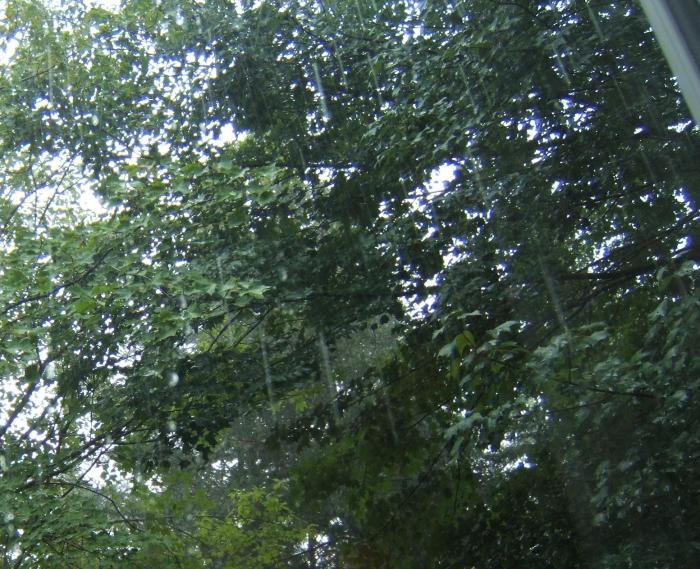
- rain viewed from the window

…waking up to a lawn riddled with leaves…
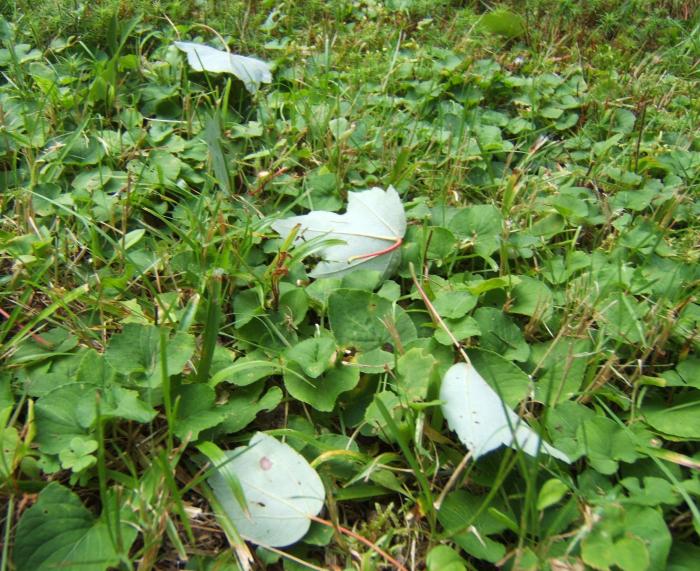
- leaves on our ‘lawn’ of violets…why do they all seem to land upside down?

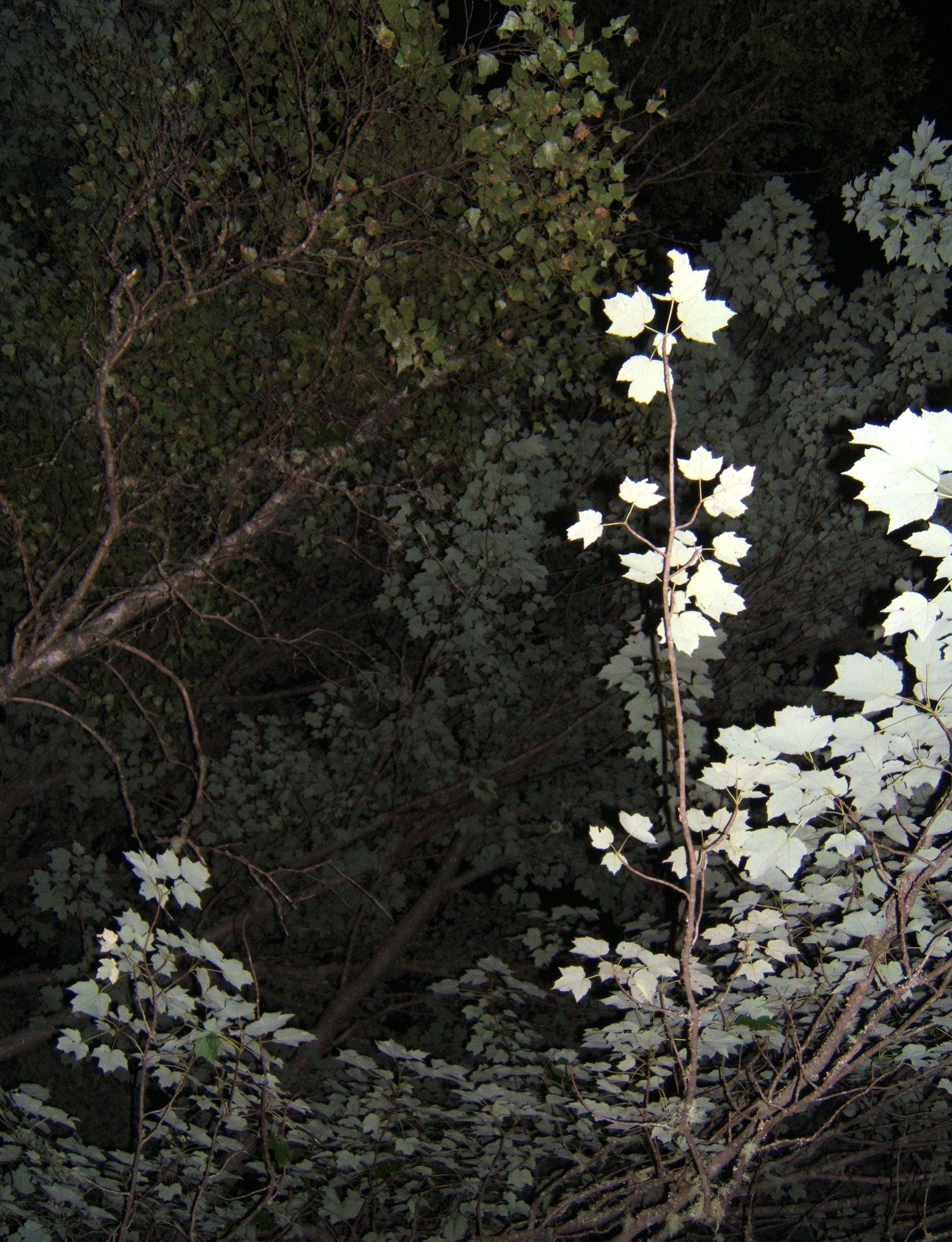
…a clear sky in the middle of the night. A star was shining through our window, made alternately non-existent and brilliant by the wild movement of the tree branches in the wind. The star was so bright it woke me…
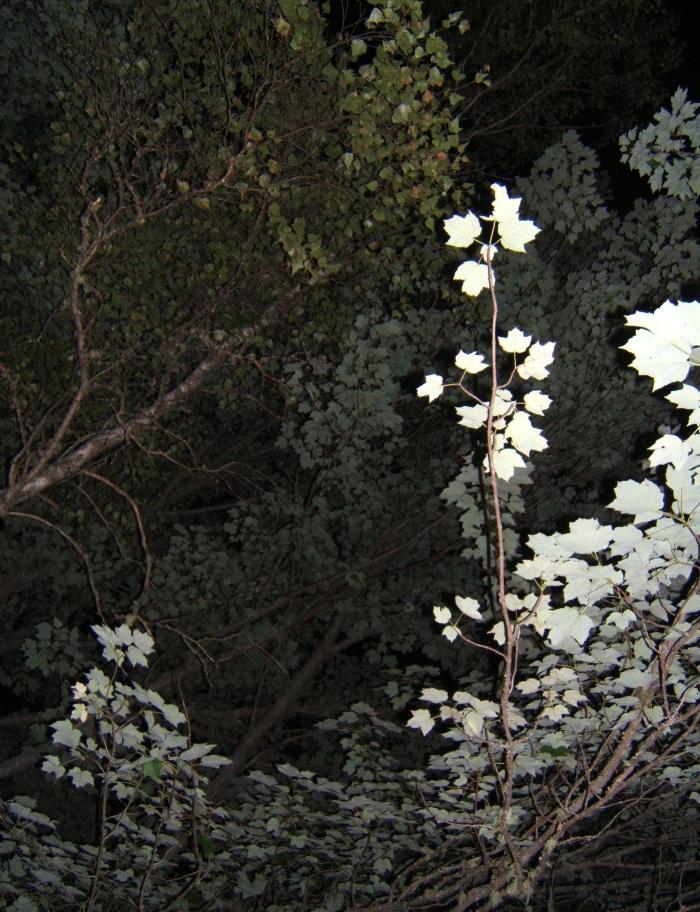
- the trees above our deck rocked wildly all night long
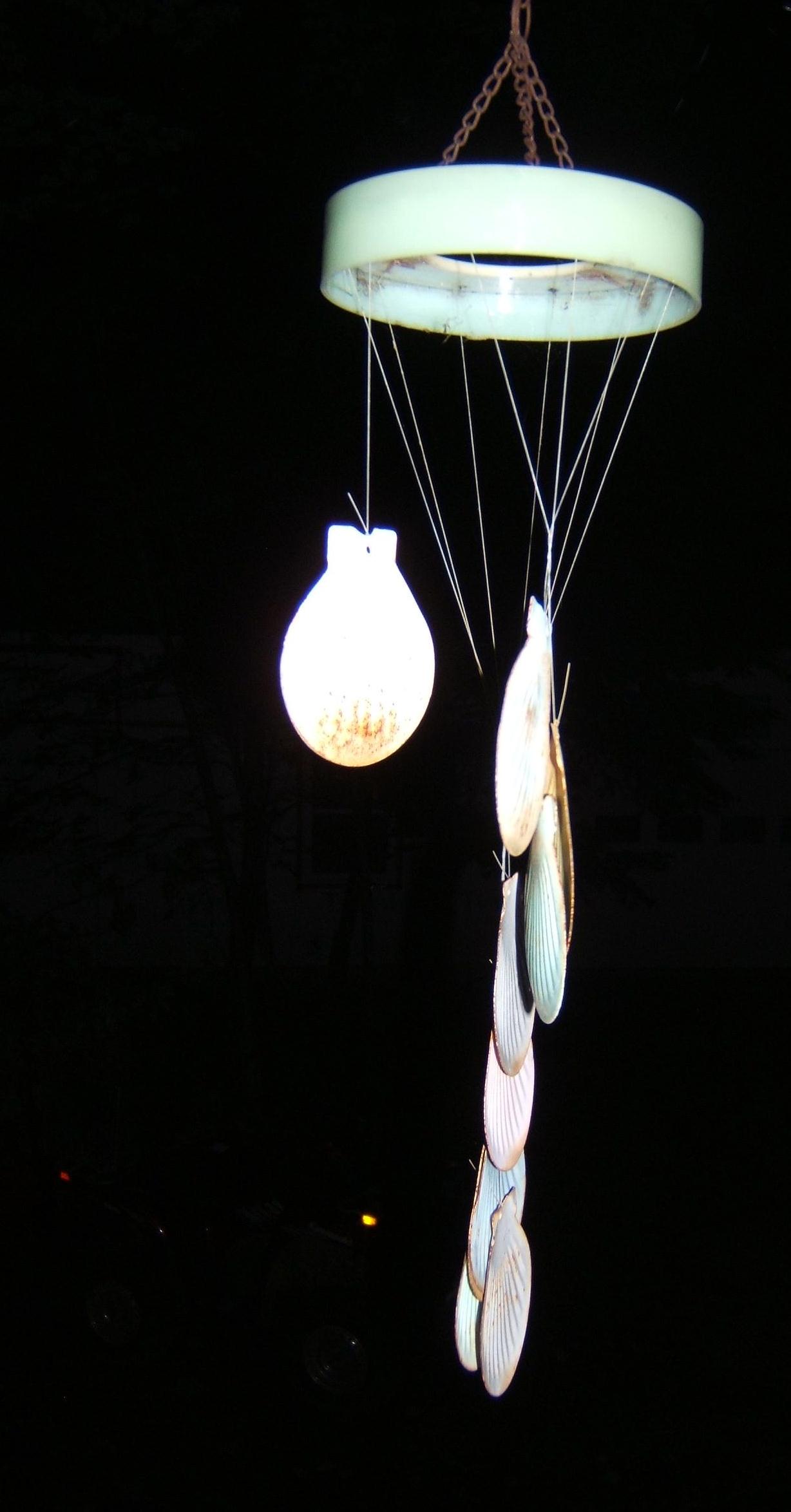
…our demented windchime. A mangle at the best of times, the poor thing is so tangled, it may not be possible for me to figure out the puzzle…

- my poor tangled windchime …yes it is rusty but it makes a lovely sound
…everything saturated, the bird bath full of clean, fresh water and our driveway like soup…
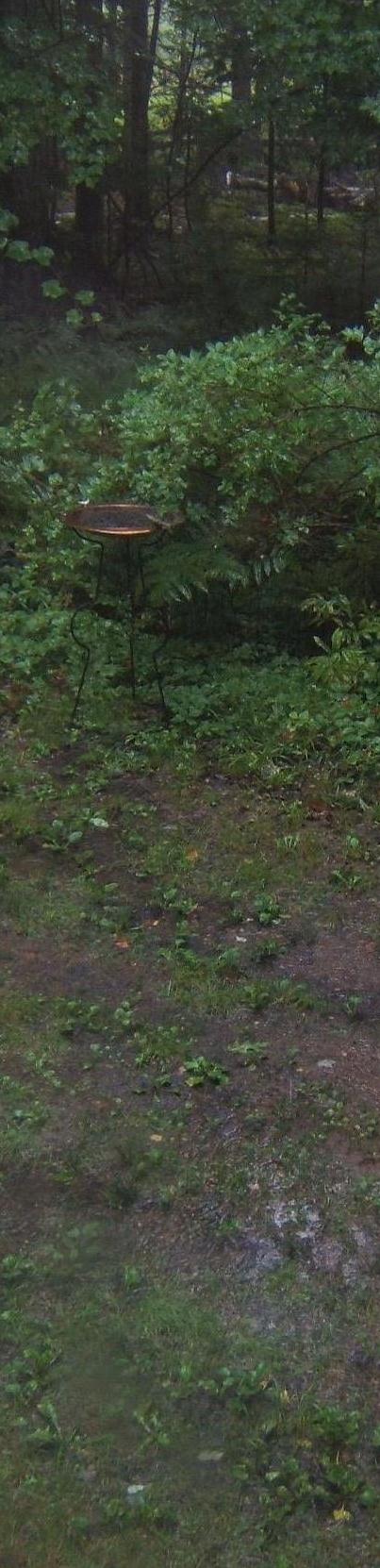
- bird bath and rain
My first knowledge of the power of a hurricane was associated with Hurricane Hazel. I was born the year it hit in 1954 (October 15), but its ‘bad reputation’ lived long enough for me to hear stories of it as a child. In its wake, 81 people in Ontario were dead due to flooding, and 4000 people in southern Ontario were left homeless.
Hurricane
~
Hazel
hurled northward
toward home
and me bewildered
wind at the roof
rain at the glass
faint imitation
of the rage
described in the encyclopaedia
more like the silent eye
~
I turned the page
saw a photograph in disbelief
a straw driven
into the heart of a tree
still standing
~
today, I believe
~
I stand still
while fury lashes around me
and in the quiet, I
am impaled
by a word
~
Published as: ‘Hurricane’, 1993, The Amethyst Review 1 (2)
(revised)
© Jane Tims
a place to wait, out of the rain
My husband and I love to go for drives in the countryside, and we often turn these trips into ‘expeditions for collection’. For example, in 1992, we began a project to see all the covered bridges in the province; of the more than 60 covered bridges in New Brunswick, we have ‘collected’ about three-quarters. Recently, we began a quest to see as many waterfalls as possible (the state of my arthritic knees puts the emphasis on the ‘as possible’).
This spring, we set out with a very reasonable goal, to see the three lychgates at Anglican churches in the Diocese of Fredericton (all of the Parishes in New Brunswick are located in the one Diocese). This idea came from a short article in the New Brunswick Anglican in 1997 by Frank Morehouse (‘Only three lych gates remain in the diocese’). The three lychgates are at St. Anne’s Chapel in Fredericton, St. James Church in Ludlow, and St. Paul’s Church in Hampton.
Lychgates are an architectural remnant of past practice, dating back to the 13th century. They were used as a part of the funeral service, a place for the priest to meet the body of the deceased on its way to burial, and a shelter for the pall bearers to stand out of the rain. The word lychgate comes from the Anglo-Saxon word lych meaning corpse.
A typical lychgate is made of wood, and consists of a roof supported by a framework of two or more posts, and a gate hung from the framework. Lychgates usually stand at the entrance to the church property or the graveyard. They can be architecturally ornate.
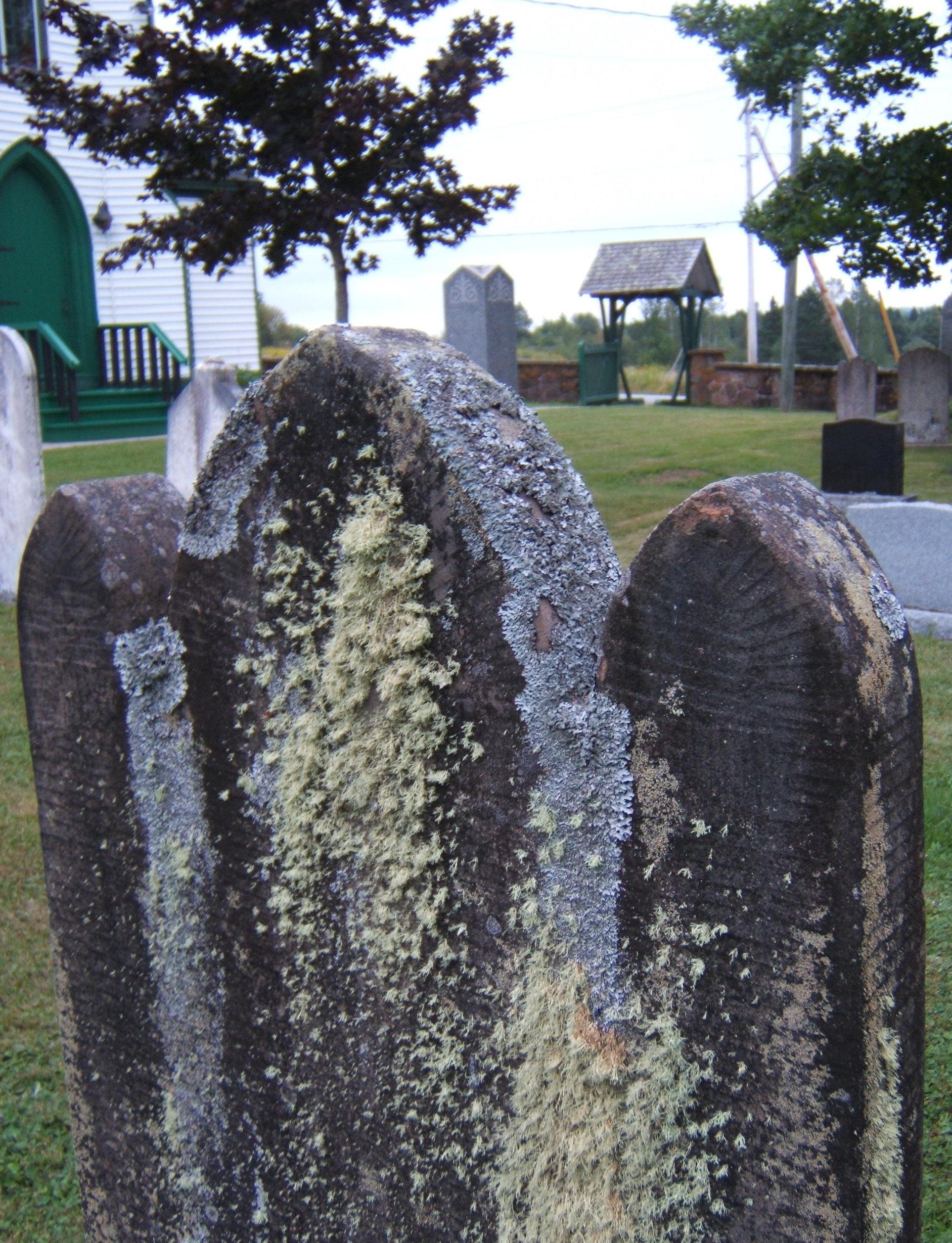
Today the lychgate is a picturesque feature of the churchyard, but they also create habitat for wild life. Spiders tuck their webs in the rafters of the structure where they are safe from wind and rain. The shingled roof of a lychgate is often a place where lichens and mosses can grow without competition from other plants.
Our collection of lychgates at Anglican churches in New Brunswick is complete. We found the lychgate in Fredericton on a rainy day in April…
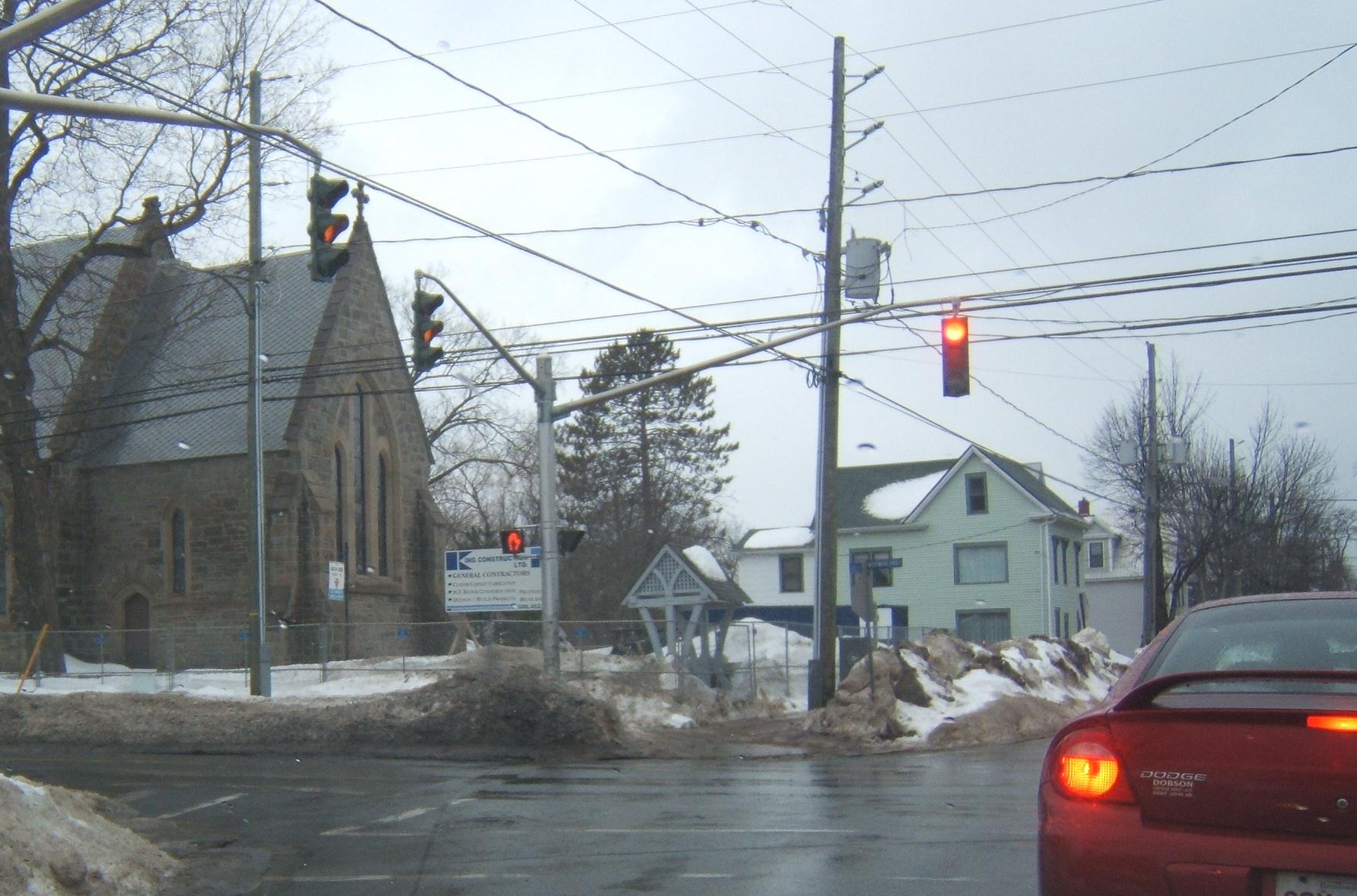
lychgate at St. Anne's Chapel in Fredericton, on a rainy day
… the Ludlow lychgate on a hillside in early July…

- lychgate at St. James Church, Ludlow

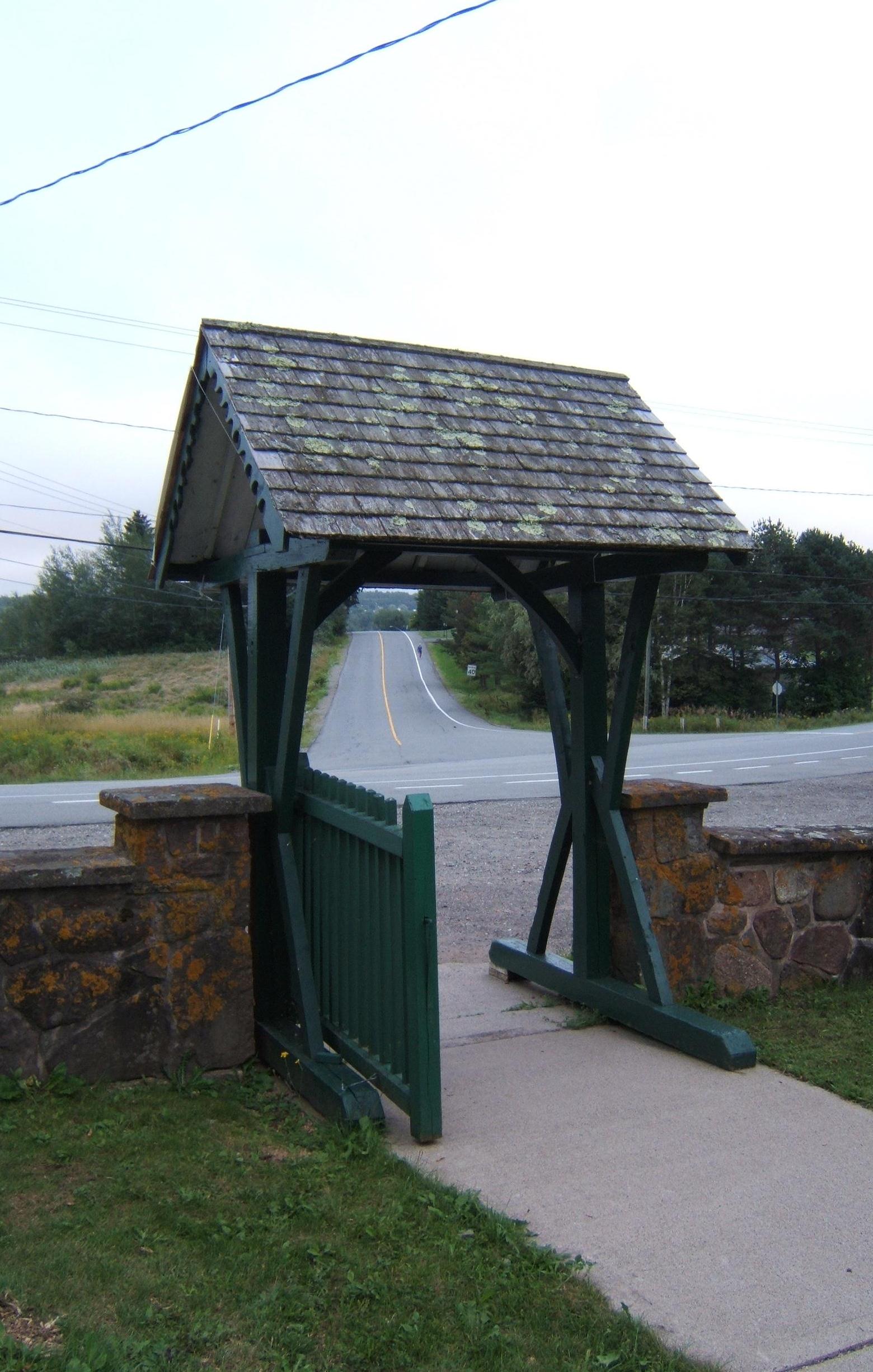
lychgate at St. Paul's Church, Hampton... green lichen on the lychgate roof and orange lichen on the stone wall
a place to wait, out of the rain
~
as if the rain matters
all of us drenched in tears
best for this to be
a grey day
heaven opened
for two way passage
~
the Sentences encourage me
to lift my eyes
and in the rafters of the lychgate a spider
spinning its web
~
as if it were a tale that is told
about a roof that protected me
the sun shall not burn thee by day,
neither the moon by night
neither the rain
~
(quotations in the poem are from The Book of Common Prayer, ‘The Order for the Burial of the Dead’, Canada, 1962)
© Jane Tims 2011
hidden in the hollow heart of an oak
Hollow trees create mysterious spaces in the woods.
When I was young, a hollow in a tree was a secret hiding place for treasures, and one of my favourite books was a Nancy Drew mystery – “The Message in the Hollow Oak”. In the story, a hollow tree is used as a secret mailbox between long lost lovers.
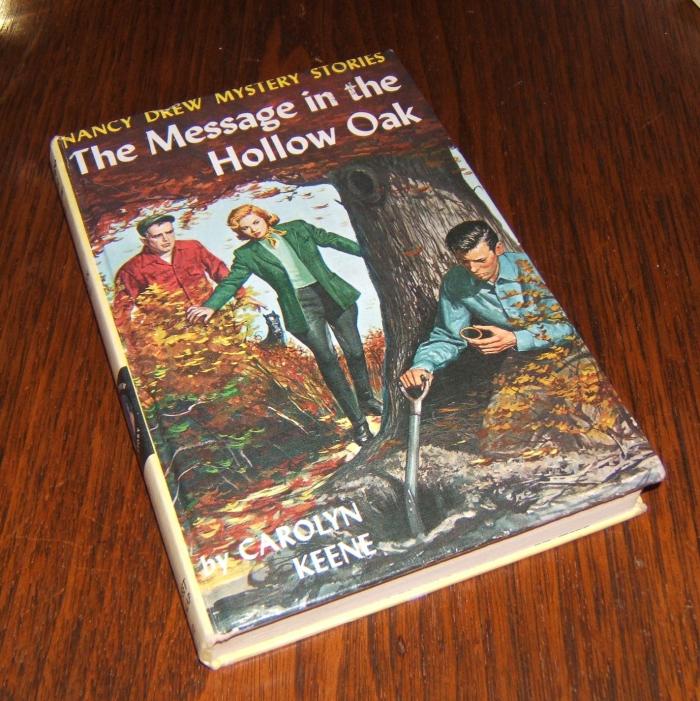
- Carolyn Keene 1935 The Message in the Hollow Oak (a later edition, probably around 1965)

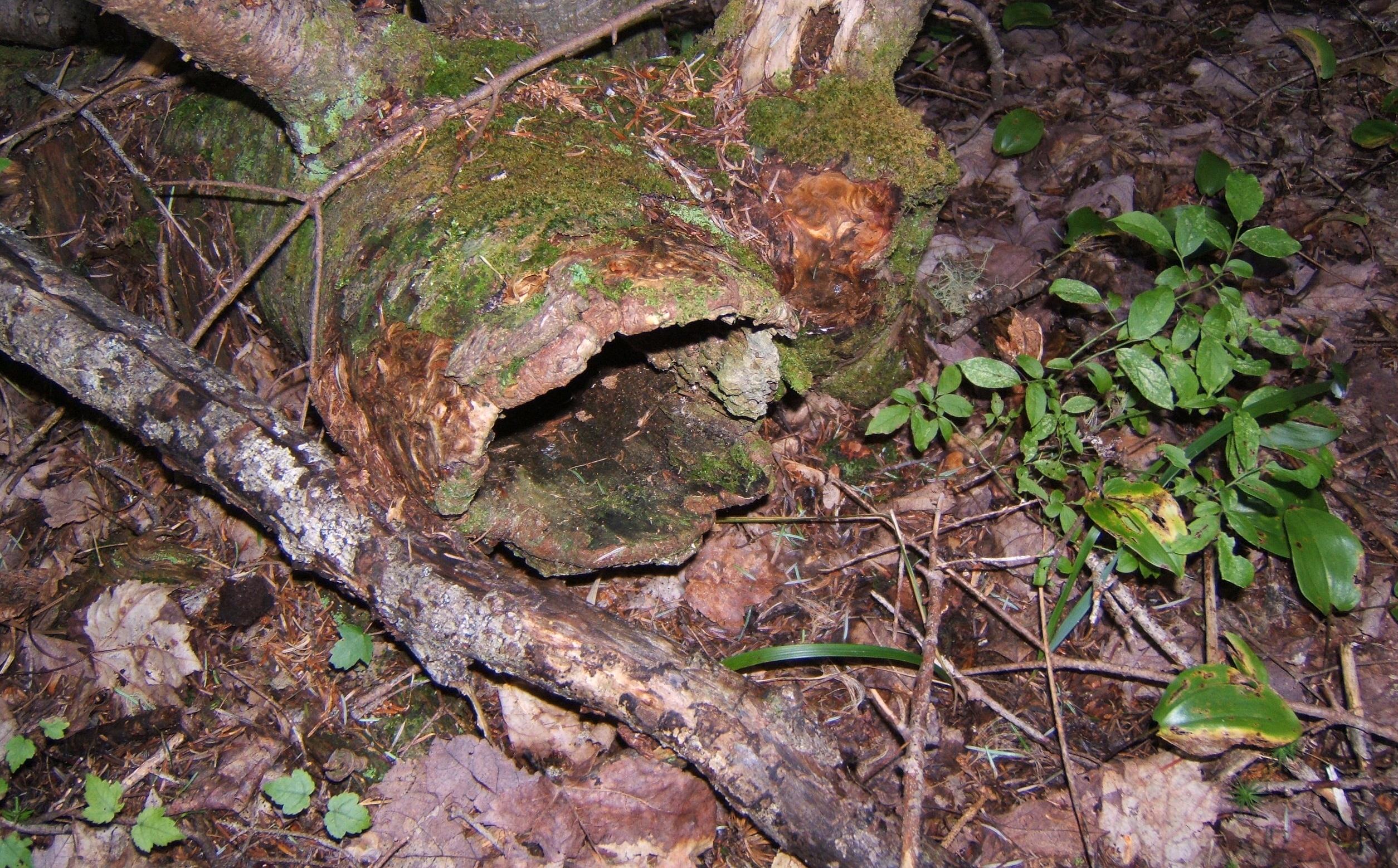
a hollow log in the woods
Cavities are usually found in mature trees. Their importance as habitat is a good reason for protecting older, mature trees in the woodlot. When my son was young, we made wooden signs saying “DEN TREE” for the older hollow trees in our woods, so we would remember not to cut them down.
Do you know a hollow tree and would you reach into the cavity to retrieve a letter???
requesting the favour of a reply
~
these leafless trees
brush against
a linen sky
ink strokes
on rice paper
letters
penned at midnight
~
hidden in the hollow
heart of an oak
afraid to reach in
to feel only
curls of bark
desiccated leaves
~
these trees
all seem the same
empty envelopes
parchment ghosts
~
branches tangled
messages
lost
~
black spruce scribbled on sky
~
Published as: ‘an answer in silence’, Spring 1995, The Cormorant XI (2)
(revised)
© Jane Tims




 nichepoetryandprose