Posts Tagged ‘hay barn’
under the haystack
In our area, late summer is haymaking time. During the past two weeks, almost every field has been at some stage of mowing, bailing, or gathering. Farmers tried to bring their hay in before the August 28 tropical storm (Hurricane Irene), so most fields are now cut and cleared.
Haymaking is a picturesque activity. The cut hay is formed into parallel windrows in the fields, an artist’s lesson in perspective. The cutting and bailing and drying of hay are all fascinating to watch.
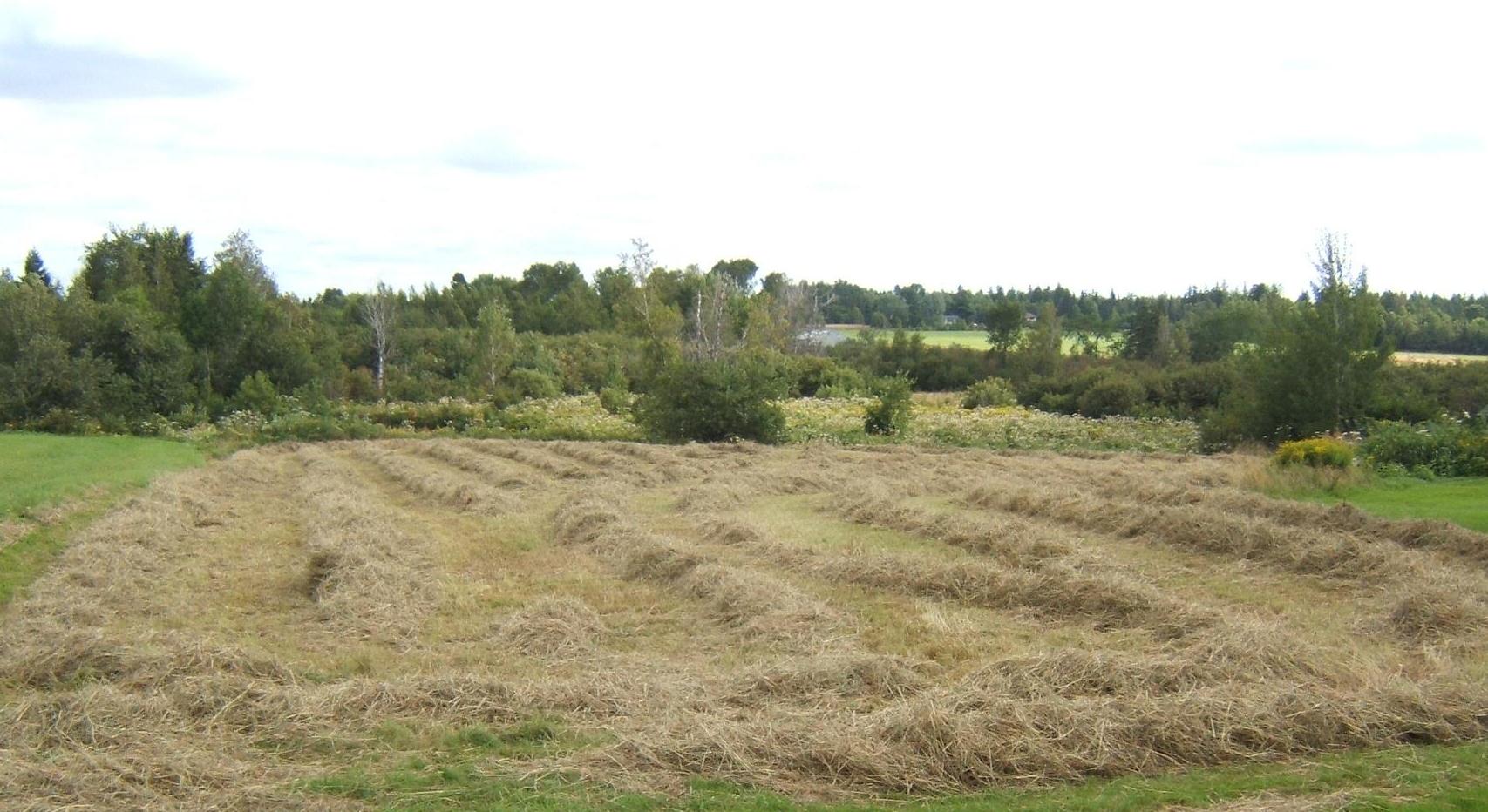
In the 1960s, at my grandfather’s farm, hay was gathered loose into a horse-drawn hay wagon and stored unbailed in the barn. One summer, I was thrilled to be asked to help ‘tramp hay’. As the fluffy hay was forked into the wagon, our work was to compress it by rolling and stomping and jumping.
Haying methods have changed, of course. Collecting loose hay is almost non-existent. Even the smaller square bails are hard to find. The most common are the cylindrical ‘round’ bails or the white plastic-wrapped silage bails.
The round bails look like plump shredded wheat…

and the silage bails are giant marshmallows.
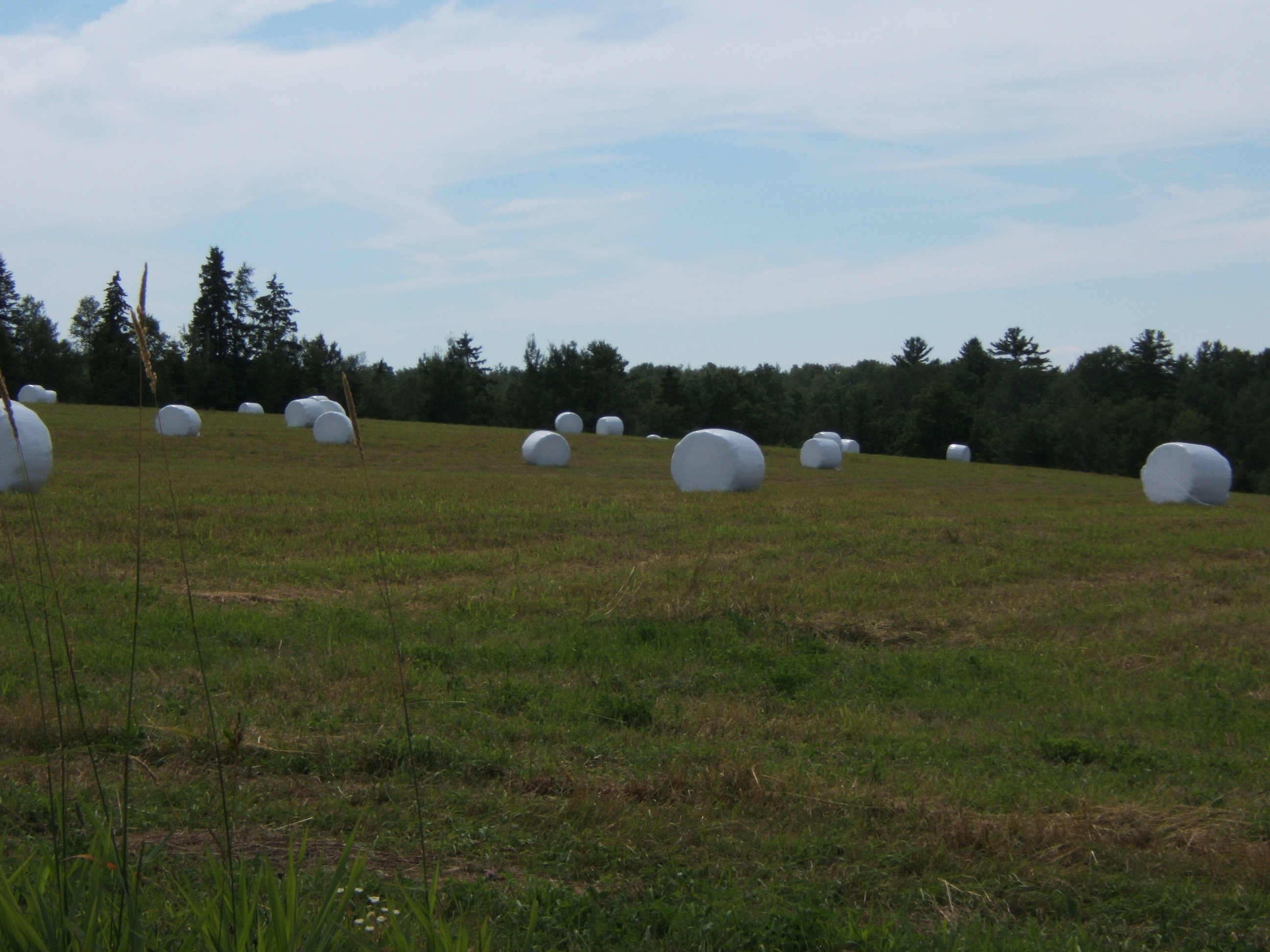
At sunset, the shadows of the round bails make musical half notes on the fields.

'half notes'
Summer Song
~
Sunbury County
sings in its sleep
purple vetch
hop clover
bluegrass
at the roadside
~
hay in rows
a staff
empty of song
awaiting
round bails and their shadows
half notes for an oboe
~
honey bee
ditty in the pink and red-hipped
old fashioned roses
bid country roads
enter the covered bridge
glimpses between planking
rock music on the water
tires drum on loose boards
~
deer look up
cattle low in the meadow
owl to whitethroat
counterpoint
goldenrod pollens the air
rushes by the Rusagonis River
north and south
~
over Sunpoke
big moon crescendo
~
trembles of aspen
diminish
~
Published as: Spring 1995, “Summer Song”, The Cormorant XI (2)
(revised)
© Jane Tims
abandoned spaces
When I drive through the countryside, I am drawn to the sight of abandoned farms or houses. I wonder why they have gone from being loved and used, to being alone.

abandoned farm buildings
Sometimes, the leaving is from economic necessity. Sometimes the last one who lived or worked there has died or moved on. Sometimes the government decides it can’t provide services anymore to out-of-the-way places. Occasionally, we are just seeing a moment in time, and new tenants and new life may be just around the corner.

an abandoned house
During the Depression, in the 1930s, many farms out west were abandoned because the combination of eroded land and poor economic conditions made staying impossible.
The poem below was written to remember one such place in southern Alberta. In the 1960’s, we went there once with my Dad, on a drive to explore the prairie roads.
Why do we abandon the spaces we know best?
The Reason for Leaving
~
1964
~
I remember the place
without texture
a line drawing
plainly coloured
~
two tracks on the prairie
one to come
and one to go on
~
a grey house
on a rise of green
(not grass, just green)
the door fallen away
~
a brown canal
still, without depth
sluice gears and flood gates
making the most
of insufficient water
~
and a bridge, also brown
boards laid without nails
~
~
1933
~
the truck
heavy on the driver’s side
steps down from the bridge
(the bridge ironic)
(three years, the Creek’s been dry)
~
in the rear-view mirror
a wooden house
on a low hill
a thin brown wind
and thirsty grasses
~
only the young ones
turn to stare
~
home
now hollow
stripped of voice and windows
the door left open
for tumbleweeds
~
Published as: ‘The Reason for Leaving’, 2010/2011, Canadian Stories 13 (76).
© Jane Tims
on my grandfather’s farm
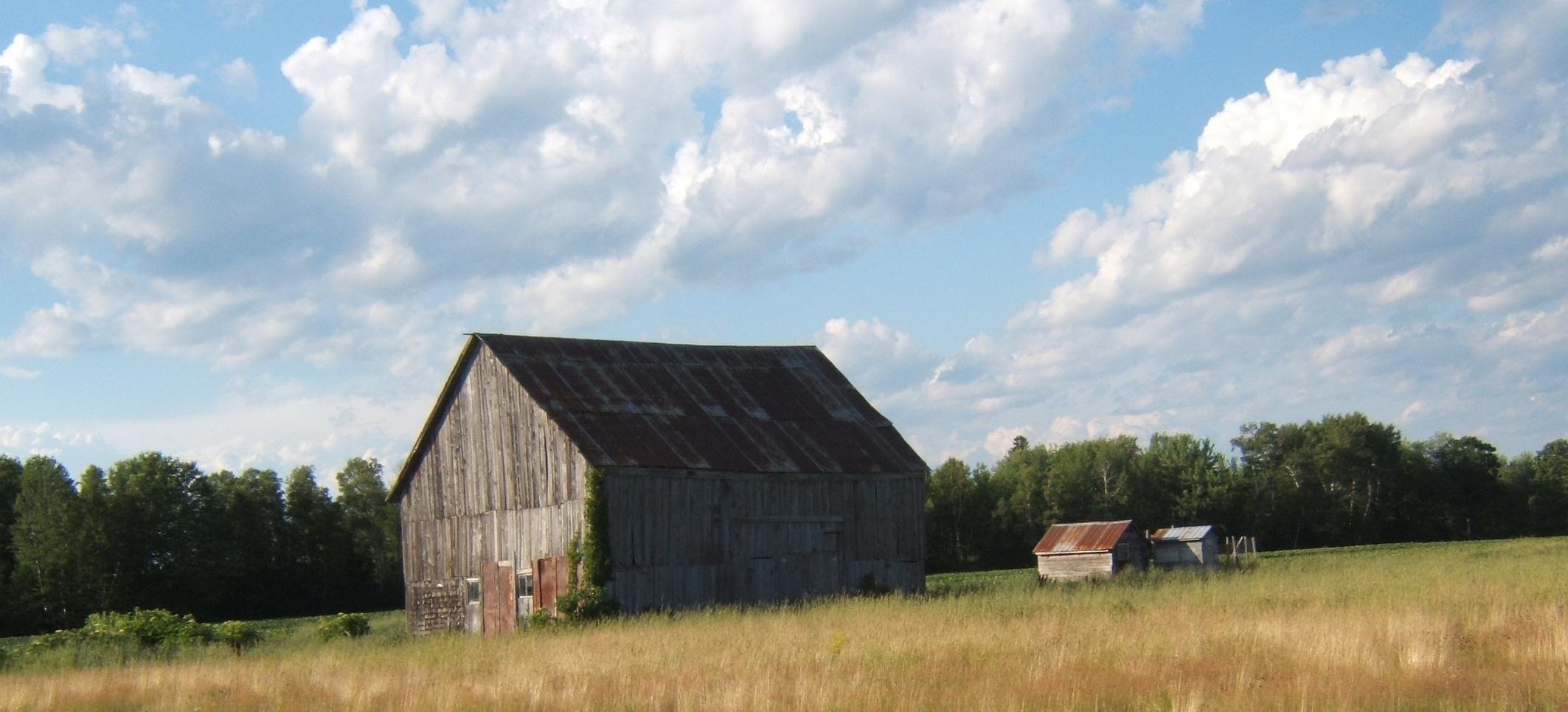
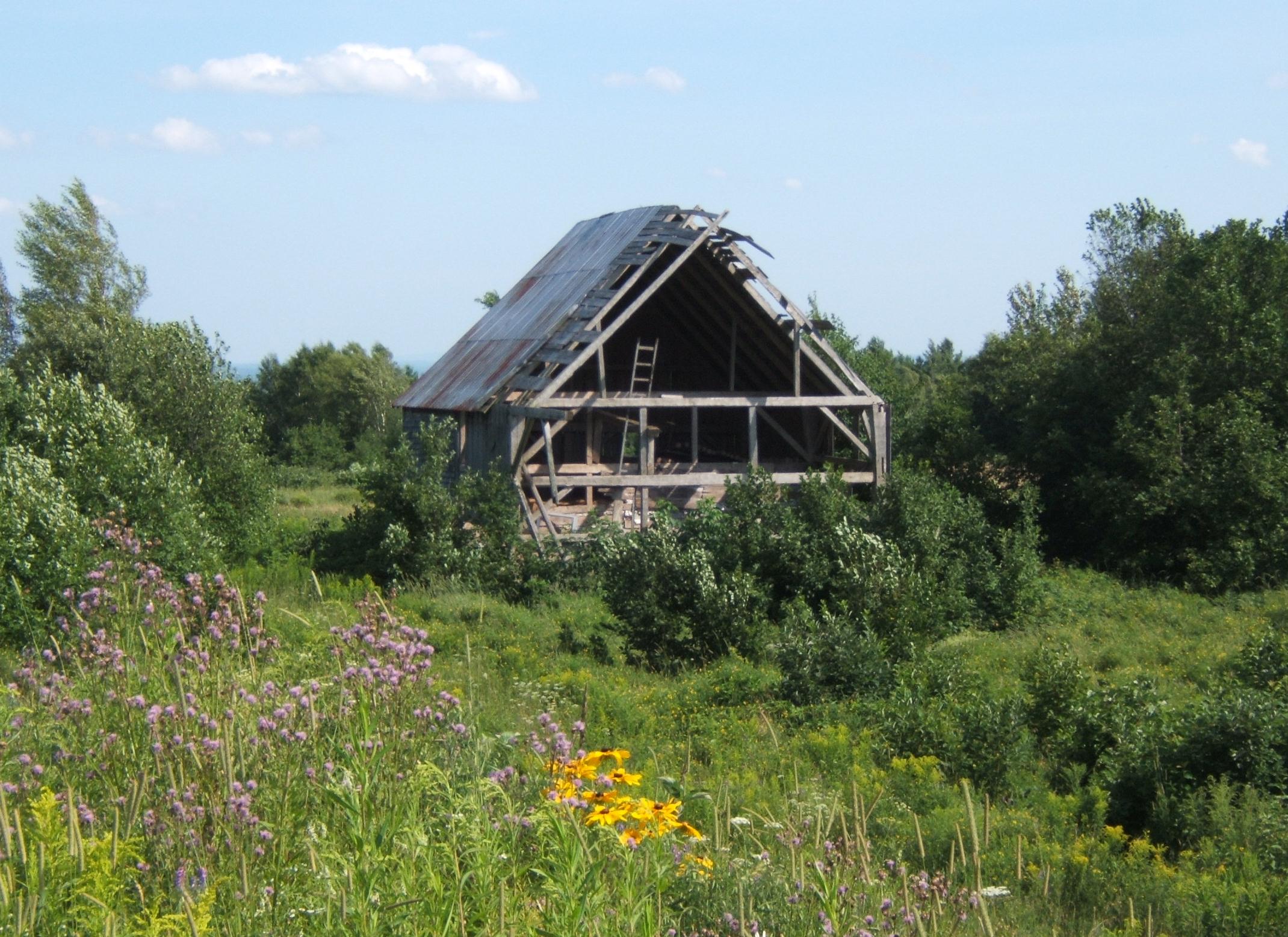
a haybarn and its out-buildings
When August arrives, I always remember the summers of my childhood. One of my favourite places to visit was my grandfather’s farm in Nova Scotia. It was a place of rambles, exploration and discovery. I looked forward to returning there each August, to reconnect with the farm and my extended family, especially my cousins. I was a city kid and loved the country life, picking berries, tramping hay, playing in the hay mow, and going for picnics at the lake.
My grandfather’s farm was part of a small community that included my aunts and uncles, and, of course, the cousins. These were families that depended on the forests, fields and lakes for their livelihood. Food was mostly local, grown on the farm or gathered from the fields and woods.
The farm was like a community itself, a miniature village of buildings. They included the main house, the big barn and various out-buildings. In my memory, there were about eight buildings in all, each with its own purpose, and its own sights, sounds, smells, tastes and stories.

The best was the big barn, built by my great-grandfather, with a high pitched roof, two lofts for hay, a central alley between, and back stalls for the cows and horses. The chicken coop was under the hay loft of the barn, sheathed in chicken wire and stuffed with new hay. Across the yard, closer to the house, was another bird coop, a loft for the more exotic birds my grandfather liked to keep: ring necked pheasants, a golden pheasant, and fantail doves. Another out-building, the noisy mink pen, was kept apart from the house, in the pasture, to hush the noise and keep the rank smell at bay.
The other buildings hover just at the edge of my recall. I think there was a lean-to beside the barn, cool and dark, housing the hay wagon, its big wooden wheels as large in diameter as I was tall. I also remember a machine shed, smelling of grease and oil, its doors always open.
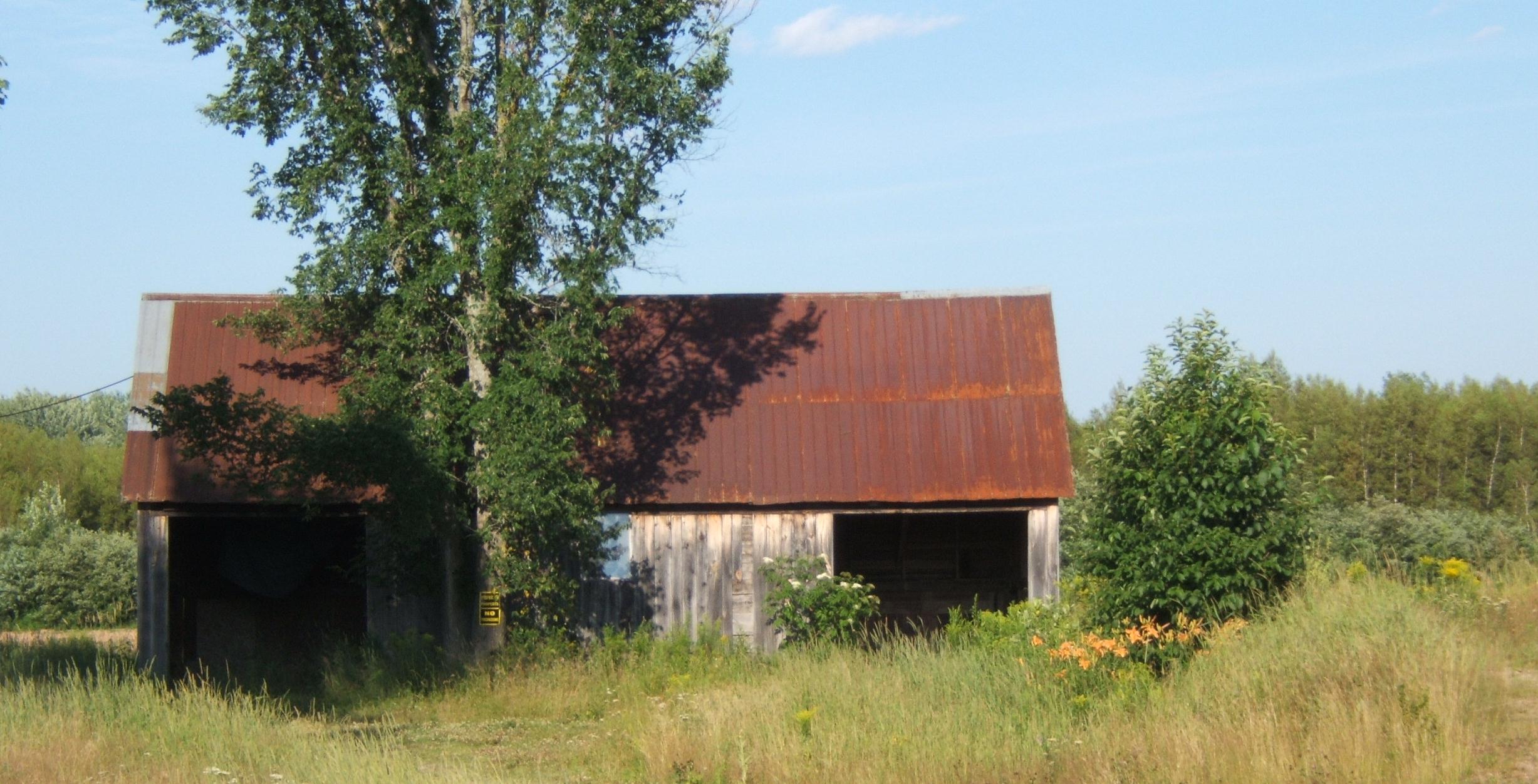
a machine shed with the remains of a garden and its old fashioned day lilies
The farm included a large acreage of pastures, fields and woods. These were also spaces to explore. My favourite was the apple orchard, and one particularly crooked tree, made for climbing. There was the farm yard with the chickens tottering about, squawking and annoying one another. Beyond the farm were the pastures, blue with berries, and the fields, edged with Black-eyed Susans, sturdy Rugosa roses, and other wild flowers. Our wandering usually followed the road, a winding way through mossy woods, leading to the lakes. Past the farm, it was a mere cart-track. Bordering the track was a fence with a swinging gate, perfect for sitting and dreaming. At one of the lakes was a favourite place for swimming, with a wooden diving board and a mythically deep pool, so clear you could see to the sandy bottom.
Farming can be a hard life, but viewed from the point of view of a child, my grandfather’s farm was a place of magic and wonder. I have tried to spend my life in surroundings that remind me of the farm. The experience of the small family farm is disappearing, but each day I try to recapture something of the feeling. I keep my garden wild, growing day lilies and Creeping Jenny at the edge of the lawn. I look forward to picking blueberries in the early days of August. And I roll down the car windows to catch the smell of new mown hay.
I wonder if your childhood included a farm and if you remember it well. Is the farm you knew still standing, or has it been abandoned with the years?
an old hay barn




 nichepoetryandprose