Posts Tagged ‘editing’
writing a novel – taking a break from the draft
On Friday of this week, I begin a weekend Maritime Writer’s Workshop with the University of New Brunswick’s College of Extended Learning. I will work with a dozen other writers at revision of our written work under the leadership of Joan Clark. Joan is an award-winning novelist of both adult and children’s fiction, and I am anxious to find out what she thinks of my work.
I have chosen to submit ten pages of my novel ‘Saving the Landing Church’ to be examined during the weekend. I will get some good insight into how other writers respond to my writing. No doubt, I will also discover some aspects of my writing that need improvement. I hope the other writers will find my work interesting and help me discover some strengths as well as weaknesses.
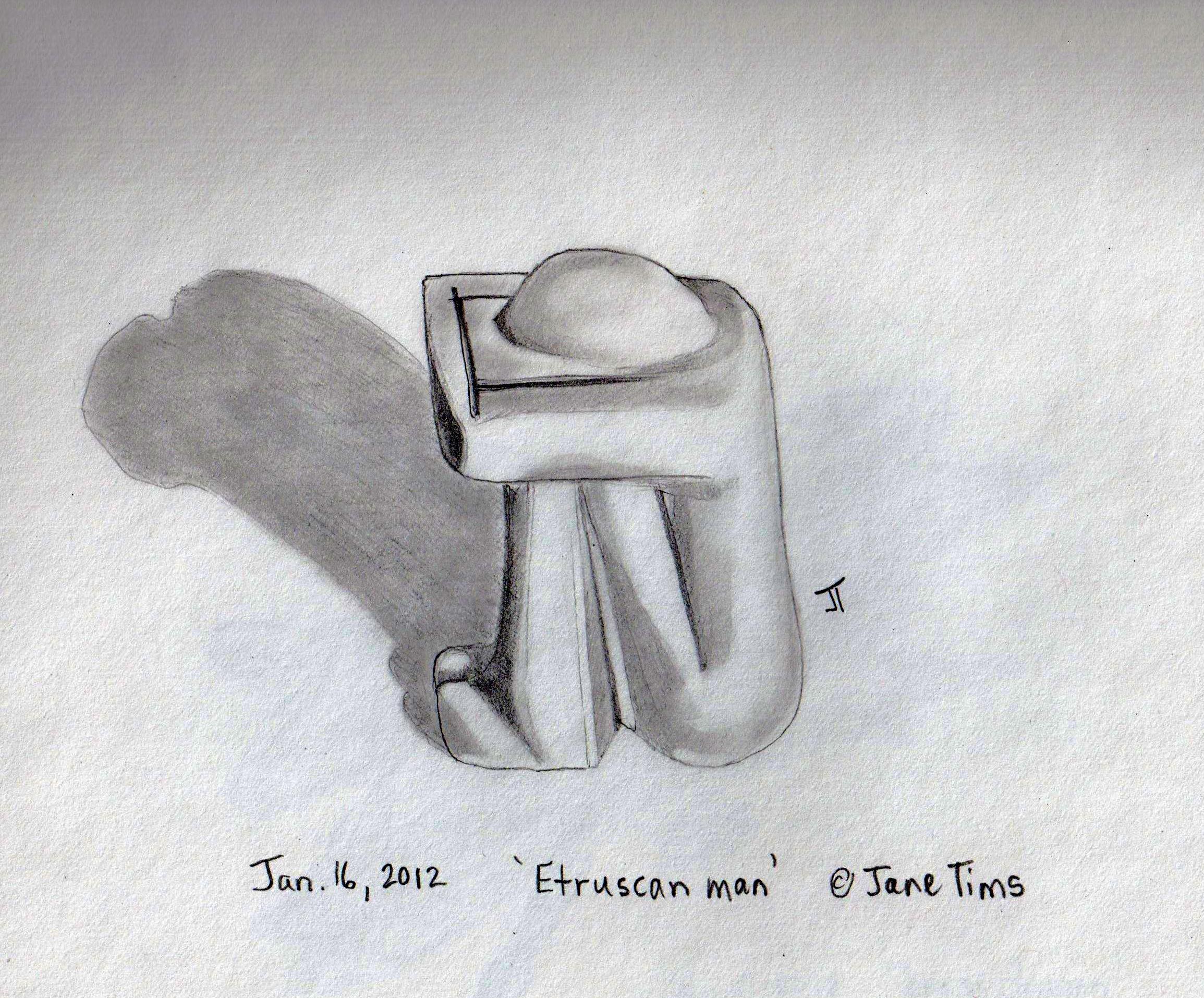
Sometimes it is difficult for me to hear criticism about my writing, but I have to listen carefully and keep an open mind …
I will also read and comment on the work of the other writers. This will help me to hone my own editing skills and discover more about what readers like in written work.
Once I have done the workshop and incorporated various comments into the draft, I will take a three-week break from my novel. I will put the current (third) draft away. During that time, I will not read the draft and I will try not to think about it. Then, after March 4, I will spend a couple of days reading a paper-printout of my novel. The theory is, it will be new to my brain after the break and I will see, with great clarity, what I certainly should have seen before.
~
I expect to find:
simple edits (Sadie takes a drive on the car, rather than in the car)
discontinuities in the action (Sadie goes for a hike a week after cracking her ribs)
slip-ups in characterization (Nicola suddenly has blue eyes instead of green)
cases of inverted time (July cames before June)
~

I may discover that Tom and Sadie are going for a walk and listening to the rustle of the leaves in the birch trees in the dead of winter….
~
From these observations, I will make some changes and then will come a series of decisions about how to get my novel published.
~
on the road to novel publication
~
Copyright Jane Tims 2013
editing to remove the passive voice
I am still editing my novel, aiming for the third draft. Today is about finding and eradicating the passive voice. When I find an instant of the passive voice, I try to find a better, more active way to present the idea.
The passive voice occurs when the object of an action is expressed as the subject. ‘The book was read by Jane’ (passive voice) … instead of … ‘Jane read the book’ (active voice).
The passive voice is often accompanied by a form of the verb ‘to be’. A simple example: ‘The text had been edited by the teacher’ (passive voice) … ‘The teacher had edited the text’ (active voice).
The active voice is usually preferred because it’s direct, energetic and less wordy. Sometimes the passive voice is Ok to use – for example, if the agent of an action is unknown or unimportant: ‘The letters were misdirected to Toronto.’
~
Here are examples of some of the changes I have made:
~
Passive : The louvers of the belfry were splintered where they had been damaged by the move.
Active: The move had damaged the louvers of the belfry, splintering the wood.
~

louvers in a belfry, the wood not splintered!!!
~
Passive: Our taste buds were teased by names like the Pickle in the Barrel Pub, Heavenly Hash, and Bob’s Country Diner.
Active: Names like the Pickle in the Barrel Pub, Heavenly Hash, and Bob’s Country Diner teased our taste buds.
~

if there were such a place as ‘Heavenly Hash’, they might serve a salad like this!!!!
~
Passive: The deconsecration has been approved by the Diocese
Active: The Diocese has approved the deconsecration.
~
~
I treat my edits of dialogue a little differently with respect to the passive voice. People often speak in the passive and so I am careful to edit for what sounds natural rather than what is grammatically correct!
~
Copyright Jane Tims 2013
writing a novel – the first reads
So, I have completed the second draft of my novel. This stage follows the pages of edits I had after reading my book on my e-reader. It took two long days to make the changes. I emerged from the experience feeling that I needed a few other eyes on my work before I start another draft.
I am lucky to have two people in my family who have volunteered to look at the draft, my son and my niece. I am also fortunate to belong to a couple of writer’s groups and some of these brave folk have agreed to give the draft a critical read. I don’t know what to expect, but it will be so helpful to see their comments, both good and bad. I am so grateful to them all.
My husband is also listening to the draft. Just before we watch Coronation Street each evening, I read a chapter from my novel to him. He is no book-worm, but he listens carefully and gives me his impressions. He is especially helpful on some of the technical issues. For example, my main character’s husband, Tom, is a welder, and my husband explained to me that you can’t weld copper to steel. Also, I find errors as I read. So, I make a few changes each evening.
~

Tom, my main character’s husband, is a welder… in the novel, he makes a series of wind sculptures for the writers’ retreat… this wind sculpture is one we have at our real property by the lake
~
I am rapidly coming to a time when I will leave the draft untouched for about three weeks. This is Stephen King’s advice (On Writing, 2000). It will give me a chance to return to my poetry and meet some upcoming deadlines. Then I will pick up the draft of my novel, to read it as if brand new! Who knows what idiosyncrasies I will find!!!
~
For you to read, here is an excerpt from the book, about Tom’s wind sculpture:
~
‘You shouldn’t be welding, you know,’ I said. ‘The doctor said you might improve if you stayed away.’
‘The doctor said I’d already done all the damage I could do,’ said Tom.
I was silent. It was an old argument. Tom didn’t want to hear about possibilities. He believed in the frozen-cold facts.
‘Hey, girl, have a look.’
He lifted part of his project from the bench. The main element was a long cylinder of steel. In a coil around the cylinder, he had welded a thick, inflexible steel wire. To the flat end of this wire, Tom had screwed a broad triangle of copper sheeting. The triangle was shaped like an oak leaf, cupped and angled to catch the wind. Tom stood the cylinder on its end and it became a tree with a single clinging leaf. He reached for another piece of formed metal and threaded the two together. With his hands, he moved the unit, giving me a glimpse of the way it would move in the wind.
‘It’s wonderful,’ I said, always awed by the mellow gleam of the copper and his ingenious designs. ‘How many leaves will there be?’
‘Nine, in three layers,’ he said. ‘It’ll be taller and quicker than the others.’ He had already finished the first three in a series of these wind mobiles. Eventually, they would be part of a sort of garden he had planned for the property. ‘Writers,’ he said, ‘will visit the wind garden and be inspired.’
The whisper of the wind and the mobile joinery of the sculpture, the exchange of light between the burnished metal and the shimmering lake, together these would create a magical, rhythmic experience of light, movement and sound, perfect for meditation and contemplation.
~
Copyright Jane Tims 2013
writing a novel – e-reader editing
So the poet is writing a novel…
~
Title: unknown
Working Title: Saving the Landing Church
Setting: a writers’ retreat, including an abandoned church
Characters: main character a writer; her husband Tom; people from the embedded community including next door neighbors Emma and Mark; people from the commuter community; the aberrant community
Plot: the story of how a woman tries to preserve an abandoned church with unexpected consequences for herself and for the community
~
~
I have finished my first draft!
This week, I am working on edits.
The writer’s discipline of producing something each day suits me most of the time. I characteristically accomplish enough in three or four hours of work to push back from the computer with a feeling of satisfaction.
Some days, it’s harder to focus. I find editing particularly hard. Perhaps because of the recent holidays, perhaps because it is so cold outside, this week I have been having trouble concentrating.
Yesterday, I discovered a way to make the editing easier!
Lately, I’ve been using my e-reader more and more for general reading. I thought, why not use it to read my own (draft) book?
I didn’t do any fancy work. I merely took my Word draft and saved it as a .pdf file. The first time I did this, the font was so tiny, I’d have to use a magnifier to read. So I experimented a little, and finally settled on the font Times New Roman, size 22, double-spaced. Once I made the font change in Word, I saved it as a .pdf file and copied it directly into my Kobo e-reader. There were a couple of glitches which I didn’t bother to fix. Some words transposed as bold (as you can see in the photo) and none of my italics made it through. But the book was very readable.
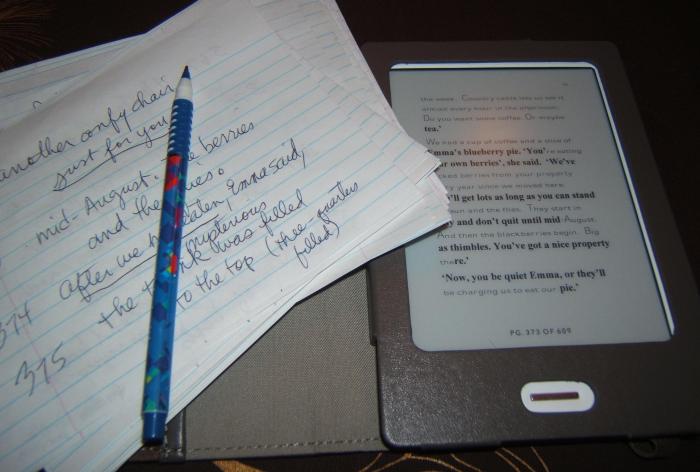
Today and yesterday, I have been editing in luxury. I have been sitting in my comfy chair, with a warm throw, a cup of tea and my Kobo. By having my draft in book format, I can see it as a book, read it with more ‘distance’ and more easily find the places I need to re-write or edit. I keep track of edits, page by page, in pen, on note paper. Of course, I’ll have to do the final edits at the computer, but that pain is somewhere in the future, made easier by the ‘Find’ feature in Word.
One step closer to completion!!!
~
Copyright Jane Tims 2013

blackberries as big as thimbles




 nichepoetryandprose