remembering place – Grade Two
After a mix-up resulted in my attendance at the wrong school in Grade One (see https://nichepoetryandprose.wordpress.com/2014/06/27/remembering-place-grade-one/ ), I finally found the right school in Grade Two, Crescent Heights Elementary School. This school was only two blocks from home and easy to walk to. I also was in the same class as my best friend, Laureen.
~
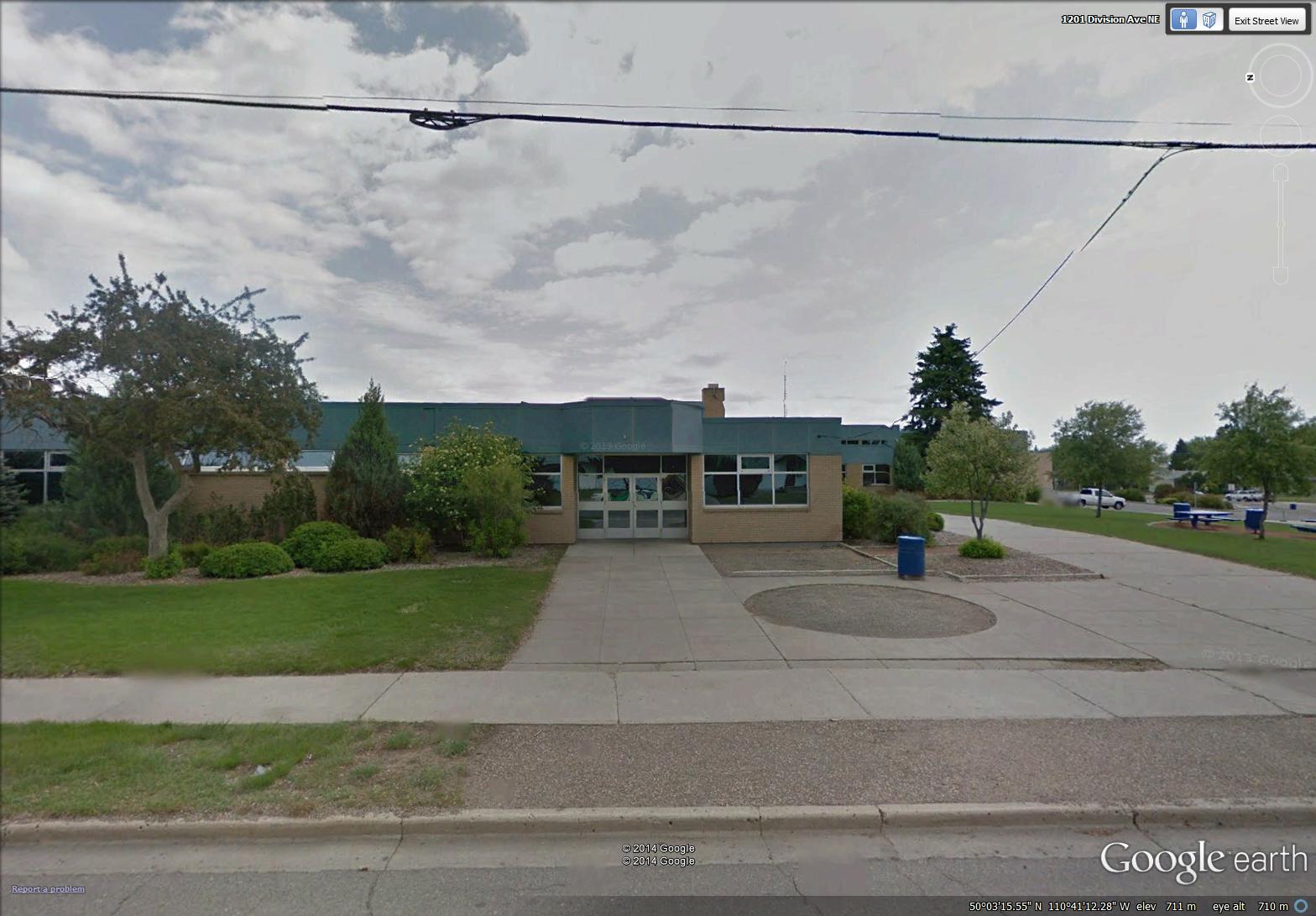
Crescent Heights Elementary School (image from Street View)
~
Miss McCallum was our teacher, a happy, brisk lady. These were the days of the Baby Boomers and she had almost 40 students in her class. I can remember only two of their names in the photo below.
~

Miss McCallum’s Grade Two Class, Crescent Heights Elementary School (I am Row 2, fifth from right)
~
I have no specific memories of being in school in Grade Two. My world consisted of my Mom and Dad, my younger brothers and sister. Life was simple and happy, though I’m sure my parents would not have agreed.
~
Copyright 2014 Jane Tims
Great Grand Uncle Ed – silver miner
My great-grandmother Ella’s brother was Edwin W. Hawk. He was born in 1864, the sixth of eight children.
~
‘Uncle Ed’ was an adventurer and went west when he was only 16, to live in southern Wyoming. The US Census of 1880 lists Ed as a laborer at Crow Creek, Wyoming (not far from Laramie, Wyoming). By 1886, my great-grandmother Ella was living in Laramie. No doubt she had come west to live near her younger brother.
~
By 1910, Ed was living in Humbolt, Nevada. In 1920, he is listed as a lodger at Broadway Ave. in Lovelock, Nevada. He is 56 years old, single, and a miner in a quartz mine. Nevada is known as the ‘Silver State’ because of its silver mines.
~
Ed continued to work as a miner. At the time of his death in Lovelock in 1940, probate documents show he had a cabin in Vernon, Nevada and six mining claims in the Seven Troughs Mining District. He had an estate of $3200, a watch and chain, and $80 in cash.
~
Vernon was established in 1905 as a base for those working in the Seven Troughs Mining District. The landscape around Vernon is hilly, dominated by yellow sand, dotted with sagebrush. The town dwindled in population as the silver depleted and was abandoned by 1918. Today, it is a ghost town.
~
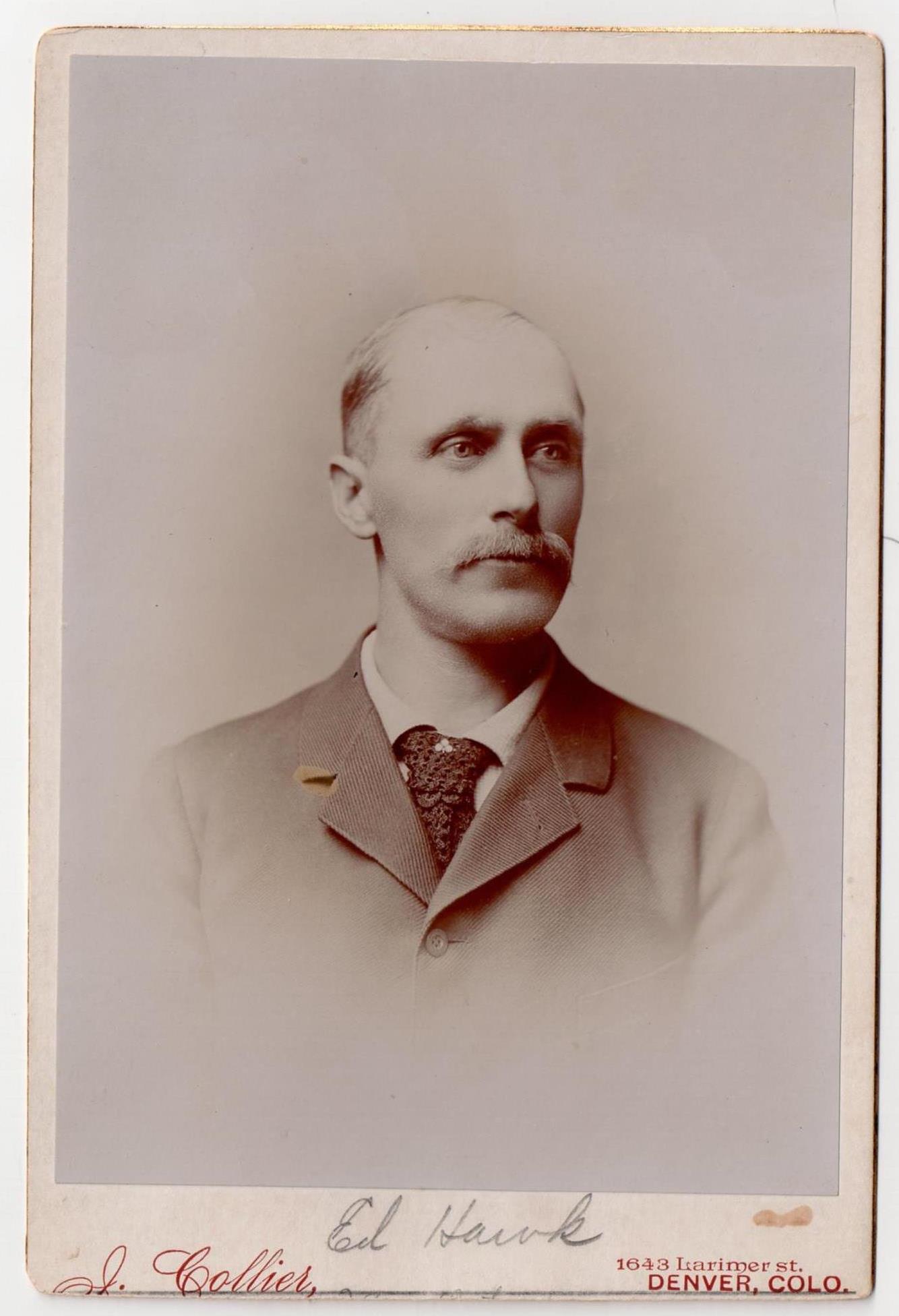
Ed Hawk, Ella’s brother
~
I notice that the same photographer (J. Collier in Denver) took both Ed’s photo and a photo of my grandfather Leo as a baby (Ella’s son). Ella lived in Denver until 1910 and perhaps Ed visited her there, and had his picture taken on a visit to see her baby. For more information on Leo, see https://nichepoetryandprose.wordpress.com/2012/07/20/chicory-cichorium-intybus-l/
~
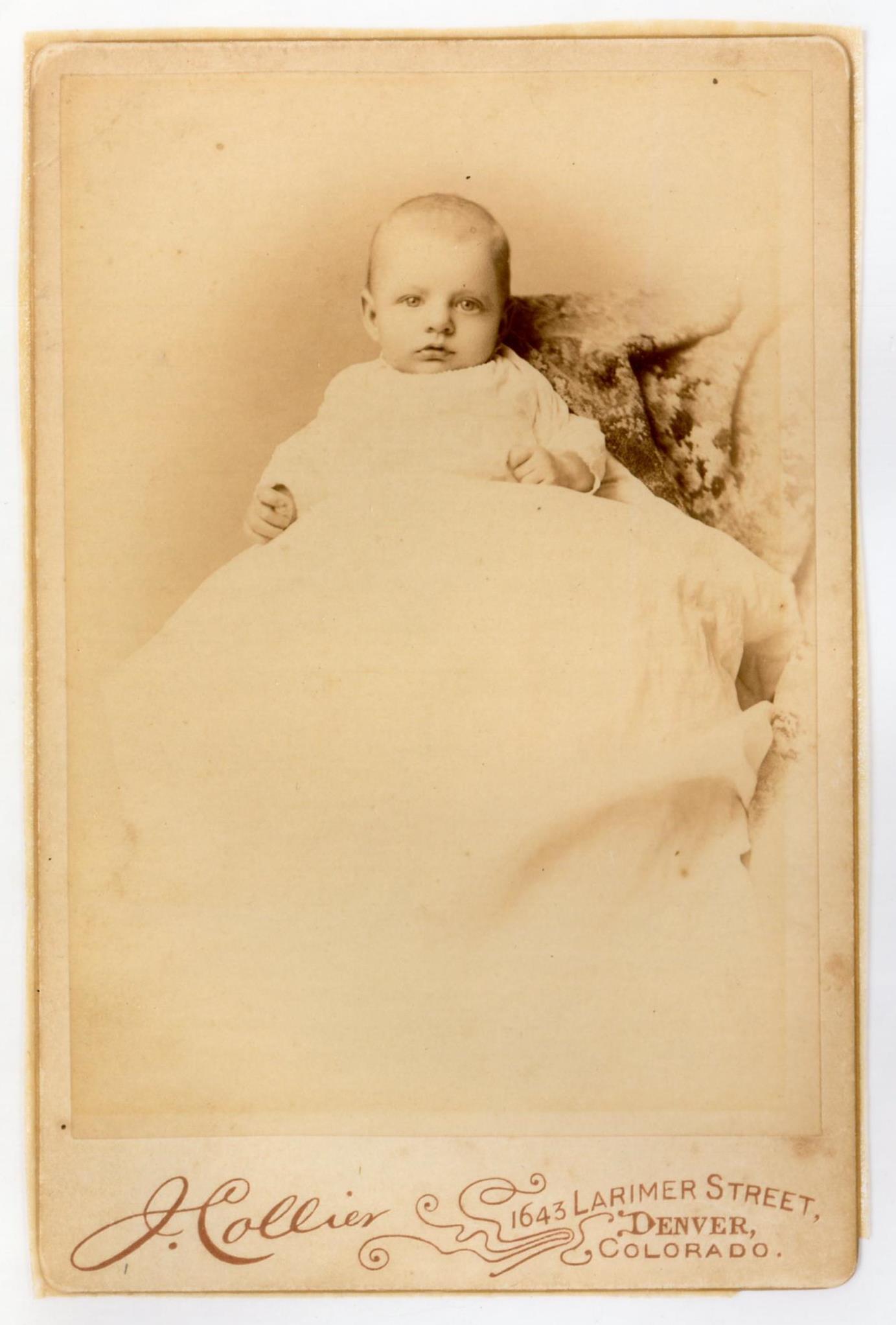
Leo Norman as a baby (son of Ella and Frank Norman), my grandfather and Ed’s nephew
~
Copyright 2014 Jane Tims
family history – changes in 10 years
As I look into my family history, I am often amazed by the changes that occur in families in short periods of time. An example is found in the early life of my great-grandmother Ella – Mary Ellen (Hawk) Norman. In the ten years from 1860 to 1870, she experienced dramatic changes in her family.
~
The 1860 US Census shows Ella’s family living in Chestnut Hills Township, Monroe County, Pennsylvania. The family included Josiah Hawk (Ella’s father, a shoemaker), Sallyann (Sarah Ann) (Ella’s mother), Owen and Ella (Ellen). Mariah Hawk, Ella’s paternal grandmother was also living with them.
~

~
In the next decade, the family underwent remarkable change. First, five children were born – Flora, Sarah, twins Edwin and Otto, and Emma. Of these, Otto and Emma did not live (Josiah and Sallie had already lost a child in 1957). Then Josiah died on June 28, 1865, a month and a half after Emma. Also, sometime during the ten-year period, Maria Hawk, who lived until 1880, went to live elsewhere.
~
John Franklin born Sept. 15, 1855 (died Dec. 26, 1857, two years old)
Owen born April 21, 1857 (death date unknown)
Ellen born January 4, 1859 (Ella, my great-grandmother, died 1933)
Flora Alice born June 25, 1860 (death date unknown)
Sarah Ann born Dec. 11, 1863 (Sadie, my great grand-aunt, died 1921)
Edwin W. born 1864 (Ed, my great grand-uncle, died 1940)
Otto born 1864 (death date unknown, before 1870)
Emma Lydia born Jan. 7, 1865 (died May 9, 1865, 4 months old)
From: Atwood James Shupp, 1990, Genealogy of Conrad and Elizabeth (Borger) Hawk: 1744 – 1990, Gateway Press, Baltimore).
~
In 1870, Ella’s mother, Sallie, married again to Joshua Popplewell.
~
The 1870 US Census shows the results of all this change. In 1870, the family is living in Williamsport, Lycoming County, Pennsylvania. The family now includes Joshua Popplewell (step-father), Salie (Sara Ann) (mother), Owen, Mary (Ella), Flora, Edwin and Sarah (Sadie).
~

~
The person most affected by these changes must have been my great-great-grandmother, Sara Ann (Sallie). During the decade she gives birth to five children (including a set of twins), her husband dies, she remarries, and she changes the location of her home at least once. In the only photo I have of her, she seems a formidable woman, steeled to withstand all manner of disruption in her life. I also see great sadness in her eyes.
~

my great-great-grandmother Sallie – Sarah Anne (Kresge) Hawk Popplewell (1835 – 1910)
~
Our lives are dynamic, full of change. New people enter our lives, others leave. The place we call home shifts to a new location. We go to school and graduate, we take a new job, we retire. Our focus changes, along with our point of view. Some change is dramatic, some subtle. Some change makes us laugh, some makes us cry.
~
What changes do you see in the decades of your life?
~
Copyright 2014 Jane Tims
learning to spin
All spring and summer, I have been dyeing wool roving with dyestuff collected from the roadside and garden. I have always intended to use this wool in some of my weaving projects, but lately, I have decided to first spin the wool roving into yarn. Everyone recommends learning first to spin with a drop spindle, later graduating to a spinning wheel.
~
First, I went online to learn the basics and decide which drop spindle I should use. Then I ordered my maple bottom whorl drop spindle on eBay for $7.95 ( $15.60, including shipping).
~

~
To spin, I first attach an end of the roving to the hook on the end of the spindle. The method is to tease out a sparse bundle of fibres and spin the spindle, twisting the section of wool into a thread. I spin the spindle counterclockwise, pinching the wool as I tease it out, holding the spindle still on my lap when I have to use both hands. Eventually, I will get better and be able to hold the spindle in the air with one hand and spin the spindle with the other. I do this a bit now, but I am plagued by breaking wool. For an enjoyable beginner’s lesson in spinning, see Jennifer Beamer’s video at http://www.youtube.com/watch?v=FtBLIg4JhNI .
~
Spinning with a drop spindle is addictive! I now spin the roving as soon as it is dry after dyeing. My yarn is still very knobbly – a little like the yarn you use to knit those bulky sweaters! My balls of yarn are getting better all the time, although I have trouble getting too much spin into the yarn, so it twists up on itself quite easily!
~

~
So far I have eleven balls of wool: Tansy, Old-Man’s-Beard, Bugleweed, Alder bark, Lily of the Valley (2 balls), Beet roots, Beet leaves, Carrot leaves, Radish leaves, and Comfrey.
~

~
This is so much fun!
~

~
Copyright 2014 Jane Tims
Great Grand Aunt Sadie – dressmaker
As I learn about my family history, I am drawn to the stories of the individuals I encounter. One of the people important in my great-grandmother Ella’s life was her sister Sadie. Sadie was born on December 11, 1863 in Pennsylvania, the fifth child of eight children. She was called after her mother, Sarah Ann (Kresge). Sadie’s father was Josiah Hawk, a shoemaker who died when Sadie was a little over a year old and Ella was six. For a little more about Josiah, see https://nichepoetryandprose.wordpress.com/2012/10/17/occupation-shoemaker/
~
As far as I know, Sadie remained unmarried throughout her life. This meant that she had to support herself. Few opportunities were available to women in the late 1800s, but Sadie stayed connected to her family and earned her way as a seamstress. The 1910 US Census shows Sadie as a dressmaker living with her mother, a landlady.
~

~
By looking at the US Census for 1870, 1900, 1910, and 1920, as well as the City Directories for Scranton, I can account for Sadie most years.
In the 1870 census, when she was six and a half, she lived with her mother in Williamsport, Pennsylvania. That year, her mother married Joshua Popplewell, a machinist living in Scranton.
I have not located Sadie in the 1880 Census due to the commonness of her name.
From 1888 until her death in 1921, Sadie lived in Scranton. Her addresses included 330 Lackawanna Avenue (1896 – 1900), 16-18 Williams Building (1905 and 1906), 101 Spruce Street (1907 to 1916), and 116 Mulberry Street (1917 to 1921). I have looked at these addresses on Street View (Google Earth) and the houses where Sadie lived are all gone, replaced by parking lots and modern businesses.
~
Sadie made her home with her mother Sallie Popplewell from 1907 until Sallie’s death in 1910 or 1911, and with sister Ella, my great-grandmother, from 1910 to 1921.
~

~
Sadie died at 2 PM on March 26, 1921. In her will, Sadie described Ella (my great-grandmother) as her “beloved sister”.
~
When I was a teenager, my Aunt Jane told me about Sadie and gave me Sadie’s locket.
~
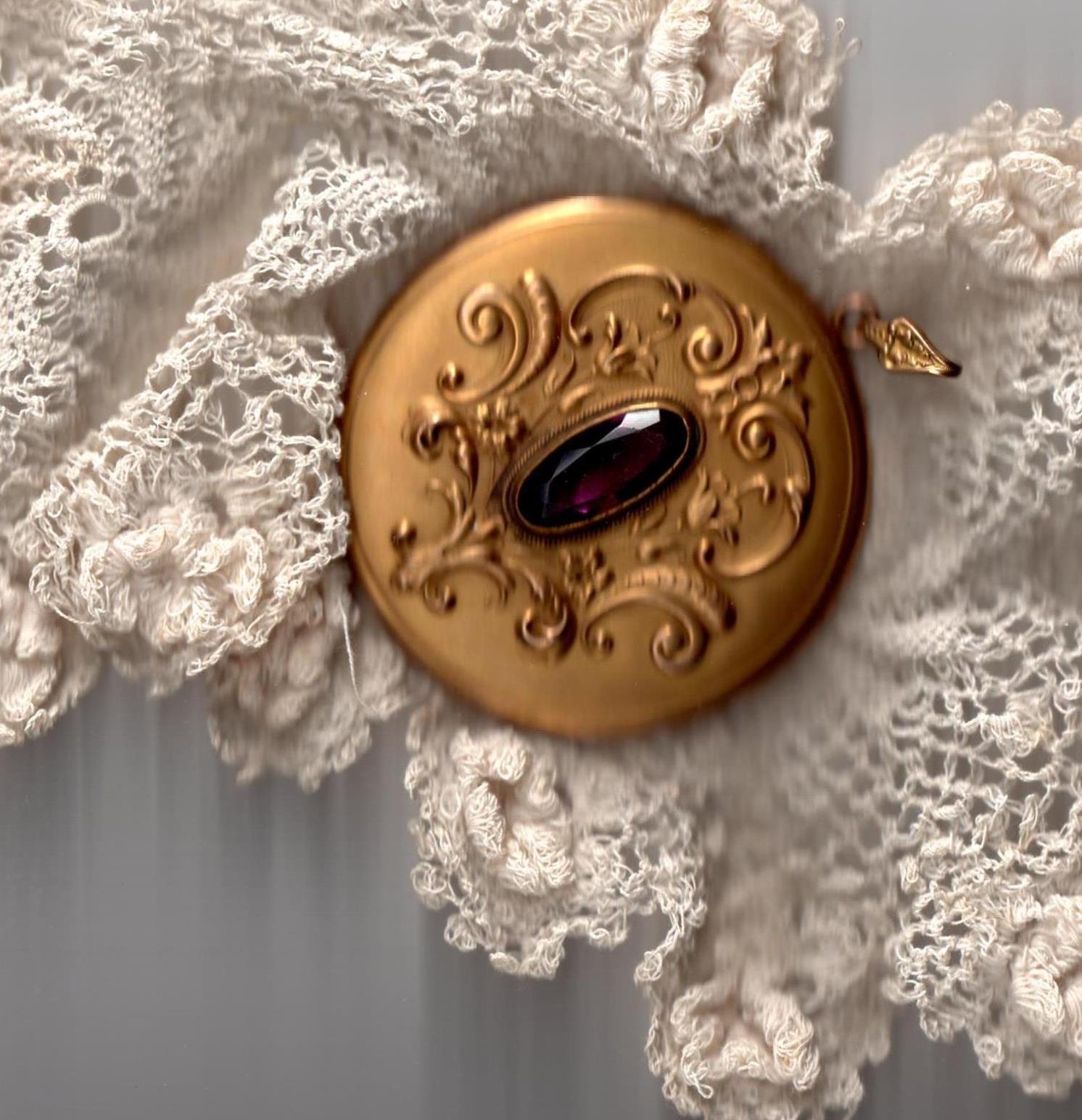
Aunt Sadie’s locket (front)
~
Her initials are beautifully engraved on the back – S A H – Sarah Ann Hawk … the sweet-faced woman in the photos above.
~

~
Copyright 2014 Jane Tims
Arthur – after the storm
Over a week after Tropical Storm Arthur, I am thinking about the new pattern of life we adopted during our six days without electricity. Without our usual electric lights, stove, refrigerator, computer and television, we adjusted our days.
~
First there were candles. I have lots of candles, but three pillars in the living room sent enough light into the main part of the house for navigation. We also had our small flashlights. They lit the darker rooms and made us safe on the stairs.
~
The next ‘necessity’ was gasoline for the truck and for our small generator (2000 watt). Although we began the storm with very little gasoline (we were not well prepared), we waited a couple of days to fill up, to avoid the long lineups for gas at the few stations open after the storm. Since most all of Fredericton was without power for the first two days, so open gas stations, fast food places and grocery stores were hard to find!
~
Once we had our generator working, we had a hot meal at supper time each evening, on our small electric hotplate. By the end of the six days, we were using our generator for fans to keep the house cool and to watch DVDs on our television.
~
Water, of course, is always a concern. We had lots of water on hand, about 22 4-liter jugs I keep for emergencies. We were able to buy drinking water and ice for our cooler, although these items were flying from the shelves!!! By the end of our adventure, we had filled our jugs a couple of times, once at my son’s home (in the city, they had no power, but they did have water), and once from the Oromocto Fire Department who were so kind to us.
~
On Day 6, workers from NB Power and Hydro-Quebec, and a tree trimming crew from Maine arrived to remove the trees from the downed lines on our road. They worked all day to re-establish power to about 500 customers who depended on this particular line. We were so grateful to them, knowing they had worked since the storm hit. We were just one group among many waiting for power. On Sunday, July 13, there were still 5000 customers without power in Fredericton. By the time of this post, NB Power says most power will be restored. It is certainly the longest power outage we have ever experienced in this province.
~

three candles
~
three candles
~
between ruby glass
and hard wood floor
a slide of light and three
~
extinguished candles
smoke lifts from smoulder
each mote a particle
~
of spectral light, mosaic
shard, image
reassembled in three
~
dimensions
shepherd, hawthorn
lamb
~
© Jane Tims 2011
Arthur – during the storm

front yard during Arthur
~
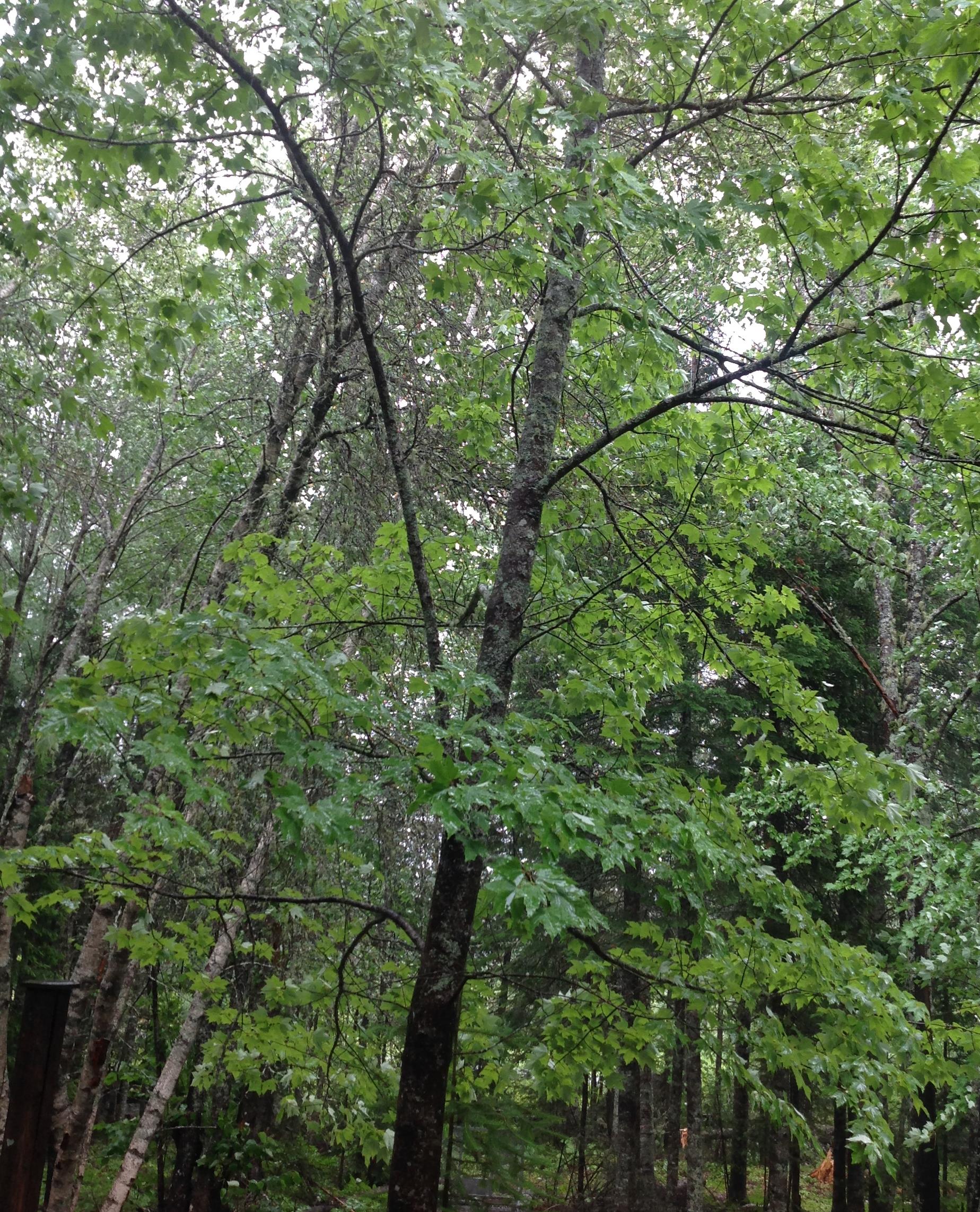
trees in hurricane rain
~
Arthur
~
woods are a green ocean
swell, each oak a breaker, and pines
crash on the shore, withdraw, branches
lift and fall, lift and settle
maples gyrate, invert their leaves, backlit
waves, spray from every
blade, winds tug at petiole, green
debris on the deck, fallen stars
on the lawn, the wind a rumble, every
branch a knife, each trunk a bow, bent
beyond the stretch of fibre, trees heave
branches lash, in the woods a crack
pummels the growl of a chainsaw in
the neighbor’s yard
~
~
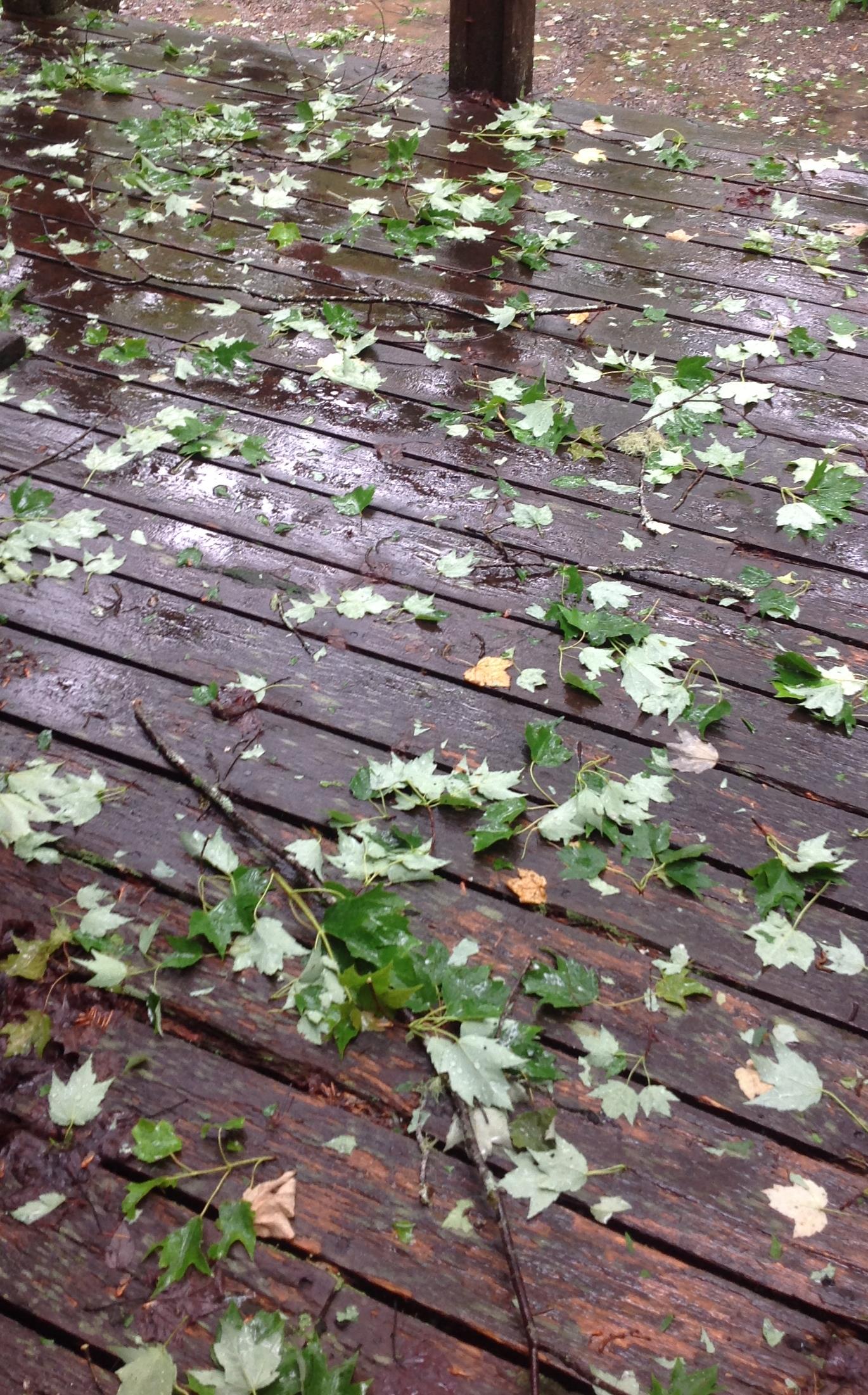
bunches of leaves on the deck
~

a crack in the branch of our maple
~
Copyright 2014 Jane Tims
abandoned railroad siding
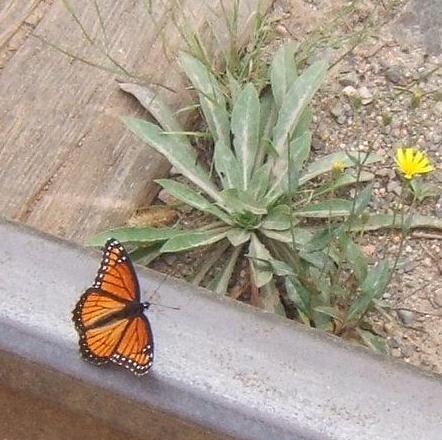
Viceroy on rail
~
abandoned railroad siding
~
a viceroy butterfly, orange
leaded glass
and rows of wary eyes
naturally suspicious
settles on the slate-grey rail
flexes its wings, nonchalant
~
as the black bear who
ambled the track
left a dump
of blackberry seed
undigested pulp
or the enthusiastic jumble of clovers
blooming between the ties
~
rails are held between the trill
of insect and the quaver
of goldenrod, caught in the crossfire of sun
light focused through
signal lenses
and glass insulators
on unstrung
telephone poles
~
turn toward horizon
rails merge and vanish
altered stride of railroad
walking made confident
by the absence of train
~
~
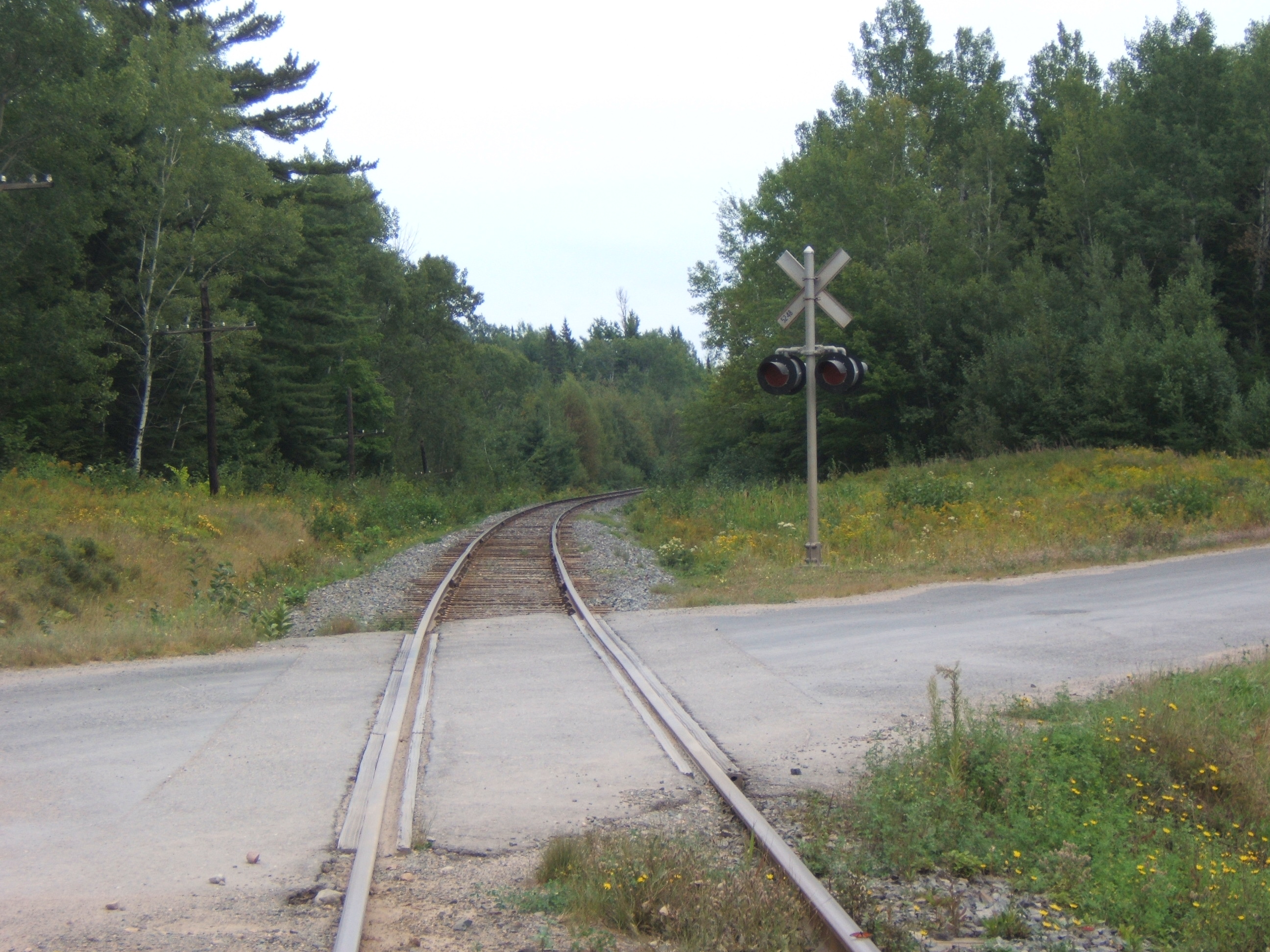
railway crossing
~
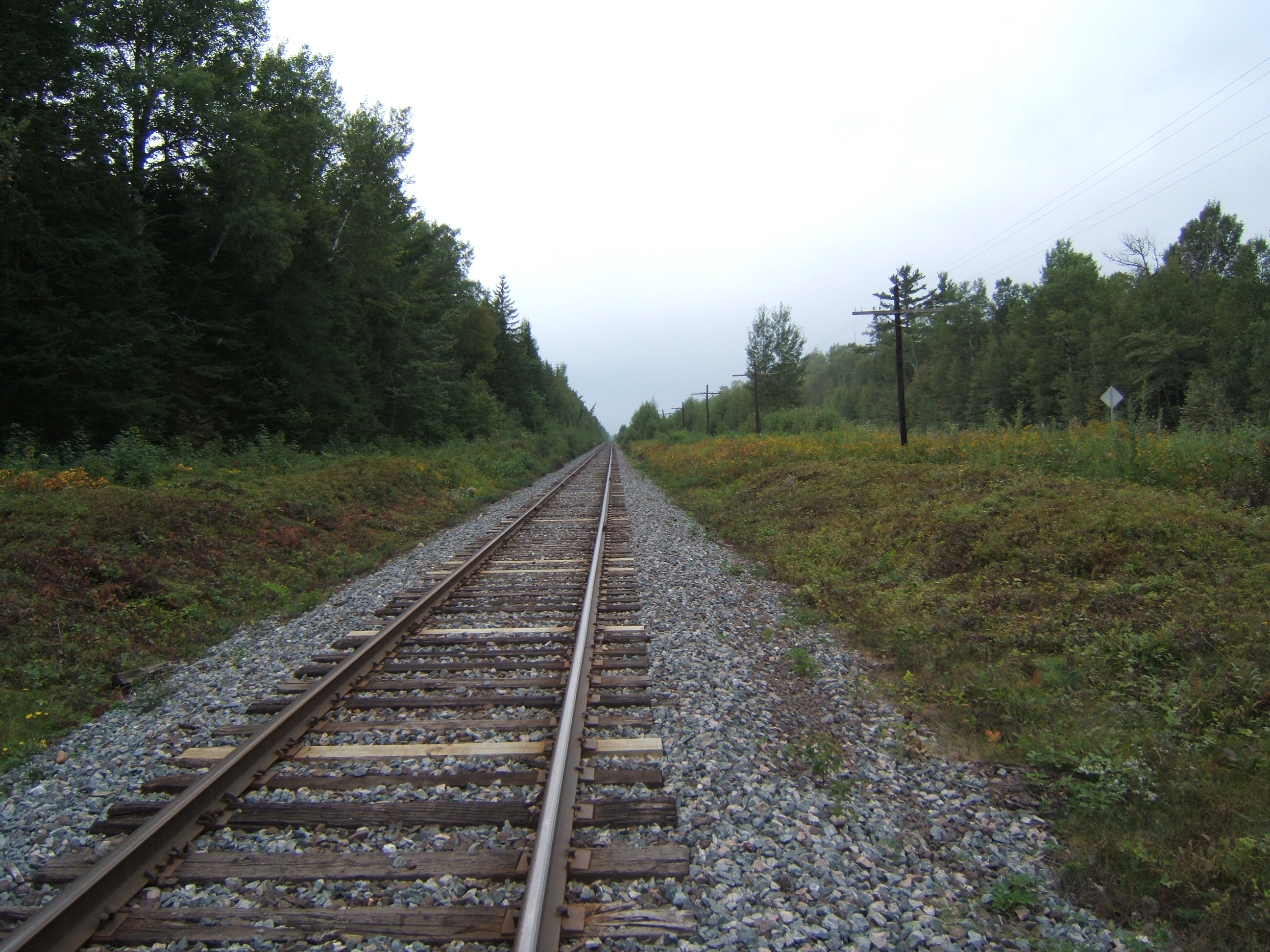
railway near Rooth, New Brunswick
~
Copyright 2014 Jane Tims
remembering place – Grade One
On a ‘mind map’ of my life, what places are clearly marked as important, with bright yellow stickpins of internal memory?
~
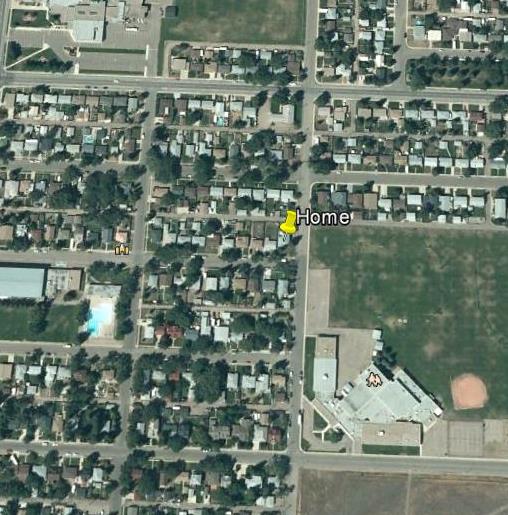
home (map from Google Earth)
~
Since I spent most of my younger days in school, it isn’t very surprising that many of those stickpins mark the schools I attended. One of these is Vincent Massey Elementary School in Medicine Hat, Alberta.
~

Vincent Massey Elementary School in 2012 – looks just the same as in the early 1960s (image from Street View)
~
In the early 1960s there were three elementary schools within a reasonable distance of our house. The story of how I came to attend Vincent Massey was probably one of the first dramatic events in my life to that date.
~
The school I was assigned to attend was determined by the School Board. The summer just before I was to attend school for the first time, a delegate of the School Board came around the neighborhood to let the parents know which school their children would attend. Mom and Dad were not at home when the representative came to call. My Mom got the information second-hand, from the mother of my best friend, just across the street.
~
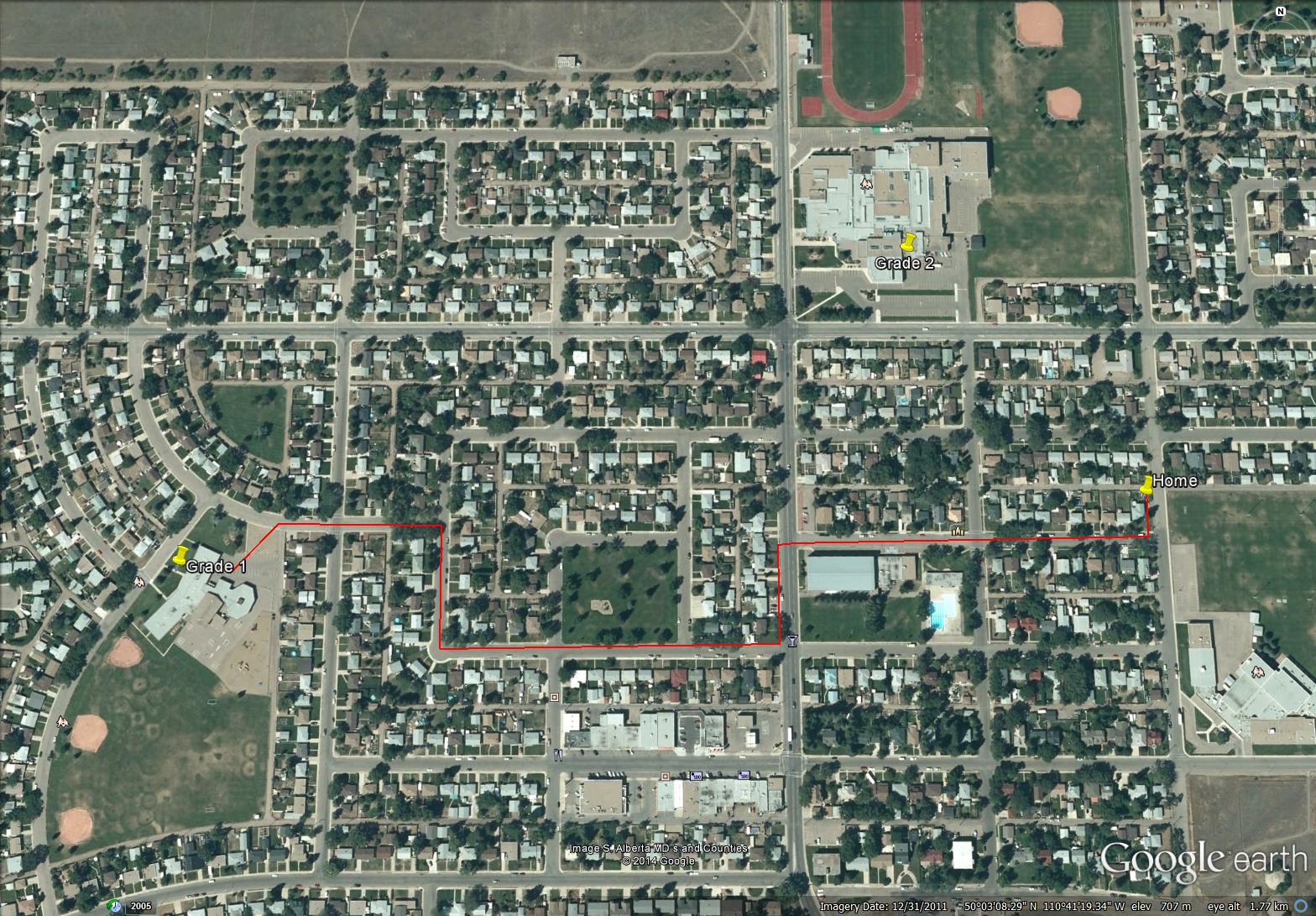
from home to school in Grade One (map from Google Earth)
~
Mom and Dad were quite alarmed to discover I was to go to Vincent Massey Elementary School, seven blocks away. This may not seem far today – my son attended Grade One in a community 13 kilometers away. But in those days, there was no school bus and my Mom had my eighteen-month-old brother to care for. I would have to get to school on my own two feet.
~

My brother and I in 1960 – I had been in Grade One for three months when the picture was taken – I look like I could easily make those seven blocks to school!
~
I remember the discussions well – about the best route for me to take, about what we would do about dinner time, about the dangers of taking to strangers. We did a couple of dry runs. I can still remember my Mom showing me how to cross the busy four-lane Division Avenue. Up to this point, I had not been allowed to go beyond our own block by myself.
~

Division Avenue in 2012 (image from Street View) – I remember standing on the curb looking at the traffic whizzing back and forth … no crosswalk!!!!
~
The first day at school, the drama expanded. Mom had told me to be very careful to listen for my first name – Alexandra. I was usually called by my second name – Jane – so this was a major worry for me. On that first morning, all the students were assembled in the gymn. We sat on the floor and our names were called, one by one. I listened for that long, strange first name as each name was called. And, at the very end, I was all alone in the gymn … no one had called the name Alexandra.
~
The teachers were very nice, of course. I was told not to worry, and Mrs. MacDonald, a teacher of one of the Grade One classes, came to get me.
~
As it turned out, the neighbor had given my Mom the wrong information. Today, knowing urban planning as I do, I think ‘Division Avenue’ might have provided the first clue!!!!
~
I had a great year. I walked to school with friends. We stuck to the planned route for a while, but ended up taking shortcuts through various yards. By the end of the year, I was taking the city bus, dropping my quarter into the slot like a pro. I stayed with Mrs. MacDonald for my first year of school and emerged from the grade convinced that rabbit was spelled ‘raddit’ (no fault of the teacher’s).
~

Mrs. McDonald’s Grade One class (I am first left in bottom row; Mrs. McDonald is at upper left)
~
The next year, properly directed by the School Board, I was sent to Crescent Heights Elementary School, two blocks away, and another stickpin on my ‘mind map’ …
~
~
Copyright 2014 Jane Tims
colour transfers
As I was preparing my eco-bundles for steaming ( https://nichepoetryandprose.wordpress.com/2014/06/20/an-attempt-at-ecoprinting/ ), I was thinking the words ‘heat’ and ‘steam’ – after 30 years of ironing my husband’s work shirts every morning, these words mean ‘steam iron’ to me. So I wondered if it would be possible to transfer the colour of a flower to cloth using my iron.
~
So far, I have tried two species: Bugleweed (Ajuga reptans) from under our apple trees, and Birdsfoot Trefoil (Lotus corniculatus) from the roadside …
~
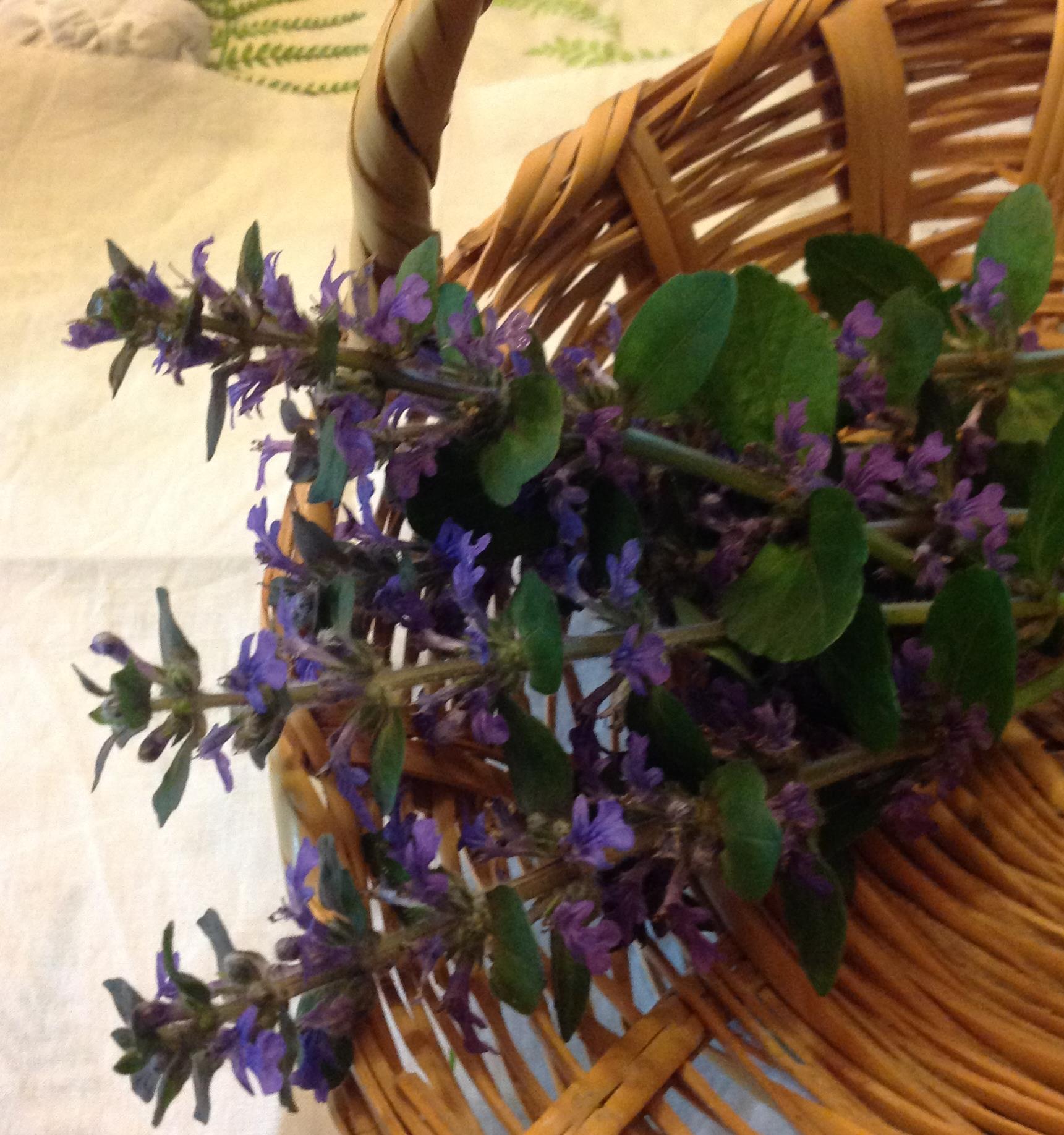
basket of Bugleweed
~
I placed the flowers between two layers of cotton, sprayed the material with water and pressed down with the steam iron set on medium. I pressed fairly hard and ironed the cloth/flower sandwich until it was dry. Then I wetted it again and continued until I had transferred the colour …
~

using the steam iron to transfer colour from Birdsfoot trefoil to cotton
~
It took five successive sets of wetting and pressing to obtain the colour. The blues of Bugleweed turned out best …
~
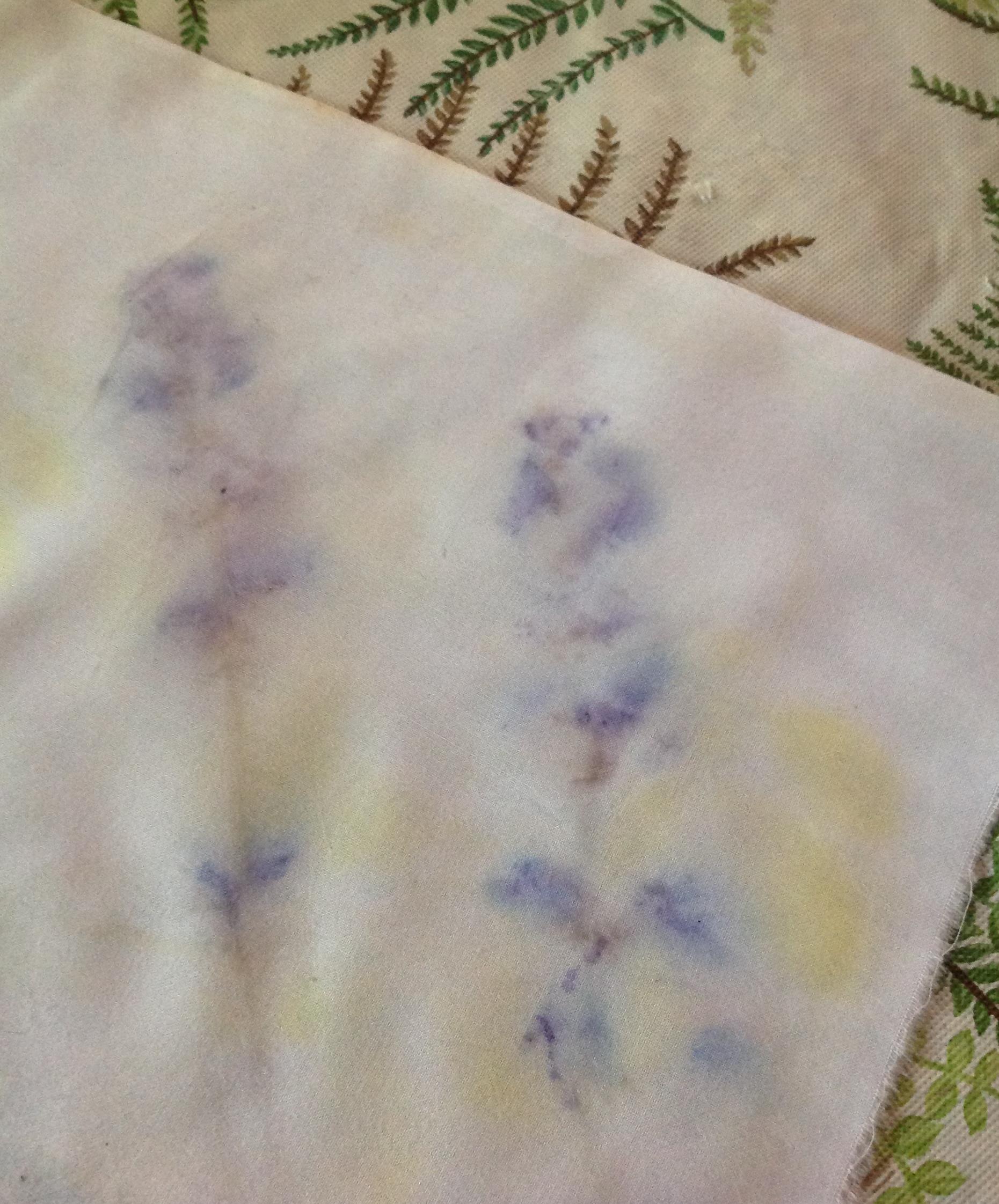
colour transfers from Bugleweed (the pale green in the background is made with leaves from my rosebush)
~
But the yellow colour from petals and stems of the Birdsfoot trefoil also came out well …
~
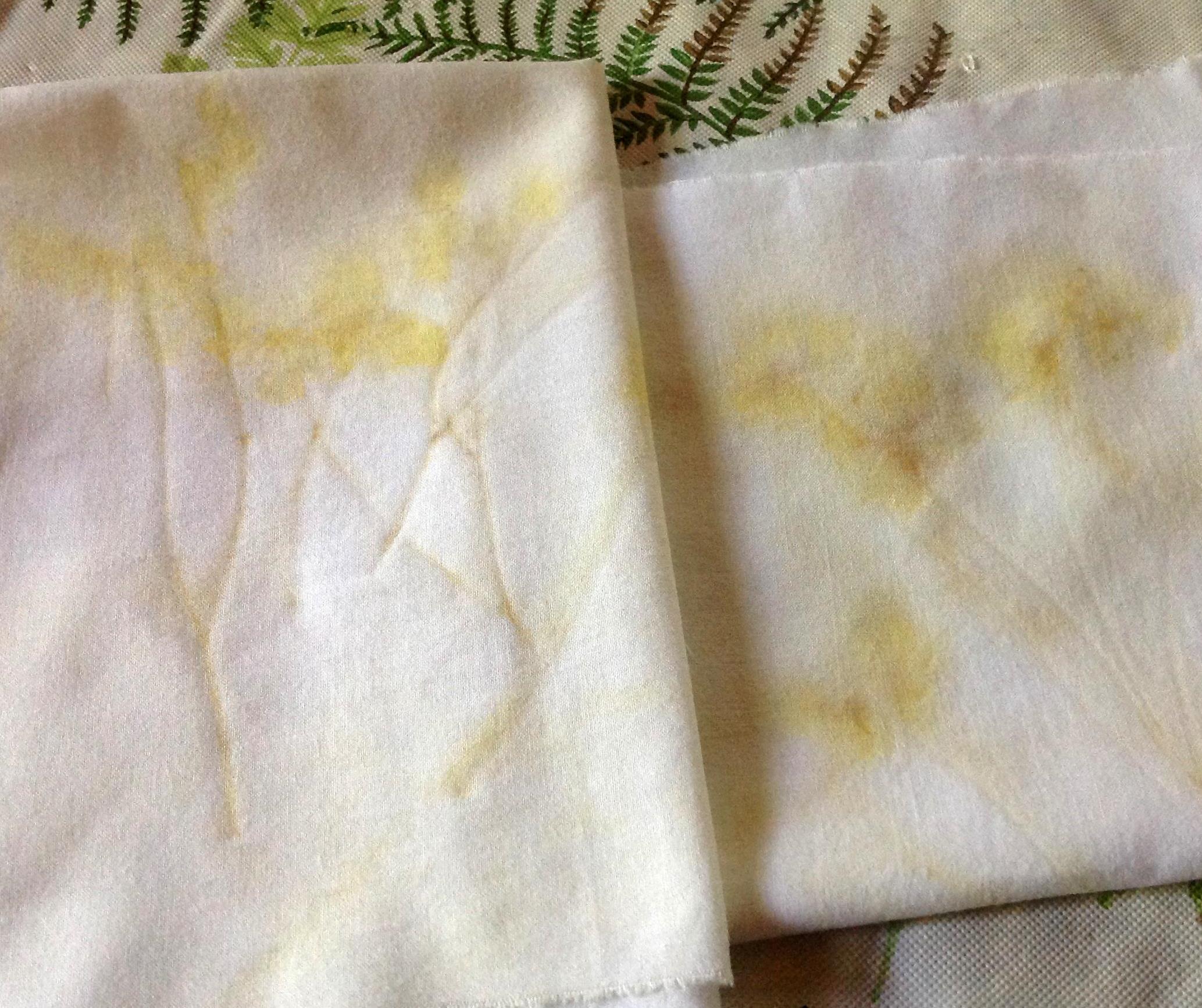
colour transfers from Birdsfoot trefoil
~
Now I have two new colour patterns to add to my future ‘harvesting colour’ quilt !
~

colour transfers using Bugleweed and Birdsfoot trefoil
~
Copyright 2014 Jane Tims




 nichepoetryandprose