first and last and in between

~
This past Saturday, I worked to create a manuscript of some poems I have written on the theme of discarded and abandoned elements of life and landscape.
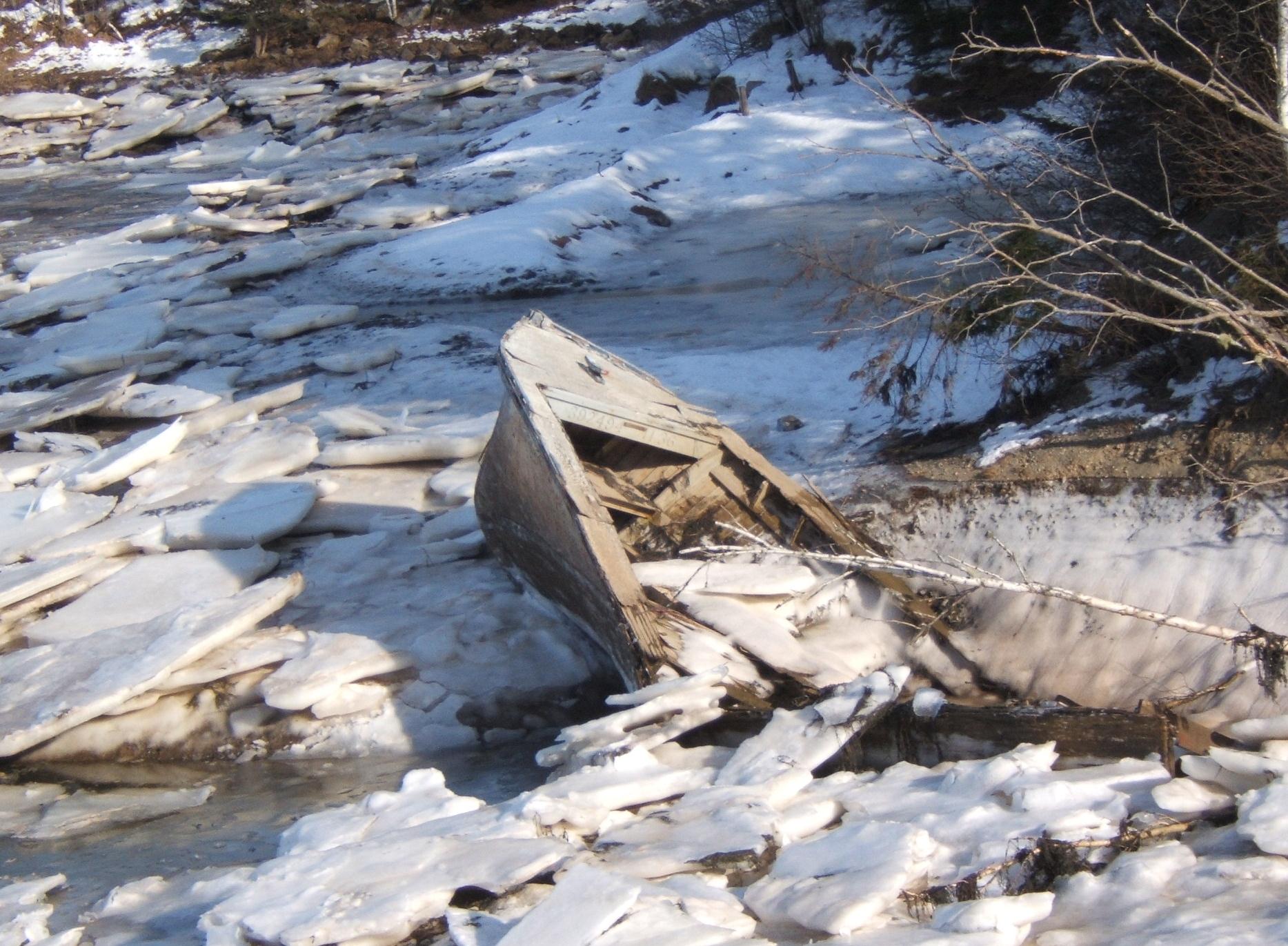
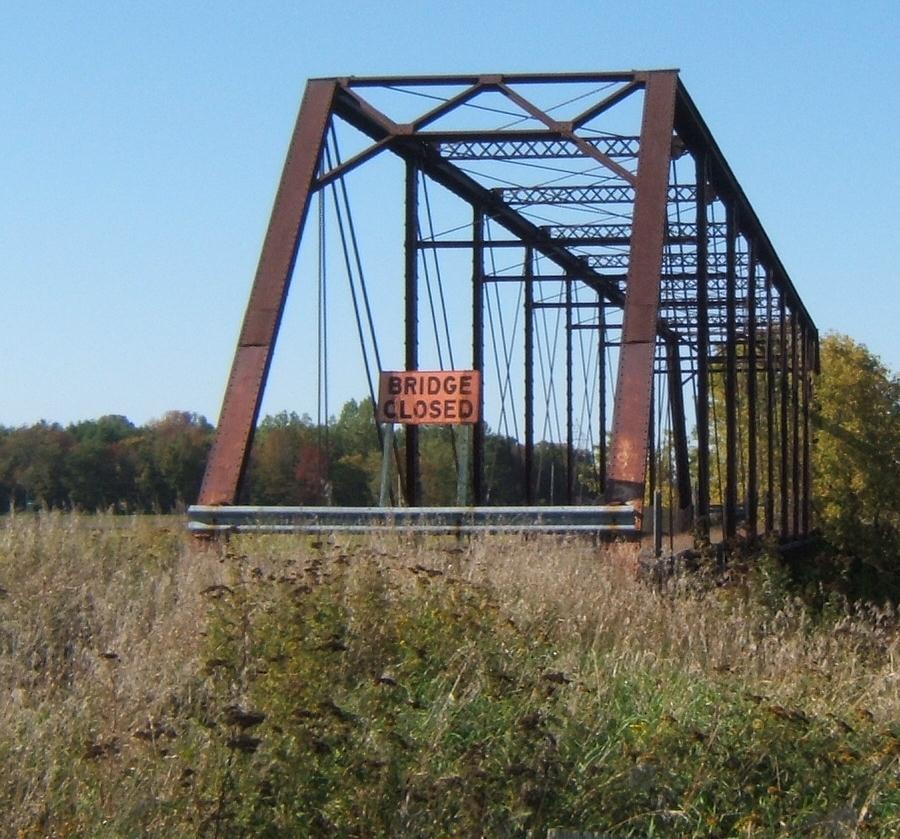
There are 38 poems in the rough manuscript, making up about 50 pages. The poems are a study of change. They include poems about abandoned boats, roads, churches, toolboxes, sheds, trucks, bridges and so on.
I have published a few of these on this blog … for an example, see ‘Foggy Molly’, a poem about an abandoned boat (https://nichepoetryandprose.wordpress.com/2013/01/30/abandoned-boat/ ).
~
~
Part of creating this manuscript is to put the poems in order. I find it hard to decide how to arrange 38 poems so they flow, one into the other, and so they tell a story.
~

~
1. My first step is to print a table of contents of the rough manuscript. I read each poem through and assign a couple of key words to describe it, jotting these into the table of contents. For my 38 poems on abandonment, I obtained 27 key words. Many of these are shared by various poems, but a few are unique to one or two poems. My key words are, in no particular order:
lost ways, regret, grown over, barriers, evidence, sadness, history, haunted, adaptation, voice, intention, anger, change, memory, denial, improvement, new life, lost function, buildings, items, understanding, cruel, resistance, life/death, shock, keeping past, lost/misplaced, broken
~
~
2. Next, I put everything into a table, with Xs to show which key words fit each poem. This does not take too long to do and helps me consider the meaning of each poem. Below is just a small section of my table:
| Poem Title | lost ways | regret | grown over | barriers | evidence | sadness | history | haunted | adaptation |
| Recovery | X | X | X | X | |||||
| Reason for Leaving | X | X | X | X | X | ||||
| South Nation Bridge | X | X | X | ||||||
| Outfield | X | X | |||||||
| Diverted road | X | X | |||||||
| Invitation to tea | X | X | X | X | X | ||||
| Lane | X | X | |||||||
| Abandoned church | X | X |
~
3. Once I have the table created, I tally the Xs in the columns and decide which key words are most common. Key words occurring in more than 10 poems are shown in bold:
lost ways, regret, Grown over, barriers, evidence, sadness, history, haunted, adaptation, decay, intention, anger, change, memory, denial, improvement, new life, lost function, buildings, items, understanding, cruel, resistance, life/death, shock, keeping past, lost/misplaced, broken
The words that apply to almost every poem usually speak to the theme of the poetry collection: in this case, the words ‘change’, ‘memory’ and ‘lost function’ were very common, no surprise in a collection about things abandoned. Other key words, common to a few poems, suggest possible themes for the sub-sections.
~

~
4. My next step is to look at the key words and see what themes ‘speak’ to me. I also want to have a progression of ideas through the manuscript. In this case, some of the poems are sad and rather hopeless, while some show how abandonment leads to understanding, and, in some cases, to new purpose and new life. From the key words, I selected six sub-sections: ‘lost ways’, ‘decay’, ‘haunted’, ‘broken’, ‘understanding’ and ‘new life’.
~
5. Now comes the long work of re-ordering the manuscript. I create a new document and, one at a time, transfer the poems into their new sections.
~
6. I like to name each section, taking the name from a line in one of the poems in the section. These may change later, but for now, they give me a reference within each group of poems:
lost ways – ‘overgrown …’
decay – ‘left to rust …’
haunted – ‘ghosts are lonely here …’
broken – ‘dry putty, broken glass …’
understanding – ‘the rock to stand on …’
new life – ‘a turn towards horizon …’
~

February 11. 2014 ‘old shed near Charlo’ Jane Tims
~
Today, I will begin a read of the manuscript to see how the poems flow within their sections. Many revisions are ahead, but this is my favorite part of the work!
~
Have you ever gathered poems into a manuscript and did you use any particular method to decide the order of the poems?
~
Copyright 2015 Jane Tims
thwarting the squirrels
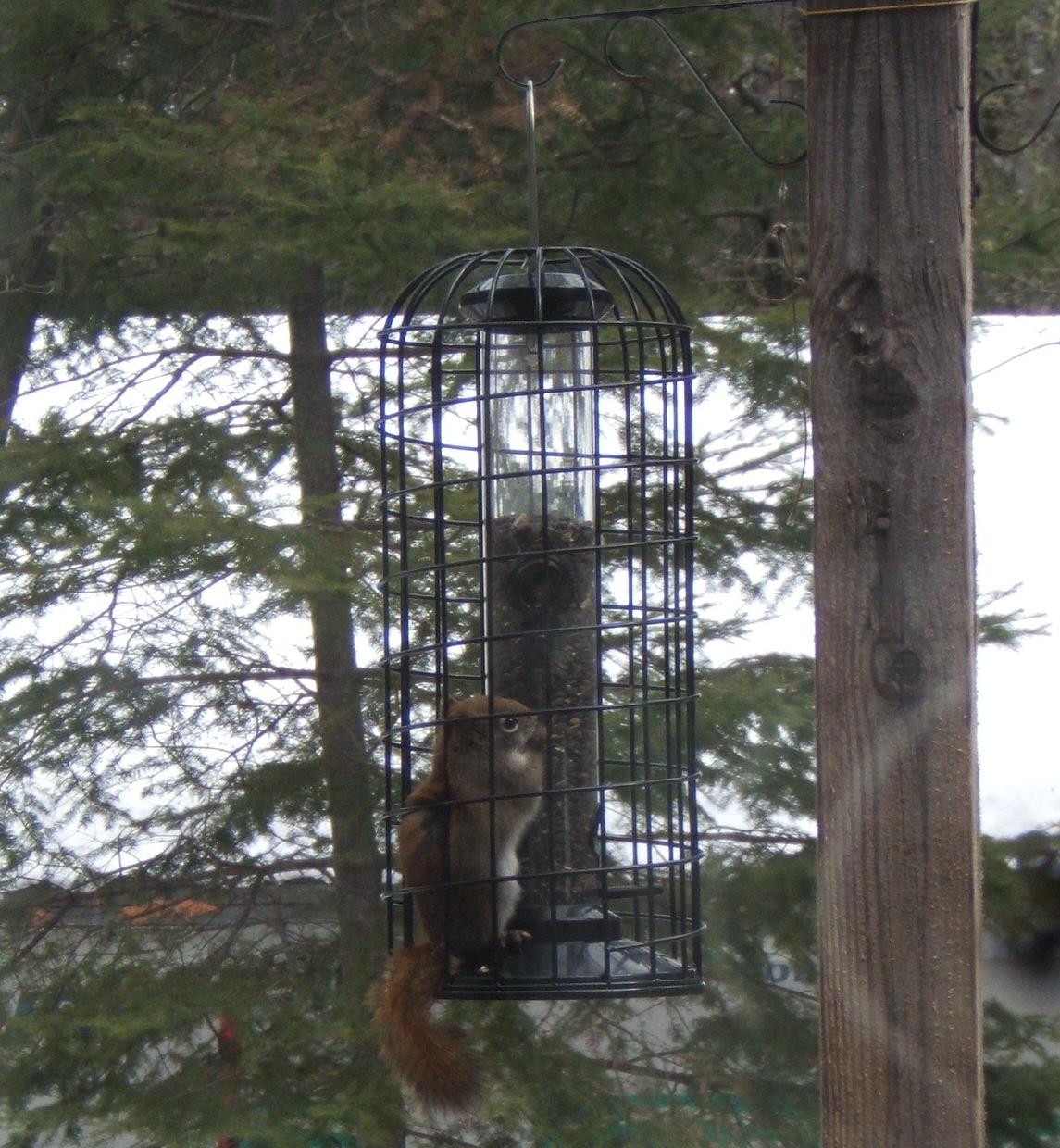
Feeding the birds provides me with hours of enjoyment in winter. However, bird feed is costly when marauders come to call. I have watched with dismay as the tongue of a single deer laps up every morsel of sunflower seed. Or laughed as the squirrel eats peanuts from inside the squirrel-resistant bird feeder. Lately, a very fat raccoon has emptied our suet feeder night after night.
~
~
Last weekend, we rigged something new to see if we could reserve at least one feeder just for the birds. The idea is courtesy of my friends A. and D. who showed me how well the contraption works at their bird feeding station.
~

~
The idea is simple. We stretched a sturdy cord between two trees at a height of about seven feet. On the cord, we strung six empty 2 liter pop bottles. We tried all sorts of ways to drill holes in the plastic and found that a screwdriver heated over a candle flame melted a neat hole in the bottom center of each bottle. Then we put a metal s-hook between the two center bottles and hung the feeder. The squirrels will try to walk the tightrope to get to the feeder, but when they reach the pop bottles, these spin and the squirrels cannot hang on.
~
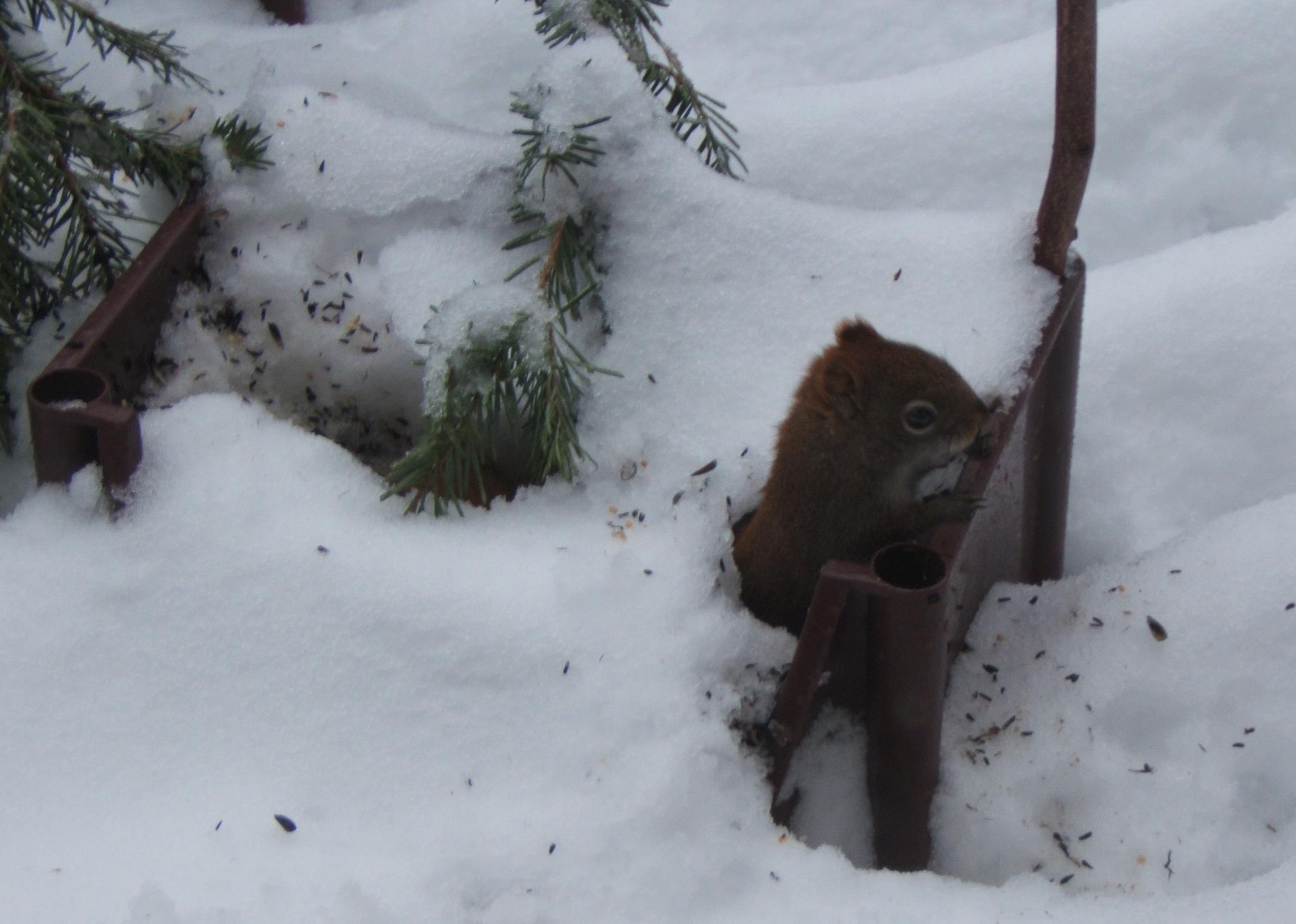
After one week, the squirrels and raccoon have left this feeder alone. They still have some food to eat at the other feeder, but at least the seed in this one is reserved for the birds! As you can see, the snow banks are getting higher and soon the squirrels will be skipping across the surface of the snow to reach the feeder. Higher please!
~
~
Copyright 2015 Jane Tims
red sled

~
on her sled
~
~
from the window
I watch her
she is one red mitten, lost
on the path, smitten
by the four-footed track
of a wild rabbit
hurrying home
or the toe of a red
shoe, peeks from under
the hem of a white
crinoline, a cardinal launches
from one tree, snow-laden
to another
~
~
Copyright. 2015 Jane Tims
sounds in my space
How would you describe the space where you spend most of your time? Is it cold or warm? Spacious or cramped? Colorful or monochromatic?
~
What does your space sound like? Is it noisy or quiet? Do you play music in the background, or do you prefer the white noise of everyday life?
~
In my home, where I spend most of my time, the sounds are so familiar, I hardly hear them anymore. As I sit here, if I listen carefully, I can hear:
- the ticking of the clock
- the hum of the computer
- the purring of the refrigerator
- a car passing by on the road outside
- chickadees at the feeder just beyond the window
- the rumble of the well water pump in the basement
- two branches in our big maple, rubbing together in the slightest wind
- the creaking of floor boards – the house is almost 35 years old and the living room floorboards squeak
- our cat Zoë, galloping from room to room upstairs – how can 7 pounds of cat sound like a herd of elephants?
- the sound of our string of livestock bells, a remnant of Christmas not yet put away, as someone opens the outside door
~
What sounds do you hear, in the space where you are?

~
Copyright 2015 Jane Tims
in winters past
~
Cold here. Last week we reached a low of -25 (degrees Centigrade). As I watched the weather statistics I saw that the record for coldest weather for the day had been in 1973. The date whisked me back to my first winter in university. I barely recall those days, but I do remember hurrying back and forth across campus from class to class and the brown scarf I knit that year to keep my face from freezing.
~
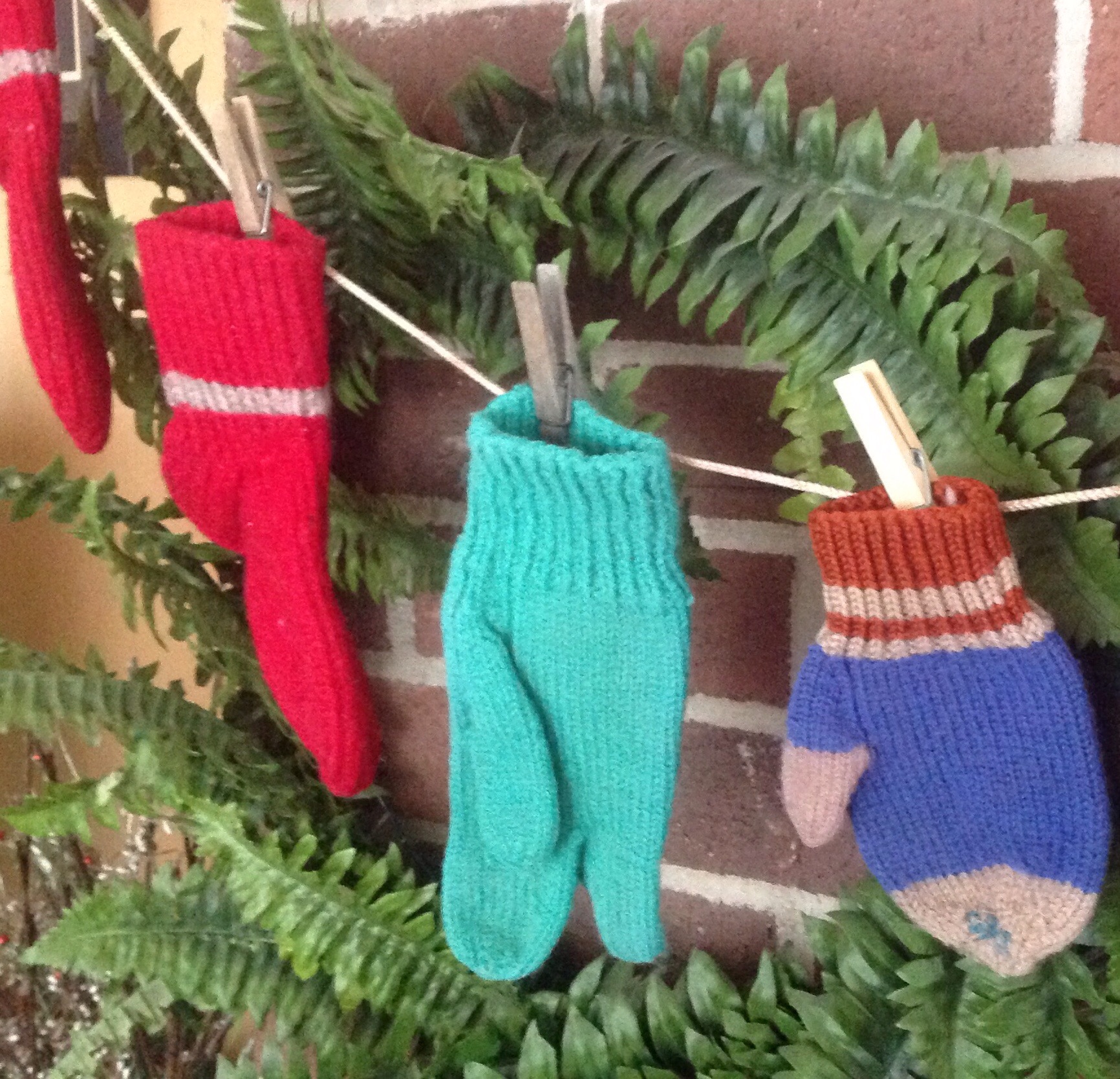
To remember other cold weather, I just look at the winter garland of children’s socks and mitts strung across our chimney.
~
The red socks and little blue mittens hanging there were knit by my grandmother almost sixty years ago. We would have worn them on many bitter days spent in the cold Alberta winter. I remember my Mom wrapping our heads with multiple wool scarves, held in place by safety pins (long before the days of fleece and high performance fibres).
~
The green glove on the line warps me forward in time to the 1980’s when my son was in elementary school and the three-fingered Teenage Mutant Ninja Turtles were all the rage. I knit three-fingered gloves for him for three winters, as fast as they were lost. The single green glove on the chimney line is the only one that has survived.
–
When the days and nights are cold, I still knit. Today, I knit socks to keep me warm both during the knitting and the wearing.
~
Cold weather? Bring it on! I have knitting needles and a skein of yarn!
~

~
Copyright 2015 Jane Tims
small green world

~
As I gradually put away my Christmas decorations, I am a little sad about disassembling the vignettes I created – a group of carolers skating on a mirror pond, a serene stable scene, a lighted Christmas village.
~
To see me through the rest of winter I have created another small world in a glass cloche, a moss and lichen garden under glass. I picked the moss before the first December snow and it has done well for a month. The moss leaves are bright and there is new growth on some of the lichen tips. The terrarium even has its own little climate and ‘weather’ – days when the glass is clear and dry, and days when the glass is foggy and you can see a faint mist among the mosses.
~
I love the ‘green-ness’ of this miniature world. Green mosses, sheltered by the green leaves of my Lipstick Vine (Aeschynanthus lobbianus) and guarded by my green, four-clawed Chinese dragon. Green candles.
~
While the world outside is cold and white, I have this tiny green world to remind me – spring is only weeks away.
~

~
Copyright 2015 Jane Tims
goodbye to the snow

~
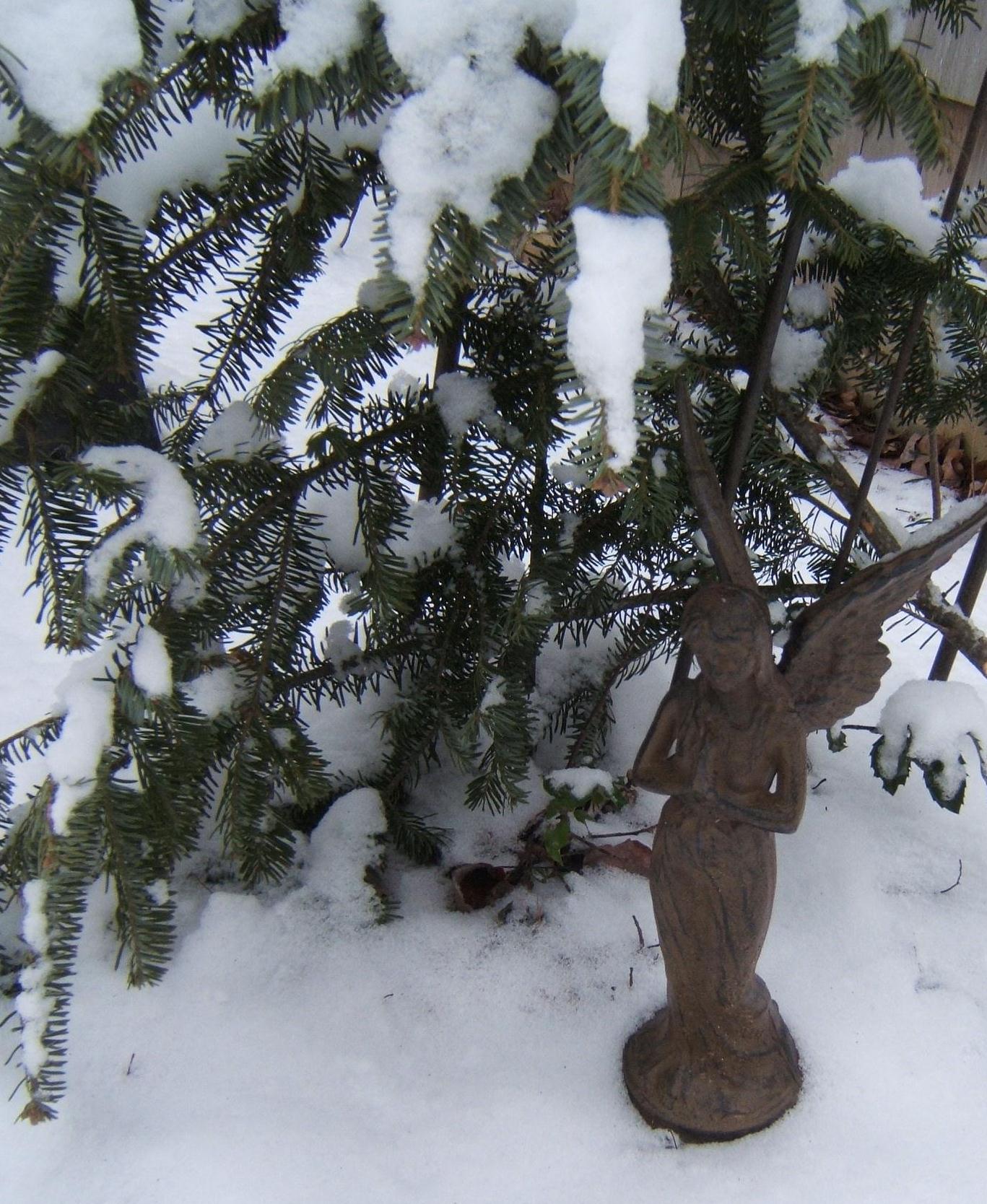
We have had a thick layer of snow for the last few days. But today, Christmas Eve, the rain is coming. The snow will disappear.
~
No matter. Green or white, Christmas is Christmas. I can hardly wait.
~
Merry Christmas, Happy Holidays.
~
~
Copyright 2014 Jane Tims
snow across the landscape

~
end of day
~
new-feathered, the valley
a black and white wing
stretches from horizon
the beat encloses
clouds and winter sky
field under snow, the back
of a settling dove
a lone skier presses
towards shelter, and
amber streak of sky
~
~

~
Copyright 2014 Jane Tims
new layer of snow

~
Snow is gradually building on every horizontal surface. I love the contrast between umber bark and bright snow. If this layer of snow will only stay, the temperatures will seem warmer and the walking less slippery. And the movements of small creatures in our woods will be less ephemeral, better understood.
~

tracks in the snow
~
Copyright 2014 Jane Tims
Elf on the Shelf

~
My Elf on the Shelf has been with me since the 1960s. For many years, she stayed in a back corner in a bag with the other stuffed folk. Then, last year, I learned about the new popularity of the Elf on the Shelf.
~
Now, she has a place of honour among my Christmas decorations .. or should I say places? Each day, she pops up in a new place, to make her own commentary on the Christmas season!
~

Elf on the Shelf reading her Christmas books …
~

Elf on the Shelf is shy but she tries to sing with the other carolers …
~

Elf on the Shelf dreams of a white Christmas …
~
Copyright 2014 Jane Tims